
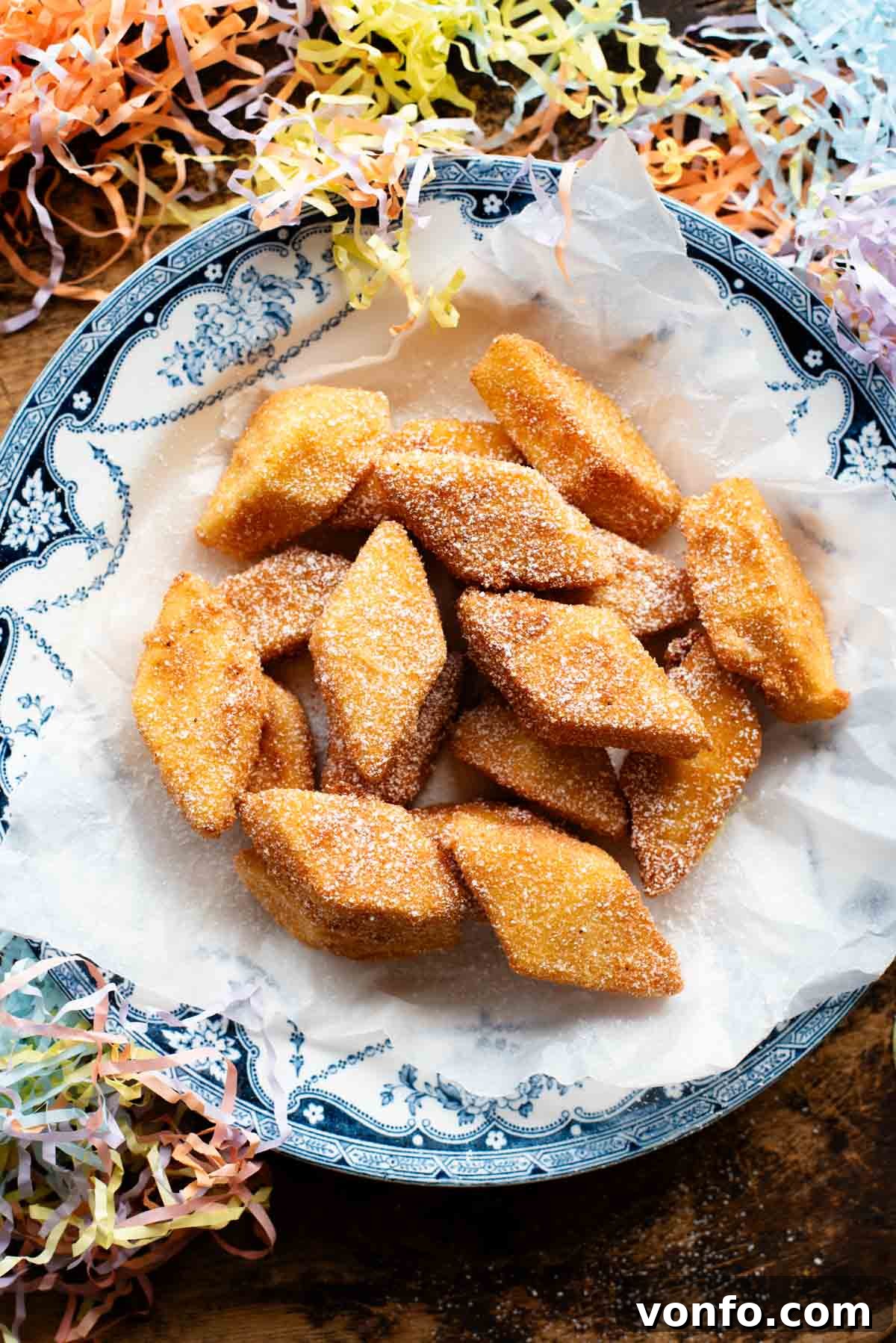
Crema Fritta: Authentic Italian Deep-Fried Custard Bites
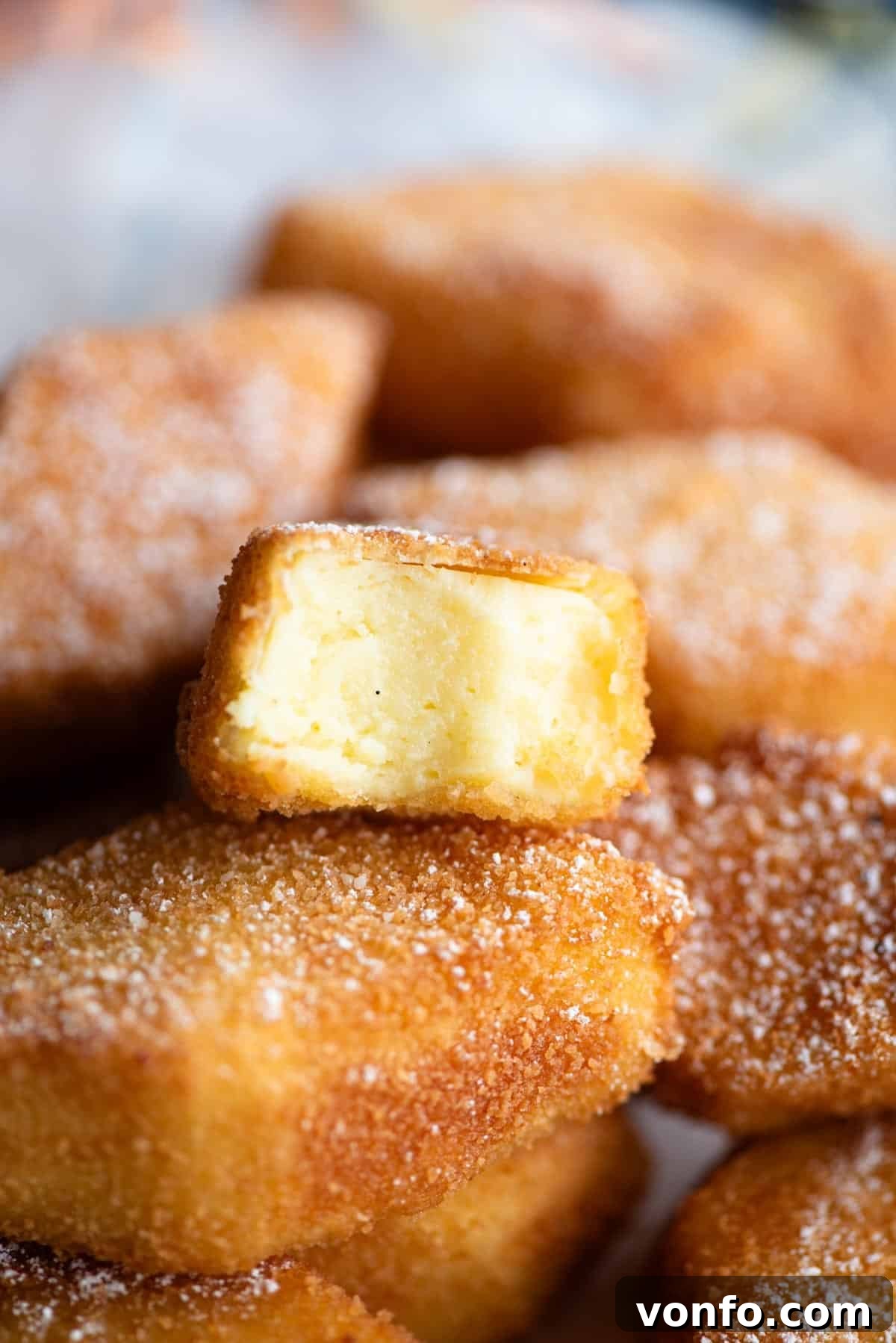
Crema Fritta, affectionately known as Cremini, offers a delightful culinary experience with its exquisite contrast: a remarkably smooth, sweet, and creamy custard filling encased in a wonderfully crunchy, crispy exterior. These golden-brown bites are a true Italian delicacy, best savored piping hot, fresh from the fryer, and generously dusted with a delicate veil of powdered sugar.
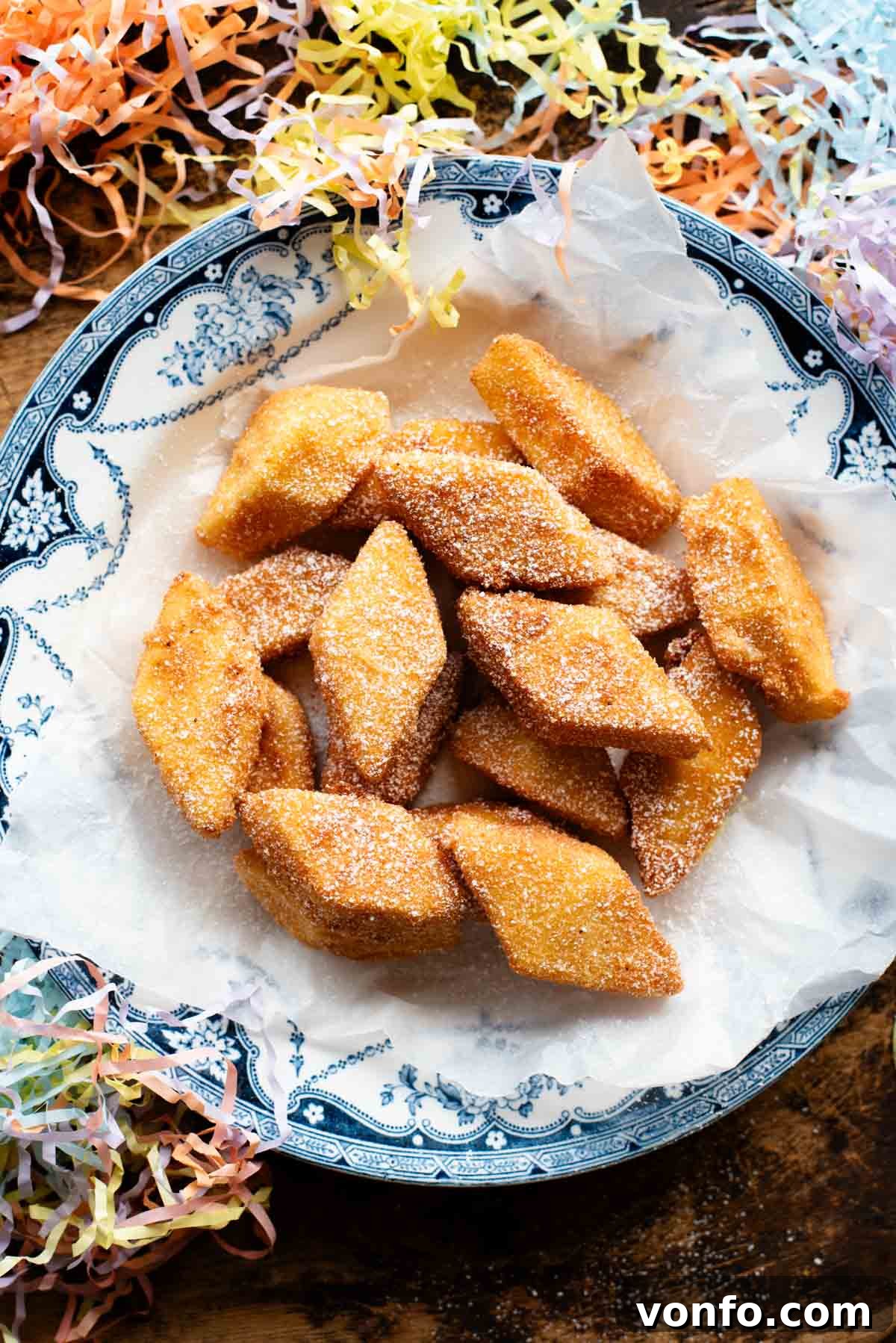
The Enchanting History and Regional Delights of Crema Fritta
Crema Fritta, or Cremini, are more than just a sweet treat; they are a culinary journey through Italy’s diverse gastronomic landscape. These irresistible deep-fried custard morsels are cherished in various regions across the country, each offering a unique take on how to enjoy them.
In the picturesque region of Marche, Crema Fritta holds a special place, often served alongside savory delights such as Olive Ascolane, which are succulent deep-fried meat-stuffed olives. This intriguing combination of sweet and savory might sound unconventional to some, but it’s a testament to the Italian appreciation for balanced flavors and diverse textures within a meal.
Further north, in Bologna within the Emilia Romagna region, Cremini frequently appear as part of a grand “fritto misto” – a mixed fried platter that can include an assortment of meats, fish, and vegetables. Here, the sweet custard bites offer a refreshing counterpoint to the richer, savory fried elements, creating a harmonious and exciting dining experience.
While the idea of pairing sweet deep-fried custard with savory meats or vegetables might indeed strike some as peculiar, it’s a tradition deeply rooted in regional Italian cuisine. For many, including myself, they are surprisingly delightful alongside Olive Ascolane, especially when paired with an Apertivo like a crisp Aperol Spritz. However, my personal preference leans towards the Venetian tradition from the Veneto region, where Crema Fritta truly shines as a dedicated dessert. Dusted generously with powdered sugar, these sweet bites become an iconic treat, particularly during the festive Carnevale celebrations, symbolizing joy and indulgence.
Whether you choose to enjoy them as part of a traditional Fritto Misto or as a standalone dessert, Crema Fritta promises an unforgettable experience. The velvety smooth custard, with its delicate hint of lemon and vanilla, perfectly complements the golden, crisp crust, creating a texture and flavor profile that is utterly addictive.
Explore the full Crema Fritta recipe below, complete with detailed notes on ingredients, step-by-step instructions enhanced with photos, expert tips, exciting variations, and a comprehensive video tutorial. Scroll to the bottom for the printable recipe card.
Essential Ingredients for Perfect Crema Fritta
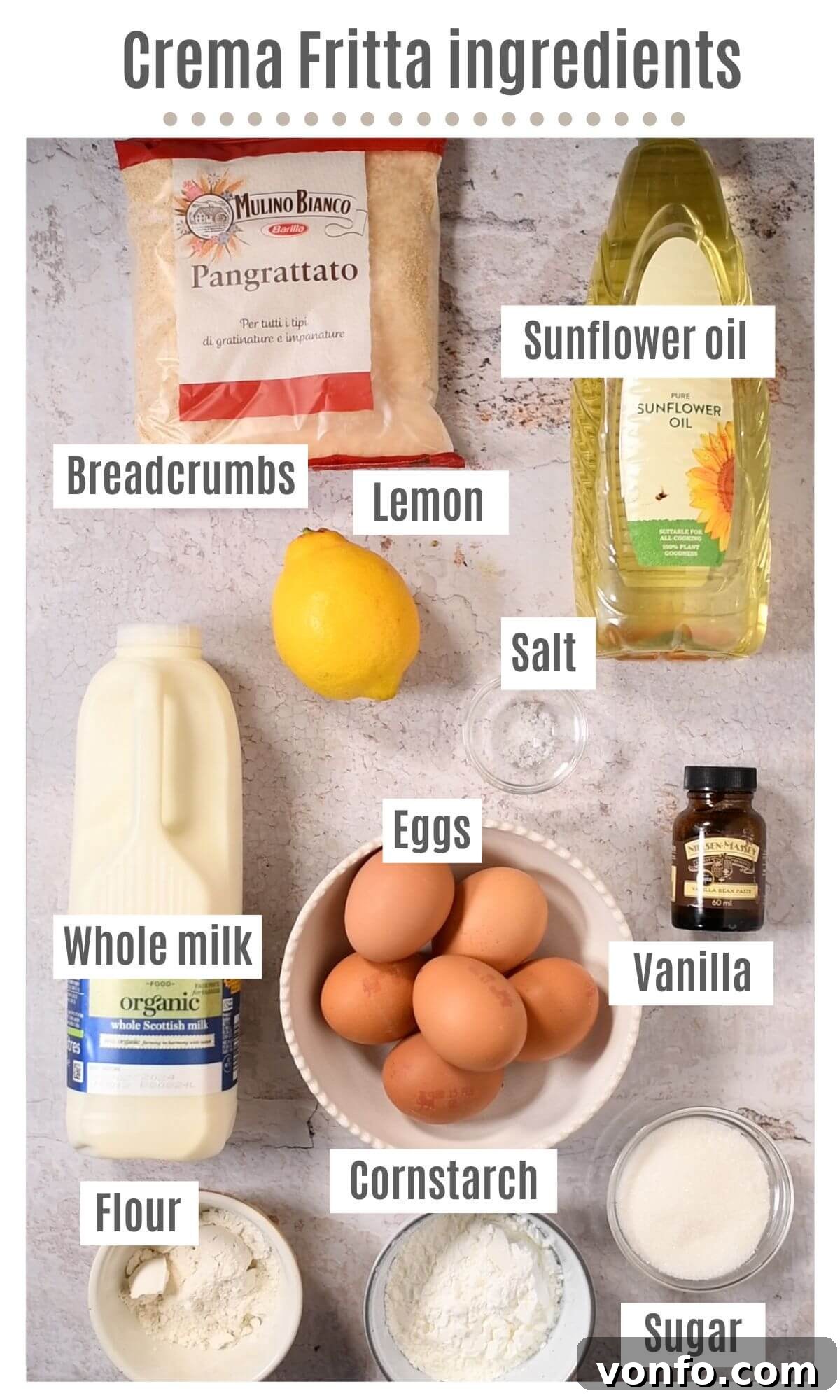
Ingredient Notes and Substitutions
Crafting the perfect Crema Fritta begins with selecting the right ingredients. Each component plays a vital role in achieving that signature creamy texture and delightful flavor.
- Whole milk: This is unequivocally crucial for both the creamy richness and the necessary thickness of the custard. Full-fat whole milk provides the body and luxurious mouthfeel that makes Crema Fritta so special. Avoid using half-fat or skim milk, as they will result in a thinner, less satisfying custard that won’t set properly for frying.
- Vanilla: While vanilla extract is a common and acceptable alternative, for an unparalleled depth of flavor and a beautiful speckled appearance, I highly recommend using either vanilla bean paste or a whole vanilla bean (with the seeds carefully scraped out). The intense, aromatic notes of real vanilla elevate the custard to gourmet levels.
- Lemon zest: The bright, citrusy notes from lemon zest provide a wonderful counterpoint to the sweetness of the custard. Always opt for unwaxed lemons, as we are using the outer zest directly in the recipe. If unwaxed lemons aren’t available, thoroughly scrub regular lemons to remove any wax residue. Ensure you peel only the yellow part, avoiding the bitter white pith.
- Oil for frying: For deep frying, a neutral-flavored oil with a high smoke point is essential. Sunflower oil is an excellent choice due to its mild taste and ability to withstand high temperatures without burning, ensuring your Crema Fritta cooks evenly to a golden crisp. Other suitable options include canola oil, vegetable oil, or peanut oil. Always use fresh oil for the best results and flavor.
- Eggs: Only egg yolks are used in this recipe, contributing to the rich, yellow hue and the incredibly smooth, velvety texture of the custard. Separate them carefully, ensuring no whites mix in.
- Flour (Cornstarch and All-Purpose): The combination of cornstarch and all-purpose flour is key to achieving the custard’s desired thickness and stability. This blend ensures the custard sets firm enough to be cut and breaded, preventing it from collapsing during frying.
- Sugar: Caster sugar (fine granulated sugar) is preferred as it dissolves easily into the egg mixture, ensuring a smooth custard without a grainy texture. Granulated sugar can also be used.
Crafting Your Crema Fritta: Step-by-Step Guide
Creating these heavenly deep-fried custard bites is a rewarding process. Follow these detailed instructions carefully to ensure a perfect batch every time.
Phase 1: Preparing the Creamy Custard
The heart of Crema Fritta is its luscious custard. This phase requires attention to detail to achieve that signature velvety texture.
- Prepare your mold: Begin by lining a 22x22cm (8.5×8.5 inch) square dish with plastic wrap, ensuring there’s an overhang on all sides. This will make removing the set custard much easier. Set the prepared dish aside.
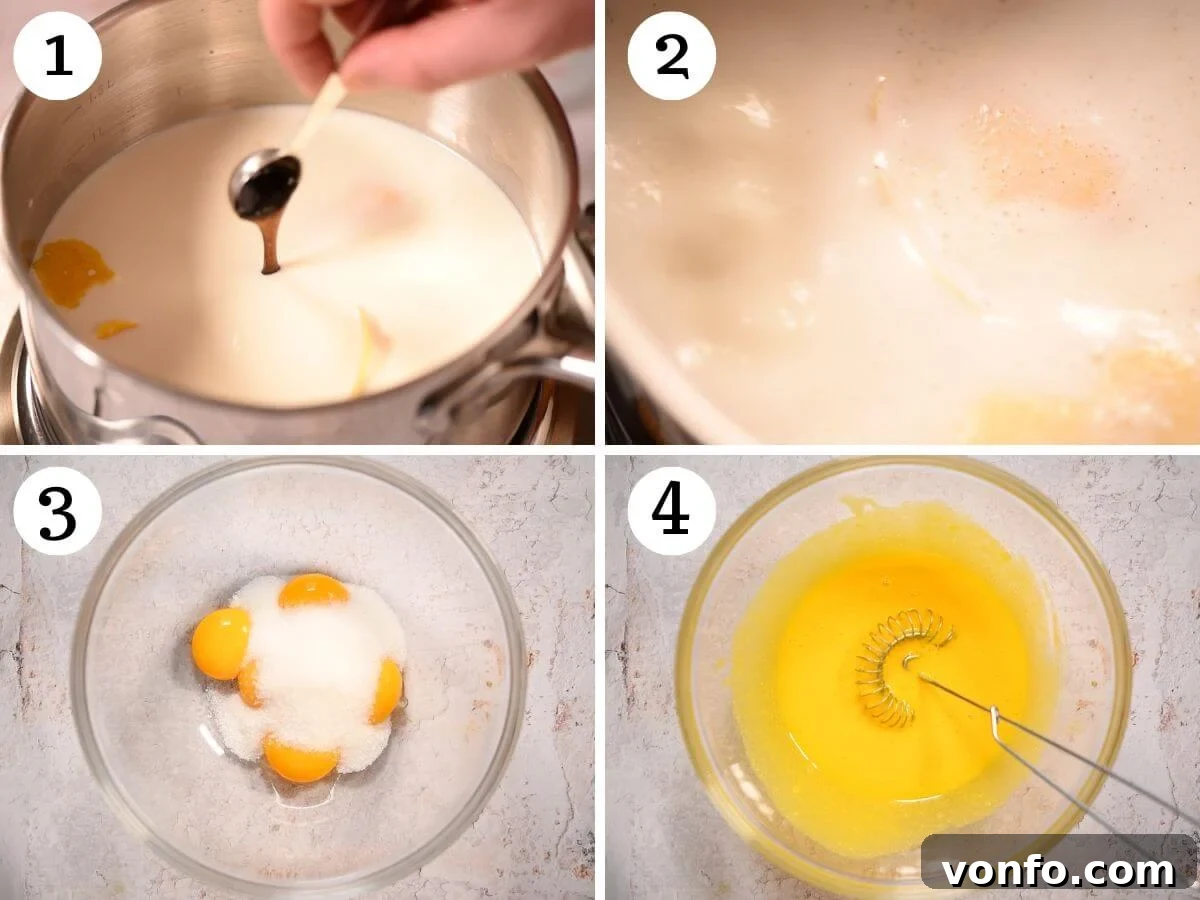
- Infuse the milk: Using a vegetable peeler, carefully remove the zest from the lemon, taking care to avoid any of the bitter white pith. Place this fragrant lemon zest into a medium saucepan along with the whole milk and vanilla (bean paste or scraped vanilla bean seeds). Gently bring this mixture to a simmer over medium heat. As soon as it begins to simmer, remove the saucepan from the heat and let it steep for a few minutes to allow the flavors to infuse fully.
- Whisk the egg mixture: In a large mixing bowl, combine the egg yolks and sugar. Whisk them vigorously until the mixture is pale yellow and creamy. Next, sift in both the cornstarch and all-purpose flour, along with a tiny pinch of salt. Continue whisking until these dry ingredients are fully incorporated and you have a smooth, lump-free paste.
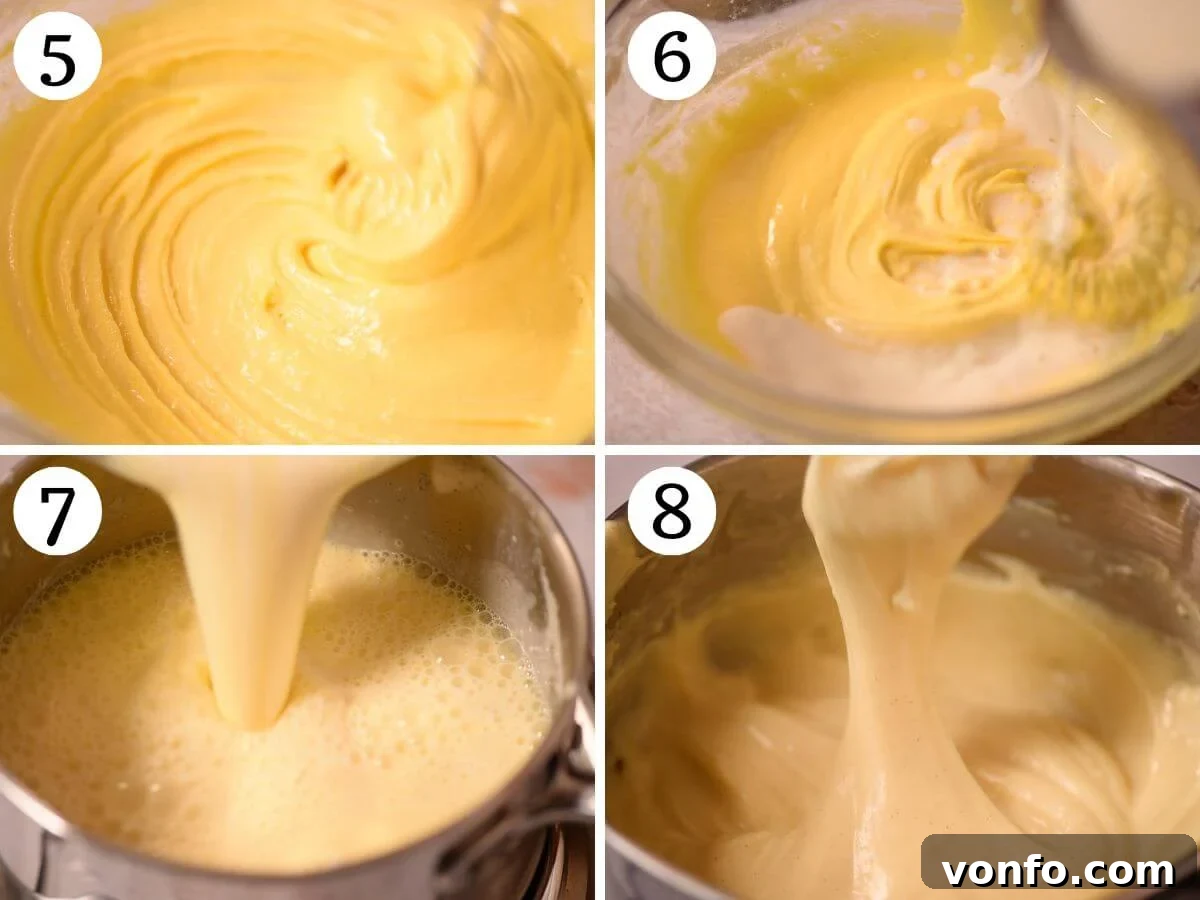
- Temper the eggs: Remove the lemon peel from the milk mixture. Now, it’s time to temper the eggs. Slowly, and in three additions, pour the hot milk into the egg mixture while continuously whisking. This gradual addition, combined with constant whisking, gently raises the temperature of the egg yolks without scrambling them, ensuring a silky-smooth custard. Once fully incorporated, pour the entire mixture back into the saucepan.
- Thicken the custard: Place the saucepan back over low heat. Continue to whisk constantly and patiently. This process will take approximately 10-15 minutes. The custard will gradually thicken to a very firm, pudding-like consistency. The continuous whisking is crucial to prevent lumps and ensure even cooking. If you notice any lumps beginning to form, immediately remove the pan from the heat and whisk vigorously until smooth again before returning it to the stove.
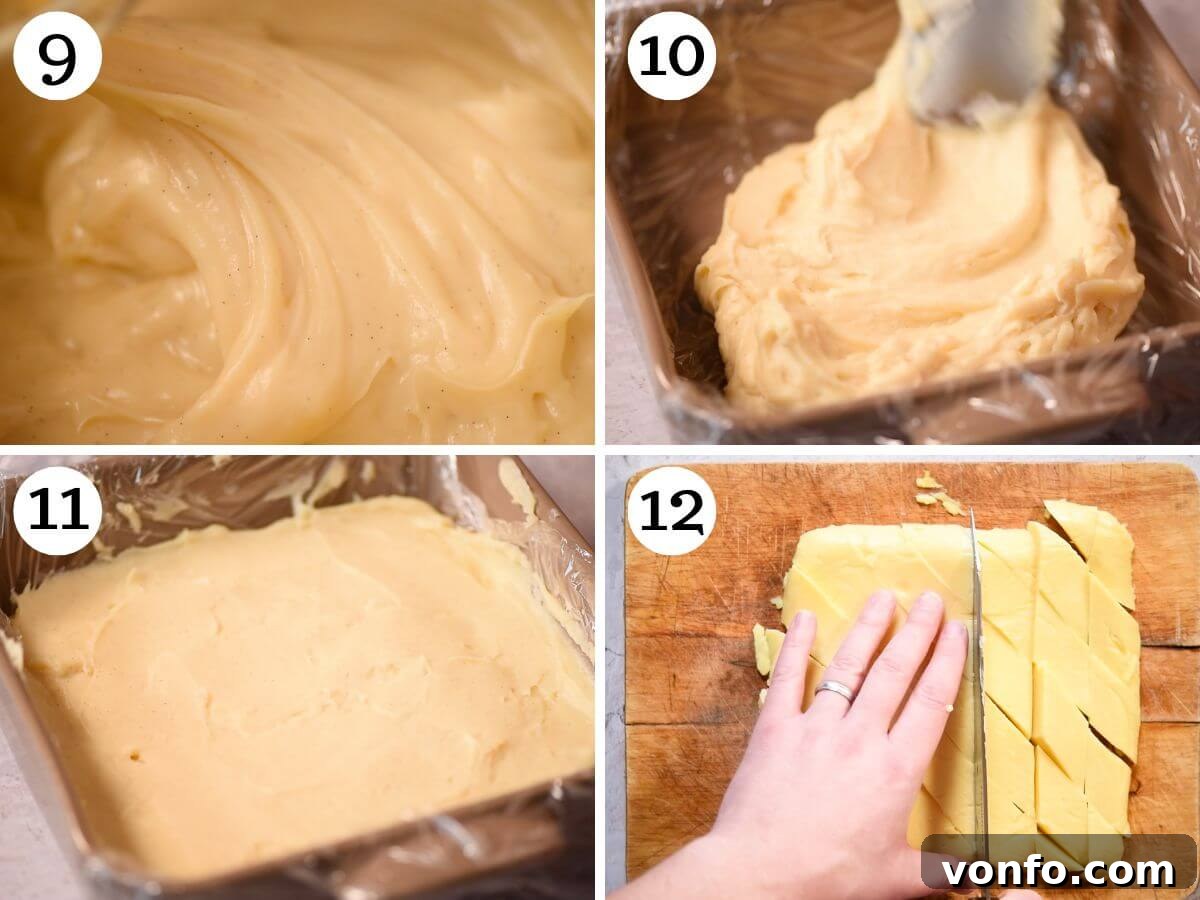
- Set the custard: Once the custard is wonderfully thick and smooth, pour it into your prepared lined dish. Use a spatula to spread the custard into an even layer, ensuring a flat surface. Allow the custard to cool completely at room temperature, then transfer it to the refrigerator to set uncovered for at least 1 hour, or until very firm. This setting time is essential for easy handling and clean cuts.
Phase 2: Breading and Deep-Frying to Golden Perfection
The final step transforms the firm custard into crispy, golden-brown bites. Proper breading and careful frying are key.
- Heat the oil: Pour approximately 1 liter (4.5 cups) of sunflower oil (or your chosen frying oil) into a heavy-based saucepan or a deep fryer. Attach a candy thermometer to the side of the pan and heat the oil to a precise temperature of 180°C (355°F). Maintaining this temperature is vital for perfectly cooked Crema Fritta – too low and they’ll be greasy, too high and they’ll burn.
- Cut the custard: While the oil is heating, gently un-mold the completely set custard onto a clean chopping board by lifting the plastic wrap. Carefully peel off the plastic wrap. Using a sharp knife, cut the firm custard into your desired shapes – traditional diamond shapes or simple square cubes work best.
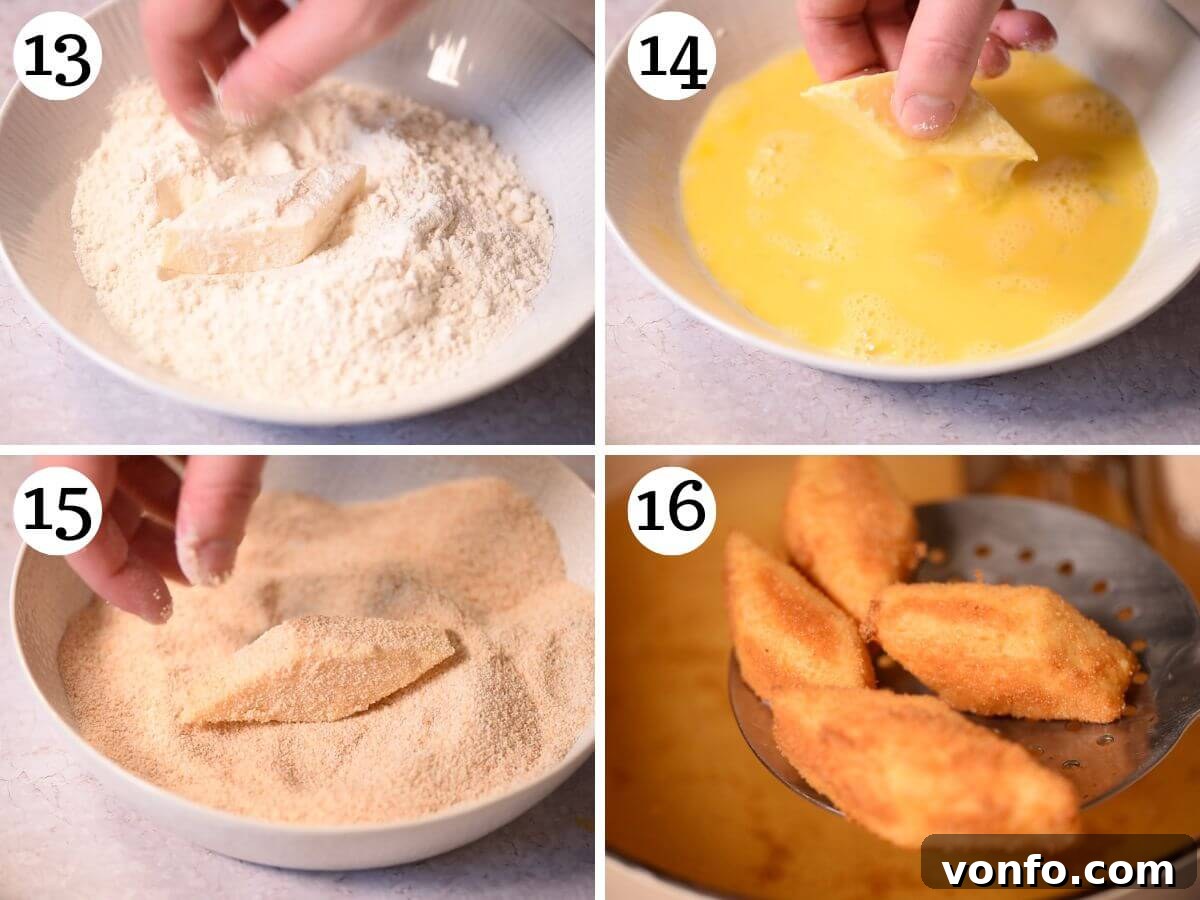
- Prepare the breading station: Set up a classic breading station with three separate shallow bowls or plates. Fill the first with all-purpose flour, the second with whisked eggs, and the third with fine breadcrumbs.
- Breading the custard: Take each piece of custard and first dip it thoroughly in the flour, shaking off any excess. Next, immerse it in the whisked egg, ensuring it’s fully coated. Finally, dredge it in the fine breadcrumbs, pressing gently to adhere a uniform, even layer. This three-step breading process creates that irresistible crispy crust.
- Deep fry in batches: Carefully lower a few breaded custard pieces into the hot oil. Avoid overcrowding the pan, as this will lower the oil temperature and result in soggy Crema Fritta. Fry in small batches until they turn a beautiful golden brown on all sides, usually taking only 2-3 minutes per batch.
- Drain and serve: Using a slotted spoon, remove the golden Crema Fritta from the oil and transfer them to a plate lined with kitchen paper to drain any excess oil. Serve the Crema Fritta immediately while they are still hot and crispy, generously dusted with powdered sugar.
Expert Tips and Frequently Asked Questions
Mastering Crema Fritta is easy with a few key insights and answers to common questions.
Essential Tips for Success:
- The Power of the Whisk: Since this custard is designed to be extra thick and set quickly for frying, using a hand whisk throughout the cooking process is paramount. A wooden spoon won’t break up lumps as effectively, so keep that whisk moving to ensure a consistently smooth custard.
- Vigilance is Key with Heat: Cook your custard over a low to medium heat. Too low, and it will take an eternity to thicken; too high, and you risk scrambling the eggs. Never step away from the pan and continue whisking constantly. If you stop, even for a moment, the bottom can scorch, or the eggs can scramble.
- Cutting Shapes – Diamond vs. Square: You have the flexibility to cut your Crema Fritta into elegant diamond shapes or simple, classic square cubes. If you opt for diamond shapes, you’ll inevitably have some smaller offcuts around the edges. Don’t discard these! They can absolutely be breaded and fried, offering delightful little irregular bites.
- Achieving the Crispiest Crust: For the ultimate crispy exterior, ensure your breadcrumbs are fine. Panko breadcrumbs can also be used for an extra crunchy texture. Make sure each piece is thoroughly coated at every stage of the breading process.
- Oil Temperature Control: Investing in a good candy/sugar thermometer is highly recommended. Maintaining the oil at a steady 180°C (355°F) is critical. Too cool, and the custard will absorb too much oil, becoming greasy. Too hot, and the breading will burn before the custard inside is properly heated through.
- Batch Frying: Always fry Crema Fritta in small batches. Overcrowding the pan dramatically lowers the oil temperature, leading to less crispy and more oily results. Give each piece enough space to cook evenly.
Frequently Asked Questions (FAQs):
My custard looks like it has scrambled or split, what should I do?
Don’t panic! If your custard starts to look lumpy or as if it’s separating, immediately remove the pan completely from the heat. Whisk it vigorously and continuously. Often, taking it off the heat quickly and whisking energetically will bring it back to a smooth, thick consistency. Speed is essential to salvage it.
Can I prepare Crema Fritta in advance?
Absolutely! The custard can be prepared, set, and cut up to 2-3 days in advance. Store the cut, unbreaded custard pieces in an airtight container in the refrigerator. However, I strongly advise against breading the custard more than a couple of hours ahead of time. The breadcrumbs can become soggy if left on for too long before frying, compromising the desired crispy texture.
How long does Crema Fritta last?
Once the custard is completely cooled and set (before frying), you can store it in the fridge for 2-3 days. Fried Crema Fritta, like most deep-fried foods, is unequivocally best eaten immediately after frying to enjoy its peak crispness. While you can store leftover fried custard in the fridge for up to 1 day, be aware that the breadcrumbs will lose their crispy texture over time.
Delightful Serving Suggestions for Crema Fritta
Crema Fritta offers versatility in how it can be enjoyed, reflecting Italy’s rich culinary traditions.
- As a Classic Dessert: The most straightforward and arguably most beloved way to serve Crema Fritta is as a simple dessert, generously dusted with powdered sugar (icing sugar). This is how you’ll most commonly find it served in Italy, particularly during festive occasions like Carnevale, where it’s a staple sweet treat. The warmth of the custard paired with the sweet sugar coating is pure bliss.
- Part of an Aperitivo Platter: In regions such as Marche, you’ll encounter Crema Fritta served as an intriguing component of an aperitivo spread. Here, it’s paired with savory fried items like deep-fried meat-stuffed olives (Olive Ascolane) and fried sage leaves. The delicate sweetness of the custard acts as a delightful palate cleanser amidst the richer, saltier bites.
- In a Fritto Misto: In other regions, including Emilia Romagna, Crema Fritta is a cherished inclusion in a “Fritto Misto” – a mixed platter of various fried foods. This impressive spread can feature anything from fried lamb and chicken to an assortment of vegetables. The sweet custard pieces offer a unique textural and flavor contrast that elevates the entire dish, creating a surprisingly balanced and satisfying meal.
- With Fruit or Sauce: For an added touch of elegance, consider serving Crema Fritta with a side of fresh berries, a drizzle of honey, or a light fruit coulis. The natural tartness of fruits can beautifully cut through the sweetness of the custard.
Explore More Delicious Italian Desserts
Italian Desserts
Italian Ricotta Doughnuts
Italian Desserts
Zeppole di San Giuseppe (St. Joseph’s Pastries)
Italian Desserts
Vanilla Panna Cotta (classic recipe)
Italian Desserts
Pasticciotti (Italian Cream Filled Pastries)
Step-by-step photos above guide you through the process.
Many of our recipes include detailed step-by-step photos, helpful tips and tricks for perfect results every time, and even video tutorials!
Crema Fritta (Deep Fried Custard)
By Emily
30 mins
30 mins
1 hr
2 hrs
30 pieces

Print Recipe
Crema Fritta, also known as Cremini, are delectable deep-fried custard bites featuring a smooth, sweet, and creamy interior contrasted by a crunchy, crispy exterior. They are best enjoyed hot and generously dusted with powdered sugar.
Equipment
- Candy/sugar thermometer
- Heavy based saucepan
- 22x22cm square dish (8.5×8.5 inch)
- Plastic wrap (cling film)
- Hand whisk
- Spatula
Ingredients
For the Custard
- 2.5 cups whole milk (590ml)
- 5 egg yolks
- ⅓ cup sugar (70g) caster or granulated
- ½ cup cornstarch (60g)
- ¼ cup all-purpose flour (30g)
- 1 teaspoon vanilla bean paste or 1 vanilla pod (seeds scraped)
- Zest of 1 lemon (unwaxed)
- Pinch of salt
For Breading and Frying
- 1 cup fine breadcrumbs (140g)
- ½ cup all-purpose flour (65g)
- 1-2 eggs, lightly beaten
- 4.5 cups or 1 litre Sunflower oil for frying, or other flavourless cooking oil
- Powdered sugar (icing sugar), for dusting
Instructions
To Make the Custard
- First, line your 22x22cm square dish with plastic wrap, leaving an overhang on the sides, and set aside.
- Peel the zest from the lemon using a vegetable peeler, ensuring you avoid as much of the white pith as possible. Place the zest in a saucepan with the whole milk and vanilla. Bring to a gentle simmer over medium heat. Once simmering, turn off the heat and let it steep for a few minutes.
- Meanwhile, in a large mixing bowl, add the egg yolks and sugar. Whisk until combined and pale. Add both flours (cornstarch and all-purpose) and a pinch of salt, whisking until combined and smooth.
- Remove the lemon peel from the milk. Slowly add the hot milk to the egg mixture, one third at a time, whilst constantly whisking vigorously to temper the eggs without scrambling them. Once fully incorporated, pour the entire mixture back into the saucepan.
- Heat the custard mixture on a low to medium heat, whisking constantly, until it becomes very thick in consistency. This should take about 10-15 minutes. If you notice any lumps beginning to appear, immediately remove the pan from the heat and whisk until smooth again before returning.
- Once thickened, pour the custard into your lined dish. Use a spatula to smooth out the surface into an even layer. Set the dish aside to cool uncovered at room temperature, then transfer to the refrigerator for at least 1 hour, or until very firm.
Breading and Frying
- Pour about 1 litre (4.5 cups) of sunflower oil into a heavy-based saucepan or deep fryer. Use a candy thermometer to heat the oil to 180°C (355°F).
- Meanwhile, gently un-mold the set custard onto a chopping board and carefully remove the plastic wrap. Cut the custard into either diamond shapes or square cubes using a sharp knife.
- Prepare your breading station: Place the all-purpose flour in one shallow bowl, the lightly beaten eggs in a second, and the fine breadcrumbs in a third. Dip each piece of custard first in the flour until coated (shaking off any excess), then in the egg, and finally in the breadcrumbs, pressing gently to adhere.
- Deep fry the breaded custard in small batches. This prevents overcrowding and maintains oil temperature. Fry until golden brown on all sides, usually 2-3 minutes per batch.
- Remove the fried Crema Fritta with a slotted spoon and transfer them to a plate lined with kitchen paper to drain any excess oil.
- Serve the Crema Fritta hot, immediately after frying, generously dusted in powdered sugar.
Video Tutorial
Watch our video to see each step of making Crema Fritta come to life!
Notes
- Taking too long to thicken? If your custard isn’t thickening within the expected time, you can carefully increase the heat slightly, but watch it very closely and whisk constantly. It can thicken quickly and become lumpy if unattended.
- Dealing with lumps: Should lumps appear in your custard, immediately remove the pan from the heat and whisk vigorously. This often helps to smooth out the mixture.
- Diamond vs. Square cuts: You have the option to cut your Crema Fritta into elegant diamond shapes or traditional square cubes. If you opt for diamond shapes, you will have some smaller offcuts from the edges; these can still be breaded and fried perfectly well.
- Storage: Once completely cooled and set (before breading), the custard can be stored in an airtight container in the fridge for 2-3 days. Fried Crema Fritta is best consumed immediately for optimal crispiness. Leftover fried custard can be stored in the fridge for up to 1 day, though the breading will soften.
Helpful Info for All Recipes
- I always use extra virgin olive oil in all of my recipes unless otherwise specified.
- When using canned or jarred tomatoes, I prefer Cirio or Mutti brands for their superior flavor and quality.
- All vegetables are assumed to be medium-sized unless a specific size is stated.
- All recipes on this site are tested and developed using a fan (convection) oven.
- For more details, find out how nutrition is calculated.
- Discover our essential Italian Pantry Staples to stock your kitchen.
- Explore all our recommended Essential Kitchen Tools for Italian Cooking.
Nutrition
Nutrition information is automatically calculated and should be used as an approximation per serving.
- Calories: 62 kcal
- Carbohydrates: 9g
- Protein: 2g
- Fat: 2g
- Saturated Fat: 1g
- Polyunsaturated Fat: 0.2g
- Monounsaturated Fat: 1g
- Trans Fat: 0.001g
- Cholesterol: 40mg
- Sodium: 27mg
- Potassium: 43mg
- Fiber: 0.2g
- Sugar: 4g
- Vitamin A: 84 IU
- Calcium: 34mg
- Iron: 0.4mg
Did you try this recipe?
Share your experience in the comments below!

Never Miss a Recipe!
Join our community of food lovers! Subscribe to our newsletter to receive weekly new recipes directly in your inbox. Plus, follow us on Facebook, Instagram, and Pinterest for daily inspiration and delicious food ideas. We love hearing from you!