
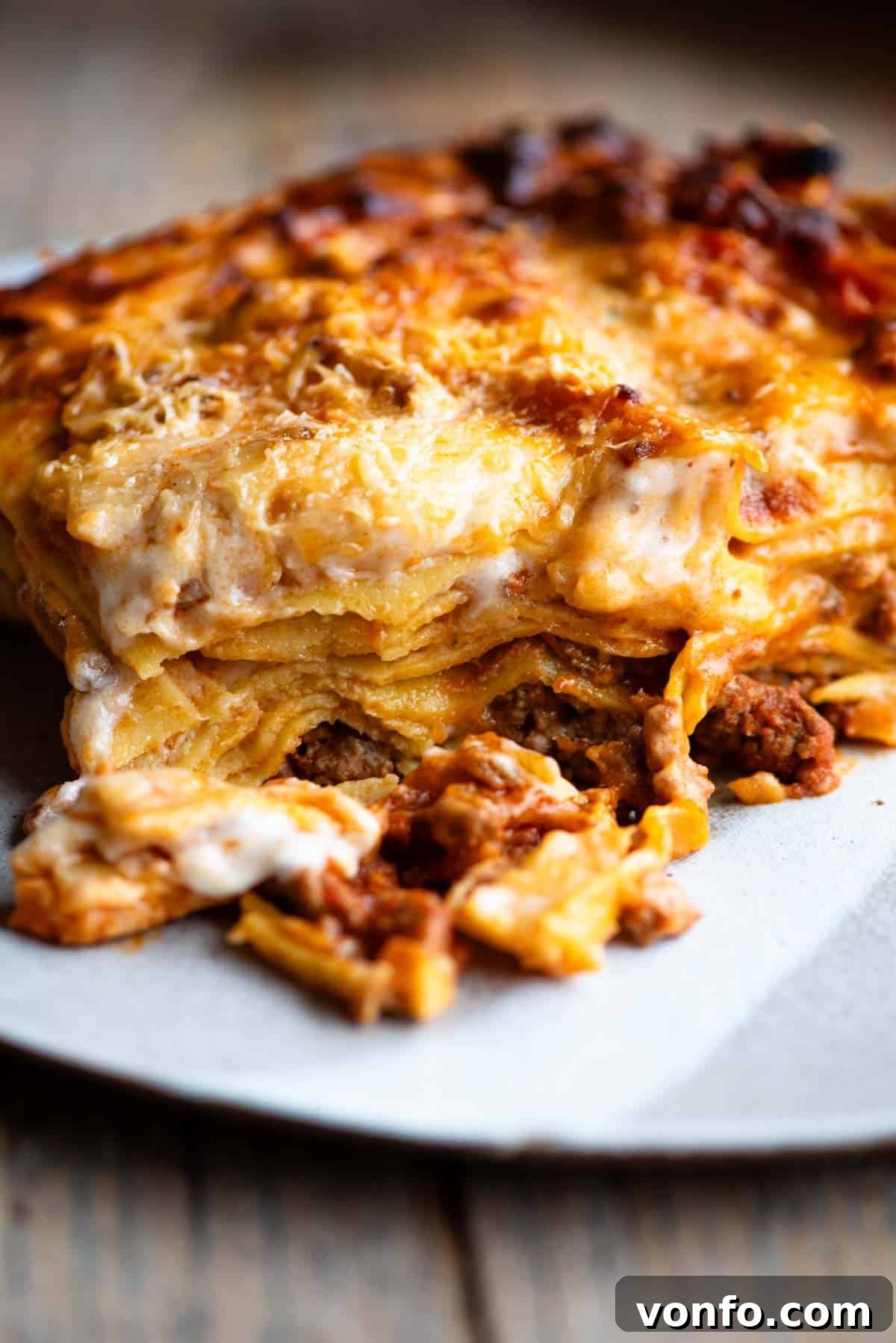
Prepare to create an absolutely divine **Lamb Lasagna**, a true masterpiece of Italian comfort food that promises to impress. This recipe features a deeply flavorful, rich ragu, lovingly slow-simmered to perfection. It’s layered with delicate sheets of fresh homemade pasta and generously coated with a luxurious, creamy Pecorino bechamel sauce. Whether it’s a special family dinner, a festive Easter celebration, or simply a craving for an exquisite meal, this lamb lasagna offers an unforgettable culinary experience.
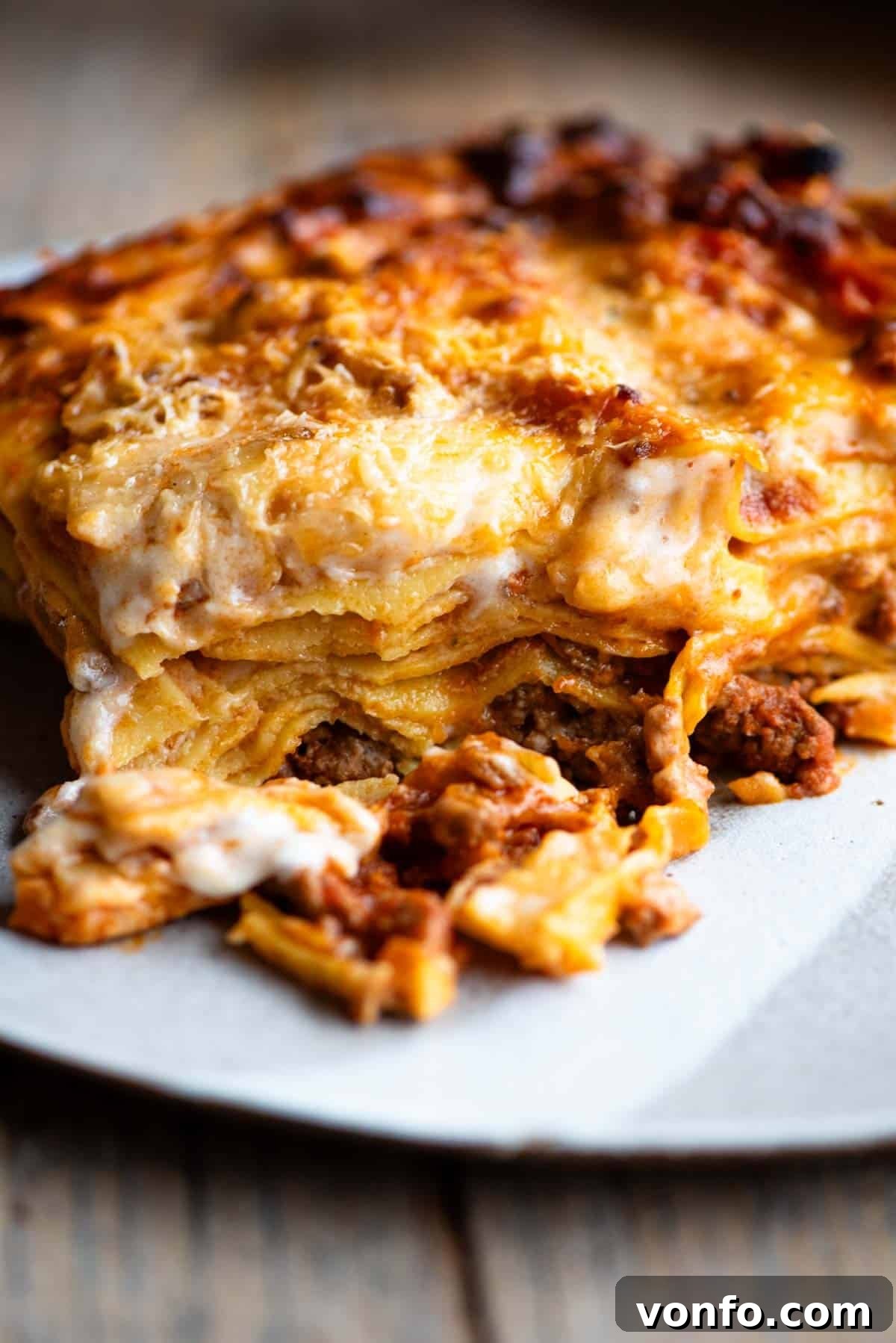
Authentic Italian Lamb Lasagna: A Celebration of Flavors
When searching for a truly showstopping and unique way to feature lamb on your dinner table, especially during significant holidays like Easter, this Italian Lamb Lasagna stands out as the ultimate choice. It’s far more than just a meal; it’s an experience, a labor of love that rewards you with unparalleled taste and satisfaction.
What sets this lasagna apart is the meticulous preparation of each component. The heart of the dish is a slowly simmered lamb ragu, bursting with aromatic herbs and rich tomato flavors. This is perfectly complemented by layers of fresh, tender homemade pasta, which absorb the sauces beautifully, creating a melt-in-your-mouth texture. Finally, a smooth, creamy, and distinctively savory Pecorino bechamel sauce ties all the elements together, adding a delightful tang that elevates the entire dish.
Crafting a lasagna of this caliber, particularly when opting for homemade pasta, does require dedication and time. However, the effort is undeniably worth it. Just like our highly-praised traditional beef lasagna, the depth of flavor and comforting richness of this lamb version will undoubtedly earn rave reviews. Imagine spending a leisurely afternoon in the kitchen, perhaps with a glass of fine wine and your favorite music playing, creating something truly special. This isn’t just cooking; it’s an act of culinary passion. We hope you cherish making and savoring it as much as we do!
Buon Appetito e Buona Pasqua!
For detailed instructions, ingredient notes, step-by-step photos, and expert tips to master this recipe, please continue reading. The full printable recipe is available at the bottom of this page.
Essential Ingredients for Your Lamb Lasagna
Creating an exceptional Lamb Lasagna begins with selecting high-quality ingredients. Each component plays a crucial role in building the complex flavors and textures that make this dish so special.
Ingredient Notes and Expert Substitutions
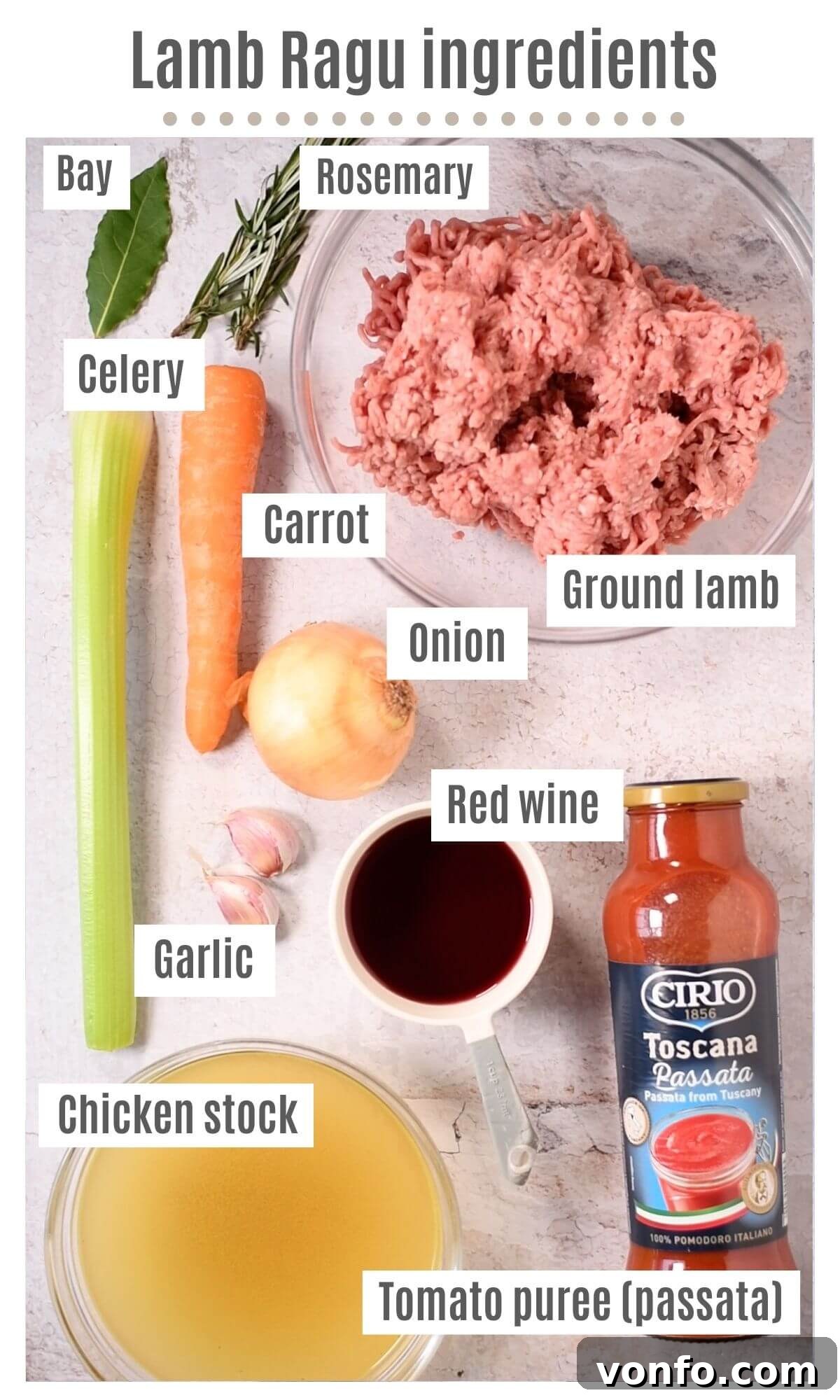
- **Ground Lamb Mince:** Opt for good quality ground lamb, ideally with about 20% fat content, for the richest flavor. Lamb tends to release a good amount of fat during cooking, which you’ll need to drain off for a perfectly balanced ragu.
- **Soffritto (Carrot, Celery, Onion):** This classic Italian aromatic base is non-negotiable for building deep, complex flavors in your ragu. Finely dicing these vegetables allows them to melt into the sauce, providing a sweet and savory foundation.
- **Fresh Garlic:** Always use fresh garlic cloves, finely minced. The pungent aroma and taste of fresh garlic are essential and cannot be replicated by garlic powder.
- **Red Wine:** A dry red wine adds a wonderful depth and acidity to the ragu, deglazing the pan and enhancing the meat’s flavor. If you prefer, a dry white wine can also be used, or for an alcohol-free version, simply omit it and use a little extra stock.
- **Tomato Passata (Tomato Puree US):** We recommend using smooth tomato passata for a velvety ragu. However, crushed tomatoes or even a good quality diced tomato can be used, though the texture of the final sauce may vary slightly.
- **Chicken Stock:** Use a low-sodium chicken stock to maintain control over the saltiness of your ragu. This allows you to adjust seasoning precisely at the end of the cooking process.
- **Fresh Herbs (Rosemary and Bay Leaf):** These robust herbs are perfect partners for lamb, infusing the ragu with their earthy, aromatic notes. Fresh herbs provide a significantly better flavor than dried.
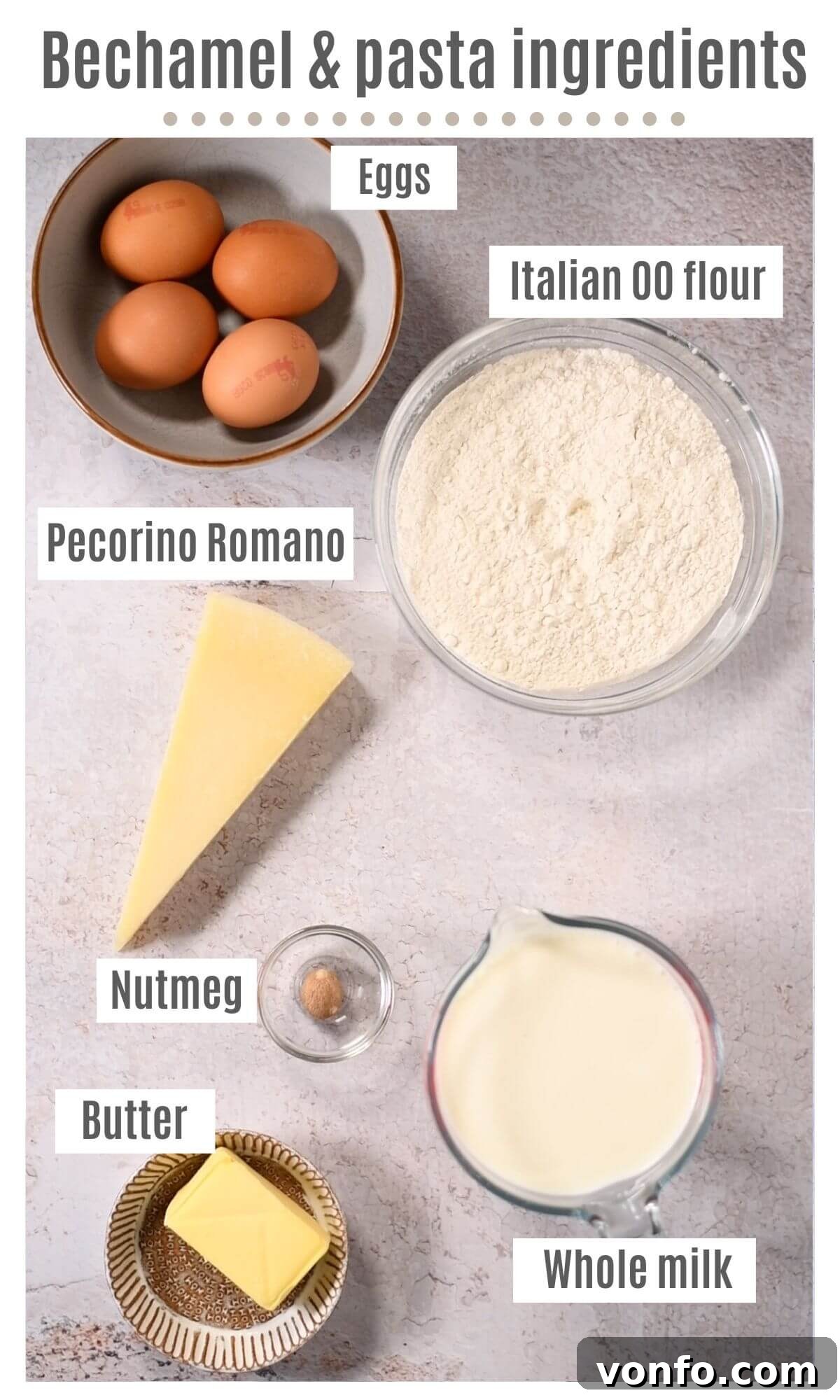
- **Homemade Pasta Dough:** For the most authentic and tender lasagna, making your own pasta is highly recommended. All you need are Italian 00 flour and good quality eggs. If time is a constraint, fresh, store-bought lasagna sheets (found in the refrigerated section) are an excellent alternative. Avoid dried lasagna sheets, as they tend to be too rigid for this style of lasagna.
- **Besciamella (Italian Bechamel Sauce):** This creamy sauce is made with whole milk, butter, flour, and a pinch of nutmeg. Using whole milk is crucial for achieving the rich, luxurious consistency and flavor. Reduced-fat milk will result in a thinner, less satisfying sauce.
- **Pecorino Romano Cheese:** This sharp, salty sheep’s milk cheese is a revelation with lamb and truly elevates the bechamel. While Parmigiano Reggiano can be substituted, Pecorino Romano adds a distinct and authentic Italian touch that is highly recommended.
Step-by-Step Guide to Crafting Your Lamb Lasagna
Embark on your culinary journey with these detailed instructions, designed to guide you through each stage of preparing this magnificent Lamb Lasagna. From the rich ragu to the silky pasta and creamy bechamel, every step is key to a truly unforgettable dish.
Mastering the Lamb Ragu: A Symphony of Flavors
The ragu is the soul of this lasagna, requiring patience and a slow hand to develop its deep, complex flavors. Starting this step the day before you plan to assemble the lasagna is highly recommended, as flavors intensify overnight.
- **Prepare the Soffritto:** Begin by finely chopping the carrot, celery, and onion. This fine dice is essential for the vegetables to properly “melt” into the sauce, providing a smooth base without noticeable chunks. Set them aside.
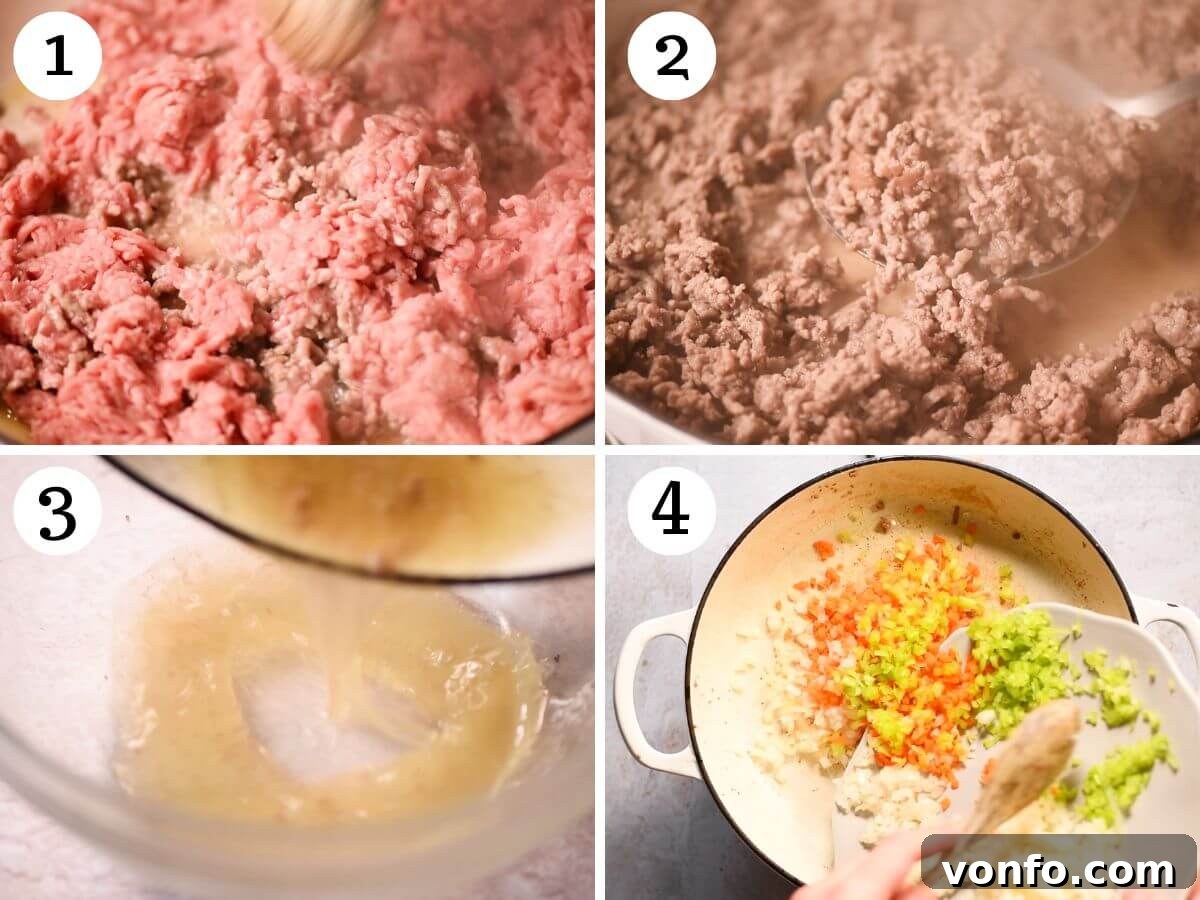
- **Brown the Lamb:** Heat a generous drizzle of olive oil in a large, heavy-bottomed pan or Dutch oven over medium-high heat. Add the ground lamb and brown it thoroughly, breaking it up with a spoon. This step is crucial for developing rich, caramelized flavors. Once browned, use a slotted spoon to transfer the lamb to a separate bowl, leaving the rendered fat in the pan. Carefully pour all the accumulated fat into another bowl to discard once it solidifies. This ensures your ragu isn’t overly greasy.
- **Sauté the Soffritto:** Return the pan to the stove (add about 1 tablespoon of fresh olive oil if needed). Add the chopped soffritto (carrot, celery, and onion) and sauté over a medium-low heat. Cook slowly for about 10 minutes until the vegetables are very soft and translucent, but not browned. This gentle cooking process is vital for drawing out their natural sweetness and building the foundational flavor of your ragu.
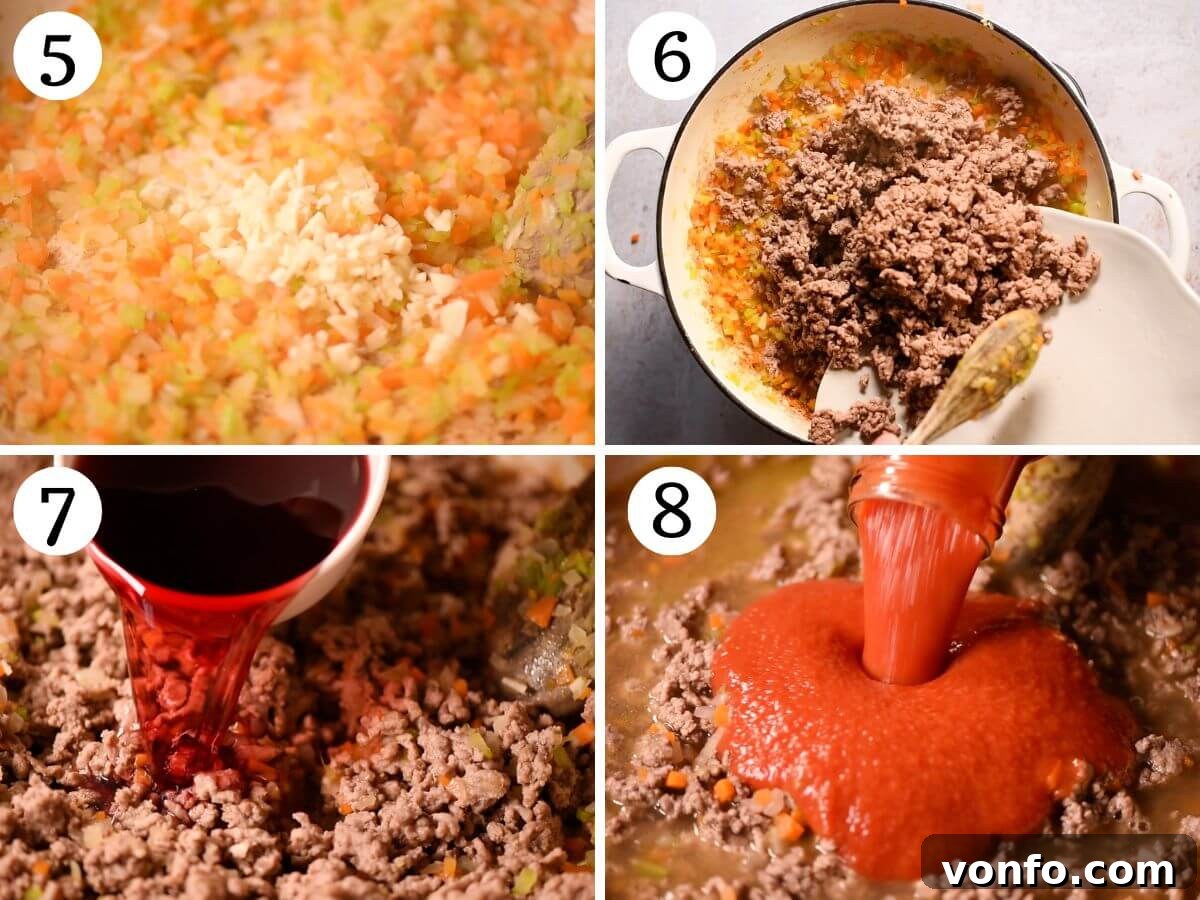
- **Infuse with Garlic and Deglaze:** Once the soffritto is softened, add the minced garlic and sauté for just 1 minute until fragrant, being careful not to burn it. Return the drained browned lamb to the pan with the vegetables and stir well to combine. Pour in the red wine and bring to a simmer, allowing it to reduce for 2-3 minutes. This step, known as deglazing, scrapes up all the flavorful browned bits from the bottom of the pan and cooks off the alcohol, leaving behind a concentrated, rich flavor.
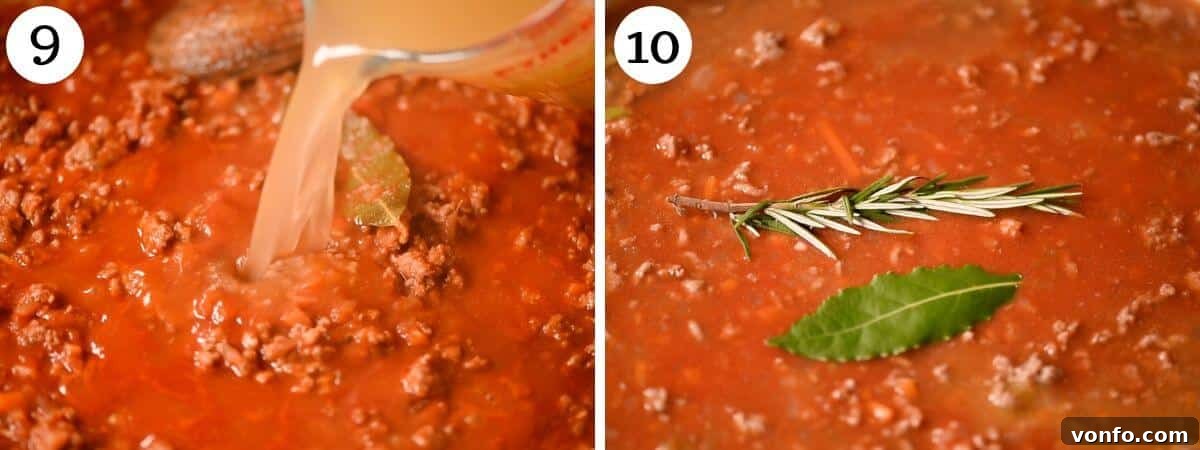
- **Slow Simmer for Depth:** Add the tomato passata, half of the chicken stock, the bay leaf, and the sprig of fresh rosemary to the pan. Stir everything together. Bring the sauce to a gentle simmer, then reduce the heat to low and let it cook, uncovered, for a minimum of 4 hours. Stir occasionally. About halfway through the simmering process, add the remaining chicken stock. If the sauce reduces too much and becomes too thick, you can add a little more water or stock as needed to maintain a rich, but still saucy, consistency. This long, slow simmer allows the flavors to meld and deepen beautifully.
Crafting Silky Homemade Pasta Dough
Homemade pasta is a game-changer for lasagna, offering a delicate texture and incredible freshness that store-bought varieties simply can’t match. Don’t be intimidated; the process is incredibly rewarding!
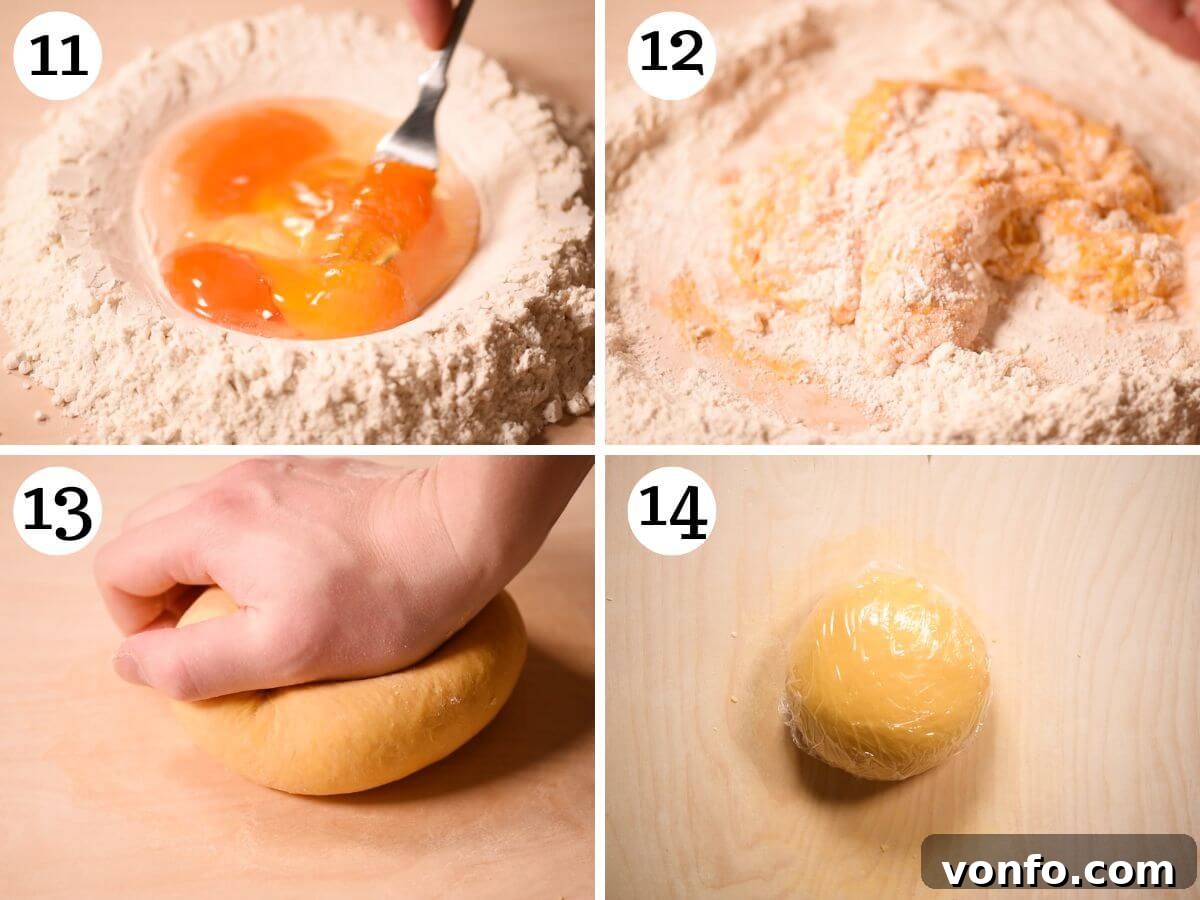
- **Form the Well:** On a clean, flat work surface, mound the Italian 00 flour and create a large, wide well in the center. Ensure the walls of the well are sturdy enough to hold the eggs.
- **Combine Eggs and Flour:** Crack the eggs directly into the well. Using a fork, gently scramble the eggs, then gradually start incorporating the flour from the inner edges of the well, little by little, into the egg mixture. Continue until a shaggy, rough dough forms.
- **Knead to Perfection:** Once the dough is cohesive enough, discard the fork and use your hands to bring the dough together. Knead the dough vigorously for about 10 minutes. The goal is to develop the gluten, making the dough smooth, elastic, and slightly firm.
- **Pasta Tip (Hydration Adjustment):** The exact hydration of your pasta dough can be influenced by factors like the size of your eggs and the humidity in your kitchen. If the dough feels overly sticky, gradually incorporate a small amount of extra flour until it reaches the desired consistency. Conversely, if it seems too dry and stiff, wet your hands with a tiny bit of water and continue kneading to introduce more moisture.
- **Rest the Dough:** Once kneaded, wrap the dough tightly in plastic wrap (cling film) and let it rest at room temperature for at least 30 minutes. This resting period is crucial; it allows the gluten to relax, making the dough much easier to roll out.
Creating the Creamy Pecorino Bechamel
This bechamel, enriched with Pecorino, provides a creamy counterpoint to the rich lamb ragu. Its velvety texture and savory notes are essential for a balanced lasagna.
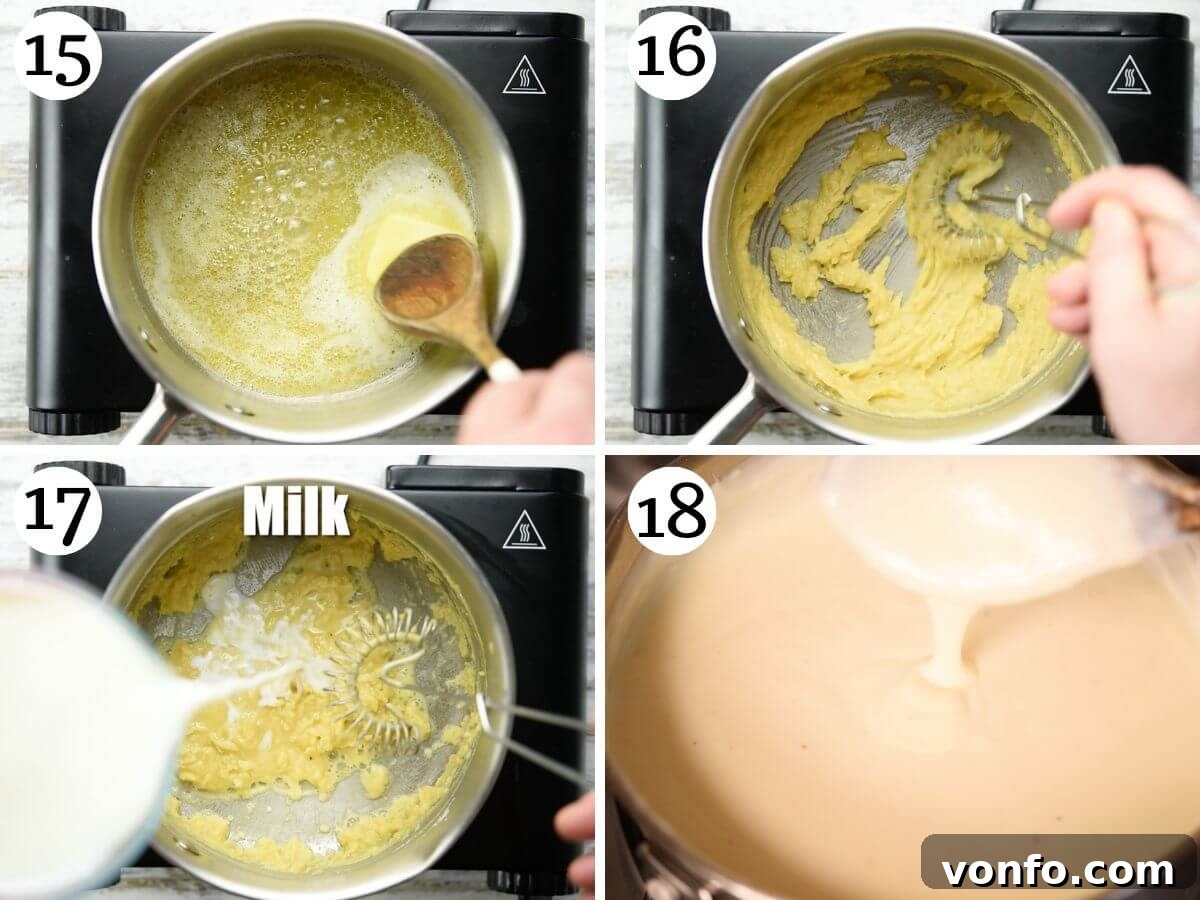
- **Prepare the Roux:** In a medium saucepan, melt the butter over medium heat. Once the butter has completely melted and is slightly frothy, add the flour. Whisk continuously for about 1 minute to create a smooth roux. This cooks out the raw flour taste and forms the base for your thickening agent.
- **Gradually Add Milk:** Pour in half of the whole milk while vigorously whisking. Continue whisking until the mixture is smooth and completely lump-free. Once this first addition has thickened, slowly add the remaining milk, continuing to whisk constantly until the sauce is smooth, thick, and coats the back of a spoon. Consistency is key here; patience will prevent lumps.
- **Season and Finish:** Remove the bechamel from the heat. Stir in a generous pinch of salt, freshly ground black pepper, and freshly grated nutmeg. Finally, add the grated Pecorino cheese and stir until the cheese has completely melted and is fully incorporated into the sauce. Set the bechamel aside, covering it with plastic wrap pressed directly onto the surface to prevent a skin from forming.
Rolling and Blanching the Fresh Pasta Sheets
With your ragu and bechamel prepared, the next crucial step is to roll out and briefly blanch your homemade pasta. This ensures tender, perfectly cooked lasagna layers.
- **Prepare Boiling Water:** Bring a large pot of water to a rolling boil. Once boiling, generously salt the water – it should taste like the sea.
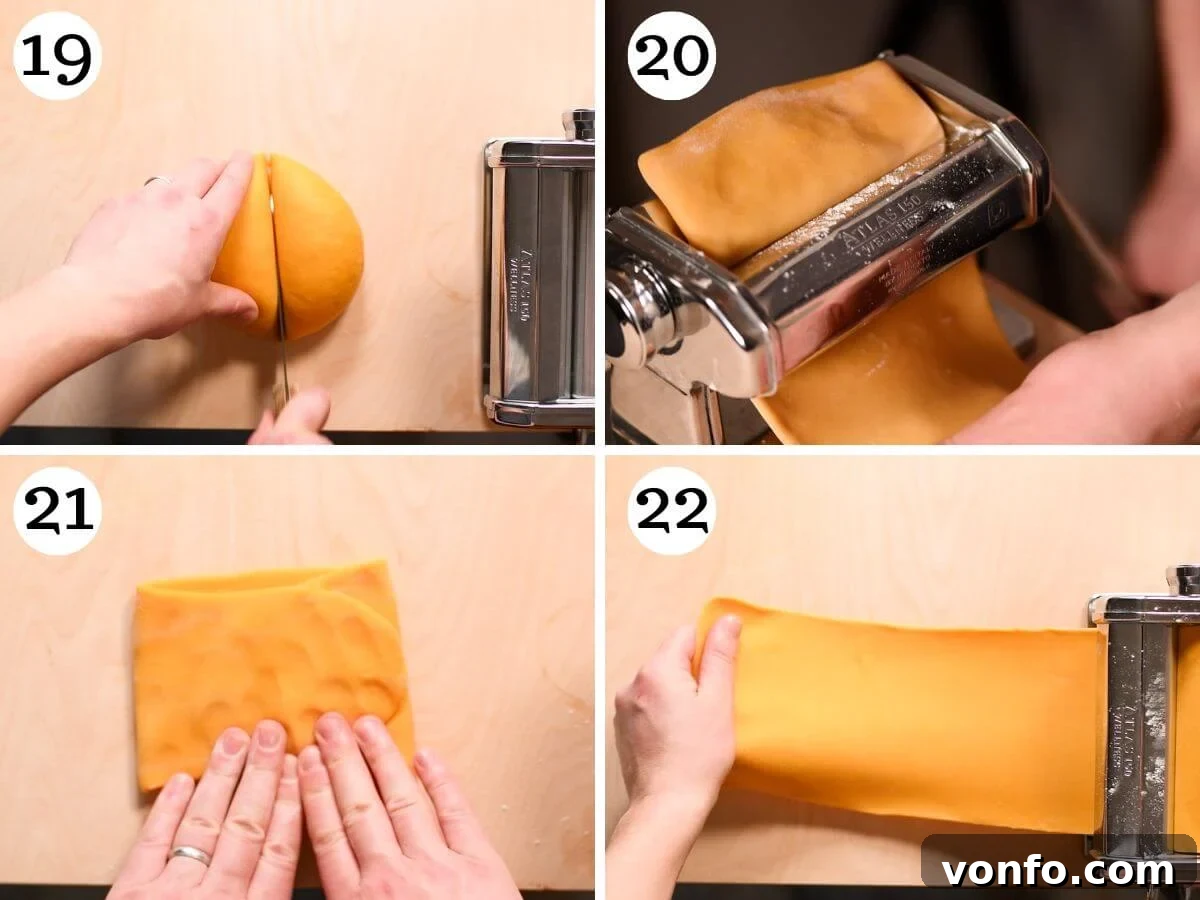
- **Set Up Pasta Machine:** While the water heats, set up your pasta machine. Start with the widest setting (typically number 0). Cut your rested pasta dough in half, keeping one half wrapped in plastic wrap to prevent it from drying out.
- **Initial Rolling and Folding:** Flatten the unwrapped half of the dough slightly with your hands to make it easier to feed into the machine. Pass it through the widest setting. Then, fold one end of the dough sheet to the middle, and the other end over that, creating a neat “leaflet” shape. Flatten this folded dough slightly and pass it through the widest setting again. Repeat this folding and rolling process one more time. This technique helps to smooth out the dough and strengthen the gluten.
- **Progressive Rolling:** Now, roll the dough once through each successive setting on your pasta machine, incrementally reducing the thickness, until you reach the third-to-last number (usually number 7). This provides the ideal thickness for lasagna sheets – thin enough to be delicate but sturdy enough to hold the layers. If the pasta dough becomes sticky at any point, lightly dust it, your work surface, and the pasta machine with a small amount of flour.
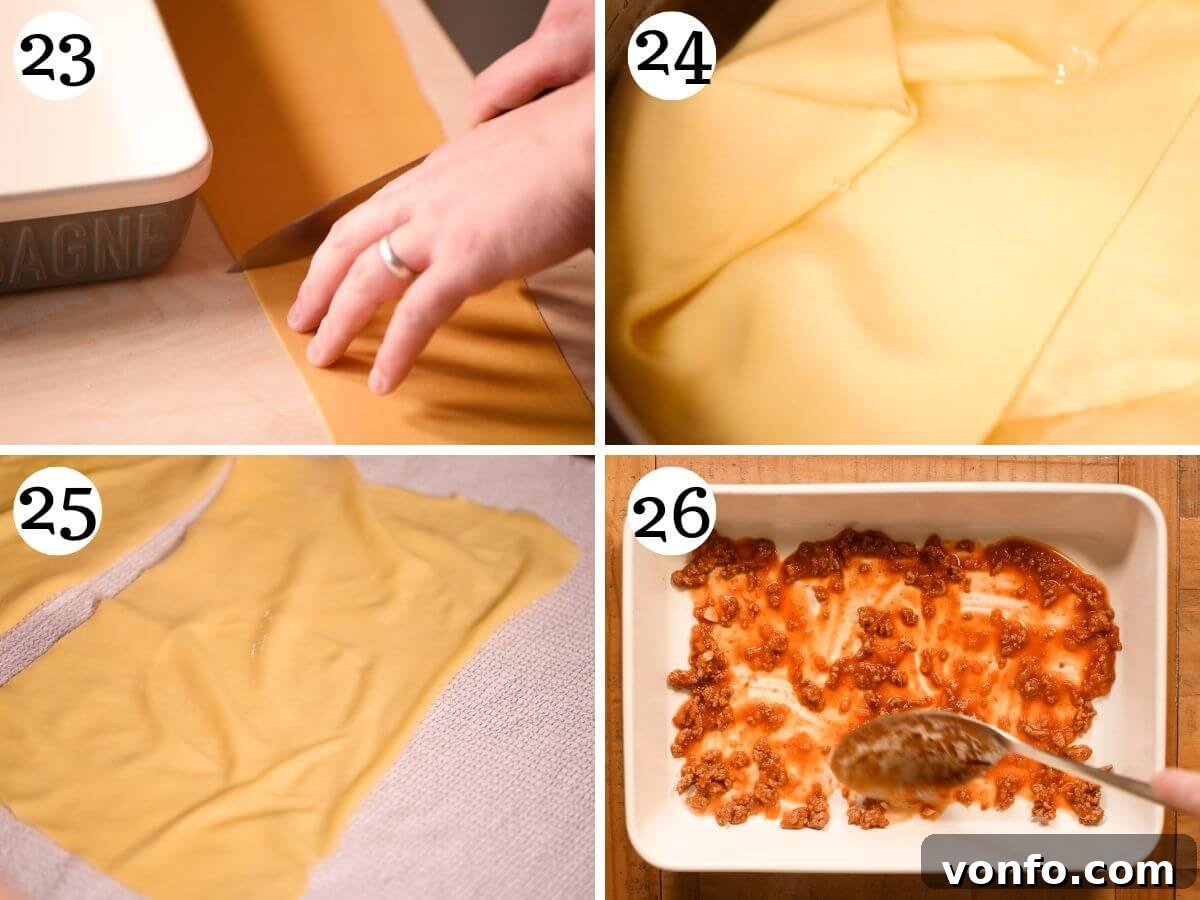
- **Blanch and Dry Pasta Sheets:** Once rolled to the desired thickness, cut the long pasta sheet into individual pieces that are large enough to fit your lasagna baking dish. Carefully blanch 2-3 pasta sheets at a time in the boiling salted water for just 1 minute. They should be pliable but still firm. Using tongs, transfer the blanched pasta sheets to a clean kitchen towel to dry out for a few seconds. This prevents them from sticking together.
- **Repeat and Assemble:** Repeat the rolling and blanching process with the second half of your pasta dough.
**Tip:** Many find it easier to begin assembling the lasagna with the first half of the blanched pasta sheets before rolling out and blanching the remaining dough. This helps manage the process and prevents the pasta from drying out too much.
Assembling Your Delicious Lamb Lasagna
The layering process is where all your hard work comes together. Pay attention to even distribution for a perfectly balanced and visually appealing lasagna.
- **Preheat Oven:** If you plan to bake the lasagna immediately, preheat your oven to 200°C (400°F).
- **First Ragu Layer:** Spread a thin, even layer of the lamb ragu across the bottom of your 9×13 inch baking dish. This prevents the bottom pasta layer from sticking and infuses flavor from the very start.
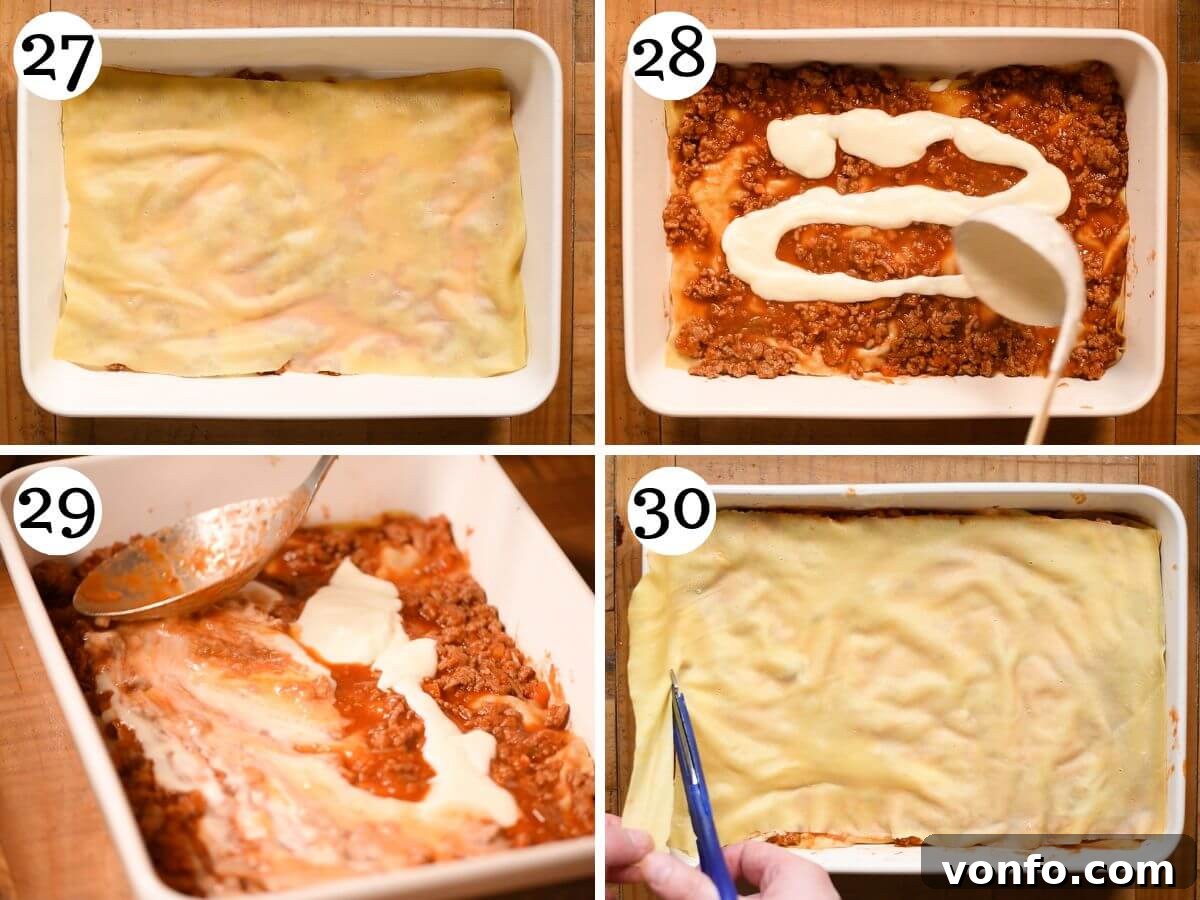
- **First Pasta Layer:** Carefully lay the first layer of blanched pasta sheets over the ragu. Arrange them to cover the entire surface, trimming any excess pasta as needed to fit the dish precisely.
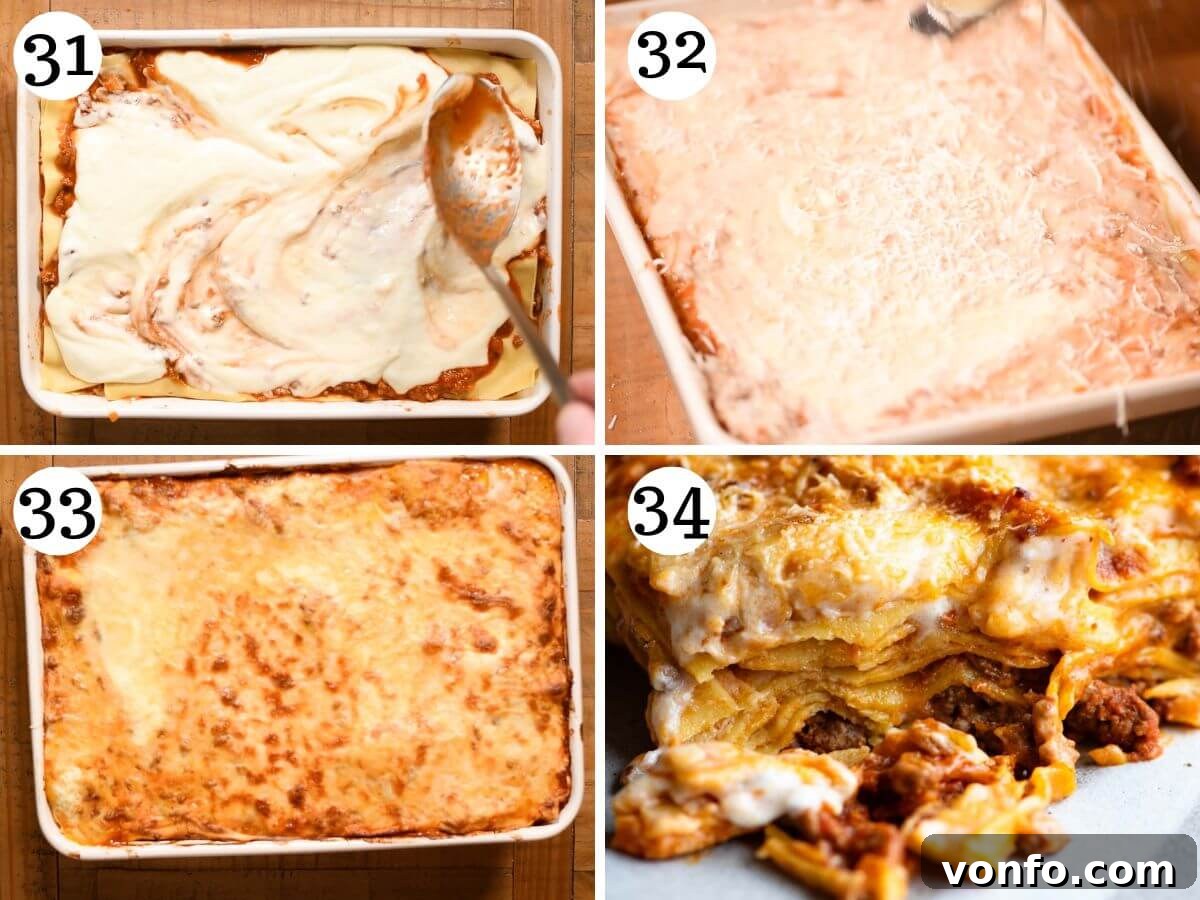
- **Ragu and Bechamel Layers:** For the next layer, spread a generous spoonful of ragu over the pasta, followed by a ladleful of Pecorino bechamel sauce, spreading it evenly on top of the ragu. The two sauces will mingle beautifully.
- **Continue Layering:** Continue this layering sequence: pasta, ragu, then bechamel. You should aim for approximately 6 layers in total, depending on the depth of your dish. Ensure that the very final layer is a little ragu topped with a generous amount of creamy bechamel. This will create a beautiful golden crust.
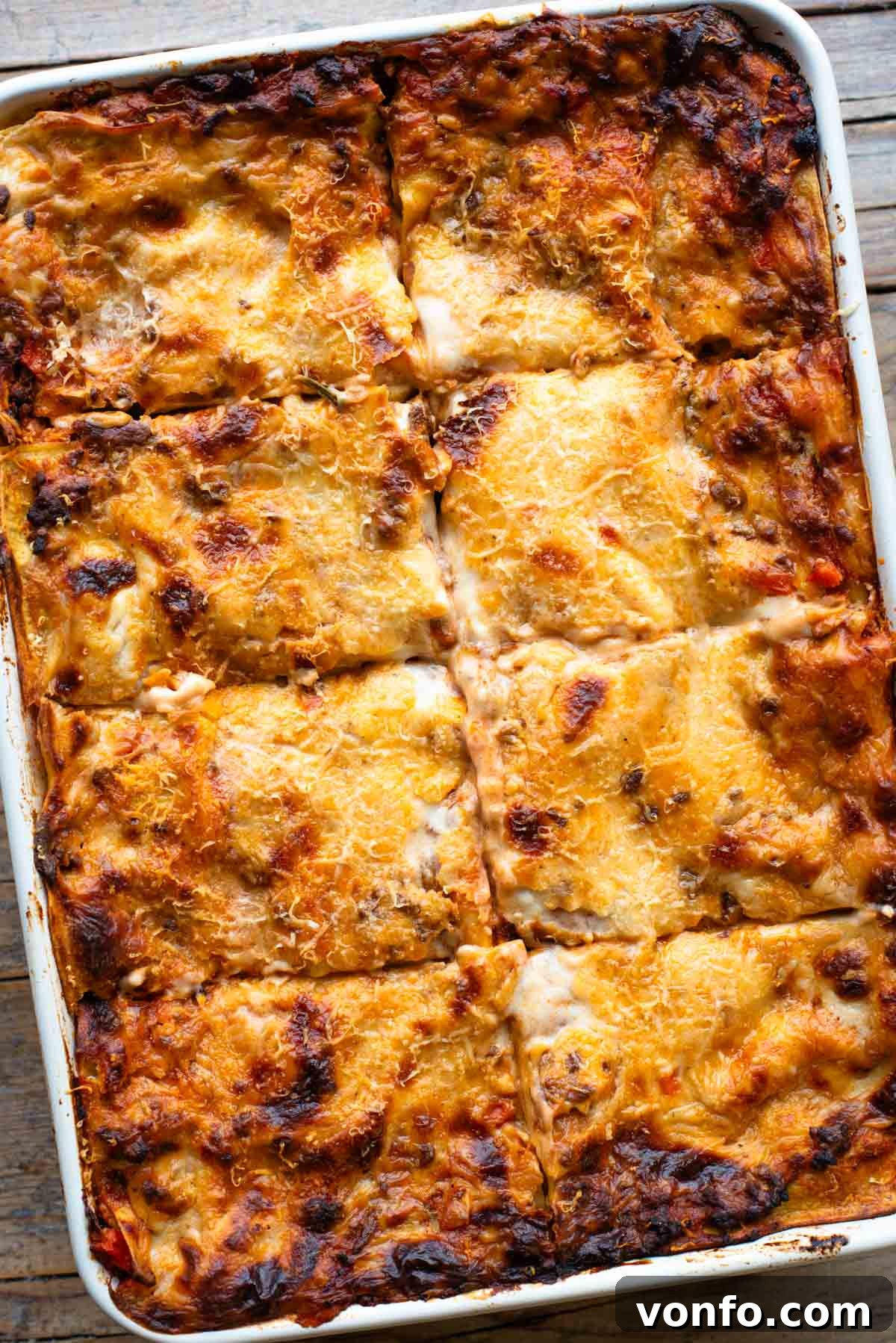
- **Final Bake:** Sprinkle a generous grating of fresh Pecorino cheese over the top of the lasagna. Bake, uncovered, for 30-40 minutes, or until the top is gloriously golden brown and the sauces are bubbling invitingly around the edges.
- **Rest Before Serving:** Once baked, remove the lasagna from the oven and let it rest for at least 10 minutes before slicing and serving. This crucial resting period allows the layers to set, making for cleaner cuts and preventing the lasagna from falling apart.
Recipe Tips & Frequently Asked Questions
- **Prepare the Ragu in Advance:** For the absolute best flavor, make the lamb ragu a day ahead. Not only does it require several hours to simmer, but allowing it to rest overnight in the fridge allows all the beautiful flavors to deepen and meld, making it even more delicious.
- **Drain the Lamb Fat Thoroughly:** Lamb mince can be quite fatty. When browning, a significant amount of fat will be rendered. It’s crucial to drain this off. After browning, remove the lamb with a slotted spoon to a bowl, then carefully pour out the hot fat into a separate heatproof bowl. Discard the solidified fat once cooled (never down the drain, as it can cause clogs). This step ensures your ragu is rich, not greasy.
- **Lasagna Sheets: Homemade vs. Store-Bought:** While homemade pasta offers the best texture and flavor, using store-bought fresh lasagna sheets (found in the refrigerated section of your grocery store) is a perfectly acceptable and time-saving alternative. Avoid dried lasagna sheets, as they often require pre-boiling and can result in a less tender lasagna.
- **Precision for Pasta with a Kitchen Scale:** If you choose to make your own pasta dough, using a kitchen scale to measure your flour is highly recommended. Measuring by weight is far more accurate than using volume (cups), ensuring the correct flour-to-egg ratio for a perfectly hydrated and pliable dough.
- **Troubleshooting Sticky or Dry Pasta Dough:** If your pasta dough feels too sticky during kneading or rolling, add a tiny bit more flour, kneading it in gradually. If it’s too dry, wet your hands slightly and continue kneading; the moisture from your hands will help hydrate it.
- **Serving Suggestions:** This Lamb Lasagna is a hearty meal on its own. Pair it with a simple green salad with a light vinaigrette, or some crusty Italian bread to sop up any leftover sauce. A medium-bodied red wine, such as a Chianti or Montepulciano d’Abruzzo, would complement the rich lamb perfectly.
- **Leftovers:** Leftover lasagna stores beautifully. Cover it tightly and refrigerate for up to 2-3 days. Reheat gently in the oven or microwave.
Can I prepare this in advance?
Absolutely! I highly recommend making the lamb ragu the day before you plan to assemble and bake the lasagna. You can also fully assemble the entire lasagna, cover it tightly, and keep it refrigerated for up to 1 day before baking. This makes it an ideal dish for entertaining or busy schedules.
Can I freeze this?
Yes, this lasagna freezes very well. Once the baked lasagna has cooled completely, you can freeze the entire dish or cut it into individual portion sizes for convenience. Wrap it tightly in plastic wrap and then foil to prevent freezer burn. Make sure the lasagna defrosts completely in the refrigerator before baking it from frozen. Alternatively, you can freeze the ragu and bechamel sauces separately. Simply defrost them before assembling your fresh lasagna.
More Italian Easter Recipes to Explore
If you loved this Lamb Lasagna, be sure to explore more of our traditional Italian Easter recipes, perfect for celebrating with family and friends. Each recipe brings a taste of Italy’s rich culinary heritage to your table.
Antipasti
Pizza Rustica (Italian Easter Pie)
Antipasti
Torta Pasqualina (Spinach & Ricotta Egg Pie)
Mains
Italian Lamb Ragu (Ragu di Agnello)
Italian Desserts
Italian Easter Bread (Pane di Pasqua)
If you’ve tried this **Lamb Lasagna recipe** or any other delicious recipe on our blog, we’d love to hear from you! Please don’t forget to leave a comment below and share your experience. Your feedback is incredibly valuable to us. You can also **follow us** on Facebook, Instagram, and Pinterest for daily inspiration, or sign up for our Newsletter to receive our latest recipes directly in your inbox.
Step By Step Photos Above
Most of our recipes come with step by step photos, helpful tips and tricks to make it perfectly first time and even video tutorials for visual guidance!
Italian Lamb Lasagna with Pecorino Bechamel
By Emily
1 hour hr 15 minutes mins
4 hours hrs
5 hours hrs 15 minutes mins
8 servings
Print Recipe
Equipment
-
Pasta machine or rolling pin
-
9×13 inch baking dish
-
Clean kitchen towels (for blanching pasta)
-
Plastic wrap (cling film)
Ingredients
For the Ragu
- 1.7 lbs ground lamb mince (800g, ideally 20% fat)
- 1 large carrot
- 1 large onion
- 1 large celery stick
- 2 cloves fresh garlic, minced
- 1 cup dry red wine (240ml)
- 2 and 1/3 cups tomato passata (tomato puree) (700g)
- 5 and 1/4 cups low-sodium chicken stock (1250 ml)
- 1 bay leaf
- 1 sprig fresh rosemary
- Olive oil, for cooking
For the Pasta Dough (Highly Recommended)
- 3 medium eggs (220g)
- 1 egg yolk
- 300 g Italian 00 flour (approximately 2 cups plus 2 tablespoons)
For the Pecorino Bechamel
- 5 tablespoons unsalted butter (70g)
- 5 tablespoons all-purpose flour (70g)
- 4 cups whole milk (1 liter)
- 1 pinch freshly grated nutmeg
- 1 cup freshly grated Pecorino Romano cheese (70g)
- Salt and freshly ground black pepper, to taste
Instructions
Preparation notes
-
I strongly recommend preparing the lamb ragu a day in advance. Not only does it require several hours of simmering to develop its full flavor, but allowing it to rest overnight enhances the depth and richness, making it even more delicious.
To make the ragu
-
Finely chop the carrot, celery, and onion for your soffritto base, and set them aside.
-
Heat a drizzle of olive oil in a large, heavy-bottomed pan. Add the ground lamb and brown it thoroughly, breaking it up. Once browned, remove the lamb to a bowl using a slotted spoon. Pour all the rendered fat into a separate bowl to discard once solidified (do not pour down the drain).
-
Add about 1 tablespoon of fresh olive oil to the pan (if needed) and sauté the chopped soffritto (carrot, celery, and onion) over medium-low heat. Cook slowly for about 10 minutes until the vegetables are very soft and translucent, ensuring they do not brown. This gentle cooking develops their flavor.
-
Once the soffritto is softened, add the minced garlic and sauté for approximately 1 minute until fragrant. Return the drained browned lamb to the pan and stir to combine with the vegetables. Pour in the red wine and allow it to reduce for 2-3 minutes, simmering until you can no longer smell the alcohol.
-
Stir in the tomato passata, half of the chicken stock, the bay leaf, and the sprig of rosemary. Bring to a gentle simmer, then reduce the heat to low and cook, uncovered, for 4 hours. Add the remaining chicken stock halfway through the cooking time. If the sauce reduces too much, you can add a little more water or stock to maintain a rich, saucy consistency.
Make the pasta dough
-
On a clean work surface, mound the flour and make a large, wide well in the middle. Add the eggs and egg yolk to the well and gently scramble them with a fork.
-
Using your fork, gradually incorporate the flour from the edges of the well into the egg mixture until a rough dough forms. Use your hands to bring the dough together and knead it vigorously for 10 minutes until it is smooth and elastic.
-
**Pasta Tip:** The hydration of your pasta dough can vary based on egg size and humidity. If the dough feels too sticky, incorporate a little more flour at a time. If it’s too dry, wet your hands slightly and continue kneading to add moisture.
-
Once kneaded, wrap the dough tightly in plastic wrap (cling film) and let it rest for at least 30 minutes at room temperature.
Make your bechamel
-
Add the butter to a saucepan over medium heat. Once melted, add the flour and whisk into the butter for about 1 minute to create a smooth roux.
-
Gradually add half of the milk while continuously whisking until the sauce is smooth and lump-free. Once thickened, add the remaining milk and whisk until smooth and thickened to the desired consistency.
-
Remove from heat. Add a pinch of salt, pepper, freshly grated nutmeg, and the grated Pecorino cheese. Stir until the cheese has completely melted and is fully incorporated. Set aside, covering the surface directly with plastic wrap to prevent a skin from forming.
Roll out and blanch the pasta
-
Bring a large pot of water to a rolling boil and salt it generously.
-
Set up your pasta machine to its widest setting (usually number 0). Cut your rested dough in half, keeping one half wrapped in plastic wrap.
-
Flatten the unwrapped dough half and pass it through the widest setting. Fold one end to the middle, then the other end over that (like a leaflet). Flatten and pass through the widest setting again. Repeat this folding and rolling one more time to smooth the dough.
-
Roll your dough once through each setting, gradually thinning it, until you reach the 3rd last number (typically number 7). Lightly dust the pasta, surface, and machine with flour if it becomes sticky.
-
Cut the pasta into sheets large enough for your lasagna dish. Blanch 2-3 sheets at a time in the boiling water for 1 minute. Transfer them immediately to a clean kitchen towel to dry for a few seconds.
-
Repeat the rolling and blanching process with the second half of the dough. **Tip:** I find it easier to start assembling the lasagna with half of the blanched pasta before rolling out the rest, to prevent the pasta from drying out.
Layer the lasagna
-
If baking immediately, pre-heat your oven to 200°C (400°F).
-
Spread a thin layer of ragu on the bottom of your baking dish. Lay the first layer of pasta sheets on top, cutting any excess to fit.
-
For the subsequent layers, spread a generous spoonful of ragu, followed by a ladleful of bechamel, spreading it evenly over the ragu. Continue this layering (pasta, ragu, bechamel) until all ingredients are used, aiming for 6 layers. Ensure the final layer consists of a little ragu topped with a generous amount of bechamel. Top with grated Pecorino cheese and bake uncovered for 30-40 minutes, until golden and bubbling.
-
Allow the lasagna to rest for 10 minutes after baking before cutting and serving. This helps the layers set for cleaner slices.
Notes
- Prepare the ragu the day before – I recommend making the ragu the day before not only because it needs a good few hours to simmer but leaving it overnight will allow the flavours to develop making it even more delicious.
- Drain the fat – a lot of fat is released when browning the lamb which will need to be drained off. Use a slotted spoon to remove the browned lamb to a bowl then pour all the fat into a separate bowl. Once the fat has hardened you can throw it in the food waste (don’t clog your drain).
- Lasagna sheets (pasta) – if you don’t want to make homemade pasta you can use store-bought pasta instead, I recommend using fresh lasagna sheets found in the refrigerator section.
- Use a kitchen scale for pasta – if making homemade pasta I highly recommend using a kitchen scale to weigh your flour. It’s the best way to get accurate results.
- Leftovers – the lasagna will keep well in the fridge for up to 2-3 days or can be frozen (see FAQ for freezing instructions).
Helpful Info for All Recipes
- I always use extra virgin olive oil in all of my recipes unless stated otherwise.
- When I use canned or jarred tomatoes of any kind, I always recommend using Cirio or Mutti brands for the best results and flavor, as quality tomatoes make a significant difference.
- All vegetables specified in our recipes are typically medium-sized unless explicitly stated otherwise.
- All recipes published here are carefully tested and developed using a fan (convection) oven, which may affect cooking times if you are using a conventional oven.
- Find out more about how nutrition is calculated, keeping in mind it’s an approximation.
- Check out our must-have Italian Pantry Staples to stock your kitchen with authentic ingredients.
- You can also find all our Essential Kitchen Tools for Italian Cooking to ensure you have the right equipment for any Italian dish.
Nutrition
Carbohydrates: 45g |
Protein: 32g |
Fat: 40g |
Saturated Fat: 20g |
Polyunsaturated Fat: 3g |
Monounsaturated Fat: 14g |
Trans Fat: 0.3g |
Cholesterol: 202mg |
Sodium: 343mg |
Potassium: 573mg |
Fiber: 2g |
Sugar: 7g |
Vitamin A: 1869IU |
Vitamin C: 2mg |
Calcium: 330mg |
Iron: 4mg
Nutrition information is automatically calculated, so should only be used as an approximation.

Never Miss a Recipe!
Want to unlock the secrets to truly authentic Italian cooking? Sign up for our newsletter today and receive exclusive tips, new recipes every week, and our guide to “10 Cooking Secrets Every Italian Food Lover Must Know.” Don’t miss out on perfecting your Italian culinary skills!
Subscribe to Our Newsletter