
Pizza Rustica: The Quintessential Italian Easter Pie Recipe
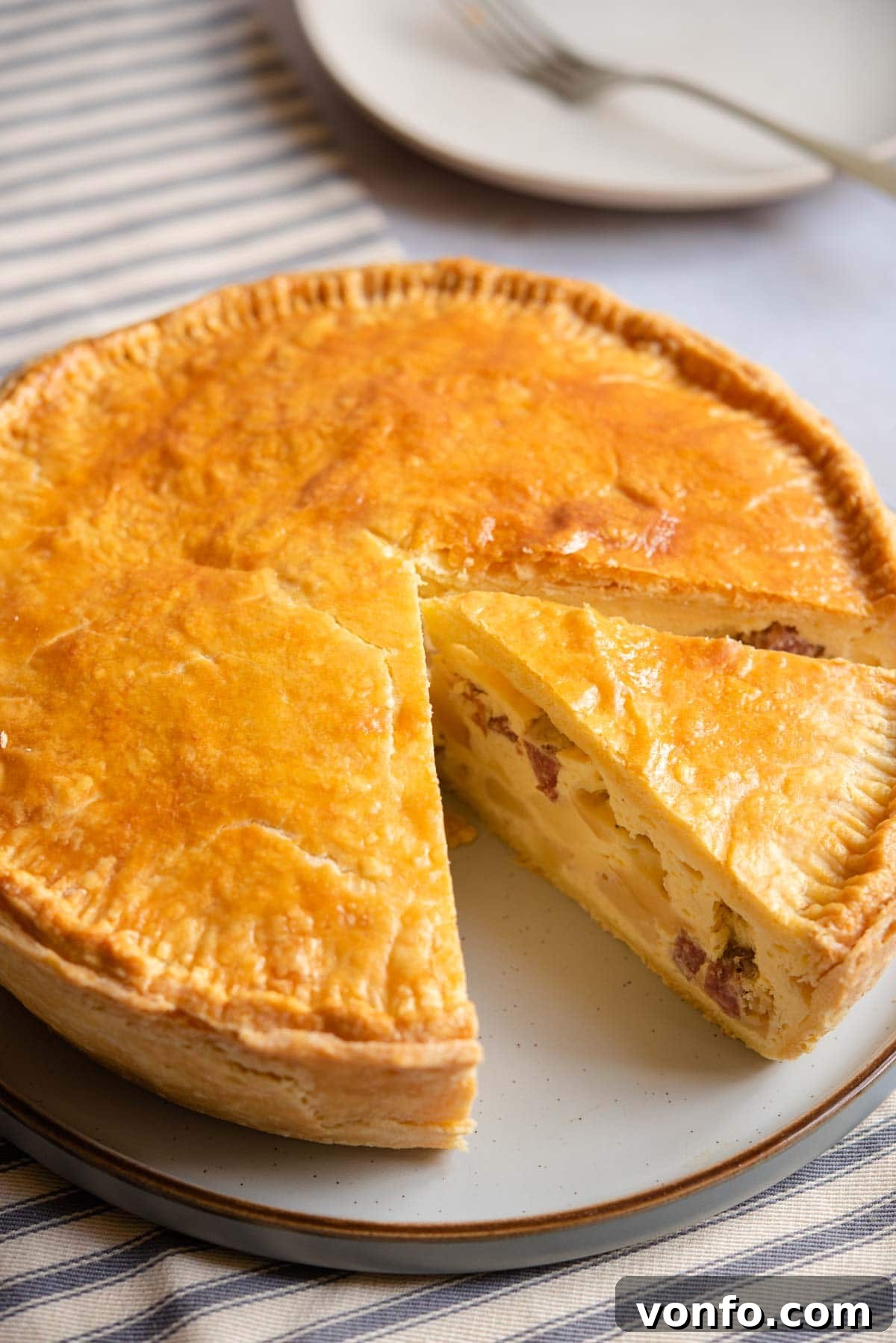
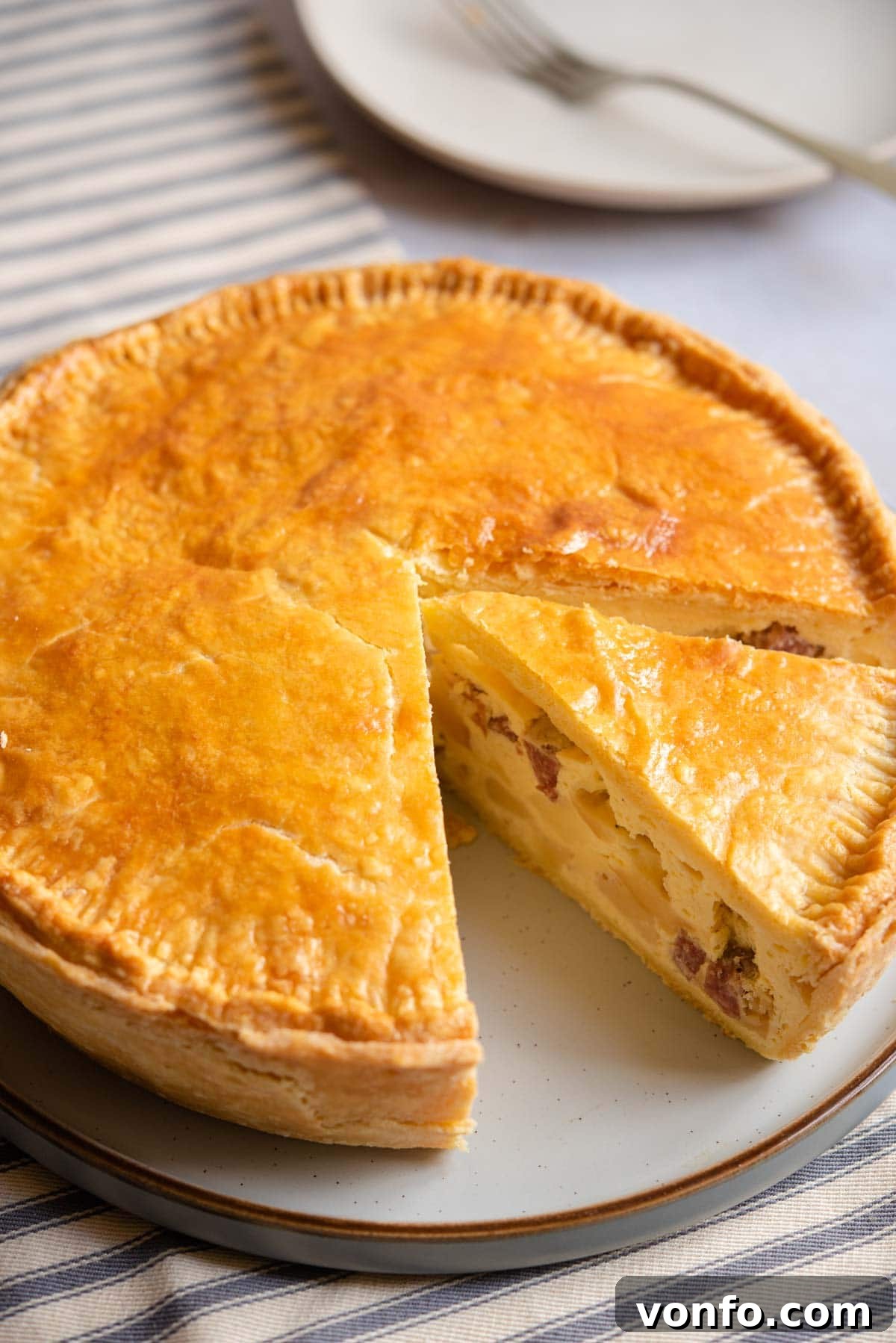
Pizza Rustica is more than just a pie; it’s a cherished tradition, an incredible Italian Easter pie renowned for its flaky, buttery crust and a sumptuously rich filling of eggs, creamy ricotta, savory salami, and various cheeses. This recipe promises not only a truly special pie, bursting with authentic Italian flavors, but also a visually impressive centerpiece for your Easter celebration or any festive gathering, delivering a taste of Southern Italy right to your table.
The Rich History and Tradition of Italian Easter Pie (Pizza Rustica)
Known by various evocative names such as Pizza Chiena (full pie) or Pizza Ripiena (stuffed pie), Pizza Rustica is a deeply rooted culinary tradition from the southern regions of Italy. This rustic and hearty savory pie holds a significant place in Italian Easter festivities, symbolizing the celebratory end of the Lenten fasting period with its rich, indulgent ingredients.
The origins of Pizza Rustica can be traced back centuries, evolving through generations as a staple of post-Lenten feasting. While its core elements — a savory crust, eggs, and a variety of cured meats and cheeses — remain consistent, the exact preparation can vary from one Italian household or region to another. Some families prefer a robust pizza dough crust, while others, like in our cherished recipe, opt for a delicate and flaky pastry crust. Regardless of the crust, the presence of eggs is a defining characteristic, giving the filling a delightful, quiche-like custard texture that is distinctly Italian in its execution and flavor profile.
Our particular rendition of Pizza Rustica celebrates this heritage with a perfectly flaky and buttery pastry – a crust so divine, you’ll find it surprisingly straightforward to master. This exquisite crust lovingly cradles an incredible filling made from farm-fresh eggs, smooth whole milk ricotta, aromatic Italian salame, and a blend of delightful cheeses, including the mild, smoky notes of smoked scamorza. This harmonious combination creates an irresistible savory pie, making it the ultimate dish to share with family and friends, bringing authentic Italian Easter joy to your home.
Why This Homemade Pizza Rustica Will Be Your New Favorite Easter Tradition
There are countless reasons why this Italian Easter Pie deserves a place on your holiday table, and why it’s destined to become a beloved tradition in your home:
- Authentic Italian Flavor: This recipe delivers the rich, traditional tastes of Southern Italy with every bite. Experience a depth of flavor that transports you straight to an Italian nonna’s kitchen, making your Easter celebration truly special.
- Impressive Presentation: With its beautifully golden, intricately sealed crust and a generous, colorful filling peeking through each slice, Pizza Rustica is a show-stopping dish. It’s guaranteed to impress your guests and naturally become the impressive centerpiece of your holiday spread.
- Perfect for Sharing: Designed to serve a crowd, this large savory pie is ideal for significant family gatherings, holiday brunches, potlucks, or any occasion where good food and good company are paramount. It’s hearty enough to be the star of the meal but also complements a larger buffet beautifully.
- Versatile and Customizable: While we offer a perfectly balanced, traditional recipe, Pizza Rustica is wonderfully adaptable. Feel free to explore different cured meats or a variety of Italian cheeses to tailor the filling to your personal preferences and create your unique family favorite.
- Outstanding Make-Ahead Convenience: One of its greatest advantages, especially during busy holiday periods, is that Pizza Rustica tastes even better when prepared a day in advance. This allows the complex flavors to meld and deepen, reducing last-minute stress and freeing you to enjoy the festivities.
Essential Ingredients for Crafting Your Delicious Italian Easter Pie
The success of a truly memorable Pizza Rustica lies in the quality and careful selection of its ingredients. Below, we detail each component you’ll need, along with expert notes and substitution ideas to help you achieve the best possible flavor and texture for your traditional Italian Easter pie. The accompanying photograph provides a visual guide to all the fresh components required.
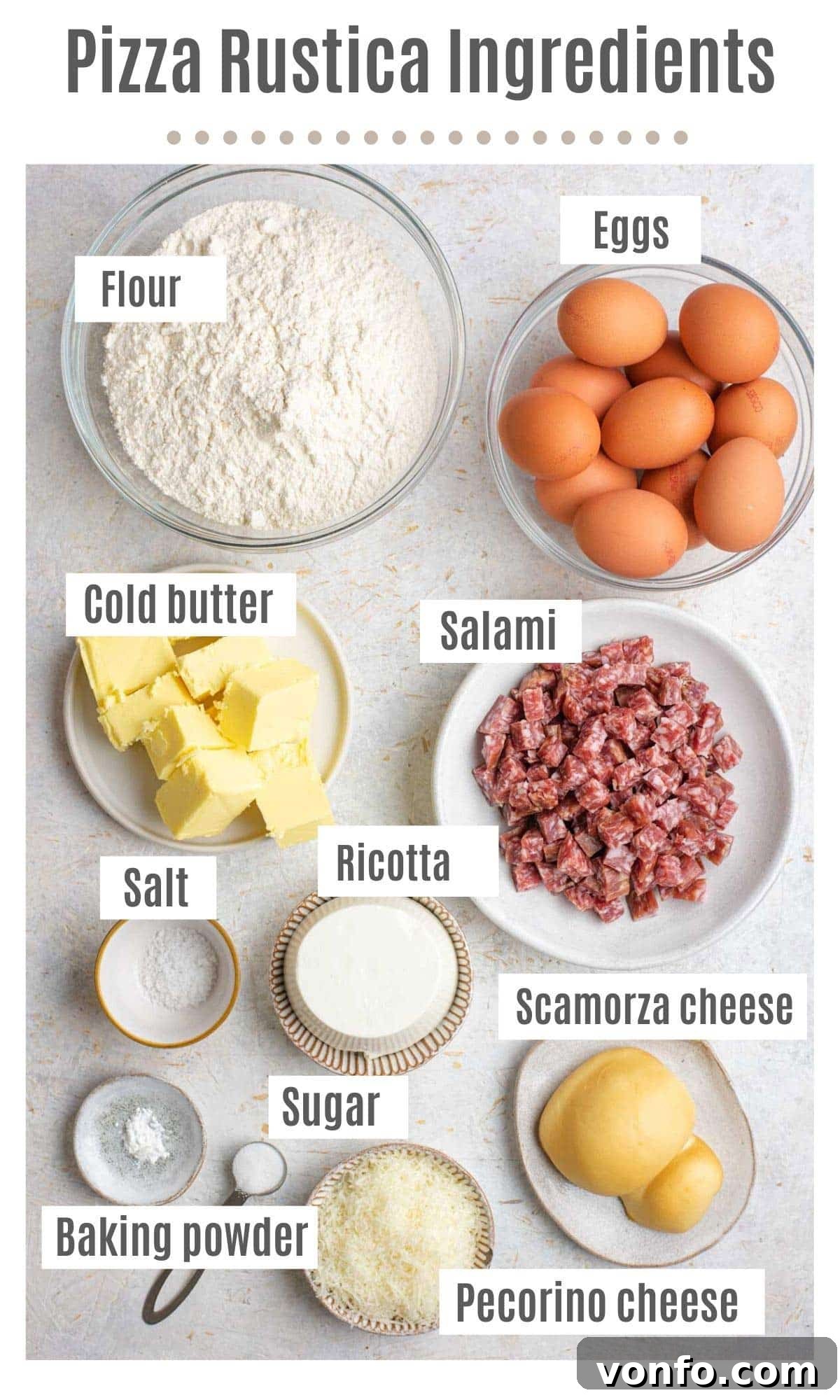
- Flour: For an exceptionally fine and tender crust, traditional Italian recipes often call for “00” flour (doppio zero), known for its low protein content and very fine grind. However, standard all-purpose flour works just as wonderfully and is readily available, still producing a delightfully flaky result for your pie crust.
- Butter: The secret to achieving a perfectly flaky and tender pie crust is to use unsalted butter that is kept extremely cold. Cold butter, when incorporated into the flour, creates tiny pockets that release steam during baking, forming those desirable, distinct layers. Using a food processor to cut the butter into the flour is highly recommended, as it minimizes contact with warm hands, ensuring the butter remains chilled throughout the process.
- Eggs: Large, room-temperature eggs are crucial for both the pastry and the rich, custard-like filling. Eggs at room temperature emulsify more effectively, leading to a smoother, more consistent dough and a well-blended filling. You will also need an additional beaten egg for an egg wash, which will give the top of your pie a beautiful golden-brown sheen.
- Ricotta: Always opt for whole milk ricotta cheese for your Pizza Rustica. Its higher fat content is vital for a richer, creamier, and more flavorful filling. Before use, it’s essential to properly drain any excess liquid from the ricotta, as this prevents the filling from becoming watery and ensures a firm, luscious texture.
- Salami: Select a high-quality, non-spicy Italian salami to ensure the flavors harmonize without overpowering the other delicate ingredients. Salami Napoli is an excellent choice due to its balanced, savory, and mildly spiced profile. For optimal texture and presentation, it’s best to purchase a whole piece of salami and cut it into uniform ½-inch cubes yourself. This ensures consistent pieces throughout the filling. Other non-spicy Italian salamis or even cooked ham (prosciutto cotto) can also be used effectively.
- Cheese Blend: Our recipe features a delightful and balanced combination of grated Pecorino Romano and smoked Scamorza cheese. Pecorino Romano adds a sharp, salty, and pungent depth that is characteristic of authentic Italian cuisine. Smoked Scamorza, a semi-hard, stretched-curd cheese similar to mozzarella, offers a delicious creamy texture with a unique, mellow smoky flavor. If smoked Scamorza is unavailable, excellent substitutes include cubed provolone (for a sharper taste), fontina (for a nutty and creamy profile), or even a good quality, low-moisture mozzarella, all of which will melt beautifully and contribute to a rich filling.
Step-by-Step Guide: Crafting Your Perfect Pizza Rustica
Creating this impressive Italian Easter pie is a rewarding culinary journey that combines traditional techniques with simple steps. Follow this detailed guide to ensure a flawless and delicious result for your holiday centerpiece.
1. Making the Flaky and Buttery Pastry Crust
The foundation of an exceptional Pizza Rustica is its golden, flaky crust. This pastry is surprisingly simple to prepare, especially with the efficiency of a food processor.
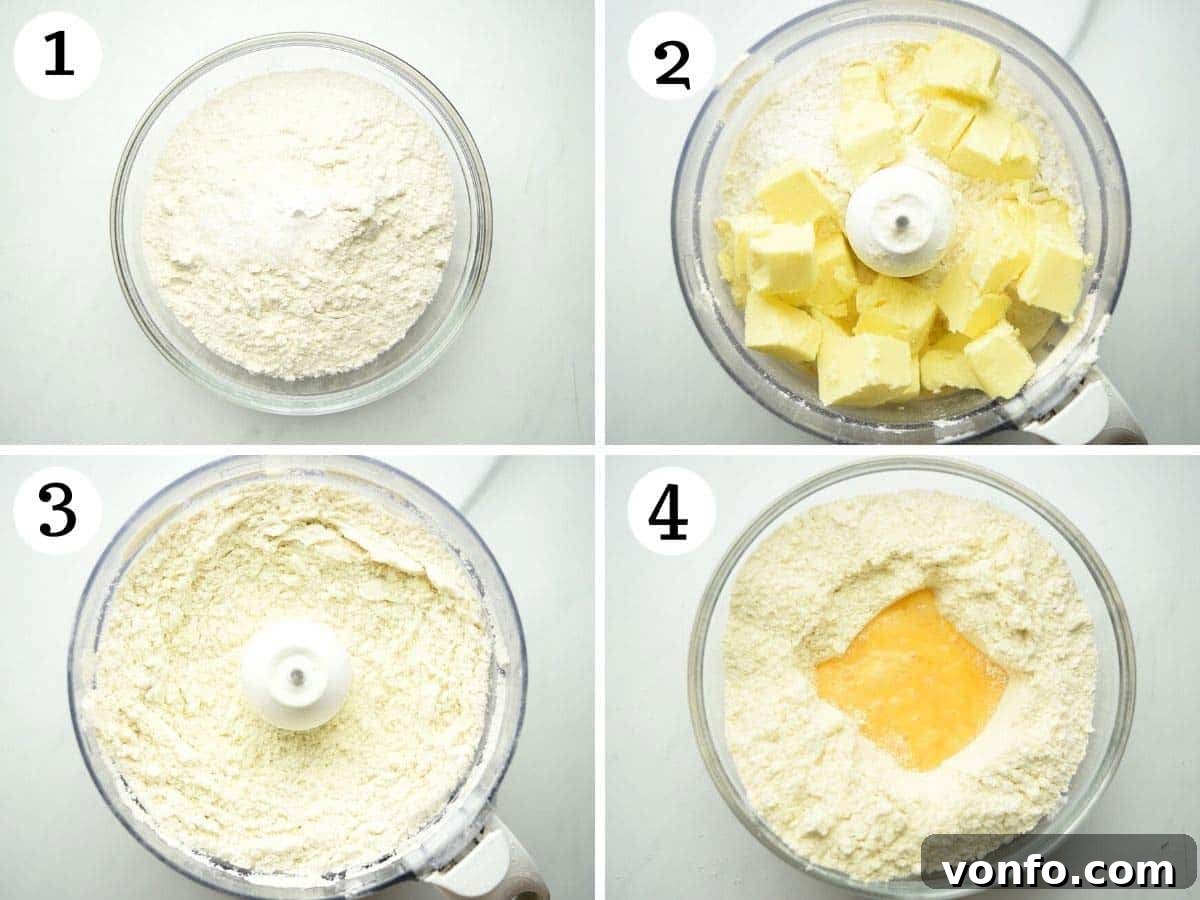
- In a large mixing bowl, combine the dry ingredients for the pastry: flour (either 00 or all-purpose), sea salt, granulated sugar, and baking powder. Whisk them together to ensure even distribution of flavors and leavening agents.
- Carefully transfer this dry mixture into the bowl of a food processor. Add the cubed, very cold unsalted butter (9 oz/250g). Pulse the mixture repeatedly until the butter is fully broken down and incorporated into the flour, resembling fine, coarse crumbs. This technique minimizes gluten development and prevents the butter from melting, which is crucial for creating the desired flaky layers in the baked crust.
- Pour the butter and flour mixture back into your large bowl. Create a small well in the center of the mixture and crack in 3 large beaten eggs.
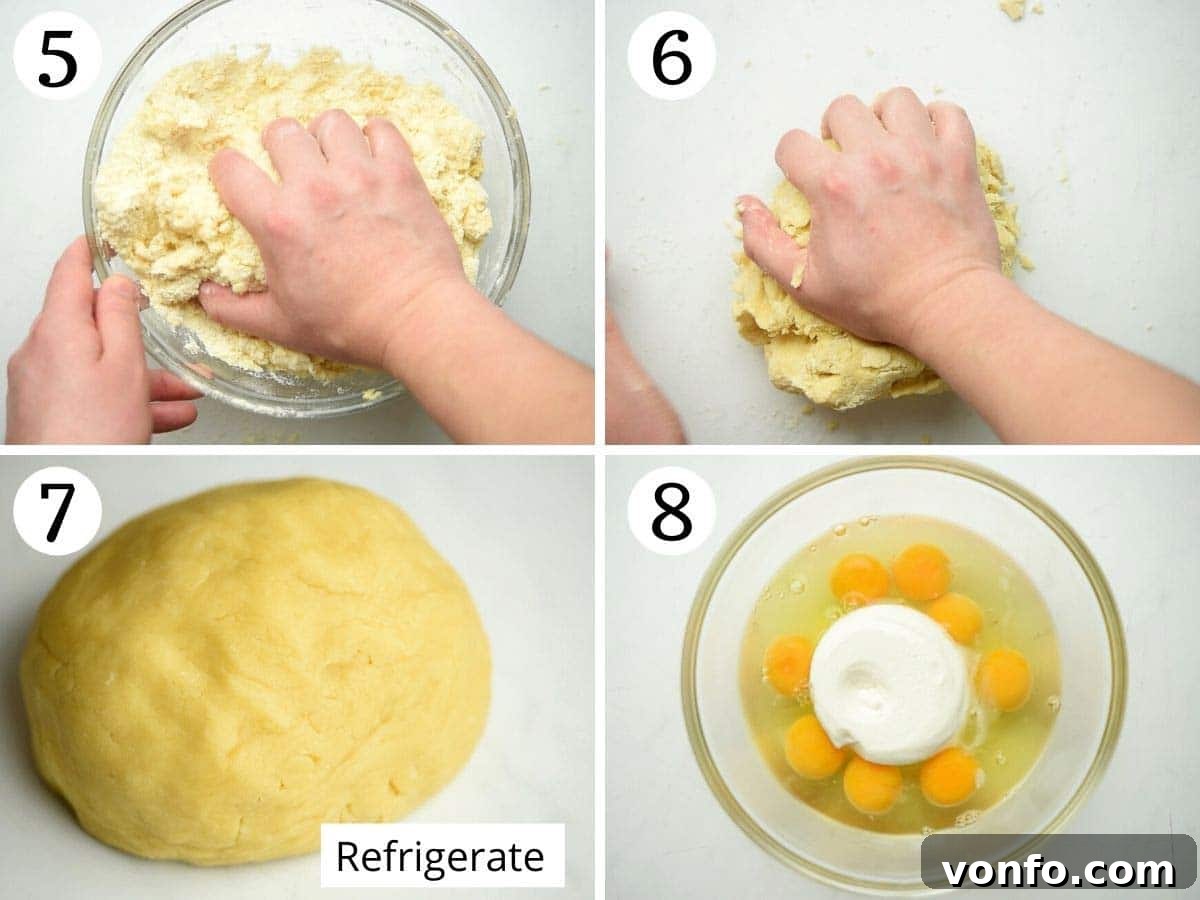
- Begin mixing all ingredients together using a sturdy spoon or your hands until a cohesive dough starts to form. Once the dough begins to come together, transfer it to a lightly floured surface and gently knead it just until it forms a smooth, uniform ball. The key here is not to over-knead, as excessive handling can develop too much gluten, resulting in a tough, rather than tender, crust. You simply want to bring the dough together until it’s fully incorporated and smooth.
- Wrap the dough tightly in plastic wrap, ensuring it’s completely sealed, and refrigerate for at least 1 hour. This chilling period is crucial: it allows the gluten to relax, makes the dough significantly easier to roll out, and helps prevent the crust from shrinking excessively during baking, ensuring a perfectly shaped pie.
2. Preparing the Rich and Savory Filling
The heart of Pizza Rustica lies in its robust and flavorful filling. This exquisite combination of eggs, creamy ricotta, and a selection of cured meats and cheeses creates a truly satisfying and decadent experience.
- While your pastry dough is chilling in the refrigerator, take this time to prepare the ingredients for your filling. Carefully cut the salami (Salami Napoli or your preferred non-spicy variety) and the smoked Scamorza cheese (or your chosen alternative firm cheese, such as provolone or fontina) into uniform ½-inch cubes. Set these aside in separate bowls.
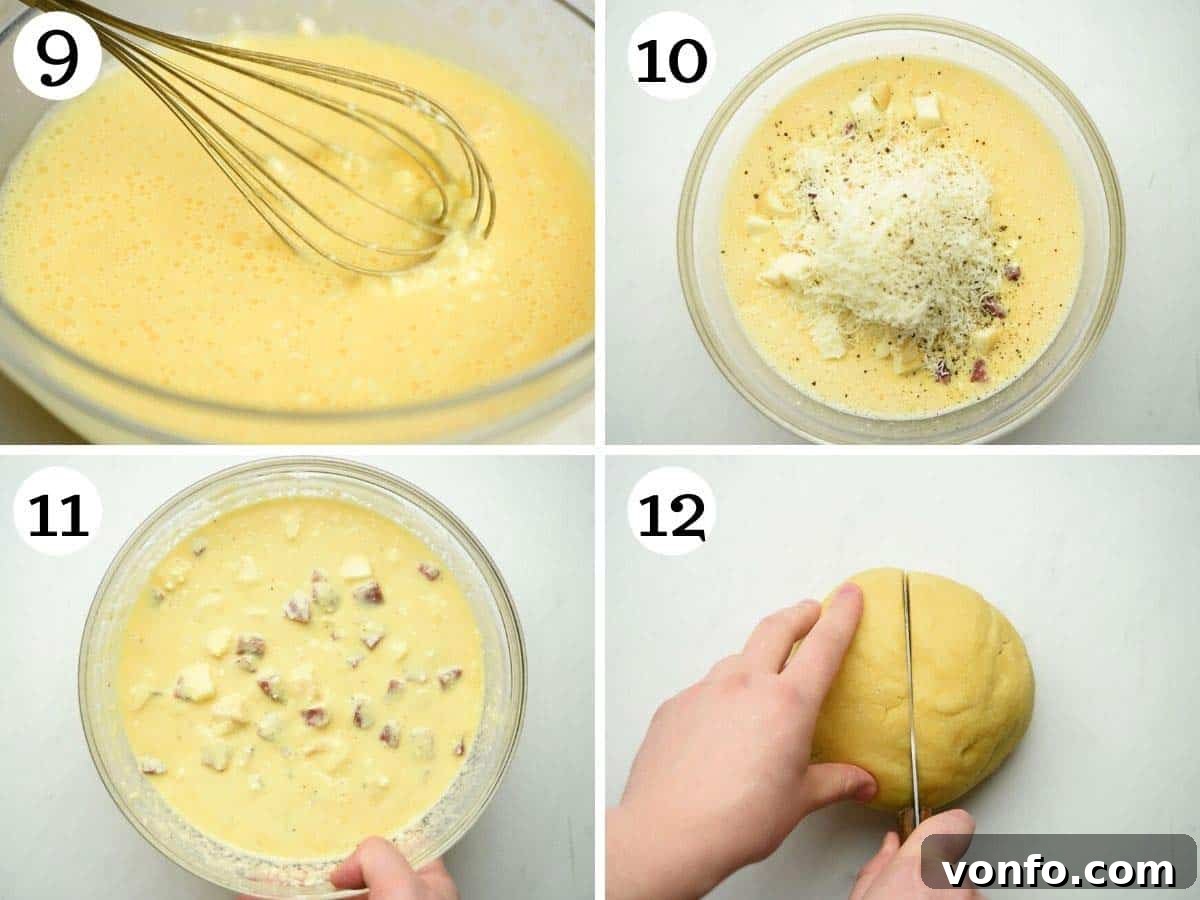
- In a large mixing bowl, combine 8 large eggs with the drained whole milk ricotta cheese. Whisk them vigorously until the mixture is smooth and consistent, with most of the ricotta lumps completely dissolved. This forms the creamy, rich base of your savory filling.
- To the smooth egg and ricotta mixture, add all the pre-cubed ingredients: the salami (approximately 2 cups/240g), the smoked Scamorza (approximately 1 cup/200g), and the grated Pecorino Romano cheese (about ⅔ cup/40g). Finish by adding a generous amount of freshly ground black pepper to taste. Mix everything thoroughly with a spatula or spoon to ensure all ingredients are well distributed throughout the creamy base. It’s important to remember that due to the inherent saltiness of cured meats and Pecorino cheese, additional salt is typically not needed in the filling, preventing an overly seasoned dish.
3. Assembling and Baking Your Masterpiece
With your perfectly chilled dough and ready filling, it’s time to bring your Pizza Rustica together and bake it to a glorious golden perfection, creating a memorable holiday treat.
- Preheat your oven to 350°F (180°C). Prepare your pie dish by lightly greasing a 9-10 inch pie dish with butter. This step is crucial for preventing the crust from sticking and contributes to an even golden-brown finish on the bottom.
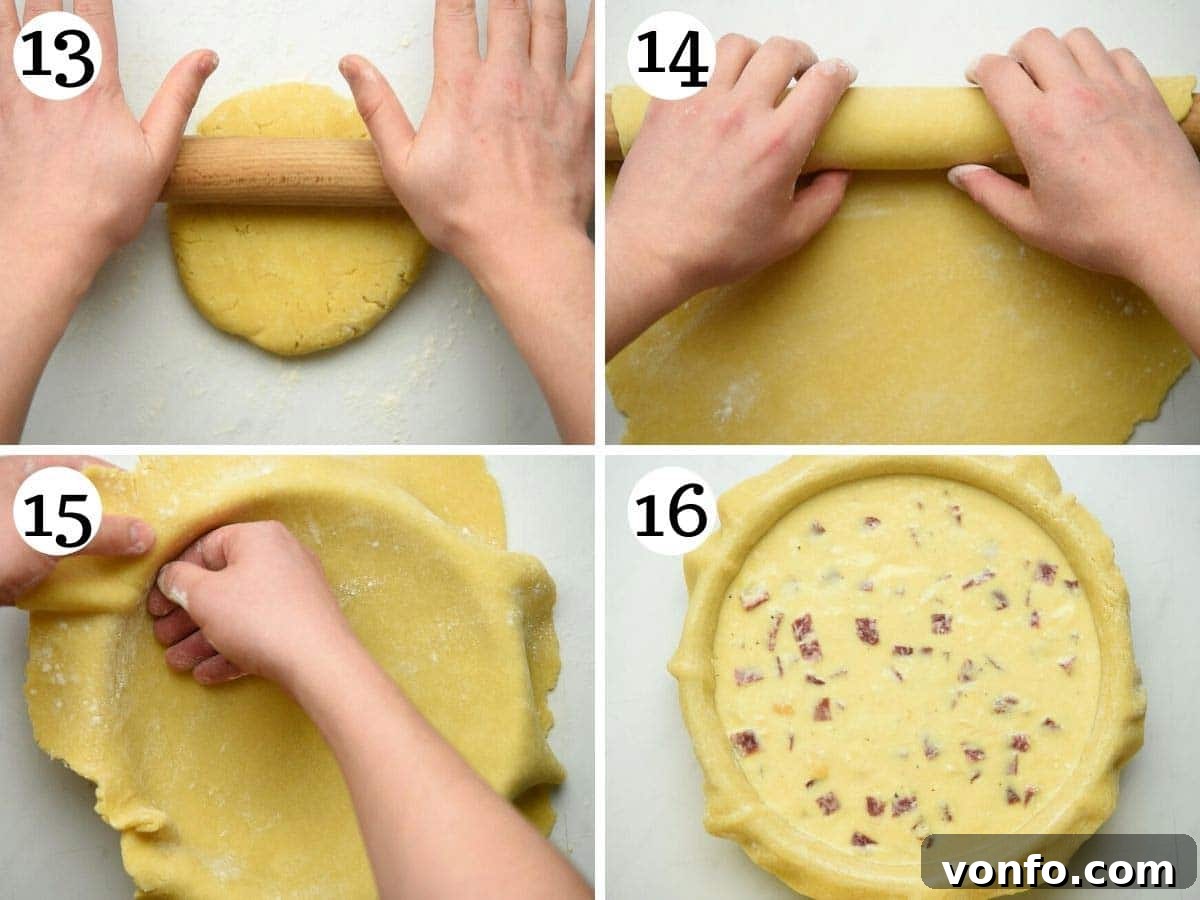
- Remove the chilled dough from the refrigerator. Divide it into two portions, with one piece being slightly larger than the other; the larger piece will be for the bottom crust. On a lightly floured surface, roll out the first, larger half of the dough into a large, rough circle, aiming for an approximate thickness of ¼ inch (3-4mm).
- Carefully drape the rolled-out dough over your prepared pie dish. Gently press it into the bottom and up the sides of the dish, ensuring it fits snugly. Trim any excess dough around the edges, leaving about a 1-inch overhang.
- Evenly pour the entire rich filling into the pastry-lined pie dish. Spread it out to ensure all the ingredients are distributed well.
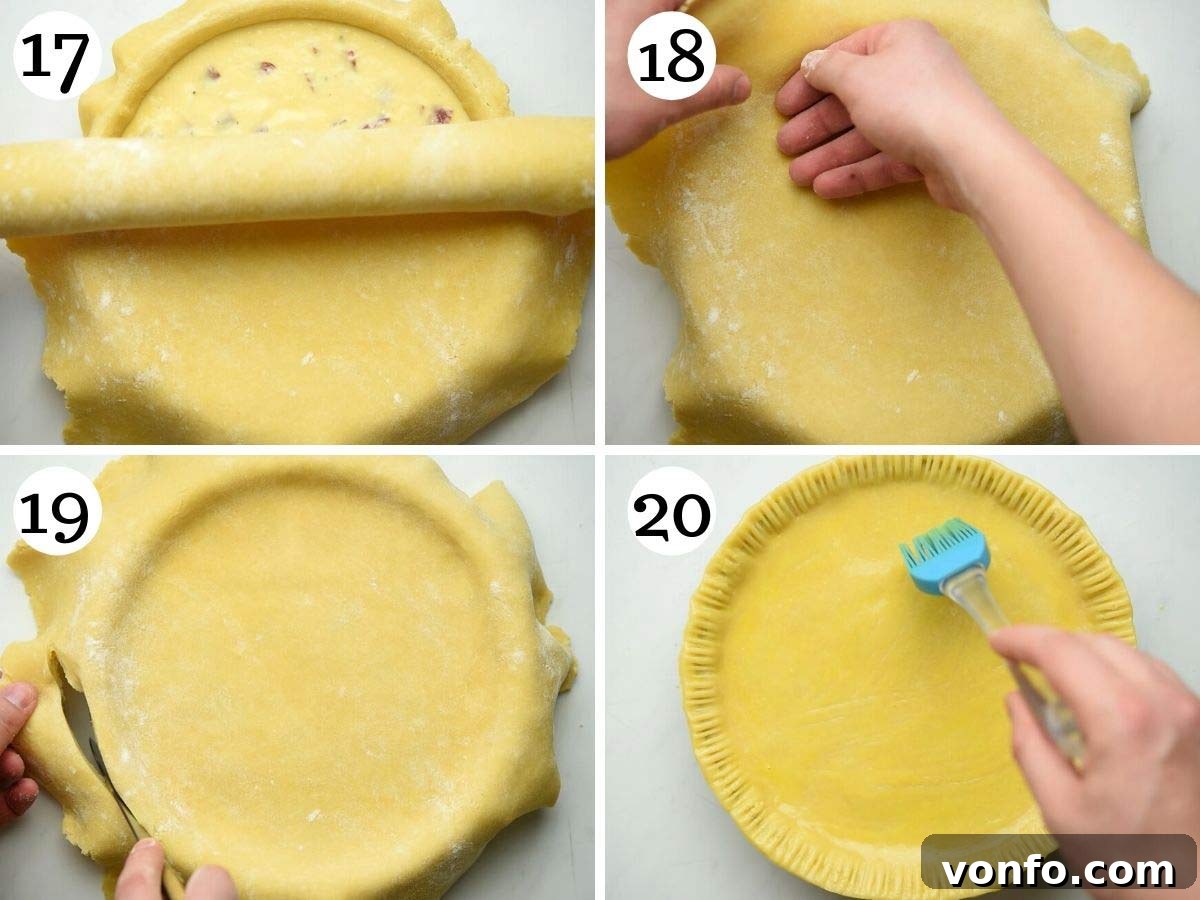
- Next, roll out the second, smaller half of the dough into a circle that is slightly larger than the top of your pie dish. This will form the top crust of your Pizza Rustica.
- Carefully place this top crust over the pie. Gently press it down very lightly so that it just touches the filling. Then, press the edges of the top crust firmly against the bottom crust all around the rim of the pie dish, ensuring the filling is completely encased within the pastry, creating a secure seal.
- Using a sharp knife, trim any remaining excess dough from the edges, creating a neat and even seam. Then, use the tines of a fork to press and crimp the edges together firmly. This not only creates a decorative border but also ensures a strong seal to prevent the filling from bubbling out during baking. If you find the pastry isn’t sticking together well, you can lightly dab the edges with a small amount of water before pressing them.
- In a small bowl, lightly beat the remaining egg (the “plus 1 beaten egg for brushing” from your ingredient list). Generously brush the entire top surface of the pie with this egg wash. This will contribute to a beautiful, glossy, golden-brown finish. Finally, make a small incision (or a few small slits) in the middle of the top crust. This vent allows steam to escape during baking, preventing the crust from becoming overly puffed or cracking.
- Place the pie in the preheated oven and bake for approximately 1 hour, or until the crust achieves a deep golden brown color and the filling is set and cooked through. If you notice the crust browning too quickly, you can loosely tent the pie with aluminum foil to protect it.
- Once baked, remove your magnificent Pizza Rustica from the oven. While it will be tempting to cut into it immediately, it is crucial to let it cool completely on a wire rack for several hours, or ideally, overnight in the refrigerator. This extensive cooling period allows the rich filling to fully set, ensuring clean slices and allowing all the complex flavors to meld and deepen beautifully.
Expert Tips and Frequently Asked Questions for Pizza Rustica
Master the art of making the perfect Italian Easter Pie with these helpful tips and detailed answers to common questions, ensuring a flawless and delicious result every time.
Expert Recipe Tips for Success
- Sourcing Quality Salami: For the most authentic and flavorful Pizza Rustica, seek out a whole piece of good quality, non-spicy Italian salame. If you’re purchasing from a deli, ask for a thicker slice that you can easily cut into uniform ½-inch cubes at home. Salami Napoli is consistently an excellent choice for its balanced, savory profile.
- Unleash Flavor Variations: Pizza Rustica is incredibly versatile, making it a fantastic canvas for your favorite cured meats and cheeses. Feel free to experiment with Mortadella, prosciutto cotto (cooked ham), or any other mild Italian salami. While cubing meats is ideal for texture, thinly sliced meats can also be chopped and incorporated if that’s what you have on hand.
- Choosing the Best Cheese: Beyond the recommended smoked Scamorza, which offers a mild, creamy, and smoky note, many firm Italian cheeses work wonderfully. Fontina provides a nutty and mild creaminess, Provolone adds a distinct sharp bite, and a good quality, low-moisture mozzarella contributes a classic milky creaminess. Avoid very soft or watery cheeses that might compromise the filling’s texture.
- Embrace “Less is More” for Fillings: While it’s tempting to load the pie with numerous ingredients, I’ve found that limiting the filling to 1-2 types of meat and 1-2 types of firm cheese (in addition to the ricotta and eggs) creates the most balanced and harmonious flavor profile. This allows each ingredient to shine without overwhelming the palate.
- Mind the Salt Content: Cured meats like salami and hard cheeses such as Pecorino Romano are inherently salty. Therefore, it’s generally unnecessary to add extra salt to the filling mixture. Always taste your ingredients and the mixed filling before adding any additional seasoning, to avoid an overly salty dish.
- Achieve Perfect Crust Thickness: Aim for a consistent ¼-inch (3-4mm) thickness when rolling out both your bottom and top crusts. A crust that’s too thin risks tearing and becoming soggy, while one that’s too thick can result in a dense and less enjoyable pastry.
- Preventing a Soggy Bottom Crust: To ensure a crisp bottom crust, make sure your pie dish is thoroughly greased, and your pastry is rolled out to an even thickness. Adequate chilling of the dough before rolling is also key. Some bakers also find success by lightly dusting the bottom crust with a thin layer of breadcrumbs or grated Parmesan cheese before adding the filling; this can help absorb any excess moisture from the ricotta and eggs.
Frequently Asked Questions (FAQs)
Absolutely! Pizza Rustica is an excellent make-ahead dish, perfect for holiday planning. You can prepare and bake the entire pie, allow it to cool completely to room temperature, and then store it securely wrapped in the refrigerator for up to 4 days. In fact, many culinary enthusiasts believe the flavors improve and meld together even more beautifully after a day or two in the fridge, making it an ideal choice for stress-free entertaining.
Don’t let any leftover pastry dough go to waste! Wrap it tightly in plastic wrap to prevent it from drying out, and store it in the refrigerator for 2-3 days. Alternatively, you can freeze it for up to 1 month. This leftover dough can be re-rolled and used for delightful mini savory pies, small tartlets, or even creative sweet pastry creations, ensuring no deliciousness is wasted.
When properly stored in an airtight container or tightly wrapped in plastic wrap and then foil, your baked Pizza Rustica will remain fresh and delicious in the refrigerator for 3-4 days. This makes it a perfect dish to enjoy over several days of your Easter festivities or as a convenient meal throughout the week.
Yes, absolutely! Once your Pizza Rustica is fully baked and has completely cooled to room temperature, you can freeze it. For convenience, you might consider wrapping individual slices, or if freezing the whole pie, wrap it first in plastic wrap and then in aluminum foil. It can be stored in the freezer for up to 2-3 months. To enjoy, thaw it overnight in the refrigerator and then gently reheat it in the oven until warmed through, or simply enjoy it cold.
Serving Suggestions & The Art of Enjoying Your Pizza Rustica
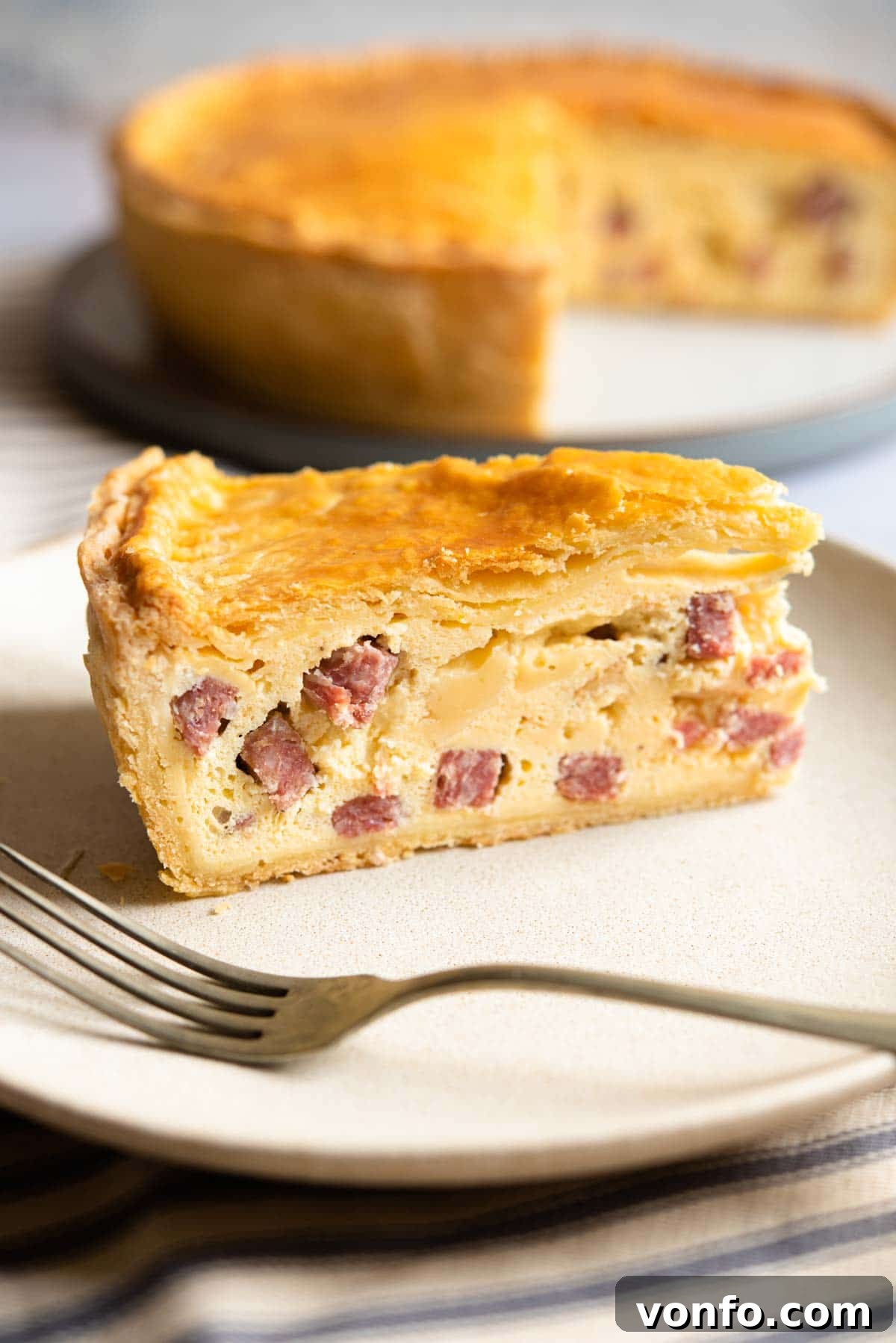
Pizza Rustica is truly a versatile and robust dish that reveals its best flavors and textures when served cold or at a relaxed room temperature. The essential cooling period allows the rich, savory filling to fully set and solidify, making for clean, beautiful slices. More importantly, this time allows the complex medley of flavors from the meats, cheeses, and eggs to deepen, meld, and harmonize, creating a truly exceptional culinary experience that is far more pronounced than when served hot.
It’s perfect on its own as a hearty snack, a substantial breakfast to kickstart your Easter morning, or a satisfying light lunch. For a complete and beautifully balanced meal, I highly recommend pairing a generous slice of Pizza Rustica with a fresh, vibrant side salad. A simple arugula salad, for instance, dressed with a bright and zesty lemon vinaigrette, provides a wonderful, sharp contrast to the richness and depth of the pie. The peppery notes of the arugula and the refreshing tang of lemon beautifully cut through the savory filling, creating a perfectly balanced palate. Consider serving it as a highlight of your festive Easter brunch spread, a distinguished addition to any holiday buffet, or even as a delightful picnic item that travels well. Its inherent charm and deliciousness make it suitable for any gathering where good food is appreciated.
Step By Step Photos Above
Most of our recipes come with step by step photos, helpful tips and tricks to make it perfectly first time and even video!
Pizza Rustica (Italian Easter Pie)
5 from 8 votes
By Emily
40
1
1
2
40
12
servings
Pin
Ingredients
Pastry (pie crust)
- 9 oz cold unsalted butter, (250g) plus extra for greasing
- 3.5 cups Italian 00 Flour or Plain flour, (500g)
- 3 large eggs , plus 1 beaten egg for brushing
- 1 tsp sea salt
- 1 tsp granulated sugar
- ¼ tsp baking powder
Filling
- 8 large eggs
- 1 cup whole milk ricotta, (250g), drained
- 2 cups salami, cubed (240g), non-spicy variety
- 1 cup smoked Scamorza cheese, cubed (200g), or Fontina/Provolone
- ⅔ cup Pecorino Romano cheese, grated (40g)
- ¼ tsp black pepper, to season
Instructions
Make the Pastry
-
Mix the flour, salt, sugar, and baking powder in a bowl. Transfer to a food processor, add the cubed cold butter (9oz/250g), and pulse until the mixture resembles fine crumbs.
-
Return the butter and flour mixture to the bowl, create a well in the middle, and add 3 large beaten eggs.
-
Mix everything together until a dough begins to form. Then, gently knead the dough with your hands to form a smooth ball. Avoid over-kneading; simply bring the dough together until fully incorporated and smooth.
-
Wrap the dough tightly in plastic wrap and refrigerate for at least 1 hour. This chilling time is essential for a workable and flaky crust.
Make the Filling
-
Cut the salami and smoked scamorza (or your chosen firm cheese) into uniform ½-inch cubes. Set them aside.
-
In a large bowl, whisk 8 large eggs with the ricotta until smooth and most lumps are gone. Stir in the cubed salami (2 cups), Scamorza (1 cup), grated Pecorino cheese (⅔ cup), and black pepper. Mix well to combine all ingredients.
To Assemble and Bake
-
Preheat your oven to 350°F (180°C) and lightly grease a 9-10 inch pie dish with butter.
-
Remove the chilled dough from the fridge and cut it into two portions (one slightly larger for the bottom crust). Roll out the first half into a large, rough circle, about ¼ inch (3-4mm) thick.
-
Carefully place the rolled dough over your pie dish, pressing it gently into the bottom and up the sides. Pour the prepared filling evenly into the pie. Then, roll out the second half of the dough for the top crust.
-
Lay the top crust over the pie, gently pressing it down so it lightly touches the filling. Press the edges of the top crust firmly against the bottom crust along the sides of the pie dish, ensuring the filling is completely encased.
-
Trim any excess dough from the edges with a sharp knife and seal the edges by pressing them together with a fork. If the pastry isn’t adhering, dab the edges lightly with water to help them stick.
-
Brush the top of the pie with the remaining beaten egg wash for a golden finish. Make a small incision or a few slits in the middle of the top crust to allow steam to escape during baking. Bake in the preheated oven for approximately 1 hour, or until the pie is golden brown and thoroughly cooked through.
-
Once baked, let the pie cool completely on a wire rack before slicing and serving. Pizza Rustica is traditionally best enjoyed cold or slightly warm, allowing the flavors to fully develop and the filling to set.
Video
Notes
- Flavor Variations: Feel free to experiment with various cured meats and cheeses. Mortadella, prosciutto cotto (cooked ham), or different types of non-spicy salami will work well. While cubed meats offer the best texture, chopped slices can also be used.
- Cheese Choices: We recommend smoked Scamorza for its mild, creamy, and smoky profile. Other excellent firm cheese options include Fontina, Provolone, or low-moisture Mozzarella.
- Balanced Filling: To ensure a harmonious flavor, avoid overstuffing with too many ingredients. Typically, 1-2 types of meat and 1-2 types of firm cheese (beyond the ricotta) are sufficient.
- Salt Adjustment: Due to the saltiness of cured meats and Pecorino Romano, additional salt in the filling is usually unnecessary. Always taste and adjust sparingly.
- Cooling is Key: It is crucial to allow the pie to cool completely before cutting into slices. This ensures the filling sets properly and makes for cleaner cuts.
- Serving Suggestions: Pizza Rustica is best enjoyed cold or at room temperature. Serve it as is, or with a simple, fresh side salad like an arugula salad with lemon vinaigrette to balance the richness.
- Storage: Store the baked and cooled pie in an airtight container in the refrigerator for 3-4 days.
Helpful Info for All Recipes
- I always use extra virgin olive oil in all of my recipes unless stated otherwise.
- When I use canned or jarred tomatoes of any kind, I always recommend Cirio or Mutti brands for the best results and flavor.
- All vegetables mentioned are typically medium-sized unless specified otherwise.
- All recipes are tested and developed using a fan (convection) oven.
- Find out more about how nutrition is calculated.
- Check out our must-have Italian Pantry Staples.
- You can also find all our Essential Kitchen Tools for Italian Cooking.
Nutrition Facts (per serving)
Carbohydrates: 34g |
Protein: 22g |
Fat: 36g |
Saturated Fat: 19g |
Trans Fat: 1g |
Cholesterol: 245mg |
Sodium: 1026mg |
Potassium: 218mg |
Fiber: 1g |
Sugar: 1g |
Vitamin A: 974IU |
Calcium: 228mg |
Iron: 3mg
Nutrition information is automatically calculated and should be used as an approximation.
Did you try this recipe?
We’d love to hear from you! Leave a comment below and share your experience. Your feedback helps other home cooks create delicious meals. You can also FOLLOW US on FACEBOOK, INSTAGRAM, and PINTEREST for more delicious recipes and daily kitchen inspiration!