
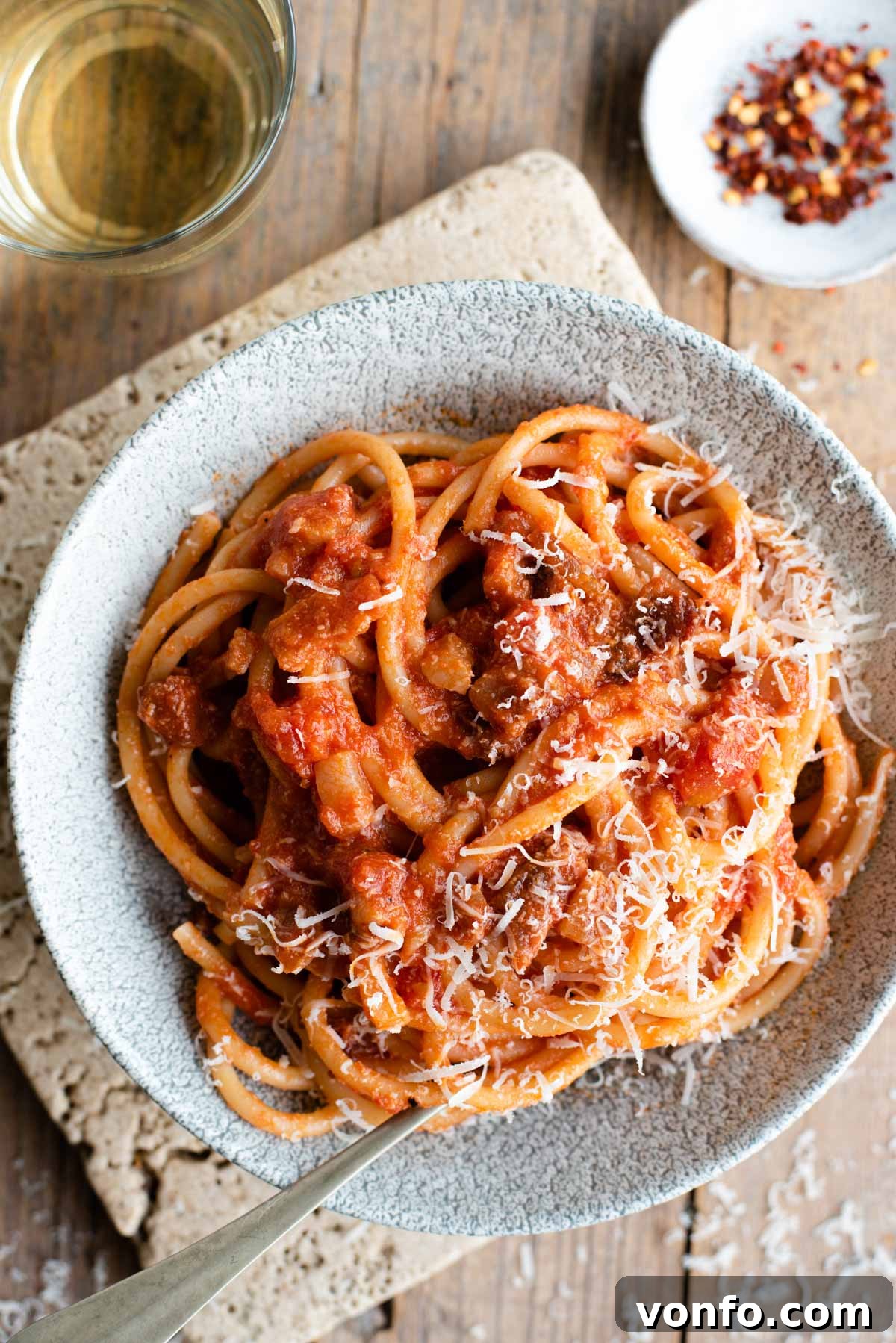
Authentic Bucatini all’Amatriciana: A Timeless Roman Pasta Masterpiece
Embark on a culinary journey to the heart of Italy with our definitive guide to making authentic Bucatini all’Amatriciana. This classic Italian pasta dish is a symphony of robust flavors, featuring crispy, rendered guanciale, sweet and tangy tomatoes, and the sharp, salty kick of Pecorino Romano cheese. Renowned for its comforting appeal and incredible depth of flavor, Amatriciana is also surprisingly quick to prepare, coming together in 30 minutes or less. It’s the perfect, satisfying meal for a busy weeknight or a delightful weekend indulgence that promises to transport your taste buds straight to the trattorias of Rome.
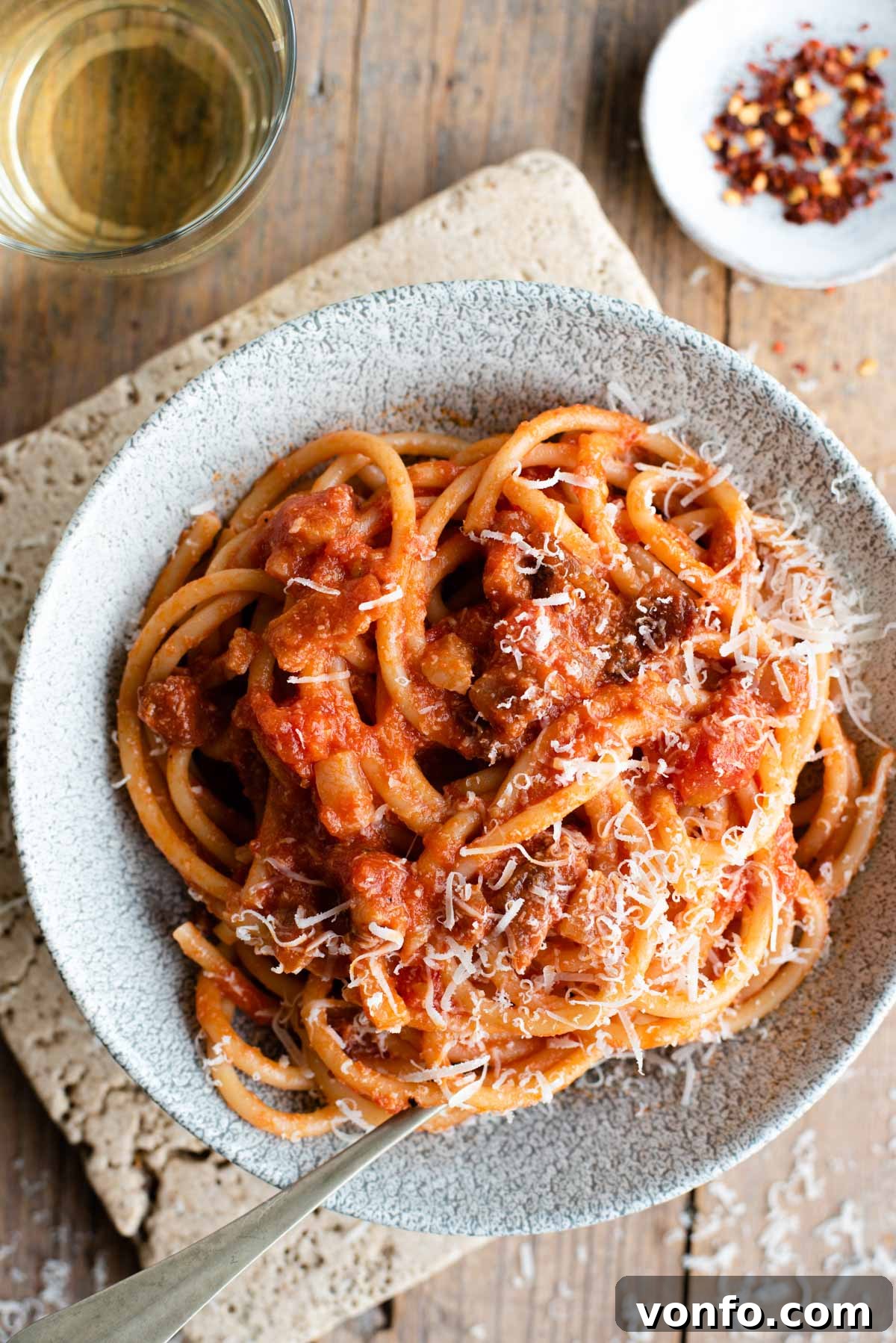
The Storied Origins of Amatriciana: From Amatrice to Roman Tables
Bucatini all’Amatriciana holds a distinguished and cherished place within the rich tapestry of Italian pasta dishes. Its authentic roots are firmly planted in the charming town of Amatrice, nestled high in the rugged mountains of the Lazio region. Despite its specific birthplace, the dish has been so deeply embraced by the capital that it is unequivocally considered one of Rome’s most beloved and iconic pasta classics. It proudly stands alongside its revered siblings, forming what is affectionately known as the “four Roman pastas”: the nuanced Spaghetti alla Carbonara, the humble yet profound Pasta alla Gricia, and the minimalist perfection of Cacio e Pepe.
To truly appreciate Amatriciana, one must understand its fascinating culinary lineage. These Roman classics are often seen as variations on a theme, evolving from one simple foundation to the next:
- Cacio e Pepe: This is the purest form, a deceptively simple yet elegant dish of Pecorino Romano cheese, freshly ground black pepper, and the emulsifying power of starchy pasta water. It’s a testament to the beauty of few, high-quality ingredients.
- Pasta alla Gricia: Building upon Cacio e Pepe, Pasta alla Gricia introduces the savory depth of crispy, rendered guanciale. Often referred to as “Amatriciana without the tomato,” it offers a rich, unctuous experience that highlights the unparalleled flavor of cured pork jowl.
- Spaghetti alla Carbonara: The next evolution incorporates eggs into the Gricia base. When combined with the rendered guanciale and Pecorino, the eggs create an incredibly creamy, luxurious sauce that defines this world-famous dish.
- Bucatini all’Amatriciana (or Sugo all’Amatriciana, the sauce itself): Here, the eggs of Carbonara are swapped for a vibrant, sun-kissed tomato sauce. This allows the smoky, savory notes of guanciale and the piquant sharpness of Pecorino to meld with the sweet acidity of ripe tomatoes, creating a harmonious and utterly addictive flavor profile.
For every enthusiast of authentic Italian cuisine, mastering these foundational Roman pasta recipes is more than just cooking; it’s an immersive journey into culinary tradition. They are celebrated not only for their intense comfort and profound deliciousness but also for their accessibility. While some, like Cacio e Pepe, require a delicate touch to achieve perfect emulsion, Amatriciana is wonderfully forgiving and incredibly rewarding to prepare.
Why This Amatriciana Recipe Will Become Your New Favorite
Our comprehensive recipe is designed to empower you to recreate this cherished Italian masterpiece with ease and confidence in your own kitchen. You’ll be delighted to find that all it requires are a handful of high-quality, readily available ingredients and a mere 20-30 minutes of your precious time. The true magic and secret to an unparalleled Amatriciana lie fundamentally in the *superior quality* of your chosen ingredients – this single factor makes an immeasurable and undeniable difference to the dish’s final, exquisite flavor. Prepare to indulge in a meal that tastes like it came straight from a Roman kitchen. We invite you to explore our detailed step-by-step instructions below, complemented by essential expert tips, vibrant ingredient photographs, and a clear ingredient breakdown. Get ready to savor an authentic taste of Rome. Buon Appetito!
Essential Ingredients for an Authentic Bucatini all’Amatriciana
Creating a truly authentic Amatriciana hinges on selecting the right ingredients, each contributing a unique and indispensable layer to the dish’s characteristic flavor profile. Below, you’ll find a visual guide to these essential components, along with crucial tips for choosing the highest quality.
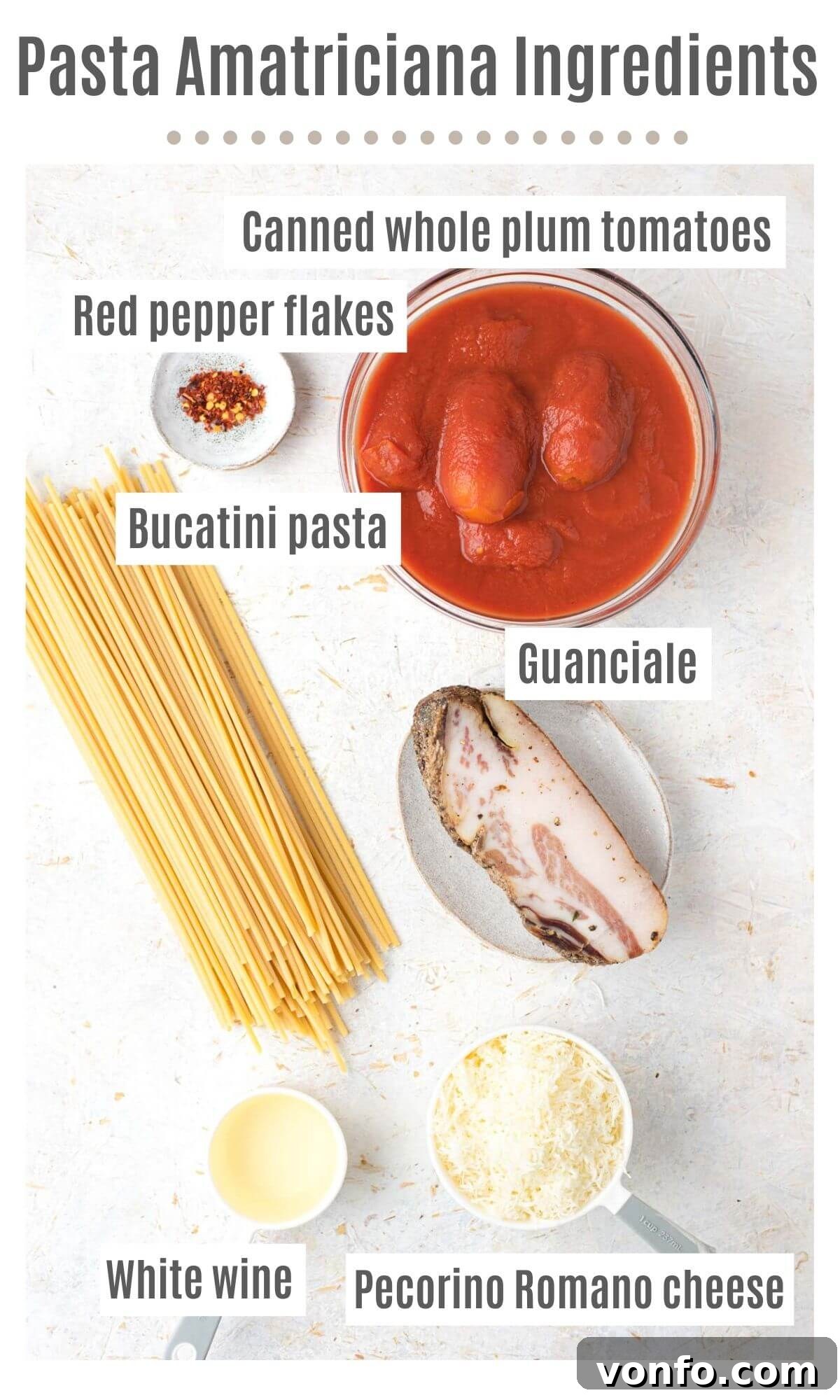
- Bucatini Pasta: The traditional and highly recommended pasta shape for Amatriciana. Bucatini are robust, hollow strands, similar to thick spaghetti, which are perfect for this hearty sauce. The unique hollowing allows the rich Amatriciana sauce to not only coat the outside but also get delightfully sucked up into the pasta’s core, ensuring an unparalleled burst of flavor with every single bite. If authentic bucatini is challenging to find, high-quality spaghetti or even a sturdy short pasta shape like rigatoni or mezze maniche can serve as excellent, albeit slightly different, alternatives.
- High-Quality Canned Whole Plum Tomatoes: For a consistently delicious sauce, high-quality canned whole plum tomatoes are often preferred over fresh, even by Italian nonnas, especially outside of peak summer harvest. Opt for San Marzano D.O.P. tomatoes if possible, as they are renowned for their balanced sweetness, low acidity, and deep, concentrated flavor. Brands such as Mutti or Cirio are consistently excellent choices. Avoid pre-crushed or diced tomatoes; whole tomatoes allow you to crush them by hand, adding a rustic texture and freshness to the final sauce.
- Guanciale: The Invaluable Soul of Amatriciana: This ingredient is, without a doubt, the most critical for achieving true authenticity. Guanciale is cured pork jowl (pig’s cheek), distinct from pancetta (pork belly). It boasts a significantly higher fat content and a unique curing process that imparts an intensely rich, nuanced flavor – smoky, peppery, and profoundly savory. When slowly rendered, its fat melts into a silky texture, infusing the sauce with an inimitable depth that pancetta simply cannot replicate. While pancetta can be used as a substitute, be aware that it will result in a different, less traditional, flavor profile. Always endeavor to source authentic guanciale from a reputable Italian deli or specialty food shop.
- Dry White Wine: A small but mighty splash of crisp, dry white wine serves a crucial purpose: deglazing the pan after the guanciale has rendered. This process lifts all the delicious browned bits (fond) from the bottom of the pan, incorporating them into the sauce and adding a layer of complex acidity and aroma. Choose a light-bodied, dry white wine such as Orvieto, Pinot Grigio, Verdicchio, or Gavi. Steer clear of sweet wines, as they will throw off the delicate balance of the sauce.
- Red Pepper Flakes (Chilli Flakes): A modest addition of red pepper flakes introduces a subtle warmth and a gentle, pleasant kick to the dish, enhancing its overall flavor without overwhelming the palate. The traditional heat level is usually mild, but you have the flexibility to adjust the quantity to suit your personal spice preference. While optional, it does contribute a classic element to the Amatriciana experience.
- Pecorino Romano Cheese: This sharp, pungent sheep’s milk cheese is an absolute requirement for an authentic Amatriciana. Its bold, salty, and distinctly tangy flavor is integral to the sauce’s character and cannot be adequately substituted. Freshly grated Pecorino Romano melts beautifully into the hot pasta and sauce, contributing a creamy texture and an irresistible, piquant finish. While Parmigiano Reggiano is a fantastic cheese, its sweeter, nuttier, and less assertive profile is not suited for the unique flavor demanded by true Amatriciana.
Preparing Guanciale: The Foundation of Unrivaled Flavor
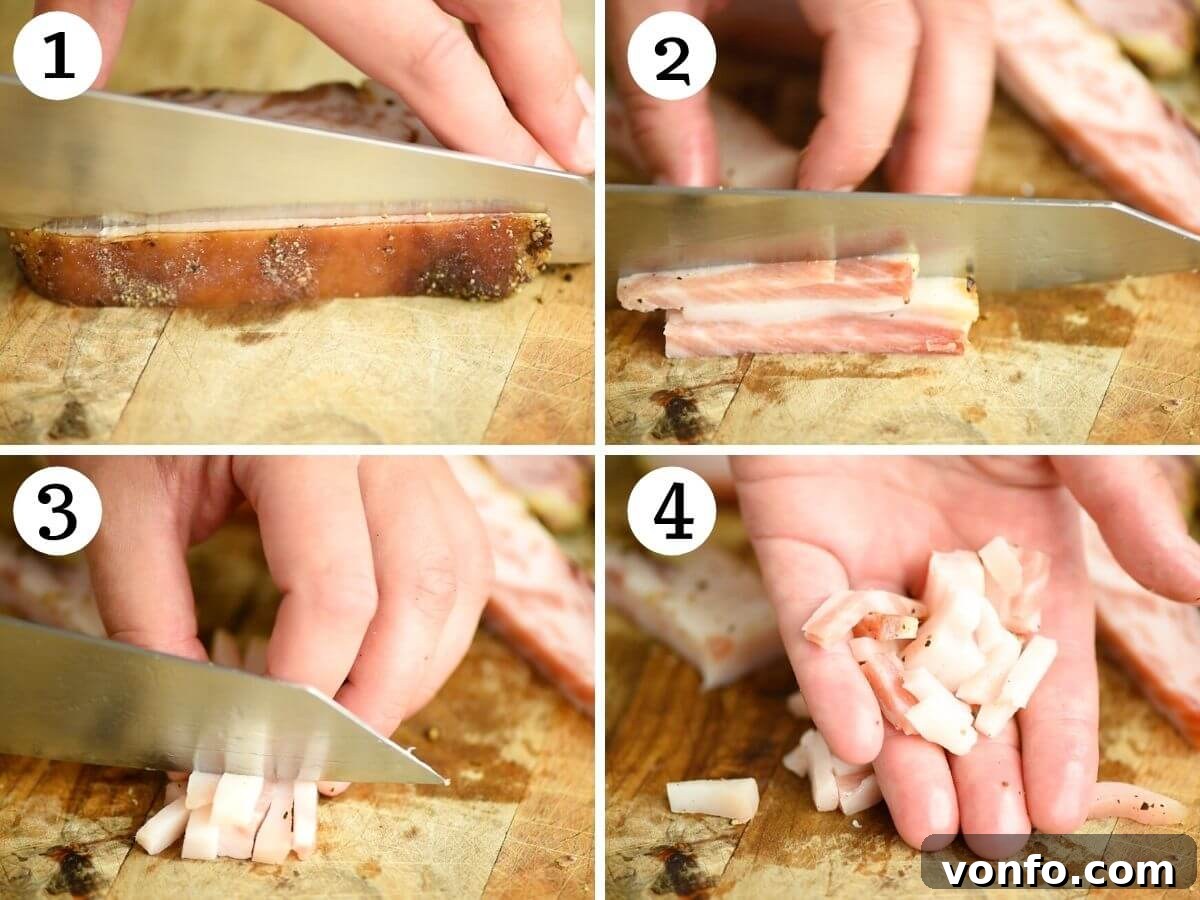
Properly preparing guanciale is an essential step that significantly impacts the flavor and texture of your finished Amatriciana sauce. Guanciale typically arrives with a thick, inedible rind or skin on one side and a dark, seasoned layer from the curing process on the other.
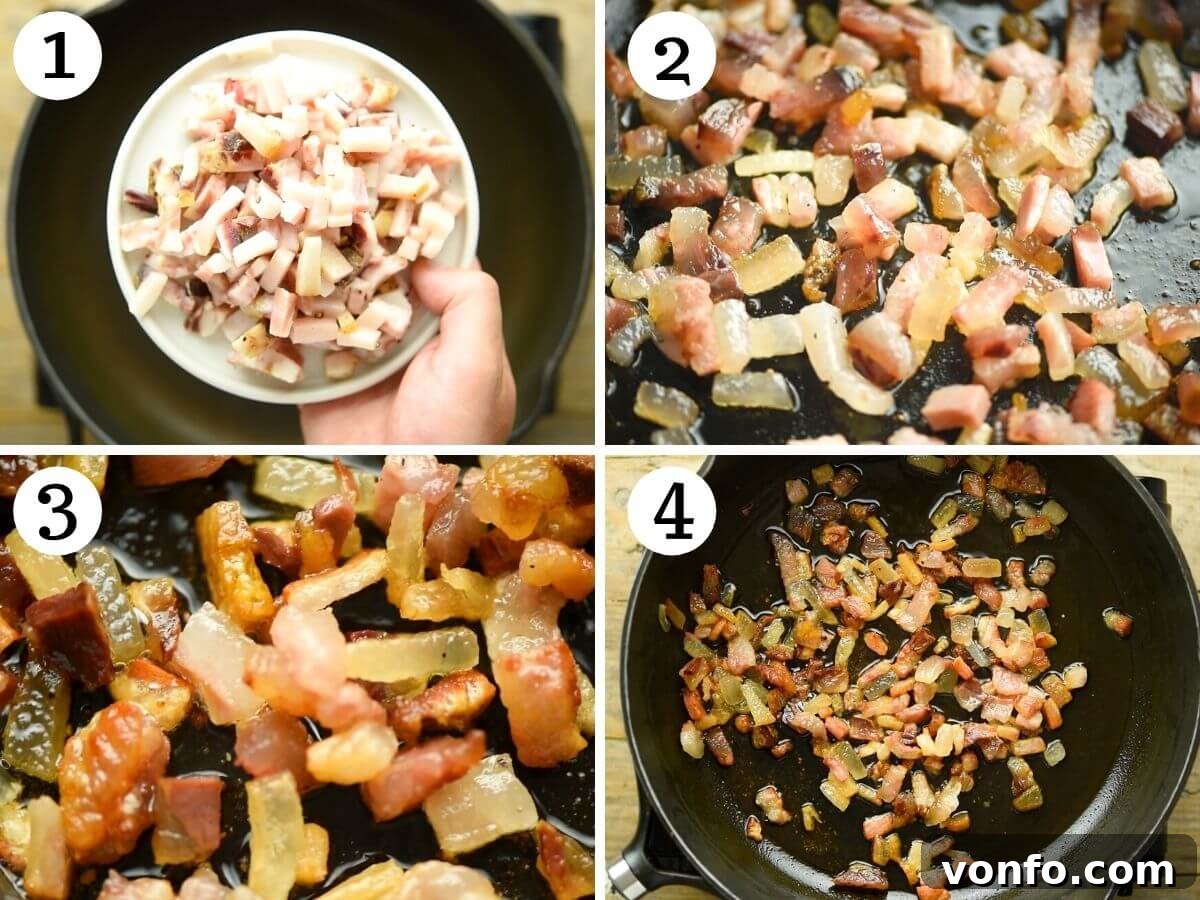
- **Trim the Thick Skin:** Using a very sharp knife, carefully slice off the thick, tough skin from the underside of the guanciale. This part is inedible and should be discarded. Savvy cooks often save these trimmings to infuse flavor into stocks or slow-simmered soups. *Refer to photo 1 in the original guide for a visual illustration of this crucial trimming step.*
- **Address the Seasoned Coating (Optional Refinement):** The dark, seasoned layer on the exterior of the guanciale is a natural byproduct of its curing and is generally considered edible. However, some culinary preferences lean towards lightly scraping away a portion of this darkest layer, as it can occasionally impart a slightly gritty texture to a very smooth sauce. This particular step is entirely a matter of personal preference; feel free to adjust based on your desired sauce consistency.
- **Cut into Uniform Pieces:** Once the guanciale is trimmed to your liking, proceed to slice it into small, even cubes or strips, aiming for pieces approximately 1/2 cm (or 1/4 inch) thick. Achieving uniform sizing is key, as it ensures that the guanciale renders its fat evenly and crisps up beautifully, avoiding some pieces being burnt while others remain soft. These consistently sized, bite-sized pieces are ideal for distributing throughout the pasta, guaranteeing a delightful burst of its incredible, rich flavor in every forkful. *For a comprehensive visual reference of the various cutting stages, please consult photos 2-4 provided in the original instructional series.*
Step-by-Step Preparation: Crafting Your Authentic Bucatini all’Amatriciana
Follow these detailed, easy-to-understand steps to create a truly authentic and unforgettable Bucatini all’Amatriciana, perfectly balanced in flavor and texture.
- **Render the Guanciale to Perfection:** Place a large, heavy-bottomed pan or skillet over a medium heat. Add the meticulously chopped guanciale to the dry pan. It is crucial to note that no additional oil is needed, as the guanciale will generously render its own abundant, flavorful fat. Fry the guanciale slowly and gently, allowing its fat to gradually melt and the pieces to become wonderfully crispy and golden brown. This unhurried rendering process is absolutely essential for coaxing out its deepest, most savory flavor. Once the guanciale has reached its crispy perfection, carefully remove it from the pan using a slotted spoon and set it aside, reserving some for garnish if desired. Leave the precious rendered fat in the pan, as this is the flavor foundation for your sauce. *Observe photos 1-4 for a visual guide to the ideal guanciale rendering process.*

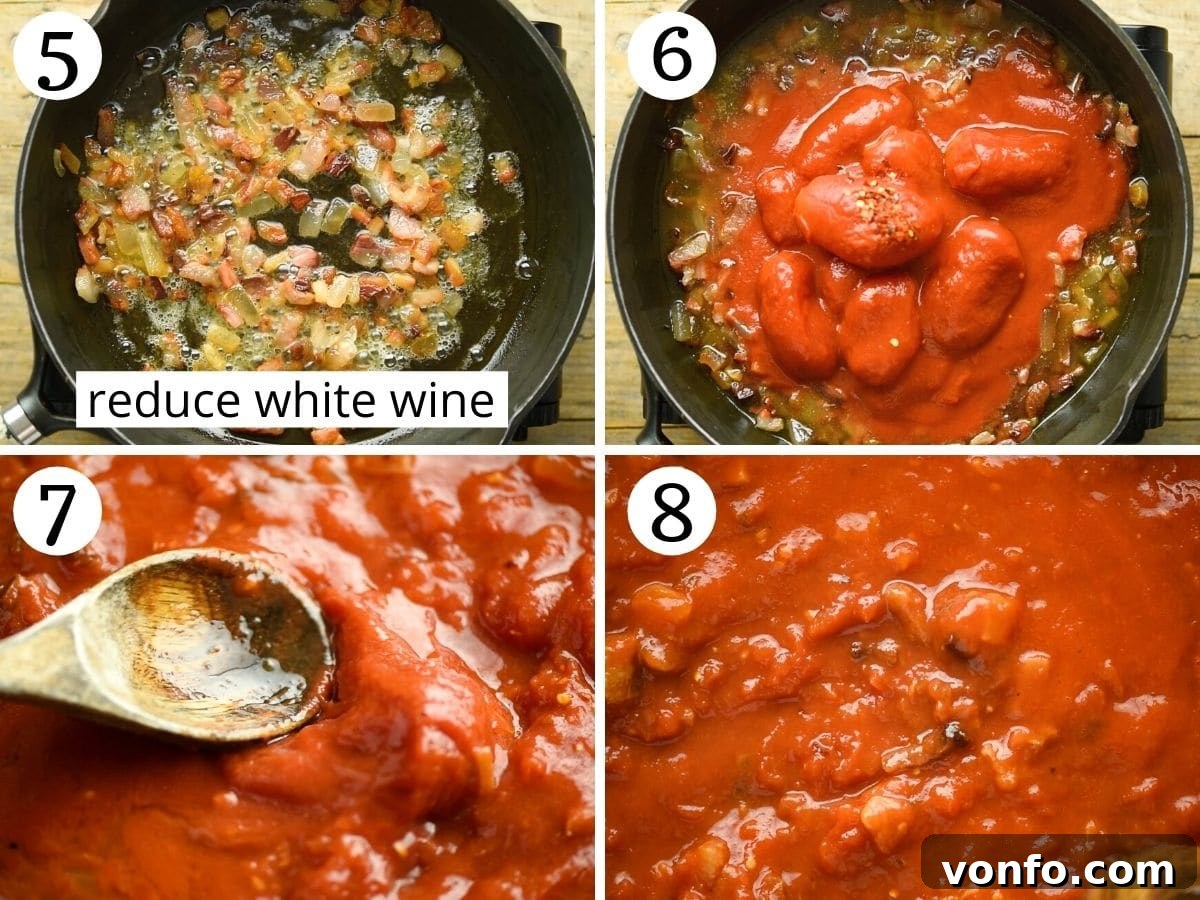
The guanciale slowly crisping in the pan, generously releasing its prized, aromatic fat. - **Build the Amatriciana Sauce with Depth:** With the rendered guanciale fat still in the pan, deglaze it with the dry white wine. Immediately begin scraping up any delectable browned bits (known as ‘fond’) from the bottom of the pan using a sturdy wooden spoon or spatula. Allow the wine to simmer vigorously for approximately 1-2 minutes, or until its volume has visibly reduced by half. This step allows the alcohol to evaporate, leaving behind concentrated, complex flavors. Introduce the red pepper flakes at this point for a subtle, warming heat. Next, add the hand-crushed whole plum tomatoes. Break any larger tomato pieces into smaller, rustic chunks with the back of your wooden spoon. Season the sauce lightly with salt and freshly ground black pepper, always keeping in mind the inherent saltiness of both guanciale and Pecorino cheese. Simmer the sauce gently for at least 10-15 minutes, stirring occasionally, to allow all the flavors to harmoniously meld and deepen. *Refer to photos 5-8 for the detailed sauce preparation steps.*
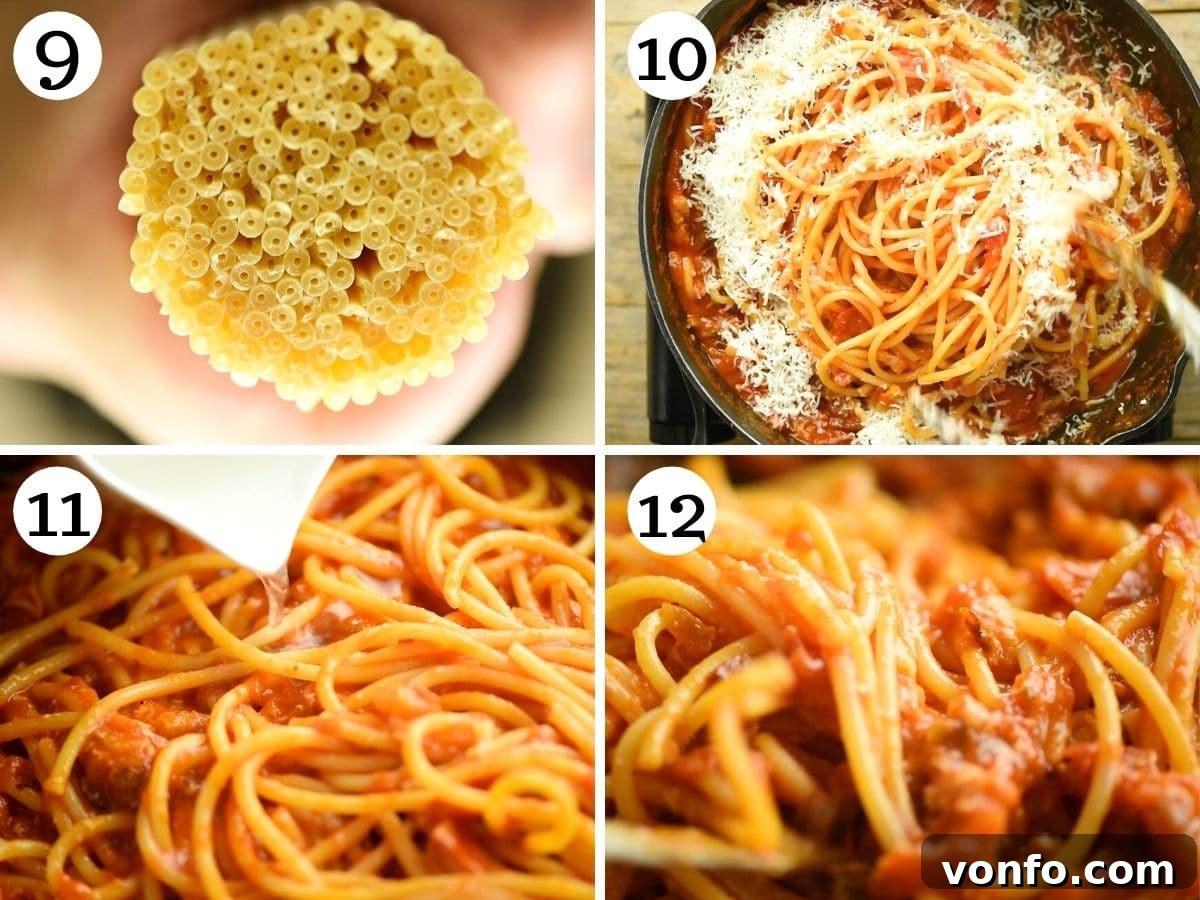
The rich tomato sauce bubbling gently, absorbing the profound flavors from the rendered guanciale fat. - **Cook the Bucatini to Al Dente Perfection:** Concurrently with your simmering sauce, bring a large pot of generously salted water to a rapid, rolling boil. Add the bucatini and cook according to the package instructions, aiming for a firm al dente texture – meaning it should be slightly firm to the bite. In fact, it’s often advisable to cook it for 2-3 minutes *less* than the recommended time, as the pasta will complete its cooking process directly in the sauce. Before draining the pasta, crucially reserve approximately ½ cup (125ml) of the starchy pasta cooking water. This “liquid gold” is an indispensable element for achieving a perfectly emulsified and glossy sauce consistency. *Photo 9 provides a clear visual representation of the distinctive bucatini pasta shape.*
Perfectly cooked bucatini pasta, poised to be integrated into the luscious Amatriciana sauce. - **Combine and Emulsify for a Silky Finish:** Once the bucatini has reached its ideal al dente stage, use tongs to deftly transfer it directly from the boiling water into the pan containing the simmering Amatriciana sauce. Return most of the reserved crispy guanciale back into the pan (you can hold back a small amount for a final garnish if preferred). Toss everything together vigorously and continuously for 1-2 minutes, allowing the bucatini to thoroughly absorb the rich flavors of the sauce. If at any point the sauce appears too thick or requires further lubrication, gradually add a splash of the reserved starchy pasta water, one tablespoon at a time, while continuing to toss. The starch in this water is crucial for creating a glossy, perfectly emulsified sauce that adheres beautifully to every strand of bucatini.
- **Finish with Authentic Pecorino:** Remove the pan from the heat. Generously stir in the freshly grated Pecorino Romano cheese. Continue to toss rapidly until the cheese has completely melted and seamlessly combined with the sauce, creating a wonderfully creamy and cohesive coating that clings to every piece of pasta.
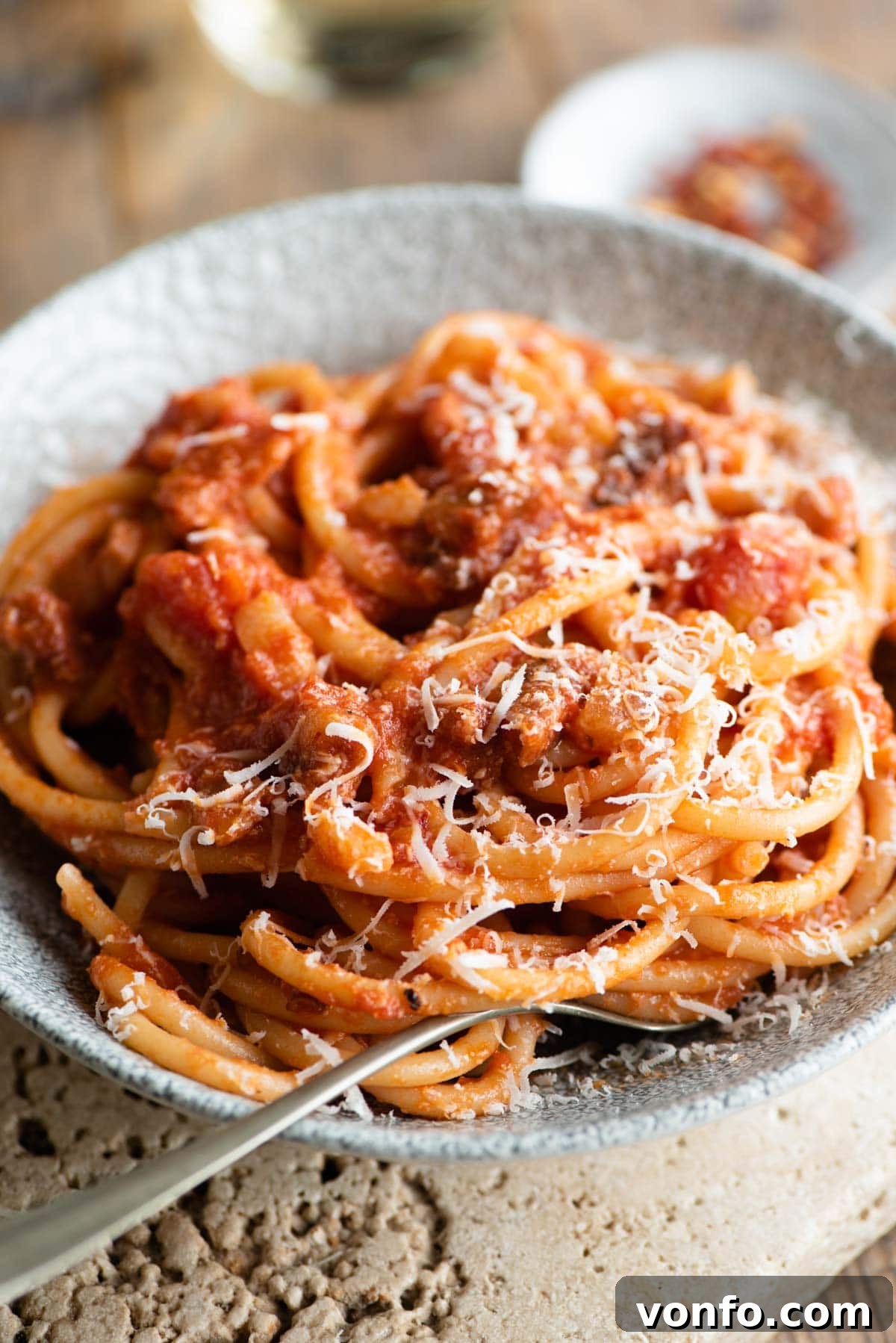
- **Serve Immediately:** Plate the Bucatini all’Amatriciana hot, ideally garnished with any remaining crispy guanciale, an extra luxurious sprinkle of freshly grated Pecorino Romano cheese, and perhaps a final grind of fresh black pepper. Serve immediately and savor every authentic bite! *Refer to photos 10-12 for visual guidance on the final plating and presentation.*
Expert Tips & Frequently Asked Questions for Amatriciana Perfection
Achieving a truly outstanding Bucatini all’Amatriciana is an accessible goal with just a few key considerations and expert insights:
- Embrace Guanciale for True Authenticity: For an Amatriciana that truly sings with authentic Roman flavor, making the effort to source guanciale is paramount. While pancetta can substitute in many dishes, guanciale’s unique fat composition, curing process, and the unparalleled depth of flavor it imparts are irreplaceable. It’s also the essential ingredient for classic Carbonara and Gricia. Trust us, the difference is profound!
- The Magic of Reserved Pasta Water: Never underestimate the power of the starchy water left over from cooking your pasta. This “liquid gold” is your secret weapon for creating a silky, glossy, and beautifully emulsified sauce that clings perfectly to every strand of bucatini. Add it gradually, a tablespoon at a time, as you toss the pasta with the sauce, until you achieve your desired luscious consistency.
- Always Taste Before Adding Salt: Guanciale is a cured pork product and naturally quite salty, as is Pecorino Romano cheese. To avoid over-salting your masterpiece, always taste your tomato sauce *before* adding any extra salt. You’ll often find it requires very little, if any, additional seasoning once the guanciale and cheese have been fully incorporated.
- Quality Tomatoes Truly Matter: As highlighted earlier, the choice of tomatoes is crucial. Opt for the highest quality canned whole peeled tomatoes, ideally San Marzano D.O.P. Their superior sweetness, balanced acidity, and fresh texture will significantly elevate your sauce from good to extraordinary. Crushing them by hand also contributes to a delightful, rustic sauce consistency.
- Precision in Pasta Cooking: Always cook your bucatini to a firm al dente, meaning it should still have a slight bite. For best results, cook it 2-3 minutes *less* than the package instructions suggest, as the pasta will continue to cook and absorb flavor when tossed in the hot sauce. This ensures perfect texture and maximum sauce absorption.
- Finish Pasta in the Sauce: The most effective way to fully meld the flavors and create a truly cohesive dish is to transfer the al dente pasta directly into the sauce and finish cooking it for a minute or two, tossing continuously. This allows the pasta to soak up the sauce’s rich essence.
- Choose the Right Pan Size: Ensure you use a pan that is large enough to comfortably hold both your sauce and the cooked pasta. This provides ample space for vigorous tossing, which is essential for proper emulsification and even distribution of the delicious sauce.
Frequently Asked Questions (FAQs)
While freshly made pasta dishes are always superior, you can certainly prepare the Amatriciana sauce (the guanciale and tomato base) in advance. Cook it as directed, then let it cool completely before storing it in an airtight container in the refrigerator for up to 2-3 days. When you’re ready to serve, gently reheat the sauce until it’s piping hot. Then, cook your pasta fresh, combine it with the reheated sauce, add the Pecorino cheese, toss vigorously, and serve immediately. It’s important not to add the Pecorino cheese to the sauce if you plan to store it, as its texture and consistency can become undesirable upon reheating.
Absolutely. Although bucatini is traditional and highly recommended for its unique ability to capture and hold the sauce, Amatriciana is a versatile sauce often served with other pasta shapes, particularly in Rome. High-quality spaghetti is a very common and excellent alternative. For those who prefer shorter shapes, rigatoni, mezze maniche, or even penne can also be used, offering a different but equally enjoyable textural experience with this robust sauce.
Leftover Bucatini all’Amatriciana is best stored in an airtight container in the refrigerator for a maximum of 2 days. When reheating, it’s best to do so gently on the stovetop over low heat, adding a splash of water or vegetable broth to help loosen the sauce and rehydrate the pasta. Bear in mind that pasta can absorb a significant amount of sauce and become softer over time, so freshly prepared dishes will always offer the optimal texture and flavor.
More Classic Italian Pasta Recipes to Explore and Savor
If you’ve thoroughly enjoyed delving into the rich and authentic flavors of Roman cuisine with this Amatriciana, we enthusiastically recommend expanding your culinary repertoire with these other beloved and timeless Italian pasta dishes:
- Spaghetti alla Carbonara
- Pasta alla Gricia
- Penne all’Arrabbiata: Spicy Italian Tomato Pasta
- Spaghetti Aglio e Olio: Garlic & Oil Pasta
- Pasta Alla Norma (Eggplant Pasta)
Recipe Card: Bucatini all’Amatriciana
This recipe provides step-by-step photos, helpful tips, and tricks to ensure a perfect result every time you make authentic Bucatini all’Amatriciana.
Bucatini all’Amatriciana
Recipe by Emily
Prep Time: 5 mins
Cook Time: 15 mins
Total Time: 20 mins
Servings: 4 servings
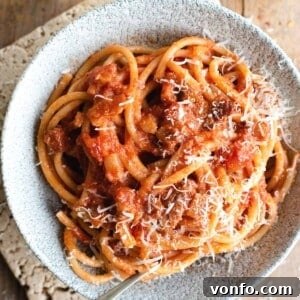
Master the art of authentic Bucatini all’Amatriciana. This classic Italian pasta dish is insanely delicious, made with rich tomato sauce, crispy guanciale, and sharp Pecorino cheese. It’s a perfect comfort food for busy weeknights, ready in 20 minutes or less!
Ingredients
- 14 oz (400g) bucatini pasta (can also use spaghetti or rigatoni)
- 1.5 cups (150g) guanciale, trimmed and cut into ¼-inch (0.5 cm) cubes or strips
- 1 cup (70g) Pecorino Romano cheese, freshly grated, plus extra for serving
- 28 oz (800g) canned whole plum tomatoes, preferably San Marzano D.O.P., crushed by hand
- 1/3 cup (80ml) dry white wine
- ½ tsp red pepper flakes (chilli flakes), or to taste
- Salt and freshly ground black pepper, to taste
- ½ cup (125ml) reserved starchy pasta water
Instructions
- Bring a large pot of generously salted water to a rolling boil for the pasta.
- Trim the thick skin from the bottom of the guanciale and discard. If desired, lightly trim some of the dark seasoned layer from the top. Cut the guanciale into ¼ inch (0.5 cm) thick cubes or strips.
- Heat a large pan or skillet over medium heat. Add the chopped guanciale and fry slowly until the fat renders out and the guanciale becomes crispy and golden. Remove the crispy guanciale with a slotted spoon and set aside, leaving the rendered fat in the pan.
- Add the dry white wine to the pan with the guanciale fat. Simmer vigorously for about 1-2 minutes, scraping up any browned bits from the bottom, until the liquid has reduced by half.
- Add the hand-crushed whole plum tomatoes and red pepper flakes to the pan. Break up any larger tomato pieces with the back of a wooden spoon. Simmer the sauce gently for 10-15 minutes, allowing the flavors to meld. Taste and season with salt and pepper as needed, remembering the inherent saltiness of guanciale and Pecorino.
- While the sauce simmers, add the bucatini to the boiling salted water and cook until al dente (aim for 2-3 minutes less than package instructions, as it will finish cooking in the sauce). Before draining, reserve ½ cup (125ml) of the starchy pasta water.
- Transfer the cooked bucatini directly to the pan with the tomato sauce using tongs. Add most of the reserved crispy guanciale back into the pan. Toss everything together vigorously to combine. If the sauce is too thick, add a splash of the reserved pasta water, one tablespoon at a time, until the sauce coats the pasta beautifully.
- Remove the pan from the heat. Stir in the freshly grated Pecorino Romano cheese, tossing rapidly until it melts and creates a creamy, cohesive sauce.
- Serve immediately, garnished with any remaining crispy guanciale and an extra sprinkle of Pecorino Romano cheese.
Video Tutorial
Watch our video tutorial for a visual guide to making perfect Bucatini all’Amatriciana:
(Note: The video above is a placeholder. Please replace ‘dQw4w9WgXcQ’ with the actual YouTube video ID for an Amatriciana recipe tutorial for an authentic experience.)
Recipe Notes for Success
- Guanciale is Key: For the most authentic flavor, prioritize using guanciale over pancetta. Its unique fat content and taste are central to Amatriciana.
- Starchy Pasta Water: Don’t forget to reserve some pasta water! It’s crucial for achieving a silky, emulsified sauce that coats the pasta beautifully.
- Taste and Adjust Salt: Guanciale and Pecorino are naturally salty. Always taste your sauce before adding extra salt to avoid over-seasoning.
- Make-Ahead Sauce Option: The tomato and guanciale sauce (without Pecorino) can be prepared 2-3 days in advance and stored refrigerated. Reheat gently before adding fresh pasta and cheese.
- Leftover Storage: Best enjoyed fresh, but leftovers can be stored in an airtight container in the refrigerator for up to 2 days. Reheat gently on the stovetop.
Helpful Information for All Our Recipes
- We consistently use high-quality extra virgin olive oil in all of our recipes unless explicitly stated otherwise.
- For the best flavor and results with canned or jarred tomatoes, we always recommend premium brands such as Cirio or Mutti.
- Unless otherwise specified, all vegetable measurements in our recipes assume medium-sized produce.
- All of our recipes are meticulously tested and developed using a reliable fan (convection) oven.
- Gain further insight into how our nutrition information is calculated.
- Explore our curated list of must-have Italian Pantry Staples to stock your kitchen.
- Discover our essential Kitchen Tools for Authentic Italian Cooking.
Approximate Nutrition Information Per Serving
- Calories: 758 kcal
- Carbohydrates: 84 g
- Protein: 24 g
- Fat: 35 g
- Saturated Fat: 14 g
- Polyunsaturated Fat: 1 g
- Monounsaturated Fat: 2 g
- Cholesterol: 58 mg
- Sodium: 829 mg
- Potassium: 633 mg
- Fiber: 5 g
- Sugar: 8 g
- Vitamin A: 381 IU
- Vitamin C: 19 mg
- Calcium: 272 mg
- Iron: 3 mg
Please note that nutrition information is automatically calculated and should only be used as an approximation. Actual nutritional values may vary based on specific brands, ingredient quantities, and preparation methods.
Share Your Culinary Creations with Us!
We absolutely adore seeing your kitchen triumphs! If you’ve successfully crafted this Authentic Bucatini all’Amatriciana recipe or delighted in any other delectable dish from our blog, we would be thrilled if you could take a moment to rate the recipe and generously share your experiences in the comments section below. Your invaluable feedback, personal stories, and culinary adventures genuinely inspire us! Moreover, you can stay connected with us and discover an abundance of new, delicious culinary delights by following our vibrant communities on FACEBOOK, INSTAGRAM, and PINTEREST. For an exclusive weekly dose of fresh recipe inspiration delivered directly to your inbox, don’t hesitate to sign up for our newsletter today.