
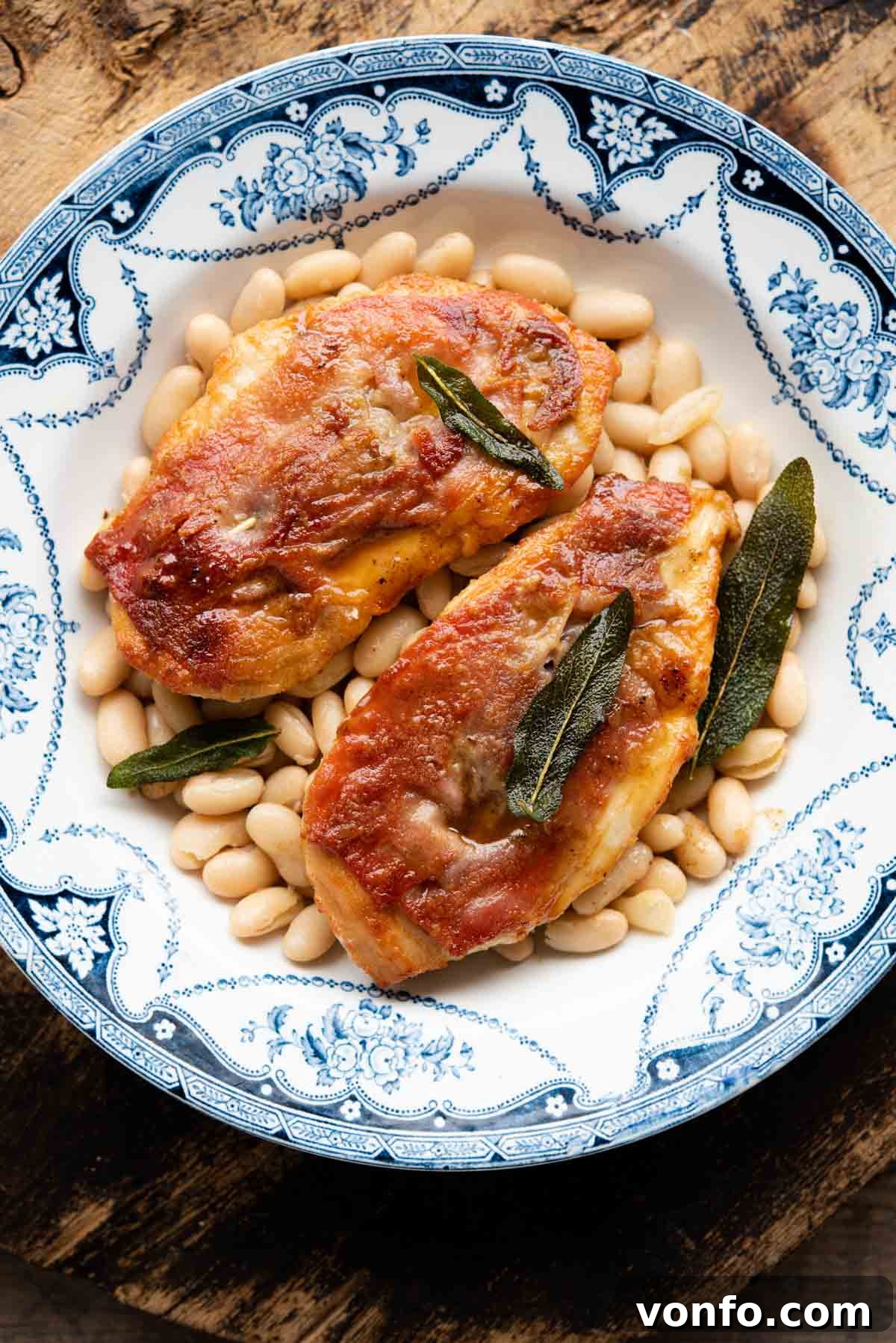
Authentic Chicken Saltimbocca: A Quick & Flavorful Italian Classic Recipe
Chicken Saltimbocca is a delightful adaptation of the beloved Roman classic, traditionally made with veal. This version utilizes succulent chicken cutlets, fragrant fresh sage, and savory prosciutto, pan-fried until golden and crispy. The dish is then elevated with the simplest yet most flavorful white wine sauce, bringing all the elements together. We love to serve ours alongside tender rosemary cannellini beans, creating a complete and effortlessly delicious meal that’s ready in a flash.
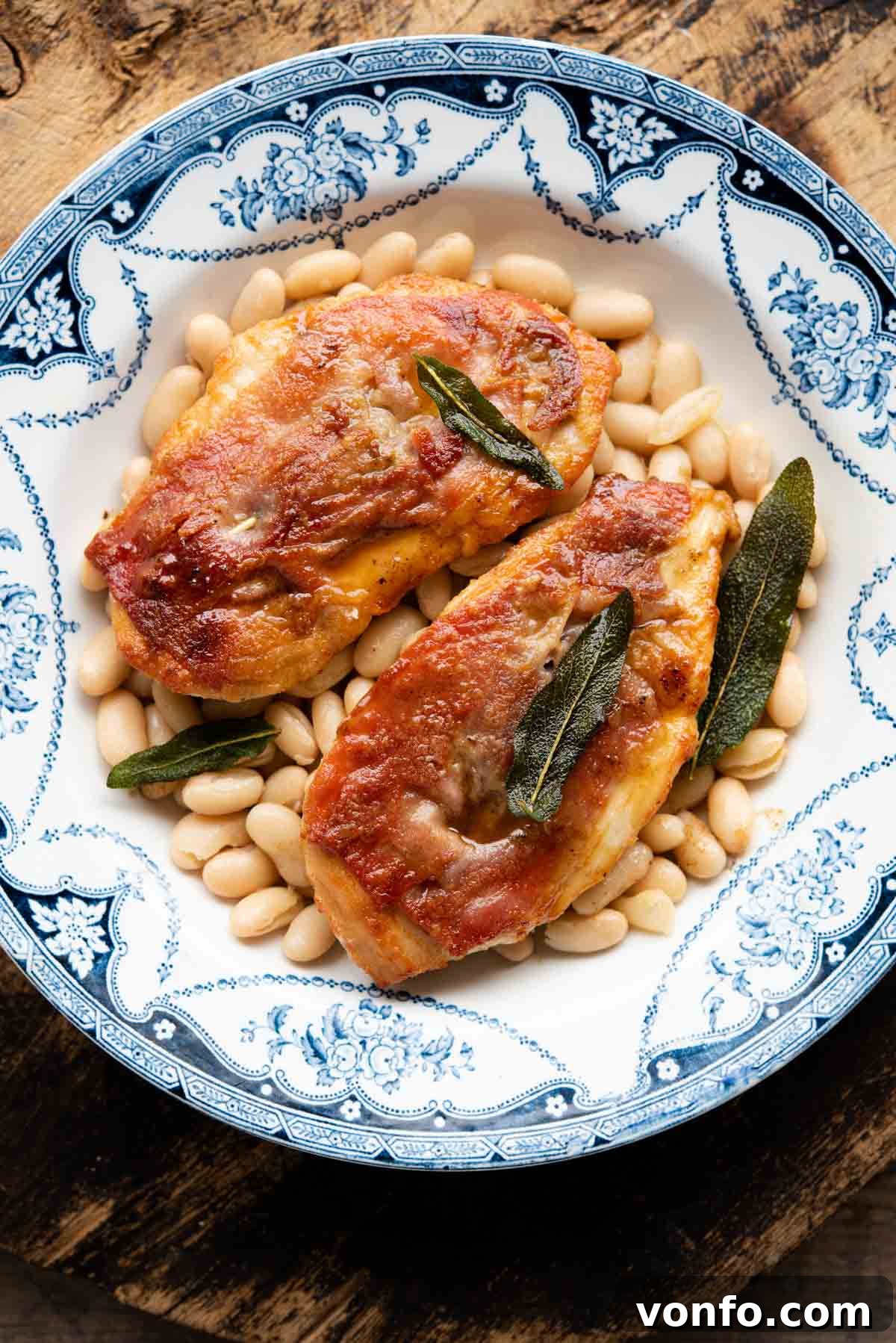
This recipe holds a special place in our hearts for its incredible simplicity and profound depth of flavor. Each bite of Chicken Saltimbocca delivers a symphony of textures and tastes: the satisfying crunch of salty prosciutto, the aromatic warmth of fresh sage leaves, all brought together by a delicate white wine sauce that truly “jumps in the mouth”—as the name suggests. It’s a culinary experience that feels both gourmet and incredibly comforting, proving that authentic Italian flavors can be achieved in your home kitchen with minimal effort.
The Roman Legacy: What Does Saltimbocca Mean?
The term “Saltimbocca” literally translates from Italian to “jumps in the mouth,” a testament to its irresistible flavor profile. Originating from Rome, the traditional dish features thin slices of veal, layered with prosciutto and sage, pan-fried, and then finished with a white wine sauce. This evocative name perfectly describes the dish, as the harmonious combination of savory prosciutto, aromatic sage, and tender meat is so incredibly delicious and flavorful that it feels as if it leaps into your mouth with every bite! While veal saltimbocca remains a cherished classic, this chicken rendition offers a more approachable and budget-friendly alternative without compromising on the authentic Italian taste. Chicken breast provides a lean, versatile canvas that readily absorbs the rich flavors of prosciutto and sage, making it a perfect choice for modern kitchens seeking quick, flavorful, and accessible Italian meals.
Why This Chicken Saltimbocca Recipe Will Become Your New Favorite
Beyond its fantastic taste and authentic Roman heritage, this chicken saltimbocca recipe is a true weeknight hero. It comes together in a remarkable 30 minutes from start to finish, making it an ideal solution for busy evenings when you crave something special but lack the time for elaborate cooking. The minimal prep and quick cook time do not, however, equate to a compromise on flavor or elegance. In fact, its elegant presentation and sophisticated flavors make it equally suitable for entertaining guests or celebrating special occasions. It’s a versatile dish that transitions seamlessly from a casual family dinner to a more formal gathering, always impressing with its balanced taste and ease of preparation.
One of the aspects we particularly adore about this recipe is its adaptability, especially when it comes to side dishes. Our preferred pairing is quick rosemary cannellini beans, which require no more than 10 minutes to prepare, rounding out the entire meal in under 40 minutes. This combination is not only delicious but also incredibly wholesome. However, the chicken saltimbocca’s balanced flavors complement almost any vegetable, pasta, or salad you can imagine. In the sections below, you’ll find an array of delicious suggestions to inspire your next meal, ensuring that you can tailor this Italian classic to your preference and what you have on hand.
Table of Contents
- Essential Ingredients for Perfect Chicken Saltimbocca
- Step-by-Step Guide to Cooking Chicken Saltimbocca
- Mastering the Crispy Prosciutto
- Delicious Serving Suggestions & Wine Pairings
- Expert Tips and Frequently Asked Questions
- More Italian-Inspired Chicken & Veal Recipes
- Full Printable Recipe Card
Essential Ingredients for Perfect Chicken Saltimbocca
The beauty of Saltimbocca lies in the simplicity and quality of its core ingredients. Using fresh, high-quality components will undoubtedly yield the most flavorful and satisfying results, allowing each element to shine in its own right. Below is a detailed look at what you’ll need, along with notes on selecting the best options and potential substitutions to ensure your dish is nothing short of spectacular.
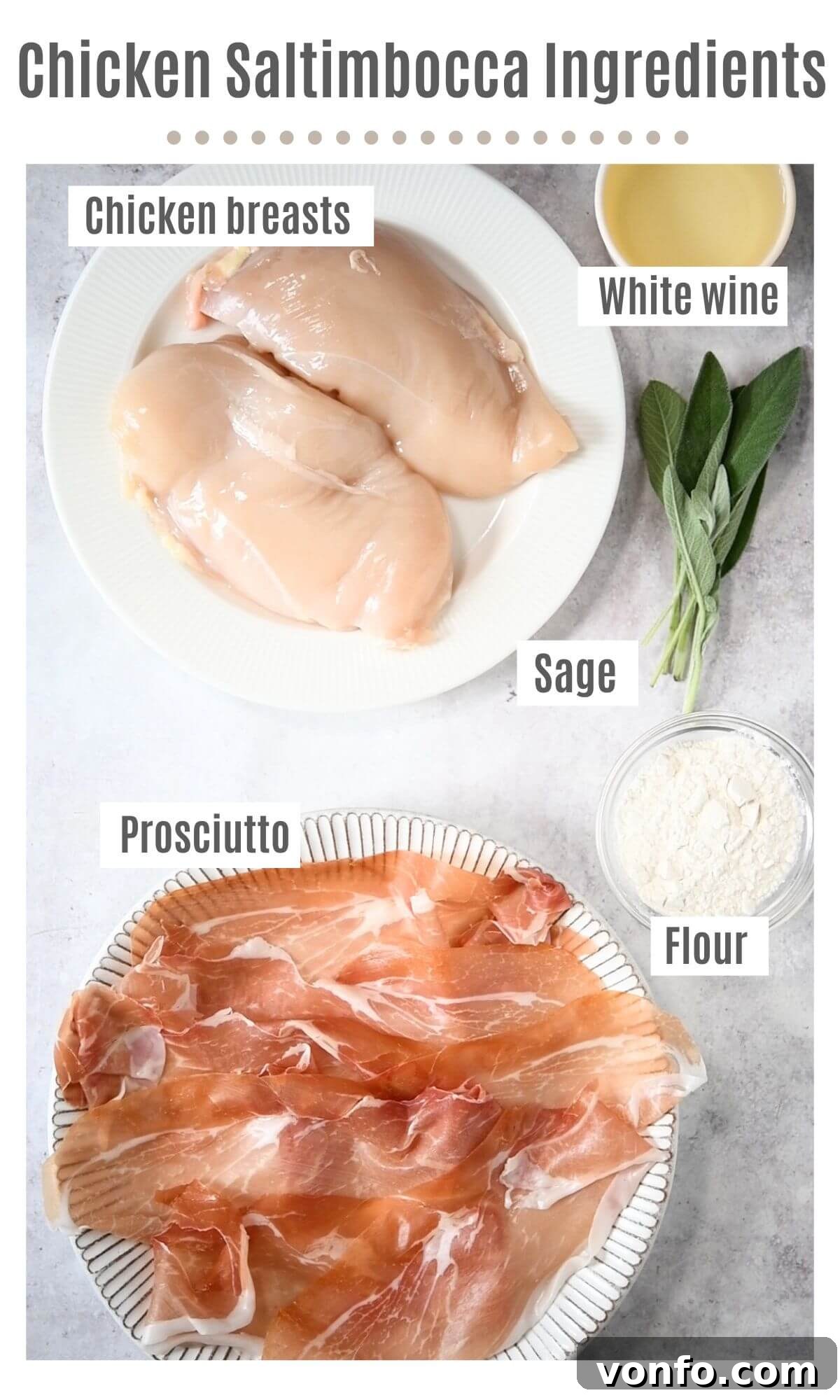
- Chicken: For this recipe, you’ll want either pre-cut chicken cutlets or large boneless, skinless chicken breasts. If using whole breasts, slice them in half horizontally to create thinner cutlets. Pounding them lightly with a meat mallet or rolling pin to an even thickness (about ¼ to ½ inch) ensures uniform cooking and tenderness, preventing any part from drying out. This also helps create a larger, more consistent surface area for the prosciutto and sage to adhere to, which is crucial for the dish’s signature look and taste.
- Prosciutto: Opt for a good quality prosciutto crudo, if possible. Its delicate, salty flavor and melt-in-your-mouth texture are paramount to the dish. Thinner slices tend to crisp up better and provide that delightful crackle that makes Saltimbocca so special. The quality of prosciutto truly makes a noticeable difference in the overall flavor of your saltimbocca, so choose wisely.
- Sage: Fresh sage is absolutely non-negotiable for authentic Saltimbocca. Its distinct, earthy, and slightly peppery aroma is a defining characteristic of the dish, providing a unique counterpoint to the savory prosciutto and mild chicken. Avoid dried sage, as it won’t provide the same vibrant flavor or visual appeal. Choose fresh leaves that are green, plump, and unbruised for the best results.
- Flour: A small amount of regular all-purpose flour is used for dredging the chicken. This step creates a light coating that helps the prosciutto adhere during cooking, promotes a beautiful golden-brown crust on the chicken, and slightly thickens the pan sauce, giving it a luscious consistency. Only a few tablespoons are usually sufficient, as you want a light dusting, not a thick batter.
- White Wine: A dry Italian white wine is best for the sauce. Good choices include Pinot Grigio, Vermentino, Verdicchio, or Gavi. The wine adds crucial acidity, complexity, and helps deglaze the pan, capturing all the flavorful browned bits (fond) left behind by the chicken and prosciutto. Choose a wine you genuinely enjoy drinking, as its flavor will concentrate and become a prominent part of the finished sauce. If you prefer to avoid alcohol, low-sodium chicken broth can be used as a perfectly acceptable substitute.
- Olive Oil: Essential for pan-frying the chicken to achieve that desirable golden crust. Use a good quality extra virgin olive oil for its flavor and ability to withstand medium heat cooking without breaking down.
- Salt & Pepper: Simple seasoning to enhance the natural flavors of the chicken. Remember that prosciutto is already quite salty, so season the plain side of the chicken sparingly to avoid over-salting the dish. Freshly ground black pepper can also add a nice subtle kick.
Step-by-Step Guide to Cooking Chicken Saltimbocca
Creating this Italian masterpiece is simpler than you might imagine. Follow these detailed steps to create a perfect Chicken Saltimbocca, complete with visual cues to guide you through each stage of the process.
Preparation: Crafting the Perfect Chicken Cutlets
1. Prepare the Chicken: Begin by taking your large chicken breasts and carefully cutting each in half horizontally to create four thinner cutlets. Lay each cutlet between two pieces of plastic wrap or parchment paper on a sturdy surface. Using a meat mallet or rolling pin, gently pound each cutlet until it’s approximately 1/2 cm (¼ inch) thick. This crucial step ensures uniform cooking, resulting in tender, succulent chicken, and provides a consistent base for the toppings. (See photos 1 and 2 for a clear visual guidance)
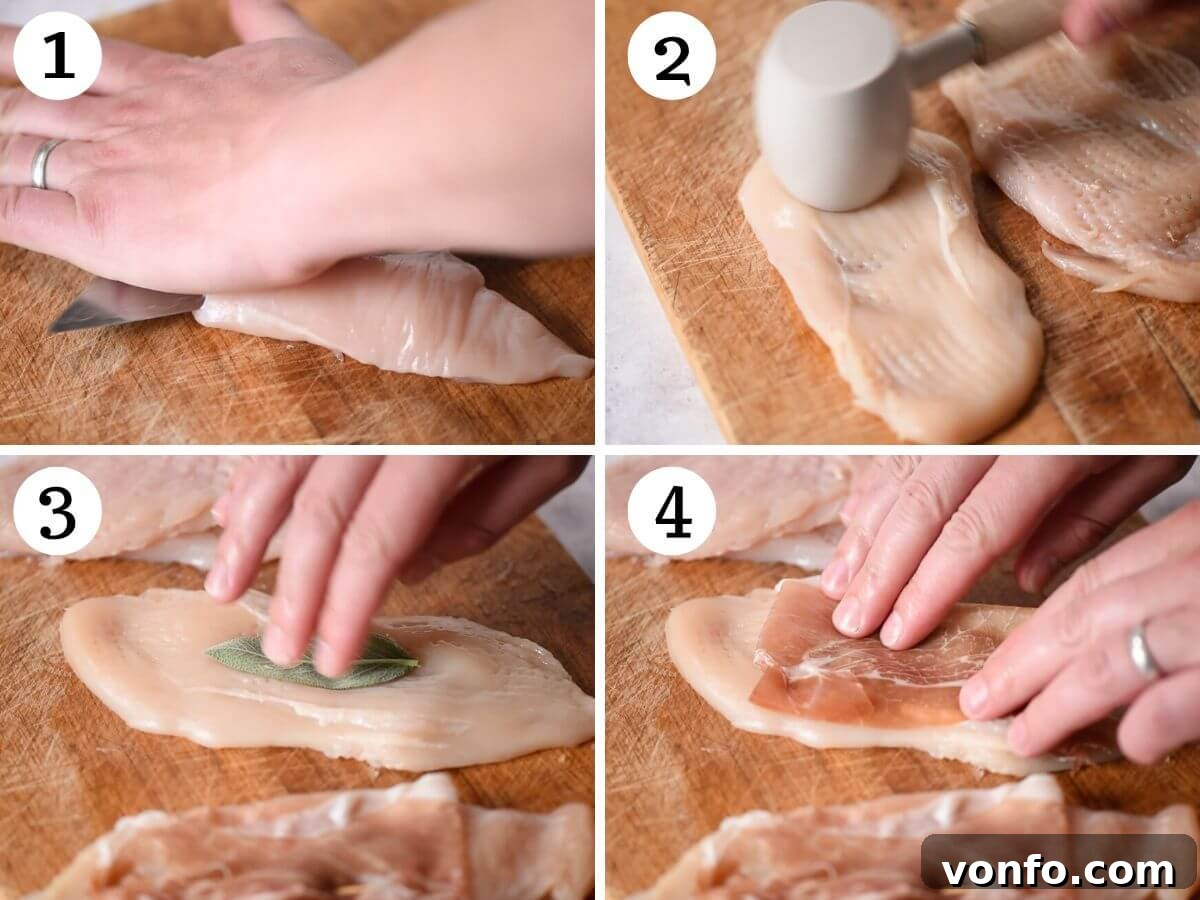
2. Assemble the Saltimbocca: Take one fresh sage leaf and place it directly in the center of one side of each prepared chicken cutlet. Next, carefully lay a slice of prosciutto on top of the sage leaf. If your prosciutto slice is notably larger than the chicken cutlet, you can gently fold it in half to achieve a better fit. To keep these layers securely in place during cooking, pierce both the sage and prosciutto to the chicken using a toothpick. A small note on presentation: for a slightly different look, you can place the sage leaf on top of the prosciutto for clearer visibility, but placing sage underneath often helps the prosciutto crisp better. (Refer to photos 3-5 for detailed steps on assembly)
Dredging and Pan-Frying for Golden Perfection
3. Dredge the Chicken: Lightly season the plain, un-prosciutto-covered side of each chicken cutlet with a pinch of salt. Remember, prosciutto is inherently salty, so be conservative with your added salt. Next, lightly dredge each cutlet in all-purpose flour, ensuring it’s just lightly coated. Shake off any excess flour to prevent it from becoming gummy in the pan or creating a clumpy sauce. This thin layer of flour is essential for achieving a beautiful golden crust and aids in creating the delicious pan sauce later. (Photo 6 clearly illustrates this light dredging technique)
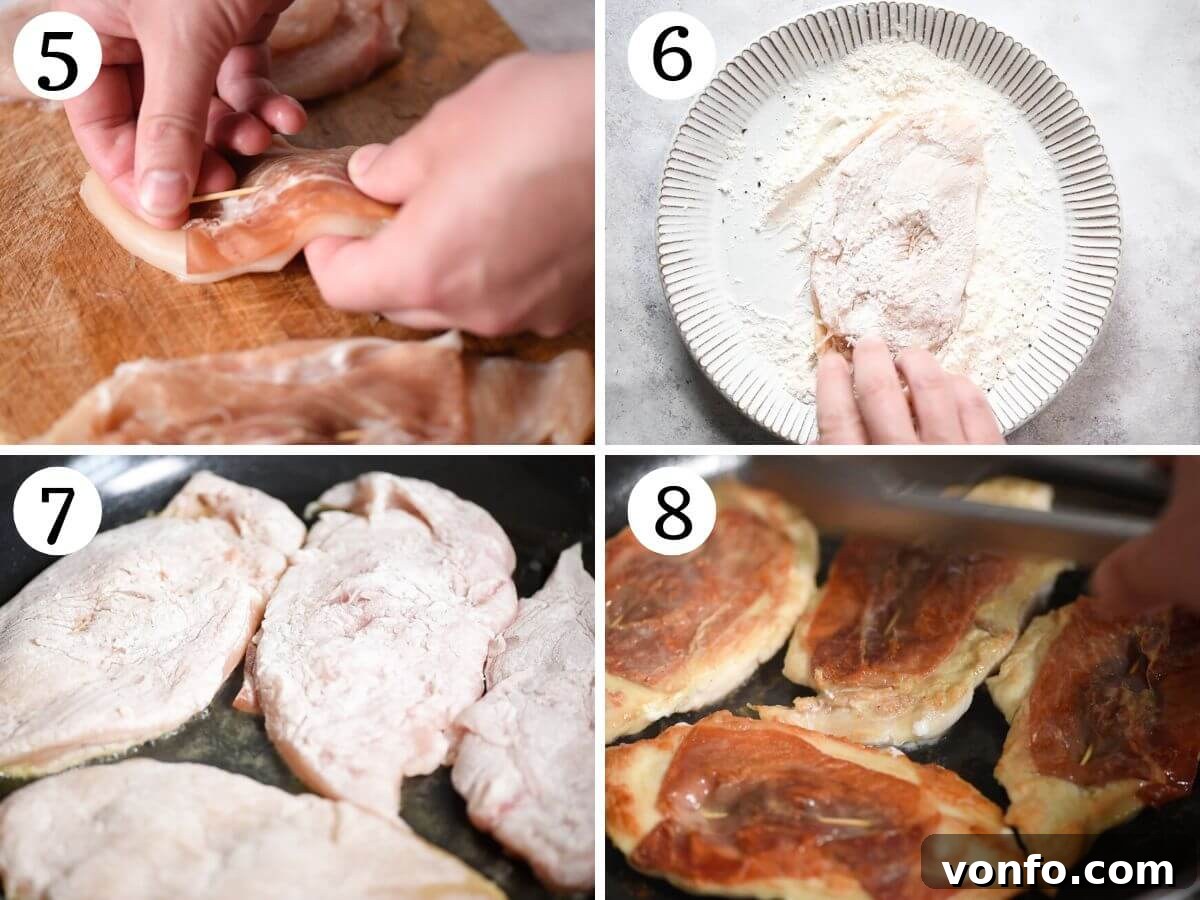
4. Pan-Fry the Chicken: Heat a generous amount of olive oil in a large skillet or frying pan over medium heat. It’s important to use a pan large enough so you don’t overcrowd the chicken; cook in batches if necessary. Once the oil is hot and shimmering, carefully place the chicken cutlets into the pan, prosciutto-side down. Cook for approximately 4-5 minutes, or until the prosciutto is wonderfully crispy and golden brown. Then, flip the chicken over and cook for another 4 minutes on the other side, or until the chicken is thoroughly cooked through and no longer pink in the center. For an extra touch of aroma and visual appeal, you can add a few extra fresh sage leaves to the pan during this stage to infuse the oil and serve as a fragrant garnish. (See photos 7 & 8 for the correct frying technique)
Finishing with a Simple White Wine Sauce
5. Deglaze and Finish: Once the chicken is cooked to perfection, carefully remove it from the pan and transfer it to a plate, covering loosely with foil to keep it warm. Pour the dry white wine into the hot pan. Immediately use a wooden spoon to scrape up any browned bits (fond) from the bottom of the pan – these are packed with savory flavor and are key to a rich sauce! Allow the wine to simmer vigorously for about 2-3 minutes, reducing by roughly half, until it forms a light, flavorful sauce. Finally, return the cooked chicken cutlets to the pan for a minute or two to warm through and coat them evenly in the exquisite sauce. This allows the chicken to absorb the last delicious notes of the pan sauce. (Photos 9 & 10 clearly demonstrate the deglazing process)
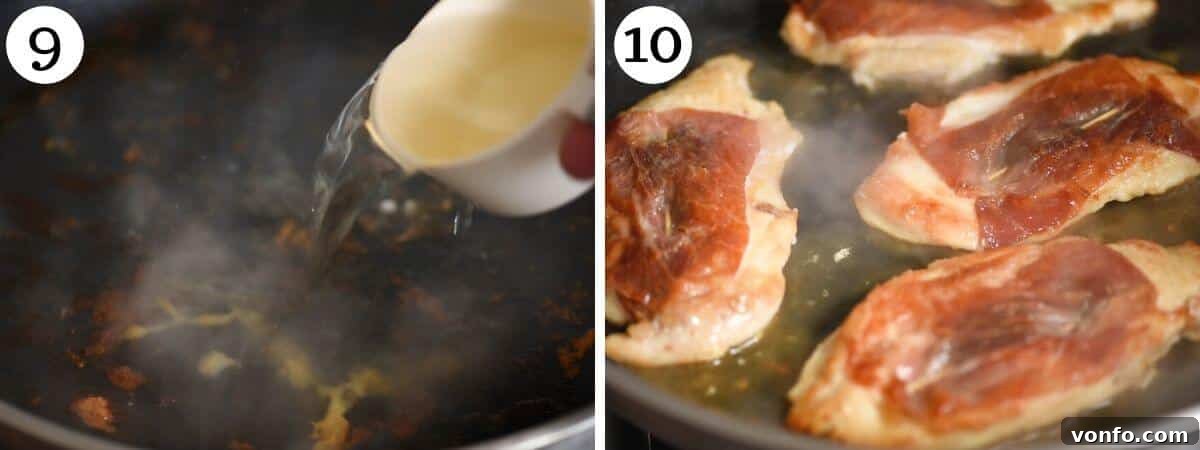
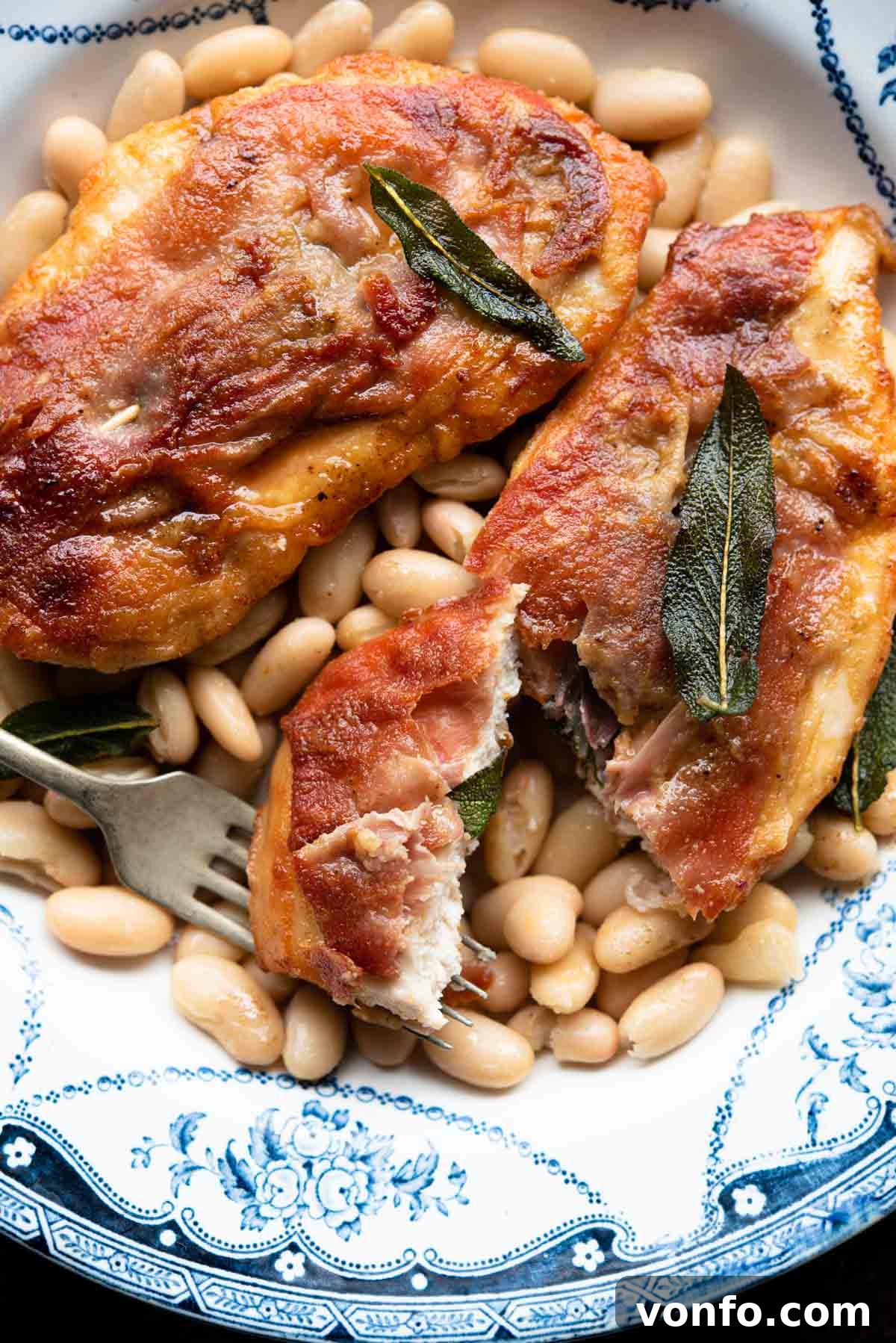
6. Serve Immediately: Turn off the heat and serve your magnificent Chicken Saltimbocca hot, garnished with any extra crispy sage leaves if desired. Enjoy the harmonious blend of flavors and textures, ideally paired with a complementary side dish.
Mastering the Crispy Prosciutto: A Key to Perfect Saltimbocca
One of the most appealing aspects of Chicken Saltimbocca, and indeed a hallmark of a well-executed dish, is the irresistibly crispy prosciutto that adorns each tender cutlet. Achieving that perfect, delicate crispness is easier than you think, and it largely comes down to a few simple yet crucial techniques that allow the prosciutto to truly shine.
The secret lies primarily in how you position and cook the prosciutto. A top tip for maximum crispiness is to use larger slices of prosciutto and fold them in half, specifically placing them over the sage leaf rather than beneath it. When you introduce the chicken into the hot pan, ensure it’s placed prosciutto-side down. Allow it to cook in this position for the majority of the frying time (about 4-5 minutes). This direct contact with the hot pan’s surface ensures the prosciutto renders its fat properly and crisps up beautifully, developing a golden-brown, almost bacon-like crunch. Only flip the chicken for the last few minutes to finish cooking the other side and ensure the chicken is thoroughly cooked through.
Another vital factor contributing to crispiness is to avoid overcrowding the pan. Cook the chicken in batches if necessary, ensuring there’s enough space between each cutlet. Overcrowding significantly lowers the pan temperature and leads to steaming rather than searing, which prevents the prosciutto from becoming crispy and can make the chicken less flavorful. A consistent medium heat also plays a crucial role; too high, and the prosciutto might burn before the chicken cooks through; too low, and it might just become chewy and lack the desired crisp texture.
Delicious Serving Suggestions & Wine Pairings
Chicken Saltimbocca is incredibly versatile and pairs beautifully with a variety of side dishes, making it a fantastic centerpiece for any meal. While it’s a star on its own, a thoughtfully chosen accompaniment can elevate the entire dining experience.
Our Go-To Side: Rosemary Cannellini Beans
Our absolute favorite way to serve Chicken Saltimbocca is with simple, yet incredibly flavorful, rosemary cannellini beans. This side is not only incredibly easy to prepare but also perfectly complements the richness of the chicken and salty prosciutto, offering a comforting and earthy contrast. To make them, simply drain and rinse a can of cannellini beans. Heat them gently in a pan with a generous drizzle of olive oil, a whole garlic clove (which you can remove before serving for a subtle garlic infusion), and a sprig or two of fresh rosemary. Season with salt and freshly ground black pepper to taste. It’s a hearty, flavorful, and incredibly quick side that truly completes the meal and absorbs the delicious pan sauce.
Other Recommended Side Dishes:
- Arugula Salad with Lemon and Parmesan: A light, peppery arugula salad dressed with a bright lemon vinaigrette and shavings of Parmesan provides a refreshing contrast to the richness of the chicken. Its fresh notes cleanse the palate beautifully.
- Italian Roast Potatoes: Crispy on the outside, fluffy on the inside, and infused with aromatic rosemary and garlic, these potatoes are a classic Italian accompaniment that never disappoints.
- Fagioli all’uccelletto – Beans in Tomato Sauce: Another delicious bean dish, cooked in a savory tomato sauce with sage, offering a rustic, comforting side that’s bursting with Mediterranean flavors.
- Easy Green Bean Salad with Mustard and Garlic Dressing: A vibrant and tangy green bean salad adds a fresh crunch and a zesty counterpoint, cutting through the richness of the main course.
- Italian Green Beans In Tomato Sauce: Tender green beans simmered in a simple yet flavorful tomato sauce, a classic and wholesome vegetable side that’s easy to prepare.
- Peas and Pancetta – Easy Italian Side Dish: A quick and flavorful side combining sweet peas with savory pancetta, providing a lovely textural and taste contrast that kids and adults alike will love.
- Creamy Polenta: Soft, creamy polenta offers a comforting and substantial base, perfectly absorbing every drop of the delicious white wine sauce.
- Steamed Asparagus or Broccolini: Lightly steamed green vegetables provide a fresh, healthy balance and vibrant color to your plate.
- Crusty Bread: Don’t forget some good quality crusty Italian bread to soak up any leftover sauce!
Wine Pairings:
To complement the delicate yet savory flavors of Chicken Saltimbocca, consider pairing it with a dry, crisp Italian white wine, such as the ones often used in the sauce: Pinot Grigio, Vermentino, or Gavi. Their bright acidity will elegantly cut through the richness of the prosciutto and chicken, while their mineral notes and subtle fruitiness will enhance the aromatic sage. For red wine lovers who prefer a lighter touch, a light-bodied Sangiovese or a young Chianti could also be a delightful choice, offering a gentle fruitiness without overpowering the nuanced flavors of the dish. Remember, the best wine is the one you enjoy most!
Expert Tips and Frequently Asked Questions
Ensure your Chicken Saltimbocca is a resounding success from your very first attempt with these expert tips and answers to common queries. These insights will help you master the techniques and troubleshoot any potential issues, guaranteeing a consistently delicious outcome.
Top Tips for Success:
- Prioritize High-Quality Ingredients: The simple nature of Saltimbocca means each ingredient plays a critical role in the final flavor profile. Invest in good quality, free-range chicken and the best prosciutto you can find for superior flavor and texture. Fresh sage, with its distinct aroma, is absolutely non-negotiable for authenticity.
- Uniform Chicken Cutlets Are Key: Whether you buy pre-cut chicken cutlets or slice and pound chicken breasts yourself, aim for an even thickness (about ¼ to ½ inch or 0.5-1 cm). This crucial step ensures consistent cooking, preventing some parts from drying out while others are still undercooked. For serving 4 people, two large chicken breasts usually yield four perfectly sized cutlets.
- Choose the Right Wine: As mentioned in the ingredients section, a dry Italian white wine like Vermentino, Gavi, Verdicchio, or Pinot Grigio is ideal for creating the flavorful sauce. Our golden rule for cooking with wine is simple: never cook with a wine you wouldn’t enjoy drinking! Avoid “cooking wines,” which often contain added salt, sugar, and preservatives that can negatively impact the delicate flavor of your dish.
- Strategic Prosciutto Placement for Crispiness: Through years of making Saltimbocca, we’ve perfected the technique for ultimate crispiness. We’ve found that placing the sage leaf *underneath* the prosciutto helps the prosciutto get extra crispy, as it has more direct, uninterrupted contact with the hot pan. While this might mean the sage leaf isn’t as prominently visible for aesthetic purposes, the textural payoff of super crispy prosciutto is worth it. You can always fry a few extra sage leaves separately for garnish if you desire the traditional visible sage leaf.
- Avoid Overcrowding the Pan: This is a common mistake that can compromise the texture and flavor. Give the chicken cutlets ample space to cook properly. If your pan isn’t large enough to accommodate all cutlets in a single layer without touching, cook them in two batches. Overcrowding lowers the pan temperature and leads to steaming rather than searing, which prevents the prosciutto from becoming wonderfully crispy and can result in less flavorful, somewhat rubbery chicken.
- Scrape the Fond: When deglazing the pan with wine (or broth), make sure to scrape all the browned bits (fond) from the bottom of the pan with a wooden spoon. These caramelized bits are concentrated pockets of savory flavor, essential for building a rich, deeply flavored sauce that truly enhances the entire dish.
Frequently Asked Questions (FAQs):
Saltimbocca literally translates to “jumps in the mouth” in Italian. This evocative name perfectly describes the dish, as the harmonious combination of savory prosciutto, aromatic sage, and tender chicken (or veal) is so incredibly delicious and flavorful that it feels as if it leaps into your mouth with every bite!
If you prefer to avoid alcohol, you can easily substitute the white wine with an equal quantity of low-sodium chicken stock or broth. This will still provide a flavorful base for deglazing the pan and contributing to a rich sauce. Alternatively, you can choose to omit the sauce entirely, though it truly enhances the dish.
Yes, cooked Chicken Saltimbocca can be frozen for up to 3 months. To freeze, allow the cooked chicken to cool completely, then place it in an airtight freezer-safe container. When ready to enjoy, defrost completely in the refrigerator overnight before reheating gently on the stovetop over low heat, or in a preheated oven until piping hot throughout. While it’s best enjoyed fresh for maximum prosciutto crispiness, freezing is a convenient option for meal prep!
Leftover Chicken Saltimbocca should be stored in an airtight container in the refrigerator for 2-3 days. While the prosciutto may lose some of its crispiness upon reheating, the flavors will still be delicious. Reheat gently to preserve moisture.
While fresh sage is traditional and highly recommended for its distinctive, earthy flavor, you could experiment with other complementary herbs like fresh rosemary or thyme for a different flavor profile. However, for an authentic Saltimbocca experience, sage is truly key and provides the classic aroma.
More Italian-Inspired Chicken & Veal Recipes You Might Like
If you’ve fallen in love with this Chicken Saltimbocca recipe, you’ll be delighted to explore other similar Italian-inspired dishes from our kitchen. These recipes share the same dedication to authentic flavor, ease of preparation, and quick cooking times, featuring both chicken and veal to broaden your culinary horizons! Each one offers a unique taste of Italy perfect for your next meal.
Mains
Veal Saltimbocca with Prosciutto and Sage
Mains
Chicken Sorrentina (Pollo alla Sorrentina)
Mains
Chicken Piccata with Capers and Lemon
Mains
Breaded Veal Cutlets with Parmesan Cream
We truly hope you enjoy making and tasting this Chicken Saltimbocca recipe! If you’ve tried this or any other recipe from our blog, please don’t hesitate to rate it and share your experience in the comments section below. We absolutely love hearing from you and value your feedback! You can also stay connected and discover more delicious Italian food by following us on Facebook, Instagram, and Pinterest, or subscribe to our Newsletter to receive our latest recipes directly to your inbox every week.
Step By Step Photos Above
Most of our recipes come with step by step photos, helpful tips and tricks to make it perfectly first time and even video!
Chicken Saltimbocca Recipe Card
Average rating: 5 out of 5 stars (based on 1 vote). Rating is static, no interactivity.
By Emily
10 mins
20 mins
30 mins
4 servings
Equipment
-
Meat Mallet or Rolling Pin
-
Large Skillet or Frying Pan
-
Toothpicks
Ingredients
- 2 large boneless, skinless chicken breasts (or 4 chicken cutlets)
- 4 slices prosciutto crudo
- 4 fresh sage leaves, plus extra for garnish if desired
- ½ cup dry Italian white wine, such as Pinot Grigio, Vermentino or Pecorino (120ml)
- All-purpose flour, for dredging
- Olive oil, for frying
- Salt, to taste
Instructions
-
Cut each large chicken breast in half horizontally to create four thinner cutlets. Pound them lightly using a rolling pin or meat mallet until they’re roughly 1/2cm (¼ inch) thick.
-
Place one sage leaf in the center of each cutlet, then place a slice of prosciutto on top (fold it in half if the slice is larger than the cutlet). Secure the sage and prosciutto in place using a toothpick.
-
Lightly season the plain side of each cutlet with a little salt, then dredge each cutlet in a little flour, shaking off any excess so it’s just lightly coated.
-
Heat olive oil in a large pan on a medium heat. Once hot, place the chicken in prosciutto side down and cook until crispy (about 4-5 minutes). Then, turn and cook for a further 4 minutes on the other side until cooked through. You can add extra sage leaves at this point for garnish (optional).
-
Remove the chicken and place on a plate. Add the wine to the pan and scrape any brown bits from the bottom. Simmer for around 2-3 minutes until the wine has reduced by half. Then, add the chicken back to the pan to warm up and coat in the sauce.
-
Turn off the heat and serve immediately.
Video Tutorial
A video tutorial for making Chicken Saltimbocca will be embedded here soon! In the meantime, please follow the detailed step-by-step photos and instructions provided above for a perfect result.
Notes
Chicken Cutlets: If you can purchase pre-cut chicken cutlets, that’s a great time-saver with less prep. Otherwise, slicing large chicken breasts in half lengthwise and pounding them with a meat mallet or rolling pin will yield excellent results. We recommend aiming for four cutlets from two large chicken breasts when serving four people.
Storage and Freezing: Because the chicken is dredged in flour and the prosciutto crisps up, this dish tastes its absolute best when eaten immediately after cooking. However, leftovers can be stored in an airtight container in the refrigerator for 2-3 days. For longer storage, you can freeze the cooked chicken for up to 3 months.
To Defrost & Reheat: If frozen, ensure the chicken is completely defrosted in the refrigerator overnight before reheating. Reheat gently on the stovetop over low heat, adding a splash of chicken broth or wine if needed to prevent drying, or in a preheated oven until piping hot right through to the center.
Wine Alternatives: As mentioned in our FAQs, if you prefer to cook without alcohol, you can use low-sodium chicken stock as a direct 1:1 substitute for the white wine in the sauce. This will still provide a delicious base for deglazing the pan.
Helpful Info for All Recipes
- We consistently use extra virgin olive oil in all our recipes unless otherwise specified, as it contributes significantly to authentic flavor and has numerous health benefits.
- When our recipes call for canned or jarred tomatoes of any kind, we always recommend using premium Italian brands such as Cirio or Mutti. Their superior quality ensures the best possible results and authentic Italian flavor in your dishes.
- Unless explicitly stated otherwise, all vegetables mentioned in our recipes are assumed to be medium-sized for consistent results.
- All recipes published here are carefully tested and developed using a fan (convection) oven, ensuring you can achieve consistent and delicious results in your home kitchen.
- Curious about the nutritional content of our dishes? Find out more about how nutrition is calculated and presented on our site.
- Stock your kitchen like an Italian chef with our comprehensive guide to Essential Italian Pantry Staples.
- Discover the must-have Essential Kitchen Tools for Italian Cooking to master classic Italian cuisine and simplify your cooking process.
Nutrition Information (per serving)
Calories: 200kcal
|
Carbohydrates: 2g
|
Protein: 25g
|
Fat: 10g
|
Saturated Fat: 2g
|
Polyunsaturated Fat: 1g
|
Monounsaturated Fat: 5g
|
Trans Fat: 0.02g
|
Cholesterol: 78mg
|
Sodium: 184mg
|
Potassium: 436mg
|
Fiber: 0.1g
|
Sugar: 0.01g
|
Vitamin A: 37IU
|
Vitamin C: 1mg
|
Calcium: 7mg
|
Iron: 1mg
Nutrition information is automatically calculated and should only be used as an approximation. Actual values may vary based on specific ingredients and preparation methods.
Did you try this recipe? We’d love to hear your thoughts! Leave a comment below and share your experience.