
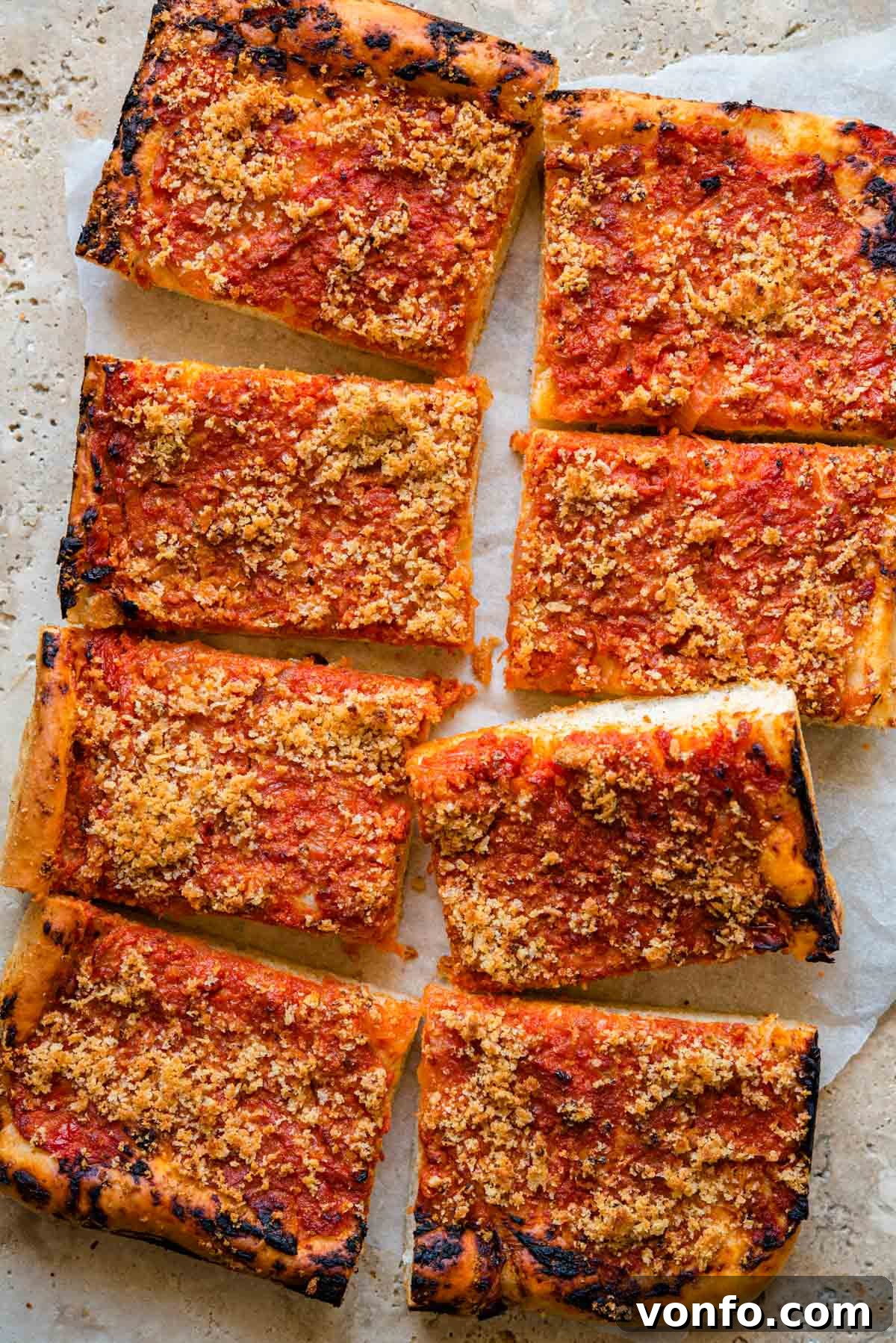
Authentic Sicilian Pizza (Sfincione): A Culinary Journey to Italy
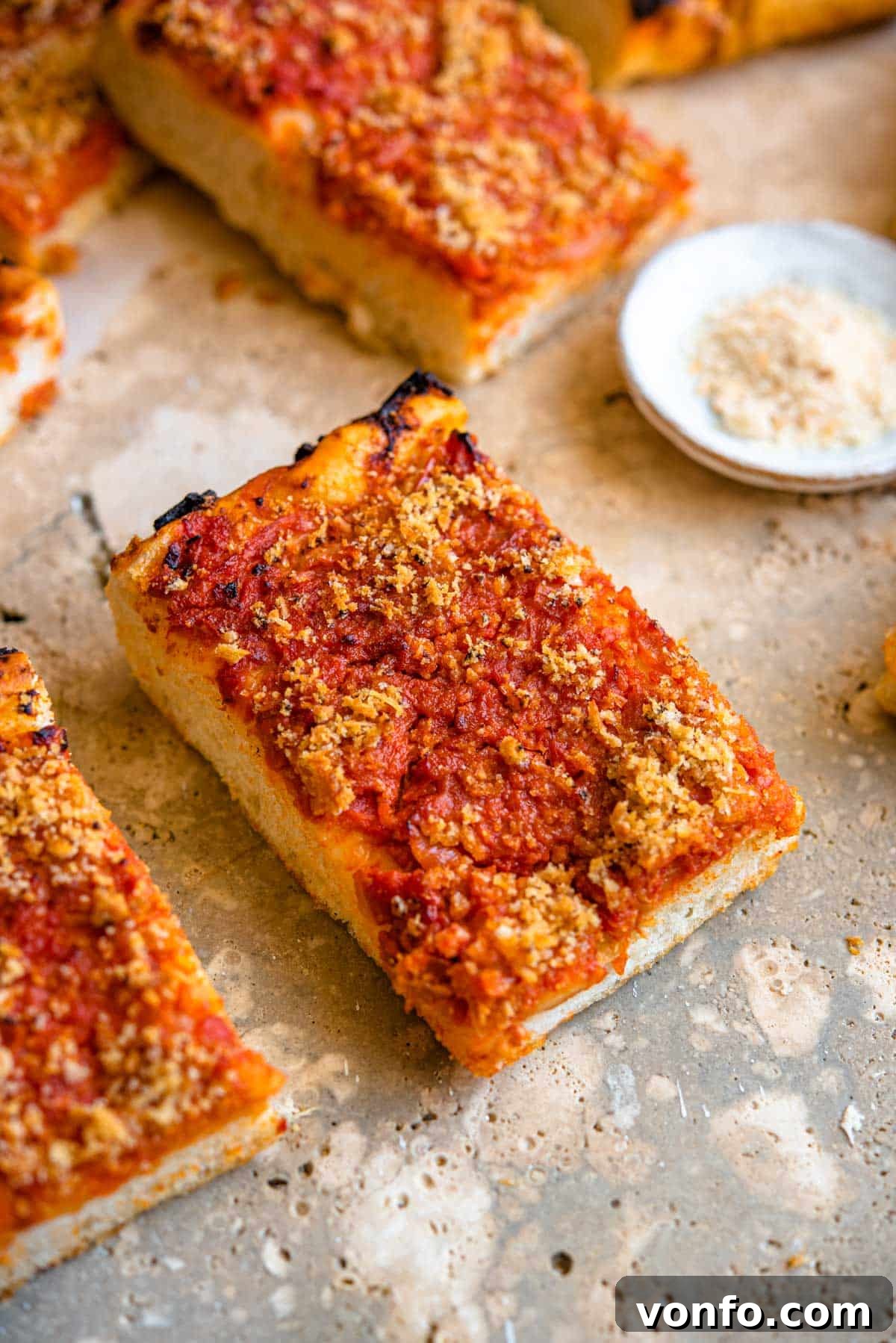
Embark on a delightful culinary journey to the heart of Sicily with our detailed guide to making Sfincione, famously known as Sicilian Pizza. This beloved street food stands out with its exceptionally thick, incredibly soft, and airy rectangular crust, generously layered with a profoundly rich tomato sauce. This sauce is lovingly slow-cooked with sweet caramelized onions and savory anchovies, all culminating in a delightful crunch from a topping of seasoned breadcrumbs. Our comprehensive recipe, complete with easy-to-follow step-by-step photos and clear instructions, will empower you to recreate this iconic Italian masterpiece in your own kitchen.
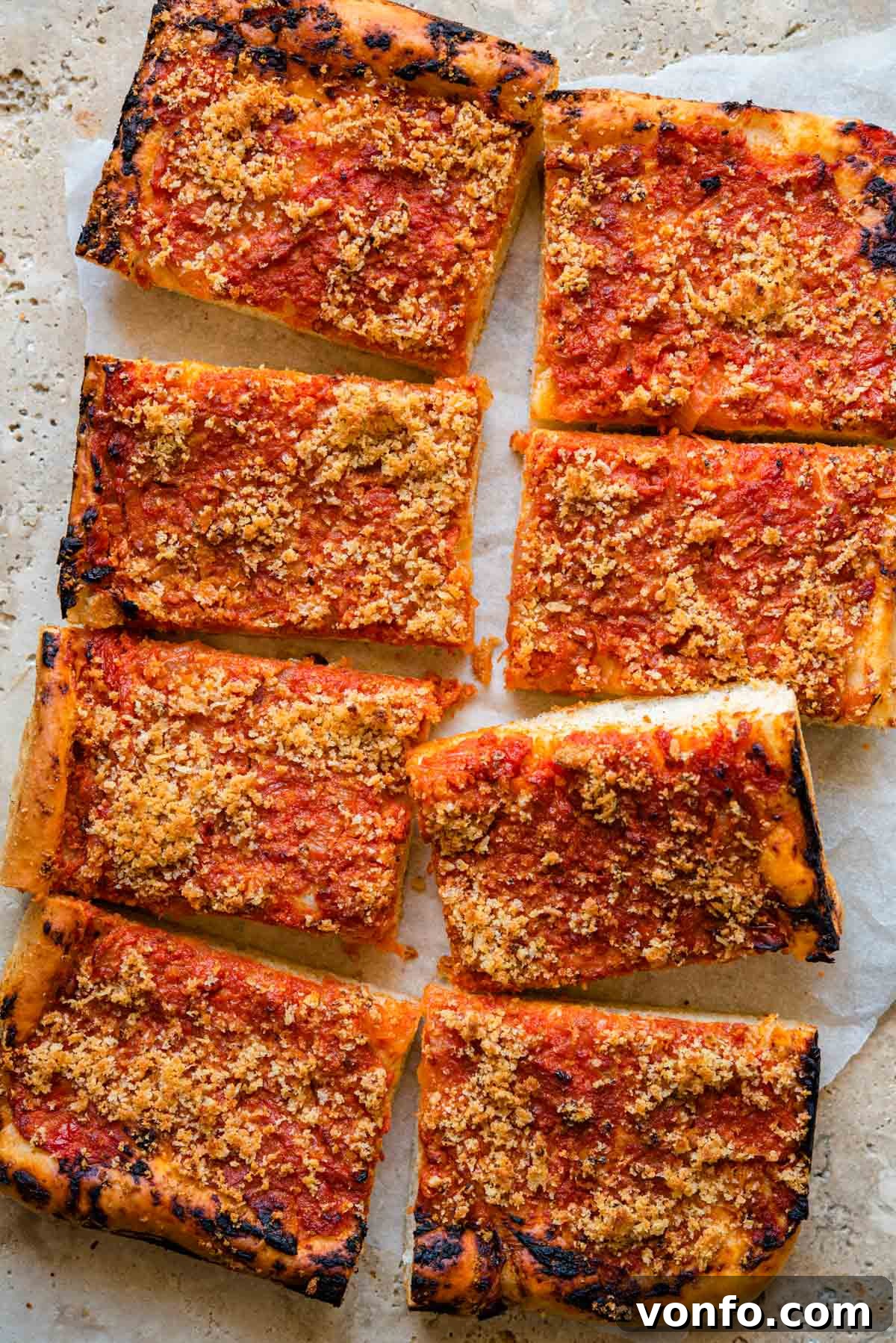
Discovering Sfincione: Sicily’s Beloved Street Food Tradition
If your culinary explorations haven’t yet introduced you to the distinctive charm of Sicilian pizza, then you are truly missing out on a unique gastronomic experience. Sfincione, meaning “thick sponge” in Italian, is more than just a pizza; it’s a testament to Sicily’s rich culinary heritage, a hearty and satisfying dish that contrasts beautifully with its Neapolitan and Roman counterparts. Its crust is famously thick, resembling a soft, airy focaccia, offering a pillow-like texture that makes every bite deeply comforting.
The magic of Sfincione truly comes alive with its exceptional sauce. This isn’t your average pizza sauce; it’s a slow-cooked symphony of flavors featuring tender, caramelized onions and the unique umami depth of anchovies. As the anchovies melt into the sauce, they impart a complex savory note that elevates the tomatoes without being overtly fishy. Traditionally, the sauce is enriched with caciocavallo cheese, which adds a subtle tang and creamy dimension, making the overall flavor profile incredibly rich and satisfying. Finally, a generous dusting of golden, crispy breadcrumbs and aromatic dried oregano provides an essential textural contrast – a satisfying crunch against the soft crust and luscious sauce.
Often enjoyed as a hearty street food snack or a substantial meal, Sfincione is perfect for sharing with family and friends. Its robust flavors and satisfying textures make it an unforgettable regional specialty that truly captures the essence of Sicilian home cooking. Once you try it, you’ll understand why this “sponge” pizza holds such a special place in Italian cuisine.
Fun Fact: The name “Sfincione” is derived from the Latin word “Sfincia,” which literally means “sponge.” This apt description perfectly highlights the pizza’s hallmark feature: a remarkably thick, airy, and absorbent base that soaks up the delightful flavors of its toppings.
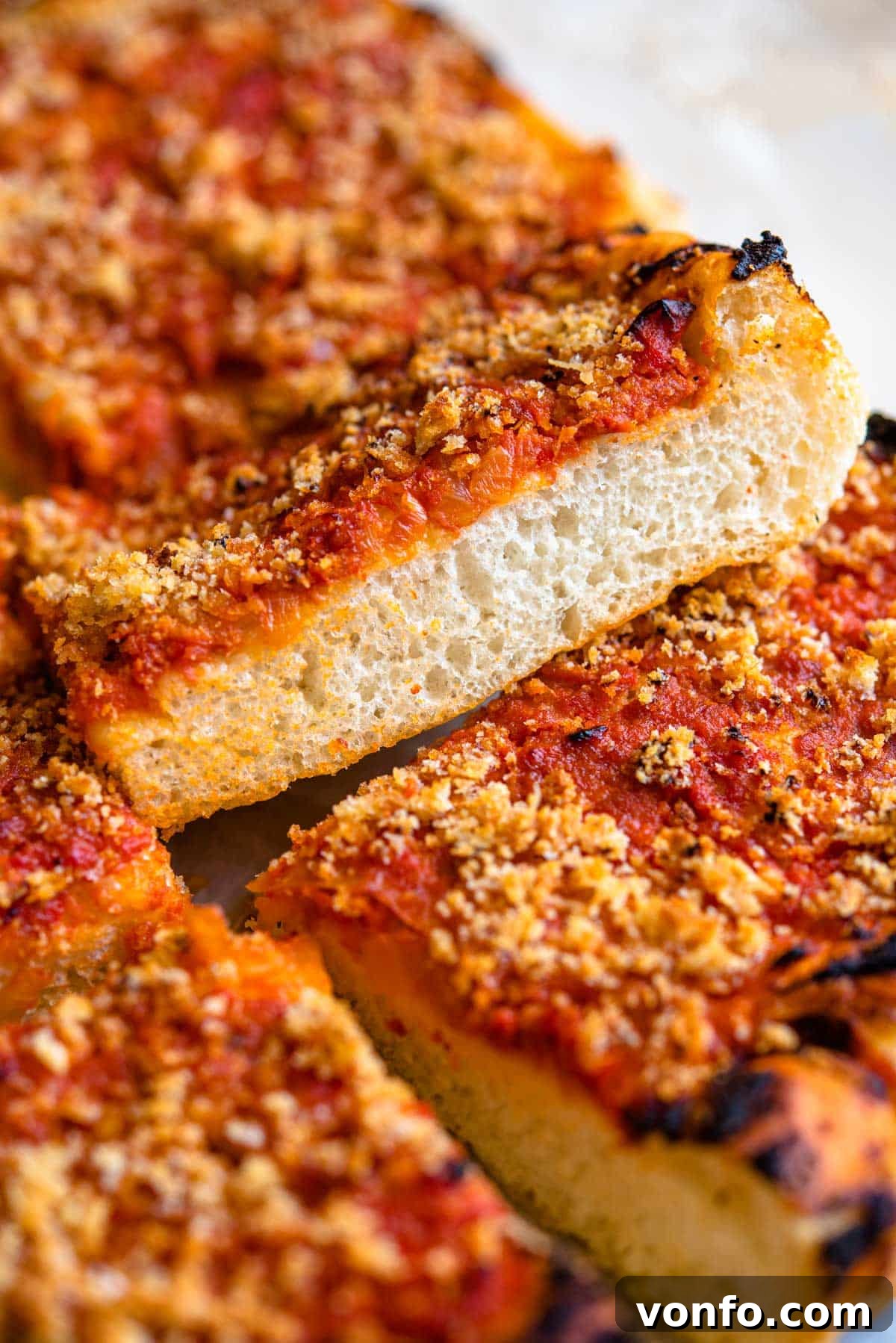
The Distinctive Qualities of Sicilian Pizza vs. Regular Pizza
Italy is renowned for its diverse regional pizza styles, each with its own loyal following. While Neapolitan pizza is famous for its chewy, leopard-spotted crust and Roman pizza for its thin and crispy base, Sicilian pizza (Sfincione) offers a completely different experience. Here are the key characteristics that make it truly unique:
- No Traditional Outer Border: Unlike many pizzas where a deliberate crust border is left untopped, Sfincione breaks this rule. The rich, flavorful toppings are spread generously right to the very edge of the rectangular crust, ensuring every single bite is packed with savory goodness. This full-coverage approach is a hallmark of the style.
- The Power of Double Proofing: The secret to Sfincione’s exceptionally thick, light, and airy texture lies in its unique dough preparation. While most pizza doughs undergo a single proofing phase after kneading, Sicilian pizza dough proofs twice. The first rise occurs in a bowl, allowing it to triple in size and develop deep flavors. The second, crucial rise happens directly in the large baking tray with the sauce already applied, allowing the dough to double in size and achieve its characteristic lofty, sponge-like crumb.
- Traditional Cheese Selection: Step aside, mozzarella! Authentic Sfincione traditionally uses caciocavallo cheese. This teardrop-shaped, semi-hard cheese, often made from cow’s or sheep’s milk, offers a distinctive savory and slightly piquant flavor that melts beautifully. It’s either cubed and stirred into the simmering sauce or sprinkled directly onto the dough before the sauce, providing a depth of flavor that mozzarella can’t quite match.
- A Generous Layer of Sauce: Given its substantial, bread-like crust, Sfincione demands a thick and abundant layer of sauce. This rich, slow-cooked tomato, onion, and anchovy sauce is not just a topping; it’s an essential component that perfectly balances the thick dough, ensuring that each slice is moist, flavorful, and incredibly satisfying.
- The Signature Breadcrumb Topping: One of the most visually and texturally striking features of Sfincione is its crunchy topping of seasoned breadcrumbs, often mixed with dried oregano. These breadcrumbs toast to a beautiful golden brown in the oven, creating an irresistible crispy layer that provides a delightful textural contrast to the soft, pillowy crust and succulent sauce. It’s an indispensable element that defines the authentic Sfincione experience.
Navigating Caciocavallo Cheese and Recommended Substitutes
Caciocavallo cheese is a cornerstone of traditional Sfincione, imparting a distinct savory depth and a unique texture that contributes significantly to the pizza’s authentic flavor. This teardrop-shaped, stretched-curd cheese, typically crafted from cow’s or sheep’s milk, boasts a firm texture and a flavor profile that ranges from mild when young to sharp and piquant when aged.
While caciocavallo is a staple in Italian delis and specialty food stores, it might not be readily available in all locations. Should you find yourself unable to source this traditional cheese, fear not! There are several excellent substitutes that will allow you to capture a similar essence in your homemade Sfincione:
- Aged Provolone: Widely regarded as the best alternative, aged provolone shares a comparable sharp, tangy, and slightly nutty flavor profile with caciocavallo. Its firm texture also makes it ideal for cubing and incorporating into the sauce or sprinkling over the dough.
- Unsmoked Scamorza: Another viable option is unsmoked scamorza. This stretched-curd cheese is similar to mozzarella but is drier and firmer, offering a mild, milky taste and excellent melting qualities. Be sure to choose the unsmoked variety, as smoked scamorza would alter the traditional flavor profile of Sfincione.
- Semi-Hard Pecorino: For those who appreciate a bolder flavor, a semi-hard pecorino cheese can be a good substitute. Made from sheep’s milk, pecorino is typically saltier and tangier than caciocavallo. If using, adjust the salt content in your sauce accordingly to maintain a harmonious balance of flavors.
- Mild Gouda: A more universally accessible cheese, mild gouda can provide a creamy texture and a gentle, slightly sweet taste that complements the rich sauce without overpowering it. Opt for a younger gouda to ensure the flavor remains subtle and balanced.
Regardless of your choice, selecting a cheese that melts well and offers a savory complexity will help you achieve a truly delicious Sfincione.
Step-by-Step Guide to Crafting the Perfect Sicilian Pizza (Sfincione)
Creating authentic Sfincione at home is a rewarding culinary endeavor that brings the flavors of Sicily directly to your table. Follow these detailed instructions meticulously, and you’ll be enjoying a masterpiece of Italian street food.
Part 1: Preparing the Dough – The Heart of Sfincione
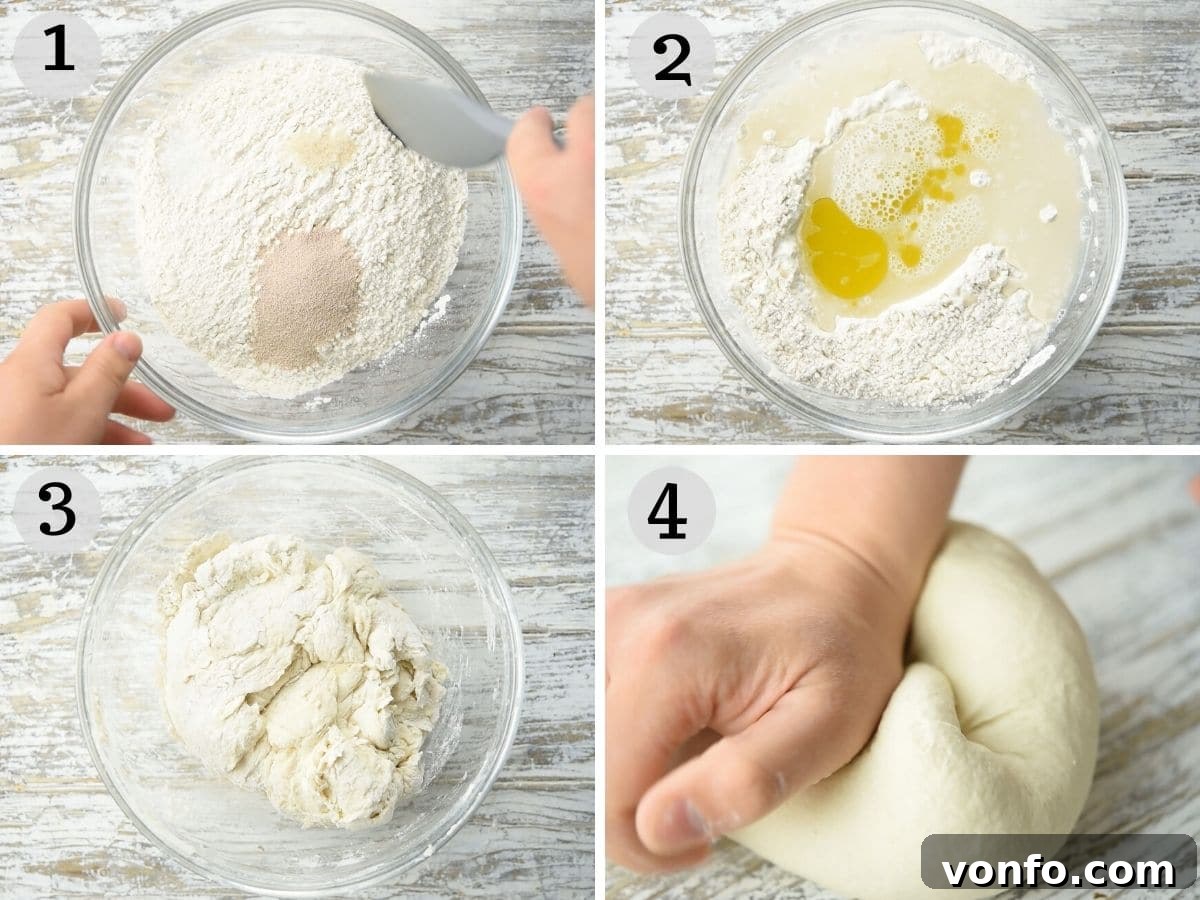
- To begin, combine all the dry ingredients for the dough in a large mixing bowl. Add the 00 flour, sugar, and salt. Then, carefully sprinkle in the fast-action yeast, making sure to keep it separate from the salt initially, as direct contact can sometimes hinder yeast activation. Stir these dry components thoroughly to ensure an even distribution.
- Next, create a shallow well in the center of your dry mixture. Pour in the lukewarm water and olive oil. Using a sturdy spoon or your hands, gradually stir the ingredients together, drawing the flour from the sides into the liquid, until a shaggy, cohesive dough begins to form.
- Turn the dough out onto a clean work surface that has been lightly dusted with flour. Knead the dough with enthusiasm for about 10 minutes. This essential step develops the gluten, transforming the dough into a smooth, elastic, and supple mass that is crucial for Sfincione’s signature airy texture.
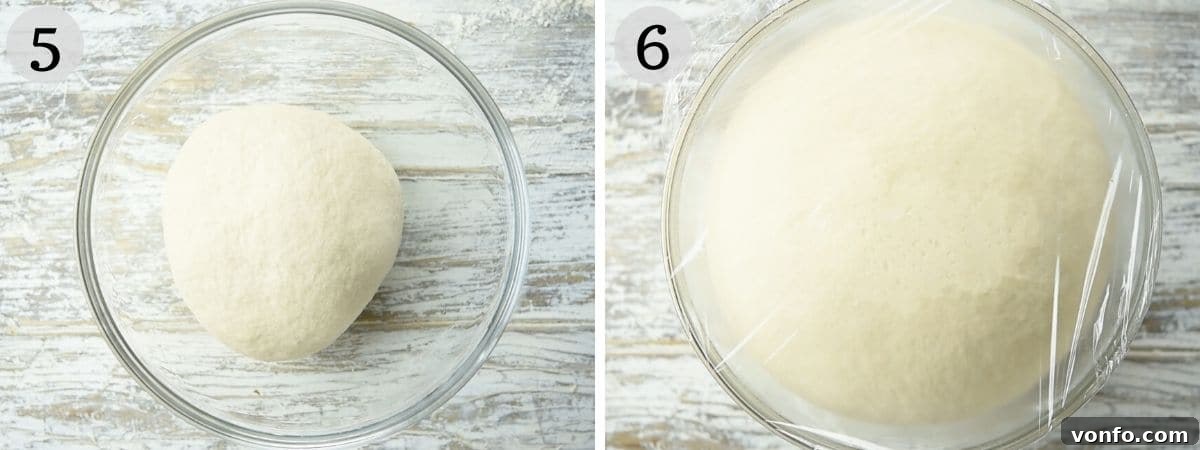
- Lightly grease a clean, spacious bowl with a small amount of olive oil. Transfer the kneaded dough to this bowl, turning it once to ensure it’s lightly coated with oil. Cover the bowl securely with plastic wrap or a damp kitchen towel, then place it in a warm, draft-free spot to proof for approximately 3 hours, or until the dough has dramatically tripled in size. This initial, extended rise is paramount for optimal flavor development and achieving that characteristic sponge-like consistency.
Part 2: Crafting the Exquisite Tomato and Anchovy Sauce
- While your dough is undergoing its first proof, turn your attention to preparing the rich and savory Sfincione sauce. Heat 1 tablespoon of olive oil in a large pan or skillet over a medium heat.
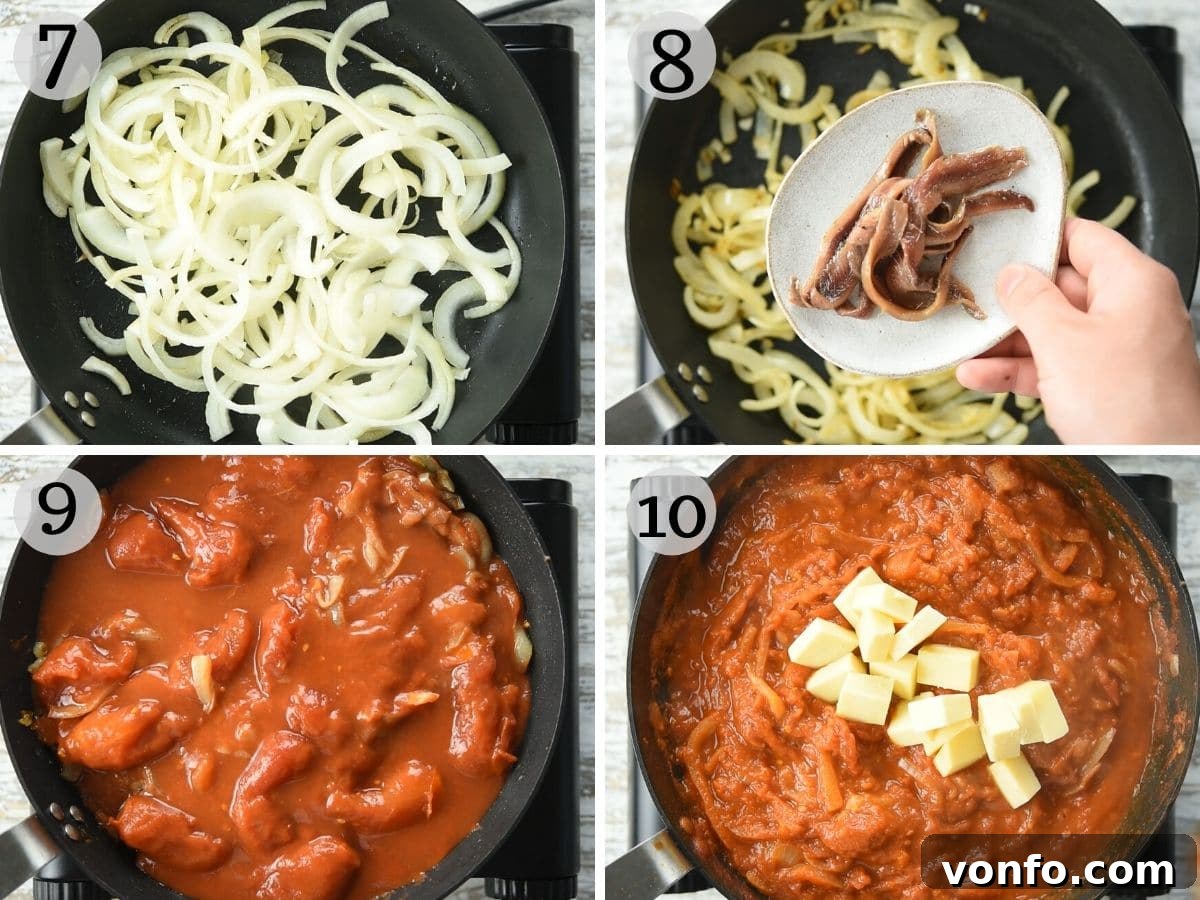
- Add the thinly sliced white onion to the heated oil. Sauté the onion slowly and patiently, stirring periodically, until it becomes wonderfully soft, translucent, and slightly caramelized. This process should take between 5 to 10 minutes, and it’s essential for developing the onion’s natural sweetness, which will add a deep foundation to your sauce.
- Once the onions are perfectly soft, introduce the salted anchovies to the pan. Stir them into the onions, gently breaking them up with the back of your spoon as they cook. The anchovies will gradually dissolve into the sauce, infusing it with a profound umami flavor that is characteristic of authentic Sfincione, without leaving an overpowering fishy taste. Continue sautéing the onions and anchovies together for another 5 minutes.
- Pour in the canned plum tomatoes (or your chosen alternative like pureed or chopped canned tomatoes). Bring the sauce to a gentle simmer and allow it to cook undisturbed for 15 minutes. This simmering time is crucial for the flavors to fully meld and deepen.
- Finally, add the cubed caciocavallo cheese (or your selected substitute) to the simmering sauce. Season with a pinch of salt and freshly ground black pepper to taste, keeping in mind the inherent saltiness from the anchovies and cheese. Continue cooking for an additional 10 minutes, allowing the cheese to soften and integrate into the sauce, adding a creamy richness. Remove the pan from the heat and set the sauce aside to cool slightly while your dough finishes its proofing.
Part 3: Assembling and the Crucial Second Proof
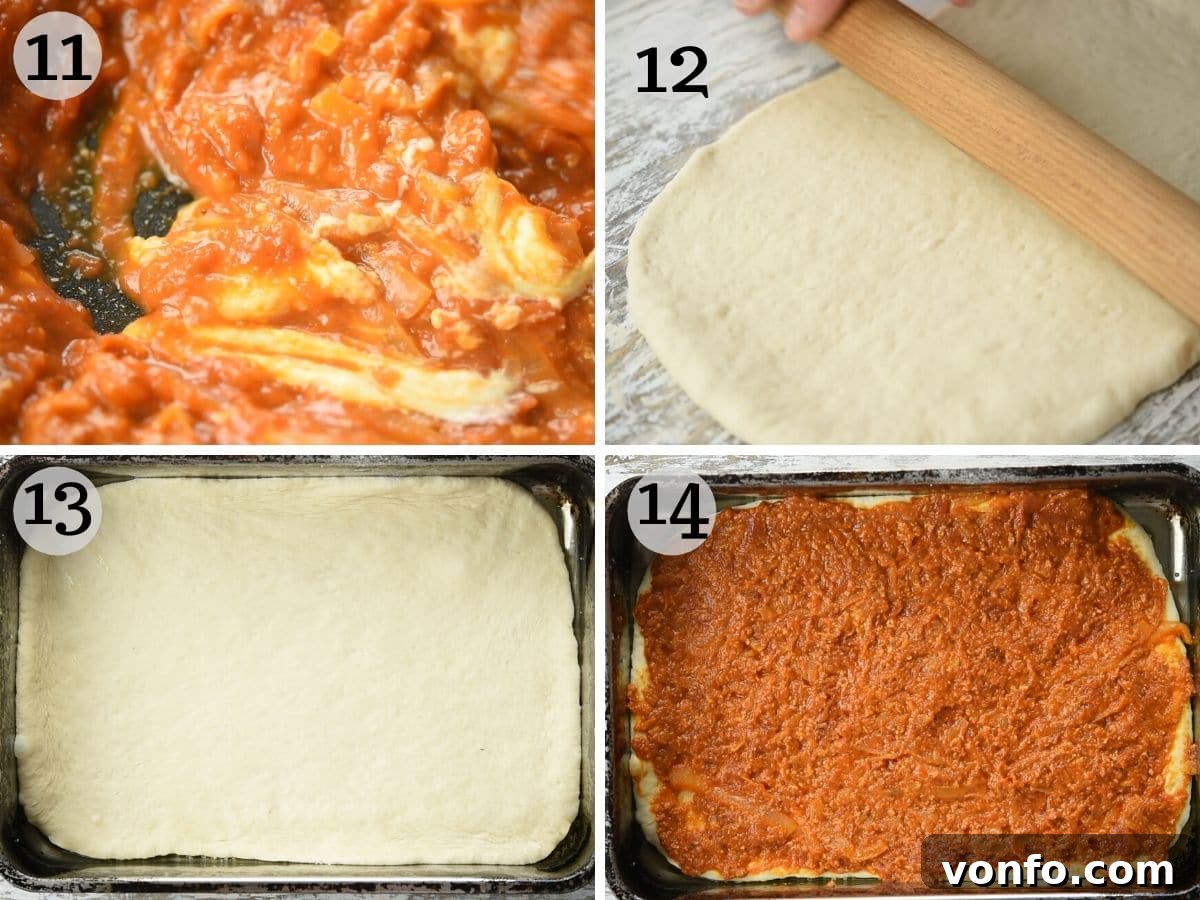
- Once your dough has impressively tripled in size after its first proof, carefully turn it out onto a clean work surface that has been lightly dusted with flour. Gently divide the dough into two equal halves.
- Working with one half of the dough at a time, gently roll or stretch it out into a rectangular shape. Aim for a size that comfortably fits your 13×9 inch baking tray, and ensure the dough is approximately ½ inch thick. Repeat this process for the second half of the dough to prepare your second pizza.
- Generously grease both baking trays with olive oil, ensuring the bottom and sides are well coated. Carefully transfer one rolled-out dough rectangle into each prepared tray, gently pressing it into place to fill the tray.
- Now, evenly spread half of the cooled, prepared sauce over the dough in the first tray. It’s traditional to spread the sauce right to the very edges of the crust, so don’t leave any borders bare. Repeat this process for the second pizza.
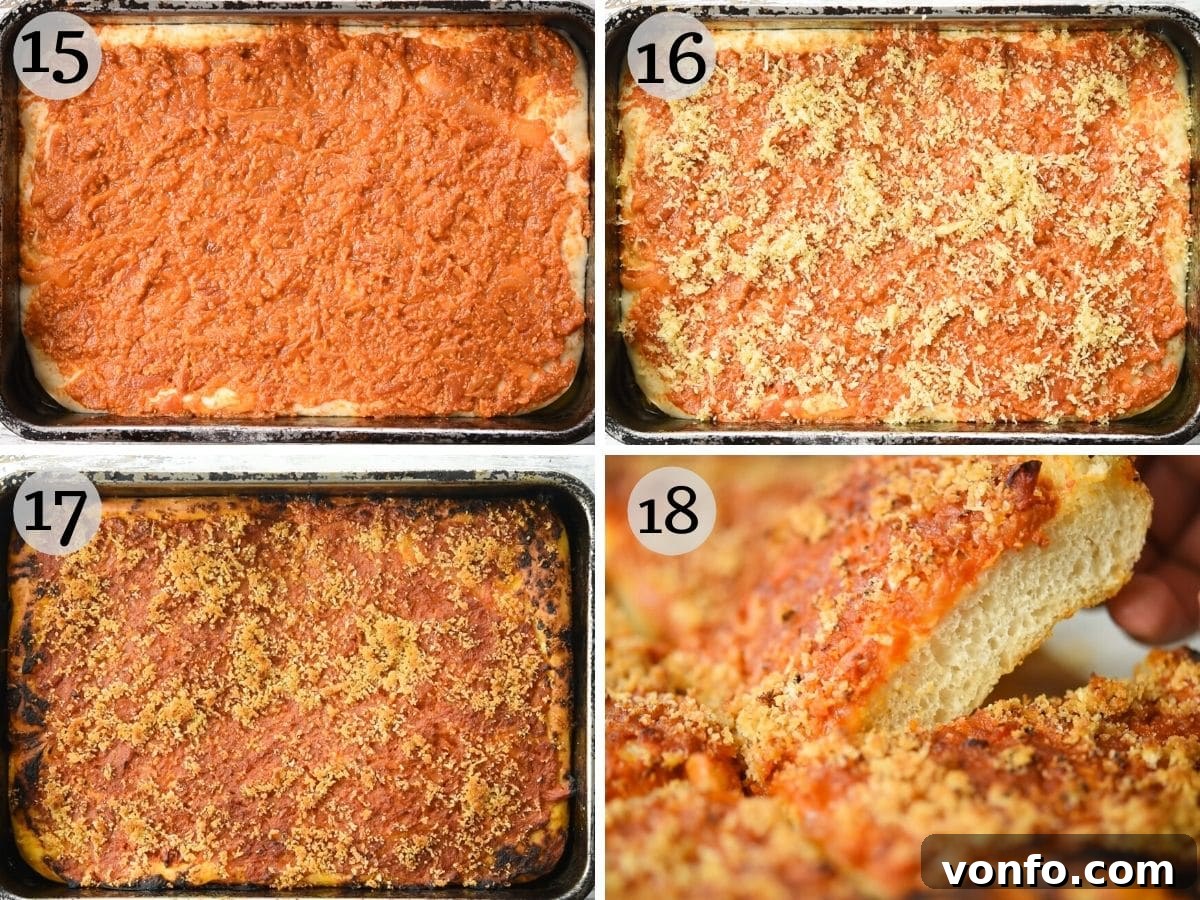
- Loosely cover both baking trays with plastic wrap and return them to a warm, draft-free environment for their second crucial proof. Allow the pizzas to rise undisturbed for another two hours, or until the dough has noticeably doubled in size within the trays, becoming wonderfully puffy and airy. This second proof is absolutely vital for achieving Sfincione’s characteristic thick, light, and airy texture.
Part 4: Baking and Savoring Your Sfincione
- Pre-heat your oven to its highest possible temperature, ideally 450°F (230°C). A very hot oven is key to achieving a perfectly baked crust that is crisp on the outside and tender within.
- Prepare the signature breadcrumb topping: In a small bowl, combine the breadcrumbs, freshly grated pecorino or parmesan cheese, dried oregano, and 1 teaspoon of olive oil. Mix these ingredients thoroughly until the breadcrumbs are evenly coated.
- Once the pizzas have completed their second proof and the dough is beautifully risen, gently remove the plastic wrap. Generously sprinkle the prepared breadcrumb mixture evenly over the entire surface of each pizza, ensuring good coverage.
- Carefully transfer the baking trays with the prepared pizzas to the pre-heated oven. Bake for approximately 25-30 minutes, or until the crust achieves a beautiful golden-brown hue, the sauce is bubbling enticingly, and the breadcrumb topping is wonderfully crisp and fragrant.
- Upon removing the Sfincione from the oven, resist the urge to cut into it immediately. Allow the pizza to rest in its baking tray for about 5 minutes. This crucial resting period allows the molten cheese and rich sauce to set, preventing the toppings from sliding off and ensuring cleaner, more appealing slices when you cut and serve your delicious creation warm.
Creative Variations and Topping Ideas for Your Sfincione
While the traditional Sfincione, with its iconic tomato, anchovy, onion, and breadcrumb combination, is a culinary masterpiece in itself, the thick, substantial crust of this Sicilian pizza is incredibly versatile. Once you’ve mastered the classic recipe, feel free to unleash your creativity and experiment with a myriad of delicious topping variations. Here are some inspiring ideas to customize your homemade Sicilian pizza to suit any palate:
- Seafood Enthusiast’s Dream: For a delightful oceanic twist, combine flaky canned tuna, briny capers, and a generous scattering of unsmoked scamorza cheese. The flavors meld together beautifully, creating a savory and satisfying experience.
- Anchovy and Caper Medley (Pizza Napoli Style): If you adore the pungent notes of anchovies, double down on them! Add more anchovies, along with capers and fresh mozzarella, for a delicious rendition reminiscent of a classic Pizza Napoli.
- Hearty Cured Meats: Elevate your Sfincione with slices of your favorite Italian cured meats. Spicy salami, rich pepperoni, or delicate prosciutto can add a wonderful depth of flavor and texture that pairs perfectly with the robust base.
- Gourmet Cheese Pairings: Explore beyond caciocavallo with richer cheese combinations. Pungent gorgonzola, creamy taleggio, or even a sharp aged cheddar can melt into the sauce beautifully, adding complex and sophisticated notes.
- Briny Olive Bursts: Scatter a medley of your favorite olives – Kalamata, Castelvetrano, or Nocellara – over the sauce. Their salty, fruity bursts provide a fantastic counterpoint to the richness of the pizza.
- Vibrant Vegetarian Options: Incorporate colorful and flavorful vegetables. Think marinated artichoke hearts, intensely flavored sun-dried tomatoes (rehydrated if packed dry), sweet roasted bell peppers, or earthy sautéed wild mushrooms. The thick crust can easily support these more substantial vegetable toppings.
The beauty of Sfincione lies in its ability to carry a variety of flavors, so don’t hesitate to personalize your pizza with ingredients you love. Just ensure your chosen toppings complement the rich foundation of the crust and sauce.
Smart Storage Solutions for Leftover Dough, Sauce, and Pizza
This comprehensive Sfincione recipe yields enough dough and sauce to create two generous pizzas, making it perfect for feeding a crowd or for smart meal preparation. Should you find yourself with leftovers, here’s how to store them efficiently to preserve their deliciousness for future enjoyment:
- Storing Leftover Dough: If your plans only call for baking one pizza, you can easily save half the dough for later. Before the first proof, divide the freshly kneaded dough in half. Roll one half into a smooth ball, lightly brush it with olive oil, and place it in an airtight, freezer-safe bag or container. It can be frozen for up to 2-3 months. When you’re ready to use it, simply thaw the dough overnight in the refrigerator, then bring it to room temperature before proceeding with the first proof as outlined in the recipe.
- Freezing Leftover Sauce: The rich tomato and anchovy sauce is also an excellent candidate for freezing. Allow any unused sauce to cool completely to room temperature. Then, transfer it to an airtight container or sturdy freezer-safe bags. The sauce can be frozen for up to 3-4 months. Thaw it in the refrigerator overnight or gently reheat it on the stovetop when you’re ready to use it for your next Sfincione, pasta dish, or as a base for other culinary creations. Preparing a large batch of sauce is a fantastic time-saver for busy days!
- Preserving Baked Pizza: For leftover slices of baked Sfincione, store them in an airtight container in the refrigerator for 1-2 days. To extend their freshness even further, individual slices can be wrapped tightly in plastic wrap and then aluminum foil, and frozen for up to 1 month. To reheat frozen slices, simply place them directly into a pre-heated oven (around 350°F / 175°C) until they are thoroughly warmed through and the crust regains some of its delightful crispness. Avoid microwave reheating for best texture results.
Expert Tips for Making Perfect Lo Sfincione (Sicilian Pizza)
To ensure your homemade Sicilian pizza is nothing short of perfection, pay attention to these crucial tips and techniques. Mastering them will help you achieve the authentic texture and flavor of traditional Lo Sfincione:
- Patience with Proofing is Key: The extended proofing times are fundamental to Sfincione’s signature light and airy texture. Ensure your dough successfully triples in size during the initial proof in the bowl, and then allows for a second rise in the baking tray, where it should at least double in size (typically 1-2 hours). This patience will be rewarded with an incredibly tender and thick crust.
- Strategic Topping Application: When it’s time to move your dough to the baking tray for its second proof, apply the sauce and toppings simultaneously. Handling the dough after it has risen could deflate the precious air bubbles that contribute to its sponge-like consistency.
- High Heat for Optimal Bake: For the best possible crust development and a thoroughly cooked pizza, pre-heat your oven to its highest achievable temperature, ideally 450°F (230°C) or even hotter if your oven permits. This intense heat ensures a rapid and even bake, leading to a perfectly crisp exterior and a tender interior.
- Two Pizzas, Many Options: This recipe is designed to yield enough dough and toppings for two generous Sfincione pizzas. If you only plan to bake one at a time, take advantage of the opportunity to freeze half of the dough and half of the sauce for a quick and convenient future meal.
- Choose the Right Baking Tray: Sfincione’s thick crust requires a baking tray with adequately tall edges, ideally at least 3 inches high, to prevent spillage as the dough expands. If your tray differs from the recommended 13×9 inches, simply adjust the dough thickness (aim for about ½ inch thick before the second proof) to ensure an even rise and bake.
- The Importance of Resting: After baking, allow your pizza to rest for approximately 5 minutes before cutting into it. This brief pause allows the molten cheese and sauce to set, preventing them from oozing out and ensuring neat, attractive slices.
- Versatile Tomato Options: You have flexibility with the tomato component of the sauce. High-quality canned plum tomatoes (crushed by hand), chopped canned tomatoes, or smooth passata (pureed tomatoes) all work well and will deliver delicious results.
- Alternative Cheese Choices: If traditional caciocavallo cheese is not available, excellent substitutes include aged provolone (which closely mimics its flavor), semi-hard pecorino, unsmoked scamorza, or a mild gouda. Remember to taste and adjust the seasoning if using saltier cheeses like pecorino.
Enhance Your Pizza Making Skills Further
For those passionate about perfecting their homemade pizza, we encourage you to explore our in-depth resources. Discover our comprehensive guide on selecting the best flour for various pizza crusts and learn about the essential tools that can significantly elevate your pizza-making prowess. These guides are designed to help you transform an ordinary pizza night into an extraordinary culinary event!
More Irresistible Italian Pizza Recipes to Explore
If you’ve enjoyed crafting this authentic Sicilian Pizza, you’ll love diving into these other fantastic Italian pizza recipes from our collection:
- Anchovy Pizza with Capers (Pizza Napoli)
- Cheesy Potato Pizza with Thyme
- Quattro Stagioni Pizza – Four Seasons Pizza
- Basil Pesto Pizza with Mozzarella & Roasted Tomatoes
- The Best Basic Pizza Dough Recipe – ideal for crafting traditional thin-crust pizzas
- Instant Pizza Dough – No Rise, No Yeast – a super quick option for thin and crispy crusts when time is short
Share Your Culinary Creations and Connect With Us!
We genuinely love to hear about your cooking adventures! If you’ve tried this Sicilian Pizza (Sfincione) recipe or any other delightful recipes from our blog, please take a moment to leave a comment below and share your experience. Your feedback is incredibly valuable and helps our culinary community grow. Additionally, you can FOLLOW US on FACEBOOK, INSTAGRAM, and PINTEREST to discover more delectable recipes, gain culinary inspiration, and stay updated on our latest kitchen creations!
Sicilian Pizza Sfincione Recipe Details
This recipe is designed to guide you step-by-step, ensuring a perfect result every time.
By Emily
Prep time: Approximately 5 hours (includes extensive dough proofing)
Cook time: 30 minutes
Total time: Approximately 5 hours 30 minutes
Servings: 16 thick slices (yields 2 full pizzas)
Experience Sicilian Pizza (Lo Sfincione) featuring a thick, soft rectangular pizza crust, a rich tomato sauce flavored with onions and anchovies, and topped with crunchy breadcrumbs. This guide provides all you need to make this Sicilian street food at home.
Equipment
- 2 baking trays (recommended size: 13×9 inch, with tall edges)
- Large mixing bowl
- Large pan or skillet
Ingredients
For the dough
- 4 cups 00 flour (500g)
- 1 ⅓ cup lukewarm water (320ml)
- 2 tsp fast-action yeast (7g)
- 2 tbsp olive oil, plus extra for greasing
- ½ tsp sugar
- ½ tsp salt
For the sauce
- 1 tbsp olive oil
- 1 white onion, thinly sliced
- 7-8 salted anchovies
- 28 oz canned plum tomatoes (800g), or pureed tomatoes/canned chopped tomatoes
- ½ cup caciocavallo cheese, cubed (100g), or aged provolone, pecorino, or mild gouda
- Salt and pepper, to taste
For the breadcrumb topping
- ¼ cup breadcrumbs (30g)
- ¼ cup freshly grated pecorino or parmesan (30g)
- 1 tsp dried oregano
- 1 tsp olive oil
Instructions
- In a large mixing bowl, combine the flour, sugar, salt, and yeast (ensuring yeast does not directly touch salt). Stir well.
- Make a well in the center of the dry ingredients, then add the warm water and 2 tbsp olive oil. Stir to form a dough.
- Tip the dough onto a lightly floured surface. Knead for 10 minutes until smooth and elastic. Place in a lightly greased bowl, cover with plastic wrap, and proof for about 3 hours until tripled in size.
- Meanwhile, prepare the sauce: Heat 1 tbsp olive oil in a large pan over medium heat. Add the sliced onion and sauté slowly until soft and translucent (5-10 minutes).
- Add the anchovies to the pan and stir, breaking them up as they cook, for 5 minutes.
- Add the tomatoes and simmer the sauce for 15 minutes.
- Stir in the cubed cheese, a pinch of salt and pepper. Cook for another 10 minutes, then set aside to cool.
- After the dough has risen, divide it into two on a lightly floured surface. Roll each half into a rectangle (approx. ½ inch thick) to fit a 13×9 inch baking tray.
- Lightly grease two baking trays with olive oil and place the dough in each. Spread half of the prepared sauce evenly over each dough, extending to the edges.
- Cover with plastic wrap and leave to proof for a second time for two hours, or until doubled in size in the trays.
- Pre-heat the oven to 450°F (230°C).
- In a bowl, mix the breadcrumbs, grated pecorino (or parmesan), dried oregano, and 1 tsp olive oil. Sprinkle this topping generously over each pizza.
- Bake in the pre-heated oven for 25-30 minutes. Let rest for 5 minutes before cutting into slices and serving.
Video Guide
For a visual aid to making Sicilian Pizza, you can refer to the video tutorial.

(Video content previously available, represented here by a static image thumbnail.)
Notes and Pro Tips
- Ensure the dough proofs sufficiently: triple in size during the first rise, then double in the tray for the second (1-2 hours) for a thick, light crust.
- Add toppings when transferring dough to the tray to avoid deflating air later.
- Bake at your oven’s highest temperature for optimal results.
- This recipe makes two pizzas; freeze half the dough and sauce if only making one.
- Use a deep baking tray with at least 3-inch tall edges.
- Rest the pizza for 5 minutes after baking before cutting.
- Canned plum, chopped, or pureed tomatoes (passata) can be used for the sauce.
- If caciocavallo is unavailable, aged provolone, pecorino, unsmoked scamorza, or mild gouda are good substitutes.
- If using a different size deep baking tray, aim for approximately ½ inch dough thickness before the second proof.
Helpful Info for All Our Recipes
- We always use extra virgin olive oil unless otherwise specified.
- For canned or jarred tomatoes, we recommend Cirio or Mutti brands for best flavor.
- All vegetables are assumed medium-sized unless noted.
- Recipes are developed and tested using a fan (convection) oven.
- Find more details about how nutrition is calculated.
- Explore our essential Italian Pantry Staples.
- Discover the Essential Kitchen Tools for Italian Cooking.
Nutrition Information (Approximate values per serving)
Calories: 236kcal | Carbohydrates: 39g | Protein: 10g | Fat: 6g | Saturated Fat: 2g | Cholesterol: 5mg | Sodium: 222mg | Potassium: 345mg | Fiber: 1g | Sugar: 2g | Vitamin A: 107IU | Vitamin C: 5mg | Calcium: 90mg | Iron: 2mg
Nutrition information is automatically calculated and should be used only as an approximation.
Did you try this recipe? We’d love to hear from you! Leave a comment below!