
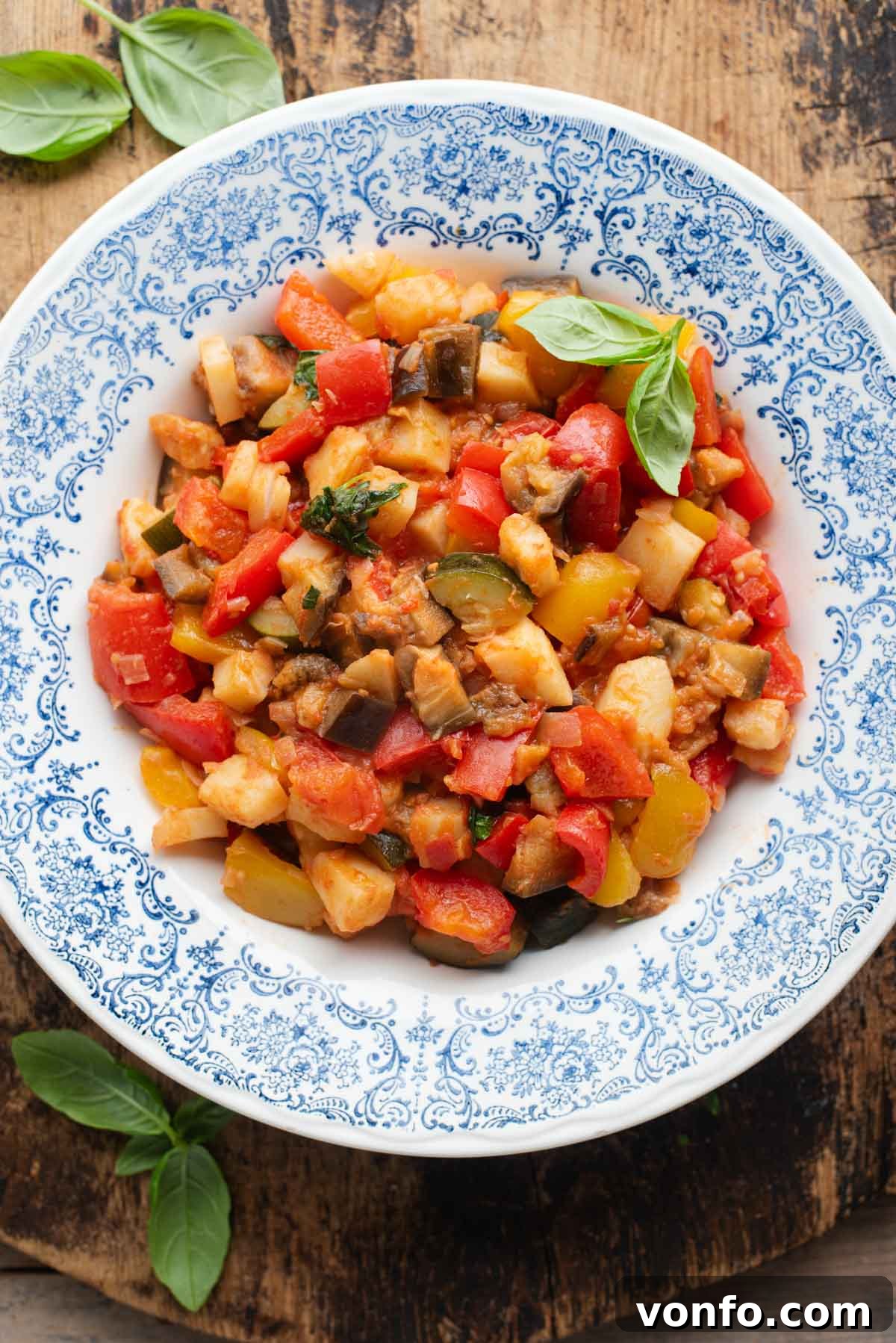
Ciambotta is a quintessential Southern Italian stew, a vibrant celebration of summer’s bounty. Bursting with fresh textures and profound flavors from zucchini, eggplant, bell peppers, and ripe tomatoes, this dish is wonderfully light yet satisfyingly hearty, incredibly healthy, and undeniably delicious. It embodies the essence of Mediterranean cuisine, bringing a taste of the Italian sun directly to your table.
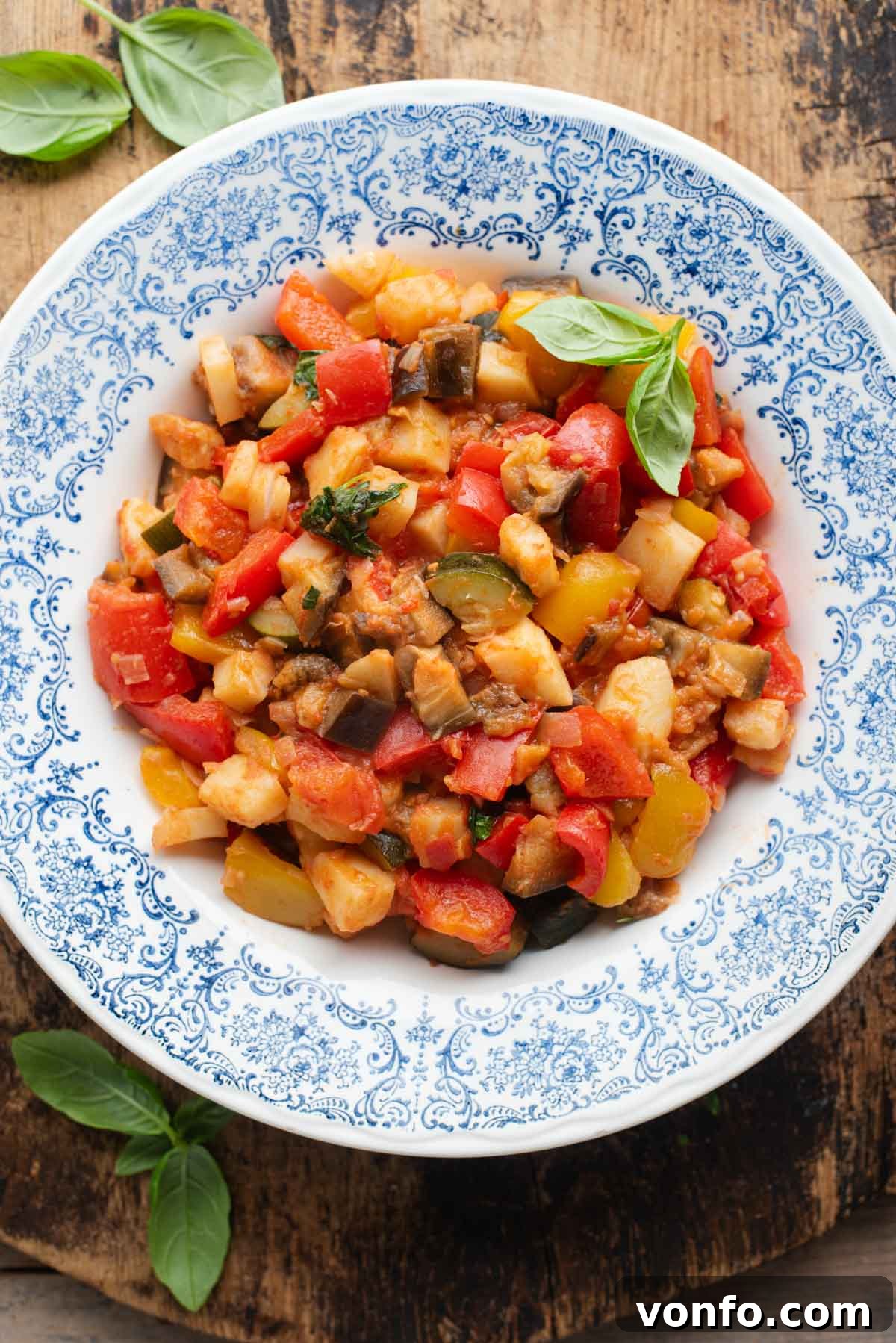
Discovering Ciambotta: A Southern Italian Summer Staple
Often referred to as Cianfotta, Giambotta, or even “Italian ratatouille,” Ciambotta is a cherished summer dish originating from the sun-drenched regions of Southern Italy. Its roots are deeply embedded in the culinary traditions of Campania, Calabria, Basilicata, and Puglia. This humble yet incredibly flavorful stew is a testament to the Italian philosophy of cooking with fresh, seasonal ingredients, transforming simple vegetables into a symphony of taste.
At its heart, Ciambotta is a medley of various summer vegetables, gently stewed together with fragrant garlic, rich tomatoes, and aromatic basil. This slow cooking process allows the individual flavors to meld beautifully, creating a harmonious blend of sweet, savory, and earthy notes, each bite offering a delightful mix of textures. It’s a dish that truly shines in its simplicity, showcasing the natural deliciousness of peak-season produce.
Like many traditional Italian recipes, Ciambotta boasts a wonderful versatility. Its preparation can vary significantly from one region to another, and even from one family kitchen to the next, often depending on what vegetables are most abundant and in season. While primarily a vegetarian dish, some regional interpretations might include the addition of beef or sausage for a heartier meal. This adaptability makes Ciambotta a perfect recipe for utilizing an abundance of summer vegetables from your garden or local market, allowing for creative tweaks to suit your personal taste or whatever ingredients you have readily available.
Whether served as a substantial side dish, a light main course, or a delightful antipasto with a side of crusty toasted bread, Ciambotta promises an easy, healthy, and incredibly delicious culinary experience. It’s a dish that embodies comfort, freshness, and the generous spirit of Southern Italian cooking.
Essential Ingredients for an Authentic Ciambotta
Ingredient Notes and Expert Tips
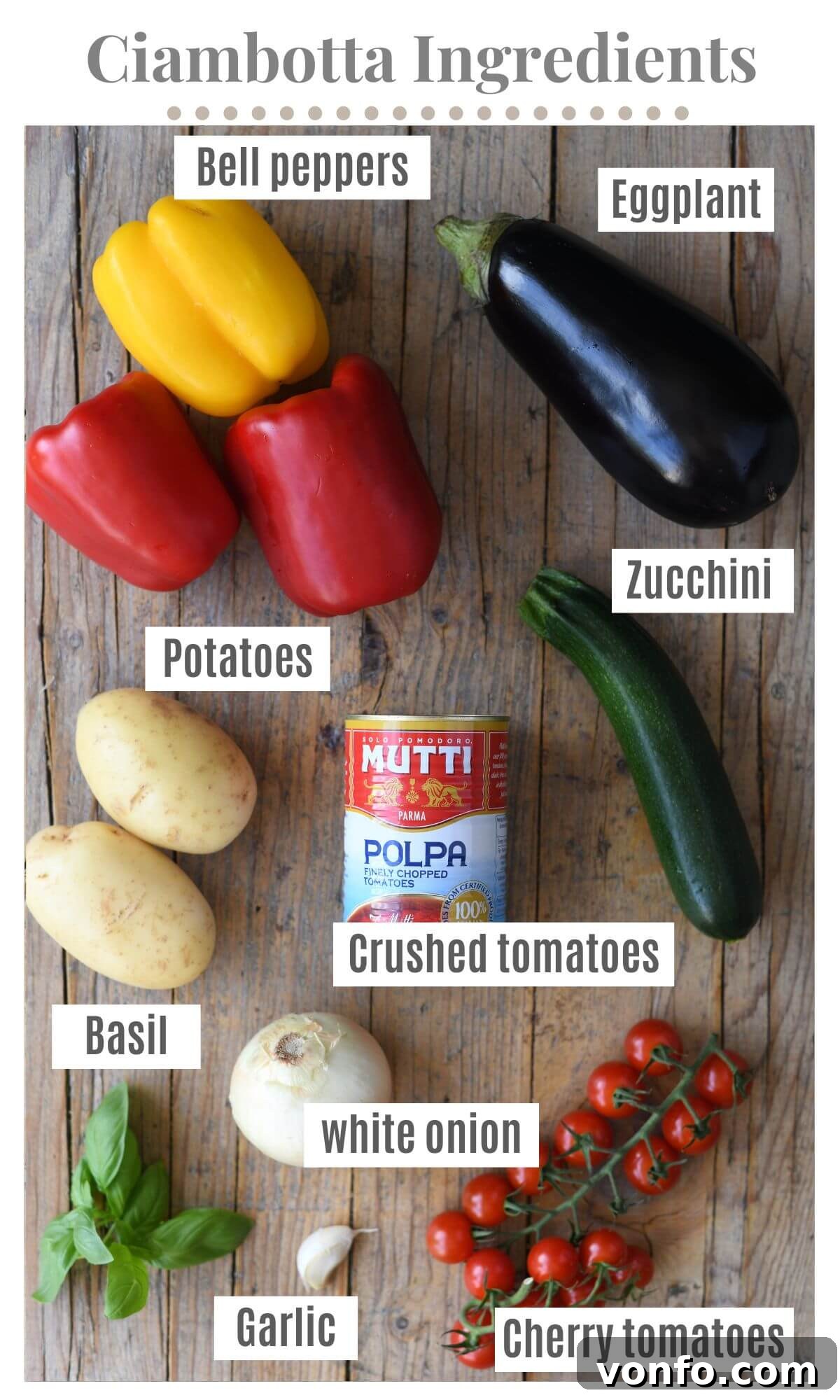
The beauty of Ciambotta lies in its simple, fresh ingredients. Here’s a closer look at what you’ll need and how to make the best choices:
- Onion: You can opt for either white or brown onion. While I prefer to finely chop mine to melt seamlessly into the stew, some traditional versions feature chunkier pieces for a more rustic texture.
- Bell Peppers: Our recipe typically uses two red and one yellow bell pepper for a vibrant color palette and balanced sweetness. However, feel free to use any combination of colors you prefer – green for a slightly sharper taste, or orange for extra sweetness.
- Zucchini and Eggplant (Courgette & Aubergine): The key to a great Ciambotta is fresh, firm vegetables. When selecting zucchini and eggplant, ensure they are taut, unblemished, and feel heavy for their size. These two vegetables are cornerstones of the stew, providing both substance and a characteristic tender texture.
- Tomatoes: We use cherry tomatoes for their burst of sweetness and easy preparation. However, feel free to use any variety of fresh, ripe tomatoes you have on hand – Roma, plum, or even larger heirloom tomatoes chopped into bite-sized pieces work wonderfully. The fresher the tomatoes, the more vibrant the flavor of your stew will be.
- Crushed Tomatoes (Polpa): For a richer tomato base, crushed tomatoes (known as polpa in Italy) are ideal. Alternatively, you can use passata (strained tomato puree) for a smoother sauce. Both provide depth and body to the stew, complementing the fresh tomatoes.
- Potatoes: Medium-sized potatoes add a comforting heartiness to the Ciambotta. They absorb the flavors beautifully and create a satisfying, creamy element. Russet or Yukon Gold potatoes are excellent choices, but any firm, starchy potato will do.
- Garlic: A single whole, peeled garlic clove slowly infused in olive oil sets a fragrant foundation for the stew. It mellows during cooking, providing a subtle depth without overpowering the delicate vegetables.
- Fresh Basil: This aromatic herb is non-negotiable for authentic Italian flavor. Add it at the very end to preserve its vibrant taste and aroma, truly elevating the dish.
- Extra Virgin Olive Oil: As with all Italian cooking, the quality of your olive oil matters immensely. A good quality extra virgin olive oil provides a rich, fruity base for sautéing and enhances the overall flavor profile of the stew.
- Salt: Essential for bringing out the natural flavors of the vegetables. Season to taste throughout the cooking process.
Step-by-Step Guide: Crafting Your Perfect Ciambotta
Creating Ciambotta is a straightforward and rewarding process. Follow these simple steps for a truly delicious result:
- Prepare the Aromatics: Begin by finely chopping your onion. In a large, heavy-bottomed pan or Dutch oven, combine the chopped onion with a whole, peeled garlic clove and two generous tablespoons of extra virgin olive oil. Sauté gently over medium-low heat. The goal here is to soften the onion and infuse the oil with garlic, creating a fragrant base without browning. This initial step lays the aromatic foundation for your stew.
- Incorporate the Potatoes: While the onions and garlic are gently cooking, peel and chop your potatoes into medium-sized cubes, aiming for roughly uniform pieces for even cooking. Add these cubed potatoes to the pan with the onions. Stir well to coat the potatoes in the fragrant oil, then continue to sauté on medium-low heat for approximately 10 minutes. This allows the potatoes to begin softening and absorbing the foundational flavors while you prepare the remaining vegetables.
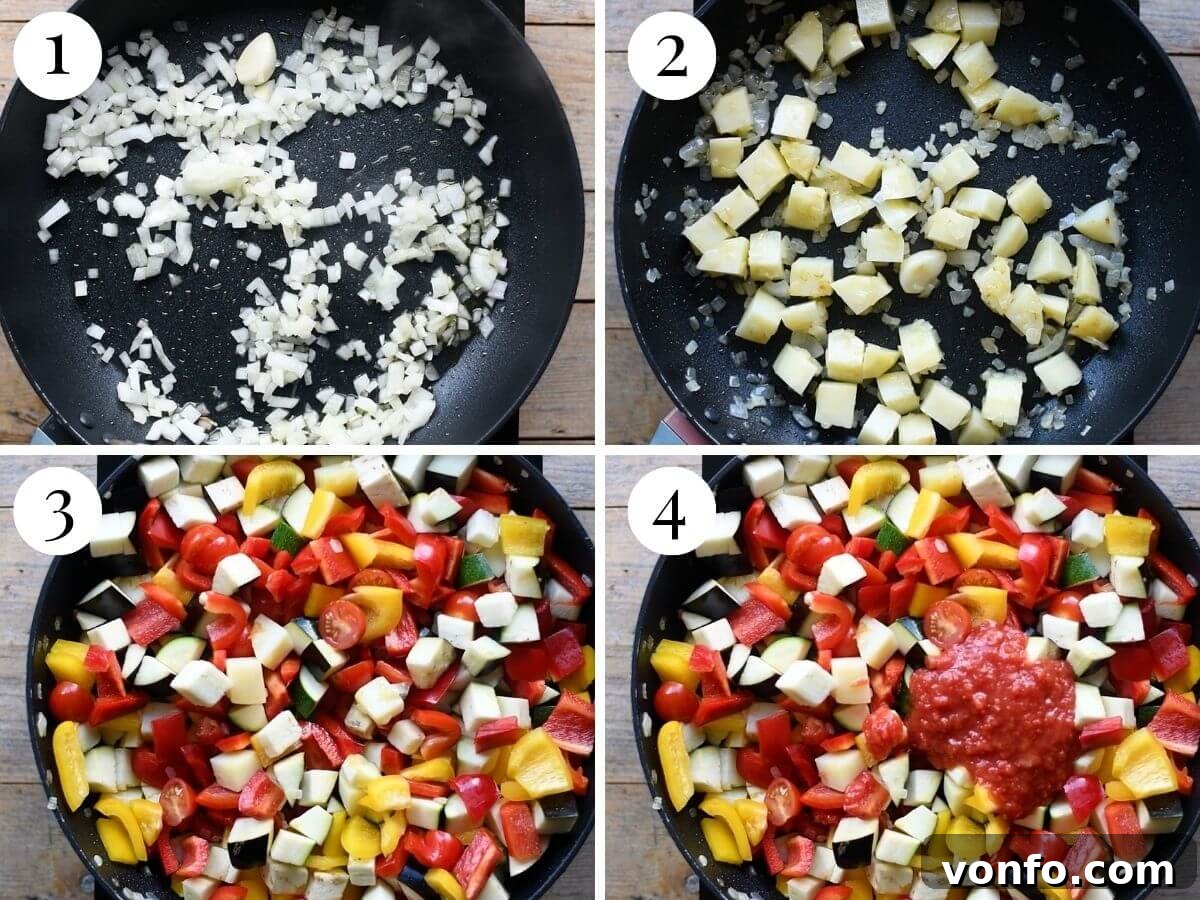
- Chop the Remaining Vegetables: Now, turn your attention to the zucchini, eggplant, and bell peppers. Cut them into medium-sized cubes, striving for consistency in size with the potatoes. Halve the cherry tomatoes. Uniformity in cutting ensures all vegetables cook evenly and achieve similar tenderness, contributing to a cohesive texture in the final stew.
- Combine and Simmer: Add all the chopped vegetables (zucchini, eggplant, bell peppers, and cherry tomatoes) to the pan with the sautéed potatoes and onions. Drizzle with an additional tablespoon of olive oil. Season generously with a good pinch of salt, then stir everything together until well combined. Pour in the crushed tomatoes and water. Bring the mixture to a gentle simmer, then cover the pan with a lid and let it stew for 20 minutes. During this time, the vegetables will soften, and their flavors will begin to meld beautifully in the rich tomato base.
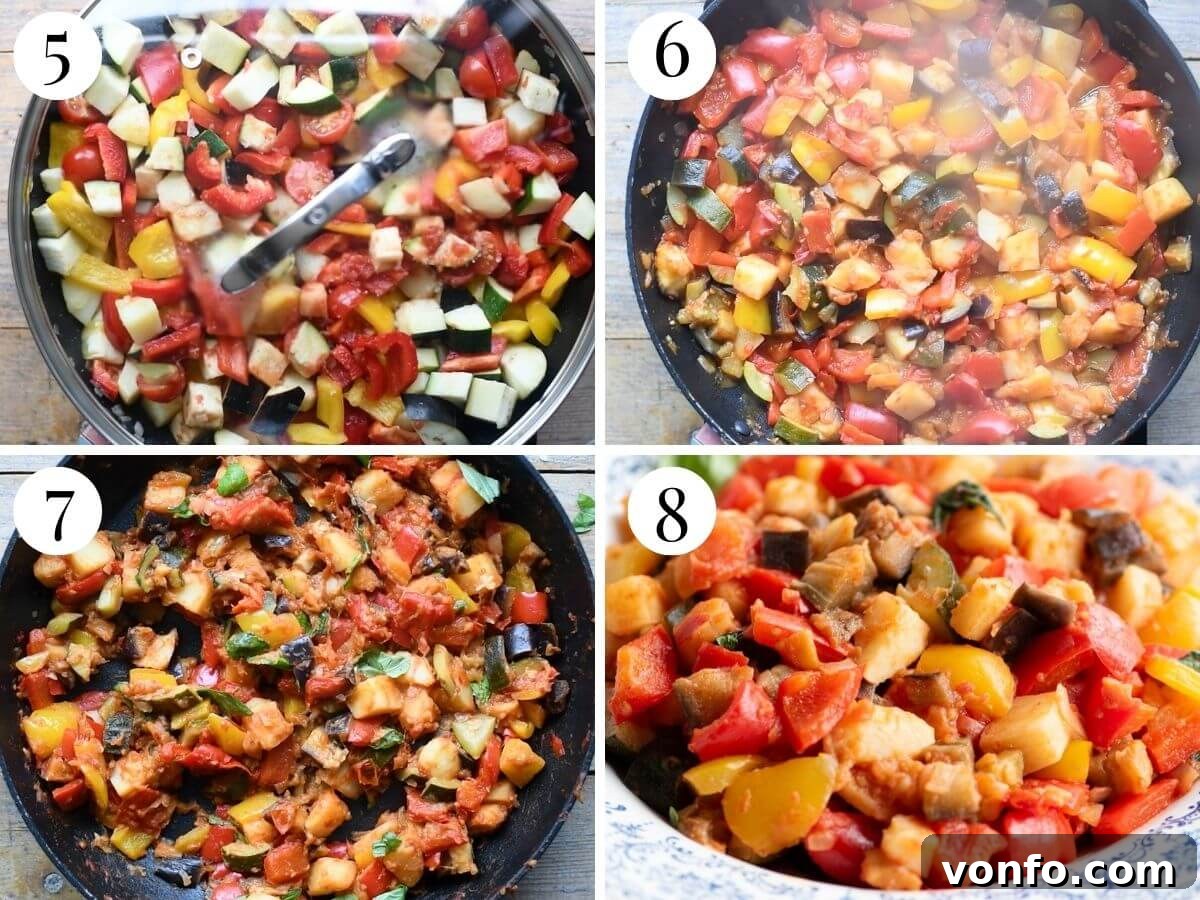
- Reduce and Finish: After 20 minutes, remove the lid from the pan. Reduce the heat to low and continue to cook for another 15 minutes, allowing any excess liquid to reduce and the flavors to concentrate. The vegetables should be tender but still hold their shape. Once the stew has reached your desired consistency, remove it from the heat.
- Final Touches and Serve: Stir in a small handful of freshly torn basil leaves. The heat from the stew will gently wilt the basil, releasing its fragrant oils. Taste the Ciambotta and adjust the seasoning as needed, adding more salt if desired. Serve warm or at room temperature, and prepare to enjoy the authentic taste of Southern Italy.
Expert Recipe Tips for Perfect Ciambotta
- Adapting the Recipe to Your Taste: Ciambotta is a wonderfully forgiving dish, making it perfect for personal customization. While we recommend trying the recipe as written initially to appreciate its traditional flavor profile, feel free to adapt it to your preferences or what’s available. For instance, you might decide to add more crushed tomatoes for a richer sauce, increase the number of bell peppers, or incorporate other seasonal vegetables like green beans or artichokes. The beauty of this stew is its flexibility and ability to shine with various vegetable combinations.
- Controlling Consistency: The ideal consistency of Ciambotta is not overly saucy, but it can naturally vary based on the water content released by your vegetables. If you find the stew too liquidy, simply increase the heat slightly and simmer it uncovered for a few extra minutes until the liquid reduces to your liking. Conversely, if you prefer a saucier consistency, you can easily add more crushed tomatoes or even a splash of vegetable broth during the simmering stage.
- Storage and Reheating: Ciambotta is an excellent make-ahead dish. It stores beautifully in an airtight container in the refrigerator for up to 3 days. The flavors often deepen overnight, making it even more delicious the next day. You can reheat it gently on the stovetop or in the microwave, or enjoy it at room temperature, which is a popular way to serve it in Italy, especially during warmer months.
- Seasonal Variations: Embrace the seasons! While classic Ciambotta features summer vegetables, the spirit of the dish—a hearty vegetable stew—can be adapted. In autumn, consider adding pumpkin or squash, or in spring, tender artichoke hearts and fava beans.
- Enhancing Flavor: A pinch of red pepper flakes can add a subtle kick if you enjoy a touch of heat. A dash of balsamic vinegar at the end can also brighten the flavors. For an extra layer of umami, a sprinkle of grated Pecorino Romano or Parmigiano Reggiano over the top just before serving is delightful, although not traditionally part of the core stew itself.
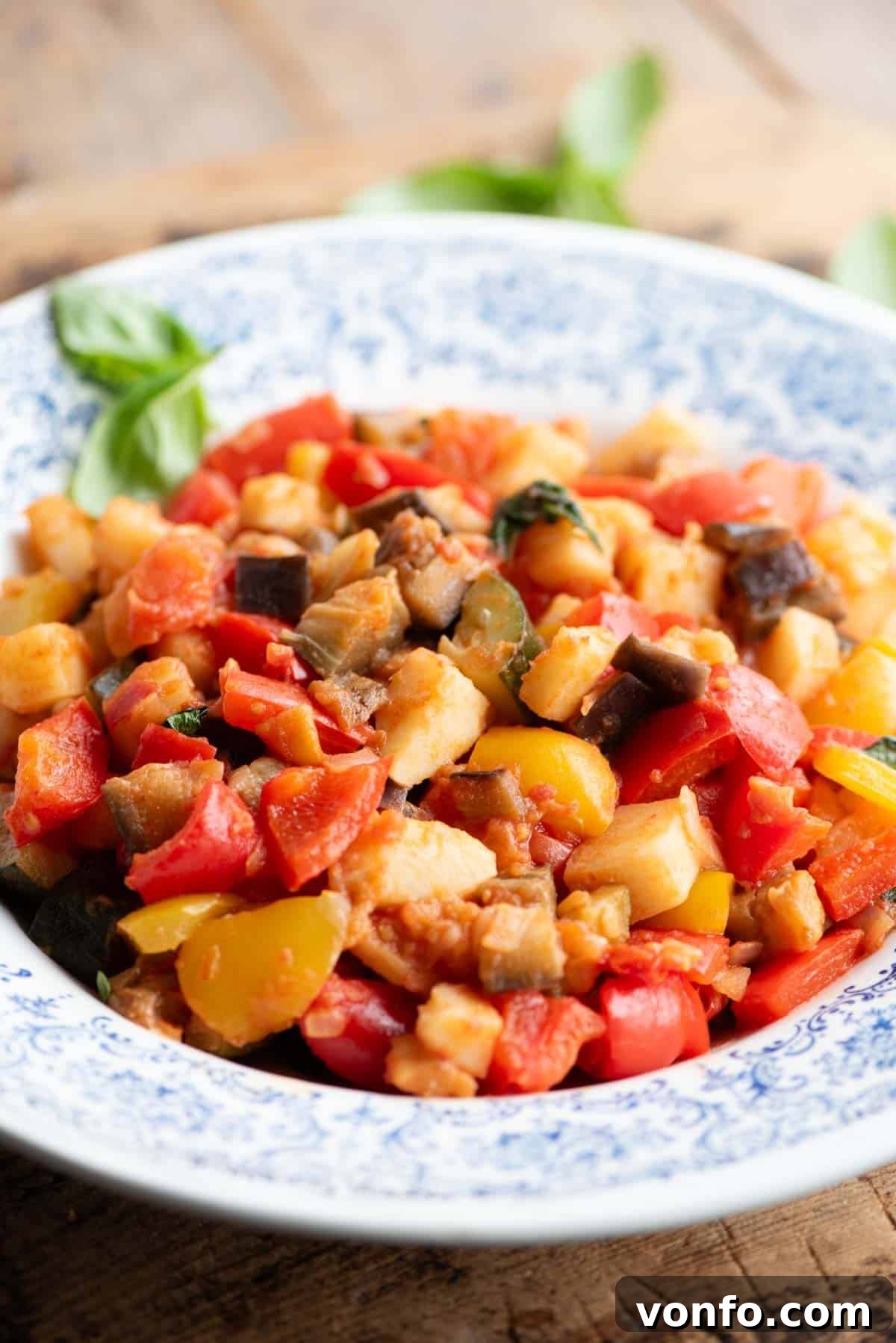
Delightful Serving Suggestions for Ciambotta
Ciambotta is wonderfully versatile and can be enjoyed in many ways. Its rich flavors and comforting textures make it a fantastic addition to almost any meal.
- As a Main Course: Serve Ciambotta on its own as a hearty, healthy vegetarian meal. It’s incredibly satisfying and packed with nutrients. A dollop of fresh ricotta or a sprinkle of feta cheese can elevate it further.
- With Crusty Bread: This is a classic pairing! Serve Ciambotta warm or at room temperature with plenty of crusty Italian bread to sop up all the delicious juices. Toasted bruschetta or focaccia also makes an excellent accompaniment.
- As a Side Dish: Ciambotta makes an exceptional side dish to various proteins. It pairs beautifully with grilled meats, poultry, or fish. Consider serving it alongside:
- Grilled chicken or skewers, such as traditional Chicken Spiedini.
- Grilled, marinated pork tenderloin or flavorful Italian sausages.
- Pan-seared salmon or delicate white fish like cod or snapper.
- Steak or lamb chops, providing a fresh, vibrant contrast to rich meats.
- As an Antipasto: Serve Ciambotta chilled or at room temperature as part of an Italian antipasto platter. Its robust flavors stand out beautifully alongside olives, cured meats, and cheeses.
- With Pasta or Grains: For an even more substantial meal, spoon Ciambotta over a bed of al dente pasta, creamy polenta, or fluffy couscous.
- Egg Topped: For a delightful brunch or light dinner, warm Ciambotta in a shallow pan and crack a few eggs directly into it. Cover and cook until the eggs are set to your liking.
More Delicious Italian Side Dishes to Explore
If you love the fresh, vibrant flavors of Ciambotta, you’ll surely enjoy these other traditional Italian vegetable side dishes, perfect for complementing any meal or enjoying on their own:
Sides
Pipi e Patati (Calabrian Peppers and Potatoes)
Sides
Peperoni Ammollicati (Peppers and Breadcrumbs)
Sides
Italian Green Beans In Tomato Sauce
Sides
Baked Spinach Balls with Parmigiano Cream
We hope you enjoy this **Ciambotta recipe** as much as we do. If you’ve tried this or any other recipe on our blog, please consider rating the recipe and sharing your experience in the comments below – we absolutely love hearing from you! You can also **follow us** on Facebook, Instagram, and Pinterest for more delicious inspiration, or sign up for our Newsletter to receive weekly updates on our latest recipes.
Ciambotta (Stewed Italian Summer Vegetables)
By Emily
Prep Time: 15 mins
Cook Time: 45 mins
Total Time: 1 hr
Servings: 6 – 8 servings
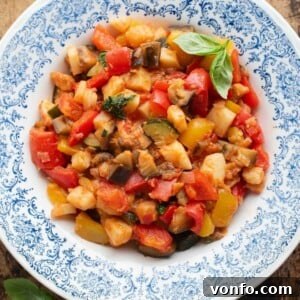
Ciambotta is a Southern Italian stew packed full of beautiful summer vegetables, textures, and flavor. Made with zucchini, eggplant, bell peppers, and tomatoes, it’s light yet hearty, healthy, and delicious!
Print Recipe
Ingredients
- 1 white onion
- 1 zucchini (courgette)
- 1 eggplant (aubergine)
- 3 bell peppers
- 2 medium potatoes (about 350g/12.3oz)
- 1 garlic clove
- 4.5 oz (125g) cherry tomatoes (about 15 tomatoes)
- 5 tablespoons Crushed tomatoes or Passata
- 1/2 cup (125ml) water
- Small handful Fresh basil
- 3 tablespoons Olive oil
- Salt to taste
Instructions
- Finely chop the onion and add it to a large pan with 2 tablespoons of olive oil and a whole peeled garlic clove. Sauté the onion on a medium-low heat until softened.
- Meanwhile, peel and chop the potatoes into medium-sized cubes and add them to the onion. Stir then let them sauté on medium-low while you cut the rest of the vegetables.
- Cut the zucchini, eggplant, and bell peppers into medium-sized pieces, all roughly the same size. Cut the cherry tomatoes in half.
- Add all the chopped vegetables to the potatoes and drizzle over another 1 tablespoon of olive oil. Add a good pinch of salt, stir then add the crushed tomatoes and water.
- Cover with a lid and let it simmer for 20 minutes until the veggies are soft. Uncover the pan and turn the heat to low, cooking for another 15 minutes uncovered to reduce the liquid.
- Once ready, turn off the heat and add in freshly torn basil leaves. Taste for seasoning and add salt if needed, then serve.
Notes
- Adapting the recipe: With recipes like this, we always recommend making it as close to the written recipe as you can, and then adapt it to your own preference. For example, you might decide to add more tomato or fewer bell peppers, or adjust it to whatever veggies you have on hand.
- Consistency: Ciambotta is not overly saucy, but the consistency will vary depending on how much water is released from the vegetables. If you need to reduce the liquid, just turn up the heat and simmer the vegetables until it has reduced. In contrast, if you prefer it on the saucier side, you can add more crushed or fresh tomatoes.
- Storage: Ciambotta will keep well in the fridge for up to 3 days and can be reheated or eaten at room temperature.
- Serving sizes: The serving size is based on serving this as a side dish.
Helpful Info for All Recipes
- I always use extra virgin olive oil in all of my recipes unless stated otherwise.
- When I use canned or jarred tomatoes of any kind, I always use Cirio or Mutti brands for the best results and flavor.
- All vegetables are medium-sized unless stated otherwise.
- All recipes are tested and developed using a fan (convection) oven.
- Find out more about how nutrition is calculated.
- Check out our must-have Italian Pantry Staples.
- You can also find all our Essential Kitchen Tools for Italian Cooking.
Nutrition Information (Approximate Per Serving)
This nutritional information is automatically calculated and should only be used as an approximation. It is based on 6 servings.
- Calories: 176 kcal
- Carbohydrates: 26g
- Protein: 4g
- Fat: 8g
- Saturated Fat: 1g
- Polyunsaturated Fat: 1g
- Monounsaturated Fat: 5g
- Sodium: 32mg
- Potassium: 807mg
- Fiber: 6g
- Sugar: 9g
- Vitamin A: 2076IU
- Vitamin C: 106mg
- Calcium: 39mg
- Iron: 2mg
Did you try this recipe?
We would love to hear from you! Leave a comment below!