Brodo di Carne, Italian Meat Broth
- Makes 1.3 -1.5 litres of broth (about 1 ⅓ to 1 ⅕ quarts)
- Prep 5 minutes
- Cook 3 hours
- Total 3 hours 5 minutes
Brodo di Carne Italian meat broth is a staple in every Italian kitchen. Whether it's used to make a simple soup or used as a base to make good risotto and pasta dishes. A good Brodo di Carne is like a kitchen secret that will help you transform the simplest of dishes into something extraordinary.
Brodo di Carne is the heart of so many good Italian dishes. It's the foundation of a traditional Tortellini in Brodo which is indescribably good (recipe for that coming soon), a soothing bowl of riso or pastina in brodo or Italian dumplings (Canederli in brodo).
It can also be added to risotto to add an good depth of flavour as well as pasta dishes and casseroles.
Making brodo di carne is so calming and relaxing for us, it's simple and uncomplicated and fills your home with the most comforting and nostalgic smell.
We love knowing that a big pot of liquid gold is simmering away on the stove, ready to be transformed into humble, nourishing and wholesome dishes to feed our family.
See the full recipe below plus some notes and tips on ingredients and ways to use it, enjoy!
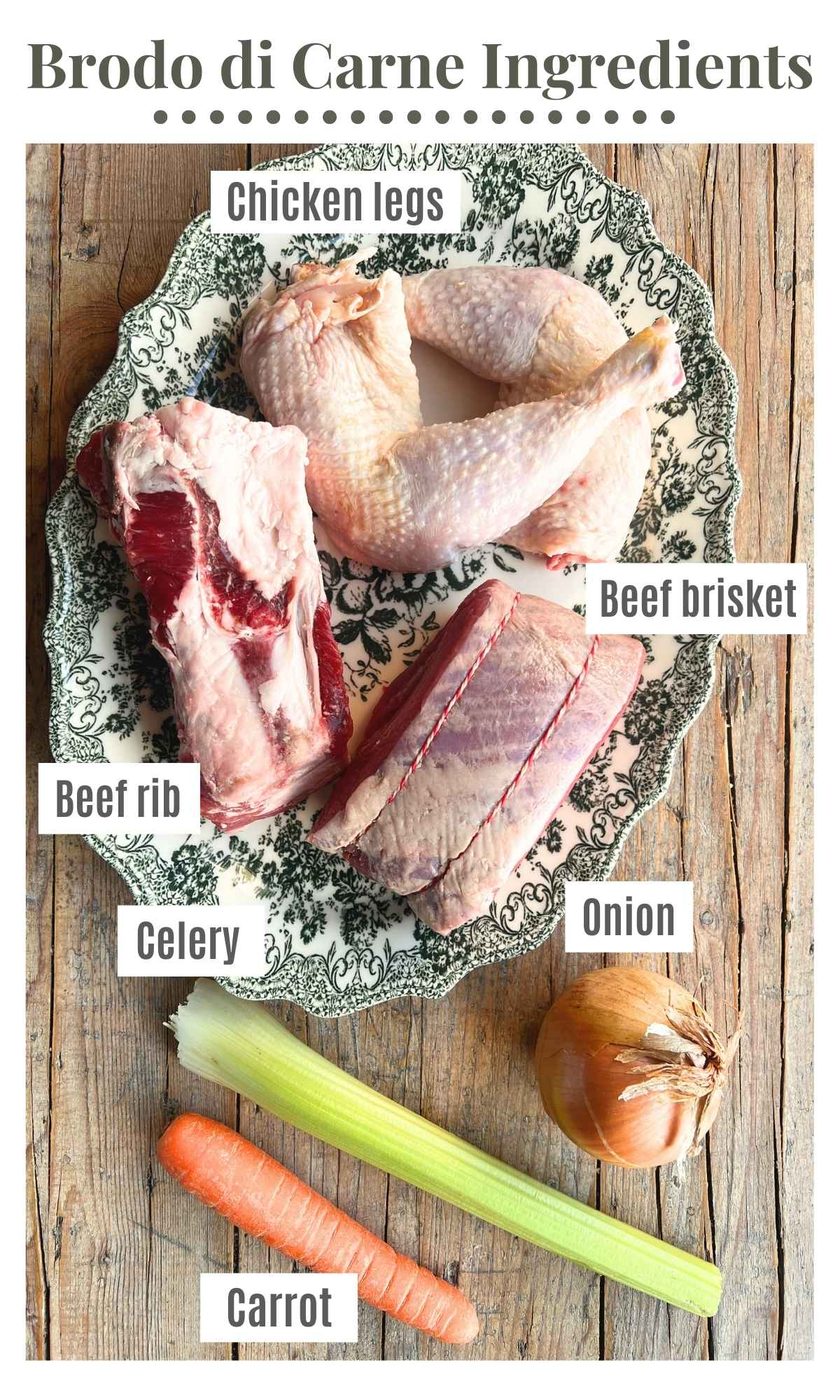
Ingredient notes and substitutions
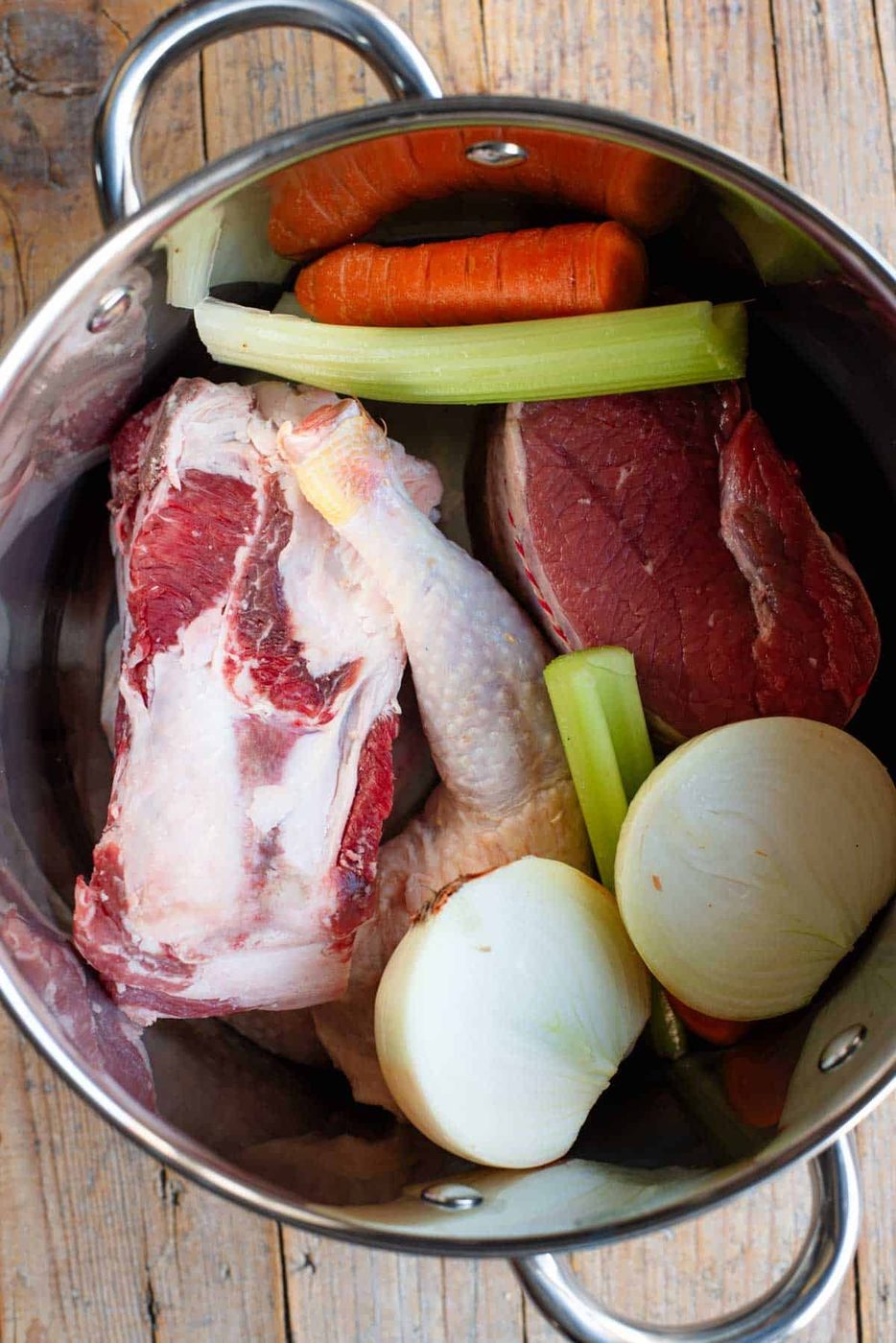
- Meat – brodo di carne is traditionally made with a mix of chicken and beef or veal. It's important to use veal or beef bones for the best flavour.
- Vegetables – this is usually kept simple with carrot, celery and onion added. We've sometimes seen 1-2 whole tomatoes added but we have never tried this myself.
- Salt – salt is important for enhancing flavour. We like to add it once the brood is simmering.
Ways to use the meat once cooked
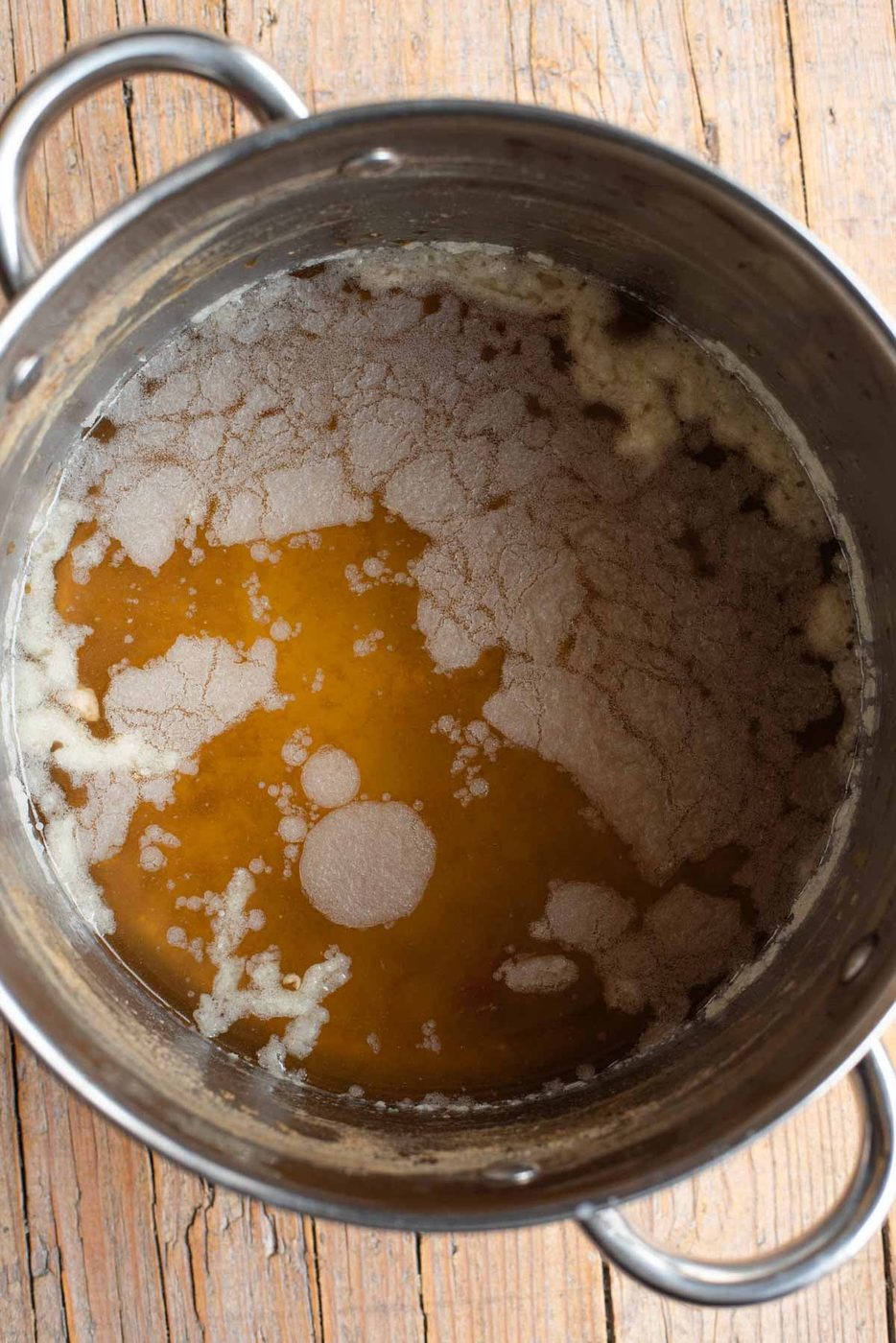
After cooking remove the meat from the broth and set it aside. You'll want to let the broth cool completely so you can skim off the layer of fat on top (see photo below)
As for the meat, the chicken will be beautifully tender and can be eaten with vegetable sides for a dinner, added to salads, soups or used in sandwiches.
The same goes for the beef, you can add it to pretty much anything you like to make a meal.
We personally, discard the vegetables but they can also be eaten.
Important tips to remember
- Always add cold water – it's so important to cover the meat and vegetables with cold water and not hot or warm water which will make the broth go cloudy and also compromise the flavour.
- Keep it simple – a traditional brodo di carne is a fuss-free and simple recipe. If you want to add a little more flavour for different recipes you could add bay leaf, rosemary or even cloves which we've seen added a few times (good for festive dishes).
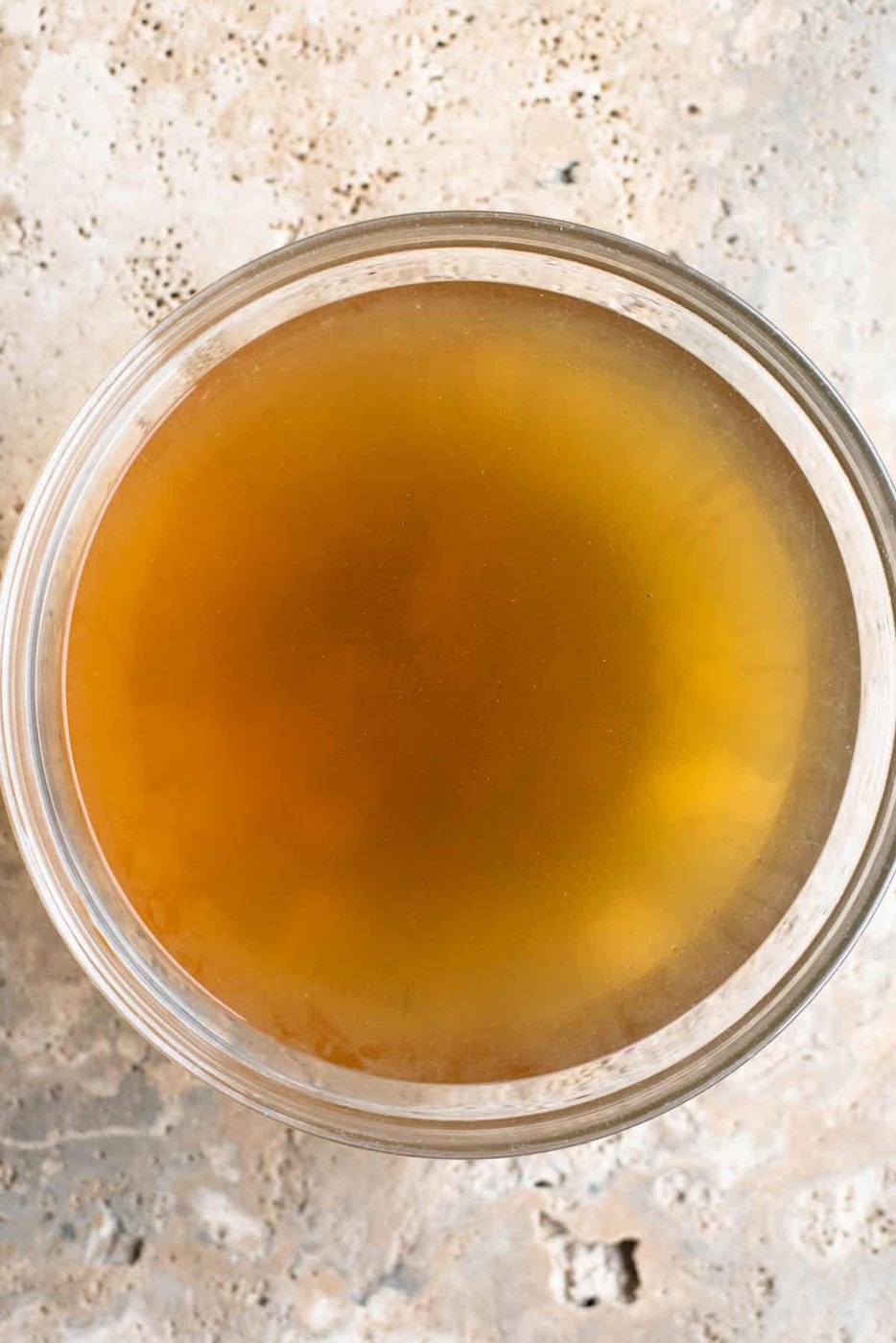
- Straining the broth – after removing the fat, we like to strain the broth using a sieve. We also sometimes use cheesecloth for an extra clear broth.
Ways to use your brodo
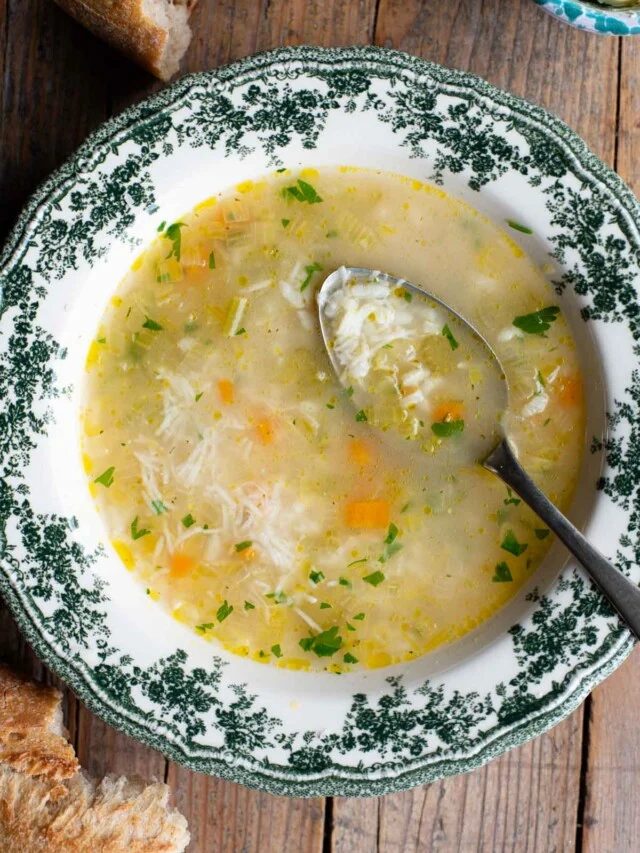
Soups
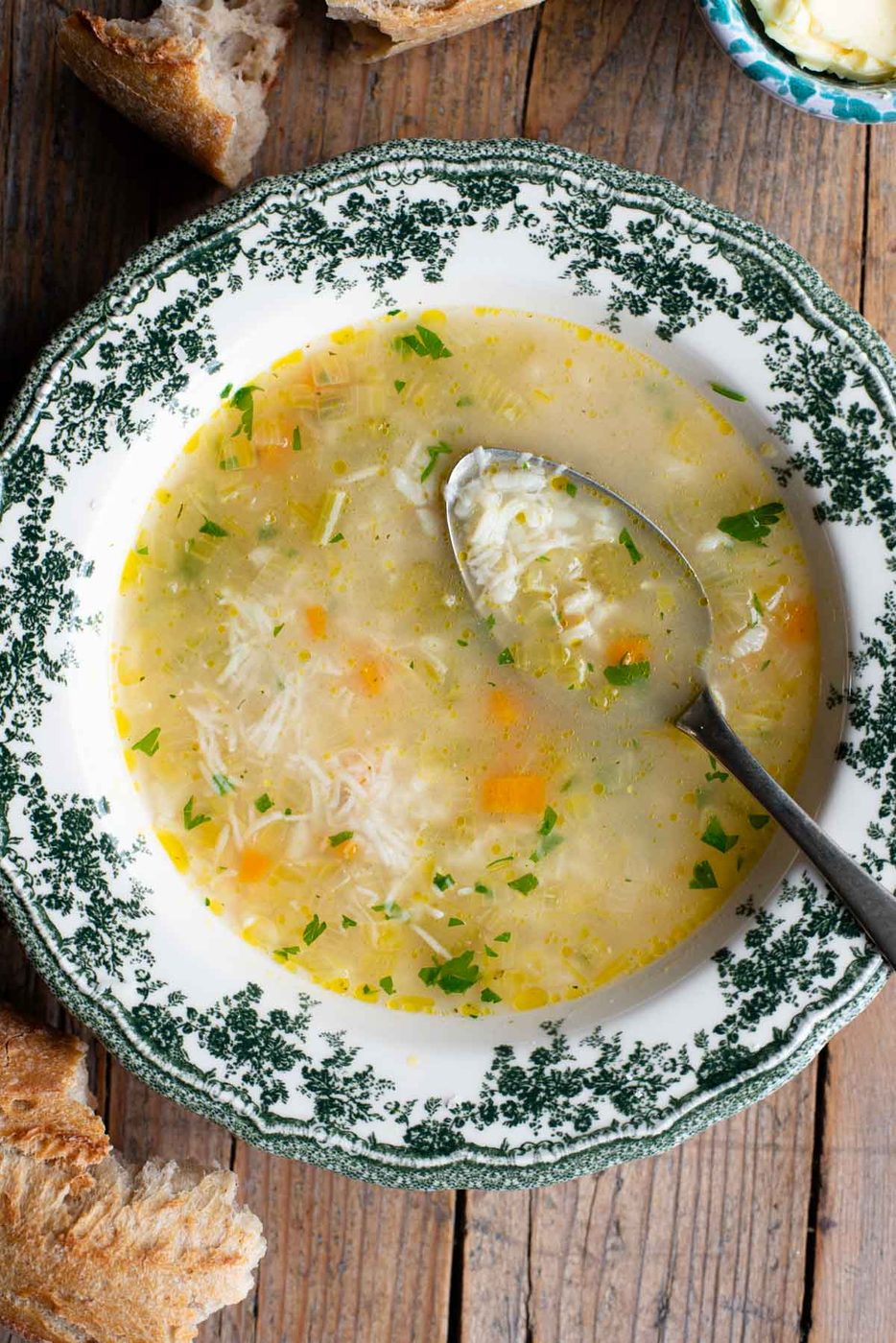
Minestra di Riso (Italian Rice Soup)
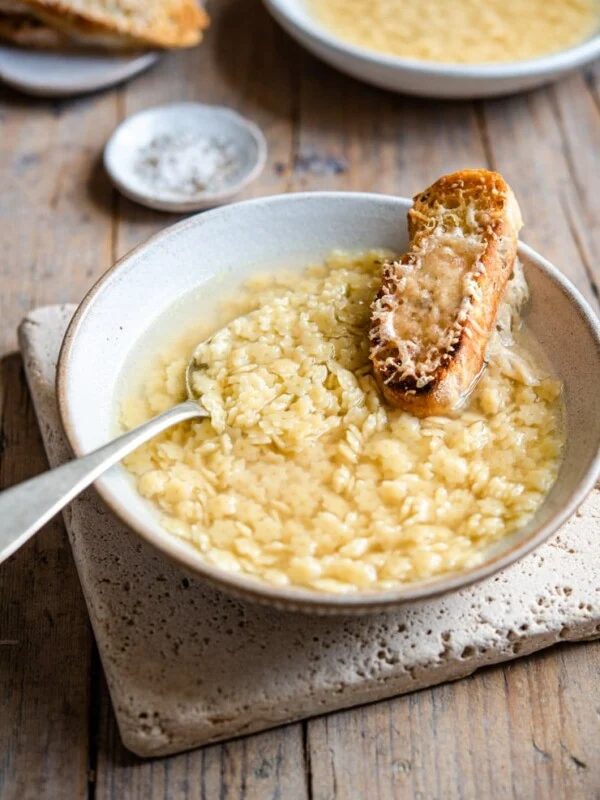
Soups
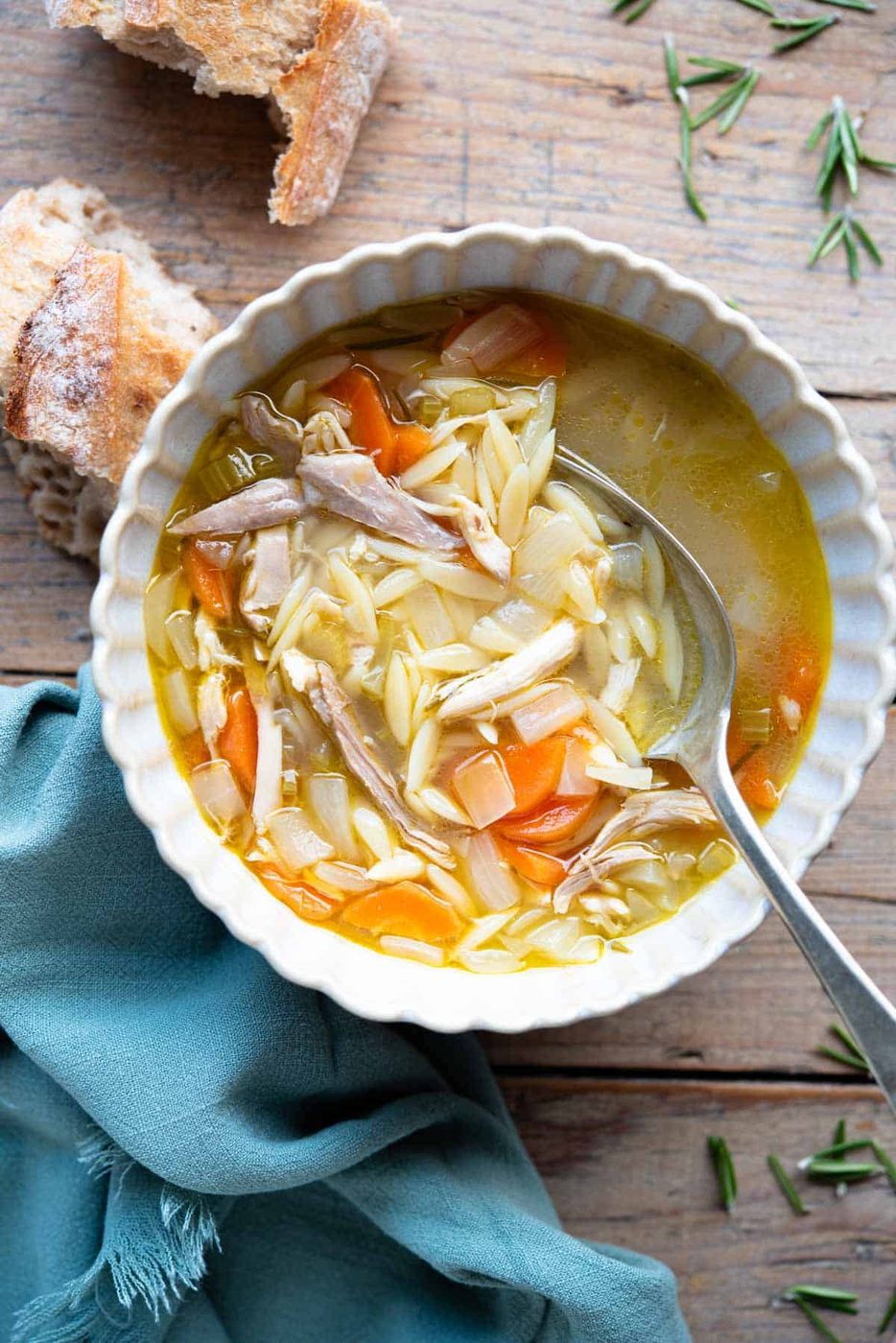
Pastina Soup (Italian Chicken Noodle Soup)
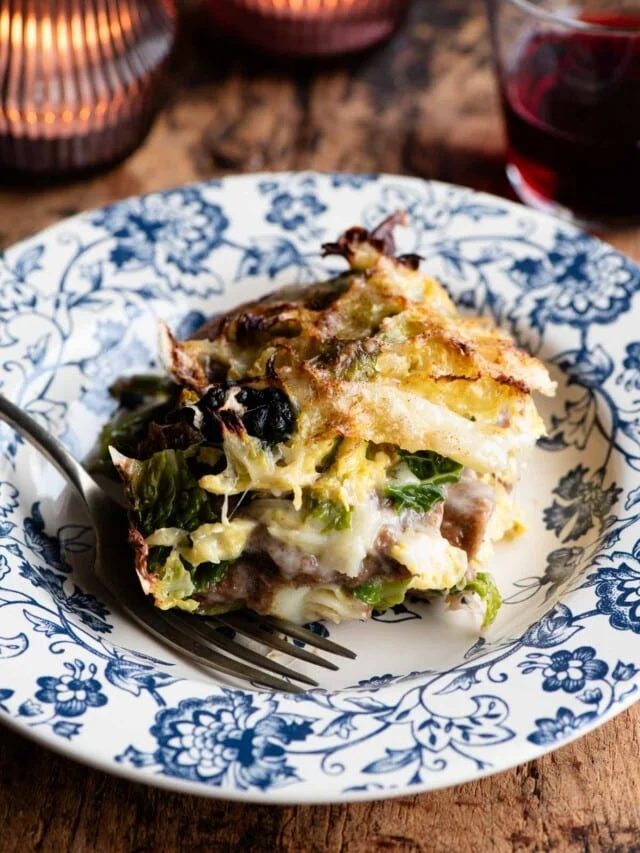
Mains
Zuppa alla Valpellinese (Cheese and Cabbage Casserole)
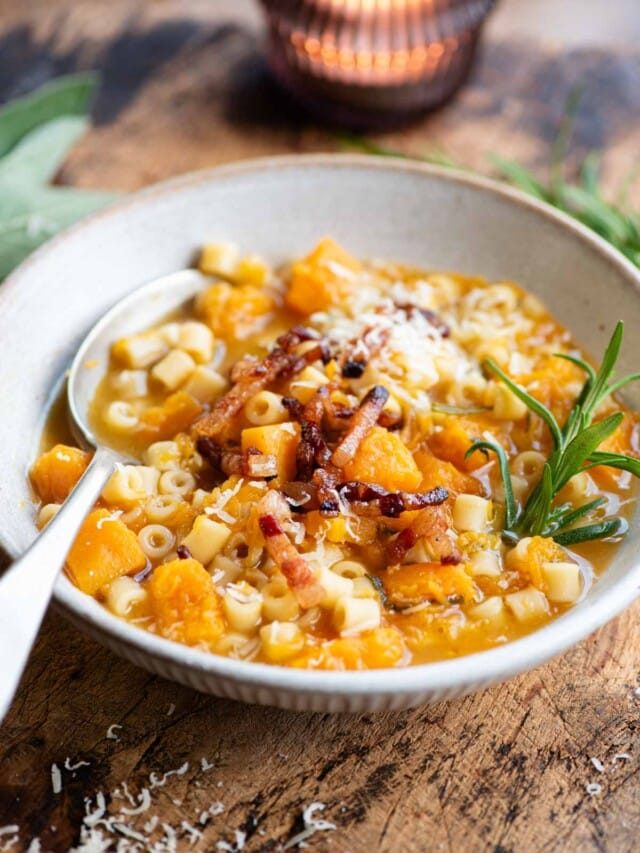
Soups
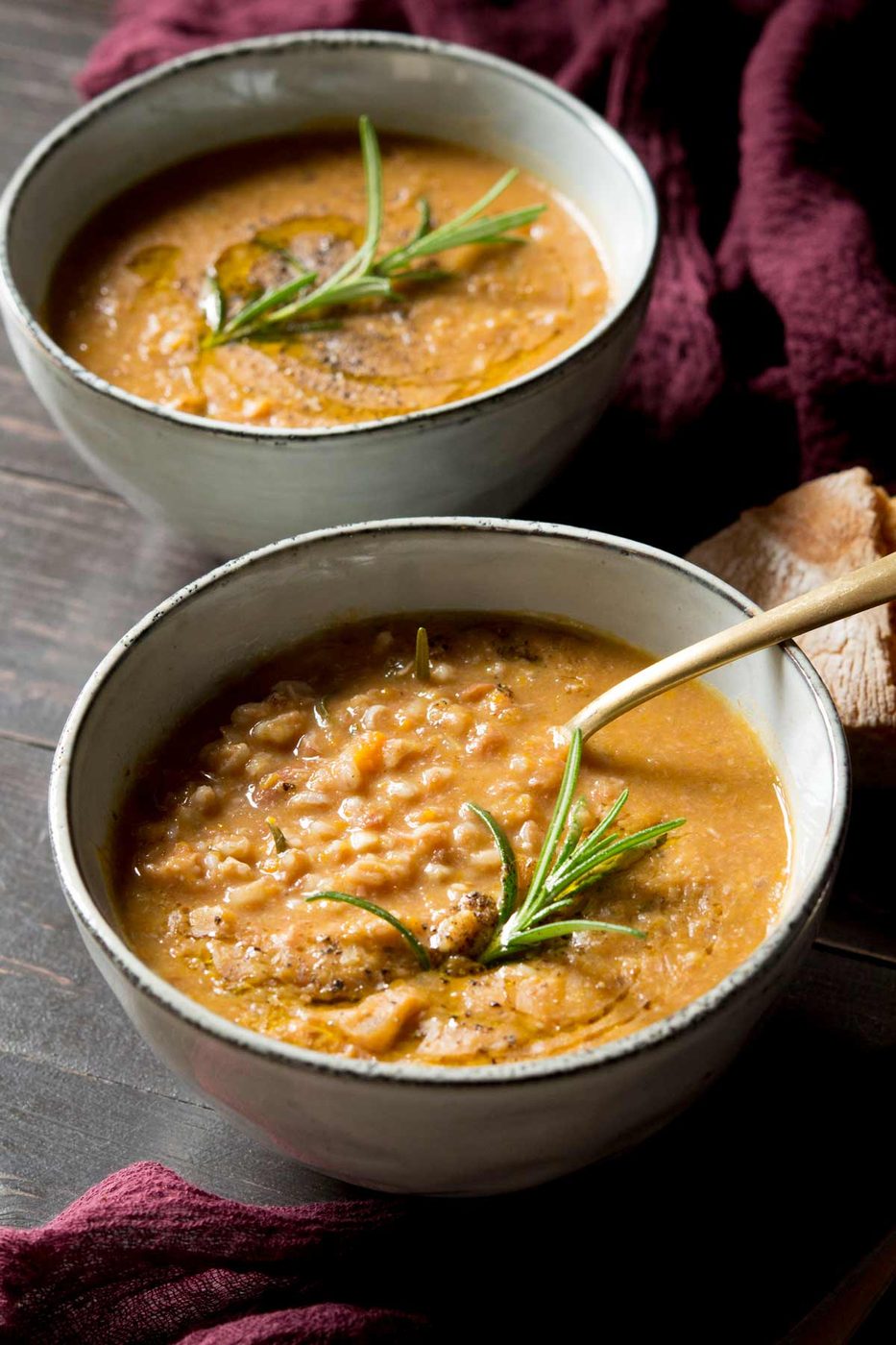
Butternut Squash Pasta Soup with Crispy Pancetta
Ingredients
Makes 1.3 -1.5 litres of broth (about 1 ⅓ to 1 ⅕ quarts)
- 2 chicken legs ((550g/ about 1 ¼ pounds))
- 700 g (1.5 lbs) Beef brisket
- 500 g (1 lb) Beef with bone such as beef rib
- 1 Carrot (washed and trimmed)
- 1 Celery (washed and cut in half)
- 1 Onion (cut in half (you can choose to leave the skin on or take it off))
- 3.5 litres cold water ((3 quarts))
- 3 teaspoons sea salt flakes
Method
Add the meat and vegetables to a large stock pot and pour over the cold water. You want to make sure the water covers the meat and vegetables.
Bring the broth to a simmer on a high heat then add the salt. Turn the heat down to medium or medium-low so the stock is gently simmering and not ferociously boiling which will turn it cloudy.
Skim off any scum that bubbles on the surface at this point (it should only happen at the beginning of cooking).
Let the broth simmer uncovered for 3 hours then turn off the heat. Remove the meat and vegetables. The meat can be used in so many ways (see notes) and you can either choose to eat or discard the vegetables.
Let the broth cool completely then store in the fridge. Once cold a layer of fat will settle on the top and can be skimmed off easily with a spoon.
The broth will keep in the fridge for up to 2-3 days or can be stored in containers/bags in the freezer for 3 months.
Kitchen notes
- Meat you can use a mix of chicken, beef and/or veal in proportions you prefer. If you want it to have a richer beef flavour you can add another cut on top of what is listed above. A mix of different cuts will add more flavour. We highly recommend using bones, we used a beef rib but you could use bone marrow or shank for example.
- Skim off the fat if you want to use the broth straight away before skimming the fat off that's completely fine it'll have a richer flavour/consistency.
- Straining the broth after removing the fat, we like to strain the broth using a sieve. We also sometimes use cheesecloth for an extra clear broth.
- Cooked meat uses you can serve the meat with a vegetable side to make a meal or shred the meat to use in salads, soups or sandwiches.
- Nutritional value is for the whole batch of broth including the meat.