
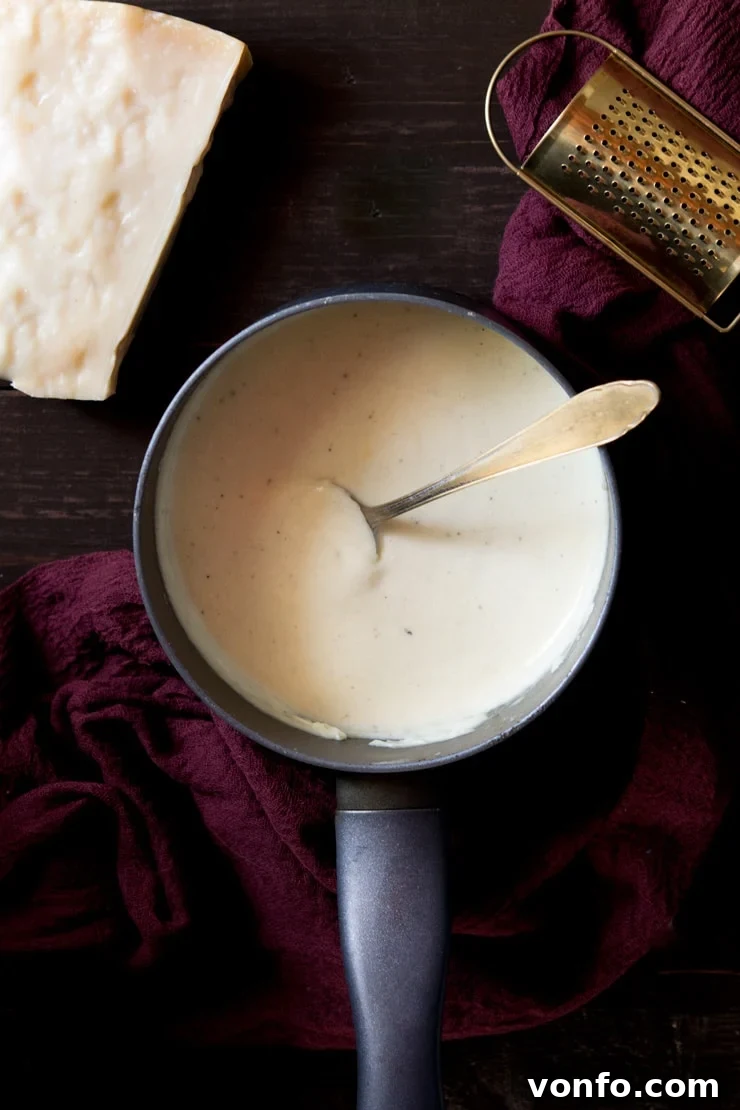
Unlock the secret to a perfectly creamy, silky smooth, and utterly delicious Bechamel sauce, even when you’re out of butter! This comprehensive guide shows you how to craft this foundational white sauce using olive oil, ensuring your favorite comfort food dishes never miss a beat.
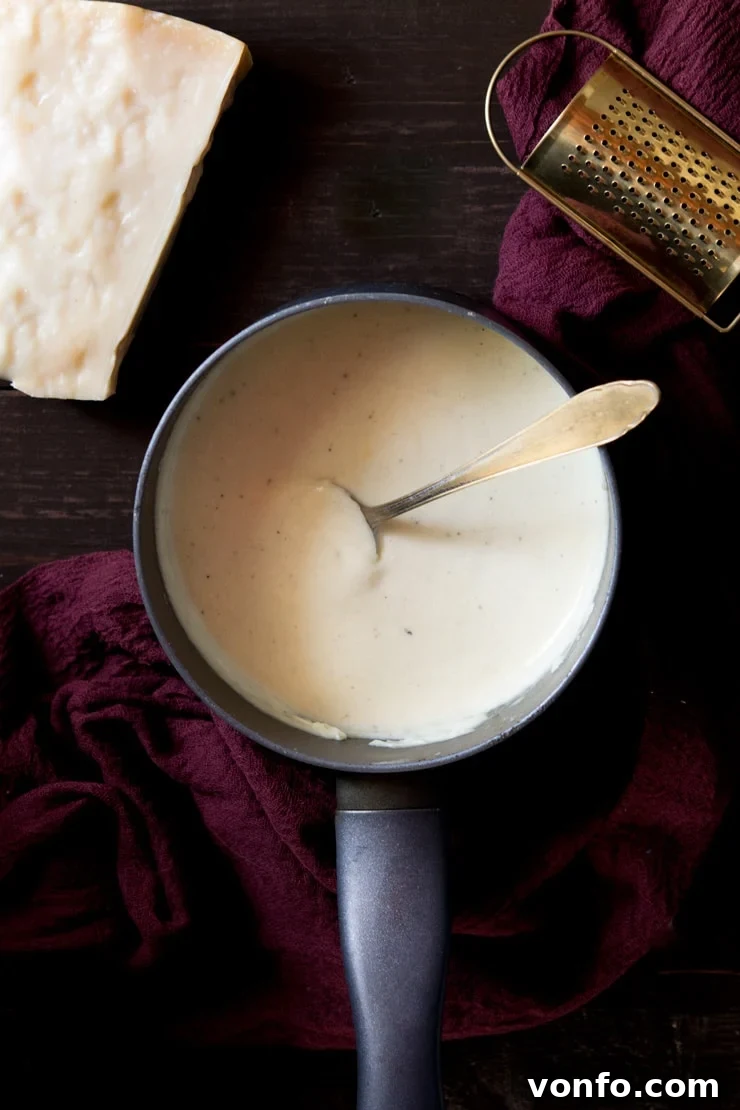
Butterless Bechamel Sauce: Creamy Perfection Without the Butter
Bechamel sauce, often hailed as one of the French “mother sauces,” is a culinary cornerstone that every home cook should master. It’s a fundamental white sauce that serves as the base for countless beloved dishes, from classic lasagnas to decadent macaroni cheese and savory gratins. Its versatility and ability to add a layer of rich, creamy texture make it an indispensable part of many comfort food recipes.
But what happens when you’re ready to whip up a batch of this essential sauce, only to realize you’ve run out of butter? Don’t let a missing ingredient derail your meal plans! Many aspiring chefs and seasoned cooks alike have faced this common pantry dilemma. The good news is that creating a superb Bechamel sauce without butter is not only possible but also incredibly simple and equally delicious. Today, we’re diving deep into an ingenious alternative that ensures your white sauce remains just as luxurious and flavorful: using olive oil.
If you’re anything like me and have a deep appreciation for hearty, comforting dishes like a bubbling lasagna or a gooey macaroni cheese, then you understand the critical role Bechamel plays. It’s the velvety backbone that binds ingredients together, adding moisture, richness, and an irresistible depth of flavor. Many of my personal favorite recipes, such as baked pasta dishes, savory pies, or cheesy vegetable gratins, simply wouldn’t be the same without a generous layer of this exquisite sauce. Especially during colder months, when warm, hearty meals are a must, knowing how to prepare a reliable Bechamel, regardless of your butter supply, is a game-changer.
The Incredible Versatility of Bechamel Sauce
Bechamel is truly a chameleon in the kitchen, adapting beautifully to a wide array of dishes. Its mild, creamy profile makes it an ideal canvas for other flavors, allowing it to enhance without overpowering. Here are just a few of the many ways you can incorporate this fantastic butterless white sauce into your cooking:
- Baked Cauliflower Cheese: A timeless side dish, made incredibly indulgent with a rich, cheesy Bechamel.
- Macaroni Cheese: The quintessential comfort food, where Bechamel forms the gooey, cheesy foundation.
- Cheesy Leeks: A delightful vegetable accompaniment, elevated by a creamy sauce.
- Lasagna: Essential for layering between pasta, meat, and vegetables, providing moisture and richness.
- Cannelloni: A perfect topping for baked cannelloni, ensuring a tender, flavorful finish.
- Savoury Soufflé: The light, airy base for a truly impressive savoury soufflé.
- Croque Madame/Monsieur: The creamy layer that makes these French sandwiches so utterly irresistible.
- Homemade Pies: Mix with cooked vegetables, meats, herbs, and spices to create the luscious filling for hearty, homemade pies.
- Creamed Spinach or Other Vegetables: Transform simple greens into a luxurious side dish.
- Gratins: Bind together sliced potatoes, vegetables, or pasta for a bubbling, golden-brown gratin.
I can recall numerous times when I’ve been halfway through preparing a meal, only to discover I’m out of butter and need to make Bechamel sauce. Instead of making an extra trip to the grocery store or completely altering my dinner plans, there’s a remarkably simple solution that most of you, especially those who appreciate the flavors of Mediterranean and Italian cuisine, will already have readily available in your pantry: olive oil.
Yes, you absolutely can achieve a wonderfully silky, smooth, thick, and creamy Bechamel sauce using good quality olive oil. And the best part? There’s absolutely no compromise on flavor. In fact, it can even add a subtle, pleasant fruity note that beautifully complements many dishes. It’s truly that simple and effective!
Understanding the Roux: The Foundation of Bechamel
At the heart of any classic Bechamel sauce is the roux – a mixture of fat and flour cooked together. This simple paste is crucial for thickening the milk and giving the sauce its characteristic smooth texture. Traditionally, butter is the fat of choice for a roux, lending its rich flavor and golden hue. However, the function of the fat is primarily to coat the flour particles, preventing lumps and allowing them to cook evenly, which is something olive oil performs just as effectively.
When making a roux for Bechamel, the goal is often a “white roux” – meaning the flour is cooked just enough to remove its raw taste, but not so much that it browns. This preserves the light color of the white sauce. Using olive oil for this process works identically, creating a perfect base for your butterless Bechamel.
The Ideal Ratios for Butterless Bechamel (White Sauce)
The basic culinary principle for crafting a classic Bechamel sauce revolves around a straightforward 1:1 ratio of fat to flour by weight, or often by volume for ease in home cooking. Whether you opt for butter or, in our case, olive oil, you’ll use an equal amount of flour to create a thick paste known as a roux.
For this particular recipe, we use 1 tablespoon of olive oil combined with 1 heaped tablespoon of all-purpose flour. This proportion is ideal for thickening approximately 2 cups (or 500ml) of milk, yielding a medium-thick sauce suitable for most applications. You have the flexibility to adjust the milk quantity to achieve your desired consistency: use slightly less milk for a thicker sauce, perfect for gratins, or a little more for a thinner sauce, great for drizzling over vegetables.
Step-by-Step Guide: How To Make Bechamel Sauce Without Butter
Creating a luscious, lump-free Bechamel is a skill easily learned. Follow these simple steps for a perfect butterless white sauce every time:
First, pour the olive oil into a medium saucepan and warm it gently over medium heat for just a few seconds. You don’t want it smoking, just warm enough to easily incorporate the flour. Once warm, add the heaped tablespoon of all-purpose flour to the pan (refer to photo 1 for visual guidance).
Immediately after adding the flour, begin whisking or stirring constantly with a wooden spoon. Continue mixing until the flour and olive oil combine to form a smooth paste, or roux. Let this roux cook for about one minute, continuing to stir. This crucial step cooks out the raw flour taste, ensuring your final sauce is smooth and palatable, not floury (refer to photo 2 for visual guidance).
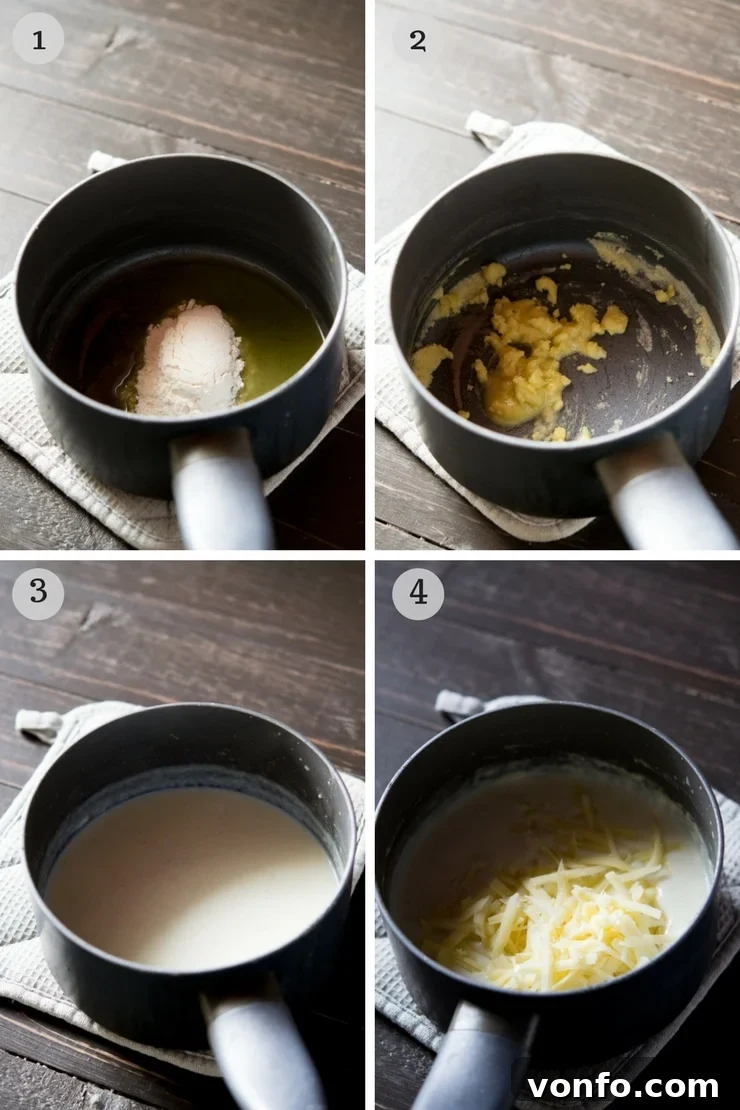
Now, gradually begin adding the milk. Start by pouring in just about 1/4 of the total milk. Whisk vigorously and continuously to incorporate the milk into the roux, breaking up any potential lumps. As the mixture heats, it will start to thicken. Once this initial portion of milk is fully incorporated and the mixture is smooth, add another 1/4 of the milk. Repeat this process, adding the milk incrementally and whisking constantly, until all 2 cups (500ml) of milk have been added and fully integrated into the sauce (refer to photo 3 for visual guidance).
Continue to heat the sauce over medium heat, stirring regularly, until it reaches your desired thickness. A good indicator is when the sauce is thick enough to coat the back of a metal spoon without running off easily. Once it reaches this consistency, remove the saucepan from the heat. Stir in 1/2 teaspoon of grated nutmeg, and season generously with salt and pepper to taste. If you’re making a cheese sauce (Mornay sauce), this is the moment to stir in your chosen grated cheese (refer to photo 4 for the finished sauce).
Choosing the Best Cheese for Your Bechamel: For a truly exceptional cheese sauce, opt for cheeses that melt beautifully and smoothly. Excellent choices include Parmesan, Gruyère, Fontina, or a good quality Cheddar. These cheeses will integrate seamlessly into the warm sauce, creating a rich and flavorful Mornay.
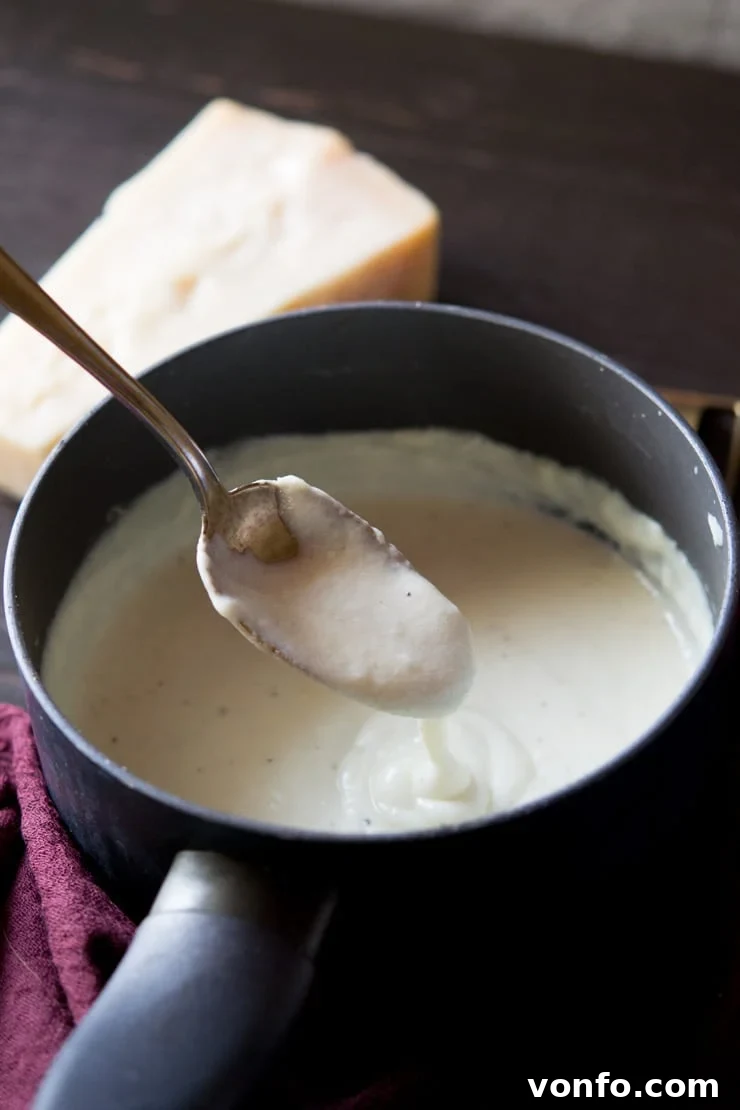
Recipe: Butterless Bechamel Sauce
How to make bechamel sauce without butter
By Emily
Cook: 10 mins
Total: 12 mins
Servings: 2 cups (500ml)
How to make Bechamel sauce without butter – it’s creamy, silky smooth and so delicious. Use this sauce for many classic comfort food dishes even if you’ve run out of butter.
Ingredients
- 1 tbsp olive oil
- 1 heaped tbsp all-purpose flour
- 2 cups (500ml) full fat milk
- 1/2 tsp grated nutmeg
- Salt and pepper, to season
- 1 tbsp grated Parmesan (optional, for cheese sauce)
- 2.8 oz (80g) grated Gruyère cheese (optional, for cheese sauce)
Instructions
- Add the olive oil to a saucepan and warm it gently for a couple of seconds over medium heat.
- Once the oil is warm, add the flour. Immediately whisk or stir constantly with a wooden spoon to form a smooth paste (roux). Cook the roux for one minute, stirring continuously, to remove the raw flour taste.
- Gradually add 1/4 of the milk, whisking constantly to remove any lumps. Once smooth and slightly thickened, add another 1/4 of the milk, continuing to whisk. Repeat this process until all the milk has been added and incorporated.
- Continue to heat the sauce over medium heat, stirring, until it thickens enough to coat the back of a metal spoon.
- Remove the saucepan from the heat. Stir in the grated nutmeg, salt, and pepper to taste. If making a cheese sauce, add your desired cheese (e.g., Parmesan or Gruyère) and stir until it has melted completely. You may need to return the pan to low heat for a few seconds to fully melt the cheese. If the sauce becomes too thick, add another splash of milk until it reaches your preferred consistency.
Notes
- The best cheeses to add to Bechamel sauce (to make Mornay sauce) are those that melt well, such as Parmesan, Gruyère, Fontina, or Cheddar.
- Nutrition information (approximate): 400 kcal without cheese, 700 kcal with cheese.
Pairing Your Butterless Bechamel: Recipe Ideas
Now that you’ve mastered the butterless Bechamel, it’s time to put it to good use! Here are some fantastic recipes where this creamy white sauce truly shines:
- Classic Beef Lasagne with Spinach Pasta
- Lentil Ragu Lasagne (Vegetarian-friendly!)
- Tomato Pasta Bake – Pasta Al Forno (add Bechamel for an extra layer of richness)
- Pesto Provolone Cannelloni Pasta
- Creamy Chicken and Mushroom Bake: Combine cooked chicken and mushrooms with your Bechamel for a comforting casserole.
- Vegetable Gratin: Layer thinly sliced potatoes, zucchini, or broccoli florets with Bechamel and cheese, then bake until bubbly and golden.
- Fish Pie: Use it as the creamy binder for a classic fish pie filling, topped with mashed potatoes.
Expert Tips for a Flawless Butterless Bechamel
- Avoid Lumps: The key to a smooth sauce is constant whisking, especially when adding the milk. Add milk gradually, allowing each portion to be fully incorporated before adding more.
- Temperature Matters: Using warm milk (gently heated in a separate pan or microwave) can help prevent lumps and speed up the thickening process, though cold milk works just fine with diligent whisking.
- Adjusting Consistency: If your sauce is too thick, simply whisk in a splash more warm milk until it reaches your desired consistency. If it’s too thin, let it simmer gently for a few more minutes, stirring frequently, until it thickens. Be patient!
- Seasoning is Key: Don’t forget to season your Bechamel with salt, pepper, and nutmeg. Nutmeg is a classic addition that enhances the sauce’s flavor beautifully. Taste and adjust as needed.
- Infused Milk: For an extra layer of flavor, consider infusing your milk. Gently warm the milk with a bay leaf, a few peppercorns, and half an onion (studded with a clove, if you’re feeling fancy). Strain before adding to the roux.
Frequently Asked Questions About Butterless Bechamel
Can I use other types of oil instead of olive oil?
While olive oil is highly recommended for its flavor and health benefits, you can experiment with other neutral-flavored oils like vegetable oil or canola oil. However, extra virgin olive oil often adds a delightful subtle fruity note that complements the sauce well.
Is butterless Bechamel healthier?
Using olive oil can offer certain health advantages over butter, particularly if you’re mindful of saturated fat intake. Olive oil is rich in monounsaturated fats, which are considered heart-healthy. The overall health profile will depend on the specific type of olive oil and other ingredients used in your recipe.
How long can I store leftover Bechamel sauce?
Leftover Bechamel sauce can be stored in an airtight container in the refrigerator for up to 3-4 days. It may thicken significantly when chilled. To reheat, gently warm it on the stove over low heat, whisking constantly and adding a splash of milk or broth to loosen it back to its original consistency.
Can I freeze Bechamel sauce?
Yes, Bechamel sauce can be frozen. Store it in an airtight container for up to 2-3 months. Thaw overnight in the refrigerator, then reheat gently on the stove, whisking vigorously and adding a little extra liquid (milk or water) if needed to restore its smooth texture.
Essential Tips for All Your Recipes
- I always recommend using extra virgin olive oil in all of my recipes unless otherwise specified, for its superior flavor and quality.
- When utilizing canned or jarred tomatoes, I consistently choose premium brands like Cirio or Mutti for the best possible results and authentic flavor.
- Unless noted, all vegetables in my recipes are assumed to be medium-sized.
- Every recipe I share has been thoroughly tested and developed using a fan (convection) oven to ensure reliable results.
- Explore our nutrition information calculation methods for a better understanding of dietary details.
- Discover our must-have Italian Pantry Staples to elevate your cooking.
- Find all our recommended Essential Kitchen Tools for Italian Cooking to equip your kitchen for success.
Nutrition Information (Approximate)
Calories: 400kcal | Carbohydrates: 15g | Protein: 20g | Fat: 28g | Saturated Fat: 13g | Cholesterol: 69mg | Sodium: 278mg | Potassium: 354mg | Sugar: 12g | Vitamin A: 770IU | Calcium: 707mg | Iron: 0.2mg
Nutrition information is automatically calculated and should be used as an approximation only.
Did you try this recipe?
We’d love to hear from you! Leave a comment below and share your experience. Your feedback helps us and other home cooks. You can also FOLLOW ME on FACEBOOK, TWITTER, INSTAGRAM and PINTEREST for more delicious recipes and kitchen inspiration!