Nduja Eggs in Purgatory, Eggs In Tomato Sauce
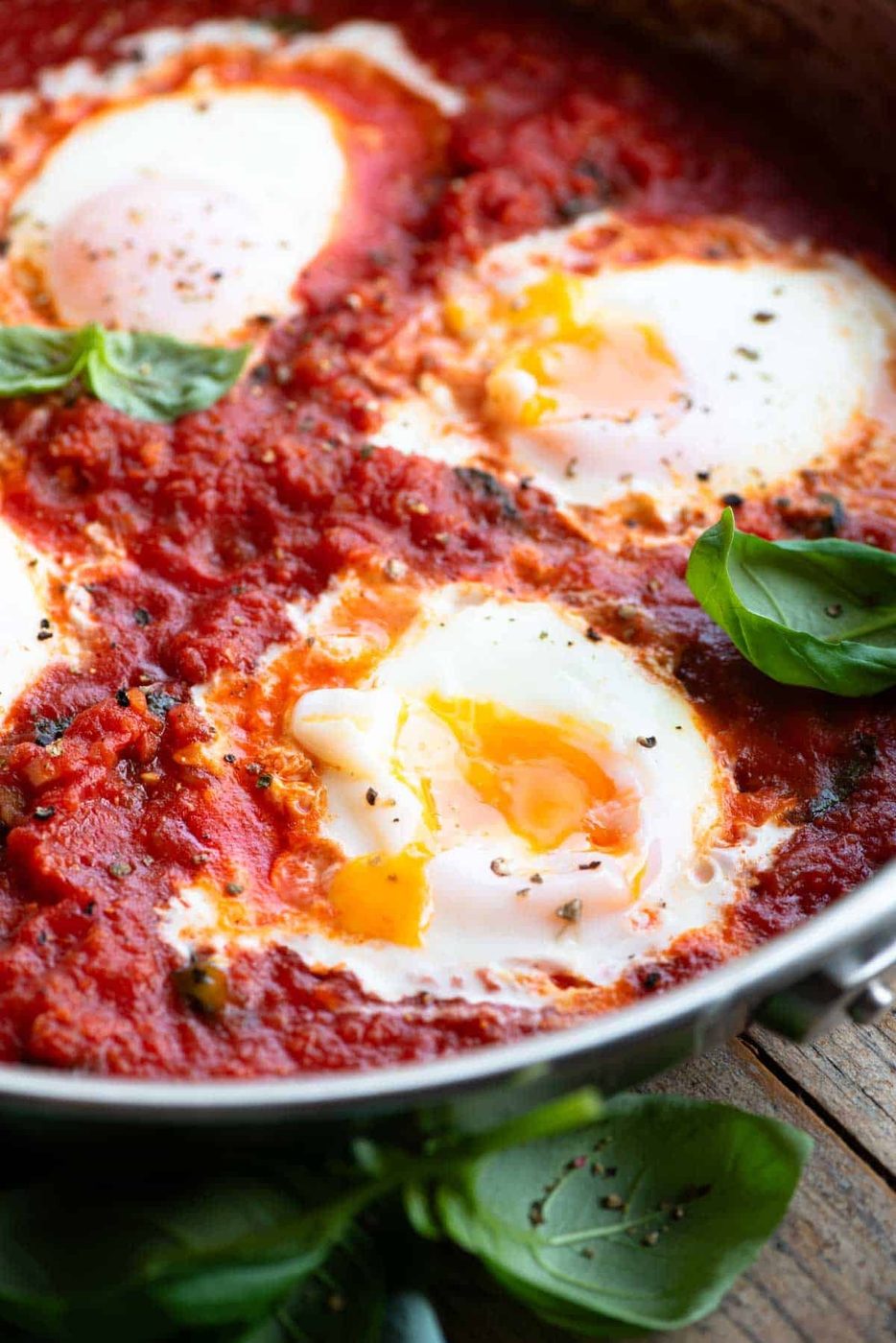
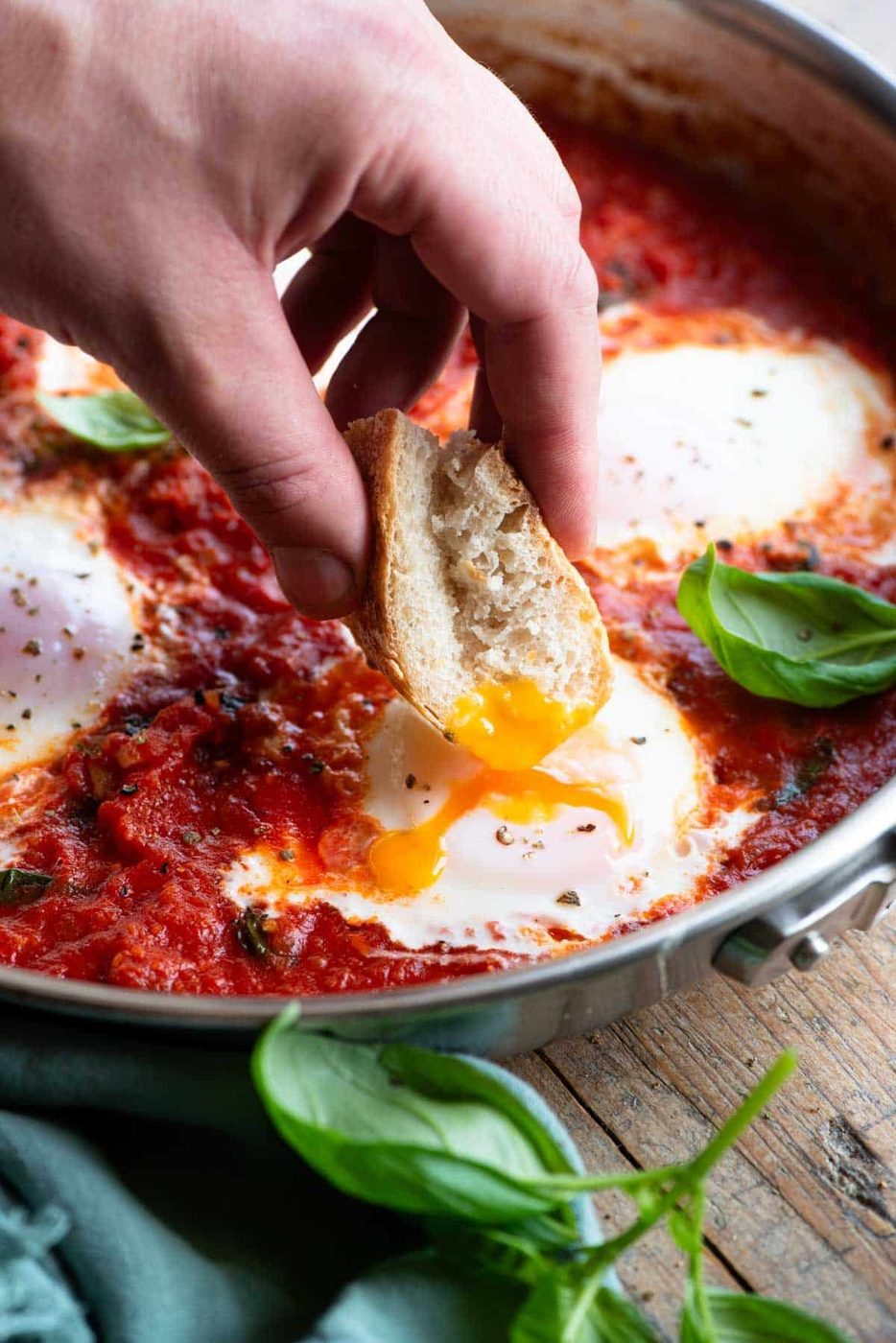
Eggs in purgatory made with spicy Calabrian 'Nduja salami. This recipe is easy, made with a flavour-packed tomato sauce, perfectly cooked eggs with runny yolks that are made for dunking bread into. Ready in under 30 minutes.
Eggs in Purgatory is a Neapolitan dish, commonly eaten in the south of Italy called 'Uova in Purgatorio' or 'Ova 'mpriatorio' in Neapolitan dialect. Eggs with a perfectly runny yolk are lightly poached in a good tomato sauce.
It's a simple dish using few ingredients, but it has so much flavour and is comforting.
Since we love spice in ours, we're switching it up by adding a good spicy Calabrian salami, Nduja. The heat is solid with the rich eggs and fresh tomato sauce.
We love to serve it with some fresh, crusty bread or char-grilled crostini for dunking in the runny eggs and mopping up the sauce.
In Italy, it's often served for lunch or dinner, but it's one of those meals that's so versatile and is suited to breakfast or brunch too.
See the full recipe below, including our top tips for getting the eggs solid and some good variations to try!
Ingredient notes
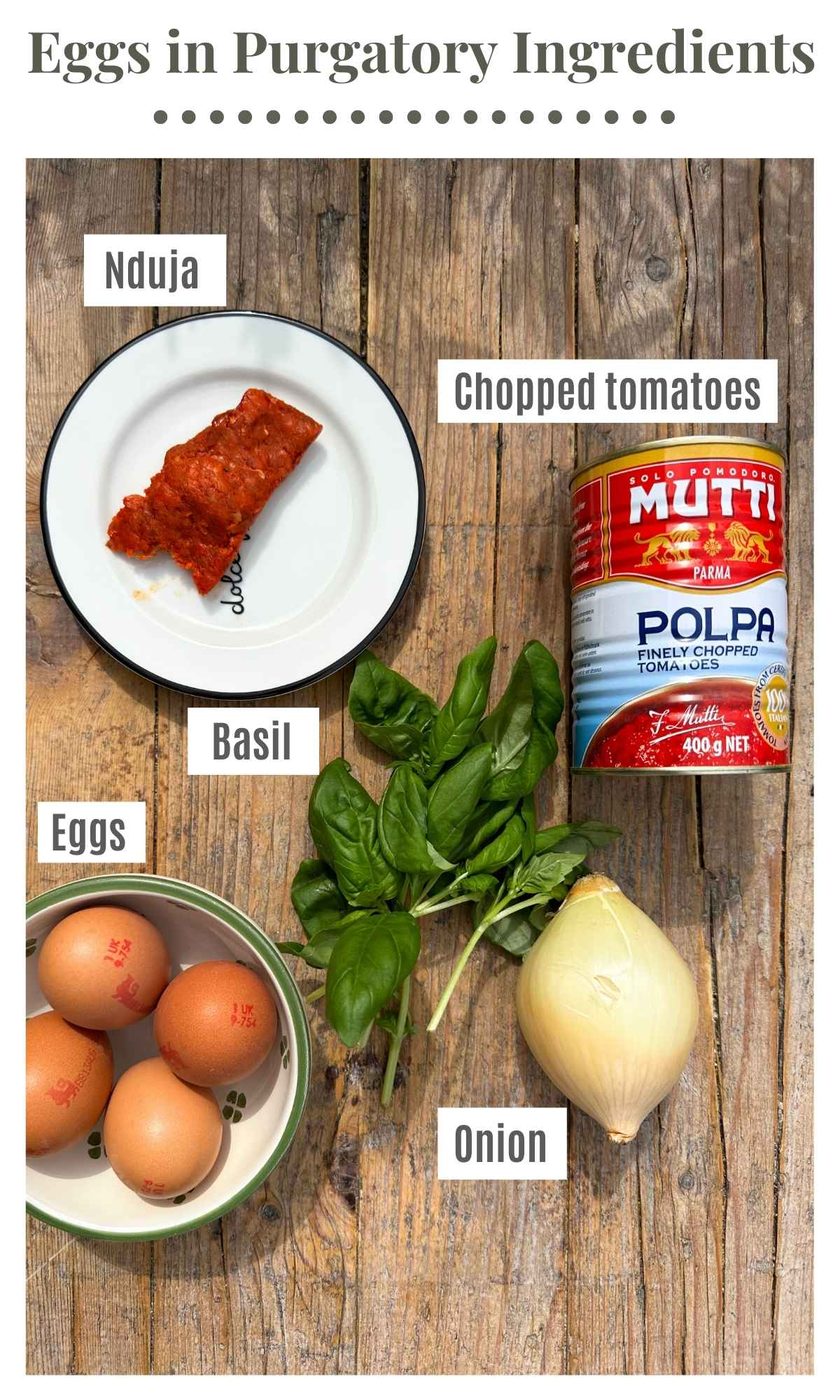
- Tomatoes – we use crushed tomatoes, in particular Mutti Polpa, which is finely crushed and good quality, plum tomatoes would also work well. you could use passata (tomato puree US), although that will give you a stronger and richer flavour.
- White or brown onion – we love the sweetness of using a white onion but a brown onion works as well and we tend to use what we have at the time.
- Basil – fresh basil is a must; we don't recommend using dried here.
- Nduja – if you can't find Nduja, you could use one spicy Italian sausage, salami or replace it with fresh or dried chilli. If you want to keep it simple, omit it altogether.
Tips for perfectly cooked eggs
One thing we don't enjoy when it comes to eggs in purgatory is an undercooked egg white, and to be honest, it's a common issue with so many recipes.
By the time the egg white is properly cooked, the yolks are overdone, which is also a massive disappointment.
We tested this recipe countless times to make sure the eggs are perfectly cooked, with no jiggly white and perfectly cooked runny yolks.
Our top tips? Cook on a medium-low heat, cover with a lid and use a timer to make sure you time the eggs accurately (it's so easy to forget about them and overcook).
How to make it (visual walk-through)
Step 1 – saute the onion until soft and translucent (5-6 minutes), then add the Nduja and cook until soft (photos 1 and 2).
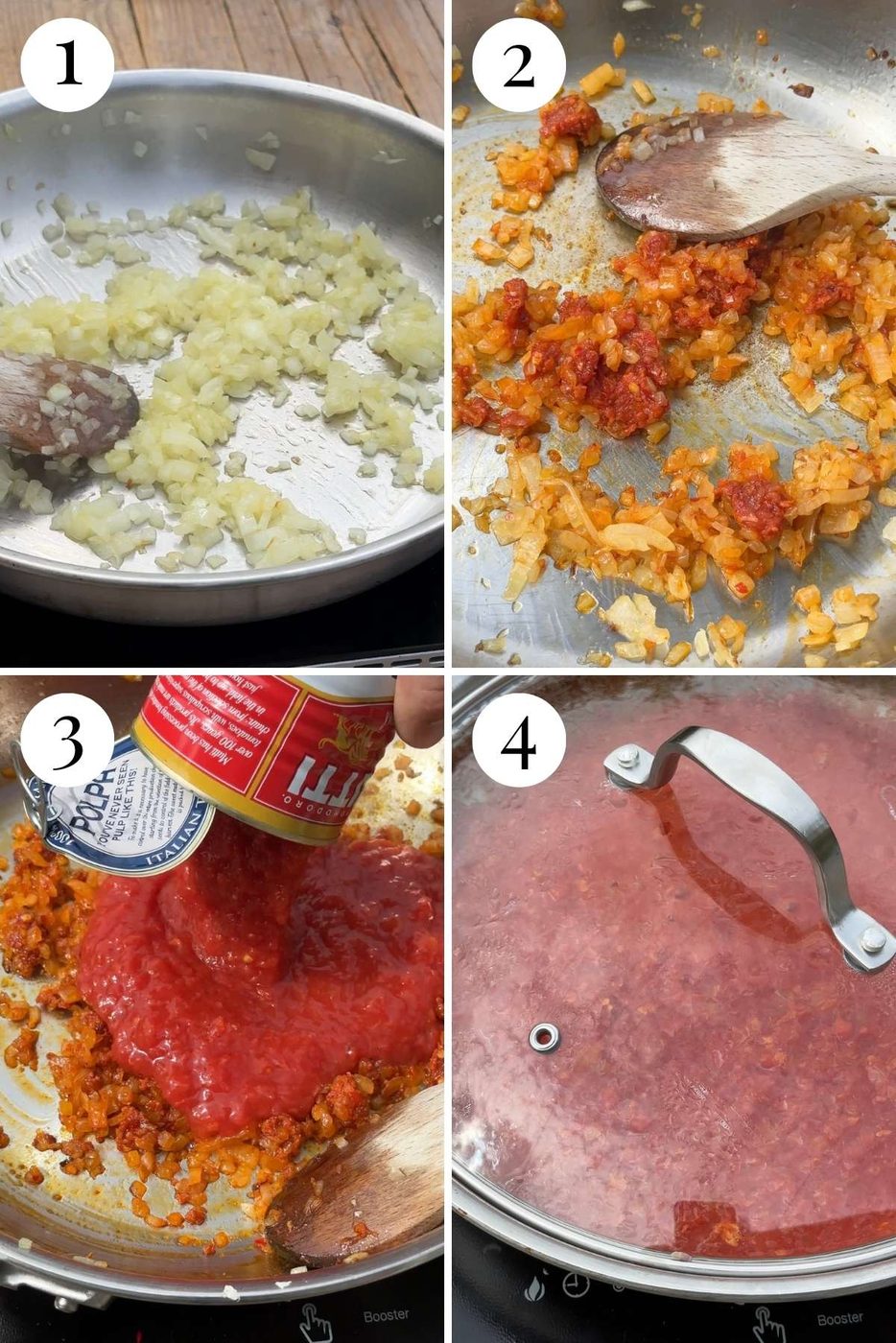
Step 2 – add the tomatoes, basil, salt and pepper and cook uncovered for 5 minutes then covered for another 5 minutes (photos 3 and 4).
Step 3 – make 4 wells in the sauce and add an egg into each well. Reduce the heat to medium-low and cover with a lid. Cook for 4 minutes then remove from the heat, keeping the lid on and let it sit for another 1 minute (photos 5-7).
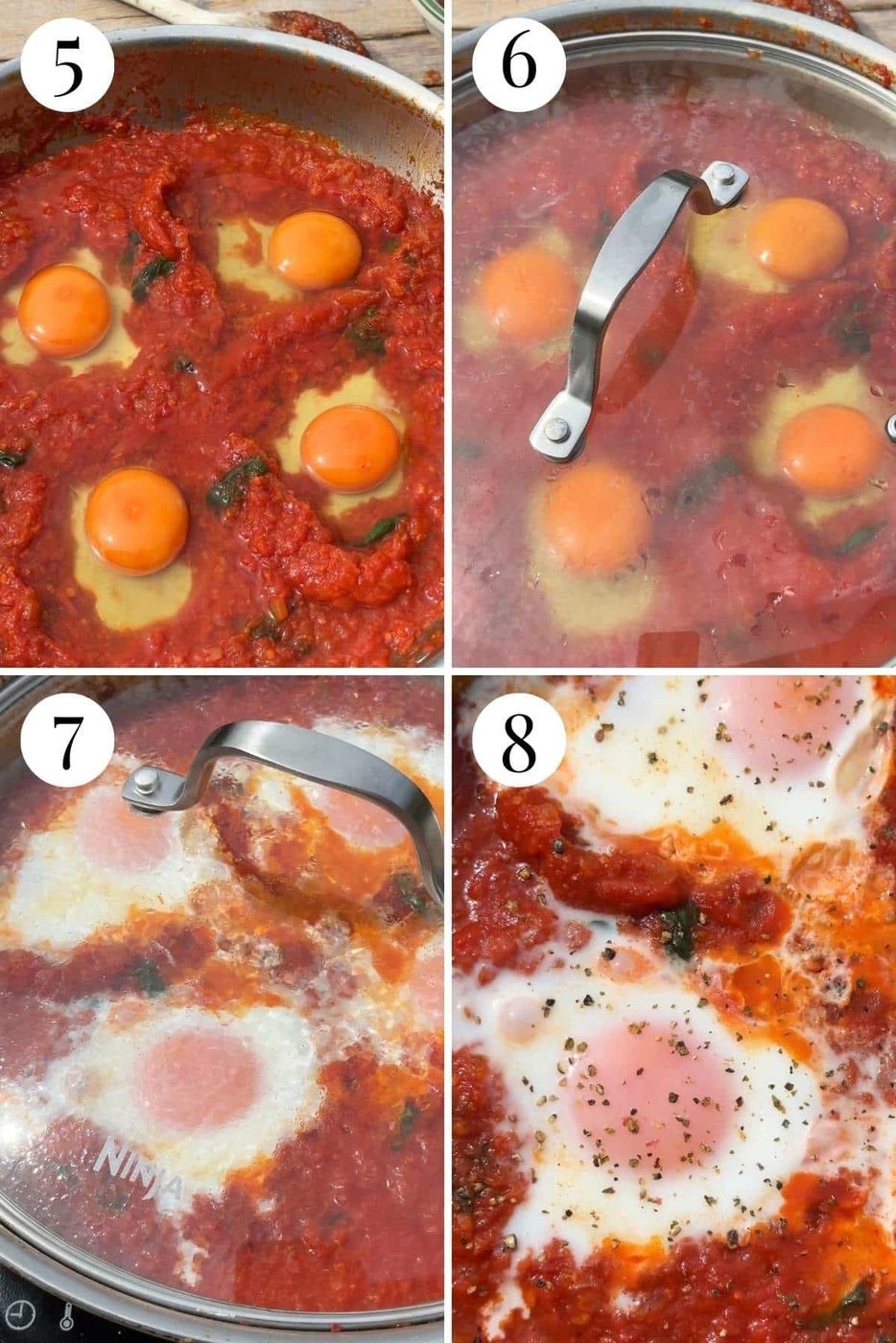
Step 4 – uncover and sprinkle a pinch of salt and pepper on top of each egg yolk. Serve with crusty bread (photo 8).
Swaps
- Add garlic – we will often add some fresh garlic with the onion if we feel like it, it's good!
- Olives and capers – these are good additions and add a lot of umami flavour.
- Italian sausage – brown it with the onion; this is great if you're looking to make the dish more substantial.
- Parmigiano or Pecorino Romano cheese – either of these cheeses, grated on top for serving, is so good.
Recipe tips and FAQs
Use fresh eggs – fresh, free-range eggs make all the difference. They'll poach better in the sauce and, of course, taste better.
Nduja spice level – We've found that Nduja can vary in spice level depending on what brand we buy. We have used 1oz (30g) of Nduja, which gave us a good amount of heat without it being overpowering. Of course, everyone has their own tolerance, so you can add more or less to taste.
Easy way to add the eggs to the sauce – We find it easier to crack the eggs individually into a small ramekin and pour them gently, one at a time, into the wells in the sauce. Some people also find using a soup ladle useful.
Eggs in purgatory Vs ShakshukaThey are both similar dishes, but shakshuka is a Middle Eastern recipe usually made with the addition of bell peppers, cumin, paprika and cayenne pepper.
Why is it called eggs in purgatory?The name of this recipe is thought to be inspired by Dante's image of purgatory in The Divine Comedy, written in the 14th century. The fiery red sauce is said to represent the inferno (Hell), and the eggs represent the white souls climbing the mountain, shedding their sins before entering Heaven.
More Italian breakfast recipes to try
Italian breakfasts are usually always sweet (pastries, cakes, cookies etc), so we've included a couple of savoury options for you to try, plus a couple of traditional sweet ones.

Breakfast
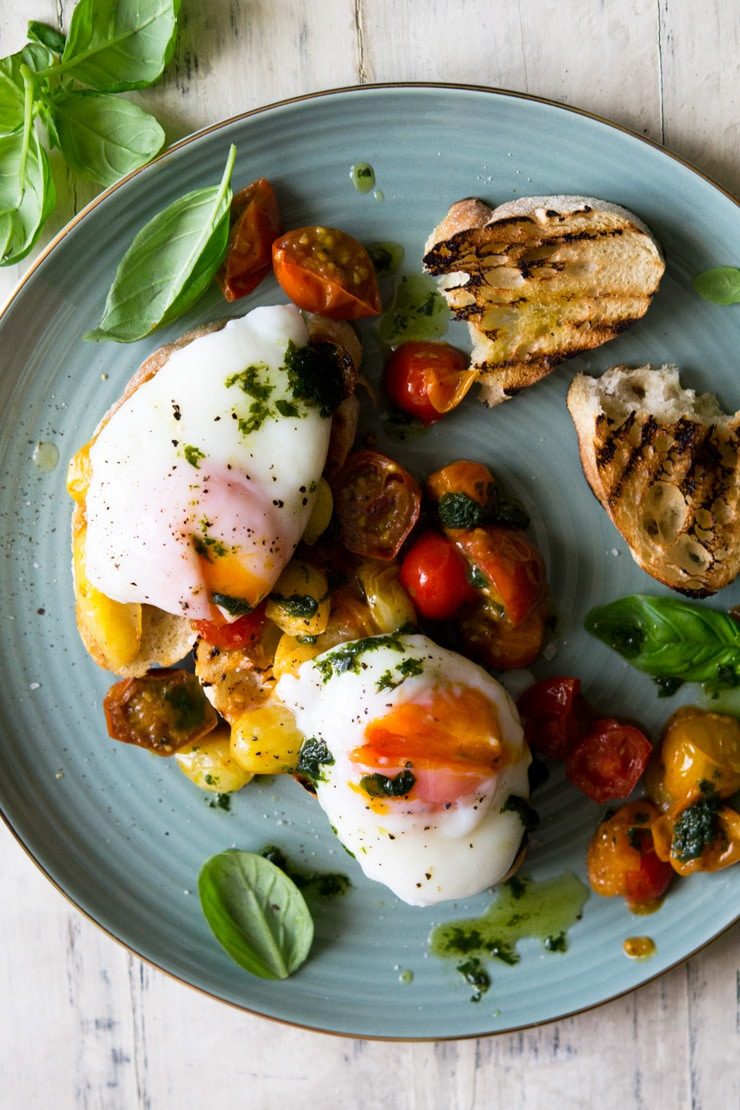
Sauteed Tomato Breakfast Crostini With Poached Eggs

Breakfast
Pane Frattau (Sardinian Bread with Tomato and Poached Egg)

Breakfast
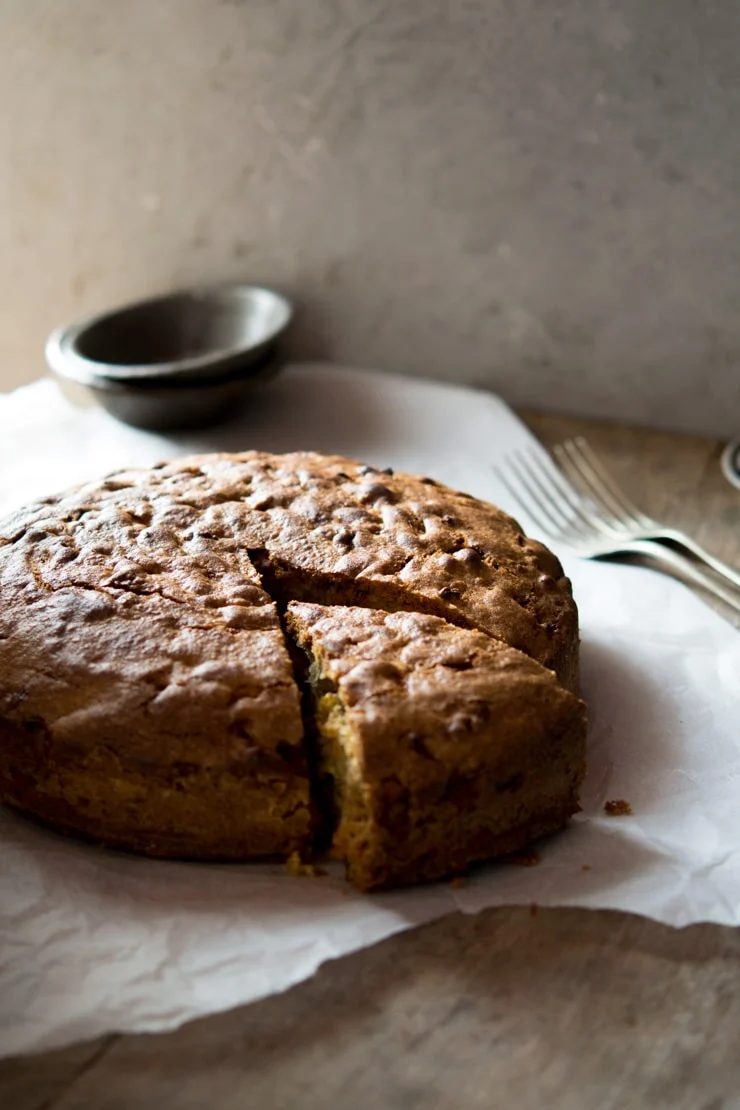
Italian Breakfast Bundt Cake – Ciambella Allo Yogurt

Italian Desserts