
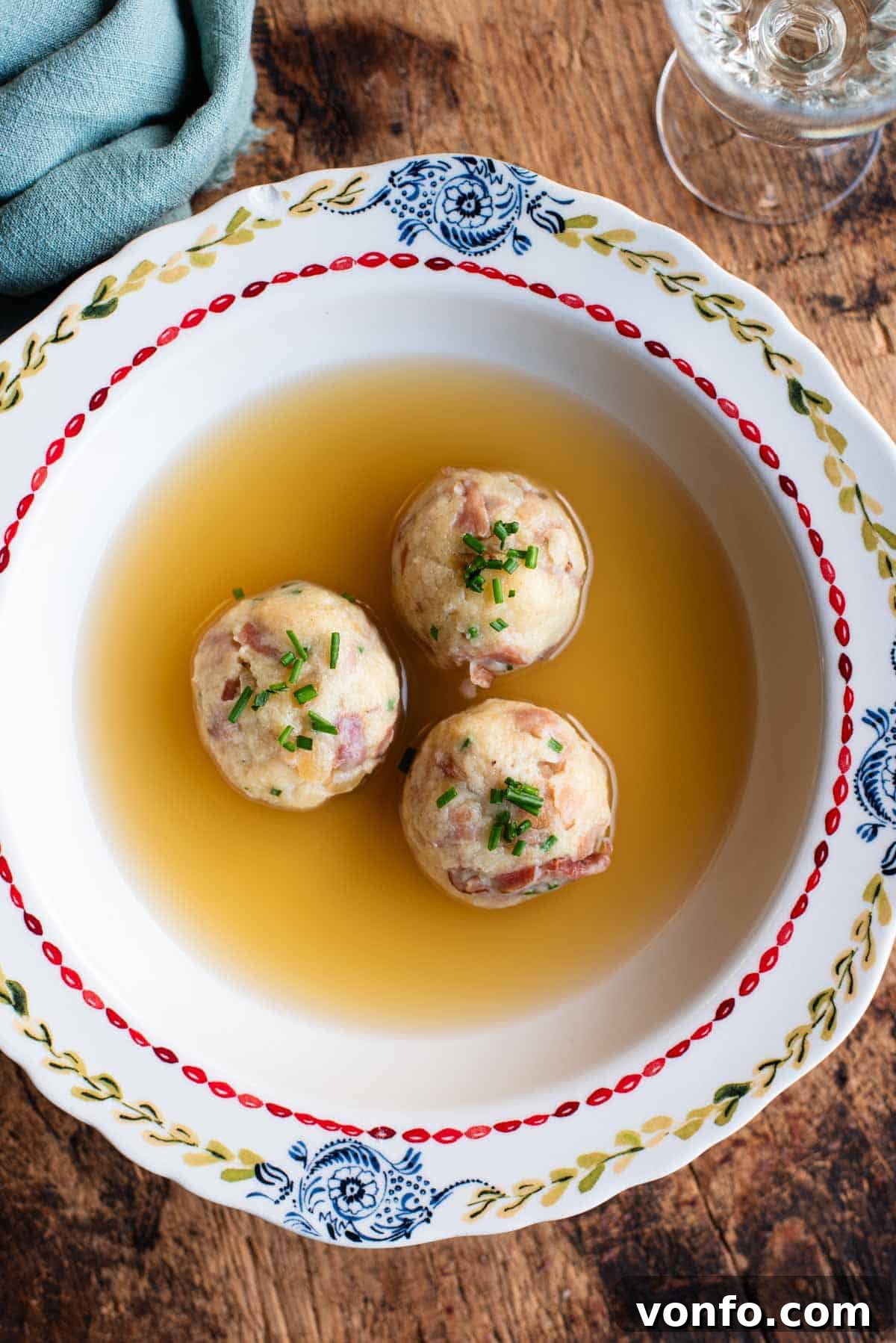
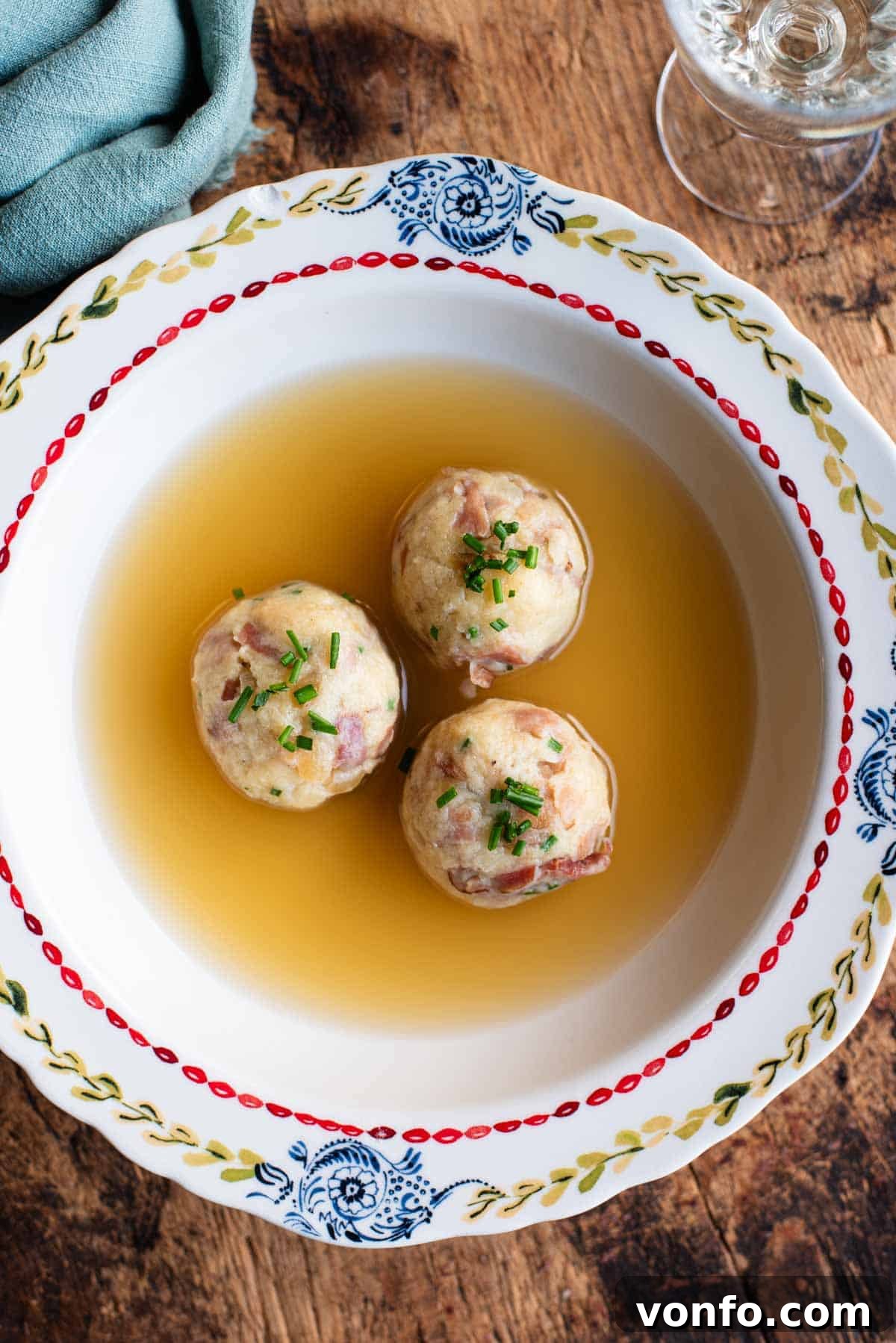
Canederli are a true culinary gem, offering a heartwarming taste of northern Italy. These delectable bread dumplings, enriched with savory speck, aromatic onion, and fresh chives, are traditionally served bathed in a robust and comforting meat broth. This recipe not only promises an incredibly delicious meal but also provides the perfect, resourceful way to transform stale bread into a culinary masterpiece. Embrace the tradition of “Cucina Povera” – turning humble ingredients into nourishing and utterly delightful dishes.
Canederli: A Culinary Journey to Trentino-Alto Adige
Canederli, often recognized as Knödel in German-speaking regions, are a staple in the captivating northeast Italian region of Trentino-Alto Adige. This stunning Alpine territory boasts a unique and rich culinary heritage, profoundly shaped by its geographical proximity and historical ties to neighboring Austria and Switzerland. The fusion of Italian and Central European influences creates a distinctive flavor profile that sets Canederli apart.
The essence of Canederli lies in its simplicity and ingenuity. Historically, it emerged from the necessity to utilize leftover ingredients, particularly stale bread, ensuring nothing went to waste. This philosophy is deeply embedded in the “Cucina Povera” tradition, where resourceful cooks transformed readily available, simple ingredients into extraordinarily flavorful and satisfying meals. Canederli perfectly embodies this ethos, proving that elegance and deliciousness can indeed come from the humblest of beginnings.
While there are several delightful variations of Canederli, the most celebrated and traditional form incorporates speck. This exquisite smoked prosciutto is famously produced in the Trentino-Alto Adige region, lending an unparalleled depth of smoky, savory flavor to the dumplings. The choice of speck is paramount, as its distinct character elevates the entire dish, setting it apart from other bread dumplings.
Fresh herbs are another crucial component, adding a vibrant freshness that balances the richness of the speck and broth. Chives are a popular and beloved addition, imparting a delicate oniony zest that I particularly adore in this recipe. Alternatively, flat-leaf parsley is also a common choice, offering a slightly peppery, fresh note. Both herbs contribute significantly to the authentic taste and aroma of these traditional Italian dumplings.
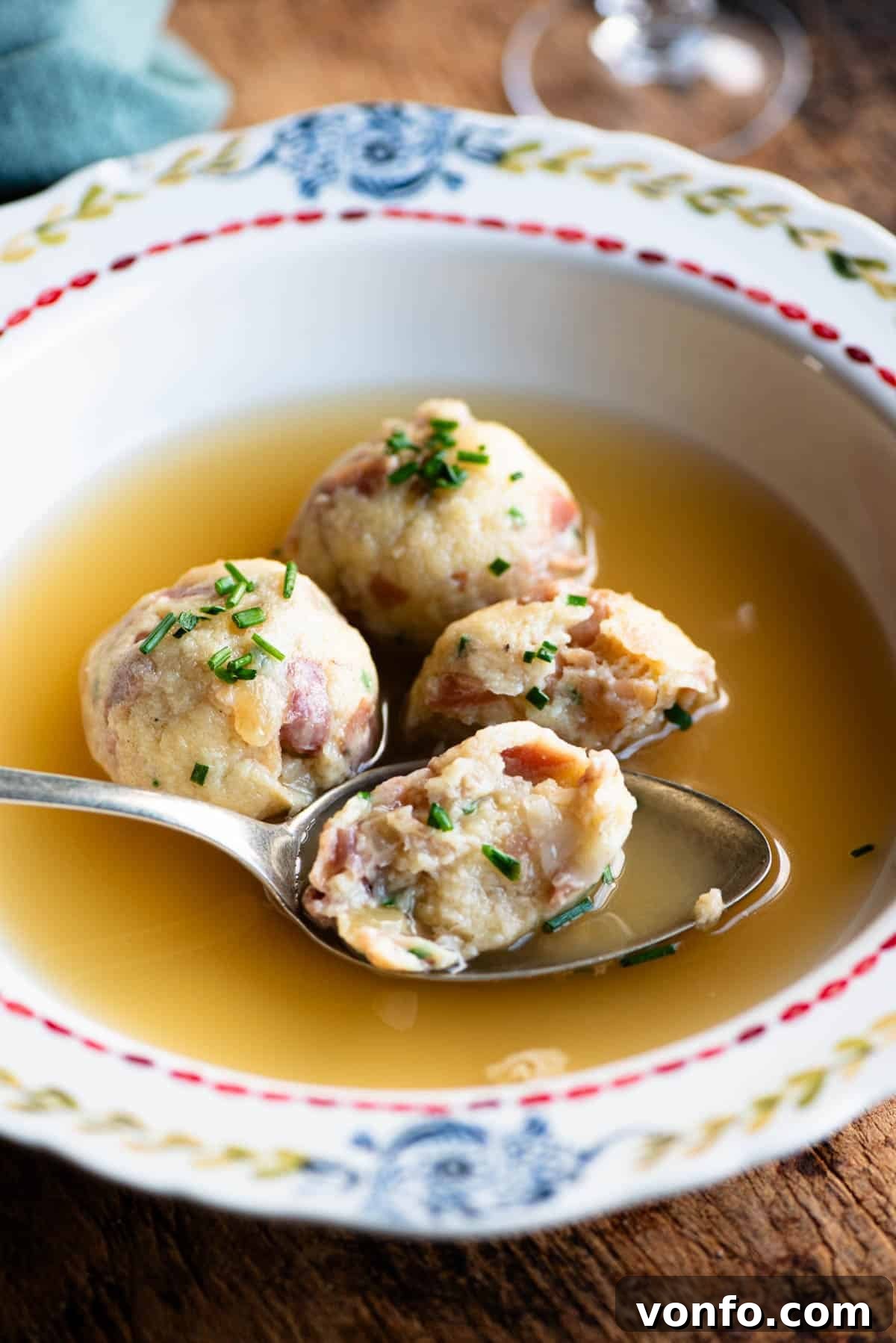
Canederli offers versatile serving options. The most traditional and perhaps most comforting way to enjoy them is in a fragrant brodo (meat broth). This presentation is especially cherished on chilly winter days, providing a warming and soul-satisfying experience. However, for a lighter yet equally flavorful alternative, Canederli can be served simply with a sage and butter sauce, a preparation reminiscent of other Italian pasta or gnocchi dishes.
I truly hope you relish this journey into the heart of Trentino-Alto Adige cuisine. This Canederli recipe is more than just food; it’s a celebration of tradition, resourcefulness, and the sheer joy of transforming simple elements into something truly extraordinary. Buon Appetito!
Ingredients for Authentic Canederli
Crafting perfect Canederli begins with selecting the right ingredients. Each component plays a vital role in achieving that authentic, comforting flavor.
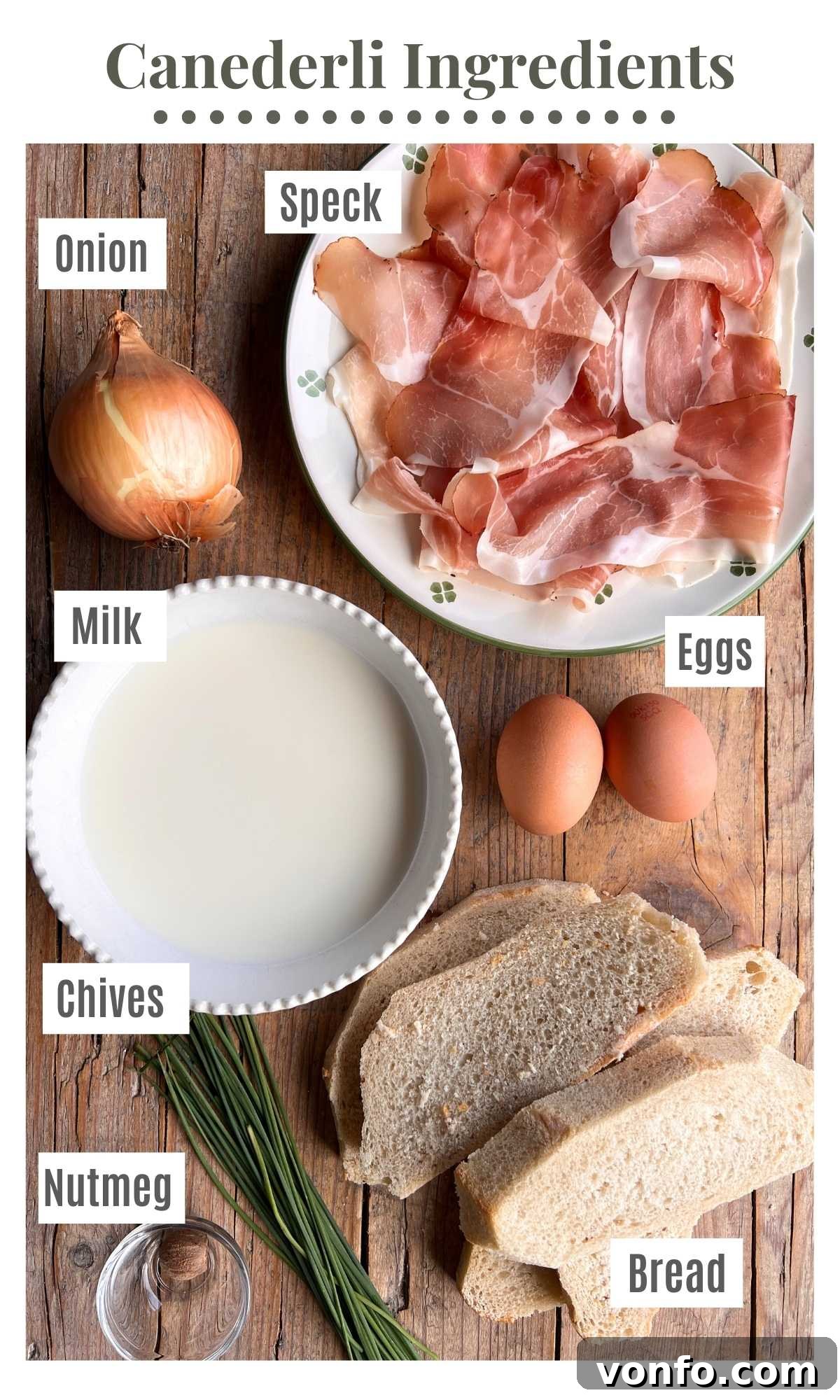
Ingredient Notes and Substitutions for Canederli
- Speck – The cornerstone of authentic Canederli, speck is a dry-cured, lightly smoked ham from the Alto Adige region, boasting a distinctive smoky and robust flavor profile. Traditionally, it’s minced or cut into small cubes from a thicker slice. For convenience and wider availability, I find thinly sliced speck, cut into small pieces, works beautifully and is easier to manage. While prosciutto can be used as a substitute, be aware that it lacks the signature smoky depth that makes speck so unique and delicious in this dish. If using prosciutto, consider adding a tiny pinch of smoked paprika for a hint of smokiness.
- What bread to use – The success of your Canederli heavily relies on the bread. You absolutely must use stale, crusty bread. Think day-old artisan bread, a good baguette, or a rustic country loaf. Avoid soft sandwich bread, as it will result in mushy dumplings. Stale bread absorbs the milk and eggs without becoming soggy, providing the necessary structure and texture. Always remove the crusts, as they can be too tough and alter the dumpling’s consistency. If your bread isn’t quite stale enough, you might need to slightly reduce the amount of milk to achieve the correct mixture consistency. To quickly stale bread, cut it into cubes and leave it exposed to air for a few hours, or lightly toast it in the oven.
- Herbs (Chives or Parsley) – Chives are my preferred choice for their delicate oniony flavor, which beautifully complements the richness of the speck. They add a fresh, vibrant touch that brightens the dish. However, if chives are unavailable or not to your taste, flat-leaf parsley is another traditional and excellent alternative. Parsley offers a fresh, slightly peppery herbaceousness that also works wonderfully. Feel free to use a combination of both for a more complex herbal note.
- Eggs and Milk – These are the essential binders that hold the bread dumplings together. Whole milk is recommended for its richness, contributing to a tender interior. The eggs provide structure, ensuring the Canederli don’t fall apart during cooking.
- All-Purpose Flour – A small amount of flour is added to the mixture to help bind the ingredients further and create the perfect dumpling texture. Extra flour is also used for dusting the formed dumplings, which prevents sticking and helps them maintain their shape in the broth.
- Nutmeg and Salt – A pinch of freshly grated nutmeg adds a warm, subtly sweet spice that is traditional in many Alpine dishes and pairs wonderfully with speck. Salt is crucial for seasoning the mixture properly, enhancing all the other flavors.
- Olive Oil – Used for sautéing the onion and speck, providing a flavorful base.
- Broth – A high-quality meat broth (brodo di carne) is paramount for serving Canederli. It provides the warming, comforting liquid in which the dumplings are cooked and served. Homemade broth is always best, but a good quality store-bought broth can also work.
Visual Walk-Through: Crafting Your Canederli Step-by-Step
Follow these detailed steps to create your own batch of delicious Canederli. Each stage is crucial for achieving the perfect texture and flavor.
- Prepare and Soak the Bread – Begin by cutting your stale, crusty bread into small, uniform cubes, ensuring all crusts have been removed. Place these bread cubes into a large mixing bowl. In a separate bowl, whisk together the eggs and milk thoroughly until well combined. Pour this egg and milk mixture over the bread cubes, making sure every piece of bread is moistened. Gently mix to ensure no dry spots remain. Set the bowl aside and allow the bread to soak for at least 10-15 minutes. This step is crucial for the bread to fully absorb the liquid and soften sufficiently, which is key to tender dumplings. (See photos 1-3 for visual guidance).
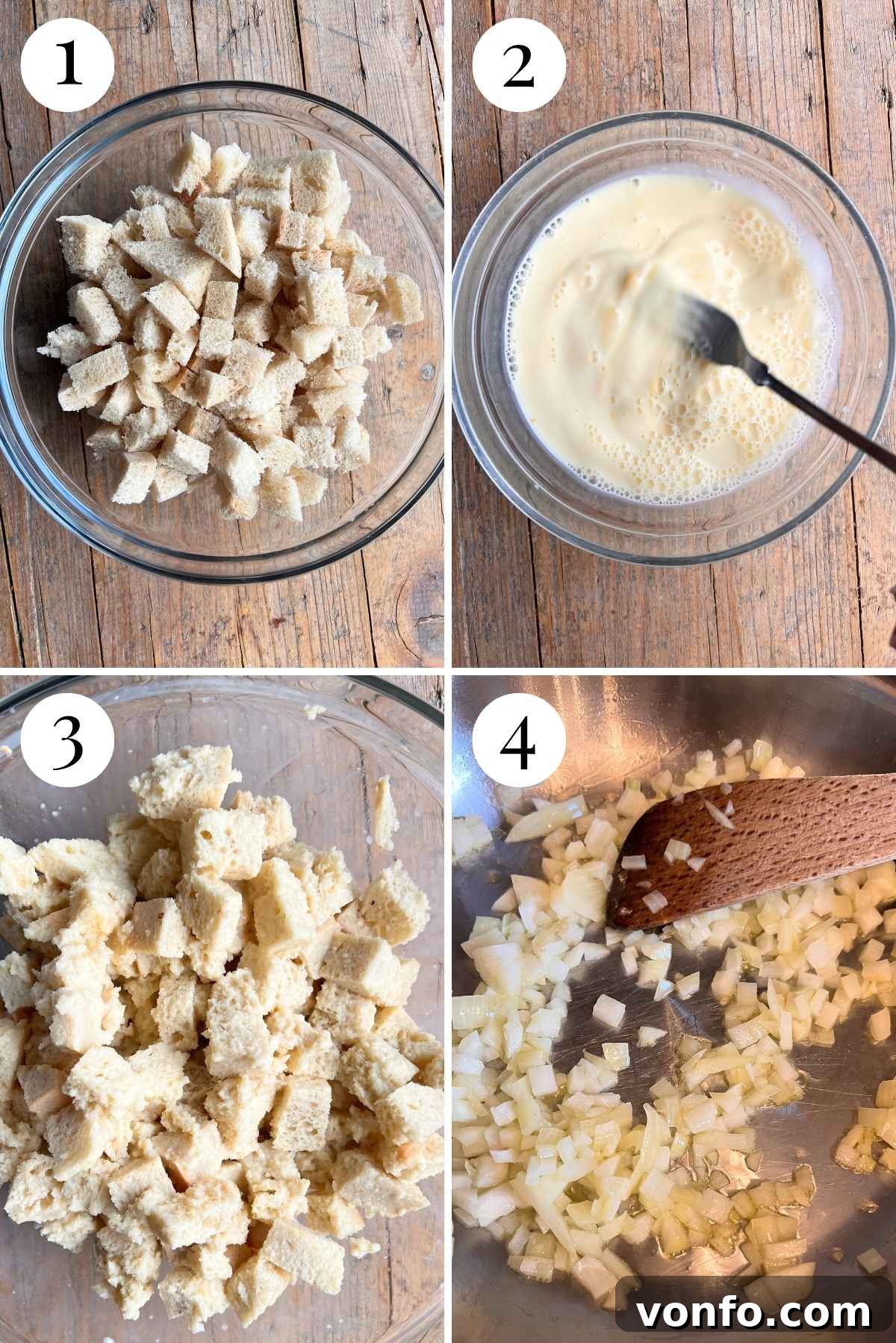
- Sauté the Onion and Speck – While the bread soaks, finely chop the onion and speck into small, consistent pieces. Heat a drizzle of olive oil in a pan over medium heat. Add the chopped onion and sauté gently until it becomes soft, translucent, and slightly caramelized, usually about 5-7 minutes. Once the onion is tender, add the finely chopped speck to the pan. Cook for another 2-3 minutes, allowing the speck to render some of its fat and become fragrant, releasing its rich smoky aroma. Remove the pan from the heat and let the mixture cool for at least 5 minutes before adding it to the bread. This cooling step prevents the eggs in the bread mixture from cooking prematurely. (See photos 4-6 for visual guidance).
- Combine All Ingredients – Once the speck and onion mixture has cooled sufficiently, add it to the bowl with the soaked bread. Sprinkle in the finely chopped chives, a generous pinch of salt (adjust to taste, as speck can be quite salty), and a pinch of freshly grated nutmeg. Add the all-purpose flour. Using your hands, mix everything together thoroughly until all ingredients are well combined and a cohesive, pliable dough forms. Be gentle, but ensure all components are evenly distributed. The mixture should be firm enough to shape but still moist. (See photo 7 for visual guidance on mixing).
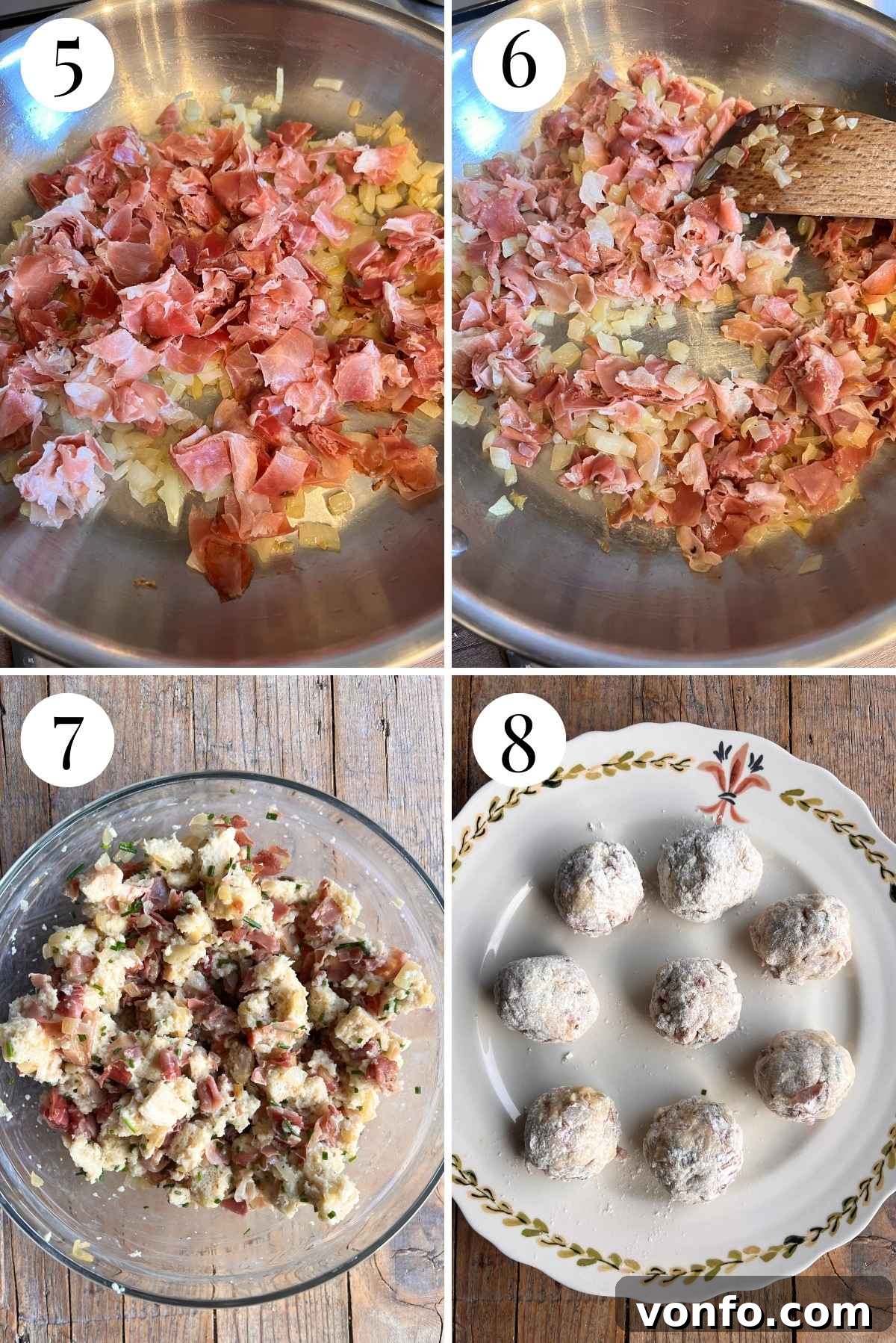
- Shape and Poach the Dumplings – Lightly dampen your hands with water to prevent the mixture from sticking. Take a portion of the Canederli dough and roll it between your palms to form golf ball-sized spheres. Aim for uniform size to ensure even cooking. If the mixture feels too sticky and hard to shape, add a tablespoon of flour at a time until you reach the right consistency (you should get approximately 22 dumplings from this recipe). Just before cooking, roll each shaped dumpling in a little extra flour, gently shaking off any excess. This light dusting helps the dumplings maintain their shape and prevents them from disintegrating in the broth. Carefully drop the floured dumplings into simmering (not boiling) meat broth. Poach them for about 5 minutes, or until they float to the surface and are cooked through. (See photo 8 for shaping and cooking).
- Serve Immediately – Using a slotted spoon, carefully transfer the cooked Canederli dumplings into individual serving bowls. Ladle 1-2 generous servings of the warm, rich broth over the dumplings. For a main course, I typically serve 3-4 dumplings per person, adjusting according to appetite. Garnish with a sprinkle of fresh chives or parsley, and perhaps a grating of Parmigiano Reggiano for an extra touch of flavor.
More Delicious Italian Recipes to Explore
Gnocchi
Strangolapreti (Bread and Spinach Dumplings)
Gnocchi
Beetroot Ricotta Gnudi in Sage & Butter
Sauces & Dressings
Sugo Finto (Vegetable Sauce)
Pasta
Pasta alle Sette P (Seven P’s Pasta)
Canederli in Brodo (Italian Dumplings in Broth)
By Emily
Print Recipe
Canederli are delicious and comforting bread dumplings from the north of Italy. They’re made with speck (smoked prosciutto), onion and chives and served in a rich and warming meat broth. This recipe is incredibly delicious and the perfect way to use up stale bread.
Ingredients
- 300 g (10.5 oz) stale crusty bread, crusts removed
- 150 g (5 oz) speck, slices cut into small pieces
- 1 onion, finely chopped
- 2 eggs
- 240 ml (1 cup) whole milk
- 2 tablespoons chives, finely chopped
- A pinch of nutmeg
- 30 g (1/4 cup) all-purpose flour, plus extra for dusting
- Salt, to taste
- Olive oil, for sautéing
- 1 batch brodo di carne, or broth of choice
Instructions
- Cut stale bread into small cubes and place in a large mixing bowl. In a separate bowl, whisk the eggs and milk together with a fork. Add the egg mixture to the bread, stirring to make sure no dry bread remains then set aside for 10-15 minutes to soak.
- Finely chop the onion and speck. Add a drizzle of olive oil to a pan on a medium heat and sauté the onion until soft and translucent. Once soft, add the speck and cook for a further 2-3 minutes until fragrant. Let the mixture cool for about 5 minutes.
- Once cooled, add the speck and onions to the soaked bread mixture, along with the finely chopped chives, a pinch of salt, and nutmeg. Add the flour and mix everything together thoroughly until combined and a cohesive dough forms.
- Using damp hands, shape a piece of the dumpling mixture into golf ball-sized balls. If the mixture is too sticky, add more flour 1 tablespoon at a time until you can easily shape them into balls (you should have around 22 dumplings). Damp hands help prevent the mixture from sticking to your hands (you might need to re-dampen your hands halfway through shaping).
- Bring your chosen broth up to a gentle simmer (do not boil rapidly). Just before you’re ready to cook them, roll each dumpling lightly in flour, shaking off any excess.
- Carefully drop the floured dumplings into the simmering broth. Cook for about 5 minutes, or until they float to the surface and are cooked through.
- Serve the Canederli dumplings immediately in bowls with 1-2 ladles of broth. I recommend serving 3-4 dumplings per person for a satisfying meal.
Alternative Serving Option
- You can also cook the Canederli in either broth or lightly salted water, then serve them tossed in a simple sauce such as brown butter and sage, much like you would with Gnudi or other fresh pasta.
Notes
Our Top Canederli Recipe Tips
- Speck Preparation – Traditionally, a thick piece of speck is finely minced or chopped for Canederli. You can certainly opt for this method if you prefer. For convenience, thin slices cut into small pieces work just as well. Prosciutto can be used if speck is unavailable, but be aware of the flavor difference.
- Prepping in Advance – You can prepare the Canederli dough and shape the dumplings up to 24 hours in advance. However, it is crucial that you DO NOT roll them in flour until just before cooking. Store the un-floured dumplings on a lightly floured tray, covered with plastic wrap, in the refrigerator. This prevents them from becoming too soggy or falling apart.
- Variations – Explore different flavors! Flat-leaf parsley makes a fantastic substitute for chives, or you can use a mix of both. For an even richer dumpling, consider adding cheese. Grated Parmigiano Reggiano can be mixed into the dough, or you can add small cubes of cheese like Fontal, Gruyère, or local Alpine cheeses for delightful pockets of melted goodness.
- Serving Sizes – For a light lunch or a starter, aim for 3 dumplings per person. If serving as a main course, 4-5 dumplings per person typically make a hearty and satisfying meal.
Helpful Info for All Recipes
- I always use extra virgin olive oil in all of my recipes unless stated otherwise, for its superior flavor and quality.
- When using canned or jarred tomatoes, I consistently recommend Cirio or Mutti brands for the best flavor and texture in your dishes.
- All vegetables listed in my recipes are assumed to be medium-sized unless specifically stated otherwise.
- All recipes featured on this blog are meticulously tested and developed using a fan (convection) oven, so cooking times may vary slightly with conventional ovens.
- Find out more about how nutrition is calculated.
- Check out our must-have Italian Pantry Staples for stocking your kitchen.
- You can also find all our Essential Kitchen Tools for Italian Cooking to equip your culinary space.
Nutrition Information (per dumpling, approximate)
| Carbohydrates: 8g
| Protein: 4g
| Fat: 4g
| Saturated Fat: 1g
| Polyunsaturated Fat: 1g
| Monounsaturated Fat: 1g
| Trans Fat: 0.01g
| Cholesterol: 21mg
| Sodium: 222mg
| Potassium: 152mg
| Fiber: 0.4g
| Sugar: 1g
| Vitamin A: 54IU
| Vitamin C: 1mg
| Calcium: 24mg
| Iron: 1mg
Nutrition information is automatically calculated and should only be used as an approximation. Actual values may vary based on specific ingredients and preparation methods.
If you’ve tried this Canederli recipe or any other recipe on the blog, please feel free to leave a comment below to let me know how you enjoyed it! I love hearing from you. You can also follow us on Facebook, Instagram, and Pinterest or sign up to our Newsletter to discover more of our delicious Italian food. Your feedback and engagement mean a lot!