Risotto al Limone, Lemon Risotto
- Makes 4 servings
- Prep 5 minutes
- Cook 40 minutes
- Total 45 minutes

Fresh and vibrant lemon risotto that's simple and full of good flavour. This recipe is solid when you're craving something fresh and light yet satisfying enough to fill you up. It's easy to make and has the most good creamy texture (without the cream).
Risotto al Limone or lemon risotto is such a comforting yet fresh and zingy dish, two things we love about our Pasta al Limone recipe too!
We love making this when the days start to become longer and we're coming into spring and summer, those days where we start to crave more freshness.
Risotto has a wonderfully creamy texture all on its own thanks to the starch that's released from the rice. We also add butter in at the end, which is called 'mantecatura' in Italian.
This process of stirring cold butter into the starchy warm rice creates the most good, silky and glossy texture in risotto without adding any cream.
The richness of the risotto with the zingy fresh lemon is good and we hope you enjoy it as much as we do. See the full recipe below plus our top tips and variations to try!
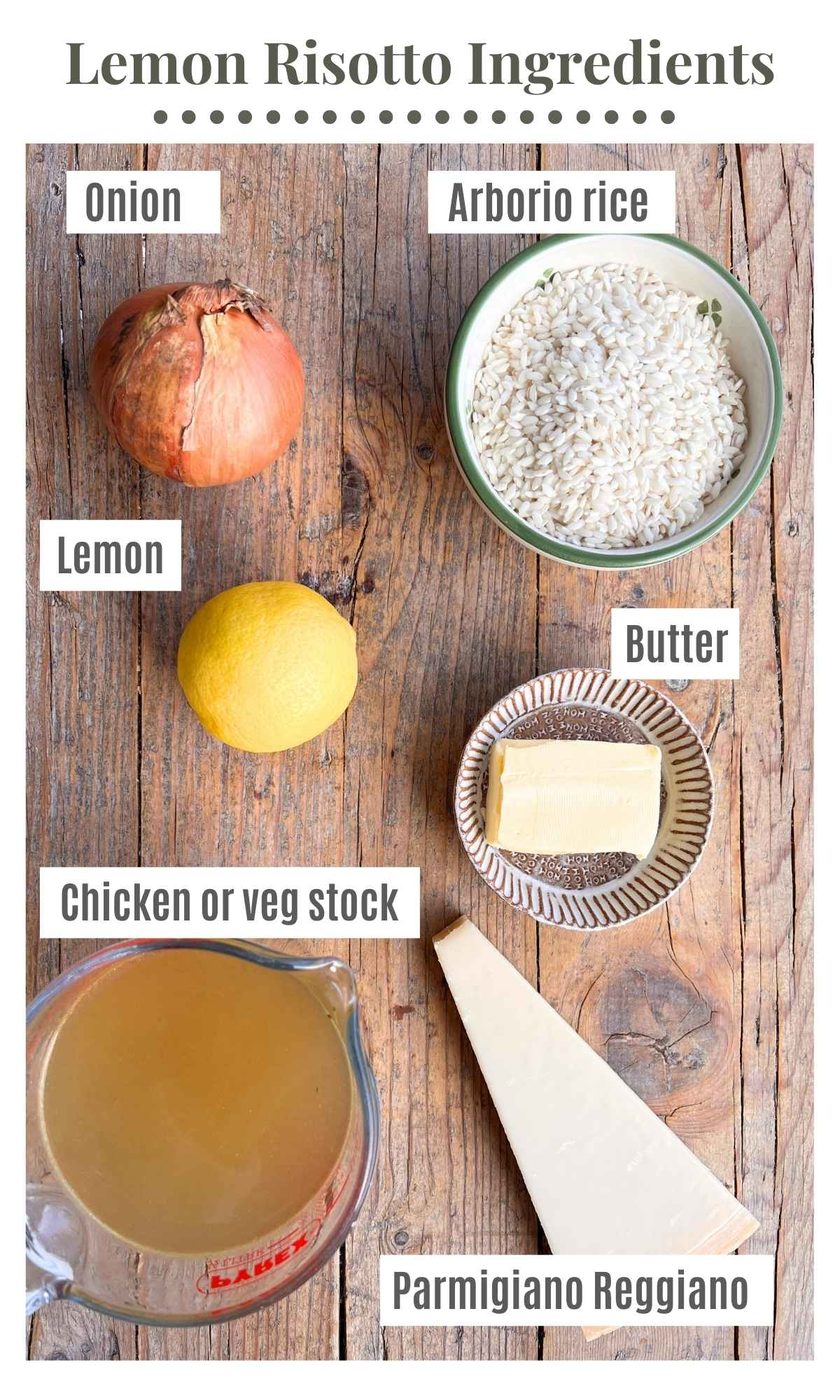
Ingredient notes and substitutions
- Risotto rice – there are 3 main types of risotto rice you can use; Arborio, Carnaroli or Vialone Nano (although the latter is a little harder to come by). Any of those rice types are fine to use make sure you don't use long grain or another rice that's not intended for risotto, as there's not enough starch in them to give you that wonderful creamy texture.
- Onion – you can use white or brown onion or shallots would work well.
- Lemon – use an unwaxed, preferably organic lemon as we're using both the zest and juice. If you're lucky enough to get your hands on an Amalfi lemon the risotto will be extra good!
- Chicken or veg stock – We tend to use vegetable stock but we have used chicken stock a few times and it's as good. We recommend using low sodium so you can control how much salt is added.
- Parmigiano Reggiano – you can choose to add Pecorino Romano instead or leave out the cheese altogether.
Step by step photos and instructions
See our step-by-step photos below to give you a visual representation of the recipe. The full written recipe with our top tips can be found in the recipe card below.
Saute the onion – Saute the finely chopped onion in some olive oil. do this on a medium heat so the onion softens without browning (5-10 minutes) photo 1.
Add the rice – next, add the rice and stir it so it's coated in all the oils and flavour from the onion (photo 2).
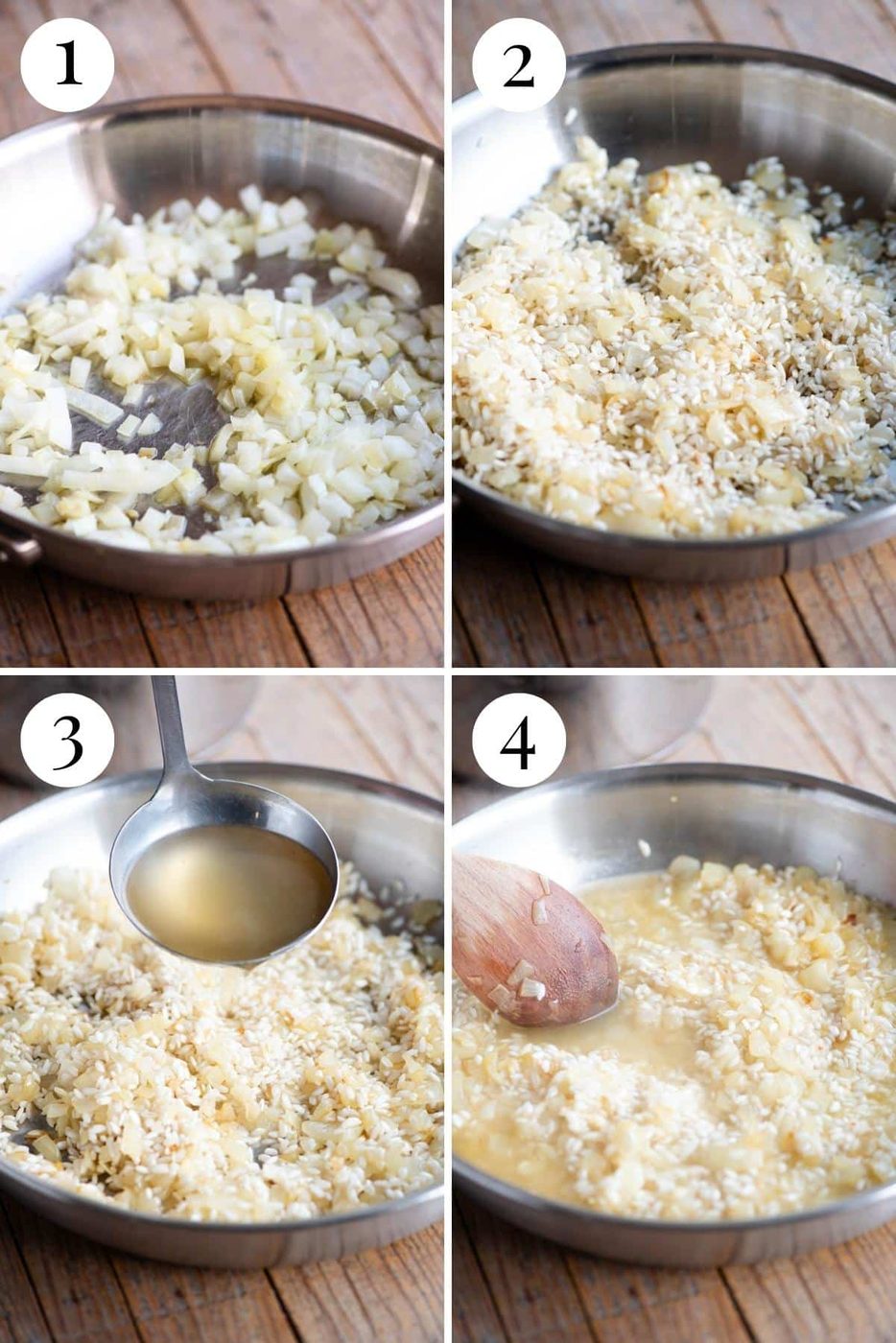
Add the stock – add the stock to the risotto 1-2 ladlefuls at a time, letting the stock absorb before adding more. stir the risotto often (do this until all the stock is used up, about 20 minutes) photos 3 and 4.
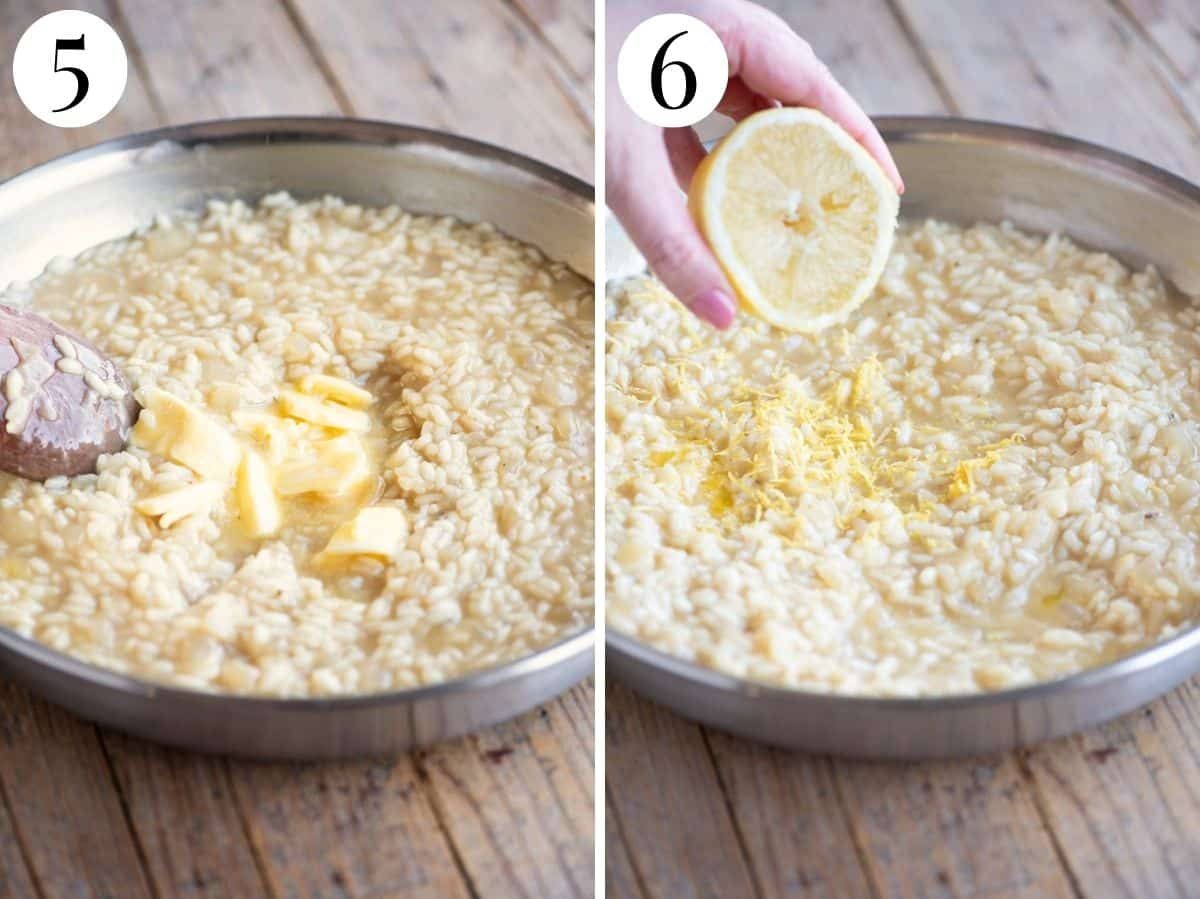
Add butter – when the rice is cooked, turn off the heat and stir in the butter. Once melted, add the lemon juice and zest followed by the Parmigiano Reggiano (photos 5 and 6).
Taste and serve – taste the risotto and add more salt and pepper, lemon juice or Parmigiano to taste then serve in bowls and enjoy!
Swaps
- Add vegetables – to add a bit of colour and extra freshness you could add in some green vegetables if they're in season. Asparagus is a popular option as are leeks and peas. If using leeks we'd omit the onion.
- Add herbs – thyme is a herb that works wonderfully with lemon. Add a little fresh thyme at the end for a more fragrant flavour. fresh basil is also another great option.
- Salmon – flaking some cooked salmon fillet into the risotto is good and something we've done often, you can add it at the end after all the other ingredients have been added.


Mains
Simple Saffron Risotto

Risotto
Pea and Pesto Risotto

Risotto
Taleggio Pumpkin Risotto with Crispy Sage

Risotto
Cacio e Pepe Risotto
Ingredients
Makes 4 servings
- 1 cup (200g) risotto rice (arborio or carnaroli) (200g)
- 4 cups (1 litre) chicken or veg stock (4 cups)
- 1 onion (finely chopped)
- 1 lemon
- 3 tablespoons (45g) unsalted butter
- 2 tablespoons Parmigiano Reggiano
- Olive oil
- Salt and pepper
Method
Add 1-2 tablespoons of olive oil to a large pan on a medium heat. Add the finely chopped onion and saute until soft but not browned (about 5-10 minutes).
Next, add the risotto rice and stir for 1 minute to coat in the oils. Next add 1-2 ladlefuls of stock to the rice and stir it until it's mostly absorbed. Add a good pinch of salt at this point if you are using low-sodium stock.
Continue the process, adding 1-2 ladlefuls of stock at a time and letting it absorb before adding more. By the end of the process, the rice should be cooked through (about 20 minutes).
When you've used up all the stock and the risotto is ready, turn off the heat and add the butter, stir in until melted.
Next, stir in the zest of 1 lemon and the juice of half the lemon. Finally, stir in 1-2 tablespoons of Parmigiano Reggiano or to taste.
Check for seasoning and add more salt as needed.
Tip: Depending on the size and tartness of the lemon you're using you can add more to taste.
Serve in bowl and garnish with either more lemon zest or Parmigiano.
Kitchen notes
- Low sodium stock We recommend using low sodium stock (or homemade) if possible. This helps you stay in control of how much salt is added and we find that regular stock can make risotto overly salty. Add salt at the beginning at cooking then adjust it at the end.
- Lemon juice We always add the juice of half a lemon to begin with and that's usually enough. However, if you're using an Amalfi lemon which is much sweeter you may need to add all of the juice. Start with half, taste it and add it as needed.
- Always use risotto rice don't be tempted to use another type of rice that's not meant for risotto as it won't be starchy enough to get that good creamy texture.
- Adding wine you can add white wine after the rice (about 1/4 cup - 1/3 cup/ 60-80ml) but we chose not to because of the acidity in the lemon.
- Storage and leftovers the risotto is best served immediately. If you are making it in advance or have leftovers make sure the rice cools down quickly by spreading it in a flat, even layer. Store it in the fridge for up to 24 hours and reheat on the stove until piping hot (add more water or stock to loosen it).