
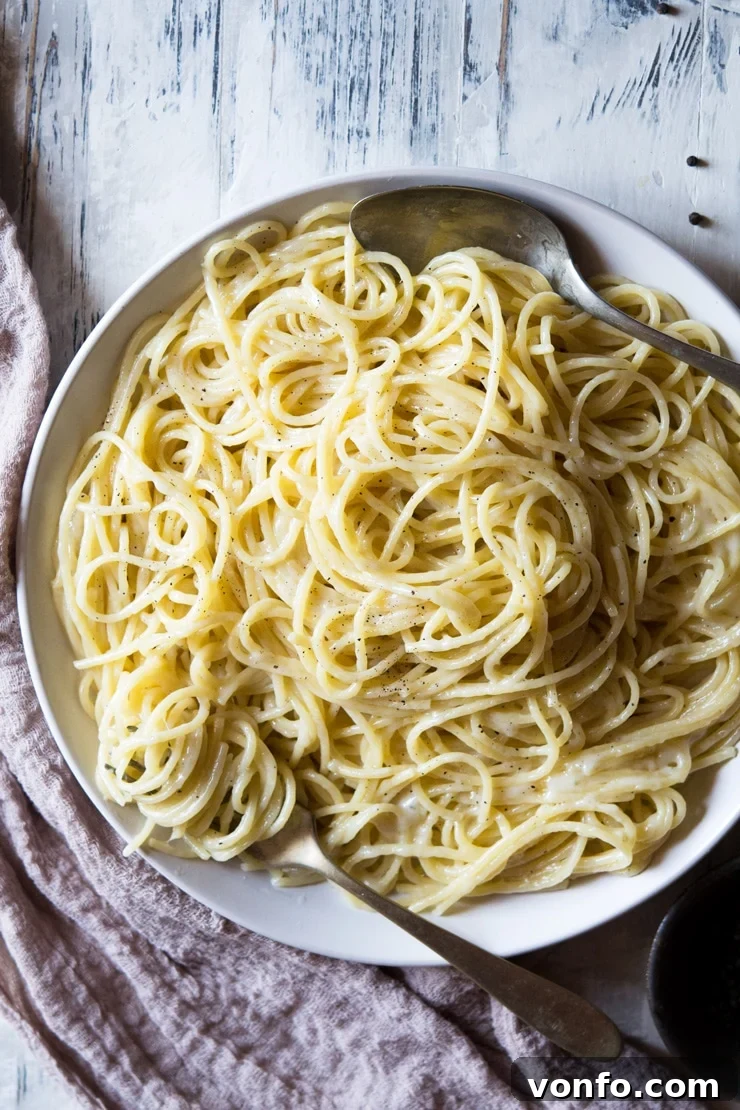
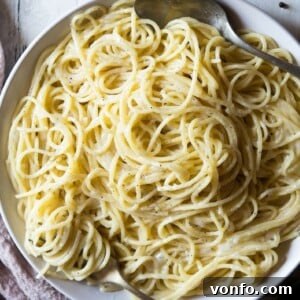
Experience a rapid culinary journey to Italy with our exquisite White Truffle Cacio e Pepe recipe. This dish is not just fast and flavorful; it’s an incredibly cheesy embrace of comfort, ready to grace your table in 10 minutes or less. It’s the ultimate quick comfort food, perfect for those bustling weeknights or any moment you need a truly satisfying meal without the fuss. We take the beloved traditional Roman Cacio e Pepe and elevate it with a luxurious drizzle of white truffle oil, transforming a simple classic into something truly extraordinary and unforgettable.
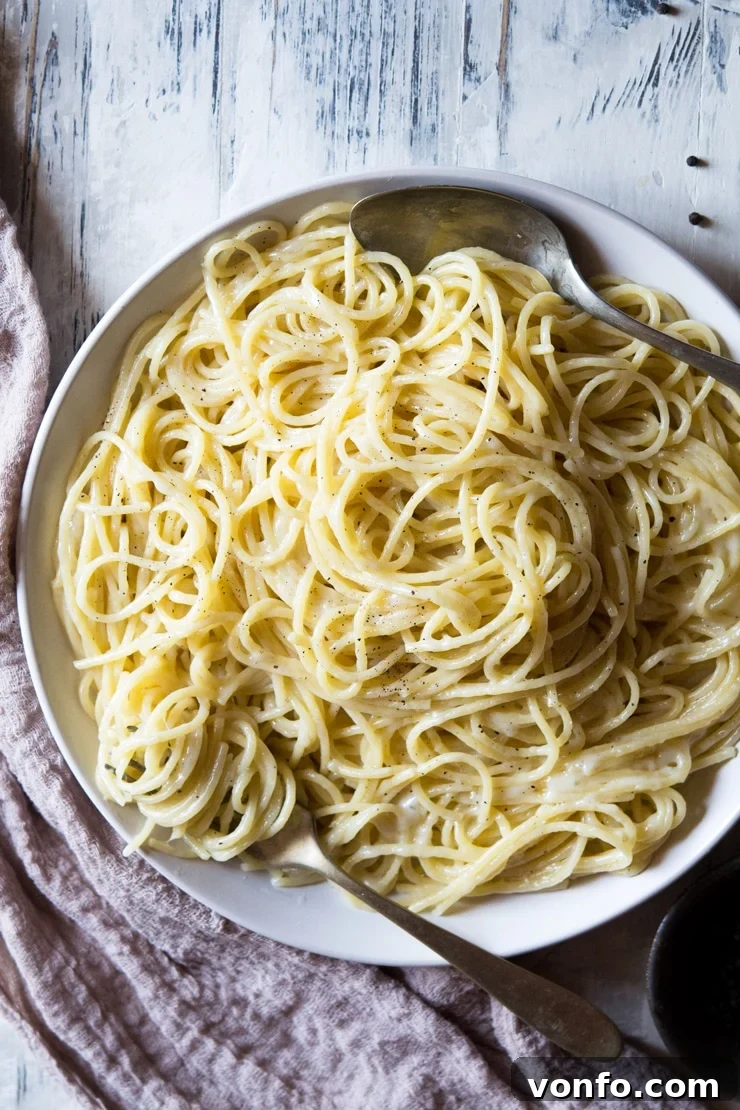
Indulge in Elegance: The Ultimate White Truffle Cacio e Pepe Recipe
There’s a reason Cacio e Pepe is celebrated as one of Italy’s most iconic pasta dishes – its simplicity is its genius. This Roman classic, translating literally to “cheese and pepper,” epitomizes the elegance of using just a few high-quality ingredients to create something profoundly delicious. Imagine a dish that delivers the soul-satisfying warmth of a homemade mac and cheese but comes together with astonishing speed and minimal effort. That’s the magic of Cacio e Pepe, and in this version, we’re adding a touch of sophisticated luxury.
Who among us doesn’t occasionally crave a generous bowl of perfectly cheesy pasta? That comforting meal you can curl up with on the couch, perhaps alongside a glass of fine vino and your favorite movie. This White Truffle Cacio e Pepe is precisely that—an ideal Friday night treat, or a mid-week pick-me-up, promising cheesy indulgence and a hint of gourmet flair.
The Roman Classic: Understanding Cacio e Pepe
Before we dive into our truffle-infused version, let’s appreciate the roots of Cacio e Pepe. Originating from Rome, this dish was traditionally a staple for shepherds, owing to its non-perishable ingredients: dried pasta, Pecorino Romano cheese, and black pepper. The brilliance lies in its technique: pasta cooked al dente, combined with a creamy emulsion created by the starchy pasta water and finely grated cheese and pepper. No cream, no eggs, just pure, unadulterated flavor born from perfect execution.
Our rendition honors this heritage while introducing a contemporary, gourmet twist. The addition of white truffle oil doesn’t just add a flavor; it elevates the entire experience, transforming a rustic dish into a luxurious feast without compromising its inherent simplicity.
The Allure of White Truffle: A Gourmet Twist
White Truffle Oil: Liquid Gold for Your Pasta
The secret ingredient that transforms this humble cheese and pepper pasta into an elevated culinary experience is white truffle oil. While fresh white truffles are undoubtedly the pinnacle of truffle indulgence—with their earthy, garlicky, and distinctly aromatic profile—they come with a hefty price tag. For those of us who aren’t regularly splurging on shaved fresh truffles, high-quality white truffle oil offers an accessible and incredibly potent alternative. It might not be the same as the real deal, but it provides a remarkable approximation of that coveted earthy aroma that makes any dish feel special.
When selecting truffle oil, quality matters. Look for oils infused with real truffle essence or pieces, rather than just artificial flavors. A good truffle oil will smell intensely aromatic, and a little goes a very long way. Be warned: this “liquid gold” is incredibly powerful! You only need a tiny amount—a mere drizzle—to infuse your entire dish with its distinctive, intoxicating fragrance. This means a single bottle will last for many delicious meals, making it a fantastic pantry investment for gourmet flavor on a budget.
Why Truffle and Cacio e Pepe Are a Perfect Pairing
The earthy, pungent notes of white truffle marry beautifully with the sharp, salty flavor of Pecorino Romano and the robust kick of black pepper. The truffle’s depth adds another layer of complexity to the already rich and savory base of Cacio e Pepe, creating a harmonious blend that is both comforting and sophisticated. It’s a grown-up twist that introduces an unexpected, luxurious dimension, making a familiar favorite feel entirely new and exciting.
Why This White Truffle Cacio e Pepe is Your New Weeknight Favorite
Lightning Fast: Ready in Just 10 Minutes
In today’s busy world, finding a meal that is both satisfying and quick is a true gem. This Cacio e Pepe clocks in at under 10 minutes from start to finish, making it an absolute lifesaver on busy weeknights. The minimal cooking time means more time to relax and enjoy your evening, without sacrificing flavor or quality.
Uncomplicated Ingredients, Unforgettable Flavor
The beauty of this dish lies in its brevity of ingredients. You likely already have most of what you need in your pantry: pasta, cheese, butter, olive oil, and pepper. The only “special” item is the white truffle oil, which, as mentioned, is an excellent investment for its lasting power and transformative effect on many dishes. These simple components, when combined with the right technique, yield a flavor profile that is surprisingly complex and utterly unforgettable.
The Perfect Comfort Food for Any Occasion
Whether you’re seeking solace after a long day, treating yourself to a cozy night in, or simply craving something undeniably delicious, this White Truffle Cacio e Pepe fits the bill. It’s warm, hearty, cheesy, and packed with a unique aroma that elevates it beyond everyday comfort food. It’s the kind of meal that wraps you in a warm hug, perfect for chasing away the blues or celebrating the small joys of life.
Essential Ingredients for a Perfect White Truffle Cacio e Pepe
To truly master this dish, the quality of your ingredients is paramount. Here’s a brief rundown of what you’ll need and why each component is crucial:
- Spaghetti (or other long pasta): While spaghetti is traditional, bucatini or tonnarelli also work wonderfully, offering a great surface for the sauce to cling to. Choose a good quality durum wheat pasta.
- Pecorino Romano Cheese: This is non-negotiable for authentic Cacio e Pepe. Its sharp, salty, and tangy flavor is central to the dish. Always grate it fresh.
- Parmesan Cheese (Parmigiano Reggiano): While traditional Cacio e Pepe uses only Pecorino, a blend with Parmesan adds a subtle nutty depth and helps to create a smoother, more balanced sauce.
- Unsalted Butter: Contributes to the rich, creamy texture and acts as a flavorful base for the sauce.
- Extra Virgin Olive Oil: A touch of olive oil helps prevent the butter from burning and adds another layer of Mediterranean flavor.
- White Truffle Oil: The star of our unique twist, providing that luxurious, earthy aroma.
- Freshly Ground Black Pepper: Key to the “pepe” in Cacio e Pepe. Freshly ground pepper offers the best aroma and spicy kick. Don’t skimp!
- Salt: Essential for seasoning the pasta water and balancing the flavors of the sauce.
Step-by-Step Guide: Crafting Your White Truffle Cacio e Pepe
Making this incredible pasta dish is surprisingly straightforward. Follow these steps for a perfect, creamy, and flavorful result every time.
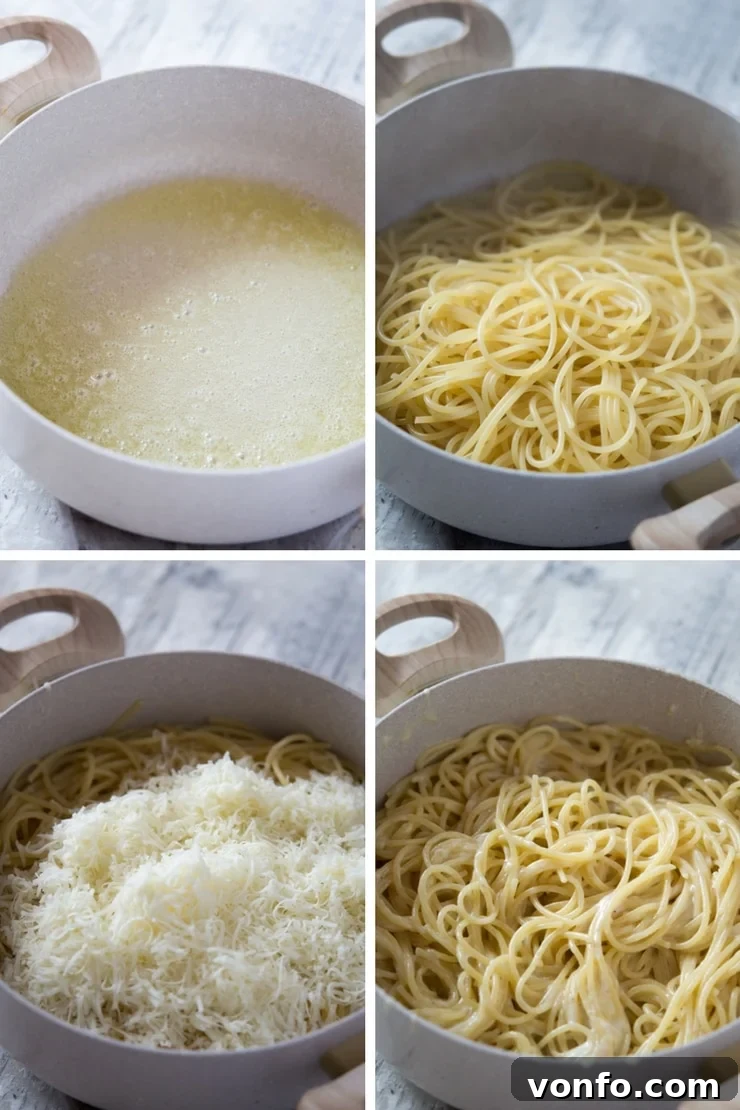
- Prepare the Pasta: Bring a large pot of generously salted water to a rolling boil. Add your chosen pasta (spaghetti is classic) and cook according to package instructions until it is perfectly al dente. This means it should still have a slight bite to it. Crucially, before draining, reserve at least 1 cup (250ml) of the starchy pasta water. This starchy liquid is the secret to a silky, emulsified sauce.
- Create the Flavor Base: While the pasta is cooking, melt the butter in a large, wide pan over medium heat. Add the olive oil. Allow the butter to sizzle gently until it’s fully melted and slightly fragrant. Immediately remove the pan from the heat to prevent the butter from browning too much. Then, add the potent white truffle oil to the melted butter and olive oil mixture.
- Combine and Season: Drain the cooked pasta and immediately transfer it to the pan with the melted butter, olive oil, and truffle oil. Add the finely grated Pecorino Romano and Parmesan cheeses, along with a generous pinch of salt and a good grinding of fresh black pepper.
- Emulsify the Sauce: Add about 1/4 cup of the reserved pasta water to the pan. Using tongs, quickly and vigorously toss the pasta with the cheese, butter, and pepper. The heat from the pasta, combined with the starchy water and the fats, will begin to melt the cheese, creating a smooth, creamy, and utterly delicious cheese sauce that coats every strand of pasta. If the sauce appears too thick or clumpy, add another splash of pasta water, one tablespoon at a time, until you reach your desired creamy consistency.
- Serve Immediately: Transfer the White Truffle Cacio e Pepe into warm serving bowls. For an extra touch of luxury, drizzle an additional drop or two of white truffle oil over each serving (taste first, as truffle oil is very strong). Garnish with a final grind of black pepper, if desired. Serve immediately and enjoy the exquisite flavors!
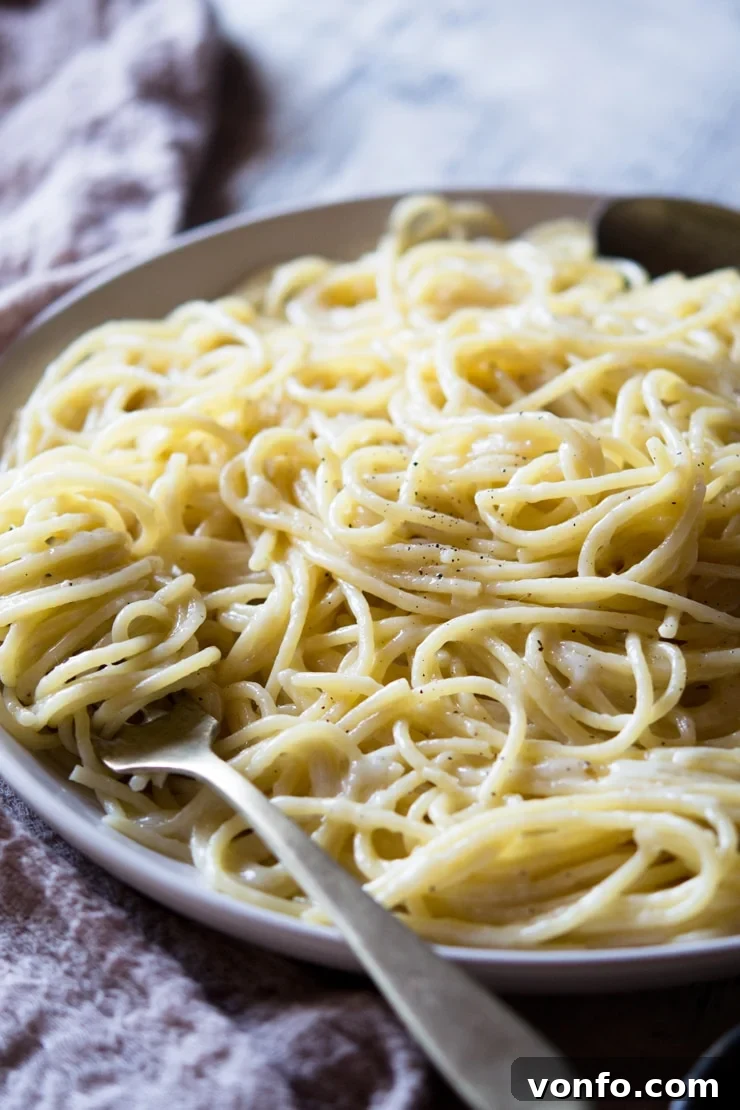
Expert Tips for Cacio e Pepe Perfection
Achieving the perfect Cacio e Pepe, especially with the delicate addition of truffle, requires a few key insights. These tips will ensure your sauce is flawlessly creamy and your flavors are impeccably balanced.
The Golden Rule: Finely Grated Cheese
This is arguably the most crucial tip for Cacio e Pepe. The cheese (both Pecorino Romano and Parmesan) absolutely must be very finely grated. If the cheese is grated too coarsely, it won’t melt quickly or evenly, leading to a clumpy or grainy sauce instead of a silky, emulsified one. A microplane grater is your best friend here, ensuring the cheese melts into a smooth, luxurious cream with the starchy pasta water.
The Magic of Pasta Water: Don’t Discard It All!
Reserved pasta water is the unsung hero of many Italian pasta dishes, and especially Cacio e Pepe. The starch released from the pasta as it cooks is vital for creating a creamy, emulsified sauce. Always reserve more pasta water than you think you’ll need – at least 1 cup (250ml). While this specific recipe might only require a splash or two to achieve the desired consistency, having extra on hand allows you to adjust the sauce as needed, ensuring it perfectly coats the pasta without being too thin or too thick. It’s much easier to add more liquid than to fix an overly thin sauce.
Temperature Control is Key for Emulsification
The success of Cacio e Pepe hinges on creating an emulsion, where oil, water, and cheese bind together into a cohesive sauce. The temperature plays a critical role. When adding the cheese to the pasta, the pan should be off the heat. The residual heat from the cooked pasta and the warmth of the reserved pasta water are sufficient to gently melt the cheese without cooking it too rapidly, which can lead to clumping. Tossing continuously helps distribute the heat and cheese evenly.
Customizing Your Cacio e Pepe: Variations and Additions
While the truffle oil is a delightful addition, Cacio e Pepe is fantastic even without it. If you’re not a fan of white truffle, simply omit the truffle oil and follow the rest of the recipe exactly for a traditional, utterly delicious Cacio e Pepe. For those who love experimenting, a sprinkle of red pepper flakes can add a subtle warmth, or a touch of lemon zest can bring a bright counterpoint to the richness. However, for a classic experience, keep it simple.
Serving Suggestions: What to Pair with Truffle Pasta
This rich and aromatic pasta dish pairs wonderfully with simple, fresh accompaniments. A crisp green salad with a light vinaigrette makes for an excellent contrast, cutting through the richness of the cheese and truffle. Crusty bread is perfect for soaking up any leftover sauce. For wine pairings, consider a light-bodied red like a Pinot Noir or a bright, earthy white such as a dry Sauvignon Blanc or a crisp Gavi, which complement the truffle notes without overpowering them.
Frequently Asked Questions (FAQ) about Cacio e Pepe
Q: Can I use pre-grated cheese?
A: It’s highly recommended to grate your own cheese fresh. Pre-grated cheeses often contain anti-caking agents that can prevent proper melting and emulsification, resulting in a grainy or clumpy sauce.
Q: My sauce is clumpy, what went wrong?
A: Clumpy sauce is usually due to cheese that wasn’t finely grated enough, the heat being too high when combining ingredients, or not enough starchy pasta water. Ensure your cheese is microplaned, the pan is off the heat when adding cheese and water, and you’re tossing vigorously.
Q: Can I use different types of pasta?
A: While long pasta like spaghetti, bucatini, or tonnarelli are traditional, you can experiment with other shapes. Shorter, textured pastas like rigatoni or fusilli can also hold the sauce well. Just ensure to reserve enough pasta water.
Q: Is truffle oil always “worth it”?
A: Quality varies greatly. Choose a truffle oil that is infused with actual truffle or truffle essence, not just artificial flavoring. A good truffle oil adds a luxurious aroma and flavor that can elevate many dishes. If you’re new to truffle oil, start with a small amount as it’s very potent.
Q: Can I make Cacio e Pepe ahead of time?
A: Cacio e Pepe is best enjoyed immediately after preparation. The sauce can thicken and become less creamy as it cools. If you must reheat, do so gently with a splash of extra pasta water or broth to loosen the sauce, but it won’t be quite the same as fresh.
Step By Step Photos Above
Our recipes often include step-by-step photos, helpful tips, and tricks to ensure perfect results on your first attempt!
White Truffle Cacio E Pepe Recipe
By Emily
2
8
10
4 people
Ingredients
- 14 oz (400g) spaghetti
- 1/2 cup (60g) pecorino cheese, finely grated
- 1/2 cup (50g) parmesan cheese, finely grated
- 1.2 oz (35g) unsalted butter
- 1/2 tbsp extra virgin olive oil
- 1/2 tsp white truffle oil
- 1 pinch salt
- 1 large pinch freshly ground black pepper
- 1 cup (250ml) reserved pasta water
Instructions
-
Bring a large pot of generously salted water to a boil. Add the pasta and cook until al dente. Make sure to reserve 1 cup (250ml) of the starchy pasta water before draining.
-
In a large, wide pan, melt the butter and olive oil over medium heat until sizzling. Turn off the heat and stir in the white truffle oil.
-
Drain the pasta and immediately add it to the pan with the melted butter and oils. Add the finely grated Pecorino and Parmesan cheeses, a pinch of salt, and a generous grinding of black pepper.
-
Add about 1/4 of the reserved pasta water. Vigorously toss the pasta with the cheese until it begins to melt and emulsify into a creamy sauce. If the sauce is a little too thick, add another splash of pasta water, one tablespoon at a time, until you reach your desired silky consistency.
-
Serve immediately in big bowls with an extra few drops of truffle oil, if desired (taste first, as it’s strong). Garnish with more fresh black pepper.
Notes
- You won’t necessarily need all the reserved pasta water, but always have 1 cup (250ml) ready just in case. The goal is a sauce that perfectly coats the pasta without being too thick or watery.
- The key to a smooth, emulsified sauce is finely grated cheese. Use a microplane grater to ensure the cheese melts quickly and evenly, preventing clumps.
- For a traditional Cacio e Pepe without the truffle twist, simply omit the white truffle oil from the recipe.
Helpful Info for All Recipes
- I always use extra virgin olive oil in all of my recipes unless stated otherwise.
- When I use canned or jarred tomatoes of any kind I always recommend Cirio or Mutti brands for the best results and flavor.
- All vegetables are medium sized unless stated otherwise.
- All recipes are tested and developed using a fan (convection) oven.
- Find out more about how nutrition is calculated.
- Check out our must-have Italian Pantry Staples.
- You can also find all our Essential Kitchen Tools for Italian Cooking.
Nutrition
Carbohydrates: 76g |
Protein: 33g |
Fat: 26g |
Saturated Fat: 14g |
Cholesterol: 69mg |
Sodium: 905mg |
Potassium: 273mg |
Fiber: 3g |
Sugar: 3g |
Vitamin A: 565IU |
Calcium: 686mg |
Iron: 1.8mg
Nutrition information is automatically calculated, so should only be used as an approximation.
Did you try this recipe?
Leave a comment below and share your experience!
More Irresistible Pasta Recipes to Explore
If you’ve enjoyed this delightful pasta, we encourage you to explore other easy and flavorful pasta creations from our kitchen:
- Pasta Amatriciana – Bucatini, Tomato and Guanciale
- Pasta with Artichokes and Peas
- Smoked Salmon Pasta Carbonara
- Pasta with Pancetta, Ricotta and Tomato
- Broccoli Pasta with Chilli, Garlic and Parmesan
See how effortlessly you can transport yourself to cheesy, truffle-infused pasta heaven? Now, all that’s left is to pour yourself a glass of wine and settle in for a wonderful meal. Enjoy every luxurious bite!
If this White Truffle Cacio e Pepe recipe has found a place in your heart, or if you’ve tried any other recipes on our blog, please don’t hesitate to rate the recipe and share your thoughts in the comments below. We absolutely love hearing from you and seeing your culinary creations! You can also FOLLOW US on FACEBOOK, TWITTER, INSTAGRAM, and PINTEREST for more delicious food ideas and updates.