
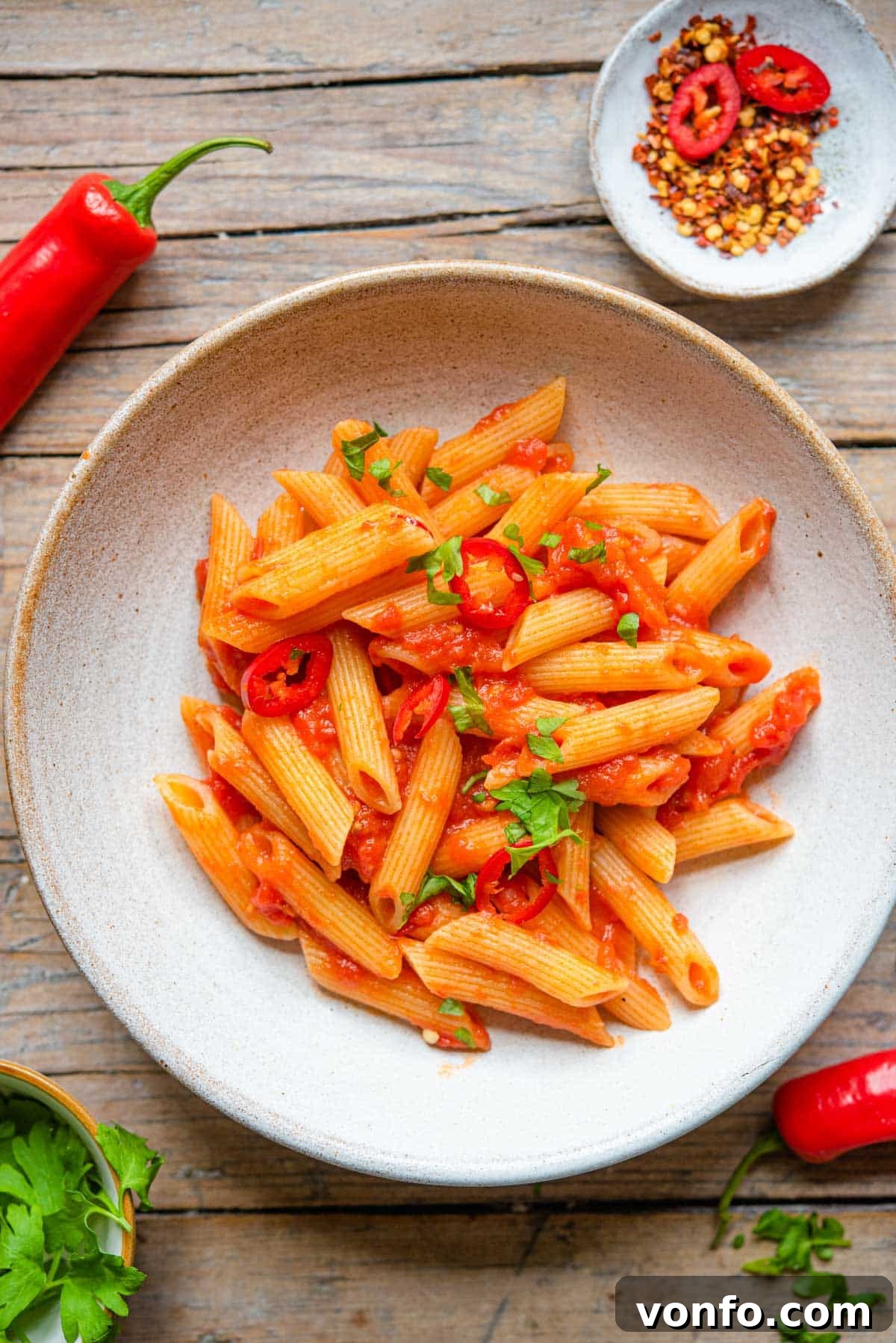
Penne all’ Arrabbiata is an iconic Italian pasta recipe, celebrated for its simplicity, speed, and irresistible fiery kick. This beloved dish features al dente penne pasta coated in a beautiful, rich tomato sauce infused with garlic and a generous amount of chilli. If you’re seeking an easy-to-make meal that truly delivers on flavour and heat, this classic Roman specialty is an absolute must-try. Perfect for weeknights or when you crave a burst of authentic Italian spice!
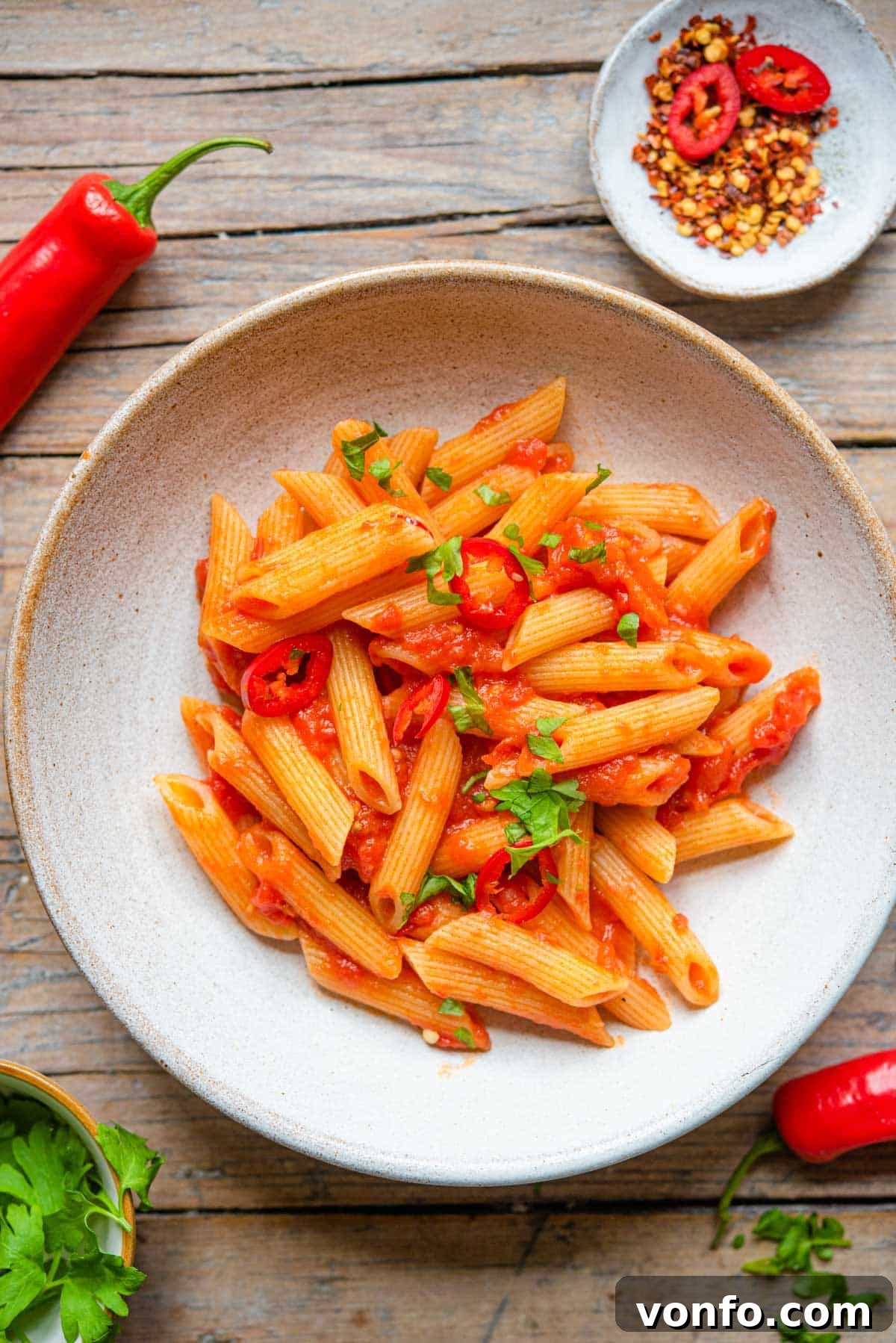
What is Penne all’ Arrabbiata?
The name “Arrabbiata” literally translates to “angry” in Italian, a perfectly descriptive moniker for this sauce due to its vibrant red hue and the unmistakable fiery heat it delivers. Originating from the Lazio region, specifically Rome, this dish holds a special place in Italian culinary tradition. Much like the globally renowned Spaghetti alla Carbonara, Arrabbiata relies on a handful of basic, yet exceptionally high-quality ingredients to achieve its profound flavour profile.
Traditionally, arrabbiata sauce is paired with penne pasta, whose tubular shape and ridged surface are ideal for capturing every drop of the rich, spicy tomato goodness. However, this incredibly versatile sauce can be tossed with almost any pasta shape you prefer, from spaghetti to rigatoni, proving its adaptability in the Italian kitchen.
The Essential Ingredients for Authentic Arrabbiata
Crafting a truly memorable Penne all’ Arrabbiata hinges on selecting and preparing a few key ingredients with care. While simple, the quality of each component significantly impacts the final taste.
1. Penne Pasta
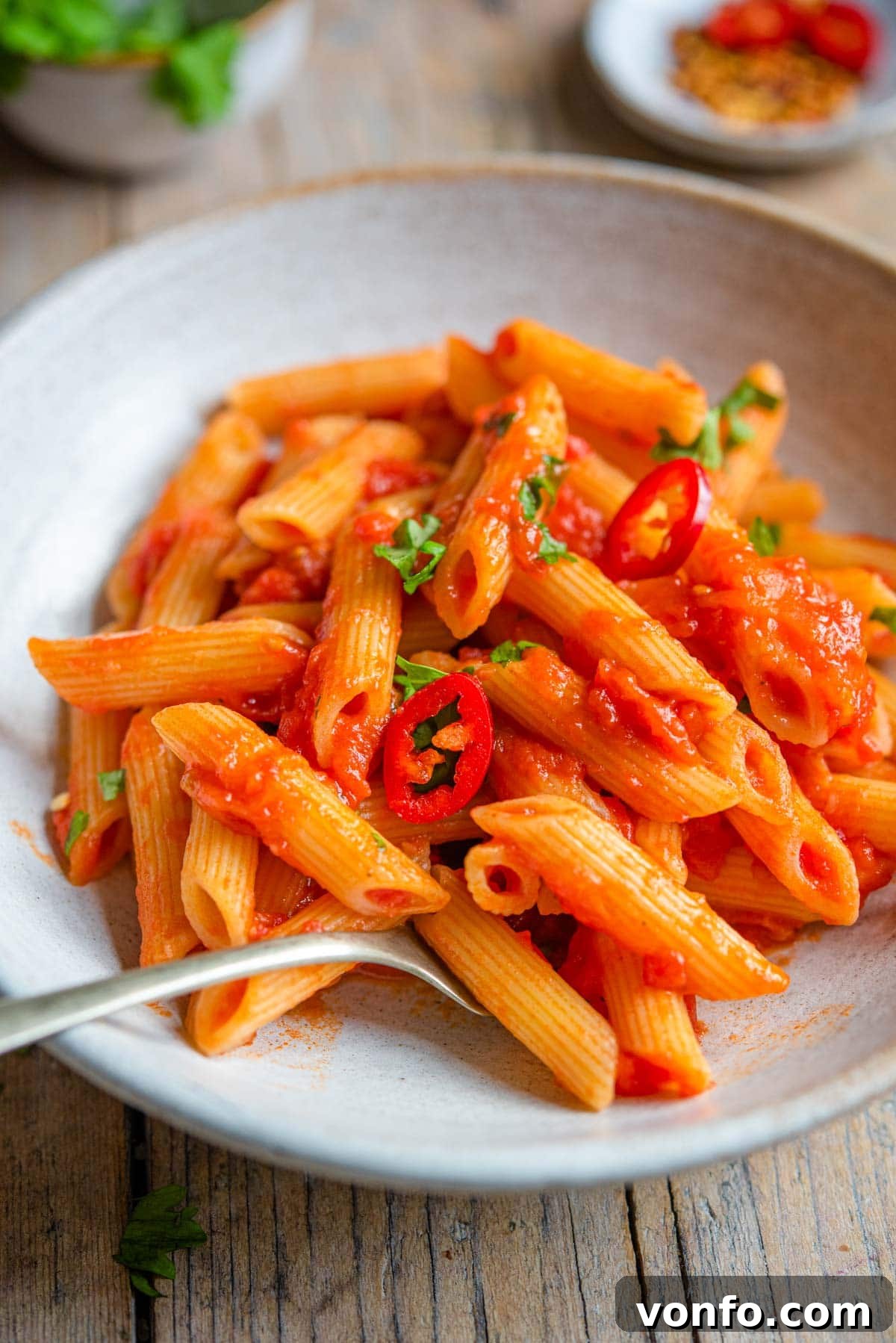
Penne, meaning “pens” in Italian, refers to the quill-like shape of this pasta. Its tubular form and ridged exterior (penne rigate) are perfect for holding the thick arrabbiata sauce, ensuring a burst of flavour with every bite. Always cook your pasta al dente, meaning “to the tooth” – firm yet tender, offering a slight resistance when bitten. This texture is crucial for Italian pasta dishes and prevents the pasta from becoming mushy when mixed with the sauce.
2. High-Quality Canned Tomatoes
The heart of any great Italian red sauce is the tomato. For arrabbiata, opting for the highest quality canned whole peeled tomatoes is paramount. San Marzano tomatoes, grown in the Agro Sarnese-Nocerino region of Italy, are often considered the gold standard due to their balanced sweetness, low acidity, and tender flesh. If San Marzano are not available, choose another reputable brand of Italian canned plum tomatoes. Avoid diced tomatoes or tomato puree if possible, as whole peeled tomatoes allow you to crush them to your desired consistency, contributing to a more rustic texture.
3. Fresh Garlic
Garlic provides an aromatic foundation for the arrabbiata sauce. Fresh garlic, finely sliced or minced, is non-negotiable here. Its pungent, sweet flavour is essential and cannot be replicated by garlic powder. The goal is to gently sauté the garlic until fragrant, not browned or burnt, as this can introduce a bitter taste to the sauce. Two cloves are usually sufficient for a balanced flavour without overpowering the chilli.
4. The Fiery Chilli
The defining characteristic of Arrabbiata is its heat. You have the flexibility to use either fresh red chilli or dried red pepper flakes, both yielding equally delicious results. I often use what’s readily available in my kitchen, so don’t hesitate to substitute if needed.
- Fresh Red Chilli: If using fresh chilli, remove the seeds and finely slice it. The heat level of fresh chillies can vary dramatically, so it’s wise to taste a tiny piece first to gauge its intensity. You might only need half a chilli, or a whole one, depending on your spice tolerance and the chilli’s potency.
- Dried Red Pepper Flakes (Peperoncino): These are a convenient and consistent way to add heat. Again, brands vary in spiciness, so start with a smaller amount (e.g., ½ teaspoon) and add more to taste. It’s always easier to add more heat than to try and reduce it!
Pro Tip for Spice Control: When working with fresh chillies, cut a minuscule piece and lightly dab it on your tongue to assess its heat. For dried flakes, add gradually, tasting the sauce as you go. Remember, you can always increase the heat, but you can’t take it away!
5. Extra Virgin Olive Oil
A good quality extra virgin olive oil is essential for sautéing the aromatics and forming the base of the sauce. Its fruity, peppery notes complement the other ingredients beautifully and contribute to the sauce’s rich texture.
6. Salt and Pepper
Simple seasoning is all that’s needed to enhance the natural flavours of the tomatoes, garlic, and chilli. Always taste and adjust to your preference.
How to Make Penne all’ Arrabbiata: A Step-by-Step Guide
This recipe is designed for maximum flavour with minimal fuss, making it perfect for both novice cooks and seasoned chefs. Follow these simple steps to bring a taste of Rome to your table.
Preparation is Key
Before you begin, ensure all your ingredients are prepped: garlic finely sliced, chilli prepared (sliced or flakes measured), and your can of tomatoes ready. This mise en place will make the cooking process smooth and enjoyable.
- Cook the Penne Pasta: Bring a large pot of generously salted water to a rolling boil. Add the penne pasta and cook according to the package instructions until it is perfectly al dente. This usually takes around 8-10 minutes. Before draining, remember to reserve about ¼ to ½ cup of the starchy pasta water; it’s a secret ingredient for achieving a silky, emulsified sauce.
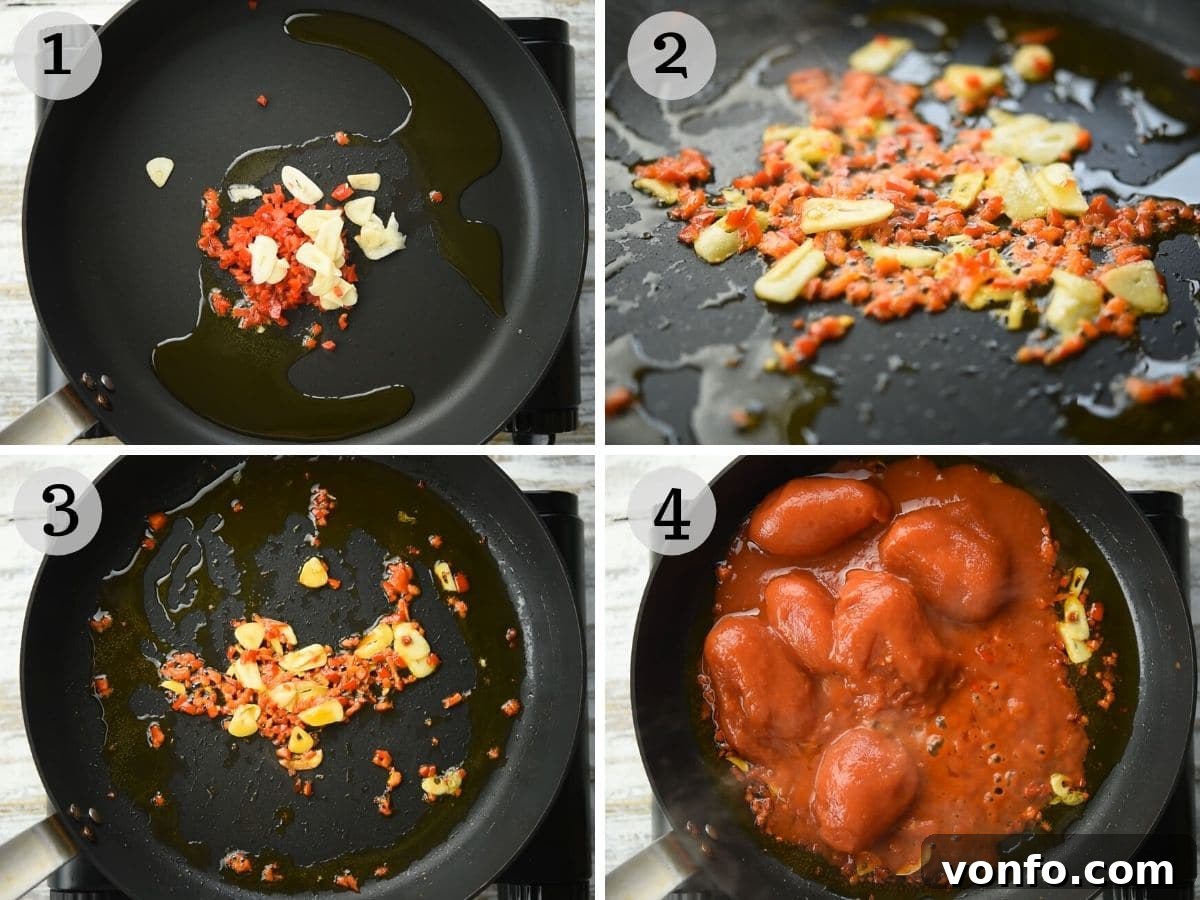
- Sauté Aromatics: While the pasta cooks, heat the olive oil in a large skillet or non-stick pan over medium heat. Add the finely sliced garlic and your chosen chilli (fresh or dried red pepper flakes). Sauté for just 1-2 minutes until the garlic becomes fragrant and lightly golden, being careful not to burn it. This step infuses the oil with a beautiful aromatic base.
- Add the Tomatoes: Pour the canned whole peeled tomatoes into the pan. Immediately add about ¼ cup (60ml) of water to the empty tomato can, swirl it around to capture any remaining tomato pulp, and then add this flavourful water to the sauce. Season generously with a pinch of salt and freshly ground black pepper.
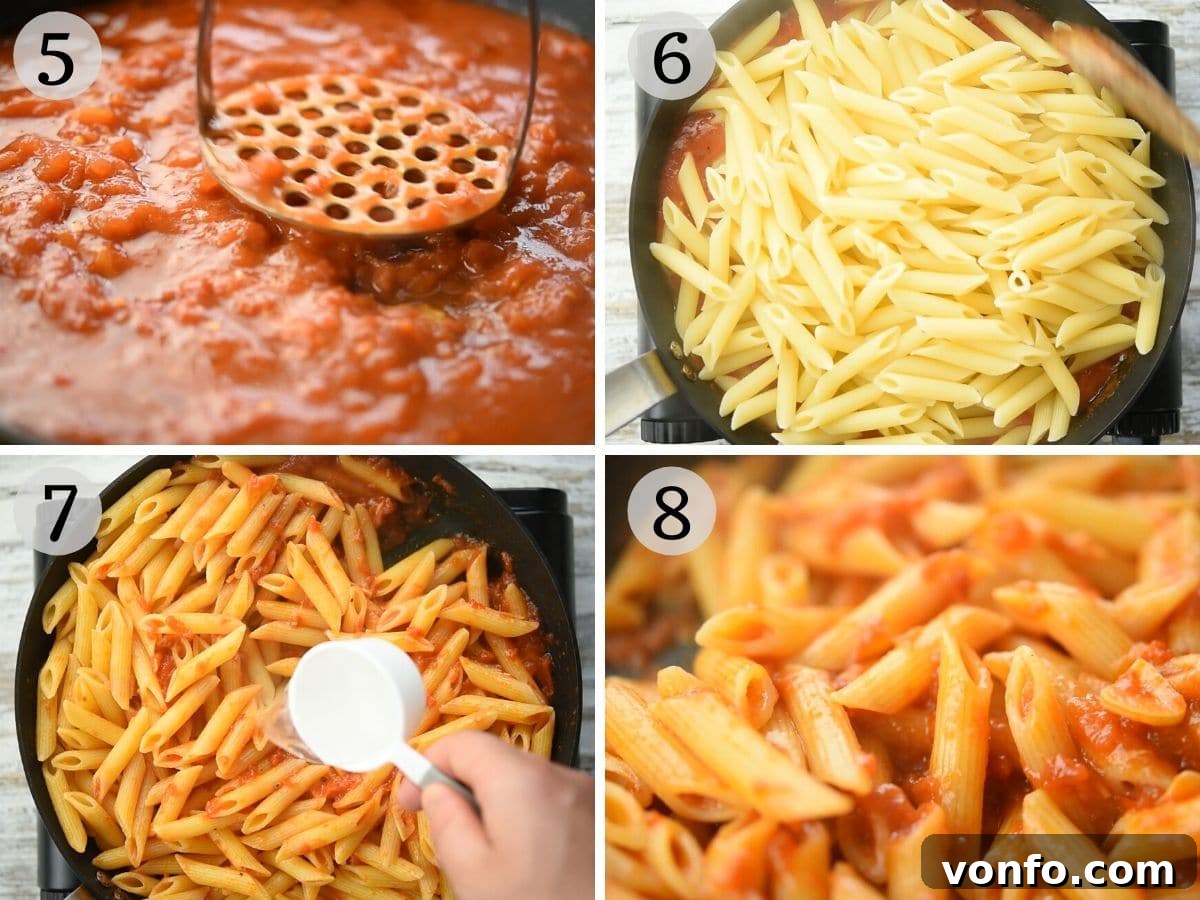
- Crush the Tomatoes: Use a potato masher directly in the pan to crush the whole tomatoes to your desired consistency. Alternatively, you can crush them by hand in a bowl before adding them to the pan for a finer texture.
- Simmer the Sauce: Allow the arrabbiata sauce to simmer gently on a medium heat for 8-10 minutes. This simmering time allows the flavours to meld beautifully and the sauce to slightly reduce and thicken. Ideally, the sauce should be ready around the same time your pasta finishes cooking.
- Combine Pasta and Sauce: Once the pasta is al dente, drain it (remembering your reserved pasta water) and immediately add the cooked penne to the pan with the simmering arrabbiata sauce.
- Toss and Emulsify: Toss the pasta vigorously with the sauce, ensuring every piece of penne is thoroughly coated. If the sauce seems too thick or dry, add a tablespoon or two of the reserved pasta water. The starch in the pasta water helps to emulsify the sauce, creating a glossy, cohesive coating that clings perfectly to the pasta. Continue adding small amounts until you reach your desired consistency.
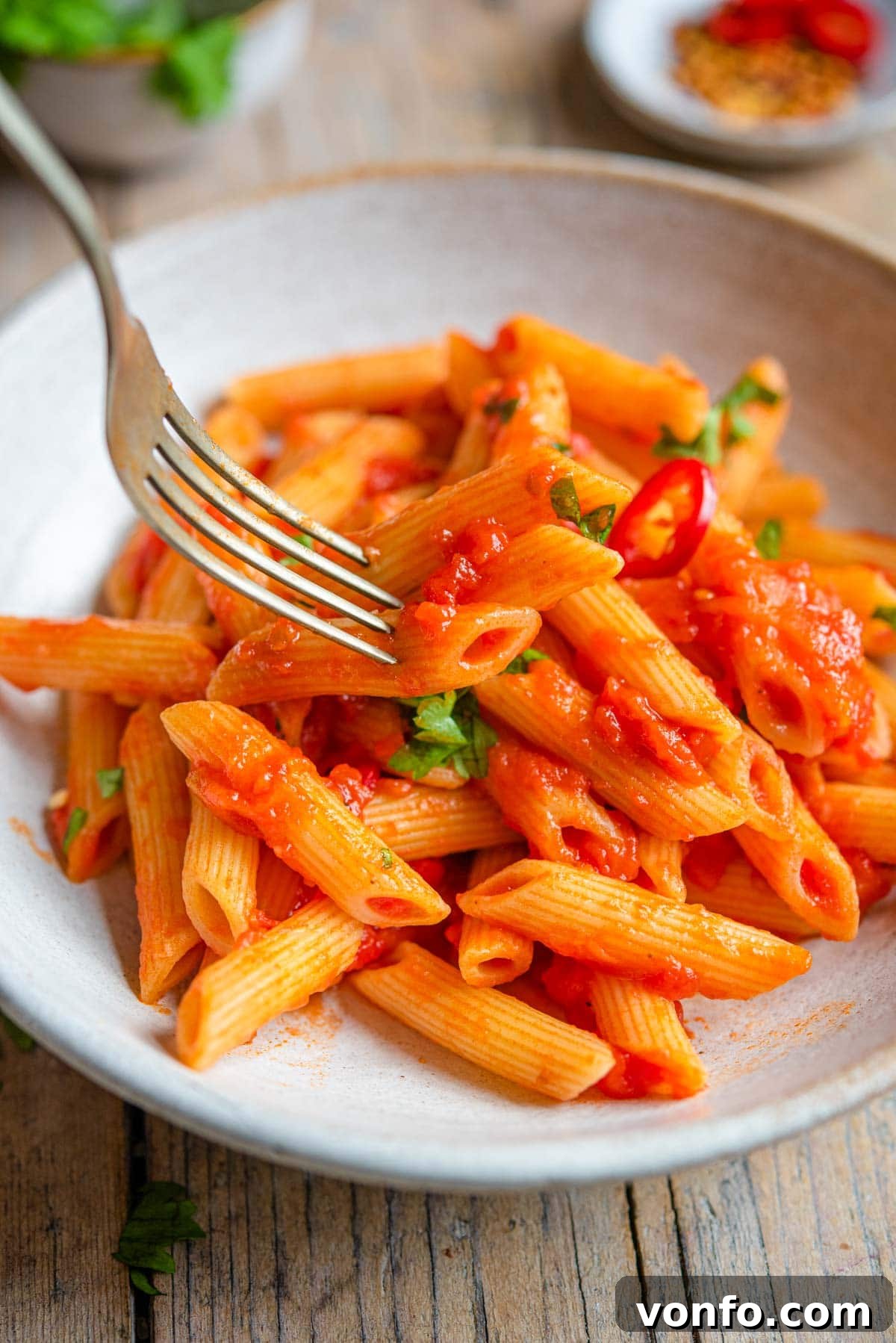
- Serve Immediately: Serve your Penne all’ Arrabbiata hot, garnished with a generous sprinkling of freshly chopped parsley for a burst of freshness. A little grated Parmesan or Pecorino Romano cheese can also be added, though traditionalists often omit cheese to let the spicy tomato flavour shine through.
Top Tips for the Best Penne all’ Arrabbiata
- Tomato Quality Matters: Seriously, invest in the best canned whole peeled tomatoes you can find. San Marzano or high-quality Italian brands like Mutti or Cirio will make an immense difference to the depth of flavour in your sauce.
- Control the Heat: The beauty of arrabbiata is its customizable spice level. Whether you use fresh chillies or dried flakes, always start conservatively. You can always add more heat if desired, but it’s impossible to remove it once it’s in the sauce. Taste as you go!
- Fresh Garlic is Essential: Do not substitute fresh garlic with garlic powder. The fresh, pungent aroma and flavour of sliced garlic are crucial for an authentic arrabbiata sauce. Garlic powder will simply not yield the same delicious complexity.
- Don’t Forget Pasta Water: Reserving a ladleful of starchy pasta water is a classic Italian trick. It helps to emulsify the sauce, making it cling beautifully to the pasta and enriching the flavour. Add it gradually until your sauce reaches the perfect consistency.
- Serving Suggestions: While fresh parsley is the traditional garnish, a sprinkle of fresh basil can also add a lovely aromatic touch. Some enjoy a grating of Pecorino Romano cheese for an extra salty, sharp kick, although many purists prefer it without cheese to highlight the spicy tomato.
Beyond Penne: Other Uses for This Versatile Arrabbiata Sauce
While Penne all’ Arrabbiata is a classic, the spicy tomato sauce itself is incredibly versatile and can elevate many other dishes. Don’t limit yourself to pasta; this fiery sauce can be a game-changer in various culinary applications.
- Pasta Bakes: Use it as the base for a hearty Pasta Al Forno (Baked Pasta). Layer with pasta, cheese, and your favourite vegetables or proteins for a comforting meal.
- With Meat or Fish: This sauce pairs wonderfully with chicken, sausage, or firm white fish. Try replacing a standard tomato sauce with arrabbiata in recipes like a Spicy Sausage Pasta Bake or simmer chicken thighs directly in the sauce for a flavourful main course.
- Vegetable Dishes: Add a spicy kick to your vegetable sides. It’s excellent with Italian Green Beans in Tomato Sauce or even braised eggplant. Consider these recipes for inspiration: Italian Green Beans In Tomato Sauce or Fagioli all’uccelletto – Beans in Tomato Sauce.
- Pizza Sauce: If you’re a fan of spicy pizza, spread this arrabbiata sauce on your pizza dough before adding cheese and toppings. It provides an exciting alternative to traditional pizza sauce.
- One-Pot Wonders: Integrate it into dishes like One-Pot Chicken With Olives, Tomatoes And Lentils for an added layer of robust flavour.
- Eggs: For a bold breakfast or brunch, use it as the base for shakshuka or simply simmer eggs in the sauce for a spicy twist.
- Marinara Alternative: Anytime a recipe calls for marinara sauce, consider swapping it for arrabbiata for a piquant upgrade.
Storage and Make-Ahead Tips
Penne all’ Arrabbiata is best enjoyed fresh, immediately after preparing, when the pasta is perfectly al dente and the sauce is vibrant. However, if you have leftovers or wish to prepare components in advance, here are some tips:
- Storing the Sauce: The arrabbiata sauce can be made ahead of time and stored in an airtight container in the refrigerator for up to 5 days. This makes it a fantastic meal-prep option.
- Freezing the Sauce: For longer storage, the sauce freezes beautifully. Transfer it to freezer-safe containers or bags and freeze for up to 3 months. Thaw completely in the refrigerator overnight before reheating.
- Reheating: Gently reheat the sauce on the stovetop over low to medium heat, stirring occasionally. If reheating pasta and sauce together, you might need to add a splash of water or vegetable broth to loosen the sauce. Avoid overcooking the pasta when reheating, as it can become mushy.
- Best Practice: For the freshest taste and texture, it’s always recommended to cook the pasta just before serving and combine it with freshly reheated sauce.
Frequently Asked Questions About Penne all’ Arrabbiata
Q: Can I make Penne all’ Arrabbiata vegetarian or vegan?
A: Yes! Penne all’ Arrabbiata is naturally vegetarian. To make it vegan, simply omit any optional cheese garnish (like Parmesan or Pecorino Romano) and ensure your pasta is egg-free. The core ingredients – pasta, tomatoes, garlic, chilli, and olive oil – are all plant-based.
Q: What kind of pasta can I use if I don’t have penne?
A: While penne is traditional, arrabbiata sauce is incredibly adaptable. You can use other short, tubular pasta shapes like rigatoni, mezzemaniche, or paccheri. Even spaghetti or bucatini works well for a different textural experience. The key is choosing a pasta that can hold the sauce effectively.
Q: How can I make the sauce less spicy?
A: To reduce the heat, start with a smaller amount of chilli, especially if using fresh varieties. For fresh chillies, remove more of the seeds and internal membranes, as these contain most of the capsaicin. For dried flakes, use just a pinch. You can also add a touch of sugar (about ½ teaspoon) to balance the acidity and heat, or a swirl of cream at the end, though this deviates from the traditional recipe.
Q: What can I serve with Penne all’ Arrabbiata?
A: A simple side salad with a vinaigrette dressing complements the richness and spice of the pasta perfectly. Crusty Italian bread is also a must for soaking up any leftover sauce. For a more complete meal, you could serve it alongside grilled vegetables or a light protein.
Q: Can I add other vegetables to the sauce?
A: While traditional arrabbiata is minimalistic, you can certainly add finely diced onions or a few chopped bell peppers (red or yellow work well) along with the garlic and chilli for extra flavour and texture. Sauté them until softened before adding the tomatoes.
Q: Is it okay to use pre-minced garlic?
A: For the best flavour, freshly sliced or minced garlic is always recommended. Pre-minced garlic often has a less vibrant taste and can sometimes be acrid. However, if convenience is paramount, it can be used in a pinch, but adjust the quantity and cook gently to avoid bitterness.
More Easy Italian Pasta Recipes to Explore
If you’ve enjoyed the simplicity and bold flavours of Penne all’ Arrabbiata, you might also like to discover these other delightful Italian pasta dishes:
- Pasta Amatriciana – Bucatini, Tomato And Guanciale
- Pasta With Puttanesca Sauce (Spaghetti Alla Puttanesca)
- Ricotta Pasta Sauce: 2 Ways
- Penne alla Vodka – Pasta with Tomato Vodka Sauce
- Cavatelli and Broccoli Pasta
I hope this comprehensive guide inspires you to create a delicious Penne all’ Arrabbiata at home! If you try this recipe or any others from my collection, please leave a comment below and let me know how it turned out. Your feedback is always appreciated. You can also FOLLOW ME on FACEBOOK, INSTAGRAM, and PINTEREST for more delicious Italian food inspiration and kitchen adventures.
Penne Arrabbiata Recipe
A quick and easy authentic Italian recipe for Penne Arrabbiata, featuring a vibrant, spicy tomato sauce. This fiery classic is ready in minutes and packed with flavor!
Prep time: 2 mins
Cook time: 10 mins
Total time: 12 mins
Servings: 4 servings
Author: Emily
Ingredients
- 14 oz (4 cups/400g) penne pasta
- 14 oz (400g) canned whole peeled plum tomatoes, preferably San Marzano or high-quality
- 2 garlic cloves, finely sliced
- 1 whole red chilli, seeds removed and finely sliced, or ½-1 tsp red pepper flakes
- 1 tbsp olive oil
- Salt and freshly ground black pepper to season
- Freshly chopped parsley, for serving (optional)
- Grated Parmesan or Pecorino Romano cheese, for serving (optional)
Instructions
- Bring a large pot of generously salted water to a boil. Add the penne pasta and cook according to package instructions until al dente (around 8-10 minutes). Before draining, reserve ¼ to ½ cup of the starchy pasta water.
- Meanwhile, heat the olive oil in a large skillet or non-stick pan over medium heat. Add the finely sliced garlic and chilli (fresh or dried flakes). Sauté for about 1-2 minutes until the garlic is fragrant and lightly golden; be careful not to burn it.
- Pour the whole peeled tomatoes into the pan. Rinse the empty tomato can with ¼ cup (60ml) of water and add it to the sauce. Season with a good pinch of salt and freshly ground black pepper.
- Use a potato masher or the back of a spoon to crush the whole tomatoes directly in the pan to your desired consistency. (Alternatively, you can crush them by hand before adding them to the pan).
- Let the sauce simmer on a medium heat for 8-10 minutes, allowing the flavours to meld and the sauce to thicken slightly. This should coincide with the pasta cooking time.
- Once the pasta is al dente, drain it (remembering to reserve some pasta water) and add it directly to the sauce in the skillet.
- Toss the pasta thoroughly with the arrabbiata sauce, ensuring all the penne is coated. If the sauce appears too thick or dry, add a tablespoon at a time of the reserved pasta water to achieve a silky, emulsified consistency.
- Serve immediately, garnished with freshly chopped parsley and an optional sprinkle of grated Parmesan or Pecorino Romano cheese.
Notes
- For the best flavour, always use the highest quality canned whole peeled tomatoes you can find, such as San Marzano.
- Be mindful of the chilli’s heat. You can always add more spice, but you cannot take it away. Taste the sauce as you go and adjust the chilli quantity to your preference.
- Always use fresh garlic. Garlic powder does not provide the same authentic flavour profile for this dish.
- This arrabbiata sauce can be stored in an airtight container in the fridge for up to 5 days or frozen for up to 3 months. Thaw completely before reheating and combining with freshly cooked pasta.
Nutrition Information (Approximate per serving)
Calories: 423 kcal | Carbohydrates: 80g | Protein: 14g | Fat: 5g | Saturated Fat: 1g | Sodium: 149mg | Potassium: 444mg | Fiber: 4g | Sugar: 6g | Vitamin A: 223IU | Vitamin C: 26mg | Calcium: 54mg | Iron: 2mg
Nutrition information is automatically calculated and should only be used as an approximation.
Helpful Info for All Recipes
- I always use extra virgin olive oil in all of my recipes unless stated otherwise.
- When I use canned or jarred tomatoes of any kind, I always recommend Cirio or Mutti brands for the best results and flavour.
- All vegetables mentioned are medium sized unless stated otherwise.
- All recipes are tested and developed using a fan (convection) oven.
- Find out more about how nutrition is calculated.
- Check out our must-have Italian Pantry Staples.
- You can also find all our Essential Kitchen Tools for Italian Cooking.