
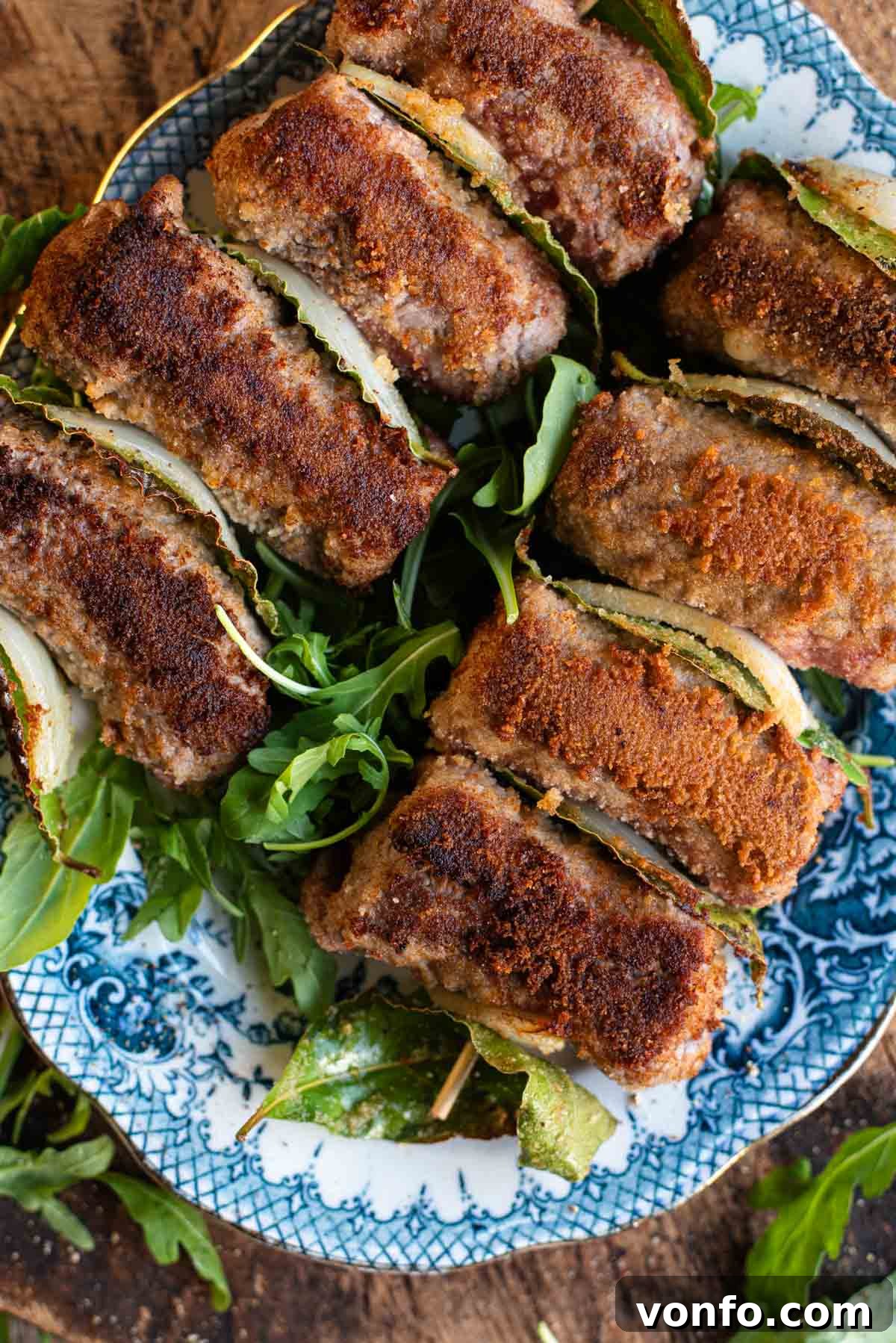
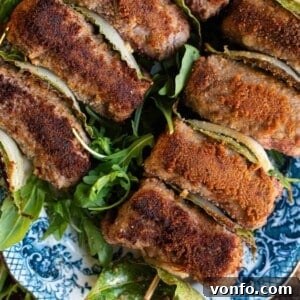
Embark on a culinary adventure to the heart of Sicily with these incredibly delicious Sicilian Beef Involtini. These savory beef rolls are generously stuffed with a harmonious blend of flavorful breadcrumbs, sweet sun-dried tomatoes, plump raisins, crunchy pine nuts, and rich Caciocavallo and Pecorino cheeses. Each involtino is then lightly coated in fine breadcrumbs and pan-fried to golden perfection, creating an irresistible crispy exterior that gives way to a tender, juicy interior. Perfectly versatile, they make an ideal main course, complemented beautifully by a fresh vegetable side or a crisp salad.
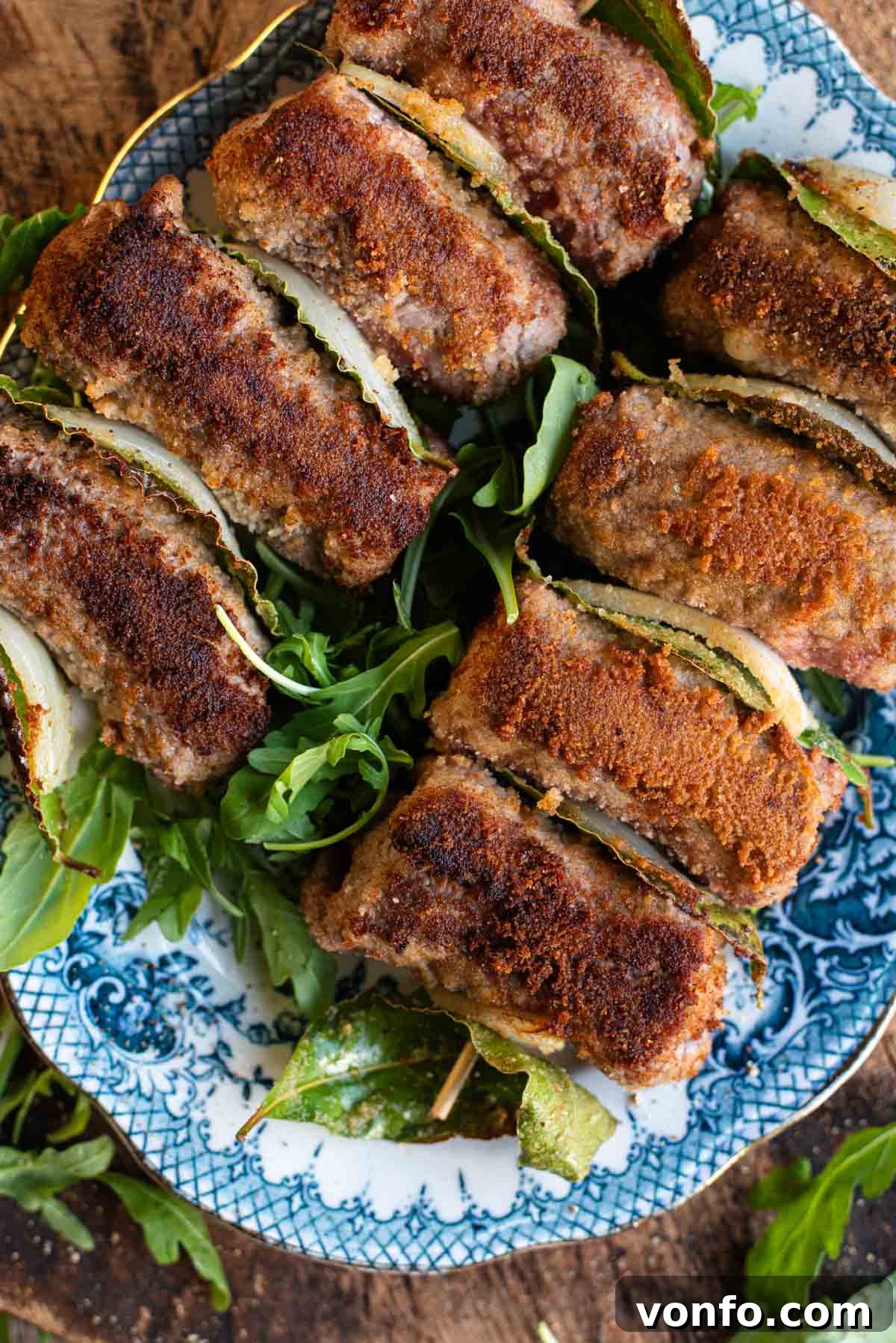
Discovering the Culinary Magic of Sicily: Involtini Alla Palermitana
A recent culinary exploration of Sicily revealed a food paradise unlike any other. The island’s vibrant gastronomic scene is a tapestry of historical influences and local traditions, offering an array of unforgettable dishes. From the unbelievably crispy arancini to the famous cannoli handcrafted by Nuns, delicate Panelle (chickpea fritters), and the utterly addictive Parmigiana di Melanzane, every bite was a revelation. Among these treasures, the glorious involtini truly stood out.
In Palermo, local butcher shops proudly displayed upwards of ten different varieties of these delectable beef rolls. During our stay, we indulged in sampling four distinct kinds, but the ‘Palmeritana’ style (meaning Palermo style) and a version filled with a creamy pistachio and mortadella mixture quickly became our absolute favorites. The Palmeritana, with its unique sweet and savory stuffing, left such an impression that recreating it at home and sharing the recipe became an immediate passion project.
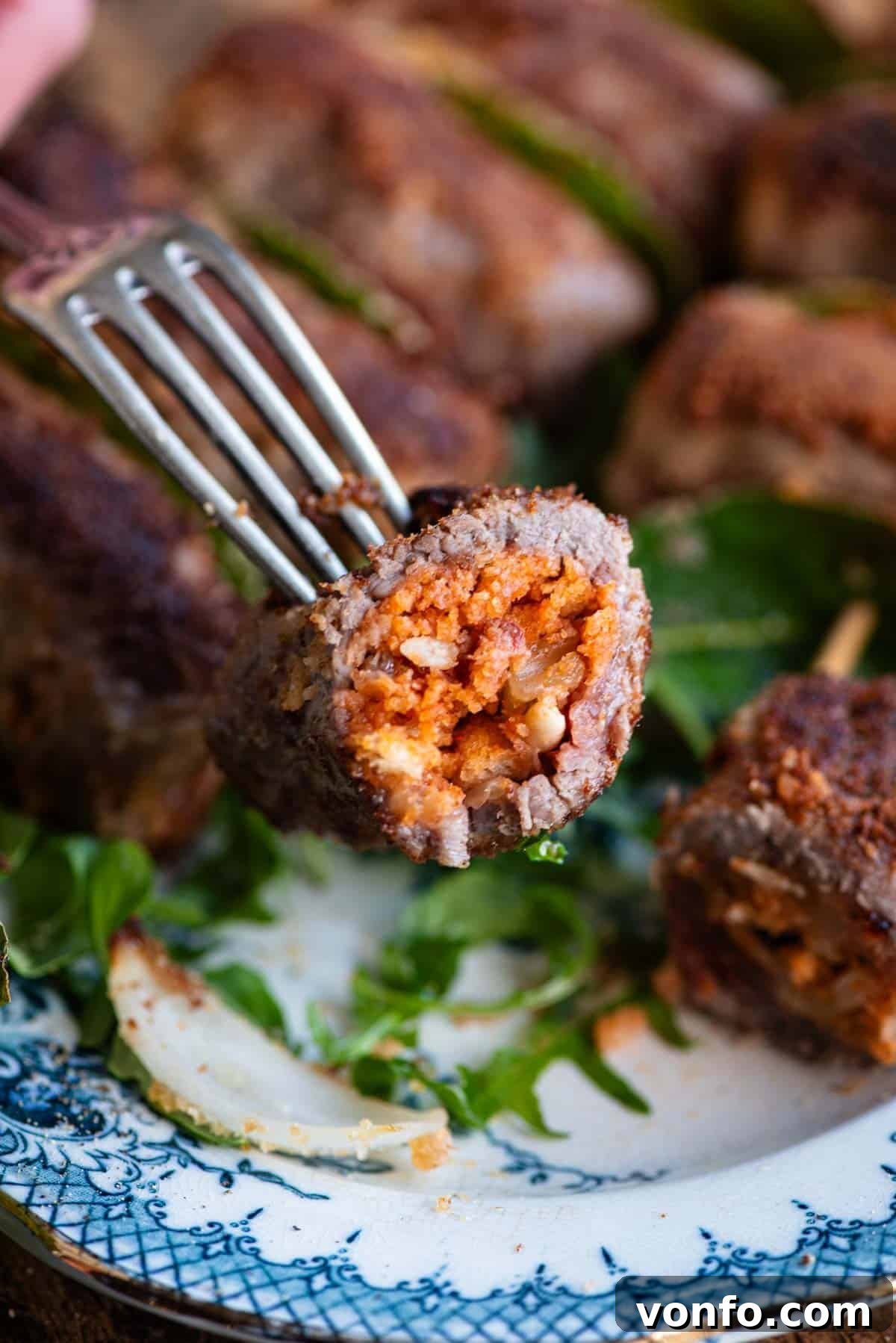
This particular recipe features thin, tender slices of beef, expertly rolled around a rich filling. The stuffing is a flavorful medley of toasted breadcrumbs, savory tomato, pungent Caciocavallo cheese, naturally sweet raisins, and earthy pine nuts. Traditionally, these involtini are threaded onto skewers, interspersed with fresh bay leaves – which infuse an incredible aromatic depth – and slices of sweet onion. The result is a dish that is not just a meal, but an experience, perfectly complemented by a variety of veggie side dishes and fresh salads. Dive into this recipe and bring the authentic taste of Sicilian tradition to your kitchen!
Essential Ingredients for Authentic Sicilian Involtini
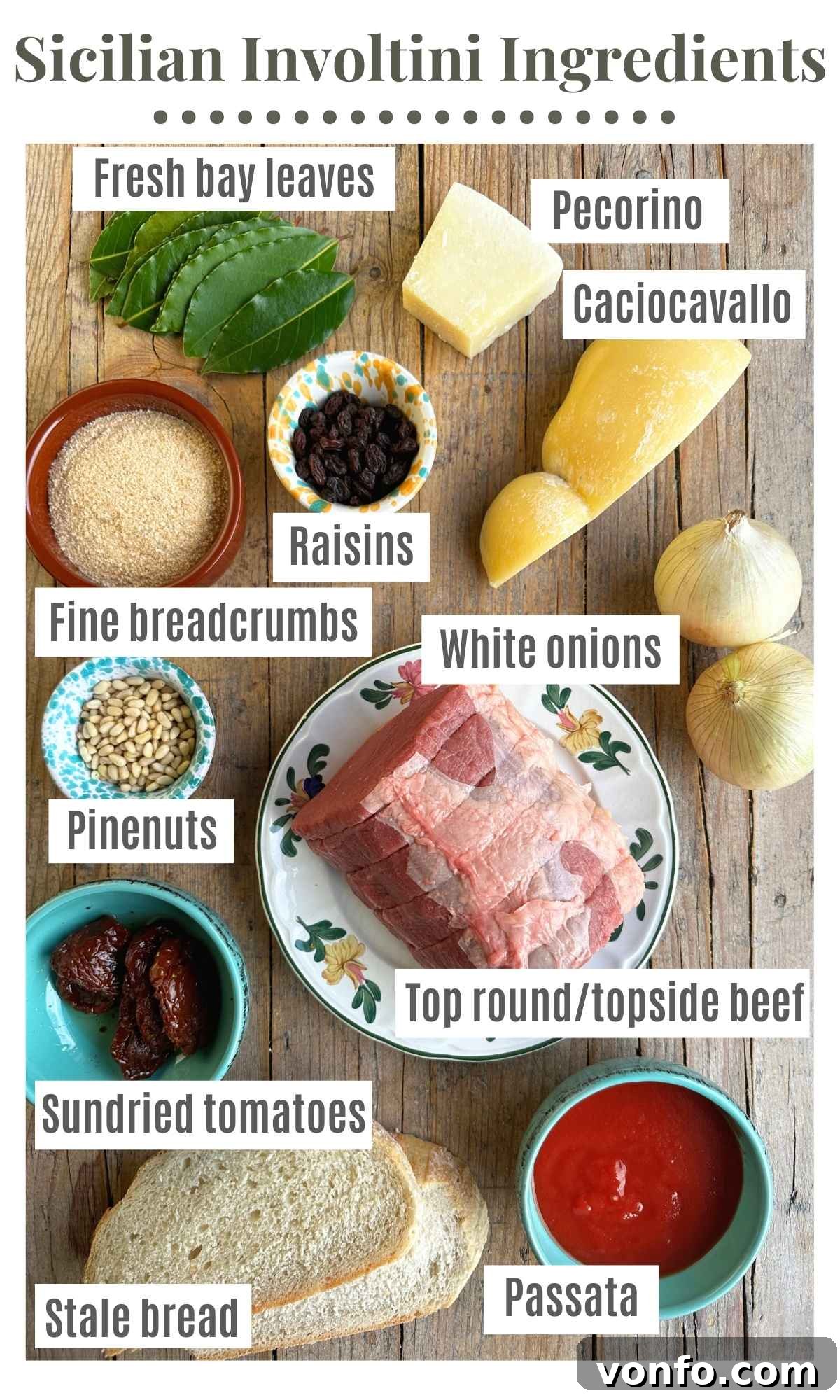
Crafting the perfect Sicilian Beef Involtini begins with selecting high-quality ingredients. While substitutions are noted in the full recipe card below, let’s delve a little deeper into some key components that truly define this dish.
Ingredient Notes and Expert Tips
- The Beef: For genuine tenderness and flavor, we recommend using a whole piece of top round or topside beef. This cut, once trimmed of any sinew and thinly sliced, then gently pounded, becomes wonderfully pliable – perfect for rolling. If your butcher offers pre-sliced thin beef cutlets, that’s an excellent time-saver, aiming for approximately 16 slices in total. For an even more traditional touch, especially if you can source it, veal is also a fantastic option, offering a slightly milder flavor profile.
- The Breadcrumbs: A Tale of Two Textures: The secret to exceptional involtini lies in using two distinct types of breadcrumbs. For the rich filling, stale, crusty bread, blitzed in a food processor, is ideal. Its ability to absorb flavors and moisture creates a substantial and delicious core. For the exterior, fine, unseasoned store-bought breadcrumbs are preferred. Their uniform texture ensures a consistently crispy and golden crust when pan-fried, providing that satisfying crunch with every bite.
- Cheese Selection: The Heart of the Filling: Caciocavallo cheese is a traditional choice for its semi-firm texture and savory, slightly piquant flavor that melts beautifully. If Caciocavallo is difficult to find, provolone cheese is an excellent and widely available substitute, offering a similar mild, nutty profile. Fontina is another great alternative, known for its smooth melt. For those looking to experiment beyond Italian varieties, a good quality Manchego could also work well, lending a distinctive Spanish flair.
- The Sweetness of Raisins: Soaking the raisins in warm water before adding them to the filling is a crucial step. This rehydrates them, making them plump and juicy, ensuring their natural sweetness is evenly distributed throughout the involtini. It also prevents them from becoming tough during cooking, contributing to the overall tender texture of the stuffing.
- Fresh Bay Leaves: The Aromatic Secret: While often overlooked, fresh bay leaves are integral to the authentic flavor of Sicilian involtini. When threaded onto the skewers between the beef rolls, they impart a subtle yet distinctive herbaceous aroma that elevates the entire dish. Dried bay leaves, unfortunately, lack the same potency and can be brittle, making them unsuitable for skewering. If fresh bay leaves are unavailable, it’s best to omit them rather than substitute with dried, or tuck a few dried leaves into the baking tray if baking.
- Sun-Dried Tomatoes & Pine Nuts: These ingredients add layers of intense flavor and texture. Sun-dried tomatoes contribute a concentrated, tangy sweetness, while pine nuts offer a delicate, buttery crunch. Toasting the pine nuts lightly before adding them can further enhance their nutty aroma.
- Onions and Passata: Building the Base: A finely chopped white onion, sautéed until soft and translucent, forms a sweet and aromatic foundation for the tomato passata. The passata (or tomato puree in the US) binds the filling ingredients together, adding a rich, slightly acidic counterpoint to the other flavors.
Step-by-Step Guide to Crafting Sicilian Involtini
This visual guide walks you through each stage of preparation. For precise ingredient quantities and additional expert tips, please refer to the comprehensive recipe card at the end of this article.
- Prepare the Raisins: Begin by placing the raisins in a small bowl and covering them with hot or warm water. Allow them to soak for a few minutes; this crucial step helps them rehydrate and become wonderfully plump, enhancing their natural sweetness in the filling (photo 1).
- Craft the Breadcrumbs: Next, process your stale bread in a food processor until fine breadcrumbs are formed. Transfer these breadcrumbs to a dry pan and toast them over medium heat. Stir frequently until they achieve a crispy texture, though they don’t necessarily need to turn golden brown (photos 2 and 3).
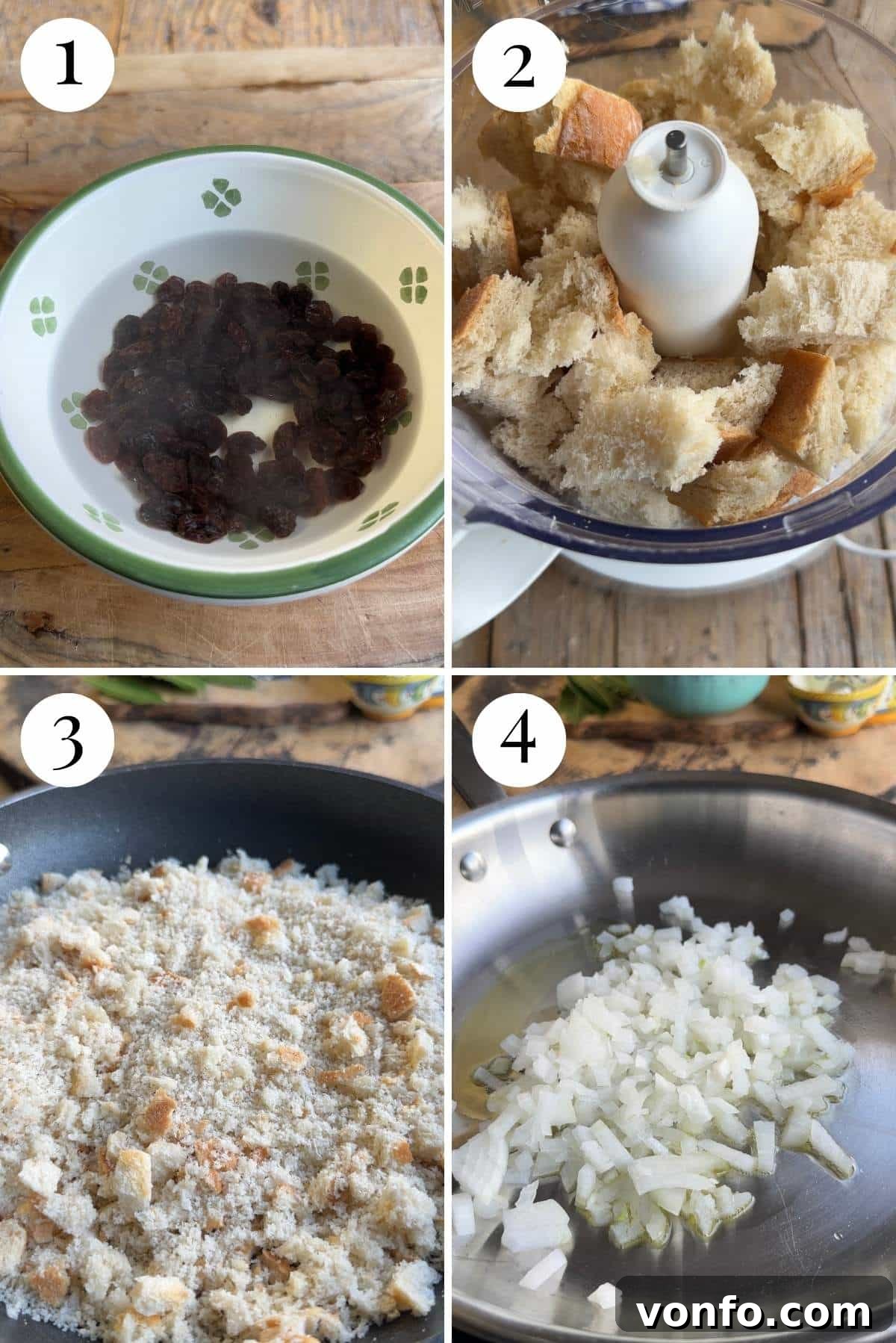
- Sauté the Onion and Tomato Base: In a pan, gently sauté the finely chopped onion with a drizzle of olive oil until it becomes beautifully soft and translucent. Stir in the tomato passata, along with a pinch of salt and pepper, combining thoroughly. Remove from heat and set aside to cool slightly (photos 4 and 5).
- Assemble the Flavorful Filling: In a large mixing bowl, combine the toasted breadcrumbs, the prepared tomato and onion mixture, finely chopped sun-dried tomatoes, pine nuts, and both Caciocavallo and Pecorino cheeses. Squeeze any excess water from the rehydrated raisins and add them to the bowl. Mix all ingredients until they are thoroughly combined, creating a cohesive and aromatic stuffing (photo 6).
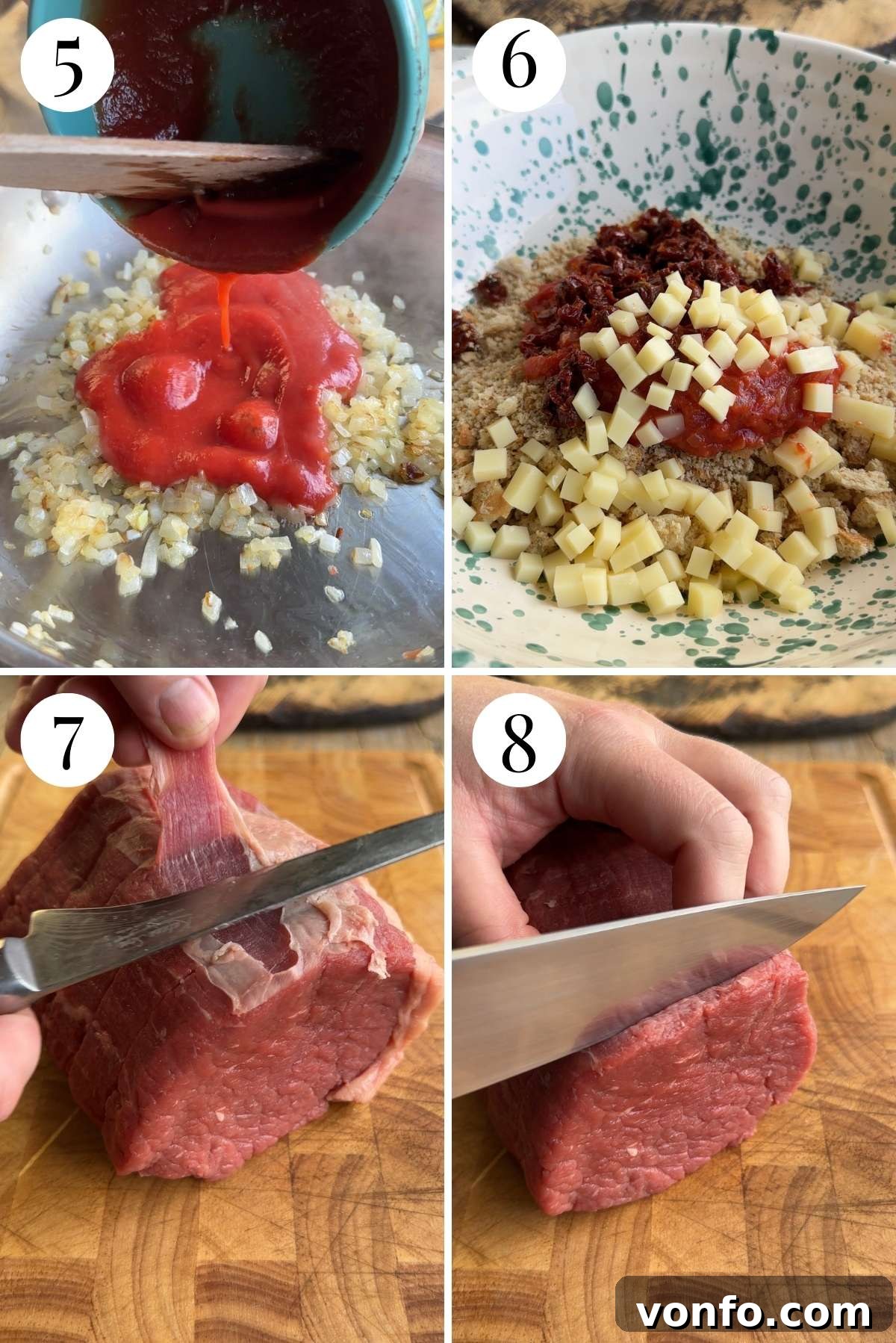
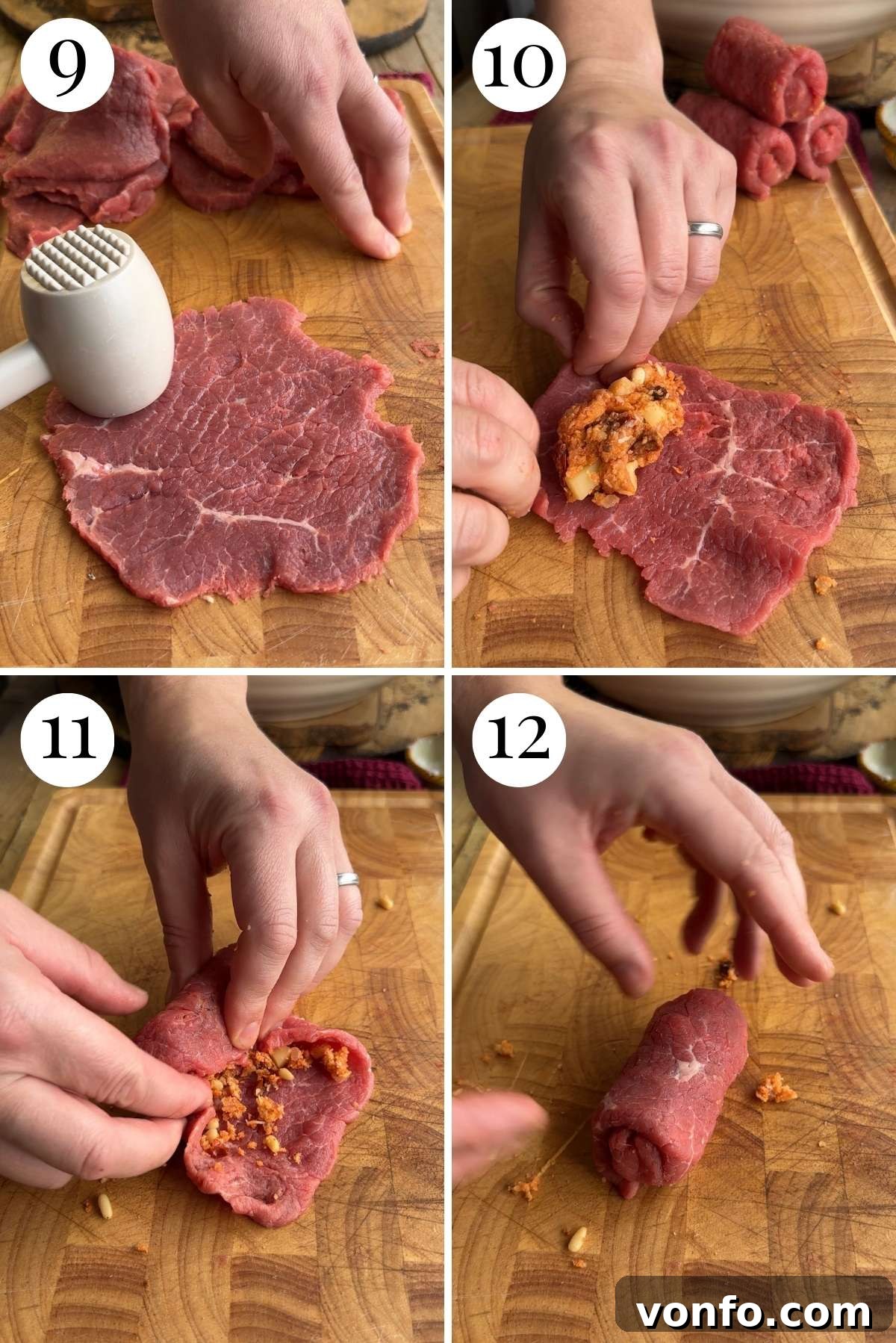
- Prepare and Stuff the Beef: Trim any undesirable sinew or silverskin from the beef, then cut it into uniform slices, approximately 1/4 inch thick. Using a meat mallet, gently bash these slices until they are about half their original thickness, ensuring they are pliable for rolling (each slice should be around 5-6 inches long). Take about 2 tablespoons of the prepared filling and compress it firmly in your hand to form a compact croquette shape. Place this filling at one end of a beef slice. Carefully roll the beef slice over the filling, tucking in the sides as you go, to create tight, well-formed involtini (photos 7-12).
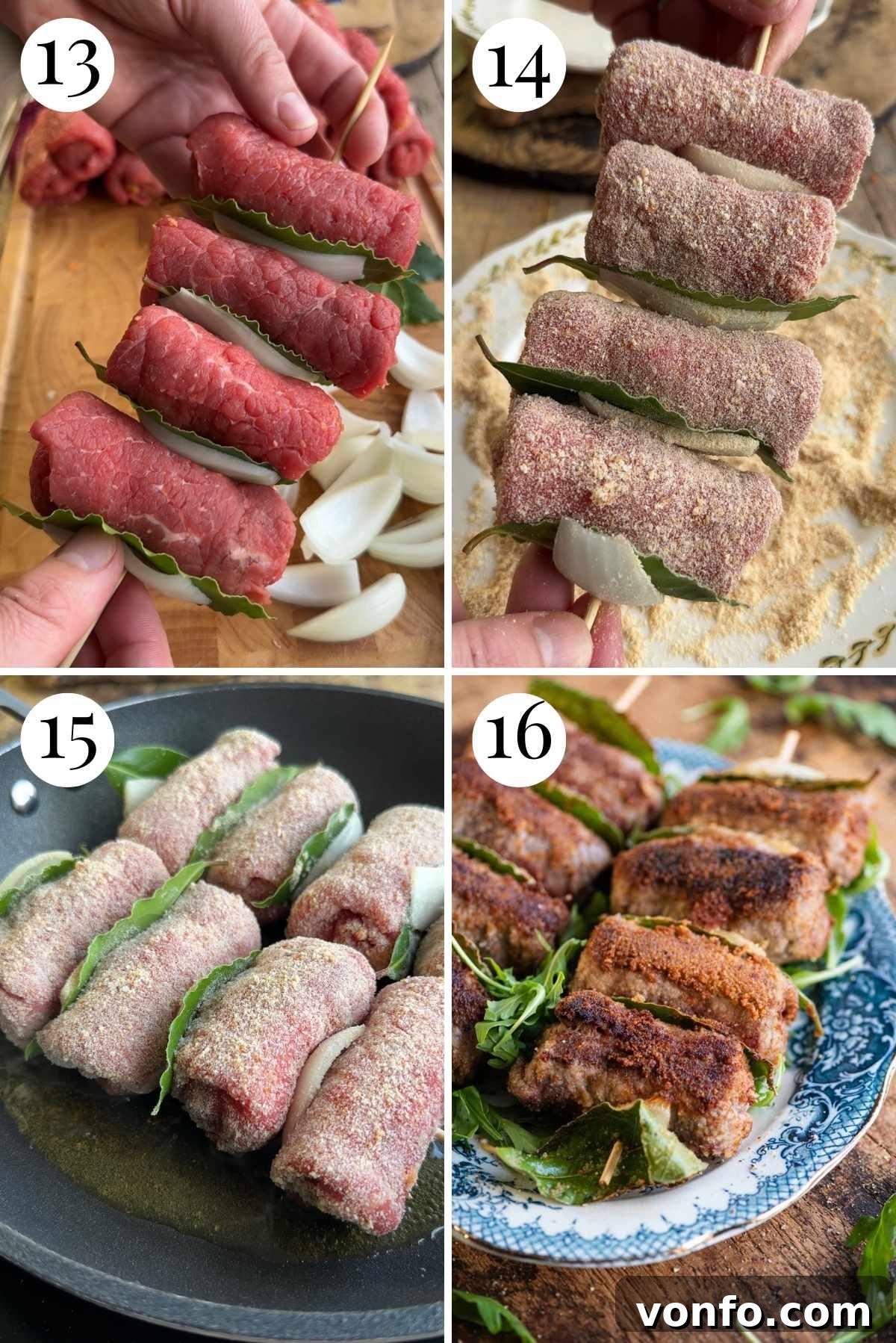
- Assemble the Skewers: Once all the involtini are rolled, thread four of them onto each skewer. Crucially, place one fresh bay leaf and a slice of onion in between each involtino. This layering not only adds visual appeal but infuses every piece with delightful aromas during cooking (photo 13).
- Crumb and Pan-Fry to Perfection: Lightly brush each involtino with olive oil, then generously dust them in fine breadcrumbs, ensuring an even coating. Heat 2-3 tablespoons of olive oil in a large pan over medium heat. Once the oil is hot, carefully place the involtini skewers in the pan and fry for approximately 4 minutes on each side until golden brown and crispy. To ensure all sides are perfectly cooked, stand the skewers upright to brown the ends for about a minute each. Serve immediately and savor the flavors (photos 14-16).
- Alternative Cooking Method: Baking: For a lighter option, you can bake the involtini. First, quickly brown them in a pan for 1-2 minutes on each side to develop some color and flavor. Then, arrange them on a baking tray and bake in a pre-heated oven at 180°C (350°F) for 10 minutes, or until cooked through and heated evenly.
Perfect Pairings: Sides to Serve with Sicilian Involtini
Choosing the right accompaniment can truly enhance the involtini experience. Our go-to choice is often crispy Italian roast potatoes, which provide a hearty and comforting contrast to the savory beef. Alongside, a vibrant green vegetable like tender green beans in tomato sauce or perfectly sautéed broccolini adds freshness and balance to the meal.
If you’re serving involtini for a lighter lunch or simply prefer a refreshing counterpoint, a simple rocket (arugula) salad is an excellent choice. Tossed with a drizzle of good quality extra virgin olive oil, a squeeze of fresh lemon juice, and a generous crack of black pepper, an arugula salad cuts through the richness of the meat, cleansing the palate beautifully.
Frequently Asked Questions About Involtini
You might encounter similar recipes referred to as ‘Spiedini,’ which literally translates to ‘skewers.’ While ‘Involtini’ refers specifically to small, rolled, and stuffed bites (which can be made from meat or vegetables), the terms can often be used interchangeably for this particular recipe, especially since these involtini are traditionally cooked and served on skewers. Essentially, all spiedini are skewered, but not all involtini are necessarily on skewers, though many are!
Absolutely! Involtini are fantastic for meal prepping. You can assemble them completely, ready for cooking, and store them in the refrigerator for 1-2 days. Just remember not to dust them in breadcrumbs until you are ready to fry or bake, as the breading can become soggy. Allow them to come to room temperature for about 15-20 minutes before cooking for the best results.
Cooked involtini can be safely stored in an airtight container in the refrigerator for 2-3 days. To reheat, place them on a baking tray and warm them in a preheated oven at 190°C (375°F) for about 10-15 minutes, or until they are heated through and the breading has regained some of its crispness. Avoid reheating in the microwave if you want to preserve their texture.
Explore More Authentic Sicilian Recipes
If you’ve fallen in love with the flavors of our Sicilian Beef Involtini, then you’re in for a treat! Sicilian cuisine is incredibly diverse and rich, with a history deeply intertwined with its various cultural influences. From savory street food to delightful desserts and vibrant salads, there’s always something new and exciting to discover. Here are a few more traditional Sicilian recipes from our collection that we think you’ll adore, offering a broader taste of this enchanting island’s culinary heritage. Each dish tells a story, blending fresh, local ingredients with age-old techniques to create truly unforgettable meals.
Sides
Peperoni Ammollicati (Peppers and Breadcrumbs)
A simple yet incredibly flavorful side dish featuring sweet bell peppers tossed with crispy, seasoned breadcrumbs. This classic Sicilian preparation highlights the beauty of fresh produce.
Salads
Insalata Pantesca (Sicilian Potato Salad)
This refreshing potato salad from the island of Pantelleria features tender potatoes, capers, olives, and fresh tomatoes, dressed simply with olive oil and oregano.
Italian Desserts
Pistachio Tiramisu
A luxurious twist on the classic Italian dessert, this pistachio tiramisu offers layers of creamy mascarpone, coffee-soaked ladyfingers, and a rich pistachio flavor.
Salads
Sicilian Fennel and Orange Salad
A wonderfully refreshing and vibrant salad combining crisp fennel, juicy oranges, and fresh mint, often finished with a light olive oil dressing – perfect for a warm day.
We hope you thoroughly enjoy preparing and savoring this authentic Sicilian Involtini recipe. Your feedback is incredibly valuable to us, so if you’ve tried this dish or any other recipe from our blog, please don’t hesitate to rate it and share your experience in the comments section below. We love hearing from our community! For more delicious recipes and culinary inspiration, you can also follow us on Facebook, Instagram, and Pinterest. Don’t forget to sign up for our Newsletter to receive weekly updates on our latest culinary creations directly in your inbox.
Step By Step Photos Above
Most of our recipes come with step by step photos, helpful tips and tricks to make it perfectly first time and even video!
Involtini alla Palermitana (Sicilian Beef Involtini)
By Emily
40 minutes
25 minutes
1 hour
5 minutes
4
– 6 servings
Equipment
-
4 Skewers
Ingredients
- 6 slices (2lbs/900g) Beef top round or topside , (can also use veal)
- 2 white onions, 1 finely chopped and 1 cut into wedges
- 200 g (7oz) bread cut into slices
- 60 g (2oz) Caciocavallo cheese, (can also use provolone) cut into small cubes
- 140 g (1/2 cup) Passata (tomato puree US)
- 40 g (1/2 cup) Pecorino, finely grated
- 30 g (1/4 cup) raisins soaked in hot/warm water
- 30 g (3 tablespoons) pine nuts
- 50 g sundried tomatoes, about 5-6 tomatoes, cut into strips
- Salt and pepper
- Fine breadcrumbs for dusting
- 20 fresh bay leaves, (see notes on using dried)
- Olive oil
- Salt
Instructions
-
Soak the raisins in hot/warm water and set aside.
-
Blitz the bread in a food processor until breadcrumbs form. Toast in a dry pan until crispy but they don’t have to be golden.
-
Finely chop the onion and sauté in 1-2 tbsp of olive oil until soft and translucent. Add the Passata and stir in with a pinch of salt and pepper. Turn off the heat and set aside.
-
Finely chop the sun-dried tomatoes and cut the cheese into small cubes. Put them in a large mixing bowl with the breadcrumbs, tomato and onion, pine nuts and pecorino. Squeeze the liquid from the raisins and add them.
-
Mix everything together until thoroughly combined.
-
Cut the beef into slices about 1/4 inch thick then bash them thin to half the thickness. Each slice should be around 5-6 inches long.
-
Form 2 tablespoons of filling into a compact croquette shape by squeezing it in your hand and place it at the end of a slice of beef.
-
Begin to roll the slice of beef over the filling and fold in the sides as you go (see photos for reference).
-
Repeat with the rest of the beef then skewer 4 involtini onto each skewer place 1 bay leaf and 1 slice of onion in between each one.
-
Brush the involtini very lightly with olive oil then dust them in fine breadcrumbs.
-
Add 2-3 tablespoons of olive oil to a large pan on a medium heat. Once hot, fry the involtini skewers on both sides for 4 minutes each side. Make sure to hold them on their sides to brown each end for 30-60 seconds each.
Alternative cooking method (baking)
-
Alternatively, you can brown the involtini for 1-2 minutes each side then bake them in a pre-heated oven at 180C/350F for 10 minutes.
-
Serve the involtini with a veggie side, salad or beans and enjoy!
Notes
- Note on bay leaves – For skewering, fresh bay leaves are essential as dried leaves will crumble and lack the same aromatic potency. If fresh bay leaves are unavailable, it’s best to omit them. If you plan to bake the involtini and still want some bay leaf flavor, you can tuck a few dried leaves into the baking tray between the involtini.
- Cheese alternatives – If Caciocavallo cheese is difficult to source, you can use another semi-soft cheese. Provolone is an excellent Italian substitute, as are Fontina or even a good quality, mild Manchego for a slightly different, yet delicious, flavor profile.
- Prep in advance – To save time, you can prepare the involtini rolls ahead of time and store them in the fridge for 1-2 days. However, hold off on dusting them in breadcrumbs until just before you’re ready to cook, to prevent them from becoming soggy. Always bring them to room temperature before frying for best results.
- Leftovers – Any leftover involtini will keep well in an airtight container in the fridge for 2-3 days. Reheat them gently in a preheated oven at 190°C (375°F) for about 10 minutes, or until they are thoroughly warmed through, ensuring they maintain their delicious texture.
Helpful Info for All Our Recipes
- We always advocate for the use of extra virgin olive oil in all our recipes unless specifically stated otherwise, for superior flavor and health benefits.
- For canned or jarred tomatoes of any kind, we consistently recommend using Cirio or Mutti brands. Their consistent quality and rich flavor make a significant difference in the final taste of your dishes.
- Unless specified differently, assume all vegetables mentioned in our recipes are of medium size. This ensures consistency in measurement and cooking times.
- All our recipes are meticulously tested and developed using a fan (convection) oven. Adjustments may be necessary if using a conventional oven.
- Find out more about how nutrition is calculated and why it should be considered an approximation.
- Check out our must-have Italian Pantry Staples to stock your kitchen with essential ingredients for authentic Italian cooking.
- You can also find all our Essential Kitchen Tools for Italian Cooking to ensure you have the right equipment for every dish.
Nutrition Facts
Calories:
778kcal
|
Carbohydrates:
47g
|
Protein:
60g
|
Fat:
41g
|
Saturated Fat:
17g
|
Polyunsaturated Fat:
6g
|
Monounsaturated Fat:
17g
|
Trans Fat:
2g
|
Cholesterol:
177mg
|
Sodium:
677mg
|
Potassium:
1625mg
|
Fiber:
6g
|
Sugar:
12g
|
Vitamin A:
526IU
|
Vitamin C:
13mg
|
Calcium:
361mg
|
Iron:
9mg
Nutrition information is automatically calculated and should only be used as an approximation.
Did you try this recipe?
Leave a comment below!