
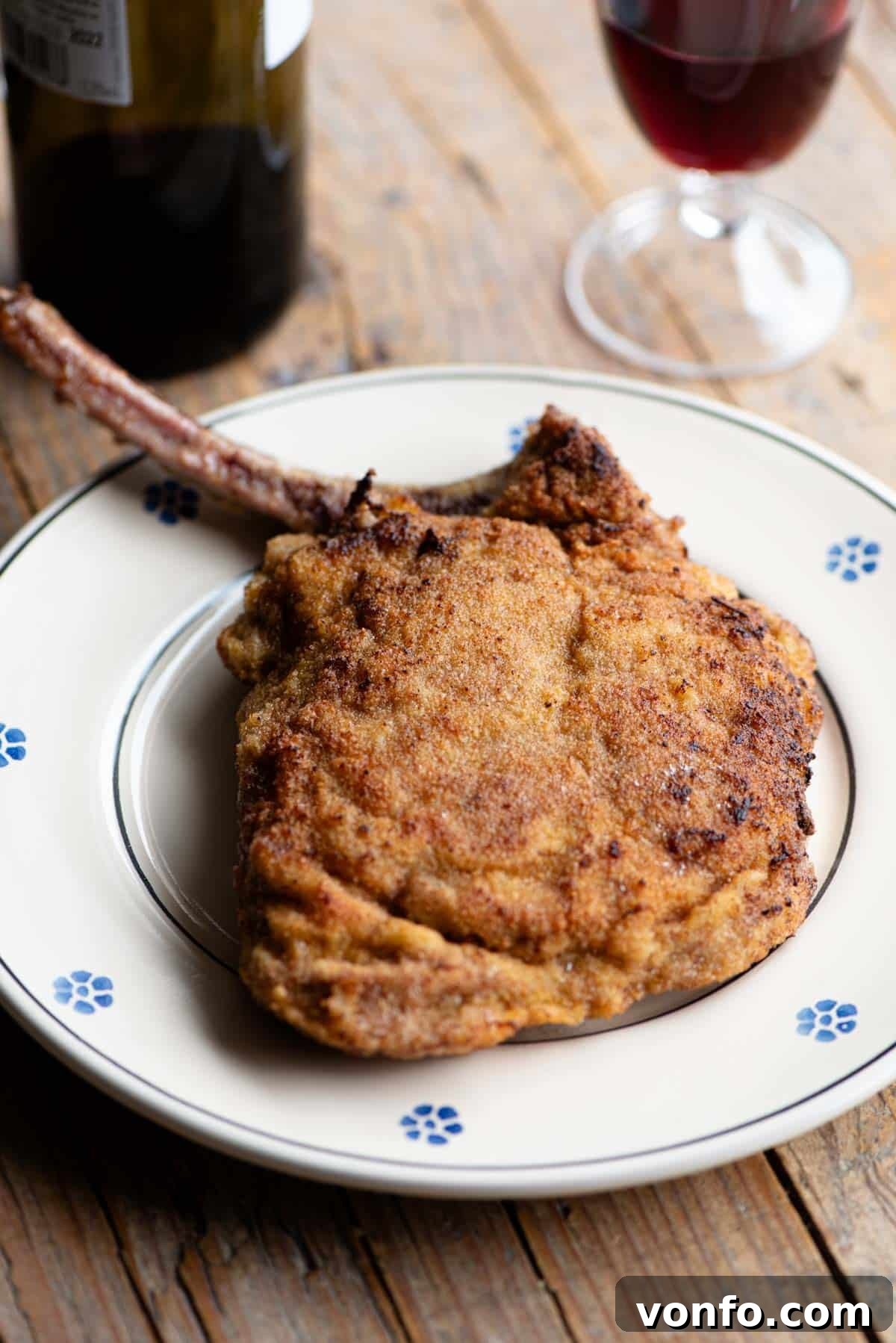
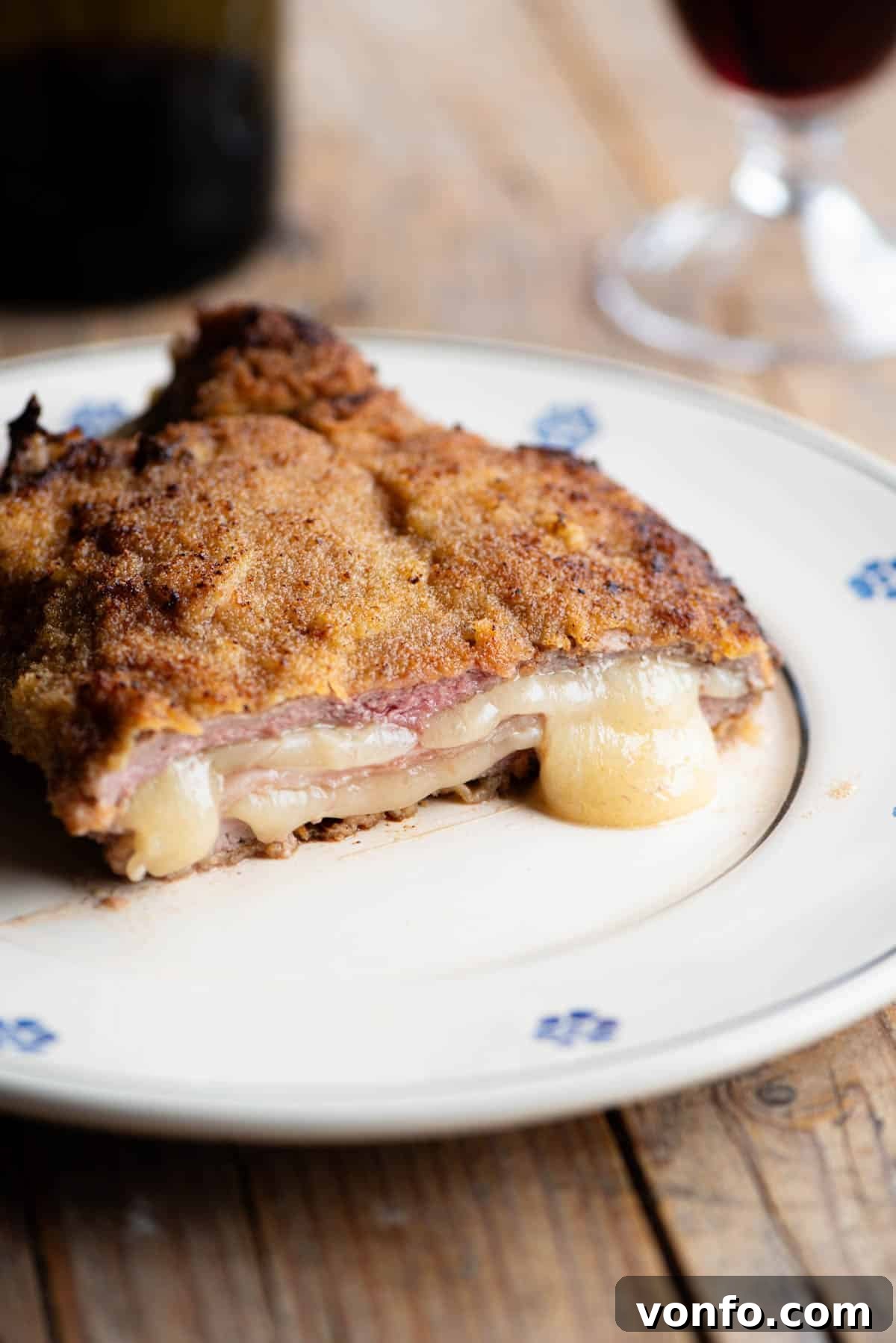
Costoletta alla Valdostana is a truly iconic and cherished dish originating from the picturesque Aosta Valley in Northwestern Italy. This indulgent culinary masterpiece features a tender veal chop, expertly breaded, then generously stuffed with the region’s famous Fontina cheese and delicate prosciutto cotto (cooked ham). Each chop is then pan-fried in rich butter until golden brown and irresistibly crispy. It’s a meal that embodies the warmth and heartiness of Alpine Italian cooking, offering a profound depth of flavor and a comforting, satisfying experience with every single bite.
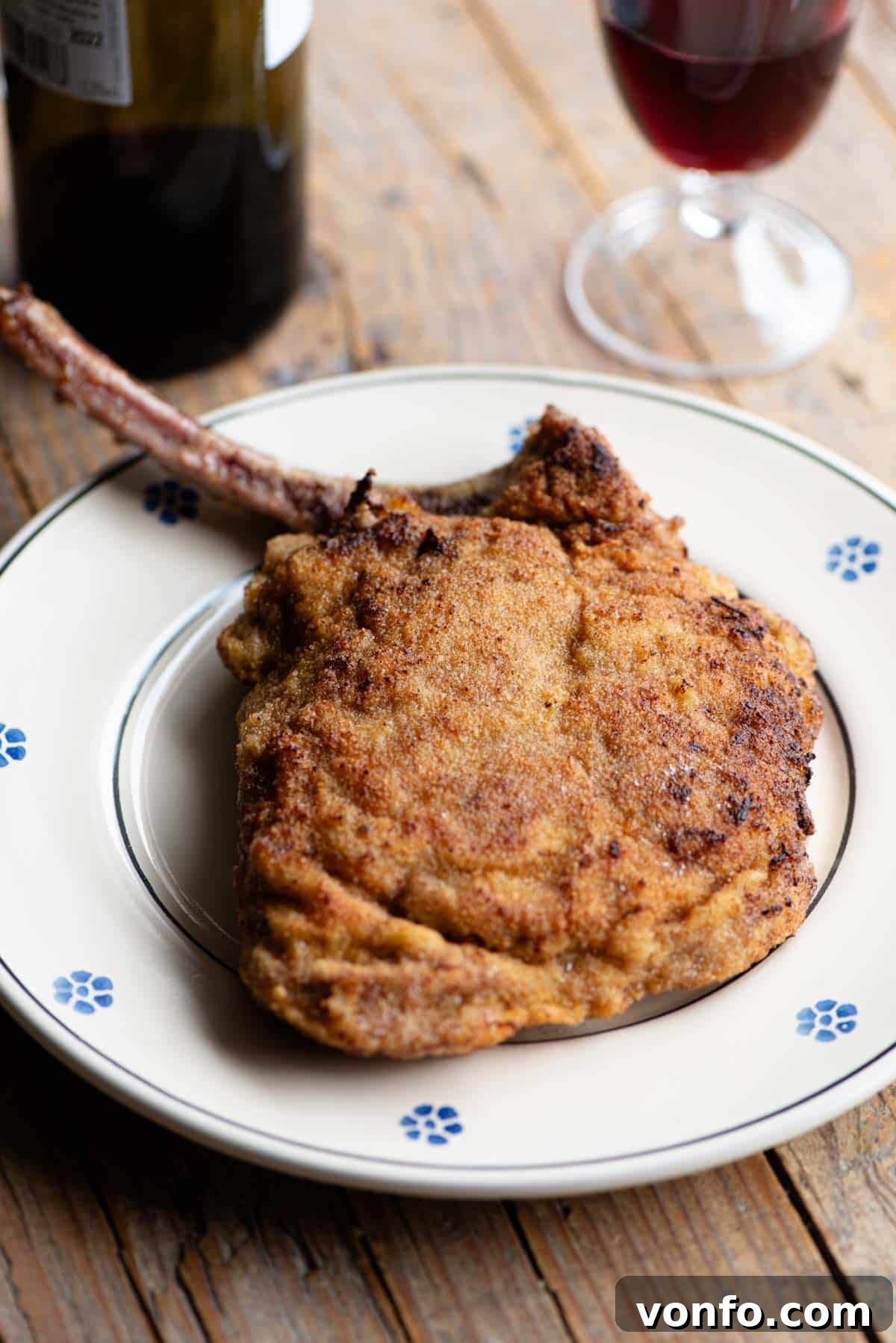
Should your travels ever lead you to the stunning Valle d’Aosta, a region renowned for its breathtaking Alpine landscapes and distinctive cuisine, you will undoubtedly encounter this magnificent dish on nearly every menu. It’s more than just a meal; it’s an essential part of the local culinary heritage, and an experience every food enthusiast must try.
In Italy, you’ll find this dish lovingly referred to in two variations: “Costoletta” when the succulent veal chop retains its bone, or “Cotoletta” when prepared without the bone. Regardless of the bone’s presence, the signature “Valdostana style” guarantees that it will be lavishly stuffed with the exquisite combination of Fontina cheese and premium Italian ham.
The preparation involves carefully breading the veal chop and then frying it until golden and crisp in butter. While not for the calorie-conscious, the unparalleled rich flavors and delightful textures make every single mouthful absolutely worthwhile. This is the kind of dish that elevates an ordinary meal into a special occasion. It’s perfect for celebrating, treating loved ones, or simply indulging yourself after a long week. Despite its luxurious appeal, the process of making Costoletta alla Valdostana is surprisingly straightforward, proving that you don’t need to be a gourmet chef to create something truly spectacular. We are confident you will enjoy preparing and tasting this regional Italian gem as much as we do!
Below, you’ll find the comprehensive recipe, including detailed notes on selecting ingredients, step-by-step photos, invaluable cooking tips, exciting variations, and a video tutorial to guide you through the process. For the full printable version, please scroll to the bottom of this page or click on the recipe link provided.
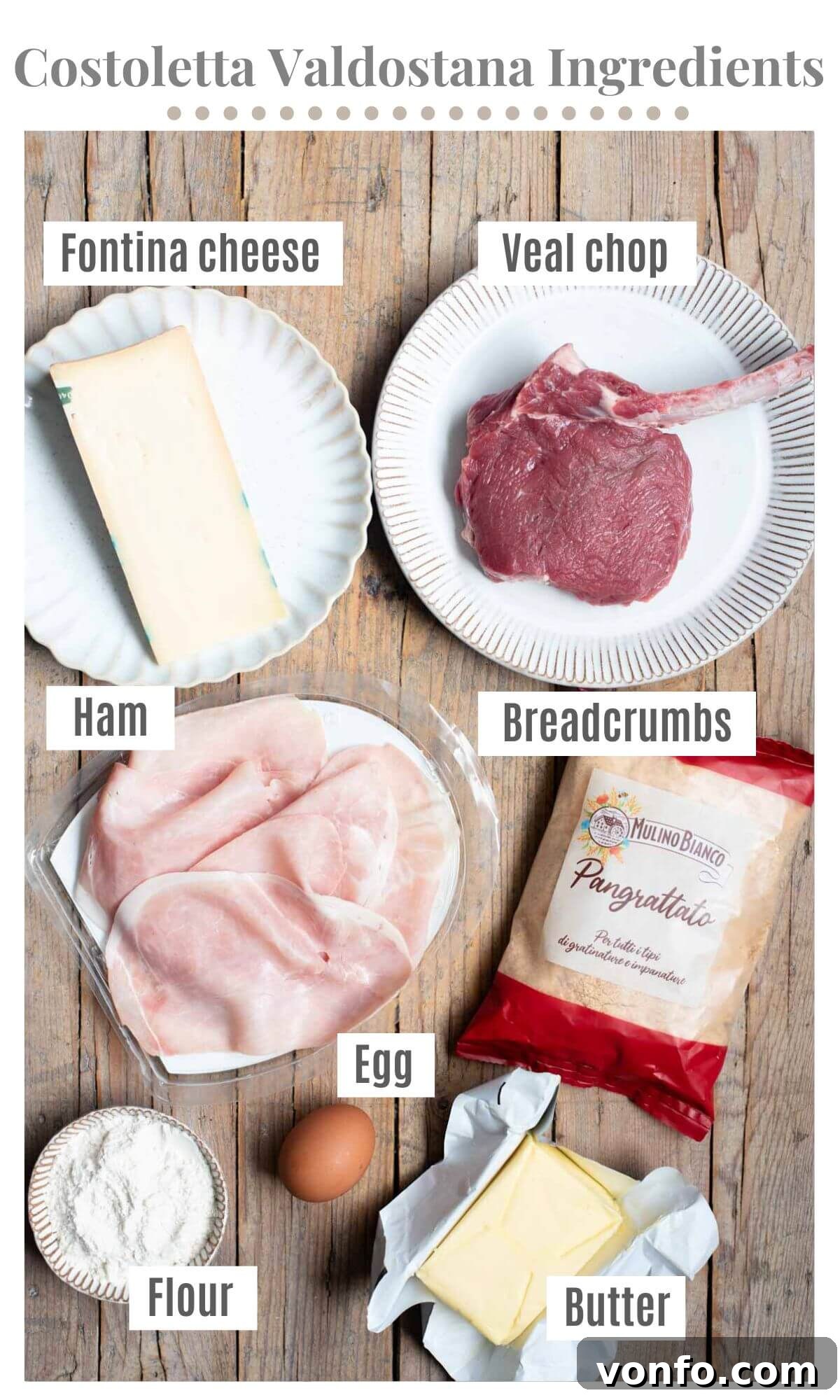
Essential Ingredients for Authentic Valdostana Veal Chops
Crafting the perfect Costoletta alla Valdostana begins with selecting high-quality ingredients. Each component plays a crucial role in achieving the rich, comforting flavors this dish is famous for.
Ingredient Notes and Potential Substitutions
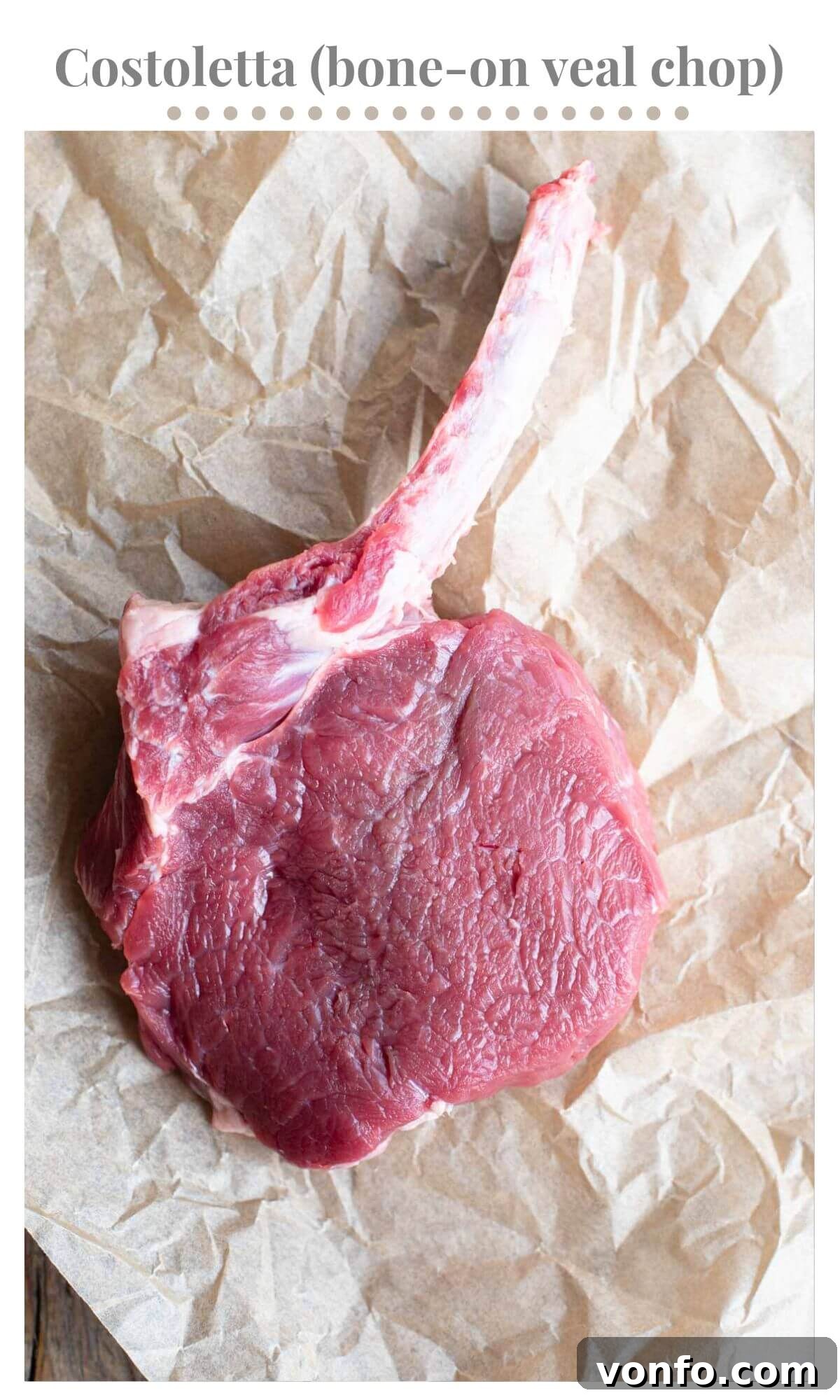
- Veal Chop: For the most traditional experience, we recommend a bone-in veal chop, which imparts deeper flavor and helps the meat stay moist. We’ll guide you on how to properly trim it. If bone-in is unavailable, a boneless veal chop works beautifully. If veal is difficult to source, large pork chops or even chicken cutlets can be used as alternatives, though the flavor and texture will differ slightly (see tips below for adapting these cuts).
- Fontina Cheese: This is the undisputed star cheese of the Aosta Valley and is absolutely essential for an authentic Costoletta alla Valdostana. Look for Fontina with a “DOP” (Denominazione di Origine Protetta) label, guaranteeing its origin and quality. Fontina is known for its nutty, earthy, and mildly pungent flavor, with a creamy, melt-in-your-mouth texture that oozes perfectly when cooked. If authentic Fontina is unattainable, suitable substitutes that offer a similar melting quality and rich flavor profile include Gruyère or Comté cheese.
- Prosciutto Cotto: This is Italian cooked ham, distinct from its cured counterpart, prosciutto crudo. Opt for a high-quality prosciutto cotto that is thinly sliced and offers a delicate, sweet, and savory taste. Its mild flavor perfectly complements the Fontina without overpowering the veal.
- Breadcrumbs: For that classic crispy coating, use fine breadcrumbs, not the coarser panko variety. For a truly traditional taste, avoid seasoned breadcrumbs and opt for plain ones, allowing the natural flavors of the veal, cheese, and ham to shine. You can always add your own subtle seasonings like a pinch of salt, pepper, or a touch of dried parsley if desired.
- Butter: Traditionally, Costoletta alla Valdostana is fried in clarified butter (ghee), which has a higher smoke point and prevents burning. However, we often use unsalted butter combined with a small amount of olive oil. The olive oil helps to raise the smoke point of the butter, preventing it from browning too quickly and ensuring a beautifully golden crust without bitterness. If you have clarified butter on hand, feel free to use it for an even richer, purer butter flavor.
Step-by-Step Preparation: A Visual Guide to Costoletta alla Valdostana
Preparing this exquisite dish is a rewarding culinary journey. Follow these detailed steps to achieve a perfectly stuffed and fried veal chop. We’ve included photos to guide you through each stage, ensuring your success in the kitchen.
Don’t forget! A detailed video tutorial is available at the bottom of the page, offering a visual demonstration of the entire step-by-step process for extra guidance!
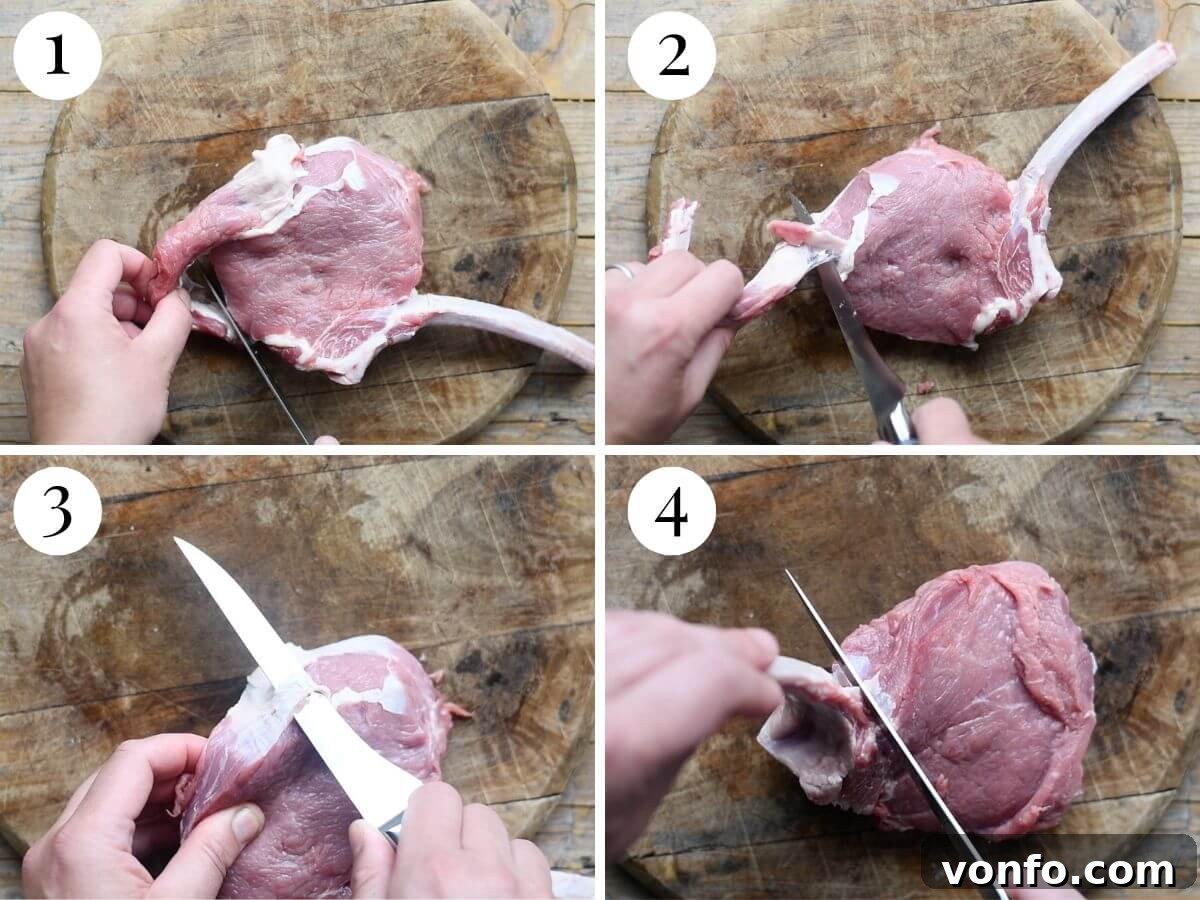
- Prepare and Trim the Veal: Begin by meticulously trimming off any visible sinew or silverskin from around the edges of the veal chop. This fibrous tissue can become tough when cooked, so removing it ensures a tender result. Next, carefully trim the meat away from the bone, leaving approximately an inch of meat still attached at the very bottom. This creates a pocket for your delicious stuffing while retaining the bone for flavor and presentation (refer to photos 1-4 for a clear visual guide).
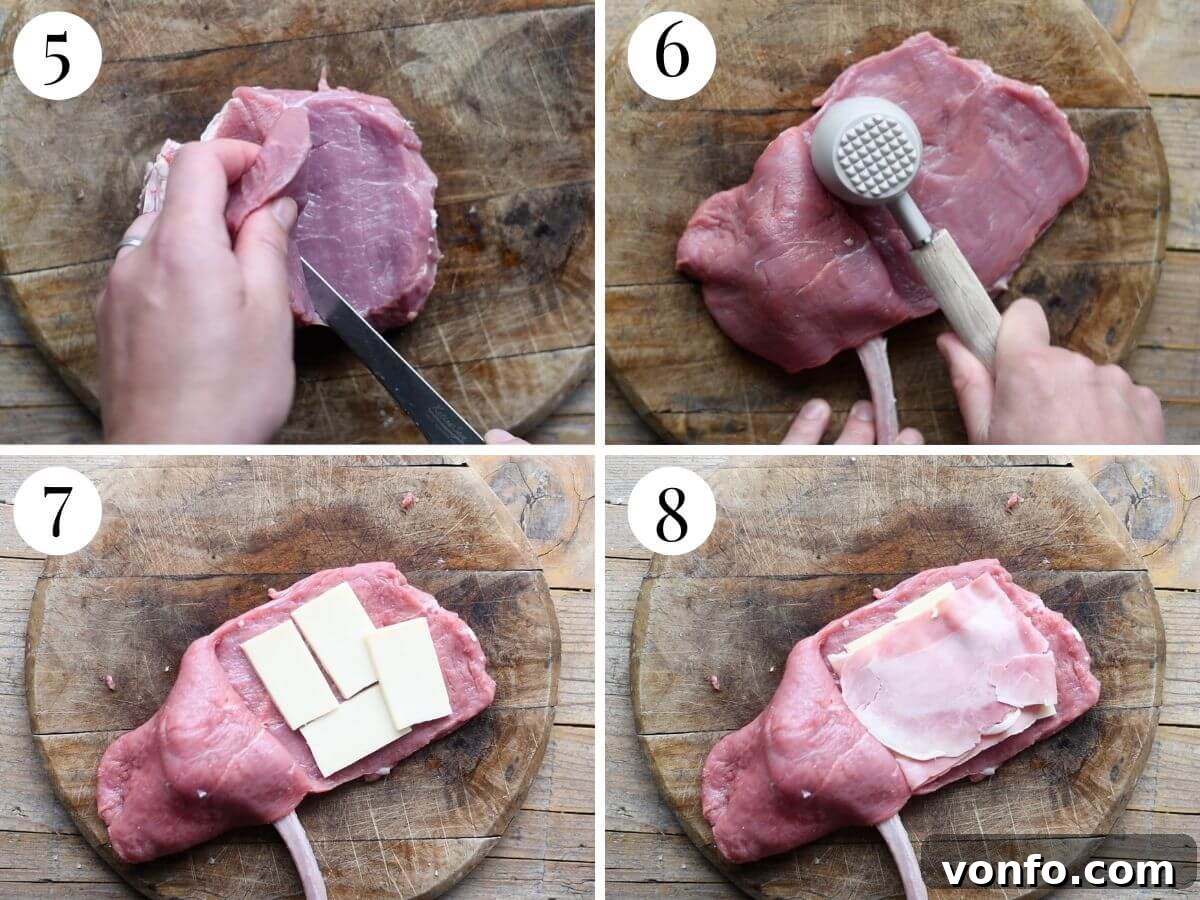
- Butterfly and Flatten the Veal: With the veal chop trimmed, carefully cut it horizontally through the middle, creating a pocket or “butterfly” opening. It’s crucial to keep the meat attached at the bone end, allowing it to open like a book. Once butterflied, place the veal between two sheets of plastic wrap. Using the smooth side of a meat mallet (or a rolling pin if you cover it with plastic wrap to protect the meat), gently but firmly beat the veal until it is about half its original thickness. This tenderizes the meat and creates a larger, more even surface for stuffing (see photos 5 and 6).
- Stuff the Veal Chop: Now for the delicious filling! Open up your flattened veal chop. Lay down an even layer of Fontina cheese slices on one side. Follow this with two slices of high-quality prosciutto cotto, ensuring it covers the cheese. Top the ham with another generous layer of Fontina cheese. Carefully fold the other half of the veal chop over the filling, creating a sealed pocket. Gently beat the edges of the stuffed chop once more with the mallet to help secure the filling and prevent it from leaking during frying (consult photos 7-10 for detailed stuffing technique).
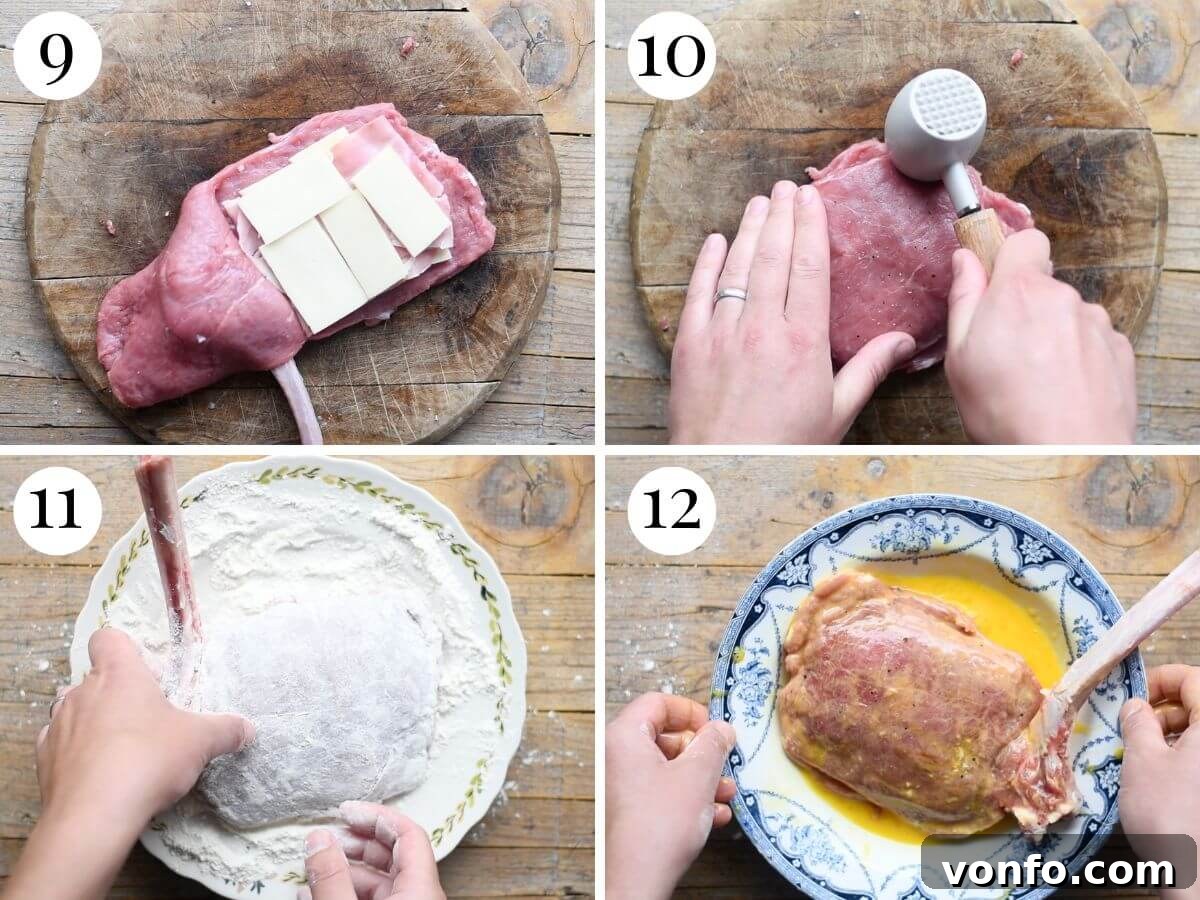
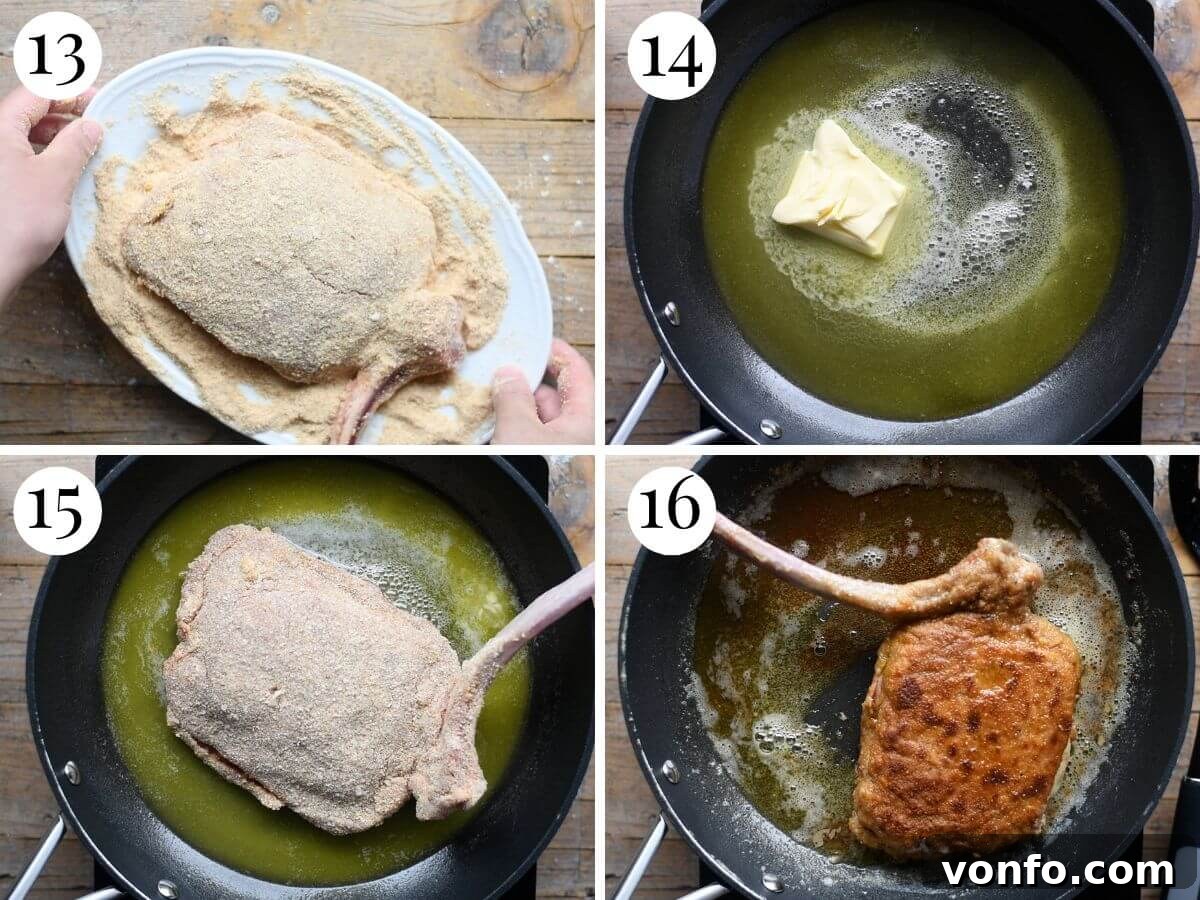
- Breading and Frying to Perfection: Prepare three shallow dishes: one with all-purpose flour, one with a beaten egg, and one with fine breadcrumbs. Carefully dredge the stuffed veal chop first in the flour, ensuring it’s evenly coated, then dip it into the beaten egg, letting any excess drip off. Finally, thoroughly coat the chop in breadcrumbs, pressing gently to ensure a firm and complete adherence. This triple coating creates a wonderfully crispy exterior. In a large, heavy-bottomed pan, melt the butter with a touch of olive oil over a medium-low heat. Once the butter is shimmering (not smoking), carefully place the breaded veal chop in the pan. Fry for approximately 4 minutes on each side, or until the breadcrumbs are beautifully golden brown and crispy, and the veal is cooked through. The internal temperature of the veal should reach 145°F (63°C). Once cooked, transfer the chop to a cutting board and allow it to rest for about 3-4 minutes before slicing and serving. This resting period is crucial for the juices to redistribute, ensuring a tender and moist chop (see photos 11-16 for the frying process).
Adapting the Recipe with Alternative Meat Cuts
While veal chop is traditional, this recipe is versatile and can be adapted using other cuts of meat. Here’s how you can achieve a similar delightful experience:
- Thin Cutlets (Veal or Chicken): If using thinner cutlets instead of a thick chop, you’ll adapt the stuffing and rolling technique. First, lightly bash the cutlets to create enough surface area for rolling. Place your Fontina cheese and prosciutto cotto in the center of each cutlet. Carefully roll up the cutlet, tucking in the edges to secure the filling. Once rolled, proceed with the standard breading process (flour, egg, breadcrumbs) and fry them in butter until golden brown and cooked through. Chicken cutlets will cook faster than veal, so adjust frying time accordingly.
- Pork Chop: A thick-cut pork chop can be prepared in much the same way as the veal chop. You’ll need to butterfly and flatten it, stuff it, bread it, and then fry it. Keep in mind that pork is generally a tougher meat than veal and can have a slightly different texture and a more pronounced flavor. Ensure the pork is cooked to a safe internal temperature of 145°F (63°C) before serving.
Expert Recipe Tips and Frequently Asked Questions
- Bone-in or Boneless: The bone adds flavor and helps retain moisture, but you can certainly remove it if preferred. If going boneless, ensure you still cut the veal to open like a book, leaving one end attached to keep the stuffing securely inside.
- Bashing the Meat Correctly: Always use the flat side of your meat mallet for tenderizing and flattening. The spiky side is typically for tenderizing tougher cuts, which isn’t necessary here and can damage the delicate veal. If using a rolling pin, place plastic wrap (cling film) over the meat to protect it from tearing and ensure an even flatten.
- Breading Technique: Take your time during the breading step. A thorough and even coating is key to a beautiful golden crust and keeps the stuffing sealed. Gently press the breadcrumbs onto the meat to ensure they adhere well, especially around the edges where the chop is folded.
- Preparing in Advance: This dish can be prepped ahead of time! You can trim, butterfly, flatten, and stuff the veal chops, then refrigerate them for several hours until you’re ready to cook. However, do *not* bread the veal in advance, as the breadcrumbs will absorb moisture and become soggy, losing their delightful crispness when fried. Bread just before frying for the best results.
- Frying Temperature is Key: Always fry the veal on a medium-low heat. If the heat is too high, the breadcrumbs will burn quickly, turning dark brown and bitter before the interior of the veal has a chance to cook through and the cheese to melt perfectly. A moderate heat ensures a golden-brown crust and a properly cooked, juicy interior.
In Italian cuisine, terminology often reflects subtle differences in preparation. “Costoletta” specifically refers to a meat chop that retains its bone, offering a richer flavor and often a more rustic presentation. “Cotoletta,” on the other hand, typically denotes a boneless cutlet, which is often pounded thin before breading and frying. In the context of Valdostana style, while a Costoletta implies the bone-in version, some recipes for Cotoletta alla Valdostana might indeed use a thinner, boneless veal cutlet that is then rolled or folded, stuffed, and breaded. Both offer a delicious experience, but the bone-in Costoletta is generally considered the more traditional and flavorful preparation for this particular dish.
Delectable Serving Suggestions for Costoletta alla Valdostana
Costoletta alla Valdostana is a rich and satisfying dish, best paired with simple yet complementary sides that balance its flavors. Here are some of our favorite ways to serve it:
- Simple Arugula Salad: A fresh, peppery arugula (rocket) salad with shavings of Parmigiano Reggiano and a light lemon vinaigrette is an ideal accompaniment. The bitterness of the arugula and the tang of the lemon cut through the richness of the veal and cheese beautifully. (Try our Arugula Salad with Lemon and Parmesan recipe for inspiration).
- Italian Roast Potatoes: Crispy on the outside and fluffy on the inside, Italian Roast Potatoes with Rosemary and Garlic make a hearty and flavorful side that complements the rustic nature of the veal.
- Green Vegetables: For a lighter, fresher option, serve with steamed or sautéed green beans, asparagus, or broccoli. A simple drizzle of good quality olive oil, a sprinkle of sea salt, and freshly ground black pepper is all they need to shine.
- Wine Pairing: Given the richness of the dish, a medium-bodied red wine from the Aosta Valley itself, such as a local Pinot Noir or a light Nebbiolo, would be an excellent choice. Its acidity and subtle tannins will help cleanse the palate without overpowering the delicate veal.
- Polenta: In the Alpine regions, creamy polenta is a common and wonderfully comforting side dish that pairs exceptionally well with rich meat preparations.
Explore More Authentic Italian Veal Recipes
If you’ve enjoyed the rich flavors of Costoletta alla Valdostana, you’ll love diving into these other classic Italian veal dishes. Each recipe offers a unique taste of Italy’s diverse culinary landscape.
Other Veal Delights
Mains
Veal Milanese (Cotoletta alla Milanese)
Mains
Breaded Veal Cutlets with Parmesan Cream
Mains
Veal Marsala (Scaloppine al Marsala)
Mains
Ossobuco Milanese (Braised Veal Shanks)
If you’ve had the pleasure of trying this Costoletta alla Valdostana recipe or any other delightful dish from our collection, please don’t hesitate to rate the recipe and share your experience in the comments below. Your feedback is incredibly valuable to us! You can also follow us on Facebook, Instagram, and Pinterest, or subscribe to our newsletter to receive weekly updates on our latest mouth-watering recipes.
Step-by-Step Photos and Video Above
Many of our recipes include detailed step-by-step photos, helpful tips and tricks to ensure perfect results on your first attempt, and even a video tutorial!
Costoletta alla Valdostana (Stuffed Breaded Veal Chop)
By Emily
20 minutes
8 minutes
28 minutes
2 chop (serves 2)
Prevent your screen from going dark
Equipment
-
Plastic Wrap
-
Meat Mallet or Rolling Pin
-
Large Frying Pan (Skillet)
Ingredients
- 14 oz (400g) veal chop (bone-in)
- 2 slices prosciutto cotto, Italian cooked ham
- 3.5 oz (100g) Fontina DOP cheese, cut into thick slices
- 1 large egg
- All-purpose Flour, for dredging
- ¾ cup (100g) fine breadcrumbs
- 5-6 tablespoons (75g) unsalted butter
- 2 tablespoons extra virgin olive oil
Instructions
-
Begin by carefully trimming off any sinew (silverskin) from around the edges of the veal chop. Then, trim the excess meat away from the bone, making sure to leave about one inch of meat still attached to the bone at the very end. This will create a natural hinge for stuffing.
-
Next, cut the veal chop horizontally through its thickest part, creating a pocket or “butterfly” opening, ensuring it remains attached at the bone. Place the butterflied veal between two sheets of plastic wrap. Using the flat side of a meat mallet (or a rolling pin, ensuring the meat is still covered with plastic wrap), gently flatten the meat all over until it is approximately half its original thickness. This tenderizes the meat and creates an even surface for the filling.
-
Open the flattened veal chop. Lay a layer of Fontina cheese slices on one side. Top this with two slices of prosciutto cotto (Italian ham). Add another layer of Fontina cheese over the ham. Carefully fold the other half of the veal chop over the filling to enclose it.
-
Gently use the meat mallet or rolling pin to flatten the edges of the stuffed veal chop slightly. This step helps to seal the filling securely inside and prevents it from escaping during cooking.
-
Prepare three shallow dishes: one with flour, one with a beaten egg, and one with fine breadcrumbs. Carefully dredge the stuffed veal chop first in the flour, then dip it into the beaten egg, allowing any excess to drip off, and finally coat it thoroughly in the breadcrumbs, pressing gently to ensure an even and firm layer. Place the breaded chop on a clean plate.
-
In a large, heavy-bottomed pan, melt the butter with the olive oil over a medium-low heat. Once the butter is melted and slightly shimmering (do not let it brown too quickly), carefully place the breaded veal chop in the pan. Cook for approximately 4 minutes on each side, or until the breadcrumbs are golden brown and crispy, and the veal is cooked through with the cheese melted and gooey.
-
Once cooked, transfer the Costoletta to a cutting board and allow it to rest for 3-4 minutes before cutting and serving. This resting period allows the juices to redistribute throughout the meat, ensuring a tender and moist chop.
Video Tutorial
Chef’s Notes & Pro Tips
- Cheese Alternatives: While Fontina DOP is highly recommended for its authentic flavor and superior melting qualities, you can use other semi-hard, meltable cheeses like Gruyère or Comté as alternatives if Fontina is unavailable. These cheeses offer a nutty, rich flavor that complements the veal and ham well.
- To Bone or Not to Bone: The bone enhances flavor and presentation. However, if you prefer a boneless cutlet, ensure that when you butterfly the veal for stuffing, you leave one end securely attached. This “hinge” is crucial for holding the stuffing in place during preparation and cooking.
- Achieving Perfect Doneness: The key to a perfectly cooked veal chop with a golden crust is maintaining a medium-low heat. High heat will quickly burn the breadcrumbs, leaving the veal undercooked and the cheese unmelted. Patience is a virtue here; allow the breading to crisp up slowly while the internal temperature of the veal reaches a safe and tender state.
- Advance Preparation: To save time, you can prepare and stuff the veal chops ahead of time. Once stuffed, cover them tightly and refrigerate until you’re ready to cook. This can be done several hours in advance. However, avoid breading the chops until just before frying, as prolonged contact with moisture will make the breadcrumbs soggy, preventing that desirable crisp exterior.
Helpful Info for All Our Recipes
- We consistently use high-quality extra virgin olive oil in all our recipes unless otherwise specified.
- For canned or jarred tomatoes, we always recommend Cirio or Mutti brands to ensure the best flavor and results in your dishes.
- All vegetables are assumed to be medium-sized unless specifically stated differently in the recipe.
- All recipes featured here are thoroughly tested and developed using a fan (convection) oven.
- Learn more about how our nutrition information is calculated.
- Discover our essential Italian Pantry Staples to stock your kitchen.
- Explore all our recommended Essential Kitchen Tools for Italian Cooking.
Nutrition Information (per serving)
Carbohydrates: 38g |
Protein: 72g |
Fat: 67g |
Saturated Fat: 26g |
Polyunsaturated Fat: 7g |
Monounsaturated Fat: 29g |
Trans Fat: 0.01g |
Cholesterol: 714mg |
Sodium: 1318mg |
Potassium: 889mg |
Fiber: 2g |
Sugar: 4g |
Vitamin A: 1108IU |
Calcium: 461mg |
Iron: 6mg
Nutrition information is automatically calculated and should only be used as an approximation. Individual results may vary.
Did you try this recipe?Leave a comment below!