
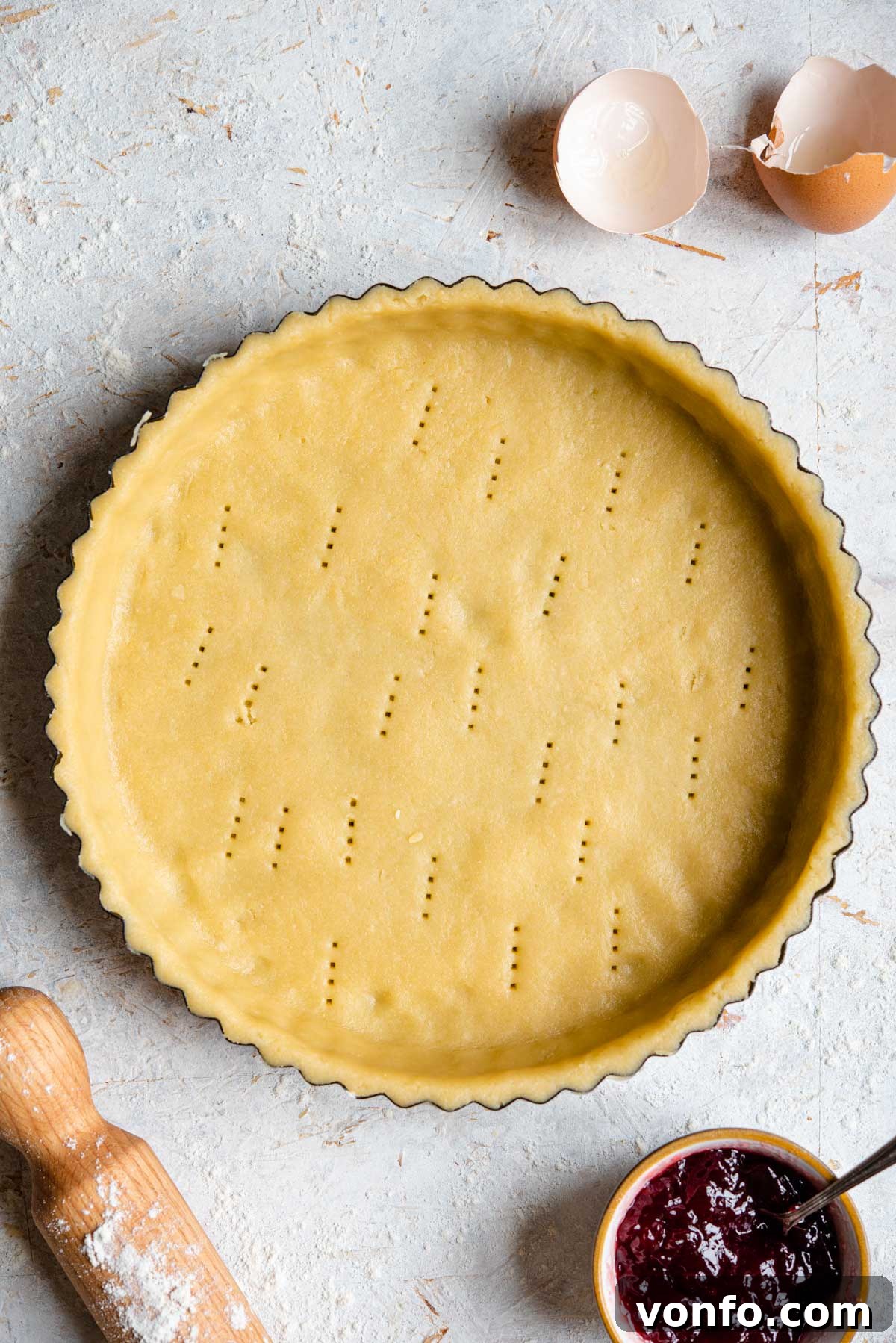
Italian Sweet Shortcrust Pastry (Pasta Frolla) is a quintessential component of Italian baking, incredibly simple to prepare, and astonishingly versatile. This foundational dough is perfect for creating a vast array of delightful treats, from crisp cookies to elegant pies and tarts, including beloved classics like Torta della Nonna and the traditional Italian Crostata (jam tart). Follow our comprehensive step-by-step photo and video guide to master the art of making perfect Pasta Frolla every single time!
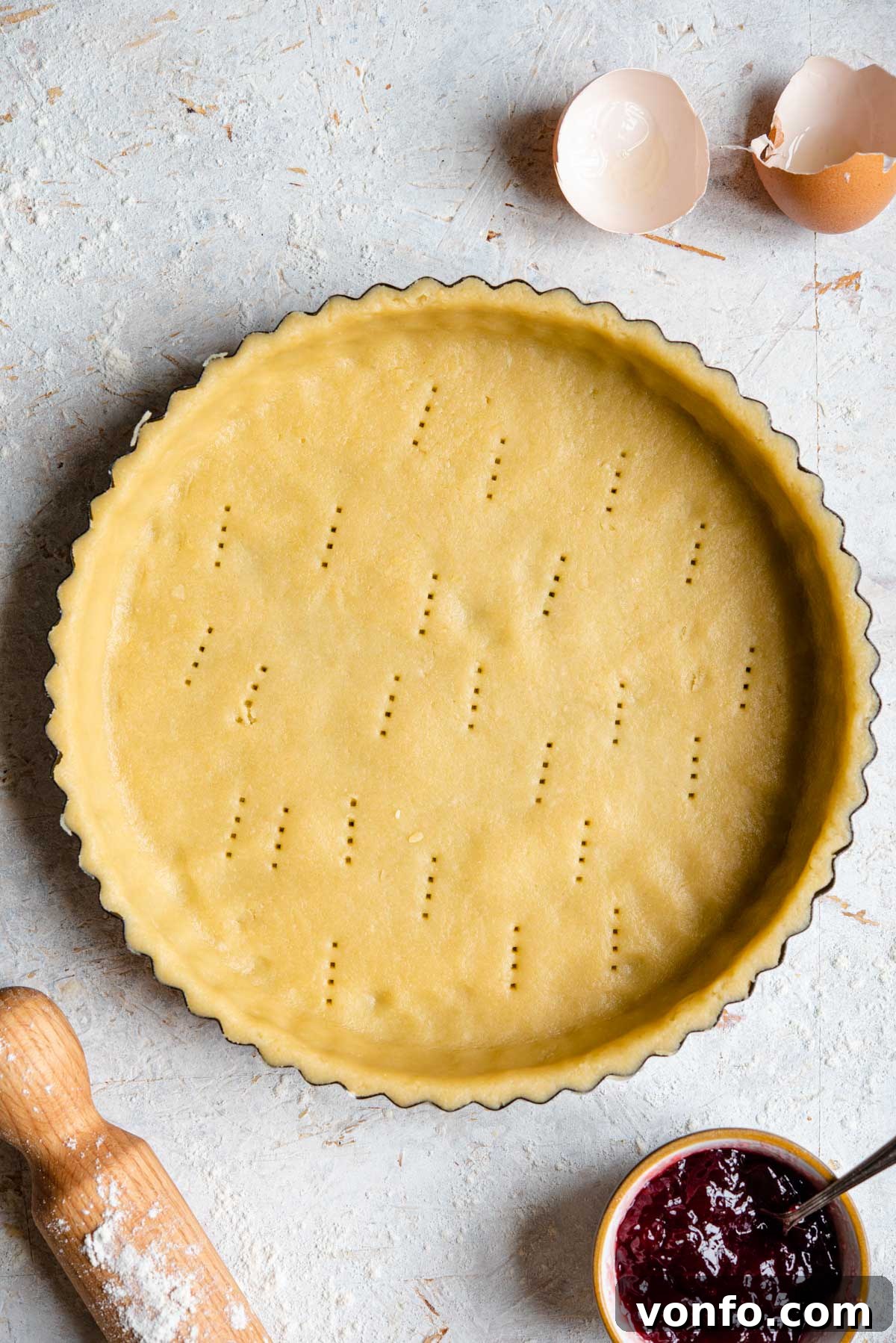
What is Italian Sweet Shortcrust Pastry (Pasta Frolla)?
Pasta Frolla, literally translating to “crumbly dough,” is the revered Italian term for sweet shortcrust pastry. It holds a cherished place in Italian culinary tradition, forming the base for an extensive range of delectable desserts. Unlike some pastries that require complex techniques, Pasta Frolla is celebrated for its simplicity and the tender, buttery, melt-in-your-mouth texture it imparts to baked goods.
Once you’ve mastered this incredibly easy recipe, a world of Italian sweet treats opens up to you. You’ll be empowered to experiment with various fillings and shapes, bringing authentic Italian flavors right into your kitchen. The secret to its signature delicate texture lies primarily in using **cold butter** straight from the fridge and handling the dough minimally to prevent gluten development.
Why Make Your Own Pasta Frolla?
While store-bought pastry shells offer convenience, nothing compares to the superior taste and texture of homemade Pasta Frolla. Crafting your own pastry ensures fresh ingredients, control over the flavor profile, and the absence of unwanted preservatives. The aroma of freshly baked Pasta Frolla filling your home is an experience in itself, promising a dessert that truly stands out. It’s a fundamental skill for any aspiring baker wishing to delve into authentic Italian patisserie.
Essential Ingredients for Perfect Pasta Frolla
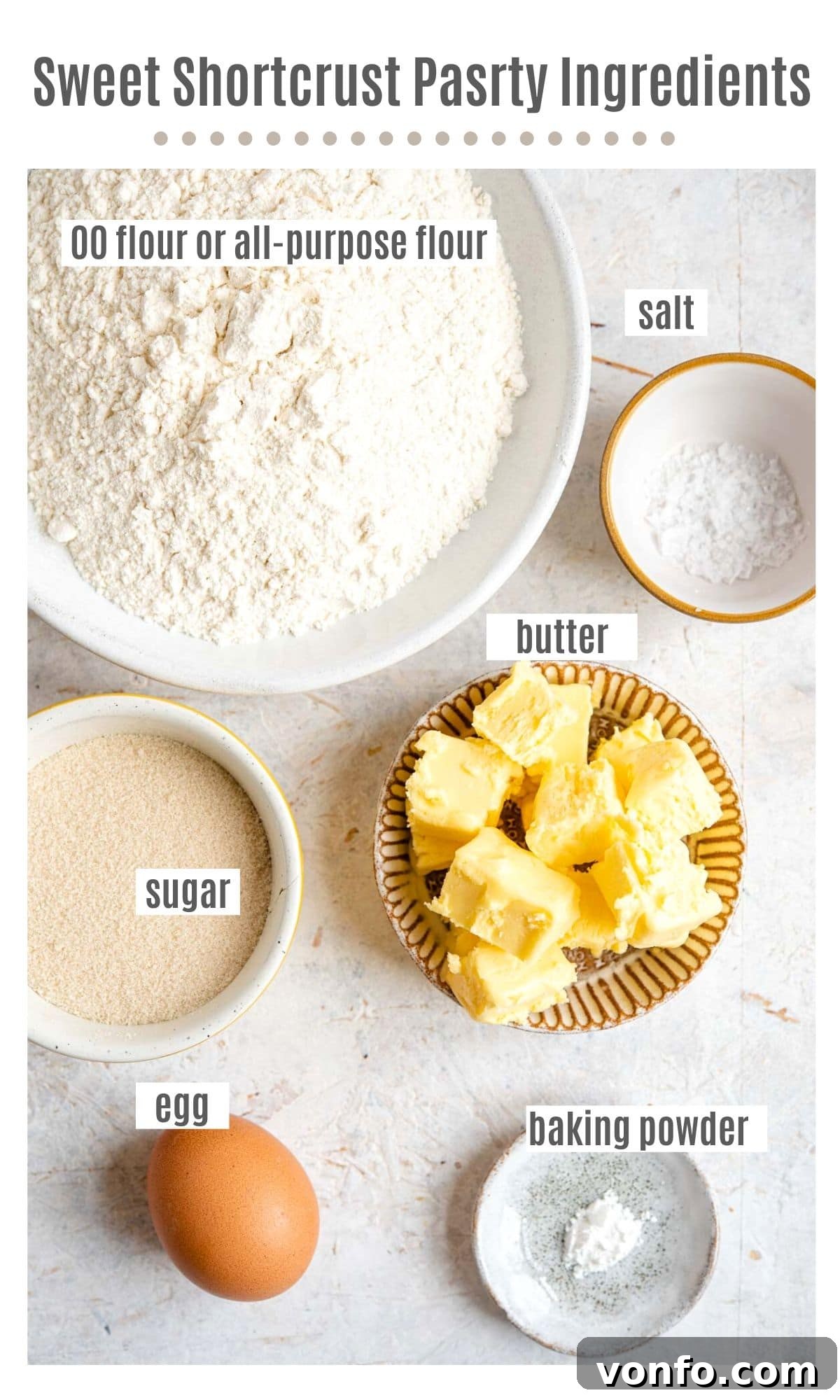
Creating this exquisite pastry requires only a handful of basic pantry staples. The quality of these ingredients plays a crucial role in the final outcome, so opt for the best you can find:
- Flour: Traditionally, Italian “00” flour is preferred for its fine texture, which contributes to a more tender pastry. However, unbleached all-purpose flour works beautifully as a readily available alternative.
- Sugar: Caster sugar (also known as superfine sugar) is ideal, whether golden or white, as it dissolves easily and provides the perfect balance of sweetness.
- Cold Butter: This is arguably the most critical ingredient. Ensure your butter is ice-cold and cut into small cubes to achieve that coveted flaky texture.
- Salt: A pinch of salt enhances the overall flavor and balances the sweetness.
- Baking Powder: A small amount provides a slight lift and contributes to the pastry’s tender crumb.
- Egg: A large egg acts as a binding agent, adds richness, and helps create a smooth, workable dough.
- Lemon Zest (Optional but Recommended): Fresh lemon zest adds a wonderful, bright, and aromatic note that is classic in Italian sweet pastries.
See the photo below, showcasing all the simple ingredients you’ll need to begin your Pasta Frolla journey!
How to Make Italian Sweet Shortcrust Pastry – A Step-by-Step Guide
Crafting perfect Pasta Frolla is straightforward when you follow these simple steps:
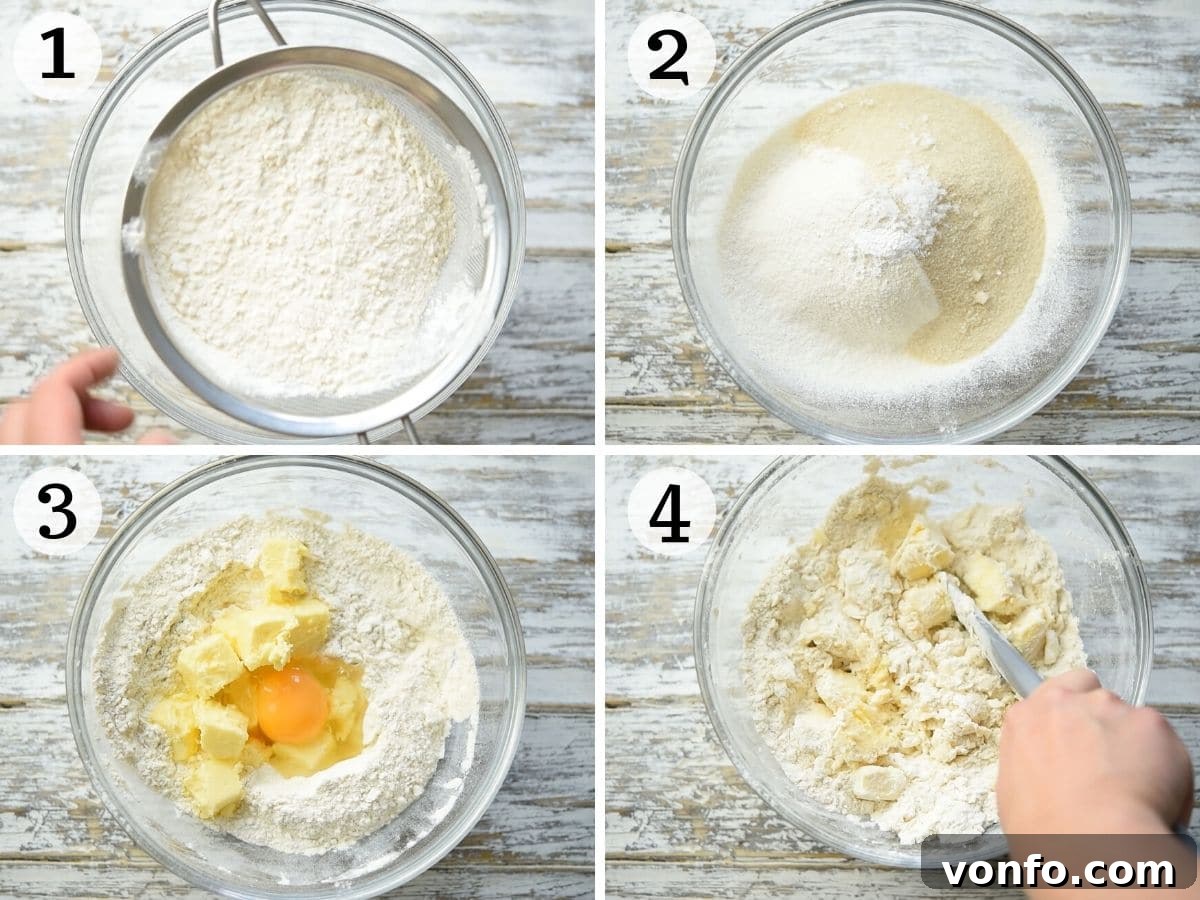
- Combine Dry Ingredients: Begin by sifting the flour into a large mixing bowl. Sifting ensures there are no lumps and aerates the flour. Add the sugar, baking powder, and salt (and lemon zest, if using). Stir these dry ingredients together thoroughly to ensure even distribution.
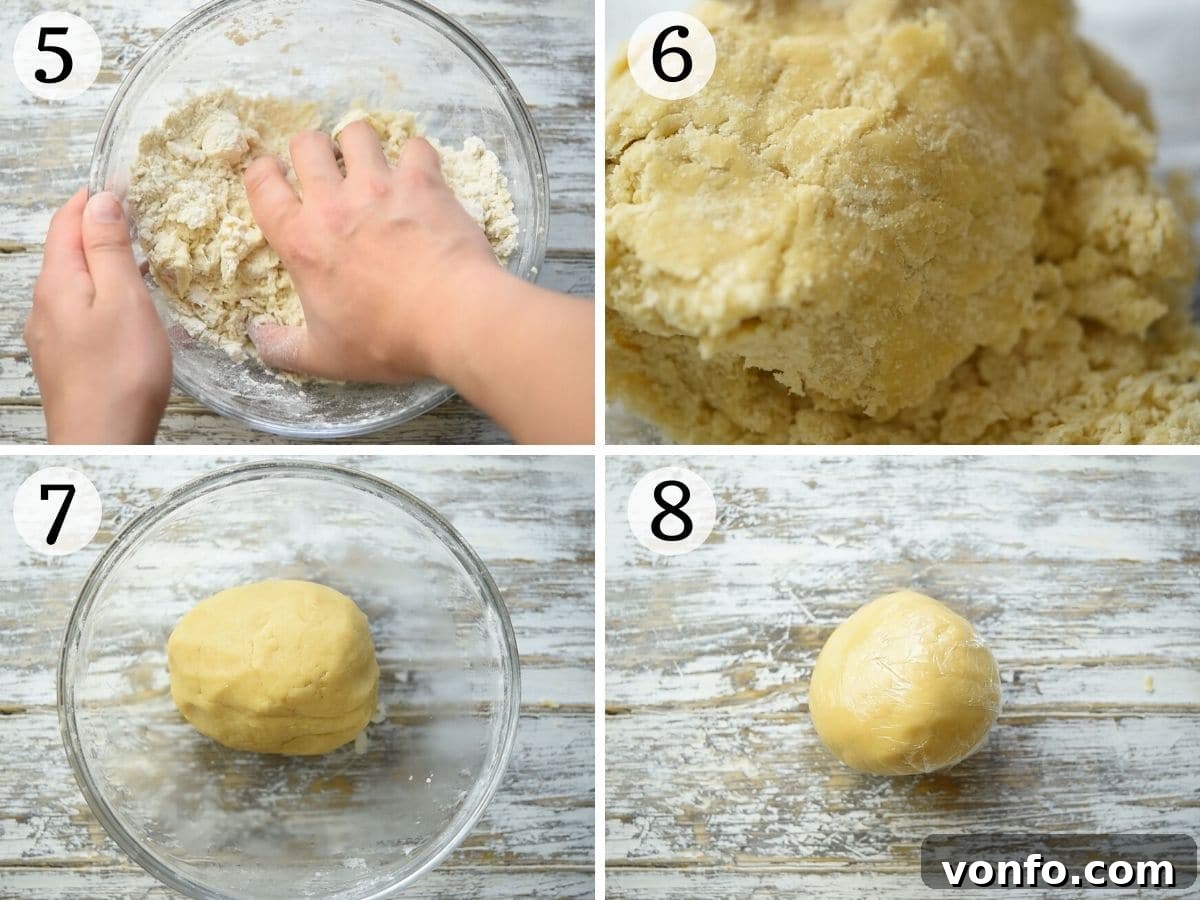
- Incorporate Butter and Egg: Add the cold, cubed butter and the large egg to the dry mixture. Using a pastry scraper, a fork, or even your fingertips, cut the butter into the flour until the mixture resembles coarse crumbs. The goal is to coat the flour particles with butter without fully melting the butter, which creates pockets of steam during baking, leading to flakiness. Be careful not to overwork the butter with the warmth of your hands.
- Form the Dough: Gently bring the crumbly mixture together with your hands to form a cohesive dough. Knead the pastry briefly – just until all the flour is fully absorbed and the mixture forms a smooth, uniform ball. Over-kneading will develop the gluten, resulting in a tough pastry.
- Chill the Dough: Wrap the dough tightly in plastic wrap and refrigerate it for a minimum of 30 minutes, or up to an hour. Chilling is crucial as it allows the gluten to relax (preventing shrinkage during baking) and firms up the butter, making the dough easier to roll.
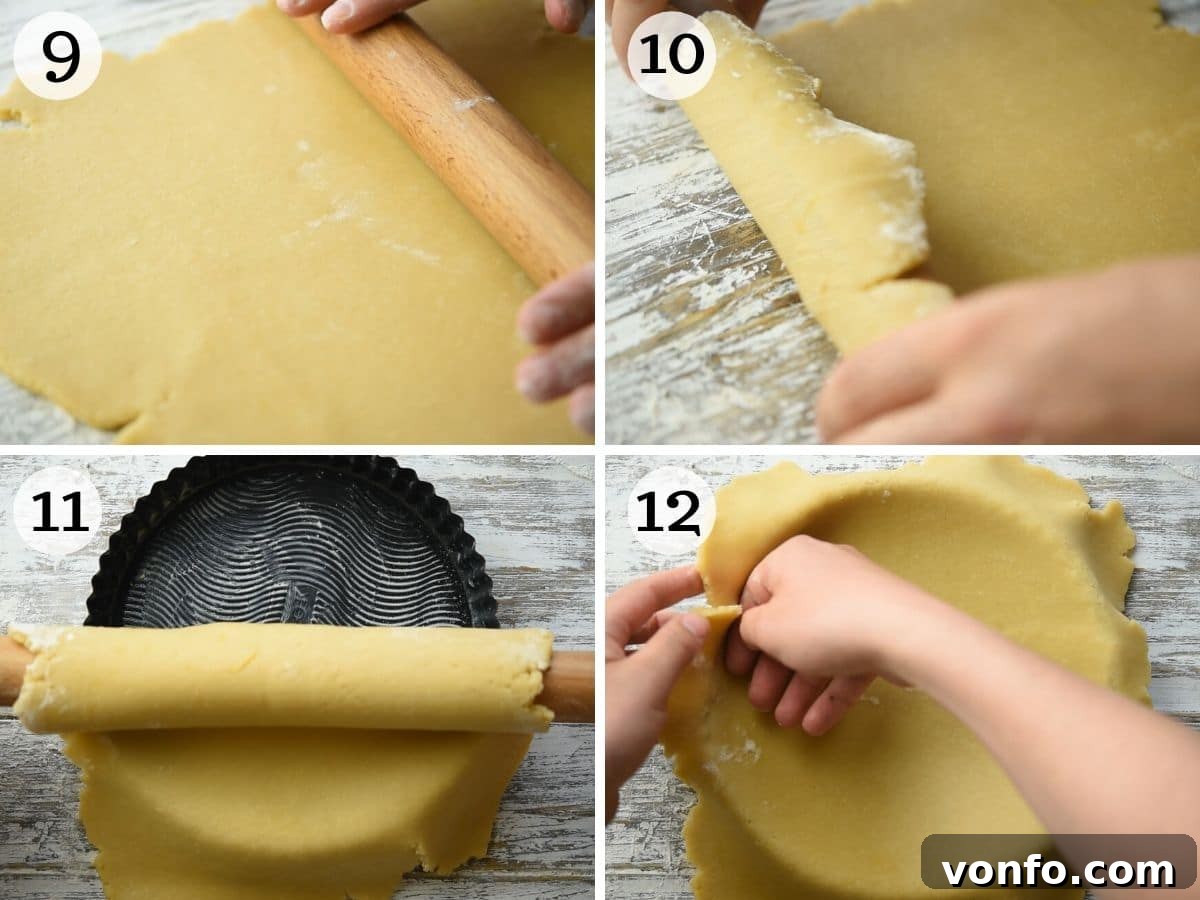
- Roll Out the Dough: Once chilled, remove the dough from the fridge. Lightly dust a clean work surface with flour. Using a rolling pin, roll out the dough evenly. For pies and tarts, aim for a thickness of approximately ¼ inch (½ cm). If you’re making cookies, roll to your desired thickness.
- Prepare Pie or Tart Shells: To create a pie or tart, carefully lay the rolled pastry over your greased tart or pie tin. Gently tuck in the sides, ensuring the pastry fits evenly against the contours of the tin. To neatly trim the edges, roll your rolling pin over the top of the tart case, or use a sharp knife.
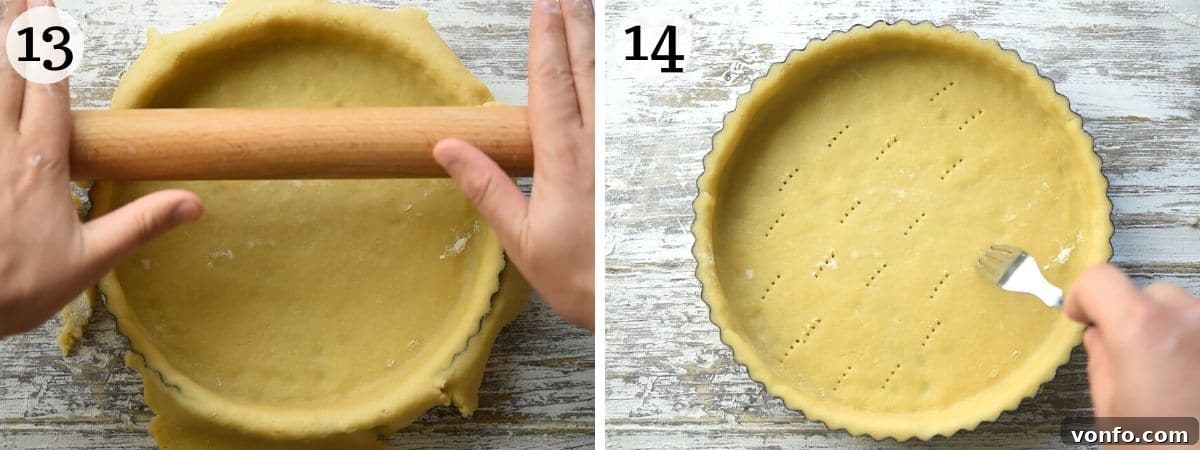
- Final Chill & Bake: Prick the base of the pastry shell with a fork. This prevents air bubbles from forming and ensures an even bake. Return the pastry-lined tin to the fridge for another 30 minutes. This final chill helps the pastry hold its shape during baking. Afterward, fill with your chosen filling and bake as directed by your specific recipe.
The Versatile Applications of Pasta Frolla
Italian sweet shortcrust pastry is a true workhorse in the kitchen, forming the basis for an astonishing variety of desserts:
- Torta della Nonna: One of the most beloved Italian tarts, Torta della Nonna (Grandma’s Cake) features a tender Pasta Frolla crust generously filled with creamy vanilla pastry cream and often crowned with crunchy pine nuts. It’s a dessert that speaks of comfort and tradition.
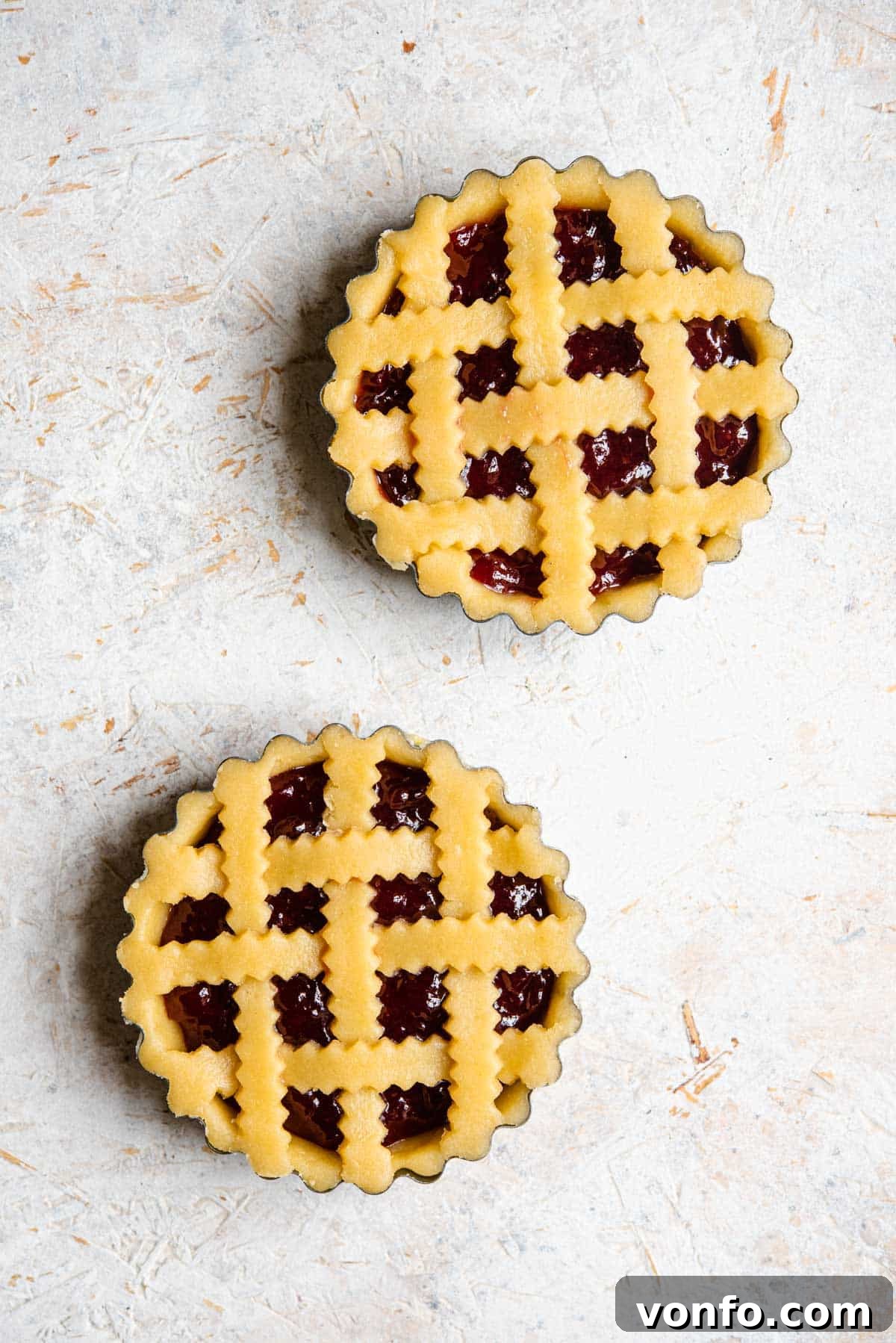
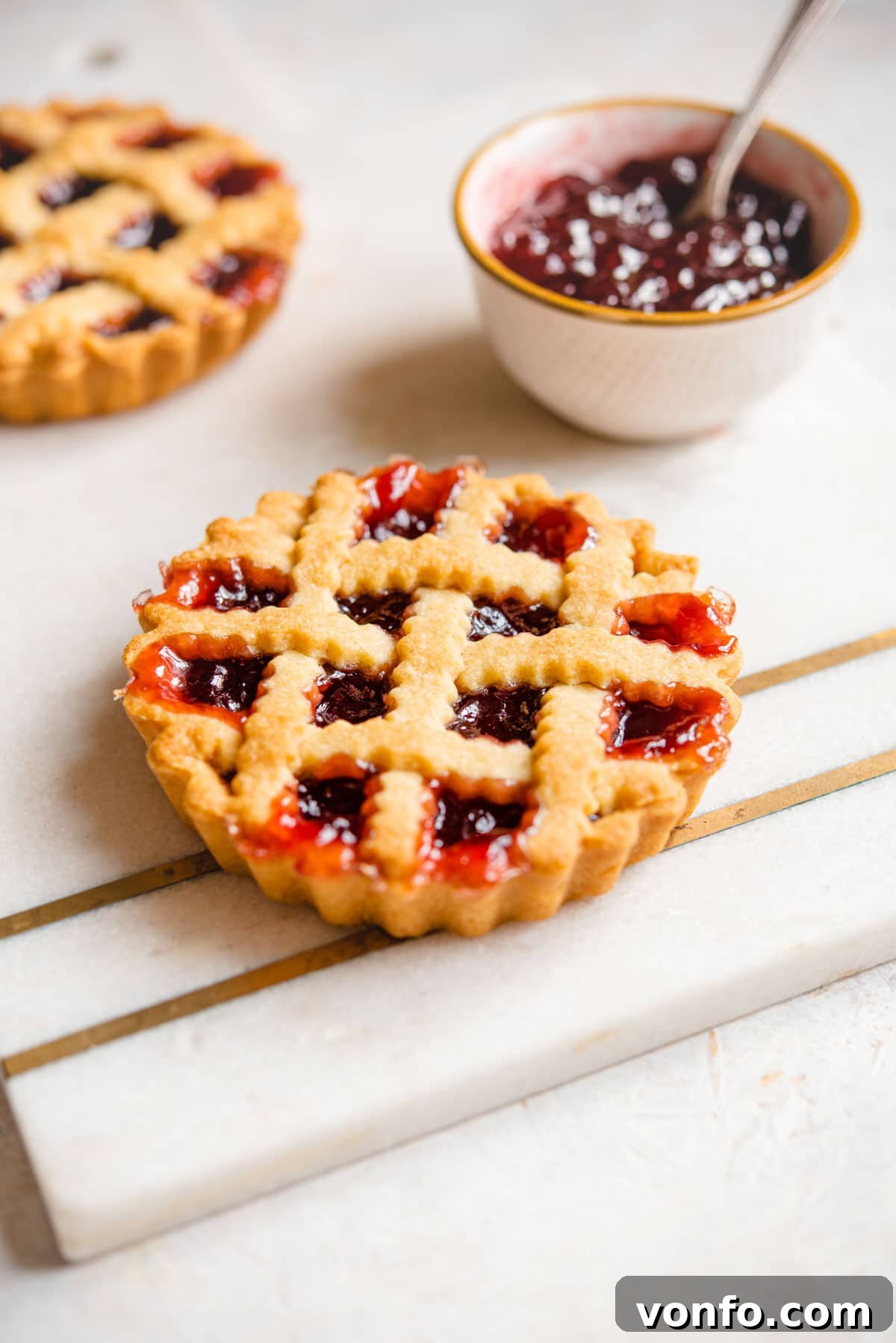
- Crostata: The classic Italian jam tart, Crostata, is perhaps the most common way to enjoy Pasta Frolla. It’s typically filled with vibrant fruit jams such as strawberry, raspberry, apricot, or fig. A decorative lattice made from strips of Pasta Frolla often adorns the top before baking, creating a beautiful and delicious treat. Crostata is wonderfully simple to make and can be enjoyed for breakfast, as an afternoon snack, or a delightful dessert.
- Fruit Pies and Tarts: Beyond jams, Pasta Frolla is perfect for showcasing fresh fruits. Imagine luscious tarts filled with seasonal berries, crisp apples, tart rhubarb, or sweet peaches. The possibilities are endless; let your creativity guide your fruit choices! Important Note: If using fresh or particularly wet fruit fillings, it’s advisable to blind bake the pastry first to prevent a soggy bottom. See our tips section for details on blind baking.
- Assorted Cookies: Pasta Frolla also makes exceptional cookies. From simple cut-out shapes to delicate filled biscuits, its buttery, crumbly texture provides a fantastic base for any cookie creation.
Expert Tips and Frequently Asked Questions for Perfect Pasta Frolla
Achieving outstanding Pasta Frolla is simple, especially with these insider tips and answers to common questions:
- Accurate Flour Measurement: If you’re measuring flour using cups, avoid scooping directly from the bag, as this can compact the flour and result in too much. Instead, spoon the flour into your measuring cup and then level it off with a straight edge. This method ensures a more precise measurement.
- The Importance of Cold Butter: Always use butter that is ice-cold, straight from the fridge. Cut it into small cubes to facilitate even distribution. The goal is to keep the butter from melting into the flour until it hits the oven, where it creates steam pockets, contributing to a flaky, tender texture. Minimize handling the dough with warm hands.
- Dough Texture Patience: When mixing, the pastry might initially appear quite dry and crumbly. Resist the urge to add extra water or butter. Continue to work it gently; it will come together into a smooth, perfect ball within a couple of minutes as the egg fully integrates.
- Crucial Chilling Time: Allowing the dough to rest and stiffen in the fridge for at least 30 minutes (or up to an hour) before rolling is non-negotiable. This step relaxes the gluten, preventing the pastry from shrinking excessively during baking, and makes the dough much easier to handle.
- Flavor Variations: Elevate your Pasta Frolla by incorporating citrus zest. Lemon zest is classic, but orange zest can also add a delightful, fresh, and zingy flavor dimension to your pastry. A touch of vanilla extract can also enhance the sweetness.
- Making Ahead: Pasta Frolla is excellent for make-ahead baking. You can prepare the dough, form it into a ball, and store it tightly wrapped in plastic in the refrigerator for 3-4 days. Alternatively, roll it out and line your pie or tart cases, then refrigerate them. However, avoid filling a pie or tart more than 2-3 hours in advance, as very wet fillings can make the bottom crust soggy. Keep filled, unbaked pies or tarts in the fridge until you’re ready to bake.
- Blind Baking Explained: Blind baking (or pre-baking) is essential when using very wet fillings, such as fresh or frozen fruits, or for tarts with uncooked fillings (like some custard tarts). To blind bake, line your pastry-filled tart tin with parchment paper, then fill it with baking beads or dried rice to weigh the crust down. Bake for approximately 10-15 minutes, then remove the weights and parchment, and continue baking if the recipe requires a fully baked crust before filling.
- Using a Stand Mixer: For convenience, you can certainly make sweet shortcrust pastry using a stand mixer. Simply add all the ingredients to the bowl and use the paddle attachment on low speed until a dough forms. Once cohesive, turn it out, form it into a ball, and wrap it in plastic wrap for chilling.
- Freezing Pasta Frolla: Yes, you can absolutely freeze prepared and unbaked shortcrust pastry! Wrap it tightly in multiple layers of plastic wrap, then place it in a sealed container or freezer bag. It can be frozen for up to 3 months. Thaw completely overnight in the refrigerator before using, then roll out from chilled as usual.
Recipe: Italian Sweet Shortcrust Pastry (Pasta Frolla)
This recipe yields approximately 10 servings and takes about 1 hour 45 minutes of total time (including chilling). By Emily.
Ingredients
- 2 cups “00” flour or unbleached all-purpose flour (250g)
- ½ cup caster sugar (golden or white) (80g)
- 8.5 tbsp cold butter, cubed (120g)
- 1 large egg
- Zest of 1 lemon
- ¼ tsp baking powder
- 1 pinch of salt
Instructions
- Sift the flour into a large bowl, then add the caster sugar, lemon zest, baking powder, and salt. Stir to combine all the dry ingredients evenly.
- Add the cold, cubed butter and the large egg to the flour mixture. Using a spatula, pastry scraper, or your fingertips, cut the butter into the flour until rough crumbs form. Be careful not to use overly warm hands to avoid melting the butter.
- Gently bring the mixture together with your hands to form a dough. Knead the pastry briefly until all the flour is fully absorbed and it becomes a smooth, cohesive ball. Wrap the dough tightly in plastic wrap and place it in the fridge to chill for 30 minutes to 1 hour.
- After chilling, remove the dough from the fridge and lightly dust a clean work surface with flour. Using a rolling pin, roll out the dough to your desired thickness. For pies and tarts, aim for approximately ¼ inch (½ cm) thick. For cookies, roll to a thinner consistency.
If Making Pies and Tarts:
- Carefully pick up the rolled pastry by draping it over your rolling pin, then gently lay it over a butter-greased tart or pie case. Tuck in the sides until it fits evenly into the tin. Roll the rolling pin over the top edge of the tart case to cut the excess pastry, or trim with a sharp knife.
- Prick the base of the pastry shell all over with a fork. This helps prevent puffing during baking. Place the lined tart tin back into the fridge for another 30 minutes to chill.
- Once thoroughly chilled, fill your pastry shell with your chosen filling (e.g., jam, fruit, pastry cream) and bake as directed in your specific tart or pie recipe.
Notes
- Measuring in cups: When measuring flour with cups, spoon the flour into the cup and then level it off. Do not compact the flour by scooping directly.
- Cold butter: Ensure butter is very cold and handle the dough minimally to keep it that way.
- Dough texture: The dough may seem dry initially but will come together with minimal kneading; avoid adding extra liquid.
- Chill the dough: Always chill the dough for at least 30 minutes before rolling to prevent shrinkage and make it easier to handle.
- Variations: Add lemon or orange zest for a vibrant flavor, or a teaspoon of vanilla extract for extra warmth.
Helpful Info for All Recipes
- We recommend using extra virgin olive oil in all savory recipes unless otherwise specified.
- For the best flavor and results, use high-quality canned or jarred tomatoes such as Cirio or Mutti brands.
- Unless specified, all vegetables referenced are of medium size.
- All our recipes are meticulously tested and developed using a fan (convection) oven.
- Find out more about how nutrition information is calculated.
- Explore our list of must-have Italian Pantry Staples.
- Discover all our Essential Kitchen Tools for Italian Cooking.
Nutrition Information (Per Serving)
Nutrition information is an approximation and should be used as a general guide:
- Calories: 221 kcal
- Carbohydrates: 29g
- Protein: 3g
- Fat: 10g
- Saturated Fat: 6g
- Cholesterol: 42mg
- Sodium: 219mg
- Potassium: 33mg
- Fiber: 1g
- Sugar: 10g
- Vitamin A: 321IU
- Calcium: 15mg
- Iron: 1mg
More Italian Desserts You Might Love
If you enjoyed making this versatile Pasta Frolla, be sure to explore more of our authentic Italian dessert recipes:
- Bomboloni – Irresistible Italian Filled Doughnuts
- Torta della Nonna: Our Classic Italian Custard Tart
- Affogato – A Simple Delight of Ice Cream and Coffee
- Tiramisu – Our Best-Ever Authentic Recipe
- Luxurious White Chocolate Panna Cotta
We hope this guide empowers you to create beautiful and delicious Italian desserts with ease. If you tried this Italian Sweet Shortcrust Pastry recipe or any other recipes on our blog, please take a moment to leave a comment below to let us know how it turned out. We absolutely love hearing from you and seeing your culinary creations! You can also FOLLOW US on FACEBOOK, INSTAGRAM, and PINTEREST to discover more delicious food and stay updated with our latest kitchen adventures.