
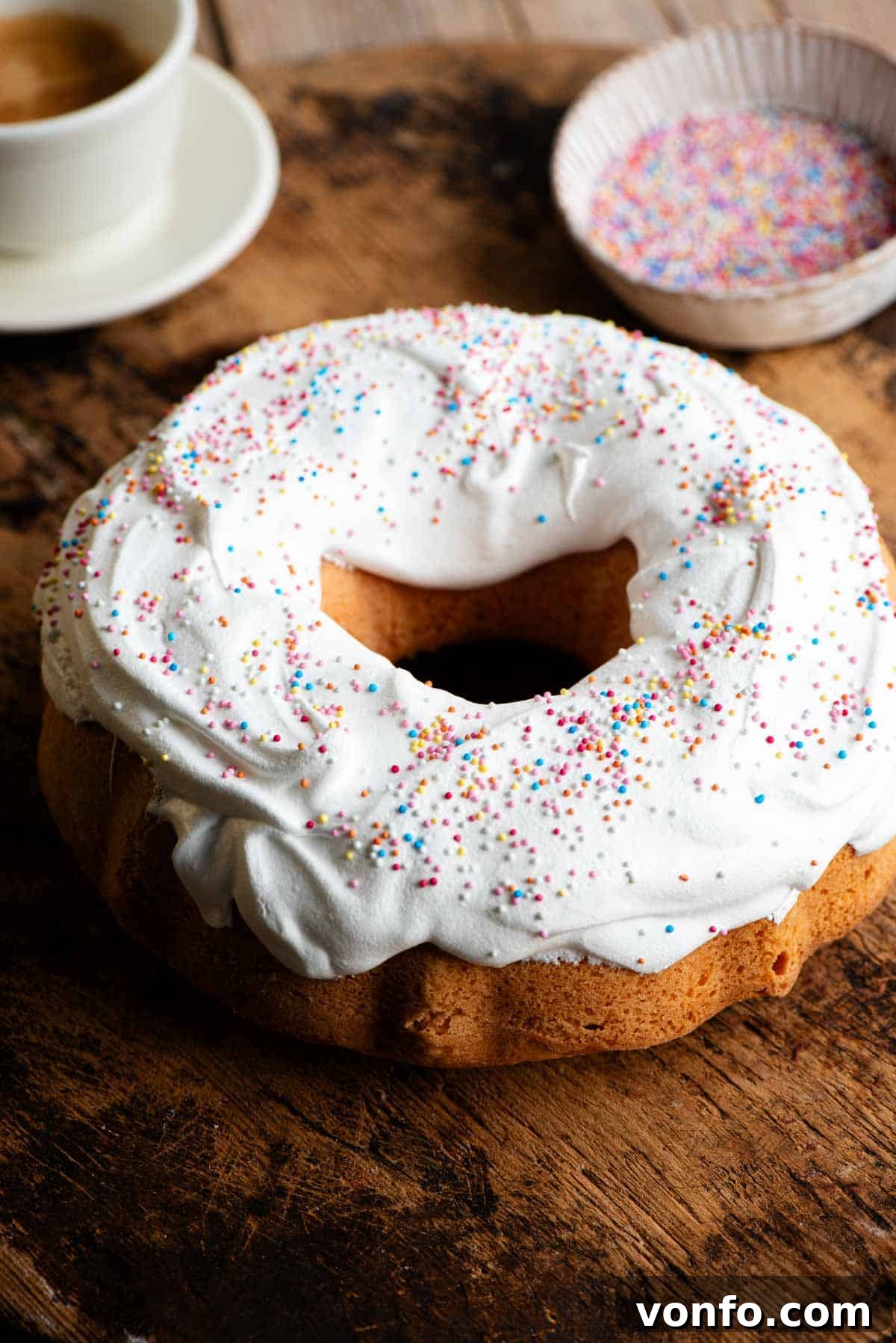
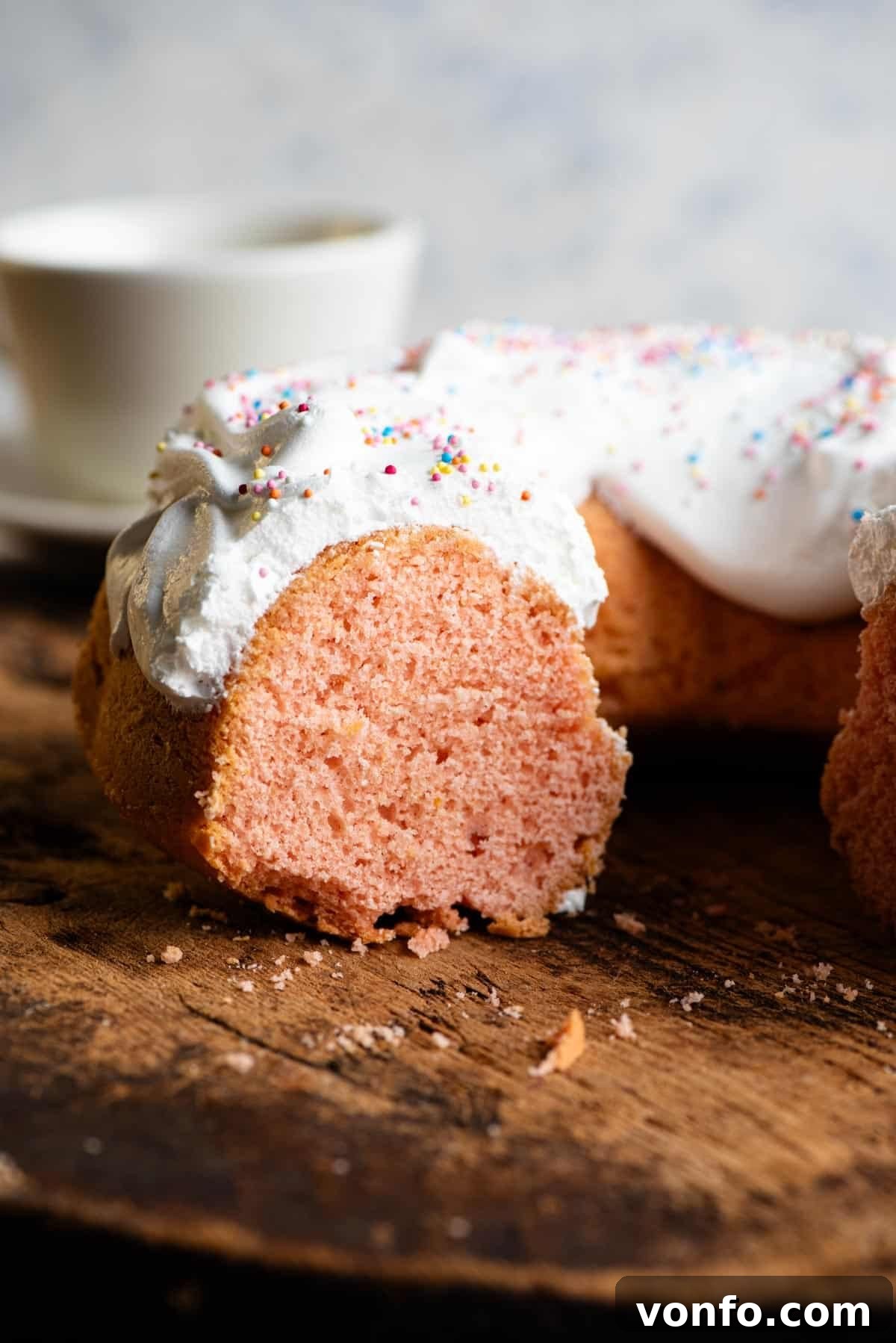
Ciaramicola, an enchanting Italian Easter cake hailing from the picturesque region of Perugia in Umbria, is a true culinary masterpiece. This stunning dessert captivates with its uniquely soft and delicious bright pink sponge, delicately flavored with a rare Italian liqueur, and crowned with a cloud of whipped meringue and colorful sprinkles. More than just a cake, Ciaramicola is a showstopping centerpiece, embodying the spirit of celebration and tradition, making it the perfect sweet treat for Easter gatherings or any joyous occasion, bringing a piece of authentic Italian heritage to your table.
Table of Contents
- Unveiling Ciaramicola: Perugia’s Iconic Easter Delight
- The Magic of Alchermes Liqueur: Heart of Ciaramicola
- Ciaramicola Ingredients Explained
- Alchermes Liqueur Alternatives
- Ciaramicola: A Step-by-Step Visual Guide
- Expert Baking Tips for Ciaramicola Success
- More Italian Easter Desserts to Try
- Full Ciaramicola Recipe Card
Unveiling Ciaramicola: Perugia’s Iconic Easter Delight
As a passionate explorer of Italy’s diverse culinary landscape, I find immense joy in uncovering regional Italian recipes that often remain cherished secrets outside their native borders. Much like the rich flourless chocolate cake Torta Barozzi, the comforting grain pudding Cuccia, or the spiced fruit bread Panpepato, Ciaramicola offers a truly authentic taste of Italian tradition and regional specialty.
This magnificent cake, pronounced “chee-ara-mee-ko-la,” is a cornerstone of Easter celebrations, deeply rooted in the history and culture of Perugia, the capital city of Umbria. Its distinctive appearance is far from accidental; the vibrant pink sponge contrasting with the pristine white meringue topping is a direct homage to Perugia’s coat of arms. This striking color scheme makes Ciaramicola instantly recognizable and a symbol of civic pride and culinary heritage, truly a flag in edible form.
Beyond its visual appeal, Ciaramicola carries a heartwarming tradition. Historically, it was considered a token of love, lovingly prepared by young women to present to their fiancés during Easter. This romantic narrative adds another layer of charm to an already exquisite dessert, making it not just a treat for the palate but also for the soul. This rich backstory transforms Ciaramicola into more than just a cake; it’s a piece of edible history, a symbol of affection, and a vibrant celebration of spring and new beginnings. Whether for Easter or any significant occasion, sharing a slice of Ciaramicola is an act of warmth and tradition, a true taste of Umbrian hospitality and romance.
The Magic of Alchermes Liqueur: The Heart of Ciaramicola’s Flavor and Color
The secret behind Ciaramicola’s captivating bright pink hue and its uniquely fragrant flavor lies in a very special ingredient: Alchermes. This ancient Italian liqueur, with its intense scarlet color, boasts a fascinating history dating back to the Renaissance. Its complex aromatic profile is derived from a meticulous blend of delicate rose water, warm cinnamon, exotic cardamom, and spicy cloves, creating a truly distinctive taste that is both floral and subtly spiced.
Alchermes is a gem in Italian confectionery, gracing a select few traditional desserts like the delightful trifle Zuppa Inglese and the dome-shaped sponge cake Zuccotto. Its use in Ciaramicola is paramount, transforming a simple sponge into something extraordinary. The liqueur not only imbues the cake with its signature pink color but also contributes a sophisticated depth of flavor that sets Ciaramicola apart from other Easter cakes, offering an authentic taste of Umbrian tradition.
While Alchermes is an indispensable component for an authentic Ciaramicola, it isn’t always readily available outside of Italy. I am fortunate to source it locally, but for those who might find it elusive, there’s no need to despair. I’ve provided detailed suggestions below for suitable substitutions that aim to replicate both its color and aromatic complexity. Alternatively, for the adventurous home baker, you can even embark on a journey to make your own Alchermes at home with this helpful tutorial. Embracing this unique liqueur, whether store-bought or homemade, is key to unlocking the true essence of this magnificent Perugian cake and enjoying an authentic Easter experience.
Ciaramicola Ingredients Explained: Building the Perfect Easter Cake
Crafting the perfect Ciaramicola requires a thoughtful selection of ingredients, each playing a vital role in achieving its signature texture, flavor, and vibrant color. Here’s a closer look at what you’ll need to bring this Italian Easter tradition to your kitchen, understanding the purpose behind each component.
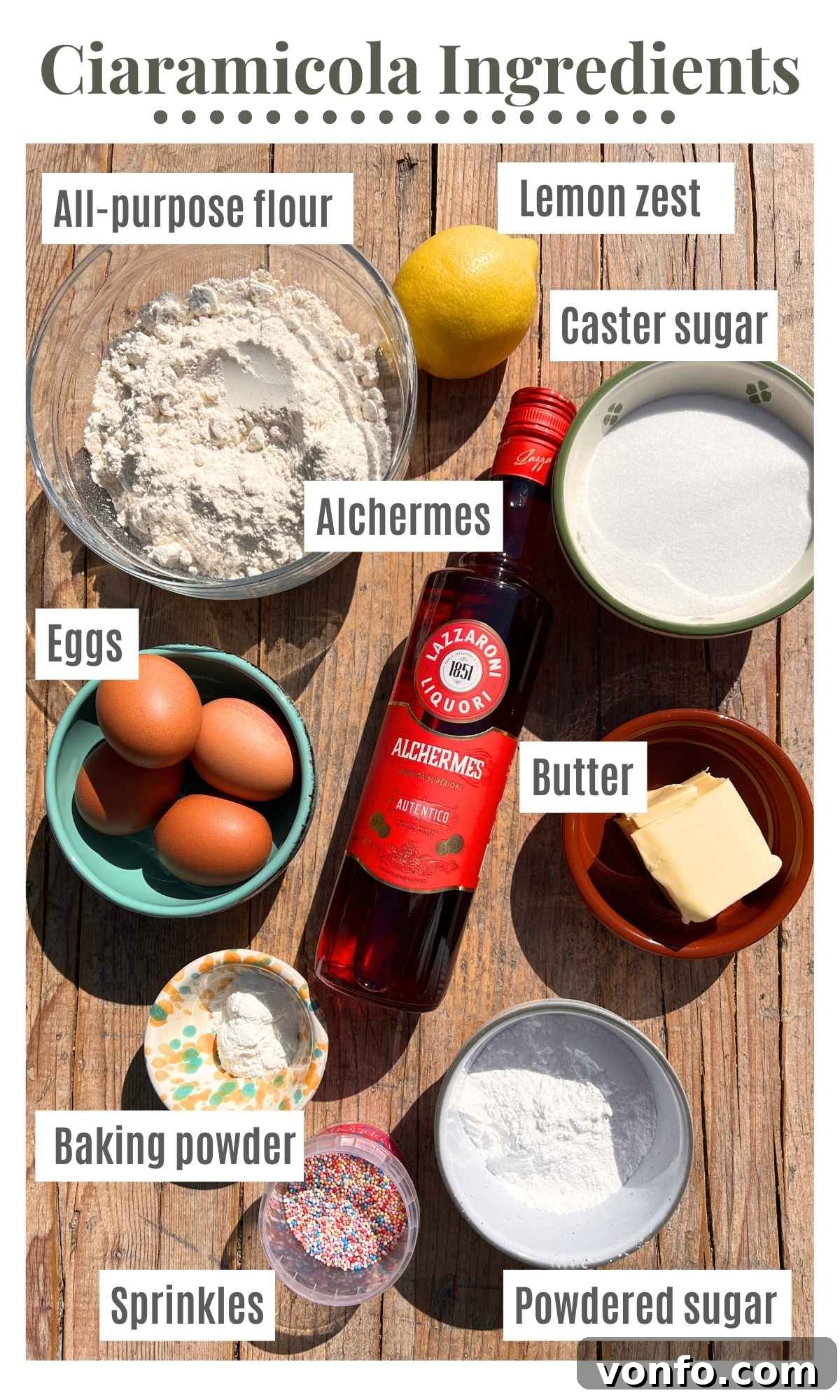
For the Ciaramicola Cake Base:
- All-Purpose Flour: The fundamental structural component for our soft and delicate sponge. Ensure accurate measurement by spooning into the measuring cup and leveling off.
- Granulated Sugar: Not only provides essential sweetness but also contributes significantly to the cake’s tender crumb and moist texture.
- Large Eggs + Egg Yolks: Eggs serve multiple purposes, providing structure, richness, and emulsification. By separating some whites for the meringue, we ensure a light cake and a perfectly airy, voluminous topping.
- Alchermes Liqueur: The indispensable star ingredient! This vibrant red liqueur is solely responsible for Ciaramicola’s characteristic bright pink hue and infuses the cake with its unique, complex notes of rose, cinnamon, and clove.
- Unsalted Butter (melted): Adds crucial moisture and a rich, luxurious flavor to the cake batter, resulting in a supremely tender texture. Remember to have extra softened butter on hand for greasing the bundt pan.
- Baking Powder: Our primary leavening agent. It reacts with moisture and heat to create carbon dioxide, ensuring the cake rises beautifully and achieves that desirable light and airy crumb.
- Lemon Zest: A bright and aromatic addition that introduces a fresh citrus note. This zest beautifully complements the liqueur’s spices and cuts through the cake’s richness, adding a vibrant counterpoint.
- Pinch of Salt: A small but mighty ingredient that enhances all other flavors, balancing the sweetness and making the cake taste even more delicious.
For the Iconic Meringue Topping:
- Egg Whites (reserved): These are the remaining whites from the cake preparation. When whipped to stiff peaks, they form the incredibly airy, sweet, and visually striking cloud that elegantly crowns the Ciaramicola.
- Caster Sugar (fine granulated sugar): Due to its finer texture, caster sugar dissolves easily into the egg whites, creating a stable and beautifully shiny meringue without a grainy texture.
- Powdered Sugar (icing sugar): Adds an additional layer of sweetness and helps to further stabilize the meringue, contributing to its smooth, almost melt-in-your-mouth texture.
- Sprinkles: The final festive flourish! Colorful sprinkles are added generously to provide a playful touch of color and a subtle textural contrast to the soft meringue, completing the celebratory look.
Alchermes Liqueur Alternatives: When the Original is Out of Reach
If authentic Alchermes proves difficult to find in your local area, don’t let it deter you from creating your beautiful Ciaramicola! While its unique flavor profile is truly one-of-a-kind, you can achieve a similar essence and vibrant color with these carefully considered creative substitutes. The goal is to capture both the aromatic depth and the visual impact:
- Juice plus Alcohol Combination for Flavor and Color: To best mimic both the liquid content and a hint of the alcoholic depth of Alchermes, replace it with a blend of 1/4 cup (60ml) of vibrant cranberry or pomegranate juice, combined with 1/4 cup (60ml) of an aromatic alcoholic spirit. Excellent choices include rum, a sweet Marsala wine, Vin Santo, or Grand Marnier. It’s crucial to note that while this blend provides liquid and a fruity/alcoholic undertone, the natural color of these juices will not be as intensely pink as Alchermes. Therefore, you will almost certainly need to add a few drops of high-quality red food coloring (gel or liquid) to achieve that iconic, bright pink sponge.
- No Alcohol Option: Pure Juice or Milk: For a completely non-alcoholic rendition of Ciaramicola, you have a couple of straightforward options. You can simply use 1/2 cup (125ml) of cranberry or pomegranate juice as your liquid. This will impart a fruity note and some moisture. Alternatively, plain full-fat milk can serve as a simple, neutral liquid replacement if the specific flavor nuances are less critical for your version. In both these non-alcoholic scenarios, incorporating red food coloring will be absolutely essential to achieve the cake’s signature pink hue, as the liquids alone will not suffice for the vibrant color.
- Spice Infusion for Aromatic Complexity: To specifically capture the warm, complex aromatic spices inherent in Alchermes, you can infuse your cake batter directly with a careful blend. Add 1/4 teaspoon of ground cinnamon, along with a generous 1/8 teaspoon (or a good pinch) each of finely ground cloves, ground cardamom, a tiny touch of nutmeg, and a hint of coriander to your dry ingredients (flour and baking powder). This combination will impart a fragrant, spiced essence that closely echoes the traditional liqueur’s undertones. When using this spice blend, remember to still choose a liquid component (like juice or milk as described above) and, importantly, add red food coloring to achieve the Ciaramicola’s characteristic pink appearance.
Ciaramicola: A Step-by-Step Visual Guide to Perfection
Follow these detailed step-by-step photos to visually guide you through the Ciaramicola baking process, ensuring confidence at every turn. The complete written recipe, with precise measurements and timings, is provided in the comprehensive recipe card further below for your convenience.
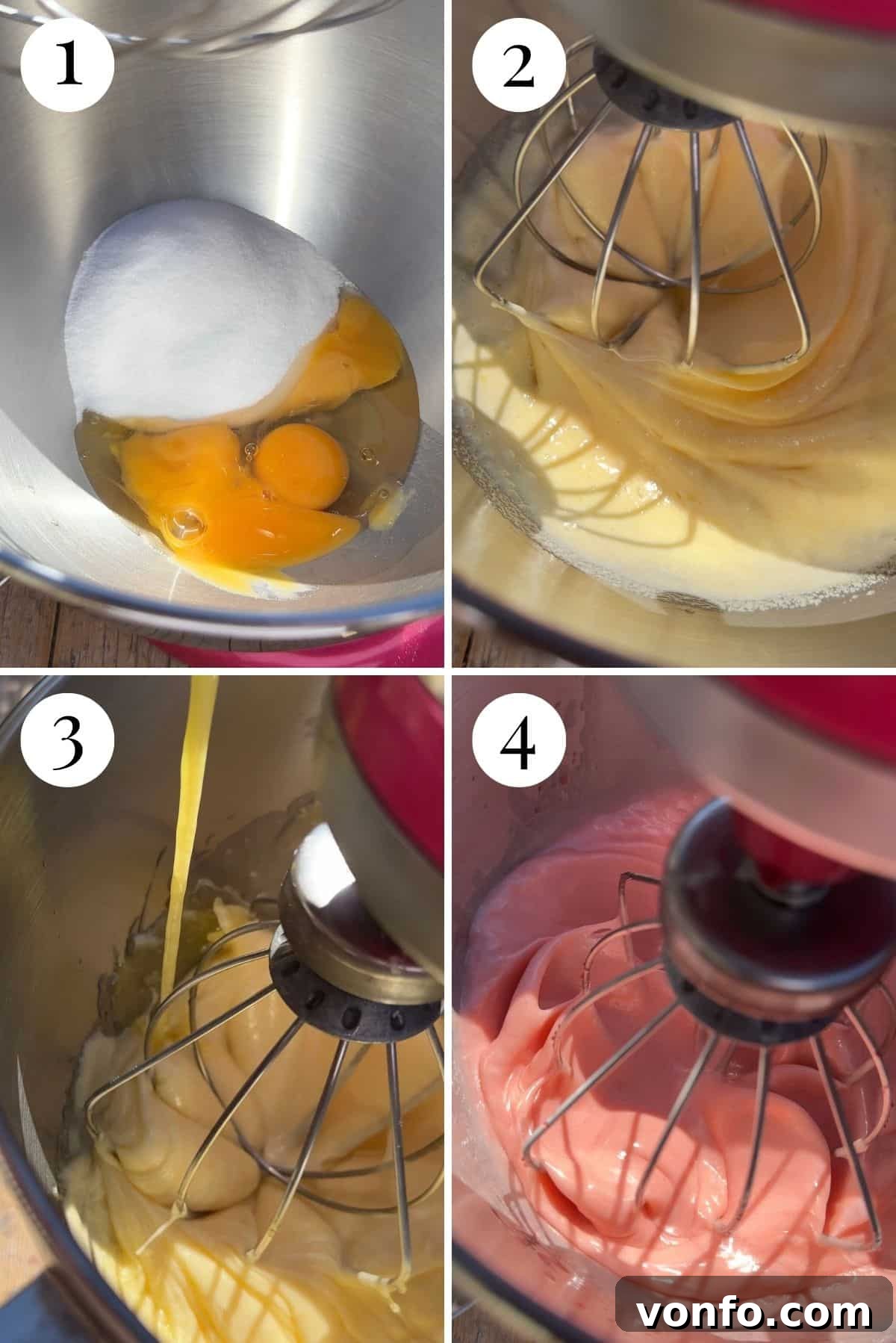
Step 1: Whisk Eggs and Sugar to Perfection. In the bowl of a stand mixer fitted with a whisk attachment, combine the 2 large eggs (plus the 2 reserved egg yolks) and 150g (3/4 cup) granulated sugar. Whisk on medium speed for approximately 5-7 minutes. Continue until the mixture transforms, becoming noticeably thick, pale yellow in color, and significantly increased in volume. This crucial aeration step is key to creating a light and airy sponge texture. (See photos 1 and 2 below).
Step 2: Incorporate Luscious Liquids and Zesty Aromas. With the mixer still running on a low speed, slowly and steadily pour in the 100g (7 tablespoons) of melted unsalted butter, allowing it to be fully incorporated into the egg mixture. Next, introduce the vibrant 125ml (1/2 cup) Alchermes liqueur (or your chosen alternative), and watch the batter magically transform into its signature bright pink hue. Finally, stir in the fresh zest of 1 lemon, adding a bright, aromatic lift that beautifully complements the cake’s flavors. (See photos 3 and 4 below).
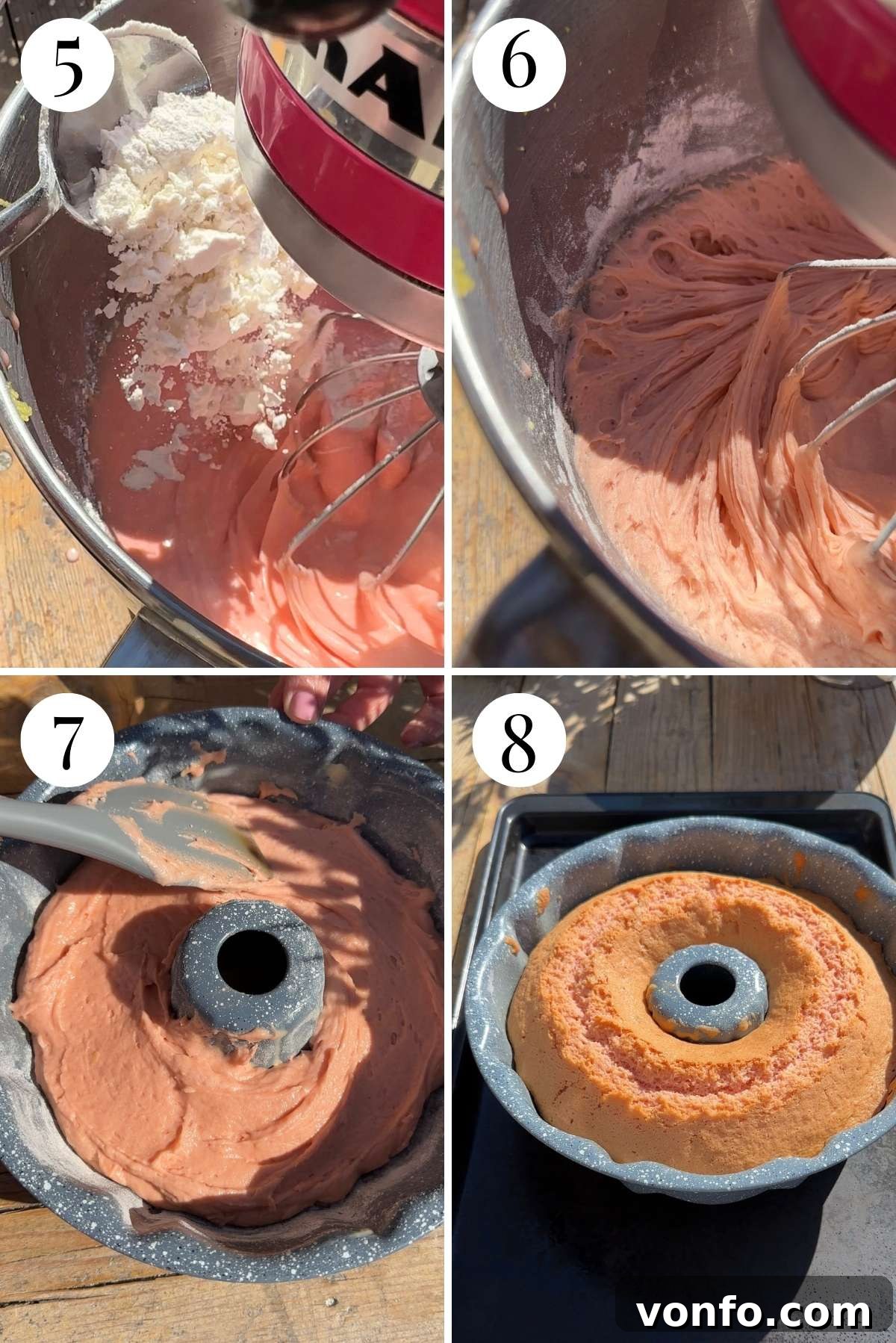
Step 3: Gently Fold in Dry Ingredients. In a separate medium-sized bowl, thoroughly whisk together the 280g (2 cups) all-purpose flour, 2 teaspoons baking powder, and a pinch of salt. This ensures even distribution of the leavening agent. With the stand mixer on a low to medium speed, gradually add this dry mixture to the wet batter, one spoonful at a time, mixing only until just combined and a smooth, consistent pink batter forms. It’s vital not to overmix at this stage, as overmixing can develop gluten and result in a tough, dense cake. A few small lumps are perfectly acceptable. (See photos 5 and 6 below).
Step 4: Prepare Pan and Bake to Golden Perfection. Carefully spoon the beautiful pink batter evenly into your meticulously well-greased and floured 9-inch bundt pan. Use a spatula to gently smooth out the surface of the batter, ensuring an even bake. Transfer the pan to the preheated oven and bake at 180°C (350°F) for approximately 30-35 minutes. To check for doneness, insert a wooden skewer or toothpick into the thickest part of the cake; it should come out completely clean, indicating the cake is perfectly cooked through. (See photos 7 and 8 below).
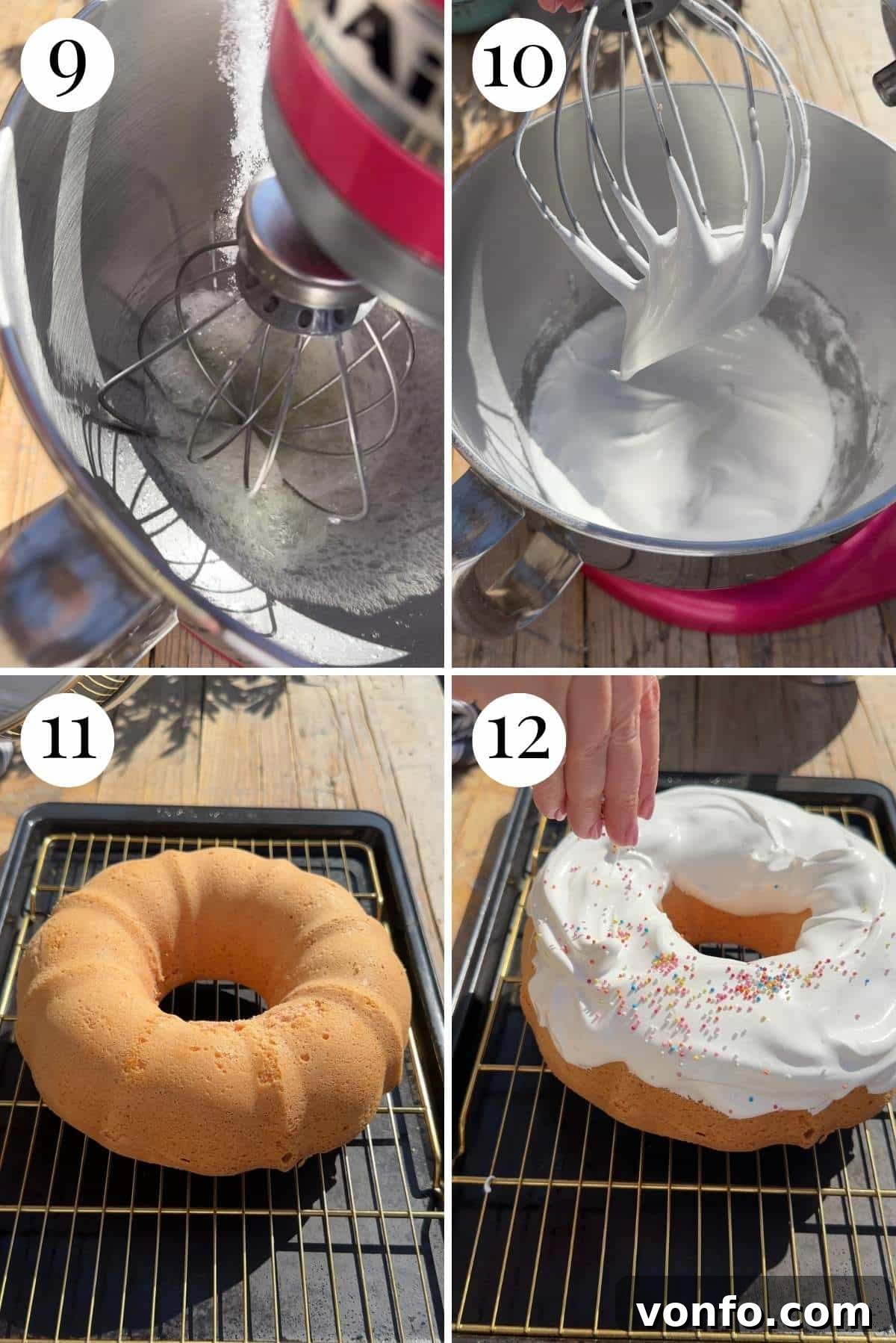
Step 5: Craft the Silky Meringue. Approximately 10 minutes before the cake is expected to be ready, begin preparing the meringue. Add the two reserved egg whites to a meticulously clean stand mixer bowl (it is critical that the bowl and whisk attachment are completely free of any grease or egg yolk, as this will prevent the whites from whipping). Whisk on medium speed until the whites become frothy and opaque. Then, gradually, a spoonful at a time, add both the 50g (1/4 cup) caster sugar and 50g (1/4 cup) powdered sugar, continuing to whisk on medium-high speed until the meringue is thick, wonderfully glossy, stiff, and holds firm peaks. (See photos 9 and 10 below).
Step 6: Cool Oven and Unmold the Cake. As soon as you remove the baked Ciaramicola from the oven, immediately lower the oven temperature to 100°C (210°F). To expedite the cooling process for the oven, you can leave the oven door ajar for about 5 minutes. While the cake is still warm (this is a key tip for easy release and preventing sticking), carefully place a cooling rack on top of the bundt pan and invert it to release the cake onto the rack. Gently lift the bundt pan off the cake and then place the cooling rack, with the cake on it, onto a baking tray. This setup makes it easier to handle the cake for the final meringue baking step. (See photo 11 below).
Step 7: The Grand Finale: Meringue Topping and Final Bake. Generously spread the freshly whipped meringue over the still-warm Ciaramicola, ensuring it forms a beautiful, even coating over the entire surface. Then, shower the entire cake with your chosen colorful sprinkles for a truly festive appearance. Once the oven has reached the lowered temperature of 100°C (210°F), return the cake to the oven for another 15 minutes. This low-temperature bake will gently crisp and set the meringue, giving it a delightful, slightly firm yet chewy texture without browning it excessively. (See photo 12 below).
Expert Baking Tips for Ciaramicola Success: Achieve Bakery-Quality Results
- Mastering the Bundt Pan Release: For a picture-perfect cake that effortlessly slides out, proper bundt pan preparation is paramount. I highly recommend investing in a good quality non-stick bundt pan. Take your time to thoroughly grease every intricate nook and cranny with softened butter, ensuring complete coverage. After greasing, lightly dust the entire interior with all-purpose flour, tapping out any excess. This meticulous preparation creates an effective non-stick barrier, guaranteeing your beautifully baked Ciaramicola will release cleanly, preserving its intricate shape and delicate meringue topping.
- Achieving the Fluffy Meringue: The success of your meringue hinges on absolute cleanliness. When whipping egg whites, ensure your mixing bowl (preferably metal or glass) and whisk attachment are impeccably clean and completely free of any grease, oil, or even a tiny speck of egg yolk. Any trace of fat will prevent the whites from whipping to stiff peaks. For optimal volume and stability, use room-temperature egg whites, as they incorporate air more readily than cold ones.
- Swift Oven Cooling for Meringue: After the initial cake bake, quickly reducing the oven temperature for the meringue’s final setting is crucial. Immediately after removing the baked cake, drop the oven temperature to 100°C (210°F). To expedite this cooling process, leave the oven door ajar for about 5 minutes. This helps dissipate the heat rapidly, bringing the temperature down quickly to the required low heat for a gentle bake that sets the meringue without over-browning or hardening it too much.
- Avoid Overmixing the Batter: Once you’ve added the dry ingredients (flour, baking powder, salt) to the wet mixture, mix only until just combined. Overmixing the batter vigorously or for too long develops the gluten in the flour, which can lead to a tough, dense, and less tender cake. A few small lumps in the batter are far preferable to an overmixed, rubbery texture.
- Room Temperature Ingredients are Key: For the best results, ensure all your cold ingredients, such as eggs and butter, are at room temperature before you begin baking. Room temperature ingredients emulsify much better, creating a smoother, more uniform cake batter. This leads to a finer, more consistent crumb texture in your finished Ciaramicola, contributing to its overall tenderness and moistness.
- Patience for the Perfect Set: While the aroma of freshly baked Ciaramicola is incredibly tempting, allowing the cake to cool completely on a wire rack before attempting to slice and serve is crucial. This cooling period allows the cake’s structure to fully set and the meringue to firm up properly. Cutting into a warm cake can cause it to crumble and the meringue to weep or collapse, compromising both its appearance and texture.
More Italian Easter Desserts to Try: Expand Your Festive Repertoire
Italy’s Easter traditions are rich with culinary delights, offering a diverse array of sweet treats that are as meaningful as they are delicious. If you’ve enjoyed the unique charm of Ciaramicola, you’ll love exploring these other festive Italian desserts, each with its own unique history, regional significance, and irresistible flavor profile. Dive deeper into the sweet side of Italian Easter!
Italian Desserts
Zuccotto (Sponge Cake with Ricotta Filling)
A classic Florentine dessert, Zuccotto is a delightful dome-shaped sponge cake often soaked in Alchermes liqueur. It’s typically filled with a creamy ricotta mixture, candied fruits, and chocolate, making it an elegant and refreshing treat perfect for any special occasion.
Italian Easter Recipes
Pastiera Napoletana (Neapolitan Easter Pie)
Originating from Naples, Pastiera Napoletana is a rich and aromatic tart filled with cooked wheat, creamy ricotta cheese, candied fruit, and fragrant orange blossom water. It’s a deeply symbolic and beloved Easter dessert, celebrated for its unique flavors and textures.
Italian Desserts
Italian Easter Bread (Pane di Pasqua)
This sweet, tender, and beautifully braided bread is a cherished staple of Italian Easter tables. It’s often decorated with colored hard-boiled eggs woven into the dough before baking and finished with a scattering of festive sprinkles, symbolizing renewal and new life.
Italian Desserts
Zuppa Inglese (Italian Trifle)
Meaning ‘English Soup,’ this delightful Italian trifle features luxurious layers of sponge cake generously soaked in Alchermes liqueur, alternating with rich, creamy custard, and sometimes chocolate. It’s a wonderfully moist and intensely flavorful dessert, often served chilled.
If you’ve had the pleasure of trying this exquisite Ciaramicola Italian Easter Bundt Cake or any other authentic recipe from our blog, we would be absolutely delighted to hear from you! Please don’t hesitate to rate the recipe and share your experience in the comments section below – your feedback and insights are incredibly valuable to our community. You can also connect with us and discover more delicious Italian culinary inspirations by following us on Facebook, Instagram, and Pinterest. For a weekly dose of our authentic recipes and cooking tips delivered straight to your inbox, make sure to sign up for our exclusive Newsletter!
Step-By-Step Photos Above for Visual Guidance
Many of our recipes feature detailed step-by-step photos, along with helpful tips and tricks to ensure you achieve perfect results on your very first attempt, and some even include video tutorials!
Ciaramicola: The Authentic Italian Easter Bundt Cake Recipe
By Emily
20
50
1 10
12 servings

Print Recipe
Ciaramicola is a beautiful Italian Easter cake from Perugia, Umbria. It’s made with a soft and delicious bright pink sponge, flavoured with a special Italian liqueur and topped with whipped meringue and sprinkles. A showstopping cake that’s perfect for celebrations!
Equipment Needed
- 9-inch Bundt cake pan (non-stick recommended for easy release)
- Wire cooling rack
- Stand mixer with whisk attachment or an electric hand mixer
- Large mixing bowl and spatula
- Small saucepan (for melting butter)
- Baking tray (for setting the meringue)
Ingredients for Ciaramicola
For the Pink Sponge Cake
- 280 g all-purpose flour (approximately 2 cups, spooned and leveled)
- 150 g (3/4 cup) granulated sugar
- 2 large eggs (plus 2 additional egg yolks, reserve the whites for the meringue topping)
- 125ml (1/2 cup) Alchermes liqueur (see notes below for suitable substitutes)
- 100 g (7 tablespoons) unsalted butter, melted (plus extra butter for greasing the pan)
- 2 teaspoons baking powder
- Zest of 1 large lemon (finely grated)
- Pinch of salt
For the Meringue Topping
- 2 egg whites (the reserved whites from the cake batter preparation)
- 50 g (1/4 cup) caster sugar (also known as fine granulated sugar)
- 50 g (1/4 cup) powdered sugar (also known as icing sugar)
- Colorful sprinkles, for festive topping and decoration
Detailed Instructions for Ciaramicola
-
Begin by pre-heating your oven to 180°C (350°F) using a static (non-fan) setting. Next, meticulously prepare your 9-inch bundt pan: generously grease every intricate detail with softened butter, ensuring full coverage, then lightly dust the entire interior with all-purpose flour. Invert the pan and tap out any excess flour to prevent sticking.
-
In the bowl of a stand mixer, combine the 2 whole large eggs and the 2 additional egg yolks (remember to carefully reserve the 2 egg whites for the meringue topping later) with the 150g (3/4 cup) of granulated sugar. Whisk this mixture on a medium speed for approximately 5-7 minutes. Continue whisking until the mixture becomes significantly thick, pale yellow in color, and has noticeably increased in volume and airiness.
-
Reduce the mixer speed to low. Slowly and steadily pour in the 100g (7 tablespoons) of melted unsalted butter, mixing until it is fully incorporated into the egg and sugar mixture. Immediately after, add the 125ml (1/2 cup) of Alchermes liqueur (or your chosen substitute, referring to the notes for guidance). Continue mixing briefly until the batter transforms into its distinctive and beautiful bright pink color.
-
Once the wet ingredients are well combined, stir in the finely grated zest of 1 large lemon. In a separate, clean bowl, thoroughly whisk together the 280g (2 cups) all-purpose flour, 2 teaspoons baking powder, and a pinch of salt to ensure all dry ingredients are evenly distributed. Gradually add this prepared dry mixture to the wet cake batter, a spoonful at a time, mixing on a medium speed only until a smooth, consistent pink batter forms. Be extremely careful not to overmix, as this can lead to a tough cake.
-
Carefully spoon the beautifully colored batter evenly into your thoroughly prepared bundt pan. Use a spatula to gently smooth out the surface of the batter, ensuring it’s level. Place the bundt pan on the middle shelf of your preheated oven and bake for 30-35 minutes. To confirm doneness, insert a wooden skewer or toothpick into the thickest part of the cake; it should come out completely clean.
-
Approximately 10 minutes before the cake is anticipated to be fully baked, begin preparing the meringue. Add the 2 reserved egg whites to a meticulously clean stand mixer bowl (ensure no grease or egg yolk is present, as this will prevent the whites from whipping). Whisk the whites on medium speed until they become white and frothy. Then, gradually add the 50g (1/4 cup) caster sugar and 50g (1/4 cup) powdered sugar, a spoonful at a time, continuing to whisk on a medium-high speed until the meringue is stiff, thick, and beautifully shiny, holding firm peaks.
-
As soon as you remove the baked Ciaramicola from the oven, immediately reduce the oven temperature to a low 100°C (210°F). To help the oven cool down more quickly, you can leave the oven door ajar for approximately 5 minutes.
-
While the cake is still warm (this is crucial for easy release and preventing it from sticking), carefully place a wire cooling rack on top of the bundt pan and invert it to release the cake onto the rack. Gently lift off the empty bundt pan. Next, place the cooling rack, with the cake now on it, onto a baking tray. This setup provides stability and ease of handling for the subsequent meringue baking step.
-
Generously top the warm Ciaramicola with the freshly whipped meringue, spreading it beautifully and evenly over the entire surface of the cake. Then, shower the entire cake with your chosen colorful and festive sprinkles. Once the oven has reached the lowered temperature of 100°C (210°F), return the cake (on the baking tray) to the oven for another 15 minutes. This low-temperature bake will gently cook and set the meringue, giving it a delightful, slightly crisp exterior.
-
Remove the finished Ciaramicola from the oven. Allow it to cool completely on the wire cooling rack before attempting to slice and serve. This crucial cooling period allows the cake’s internal structure to fully set and the meringue to firm up properly, ensuring the best possible texture and appearance.
Recipe Notes for Success
Alchermes Liqueur Substitutes: Finding the Right Balance
- Juice + Alcohol for Color and Depth: For the most balanced substitution that mimics both the liquid volume and a hint of alcoholic depth, combine 1/4 cup (60ml) of vibrant cranberry or pomegranate juice with 1/4 cup (60ml) of an aromatic alcoholic spirit such as rum, sweet Marsala wine, Vin Santo, or Grand Marnier. It is important to remember that natural juice will not provide the intense, vibrant pink color of authentic Alchermes. To achieve the desired bright pink hue for your Ciaramicola, you will likely need to incorporate a few drops of red food coloring (gel food coloring often provides the best results).
- Spice Infusion for Aromatic Flavor: To capture the unique aromatic spice profile of Alchermes, you can infuse your cake batter with specific spices. Add 1/4 teaspoon of ground cinnamon along with a generous 1/8 teaspoon (or a solid pinch) each of finely ground cloves, ground cardamom, and a very subtle touch of nutmeg and coriander. Add these spices directly to your dry flour mixture before combining with the wet ingredients. When using this spice blend, remember to still use a liquid component (such as milk or juice) and, crucially, red food coloring to achieve the Ciaramicola’s characteristic pink appearance.
- Simple Liquid Replacement (No Alcohol): If the specific color and complex flavor nuances of Alchermes are less critical for your dietary needs or preferences, you can simply use 1/2 cup (125ml) of milk as a direct liquid replacement. If aiming for the pink color, remember to add red food coloring as milk will not contribute any hue.
Storage Recommendations for Ciaramicola:
Ciaramicola is best enjoyed within 2 days of baking. To keep it fresh and prevent it from drying out, store the cake at room temperature. The most effective way to cover it is with a large mixing bowl inverted over the cake, or by placing it in an airtight cake dome. While you can store Ciaramicola in the refrigerator, room temperature storage is generally preferred to maintain the delicate texture of the meringue and the moistness of the sponge. Always ensure it’s well-covered to protect it from air exposure.
Helpful Information for All Our Recipes
- We consistently use high-quality extra virgin olive oil in all our recipes, unless a specific alternative cooking oil is explicitly stated.
- For canned or jarred tomatoes of any kind (diced, crushed, pureed), we exclusively recommend using premium Cirio or Mutti brands to ensure the best possible flavor and authentic results in your Italian dishes.
- Unless otherwise specified within a recipe, assume all vegetables listed are of medium size for consistent results.
- All recipes featured on this blog are meticulously tested and developed using a standard fan (convection) oven. Baking times may vary slightly if using a conventional oven.
- For detailed insights into how our nutrition information is calculated and its limitations, please refer to our dedicated Privacy Policy page.
- Explore our essential list of Italian Pantry Staples to stock your kitchen like a seasoned Italian cook, ensuring you’re always ready for authentic culinary adventures.
- Discover all our highly recommended Essential Kitchen Tools for Italian Cooking, from basic utensils to specialized equipment, to enhance your cooking experience.
Nutrition Facts (Approximate Per Serving)
Calories: 254 kcal
Carbohydrates: 40 g
Protein: 4 g
Fat: 8 g
Saturated Fat: 5 g
Polyunsaturated Fat: 0.5 g
Monounsaturated Fat: 2 g
Trans Fat: 0.3 g
Cholesterol: 45 mg
Sodium: 145 mg
Potassium: 55 mg
Fiber: 1 g
Sugar: 22 g
Vitamin A: 248 IU
Calcium: 50 mg
Iron: 1 mg
Nutrition information provided is automatically calculated and should be considered an approximation. Individual results may vary based on specific ingredients used, precise measurements, and preparation methods.
Did you try this delightful recipe?
Share your experience and leave a comment below! We love hearing from you!