
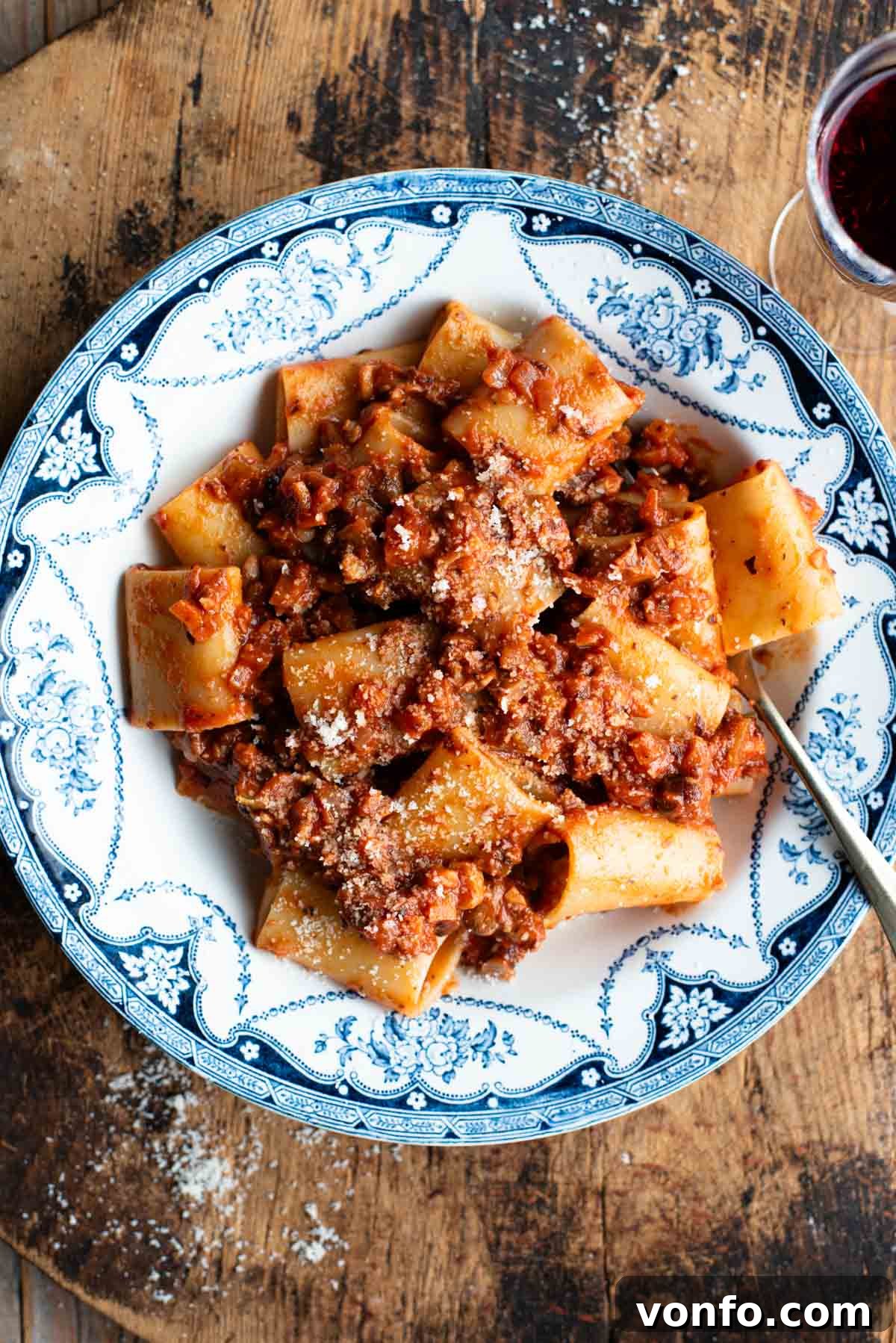
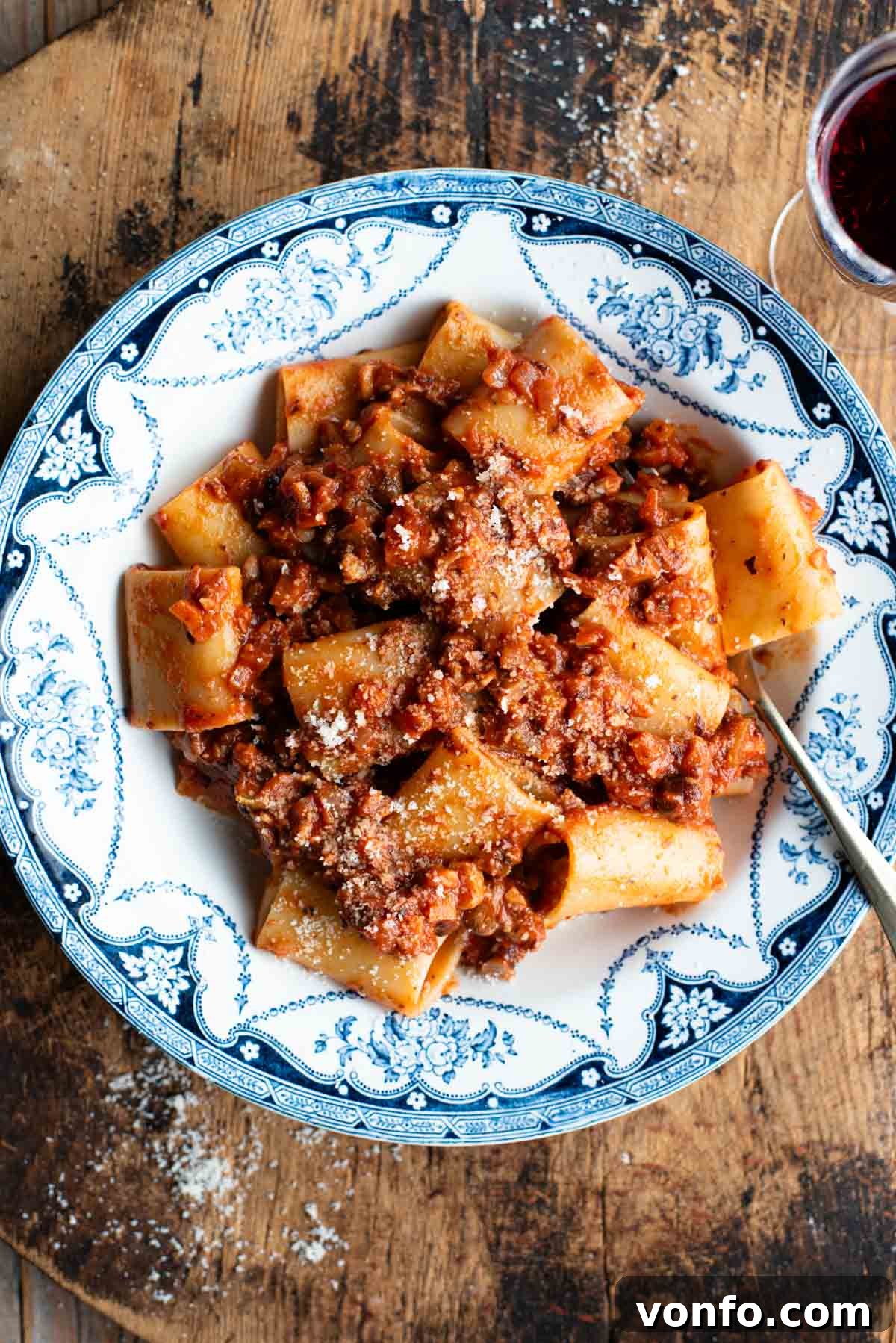
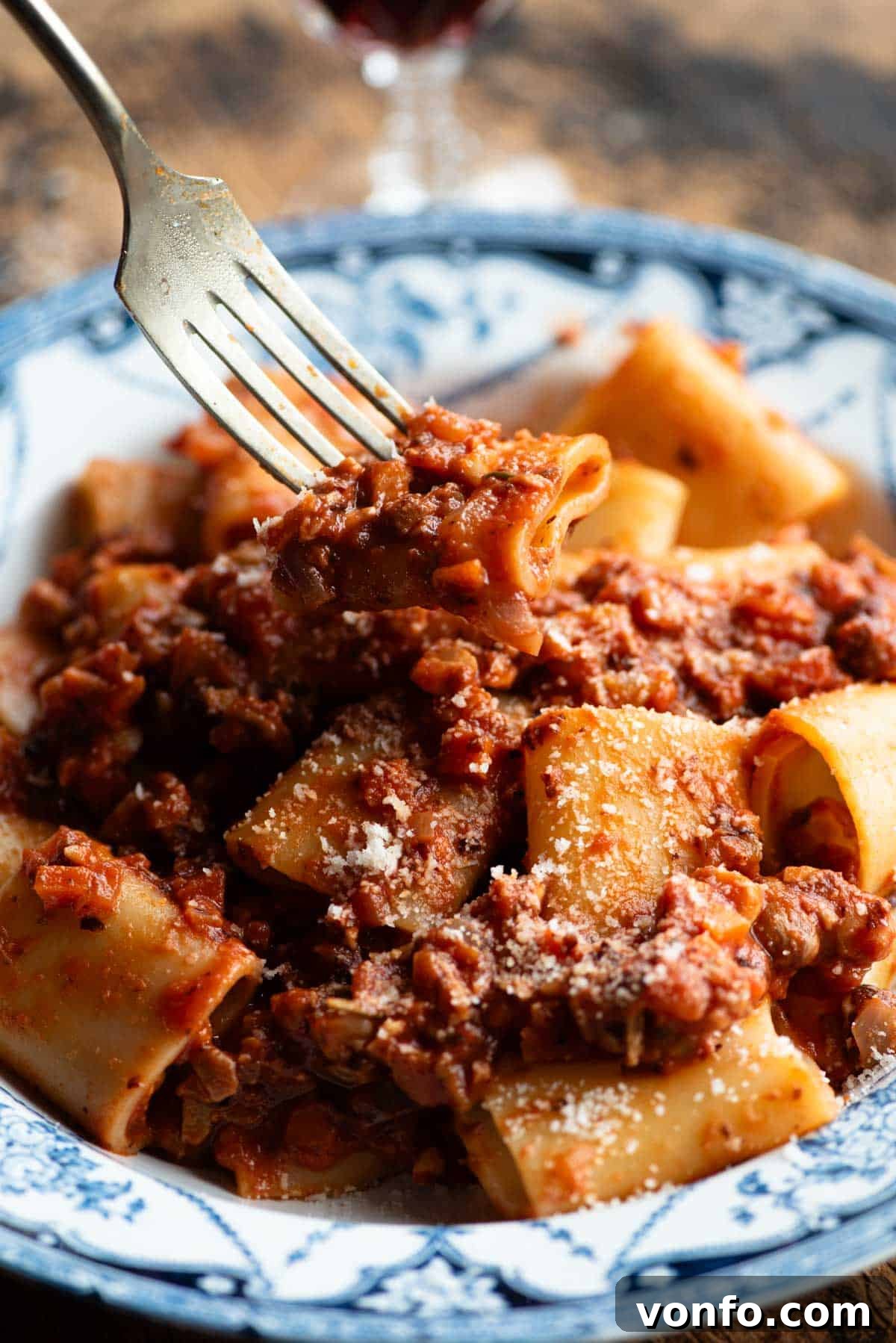
Delve into the rich culinary landscape of Piedmont, Italy, with this delightful and genuinely unique Piedmontese Hazelnut Ragu. This innovative vegetarian ragu masterfully replaces traditional meat with the region’s prized hazelnuts, which are slowly simmered with aromatic red wine, a medley of fresh vegetables, and fragrant herbs. The result is an incredibly flavourful, deeply satisfying, and completely meat-free sauce that pairs exquisitely with your favourite pasta or creamy polenta. It’s a celebration of authentic Italian flavors, reimagined.
Recipe Highlights
- An authentic and often overlooked Piedmontese culinary treasure.
- A wonderfully hearty and flavourful meat-free alternative to traditional ragu.
- Achieves incredible depth of flavour with just 1 hour of gentle simmering.
- Perfect for vegetarians, flexitarians, and anyone seeking new, exciting pasta dishes.
- Highlights the renowned hazelnuts of Piedmont, offering a taste of regional Italian excellence.
Table of Contents
- Recipe Highlights
- The Story Behind Piedmontese Hazelnut Ragu
- Ingredient Notes and Expert Tips
- Step-by-Step Guide to Hazelnut Ragu
- Mastering Your Hazelnut Ragu: Tips and FAQs
- Discover More Piedmontese Recipes
- Full Recipe Card
The Story Behind Piedmontese Hazelnut Ragu
Discovering this delightful ragu, known locally as ragù alle nocciole, was an exciting revelation. Its concept immediately captivated me, offering a unique departure from any Italian dish I had encountered before. This recipe embodies the innovative spirit of regional Italian cuisine, where local ingredients inspire extraordinary creations.
Piedmont, a breathtaking region in northern Italy, is world-renowned for its exquisite hazelnuts. The rolling hills of the Langhe region, a UNESCO World Heritage site, are blanketed with hazelnut groves, producing the highly prized Tonda Gentile Trilobata variety. These nuts are not just an ingredient; they are a cornerstone of Piedmontese culinary identity. It’s no wonder that hazelnuts take center stage in this ragu, transforming it into a truly authentic regional specialty. Beyond savory dishes, you’ll find these glorious nuts enhancing some of Piedmont’s most celebrated sweets, including rich hazelnut chocolate spreads, delicate Baci di Dama cookies, and luxurious Baci chocolates.
While Piedmontese hazelnuts are famous, finding extensive traditional documentation for this particular ragu proved challenging. Unlike some well-established Italian classics, there isn’t a single, universally agreed-upon “go-to” set of ingredients for hazelnut ragu. This lack of rigid tradition allowed for a wonderful opportunity to develop our own interpretation, drawing inspiration from the region’s flavors while crafting a recipe we’ve come to absolutely adore. Our version balances the nutty richness of hazelnuts with the acidity of tomatoes, the earthiness of mushrooms, and the aromatic depth of herbs and red wine, creating a harmonious and utterly delicious experience.
Ingredient Notes and Expert Tips
Crafting the perfect Piedmontese Hazelnut Ragu begins with selecting high-quality ingredients. Here’s a deeper dive into the key components and how to get the most out of them:
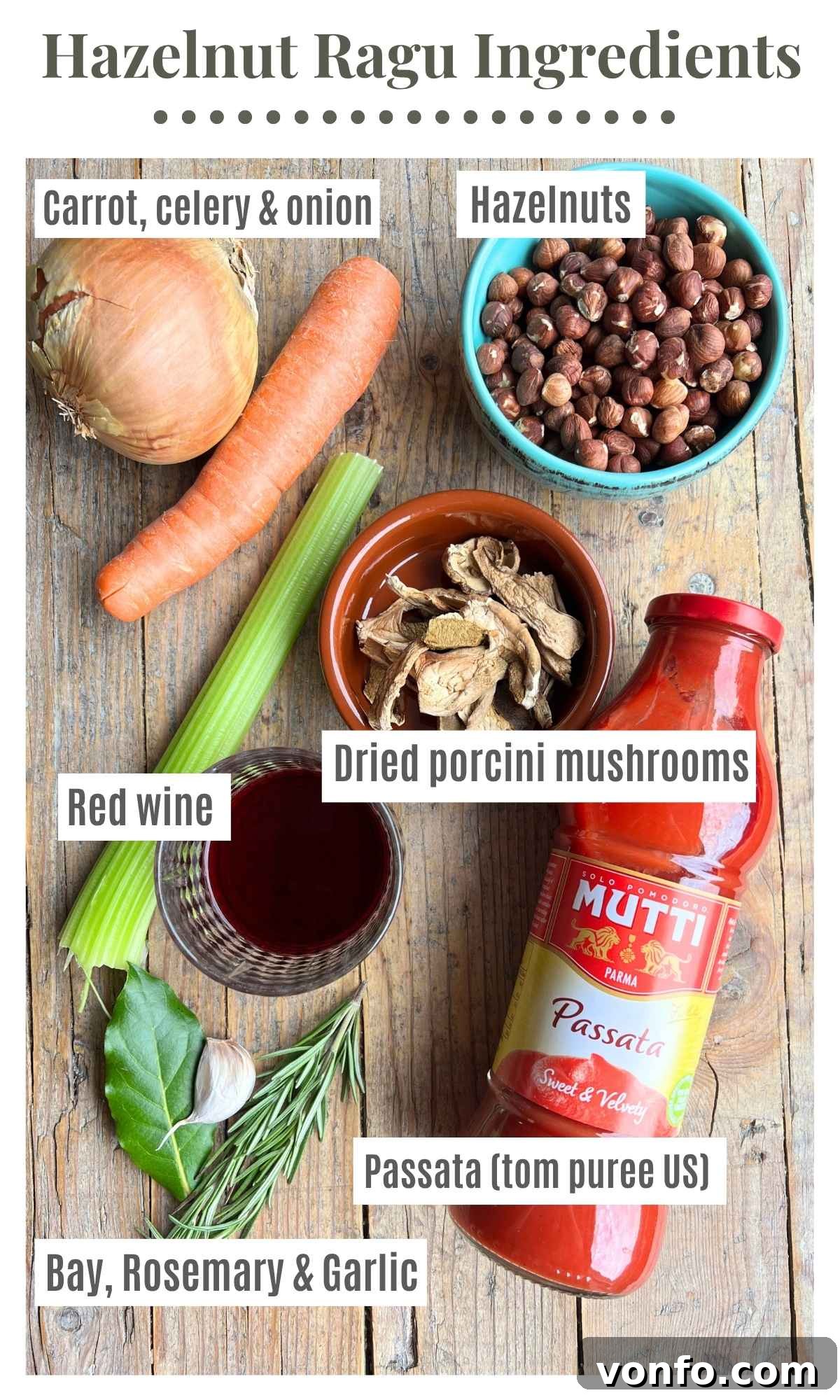
- Hazelnuts: The Star of the Show
- I typically use whole hazelnuts with their skins intact. The skins add a slight bitterness and a rustic charm to the ragu, enhancing its authentic character. However, if you prefer a smoother, milder flavour, skinless hazelnuts work beautifully too.
- Toasting is Crucial: Even if your hazelnuts are pre-toasted, a quick re-toast in a dry pan awakens their aromatic oils and deepens their flavour. This step is non-negotiable for achieving the best taste.
- Texture Matters: After toasting, pulsing the nuts in a food processor to a rough, crumbly texture is key. Avoid over-processing them into a paste; you want small, irregular pieces that mimic the texture of finely minced meat in a traditional ragu. This ensures a delightful bite in the finished sauce.
- Dried Porcini Mushrooms: Umami Depth
- Dried porcini mushrooms are a powerhouse of umami, providing an earthy, savory depth that perfectly complements the hazelnuts and red wine. Their concentrated flavour is unparalleled.
- Rehydration is Key: Always soak dried porcini in hot water for at least 10 minutes to rehydrate them. Don’t discard the soaking liquid! It’s packed with flavour and will be used in the ragu, but be sure to leave the gritty sediment at the bottom of the bowl.
- Alternatives: If dried porcini are unavailable, a mix of other dried mushrooms can be used following the same rehydration process. Alternatively, fresh crimini (chestnut) mushrooms are a great substitute. Finely chop them and sauté them with the other vegetables to build a similar flavour base.
- Passata: The Tomato Base
- Passata, also known as tomato puree in the US, forms the vibrant, sweet backbone of this ragu. It’s a smooth, strained tomato product that provides a clean tomato flavour without seeds or skins.
- Quality Counts: The quality of your passata significantly impacts the final taste of your ragu. I highly recommend using a reputable Italian brand like Mutti or Cirio, known for their superior flavour and consistency. Always choose a brand you trust and love for the best results.
- Red Wine: Aromatic Foundation
- A dry red wine is essential for deglazing the pan and adding layers of complex flavour. Piedmontese wines like Barbera d’Asti or Nebbiolo are ideal as they are locally sourced and pair perfectly with the region’s cuisine. Chianti, a Tuscan classic, also works wonderfully.
- Cook out the Alcohol: Ensure you simmer the wine until the strong alcohol smell dissipates. This leaves behind only the rich, fruity notes of the wine, deepening the ragu’s profile.
- Soffritto (Mirepoix): The Holy Trinity
- The combination of finely chopped carrot, celery, and onion (known as soffritto in Italy, or mirepoix in French cuisine) is the aromatic foundation of nearly all great Italian sauces. It builds a subtle sweetness and savoury depth that is indispensable.
- Fine Chop: Chop these vegetables finely and uniformly to ensure they soften evenly and melt into the sauce, creating a seamless texture.
- Herbs: Fresh Fragrance
- Fresh rosemary and bay leaves infuse the ragu with a woody, earthy aroma that complements the hazelnuts beautifully. Always use fresh herbs for the most vibrant flavour.
Step-by-Step Guide to Hazelnut Ragu: A Visual Walk-Through
Follow these detailed steps to create your perfect Piedmontese Hazelnut Ragu. Each stage is designed to build layers of flavour, ensuring a delicious outcome.
Step 1: Prepare the Hazelnuts
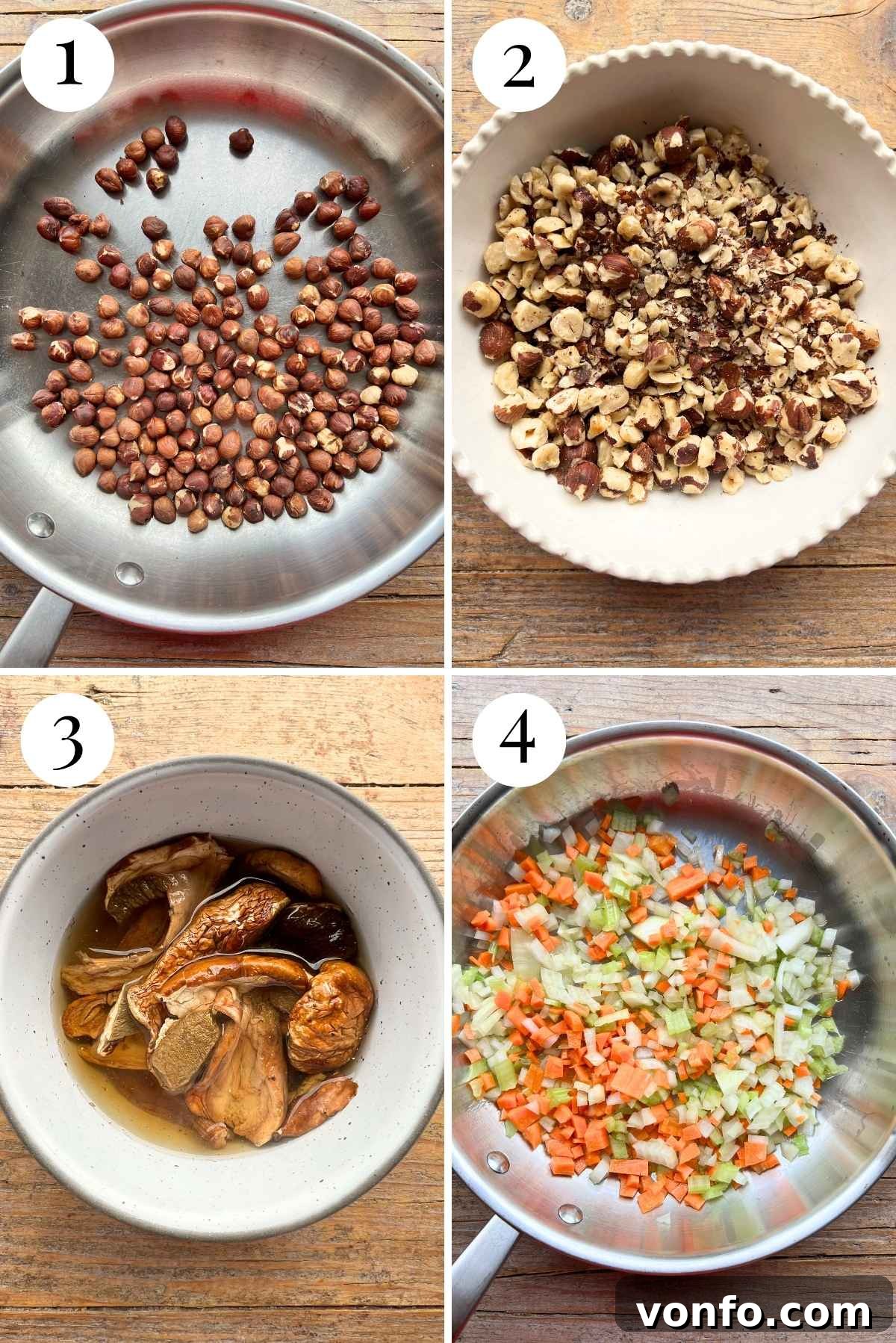
Begin by toasting the whole hazelnuts in a dry pan over medium heat for a few minutes until fragrant and lightly browned. This enhances their flavour significantly. Once cooled, transfer them to a food processor and pulse until you achieve a rough, crumbly texture. This is crucial for mimicking the consistency of a traditional ragu and providing a pleasant bite (photos 1 and 2).
Step 2: Rehydrate the Porcini Mushrooms
Place the dried porcini mushrooms in a small bowl or ramekin and cover them with hot water. Allow them to soak for at least 10 minutes to fully rehydrate. Set them aside, but remember to preserve the flavorful soaking liquid (photo 3).
Step 3: Build the Soffritto Base
In a large, heavy-bottomed pan or Dutch oven, heat 1-2 tablespoons of olive oil over medium heat. Add the finely chopped carrot, celery, and onion. Sauté gently for about 10 minutes, stirring occasionally, until the vegetables are soft and translucent but not browned. This forms the aromatic foundation of your ragu (photo 4).
Step 4: Infuse with Hazelnuts and Aromatics
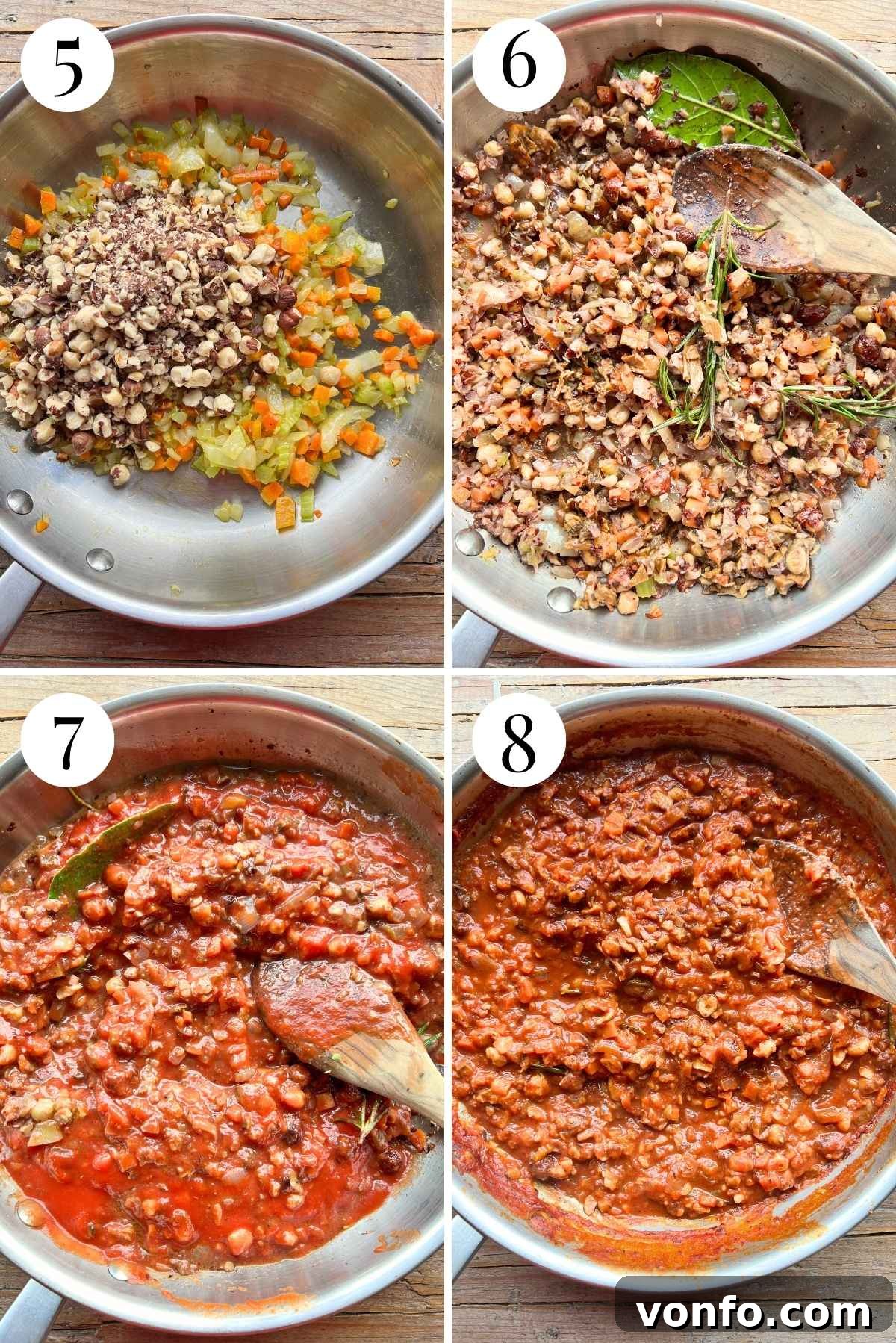
Once the soffritto is tender, add the finely chopped garlic, the processed hazelnuts, fresh bay leaf, and rosemary sprigs to the pan. Sauté for another 1-2 minutes, stirring constantly, until the garlic becomes fragrant. Be careful not to burn the garlic (photo 5).
Step 5: Incorporate Mushrooms and Deglaze with Wine
Remove the rehydrated porcini mushrooms from their soaking liquid, roughly chop them, and add them to the pan. Carefully pour in most of the reserved mushroom soaking liquid, being sure to leave any grit or sediment at the bottom of the bowl. Next, pour in the red wine and bring the mixture to a simmer. Allow it to cook gently for several minutes, stirring occasionally, until the strong alcoholic aroma has cooked off, leaving behind a rich, concentrated flavour (photo 6).
Step 6: Simmer to Perfection and Serve
Finally, add the tomato passata, water, a generous pinch of salt, and freshly ground black pepper to the pan. Stir everything together thoroughly. Reduce the heat to low, cover the pan, and let the ragu simmer gently for 1 hour. It’s important to check the sauce halfway through; if it appears too thick or has reduced excessively, add another ¼ to ½ cup (60-125ml) of water to maintain the desired consistency. Once the ragu is rich and fragrant, taste for seasoning and adjust if necessary. Meanwhile, cook your chosen pasta in plenty of salted boiling water until perfectly al dente. Drain the pasta, reserving a little pasta water, and transfer it directly into the ragu. Toss the pasta until it’s fully coated in the luxurious sauce, adding a splash of pasta water if needed to loosen it. Serve immediately in warm bowls, topped generously with grated Parmigiano Reggiano (photos 7 and 8).
Mastering Your Hazelnut Ragu: Tips and FAQs
- Best Pasta to Use: The beauty of a rich ragu is its versatility with pasta shapes. We love using large, robust shapes like paccheri, rigatoni, or even orecchiette, which perfectly cup the sauce. Long, broad pasta like tagliatelle or pappardelle also works beautifully, allowing the ragu to cling to every strand. Experiment to find your favourite!
- Achieving the Perfect Hazelnut Texture: Our recipe aims for hazelnuts that retain a pleasant bite, adding texture and interest to the ragu. If you prefer a softer texture, you have a couple of options: you can pulse the hazelnuts a little finer in the food processor during preparation, or you can extend the simmering time of the ragu by an additional hour, adding more water as needed to prevent it from becoming too dry.
- Versatile Serving Suggestions: While undeniably delicious with pasta, this hazelnut ragu is also fantastic served over a bed of creamy polenta for a hearty, comforting meal. It can also be a unique topping for toasted bruschetta or as a flavorful base for vegetarian lasagna.
Absolutely! This hazelnut ragu is an excellent make-ahead dish. The flavors often deepen and meld beautifully overnight. You can prepare the ragu entirely in advance and store it in an airtight container in the refrigerator for up to 3-4 days. When ready to serve, gently reheat it on the stovetop, adding a splash of water or vegetable broth if needed to loosen the sauce.
Yes, the ragu itself is naturally gluten-free. To keep the entire meal gluten-free, simply serve it with your favorite gluten-free pasta or polenta.
Yes, this recipe is inherently vegan! The ragu is entirely plant-based. Just ensure that any accompanying elements, such as pasta (most dry pasta is vegan, but check labels) and the serving cheese, are also vegan. For serving, omit the Parmigiano Reggiano or use a high-quality vegan Parmesan alternative.
Given its Piedmontese origins, local red wines are a natural fit. A Barbera d’Asti or a young Nebbiolo would be excellent choices, offering complementary notes of red fruit and earthiness. For those looking beyond Piedmont, a medium-bodied Sangiovese (like Chianti) or a Pinot Noir would also pair beautifully with the rich, nutty, and savory flavors of the ragu.
Discover More Piedmontese Recipes to Try
If you’ve fallen in love with the flavors of Piedmont through this hazelnut ragu, you’ll be delighted to explore more traditional recipes from this incredible region of Italy. From savory classics to delectable pasta dishes, Piedmontese cuisine offers a world of culinary delights.
Mains
Vitello Tonnato (Veal with Tuna Sauce)
A classic cold dish from Piedmont, featuring thinly sliced veal served with a creamy, savory tuna-caper sauce. Perfect for warm weather.
Sides
Ricotta Chicken Croquettes
Crispy on the outside, creamy and flavorful on the inside, these croquettes are a versatile side dish or appetizer.
Fresh Pasta
Homemade Agnolotti (step by step)
Learn to craft this traditional Piedmontese filled pasta from scratch with our easy-to-follow step-by-step guide.
Antipasti
Bagna Cauda (Anchovy, Garlic & Butter Dip)
A warm, pungent, and incredibly addictive dip perfect for sharing with fresh vegetables, embodying rustic Piedmontese hospitality.
We hope you enjoy exploring the vibrant flavors of Piedmont through this Hazelnut Ragu! If you’ve tried this recipe or any other on our blog, we’d love to hear from you. Please don’t forget to rate the recipe and share your thoughts in the comments section below – your feedback is invaluable to us! You can also stay connected and discover more of our delicious food by following us on Facebook, Instagram, and Pinterest, or by signing up for our exclusive Newsletter.
Step By Step Photos Above
Most of our recipes come with step-by-step photos, helpful tips and tricks to make it perfectly the first time, and even video!
Piedmontese Hazelnut Ragu
By Emily
30 mins
1 hr 20 mins
1 hr 50 mins
4 servings
Pin Recipe
Print Recipe
Ingredients
- 1 carrot, finely chopped
- 1 celery stalk, finely chopped
- 1 onion, finely chopped
- 1 cup (150g) whole hazelnuts, toasted and pulsed
- 1/2 cup (15g) dried porcini mushrooms, rehydrated
- 1 bay leaf
- 2 sprigs fresh rosemary
- 1 garlic clove, finely chopped
- 1/2 cup (125ml) dry red wine (such as Barbera d’Asti or Chianti)
- 2 cups (460g) Passata (tomato puree US)
- 1/2 cup (125ml) water
- Olive oil, for cooking
- Salt and freshly ground black pepper, to taste
- 1 lb (450g) pasta of choice (such as paccheri, rigatoni, or tagliatelle)
- Parmigiano Reggiano, for serving (use a vegetarian-friendly cheese if needed, or omit for vegan)
Instructions
Prep
-
Add the dried porcini mushrooms to a ramekin or bowl and cover them generously with hot water. Allow them to soak for at least 10 minutes, or until you are ready to use them.
-
Toast the whole hazelnuts in a dry pan over medium heat for a few minutes, shaking the pan occasionally, until they are fragrant and lightly golden. Let them cool completely. Once cool, transfer them to a food processor and pulse until you achieve a rough, crumbly texture. Set aside.
Make the Ragu
-
Finely chop the carrot, celery, and onion into small, uniform pieces. Heat 1-2 tablespoons of olive oil in a large, heavy-bottomed pan or Dutch oven over medium heat. Add the chopped vegetables and sauté them gently for about 10 minutes, stirring occasionally, until they are soft and translucent but not browned.
-
Once the vegetables are soft, add the finely chopped garlic, the pulsed hazelnuts, the bay leaf, and the rosemary sprigs to the pan. Sauté for another 1-2 minutes, stirring continuously, until the garlic becomes fragrant.
-
Remove the rehydrated porcini mushrooms from their soaking liquid and roughly chop them. Add the chopped mushrooms to the pan, along with most of their soaking liquid. Be very careful to leave any gritty sediment at the bottom of the bowl when pouring the liquid.
-
Next, pour in the red wine. Bring the mixture to a gentle simmer and allow it to cook, uncovered, for several minutes until the strong alcohol smell has evaporated. Add the tomato passata and water, then stir in a good pinch of salt and freshly ground black pepper. Stir everything together thoroughly to combine.
-
Reduce the heat to medium-low, cover the pan, and let the ragu simmer gently for 1 hour. It’s important to check the sauce halfway through the cooking time; if it appears too thick or has reduced too much, add an additional ¼ to ½ cup (60-125ml) of water to achieve your desired consistency.
-
Once the ragu has finished simmering, taste it for seasoning. Adjust the salt and pepper as needed to perfect the flavors.
-
When you are ready to serve, cook your chosen pasta in a large pot of generously salted boiling water until it is perfectly al dente. Drain the pasta, reserving a small amount of the starchy pasta water. Transfer the cooked pasta directly into the pan with the hazelnut ragu. Toss the pasta vigorously until every piece is fully coated in the luxurious sauce. If the sauce seems a little too thick, add a splash of the reserved pasta water to loosen it to your preference.
-
Serve the Piedmontese Hazelnut Ragu immediately in warm bowls, generously topped with freshly grated Parmigiano Reggiano (or a vegetarian/vegan alternative if preferred).
Notes
Helpful Info for All Recipes
- I always use extra virgin olive oil in all of my recipes unless stated otherwise, for its superior flavour and health benefits.
- When using canned or jarred tomatoes of any kind, I consistently choose Cirio or Mutti brands. Their high quality ensures the best possible results and authentic Italian flavour in all my dishes.
- All vegetables mentioned are medium-sized unless specifically stated otherwise in the ingredient list.
- All recipes are thoroughly tested and developed using a fan (convection) oven, so cooking times may vary slightly if you are using a conventional oven.
- Find out more about how nutrition is calculated and why it should only be used as an approximation.
- Check out our comprehensive guide to Italian Pantry Staples to stock your kitchen like a true Italian cook.
- You can also find all our recommended Essential Kitchen Tools for Italian Cooking to help you master authentic Italian cuisine.
Nutrition Information
Carbohydrates: 48g |
Protein: 14g |
Fat: 37g |
Saturated Fat: 3g |
Polyunsaturated Fat: 5g |
Monounsaturated Fat: 27g |
Sodium: 59mg |
Potassium: 1531mg |
Fiber: 12g |
Sugar: 11g |
Vitamin A: 3212IU |
Vitamin C: 21mg |
Calcium: 113mg |
Iron: 6mg
Nutrition information is automatically calculated and should only be used as an approximation.
Did you try this recipe?
Leave a comment below and share your experience!