
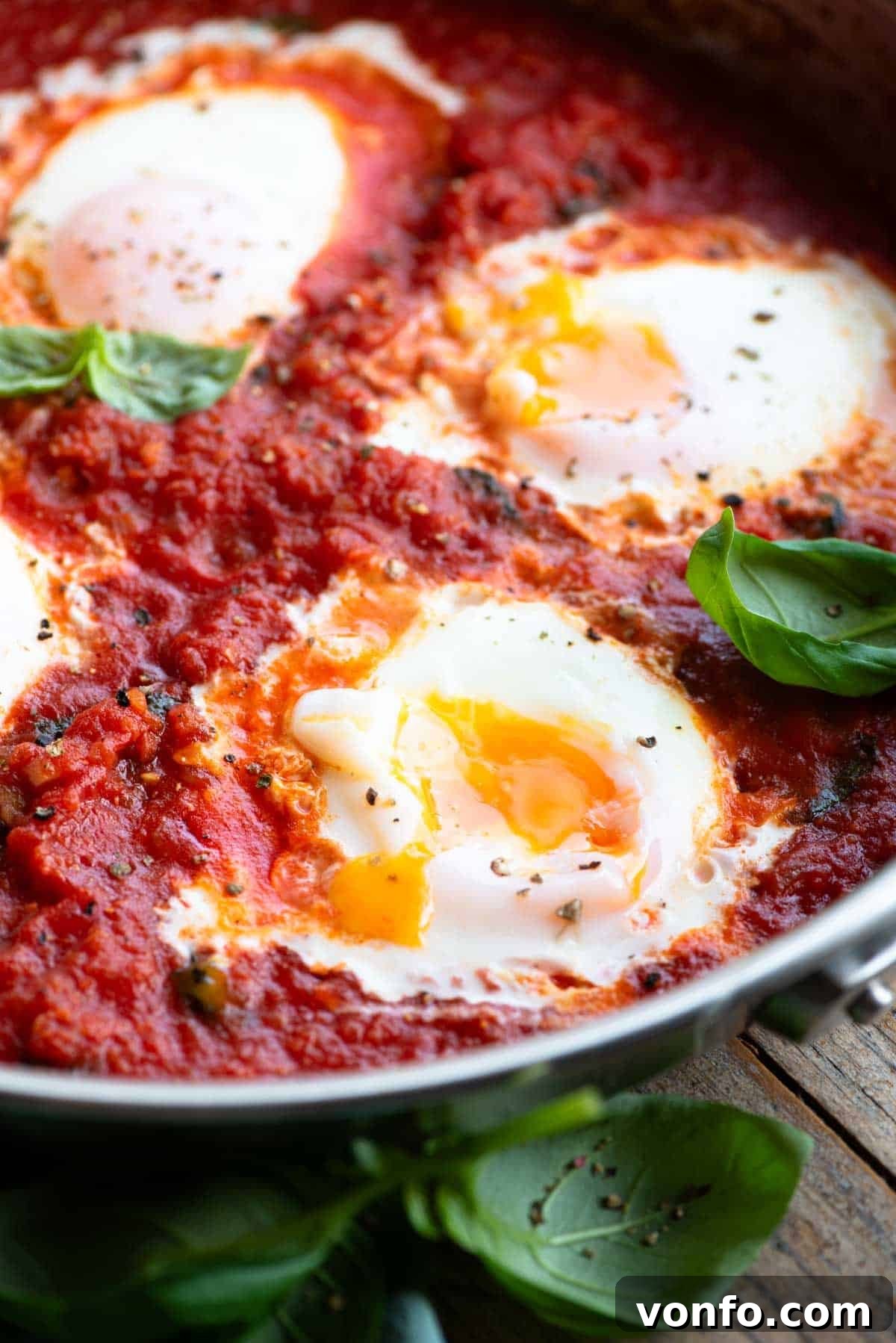
Embark on a culinary journey to Southern Italy with this exquisite recipe for Eggs in Purgatory, elevated with the fiery kick of Calabrian ‘Nduja salami. Known in Italy as ‘Uova in Purgatorio’ or ‘Ova ‘mpriatorio’ in Neapolitan dialect, this dish is a true testament to simple ingredients coming together to create extraordinary flavor. Our rendition features a deeply savory, richly spiced tomato sauce, perfectly cradling eggs with luscious, runny yolks that are practically begging for a piece of crusty bread to be dunked into them. Best of all, this remarkably flavorful and comforting meal can be on your table in under 30 minutes, making it an ideal choice for a quick breakfast, a leisurely brunch, or a satisfying weeknight dinner.
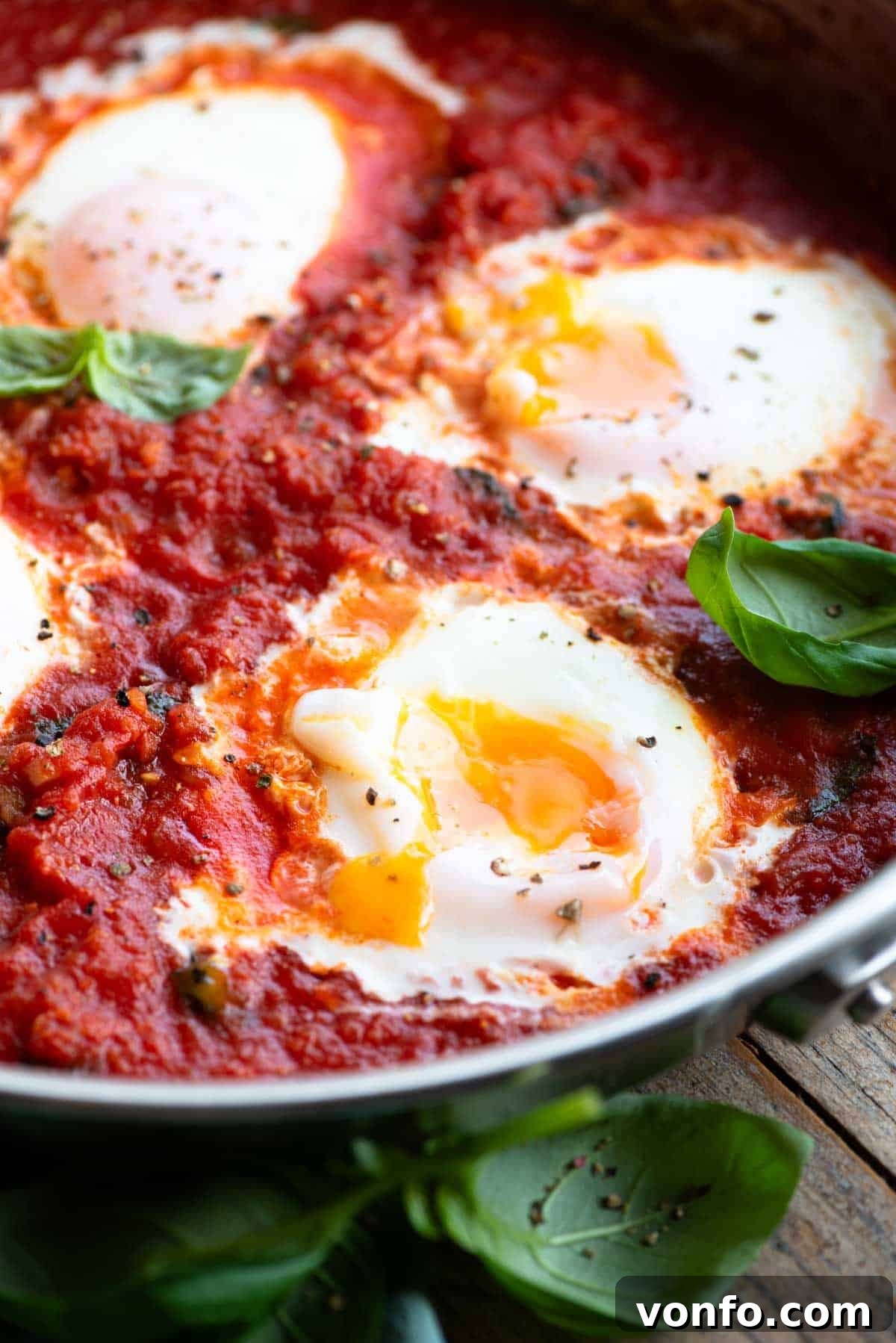
Eggs in Purgatory is a beloved Neapolitan dish, a staple in many Southern Italian households. Its evocative name, rumored to be inspired by Dante Alighieri’s vivid descriptions of Purgatory in “The Divine Comedy,” beautifully captures the essence of the dish: the fiery red tomato sauce symbolizing the flames, and the stark white eggs representing the souls ascending towards heaven. Traditionally, it’s a wonderfully straightforward recipe, showcasing the humble egg gently poached in a vibrant tomato sauce until the whites are just set and the yolks remain beautifully runny.
While the classic version is undeniably delicious, our recipe introduces a tantalizing twist with the inclusion of ‘Nduja, a spicy, spreadable pork salami from Calabria. This addition infuses the rich tomato base with an unparalleled depth of flavor and a delightful warmth that perfectly complements the creamy eggs. The heat from the ‘Nduja is robust but balanced, creating a harmonious symphony of tastes that will awaken your palate. It transforms this comforting dish into something truly unforgettable, offering a culinary adventure with every bite.
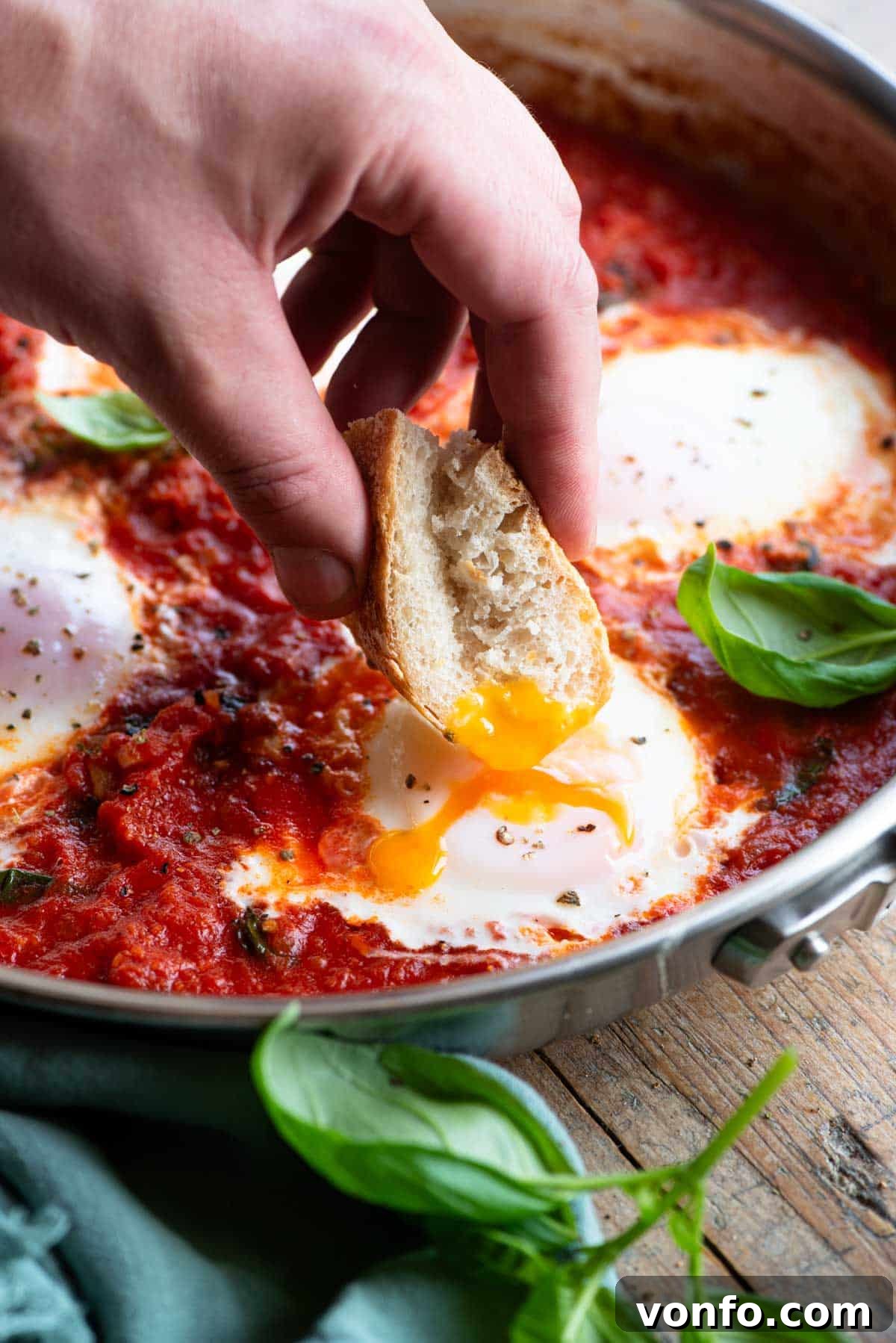
This versatile Italian classic is not confined to a single mealtime. In Italy, ‘Uova in Purgatorio’ is often enjoyed for a hearty lunch or a light dinner. However, its ease of preparation and satisfying nature make it equally perfect for a quick breakfast or a sophisticated brunch. Imagine starting your day with this vibrant dish, or serving it as an impressive yet simple meal for guests. No matter when you choose to enjoy it, always pair it with plenty of fresh, crusty bread or perfectly char-grilled crostini. These are essential for soaking up every last drop of the flavor-packed sauce and for dunking into those irresistible runny yolks.
Below, you’ll find our complete recipe, meticulously crafted to ensure flawless results every time. We’ve also included our top tips for achieving perfectly cooked eggs, alongside a selection of delicious variations to inspire your culinary creativity and help you customize this magnificent dish to your liking.
Essential Ingredient Notes for Your Perfect Eggs in Purgatory
Crafting the perfect Eggs in Purgatory begins with selecting the right ingredients. Each component plays a vital role in building the robust and harmonious flavors of this cherished Italian dish. Here’s a deeper dive into what you’ll need and why:
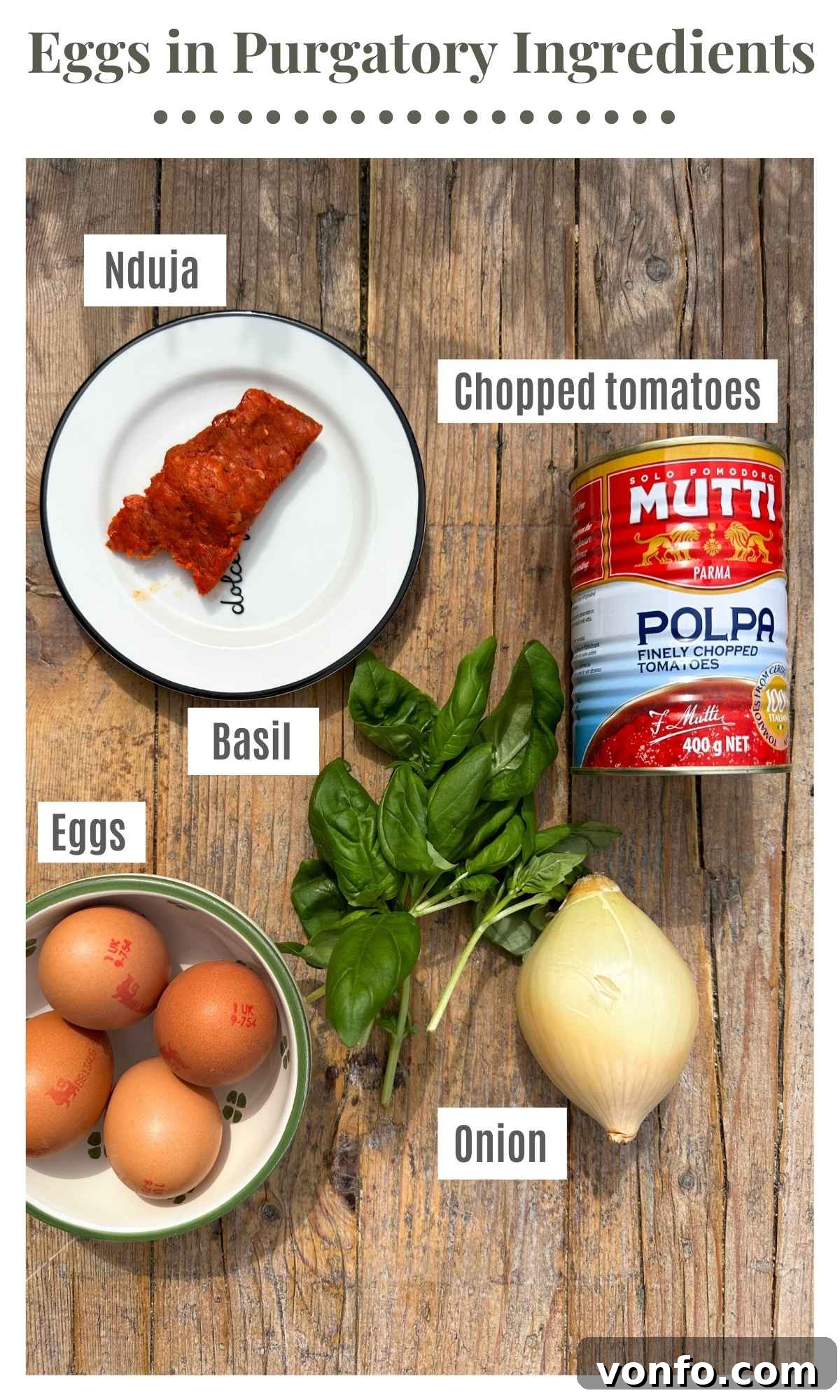
- Tomatoes: The Heart of the Sauce – For the most authentic and flavorful sauce, we highly recommend using high-quality crushed tomatoes. Brands like Mutti Polpa are excellent choices, known for their finely crushed texture and rich, sweet flavor profile. These provide a beautiful body and intense tomato taste to the sauce without being too chunky. Whole peeled plum tomatoes, crushed by hand, would also yield fantastic results, offering a slightly coarser texture. While passata (tomato puree in the US) can be used for an even smoother, richer sauce, be mindful that its concentrated flavor might be more intense. Choose what suits your preference for texture and intensity.
- White or Brown Onion: The Aromatic Base – Onions are foundational to almost any good Italian sauce, providing a crucial aromatic base. We prefer using a white onion in this recipe for its delicate sweetness, which beautifully balances the spiciness of the ‘Nduja and the acidity of the tomatoes. However, a brown (yellow) onion will work just as wonderfully, imparting a slightly more robust onion flavor. Feel free to use whichever you have on hand or prefer. The key is to finely chop it to ensure it melts into the sauce seamlessly.
- Fresh Basil: A Must-Have Herb – When it comes to Italian cooking, fresh herbs make all the difference, and basil is no exception here. Its fragrant, sweet, and peppery notes are essential for brightening the tomato sauce and adding an authentic touch. We strongly advise against using dried basil for this recipe, as it lacks the vibrant aroma and delicate flavor that fresh basil provides. Tear the leaves by hand just before adding them to preserve their essential oils and maximize their fresh taste.
- ‘Nduja: The Spicy Star – ‘Nduja is a unique, spreadable, spicy pork salami originating from Calabria, Italy. It’s renowned for its intense heat and rich, savory flavor, which it lends beautifully to our Eggs in Purgatory. Its creamy texture melts into the sauce, distributing its delicious spice throughout the dish. If ‘Nduja is not readily available in your area, don’t worry! You can substitute it with one spicy Italian sausage (remove the casing and crumble it as you cook), or another type of spicy salami. For a simpler alternative, you can replace the ‘Nduja with fresh chopped red chili, red pepper flakes, or even a pinch of cayenne pepper, adjusted to your desired level of heat. If you prefer a milder dish or want to keep it strictly traditional, you can omit the ‘Nduja altogether.
Mastering the Art of Perfectly Cooked Eggs: No More Jiggly Whites!
Achieving perfectly cooked eggs in a dish like Eggs in Purgatory can sometimes feel like a culinary challenge. Many recipes often lead to a frustrating dilemma: either the egg whites remain unpleasantly undercooked and jiggly, or by the time they are set, the yolks have sadly turned hard and chalky, losing their signature runny lusciousness. This common pitfall can spoil an otherwise delightful meal. We understand this frustration, which is why we’ve dedicated countless hours to testing and refining this recipe to ensure consistently perfect results.
Our goal was to eliminate those pesky undercooked whites while preserving the dreamy, liquid gold yolks that are so crucial for dunking bread. Through extensive experimentation, we’ve pinpointed the key techniques that guarantee success every single time. Forget the guesswork; follow these simple yet effective tips to elevate your Eggs in Purgatory from good to absolutely sublime:
- The Power of Medium-Low Heat: This is perhaps the most critical tip. Cooking the eggs on a gentle, medium-low heat allows the whites to gradually cook through without over-setting the delicate yolks. High heat will cause the whites to cook too quickly on the bottom, often leaving the top still raw, and will inevitably solidify the yolks before the whites are fully set. Patience is truly a virtue here.
- Cover with a Lid: The Secret to Even Cooking: Once the eggs are nestled in the sauce, immediately cover your pan with a tight-fitting lid. The trapped steam acts like a gentle oven, cooking the top of the egg whites evenly and thoroughly. This ensures no jiggly, raw spots remain on the surface, guaranteeing a beautifully cooked egg from top to bottom.
- Precision with a Timer: Don’t Guess, Measure! Overcooking by even a minute can be the difference between a runny yolk and a firm one. Use a timer religiously! We recommend cooking for precisely 4 minutes on the medium-low heat with the lid on, followed by an additional 1 minute off the heat, keeping the lid securely in place. This residual heat will finish setting the whites without compromising the yolks. It’s incredibly easy to get distracted in the kitchen, so a timer is your best friend here.
- Fresh, Free-Range Eggs Make a Difference: While not strictly a cooking technique, using the freshest, highest-quality free-range eggs available will significantly impact the outcome. Fresher eggs tend to hold their shape better when poached, leading to a more aesthetically pleasing and structurally sound egg in your sauce. They also simply taste better!
- Bring Eggs to Room Temperature: Before adding them to the hot sauce, allow your eggs to sit at room temperature for about 15-20 minutes. Cold eggs can lower the temperature of the sauce and cook unevenly. Room temperature eggs will cook more uniformly, contributing to that perfect consistency.
Step-by-Step Guide: Crafting Your Spicy Eggs in Purgatory
Creating this flavorful dish is remarkably simple, and our visual guide will walk you through each stage to ensure a perfect outcome. Follow these easy steps to bring the vibrant tastes of Italy right to your kitchen.
Step 1: Build the Flavorful Base – Begin by heating 1-2 tablespoons of high-quality olive oil in a large, sturdy pan (a 29cm/11.5 inch stainless steel pan works beautifully here) over medium heat. Add the finely chopped white or brown onion and sauté gently for 5-6 minutes, or until it becomes beautifully soft, translucent, and fragrant, without browning. This caramelization builds a sweet foundation for your sauce. Next, add the 1 oz (30g) of ‘Nduja to the pan. Break it up with your spoon as it melts into the onion, allowing its spicy, savory fat to render and infuse the oil with its unique flavor. Continue to cook for another 2-3 minutes until the ‘Nduja is soft and well integrated into the onion base, releasing its enticing aroma (refer to photos 1 and 2 in the collage below for visual guidance).
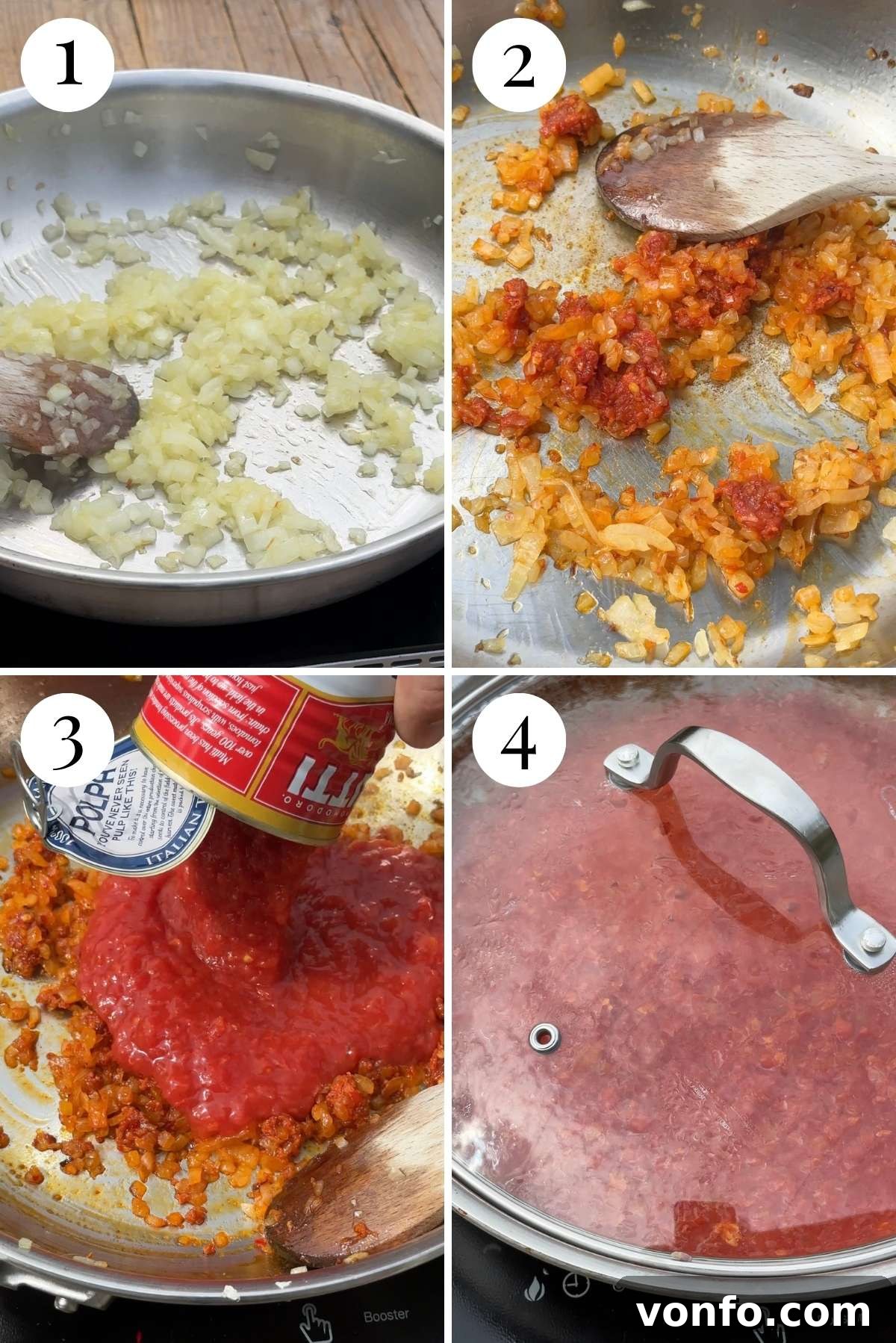
Step 2: Simmer the Rich Tomato Sauce – Once the onion and ‘Nduja base is ready, pour in the 14 oz (400g) of crushed tomatoes. Add a generous large handful of fresh basil, torn into pieces, along with a good pinch of salt and freshly ground black pepper. Stir all the ingredients together to combine. Bring the sauce to a gentle simmer over a medium-high heat and cook uncovered for 5 minutes, allowing some of the liquid to evaporate and the flavors to meld beautifully. Then, reduce the heat slightly, cover the pan with a lid, and continue to simmer for an additional 5 minutes. This two-stage simmering process ensures a well-developed, deeply flavored sauce (see photos 3 and 4 in the collage below for visual steps).
Step 3: Poach the Eggs to Perfection – Carefully make four distinct wells or indentations in the simmering tomato sauce using the back of a spoon. These don’t need to be perfectly circular, just deep enough to cradle an egg. For easier handling and to prevent accidental yolk breakage, crack each free-range egg individually into a small ramekin or a cup first. Then, gently pour one egg into each well you created in the sauce. Reduce the heat immediately to medium-low, cover the pan tightly with a lid, and let the eggs cook undisturbed for exactly 4 minutes. The steam trapped under the lid will gently poach the whites while keeping the yolks perfectly runny. After 4 minutes, remove the pan from the heat, but keep the lid on! Allow the pan to sit undisturbed for another 1 minute. This crucial resting period ensures the whites are fully set without overcooking the yolks (visual guidance for these steps can be found in photos 5-7).
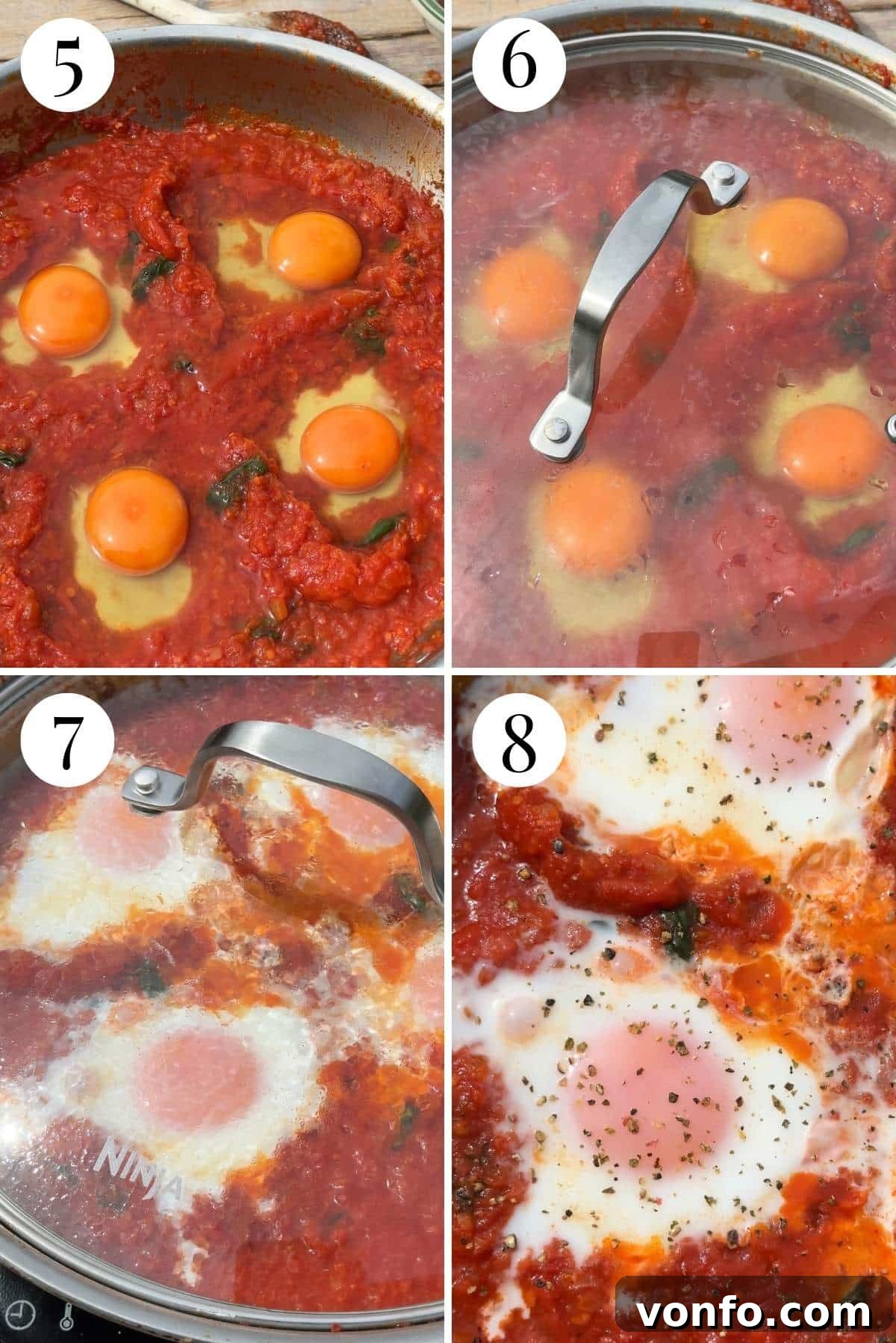
Step 4: Garnish and Serve Immediately – Once the resting minute is complete, carefully remove the lid. You’ll be greeted by beautifully cooked eggs with firm whites and glistening, still-runny yolks. Sprinkle a final pinch of salt and a grind of fresh black pepper directly over each egg yolk to enhance their flavor. Serve your spicy Nduja Eggs in Purgatory immediately, accompanied by generous slices of warm, crusty bread. The bread is essential for soaking up the exquisite sauce and dipping into the creamy yolks, completing this truly satisfying Italian experience (see photo 8 for the final presentation).
Creative Variations: Customize Your Eggs in Purgatory
While our Nduja Eggs in Purgatory recipe offers a perfectly balanced and deeply satisfying flavor profile, it’s also wonderfully adaptable! Feel free to experiment with these delicious variations to tailor the dish to your personal taste and dietary preferences.
- Enhance with Garlic: For garlic lovers, adding a few cloves of freshly minced garlic to the sauce is a fantastic idea. Sauté it with the onion for the last minute or two before adding the tomatoes. This ensures the garlic is fragrant and softened but doesn’t burn, infusing the entire dish with its pungent, aromatic goodness.
- Olives and Capers for Mediterranean Flair: Introduce a burst of briny, savory flavors by adding a handful of pitted black olives (such as Kalamata or Taggiasca) and a tablespoon of capers to the simmering tomato sauce. These ingredients contribute a wonderful umami depth and a delightful tang that complements the richness of the eggs and the spice of the ‘Nduja.
- Heartier Italian Sausage Version: To transform Eggs in Purgatory into an even more substantial and filling meal, consider browning some Italian sausage (sweet or spicy, uncased and crumbled) along with the onion at the beginning of the cooking process. This adds a robust, meaty texture and an extra layer of savory flavor that makes the dish particularly satisfying, especially for dinner.
- A Sprinkle of Cheese: A finishing sprinkle of grated hard Italian cheese can truly elevate this dish. Parmigiano Reggiano offers a nutty, salty depth, while Pecorino Romano provides a sharper, more piquant kick. Grate your chosen cheese generously over the finished eggs just before serving. The warmth of the dish will slightly melt the cheese, creating an irresistible aroma and taste.
- Add Leafy Greens: For a nutritional boost and a touch of freshness, stir in some baby spinach or chopped kale into the tomato sauce during the last few minutes of simmering, before adding the eggs. The greens will wilt beautifully into the sauce, adding vibrant color and a healthy component.
- Aromatic Herbs Beyond Basil: While fresh basil is essential, don’t shy away from other fresh herbs. A sprig of fresh oregano or a touch of parsley, finely chopped and added with the basil, can introduce subtle new dimensions of flavor.
Recipe Tips and Frequently Asked Questions
Here are some additional insights and answers to common questions to help you perfect your Nduja Eggs in Purgatory and make your cooking experience even smoother.
- The Importance of Fresh Eggs: This cannot be stressed enough. Fresh, free-range eggs are paramount for the best results. Not only do they offer superior flavor, but their yolks are typically firmer and their whites hold together better when gently poached in the sauce. Older eggs tend to spread more, leading to less defined and potentially messier eggs in your dish. Invest in good quality eggs for a noticeable difference.
- Understanding Nduja Spice Level: The heat from ‘Nduja can vary significantly between brands, ranging from mildly spicy to quite fiery. Our recipe suggests 1 oz (30g), which typically provides a pleasant warmth without overpowering the other flavors. However, personal tolerance for spice varies. We encourage you to taste your ‘Nduja first and adjust the quantity to your preference. If you love a bold kick, feel free to add a little more. If you prefer a milder warmth, start with less and add more if needed.
- An Easy Way to Add the Eggs to the Sauce: To prevent any unfortunate yolk breakages and ensure neat placement, we find it easiest to crack each egg individually into a small ramekin or a shallow bowl first. This allows you to inspect the egg for any shell fragments and then gently slide it into its designated well in the simmering sauce. Some cooks also find that using a soup ladle to carefully lower the egg into the sauce offers similar control.
- Preparing Crostini or Char-Grilled Bread: While the eggs cook quickly, having your accompanying bread ready is key to serving this dish at its best. You can prepare your crostini in advance by toasting slices of baguette or rustic bread, perhaps drizzled with a little olive oil. Alternatively, char-grilled bread adds a wonderful smoky dimension that pairs beautifully with the rich sauce. Fresh, crusty bread, simply sliced, is also a classic and delicious choice for mopping up every last bit of flavor.
- Can I Prep Ahead? You can certainly prepare the flavorful tomato and ‘Nduja sauce in advance. Cook it as directed up to Step 2, then let it cool completely before storing it in an airtight container in the refrigerator for up to 3-4 days. When you’re ready to serve, simply reheat the sauce gently on the stovetop until simmering, then proceed with adding and poaching the eggs as instructed in Step 3.
- Serving Suggestion: This dish is truly best enjoyed immediately after cooking. The eggs are at their peak when the yolks are perfectly runny, and the sauce is piping hot. While leftovers are still edible, the eggs will continue to cook when reheated, losing their desirable runny centers.
While both Eggs in Purgatory and Shakshuka share a heartwarming concept of eggs poached in a flavorful tomato sauce, they hail from different culinary traditions and boast distinct flavor profiles. Eggs in Purgatory (‘Uova in Purgatorio’) is a classic Italian, specifically Neapolitan, dish that typically focuses on the pure flavors of tomatoes, garlic (sometimes), onion, and fresh basil, often enhanced with spicy elements like ‘Nduja or chili. Shakshuka, on the other hand, is a vibrant Middle Eastern and North African dish. Its tomato sauce is typically enriched with bell peppers and a characteristic blend of spices such as cumin, paprika, and often a touch of cayenne pepper, giving it a smokier and more aromatic complexity. Both are delicious in their own right but offer unique cultural and taste experiences.
The poetic name of this Neapolitan dish, ‘Uova in Purgatorio’ (Eggs in Purgatory), is believed to draw inspiration from the vivid imagery found in Dante Alighieri’s epic 14th-century poem, “The Divine Comedy.” In this masterpiece, Purgatory is depicted as a realm of purification, often associated with fire and intense warmth. The dish’s rich, fiery red tomato sauce is said to represent the flames of Purgatory or even the inferno itself (Hell), while the perfectly white poached eggs symbolize the pure souls ascending the mountain, shedding their sins and impurities before entering Heaven. This evocative name adds a layer of cultural depth and storytelling to a simple yet profound culinary creation.
More Italian-Inspired Breakfast and Brunch Recipes to Explore
While traditional Italian breakfasts often lean towards sweet pastries and coffee, we love to offer a diverse range of options. Here are a few more delightful Italian recipes to try, including some savory choices perfect for breakfast or brunch, alongside a couple of beloved sweet traditions.
Breakfast
Sautéed Tomato Breakfast Crostini With Poached Eggs
Breakfast
Pane Frattau (Sardinian Bread with Tomato and Poached Egg)
Breakfast
Italian Breakfast Bundt Cake – Ciambella Allo Yogurt
Italian Desserts
Pasticciotti (Italian Cream Filled Pastries)
If you’ve had the pleasure of trying this Spicy Nduja Eggs in Purgatory recipe or any other delicious dish from our blog, we would absolutely love to hear from you! Please don’t hesitate to rate the recipe and share your experience in the comments section below. Your feedback and stories truly inspire us! You can also connect with us and discover more of our culinary creations by following us on Facebook, Instagram, and Pinterest. For weekly recipe inspiration delivered straight to your inbox, be sure to sign up for our Newsletter!
Step By Step Photos Above
Most of our recipes come with step by step photos, helpful tips and tricks to make it perfectly first time and even video!
Spicy Nduja Eggs in Purgatory
By Emily
5 minutes
20 minutes
25 minutes
4
servings

Equipment
-
29cm (11.5 inch) pan (we used stainless steel)
-
Ramekin or small bowl
Ingredients
- 14 oz (400g) chopped tomatoes, (we used Mutti Polpa for best quality)
- 1 white or brown onion, finely chopped
- 1 oz (30g) Nduja , (approximately 2 tablespoons, adjust to taste)
- 4 fresh, free-range eggs
- 1 large handful fresh basil, torn into pieces
- 1-2 tablespoons Extra virgin olive oil
- Salt and freshly ground black pepper, to taste
- Crusty bread, for serving and dipping
Instructions
-
Heat 1-2 tablespoons of olive oil in a 29cm (11.5 inch) pan over medium heat. Sauté the finely chopped onion until soft and translucent, about 5-6 minutes. Add the ‘Nduja and cook, breaking it up with a spoon, until it has softened and melted into the onion mixture, about 2-3 minutes.
-
Stir in the 14 oz (400g) chopped tomatoes, a large handful of fresh basil, and a good pinch of salt and pepper. Bring the sauce to a gentle simmer on medium-high heat and cook uncovered for 5 minutes. Then, reduce the heat slightly, cover the pan with a lid, and simmer for another 5 minutes, allowing the flavors to deepen.
-
Create 4 small wells in the simmering sauce. Crack each egg individually into a small ramekin or bowl, then gently slide one egg into each well. Reduce the heat to medium-low, cover the pan tightly with a lid, and cook for precisely 4 minutes. After 4 minutes, remove the pan from the heat, but keep the lid on, and let it stand undisturbed for an additional 1 minute. This resting period ensures perfect whites and runny yolks.
-
Uncover the pan. Sprinkle a pinch of salt and fresh black pepper over each egg yolk. Serve immediately with plenty of crusty bread for dipping and enjoying every last drop of the delicious sauce and creamy yolks.
Notes
- Making Crostini or Char-Grilled Bread: To make preparation smoother, you can toast your bread slices in advance or char-grill them for a smoky flavor. Fresh, crusty bread is always a fantastic and simple accompaniment.
- Prep Ahead: The delicious tomato and ‘Nduja sauce can be made ahead of time. Prepare it up to Step 2, cool it completely, then store it in an airtight container in the refrigerator for up to 3-4 days. Reheat gently before adding the eggs.
- Serving: This recipe is best enjoyed immediately upon cooking to savor the perfectly runny yolks and warm, flavorful sauce.
Helpful Info for All Our Recipes
- We consistently use extra virgin olive oil in all our recipes unless specifically stated otherwise.
- For canned or jarred tomatoes, we always opt for premium brands like Cirio or Mutti to ensure the best flavor and results in our dishes.
- Unless specified differently, all vegetables are assumed to be of medium size.
- All recipes featured on our site are thoroughly tested and developed using a fan (convection) oven.
- Learn more about how nutrition is calculated for our recipes.
- Explore our essential Italian Pantry Staples to stock your kitchen.
- Discover all our recommended Essential Kitchen Tools for Italian Cooking.
Nutrition
Calories: 147kcal
|
Carbohydrates: 8g
|
Protein: 7g
|
Fat: 9g
|
Saturated Fat: 2g
|
Polyunsaturated Fat: 1g
|
Monounsaturated Fat: 4g
|
Trans Fat: 0.02g
|
Cholesterol: 169mg
|
Sodium: 206mg
|
Potassium: 307mg
|
Fiber: 2g
|
Sugar: 4g
|
Vitamin A: 417IU
|
Vitamin C: 14mg
|
Calcium: 67mg
|
Iron: 2mg
Nutrition information is automatically calculated, so should only be used as an approximation.
Did you try this recipe?
Leave a comment below!