
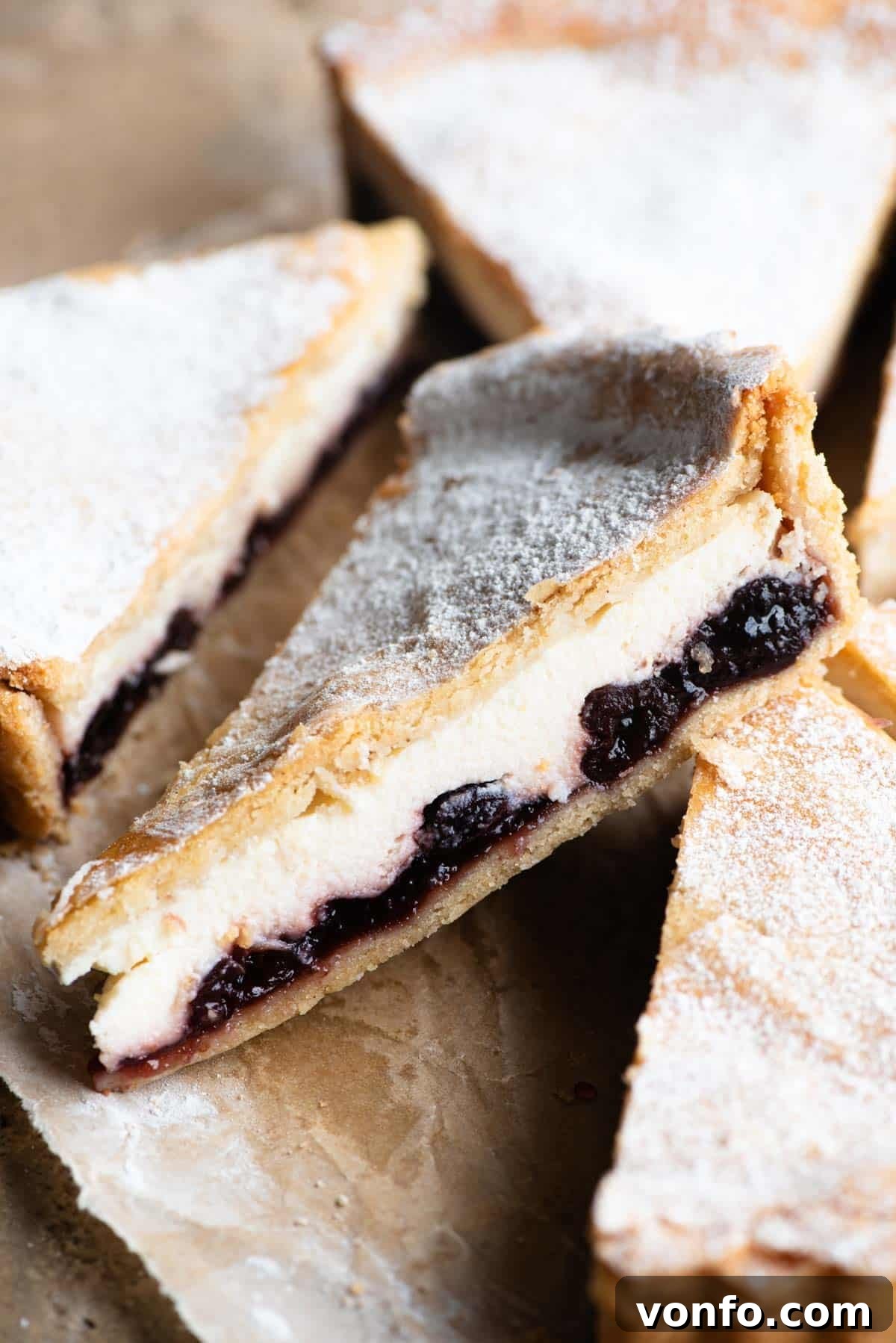
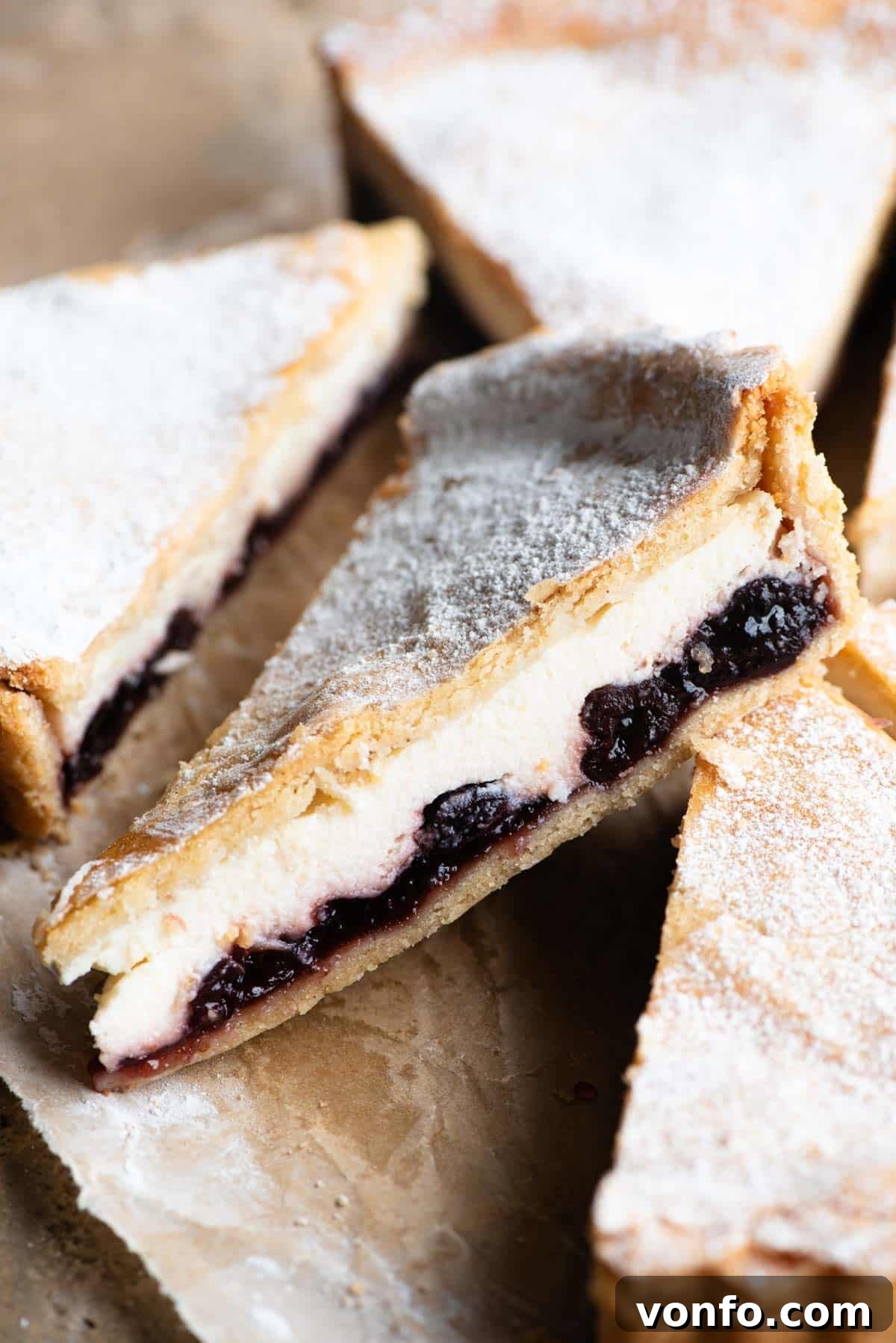
Step into the heart of Roman culinary tradition with Crostata Ricotta e Visciole, a truly iconic Italian tart. This beloved dessert marries a perfectly buttery pasta frolla (sweet shortcrust pastry) with a sumptuously creamy ricotta and a vibrant, tangy sour cherry jam filling. More than just a simple sweet treat, this crostata is an emblem of Roman heritage, offering a delightful balance of textures and flavors. It’s surprisingly straightforward to prepare, making it an accessible baking project for home cooks of all skill levels, and an absolute joy to savor whether alongside a morning cappuccino or as an elegant conclusion to an evening meal.
Crostata Ricotta e Visciole: A Taste of Roman History and Tradition
Among the myriad of exquisite desserts Italy has to offer, Crostata Ricotta e Visciole stands out as arguably the most famous and historically significant sweet pastry from Rome. Its origins trace back to the 1800s, rooted deeply within the vibrant and historically rich Jewish Ghetto district of the Eternal City. This area, known for its unique cultural tapestry and distinct culinary traditions, gave birth to many beloved Roman dishes, and this tart is certainly one of its crowning achievements.
Legend has it that one particular historic bakery in the Jewish Ghetto holds the secret to the original, most authentic Crostata Ricotta e Visciole: Pasticceria Boccione. While their recipe remains a closely guarded secret, passed down through generations, countless Roman families and passionate bakers have created their own versions, each striving to capture the magic of the original. Our recipe aims to bring you as close as possible to that authentic Roman experience, allowing you to recreate a piece of culinary history in your own kitchen.
Crafting the Perfect Crostata: Ingredients and Flavors
At its heart, this delightful tart is crafted from a simple yet exquisite buttery pasta frolla, the quintessential Italian sweet pastry dough. Our recipe enhances this traditional base with delicate hints of lemon zest and a pinch of cinnamon. These additions, while common in many modern interpretations, can be omitted if you prefer to adhere strictly to the oldest Roman traditions. The result is a tender, crumbly crust that perfectly complements the rich filling.
The true star of Crostata Ricotta e Visciole, however, is the “visciole” – wild sour cherries. These unique cherries impart a distinct tartness and complex flavor profile that is absolutely essential for an authentic Roman taste experience. While finding genuine visciole preserves can be a challenge, often requiring an online search or a visit to specialty Italian delis, don’t despair if they are elusive. Any high-quality sour cherry jam will serve as a wonderful substitute, delivering a delightful tart flavor that beautifully balances the sweetness of the ricotta. Even a good sweet cherry jam can be used, offering a slightly different but equally delicious outcome. The essence of this crostata lies in the harmonious interplay between the rich ricotta and the bright fruit, regardless of the cherry variety you choose.
I find immense pleasure in enjoying a small slice of this crostata, particularly for breakfast with my steaming morning cappuccino. Its nuanced flavors and not-overly-sweet profile make it a perfect start to the day. It also makes for a wonderful, light dessert in the evening, satisfying sweet cravings without being heavy.
Table of Contents
- Ingredient Notes
- Visual Walk-Through of the Recipe
- Recipe Tips and Variations
- More Italian Crostata Recipes to Try
- Full Recipe
Key Ingredient Notes for Your Perfect Crostata
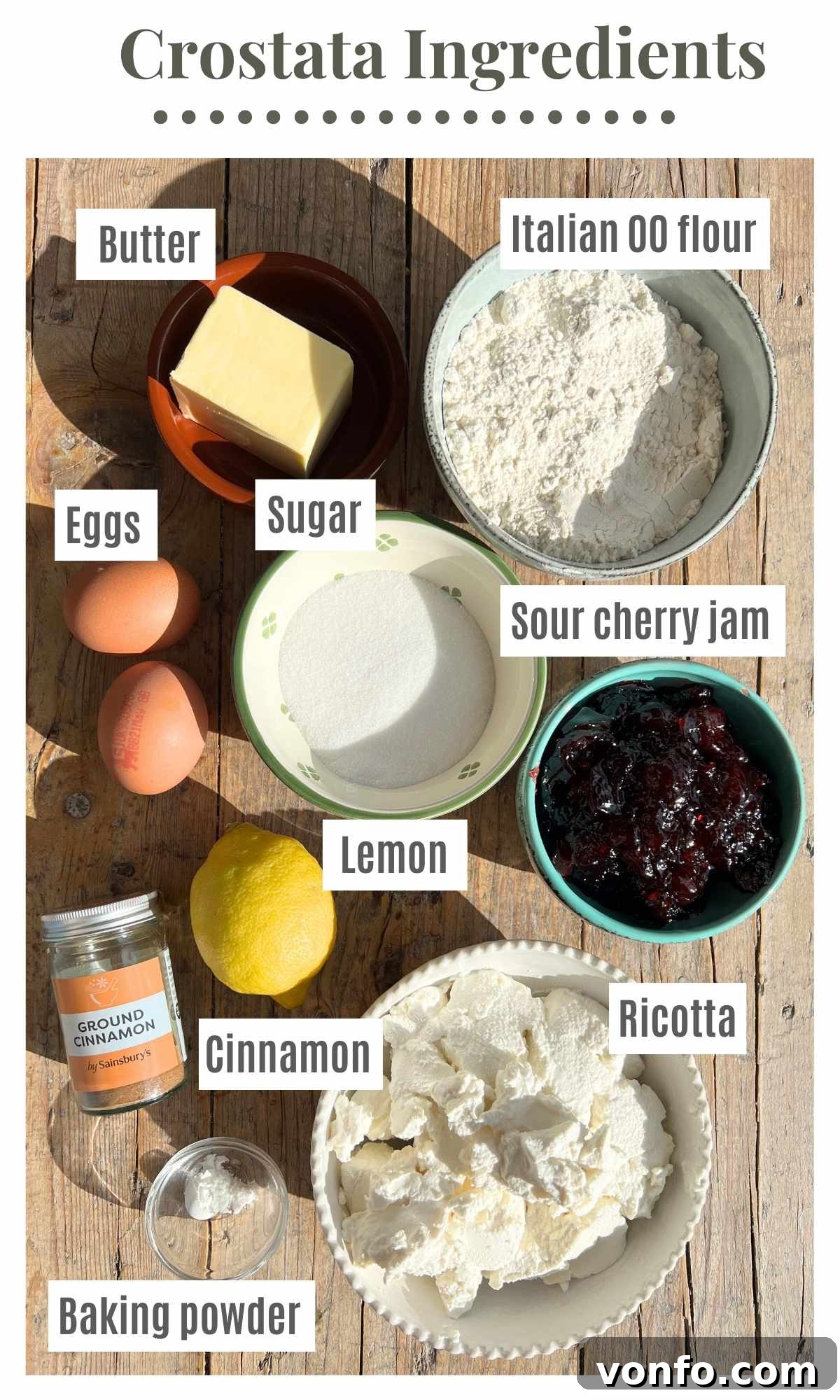
- Pasta Frolla: Our base recipe for this classic Italian sweet shortcrust pastry includes a delicate touch of cinnamon. The success of your crostata largely hinges on a well-prepared pasta frolla. It should be tender and crumbly, yet sturdy enough to hold the rich filling. Using cold butter is crucial for achieving that desired flaky texture. Remember to chill your dough thoroughly before rolling it out to prevent it from becoming too soft and difficult to handle.
- Ricotta: Traditionally, sheep’s milk ricotta is favored for its richer, slightly saltier, and often firmer texture, which contributes to a denser, more authentic Roman filling. However, cow’s milk ricotta is much more widely available and works beautifully. The most important tip for ricotta is to ensure it is thoroughly drained. Excess moisture can make your filling watery and prevent it from setting properly. Place it in a fine-mesh sieve lined with cheesecloth over a bowl in the refrigerator for at least a few hours, or ideally overnight, to remove all excess liquid.
- Cherry Jam: The unique flavor of “visciole” or wild sour cherry jam is what truly defines this crostata. Its distinctive tartness cuts through the richness of the ricotta, creating a balanced and addictive flavor profile. If visciole jam is hard to source, a good quality sour cherry jam is the best alternative. Should sour cherries also be unavailable, a regular sweet cherry jam can be used; just be aware the tartness will be less pronounced, resulting in a sweeter overall tart. Experiment with what you can find, but always prioritize quality for the best flavor.
Visual Walk-Through: Crafting Your Crostata Ricotta e Visciole
Baking this Roman delicacy is an enjoyable process, and we’ve broken it down into clear steps to guide you. Follow along to create a perfect tart from scratch.
Step 1 – Preparing the Pasta Frolla: Begin by combining all the pasta frolla ingredients into a food processor. Pulse them until a rough, shaggy dough starts to form. You’ll notice it coming together but still looking a bit crumbly (photos 1 and 2). Once it reaches this stage, turn the mixture out onto a clean, lightly floured work surface. Briefly knead the dough until it comes together into a smooth, cohesive ball. Avoid over-kneading, as this can develop the gluten too much and result in a tough crust. Gently flatten the dough into a disc shape, wrap it tightly in plastic wrap, and place it in the refrigerator to chill for at least 1 hour (photo 3). This chilling period is crucial as it allows the butter to firm up, preventing the pastry from shrinking during baking and making it much easier to roll.
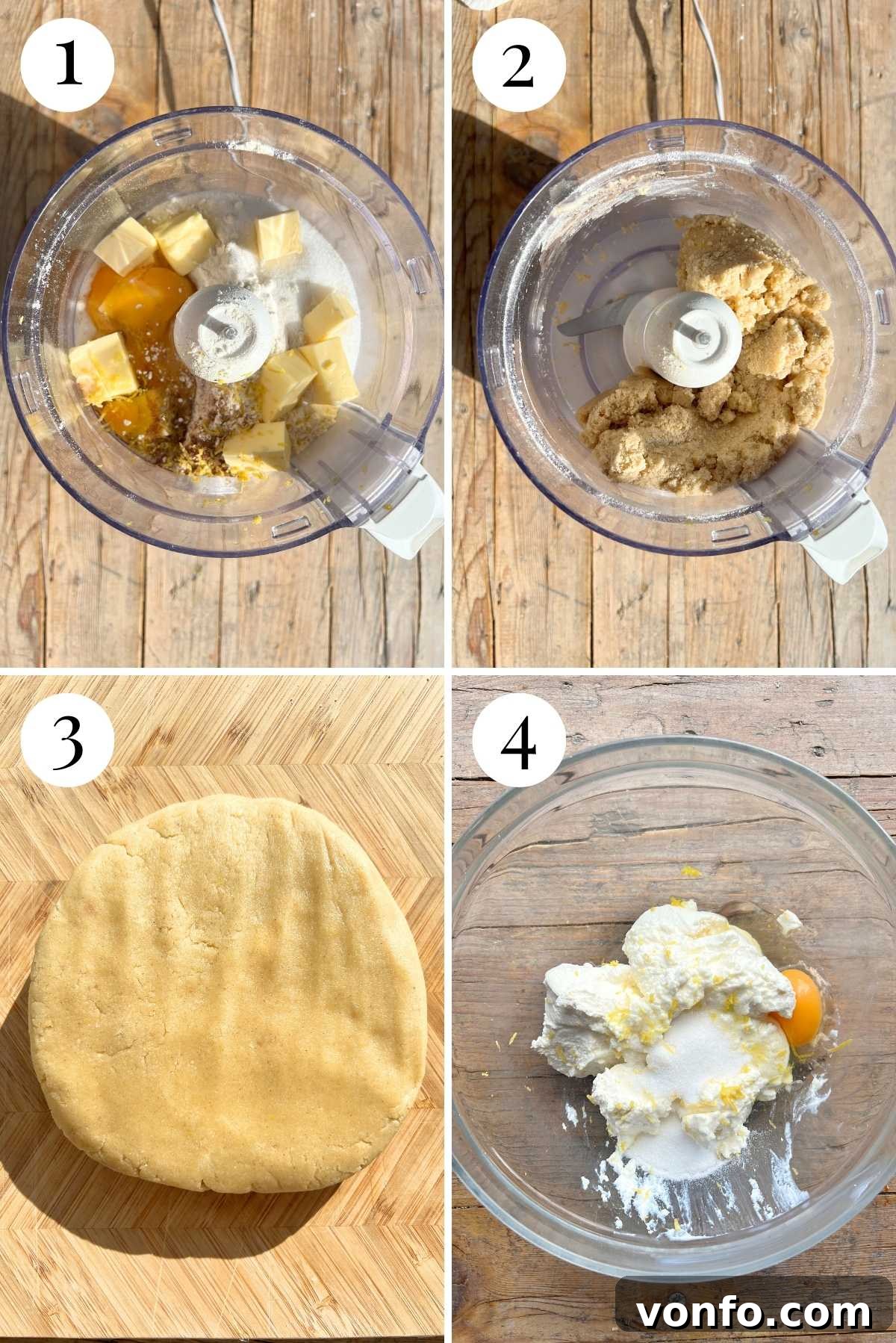
Step 2 – Crafting the Ricotta Filling: While your pasta frolla is chilling, prepare the luscious ricotta filling. In a medium-sized bowl, combine the thoroughly drained ricotta cheese, granulated sugar, one large egg, and the vibrant zest of half a lemon. Using a whisk, beat the ingredients together until the mixture is completely smooth, creamy, and well combined. The lemon zest adds a beautiful aromatic brightness that perfectly complements the ricotta. Once prepared, set the filling aside (photos 4 and 5), keeping it covered if not using immediately.
Step 3 – Rolling Out the Base: Retrieve your chilled pasta frolla from the fridge. Cut off a portion that is slightly larger than half of the total dough – this will be for your tart base. Lightly flour your work surface and rolling pin to prevent sticking. Roll out the dough evenly to a thickness of approximately 1/4 inch (0.5 cm). The rolled dough should be large enough to comfortably cover your tart tin with a slight overhang. If you find the pastry is breaking or tearing as you roll, it might be too cold. Briefly knead it back into a ball for a few seconds to warm it slightly with the heat from your hands, then continue rolling. Don’t hesitate to use a little more flour as needed to prevent sticking, but avoid excessive flour which can dry out the dough.
Step 4 – Lining the Tart Tin: Carefully drape the rolled pastry over your tart tin. A rolling pin can be helpful here – gently roll the pastry onto the pin, then unroll it over the tin. Gently press the pastry into the edges and up the sides of the tin, ensuring it fits snugly without any air pockets. To remove any excess pastry hanging over the edges, simply roll your rolling pin firmly over the top of the tart tin. This creates a clean, precise edge (photo 6).
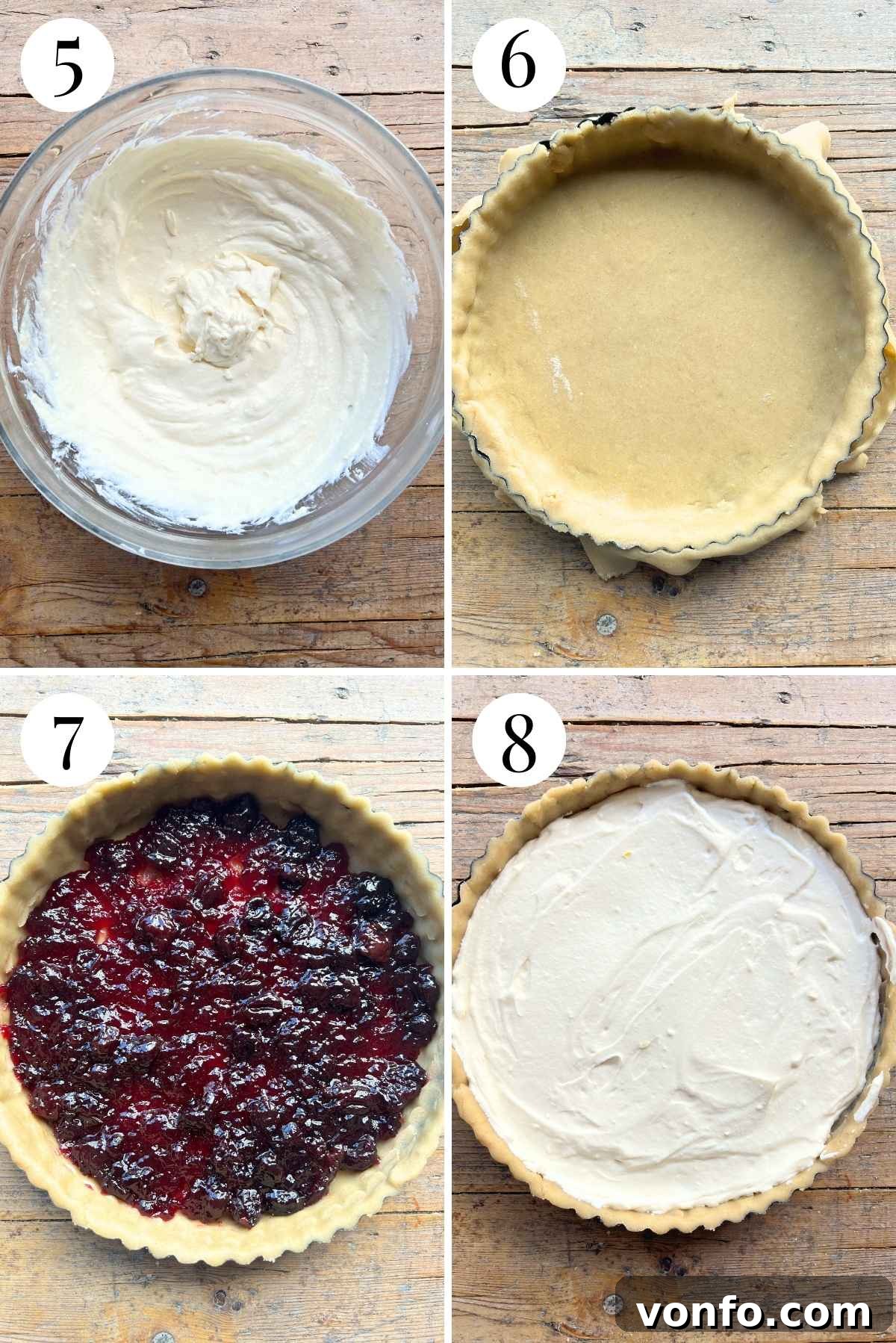
Step 5 – Filling the Crostata: Now it’s time to fill your tart. Begin by spreading an even layer of your chosen cherry jam across the entire base of the pastry. Ensure the jam reaches the edges for a burst of fruitiness in every bite. Next, dollop the creamy ricotta mixture over the jam. Gently spread it out using the back of a spoon or a spatula, creating another smooth, even layer that covers the jam completely (photos 7 and 8).
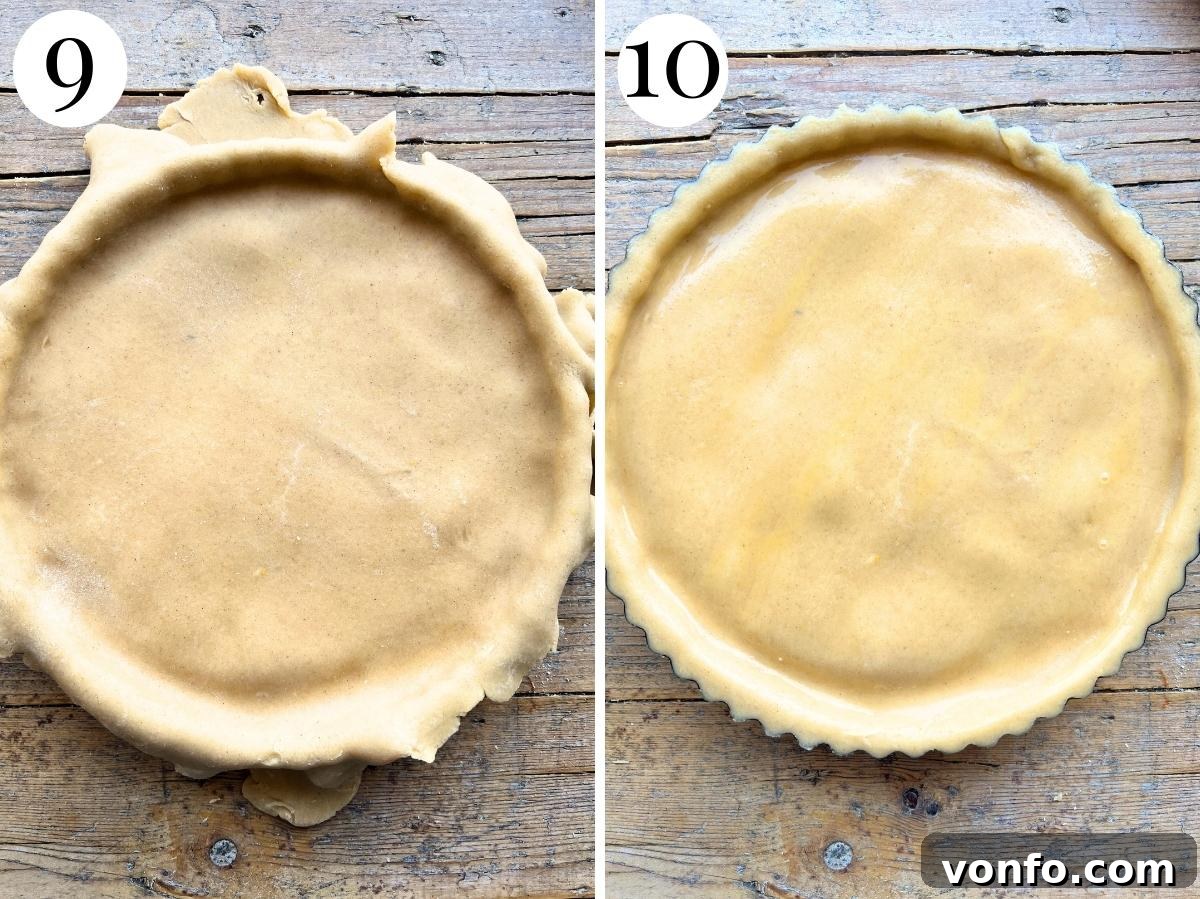
Step 6 – Adding the Top Layer and Chilling: Take the remaining piece of pasta frolla dough and roll it out similarly to the base. Carefully lay this second piece of pastry over the ricotta filling, creating the top crust of your crostata. You can either leave it as a solid top, or cut it into strips to create a beautiful lattice design, which is a classic crostata presentation. Once the top is in place, roll your rolling pin over the edges of the tart tin again to seal the top and bottom crusts together and trim any excess. Place the assembled crostata back into the refrigerator for at least 30 minutes. This final chill is vital for ensuring the pastry maintains its shape and crispness during baking.
Expert Recipe Tips and Delicious Variations
- Drain the Ricotta Well: This is perhaps the most critical step for a firm, creamy filling. Ricotta cheese contains a lot of whey, which can make your tart soggy. I highly recommend draining it overnight in the refrigerator using a fine-mesh sieve lined with cheesecloth. If you’re short on time, at least 1-2 hours will make a significant difference. Pressing it gently with a spoon can also help expedite the process.
- Chill Before Baking: After you’ve assembled your crostata, resist the urge to put it straight into the oven. A minimum of 30 minutes in the refrigerator allows the butter in the pastry to firm up again. This prevents the crust from slumping or shrinking in the oven and helps achieve that beautifully crisp, golden finish.
- Cherry Jam Alternatives: While “visciole” or sour cherry jam provides the most authentic Roman flavor, it’s not always readily available. Don’t let this deter you! You can use any high-quality cherry jam you can find, whether sweet or tart. If cherries aren’t your preference, consider other fruit preserves like apricot, fig, or even raspberry for a delightful twist. Each will offer a unique character to your crostata.
- Flavor Variations for Pasta Frolla: Beyond lemon zest and cinnamon, consider adding a touch of vanilla extract to your pasta frolla for a classic sweet aroma. Almond extract can also provide a wonderful depth of flavor, especially when paired with cherries. For a truly unique Roman touch, some traditional recipes incorporate a tiny bit of maraschino liqueur into the ricotta filling.
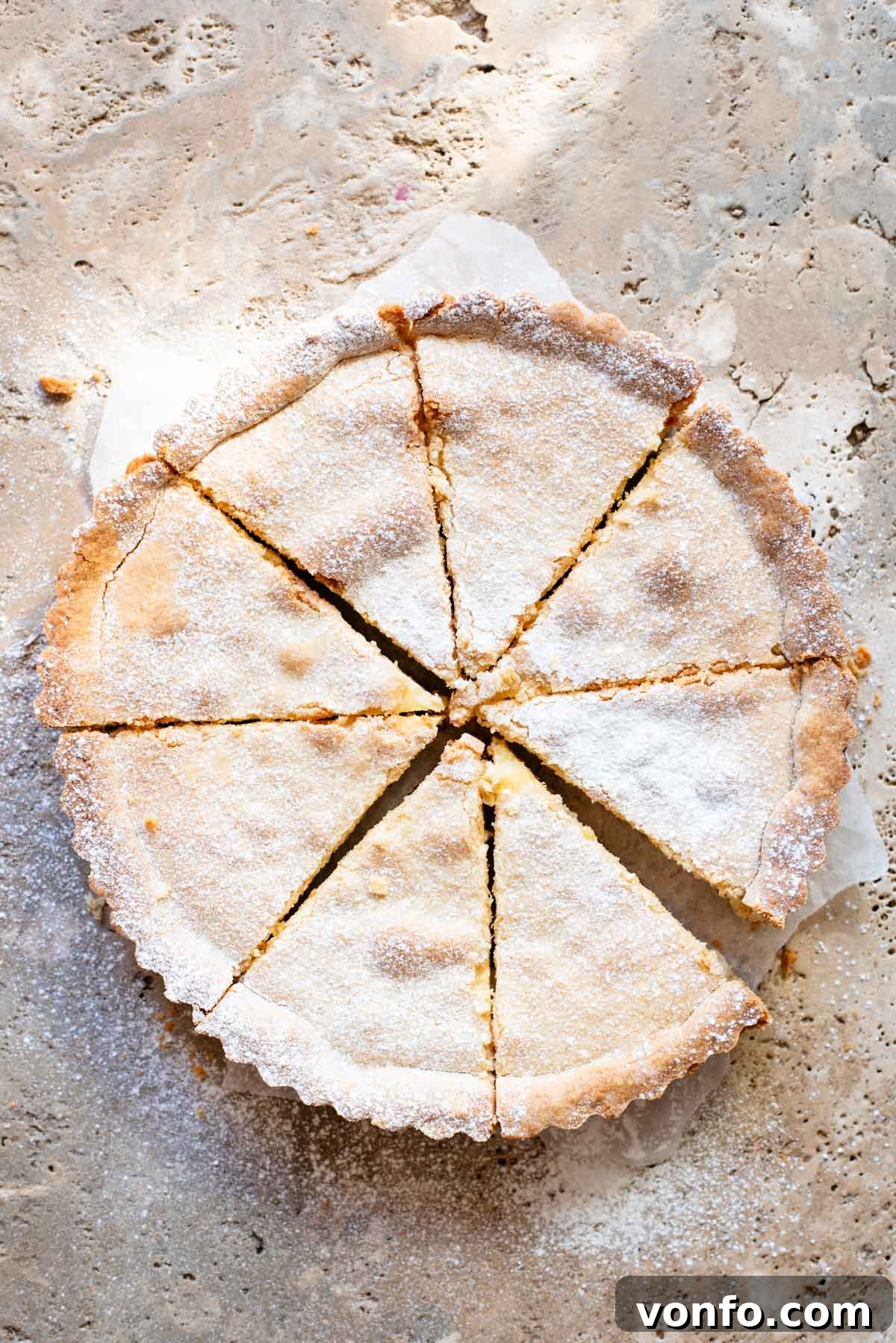
- Serving Suggestions: Crostata Ricotta e Visciole is traditionally served simply, perhaps with a dusting of powdered sugar. However, for a more indulgent dessert, consider pairing a slice with a dollop of freshly whipped cream, a scoop of vanilla bean gelato, or even a light drizzle of honey. It’s also delightful with a strong espresso or a sweet dessert wine.
- Make Ahead and Storage: The beauty of this crostata is that it can be largely prepared in advance. You can make the pasta frolla dough up to 2-3 days ahead and store it wrapped in the fridge. The assembled, unbaked crostata can also be kept in the refrigerator for up to 24 hours. Once baked, store any leftovers in an airtight container in the refrigerator for up to 4-5 days. It tastes fantastic chilled or gently warmed.
Frequently Asked Questions About Crostata Ricotta e Visciole
It’s a common issue with shortcrust pastry, especially when it’s very cold. If your pastry breaks while you’re rolling it out or transferring it to the tart tin, don’t panic! You have a few options: first, you can simply patch the tears or cracks with small pieces of dough. Once baked, they will be almost unnoticeable. Alternatively, if the dough is too stiff and unworkable, gently gather it back into a ball and knead it for a few seconds. The warmth from your hands will soften the butter slightly, making the dough much more pliable and easier to roll out again. Ensure your work surface and rolling pin are well-floured to prevent further sticking.
While you can technically use low-fat ricotta, we highly recommend using full-fat ricotta for this recipe. The higher fat content contributes significantly to the creamy texture and rich flavor of the filling, which is a hallmark of an authentic Crostata Ricotta e Visciole. Low-fat ricotta may result in a drier or less flavorful filling.
The crostata is fully baked when its crust is a beautiful golden brown, and the filling appears set and slightly puffed. If you gently jiggle the tart, the center of the ricotta filling should not be excessively wobbly. Baking times can vary depending on your oven, so always keep an eye on it towards the end of the recommended cooking time.
More Irresistible Italian Crostata Recipes to Explore
Italian Desserts
Crostata di Frutta (Italian Fruit Tart)
Italian Desserts
Apple Crostata with Apricot Jam
Italian Desserts
Torta della Nonna: Italian Custard Tart
Italian Desserts
Rich Chocolate Tart with Hazelnuts
We hope you thoroughly enjoyed preparing and tasting this authentic Crostata Ricotta e Visciole recipe. Your feedback is invaluable to us, so if you’ve tried this or any other recipe from our blog, please don’t hesitate to rate it and share your experiences in the comments section below. We absolutely love hearing from you! To stay connected and discover more of our delicious Italian food creations, be sure to follow us on Facebook, Instagram, and Pinterest. You can also sign up for our Newsletter to receive weekly updates on new recipes directly in your inbox.
Step By Step Photos Above
Most of our recipes come with step by step photos, helpful tips and tricks to make it perfectly first time and even video!
Crostata Ricotta e Visciole
By Emily
30
50
1
30
2
50
12 servings
To save this recipe and receive weekly updates, please visit our subscription page.
Equipment
-
Food processor
-
Rolling pin
-
9 inch loose bottom non-stick tart pan
Ingredients
For the Pasta Frolla
- 250 g (2 cups) Italian 00 flour, or all-purpose flour
- 80 g (1/2 cup) sugar
- 1 large egg
- 120 g (8.5 tablespoons) cold butter, cubed
- ¼ teaspoon baking powder
- ¼ teaspoon cinnamon
- Zest of half a lemon
- 1 pinch salt
For the Filling
- 500 g (2 cups) ricotta , (well drained)
- 2 tablespoons sugar
- Zest of half a lemon
- 340 g (1 cup) cherry jam , (preferably sour cherry)
- 1 large egg
Topping
- 1 beaten egg, for brushing on top
- powdered sugar (icing sugar), for dusting on top
Instructions
-
Combine all the pasta frolla ingredients (flour, sugar, egg, cold butter, baking powder, cinnamon, lemon zest, and salt) in a food processor. Blitz until a rough, crumbly dough forms. Transfer the dough onto a clean work surface and knead gently until it comes together into a smooth ball. Flatten it into a round disc, wrap in plastic wrap, and refrigerate for at least 1 hour. This dough can also be prepared 1-2 days in advance.
-
In a separate bowl, combine the well-drained ricotta with the egg, sugar, and lemon zest for the filling. Whisk thoroughly until the mixture is smooth and creamy. Set aside.
-
Remove the chilled pastry from the fridge. Cut off a portion that is slightly more than half for the base of your tart.
-
Lightly flour your work surface and rolling pin. Roll out the larger dough portion to a thickness of about 1/4 inch (0.5 cm), ensuring it’s wide enough to fit your 9-inch tart tin with a slight overhang. If the pastry breaks, briefly knead it to warm it up slightly, then roll it out again. Use more flour as needed to prevent sticking.
-
Carefully lift the rolled pastry, ideally with the help of your rolling pin, and drape it over the tart tin. Gently press the pastry into the sides and base of the tin. Roll your rolling pin over the top edge of the tin to neatly trim off any excess pastry.
-
Spread the cherry jam evenly across the entire base of the pastry-lined tart tin. Then, gently spoon the prepared ricotta filling over the jam layer and spread it out into an even, smooth layer.
-
Roll out the remaining piece of pastry dough. Carefully place this top layer over the ricotta filling. Press the edges to seal the top and bottom crusts together, trimming any excess dough with your rolling pin or a sharp knife. For a traditional look, you can cut the top pastry into strips and create a lattice pattern. Place the assembled crostata in the fridge to chill for a further 30 minutes.
-
Preheat your oven to 180°C (350°F).
-
Before baking, brush the top of the crostata with the beaten egg wash. Bake in the preheated oven for 45-50 minutes, or until the crust is golden brown and the filling is set. Once baked, remove the crostata from the oven and allow it to cool completely in the tin on a wire rack before serving. Dust with powdered sugar (icing sugar) just before serving for an elegant finish!
Notes
- Prep Ahead: You can prepare the pasta frolla dough 1-2 days in advance and store it wrapped in the fridge. The entire crostata can also be assembled up to 24 hours before baking and kept refrigerated. We advise against leaving it longer than this, as the pastry might absorb too much moisture from the filling.
- Leftovers: Any leftover Crostata Ricotta e Visciole can be stored in an airtight container in the refrigerator for up to 4-5 days. It is equally delicious served cold or gently warmed.
Helpful Information for All Our Recipes
- We consistently use extra virgin olive oil in all our recipes unless explicitly stated otherwise.
- For canned or jarred tomatoes, we exclusively recommend Cirio or Mutti brands to ensure the best flavor and results in your dishes.
- Unless specified, all vegetables referenced in our recipes are considered medium-sized.
- All recipes featured on our site are rigorously tested and developed using a fan (convection) oven.
- Find out more about how nutrition information is calculated for our recipes.
- Explore our comprehensive list of must-have Italian Pantry Staples to stock your kitchen.
- Discover all our essential Kitchen Tools for Italian Cooking to elevate your culinary skills.
Nutrition
Carbohydrates: 45g |
Protein: 8g |
Fat: 15g |
Saturated Fat: 9g |
Polyunsaturated Fat: 1g |
Monounsaturated Fat: 4g |
Trans Fat: 0.3g |
Cholesterol: 77mg |
Sodium: 134mg |
Potassium: 103mg |
Fiber: 1g |
Sugar: 23g |
Vitamin A: 485IU |
Vitamin C: 2mg |
Calcium: 108mg |
Iron: 1mg
Nutrition information is automatically calculated, so should only be used as an approximation.
Did you try this recipe?Leave a comment below!