
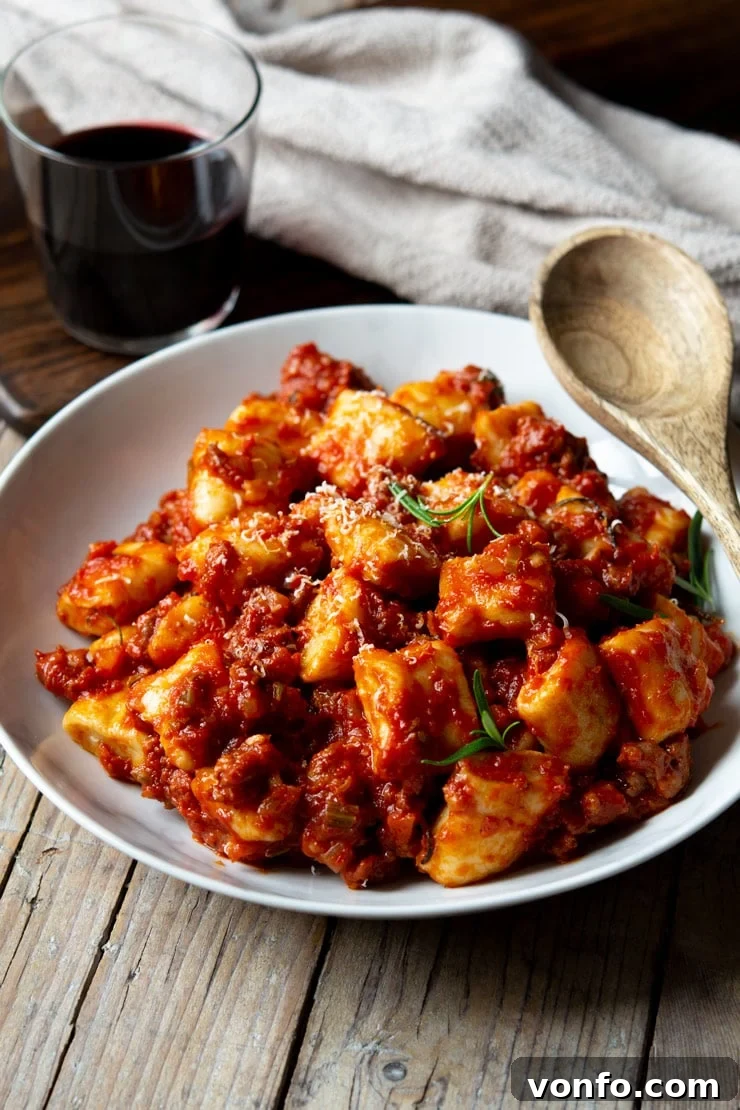
Indulge in a truly exquisite Italian experience with this hearty tomato Sausage Ragu, lovingly tossed with light, pillowy homemade ricotta gnocchi. When the weather outside turns chilly, there’s nothing quite like wrapping yourself in the warmth of a big bowl of authentic Italian comfort food. This remarkable easy sausage ragu defies expectations, delivering a flavor profile so rich and complex, it tastes as if it’s been simmering for an entire day – yet, it can be on your table in just over an hour, gnocchi included!
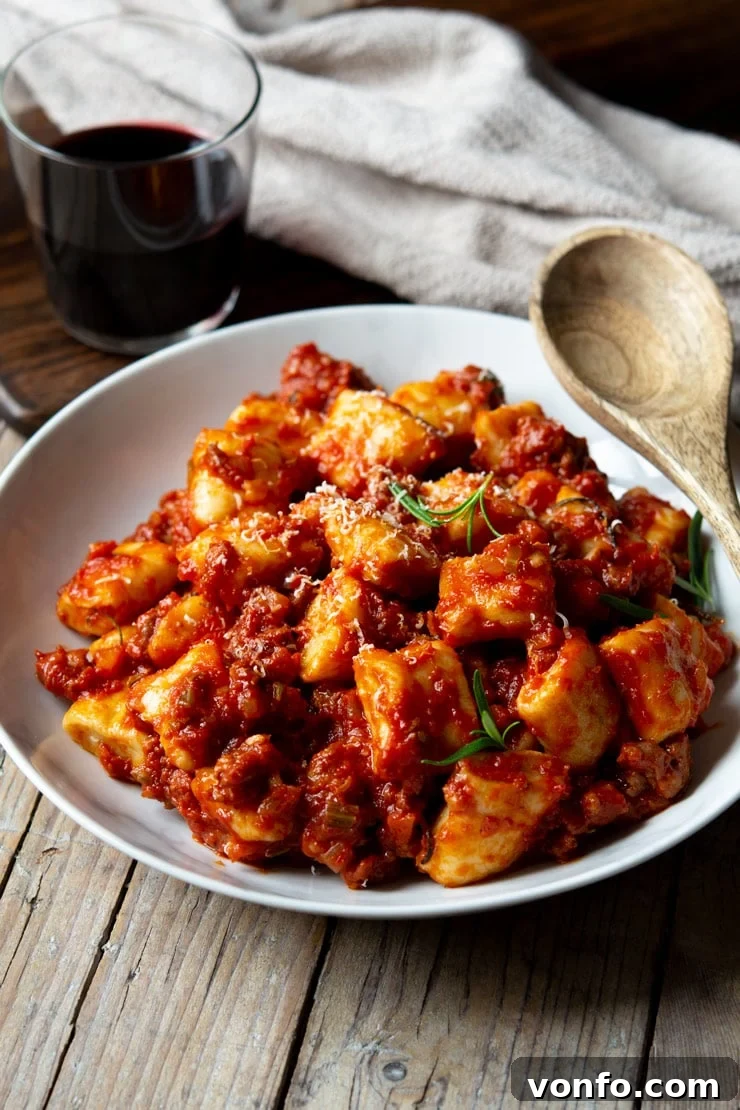
If your heart yearns for a truly warming, deeply satisfying bowl of comfort food that transports you straight to the heart of Italy, then your search ends here. This isn’t just a meal; it’s an embrace, a culinary hug that promises to chase away the cold and leave you feeling utterly content.
Our sausage ragu is nothing short of incredible. It’s a symphony of flavors – profoundly rich, irresistibly delicious, and wonderfully aromatic. The magic lies in its ability to taste like a slow-cooked masterpiece, patiently bubbling away for hours, when in reality, it requires only about 10 minutes of active prep time and an hour of gentle simmering. This makes it an ideal choice for a luxurious weeknight dinner or a relaxed weekend feast without the lengthy commitment.
While the rich ragu simmers to perfection, you’ll have ample time to craft your own batch of homemade ricotta gnocchi. This pairing, a silky, flavorful sauce with delicate, cloud-like dumplings, is, frankly, a match made in culinary heaven. The light texture of ricotta gnocchi beautifully complements the robust ragu, creating a harmonious balance. Of course, if time is of the essence, you can certainly opt for good quality store-bought gnocchi or even your favorite pasta – the ragu itself is versatile enough to elevate any accompaniment.
The Secret to a Deeply Flavorful Ragu: Mastering the Soffritto
Every truly great Italian ragu, and indeed many other profound sauces and soups, begins with a meticulously prepared soffritto. This foundational blend of finely chopped carrots, celery, and onions is not just a collection of vegetables; it’s the aromatic soul of your dish. I always recommend using equal amounts of each vegetable, chopped as finely and uniformly as possible. The goal here isn’t just to cook them, but to coax out their inherent sweetness and depth, transforming them into a fragrant, tender base.
This initial step is absolutely crucial and should never be rushed or skipped. The soffritto needs to be sautéed slowly and patiently over a low heat for a minimum of 10 minutes, though 10-15 minutes is often ideal. Observe how the vibrant, bright colors of the raw vegetables gradually mellow and deepen in the pan. As they cook down, they’ll become duller in color and wonderfully softened, almost melting into each other. This transformation signifies that their sugars are caramelizing and their flavors are concentrating, laying a robust foundation for the ragu.
The key here is low and slow heat with frequent stirring. You want to soften the vegetables, not brown or burn them. Burning the soffritto will introduce bitterness, which is the antithesis of the rich flavor we’re aiming for. This careful caramelization process is what imparts that huge depth of flavor, a subtle sweetness, and an unparalleled aromatic complexity that will permeate every spoonful of your sausage ragu. It’s an investment of time that pays off handsomely in the final taste.
How to Make Sausage Ragu – Step-by-Step Guide
-
Prepare the Soffritto: Begin by finely chopping your carrot, celery, and onion. Aim for a consistent, very small dice to ensure even cooking. Add these finely chopped vegetables to a large, heavy-bottomed pan or Dutch oven with 1 tablespoon of olive oil. Sauté the vegetables slowly over a low heat for at least 10-15 minutes, stirring occasionally, until they are completely softened and translucent, having lost their initial vibrant color. This patient step is vital for building the flavor base of your ragu.
-
Brown the Sausage: Once the soffritto is perfectly softened and fragrant, add the finely chopped garlic to the pan and sauté for just 1-2 minutes until it becomes aromatic. Be careful not to burn it. Increase the heat to medium. Remove the high-quality sausage meat from its casings and add it to the pan. Using the side of a wooden spoon or spatula, break up the sausage meat into smaller, uniform pieces as it browns. Cook until all the meat is evenly browned and no pink remains, ensuring a rich flavor develops.
-
Deglaze and Add Tomatoes: Pour in the red wine, scraping the bottom of the pan with your wooden spoon to release any flavorful browned bits (fond). Allow the wine to simmer and reduce by half, concentrating its flavor. Next, add the pureed tomatoes (passata), bay leaf, fennel seeds, a sprig of fresh rosemary, and a generous pinch of salt and freshly ground black pepper. Rinse out the passata bottle or can with 1/2 cup (125ml) of water and add this flavorful liquid to the sauce, ensuring you get every last drop of tomato goodness.
-
Simmer to Perfection: Bring the sauce to a gentle simmer, then reduce the heat to low. Cover the pan partially and let the ragu simmer slowly for 1 hour. Stir a few times throughout the cooking process to prevent it from sticking to the bottom of the pan and to ensure even distribution of flavors. This slow simmer allows the flavors to meld and deepen beautifully, resulting in a rich, velvety sauce.
-
Prepare the Gnocchi: Approximately 20 minutes before the ragu is finished simmering, begin preparing your homemade ricotta gnocchi (see detailed instructions below). Alternatively, if using store-bought gnocchi or pasta, start cooking them according to package directions. For gnocchi, drop them into a pot of boiling salted water. They are ready when they float to the surface – typically after just 1-2 minutes.
-
Combine and Serve: Using a slotted spoon, carefully remove the cooked gnocchi from the boiling water and transfer them directly into the simmering sausage ragu. Gently toss the gnocchi with the sauce to ensure every piece is beautifully coated. Serve immediately, perhaps with a sprinkle of freshly grated Parmesan cheese and a garnish of fresh basil or parsley. Enjoy this comforting and incredibly satisfying Italian meal!
Crafting Perfect Ricotta Gnocchi: A Lighter Alternative
While potato gnocchi holds a special place in Italian cuisine, ricotta gnocchi offers a delightful, lighter alternative that is surprisingly simpler and quicker to master. These tender, airy dumplings are less dense and incredibly forgiving, making them perfect for beginners and seasoned cooks alike. The inherent creaminess of ricotta cheese contributes to their delicate texture and subtle richness, making them an ideal complement to a robust sauce like our sausage ragu.
Making ricotta gnocchi is a straightforward process. You start by combining the wet ingredients: ricotta cheese, eggs, and a pinch of salt and pepper. Whisk these together in a large bowl until the mixture is smooth and completely free of lumps. The goal is to create a homogenous base before introducing the dry ingredients.
Next, it’s time to incorporate the flour. To achieve the perfect light and tender gnocchi, it’s crucial to add the flour gradually. Sift in about a quarter of the total flour at a time, gently mixing it with a wooden spoon or spatula. Overworking the dough can lead to tough gnocchi, so a light hand is key. Continue adding and mixing the flour until you achieve a soft, pliable dough that you can easily form into a ball without it being overly sticky or wet. The exact amount of flour can vary slightly depending on the moisture content of your ricotta and the size of your eggs, so trust the feel of the dough.
Once your dough is ready, transfer it to a lightly floured surface. Cut the dough into manageable quarters. Take one quarter and gently roll it out into a long, even log, about 1/2 to 3/4 inch in diameter. Using a sharp knife or a bench scraper, cut the log into small, individual gnocchi pieces, typically about 1/2 to 1 inch long. You can leave them as smooth pillows or, for a more traditional look and to help the sauce adhere, gently roll each piece over the tines of a fork or a gnocchi board.
For more detailed step-by-step photos and a visual guide on how to create the perfect ricotta gnocchi, including tips on what the dough and finished gnocchi should look like, I highly recommend checking out my dedicated post: Easy Ricotta Gnocchi with Broccoli Cream Sauce.
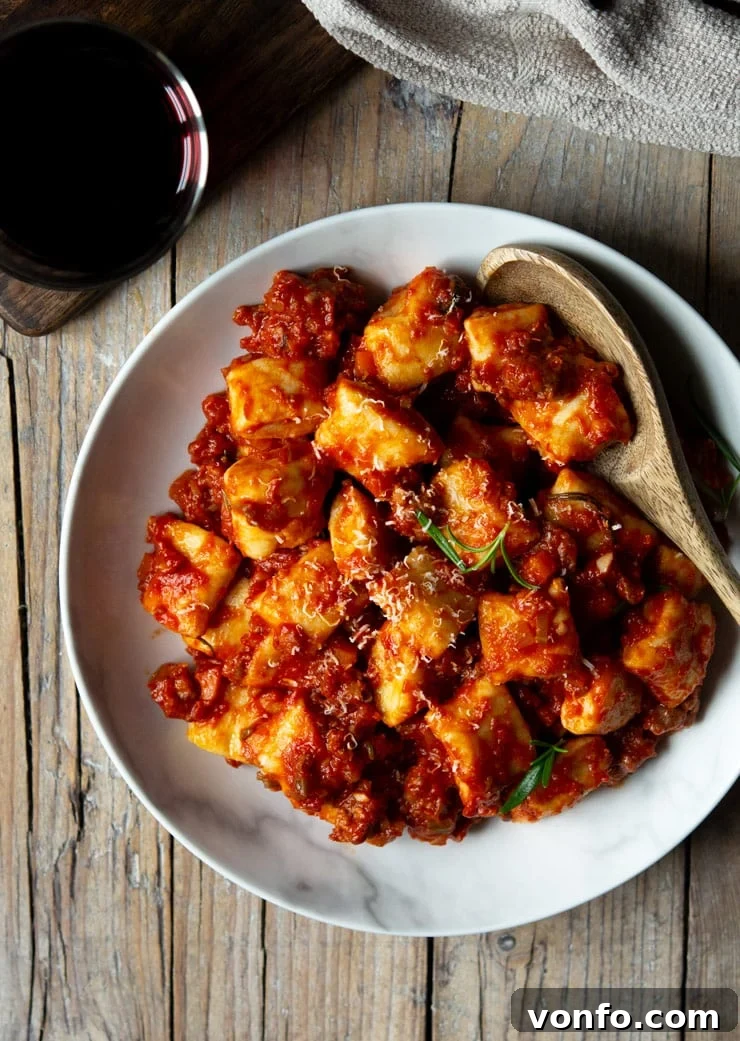
Expert Tips for Mastering Your Sausage Ragu
Achieving a truly exceptional sausage ragu goes beyond just following the steps; it involves understanding the nuances of ingredients and technique. Here are some expert tips to ensure your ragu is nothing short of spectacular:
- Quality Ingredients are Paramount: The foundation of any great Italian dish lies in the quality of its components. This is especially true for ragu. Invest in the highest quality ingredients you can find, particularly when it comes to the sausages and the strained crushed tomatoes (passata). Superior ingredients will inherently yield a superior flavor.
- Choosing the Right Sausages: Opt for sausages that are high in pork content, ideally 95% or more, and coarsely ground. If you can source authentic Italian sausages that are seasoned with classic flavors like fennel and garlic, even better. These will infuse your ragu with an unparalleled depth and character that cannot be replicated with generic sausages.
- Mind Your Salt Content: If you’re using well-seasoned Italian sausages, you might find that less, or even no, additional salt is needed for the ragu. It’s always best to taste the sauce towards the end of its simmering time before adding more salt. Remember the golden rule of cooking: you can always add more salt, but you can’t take it away!
- Tomato Selection Matters: For the most vibrant and balanced flavor, I highly recommend using premium brands of pureed tomatoes or passata, such as Cirio classic passata or Mutti. The quality of these tomatoes is consistently high, offering a naturally sweet and rich tomato base. Cheaper, lower-quality tomatoes often result in a sauce that can be overly acidic or even possess an undesirable metallic aftertaste, significantly impacting the final flavor of your ragu.
- Gnocchi Preparation in Advance: To streamline your cooking process, you can prepare the gnocchi dough ahead of time. Simply wrap the dough tightly in cling film and refrigerate it for up to a day. When you’re ready to cook, let it come to room temperature for a few minutes before rolling and cutting. You have the flexibility to make either ricotta gnocchi (as detailed here) or traditional potato gnocchi, depending on your preference.
- Preparing Ragu in Advance: Ragu is one of those magical dishes that often tastes even better the next day as the flavors continue to meld and deepen. If you plan to make the ragu in advance, be aware that it will thicken considerably as it cools. When it’s time to reheat and serve, don’t worry if it seems too thick. Simply loosen the sauce by stirring in a ladle or two of hot salted pasta or gnocchi cooking water. This starchy water will help emulsify the sauce, bringing it back to a perfect consistency and adding an extra layer of flavor. Reheat gently over a medium-low heat.
- Storing Leftovers: Any leftover ragu can be stored in an airtight container in the refrigerator for up to 2 days. For longer storage, it freezes beautifully for several months. Thaw overnight in the refrigerator before reheating.
More Italian Ragu Recipes You Might Like
If you’ve fallen in love with the rich flavors of this sausage ragu, you’re in for a treat! The world of Italian ragu is vast and varied, offering a comforting experience with every unique sauce. Here are a few more traditional and delicious ragu recipes to explore from our kitchen:
- Italian Beef Ragu – A Classic Recipe: A timeless slow-cooked beef sauce, rich and deeply savory.
- Pici and Tuscan Sausage Ragu: A robust sausage ragu hailing from Tuscany, perfect with thick, hand-rolled pici pasta.
- Authentic Bolognese Sauce (Ragu alla Bolognese): The renowned slow-simmered meat sauce, a staple of Emilia-Romagna cuisine.
- Venetian Duck Ragu with Pappardelle: An elegant and flavorful duck ragu, traditionally served with wide pappardelle noodles.
- Lentil Ragu Lasagne: A hearty and comforting vegetarian take on the classic ragu, layered into a delicious lasagne.
We absolutely love hearing from you! If you’ve tried this delightful Sausage Ragu with Ricotta Gnocchi or any other recipe from our blog, please take a moment to share your experience in the comments section below. Your feedback and stories are truly appreciated! You can also FOLLOW US on FACEBOOK, INSTAGRAM, and PINTEREST to discover more delicious food ideas and keep up with our latest culinary adventures.
Sausage Ragu with Ricotta Gnocchi
By Emily
A rich tomato sausage ragu tossed in light, pillowy homemade ricotta gnocchi. Chilly nights call for comfort and what better way to wrap up and get cosy than with a big bowl of Italian comfort food. This easy sausage ragu tastes like it’s been simmering all day but is made in only just over an hour including the gnocchi!
Prep Time: 10 mins
Cook Time: 1 hr 20 mins
Total Time: 1 hr 30 mins
Servings: 6 people
Ingredients
For The Sausage Ragu
- 1 carrot, peeled and finely chopped
- 1 stalk celery, finely chopped
- 1/2 small onion, finely chopped
- 1 clove garlic, finely chopped
- 6 sausages, high quality coarsely ground and casings removed
- 1/2 cup (125ml) red wine
- 2.5 cups (550g) pureed tomatoes/passata (recommended brand)
- 1/2 cup (125ml) water
- 1 tbsp fennel seeds
- 1 sprig rosemary
- 1 bay leaf
- Salt and pepper to taste
For The Ricotta Gnocchi
- 14 oz (400g) ricotta cheese
- 3 eggs
- 1 & 3/4 – 2 cup (250-300g) all-purpose flour (recommended brand)
- 1/2 cup (20g) parmesan, freshly grated (recommended brand)
- 1 pinch salt and pepper
Instructions
- Finely chop the carrot, celery and onion. Add them to a large pan with 1 tbsp of olive oil. Sauté the vegetables slowly over a low heat for at least 10 minutes until completely softened and translucent.
- Once the vegetables are softened, add the finely chopped garlic and sauté until fragrant (about 1 minute). Increase the heat to medium, then add the sausage meat (removed from casings). Brown the meat, breaking it into smaller pieces with a wooden spoon or spatula.
- Next, pour in the red wine and bring to a simmer, allowing it to reduce by half. Add the pureed tomatoes (passata), bay leaf, fennel seeds, sprig of rosemary, and a good pinch of salt and pepper. Rinse out the tomato can/bottle with the 1/2 cup of water and add this to the sauce.
- Reduce the heat to low, cover partially, and simmer the sauce for 1 hour, stirring a few times to ensure it doesn’t stick to the pan.
- About 20 minutes before the ragu is done, prepare the ricotta gnocchi. Mix ricotta, eggs, parmesan, salt, and pepper in a bowl until smooth. Gradually sift in the flour, mixing gently until a soft, non-sticky dough forms. Roll into logs and cut into small gnocchi pieces.
- Drop the gnocchi into a pot of boiling salted water. They are ready when they float to the top (1-2 minutes). Remove with a slotted spoon and add directly to the sausage ragu. Toss gently to coat and serve immediately.
Notes
- Quality: Always use the highest quality ingredients you can afford, especially for sausages and passata, as they are central to the ragu’s flavor.
- Sausages: Look for sausages with 95%+ pork content, coarsely ground, and ideally flavored with fennel and garlic for an authentic Italian taste.
- Salt: Taste your ragu before adding extra salt, as Italian sausages are often well-seasoned. You can always add more, but you can’t remove it.
- Tomatoes: For the best flavor, use premium pureed tomatoes like Cirio classic passata. Cheaper brands can lead to an acidic or metallic taste.
- Gnocchi: The gnocchi dough can be made in advance, wrapped in cling film, and refrigerated until ready to use. This recipe uses ricotta gnocchi, but you can also use potato gnocchi.
- Prepare in Advance: Ragu’s flavor deepens overnight. If made ahead, it will thicken. To serve, simply stir in a ladle or two of salted pasta/gnocchi water while reheating on medium-low heat to loosen it.
- Leftovers: Ragu stores well in the fridge for up to 2 days or can be frozen for several months.
Nutrition
Calories: 684 kcal | Carbohydrates: 46g | Protein: 36g | Fat: 39g | Saturated Fat: 16g | Cholesterol: 190mg | Sodium: 991mg | Potassium: 885mg | Fiber: 3g | Sugar: 6g | Vitamin A: 2860IU | Vitamin C: 12.9mg | Calcium: 434mg | Iron: 5.6mg
Nutrition information is automatically calculated and should only be used as an approximation.
Helpful Info for All Recipes
- I always use extra virgin olive oil in all of my recipes unless stated otherwise.
- When I use canned or jarred tomatoes of any kind, I always use Cirio or Mutti brands for the best results and flavor.
- All vegetables are medium sized unless stated otherwise.
- All recipes are tested and developed using a fan (convection) oven.
- Find out more about how nutrition is calculated.
- Check out our must-have Italian Pantry Staples.
- You can also find all our Essential Kitchen Tools for Italian Cooking.
Did you try this recipe? Leave a comment below!