
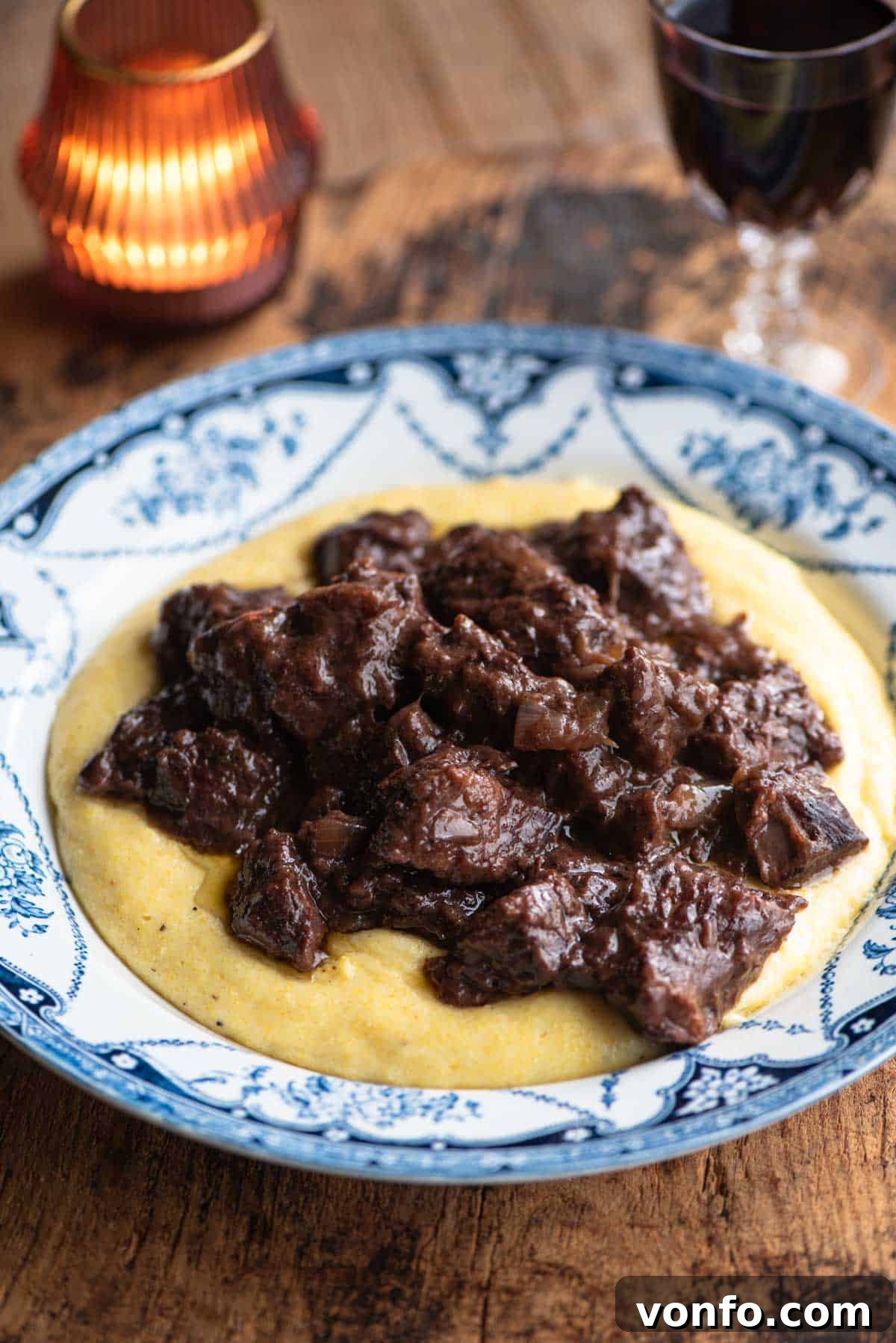
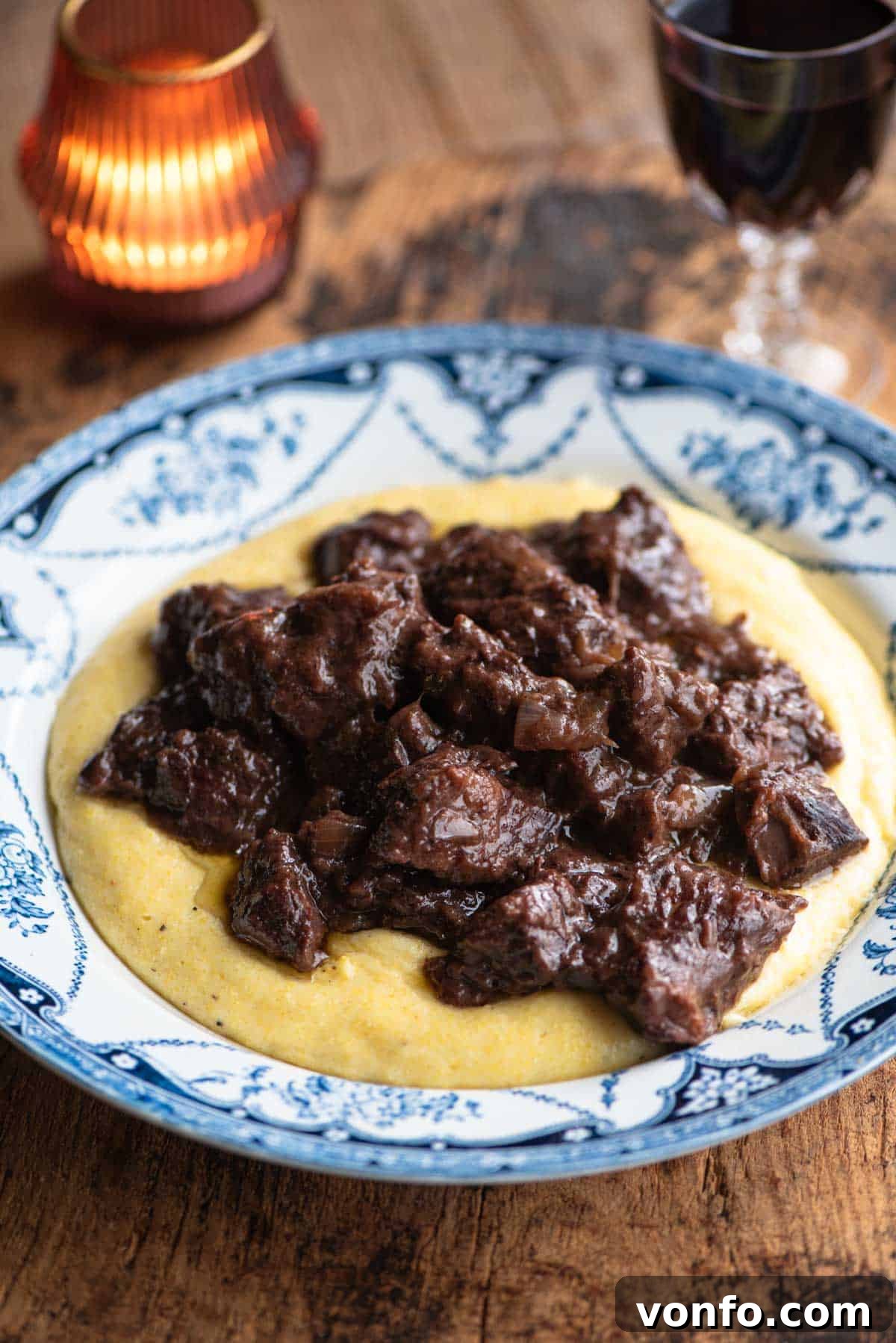
Carbonade Valdostana is far more than just a beef stew; it’s a culinary embrace from the heart of the Italian Alps. Hailing from the picturesque Aosta Valley, this robust and immensely satisfying dish is a testament to the region’s rich gastronomic heritage. Crafted with generous amounts of red wine, a symphony of warming spices like cinnamon and cloves, fragrant herbs, and sweet onions, it’s designed to warm you from the inside out. It’s the quintessential meal for a cozy evening, especially when served alongside a luxurious creamy polenta, which perfectly complements its deep, savory flavors.
About Carbonade Valdostana: A Taste of the Italian Alps
The Aosta Valley, nestled amidst the majestic Italian Alps, is renowned for its rustic, hearty, and deeply comforting cuisine. This mountainous region, bordering France and Switzerland, boasts a culinary tradition shaped by its challenging climate and the availability of local produce. Dishes like Zuppa alla Valpellinese (a rich bread and cabbage soup) and Fontina cheese risotto are prime examples of the region’s commitment to wholesome, flavorful food that provides sustenance and warmth. Carbonade, sometimes called Carbonada, stands proudly among these Aostan comfort food classics.
Often mistaken for the Roman pasta dish Carbonara due to its similar-sounding name, Carbonade is, in fact, an entirely different culinary experience. While Carbonara is a quick-cooking pasta dish featuring eggs, Pecorino Romano, guanciale, and black pepper, Carbonade is a slow-cooked beef stew, a labor of love that rewards patience with unparalleled depth of flavor. Its origins trace back to a time when preserving meat was essential, often using salt, which would then be rehydrated and slow-cooked to tender perfection. Today, it captures that traditional essence, offering a savory profile that distinguishes it from other Italian beef stews.
The Unique Flavor Profile of Carbonade
What sets Carbonade Valdostana apart is its exquisite blend of ingredients. Traditionally, it was prepared with beef preserved in salt, lending a distinct depth. In modern kitchens, high-quality beef chuck or brisket provides the perfect canvas for the stew. The magic truly happens with the liquid base: an entire bottle of robust red wine forms the foundation, slowly simmering down to create a rich, velvety sauce. But it’s the inclusion of fragrant festive spices such as cinnamon, cloves, juniper berries, and a pinch of nutmeg, alongside aromatic sage and bay leaves, that elevates this dish beyond a simple beef stew. These spices infuse the meat and sauce with a warm, inviting aroma and a complex flavor that is both familiar and exotic, perfectly suited for the chill of winter.
Why You’ll Love This Hearty Red Wine Beef Stew
- Unforgettable Flavor: The slow simmering process allows the red wine, beef, and spices to meld into a deeply complex and savory profile that is truly addictive.
- Ultimate Comfort Food: There’s nothing quite like a hearty, warm stew on a cold day. Carbonade Valdostana provides that ultimate feeling of coziness and satisfaction.
- Perfect for Entertaining: While requiring some cooking time, much of it is hands-off. It’s an impressive dish that’s easy to prepare in advance, making it ideal for dinner parties.
- Versatile Serving Options: Traditionally served with creamy polenta, it’s equally delicious with mashed potatoes, crusty bread, or even pasta.
- A Taste of Italy: Experience the authentic flavors of the Aosta Valley and bring a piece of Italian alpine tradition into your home kitchen.
Our rendition of Carbonade Valdostana aims to stay true to its authentic roots. For the most genuine experience, we highly recommend using a red wine from the Aosta Valley, such as a Torette, known for its regional character. However, any good quality northern Italian red wine will yield fantastic results. We’ve personally found that a Barbera d’Asti works beautifully, contributing a wonderful body and fruity notes to the stew.
Essential Ingredients for Carbonade Valdostana
Gathering quality ingredients is the first step to a truly memorable Carbonade. Here’s what you’ll need, along with some helpful notes and substitutions.
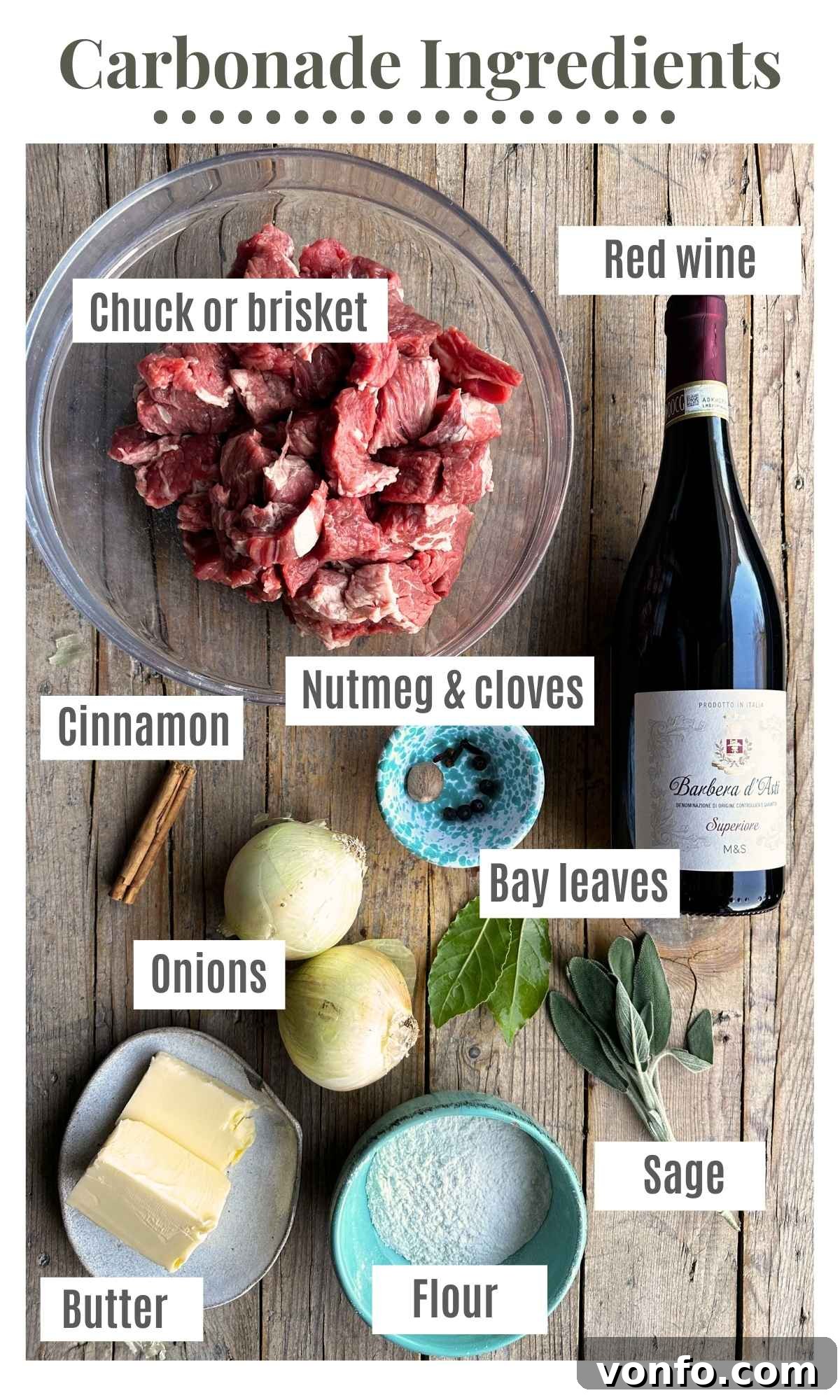
Ingredient Notes and Substitutions
- Beef Brisket or Chuck: These cuts are ideal for slow cooking as they become incredibly tender and flavorful. If opting for beef chuck, select pieces with good marbling (streaks of fat) to ensure the stew remains succulent and doesn’t dry out. Leaner cuts might not provide the same rich texture.
- Italian Red Wine: The wine is crucial for both flavor and acidity. A northern Italian red wine, such as Barbera d’Asti, Nebbiolo, or Valpolicella, is highly recommended for its robust characteristics that can stand up to the long cooking time. Avoid using cooking wine; choose something you’d enjoy drinking.
- White Onions: White onions offer a subtle sweetness that mellows beautifully during slow cooking. Brown onions are a perfectly acceptable alternative and will provide a similar base flavor.
- Cloves, Juniper Berries, and Nutmeg: These spices are the secret to Carbonade’s unique, warming aroma. Juniper berries, in particular, add a slight peppery, piney note that is characteristic of alpine cuisine. Feel free to adjust quantities to your personal preference.
- Sage and Bay Leaf: Sage is a traditional herb in Italian cooking, especially in the north, and its earthy, slightly peppery flavor pairs wonderfully with beef and red wine. Bay leaves contribute a subtle herbal depth. Some recipes also incorporate fresh thyme or rosemary, which would be excellent additions.
- All-Purpose Flour: A light dusting of flour on the beef helps to create a beautiful brown crust during searing and acts as a thickening agent for the rich sauce, giving it a desirable consistency.
- Unsalted Butter: Many northern Italian dishes traditionally rely on butter for cooking, and Carbonade is no exception, lending a rich, creamy base. To prevent the butter from burning during the initial browning of the beef and onions, a small drizzle of olive oil can be added to the pot.
- Olive Oil: Used in conjunction with butter to achieve the perfect searing temperature and prevent scorching, especially when browning the beef.
- Salt and Pepper: Essential for seasoning the beef and the stew throughout the cooking process. Always taste and adjust as needed.
Step-by-Step Guide to Crafting Carbonade Valdostana
This visual guide provides clear steps to help you achieve the perfect Carbonade Valdostana. For precise ingredient measurements and additional tips, please refer to the full recipe details further down.
-
Brown the Beef to Perfection
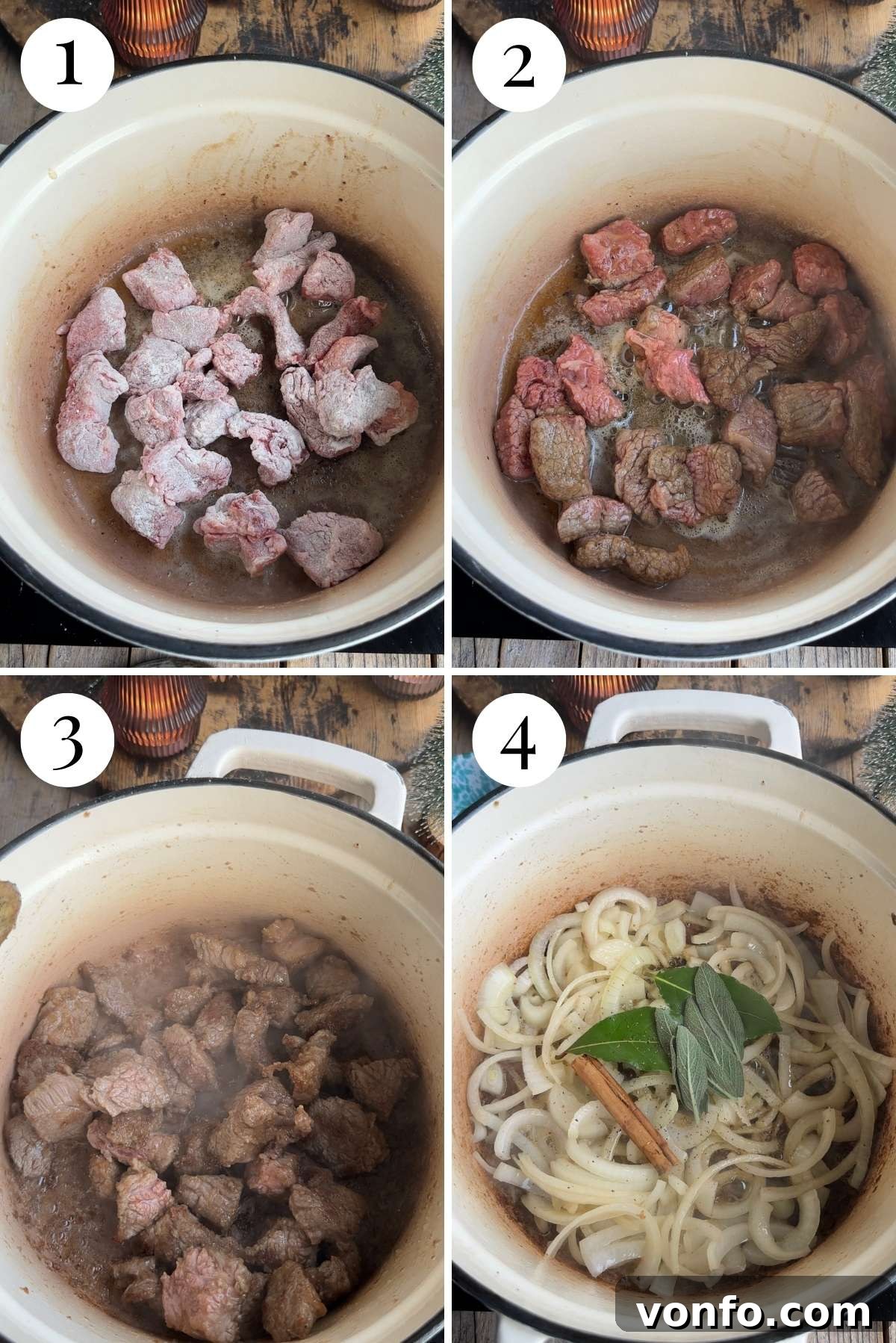
Begin by cutting your beef chuck or brisket into medium-sized chunks if it isn’t already. Season the beef generously with salt. Next, lightly dust each piece of beef with all-purpose flour, ensuring you shake off any excess flour. This step helps create a delicious crust and slightly thickens the sauce. In a heavy-based pot or Dutch oven, melt half of the unsalted butter with a drizzle of olive oil over medium-high heat. Once shimmering, brown the beef in batches on all sides. Avoid overcrowding the pot, as this will steam the meat instead of searing it. Remove the browned beef to a plate and set aside, along with any juices that accumulate. (See photos 1-3 below for visual guidance).
-
Sauté the Aromatic Onions and Spices
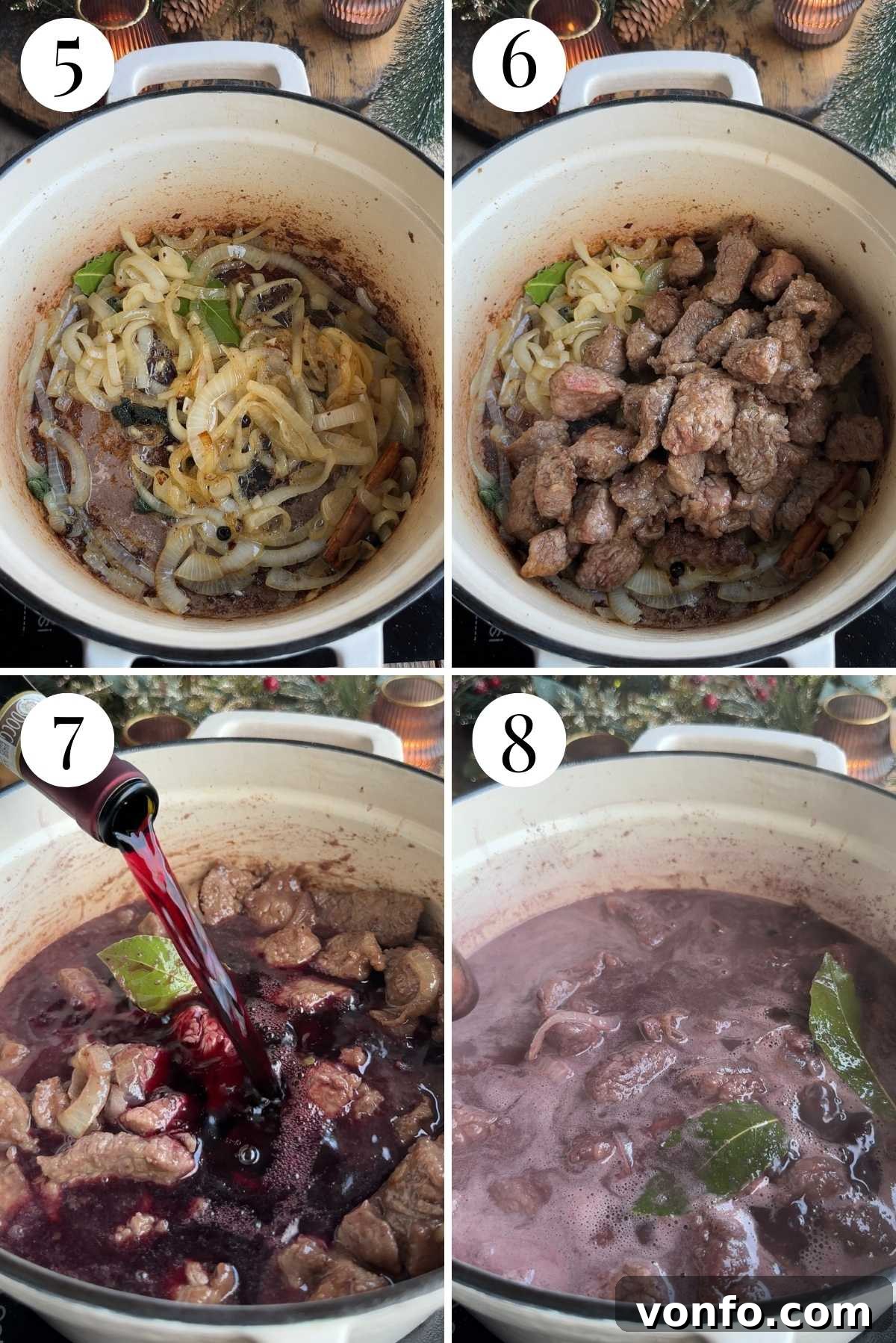
Once all the beef has been browned and removed from the pot, add the remaining half of the butter and another drizzle of olive oil to the same pot. Reduce the heat to medium-low. Add the thinly sliced onions, along with all the festive herbs and spices: cloves, juniper berries, nutmeg, cinnamon stick, sage leaves, and bay leaves. Sauté the onions, stirring frequently, for about 7-10 minutes until they become wonderfully softened and translucent, absorbing all the delicious fond from the bottom of the pot. The spices will release their incredible aroma, filling your kitchen with an inviting fragrance. (Refer to photos 4 and 5 for visual cues).
-
Simmer in Red Wine
Return the browned beef, along with any accumulated juices, to the pot with the softened onions and spices. Pour in a generous splash of the Italian red wine. Increase the heat slightly and let it bubble vigorously for a minute or two. Use a wooden spoon to deglaze the pot, scraping up any delicious brown bits (fond) stuck to the bottom. This adds immense flavor to your stew. Pour in the rest of the bottle of red wine. Bring the mixture to a gentle simmer, then reduce the heat to low. Cover the pot with its lid, leaving it slightly ajar to allow some steam to escape and the sauce to slowly reduce and concentrate its flavors. Let the Carbonade cook gently for a full 2 hours. (Photos 6-8 illustrate this stage).
-
Uncover and Reduce to Perfection
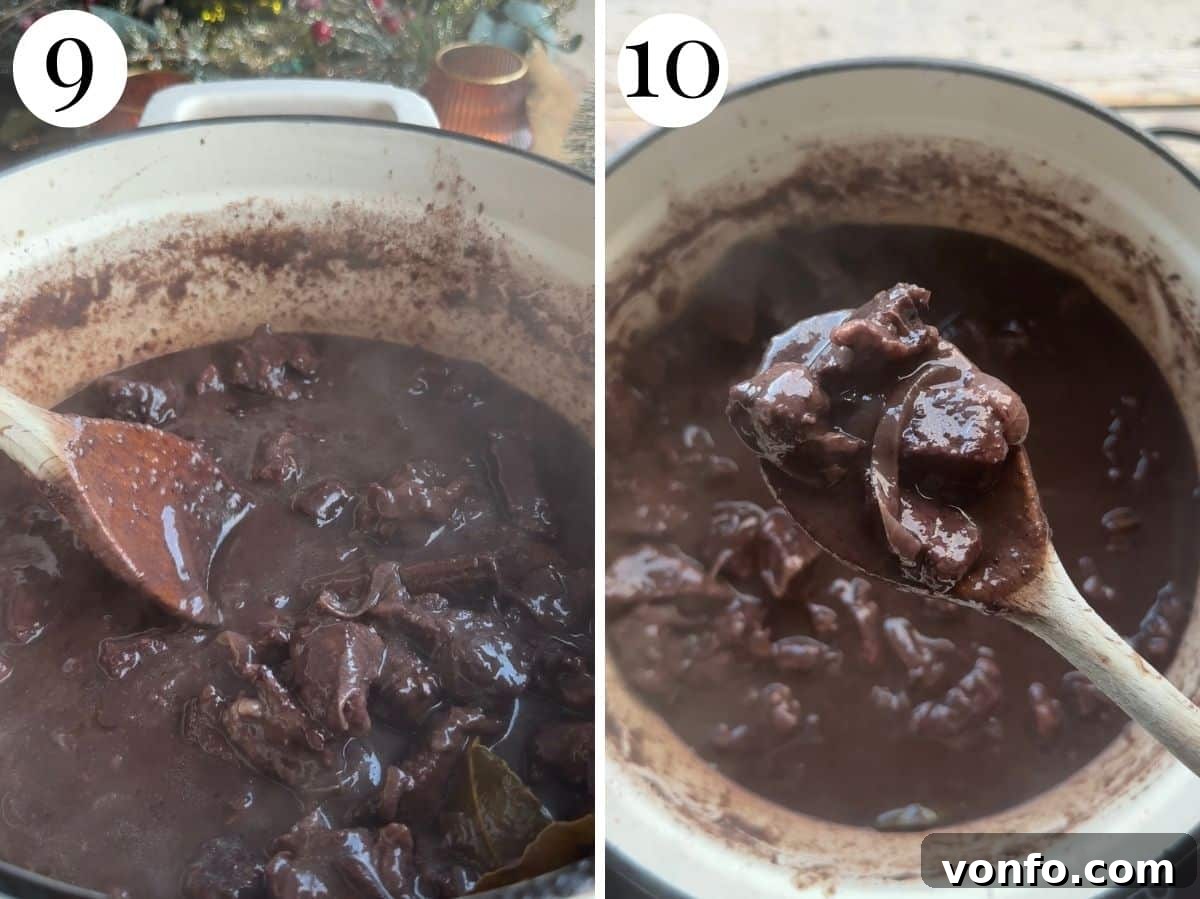
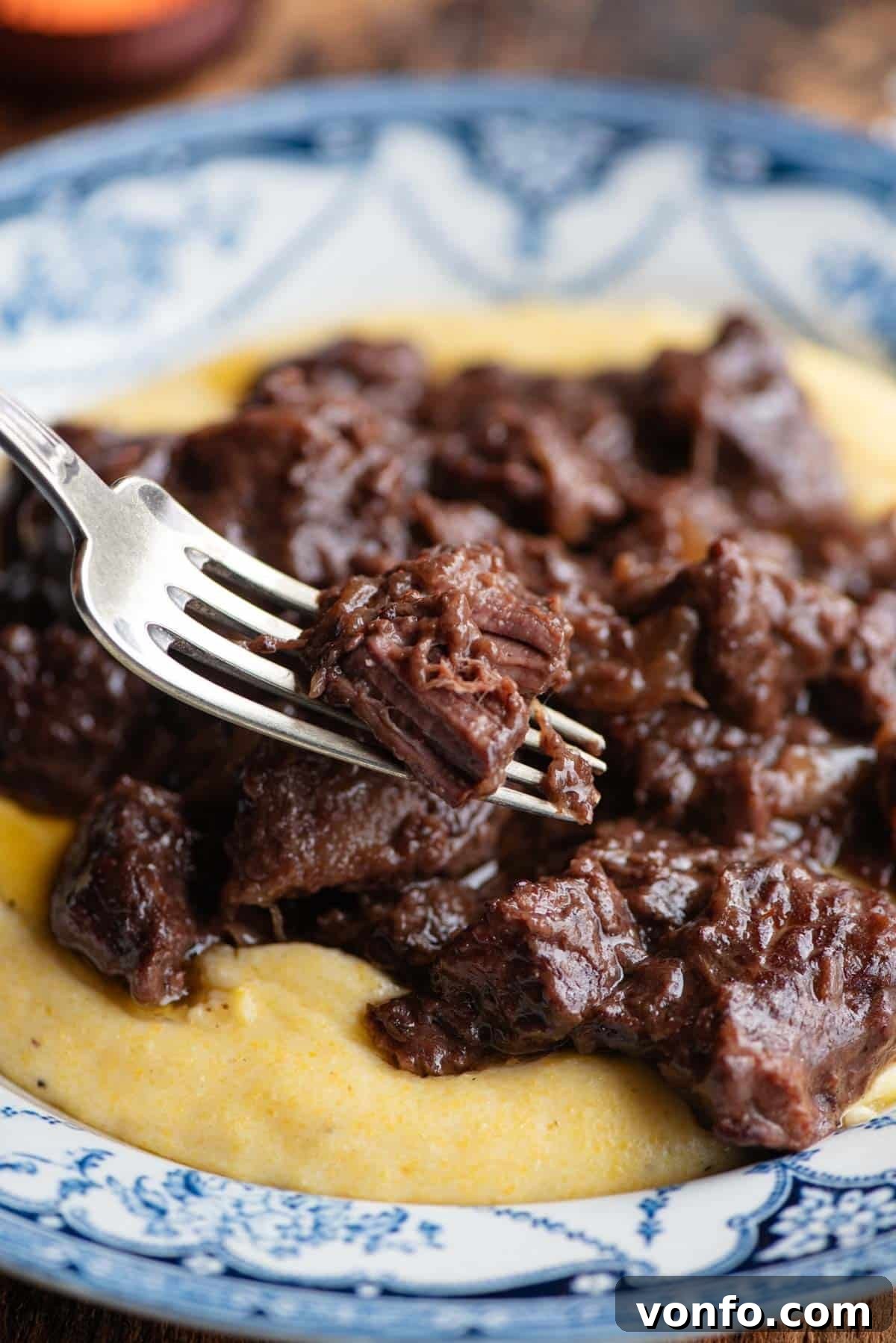
After the initial 2 hours of simmering with the lid ajar, remove the lid completely from the pot. Continue to cook the stew for an additional 30 minutes over low heat. This final stage allows the sauce to reduce further, intensifying its flavors and achieving a perfect, slightly thickened consistency. The beef will be incredibly tender, falling apart with a fork, and the sauce will be rich and glossy. Serve your exquisite Carbonade Valdostana immediately, ideally on a bed of creamy polenta or with classic mashed potatoes. (See photos 9 and 10 for the finished consistency).
Expert Tips for Perfect Carbonade Valdostana
- Don’t Overcrowd the Pot: When browning the beef, work in batches. Overcrowding cools the pan and steams the meat instead of searing it, preventing that crucial deep flavor development.
- Scrape the Fond: After browning the beef and sautéing the onions, deglaze the pot with a splash of wine and scrape up all the browned bits (fond) from the bottom. These bits are packed with flavor and will enrich your sauce.
- Quality Wine Matters: Since an entire bottle of wine goes into this stew, use a good quality Italian red wine that you would enjoy drinking on its own. The better the wine, the better the stew.
- Adjust Spices to Taste: The blend of cinnamon, cloves, and juniper berries gives Carbonade its distinctive taste. Feel free to adjust these quantities to suit your palate. If you love a bolder spice profile, add a little more.
- Patience is Key: This is a slow-cooked dish, and the long simmering time is essential for the beef to become fork-tender and for the flavors to fully develop and meld. Don’t rush it!
- Make Ahead: Like many stews, Carbonade Valdostana often tastes even better the next day. The flavors have more time to deepen and harmonize. Prepare it a day in advance, let it cool completely, then refrigerate. Gently reheat over low heat, adding a splash of broth or wine if needed.
Serving Suggestions to Complete Your Meal
Carbonade Valdostana is a wonderfully versatile dish that pairs well with a variety of sides, though traditionally it’s served with polenta. Here are some ideas to make your meal truly special:
- Creamy Polenta: This is the classic pairing for Carbonade, and for good reason. The soft, buttery polenta provides a perfect textural and flavor contrast to the rich, savory stew, soaking up all the delicious sauce.
- Mashed Potatoes: A comforting and familiar option, fluffy mashed potatoes are excellent for absorbing the flavorful gravy of the stew.
- Crusty Bread: A simple yet effective choice. A good, crusty loaf of Italian bread is perfect for mopping up every last drop of the rich sauce.
- Pasta: For a heartier meal, serve Carbonade over a wide pasta shape like pappardelle or tagliatelle.
- Seasonal Vegetables: A light side of steamed green beans, roasted carrots, or sautéed spinach can add a fresh balance to the richness of the stew.
Frequently Asked Questions About Carbonade Valdostana
We’ve gathered some common questions to help you master this delicious Italian stew.
What kind of beef is best for Carbonade Valdostana?
Beef chuck or brisket are ideal. These cuts are known for their connective tissue, which breaks down during slow cooking, resulting in incredibly tender and flavorful meat. Look for cuts with good marbling for the best texture and richness.
Can I make Carbonade Valdostana in a slow cooker?
Yes, you can adapt this recipe for a slow cooker! Brown the beef and sauté the onions and spices as instructed on the stovetop first, as this step is crucial for flavor development. Then, transfer everything to your slow cooker, add the wine, and cook on low for 6-8 hours or on high for 3-4 hours, or until the beef is fork-tender. You may need to reduce the sauce on the stovetop for the last 30 minutes if it’s too thin.
How long can Carbonade Valdostana be stored?
Leftovers will keep well in an airtight container in the refrigerator for up to 3 days. It’s an excellent make-ahead meal, as the flavors often deepen overnight.
Can I freeze Carbonade Valdostana?
Absolutely! This stew freezes beautifully. Allow it to cool completely, then transfer it to freezer-safe containers or bags. It can be frozen for up to 3 months. Thaw overnight in the refrigerator and reheat gently on the stovetop, adding a little water or broth if needed to adjust consistency.
What if I don’t have juniper berries?
While juniper berries add a distinctive, traditional flavor, the stew will still be delicious without them. You can omit them or, for a subtle twist, add a very small pinch of dried rosemary or a few black peppercorns, though the flavor profile will differ slightly.
More Comforting Italian Recipes to Try
Mains
Peposo – Tuscan Red Wine Beef Stew
Mains
Zuppa alla Valpellinese (Cheese and Cabbage Casserole)
Pasta
Pasta alla Norcina (Creamy Sausage and Truffle Pasta)
Italian Ragu and Stews
Italian Beef Stew with Potatoes (Spezzatino di Manzo)
If you’ve tried this Carbonade Valdostana recipe or any other recipe on the blog, please don’t forget to rate the recipe and share your experience in the comments below – we love hearing from you! You can also follow us on Facebook, Instagram, and Pinterest, or sign up for our Newsletter to discover more delicious Italian food.
Step By Step Photos Above
Most of our recipes come with step by step photos, helpful tips and tricks to make it perfectly first time!
Carbonade Valdostana
★★★★★
By Emily
10
2 15
2 25
4 – 6 servings
Print Recipe
Equipment
-
Heavy-based pot or Dutch oven
Ingredients
- 1 kg/ 2 lbs beef chuck or brisket, make sure it’s not too lean
- all-purpose flour, for dusting
- 2 white onions, cut into slices (medium thickness)
- 1 bottle Italian red wine, (we used Barbera d’Asti)
- 3 cloves
- 4 juniper berries
- 1 pinch nutmeg
- 1 cinnamon stick
- 5-6 sage leaves
- 2 bay leaves
- 7 tablespoons (100g) unsalted butter
- olive oil
- salt and pepper
Instructions
-
If not already, cut the beef into medium-sized chunks and salt it generously. Lightly dust the beef in flour, shaking off any excess.
-
Heat half the butter with a drizzle of olive oil in a heavy-based pot. Once melted, cook the beef in batches until browned on all sides. Set aside on a plate.
-
Add the other half of butter and another drizzle of olive oil to the pot. Add the sliced onion with all of the herbs and spices (cloves, juniper berries, nutmeg, cinnamon stick, sage, bay leaves). Cook the onions with the herbs and spices on a medium-low heat for about 7-10 minutes until softened and translucent, stirring often.
-
Add the beef back into the pot with any accumulated juices and add a splash of red wine. Let it bubble and deglaze the pot, scraping any brown bits from the bottom for a few seconds. Add the remaining bottle of red wine. Bring to a gentle simmer, then turn down the heat to low. Cover the pot with a lid, leaving it slightly ajar, and cook the stew for 2 hours.
-
After 2 hours, uncover the pot completely then let the stew simmer for another 30 minutes until the sauce has reduced slightly and thickened to your desired consistency.
-
Serve immediately with creamy polenta or mashed potatoes.
Notes
- Don’t use too much flour: It’s important to shake off all the excess flour from the beef so it’s just lightly coated. Too much flour can make the sauce pasty.
- Spices: The festive spices are key to this dish’s unique flavor. Feel free to adjust the amounts of cinnamon, cloves, and juniper berries to your own preference. Some recipes also add fresh rosemary or thyme, which are lovely additions.
- Serving suggestion: As with most slow-cooked stews, this dish often tastes even better the next day as the flavors have more time to meld. Prepare it in advance, let it cool completely, refrigerate, then gently reheat the next day and serve with polenta.
- Leftovers: Leftovers will keep well in an airtight container in the fridge for up to 3 days. It also freezes beautifully for up to 3 months.
Helpful Info for All Recipes
- I always use extra virgin olive oil in all of my recipes unless stated otherwise.
- When I use canned or jarred tomatoes of any kind, I always recommend Cirio or Mutti brands for the best results and flavor.
- All vegetables are assumed to be medium-sized unless stated otherwise in the recipe.
- All recipes are tested and developed using a fan (convection) oven.
- Find out more about how nutrition is calculated.
- Check out our must-have Italian Pantry Staples.
- You can also find all our Essential Kitchen Tools for Italian Cooking.
Nutrition
Carbohydrates: 12g |
Protein: 53g |
Fat: 36g |
Saturated Fat: 15g |
Polyunsaturated Fat: 3g |
Monounsaturated Fat: 18g |
Trans Fat: 2g |
Cholesterol: 452mg |
Sodium: 225mg |
Potassium: 1183mg |
Fiber: 2g |
Sugar: 4g |
Vitamin A: 417IU |
Vitamin C: 4mg |
Calcium: 114mg |
Iron: 7mg
Nutrition information is automatically calculated, so should only be used as an approximation.
Did you try this recipe?
Leave a comment below!