
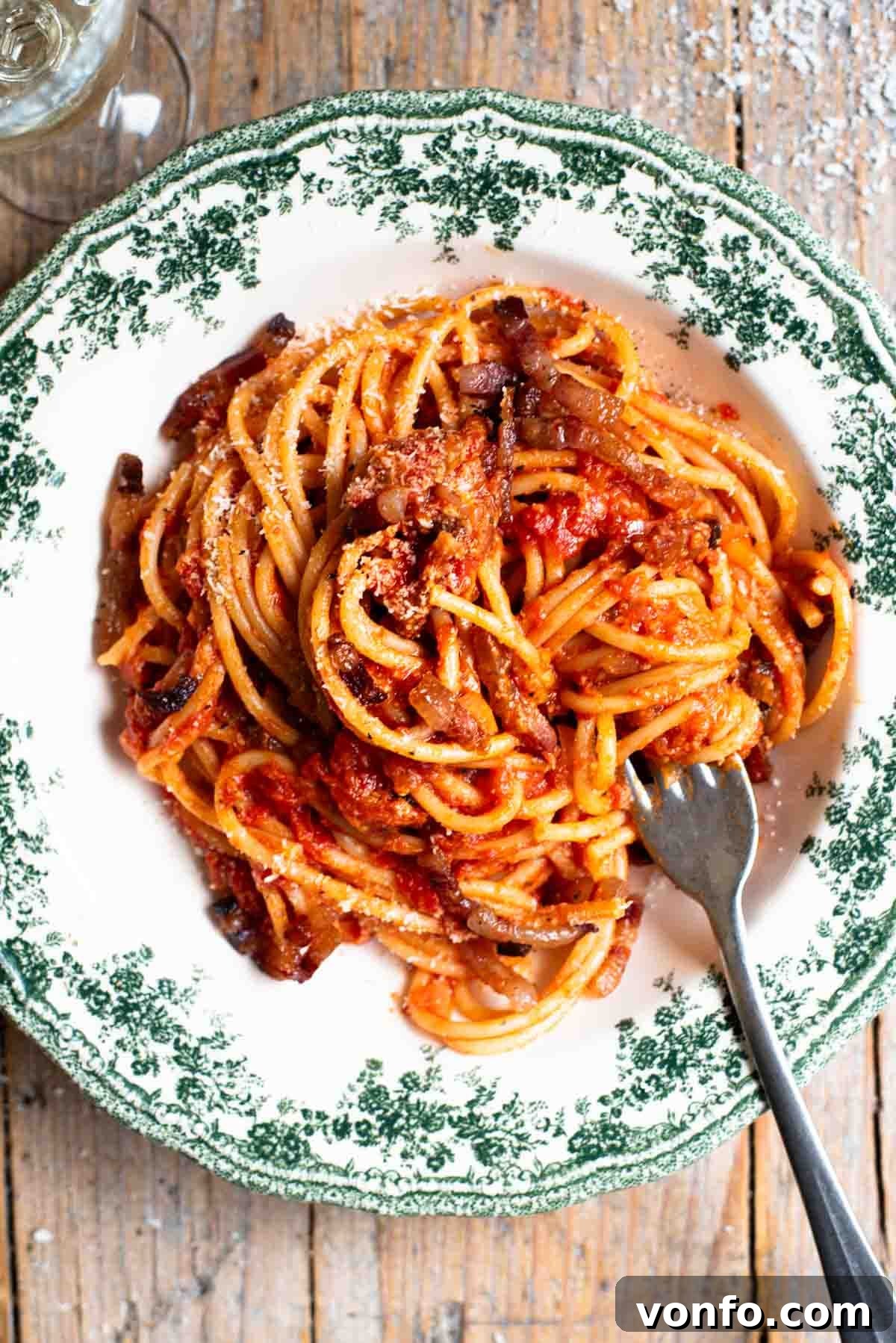
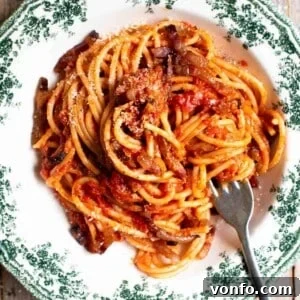
Spaghetti al Rancetto is a classic Umbrian pasta dish: spaghetti served in a simple tomato sauce with sautéed onion, crisp pancetta, grated pecorino and a hint of marjoram. It’s straightforward to prepare, relies on high-quality canned tomatoes and cheese, and delivers bold, comforting flavour in every bite.
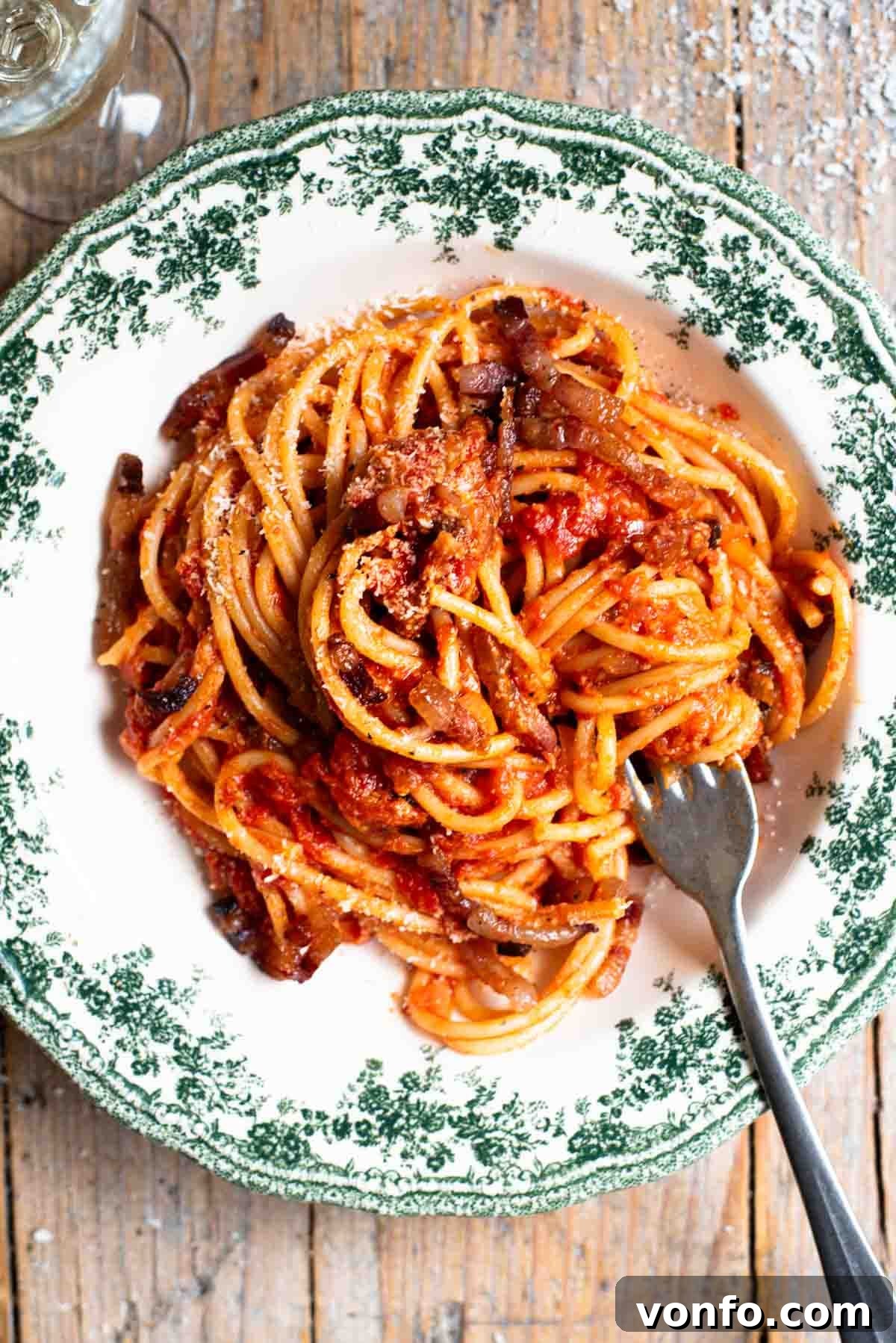
This recipe comes from Umbria, where it was traditionally served with thick hand-rolled pasta such as umbricelli or pici. The flavour is close to a classic Amatriciana, but Spaghetti al Rancetto uses pancetta instead of guanciale and includes onion and marjoram for a distinctive aromatic note.
Fresh marjoram is traditional, but it can be floral when used in large amounts. Dried marjoram is an excellent and more widely available alternative; if neither is on hand, dried oregano can be used as a substitute.
Ingredient notes
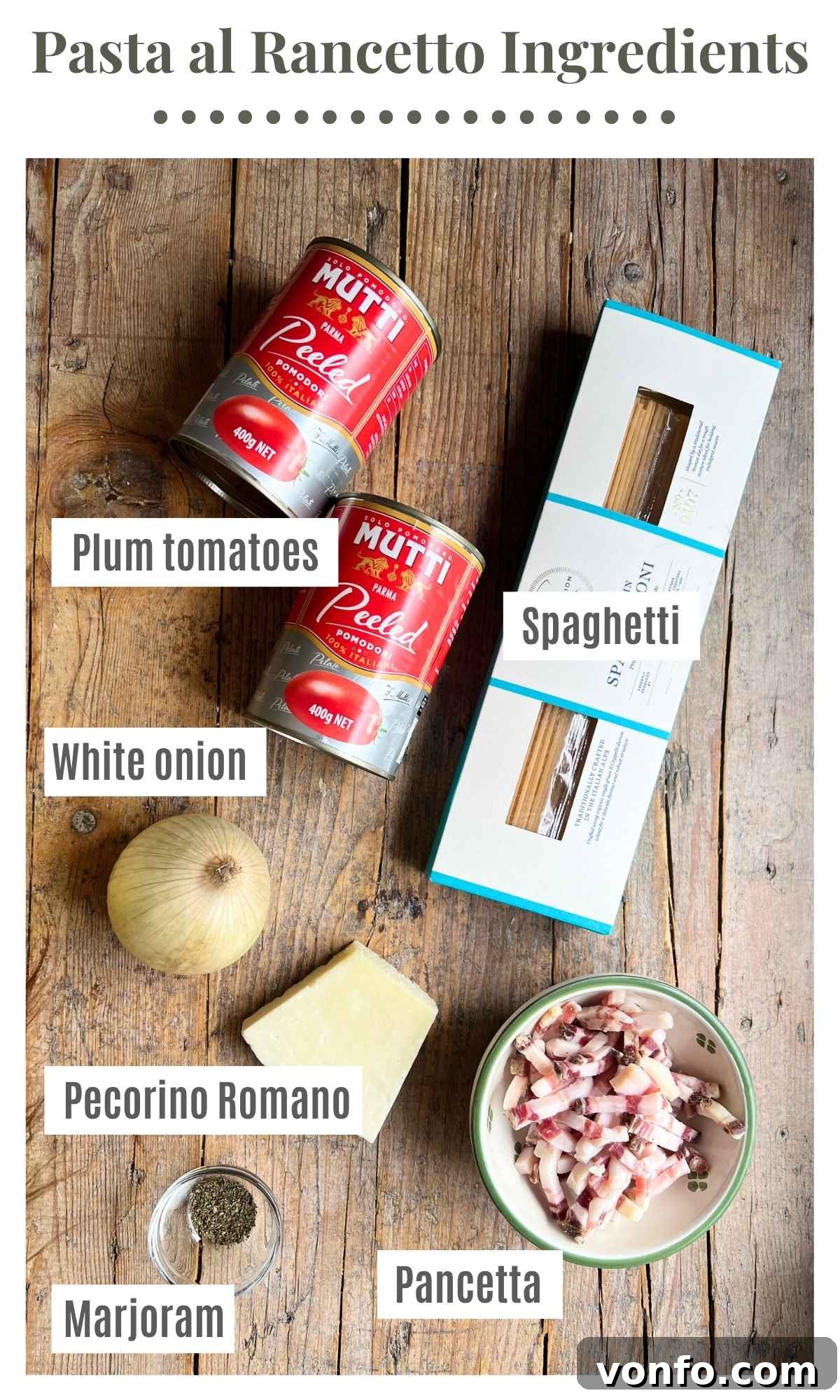
- Canned plum tomatoes – choose good-quality canned tomatoes; they form the base of the sauce and greatly affect the final flavour.
- Pancetta – provides fat and savoury depth. If you prefer, guanciale can be used instead. Sufficient fat is needed to sauté the onion.
- Sweet white or brown onion – softens into the sauce and adds natural sweetness.
- Pecorino Romano – lends a sharp, salty finish. If unavailable, Parmigiano Reggiano will work as an alternative.
- Marjoram – fresh is ideal if you can find it; dried marjoram is a convenient substitute. If neither is available, dried oregano can be used sparingly.
Prep this in advance
The sauce can be made ahead and stored in the fridge for 3–4 days. When reheating, add the pancetta back in, warm the sauce gently in a pan while cooking the pasta, and finish with grated pecorino just before serving.
The name is thought to derive from the Italian word ‘rancido’ (rancid), referring historically to the use of aged cured pork that contributed a slightly sharp, fermented note. This reflected the frugal approach of cucina povera, where preserved ingredients were commonly used. Today fresh pancetta is used, but the traditional name remains.
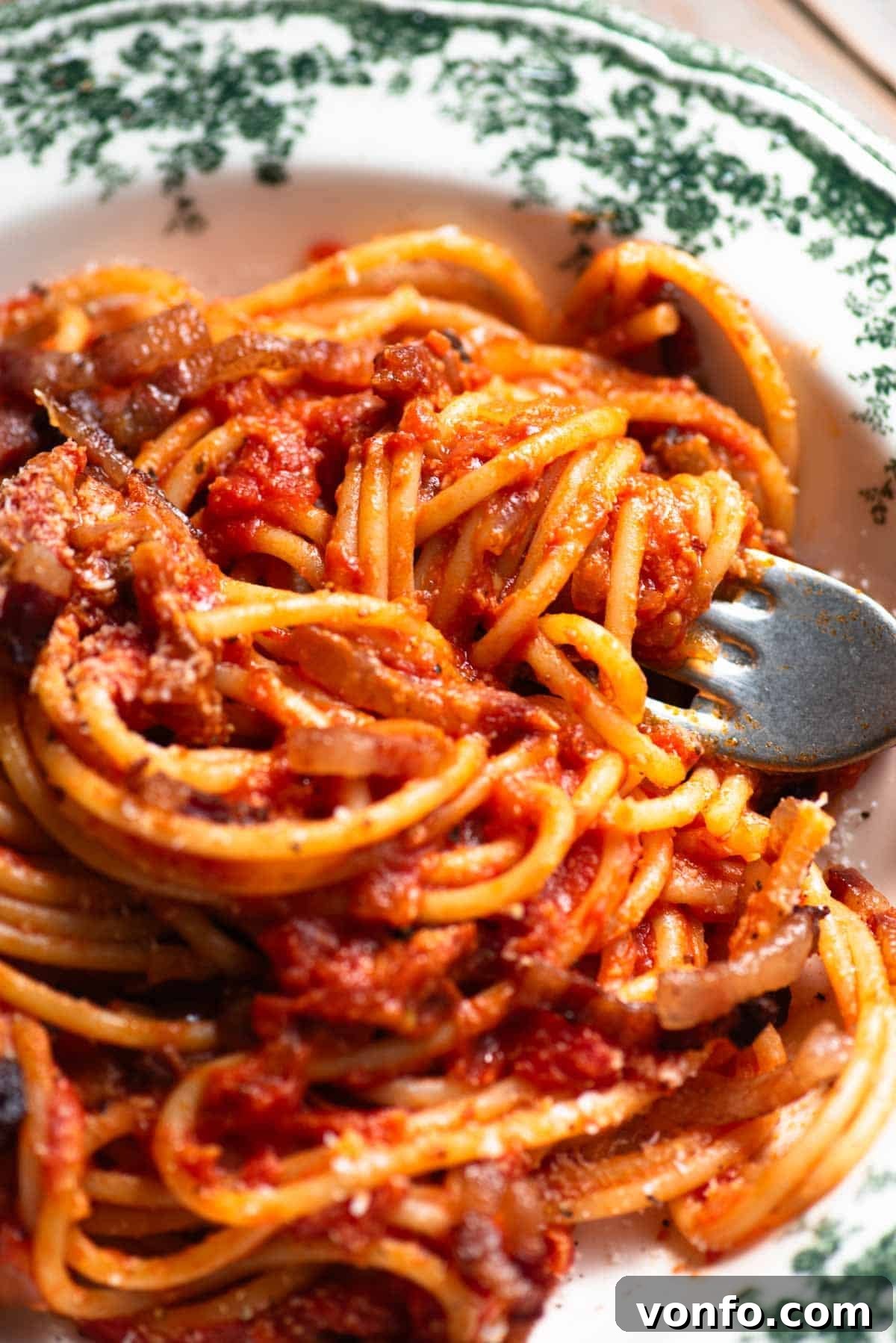
Tip: taste as you go
Taste the sauce after it has simmered for about 10 minutes. You can adjust the marjoram, salt and pepper to your preference. Remember that the pancetta and pecorino added at the end will also increase the seasoning.
More recipes from Umbria to try
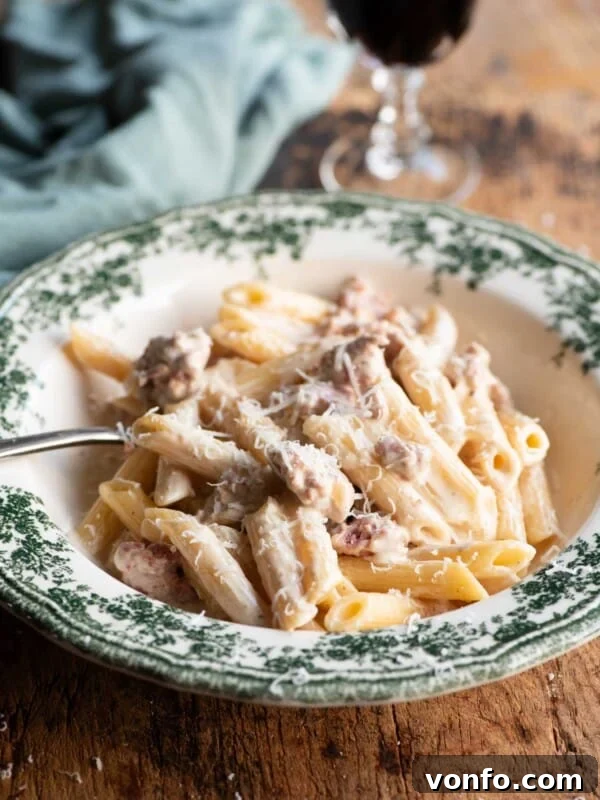
Pasta
Pasta alla Norcina (Creamy Sausage and Truffle Pasta)
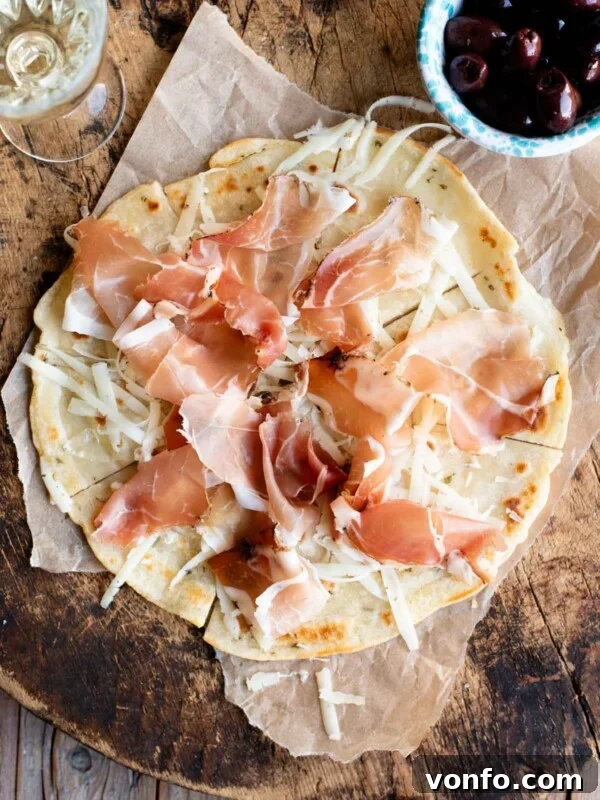
Bread & Savory Bakes
Brustengo (Umbrian Flatbread)
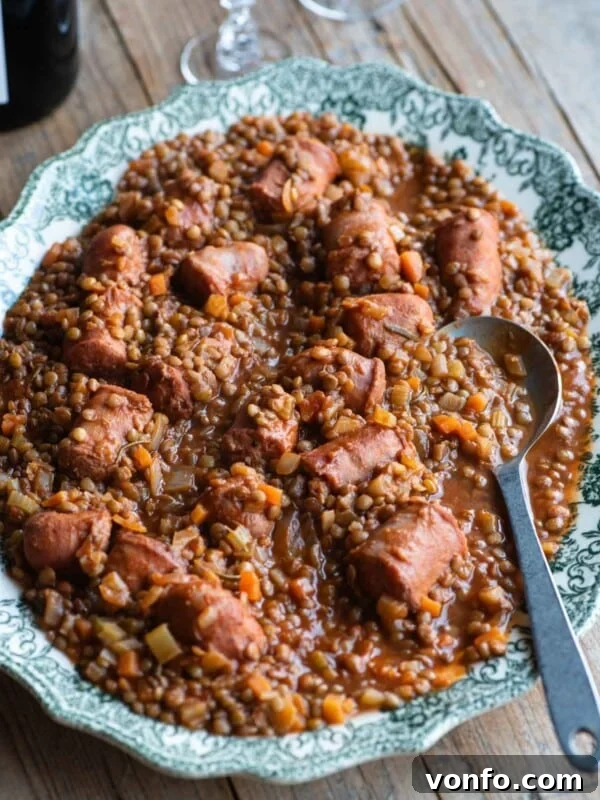
Mains
Italian Sausages and Lentils
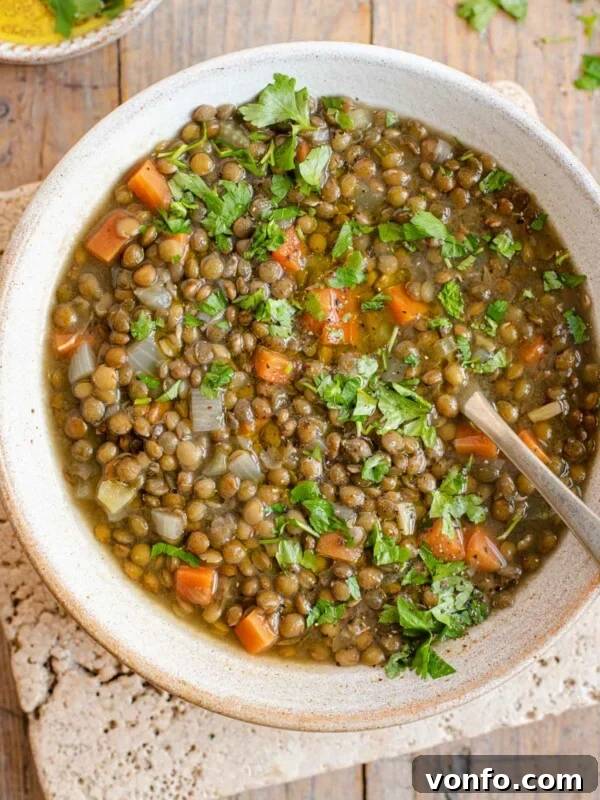
Soups
Italian Lentil Soup (Zuppa di Lenticchie)
If you make this Spaghetti al Rancetto recipe or any other from the blog, please rate and share your experience in the comments — feedback is always welcome. You can also follow the blog’s social channels or subscribe to the newsletter to receive new recipes and updates.
Step By Step Photos Above
Many recipes include step-by-step photos and helpful tips to get the best result first time.
Spaghetti al Rancetto (Pasta with pancetta, pecorino and marjoram)
By Emily
Ingredients
- 400 g (14 oz) spaghetti (or pasta of your choice)
- 100 g (3.5 oz) pancetta, cubed
- 1 white onion, diced
- 800 g (28 oz) canned plum tomatoes, crushed
- 1/2 tsp dried marjoram (or 1 sprig fresh marjoram)
- 50 g (3/4 cup) finely grated Pecorino Romano
- Salt and freshly ground black pepper
Instructions
-
Bring a large pot of water to a rolling boil and salt it generously.
-
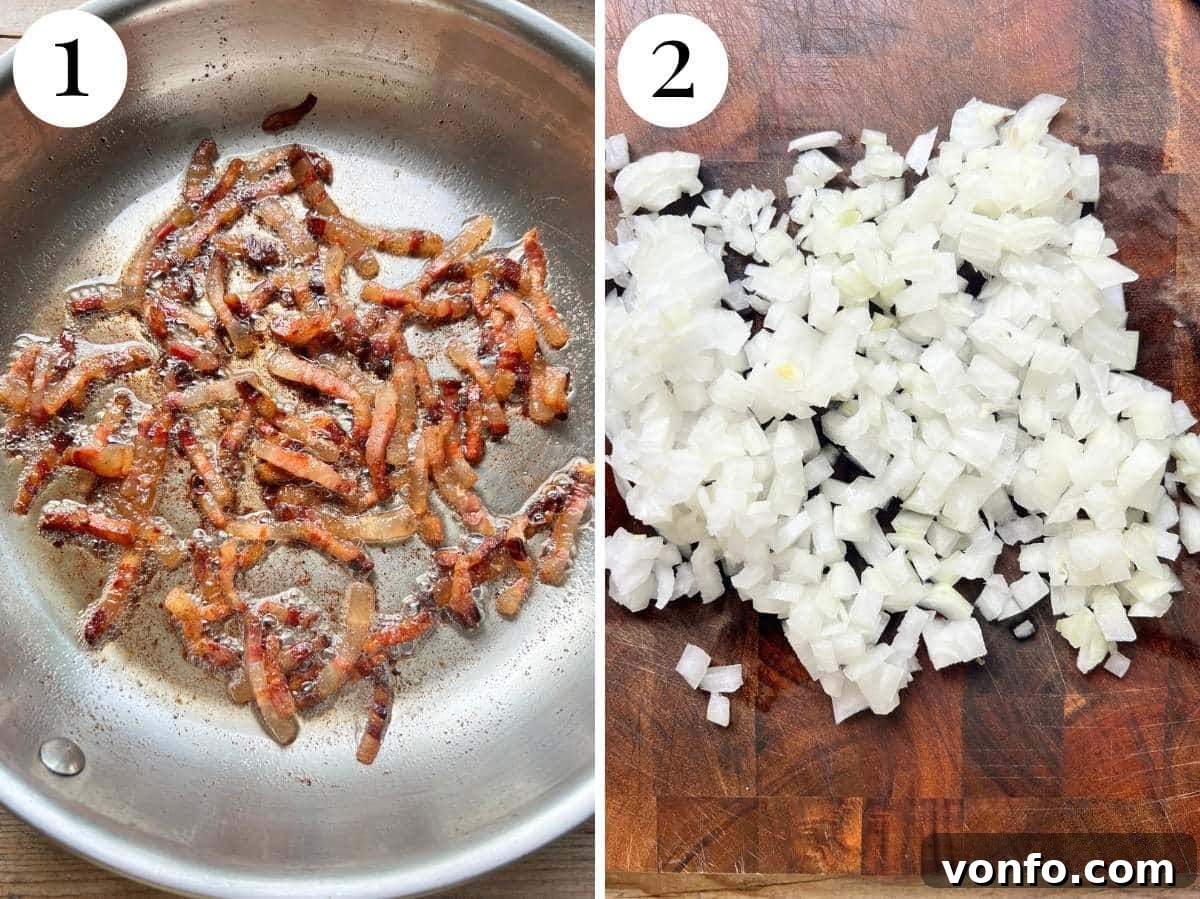
While the water heats, warm a large pan over medium-low heat. Add the pancetta and fry until golden and crisp. Remove the pancetta to a bowl, leaving the rendered fat in the pan. If there isn’t enough fat, add a splash of olive oil.

-
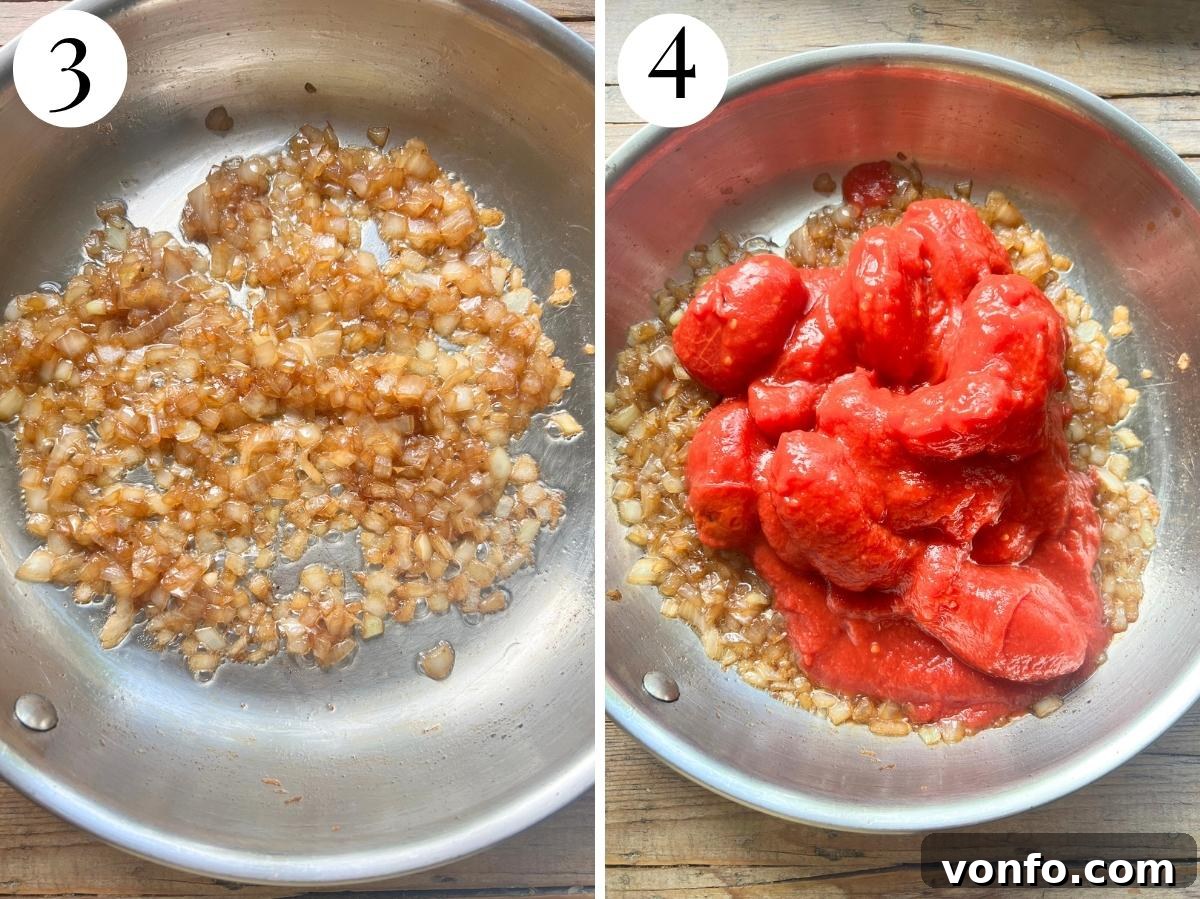
Add the diced onion to the pan and sauté over medium heat until soft and translucent, about 5–8 minutes. Add the canned plum tomatoes and crush them in the pan with a potato masher, wooden spoon, or by hand before adding.
-
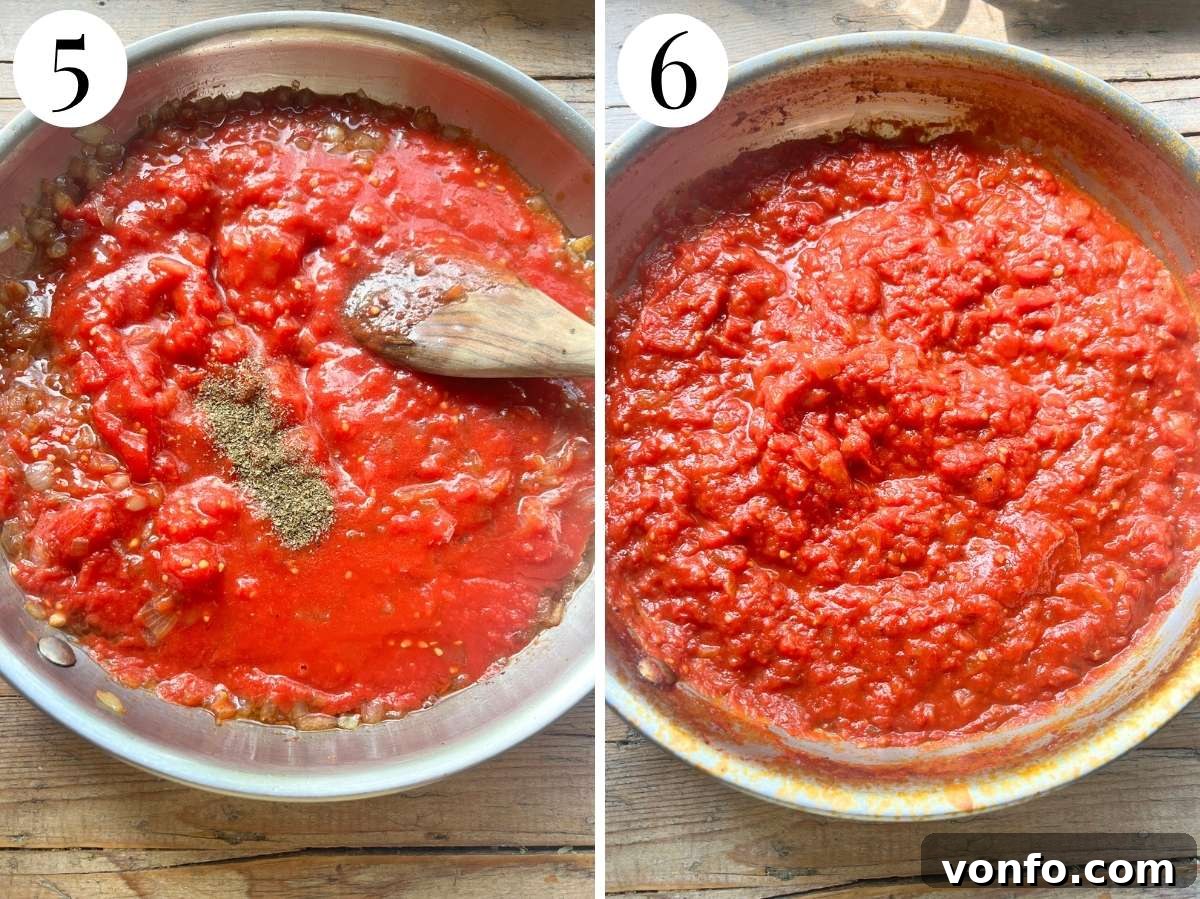
Stir in the marjoram and season with a good pinch of salt and black pepper. Bring the sauce to a gentle simmer and cook for about 10 minutes, stirring occasionally to develop the flavours and reduce slightly.
-
After the sauce has simmered for 10 minutes, add the pasta to the boiling water and cook until al dente according to the package directions. Reduce the sauce heat to low and keep it warm; add a splash of pasta cooking water if the sauce becomes too thick.
-
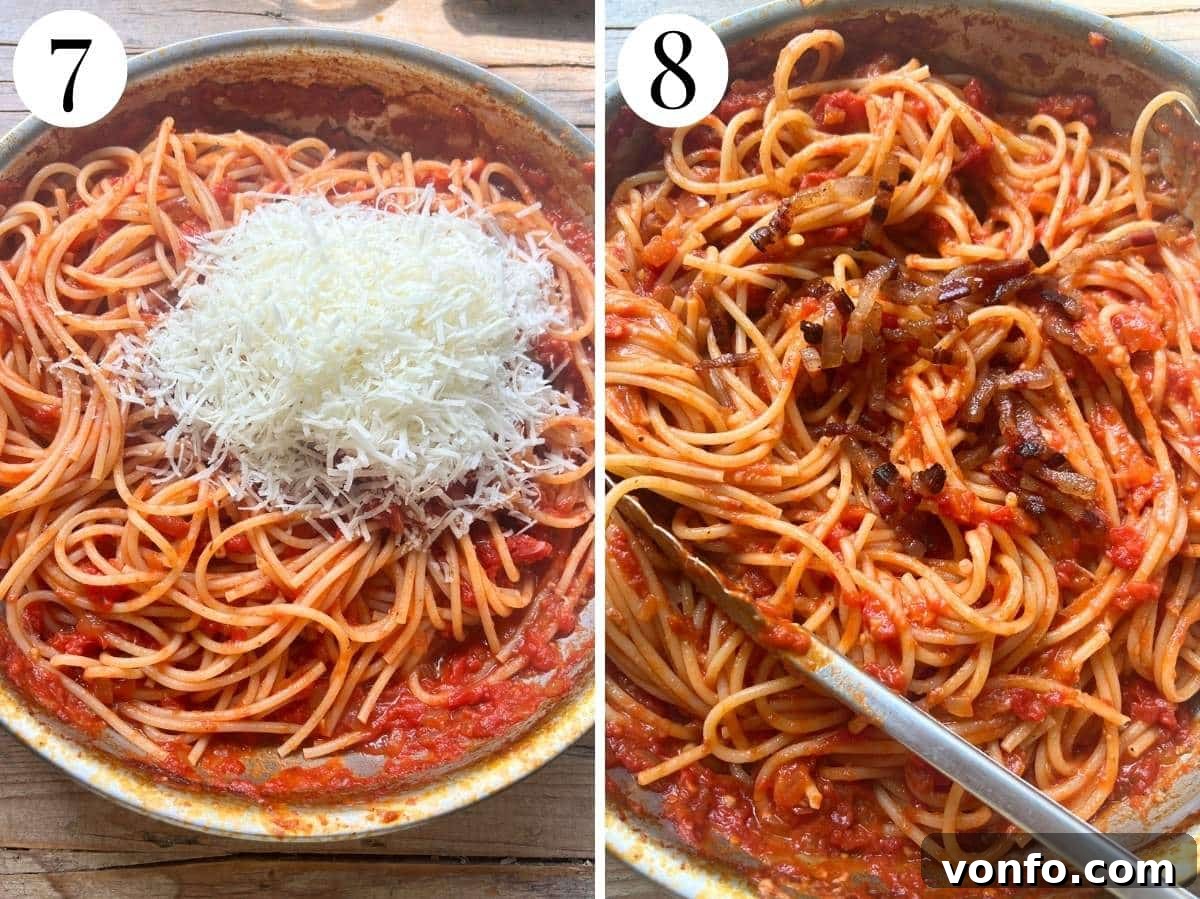
When the pasta is ready, transfer it directly to the sauce using tongs and toss well so the strands are thoroughly coated. Turn off the heat and sprinkle in the grated pecorino, stirring until it melts into a silky coating over the pasta.
-
Return most of the crispy pancetta to the pan and stir through, reserving a little to sprinkle on top of each serving. Serve immediately with extra pecorino and the remaining pancetta on each bowl.
Notes
- Storage – The sauce keeps in the refrigerator for 3–4 days or can be frozen. If freezing, include the pancetta but omit the cheese; add grated pecorino when reheating and tossing with freshly cooked pasta.
- Marjoram substitute – If you don’t have marjoram, dried oregano can be used. Add to taste, remembering it will be more robust than fresh marjoram.
Helpful Info for All Recipes
- Extra virgin olive oil is used unless otherwise specified.
- When using canned tomatoes, choose a reliable brand for the best flavour.
- Vegetables listed are medium-sized unless otherwise noted.
- Recipes are tested using a fan (convection) oven where applicable.
- Nutrition values are calculated automatically and are approximate.
Nutrition
|
Carbohydrates: 88 g
|
Protein: 32 g
|
Fat: 24 g
Nutrition information is an approximation and should be used as a guide only.
Did you try this recipe?
Leave a comment below to share how it turned out.