Homemade Pizza Dough, 65% Hydration
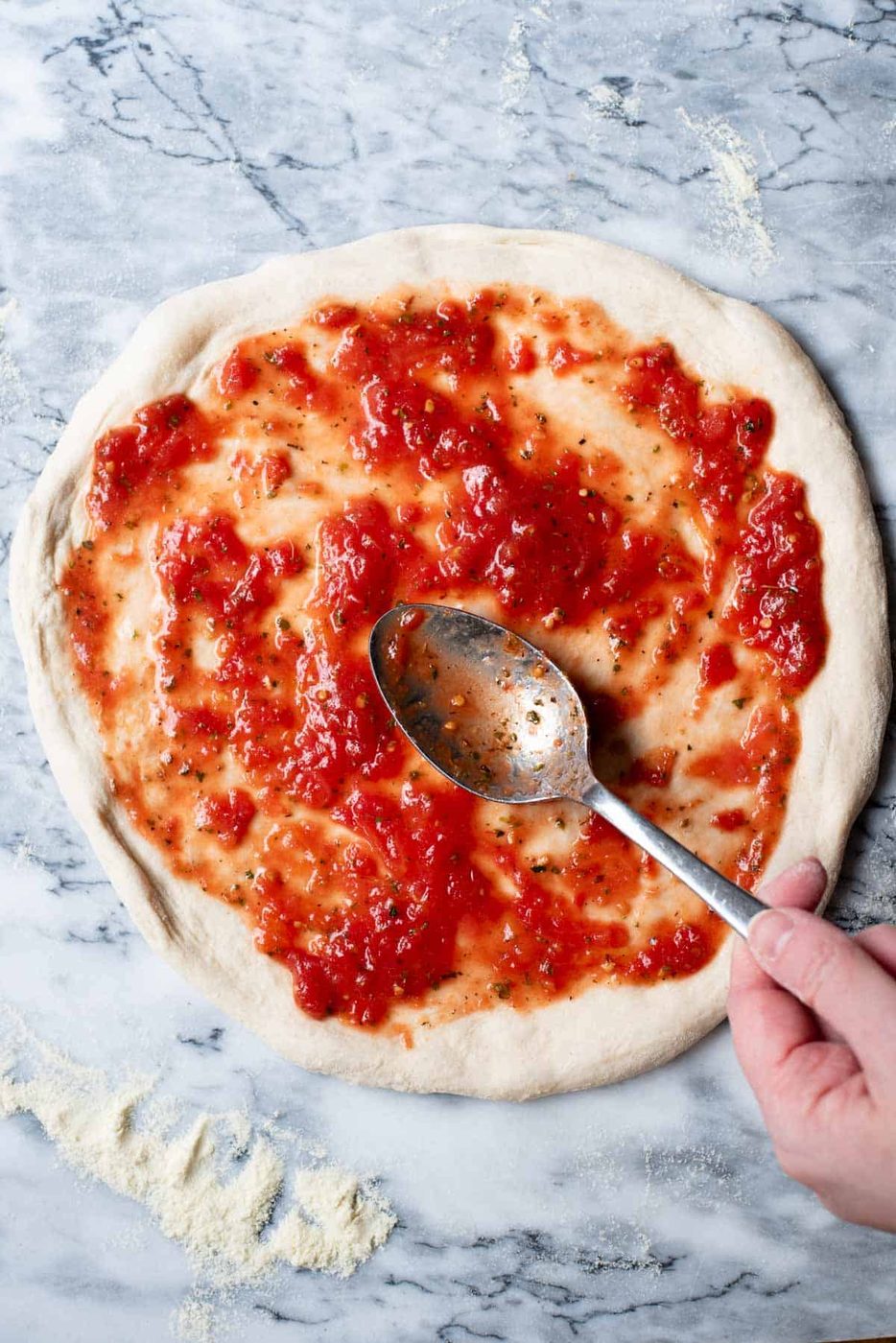
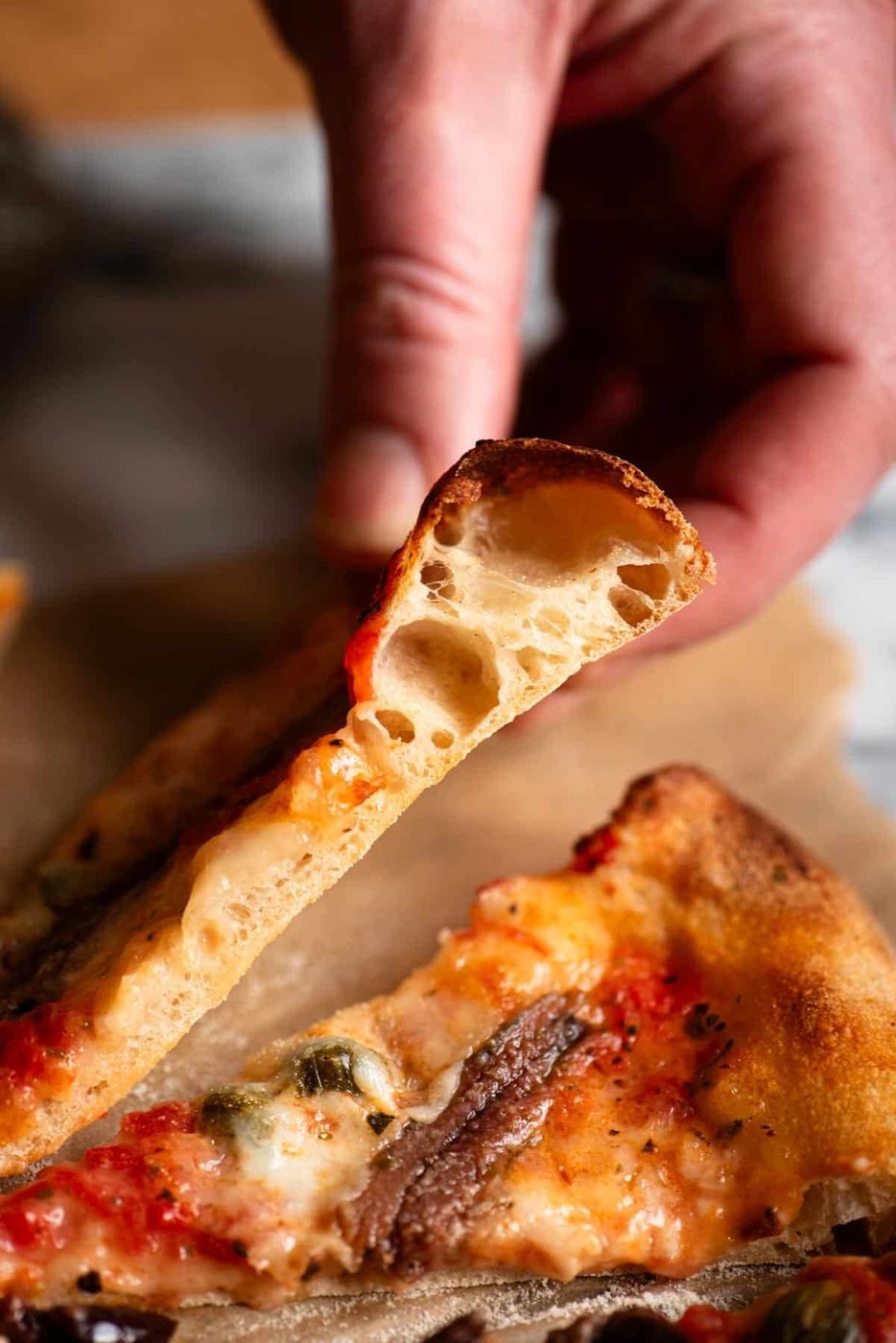
Our new and improved recipe for our Homemade Pizza Dough. This pizza dough is easy to prep with an overnight cold ferment for added flavour and texture. Not only is the dough easy to handle, but it creates the most good light and airy pizzas that you'll love.
Pizza is something we've been making for years, but as with anything, you learn and improve as time goes on, and the recipe we originally posted in 2017 no longer reflected how we make pizza today, so it needed a complete overhaul.
(If you do want the original recipe, you can email us and we'll send it to you.)
We wanted to create a pizza dough that was easy for everyone, so this dough is at 65% hydration (more on that below).
If you make pizzas regularly, then we highly recommend getting yourself a pizza stone or steel and a pizza peel, which makes the pizza-making process a breeze…and so much more fun.
There's a lot of information, so use the TOC below to jump to the section you need or jump straight to the full recipe to get started. Enjoy!
The new and improved dough vs the original
- Minimal yeast – there is a drastic reduction in the amount of yeast we use. We only use 1g or 1/4 teaspoon of instant yeast, which gives the dough a much lighter texture.
- Overnight proof – giving the pizza dough a longer fermentation time overnight not only provides a delicate, airy dough, but it also gives it a chance to develop a lot more flavour.
- No rolling pin – yikes! Yes, this dough uses stretching techniques (and gravity) to shape pizzas, which works well for round pizza or tray pizzas.
Notes on hydration
The higher the hydration of the dough, the airier and lighter the dough will be, but it also becomes a lot more difficult to handle espeically when it comes to pizza.
We find that when you go beyond 65% hydration for pizza dough, you have to be quick in the shaping process, and although that might not be an issue for those with more experience handling dough, we didn't want to use a high hydration as our go-to pizza base since it's not easy for everyone.
We find 65% to be the solid ratio for both shaping the dough and achieving a light, airy and good crust.
Ingredient notes
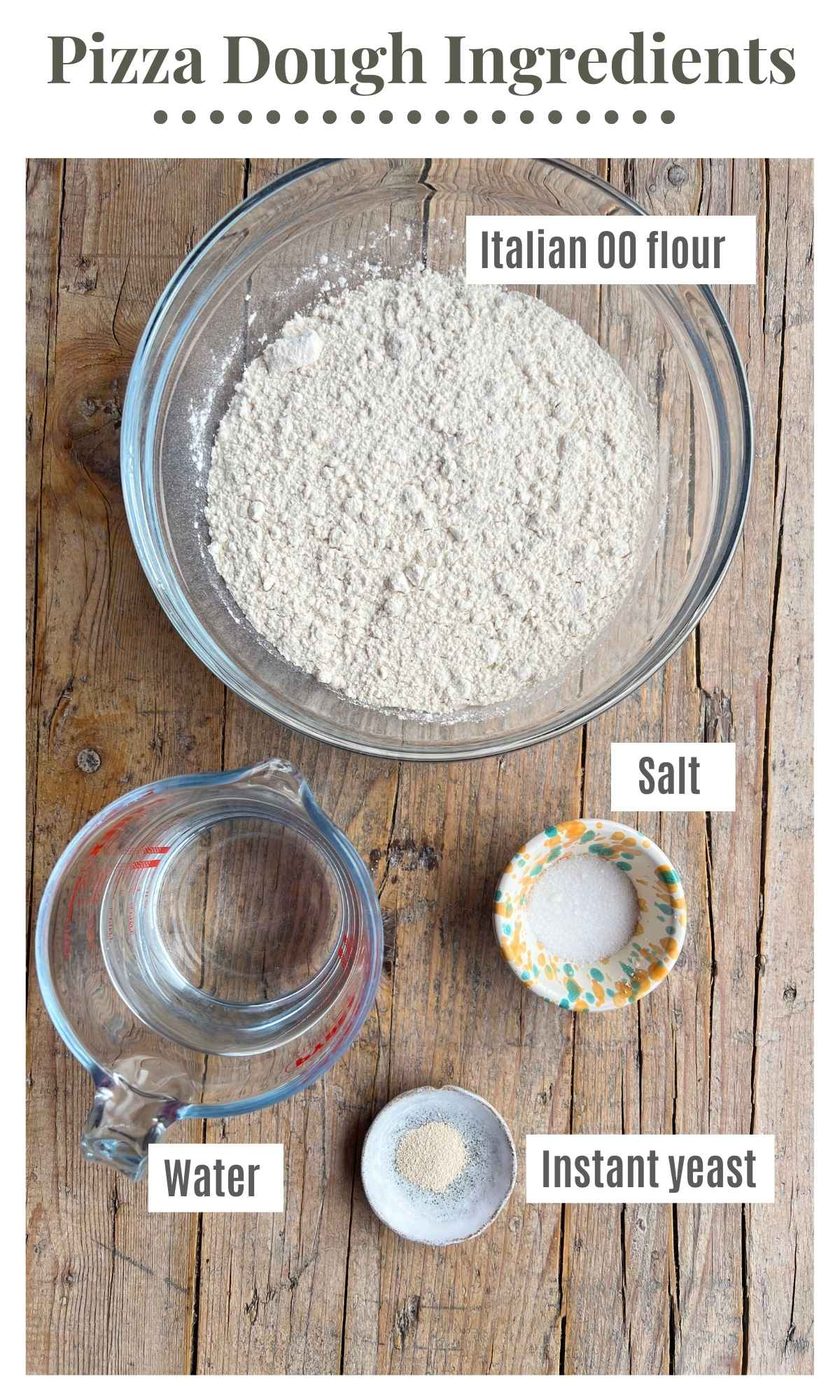
- Flour – living in Italy, we always used Tipo 0 (single zero) flour to make pizza because it's the best flour for making pizzas and was readily available. That being said, we now use Tipo 00 (double zero) flour 100% of the time as it's available in every supermarket. The important thing to look out for is for the flour to have at least 12% protein content.
- Instant yeast – this is yeast that can be incorporated straight into the flour. If you need to activate your yeast in water first, use a little from the recipe.
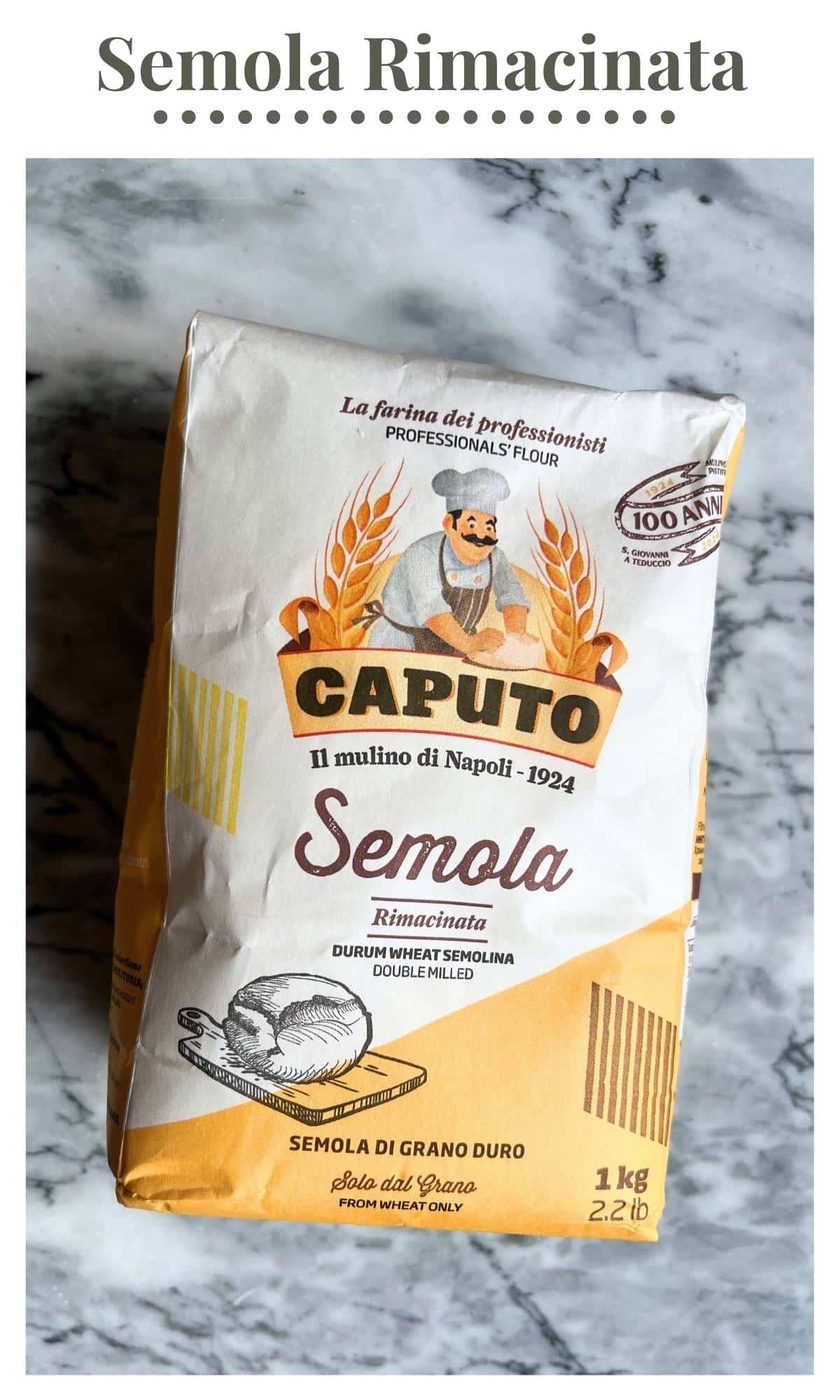
- Semola Rimacinata – We highly recommend using semola to shape your pizza dough before baking for several reasons: it doesn't cling to your hands as flour does, it doesn't absorb into the dough like flour does, and it makes it easy to remove the pizza from the pizza peel. If you use baking trays to bake your pizza, sprinkle some of this on the bottom of the tray too!
Visual walk-through of the recipe
Step 1 – Mix the flour, water and yeast together until a dough has formed. We use a dough hook on a stand mixer, but you can also do this in a bowl with a spoon, then use your hands when it starts to come together (photos 1 and 2).
Cover the bowl with plastic wrap and let it rest for 30 minutes.
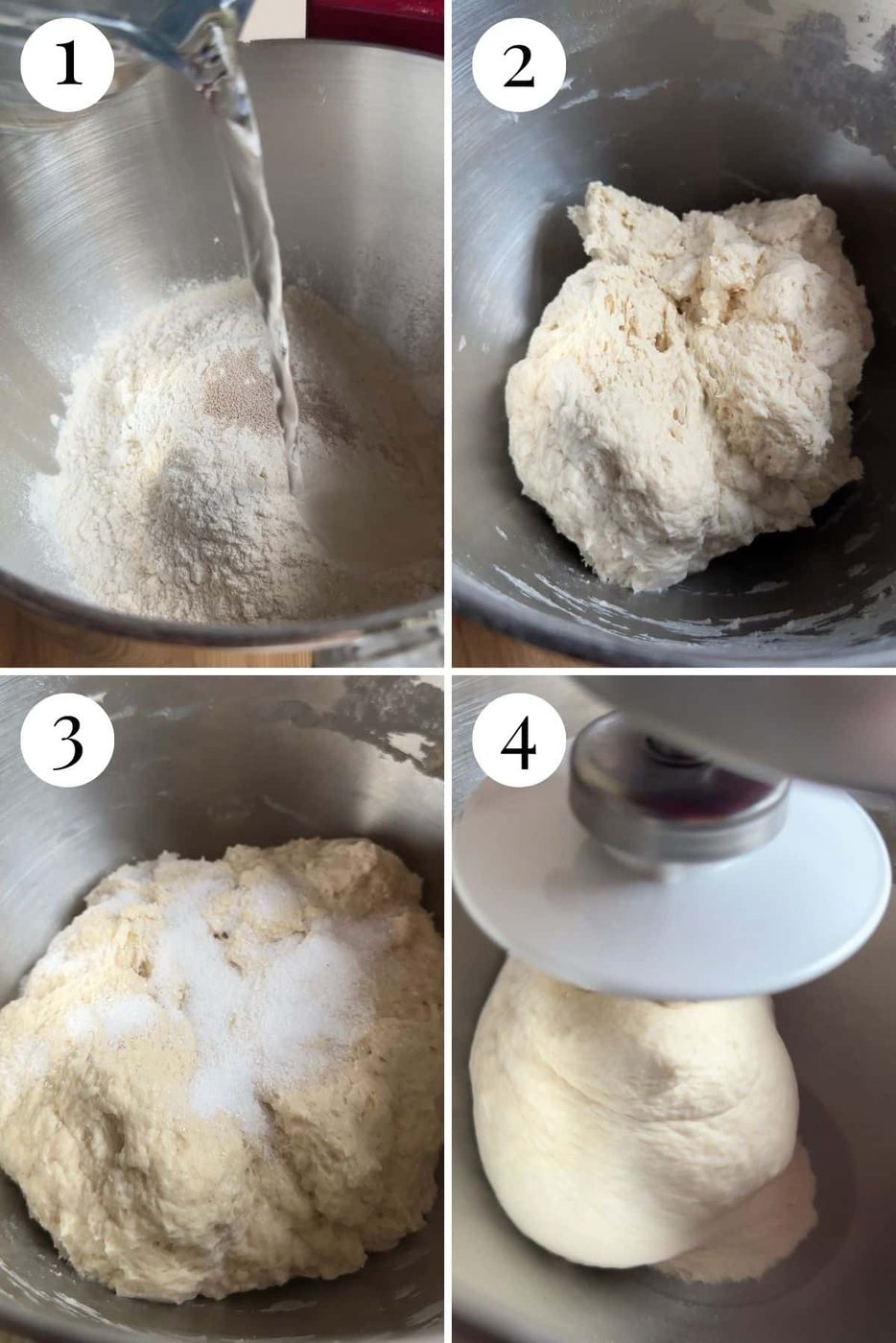
Step 2 – Add the salt and knead again for 10 minutes using a dough hook on a stand mixer or by hand (photos 3-5).
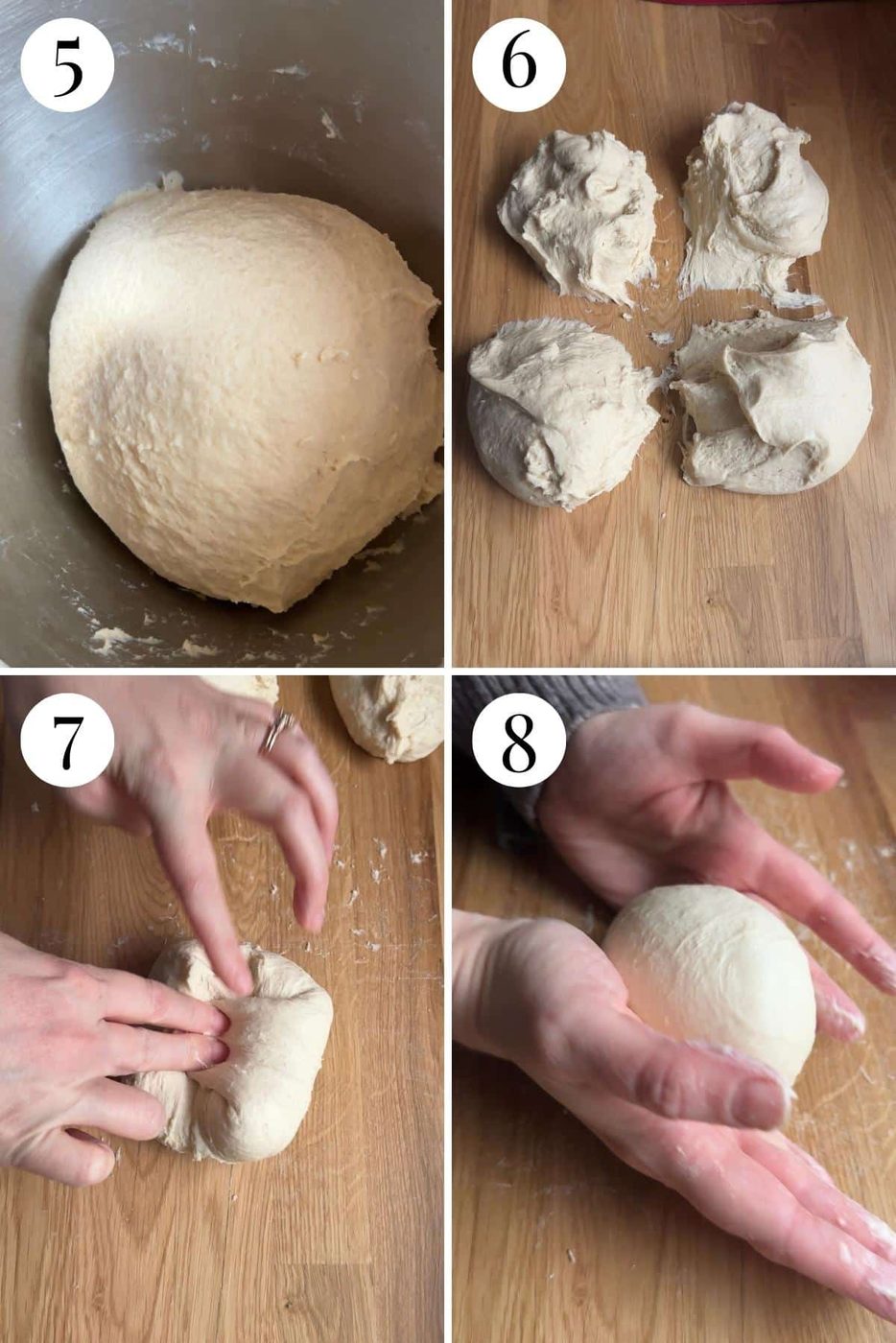
Step 4 – Tip the dough onto a clean work surface and cut it into 4 quarters. We like to weigh our pieces of dough to between 235-240g, but you don't have to do this (photo 6).
Step 5 – Take one piece of dough, gently pull the edges in towards the centre, then turn it over so the seam is underneath. Cup your hands around the dough and gently turn it on the work surface until it forms a smooth ball. Place it in a small bowl, then repeat the process with all 4 pieces of dough, placing them in individual bowls. (photos 7 and 8).
Step 7 – Cover the bowls with plastic wrap (cling film), then place the dough in the fridge to cold ferment for 18 to 48 hours.
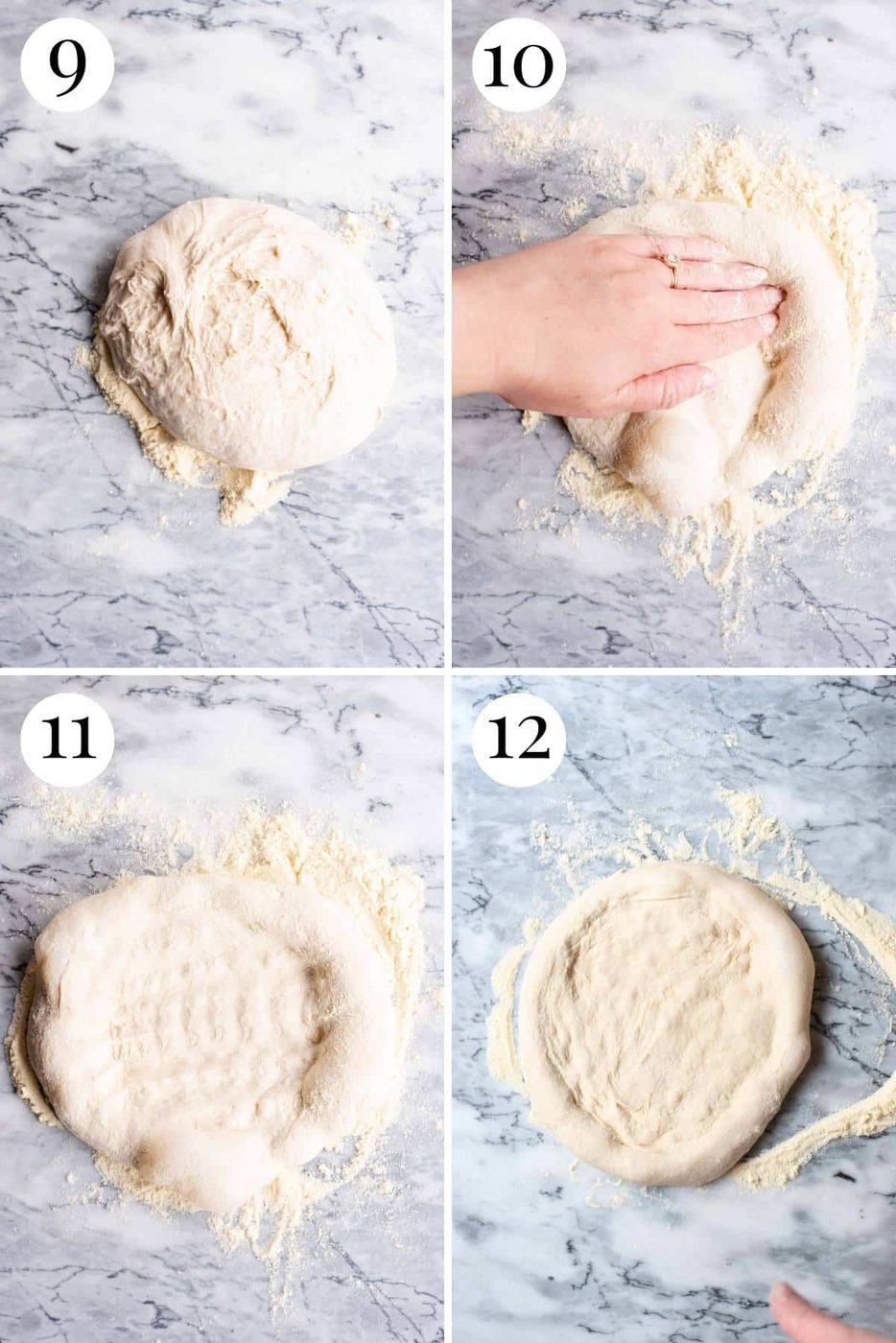
Step 8 – Bring the dough out of the fridge 2-3 hours before baking so it's not too cold. Preheat your oven to the highest temperature it will go. We use a pizza stone, which must be placed in a cold oven and preheated for 45 minutes to 1 hour.
Step 10 – Sprinkle a generous handful of semola flour on a clean work surface and tip one dough ball directly on top of it. Flip it over so both sides are covered in semola. Next press your fingers 1/2 inch away from the edge of the dough to the other side (photos 9-12).
Step 11 – Do this a few times, then stretch the dough gently with turning it in a circle (or use your fists (photos 13 and 14).
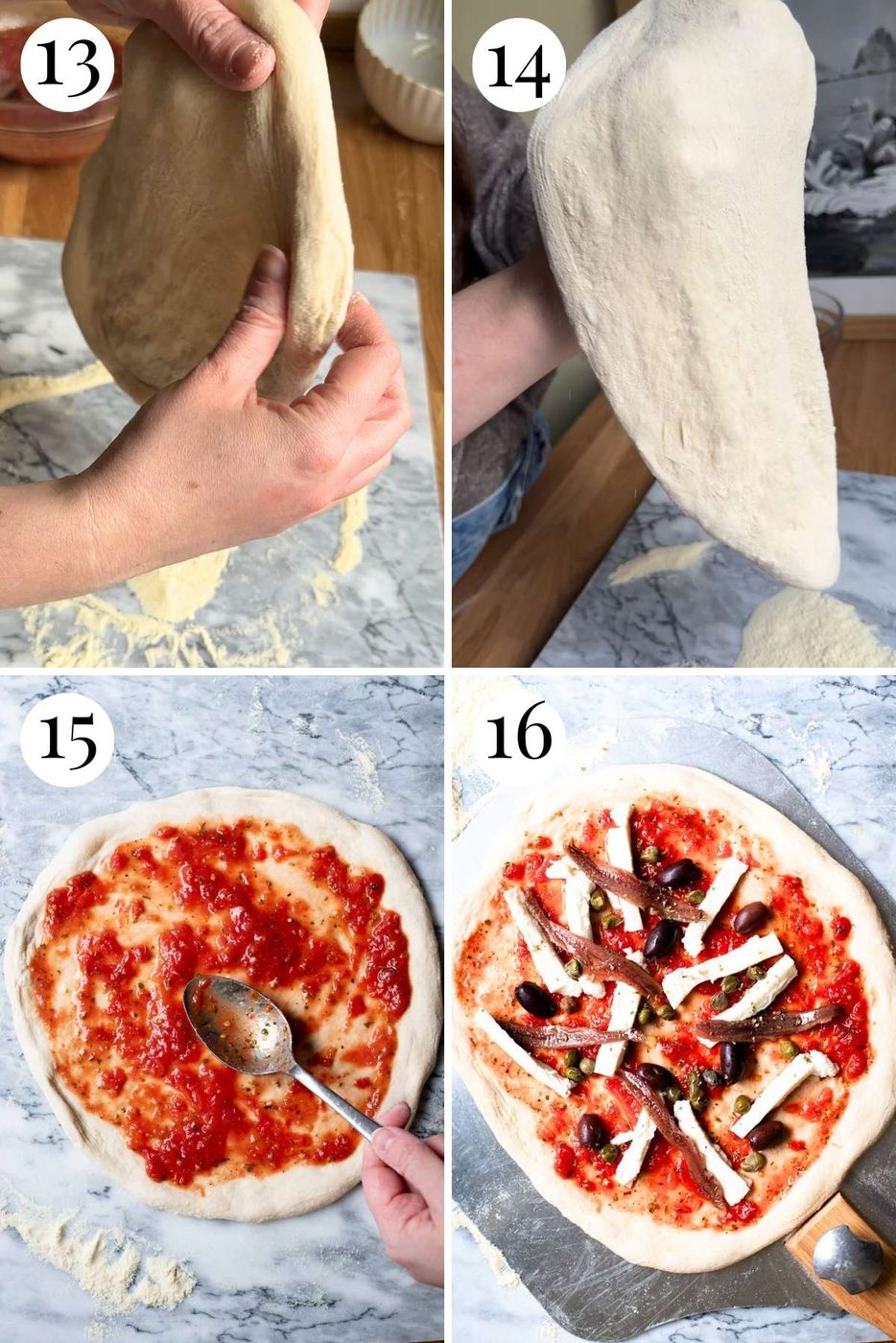
Step 12 – spread tomato sauce over the base of your pizza and add your toppings. Slide the pizza onto your pizza peel and stretch it out slightly. Transfer to the oven and bake for 5-10 minutes until the crust is golden and the cheese melted (photos 15 and 16).
Recipe tips
- Weigh the ingredients – Although we have provided US cup measurements (we measured this myself), we highly recommend using a kitchen scale to weigh both the flour and water. There is so much room for error when using cups to measure flour, so to stay on the safe side and get accurate results, use a kitchen scale.
- Dough consistency – if the dough feels too sticky to handle, you can sprinkle your hands and the dough lightly with flour but try not to add too much. The consistency will vary depending on the brand of flour used (due to water absorption) and the temperature of the room.
- Cook time – this will vary depending on what you use (pizza stone, steel or baking tray) and the temperature of your oven. Our home oven goes up to 270°C (518°F) but also has a pizza setting that adds more heat from the bottom of the oven to help create a crispy base. This setting, along with using a pizza stone, cooks our pizza in 5 minutes, but our previous oven took about 10 minutes.
Kitchen questions
Can we freeze this pizza dough?Yes, it's great for freezing. Do this as soon as you divide the dough into balls (place in a freezer bag or container) and freeze instead of letting it cold ferment in the fridge. Defrost completely and bring it to room temperature before using.
We added the salt straight away, what do we do?Do not worry, skip straight to kneading the dough for 10 minutes and follow the rest of the recipe as written. Although we recommend giving the dough an initial rest before adding the salt for improved texture, you will still have a beautiful dough if you skip this step.
Pizza recipe to try

Pizza
Quattro Formaggi Pizza (Four Cheese)

Pizza
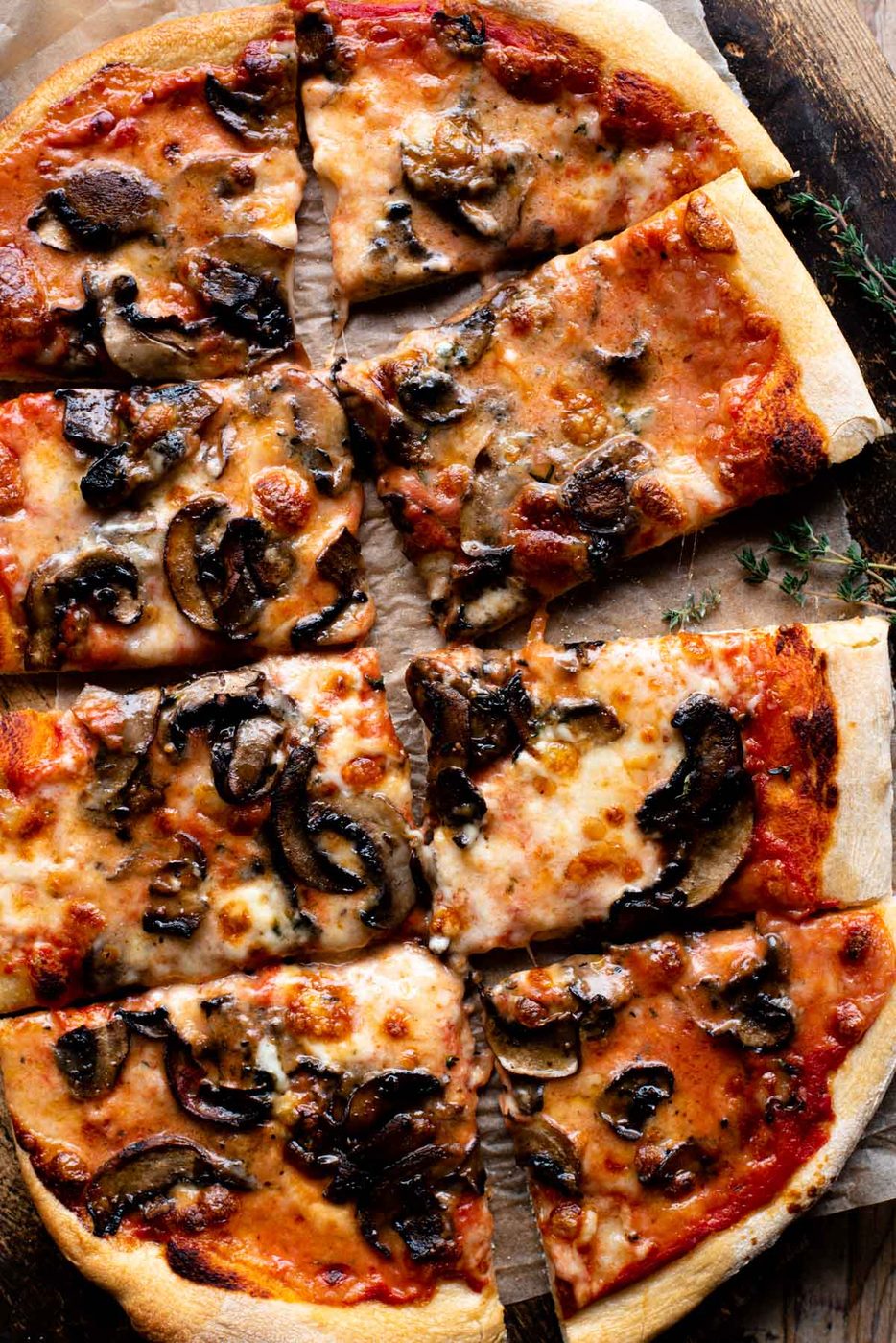
Taleggio Mushroom Pizza

Pizza
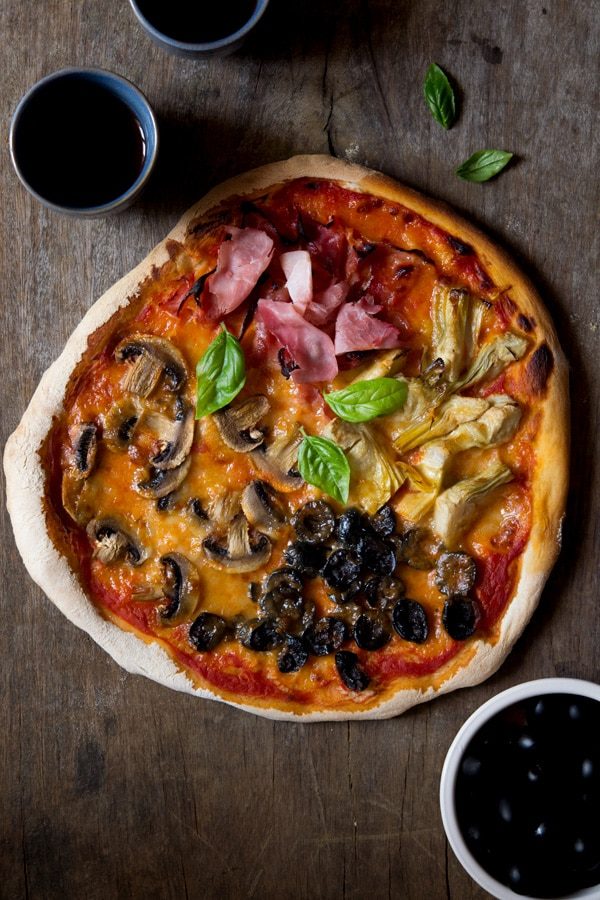
Quattro Stagioni Pizza – Four Seasons Pizza
Pizza