
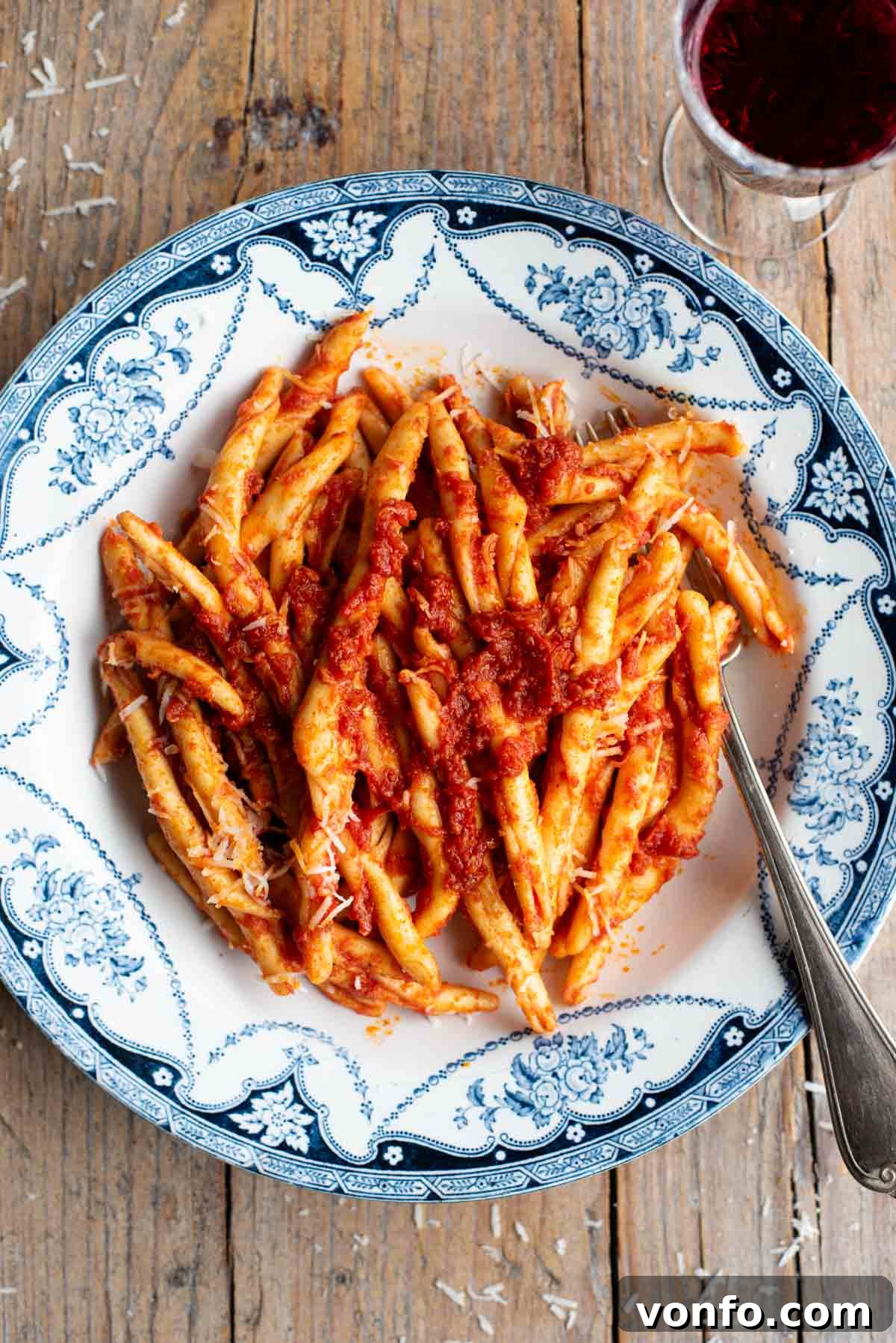
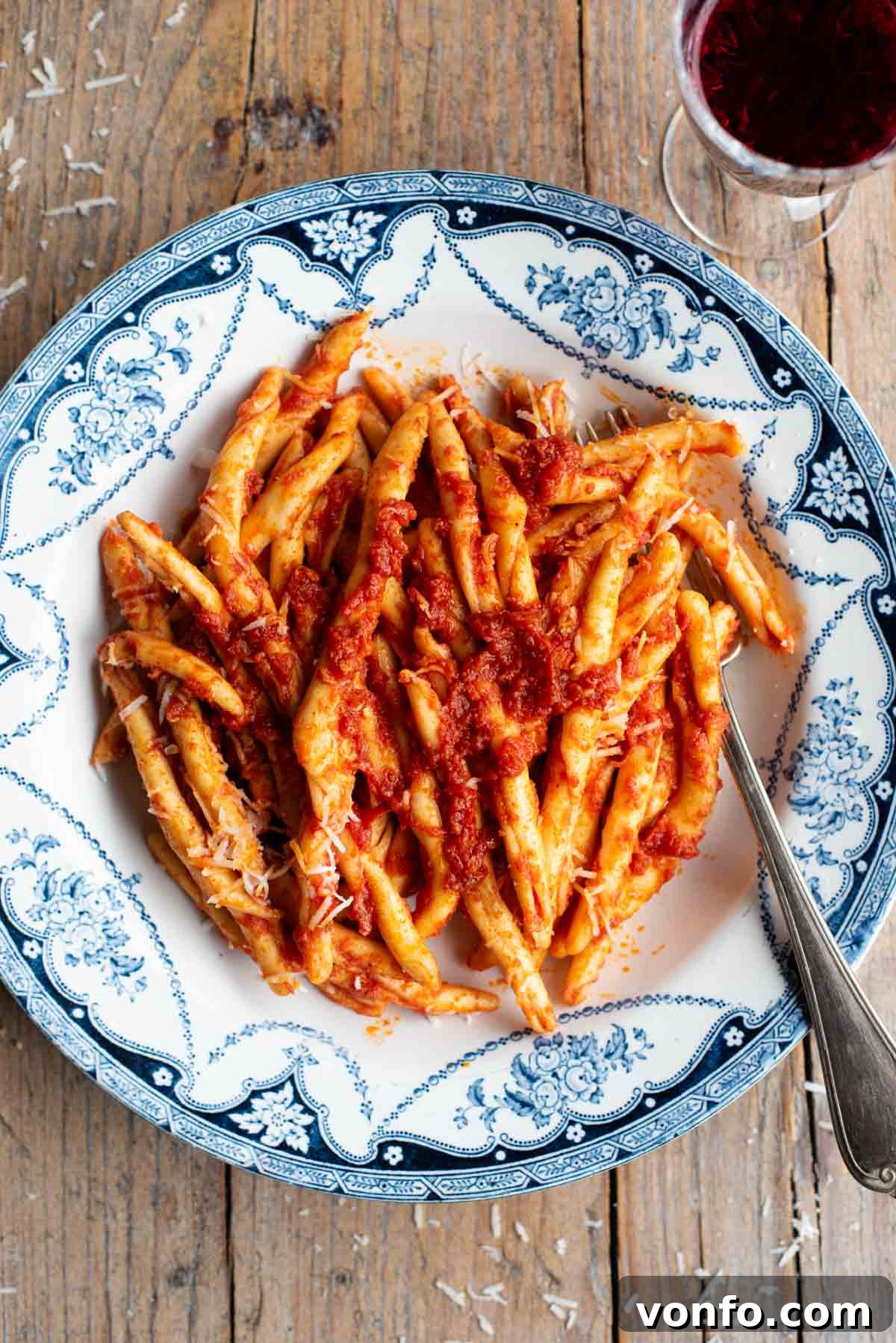
Fileja alla ‘Nduja: A Fiery Taste of Calabria
Embark on a culinary journey to the sun-drenched region of Calabria, Southern Italy, with this incredibly simple yet intensely flavorful pasta dish: Fileja alla ‘Nduja. This recipe celebrates two of Calabria’s most iconic ingredients – the unique Fileja pasta and the famously spicy ‘Nduja sausage. It’s a vibrant, hearty meal featuring twisted Fileja pasta, a rich, spicy tomato sauce infused with melted ‘Nduja, all crowned with a generous sprinkle of Pecorino cheese. This dish is undeniably for those who appreciate a bold kick of heat, offering an authentic taste of Calabrian passion and tradition in every bite.
Calabrian cuisine is renowned for its generous use of chili peppers, a defining characteristic that sets it apart from other Italian regional cooking. ‘Nduja, a spreadable cured sausage, is the epitome of this fiery tradition, packed with a punch that awakens the palate. When combined with the comforting embrace of Fileja pasta and sweet San Marzano tomatoes, it creates a symphony of flavors that is both rustic and refined. Prepare yourself for an unforgettable dining experience that promises warmth, spice, and genuine Italian charm.
Jump to the full printable recipe.
Unveiling Fileja: Calabria’s Twisted Pasta Masterpiece
Fileja pasta is a true testament to Calabrian pasta-making artistry. Unlike many Italian pasta shapes that rely on eggs, Fileja is crafted from a simple yet robust semolina pasta dough made with just durum wheat semolina flour and water. This egg-free composition gives it a firm, chewy texture that is perfect for holding substantial sauces. Its distinctive twisted, elongated shape is achieved by rolling small pieces of dough over a thin metal rod, traditionally called a Danaco or Dinacolo. This ancient technique imparts a unique structure with grooves and ridges, allowing the pasta to expertly capture and cling to rich, flavorful sauces, making it an ideal companion for a robust meat ragù or, in this case, a spicy ‘Nduja sauce.
The tradition of making Fileja by hand has been passed down through generations in Calabrian families. The process, while seemingly simple, requires skill and practice to achieve the perfect twist and length, ensuring an even cook and optimal sauce adherence. While homemade Fileja offers an unparalleled authentic experience, quality dried Fileja can also be found in specialty Italian markets. If Fileja proves difficult to source, don’t despair; other short, sturdy pasta shapes like penne, fusilli, or rigatoni can serve as excellent substitutes, providing a similar mouthfeel and surface area for the sauce to embrace.
The Allure of ‘Nduja: Calabria’s Spicy Secret Weapon
One of the most traditional and beloved ways of serving Fileja in its native Calabria is with a gloriously spicy and utterly delicious ‘Nduja sauce. ‘Nduja (pronounced ‘en-doo-yah’) is a revelation for anyone who loves robust, spicy flavors. Originating from the town of Spilinga in Calabria, it’s a unique type of cured, spreadable pork sausage, deeply crimson in color due to the generous addition of Calabrian chili peppers.
This remarkable sausage is made from various cuts of pork (often fatty ones), finely minced and combined with a potent mix of locally grown Calabrian chilies, which are responsible for its distinctive heat and vibrant hue. The mixture is then stuffed into natural casings and allowed to ferment and cure, developing its complex flavor profile and characteristic soft, spreadable texture. This unique quality makes ‘Nduja incredibly versatile; it melts beautifully when heated, releasing its intense flavors and transforming into a luxurious, spicy oil that forms the perfect base for sauces, spreads, or even topping pizzas.
Over the past few years, ‘Nduja has soared in popularity beyond Italy’s borders, becoming increasingly available in gourmet food stores and even many larger supermarkets across the UK and North America. Its growing fan base is a testament to its unparalleled flavor and ability to elevate countless dishes. We often feature it in our kitchen, adding a delightful kick to various recipes:
- Roasted Cherry Tomato Spaghetti with Burrata and Nduja
- Nduja Pizza
- Scallops with ‘Nduja Garlic Butter
While all these dishes showcase the brilliance of ‘Nduja, this Fileja alla ‘Nduja recipe truly highlights its spicy character, making it, by far, one of the spiciest and most authentic ways to enjoy this Calabrian gem. If you’re a connoisseur of heat, this dish will quickly become a favorite. If spicy dishes aren’t your preference, this might not be the recipe for you, but for the adventurous palate, it’s an absolute must-try!
This particular recipe uses a slightly reduced amount of ‘Nduja compared to traditional Calabrian preparations, primarily because we find the traditional quantity to be intensely hot! However, the beauty of cooking lies in personal preference, so feel free to adjust the amount of ‘Nduja to suit your desired level of spice. Enjoy the fiery flavors of Calabria!
Explore the full recipe below, including detailed notes on ingredients, step-by-step photos for easy guidance, and helpful tips for perfect results. For a printable version, scroll to the bottom or click the recipe link.
Key Ingredients for Fileja alla ‘Nduja
Crafting this spicy Calabrian pasta requires a few high-quality ingredients that truly make the dish shine. Each component plays a vital role in creating the perfect balance of heat, richness, and texture.
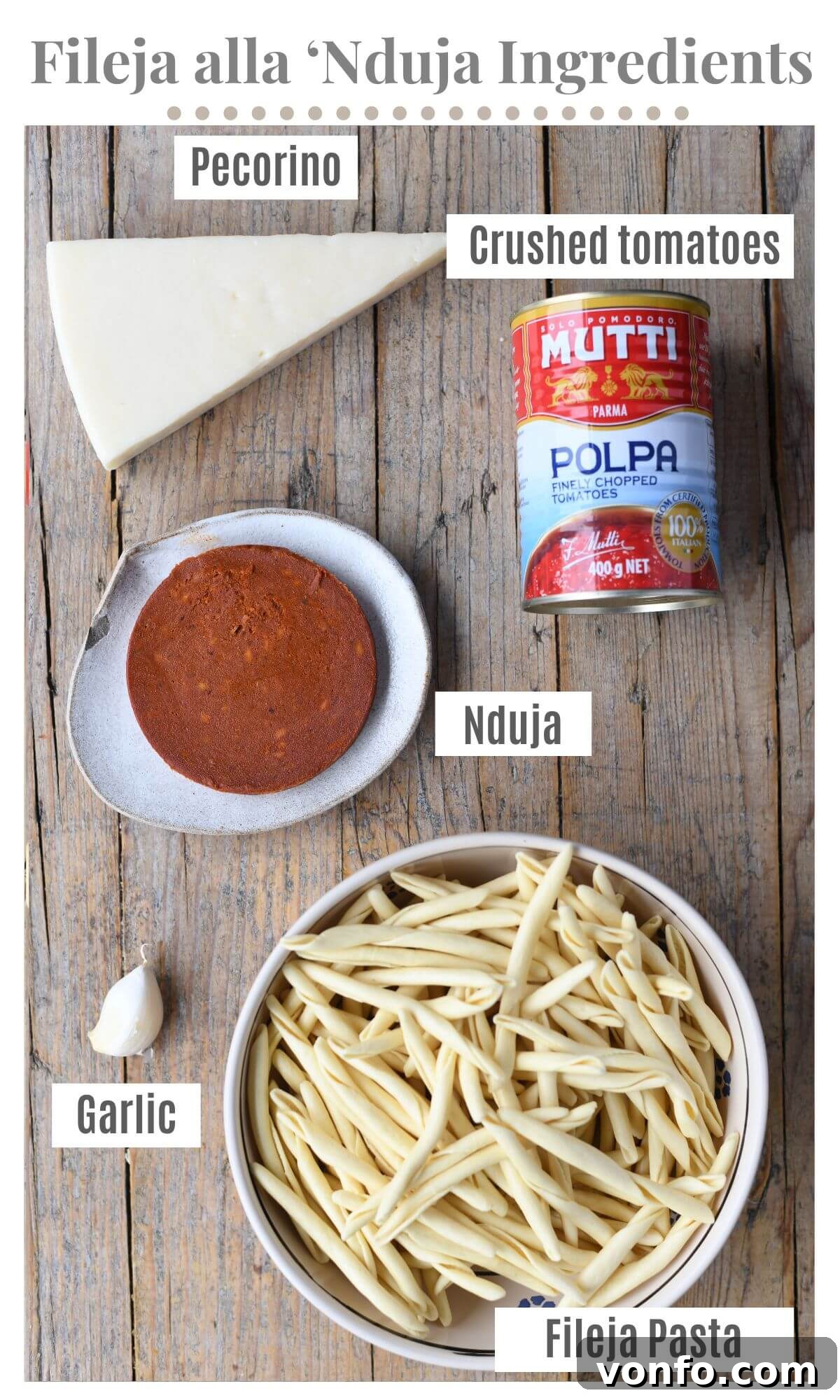
Ingredient Notes and Expert Substitutions
- Fileja – As discussed, Fileja is a traditional Calabrian pasta shape. While highly recommended for authenticity, it can be challenging to find outside of Italy or specialty Italian delis. If you can’t get your hands on Fileja, don’t worry! I suggest using another short, robust pasta shape that can handle a hearty sauce. Penne is an excellent alternative, as its ridged surface and tubular shape trap the spicy ‘Nduja sauce beautifully. Other good options include fusilli, rigatoni, or even a wide, flat pasta like pappardelle if you prefer a different texture.
- ‘Nduja – The star of the show! This spicy, cured, and spreadable sausage is non-negotiable for an authentic Fileja alla ‘Nduja. Its unique texture means it melts into the sauce, infusing it with unparalleled depth and heat. You should be able to find quality ‘Nduja in Italian food stores, specialty delis, or through online retailers specializing in Italian products. In the UK, it has become quite popular and is now available in most larger supermarkets. Always opt for ‘Nduja in its natural casing rather than jars if possible, as the quality and flavor tend to be superior.
- Tomatoes – For this recipe, I find that Mutti Polpa (finely crushed tomatoes) delivers the best results. Mutti is a premium Italian brand known for its high-quality tomato products, and their Polpa offers a vibrant, fresh tomato flavor without being too watery or too chunky. Canned whole plum tomatoes, especially San Marzano, are also an excellent choice; simply crush them by hand before adding them to the sauce. While you could technically use passata (tomato puree), be aware that it will yield a thicker, richer, and somewhat heavier sauce, which might overpower the delicate balance of the ‘Nduja.
- Garlic – A single whole, peeled garlic clove is gently sautéed to infuse the olive oil with its aromatic essence without overwhelming the sauce. This subtle approach allows the ‘Nduja and tomato to remain the main protagonists.
- Pecorino Cheese – For serving, Pecorino Romano is the traditional choice. Its sharp, salty, and tangy flavor profile provides a fantastic counterpoint to the heat of the ‘Nduja. Freshly grated is always best.
- Olive Oil & Salt – Essential staples for any Italian dish. Use a good quality extra virgin olive oil for sautéing and seasoning.
Step-by-Step Photos and Detailed Instructions
Making Fileja alla ‘Nduja is surprisingly straightforward, relying on simple techniques to build incredible flavor. Follow these steps for a perfect spicy Calabrian pasta.
- Cook Your Pasta to Perfection – Begin by bringing a large pot of water to a rolling boil. Don’t forget to salt it generously – the water should taste like the sea! Add your Fileja pasta (or chosen short pasta shape) and cook according to package instructions until it reaches a perfect al dente texture. The pasta sauce itself cooks relatively quickly, taking about 10-12 minutes, so try to time your pasta cooking to finish around the same time as your sauce. Alternatively, you can prepare the sauce first, then cook your pasta, and gently reheat the sauce as needed, adding a splash of pasta water to loosen it. Remember, al dente is key for Italian pasta – it should be firm to the bite, not mushy.
- Infuse the Olive Oil with Garlic – In a large, heavy-bottomed pan or skillet, add a generous drizzle of good quality extra virgin olive oil (about 2-3 tablespoons). Place the whole, peeled garlic clove into the cold oil, then turn the heat to medium-low. Gently sauté the garlic for 1-2 minutes until it becomes fragrant and slightly golden. The goal here is to infuse the oil with a subtle garlic aroma, not to brown or burn the garlic, which would make it bitter. Once fragrant, you can remove the garlic clove if you prefer a milder flavor, or leave it in for an extra punch. (Photo 1)
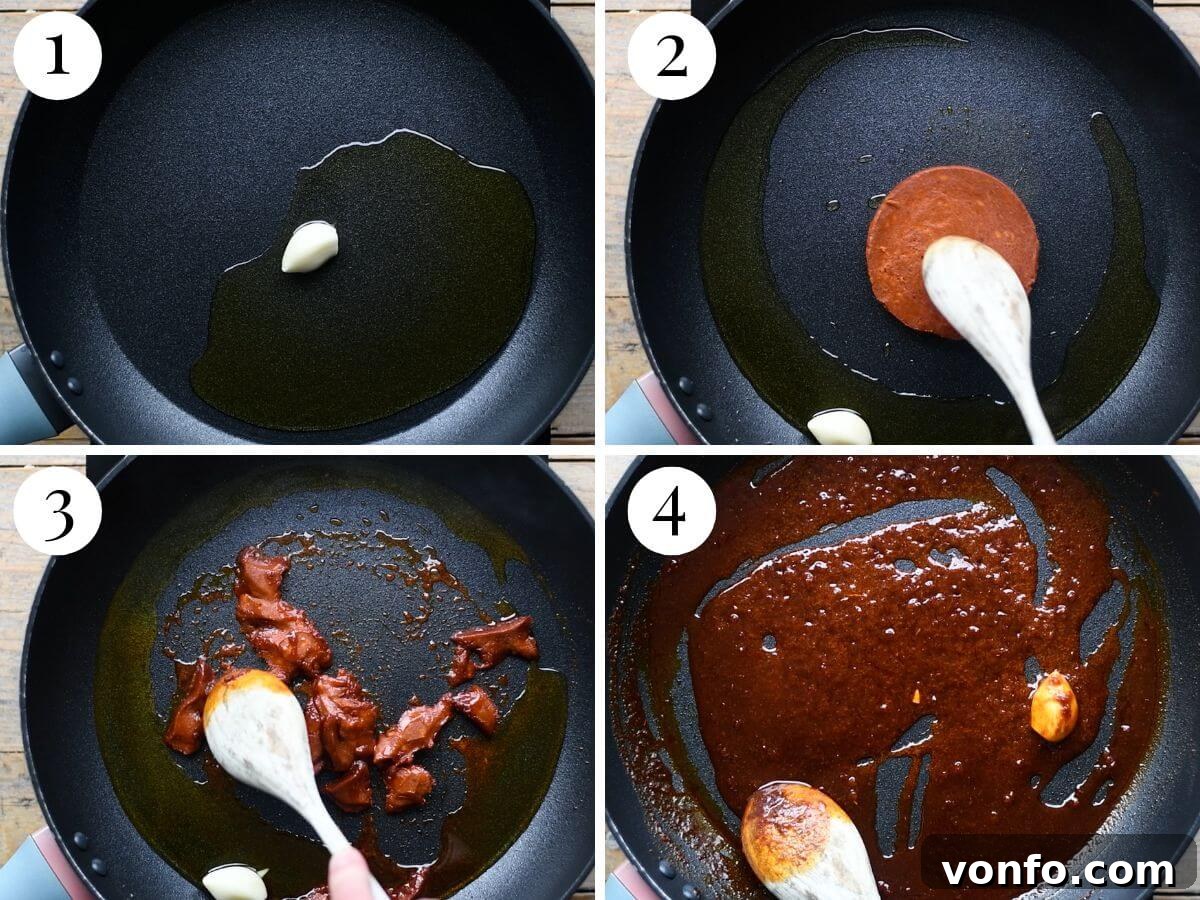
- Melt the ‘Nduja into the Sauce Base – Once the garlic has done its job, add the ‘Nduja sausage to the pan with the infused olive oil. Break it up slightly with the back of a spoon or spatula. Allow the ‘Nduja to cook gently over medium heat, stirring occasionally, until it completely melts down and emulsifies with the olive oil, forming a vibrant, glossy, red-orange base. This usually takes 2-4 minutes. You’ll see the oil turn a beautiful chili-infused color, and the kitchen will fill with an intoxicating spicy aroma. (Photos 2-4)
- Simmer the Tomato Sauce to Develop Flavor – Now, pour in the crushed tomatoes. Add a small pinch of salt to balance the flavors. Bring the sauce to a gentle simmer, then reduce the heat to low and let it cook for at least 10 minutes. During this time, the flavors will meld and deepen, and the sauce will slightly darken in color, indicating its richness. Stir occasionally to prevent sticking. This simmering step is crucial for allowing the ‘Nduja’s complex spice to fully integrate with the sweetness of the tomatoes. (Photos 5-7)
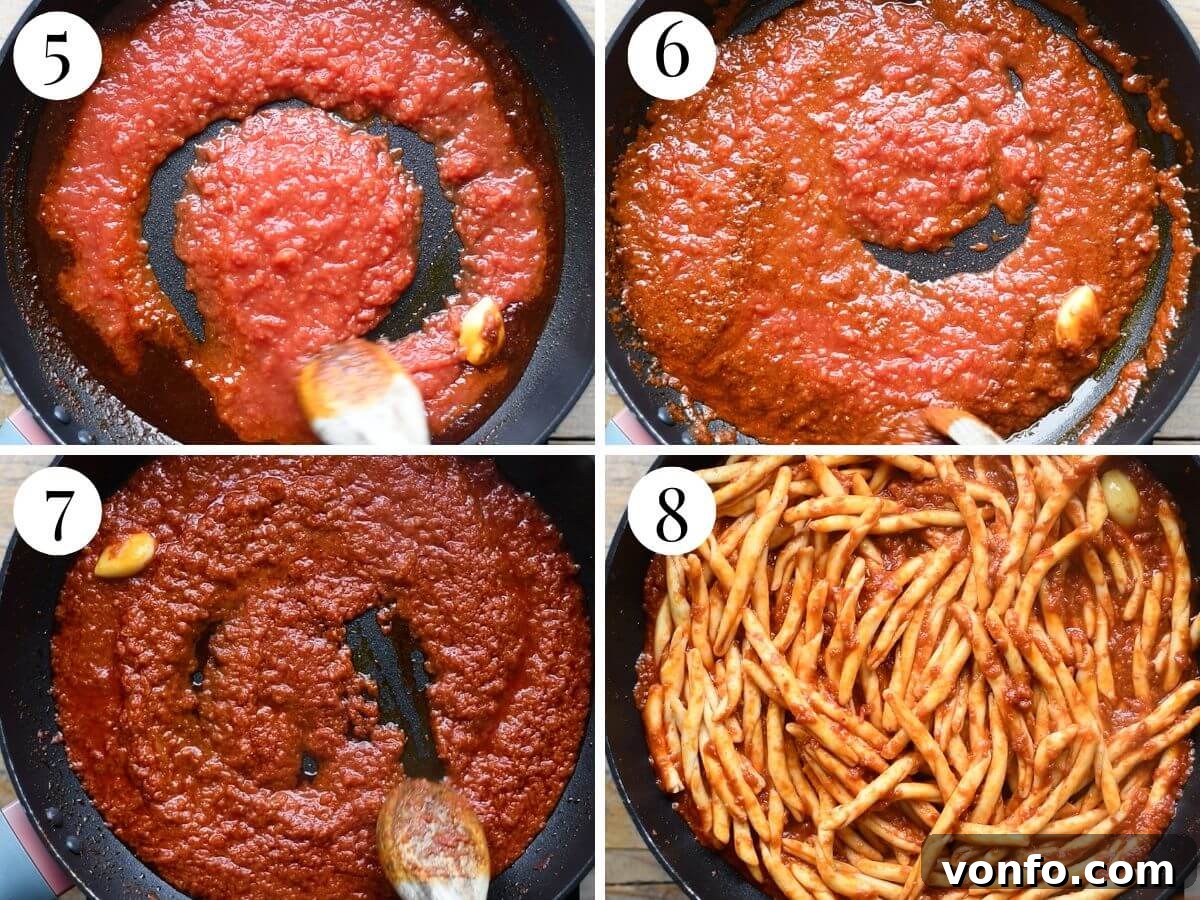
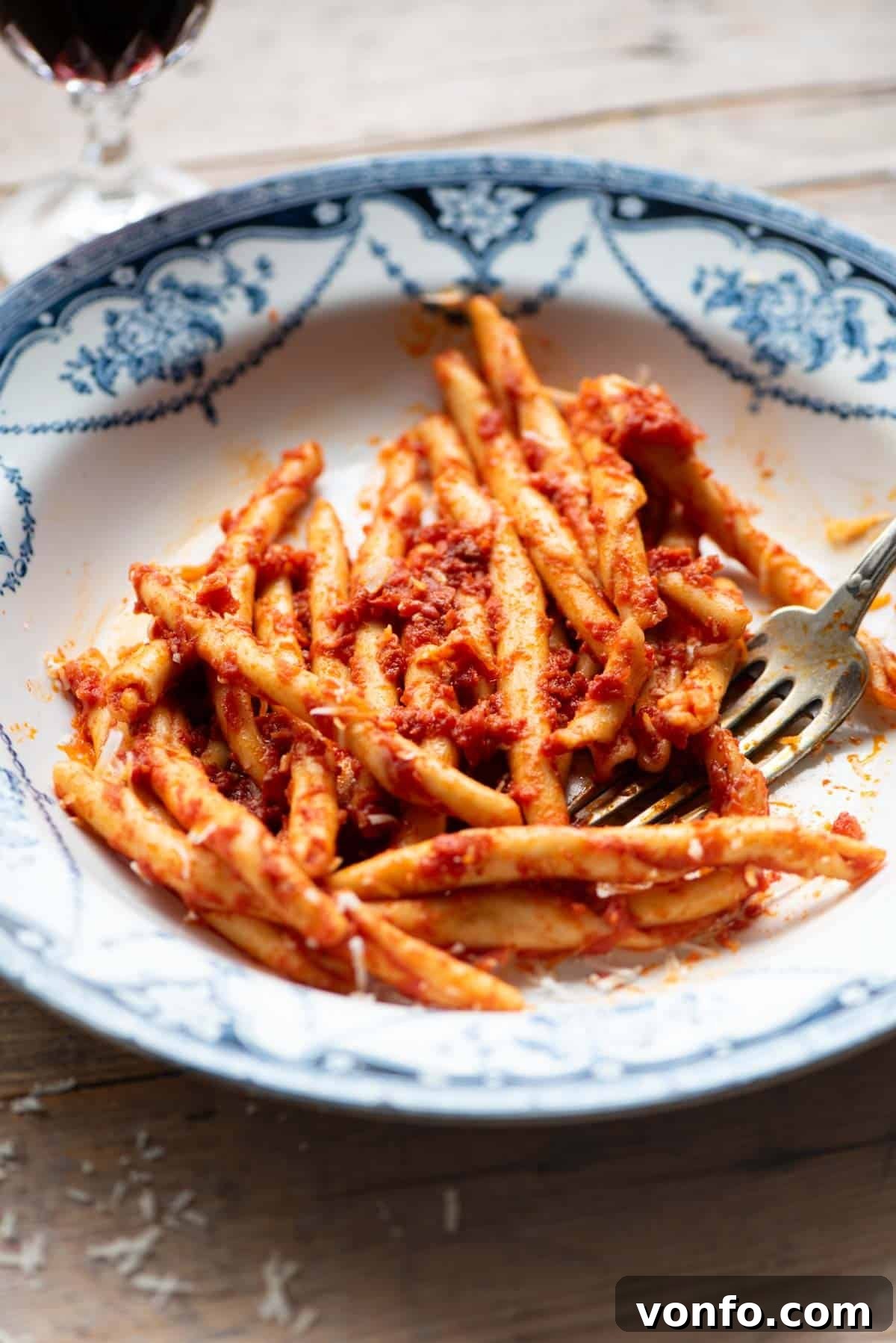
- Combine Pasta with Sauce and Serve – Once your pasta is al dente, drain it, reserving about a cup of the starchy pasta cooking water. Transfer the cooked pasta directly into the pan with the simmering ‘Nduja tomato sauce. Toss vigorously, using tongs, to ensure every strand of Fileja is thoroughly coated in the rich, spicy sauce. If the sauce seems too thick, add a splash or two of the reserved pasta water, a tablespoon at a time, to help create a silky, emulsified sauce that perfectly clings to the pasta. Serve immediately in warm bowls, topped generously with freshly grated Pecorino cheese. A final drizzle of extra virgin olive oil can also enhance the flavors. (Photo 8)
Expert Recipe Tips & Flavor Variations
- ‘Nduja Varieties and Quality – ‘Nduja comes in various forms, from larger, whole sausages to pre-packed portions. Ideally, seek out ‘Nduja sold in its natural casing, often found in Italian delis or online specialty stores. If possible, avoid ‘Nduja sold in jars, as its texture and intense flavor profile might not be as authentic or robust as the traditionally cured product. The quality of your ‘Nduja will significantly impact the final dish.
- Mastering the Heat Level – Traditional Calabrian recipes often call for around 100g (3.5oz) of ‘Nduja for a sauce of this size. However, this can result in a seriously intense level of spice that might be overwhelming for some. We’ve found that 70g (2.5oz) provides a fantastic, fiery kick without completely blowing your socks off, striking a good balance for most palates. Feel free to adjust this quantity based on your personal preference for heat. If you’re sensitive to spice, start with even less and add more to taste. A tiny pinch of sugar can also help to balance the chili heat if desired.
- Pasta Shape Alternatives – While Fileja is the traditional choice and highly recommended, it can be hard to source. If you’re unable to find it, any short, sturdy pasta shape will work wonderfully. Penne is a personal favorite for this sauce due to its ridges and ability to scoop up the rich sauce. Other excellent choices include fusilli, rigatoni, or even orecchiette, which are perfect for capturing chunky sauces. The key is a pasta that offers good texture and surface area.
- Adding Fresh Herbs – Some variations of this recipe incorporate fresh basil leaves stirred in at the very end or as a garnish. While basil’s sweetness can offer a lovely contrast to the spice, I personally believe the dish shines brightest without it, allowing the pure flavors of ‘Nduja and tomato to dominate. However, if you’re a basil lover, a few torn leaves added right before serving would be a delightful addition. Fresh parsley is another option for a lighter, herbaceous note.
- Perfecting the Sauce Consistency – Don’t be shy about using reserved pasta water. The starch in the water helps to emulsify the sauce, creating a glossy, silky texture that beautifully coats the pasta. Add it gradually, a tablespoon at a time, until your sauce reaches the desired consistency.
- Serving Suggestions – This intensely flavored pasta pairs wonderfully with a simple side salad dressed with a light vinaigrette to cut through the richness. Crusty Italian bread is also a must for soaking up any leftover sauce.
- Storing Leftovers – The pasta sauce, separated from the pasta, will keep well in an airtight container in the fridge for up to 3 days. Reheat gently on the stove, adding a splash of water or broth if needed to loosen. If you have leftover pasta already mixed with sauce, it’s best consumed within 1-2 days, as the pasta can absorb too much liquid and become mushy. It can be reheated or enjoyed at room temperature.
Discover More Delicious Calabrian Recipes
Calabria is a region rich in culinary heritage, known for its bold flavors and simple, honest ingredients. If you’ve enjoyed the fiery embrace of Fileja alla ‘Nduja, you’ll love exploring other traditional dishes from this vibrant part of Italy. Here are a few more authentic Calabrian recipes to inspire your cooking adventures:
Explore the Flavors of Southern Italy
Sides
Pipi e Patati (Calabrian Peppers and Potatoes)
Sides
Peperoni Ammollicati (Peppers and Breadcrumbs)
Antipasti
Italian Tuna Stuffed Cherry Peppers
Pasta
Orecchiette with ‘Nduja Sugo
If you’ve tried this Fileja alla ‘Nduja recipe or any other recipe on the blog, please don’t forget to rate the recipe and let me know how you got on in the comments below – I love hearing from you! You can also follow us on Facebook, Instagram, and Pinterest, or sign up for our Newsletter to discover more of our delicious food.
Fileja alla ‘Nduja (Spicy Calabrian ‘Nduja Pasta)
By Emily
Prep Time: 2 mins
Cook Time: 12 mins
Total Time: 14 mins
Servings: 4 servings
Pin Recipe | Print Recipe
Fileja alla ‘Nduja is a super simple and delicious spicy pasta dish. It’s made with traditional Fileja pasta, spicy ‘Nduja sausage, tomato, and topped with Pecorino cheese. This is for those who can handle the heat!
Ingredients
- 14 oz (400g) Fileja pasta (or a short pasta shape such as Penne)
- 2.5 oz (70g) ‘Nduja
- 14 oz (400g) canned crushed tomatoes (we used Mutti Polpa)
- 1 garlic clove, whole and peeled
- Pecorino, for serving
- Olive oil
- Salt
Instructions
-
Bring a large pot of water to a boil and salt it well. Add your pasta and cook until al dente.
-
Meanwhile, add around 2 tablespoons of olive oil to a large pan. Saute the whole peeled clove of garlic for a minute or two until fragrant.
-
Add the ‘Nduja and let it melt. Once melted and bubbling add the tomatoes with a small pinch of salt and let the sauce simmer for 10 minutes.
-
Transfer the cooked pasta to the sauce and toss it until evenly coated in the sauce. Reserve a little pasta water to loosen the sauce if needed.
-
Serve in bowls topped with plenty of Pecorino cheese.
Notes
- ‘Nduja varieties – ‘Nduja is packaged in different shapes and sizes. If possible, avoid ‘Nduja sold in jars as it’s just not the same.
- Heat level – Traditionally 100g (3.5oz) of ‘Nduja is added to the sauce. We find 70g (2.5oz) to be a good amount (still very hot without being overpowering!). Adjust to personal preference.
- Pasta shapes – If Fileja is hard to find, use another short shape like Penne, fusilli, or rigatoni.
- Adding herbs – Some variations add fresh basil or parsley at the end, but we don’t think it’s necessary for this robust dish.
- Leftovers – The pasta sauce will keep well in the fridge for up to 3 days. Pasta mixed with sauce is best within 1-2 days.
Helpful Info for All Recipes
- I always use extra virgin olive oil in all of my recipes unless stated otherwise.
- When I use canned or jarred tomatoes of any kind I always use Cirio or Mutti brands for the best results and flavor.
- All vegetables are medium sized unless stated otherwise.
- All recipes are tested and developed using a fan (convection) oven.
- Find out more about how nutrition is calculated.
- Check out our must-have Italian Pantry Staples.
- You can also find all our Essential Kitchen Tools for Italian Cooking.
Nutrition
Calories: 538kcal | Carbohydrates: 79g | Protein: 17g | Fat: 18g | Saturated Fat: 4g | Polyunsaturated Fat: 3g | Monounsaturated Fat: 9g | Trans Fat: 0.1g | Cholesterol: 97mg | Sodium: 152mg | Potassium: 538mg | Fiber: 5g | Sugar: 6g | Vitamin A: 365IU | Vitamin C: 13mg | Calcium: 74mg | Iron: 3mg
Nutrition information is automatically calculated, so should only be used as an approximation.
Did you try this recipe?
Leave a comment below!