Golden Italian Dough Puffs

    • Activating the yeast: Ensure your yeast is active. If your specific yeast type requires proofing, add it to a small amount of the warmed milk for 5-10 minutes until it becomes foamy before combining with the flour.
    • Proving the dough: Always allow your dough to rise in a warm, draft-free spot at room temperature. This ensures an optimal environment for the yeast to work and for the dough to achieve its desired light and airy texture.
    • Use a thermometer: Precision is key for frying. Employ a kitchen thermometer to accurately monitor and maintain the oil temperature at 180°C (350°F). Fry in small batches to prevent the oil temperature from dropping and ensure even cooking and perfect crispness.
    • Use a kitchen scale: For consistent and accurate baking results, always use a kitchen scale when measuring flour and other dry ingredients. Measuring cups can vary significantly in accuracy, leading to inconsistent outcomes.
    • Storage: Gnocco Fritto are best enjoyed immediately after frying, when they are at their crispiest. However, any leftovers can be stored in an airtight container at room temperature for 1-2 days. The raw dough itself can be stored in the fridge for 1-2 days before frying or can be frozen for longer periods. If frozen, defrost it in the fridge overnight before bringing it to room temperature and proceeding with the recipe.
Helpful Info for All Recipes

  • I always use extra virgin olive oil in all of my recipes unless stated otherwise. Its robust flavor enhances many Italian dishes.
  • When I use canned or jarred tomatoes of any kind, I exclusively recommend Cirio or Mutti brands. Their superior quality ensures the best results and authentic flavor in your cooking.
  • All vegetables mentioned in our recipes are typically medium-sized unless specifically stated otherwise, providing a consistent reference for quantities.
  • All recipes published here are carefully tested and developed using a fan (convection) oven, which may require slight temperature or time adjustments if you are using a conventional oven.
  • Find out more about how nutrition is calculated for our recipes, providing transparency about the dietary information.
  • Check out our comprehensive guide to Italian Pantry Staples, an essential resource for stocking your kitchen with key ingredients for authentic Italian cooking.
  • You can also find all our Essential Kitchen Tools for Italian Cooking, a curated list of tools that will make your Italian culinary journey easier and more enjoyable.

Nutrition

Calories: 62 kcal | Carbohydrates: 8 g | Protein: 1 g | Fat: 3 g | Saturated Fat: 1 g | Polyunsaturated Fat: 0.1 g | Monounsaturated Fat: 2 g | Trans Fat: 0.05 g | Cholesterol: 4 mg | Sodium: 34 mg | Potassium: 19 mg | Fiber: 0.3 g | Sugar: 0.4 g | Vitamin A: 43 IU | Calcium: 8 mg | Iron: 0.5 mg

Nutrition information is automatically calculated, so should only be used as an approximation.

Did you try this recipe? Leave a comment below!

Gnocco Fritto, also affectionately known as Crescentine in Bologna or Torta Fritta in Parma, is a truly exquisite Italian snack hailing from the rich culinary region of Emilia-Romagna. Imagine light, airy pillows of savory fried dough, perfectly crispy on the outside and wonderfully soft within. Traditionally served warm, these delectable morsels are the ideal accompaniment to an array of cured meats and artisanal cheeses, offering a taste of authentic Italian comfort.

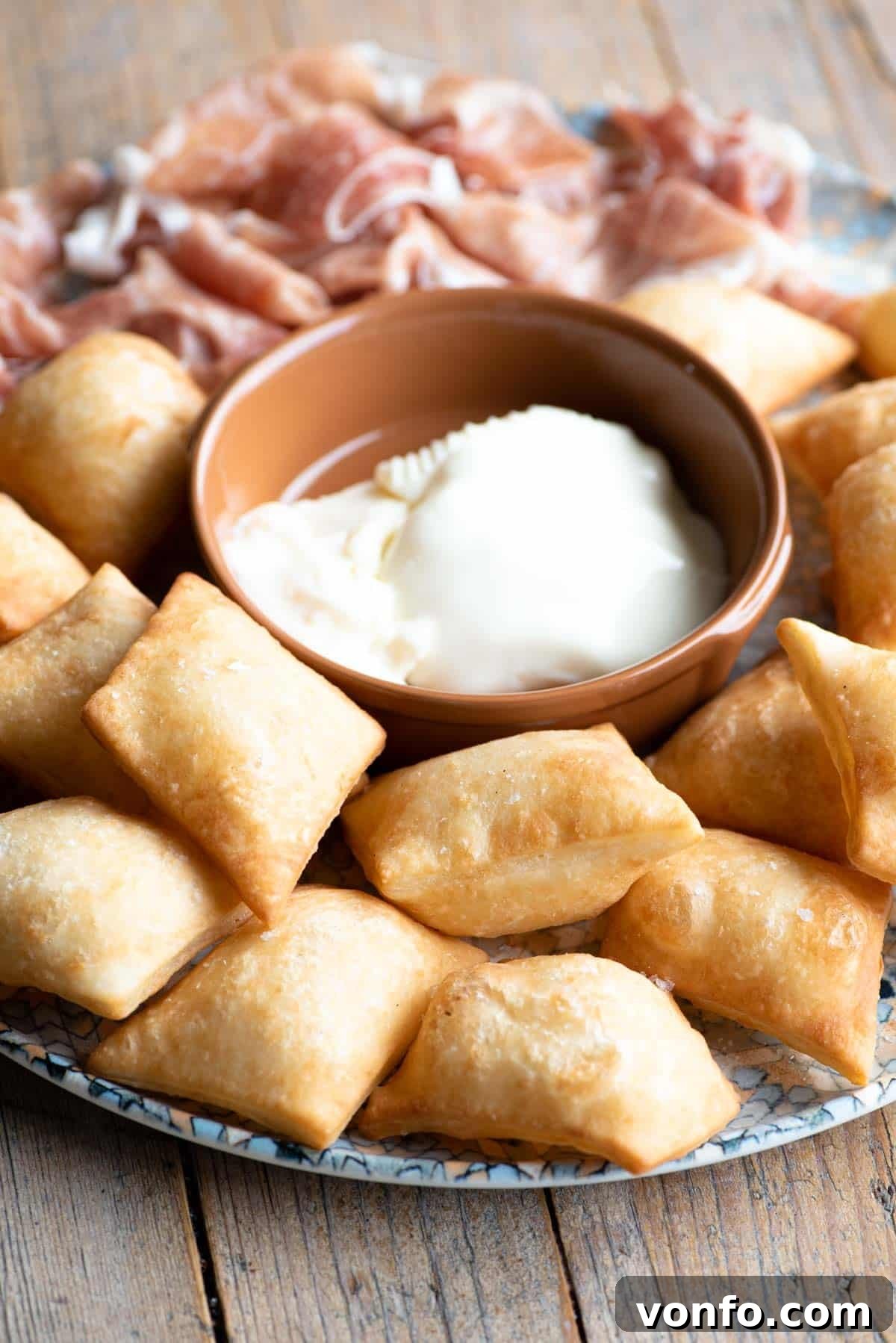
Golden Gnocco Fritto (Italian fried dough) arranged beautifully on a plate, surrounded by slices of rich cheese and delicate prosciutto.

Emilia-Romagna, a region celebrated as the food basket of Italy, is the proud birthplace of world-renowned culinary treasures such as Parmigiano Reggiano cheese, Prosciutto di Parma, and the rich Mortadella. Beyond its famous ingredients, it’s home to iconic dishes like Ragu alla Bolognese and delicate Tortellini in Brodo. Gnocco Fritto stands proudly among these culinary giants, representing a simple yet profound expression of regional Italian gastronomy.

If you’ve yet to experience the sheer delight of Gnocco Fritto, be warned: they are irresistibly addictive! The harmonious blend of salty, crispy fried dough served piping hot, paired with the complex flavors of cured meats and creamy cheeses, creates a gastronomic experience that is hard to forget. This simple snack elevates any meal or gathering into a special occasion.

Historically, Gnocco Fritto is reserved for special family gatherings, hearty Sunday lunches, or vibrant public festivals. However, their versatility means they are increasingly enjoyed as an elegant aperitivo, perfectly complementing a refreshing drink before a meal. Their light texture and satisfying crunch make them a fantastic starter for any Italian-themed feast.

Below, you will find our meticulously crafted recipe, complete with essential notes on ingredients, detailed step-by-step photos, expert tips, exciting variations, and a video tutorial. For the comprehensive printable version, simply scroll to the bottom of the page or click the recipe link provided.

Essential Ingredients for Perfect Gnocco Fritto

Crafting perfect Gnocco Fritto begins with selecting the right ingredients. Each component plays a vital role in achieving that coveted light, airy, and crispy texture. Here’s what you’ll need to bring this traditional Italian snack to life in your kitchen.

An overhead shot showcasing all the fresh and simple ingredients required to prepare traditional Gnocco Fritto dough.

Ingredient Notes and Expert Substitutions

Step-by-Step Guide to Crafting Gnocco Fritto

Creating homemade Gnocco Fritto is a delightful and rewarding process. Follow these detailed steps to achieve perfect, golden fried dough every time.

Begin by gently warming the whole milk in a small saucepan over low heat until it is lukewarm, not hot. This warmth is essential for activating the yeast. Once warmed, remove it from the heat and set it aside.

In a large mixing bowl, combine the 00 flour, instant yeast, and sugar. Stir these dry ingredients together thoroughly. Create a well in the center of the flour mixture, then gradually pour in the warmed milk. (A crucial note: always check your specific yeast packet instructions. If your yeast requires activation, add it to the warm milk 5-10 minutes before incorporating it into the flour.) (Refer to photos 1 & 2 for visual guidance).

A four-photo collage illustrating the initial stages of Gnocco Fritto dough preparation, from mixing dry ingredients to adding warm milk.

Using a sturdy spoon or a spatula, gently stir all the ingredients together from the center outwards. Continue mixing until a very rough, shaggy dough begins to form in the bowl (photo 3). This initial mixing brings everything together before kneading.

Next, add the lard (or butter) and the salt to the shaggy dough. Now, it’s time to get your hands dirty! Knead the dough directly in the bowl, or transfer it to a lightly floured surface, working it with your hands until the lard is completely incorporated and the dough transforms into a smooth, elastic, and homogenous ball (photos 4-6).

Once kneaded, place the dough into a clean, lightly oiled bowl. Cover the bowl tightly with plastic wrap (cling film) to prevent drying. Allow the dough to rise in a warm, draft-free spot at room temperature for approximately 2 hours, or until it has visibly doubled in size (photo 8). This proving time is crucial for developing flavor and texture.

A four-photo collage demonstrating the kneading process for Gnocco Fritto dough and its transformation before and after proving.

While the dough is proving, prepare for frying. Pour sunflower or vegetable oil into a large, heavy-bottomed frying pan or Dutch oven. Ensure the oil is about 2 inches (5 cm) deep. Heat the oil gradually over medium heat to reach a temperature of 180°C (350°F). Using a reliable kitchen thermometer is highly recommended to maintain a consistent oil temperature, which is key to perfectly fried dough.

Meanwhile, as the oil heats, lightly dust a clean work surface with a small amount of flour. Transfer the risen dough onto the floured surface and gently roll it out evenly. Aim for a thickness of about 3mm (approximately 1/8 inch) (photos 9 & 10). This thinness ensures a light, crispy final product.

A four-photo collage illustrating the final steps: rolling and cutting Gnocco Fritto dough, followed by frying until golden brown.

Once the dough is rolled out, use a pizza wheel or a sharp knife to cut it into rough squares, roughly 5-6cm (2-2.5 inches) wide. These irregular shapes are part of Gnocco Fritto’s rustic charm. Carefully place a few dough squares into the hot oil, ensuring not to overcrowd the pan. Fry the gnocchi in small batches for 1-2 minutes per side, or until they puff up beautifully and turn a glorious golden brown. As they cook, they will expand, creating those irresistible airy pockets. Remove the fried gnocchi with a slotted spoon and drain them on a plate lined with kitchen paper to absorb excess oil. Serve immediately for the best experience (photos 11 & 12).

How to Best Serve Gnocco Fritto: Traditional & Modern Pairings

Gnocco Fritto are best enjoyed straight from the pan, still warm and with a delicate sprinkling of fine salt. For a truly Italian aperitivo experience, pair them with a classic cocktail like a refreshing Aperol Spritz, allowing the salty dough to perfectly balance the bitter-sweet notes of the drink.

Traditionally, these fried dough delights are served as an antipasto, forming the centerpiece of a magnificent charcuterie board. They shine when accompanied by an assortment of premium cured meats from Emilia-Romagna, such as delicate Prosciutto Crudo, rich Mortadella, or savory Coppa. To complete the experience, add soft, spreadable Italian cheeses like Stracchino or Squacquerone, whose creamy textures provide a delightful contrast to the crispy Gnocco Fritto. Wash it all down with a glass of local sparkling Lambrusco wine, its effervescence cutting through the richness of the food.

For those with a sweet tooth, Gnocco Fritto also makes for an unexpected yet utterly delicious dessert. A generous spoonful of Nutella spread over the warm, airy dough transforms it into a comforting and indulgent treat. The possibilities are endless!

Expert Recipe Tips for Gnocco Fritto Success

Gnocco Fritto: Frequently Asked Questions

What are other names for Gnocco Fritto?

The name Gnocco Fritto is most commonly associated with Modena, but this beloved fried dough goes by many names across Emilia-Romagna, reflecting regional dialects and traditions. In Bologna, for example, you’ll hear them called Crescentine. Travel to Parma, and they become Torta Fritta. Venture to Chieza, and they are known as Chizza Fritta. These different names all refer to the same delicious fried dough, each embodying a piece of local culinary heritage.

How can I store leftover dough or fried Gnocco Fritto?

Yes, both leftover dough and fried Gnocco Fritto can be stored. Unfried dough can be wrapped tightly in plastic wrap and stored in the fridge for 1-2 days, or frozen for longer preservation. If freezing, thaw the dough in the refrigerator overnight, then bring it to room temperature before rolling and frying. Fried Gnocco Fritto are best enjoyed immediately for optimal crispiness, but leftovers can be stored in an airtight container at room temperature for 1-2 days. To reheat and regain some crispness, you can briefly warm them in a dry pan or a moderate oven.

Can I make Gnocco Fritto without lard?

Absolutely! While lard offers a traditional flavor and texture, unsalted butter is a fantastic substitute in the dough, providing a rich flavor and tender crumb. For frying, sunflower or vegetable oil are excellent, neutral-flavored alternatives to lard, making the process easier and catering to various dietary preferences.

Why didn’t my Gnocco Fritto puff up?

Several factors could prevent your Gnocco Fritto from puffing. The most common reasons include inactive yeast (check its freshness and ensure the milk wasn’t too hot), insufficient proving time, dough that was rolled too thick, or oil that wasn’t hot enough during frying. Ensure your yeast is fresh, the dough doubles in size during proving, and the oil temperature is consistently maintained at 180°C (350°F) using a thermometer.

Can I make Gnocco Fritto gluten-free or vegan?

While this traditional recipe uses wheat flour and milk/lard, it is possible to adapt it. For gluten-free versions, a good quality gluten-free all-purpose flour blend designed for baking can be used, though results may vary slightly in texture. For a vegan option, substitute whole milk with a plant-based milk (like almond or soy milk) and replace lard with vegan butter or olive oil. Remember to check that your yeast is also vegan-friendly.

A close-up shot of crispy Gnocco Fritto (Italian fried dough) adorned with rich cheese and thin slices of prosciutto, ready to be enjoyed.

Explore More Authentic Italian Bread Recipes

If you loved making Gnocco Fritto, delve deeper into the wonderful world of Italian bread and savory bakes. Here are more irresistible recipes to expand your culinary repertoire:

More Italian Bread & Snack Delights

Bread & Savory Bakes

La Piadina: Italian Flatbread

Pizza

Rosemary Focaccia Bread

Antipasti

Grissini – Italian Breadsticks

Antipasti

Taralli Pugliesi (Italian Snack)

We hope you thoroughly enjoyed this Gnocco Fritto recipe! If you tried this or any other recipe from our blog, please don’t hesitate to rate it and share your experience in the comments section below—we genuinely love hearing from you! To stay connected with our latest delicious creations, remember to follow us on Facebook, Instagram, and Pinterest, or simply sign up for our Newsletter to receive weekly culinary inspiration directly in your inbox.

Step By Step Photos Above

Most of our recipes come with step-by-step photos, helpful tips and tricks to make it perfectly the first time, and even video tutorials!

Gnocco Fritto (Italian Fried Dough)

5 from 2 votes

By Emily

Prep: 20 minutes
Cook: 20 minutes
Proving time: 2 hours
Total: 2 hours 40 minutes
Servings: 50 gnocchi (depending on size)
A close-up square image of Gnocco Fritto (Italian fried dough) on a plate with cheese.
Pin Print
Gnocco Fritto (also known as Crescentine) is an incredibly delicious Italian snack from the Emilia-Romagna region. Crispy pillows of savoury fried dough served warm with cured meats and cheese!

Ingredients

  • 500 g Italian 00 flour, (4 cups)
  • 1 teaspoon sugar
  • 1 teaspoon fast action (instant) yeast
  • ½ teaspoon fine salt
  • 250 ml whole milk, (1 cup plus 1 tablespoon)
  • 70 g lard, or butter (2.4oz or 5 tablespoons)
  • Sunflower oil, for frying

For serving

  • Prosciutto crudo, or other cured meats
  • Stracchino or Crescenza cheese

Instructions

  • Warm the milk in a saucepan until it is lukewarm, then turn off the heat and set aside. Ensure the milk is warm, not hot, to protect the yeast.
  • In a large mixing bowl, combine the flour, yeast, and sugar, stirring them together well. Create a well in the center of the dry ingredients and pour in the warmed milk. (Remember to check your yeast packet instructions; if it requires activation, add it to the warm milk for 5-10 minutes beforehand.)
  • Stir all the ingredients using a spoon or spatula until a rough dough forms. Then, add the lard (or butter) and salt. Knead the dough with your hands until the lard is fully incorporated and the dough becomes smooth and elastic.
  • Transfer the dough into a clean, lightly oiled bowl and cover it tightly with plastic wrap. Let the dough rise at room temperature for 2 hours, or until it has doubled in size.
  • Pour sunflower oil into a large frying pan or Dutch oven, ensuring it is about 2 inches deep. Heat the oil to 180°C (350°F) using a kitchen thermometer to monitor the temperature.
  • While the oil heats, lightly sprinkle a clean work surface with flour. Roll the risen dough out evenly until it is approximately 3mm (1/8 inch) thick.
  • Using a pizza wheel or sharp knife, cut the dough into rough squares, about 5-6cm (2-2.5 inches) wide. Fry the Gnocco Fritto in small batches until they puff up and turn golden brown, which typically takes 1-2 minutes per side. Drain the fried dough on kitchen paper to absorb excess oil and serve immediately with cheese and prosciutto.

Video

Notes

    • Activating the yeast: Ensure your yeast is active. If your specific yeast type requires proofing, add it to a small amount of the warmed milk for 5-10 minutes until it becomes foamy before combining with the flour.
    • Proving the dough: Always allow your dough to rise in a warm, draft-free spot at room temperature. This ensures an optimal environment for the yeast to work and for the dough to achieve its desired light and airy texture.
    • Use a thermometer: Precision is key for frying. Employ a kitchen thermometer to accurately monitor and maintain the oil temperature at 180°C (350°F). Fry in small batches to prevent the oil temperature from dropping and ensure even cooking and perfect crispness.
    • Use a kitchen scale: For consistent and accurate baking results, always use a kitchen scale when measuring flour and other dry ingredients. Measuring cups can vary significantly in accuracy, leading to inconsistent outcomes.
    • Storage: Gnocco Fritto are best enjoyed immediately after frying, when they are at their crispiest. However, any leftovers can be stored in an airtight container at room temperature for 1-2 days. The raw dough itself can be stored in the fridge for 1-2 days before frying or can be frozen for longer periods. If frozen, defrost it in the fridge overnight before bringing it to room temperature and proceeding with the recipe.

Helpful Info for All Recipes

  • I always use extra virgin olive oil in all of my recipes unless stated otherwise. Its robust flavor enhances many Italian dishes.
  • When I use canned or jarred tomatoes of any kind, I exclusively recommend Cirio or Mutti brands. Their superior quality ensures the best results and authentic flavor in your cooking.
  • All vegetables mentioned in our recipes are typically medium-sized unless specifically stated otherwise, providing a consistent reference for quantities.
  • All recipes published here are carefully tested and developed using a fan (convection) oven, which may require slight temperature or time adjustments if you are using a conventional oven.
  • Find out more about how nutrition is calculated for our recipes, providing transparency about the dietary information.
  • Check out our comprehensive guide to Italian Pantry Staples, an essential resource for stocking your kitchen with key ingredients for authentic Italian cooking.
  • You can also find all our Essential Kitchen Tools for Italian Cooking, a curated list of tools that will make your Italian culinary journey easier and more enjoyable.

Nutrition

Calories: 62 kcal | Carbohydrates: 8 g | Protein: 1 g | Fat: 3 g | Saturated Fat: 1 g | Polyunsaturated Fat: 0.1 g | Monounsaturated Fat: 2 g | Trans Fat: 0.05 g | Cholesterol: 4 mg | Sodium: 34 mg | Potassium: 19 mg | Fiber: 0.3 g | Sugar: 0.4 g | Vitamin A: 43 IU | Calcium: 8 mg | Iron: 0.5 mg

Nutrition information is automatically calculated, so should only be used as an approximation.

Did you try this recipe? Leave a comment below!