
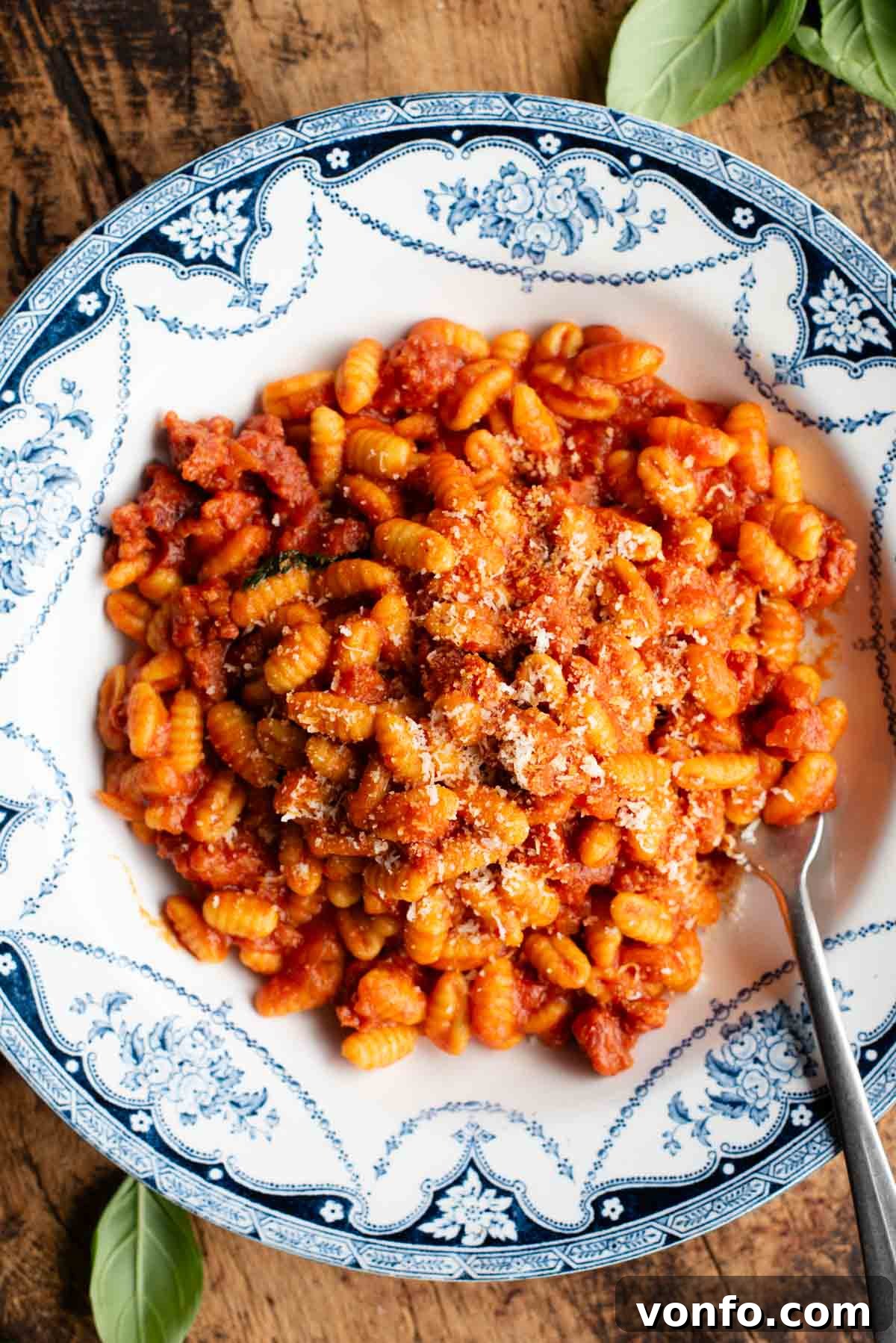
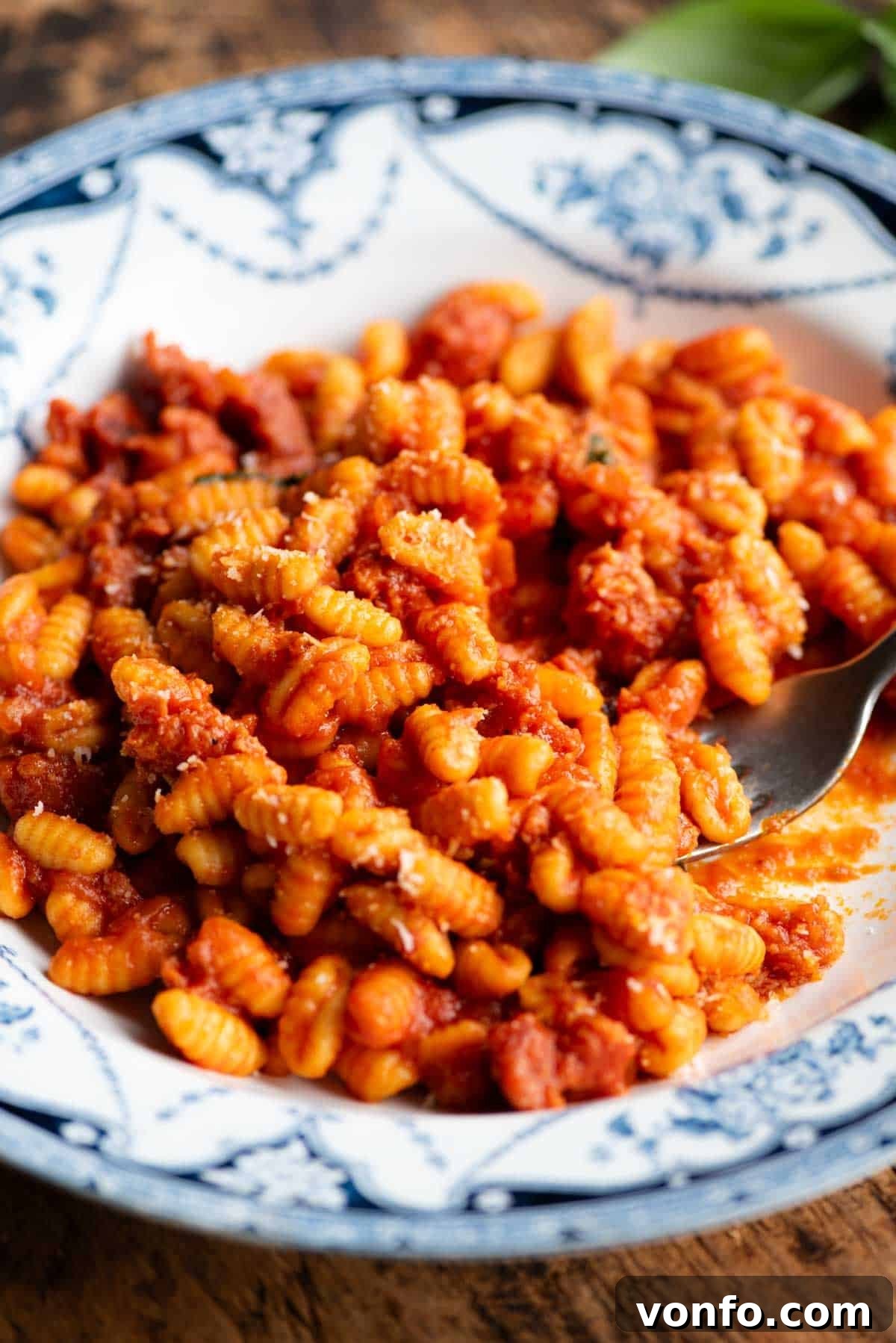
Malloreddus alla Campidanese is a true jewel of Sardinian culinary tradition, a pasta dish that captivates with its unique blend of robust flavors and rustic charm. Often referred to as Sardinian Gnocchetti, Malloreddus pasta is meticulously crafted from semolina and water, giving it a distinctive chewiness that perfectly cradles an extraordinary ragu. This sauce, originating from the Campidano region of Sardinia, is a symphony of Italian sausage, fragrant fennel seeds, exotic saffron, and the sharp, salty tang of Pecorino cheese. It’s a dish that tells a story of the island’s rich history and its passion for simple, high-quality ingredients.
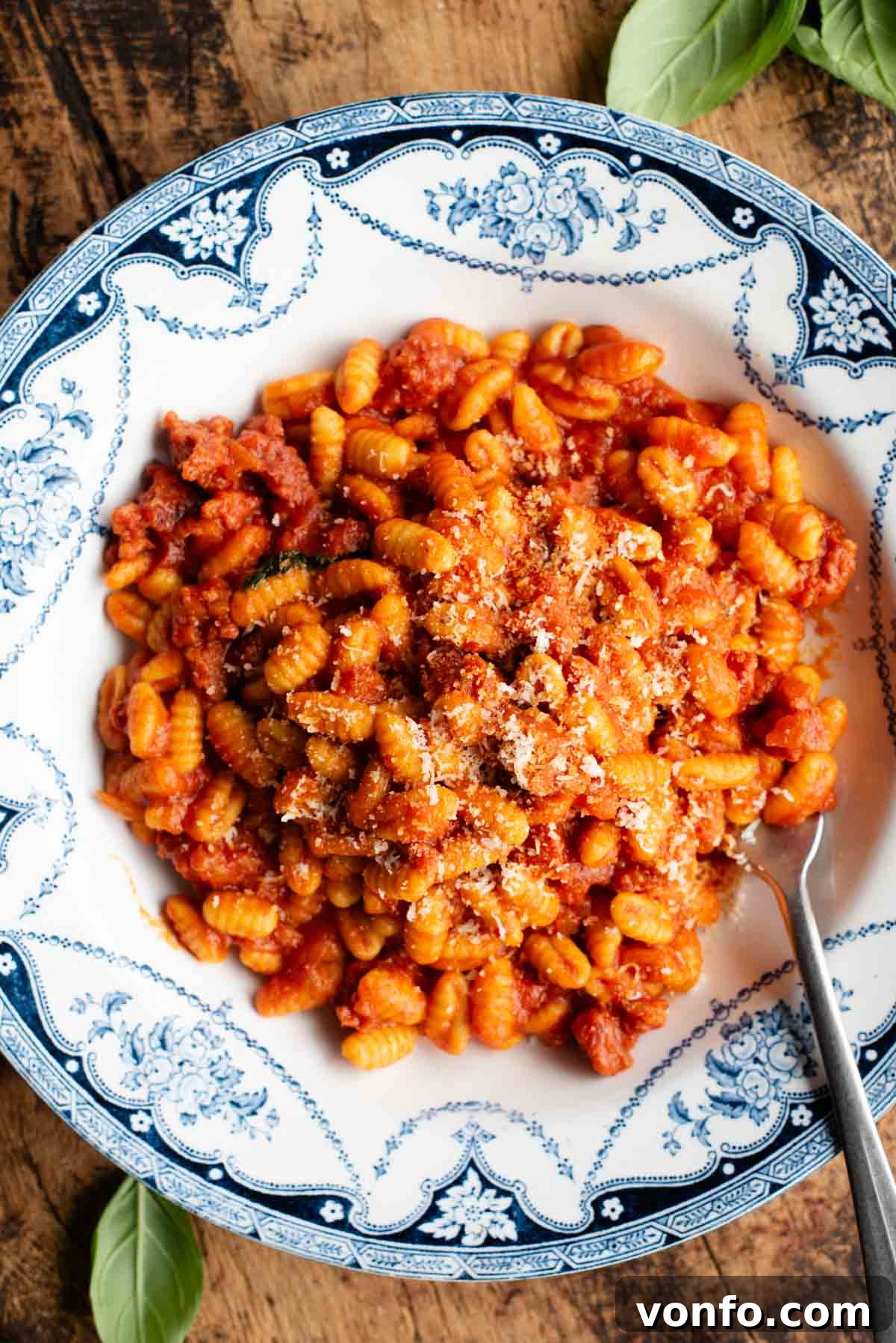
What sets Malloreddus alla Campidanese apart from other classic Italian ragu dishes is its profound depth of flavor, born from a harmony of ingredients deeply rooted in Sardinian agriculture and tradition. The combination of succulent Italian sausage, brightened by the earthy sweetness of fennel, and the unmistakable floral notes and golden hue of saffron, creates a sauce that is both comforting and profoundly sophisticated. This isn’t just a meal; it’s an experience that transports you directly to the sun-drenched landscapes and vibrant kitchens of Sardinia, making it a perfect choice for both cozy weeknight dinners and special occasions.
The Sardinian Gnocchetti: Malloreddus Pasta
At the heart of this iconic dish lies Malloreddus, also known as Gnocchetti Sardi. These small, ridged pasta shells are a testament to the simplicity and ingenuity of Sardinian pasta-making. Traditionally made from coarse durum wheat semolina and water, the dough is incredibly versatile and forgiving, making it an excellent choice for home cooks eager to try their hand at artisanal pasta. The process involves rolling small pieces of dough across a ridged board or a traditional straw basket (ciuliri) to create their signature gnocchetti shape and ridges. These ridges aren’t just for aesthetics; they are crucial for catching and holding the rich, flavorful ragu, ensuring every bite is packed with taste. If you’re keen to explore the art of making fresh pasta, we offer a comprehensive step-by-step tutorial on crafting Malloreddus at home, requiring only semolina and water. While store-bought options are available, the texture and freshness of homemade Malloreddus elevate this dish to an unparalleled level, providing a tender yet satisfying chew that is unmatched.
A Journey Through Sardinian Flavors: The Campidanese Ragu
The ragu itself is a masterpiece of Sardinian culinary art, hailing specifically from the Campidano area – a fertile plain known for its agricultural bounty and culinary heritage. Its unique character comes from a thoughtful selection of indigenous ingredients that speak to the island’s rich gastronomic identity. The aromatic fennel, a cornerstone of Sardinian cuisine, lends a subtle anise-like sweetness that beautifully complements the savory Italian sausage. The precious saffron, often cultivated in Sardinia, imbues the sauce with a warm, golden color and an elusive, earthy fragrance that is both luxurious and comforting. Fragrant bay leaves add a subtle depth, enhancing the overall aroma without overpowering the main flavors. And of course, the distinctive tang of Pecorino cheese, preferably Pecorino Sardo, provides a savory, salty counterpoint to the richness of the sausage and tomato base. This sauce is a true representation of Sardinia’s rustic elegance, perfect for a cozy family dinner yet refined enough to impress guests at a sophisticated gathering. Its rich, complex profile offers a delightful departure from more common Italian sausage sauces, making it a truly memorable dish that showcases the distinctive tastes of the Mediterranean.
Key Ingredients for an Authentic Malloreddus alla Campidanese
Crafting the perfect Malloreddus alla Campidanese begins with selecting the right ingredients. Below, you’ll find a detailed list, along with insights into traditional choices and suitable substitutions to ensure an exceptional outcome every time. Understanding each component’s role is key to unlocking the true essence of this Sardinian classic.
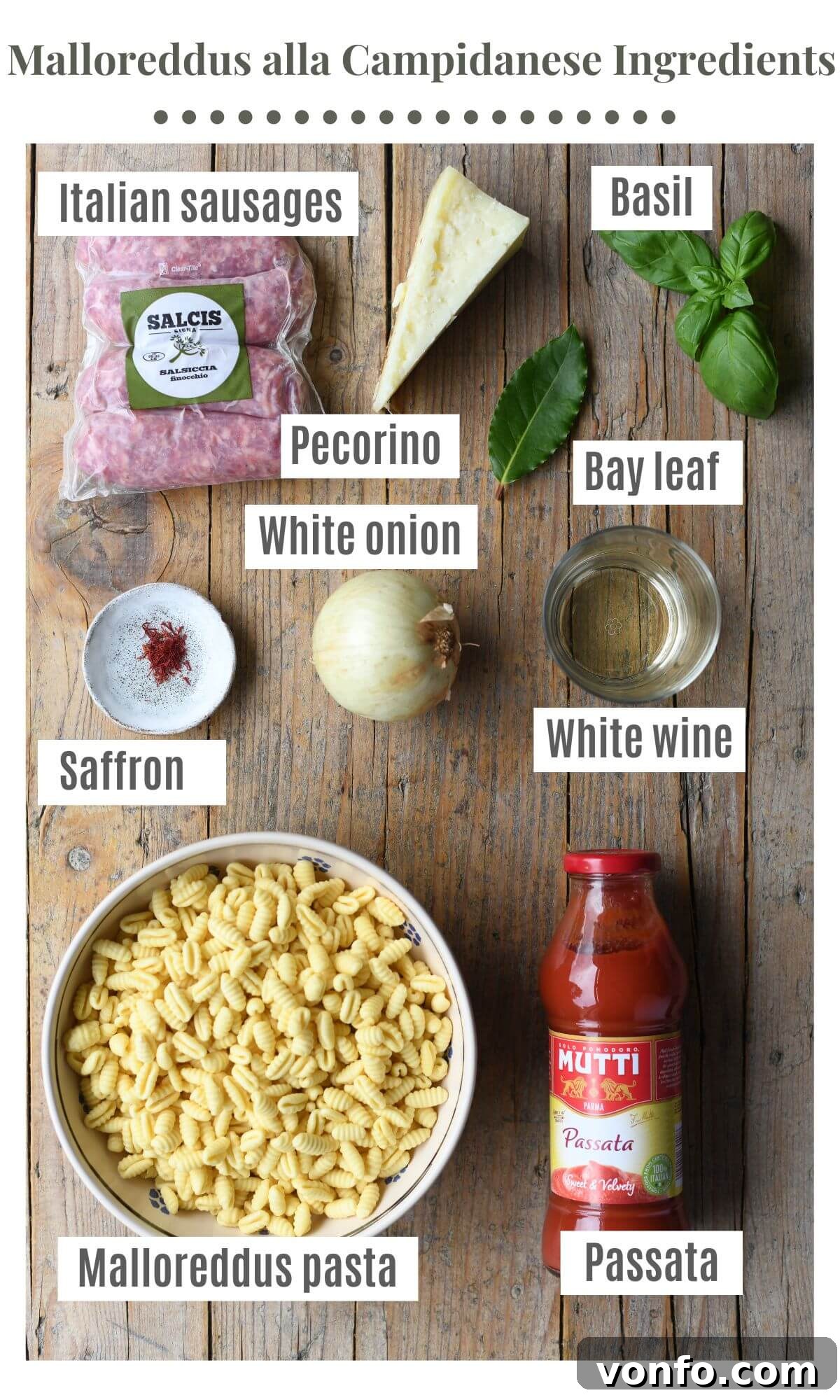
Ingredient Spotlight: Making the Best Choices and Smart Substitutions
- Malloreddus Pasta: The authentic choice, these small, ridged shells are uniquely designed to capture and hold the robust ragu. They are easy to make from scratch if you have semolina and water, and a ridged gnocchi board or fork. If authentic Malloreddus are unavailable for purchase, other semolina-based pasta shapes like orecchiette or cavatelli offer a similar chewy texture and sauce-holding capability. As a last resort, any short, sturdy pasta or even potato gnocchi can be used, though the authentic Sardinian experience is best achieved with its namesake pasta.
- Sardinian Sausages: These sausages are paramount to the ragu’s characteristic flavor profile, traditionally seasoned with a generous amount of fennel seeds. If you can’t find specific Sardinian sausages with fennel, opt for high-quality Italian sausages (pork is typical) and simply incorporate 1 teaspoon of whole or crushed fennel seeds into the sauce during the initial sautéing process. This ensures that essential anise-like aroma and flavor that defines the Campidanese ragu.
- Saffron: A precious and ancient spice, saffron is integral to the Campidanese ragu, lending both a captivating golden color and an elusive, earthy, slightly floral aroma. While saffron powder is sometimes encountered, threads are more commonly available and generally offer superior quality and potency. To prepare saffron threads, you can gently grind them into a fine powder with a mortar and pestle, or, more simply and effectively, steep them in a small amount of warm water (as we do) or warm white wine for at least 10-15 minutes. This “blooming” process releases their full flavor and vibrant hue into the sauce.
- Pecorino Cheese: Traditionally, Pecorino Sardo, a hard sheep’s milk cheese from Sardinia, is used. It offers a slightly less salty and more delicate flavor profile compared to its Roman counterpart, making it a perfect complement to the rich ragu. However, Pecorino Romano is a widely available and excellent substitute, providing a similar sharp, salty, and tangy profile that beautifully balances the richness of the sausage and tomato. Always opt for freshly grated cheese for the best flavor, texture, and melting consistency.
- High-Quality Tomatoes: The foundation of any great Italian ragu is quality tomatoes. We highly recommend using premium brands like Mutti or Cirio passata (which is equivalent to strained tomato puree in the US) for their consistent flavor, smooth texture, and vibrant natural sweetness. The better the quality of your tomatoes, the richer and more authentic your sauce will taste, requiring fewer adjustments.
- Dry White Wine: A splash of dry white wine is crucial for deglazing the pan after browning the sausage. It adds a layer of acidity and complexity, helping to lift and concentrate the browned bits (fond) from the bottom of the pot, which are packed with flavor. Choose a wine you enjoy drinking, such as a Vermentino (a great Sardinian choice), Pinot Grigio, or Sauvignon Blanc.
- Fresh Basil: Added towards the end of the cooking process, fresh basil provides a burst of herbaceous freshness that brightens the rich ragu, adding a fragrant, aromatic finish.
- Olive Oil, Salt, and Pepper: Always use good quality extra virgin olive oil for sautéing and building the flavor base. Season generously with salt and freshly ground black pepper throughout the cooking process, tasting as you go and adjusting as needed. These fundamental seasonings are vital for balancing and enhancing all the other ingredients.
Crafting Malloreddus alla Campidanese: A Detailed Step-by-Step Guide
Follow these detailed steps to create a truly authentic and delicious Sardinian Malloreddus alla Campidanese at home. Each stage is designed to build layers of flavor, resulting in a perfectly balanced and deeply satisfying dish that pays homage to Sardinian culinary traditions.
- Prepare the Saffron: Begin by adding a small pinch of saffron threads to a ramekin with one tablespoon of warm water. Let it steep for at least 10-15 minutes, allowing the threads to bloom and release their vibrant color and aromatic essence. This step is crucial for infusing the ragu with saffron’s unique character right from the start.
- Sauté the Onion: Finely chop the white onion into a small dice. In a large, heavy-bottomed pot or Dutch oven, heat 1-2 tablespoons of good quality olive oil over medium heat. Add the chopped onion and sauté gently for 5-7 minutes until it becomes soft, translucent, and slightly golden, but not browned. This creates a sweet, aromatic base, known as a soffritto, for the ragu.
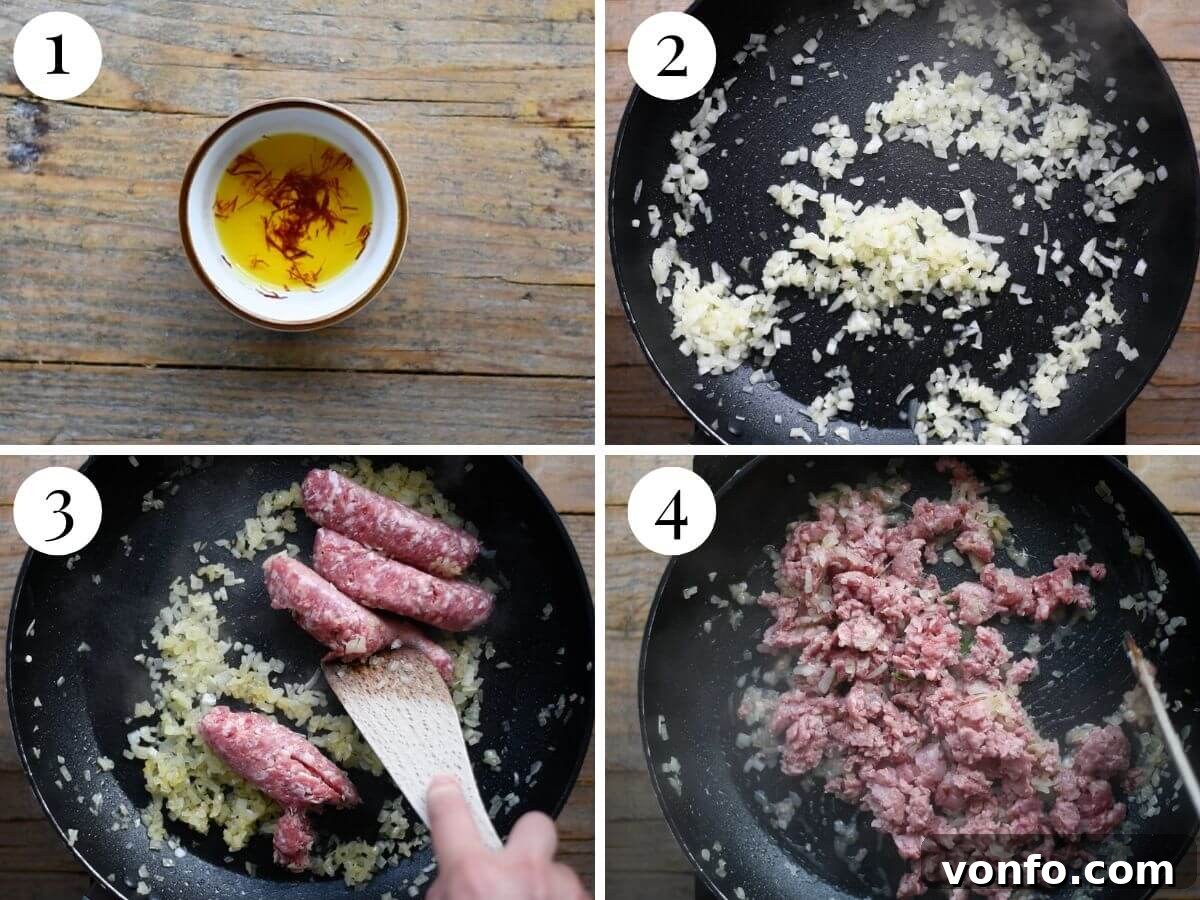
- Brown the Sausage: Carefully remove the Italian sausages from their casings, discarding the skins. Add the loose sausage meat to the pot with the sautéed onion, along with the bay leaf. Using a wooden spoon or spatula, actively break the sausage meat into small, even crumbles as it cooks. Continue cooking over medium-high heat until the sausage is evenly browned and no pink remains, ensuring a rich, caramelized flavor that forms the backbone of the ragu.
- Deglaze with Wine and Add Saffron: Once the sausage is thoroughly browned, pour in the dry white wine. Increase the heat slightly and scrape the bottom of the pot with your wooden spoon to loosen any browned bits, which are packed with concentrated flavor. Let the wine simmer vigorously for 1-2 minutes until most of the alcohol has evaporated and the pungent smell dissipates, leaving behind a subtle sweetness. Then, add the steeped saffron (including the water it bloomed in) to the pot, stirring well to combine and distribute its golden color and intoxicating aroma throughout the meat and onion mixture.
- Simmer the Tomato Base: Pour in the tomato passata (or tomato puree, if in the US), adding a generous pinch of salt and freshly ground black pepper to taste. Stir everything together until well combined, ensuring the passata fully coats the sausage and onion mixture. Bring the sauce to a gentle simmer, then cover the pot with a lid and reduce the heat to medium-low. Allow the ragu to simmer undisturbed for a minimum of 20 minutes, or up to 30-40 minutes for an even deeper, more developed flavor, stirring occasionally to prevent sticking. This slow simmer allows all the complex flavors to meld beautifully.
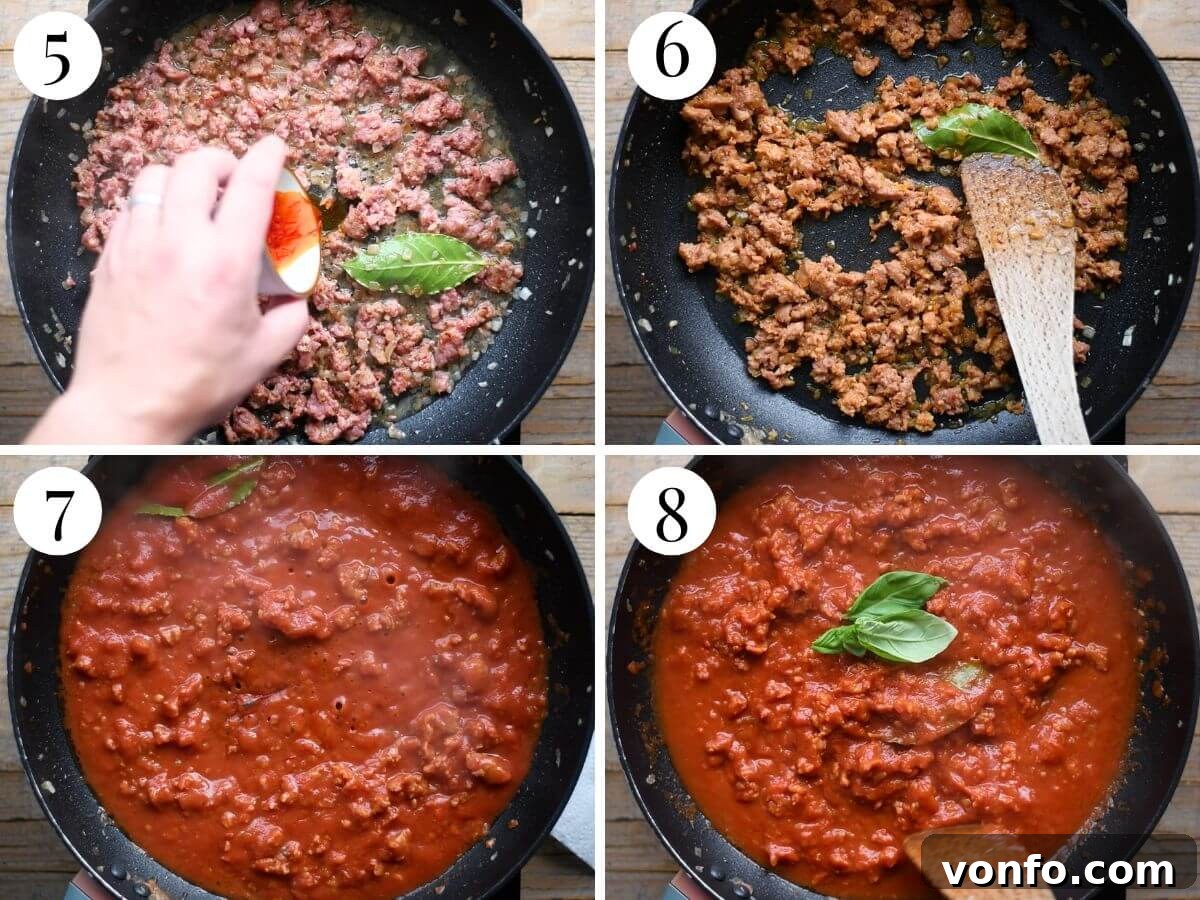
- Finish the Sauce and Prepare Pasta Water: After the initial simmering period, remove the lid from the ragu. Stir in the fresh basil leaves, roughly torn to release their aroma. Continue to simmer the sauce, uncovered, for another 10-15 minutes. This final uncovered simmer allows the sauce to thicken slightly to a perfect consistency and for the basil’s fresh essence to infuse into the ragu. While the sauce finishes, bring a large pot of generously salted water to a rolling boil for the pasta. Remember, the pasta water should taste like the sea.
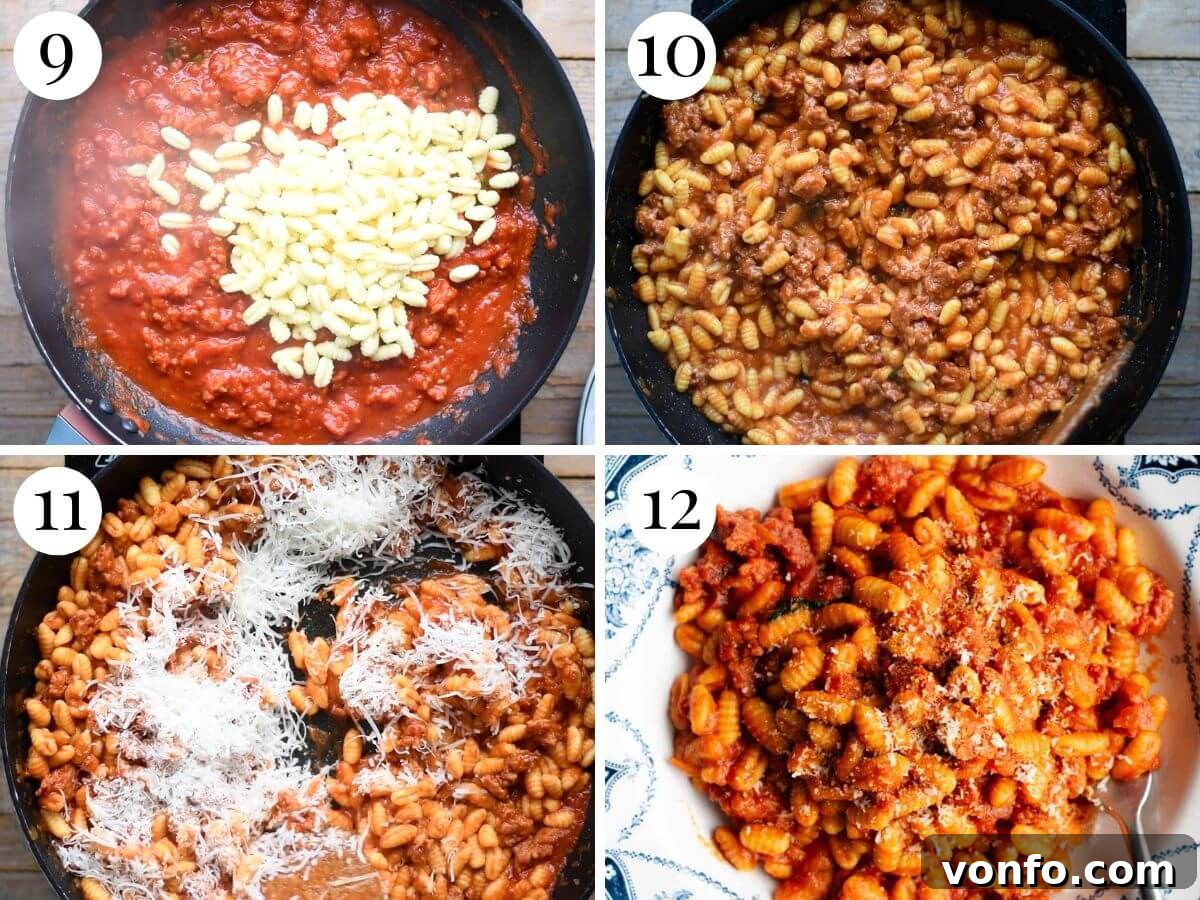
- Cook the Malloreddus: In the last 10 minutes of the sauce’s total cooking time, add the Malloreddus pasta to the vigorously boiling water. Cook according to package instructions or until perfectly al dente – firm to the bite, yet cooked through. For homemade Malloreddus, this usually takes around 8-10 minutes. It’s crucial to time this step so the pasta finishes cooking around the same time the sauce is ready.
- Combine Pasta and Ragu: Drain the cooked pasta, but be sure to reserve about a cup of the starchy pasta water before discarding the rest. Add the hot Malloreddus directly to the ragu in the pot. Stir vigorously to ensure every single piece of pasta is thoroughly coated with the flavorful sauce. If the sauce seems a little too thick or dry, add a splash or two of the reserved pasta water to achieve your desired consistency; this also helps the sauce cling better to the pasta. Finally, stir in the freshly grated Pecorino cheese until it melts into a creamy embrace, perfectly binding the dish. Serve immediately, garnished with extra Pecorino and a sprig of fresh basil, if desired.
Expert Tips for a Perfect Malloreddus alla Campidanese
- Quality of Tomatoes Matters Immensely: As highlighted in the ingredient section, the type and quality of your canned tomatoes significantly impact the final flavor profile of the dish. Investing in high-quality passata (such as Mutti or Cirio brands) will consistently yield a richer, sweeter, and more authentic tasting sauce that requires minimal intervention.
- The Magic of Pasta Water: This tip cannot be stressed enough – never discard all your pasta water! This starchy, flavorful liquid is a chef’s secret weapon. If your ragu becomes too thick or needs a little extra body and gloss, a splash of reserved pasta water will work wonders. It helps emulsify the sauce, making it cling beautifully to the pasta and enriching its flavor without diluting it.
- Leftovers and Freezing: This Malloreddus alla Campidanese is simply fantastic as leftovers, often tasting even better the next day as the flavors continue to meld. Store any remaining pasta and ragu in an airtight container in the refrigerator for 2-3 days. Reheat gently on the stovetop or in the microwave, adding a little water or broth if needed to restore its consistency. The ragu itself can also be frozen separately for up to 3 months in freezer-safe bags or containers, making it perfect for convenient meal prep. Thaw overnight in the fridge before reheating and combining with freshly cooked Malloreddus.
- Adjusting Fennel Flavor: If your chosen Italian sausages do not inherently contain fennel, it’s easy to add that quintessential Campidanese flavor. Simply include about 1 teaspoon of whole or crushed fennel seeds when you sauté the onion. Toasting them briefly with the onion helps to unlock and enhance their aromatic qualities, distributing their unique flavor throughout the ragu.
- Pecorino Power: Do not underestimate the transformative power of freshly grated Pecorino cheese. While pre-grated options are convenient, fresh grating ensures maximum flavor release and avoids the starchy anti-caking agents often found in packaged cheeses, which can affect the sauce’s texture and creaminess. The sharp, salty notes of Pecorino are essential for balancing the rich sausage and saffron.
- Seasoning in Layers: Taste and adjust seasoning throughout the cooking process, not just at the end. Season the onions, then the sausage, and finally the tomato sauce. This layering of salt and pepper builds depth and ensures every component of the ragu is perfectly flavored.
Frequently Asked Questions About Malloreddus alla Campidanese
Campidanese refers to the Campidano plain, a vast and fertile area located in the south of Sardinia (Sardegna in Italian). This traditional dish proudly originates from this specific region, which is historically famous for its abundant agricultural produce, including prized saffron and high-quality livestock essential for sausage and cheese production. The name signifies its regional authenticity.
While Malloreddus (Gnocchetti Sardi) is the traditional and ideal choice due to its unique ridged shape and chewy semolina texture, which are perfect for holding the rich ragu, other small, sturdy pasta shapes can certainly be used. Excellent alternatives include orecchiette, cavatelli, or even penne rigate. These shapes also boast nooks and crannies that excel at capturing sauce. Potato gnocchi also makes a surprisingly delicious alternative for a different, softer texture experience.
Saffron is a signature and distinctive ingredient in Malloreddus alla Campidanese, contributing significantly to its unique flavor profile, subtle aroma, and characteristic golden hue. While you could technically omit it, the dish would lose much of its authentic Sardinian character and depth. We highly recommend including it for the true and most enjoyable experience, as it’s a cornerstone of the Campidanese flavor.
For this recipe, a dry white wine is absolutely essential. Good choices for Italian cuisine include a Vermentino (which is a popular and excellent Sardinian white wine, if you can find it!), Pinot Grigio, or a crisp Sauvignon Blanc. It’s important to avoid sweet wines, as their sugar content will significantly alter the delicate flavor balance of the ragu, creating an undesirable outcome.
Yes, with a few thoughtful substitutions, you can adapt this recipe to be vegetarian. You would need to replace the Italian sausage with a suitable plant-based Italian sausage alternative. Crucially, ensure you still incorporate the fennel seeds and saffron, as these are key to maintaining the unique essence of the Campidanese flavor profile even without the meat base.
Leftovers of Malloreddus alla Campidanese can be stored in an airtight container in the refrigerator for 2-3 days. To reheat, gently warm on the stovetop over low heat, adding a splash of water or broth if the sauce has thickened too much. The ragu itself can be frozen separately for up to 3 months in freezer-safe bags or containers; thaw overnight in the refrigerator before reheating and tossing with freshly cooked pasta.
Explore More Authentic Italian Ragus
Mains
Italian Beef Ragu – A Classic Recipe
Mains
Italian Lamb Ragu (Ragu di Agnello)
Sauces & Dressings
Authentic Bolognese Sauce (Ragu alla Bolognese)
Mains
Vegetable Ragu with Pappardelle Pasta
If you’ve had the pleasure of trying this Malloreddus alla Campidanese recipe or any other delightful recipe from our blog, we would absolutely love to hear from you! Please consider rating the recipe and sharing your experience, tips, or any questions you might have in the comments section below. Your valuable feedback truly inspires us to continue exploring and sharing the rich tapestry of Italian cuisine with fellow food enthusiasts. You can also connect with us and discover more delicious food and culinary inspiration by following us on Facebook, Instagram, and Pinterest, or by subscribing to our Newsletter for weekly culinary inspiration delivered straight to your inbox.
For a visual guide and in-depth tips, please refer to the step-by-step photos and detailed instructions above!
Malloreddus alla Campidanese (Authentic Sardinian Sausage and Saffron Ragu)
This recipe has received a 5 out of 5-star rating from our community.
By Emily
Print Recipe
Malloreddus alla Campidanese is a beautiful traditional dish from Sardinia, featuring the unique Malloreddus pasta (also known as Gnocchetti Sardi) served with an incredible Italian sausage ragu infused with aromatic fennel seeds, precious saffron, and savory Pecorino cheese. This recipe offers a genuine taste of Sardinian culinary heritage.
Ingredients
- 1 lb (450g) Malloreddus pasta (Gnocchetti Sardi), see notes for alternatives
- 1 medium white onion, finely chopped
- 11.5 oz (325g) Italian sausages with fennel (about 4 medium-sized sausages), see notes for substitution
- 1/4 cup (60ml) dry white wine
- 1 bay leaf
- 1 small pinch of saffron threads
- 1 lb (450g) tomato passata (tomato puree US)
- 1 small handful fresh basil, (about 4-5 leaves), roughly torn
- 1 cup (80g) Pecorino Sardo or Pecorino Romano, freshly grated
- Extra virgin Olive oil
- Salt and freshly ground black pepper, to taste
Instructions
- Bloom the Saffron: Place saffron threads in a small ramekin with 1 tablespoon of warm water and let steep.
- Sauté Onion: In a large pot, heat 1-2 tablespoons of olive oil. Add finely chopped onion and sauté for 5-7 minutes until softened and translucent.
- Brown Sausage: Remove sausage meat from casings, add to the pot with onion and bay leaf. Break up and brown thoroughly until no pink remains.
- Deglaze: Pour in white wine and steeped saffron. Simmer for 1-2 minutes, scraping the pot, until alcohol dissipates.
- Simmer Ragu: Add tomato passata, salt, and pepper. Stir, cover, reduce heat to medium-low, and simmer for 20 minutes, stirring occasionally.
- Finish Sauce & Cook Pasta Water: Remove lid, add fresh basil, and simmer uncovered for another 10-15 minutes. Bring a large pot of salted water to a boil for pasta.
- Cook Pasta: Add Malloreddus to boiling water and cook until al dente (8-10 minutes).
- Combine & Serve: Drain pasta, reserving 1 cup pasta water. Add hot pasta to ragu, stir until coated. Stir in grated Pecorino until melted. Add reserved pasta water if needed for consistency. Serve immediately with extra Pecorino.
Chef’s Notes & Pro Tips
- Fennel Sausages: If your sausages don’t contain fennel, add 1 teaspoon of whole or crushed fennel seeds to the onion when sautéing for authentic flavor.
- Pasta Alternatives: If homemade Malloreddus isn’t an option, use other semolina pasta shapes like Orecchiette for a similar chewy texture. Short, ridged pasta or potato gnocchi also work well.
- Tomato Quality: Always use high-quality tomato passata (e.g., Mutti, Cirio) for the best-flavored ragu.
- Storage: Leftovers can be refrigerated for 2-3 days. The ragu freezes well for up to 3 months; thaw before reheating and combining with fresh pasta.
- Reserved Pasta Water: This starchy water is key for adjusting sauce consistency and helping it cling to the pasta. Don’t skip reserving it!
Helpful Information for All Recipes
- I consistently use extra virgin olive oil in all my recipes unless specifically stated otherwise.
- For optimal results and flavor, I always choose Cirio or Mutti brands when using canned or jarred tomatoes of any kind.
- Unless otherwise specified, all vegetables used in our recipes are assumed to be of medium size.
- All recipes featured on this blog are meticulously tested and developed using a fan (convection) oven.
- For transparency, find out more about how nutrition information is calculated on our site.
- Enhance your Italian cooking with our must-have Italian Pantry Staples guide.
- Discover all the Essential Kitchen Tools for Italian Cooking that we recommend.
Nutrition Information
Carbohydrates: 66g |
Protein: 21g |
Fat: 22g |
Saturated Fat: 8g |
Polyunsaturated Fat: 3g |
Monounsaturated Fat: 10g |
Cholesterol: 48mg |
Sodium: 503mg |
Potassium: 686mg |
Fiber: 4g |
Sugar: 7g |
Vitamin A: 415 IU |
Vitamin C: 11mg |
Calcium: 117mg |
Iron: 3mg
Please note: Nutrition information is automatically calculated and should be considered an approximation.
Did you try this recipe?
We’d love to hear from you! Leave a comment below and share your experience!