Homemade Triangoli, plus Mushroom and Taleggio
- Makes 4 - 6 servings (about 50 triangoli)
- Prep 1 hour 10 minutes
- Cook 30 minutes
- Total 2 hours 40 minutes
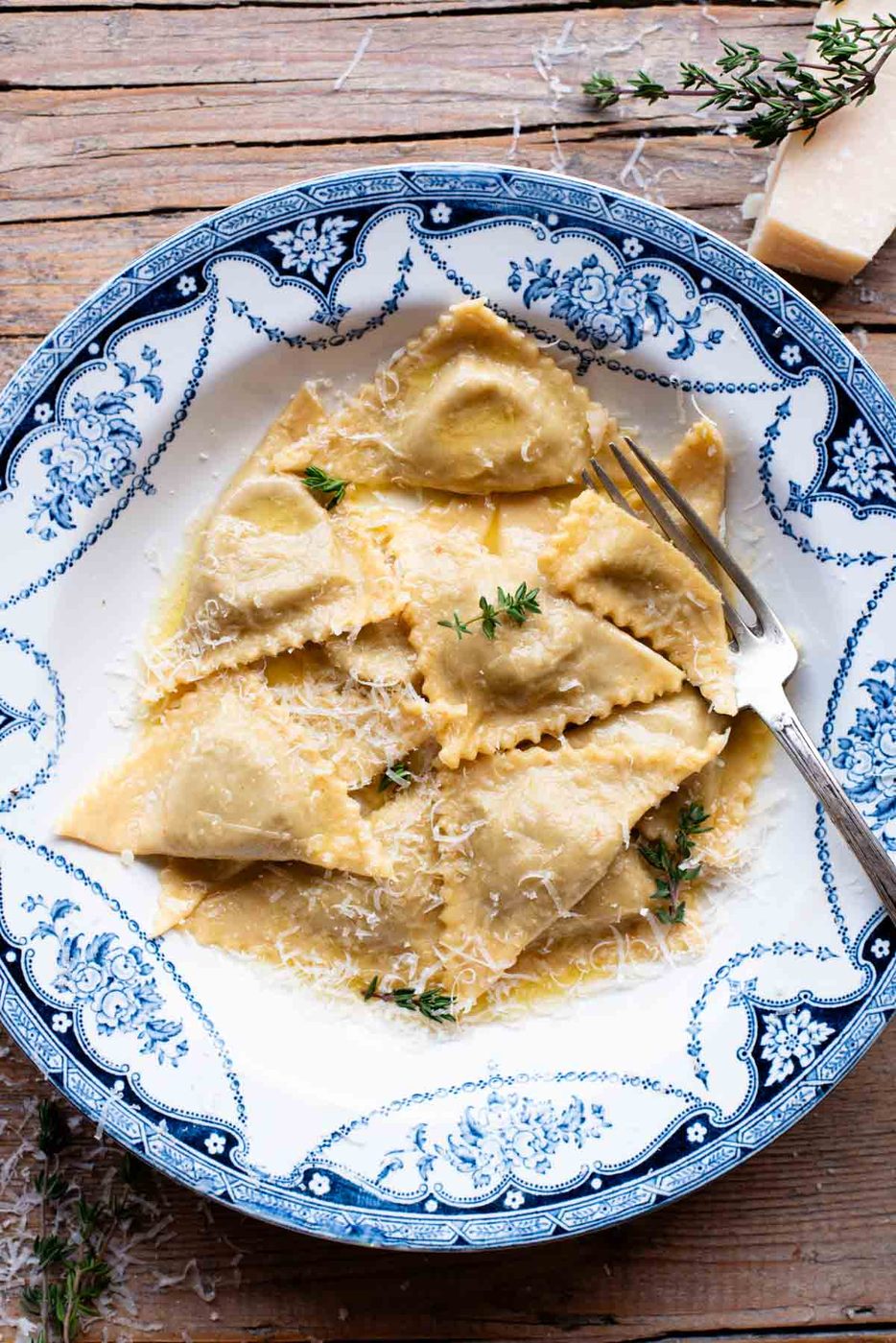
Our step-by-step guide will show you how to make beautiful fresh homemade Triangoli Pasta filled with a good mushroom and Taleggio cheese filling. The Triangoli are served in a simple butter sauce topped with Parmigiano Reggiano cheese, so good!
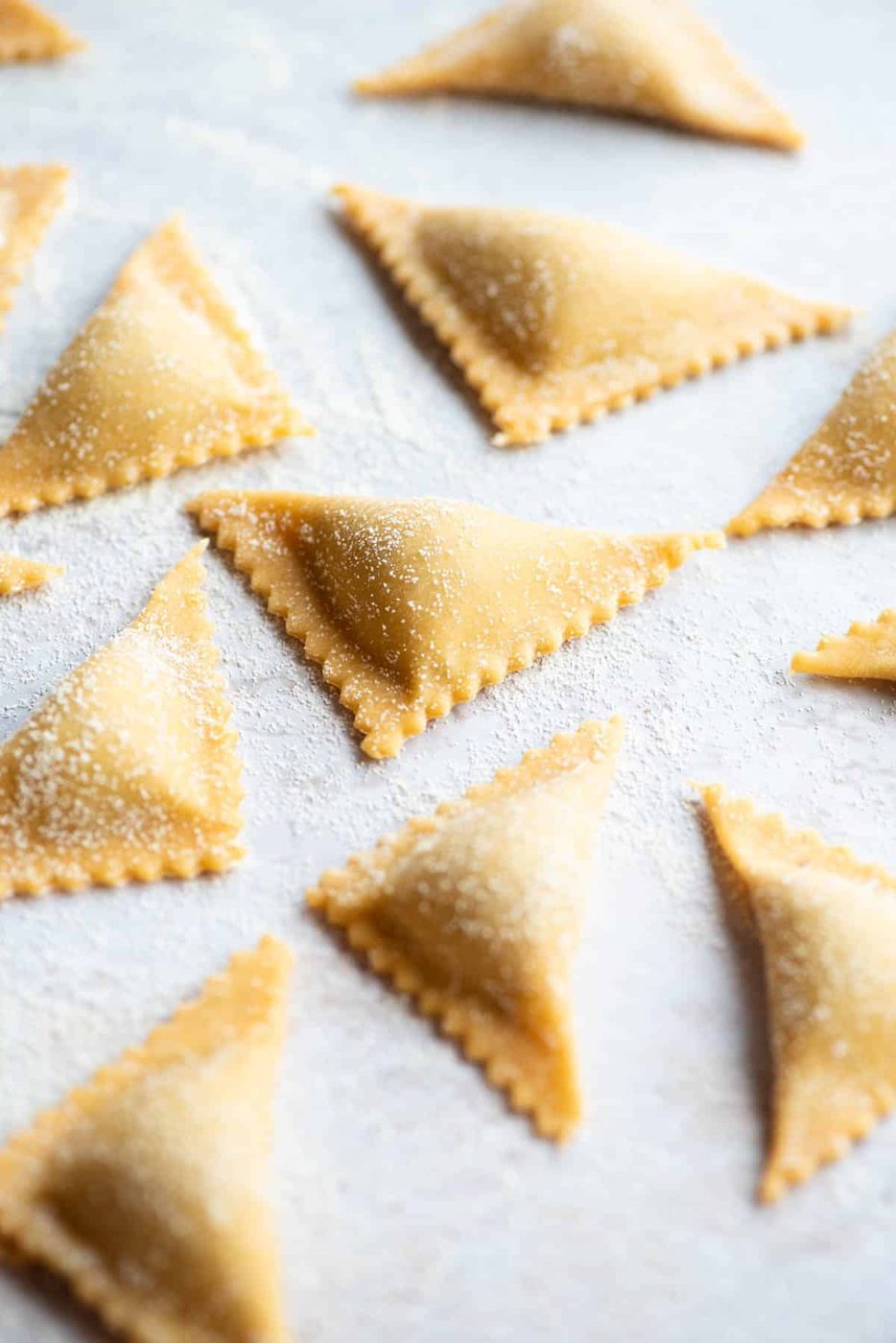
Triangoli are a simple filled pasta shape, suited to beginner pasta makers. They're similar to ravioli but are triangular instead of square. This means you only have two edges to seal instead of four so they're simple.
We're using a slightly smaller batch of our homemade pasta dough which is silky smooth and a dream to work with.
The filling is based on one of our most loved recipes on the site (mushroom ravioli) with added Taleggio cheese which is good and it's served in a simple yet good butter and parmesan sauce.
See the recipe below including notes on ingredients, step by step photos, tips, variations and a video tutorial. For the full printable recipe scroll to the bottom or click the recipe link below
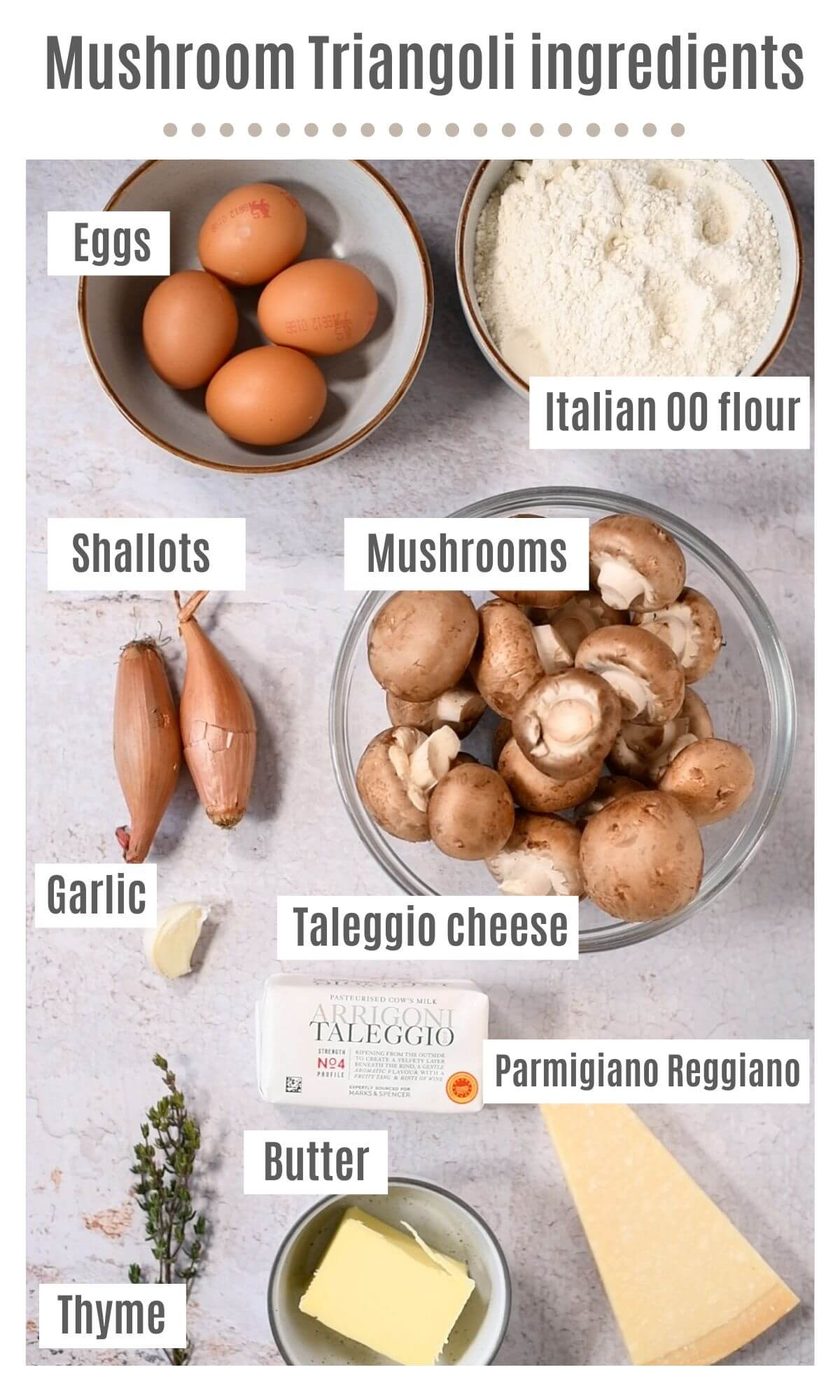
Ingredient notes and substitutions
- Italian 00 flour – this is the best flour for making homemade pasta dough. Although you could use all-purpose flour we don't recommend it.
- Eggs – for a beautiful yellow pasta dough look for eggs with golden yolks. In Italy, they're labelled as 'Pasta Gialla' (yellow dough). We use medium eggs, if you use large you may need a little more flour if you're dough is too sticky.
- Mushrooms – we used chestnut mushroom (Crimini) but other mushrooms will work well too wipe off any dirt with a damp kitchen towel.
- Taleggio cheese – this is one of our favourite Italian cheese and has a beautiful strong flavour even when melted. You could also use stracchino, ricotta (will have a milder taste) or Gorgonzola (for a stronger blue flavour).
- Fresh thyme – We highly recommend using fresh thyme and not dried as it has a totally different flavour.
- Semolina (semola) – this is optional but it's handy to have in your pantry for making pasta. Sprinkle it on your work surface to lay your filled Triangoli on to stop them from sticking.
Step by step photos and instructions
Make the pasta dough
Place the flour on a clean work surface and make a large well in the middle. Add the eggs and egg yolk to the well and beat them with a fork (photos 1 and 2).
Start incorporating the flour into the beaten egg a little at a time until a rough dough forms. Use your hands to bring the dough together and knead the dough for about 10 minutes until smooth and elastic. If you find the dough is too sticky use a little extra flour (photo 3).
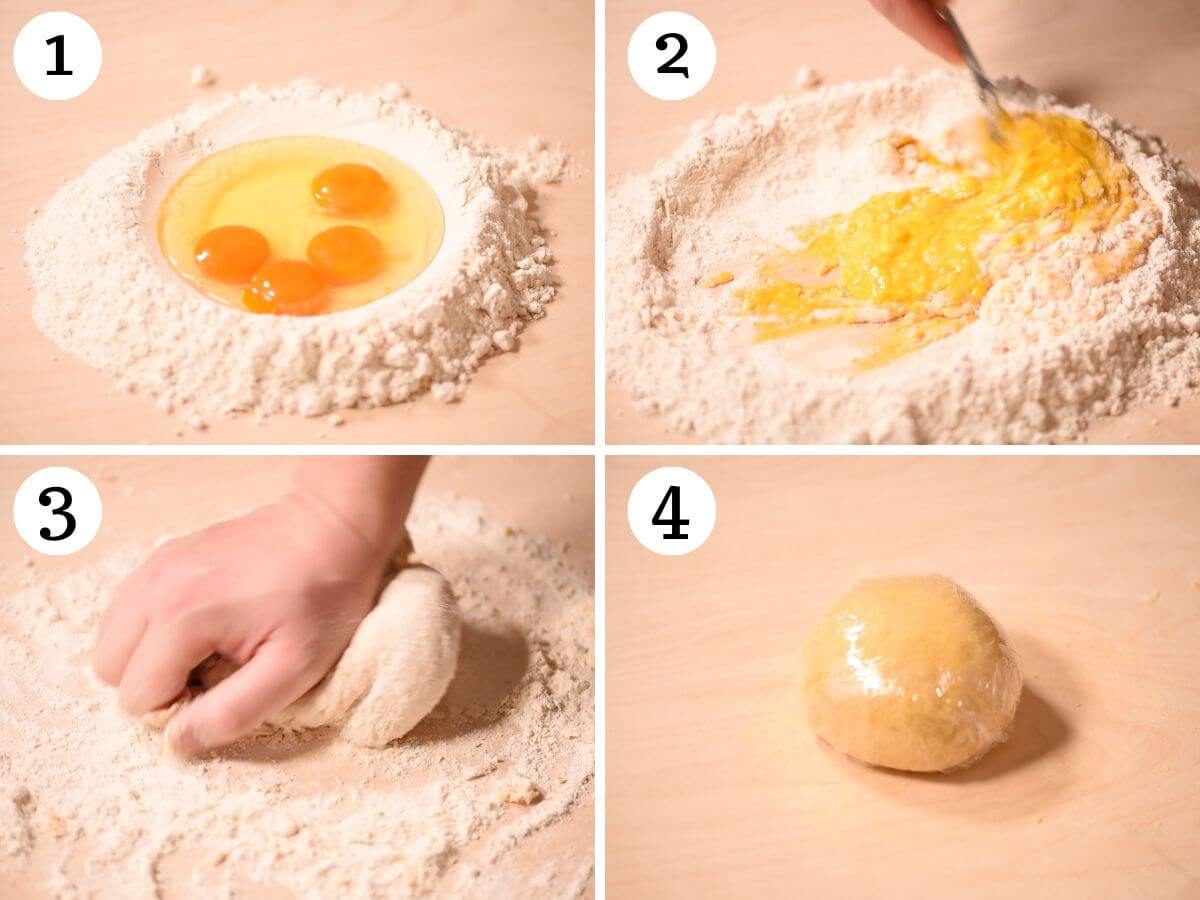
Wrap the dough in plastic wrap (cling film) and let it rest at room temperature for at least 30 minutes. You can make the dough the night before and store it in the fridge overnight (bring it to room temperature before using) (photo 4).
Make the filling
Finely chop the shallot and garlic and set aside. Roughly chop the mushrooms then add them to a large frying pan with 1-2 tablespoons of olive oil. Cook the mushrooms on a high heat until the moisture in the mushrooms has evaporated and they have shrunk in size (photos 5 and 6).
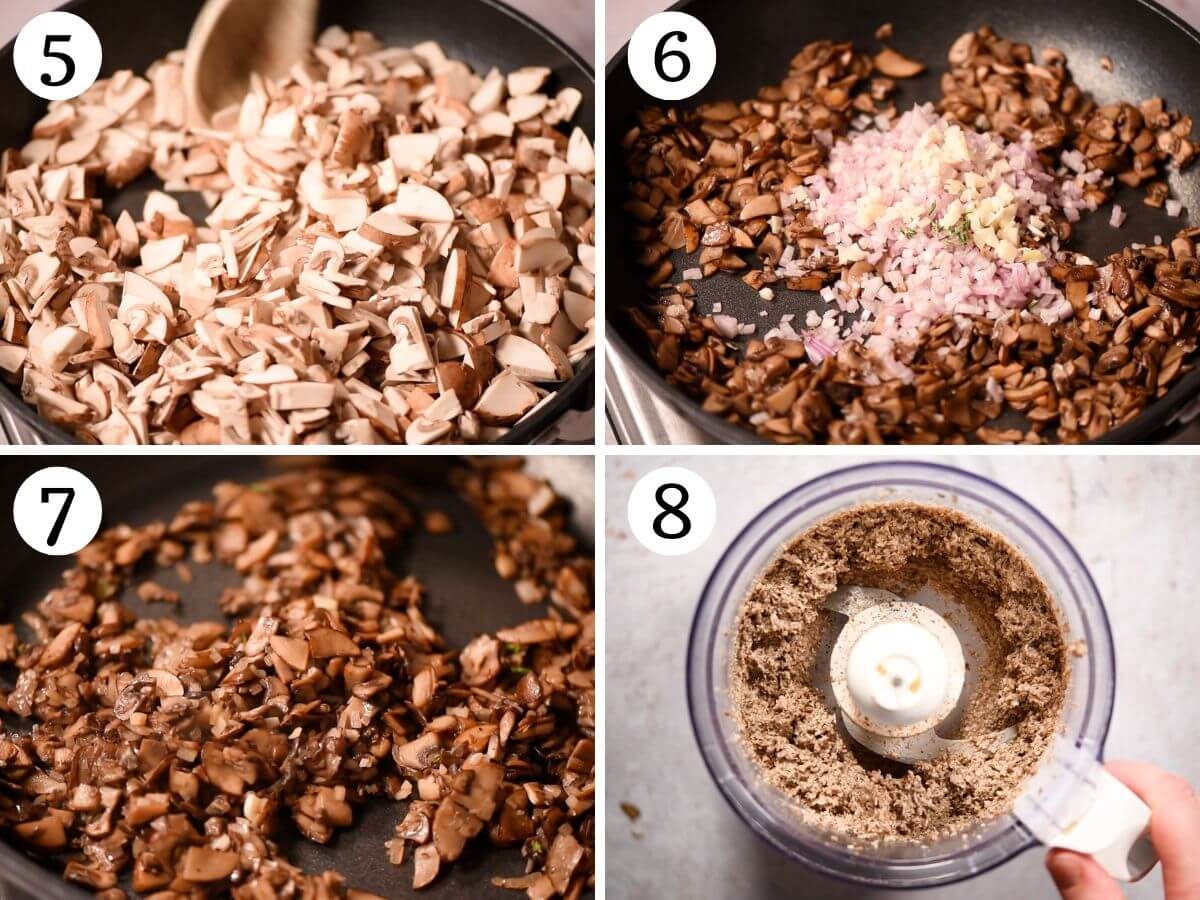
Next, add the shallot, garlic and thyme and saute for 2-3 minutes until soft and translucent. Season the mushrooms with salt and pepper and let them cool for 5 minutes (photos 6 and 7).
Add the mushrooms to a food processor with the taleggio and Parmigiano Reggiano. Blitz to a smooth paste then transfer to a bowl and set aside (photo 8).
Make the Triangoli
Cut the dough in half and keep one half wrapped in plastic wrap while using the other. Press the dough flat enough to fit into the widest setting of your pasta machine (you can use a rolling pin to help) (photos 9 and 10).
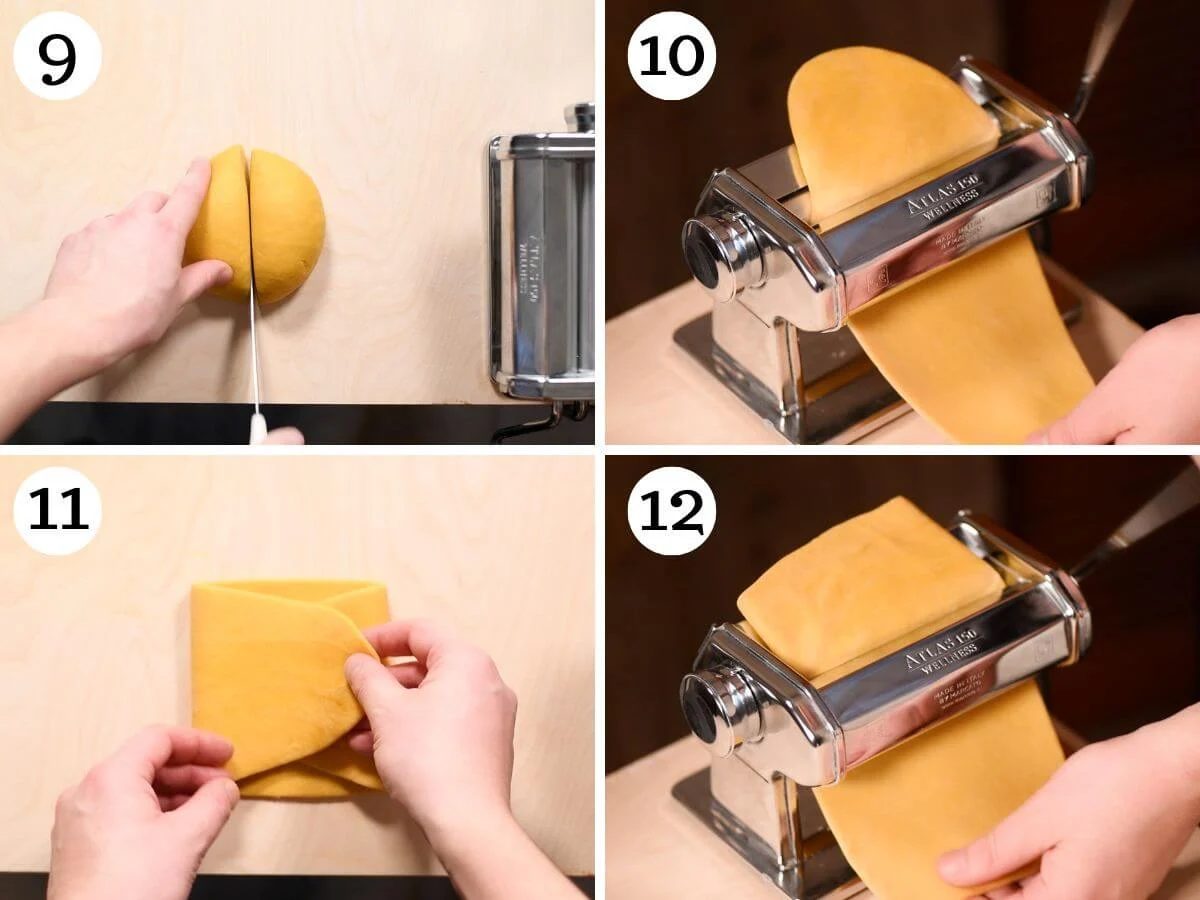
Pass the dough through the widest setting of your pasta machine (usually number 0) then fold one end into the middle of the dough and the other end directly over it as if you were creating a leaflet. Flatten the dough again and pass it through the widest setting once more (photos 11 and 12).
Your dough is now ready to roll out. Roll the dough through each setting once finishing on number 6. You may need to cut the dough in half if it gets too long to handle easily.
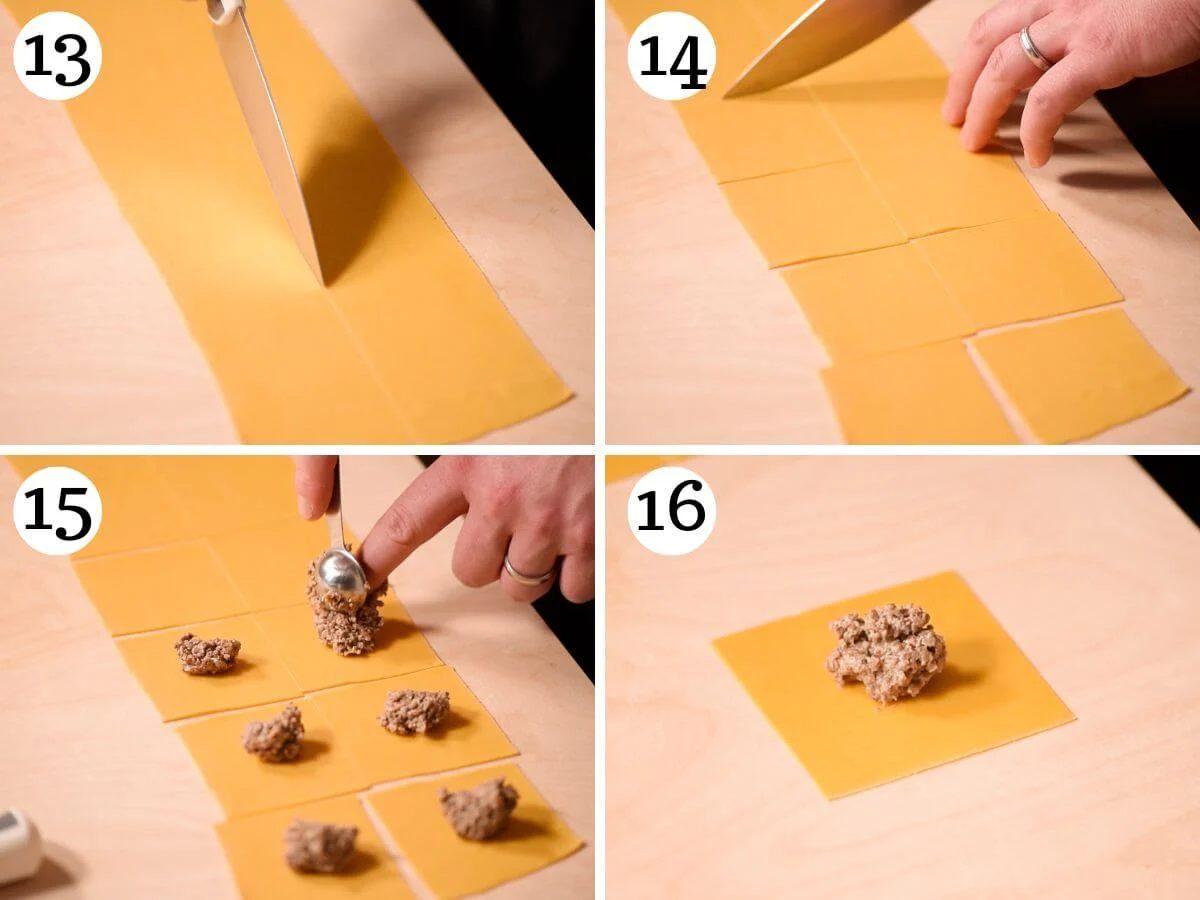
Cut your sheet of pasta dough in half lengthways then cut the pasta into squares (about 7cm, you can make them smaller if you prefer) (photos 13 and 14).
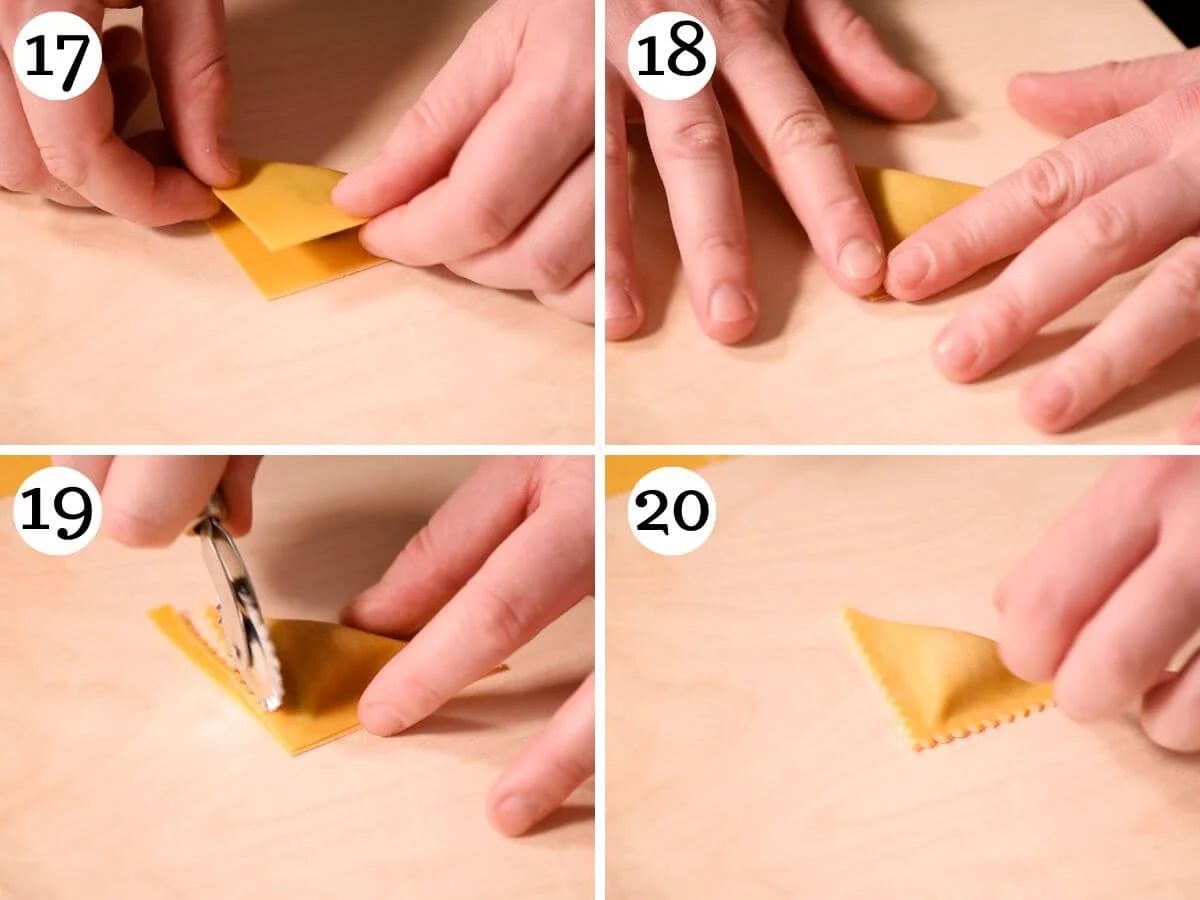
Starting with one square, dollop 1 scant teaspoon of filling in the middle of the square and fold it over corner to corner. Use your fingers to press down on the edges to seal the pasta then trim the edges with a pasta cutter or knife. Continue the process with the rest of the dough and filling to create your Triangoli. Place your finished Triangoli on a clean work surface dusted with semolina flour or more Italian 00 flour (we prefer using semolina for this) to stop them sticking (photos 15-20).
Cook the pasta and make the sauce
Bring a large pot of water to boil and salt it well. Once boiling, add the Triangoli and cook for about 3 minutes (you may need to do this in batches to stop overcrowding the pot) (photo 21).
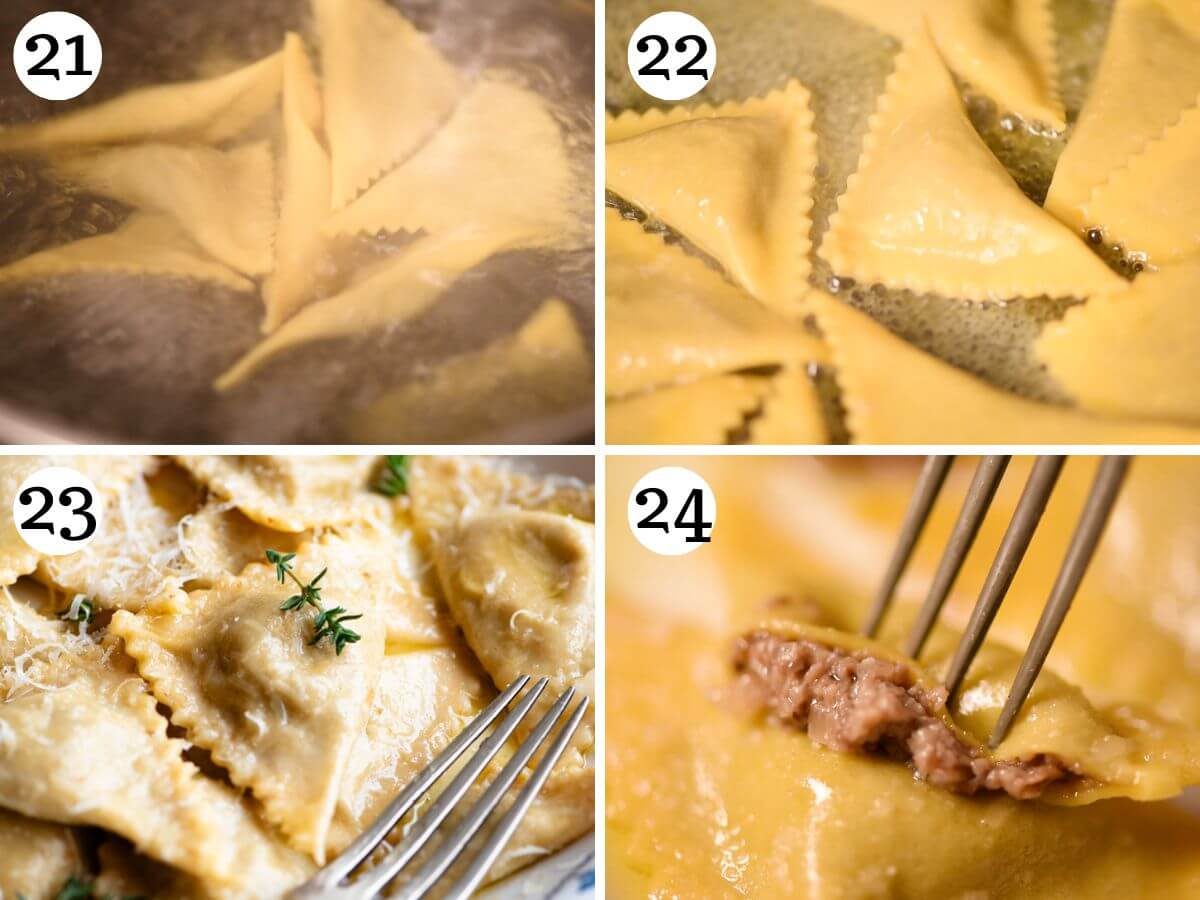
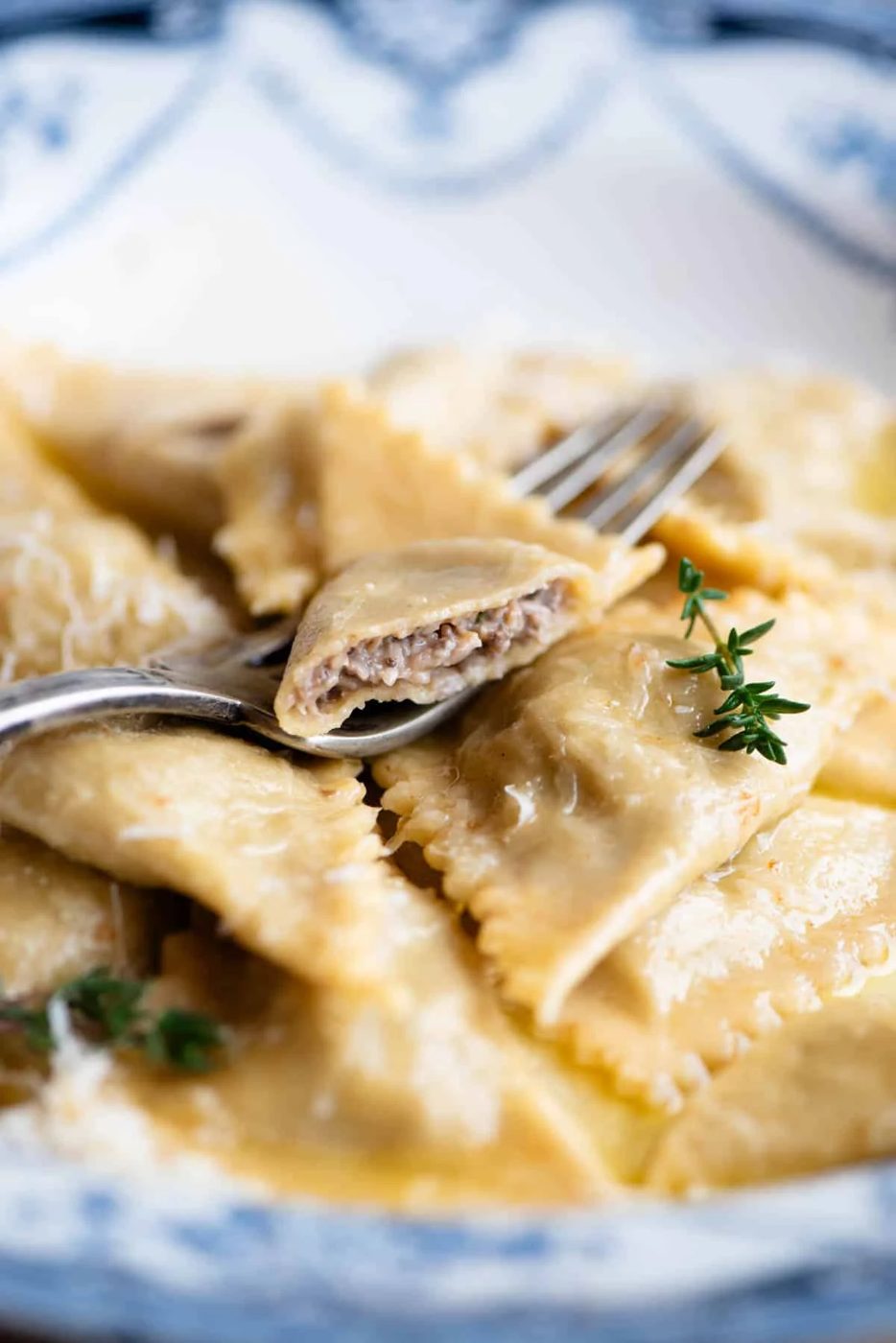
Meanwhile, melt the butter in a large frying pan. Transfer the cooked triangoli to the butter using a slotted spoon. Any residual pasta water that's added to the butter is good and will help create a creamy texture. Toss the Triangoli in the butter sauce for about 1 minute then turn off the heat and add the Parmigiano Reggiano. Serve in bowls (photos 22-24).
Recipe tips and FAQs
- Weigh your flour – as always, when working with flour we always recommend weighing it with a kitchen scale instead of using cups. It's the only way to know you have the correct amount needed for the recipe.
- Cleaning mushrooms – never wash mushrooms as they are porous. To clean them, wipe off any dirt with a damp dish towel or kitchen paper. Trim off the end of the stalk before roughly chopping.
- Using water to seal – if you find your pasta won't seal properly because it's started to dry out you can dab a tiny amount of water along the edges to seal the Triangoli.
- Kneading the dough – if you feel that the dough feels on the dryer side and it is no longer incorporating into the dough easily you leave out any leftover flour. This can happen if your eggs are on the smaller side which is why we've also provided the weight of the eggs to make sure that doesn't happen.
- Variations – you can use this recipe as a base for any filling and sauce you like. See our fresh pasta recipes for more ideas, filling options and sauces.
Yes, you can place filled triangoli on a surface sprinkled with plenty of semolina for 1-2 hours. If you want to leave them for longer you'll need to blanch them (see how to do this below) and store them in the fridge.
Can we freeze them?Yes, blanch the pasta first and let them air dry (see our directions on blanching). Once dried, place them in freezer bags then boil directly from frozen (do not defrost first).
How to blanch pasta for freezing
If you want to prepare your Triangoli pasta in advance to store in either the fridge or freezer you need to blanch them first. If you don't blanch the pasta it'll either turn soggy in the fridge or brittle and break in the freezer.
To blanch pasta, bring a large pot of water to a boil. Add the Triangoli and boil for about 1 and a half minutes (half of the original cooking time).
Remove the pasta with a slotted spoon and transfer to a clean dish towel. Lay them in an even layer and allow them to air dry. You'll need to turn them around once the top side has dried.
Once dried, transfer them to freezer bags to freeze or store in the fridge for up to 3 days.
More homemade pasta recipes to try
Fresh Pasta
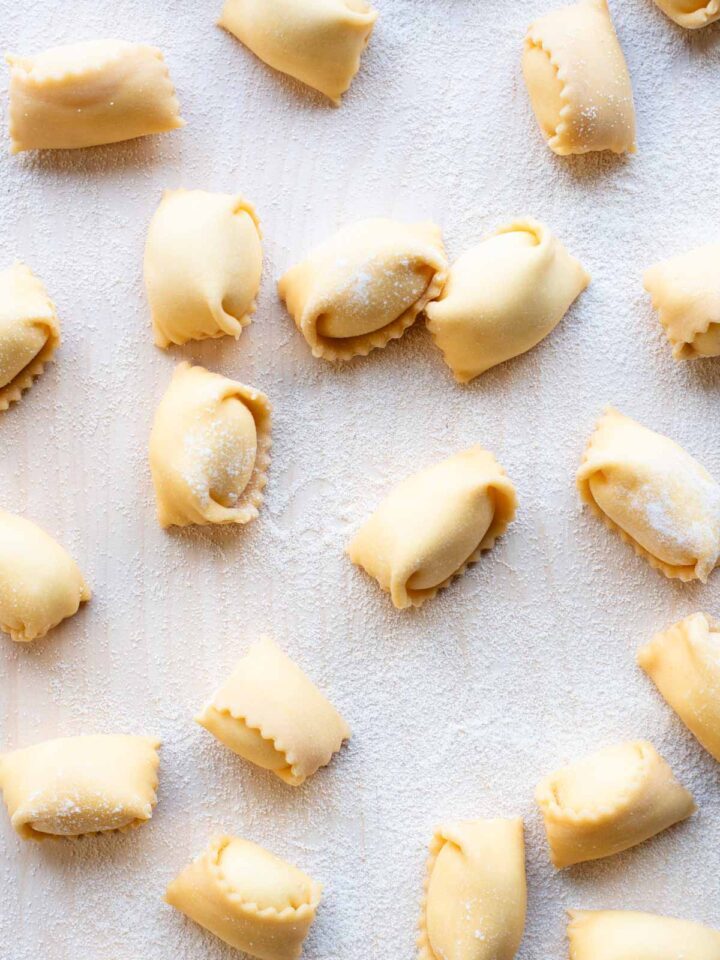
Homemade Agnolotti (step by step)
Fresh Pasta
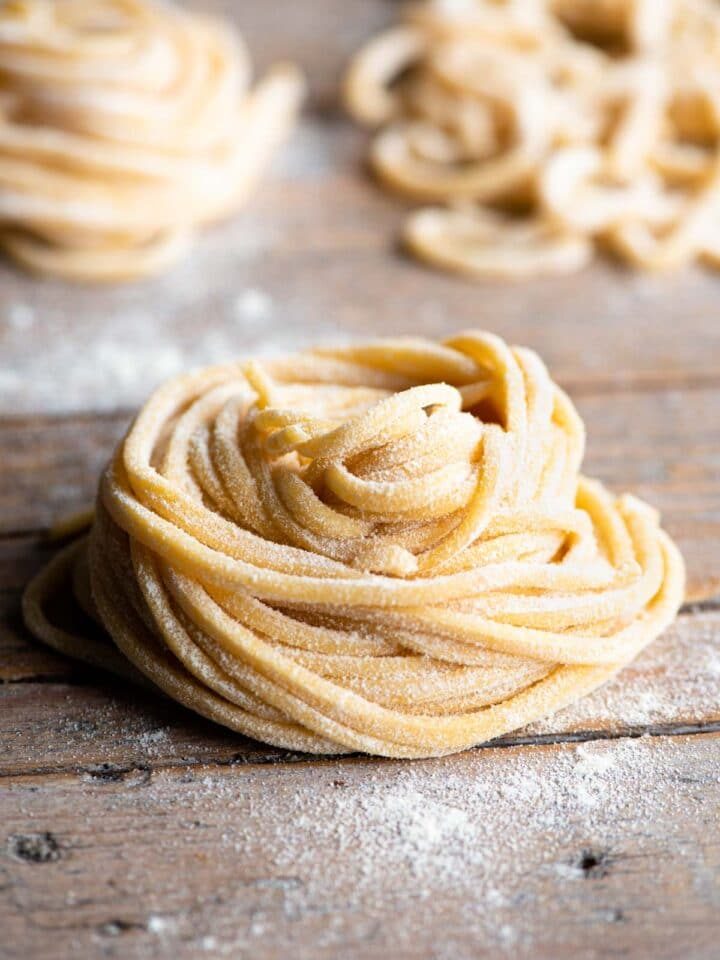
Homemade Tonnarelli Pasta (Spaghetti alla Chitarra)
Fresh Pasta
Homemade Cavatelli Pasta
Tips & Tricks
How to Make Homemade Ravioli – The Ultimate Guide
Ingredients
Makes 4 - 6 servings (about 50 triangoli)
- 3 medium eggs (165g)
- 1 egg yolk
- 300 g Italian 00 flour ((2 and ¼ cups))
- semolina for dusting ((optional, can use flour instead))
Filling
- 600 g crimini (chestnut) mushrooms ((1.3 lbs))
- 2 shallots
- 1 clove garlic
- 1 sprig fresh thyme
- 50 g Taleggio cheese ((2 oz))
- 1 tablespoon freshly grated Parmigiano Reggiano ((15g))
- Salt and pepper
Sauce
- 7 tablespoons Butter ((3.5oz/100g))
- Parmigiano Reggiano
Equipment
- Pasta machine or rolling pin
- pasta cutter or knife
- Food processor
Method
Make the pasta dough
Place the flour on a clean work surface and make a large well in the middle. Add the eggs and egg yolk to the well and beat them with a fork.
Start incorporating the flour into the beaten egg a little at a time until a rough dough forms. Use your hands to bring the dough together and knead the dough for about 10 minutes until smooth and elastic. If you find the dough is too sticky use a little extra flour.
Wrap the dough in plastic wrap (cling film) and let it rest at room temperature for at least 30 minutes. You can make the dough the night before and store it in the fridge overnight (bring it to room temperature before using).
Make the filling
Finely chop the shallot and garlic and set aside. Roughly chop the mushrooms then add them to a large frying pan with 1-2 tablespoons of olive oil. Cook the mushrooms on a high heat until the moisture in the mushrooms has evaporated and they have shrunk in size.
Next, add the shallot, garlic and thyme and saute for 2-3 minutes until soft and translucent. Season the mushrooms with salt and pepper and let them cool for 5 minutes.
Add the mushrooms to a food processor with the taleggio and Parmigiano Reggiano. Blitz to a smooth paste then transfer to a bowl and set aside to cool completely.
Make the Triangoli
Note: make sure the filling is cold before starting.
Cut the dough in half and keep one half wrapped in plastic wrap while using the other. Press the dough flat enough to fit into the widest setting of your pasta machine (you can use a rolling pin to help).
Pass the dough through the widest setting of your pasta machine (usually number 0) then fold one end into the middle of the dough and the other end directly over it as if you were creating a leaflet. Flatten the dough again and pass it through the widest setting once more. Repeat this process another two times.
Your dough is now ready to roll out. Roll the dough through each setting once finishing on number 6. You may need to cut the dough in half if it gets too long to handle easily.
Cut your sheet of pasta dough in half lengthways then cut the pasta into squares (about 7cm, you can make them smaller if you prefer).
Starting with one square, dollop 1 teaspoon of filling in the middle of the square and fold it over corner to corner. Use your fingers to press down on the edges to seal the pasta. Continue the process with the rest of the dough and filling to create your Triangoli. Place your finished Triangoli on a clean work surface dusted with semolina flour or more Italian 00 flour (we prefer using semolina for this) to stop them sticking.
Cook the pasta and make the sauce
Bring a large pot of water to boil and salt it well. Once boiling, add the Triangoli and cook for about 3 minutes (you may need to do this in batches to stop overcrowding the pot).
Meanwhile, melt the butter in a large frying pan. Transfer the cooked triangoli to the butter using a slotted spoon. Any residual pasta water that's added to the butter is good and will help create a creamy texture. Toss the Triangoli in the butter sauce for about 1 minute then turn off the heat and add the Parmigiano Reggiano. Serve in bowls.
Kitchen notes
-
- Weigh your flour as always, when working with flour we always recommend weighing it with a kitchen scale instead of using cups. It's the only way to know you have the correct amount needed for the recipe.
- Kneading the dough if you feel that the dough feels on the dryer side and it is no longer incorporating into the dough easily you leave out any leftover flour. This can happen if your eggs are on the smaller side which is why we've also provided the weight of the eggs to make sure that doesn't happen.
- Cleaning mushrooms never wash mushrooms as they are porous. To clean them, wipe off any dirt with a damp dish towel or kitchen paper. Trim off the end of the stalk before roughly chopping.
- Using water to seal if you find your pasta won't seal properly because it's started to dry out you can dab a tiny amount of water along the edges to seal the Triangoli.
- Freezing and storage before storing in the fridge or freezer you need to blanch the pasta first (see how to do this in the post). Blanched triangoli pasta will keep well in the fridge for up to 3 days or can be frozen for up to 3-6 months. Cook straight from frozen.