
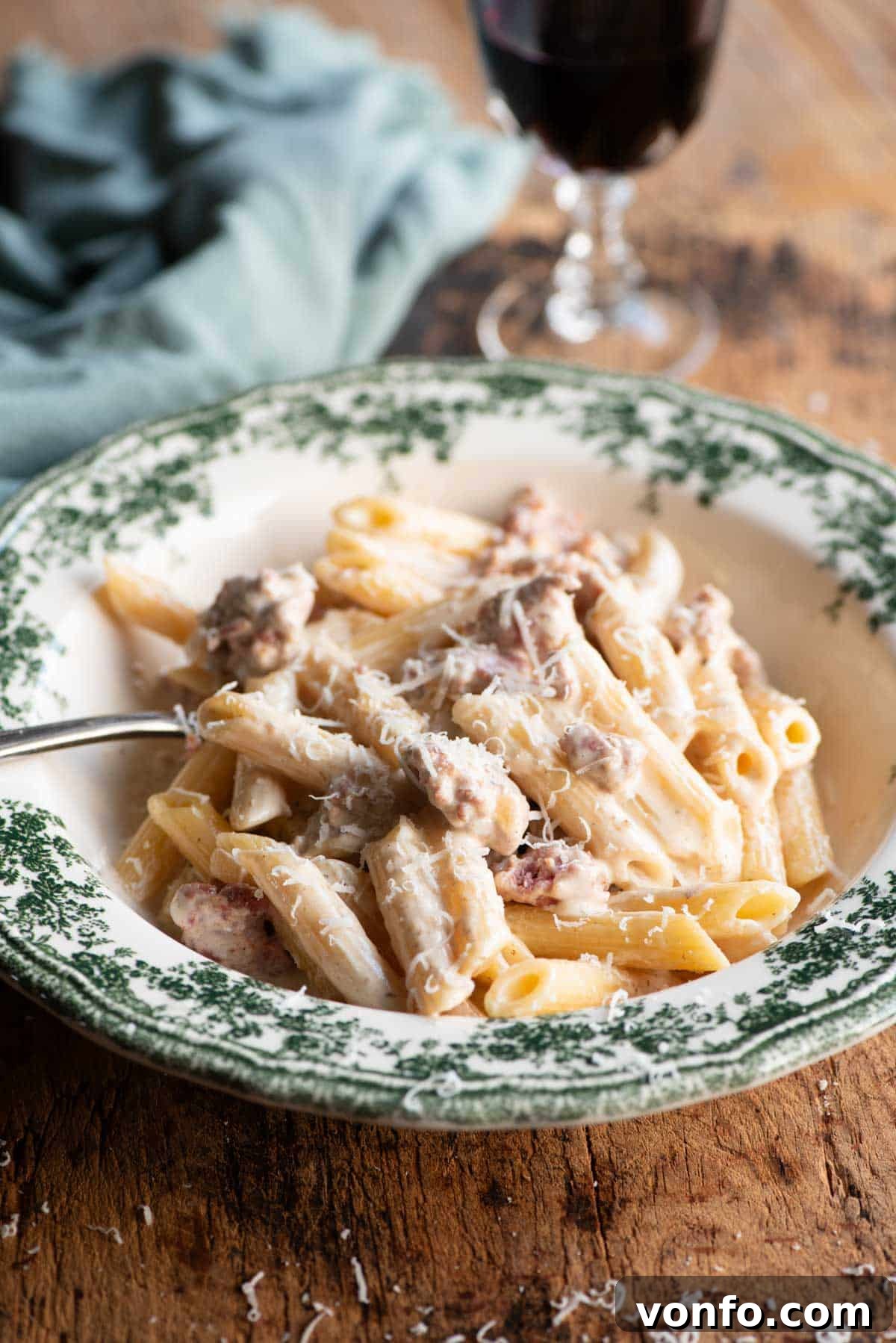
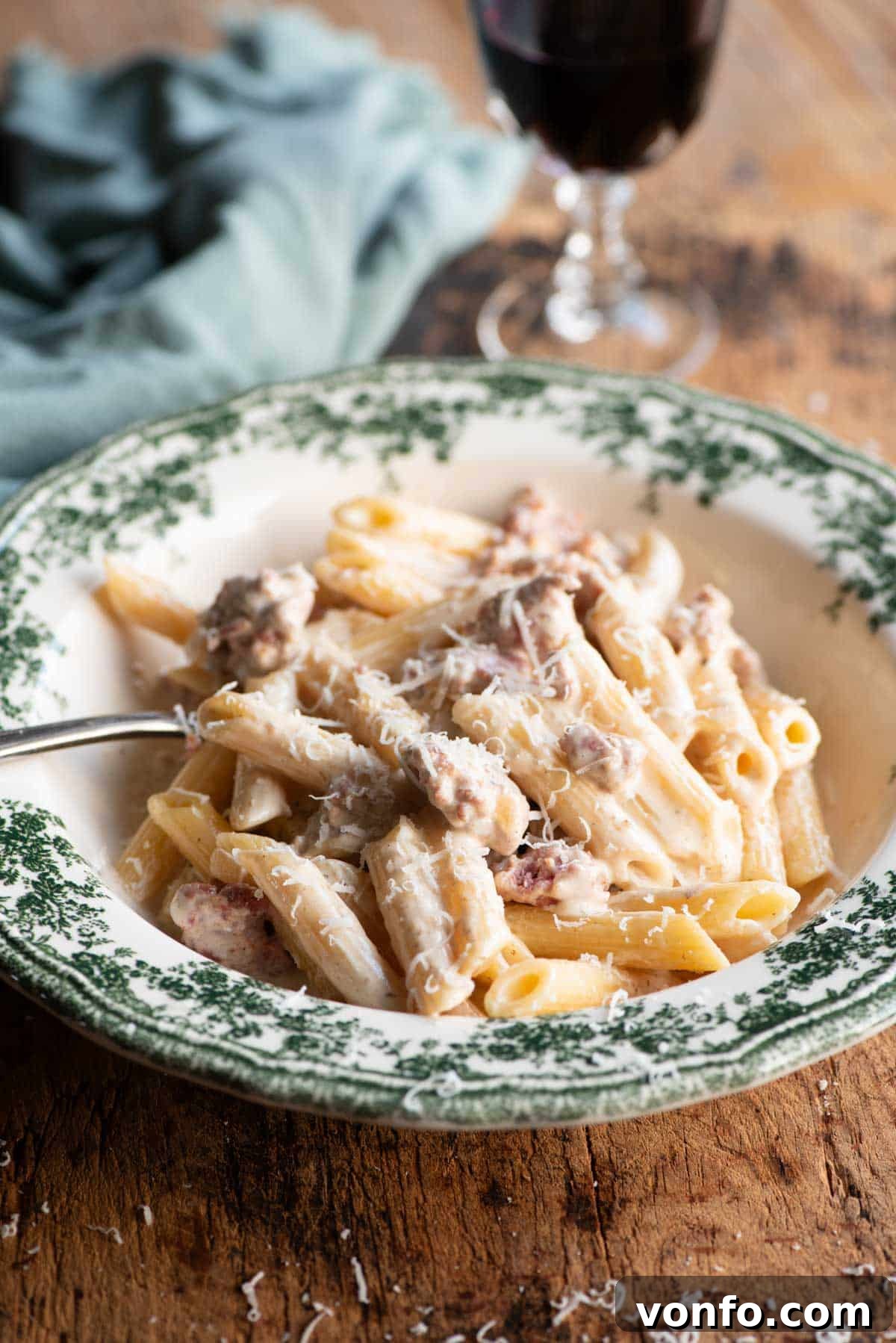
Pasta alla Norcina is more than just a dish; it’s a culinary journey to the heart of Umbria, Italy. This exceptionally rich and flavorful pasta combines succulent Italian sausage and fine white wine in a luxurious creamy truffle sauce, all crowned with a generous grating of Pecorino cheese. It’s an incredibly indulgent experience, brimming with deep, satisfying flavors, and surprisingly, it comes together in just 30 minutes!
The Heart of Umbria: Norcia and Its Culinary Heritage
Pasta alla Norcina is the epitome of comfort food, hailing from Norcia, a charming small town nestled in the picturesque region of Umbria. Norcia is globally renowned for its extraordinary pork butchery and exquisite cured meats, a tradition deeply embedded in its history and culture.
The town’s reputation for its meat and butchery is so profound that the term ‘Norcino’ has become an official designation in Italy. It refers to specialized butchers who possess exceptional skill in preparing, curing, and preserving Norcia’s famous cured meats and sausages. This centuries-old expertise ensures that Norcia sausages are of unparalleled quality and flavor, making them the star ingredient in this beloved pasta dish.
While authentic Norcia sausages can be a treasure to find outside of Italy, the essence of the dish can still be captured using high-quality, mild Italian sausages. The key is to opt for unspiced varieties to allow the delicate truffle and rich pork flavors to shine through, promising an unforgettable bowl of pasta.
Umbria’s Black Gold: The Allure of Truffles
Umbria is not only famous for its pork but also widely celebrated for its prized black truffles, which add an extra layer of decadence and luxury to Pasta alla Norcina. The presence of truffles elevates this dish from merely delicious to truly extraordinary, making it a must-try for anyone seeking a sophisticated yet comforting meal.
The creamy truffle sauce is a marvel in itself – a harmonious blend that you’ll undoubtedly want to recreate time and again, especially when the craving for something profoundly comforting strikes. The earthy aroma and unique flavor of truffles meld seamlessly with the savory sausage and rich cream, creating a symphony for the palate.
A crucial tip for achieving the deepest flavors is to allow the Italian sausages and onions to truly caramelize in the pan. This process creates a rich, browned crust at the bottom of the pan, known as “fond.” Deglazing the pan with white wine then becomes an essential step, as it scrapes up all these incredibly flavorful bits, integrating them directly into the sauce and intensifying its depth.
When it comes to incorporating truffle, you have a few options: truffle paste or truffle oil. It’s vital to use these ingredients sparingly and to add them to taste. The intensity can vary significantly between brands, and the goal is to enhance the dish with truffle notes without overpowering the other delicate flavors. Of course, if you are fortunate enough to source fresh truffles – whether black or white – they will offer the most authentic and exquisite aroma, making the dish truly special.
For the ultimate enjoyment, serve this exquisite pasta generously topped with freshly grated Pecorino cheese and accompanied by a glass of your favorite Italian wine (vino!).
Essential Ingredients for Authentic Pasta alla Norcina
Ingredient Notes and Expert Substitutions
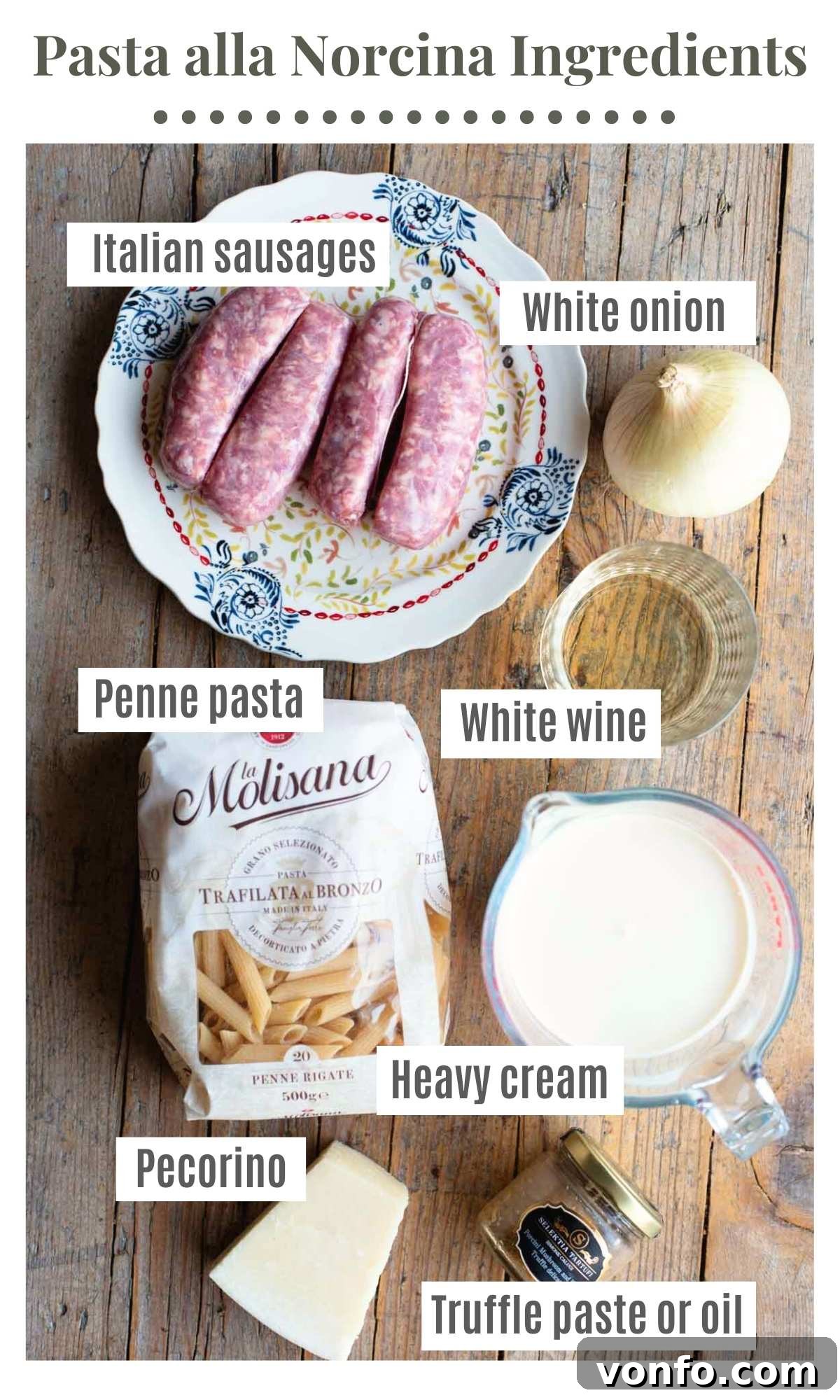
- Pasta: For this robust sauce, we recommend using a good quality short pasta. Shapes like penne or rigatoni are ideal as their grooves and tubes are perfect for capturing the creamy sauce and bits of sausage. Penne pasta is traditionally the most commonly used shape for Pasta alla Norcina.
- Italian Sausages: While genuine Norcina sausages are a rare find outside of Italy, the essence of the dish can be beautifully recreated with any high-quality, mild Italian sausage. It’s crucial to avoid spicy or hot varieties, as their strong flavors can detract from the delicate truffle and other ingredients. Look for fresh pork sausages without fennel or chili flakes.
- White Wine: A dry white wine is best for deglazing and adding depth. We typically use Pinot Grigio for its crispness and subtle fruit notes, but most dry Italian white wines will work wonderfully. Always use a wine you would enjoy drinking, and avoid generic “cooking wine” as its quality can negatively impact the flavor.
- Truffle: Traditionally, fresh black truffle is the star here. If you are lucky enough to source fresh truffle, either black or white, it will offer the most authentic and aromatic experience. For more accessible options, high-quality truffle paste or truffle oil (both white and black varieties are available) can be used. Remember to add it gradually and taste as you go, as truffle products vary greatly in intensity, and you want its flavor to complement, not dominate.
- Pecorino Cheese: Pecorino Romano or Pecorino Sardo (Stagionato) are the traditional choices, offering a sharp, salty flavor that beautifully cuts through the richness of the sauce. If Pecorino is unavailable, Parmigiano Reggiano is a very good substitute, providing a similar umami depth with a slightly milder profile.
- Heavy Cream: Essential for that luxurious, velvety texture. Ensure it has a high fat content (double cream in the UK) to prevent it from splitting and to create a truly decadent sauce.
- Onion: Finely chopped white onion provides a sweet, aromatic base when caramelized with the sausage.
- Salt: Essential for seasoning both the pasta water and the sauce. Adjust to taste, considering the saltiness of the Pecorino cheese and Italian sausage.
Visual Guide: Crafting Your Pasta alla Norcina
This section offers a visual guide to assist you through each step of the recipe. For comprehensive written instructions, precise ingredient quantities, and additional expert tips, please refer to the detailed recipe card provided below.
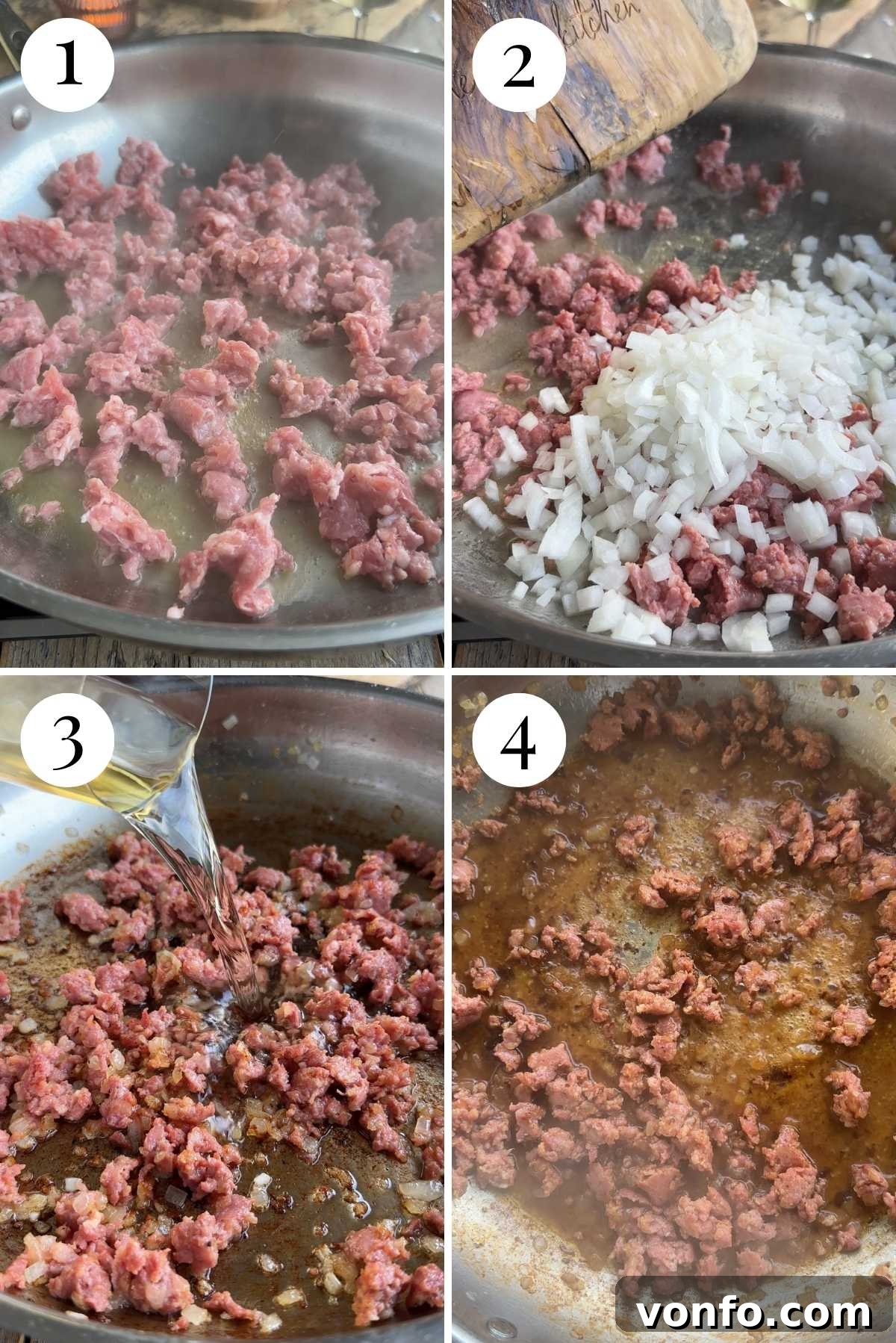
- Brown the Sausage: Begin by removing the casings from your Italian sausages. In a large pan, heat a touch of olive oil over medium heat and add the sausage meat. Break it up with a wooden spoon as it cooks, browning it evenly for about 2-3 minutes until no pink remains. This initial browning is crucial for developing deep flavors (Photo 1).
- Sauté the Onion: Once the sausage is browned, add the finely chopped white onion to the pan. Continue to sauté the onion with the sausage, stirring occasionally, until it becomes soft, translucent, and just begins to caramelize and turn golden, typically taking 7-8 minutes. This step is vital for building a sweet, aromatic foundation for your sauce (Photos 2 and 3).
- Cook the Pasta: Just before you add the wine to the sauce pan, bring a large pot of heavily salted water to a rolling boil. Add your chosen pasta (penne or rigatoni) and cook according to package directions until it is perfectly al dente. Reserve about a cup of the starchy pasta water before draining.
- Deglaze the Pan: Pour the white wine into the pan with the sausage and onion mixture. Immediately scrape the bottom of the pan vigorously with your wooden spoon to loosen all those flavorful brown bits (the “fond”). Let the wine simmer and reduce by about half, allowing its sharp alcohol notes to mellow and concentrate the flavors (Photos 3 and 4).
- Create the Creamy Sauce: Next, stir in the heavy cream and bring the mixture to a gentle simmer for a few minutes until it slightly thickens. Then, remove the pan from the heat and stir in a good grating of Pecorino cheese, followed by the truffle paste or oil. Taste the sauce and adjust the truffle amount as needed; it should be noticeable but not overwhelming (Photos 5-7).
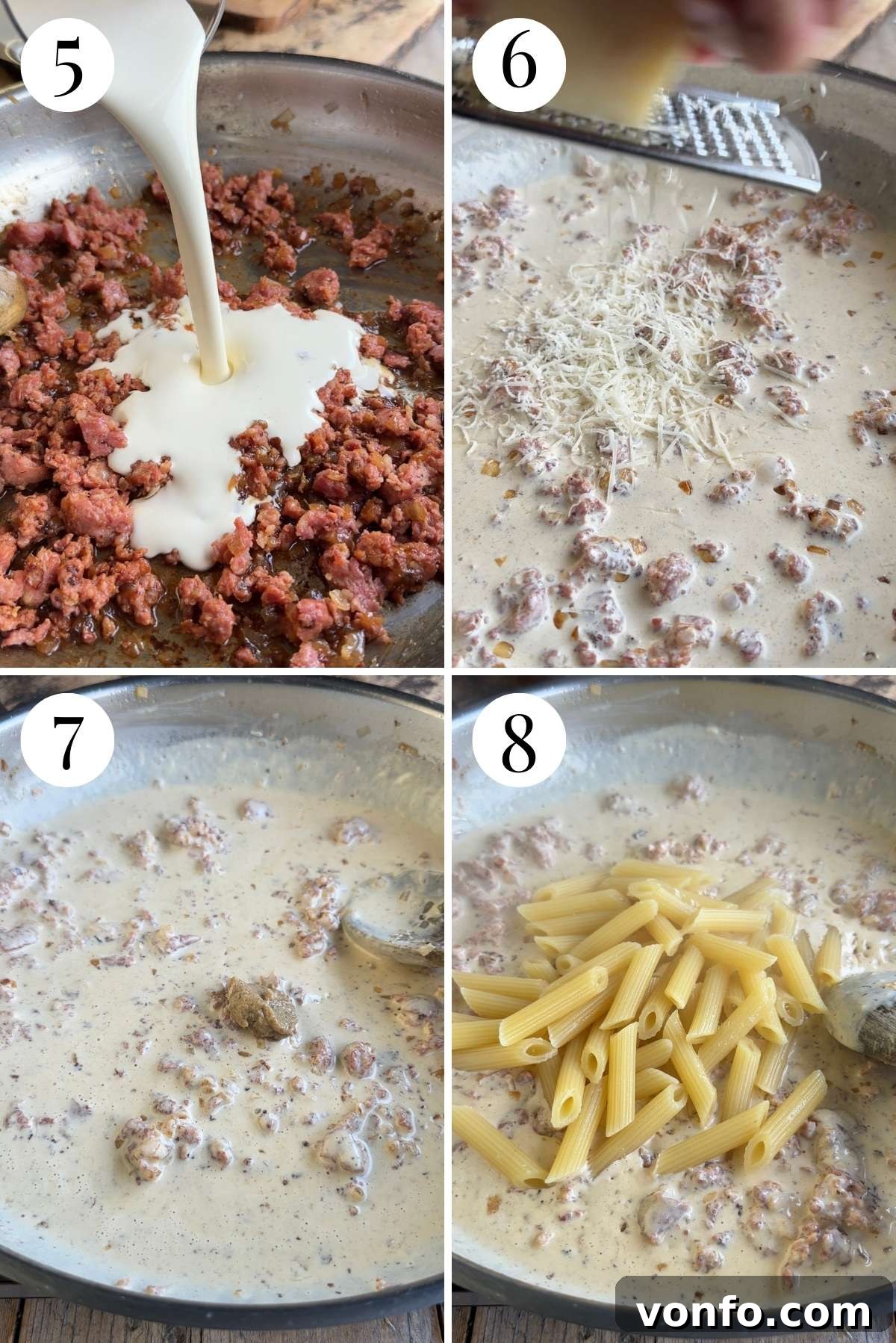
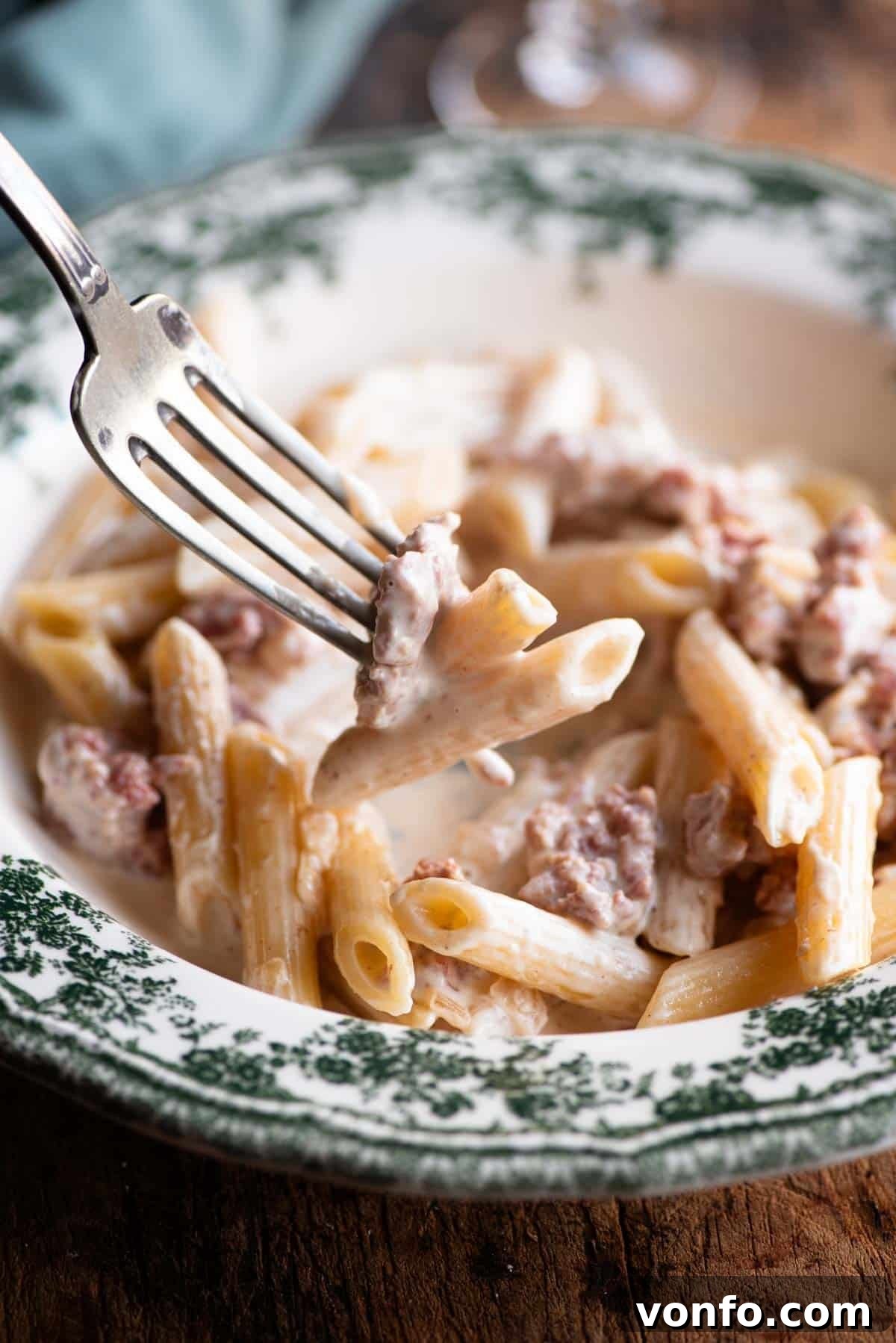
- Combine and Serve: Add the freshly cooked and drained pasta directly to the pan with the creamy sausage and truffle sauce. Toss thoroughly to ensure every piece of pasta is beautifully coated. If the sauce appears too thick, add a splash of the reserved pasta water to achieve your desired consistency. Serve immediately in warm bowls, topped with an extra grating of Pecorino cheese and, if available, a few shavings of fresh truffle (Photo 8).
Explore More Italian Comfort Food Recipes
If you’ve fallen in love with the comforting flavors of Pasta alla Norcina, we invite you to explore more authentic Italian dishes from our collection. From hearty soups to decadent casseroles, there’s always something new to discover and enjoy.
Mains
Zuppa alla Valpellinese (Cheese and Cabbage Casserole)
Pasta
Pasta alla Zozzona (A Roman Classic)
Soups
Butternut Squash Pasta Soup with Crispy Pancetta
Soups
Minestra di Riso (Italian Rice Soup)
We hope you thoroughly enjoy this Pasta alla Norcina recipe! If you try this, or any other recipe from our blog, please don’t forget to rate the recipe and share your feedback in the comments below. We truly love hearing from you! You can also follow us on Facebook, Instagram, and Pinterest, or sign up for our Newsletter to receive weekly delicious food inspiration directly in your inbox.
Step By Step Photos Above
Most of our recipes include detailed step-by-step photos, helpful tips, and tricks to ensure perfect results on your first attempt, and sometimes even a video!
Pasta alla Norcina
By Emily
5 mins
20 mins
25 mins
4 – 6 servings
Print Recipe
Ingredients
- 14 oz (400g) Penne pasta (or rigatoni)
- 4 Italian sausages (around 350g/12oz), mild and unspiced
- 1 white onion, finely chopped
- ½ cup (125ml) dry white wine (e.g., Pinot Grigio)
- 1 ½ cups (340g) heavy (double) cream
- Truffle paste or truffle oil, to taste (see notes for guidance)
- Pecorino Romano cheese, freshly grated, plus more for serving
- Salt, to taste
- Extra virgin olive oil (optional, for sautéing if sausages are lean)
Instructions
- Bring a large pot of water to a rolling boil. Season it generously with salt; the water should taste like the sea. Finely chop the white onion.
- Heat a large pan over medium heat. Remove the casings from the Italian sausages and add the meat to the pan. Brown the sausage for 2-3 minutes, breaking it apart with a wooden spoon until it’s crumbled and no longer pink.
- Once the sausage is browned, add the finely chopped onion to the pan. Sauté the onion with the sausage for about 7-8 minutes, stirring occasionally. Cook on a medium heat until the onion softens, becomes translucent, and starts to turn golden. Be careful not to let it burn, as this can add bitterness.
- When the onion and sausage mixture is ready, add your pasta to the boiling salted water. Cook according to package instructions until it is perfectly al dente, meaning it’s firm to the bite.
- Next, pour the white wine into the pan to deglaze it. Using your wooden spoon, scrape up all the flavorful brown bits (fond) from the bottom of the pan. Allow the wine to simmer and reduce by half, which concentrates its flavor and cooks off the alcohol.
- Once the wine has reduced, stir in the heavy cream and bring the sauce to a gentle simmer. Let it cook for a few minutes until it thickens slightly, enough to coat the back of a spoon.
- Just before adding the cooked pasta, stir in the truffle paste or oil into the creamy sauce. We highly recommend adding a small amount at a time, tasting after each addition, to ensure the truffle flavor is present but not overpowering.
- Stir in a generous grating of Pecorino cheese into the sauce. Then, add the cooked pasta directly to the pan and toss thoroughly to coat every strand or piece evenly with the rich, creamy sauce. If the sauce is too thick, you can add a tablespoon or two of the reserved pasta cooking water to loosen it to your desired consistency.
- Serve immediately in warm bowls, topped with more freshly grated Pecorino cheese and, for an extra touch, a few shavings of fresh truffle if you have it. Enjoy this indulgent Umbrian classic!
Video
Chef’s Notes & Tips
- Top Tip for Flavor: The secret to deep flavor lies in thoroughly caramelizing the onion and sausage together. Cook them over a medium heat until the onion is soft, translucent, and just beginning to turn golden, ensuring it doesn’t burn. When deglazing the pan with wine, diligently scrape all those browned bits from the bottom – this “fond” is packed with concentrated flavor that will enrich your sauce immensely!
- Adding Truffle with Care: If you are using fresh black truffle, simply grate or finely slice it over each bowl of pasta just before serving. For truffle paste or oil (white or black), add it cautiously. Truffle oil, in particular, can be very pungent, so introduce it a little at a time and taste the sauce as you go. The goal is to infuse a subtle truffle aroma, not to let it overpower the entire dish.
- Choosing Italian Sausages: To maintain the authentic flavor profile of Pasta alla Norcina, it’s best to avoid Italian sausages that contain strong secondary flavors such as fennel seeds or chili flakes. These ingredients, while delicious in other dishes, can alter the traditional taste of this Umbrian classic. Opt for a plain, mild Italian pork sausage.
- Leftovers and Storage: Because this is a cream-based sauce, Pasta alla Norcina is best enjoyed immediately after preparation when the pasta is perfectly coated and the sauce is at its creamiest. If you have leftovers, store them in an airtight container in the refrigerator for up to 1-2 days. When reheating, gently warm in a pan over low heat, adding a splash of water or broth to loosen the sauce as it will thicken significantly.
- Freezing: We do not recommend freezing this pasta or its sauce. Cream-based sauces and cooked pasta tend to change texture unpleasantly upon freezing and thawing, leading to a grainy sauce and mushy pasta.
Helpful Info for All Recipes
- We consistently use extra virgin olive oil in all our recipes unless explicitly stated otherwise.
- For the best results and flavor, when using canned or jarred tomatoes of any kind, we always recommend Cirio or Mutti brands.
- All vegetables specified are medium-sized unless an alternative size is indicated.
- Every recipe featured on our blog is meticulously tested and developed using a fan (convection) oven.
- Find out more about how nutrition information is calculated on our site.
- Check out our list of must-have Italian Pantry Staples to keep your kitchen stocked for authentic cooking.
- You can also explore all our Essential Kitchen Tools for Italian Cooking to ensure you have the right equipment.
Nutrition Information (per serving)
- Calories: 668 kcal
- Carbohydrates: 79 g
- Protein: 26 g
- Fat: 24 g
- Saturated Fat: 8 g
- Polyunsaturated Fat: 4 g
- Monounsaturated Fat: 10 g
- Trans Fat: 0.2 g
- Cholesterol: 61 mg
- Sodium: 550 mg
- Potassium: 512 mg
- Fiber: 4 g
- Sugar: 5 g
- Vitamin A: 68 IU
- Vitamin C: 4 mg
- Calcium: 41 mg
- Iron: 2 mg
Nutrition information is automatically calculated and should only be used as an approximation.
Did you try this recipe? Leave a comment below and let us know your thoughts!