
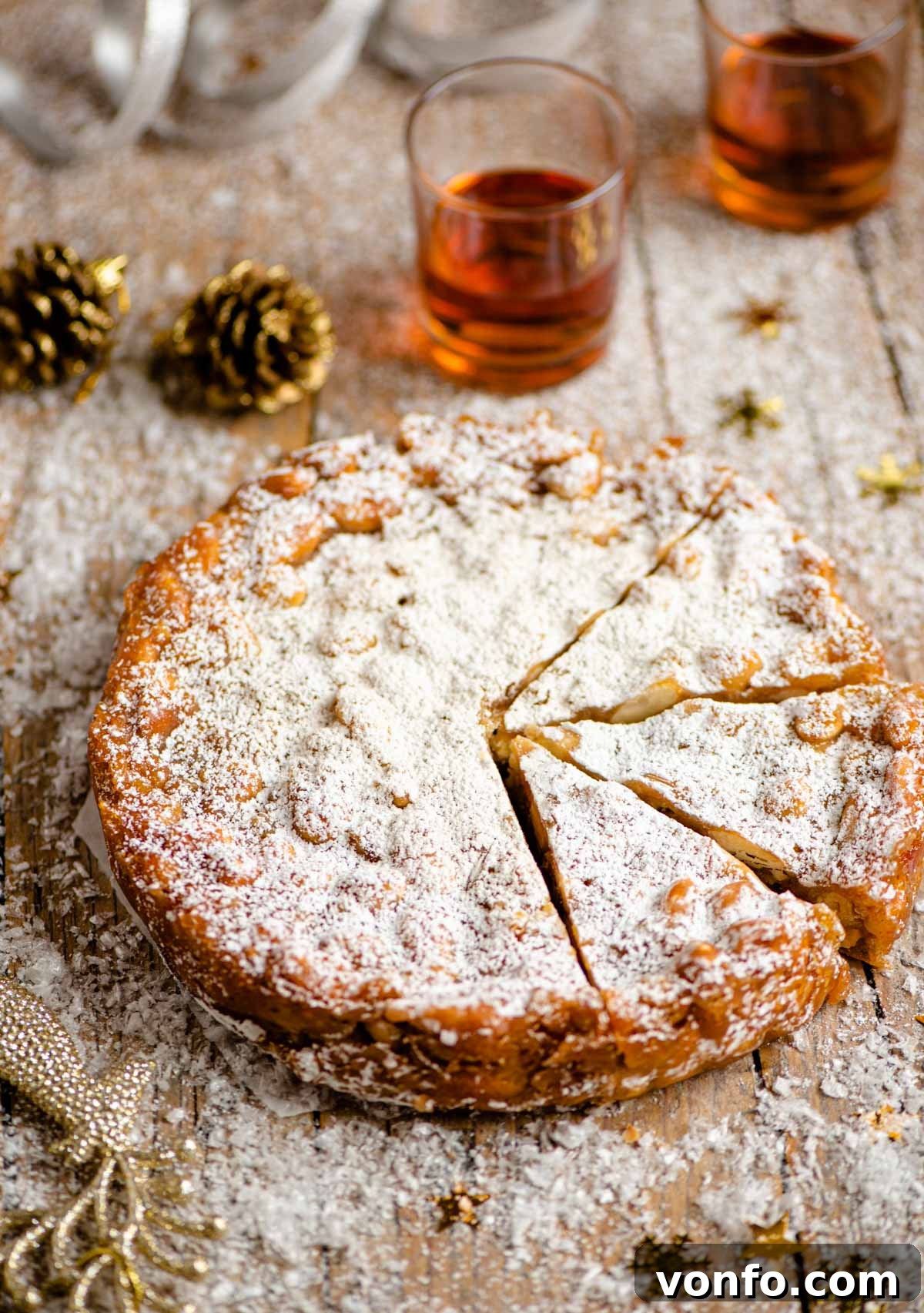
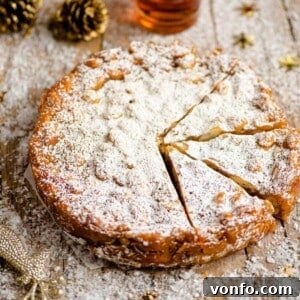
Panforte di Siena is more than just a cake; it’s a centuries-old Tuscan Christmas tradition, a dense, chewy fruitcake brimming with candied fruit, crunchy nuts, and a fragrant medley of festive spices, all elegantly dusted with powdered sugar. This exquisite confection captures the very essence of Italian holiday celebration, making it an utterly delicious Christmas treat and a truly perfect candidate for thoughtful gifting.
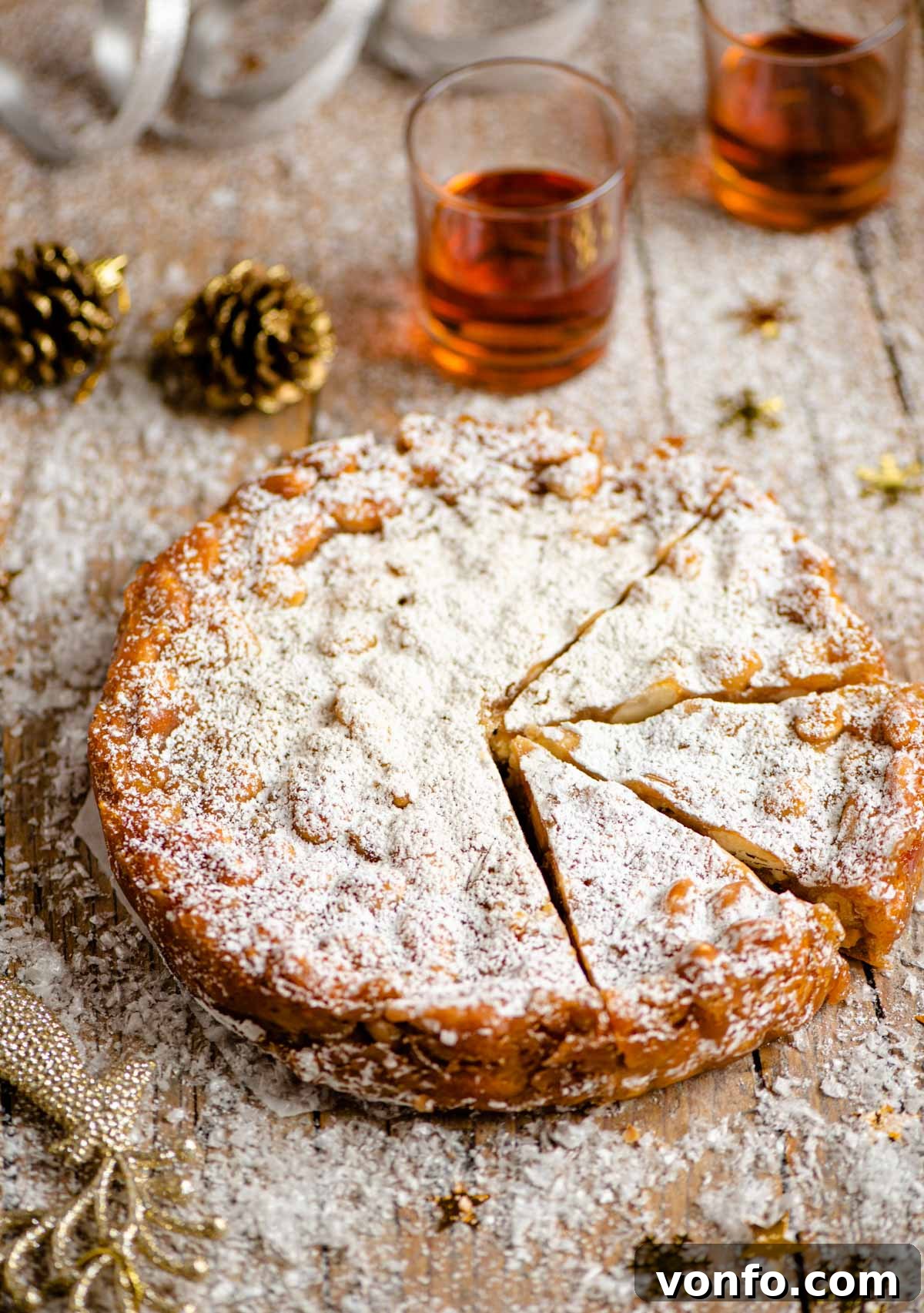
Discovering the Magic of Panforte: A Taste of Tuscany
From the very first bite, Panforte transports you straight to a cozy Tuscan Christmas. The harmonious blend of warming spices, the delightful sweetness of candied fruits, and the satisfying crunch of roasted nuts create an unparalleled festive experience. This iconic cake, much like the delicate Ricciarelli (often considered a favorite Christmas cookie by many), hails from the enchanting city of Siena in Tuscany. Its heritage can be traced back to Panpepato, another traditional Italian Christmas cake known for its robust spices and a hint of pepper.
My two years spent living in Siena provided countless opportunities to savor various interpretations of Panforte. It was truly a joy to witness the beautiful displays in local bakery windows, each cake meticulously wrapped in exquisite paper, ready to become a cherished gift. This recipe aims to bring that authentic Sienese experience into your home, offering a surprisingly simple way to create this traditional delicacy. Not only is it easy to make, but it also boasts an impressive shelf life of up to three weeks (and often longer when stored correctly), making it an ideal candidate for preparing in advance for Christmas gifts. But be warned: you’ll definitely want to keep a generous portion for yourself; its deliciousness is simply irresistible.
If your interest in Italian Christmas culinary traditions extends beyond Panforte, we invite you to explore our comprehensive guide on Traditional Italian Christmas Foods. This article delves into the diverse and delicious festive dishes enjoyed across Italy’s various regions.
A Deep Dive into Panforte’s Rich History
Panforte, literally translating to “strong bread” or “fortified bread,” has a fascinating history rooted in medieval Siena, Tuscany. Its origins are often traced back to the 13th century, where it was initially known as “panmelato” (honey bread) and “panpepato” (peppered bread). Early versions were believed to be prepared by apothecaries and monks, incorporating exotic spices from the East, which were both valuable and believed to have medicinal properties. These early cakes were energy-rich and nutrient-dense, making them popular provisions for Crusaders and travelers.
Over the centuries, the recipe evolved, becoming richer and more refined. The addition of candied fruits, a wider array of nuts, and a sweeter profile with less emphasis on pepper led to the Panforte we recognize today. By the 17th century, it was a prized delicacy, often offered to nobility and enjoyed during important celebrations. The name “Panforte” itself is thought to refer to the cake’s slightly acidic, fruity flavor (from the fruit fermenting slightly in early versions), or perhaps its robust and intense spice profile. Today, Panforte remains a beloved symbol of Sienese culinary heritage, an enduring testament to its rich past and timeless appeal.
Why You’ll Adore This Homemade Panforte Recipe
Creating your own Panforte di Siena at home is a rewarding experience, offering several compelling reasons to embark on this culinary journey:
- Authentic Italian Flavor: This recipe captures the true essence of traditional Sienese Panforte, ensuring you get that authentic taste of Italy right in your kitchen.
- Surprisingly Simple: Despite its gourmet appearance, Panforte is remarkably easy to prepare. With straightforward steps and readily available ingredients, even novice bakers can achieve impressive results.
- Perfect for Holiday Gifting: Its elegant presentation and long shelf life make Panforte an ideal homemade gift. Wrap it beautifully, and you have a thoughtful present that tastes incredible.
- Make-Ahead Convenience: Panforte improves with age, meaning you can prepare it weeks before the holidays, freeing up valuable time closer to Christmas.
- A Unique Festive Treat: Stand out from the usual holiday desserts with this distinctive Italian fruit and nut cake, offering a delightful change of pace.
Essential Ingredients for Your Panforte di Siena
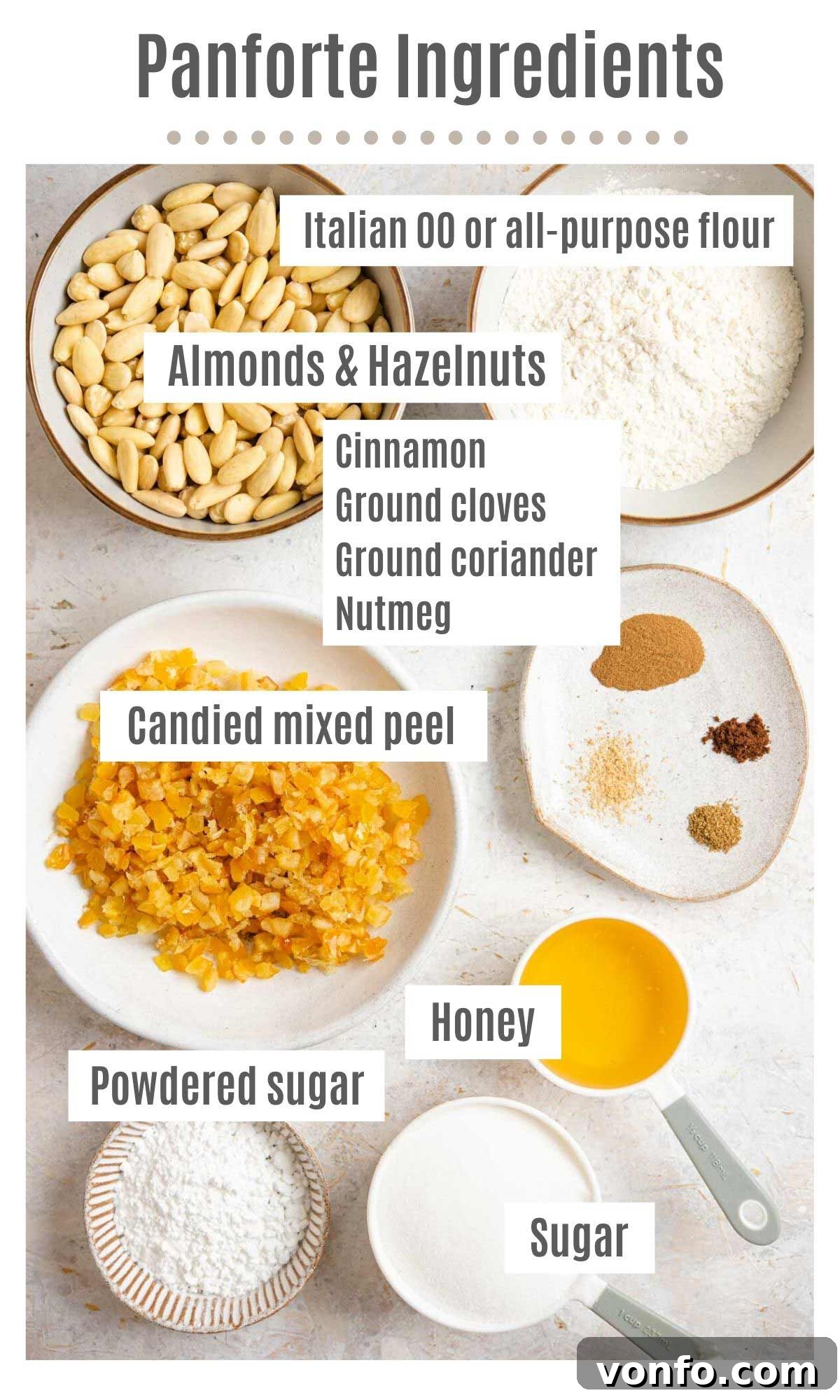
Crafting the perfect Panforte relies on a precise combination of high-quality ingredients that contribute to its distinctive texture and flavor profile. Here’s what you’ll need:
- Flour: We recommend using Italian 00 flour, known for its fine texture, which helps create a smooth, dense cake. However, good quality all-purpose flour works perfectly well as a substitute. (Approximately 1 cup or 140g).
- Mixed Nuts: The cornerstone of Panforte, nuts provide essential crunch and richness. Blanched almonds and hazelnuts are classic choices, offering a delicate flavor. For an added touch of color and flavor, consider incorporating unsalted pistachios. (Approximately 3 cups or 300g).
- Candied Mixed Peel: This adds a vibrant citrusy zest and chewiness that is integral to Panforte. Ensure it’s good quality for the best flavor. (Approximately 1 heaped cup or 200g).
- Runny Honey: Honey not only sweetens the cake but also acts as the primary binder, giving Panforte its characteristic dense and chewy texture. Runny honey is easier to work with. (Approximately ½ cup or 150g).
- Granulated Sugar: Along with honey, sugar contributes to the sweetness and helps achieve the desired consistency when melted. (Approximately 1 cup or 200g).
- Festive Spices: This aromatic blend is what truly defines the Christmas character of Panforte. Our recipe calls for:
- Ground Cinnamon (1 tsp)
- Ground Coriander (¼ tsp)
- Ground Cloves (¼ tsp)
- A Pinch of Nutmeg
This combination creates a warm, inviting, and slightly exotic flavor.
- Powdered Sugar (Icing Sugar): For generously dusting the finished cake, adding a beautiful snowy appearance and a touch of extra sweetness.
For essential equipment, you’ll need a springform cake pan (a 7.5 to 8-inch pan is ideal), baking parchment or traditional rice paper for lining, and a sturdy silicone spatula. The silicone spatula is particularly crucial for mixing the extremely sticky honey and nut mixture effectively.
Step-by-Step Guide to Crafting Authentic Panforte
Follow these detailed steps to create your own delicious Panforte di Siena:
Preparation is Key:
- Preheat Oven: Begin by preheating your oven to 320°F (160°C). This ensures the oven is at the correct temperature when your Panforte is ready to bake.
- Prepare Cake Pan: Line a 7-8 inch springform cake pan with baking parchment. Make sure to line both the bottom and extend the parchment up the sides of the pan. For better adhesion, you can lightly grease the pan with butter or a little oil before pressing the parchment into place. If you’re using traditional rice paper, it’s edible and doesn’t need to be removed after baking, just line the bottom.
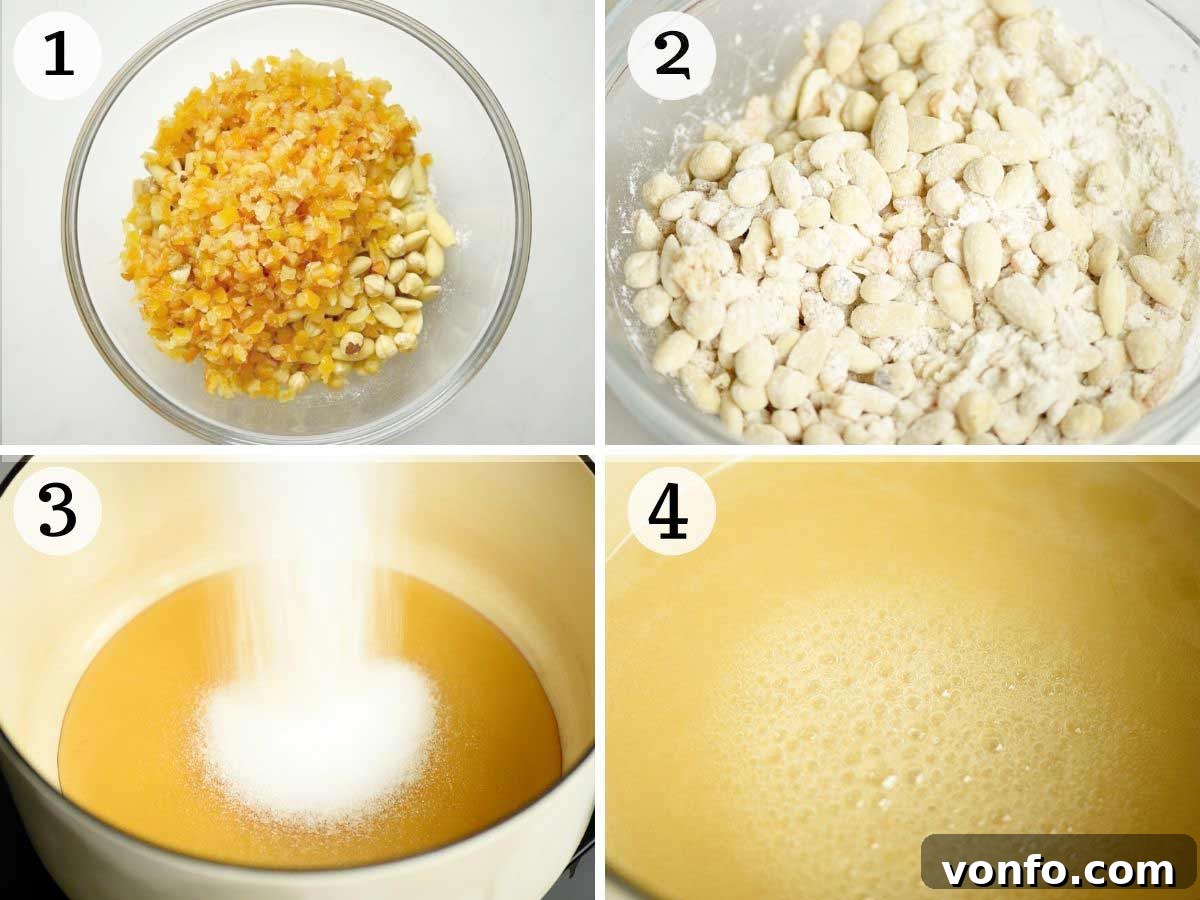
- Combine Dry Ingredients: In a large mixing bowl, thoroughly combine the flour, all your festive ground spices (cinnamon, coriander, cloves, nutmeg), mixed nuts (almonds and hazelnuts work wonderfully), and candied mixed peel. Toss everything together until well distributed, then set this mixture aside.
Creating the Sticky Base:
- Melt Honey and Sugar: In a large, heavy-bottomed pot or a Dutch Oven, add the granulated sugar and runny honey. Place the pot over medium heat and stir continuously. Continue stirring until the sugar has completely dissolved and the mixture begins to gently bubble around the edges. This process creates the sticky, sweet foundation for your Panforte.
Bringing it All Together:
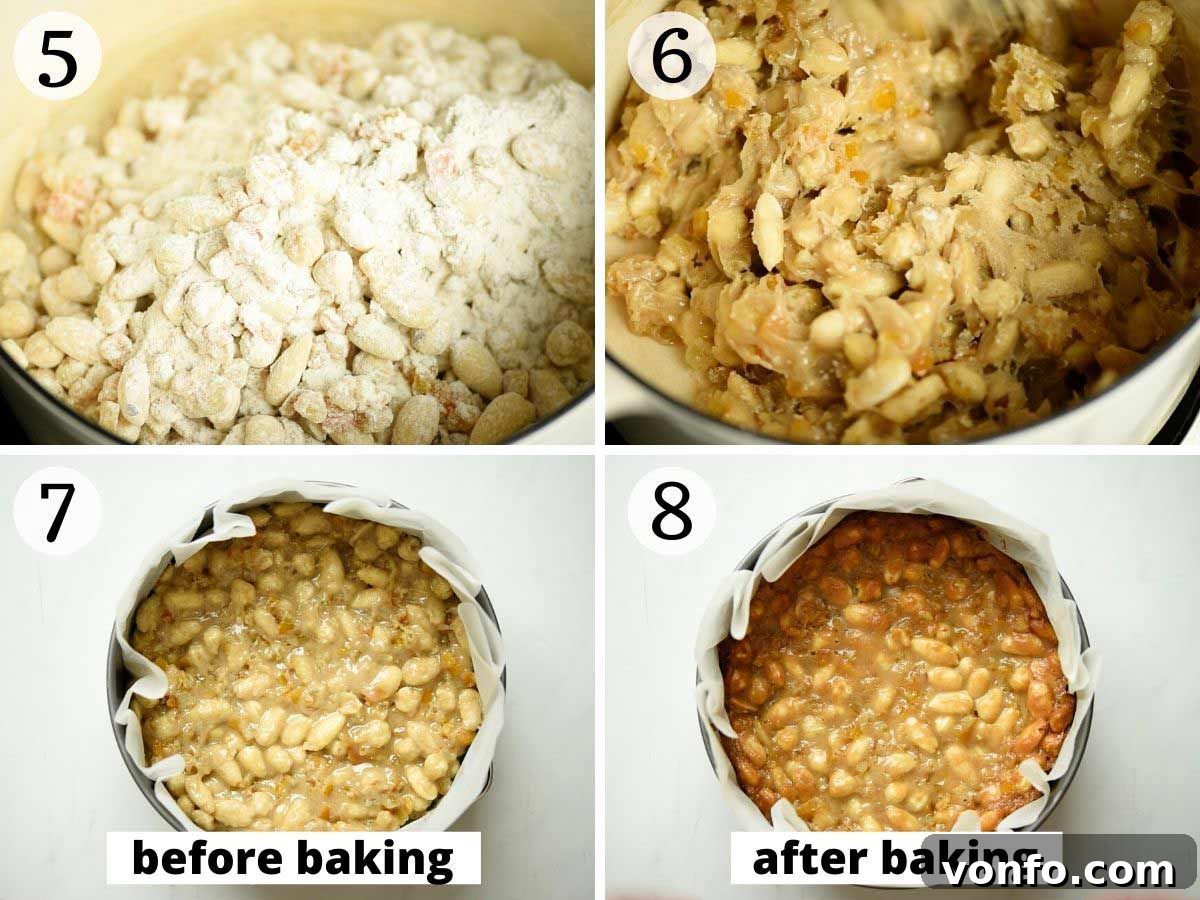
- Combine Wet and Dry: Reduce the heat to low. Immediately add the reserved flour, spice, and nut mixture into the bubbling honey and sugar. Work quickly and stir vigorously with a sturdy silicone spatula until all the dry ingredients are thoroughly coated and combined with the sticky honey mixture. This will be a very thick and sticky batter, which is why a silicone spatula is highly recommended.
- Transfer to Pan: Once combined, spoon the warm, sticky Panforte mixture into your prepared cake pan. Use the back of your silicone spatula, or even slightly dampened hands (be careful, it can be warm!), to press and smooth the mixture evenly across the bottom of the pan as best you can. Aim for a compact and level surface.
Baking and Finishing:
- Bake: Place the cake pan in the preheated oven and bake for approximately 35-40 minutes. The Panforte should be firm to the touch and slightly golden around the edges.
- Cool Completely: Remove the Panforte from the oven and allow it to cool completely in the pan on a wire rack. This is a crucial step; the cake needs to solidify and firm up as it cools.
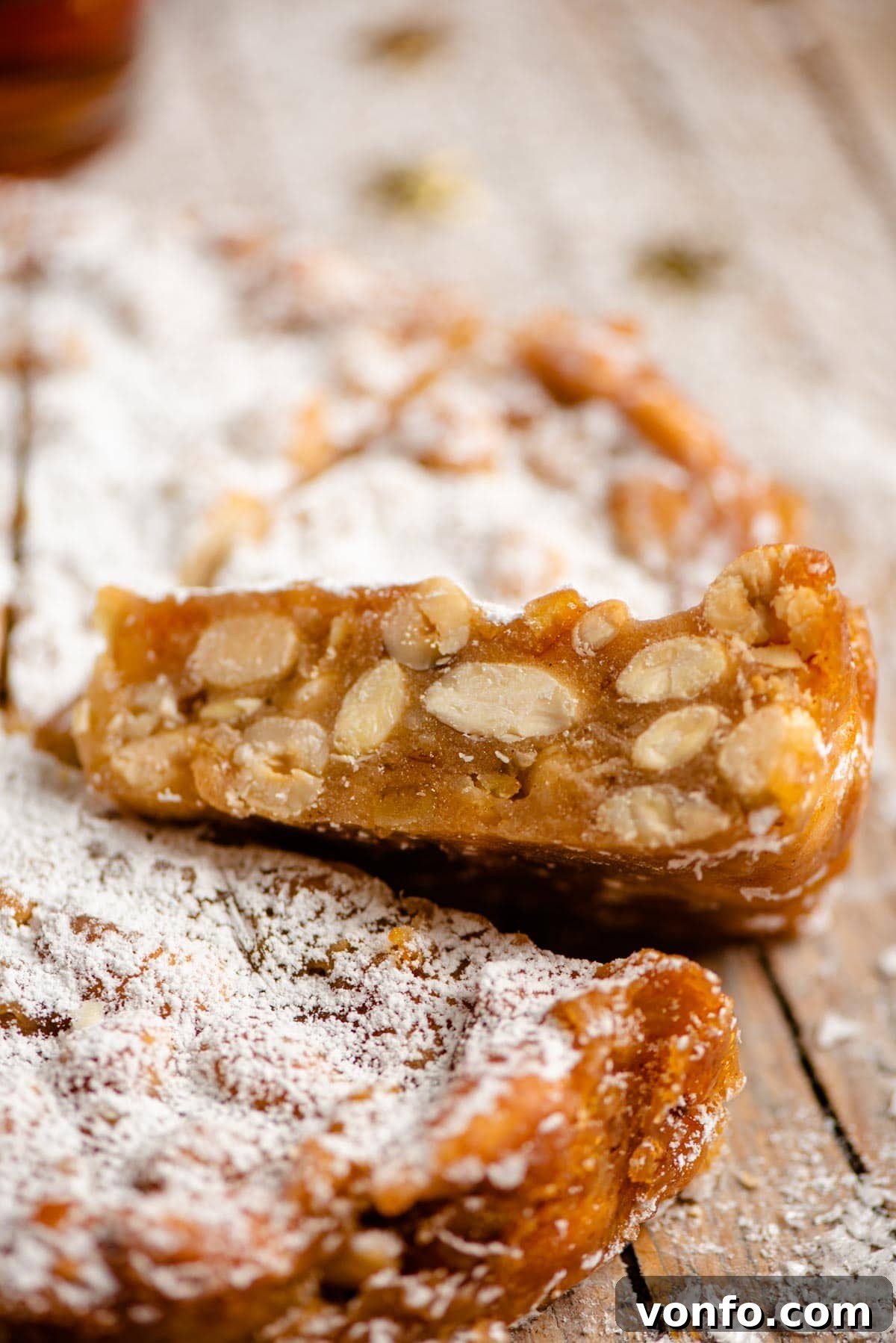
- Dust and Serve: Once entirely cool, carefully remove the Panforte from the cake pan and peel away the parchment paper. Generously dust the top of the cake with powdered sugar. Slice into wedges or small squares with a sharp knife and serve immediately, or store for later enjoyment.
Expert Tips for Panforte Perfection
Achieving the ideal Panforte texture and flavor is simple with these expert tips:
- Proper Pan Lining is Essential: Whether you choose traditional rice paper or baking parchment, ensure your cake pan is thoroughly lined, with the paper extending up the sides. This prevents sticking and makes removal much easier. If using rice paper, remember it’s edible and can be left on. For parchment, a light greasing of the pan beforehand helps the paper adhere.
- Work Quickly and Efficiently: Once you add the dry ingredients to the hot honey mixture, the clock starts ticking. The honey will begin to cool and harden rapidly, making the mixture increasingly difficult to stir and spread. Have all your ingredients measured and ready, and be prepared to combine and press the mixture into the pan without delay.
- Embrace Your Silicone Spatula: This tool is your best friend when making Panforte. Its non-stick properties are invaluable for stirring the incredibly sticky mixture and smoothing it into the pan. Metal spoons or wooden spatulas will simply get overwhelmed.
- Patience is Key for Cooling: Resist the urge to dust or slice your Panforte before it has cooled completely. If dusted while warm, the powdered sugar will melt and dissolve. Slicing too early can also lead to crumbling, as the cake needs time to fully set and firm up into its characteristic dense texture.
- Master the Art of Gifting: Panforte is a splendid gift. Once cooled and dusted, wrap individual cakes or slices elegantly in wax paper, parchment paper, or cellophane, then tie with a beautiful festive ribbon. Present it in a decorative tin or box for an extra special touch.
- Optimal Storage for Longevity: Panforte keeps exceptionally well, making it ideal for advance preparation. Wrap it tightly in plastic wrap, then store it in an airtight container or a cookie tin at room temperature for up to 3 weeks. It can also be frozen; simply wrap it well in plastic wrap and then foil, or place in a freezer-safe container. Thaw completely at room temperature before serving.
Panforte Variations and Creative Substitutions
While the traditional Panforte di Siena is a classic for a reason, don’t hesitate to experiment with variations to suit your taste or what you have on hand:
- Nut Alternatives: While almonds and hazelnuts are traditional, walnuts, pecans, or even a mix of several different nuts can be used. Lightly toast them beforehand to enhance their flavor.
- Candied Fruit Choices: Beyond mixed peel, consider adding finely chopped candied figs, apricots, or even just extra candied orange zest for a brighter citrus note. Dried cranberries or cherries can also introduce a delightful tartness.
- Spice Profile Adjustments: For a more authentic “Panpepato” style, add a pinch of black pepper to your spice mix. A touch of ground ginger or cardamom can also lend an interesting twist to the warming spice blend.
- Chocolate Infusion: For a modern and decadent touch, fold in a handful of good quality dark chocolate chips or finely chopped dark chocolate along with the nuts and fruit. The chocolate will melt slightly into the warm honey mixture, creating a delicious marbling effect.
Serving Suggestions for Your Tuscan Delight
Panforte is traditionally enjoyed during the Christmas season, but its rich flavor makes it a wonderful treat anytime:
- Classic Italian Pairing: Serve thin slices of Panforte alongside a small glass of Vin Santo, a sweet Tuscan dessert wine. The complementary flavors are a match made in heaven. Strong espresso or a rich Italian coffee also pair beautifully.
- Dessert Platter Star: Cut Panforte into small wedges or squares and arrange it on a holiday dessert platter with other Italian cookies, fresh fruits, and perhaps some dark chocolate.
- Cheese Board Companion: Its sweetness and dense texture make Panforte an excellent addition to a cheese board, especially when paired with aged cheeses like Parmigiano-Reggiano or Pecorino Toscano.
- Simple Indulgence: Enjoy a slice on its own as a delightful snack or after-dinner treat, letting the complex flavors linger.
Frequently Asked Questions About Panforte
While you can certainly experiment with various nuts, traditional Panforte often features blanched almonds and hazelnuts. These offer a classic flavor and texture. For an extra layer of gourmet appeal and beautiful color, I sometimes include unsalted pistachios, which are absolutely delicious.
Panforte is renowned for its excellent shelf life, making it a fantastic make-ahead option and a perfect gift. When wrapped tightly in plastic wrap and stored in an airtight container or a cookie tin at room temperature, it can last for up to 3 weeks, and often even longer if kept in a cool, dry place.
Absolutely! Panforte freezes exceptionally well. To freeze, wrap the cake tightly first in plastic wrap, then again in aluminum foil, or place it in a freezer-safe airtight container. It can be stored in the freezer for several months. When you’re ready to enjoy it, simply let it thaw completely at room temperature before slicing and serving.
Panforte has a uniquely dense and chewy texture. It’s not soft and crumbly like a traditional cake; instead, it has a substantial, almost nougat-like consistency, packed with the crunch of nuts and the chewiness of candied fruit. It holds its shape beautifully when sliced thinly.
Both are traditional Sienese Christmas cakes with similar bases of honey, nuts, and candied fruit. The main difference lies in their spice profiles. Panpepato, as its name suggests (“peppered bread”), includes a more pronounced amount of black pepper and typically a stronger, more savory spice blend. Panforte, while still spiced, tends to be sweeter and uses a milder, more aromatic mix of warm spices like cinnamon and nutmeg, without the dominant pepper note.
More Italian Christmas Dessert Inspirations
- Chocolate Salami (Salame di Cioccolato)
- Pandoro Christmas Tree Cake (Italian Christmas Cake)
- Struffoli – Italian Honey Balls
- Panettone Bombe – Christmas Ice Cream Cake
- Panettone Bread Pudding
Step By Step Photos Above
Most of our recipes come with step by step photos, helpful tips and tricks to make it perfectly first time and even video!
Panforte di Siena
By Emily
Pin
Equipment
-
7-8 inch springform cake pan
-
Sturdy silicone spatula (essential for mixing the sticky dough)
-
Non-stick baking parchment or rice paper
-
Large, heavy-bottomed pot or Dutch Oven
Ingredients
- 1 cup Italian 00 or all-purpose flour, (140g)
- 1 cup granulated sugar, (200g)
- 3 cups mixed nuts, blanched almonds and hazelnuts (300g)
- 1 heaped cup candied mixed peel, (200g)
- ½ cup runny honey, (150g)
- ¼ tsp ground cloves
- ¼ tsp ground coriander
- 1 tsp ground cinnamon
- a pinch of nutmeg
For serving
- powdered sugar, (icing sugar) for dusting
Instructions
-
1. Preheat the oven to 320°F (160°C).
-
2. Line a 7-8 inch springform cake pan with parchment paper, ensuring it covers both the bottom and extends up the sides. To help the baking parchment stick, you can rub a little butter or spray a little oil on the cake pan first.
-
3. In a large mixing bowl, combine the flour, all the spices (ground cinnamon, coriander, cloves, and a pinch of nutmeg), mixed nuts, and candied peel. Toss to ensure everything is evenly distributed, then set aside.
-
4. In a large, heavy-bottomed pot or Dutch Oven, add the granulated sugar and runny honey. Heat on a medium setting, stirring continuously, until the sugar has fully dissolved and the mixture begins to gently bubble around the edges.
-
5. Reduce the heat to low. Immediately add the dry flour and nut mixture to the hot honey mixture. Stir quickly and vigorously with a sturdy silicone spatula until all ingredients are thoroughly combined. The mixture will be very sticky and thick.
-
6. Once combined, spoon the warm, sticky Panforte mixture into the prepared cake pan. Use the back of your silicone spatula or slightly dampened hands to press and smooth it out evenly across the bottom, ensuring it’s compact.
-
7. Place the pan in the preheated oven and bake for 35-40 minutes. The Panforte should feel firm to the touch when gently pressed.
-
8. Remove from the oven and allow the Panforte to cool completely in the cake pan on a wire rack. This is crucial for it to firm up properly.
-
9. Once completely cooled, carefully remove the Panforte from the cake pan and peel off the parchment paper. Generously dust the entire top surface with powdered sugar.
-
10. Slice into thin wedges or squares with a sharp knife and serve, or store for future enjoyment.
Video
A video tutorial demonstrating how to make Panforte di Siena can be found above in the main article content, or search for “Panforte Tuscan Fruit and Nut Cake” on our video channels.
Notes
- Lining Your Cake Pan: Ensure your pan is well-lined with baking parchment or edible rice paper, extending up the sides for easy removal of the sticky cake.
- Work Quickly: The honey mixture sets fast once dry ingredients are added. Have everything prepped and combine/spread without delay.
- Silicone Spatula: This non-stick tool is crucial for handling the very sticky Panforte mixture effectively.
- Cool Completely: Allow Panforte to cool entirely before dusting with powdered sugar (to prevent melting) and slicing (for clean cuts).
- Gifting Idea: Wrap slices or a whole Panforte in wax paper and tie with a festive ribbon for a beautiful homemade Christmas gift.
- Storage: Keeps well in an airtight container, wrapped in plastic wrap, at room temperature for up to 3 weeks. It also freezes beautifully; thaw completely before serving.
Helpful Info for All Recipes
- I always use extra virgin olive oil in all of my recipes unless stated otherwise.
- When I use canned or jarred tomatoes of any kind I always use Cirio or Mutti brands for the best results and flavour.
- All vegetables are medium sized unless stated otherwise.
- All recipes are tested and developed using a fan (convection) oven.
- Find out more about how nutrition is calculated.
- Check out our must-have Italian Pantry Staples.
- You can also find all our Essential Kitchen Tools for Italian Cooking.
Nutrition Information (per serving)
Carbohydrates: 41g |
Protein: 5g |
Fat: 15g |
Saturated Fat: 1g |
Sodium: 11mg |
Potassium: 184mg |
Fiber: 3g |
Sugar: 32g |
Vitamin A: 5IU |
Vitamin C: 2mg |
Calcium: 32mg |
Iron: 2mg
Nutrition information is automatically calculated and should only be used as an approximation.
If you’ve tried this Panforte di Siena Recipe or any other recipe on the blog, please don’t forget to rate the recipe and share your experience in the comments below. I truly value your feedback! You can also FOLLOW ME on FACEBOOK, INSTAGRAM, and PINTEREST to discover more delicious Italian food and stay updated with my latest culinary adventures.