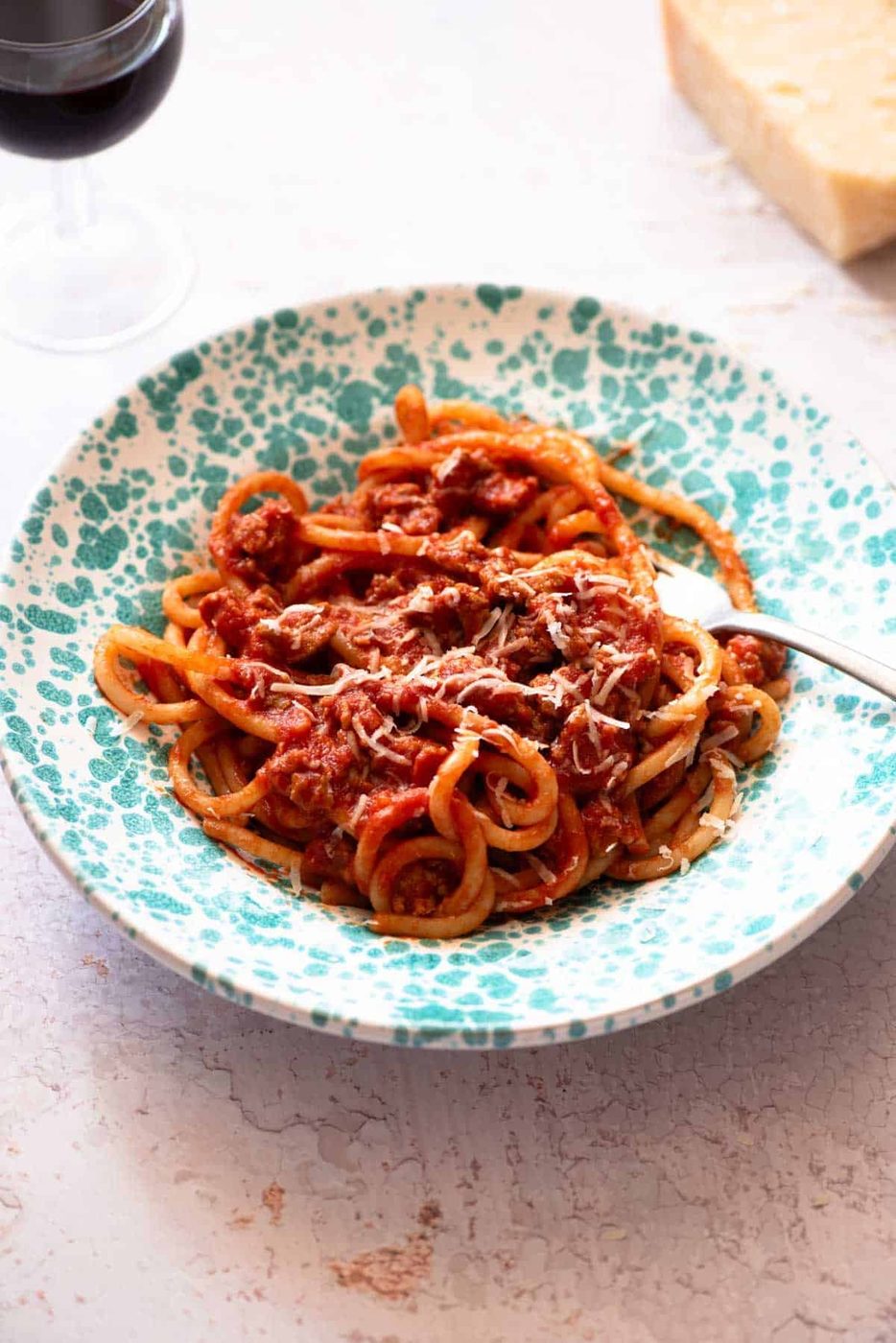
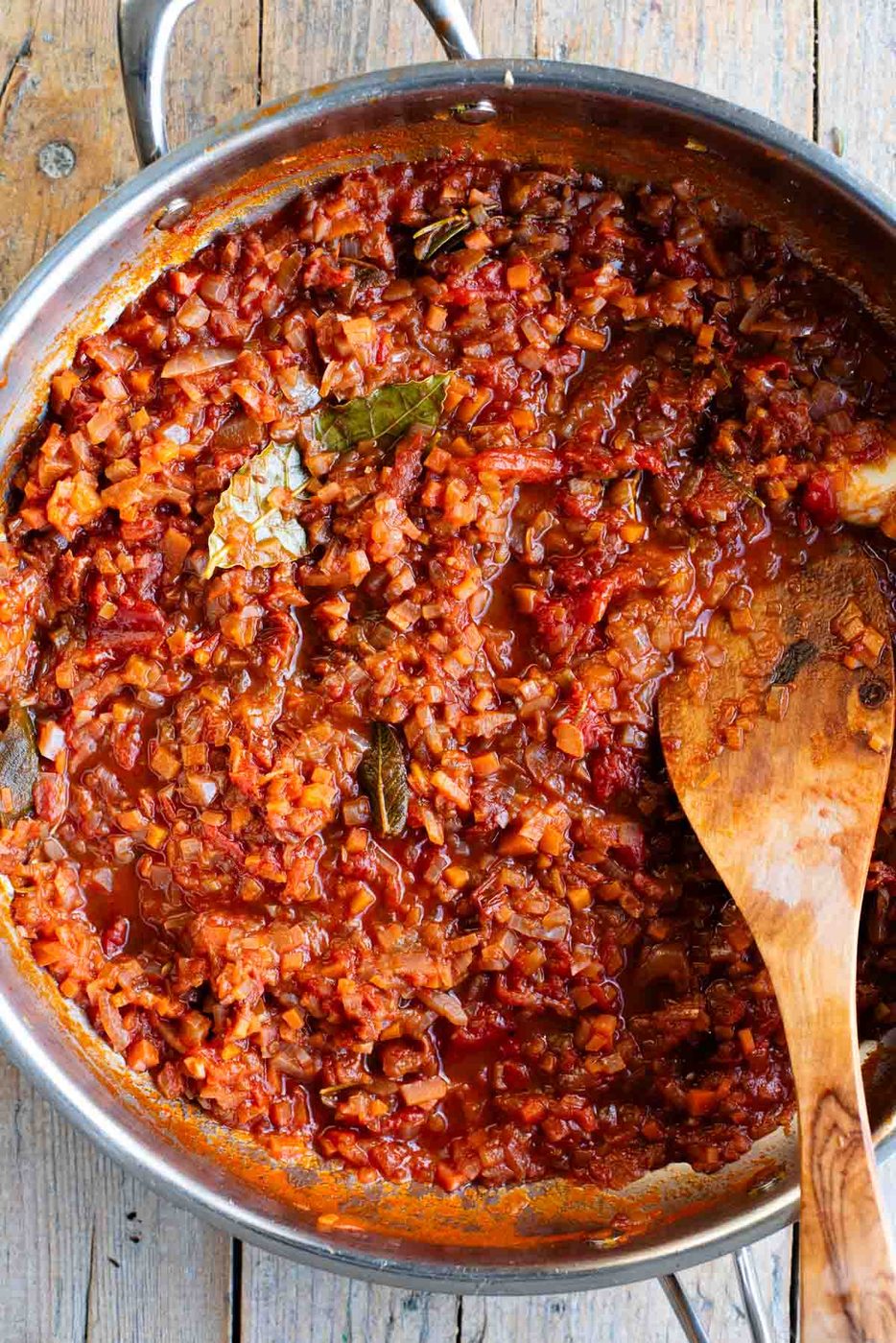
Bucatini all'Amatriciana
- Makes 4 servings
- Prep 5 minutes
- Cook 15 minutes
- Total 20 minutes
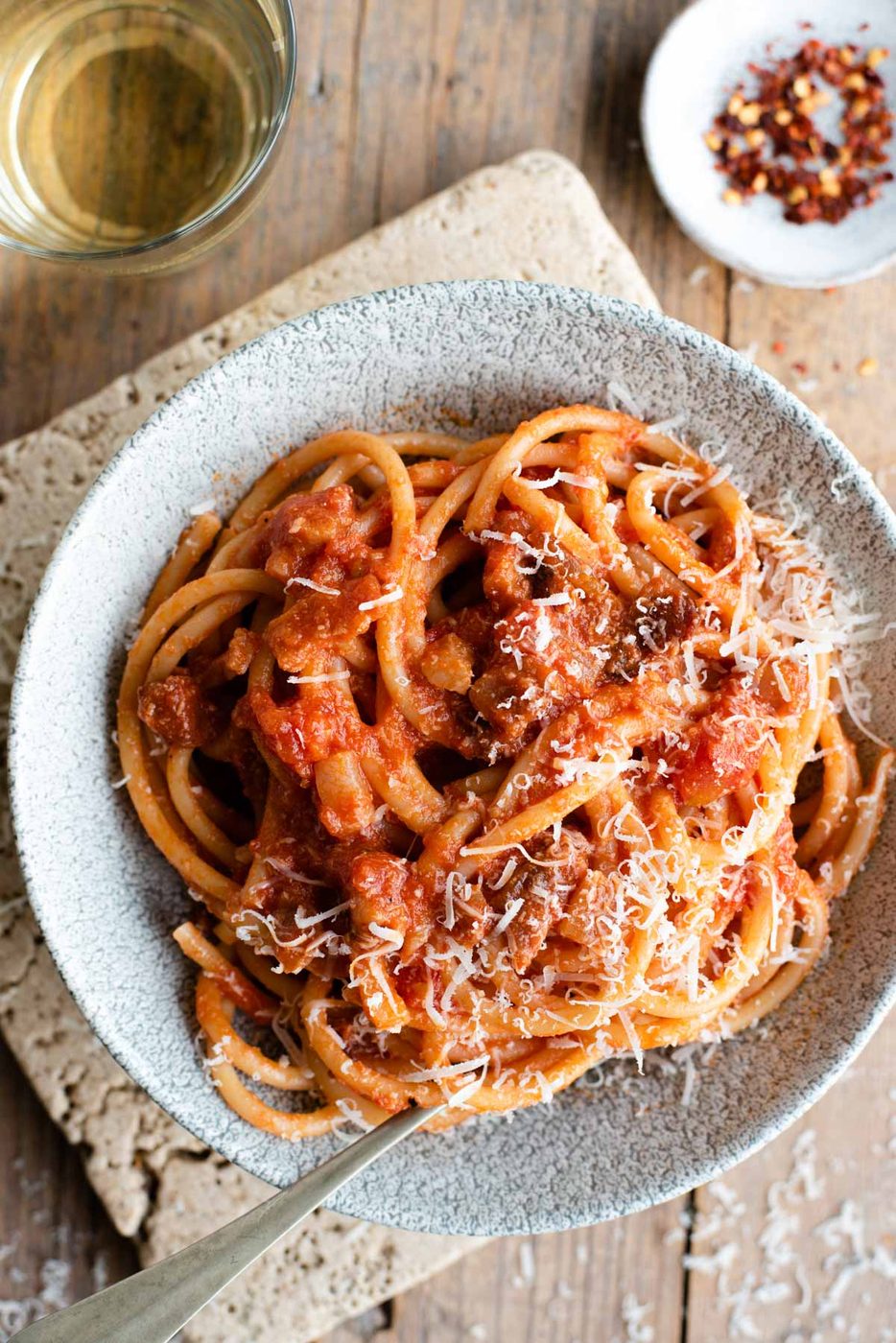
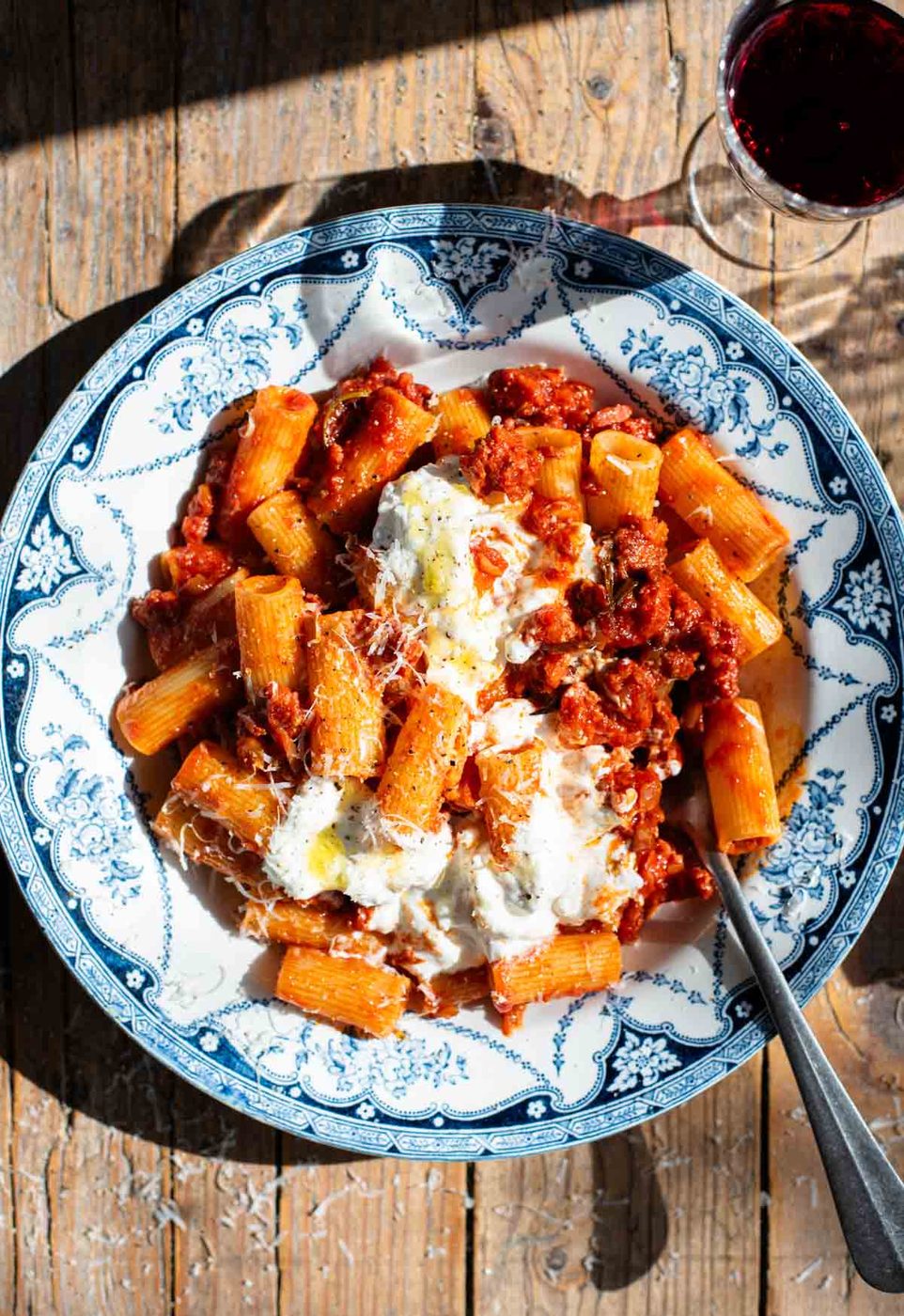
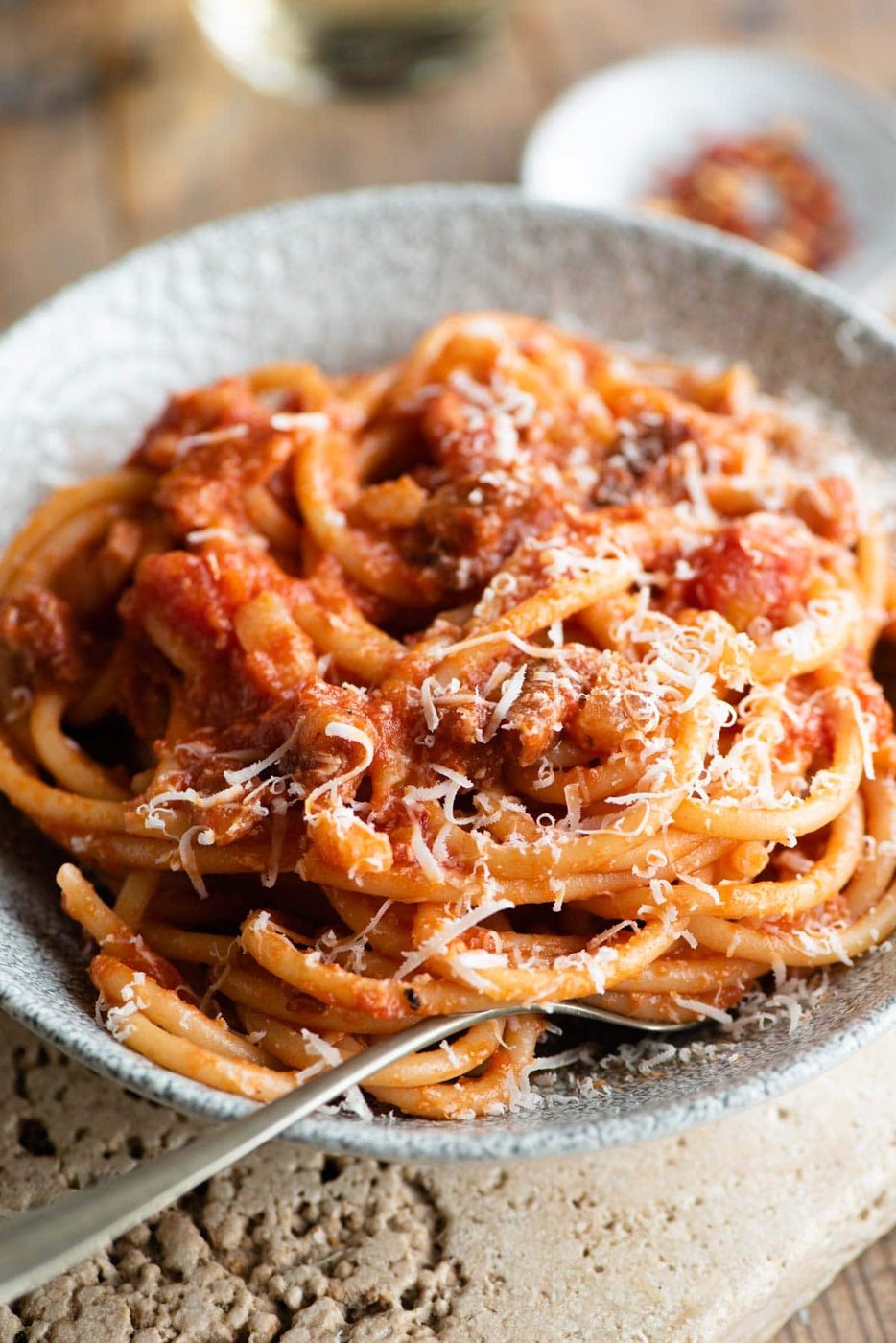
How to make an authentic Bucatini all'Amatriciana. This classic Italian pasta dish is insanely good made with tomato, guanciale and pecorino cheese. It takes 20 minutes or less to make and is solid comfort food for busy weeknights!
Bucatini all'Amatriciana is a classic pasta dish that originates from the town of Amatrice (Lazio). Although that's where it originated it's much considered a classic Roman dish alongside Spaghetti alla CarbonaraPasta alla Gricia and Cacio e Pepe.
These classic pasta dishes start with Cacio e Pepe, add guanciale and it becomes Pasta alla Gricia, add eggs and it becomes a Carbonara, swap the eggs for tomato and it becomes Sugo all'Amatriciana (Amatriciana sauce).
Having a solid recipe for each of these dishes is a must for every Italian food lover. They're not only quick and easy (ok, Cacio e Pepe can be a little tricky) but they are incredibly comforting and out of this world good.
All you need is a few simple ingredients and 15-20 minutes to spare. As always buy the best quality ingredients possible because it makes a HUGE difference in flavour! Check out our recipe below including our top tips, step by step photos and video tutorial. Buon Appetito!
Ingredients – what you need
See the photo below that shows you everything you need to make an authentic Bucatini all'Amatriciana plus some top tips on ingredients!
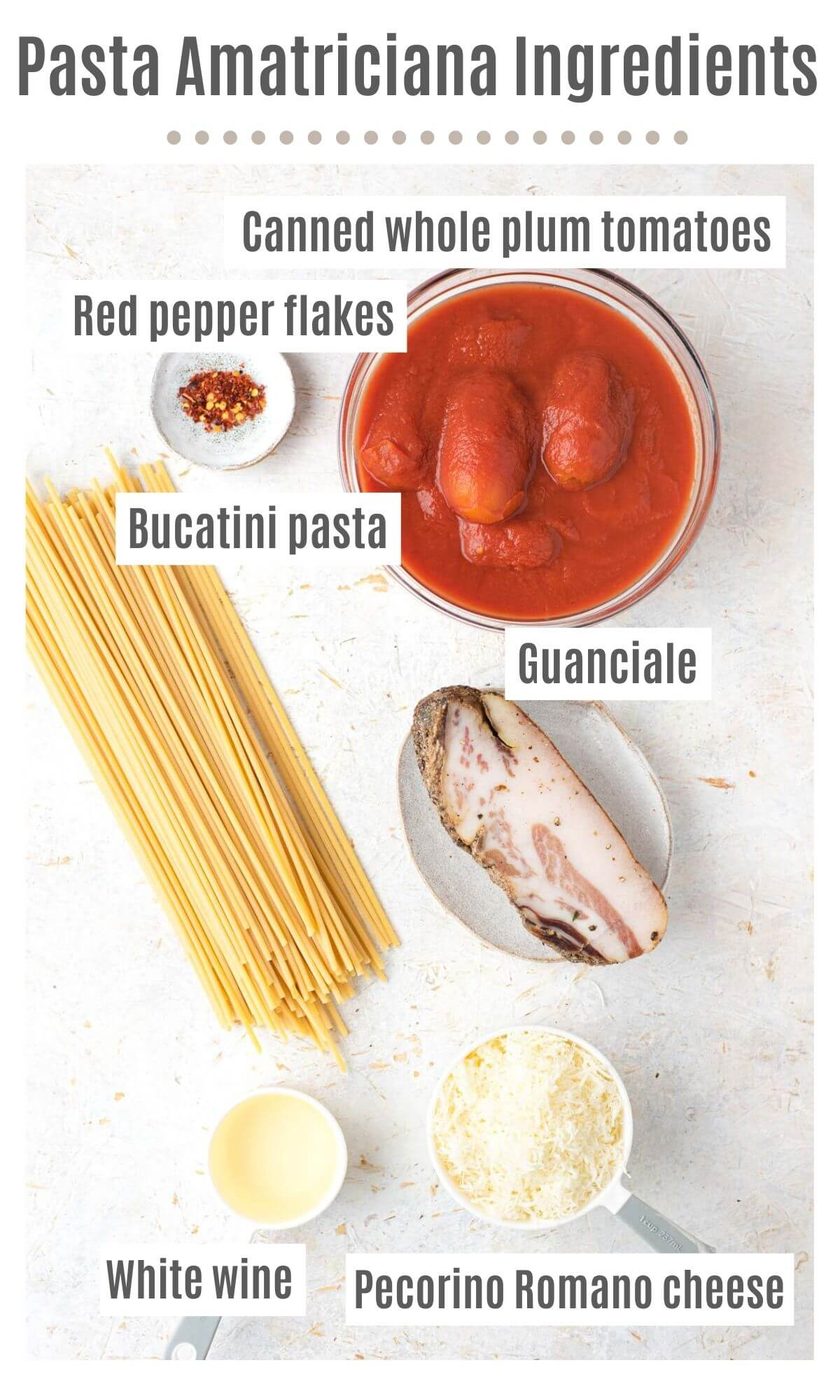
- Bucatini – bucatini pasta is a thick, hollow spaghetti-like shape, the sauce gets sucked up inside making every single bite good. If you can't find bucatini you could use spaghetti or even a short pasta shape like rigatoni.
- Tomatoes – you can choose to use fresh or canned plum tomatoes. We use high quality canned whole plum tomatoes, the quality is important for the overall taste of the dish so use a good brand like Mutti or Cirio.
- Guanciale – this is salty cured pig jowl (cheek) and it has good flavour! It's much fattier than pancetta which is from the belly but it makes a good substitue if you can't find guanciale. See our notes on how to cut it!
- White wine – use a dry white wine such as Orvieto, Pinot Grigio, Verdicchio or Gavi.
- Red pepper flakes – aka chilli flakes to add a little heat, don't worry if you don't like spice the heat is subtle.
- Pecorino Romano cheese – this cheese is a must for making a classic amatriciana sauce, it adds so much flavour. You can use Parmigiano Reggiano cheese instead but it will give you a different end result.
How to cut guanciale
Guanciale, like pancetta has a thick skin on the underside and a dark seasoned coating on to which is what it's cured in.
Trim the thick skin off of the bottom (you don't want to eat that but can add it to soups for flavour) (photo 1).
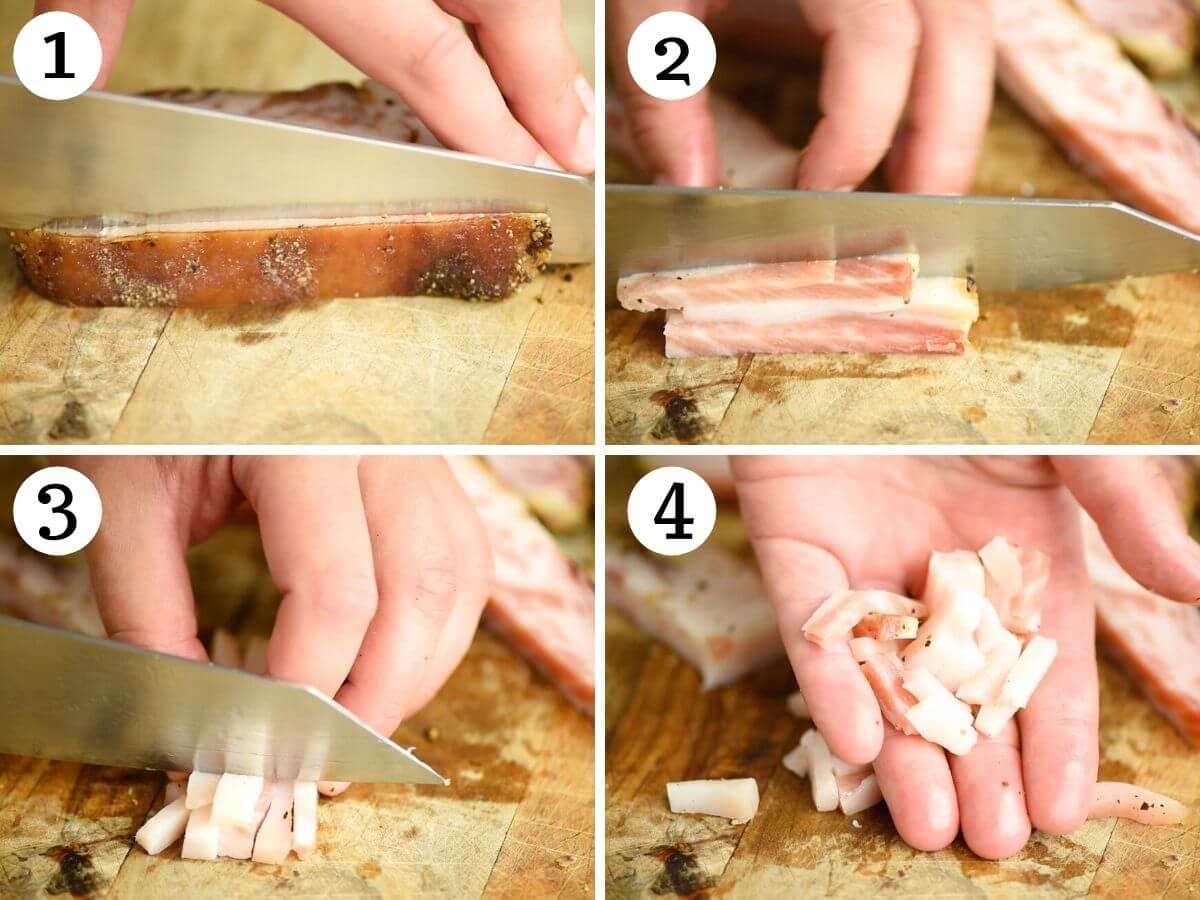
The seasoning on top (dark part) can be eaten but we cut most of it off as it can give sauces a gritty texture, that's a personal preference so do what you prefer.
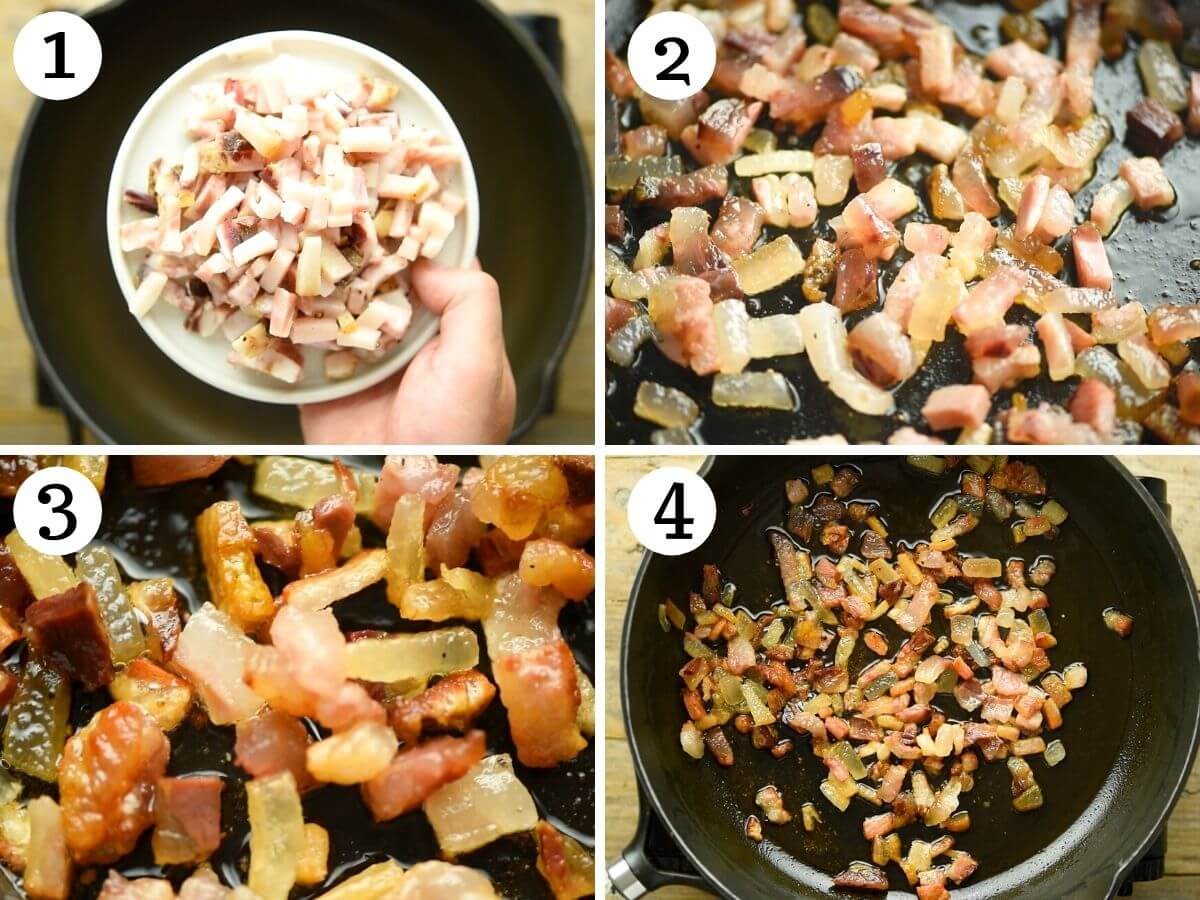
Once you've trimmed off the fat, cut the guanciale into cubes or strips about 1/2cm thick (1/4 inch) so you get a bit in every mouthful of pasta (photos 2-4 above).
Step by step photos and recipe instructions
Fry the guanciale – Heat a large pan on a medium heat and add the chopped guanciale. Fry it until the fat starts to melt and it becomes crispy (photos 1-4).
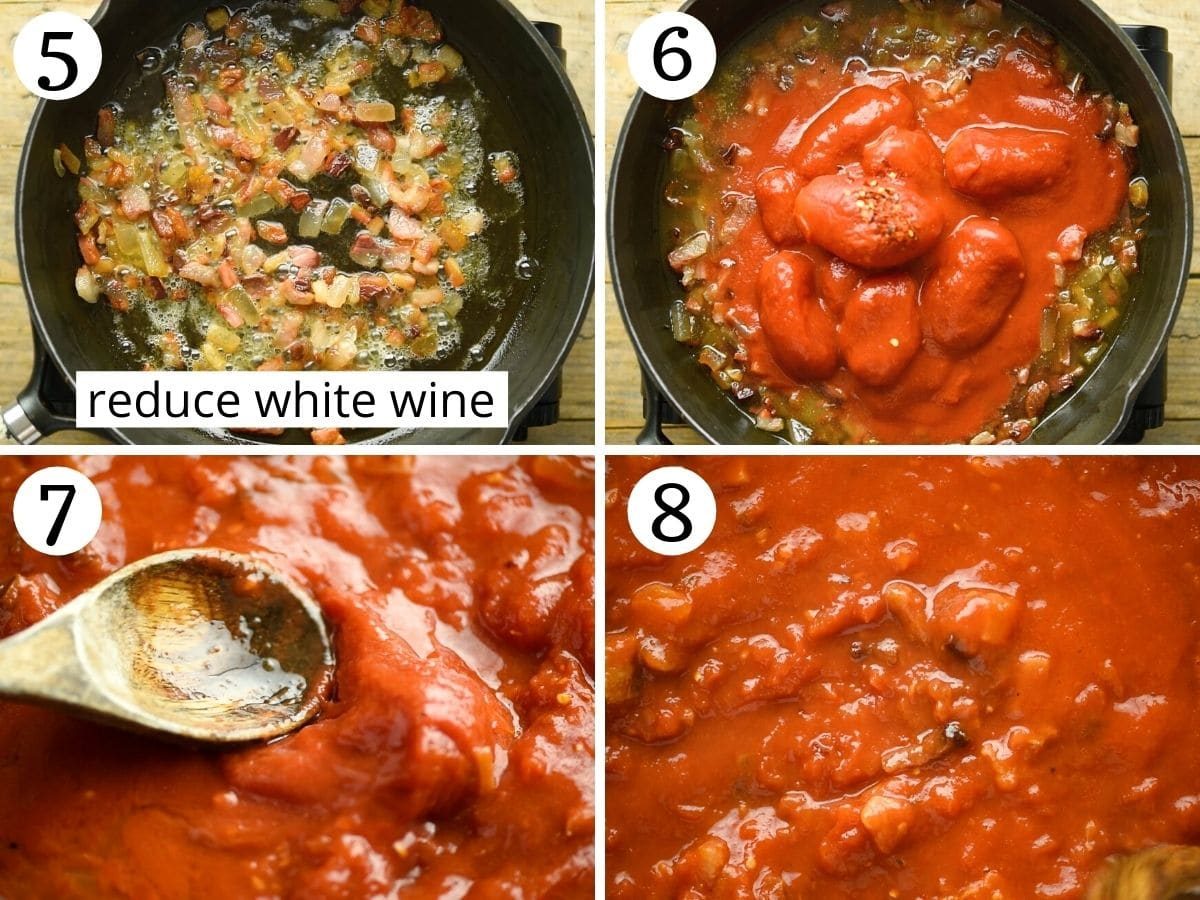
Make the sauce – Once crispy, add the white wine and simmer to reduce the liquid by half. Add the red pepper flakes and the tomatoes then break them up with the side of a wooden spoon or spatula. Simmer the sauce for 10 minutes (photos 5-8).
Boil the pasta – While the sauce is simmering add the pasta to the boiling salted water and cook until al dente (see packet instructions and reduce the time by 2-3 minutes). Reserve ½ cup (125ml) of pasta water (photo 9 shows you what bucatini looks like).
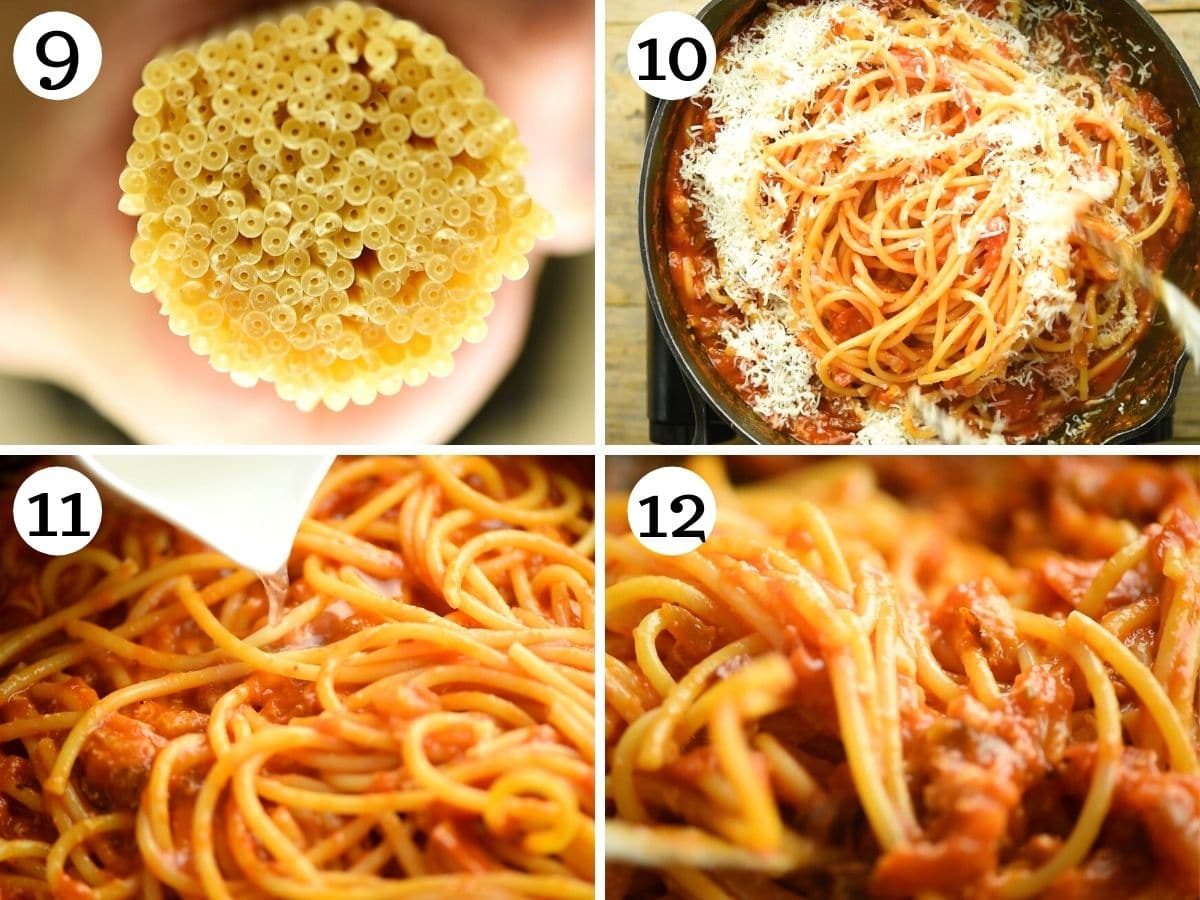
Add the pasta to the sauce – Once the pasta is cooked add it to the tomato sauce and toss (add a splash of reserved pasta water if needed, see notes). Add the grated pecorino cheese and toss everything together until the pasta is well coated in the sauce then serve (photos 10-12).
Recipe tips and FAQs
- Use guanciale if possible – it's worth getting your hands on guanciale to taste an authentic amatriciana sauce, it's also what's used to make a classic Carbonara and Pasta alla Gricia and it adds a crazy amount of flavour!
- Use reserved pasta water as needed – add a splash of reserved pasta water to emulsify your sauce if it has reduced too much and add flavour.
- Taste before adding salt – guanciale can be heavily salted so you may not need to add additional salt to the sauce. Always taste the tomato sauce before adding the pasta and season it as needed.
Yes, you can prepare the sauce in advance (don't add the Pecorino cheese) and store it in the fridge for 2-3 days. When ready to serve, cook your pasta and reheat the sauce until piping hot. Add the cheese with the pasta, toss and serve.
Can we use a different type of pasta?Of course, Bucatini can be hard to find and you'll often see Amatriciana sauce served in Rome with Spaghetti or a short pasta shape such as Mezze Mancati or Rigatoni.
More classic Italian pasta recipes to try
- Spaghetti alla Carbonara
- Pasta alla Gricia
- Penne all'Arrabbiata: Spicy Italian Tomato Pasta
- Spaghetti Aglio e Olio: Garlic & Oil Pasta
- Pasta Alla Norma (Eggplant Pasta)
This post was first published on 17 March 2018 but has since been updated for user experience.
Ingredients
Makes 4 servings
- 14 oz (400g) bucatini pasta (can also use spaghetti or rigatoni)
- 1.5 cups (150g) guanciale
- 1 cup (70g) Pecorino Romano cheese (grated)
- 28 oz (800g) canned whole plum tomatoes
- 1/3 cup (80ml) dry white wine
- ½ tsp red pepper flakes ((chilli flakes))
- salt and pepper (to taste)
Method
Bring a large pot of salted water to a boil.
Trim the thick skin from the bottom of the guanciale and discard or freeze (can be used to flavour soups). If preferred, trim some of the dark seasoned layer on the top then cut the guanciale into ¼ inch thick cubes or strips.
Heat a large pan on a medium heat and add the guanciale. Fry it until the fat starts to melt and it becomes crispy.
Once crispy, add the white wine and simmer to reduce the liquid by half. Add the tomatoes and break them up with the side of a wooden spoon or spatula then add the red pepper flakes. Simmer the sauce for 10 minutes.
While the sauce is simmering add the pasta to the boiling salted water and cook until al dente (see packet instructions and reduce the time by 2-3 minutes). Reserve ½ cup (125ml) of pasta water.
Once the pasta is cooked add it to the tomato sauce and toss (add a splash of reserved pasta water if needed, see notes). Add the grated pecorino cheese and toss everything together until the pasta is well coated in the sauce then serve.
Kitchen notes
- Use guanciale if possible it's worth getting your hands on guanciale to taste an authentic amatriciana sauce, it's also what's used to make a classic Carbonara and Pasta alla Gricia and it adds a crazy amount of flavour!
- Use reserved pasta water as needed add a splash of reserved pasta water to emulsify your sauce if it has reduced too much and add flavour.
- Taste before adding salt guanciale can be heavily salted so you may not need to add additional salt to the sauce. Always taste the tomato sauce before adding the pasta and season it as needed.
- Make in advance you can make the sauce in advance (don't add the pecorino) and store it in the fridge for 2-3 days. Reheat until piping hot then add the pasta and pecorino and toss everything together.
- Storage leftovers can be stored in the fridge for around 2 days.