
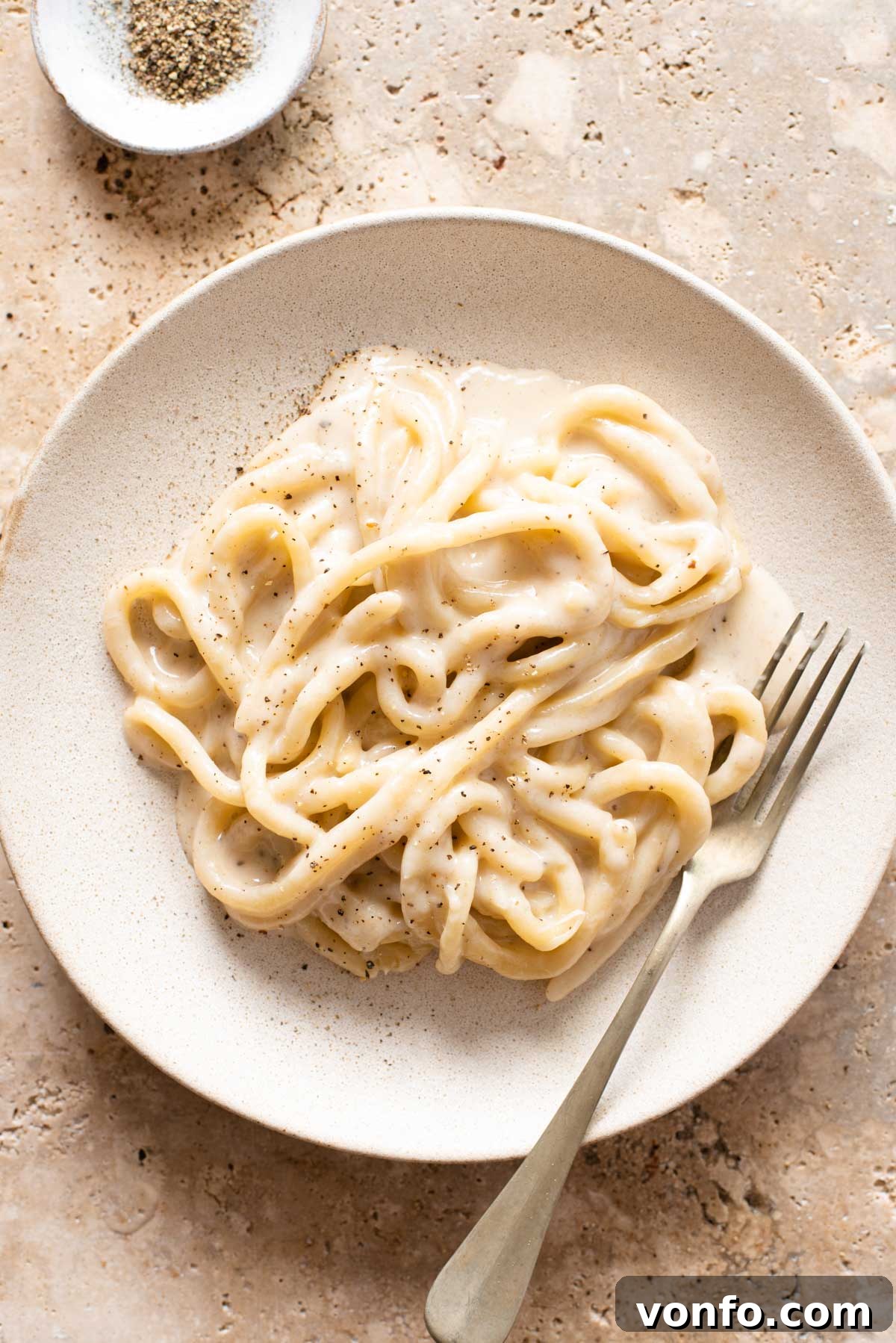
Dive into the heart of Roman cuisine with this definitive guide to crafting an authentic Cacio e Pepe. This beloved dish, whose name simply translates to ‘cheese and pepper’, epitomizes the elegance of Italian culinary simplicity. Using just three core ingredients – Pecorino Romano cheese, freshly ground black pepper, and starchy pasta water – we’ll reveal the secrets to a perfect, silky-smooth, and irresistibly cheesy sauce that you’ll want to recreate time and time again. While traditionally served in Rome with long pasta like spaghetti or tonnarelli, this recipe highlights the delightful pairing with Pici pasta, a rustic, hand-rolled Tuscan specialty from Siena, offering a unique and satisfying texture.
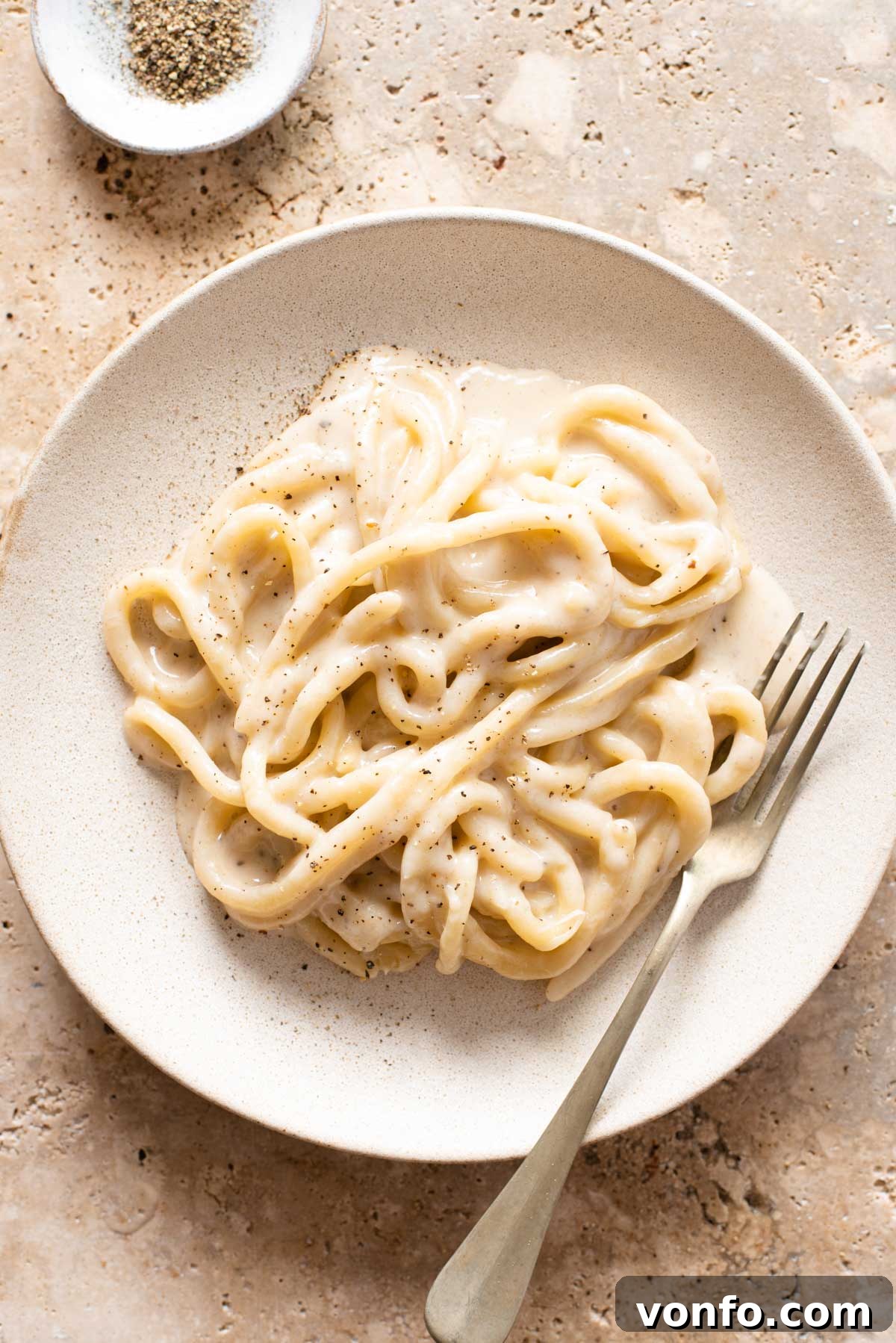
The Roman Classic: Unpacking Cacio e Pepe
Cacio e Pepe stands proudly as one of Rome’s four iconic pasta dishes, a culinary quartet completed by Gricia, Carbonara, and Amatriciana. Its allure lies in its deceptive simplicity, a testament to how humble ingredients, when combined with proper technique, can yield extraordinary flavors. Historically, this dish was a staple for Roman shepherds, made from shelf-stable ingredients they carried: dried pasta, hard Pecorino cheese, and black pepper. It’s a dish that warms the soul and satisfies the palate with its sharp, peppery, and intensely savory notes.
Despite its minimal ingredient list and quick preparation time, Cacio e Pepe is notorious for being tricky to perfect. The most common challenge aspiring cooks face is the cheese clumping, resulting in a grainy rather than a creamy sauce. But fear not! This comprehensive guide will arm you with all the essential tips and techniques to master this Roman masterpiece, ensuring you achieve that coveted velvety consistency every single time. Prepare to create the creamiest, cheesiest, and most delicious pasta dish you’ve ever tasted. Buon Appetito!
Delve into the full recipe below, including detailed notes on selecting ingredients, step-by-step photos, expert tips, exciting variations, and a video tutorial. For precise ingredient measurements and a printable version, please scroll to the bottom of this page.
Essential Ingredients for Perfect Cacio e Pepe
The magic of Cacio e Pepe begins with the quality and type of its few ingredients. Skimping on these will compromise the final result. Below, you’ll find a visual guide to everything you need, alongside crucial advice for ingredient selection.
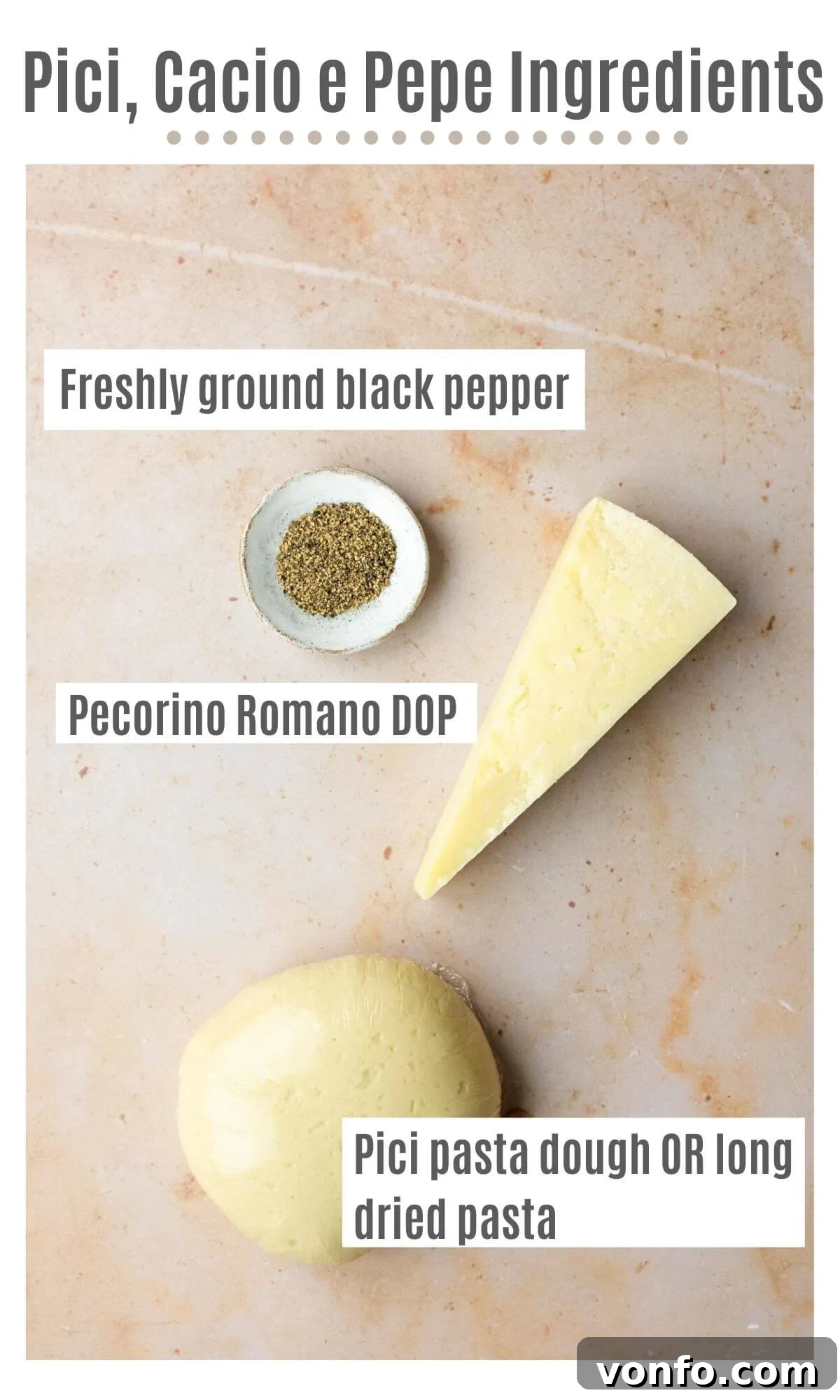
- Pecorino Romano DOP: This is unequivocally the most critical ingredient. The ‘DOP’ (Denominazione d’Origine Protetta) certification guarantees its authenticity and adherence to traditional production methods, which is vital for the sauce’s emulsification. Regular Pecorino or other hard cheeses will likely clump and fail to create the desired creamy texture. Authentic Pecorino Romano DOP typically features a black or colorless rind with its name stamped on it, and you’ll often find it in Italian delis or specialty food stores. Its sharp, salty, and pungent flavor is irreplaceable.
- Freshly Ground Black Pepper: The quality of your pepper significantly impacts the dish. Avoid pre-ground, fine pepper powder, as it lacks the vibrant aroma and nuanced heat. Instead, use whole peppercorns and grind them coarsely just before cooking. Toasting the freshly ground pepper in the pan awakens its essential oils, releasing a more intense and fragrant spice that is fundamental to Cacio e Pepe.
- Pasta: While Pici pasta is our preferred choice for its chewy texture and ability to cling to the sauce, many traditional Roman recipes use spaghetti or tonnarelli. Pici, a thick, hand-rolled pasta from Tuscany, is made with a simple eggless dough, offering a rustic charm that complements the rich sauce beautifully. If you’re interested in making your own, check out our homemade Pici pasta tutorial. Alternatively, any long, robust dried pasta shape like spaghetti, bucatini, or even rigatoni will work, though long shapes are generally easier for beginners.
- Pasta Water: Often overlooked, this fourth “ingredient” is the true secret weapon. The starchy water left over from cooking the pasta is essential for creating the creamy emulsion. It binds the cheese and pepper into a luxurious sauce, rather than just melting the cheese into oily lumps. We recommend using slightly less water than usual to boil your pasta to ensure the water is extra starchy.
Mastering the Technique: Step-by-Step Cacio e Pepe
This recipe moves quickly, so it’s best to read through all the steps before you begin. Pay close attention to the specific timing for fresh versus dried pasta to ensure optimal results.
Preparation
1. Prep the Pecorino: Finely grate your Pecorino Romano DOP cheese. It’s crucial that the cheese is finely grated to melt smoothly into the sauce. Place it in a small mixing bowl and set aside.
2. Boil the Water: Bring a pot of generously salted water to a rolling boil. An important tip: use slightly less water than you typically would for pasta. This concentrates the starch, making your pasta water extra potent for emulsifying the sauce. If using dried pasta, start boiling it now, ensuring you undercook it by approximately 2-3 minutes from the package instructions.
Cooking the Sauce Base
3. Toast the Pepper: In a large, dry pan (ideally a non-stick or well-seasoned cast iron skillet), add the freshly ground black pepper. Place the pan over medium heat and toast the pepper for just a few seconds until fragrant. Be careful not to burn it.
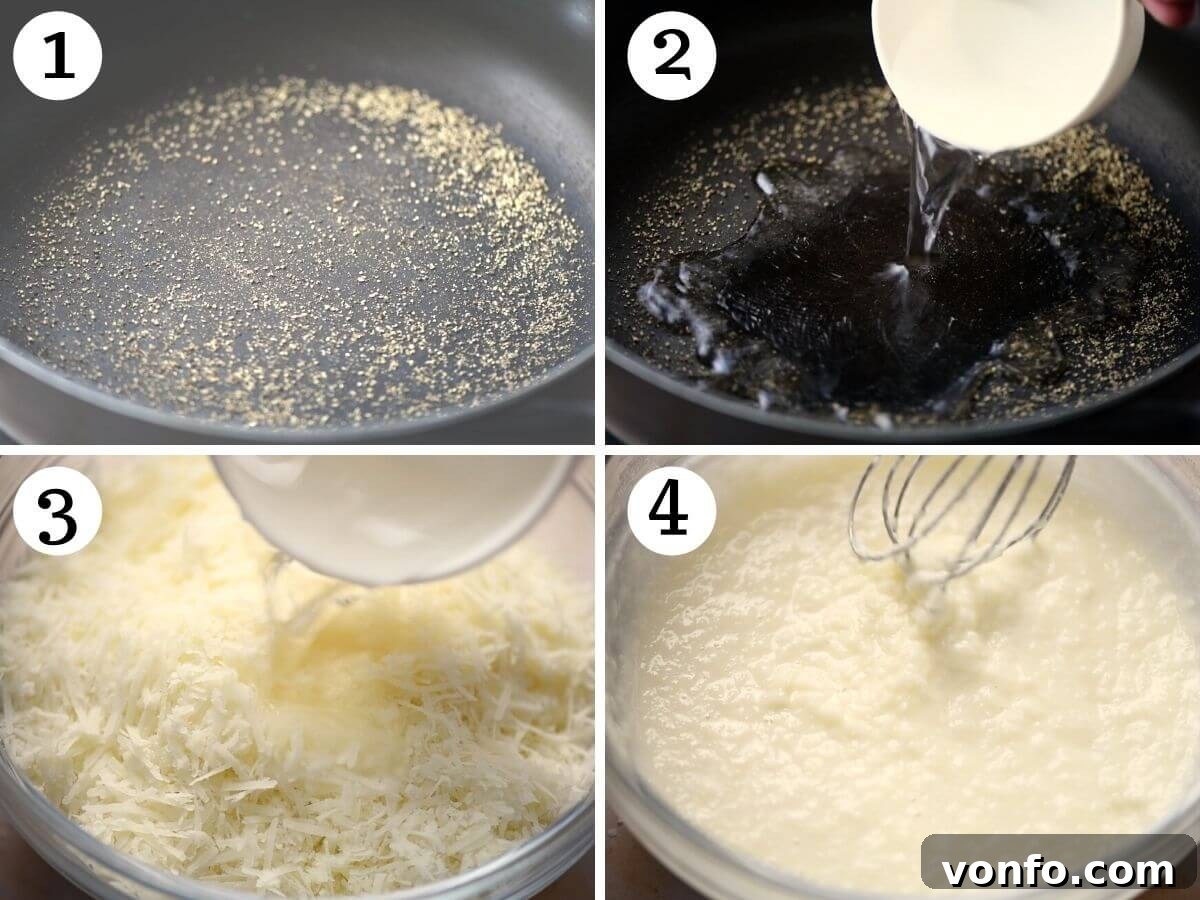
4. Add Pasta Water to Pepper: Immediately after toasting, add about ½ cup (roughly 120ml) of the starchy pasta water to the pan with the pepper. Let it simmer gently while your pasta continues to cook. This infuses the water with peppery flavor.
Creating the Cheese Emulsion
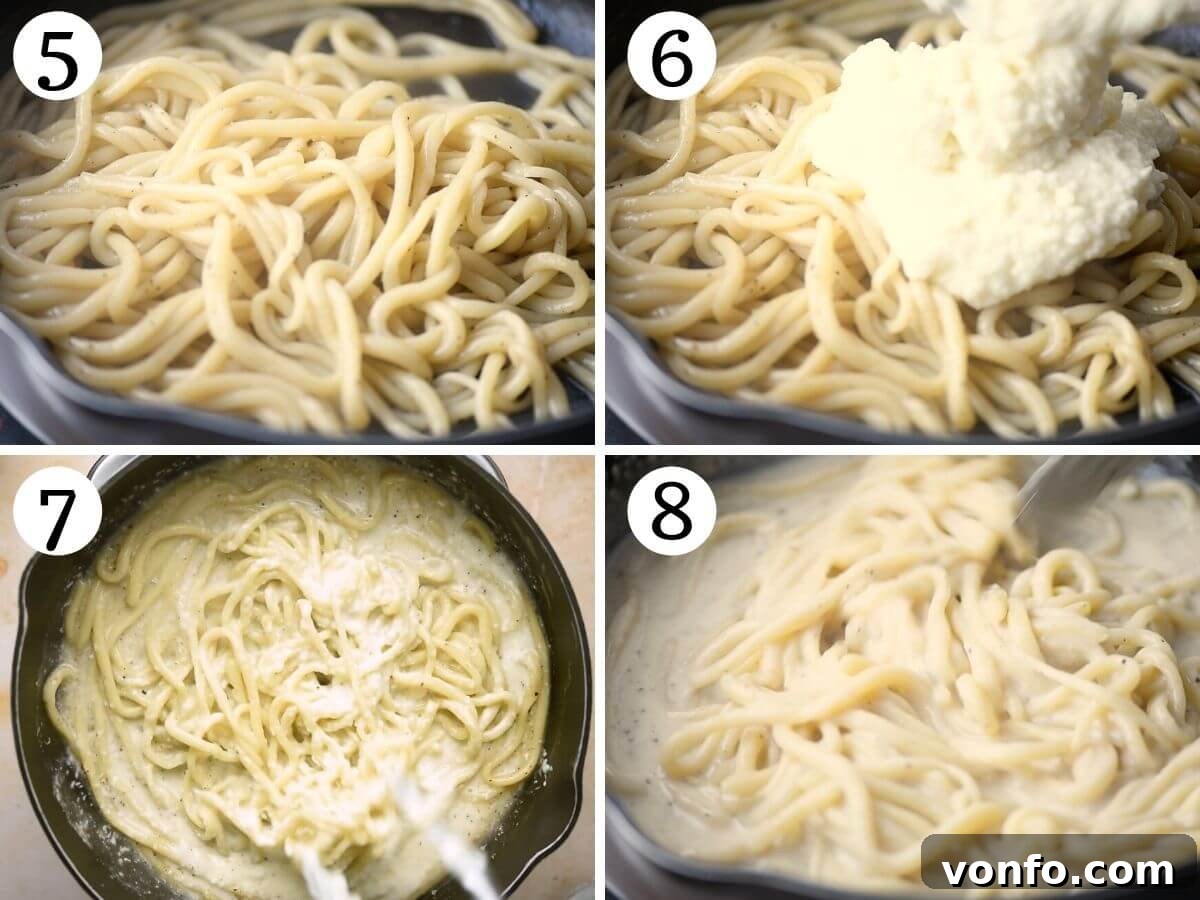
5. Prepare the Pecorino Paste: Return to your grated Pecorino. Gradually add a few ladles of the hot pasta water, a little at a time, to the cheese. Stir continuously until it forms a loose, creamy paste. The consistency should be slightly thicker than heavy cream. It won’t be perfectly smooth at this stage, but rather a thick, spreadable consistency.
6. Fresh Pasta Timing: If you are using fresh pasta (like homemade Pici), now is the time to start boiling it. Fresh pasta cooks much faster than dried, usually within 2-3 minutes.
Bringing it All Together
7. Combine Pasta and Pepper Water: When your pasta is approximately 2-3 minutes away from being perfectly al dente (still firm to the bite), use tongs to transfer it directly from the boiling pot to the pan with the peppery water. Avoid draining the pasta through a colander, as this removes excess starch. Stir the pasta in the pan for about 1 minute, allowing it to absorb the peppery liquid and release more starch. If the liquid has evaporated too much, add another splash of pasta water.
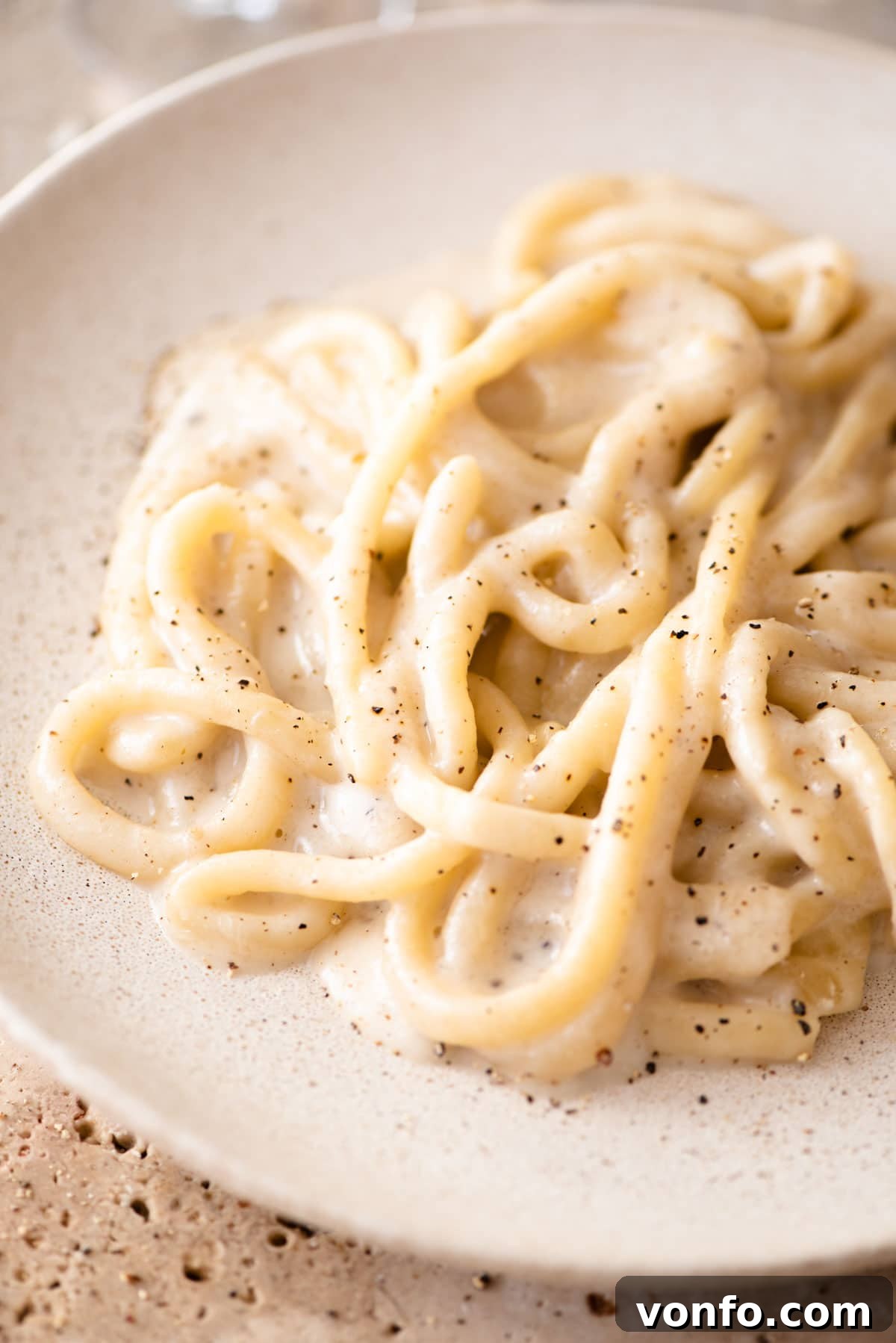
8. Form the Silky Sauce: This is the crucial step. Turn the heat down to very low, or even remove the pan from the heat entirely. Add the Pecorino paste mixture to the pasta in the pan. Stir continuously and vigorously, using your tongs or a wooden spoon. At first, it might look like the cheese is splitting or clumping, but do not stop stirring! The continuous motion, combined with the residual heat and starchy water, will create a smooth, creamy, and emulsified sauce. As it thickens to your desired saucy consistency, turn off the heat and continue stirring for another minute to allow it to fully come together and thicken slightly more. Serve immediately.
Expert Tips & Frequently Asked Questions for Cacio e Pepe Perfection
Achieving a restaurant-quality Cacio e Pepe at home is within reach with these crucial tips and answers to common queries:
- Control the Water: The Starch is Key! As mentioned, use less water than usual when boiling your pasta. This ensures a higher concentration of starch, which is absolutely vital for emulsifying the cheese and pepper into a smooth sauce. Think of pasta water as liquid gold for this recipe.
- Tongs are Your Best Friend: When transferring the pasta from the boiling pot to the pan, always use tongs. This method helps carry over just the right amount of starchy water, preventing your sauce from becoming too dry or too watery. Draining pasta through a colander will strip away too much of that precious starch.
- Constant Stirring is Non-Negotiable: Once you add the cheese mixture to the pasta, particularly when the pan is off the heat or on very low, stir, stir, stir! The sauce will go through a stage where it looks like it’s separating or clumping – this is normal. Keep stirring continuously for a minute or two, and you’ll witness the magical transformation into a beautifully smooth, creamy, and cohesive sauce. Patience and persistence are key here.
- Temperature Control: Avoid high heat when adding the cheese. Too much heat will cause the Pecorino to seize and clump. The residual heat from the pasta and the hot pasta water is usually sufficient to melt the cheese gently and create the emulsion.
- Serve Immediately: Cacio e Pepe is a dish that absolutely demands to be served fresh off the stove. The delicate emulsion can break down if left to sit too long, and it does not reheat or freeze well. Enjoy it piping hot for the best experience.
FAQs About Cacio e Pepe
No, and this is a firm “no.” You absolutely must use Pecorino Romano DOP. Any other type of Pecorino or Parmesan-style cheese will behave differently and is very likely to clump or fail to emulsify correctly. Furthermore, using Parmigiano Reggiano, while delicious in its own right, will fundamentally alter the flavor profile of this classic Roman dish, as its taste is milder and nuttier compared to the sharp, salty Pecorino. Trust the tradition for this one!
Yes, of course! While we recommend Pici pasta for its unique texture, you are certainly not limited to it. Spaghetti and bucatini are traditional Roman choices and work wonderfully. Shorter pasta shapes like rigatoni can also be used, though long pasta shapes are often easier to coat evenly with the sauce, especially when you’re making Cacio e Pepe for the first time.
Explore More Traditional Italian Pasta Recipes
If you’ve enjoyed mastering Cacio e Pepe, we encourage you to explore other authentic Italian pasta dishes that celebrate simplicity and robust flavors:
- Spaghetti alla Carbonara
- Bucatini all’Amatriciana
- Pasta alla Gricia
- Pasta Alla Norma (Eggplant Pasta)
- Penne Pomodoro (Tomato Basil Pasta)
We hope you’ve enjoyed this culinary journey into the world of authentic Cacio e Pepe. If you’ve tried this Pici Cacio e Pepe recipe or any other recipe from our collection, we’d love to hear from you! Please don’t forget to rate the recipe and share your experience in the comments below. Your feedback means a lot to us. You can also FOLLOW US on FACEBOOK, INSTAGRAM, and PINTEREST, or sign up for our NEWSLETTER to receive new delicious recipes weekly directly to your inbox!
Pici, Cacio e Pepe
By Emily
Print Recipe
Learn how to make an authentic Cacio e Pepe sauce with just 3 ingredients! Served with Pici pasta, this recipe will give you all the tips you need to make a perfect, silky smooth, creamy and utterly cheesy sauce that you’ll want to make again and again!
Ingredients
- 1 lb pici pasta, or other long pasta (450g)
- 2.5 cups Pecorino Romano DOP, grated (200g)
- 1 tsp freshly ground black pepper
Instructions
- Important Note: There are slightly different instructions depending on whether you are using fresh or dried pasta. Dried pasta should begin boiling at Step 2, and fresh pasta at Step 6. This is a very quick recipe, please read all instructions carefully before starting.
- Bring a pot of salted water to a boil (use less pasta water than you normally would for extra starch). Finely grate the Pecorino and add it to a small mixing bowl; set aside.
- If using dried pasta, start boiling it now, making sure to undercook it by 2-3 minutes.
- Put the freshly ground pepper in a large dry pan on medium heat. Toast the pepper for a few seconds until fragrant.
- After a few seconds, add ½ cup (roughly 120ml) of pasta water to the pan. Let it simmer gently as the pasta cooks.
- Add a few ladles of hot pasta water to the grated Pecorino cheese, a little at a time, until it has the consistency of a loose, creamy paste (slightly thicker than heavy cream, it won’t be perfectly smooth).
- If using fresh pasta, start boiling it now.
- When the pasta is about 2 minutes away from being fully cooked, transfer it to the pan with the pepper using tongs. Stir for about 1 minute to release more starch. Add a little more pasta water if the pan seems dry.
- Next, turn the heat down to low (or off) and add the Pecorino mixture. Stir continuously and vigorously until a smooth and creamy cheese sauce is created. It may look like it’s going to split at first, but keep stirring and it will come together into a uniform sauce. Once you achieve the desired saucy consistency, turn the heat off and continue stirring for 1 more minute to allow it to thicken slightly. Serve immediately.
Video Tutorial
Learn how to make an authentic Cacio e Pepe sauce with just 3 ingredients! Served with Pici pasta, this recipe will give you all the tips you need to make a perfect, silky smooth, creamy and utterly cheesy sauce that you’ll want to make again and again!
Notes
- Use tongs! Transfer the pasta from the water to the pan with tongs instead of draining the pasta. This ensures you have just the right amount of starchy water in the pan.
- Stir, stir, stir! When the pasta is off the heat and you add the cheese mixture, keep stirring continuously until the creamy, cheesy sauce is created (just a minute or two). It will initially look like it’s splitting, but don’t worry, just keep stirring, and it will come together beautifully.
- Storage & Freezing: Cacio e Pepe is truly best served immediately. Due to its delicate emulsion, it does not reheat or freeze well, as the sauce tends to break down.
Helpful Info for All Recipes
- We always use extra virgin olive oil in all of our recipes unless stated otherwise.
- When using canned or jarred tomatoes, we recommend Cirio or Mutti brands for the best results and flavor.
- All vegetables specified are medium-sized unless otherwise indicated.
- All our recipes are rigorously tested and developed using a fan (convection) oven.
- Find out more about how nutrition is calculated.
- Explore our must-have Italian Pantry Staples.
- Discover all our Essential Kitchen Tools for Italian Cooking.
Nutrition Information
Nutrition information is automatically calculated and should only be used as an approximation.
Did you try this recipe?
Leave a comment below!