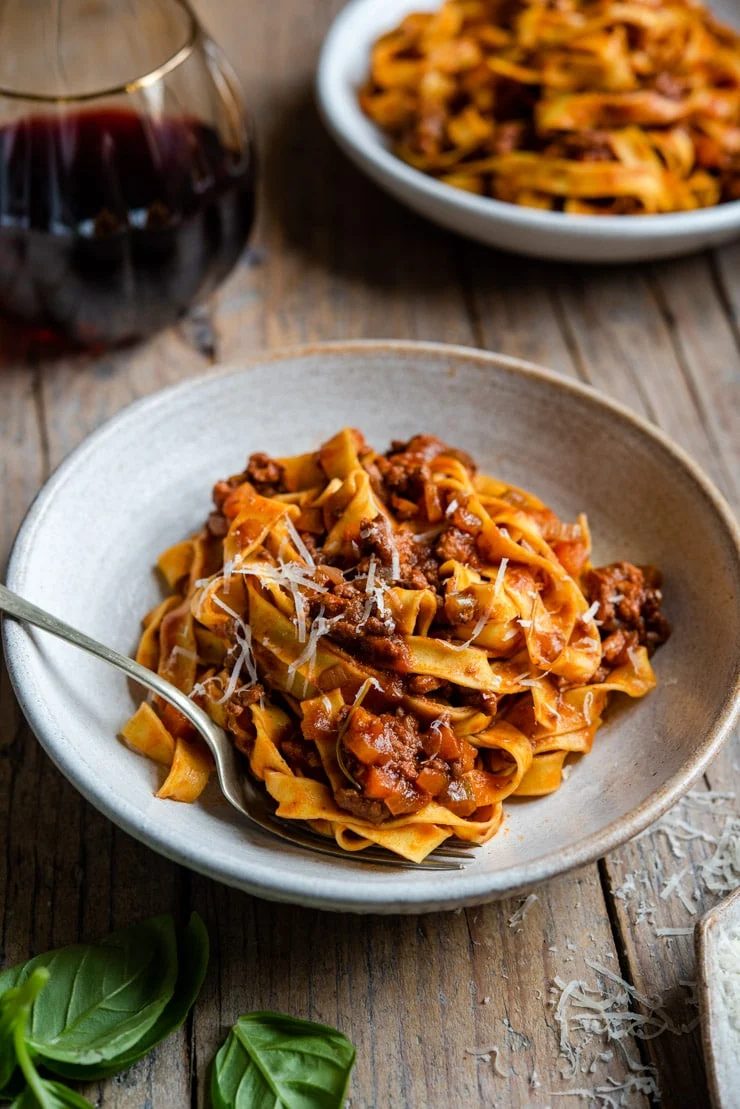
Ragu alla Napoletana, Neapolitan Ragu
- Makes 6 servings
- Prep 10 minutes
- Cook 3 hours 40 minutes
- Total 3 hours 50 minutes
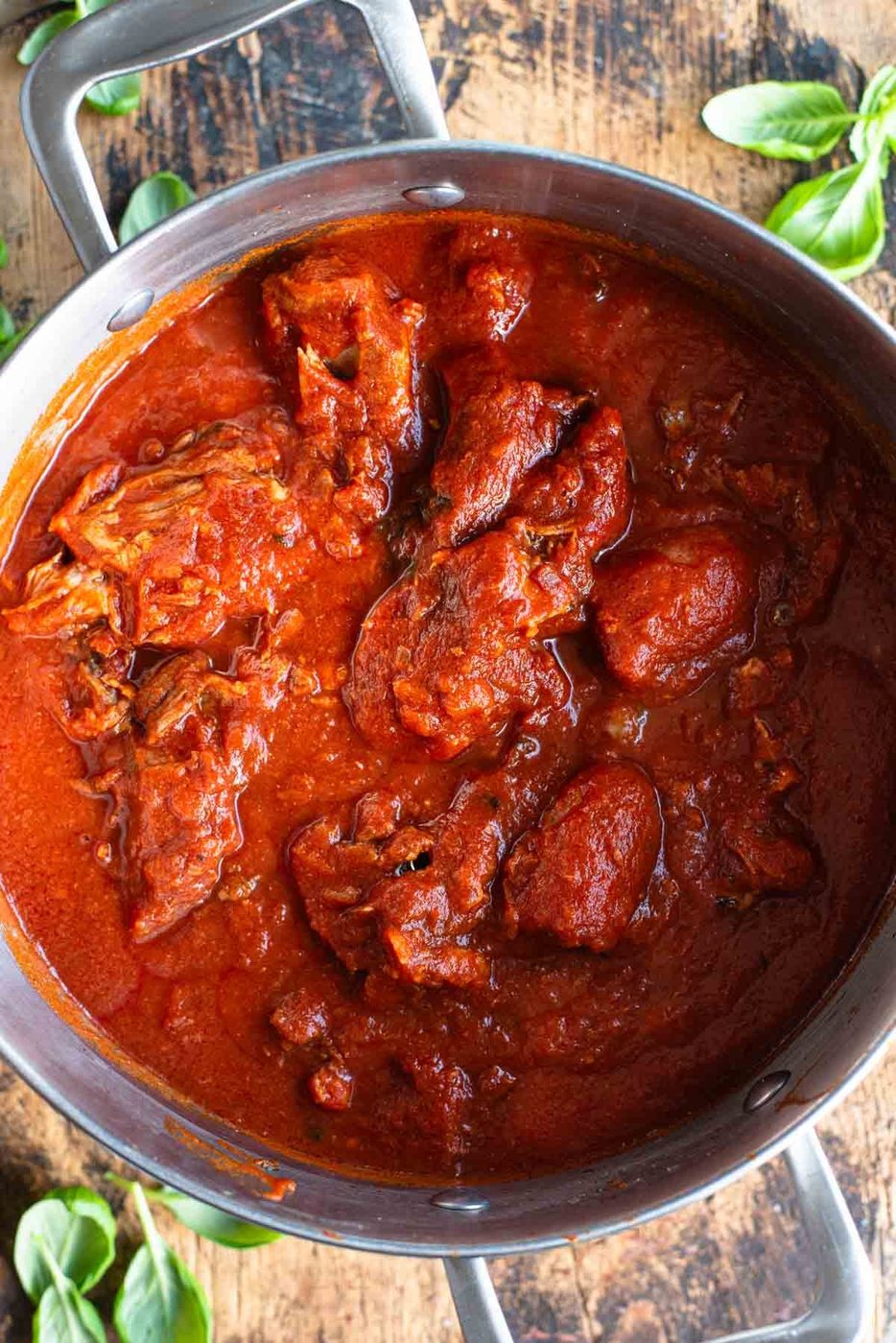
Ragu alla Napoletana is a traditional and insanely good ragu from Naples. It's made with a mix of different cuts of meat, gently simmered with onion, tomato and basil until it's rich and full of flavour. This ragu is suited to a Sunday family meal and can be used in so many different ways!
We're so excited to share this recipe because it's unbelievably good. The ragu is made with three different cuts of meat that simmer gently with tomato, basil and onion.
It's simple in terms of prep and has so many good uses.
Traditionally, Ragu alla Napoletana is eaten like this.
- After cooking, remove the meat and set aside.
- Cook your pasta of choice (al dente of course) and serve it with some of the sauce. A small portion as a first course.
- Then serve the meat with a little sauce and your choice of vegetable side dishes such as greens and roast potatoes (second course/main meal).
This way of serving the ragu is traditional for a Sunday lunch and it's a great way to stretch the sauce and meat into 2 meals. Depending on how many are eating the sauce could even last 2 days to make a total of 3 meals.
Another serving option (also traditional).
- Remove the meat and eat the sausages and ribs with sides for dinner 1. Then use the beef to make meatballs and the whole batch of sauce to make Lasagne alla Napoletana also known as Lasagne di Carnevale, a truly special and indulgent lasagna that you've got to try!
See the full recipe below and use our step-by-step photos for a visual reference if you need them. This recipe is so good, we hope you love it as much as we do!
Buon Appetito!
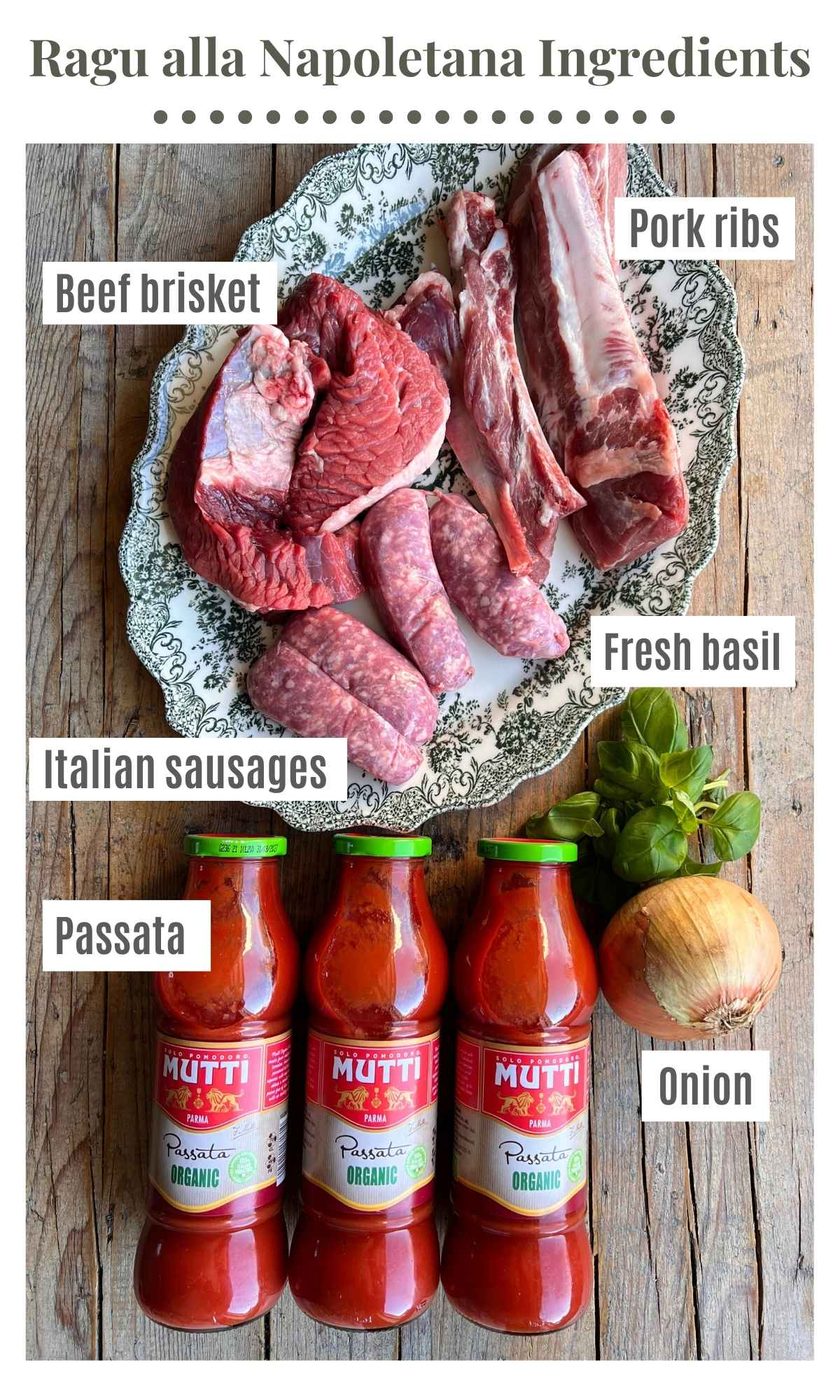
Ingredient notes and substitutions
- Meat cuts – beef brisket, Italian sausages and pork ribs. We highly recommend using all three of these cuts but of course, you can experiment with other cuts such as chuck steak (large chunks) and pork shoulder although we highly recommend using a pork cut with the bone. The sausages add so much good flavour so we'd say those are a must and the pork ribs taste divine after cooking. We use the beef brisket to make meatballs after cooking (they're insane!).
- Passata (known as tomato puree in the US) – it's so important to use high-quality tomatoes especially when it's for a sauce like this as it will effect the flavour of the whole dish. Mutti is our go-to brand right now but use a brand you know and trust.
Step by step photos and instructions
- Brown meat – heat olive oil in a large, deep pot and brown the meat on all sides. There will be a lot of meat so you'll need to move it around using tongs to help (photos 1 and 2).
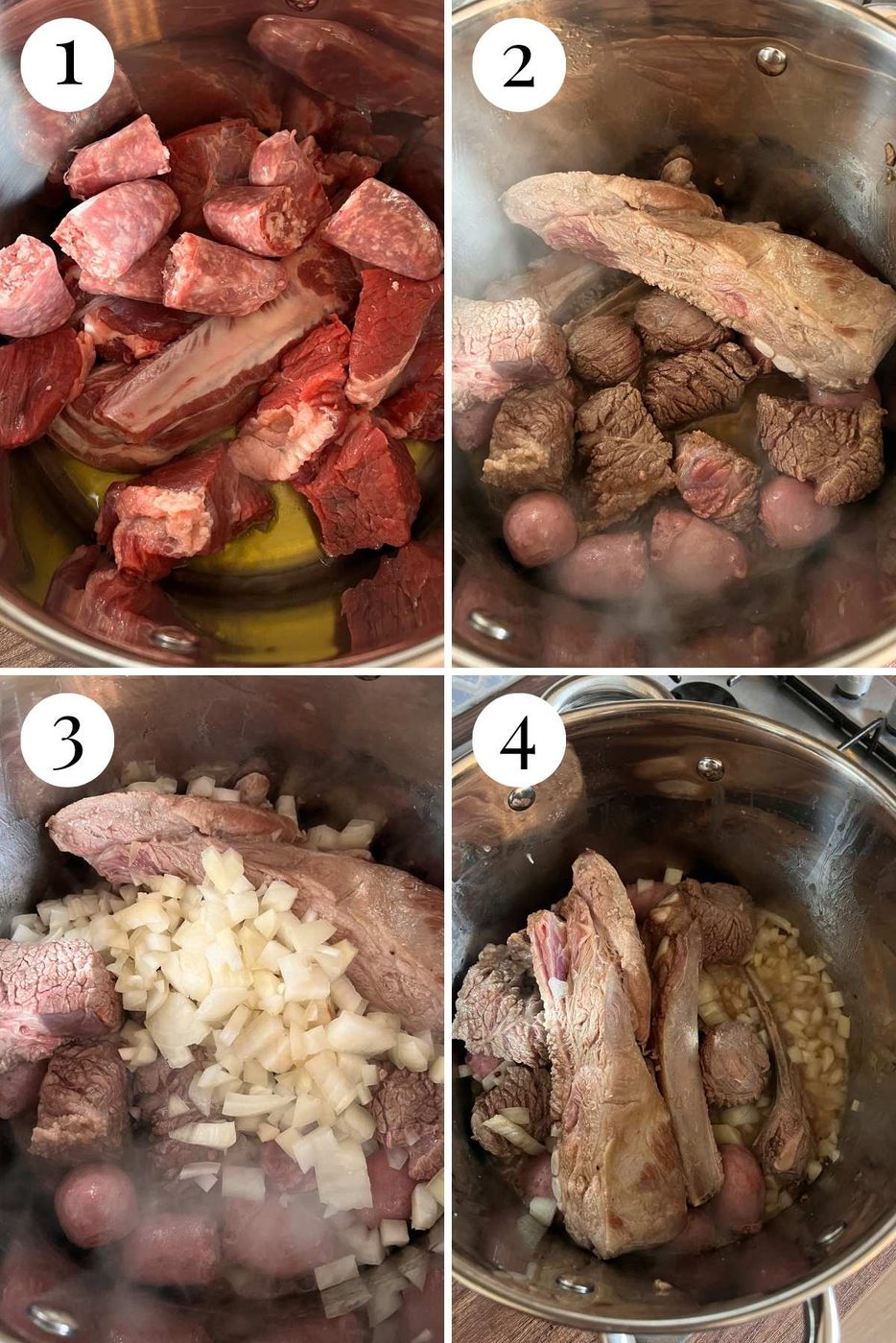
- Add onion – next, add the chopped onion and let it saute at the bottom of the pot until soft (about 5 minutes) (photos 3 and 4).
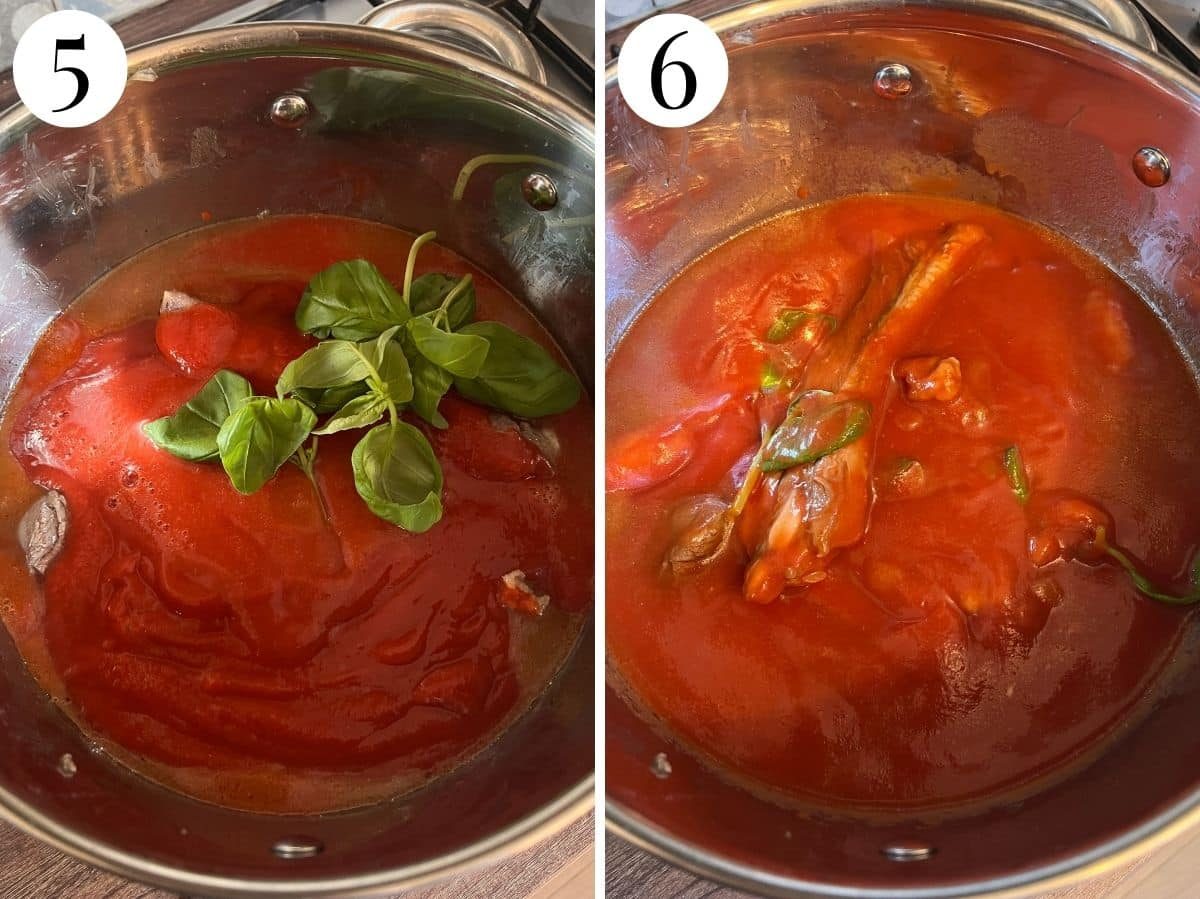
- Add tomato and basil – once the onion has softened, add the tomato passata, fresh basil and a pinch of salt. Cover the pot and let it simmer for 3 and a half hours (photos 5 and 6).
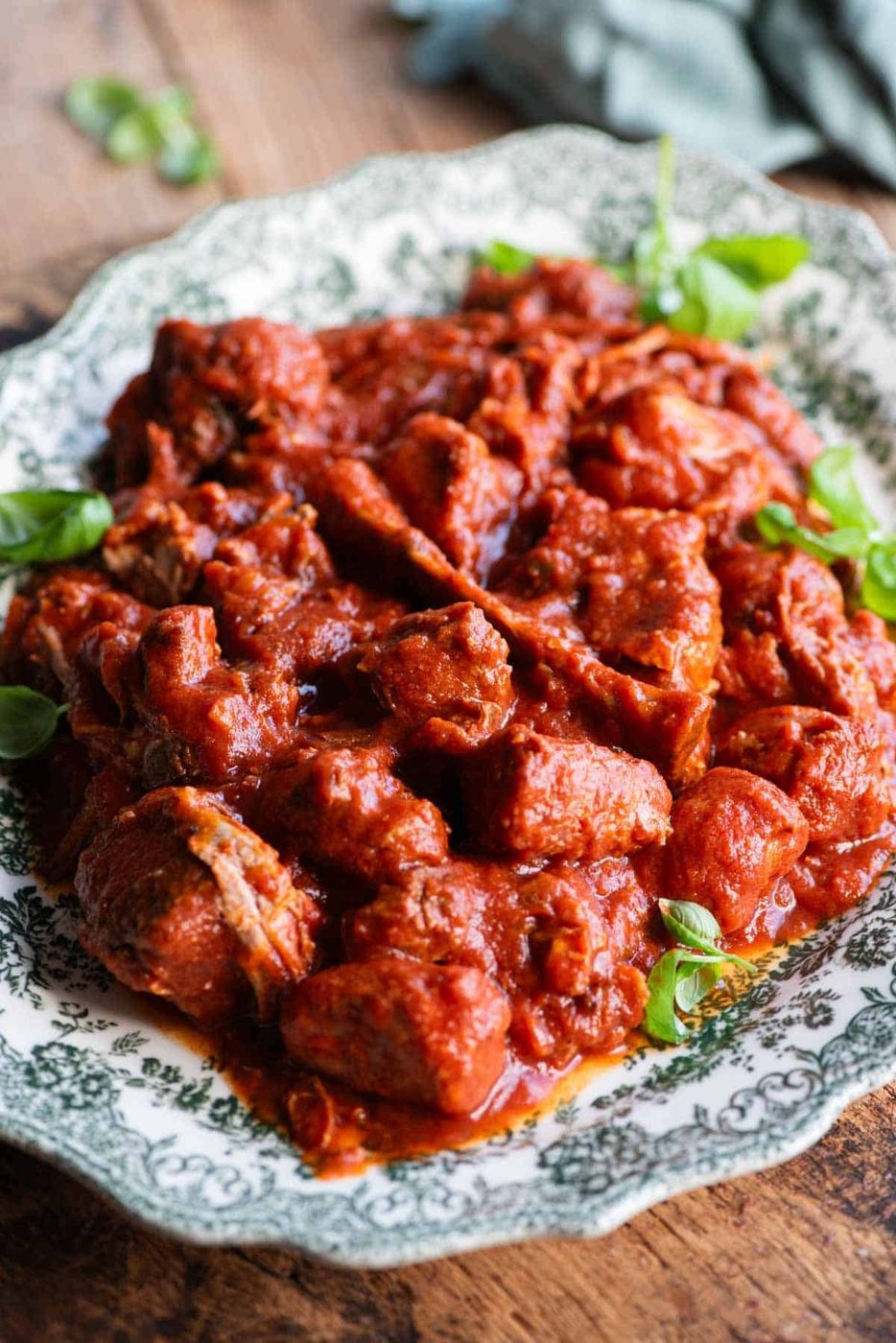
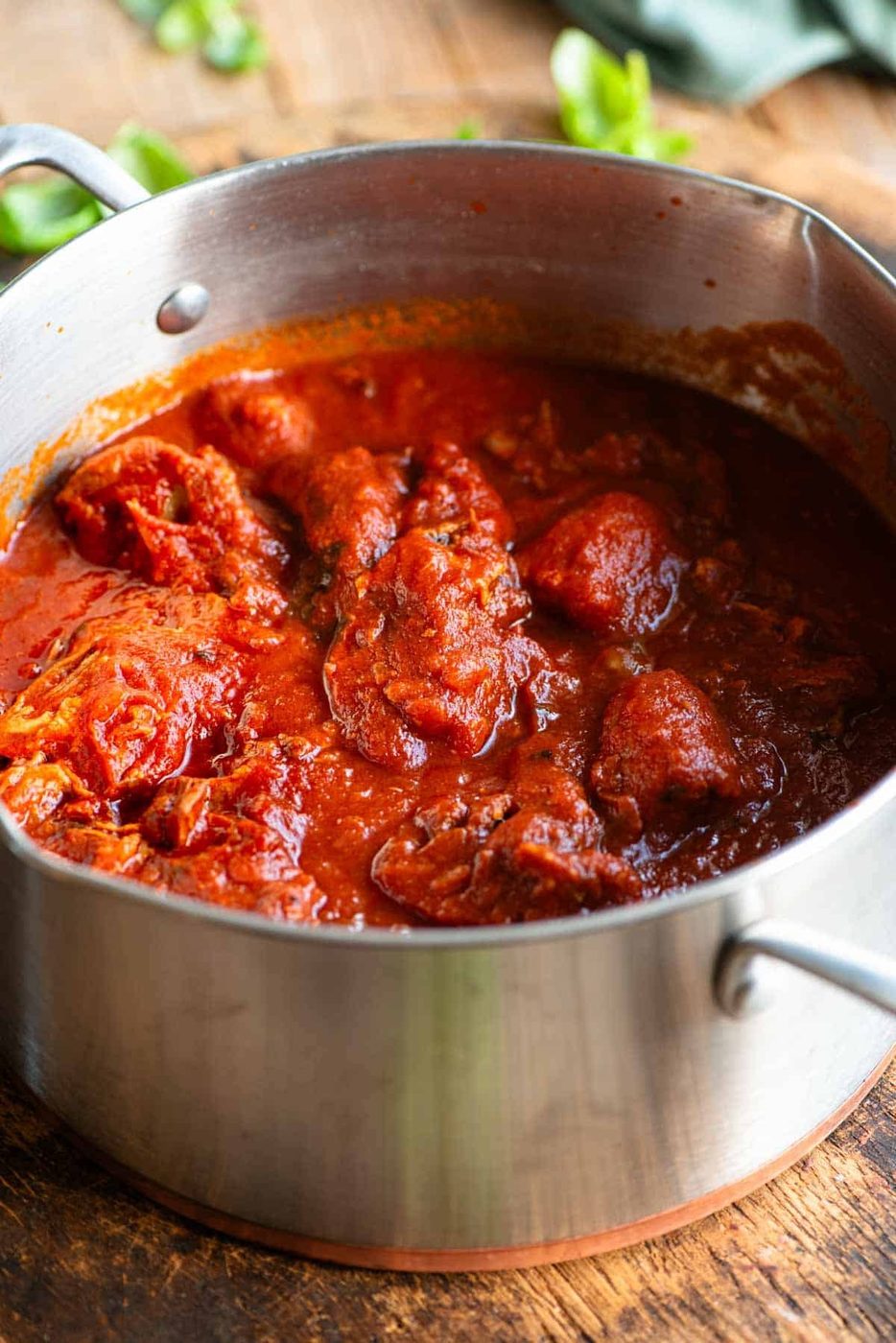
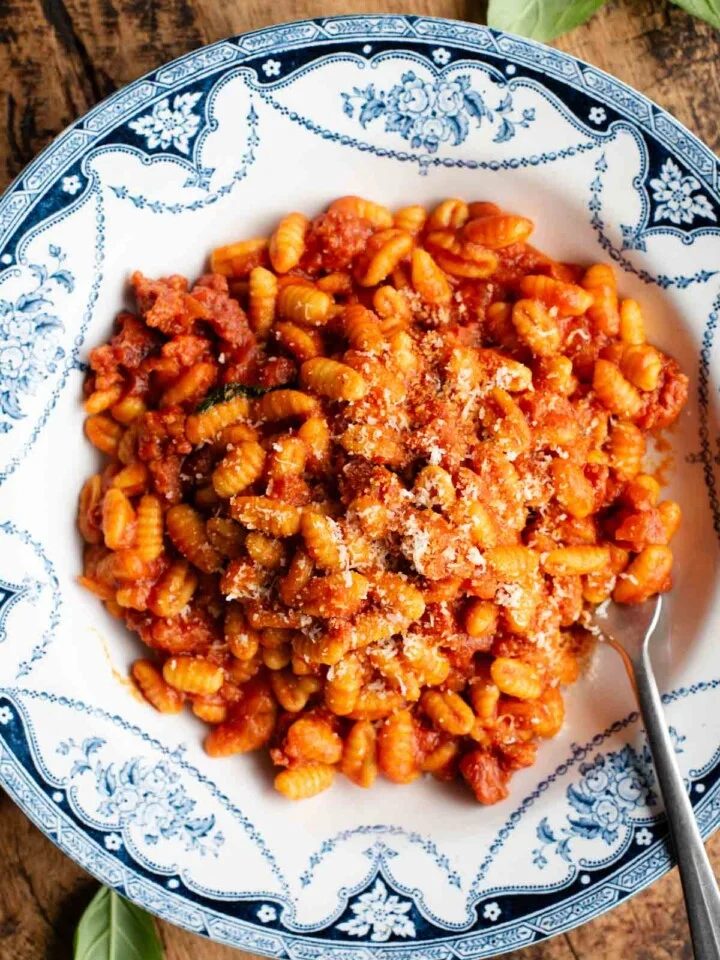
- Serve – the sauce is now ready. Remove the meat and serve as you like. Serve the sauce with pasta, enjoy!
Pasta
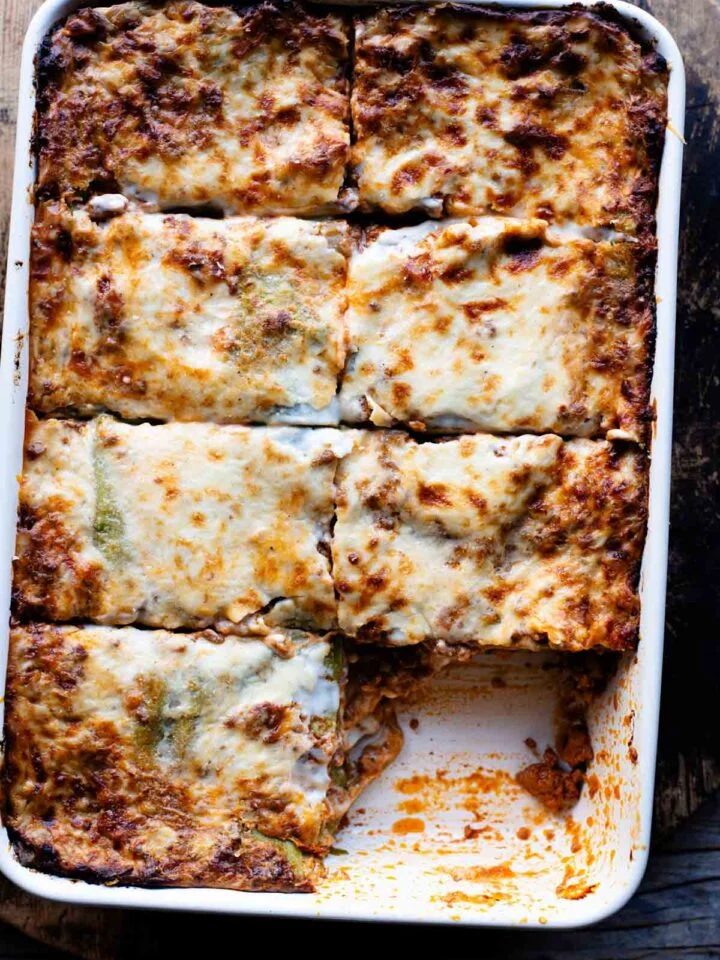
Malloreddus alla Campidanese (Sardinian Sausage and Saffron Ragu)
Pasta
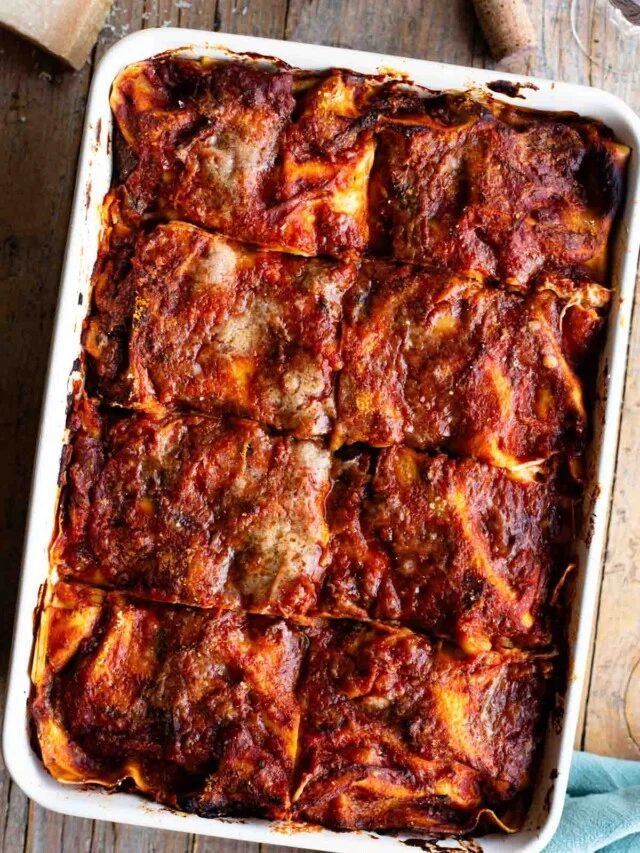
Authentic Lasagna Bolognese (Lasagne alla Bolognese)

Mains
Involtini alla Palermitana (Sicilian Beef Involtini)
Fresh Pasta
Lasagna di Carnevale (Neopolitan lasagna)
Ingredients
Makes 6 servings
- 560 g (1 and 1/4 lbs) beef brisket (cut into large chunks)
- 560 g (1 and 1/4 lbs) pork ribs
- 4 Italian sausages (cut in half (300g/10.5 oz))
- 1 onion (finely chopped)
- 1680 g (6 and 1/3 cups) passata (tomato puree US)
- 1 small handful fresh basil
- 1-2 tablespoons olive oil
- Salt
Method
Prep
Finely chop the onion, cut the sausages in half and cut the brisket into large chunks.
Make the ragu
Add 1-2 tablespoons of olive oil to a large pot and brown the meat on all sides. Use tongs to help you move the meat around for browning.
Once browned, add the finely chopped onion to the meat. Arrange everything so the onion is at the bottom and saute it until soft (about 5 minutes).
Next, add the passata, a pinch of salt and the fresh basil. Cover with a lid and let the ragu simmer gently for 3 and a half hours. Make sure to check the ragu every now and then and give it a stir to stop it from catching on the bottom.
After cooking turn off the heat and serve. See our serving suggestion in the notes.
Kitchen notes
- Add wine some recipes add wine to the ragu after sauting the onion. We recommend using an Italian red wine (preferably from Campania). We'd use about 1/2 cup (125ml).
- Serving options traditionally, the meat is removed and the sauce is served with pasta. The meat is then eaten as a main course with vegetable sides. Alternatively, you can break the meat up into the sauce and serve it with pasta or use it to make Lasagna Napoletana.
- Meat used there are a few different variations of Ragu alla Napoletana but pork ribs and sausages are always used. You can use other cuts of beef or pork such as shoulder or topside (eye of round). Beef braciole are also often used in the sauce.
- Meat weight It's fine if your meat weighs a little less or a little more than stated in the recipe.
- Prep in advance the ragu/sauce tastes even better the next day.
- Storage once cooled completely the ragu can be stored in the fridge for up to 3 days or frozen for 3 months.