
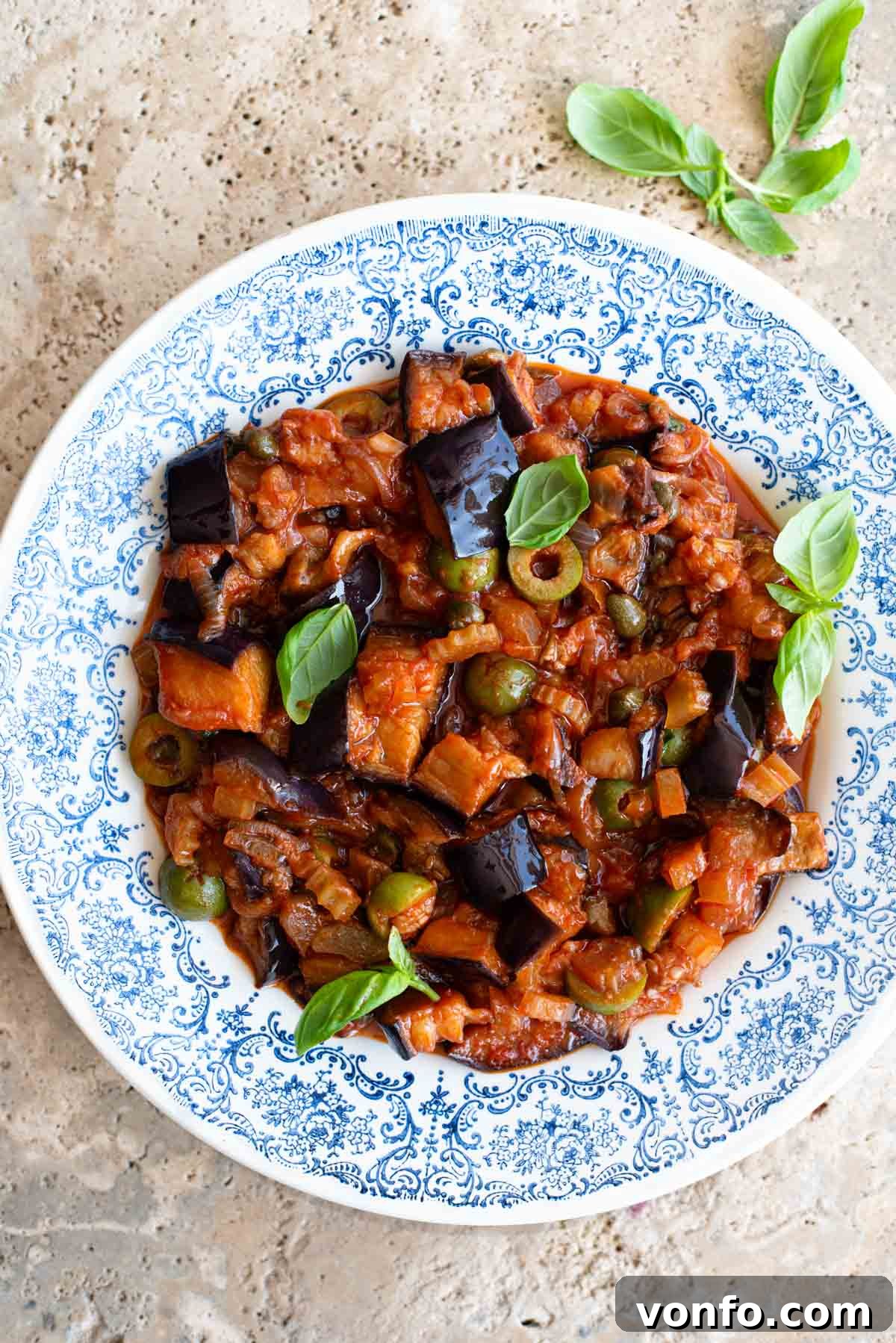
Authentic Sicilian Caponata: A Timeless Eggplant Delight
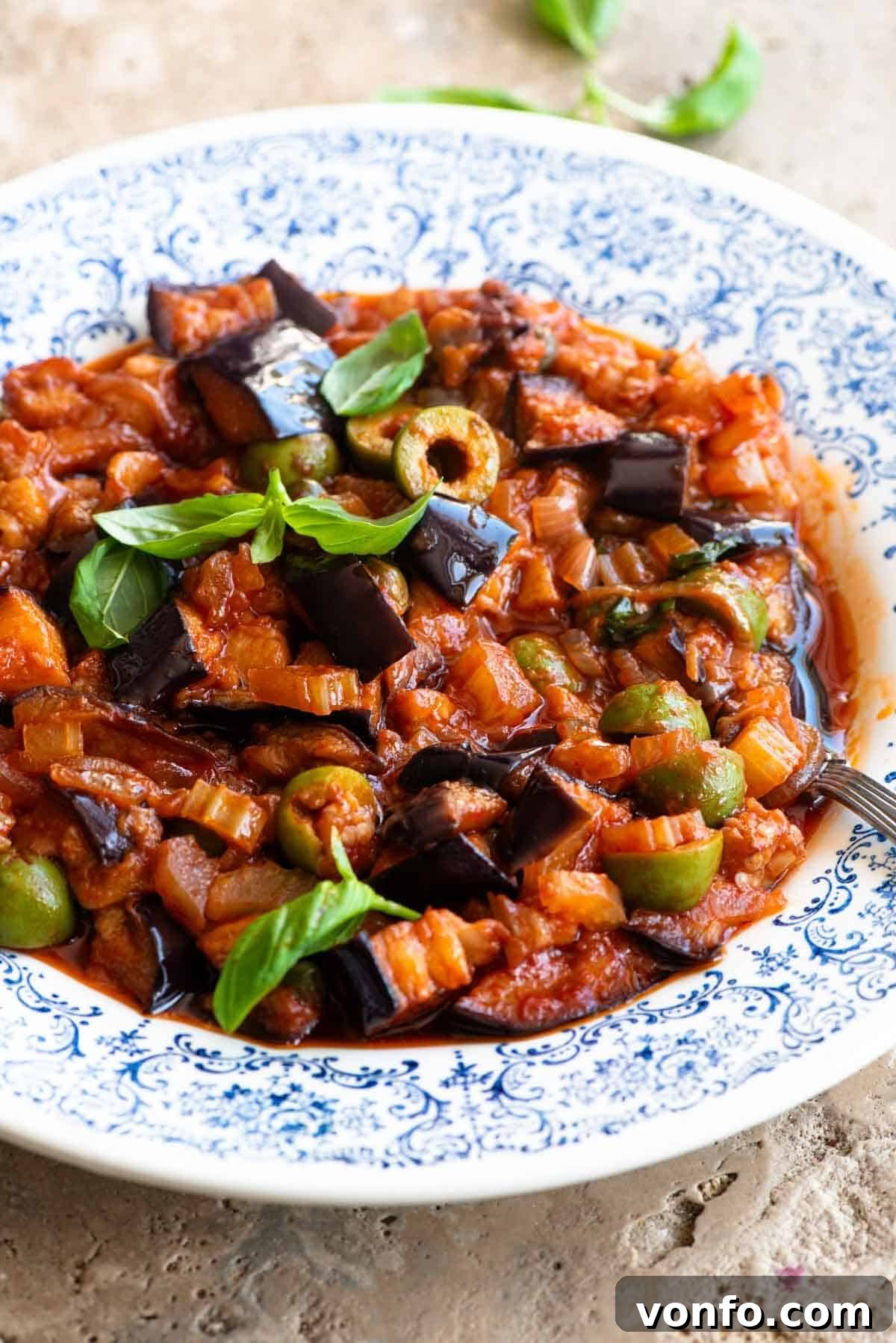
La Caponata is more than just a dish; it’s a culinary journey to the heart of Sicily. This traditional Sicilian delight features tender, fried eggplant enveloped in a vibrant sweet and sour (agrodolce) sauce, beautifully balanced with the briny notes of olives, the piquant kick of capers, the crisp freshness of celery, the gentle sweetness of onions, and the rich depth of ripe tomatoes. It’s a symphony of flavors and textures, perfect as a sophisticated appetizer served on crusty crostini or as an exquisite side dish alongside grilled meats or flaky fish. Each spoonful offers a taste of the Mediterranean sun, a testament to Sicily’s rich agricultural bounty and its storied culinary heritage.
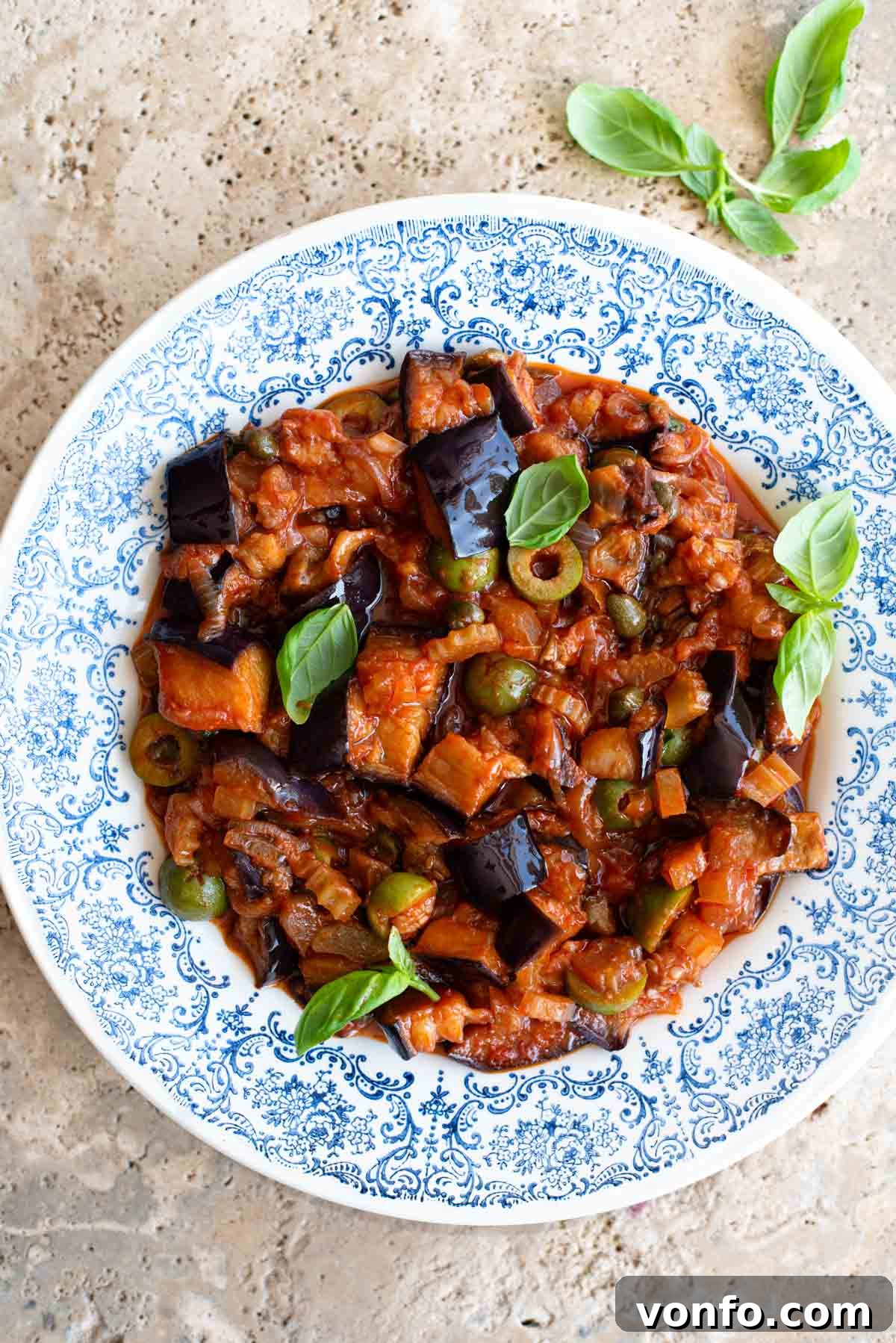
Quick Recipe Snapshot: Why You’ll Love This Caponata
This authentic Caponata recipe encapsulates the essence of Sicilian home cooking, offering a delightful blend of tradition and simplicity. Here’s why it deserves a spot in your kitchen:
- A True Taste of Sicily: Crafted with seasonal summer produce, this recipe brings the authentic flavors of Sicilian tradition straight to your table.
- Ideal for Meal Prep: Caponata is one of those magical dishes that tastes even better the next day, allowing the rich agrodolce flavors to deepen and meld. Perfect for making ahead!
- Incredibly Versatile & Adaptable: Easily customize this recipe with your favorite vegetables or regional variations to make it uniquely yours.
- Explosion of Rich Flavors: Every bite is packed with an incredible depth of sweet, sour, salty, and savory notes that will tantalize your taste buds.
Eggplant Caponata stands as a quintessential ‘cucina povera’ (peasant kitchen) dish in Sicily, a true reflection of the island’s resourcefulness and culinary ingenuity. Like many beloved traditional recipes, Caponata boasts countless variations, with each village and family adding their unique touch depending on local produce and ancestral preferences. During a recent unforgettable trip to Sicily, exploring its vibrant markets and charming trattorias, Caponata was high on my list of must-try dishes, right alongside iconic treats like cannoli, savory arancini, succulent involtini, and the refreshing granita.
Sicily, an island steeped in history and blessed with fertile lands, truly is a treasure trove for food lovers. Its vibrant gastronomic landscape continues to inspire me, and I eagerly anticipate my next return to uncover more culinary gems. This particular eggplant Caponata recipe is inspired by the delightful versions we savored near Palermo, capturing the authentic spirit of the region. However, I’ve also included a range of traditional adaptations, empowering you to experiment and craft a Caponata that becomes your very own cherished family favorite, perfectly suited to your palate.
Table of Contents
- Quick Recipe Snapshot
- The Essence of Caponata
- Ingredient Notes: Crafting the Perfect Caponata
- Step-by-Step Guide: Crafting Your Caponata
- Expert Recipe Tips for Success
- How to Serve Caponata: Versatile Pairings
- Caponata Variations: Personalize Your Dish
- More Delicious Ways to Use Eggplant
- Full Caponata Recipe Card
The Essence of Caponata: History and Flavor
Caponata’s roots run deep within Sicilian history, reflecting the island’s diverse cultural influences, from Arab and North African to Spanish and French. The signature ‘agrodolce’ (sweet and sour) profile is a hallmark of this culinary cross-pollination, a technique that dates back centuries and is prevalent in many Sicilian dishes. It’s believed that the term “Caponata” might derive from the Neapolitan word “capone,” referring to the dolphinfish, a prized fish often served with a similar sweet and sour sauce. Over time, as ingredients evolved and became more accessible, eggplant, a staple of Mediterranean agriculture, took center stage, making Caponata the beloved vegetarian dish it is today.
Beyond its historical significance, Caponata truly shines in its ability to transform humble vegetables into a dish of profound complexity. The process of frying the eggplant to a golden perfection, then simmering it gently in a richly flavored sauce, allows each ingredient to contribute to a harmonious whole. It’s a celebration of seasonal produce, capturing the warmth and generosity of Sicilian summers in every bite. This dish is not just food; it’s a story, an experience, and a delicious invitation to savor the authentic spirit of Italy’s largest island.
Ingredient Notes: Crafting the Perfect Caponata
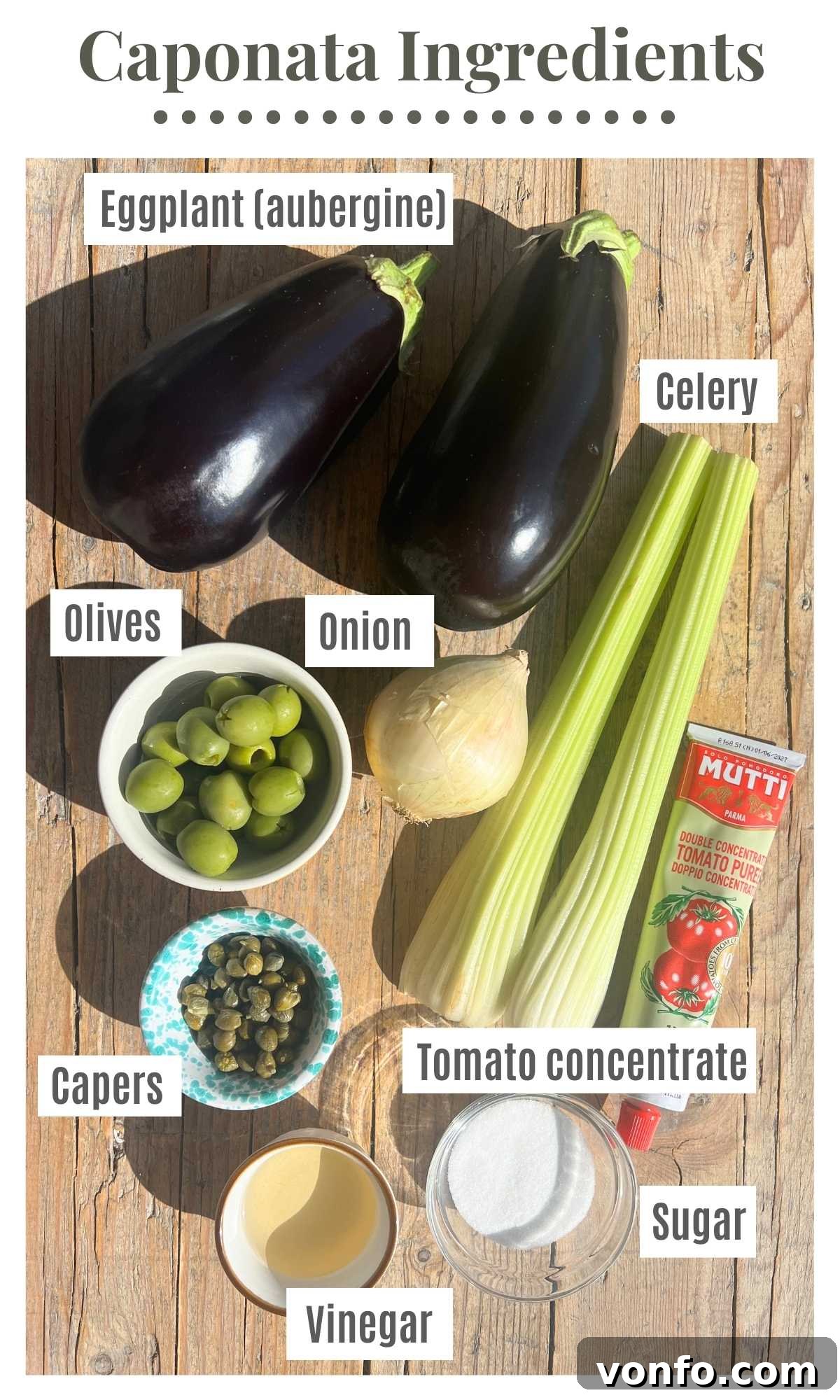
While Caponata is a simple dish at heart, the quality and preparation of each ingredient significantly impact the final flavor. Here’s a closer look at the key components:
- Eggplant (Aubergine) – The star of the show! Select firm, glossy eggplants without any soft spots or excessive bruising. For this recipe, two medium-large eggplants or three to four smaller ones will yield the perfect amount. Salting the eggplant before frying is a traditional and highly recommended step, as it draws out excess moisture and bitterness, resulting in a creamier texture and preventing the eggplant from absorbing too much oil.
- Tomato Paste (Concentrate) – A rich, concentrated tomato paste forms the backbone of Caponata’s sauce, providing deep umami and sweetness. We personally prefer high-quality brands like Mutti for their superior flavor and consistency, which truly elevate the dish. If tomato paste is unavailable, you can substitute with a good quality tomato passata or even finely crushed canned plum tomatoes, though you might need to adjust the cooking time to reduce the liquid.
- White Onion – White onions are chosen for their inherent sweetness and delicate flavor, which caramelize beautifully when sautéed, adding depth without overpowering the other ingredients. Brown onions can be used as a suitable alternative if white onions are not at hand; they will still provide a solid aromatic foundation.
- Olives and Capers – These briny elements are crucial for Caponata’s distinctive flavor profile. We typically opt for capers preserved in brine, which offer a sharp, tangy counterpoint. For olives, green Sicilian olives like Nocellara provide a buttery, mild flavor and firm texture, but feel free to choose any good quality green or black olives you prefer – just ensure they are pitted for ease of eating.
- Sugar and White Wine Vinegar – The quintessential ‘agrodolce’ (sweet and sour) balance is achieved with these two ingredients. Regular granulated white sugar works perfectly, providing a clean sweetness. White wine vinegar offers a bright acidity that cuts through the richness of the fried eggplant and balances the sweetness, creating that signature complex flavor. Don’t be tempted to use balsamic or red wine vinegar, as their flavors can be too dominant.
- Fresh Basil – While often an optional garnish, fresh basil adds a burst of aromatic freshness and vibrant color to the finished Caponata. Stirring some in at the end, or using it as a final topping, enhances the Mediterranean essence of the dish.
- Olive Oil & Sunflower Oil – A good quality olive oil is essential for sautéing the aromatics and building the sauce, lending its fruity notes. For frying the eggplant, a neutral oil like sunflower oil is ideal because it has a high smoke point and won’t impart strong flavors, allowing the eggplant’s natural taste to shine.
Step-by-Step Guide: Crafting Your Caponata
Creating authentic Sicilian Caponata is a rewarding culinary experience. Follow these detailed steps for a perfectly balanced and flavorful dish.
Prepare the Eggplant for Frying
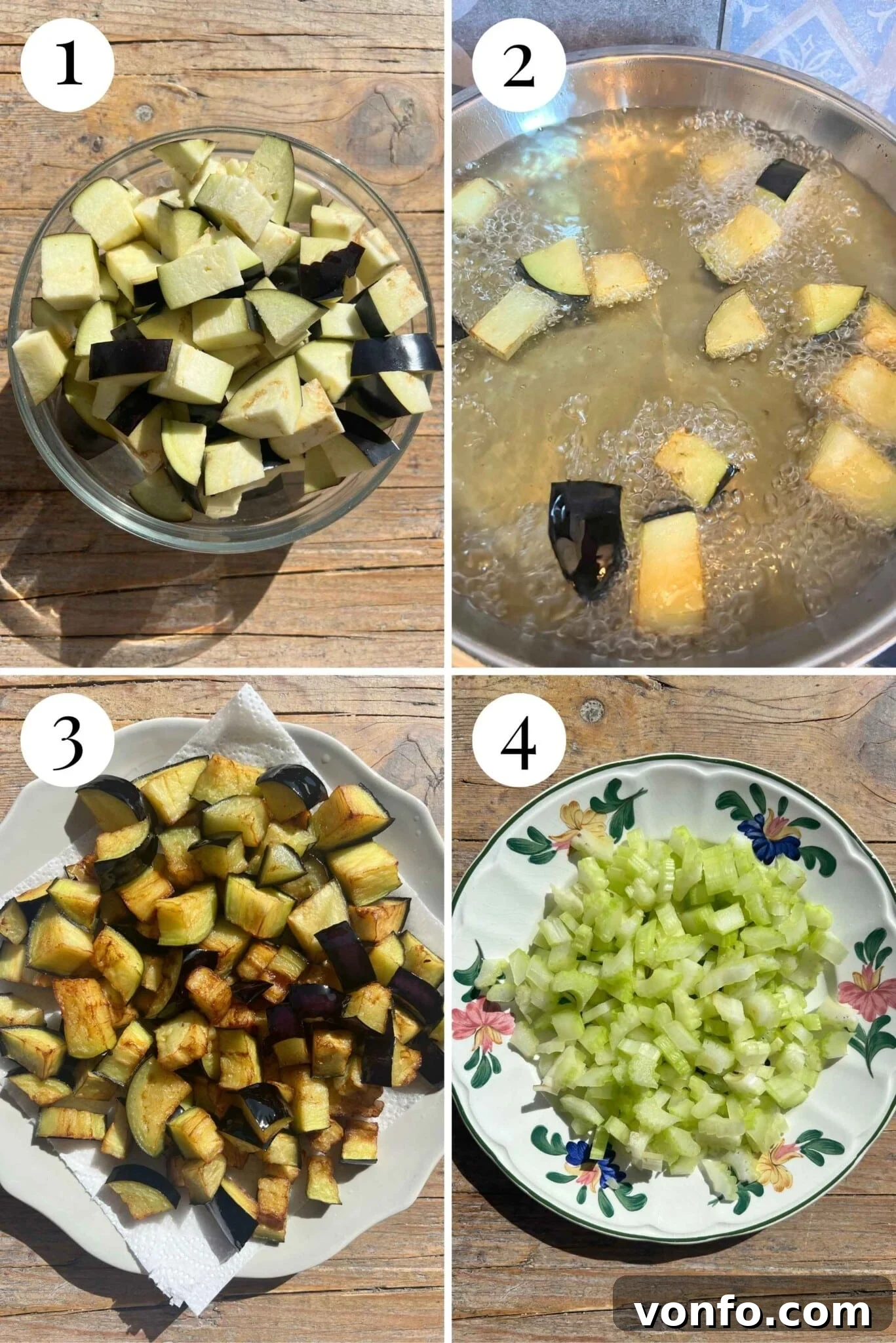
Step 1 – Begin by thoroughly washing your eggplants. Cut them into medium-sized cubes, aiming for pieces that are roughly 1 inch (2.5 cm) in size for even cooking. Place the cubed eggplant in a colander. Generously sprinkle a good amount of salt over the eggplant, ensuring all surfaces are lightly coated. This crucial step, known as “salting,” helps draw out excess moisture and any potential bitterness from the eggplant. Let the salted eggplant rest in the colander for 30 minutes to 1 hour. For best results, you can place a plate on top of the eggplant and weigh it down with something heavy, like a mortar and pestle or a few cans, to press out more liquid.
Step 2 – After salting, rinse the eggplant under cold running water for a few seconds to wash off the excess salt and the drawn-out liquid. It’s vital to then dry the eggplant extremely well with a clean kitchen towel. Any remaining moisture will cause the oil to splatter and prevent the eggplant from frying properly. Heat a generous amount of sunflower oil (or your oil of choice) in a large, heavy-based pan or pot, ensuring it is at least 1 inch (2.5 cm) deep. The oil should be hot enough (around 350-375°F or 175-190°C) but not smoking. Fry the eggplant in batches to avoid overcrowding the pan, which would lower the oil temperature and lead to soggy eggplant. Fry until the eggplant pieces are beautifully golden brown and tender. Remove the fried eggplant with a slotted spoon and place it on a plate lined with kitchen paper to drain any excess oil. Lightly sprinkle with a little more salt immediately after frying for seasoning. (See photos 2 and 3 in the original visual guide for reference).
Prepare the Celery and Aromatics
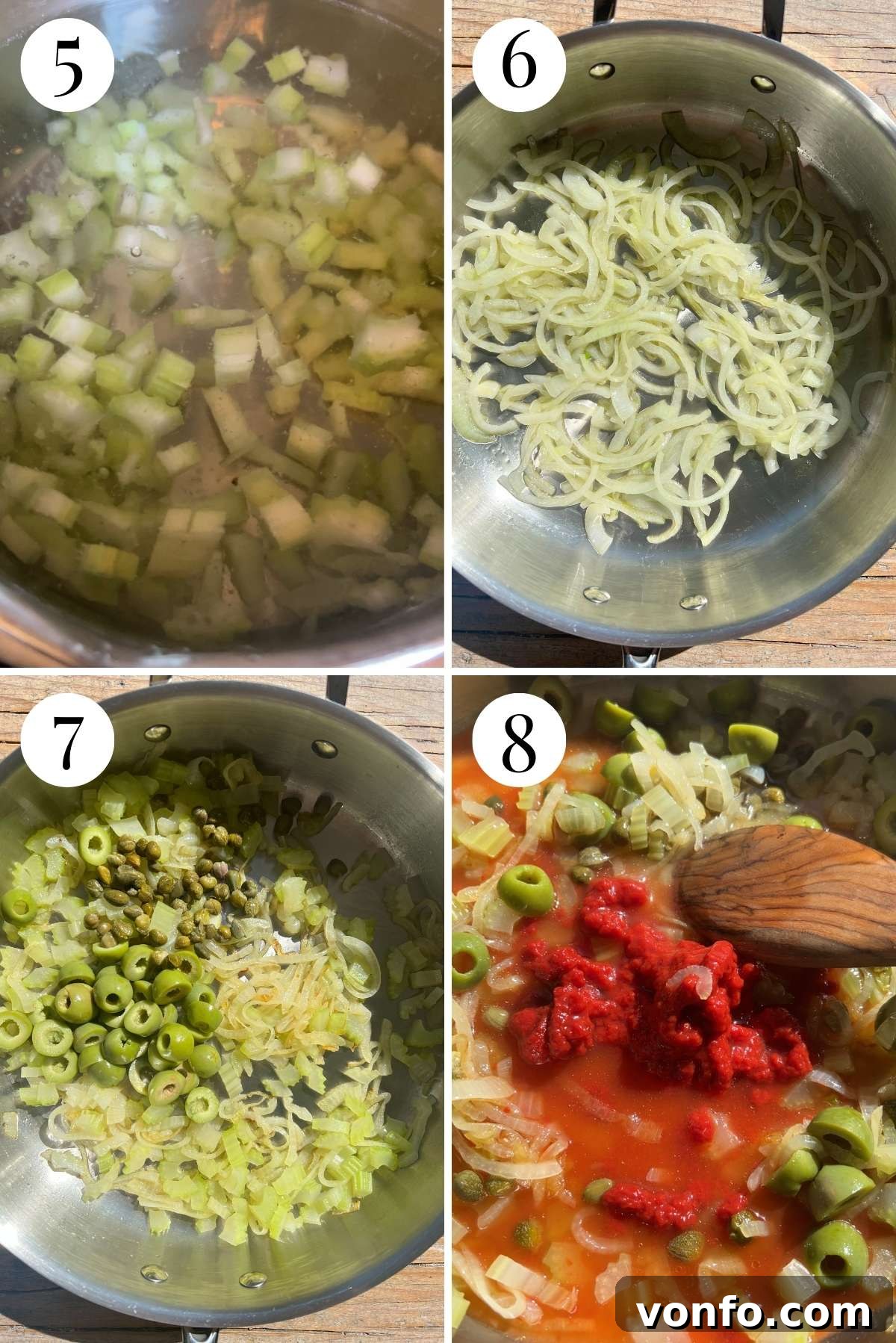
Step 3 – While the eggplant is resting, prepare the celery. Wash the celery stalks thoroughly and cut them into small cubes or thin slices, depending on your preference. Bring a small pot of water to a rolling boil and season it generously with salt. Add the cut celery and boil for approximately 7-10 minutes, or until the celery is tender-crisp. This step softens the celery’s texture and mellows its strong flavor, making it a more harmonious addition to the Caponata. Carefully remove the celery from the boiling water using a slotted spoon and set it aside in a bowl. Importantly, do not discard the cooking liquid; reserve about 1 to 1.5 cups (250-375ml) for later use in the sauce. (Refer to photo 5 in the original visual guide for illustration).
Step 4 – In a large, deep pan or pot, heat 1-2 tablespoons of good quality olive oil over medium heat. Add the thinly sliced white onion and sauté gently for about 5-7 minutes, stirring occasionally, until it becomes soft, translucent, and fragrant, but not browned. Once the onion is softened, add the blanched celery, the pitted green olives, and the capers (rinsed if very salty) to the pan. Stir all the ingredients together for a couple of minutes, allowing their flavors to meld and deepen slightly. This creates the aromatic base for your delicious Caponata sauce. (See photos 6 and 7 in the original visual guide for how these ingredients come together).
Simmer to Perfection
Step 5 – To the pan with the sautéed aromatics, add 3 tablespoons of rich tomato paste. Stir it well into the vegetable mixture, allowing it to cook for a minute or two to deepen its flavor. Then, pour in about 1 cup (250ml) of the reserved celery cooking water. Stir everything thoroughly to combine, creating a flavorful base for your agrodolce sauce. In a separate small bowl, whisk together 2 tablespoons of white wine vinegar and 2 tablespoons of white sugar until the sugar largely dissolves. Add this sweet and sour mixture to the pan, along with the previously fried eggplant and a small handful of fresh basil leaves (torn or roughly chopped, if using). Gently stir to incorporate all the ingredients. Cover the pan with a lid, reduce the heat to low, and let the Caponata simmer for at least 20 minutes. This simmering period is crucial, allowing the eggplant to fully absorb the rich agrodolce flavors and for all the ingredients to marry beautifully. (Observe photos 8-10 in the visual guide for the transformation as ingredients are added and simmered).
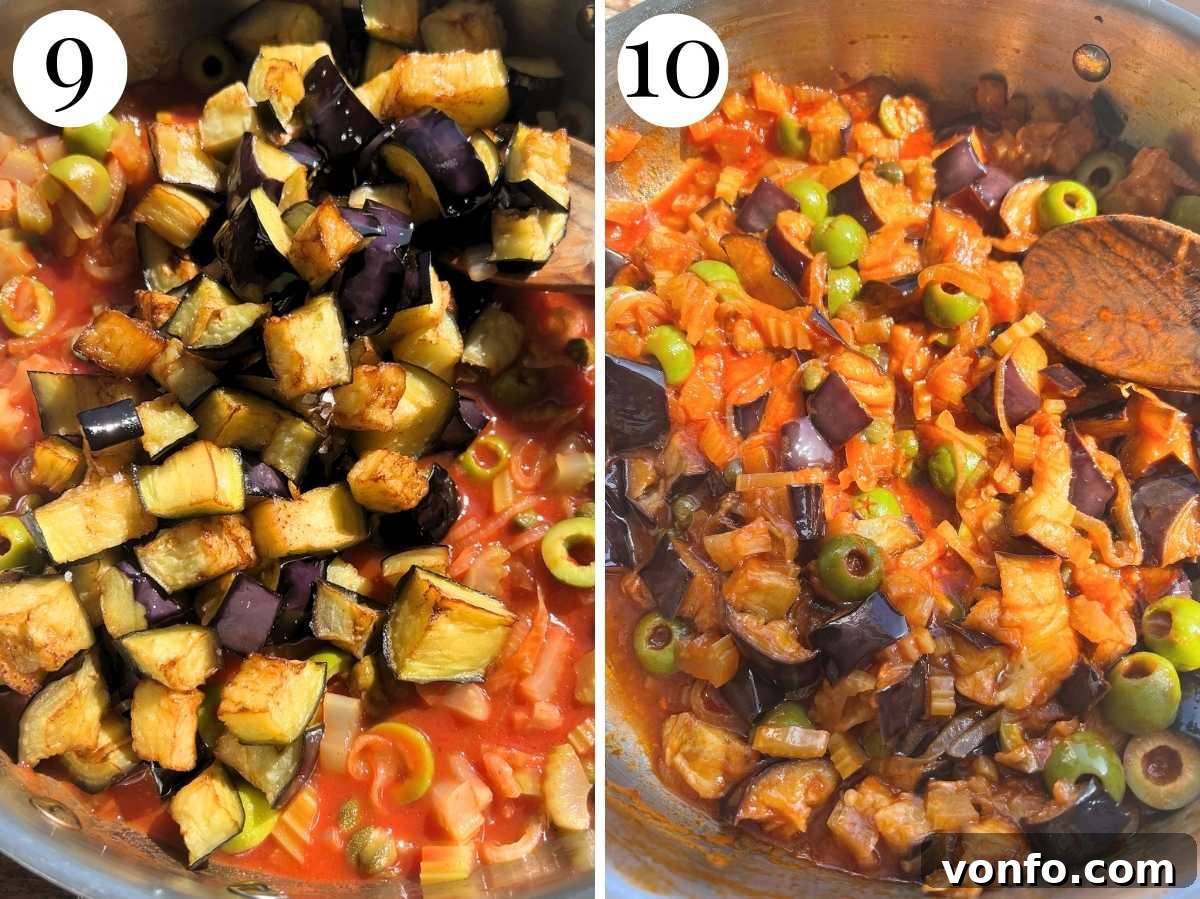
Step 6 – Once the simmering time is complete, turn off the heat and remove the lid. Give the Caponata a gentle stir. Taste the dish and adjust the seasoning as needed. You might want to add a little more salt, a dash of sugar, or a touch more vinegar to perfectly balance the sweet and sour notes according to your preference. While delicious warm, Caponata truly shines when allowed to cool completely to room temperature before serving. In fact, its flavors deepen and harmonize even further when made a day in advance and chilled overnight. This resting period allows the fried eggplant to fully infuse with the complex agrodolce sauce, creating an even more exquisite experience.
Expert Recipe Tips for Success
Achieving a truly outstanding Caponata involves a few key techniques and considerations. Keep these expert tips in mind:
- Always Salt the Eggplant: This is arguably the most important step for perfect eggplant. I’ve tested this recipe extensively both with and without pre-salting the eggplant, and the difference is remarkable. Salting draws out excess moisture and bitterness, resulting in eggplant that fries more quickly, absorbs significantly less oil, and boasts a silkier, richer texture. Don’t skip this step for the best results!
- Boil the Celery: Many traditional Sicilian Caponata recipes call for boiling the celery first, and we wholeheartedly endorse this method. Boiling achieves two important things: firstly, it softens the naturally crunchy texture of raw celery, making it more tender and integrated into the stew-like consistency of Caponata. Secondly, and perhaps more crucially, it mellows the celery’s often prominent, assertive flavor, ensuring it complements rather than overwhelms the delicate balance of the agrodolce sauce. Remember to reserve some of the cooking water for the sauce!
- Don’t Overcrowd the Pan When Frying: When frying the eggplant, it’s essential to work in batches. Overcrowding the pan will lower the oil temperature too quickly, causing the eggplant to steam instead of fry, resulting in soggy, oil-logged pieces. Give each batch ample space to achieve that beautiful golden-brown color and tender interior.
- Let the Flavors Develop: While you can enjoy Caponata immediately, its true magic unfolds with time. The dish tastes significantly better the next day, once the flavors have had a chance to meld and deepen. Plan to make it ahead for optimal taste!
- Balance the Agrodolce: The sweet and sour balance is the soul of Caponata. Taste and adjust the sugar and vinegar at the end of cooking to suit your personal preference. Some prefer it sweeter, others tangier. Don’t be afraid to make it your own!
How to Serve Caponata: Versatile Pairings
Caponata’s versatility is one of its greatest charms. Its complex, vibrant flavors make it suitable for a myriad of culinary applications, transforming simple meals into memorable feasts. Here are some delicious ways to serve this Sicilian masterpiece:
- Classic Appetizer (Antipasto): The most traditional way to enjoy Caponata is at room temperature or slightly chilled as an appetizer. Serve it generously scooped onto slices of char-grilled or toasted crostini (crusty bread), allowing the bread to soak up the delicious sauce. It pairs wonderfully with other light nibbles such as cured Italian meats (prosciutto, salame), a selection of regional cheeses (pecorino, caciocavallo), marinated artichoke hearts, or olives.
- Elegant Side Dish: Caponata makes an exceptional accompaniment to a wide range of main courses. Its rich and tangy profile cuts through the richness of meats and adds a bright, fresh counterpoint to fish. Consider pairing it with:
- Our Italian Baked Chicken Thighs for a hearty and flavorful meal.
- Breaded Fennel Pork Tenderloin, where its acidity beautifully complements the savory pork.
- The traditional Involtini alla Palermitana (Sicilian stuffed beef rolls), creating a truly authentic Sicilian dining experience.
- Grilled swordfish or other flaky white fish, offering a refreshing contrast to the seafood.
- Roasted lamb or beef, adding a vibrant Mediterranean flair.
- Light Lunch or Brunch: Enjoy Caponata simply with a fresh green salad and a drizzle of extra virgin olive oil for a light yet satisfying lunch. It also makes a fantastic addition to a brunch spread, perhaps alongside scrambled eggs or as a topping for savory pancakes.
- Pasta Sauce: Get creative and toss Caponata with your favorite pasta for a quick and flavorful vegetarian meal. A sprinkle of grated ricotta salata or Parmesan cheese would be a perfect finishing touch.
- Sandwich or Wrap Filling: Use leftover Caponata as a gourmet filling for sandwiches, paninis, or wraps, combined with some fresh mozzarella or provolone cheese.
Caponata Variations: Personalize Your Dish
The beauty of Caponata lies in its adaptability. While the core ingredients remain, regional and personal touches can transform the dish, reflecting Sicily’s diverse culinary landscape. Don’t hesitate to experiment and find your favorite version!
- Pine Nuts and Raisins: This is a very common and beloved addition, particularly in eastern Sicily. The pine nuts add a delicate nutty crunch, while the raisins (often soaked in warm water or Marsala wine first) provide pockets of concentrated sweetness that beautifully complement the agrodolce sauce. Add them into the pan at the same time as the fried eggplant during the simmering phase.
- Bell Peppers: Red bell peppers are another popular inclusion, adding a touch of sweetness, vibrant color, and a slightly different texture. They are typically cut into strips or cubes and fried alongside the eggplant, developing a smoky sweetness. This variation is incredibly delicious and well worth trying for an extra layer of flavor.
- Cocoa Powder: This might sound like a truly unusual addition, but it’s a fascinating traditional touch often found in Caponata recipes originating from areas near Palermo. The unsweetened bitter cocoa powder isn’t meant to make the dish taste like chocolate, but rather to add a subtle depth, richness, and a hint of earthy complexity that enhances the savory notes of the vegetables and the agrodolce balance. Typically, 1-2 tablespoons are whisked into the vinegar and sugar mixture before being added to the sauce. It’s a curious addition that adds a unique twist for adventurous palates.
- Other Seasonal Vegetables: Caponata is a fantastic way to utilize a variety of seasonal produce and reduce food waste. Feel free to adapt it to what’s fresh and available. Other vegetables that can be added, usually cubed and fried or blanched, include:
- Potatoes: Cut into small cubes and fried until golden, they add a comforting heartiness.
- Zucchini (Courgette): Sautéed or fried zucchini blends seamlessly into the medley of vegetables.
- Fresh Tomatoes: If you have an abundance of ripe, fresh tomatoes, you can chop them and add them along with the tomato paste for a fresher, brighter tomato flavor.
- Artichoke Hearts: For an extra layer of Mediterranean flavor, add quartered artichoke hearts (canned or jarred, rinsed well) during the final simmering stage.
More Delicious Ways to Use Eggplant
If you’ve fallen in love with the humble eggplant after making this Caponata, you’re in luck! This versatile vegetable is a cornerstone of Mediterranean cuisine and stars in countless other delectable dishes. Here are a few more recipes to explore and celebrate the rich flavors of eggplant:
Pasta
Pasta Alla Norma (Eggplant Pasta)
Antipasti
Melanzane a Funghetto (Fried Eggplant in Tomato Sauce)
Mains
Eggplant Rollatini with Spinach and Ricotta
Mains
Eggplant Lasagna with Prosciutto and Mozzarella
We hope you enjoy making and sharing this delightful Eggplant Caponata recipe as much as we do. If you’ve tried this recipe or any other on the blog, please consider rating it and leaving a comment below to let us know how it turned out; your feedback is invaluable! You can also connect with us and discover more delicious food by following us on Facebook, Instagram, and Pinterest. For weekly culinary inspiration delivered straight to your inbox, sign up for our Newsletter.
Step-by-step photos and detailed tips are provided above for a perfect result!
Eggplant Caponata
Rating: 5 out of 5 stars from 1 vote
By Emily
15 mins
1 hr
30 mins – 1 hr
~2 hrs 15 mins
8 servings
Print Recipe
Equipment
-
Colander
-
Clean kitchen towel
-
Large, heavy-based pan or pot for frying
-
Slotted spoon
-
Small pot for boiling celery
Ingredients
- 2 large eggplants, (aubergines), cut into medium-sized 1-inch cubes
- 2 celery stalks, washed and cut into small pieces
- 1 white onion, thinly sliced
- 2 tablespoons (30g) capers, in brine, rinsed
- 1 cup (95g) green Sicilian olives, (we used Nocellara), pitted
- 3 tablespoons tomato paste, (concentrate)
- 2 tablespoons (30ml) white wine vinegar
- 2 tablespoons (30g) white sugar
- fresh basil, a small handful (optional, for garnish or stirring in)
- Sunflower oil, or other neutral oil of choice, for frying eggplant
- 1-2 tablespoons Olive oil, for sautéing aromatics
- Salt, to taste
- 1-1.5 cups (250-375ml) Reserved celery cooking water
Instructions
-
Salt the Eggplant: Cut the eggplants into medium-sized 1-inch cubes. Place them in a colander and sprinkle generously with salt. Let them rest for 30 minutes to 1 hour, ideally weighing them down with a plate and something heavy. This step is crucial for drawing out moisture and bitterness, resulting in better texture and less oil absorption during frying.
-
Blanch the Celery: While the eggplant rests, wash and cut the celery into small pieces. Bring a small pot of water to a rolling boil and salt it well. Add the celery and boil for 7-10 minutes, until tender-crisp. Remove the celery with a slotted spoon and set it aside in a bowl. Reserve 1 to 1.5 cups (250-375ml) of the cooking water for the sauce.
-
Fry the Eggplant: Rinse the salted eggplant under cold running water for a few seconds to remove excess salt. Pat it extremely dry with a clean kitchen towel – this is essential for crispy, non-soggy eggplant. Heat about 1 inch (2.5 cm) of sunflower oil in a large, heavy-based pan over medium-high heat. Once hot, fry the eggplant in batches until lightly golden brown and tender. Do not overcrowd the pan. Remove the fried eggplant with a slotted spoon and drain on kitchen paper. Sprinkle with a little salt immediately.
-
Sauté the Aromatics: In a large, deep pan, heat 1-2 tablespoons of olive oil over medium heat. Add the thinly sliced white onion and sauté for 5-7 minutes until soft, translucent, and fragrant. Then, add the blanched celery, pitted olives, and rinsed capers. Stir well to combine, allowing flavors to meld for a minute or two.
-
Build the Agrodolce Sauce: Stir in the 3 tablespoons of tomato paste into the vegetable mixture, cooking for a minute. Add 1 cup (250ml) of the reserved celery water, stirring to create a base sauce. In a small bowl, whisk together the 2 tablespoons of white wine vinegar and 2 tablespoons of white sugar until combined. Add this sweet and sour mixture to the pan, along with the fried eggplant and a small handful of fresh basil leaves (if using). Gently stir everything together.
-
Simmer and Rest: Cover the pan with a lid, reduce the heat to low, and simmer for 20 minutes, allowing the flavors to deepen and the eggplant to absorb the sauce. Turn off the heat and uncover. Taste the Caponata for seasoning and add more salt, sugar, or vinegar if needed to achieve your desired sweet and sour balance. For best flavor, allow the Caponata to cool completely to room temperature before serving; it tastes even better the next day after the flavors have fully developed.
Notes
Best Made Ahead: For the most exquisite flavor, I highly recommend preparing Caponata the day before you plan on enjoying it. This allows the fried eggplant to become thoroughly infused with all the rich agrodolce flavors, creating a more harmonious and satisfying dish.
Serving Temperature: Caponata is traditionally, and arguably best, eaten cold or at room temperature. This allows its complex sweet and sour profile to truly shine.
Serving Suggestions: This versatile dish is delicious served as an appetizer on crostini, as part of an antipasto platter, or as a vibrant side dish to grilled meats or fish.
Helpful Info for All Our Recipes
- I always use extra virgin olive oil in all of my recipes unless stated otherwise, preferring its robust flavor.
- When using canned or jarred tomatoes of any kind, I consistently choose Cirio or Mutti brands for the best quality, flavor, and color in my dishes.
- All vegetables are assumed to be medium-sized unless specifically noted otherwise in the ingredient list.
- All our recipes are meticulously tested and developed using a fan (convection) oven to ensure consistent results.
- Find out more about how nutrition is calculated and why it should only be used as an approximation.
- Check out our must-have Italian Pantry Staples to stock your kitchen for authentic Italian cooking.
- You can also find all our Essential Kitchen Tools for Italian Cooking to equip yourself for culinary success.
Nutrition
Carbohydrates: 15g |
Protein: 2g |
Fat: 20g |
Saturated Fat: 2g |
Polyunsaturated Fat: 1g |
Monounsaturated Fat: 16g |
Sodium: 615mg |
Potassium: 370mg |
Fiber: 5g |
Sugar: 9g |
Vitamin A: 244IU |
Vitamin C: 6mg |
Calcium: 35mg |
Iron: 1mg
Nutrition information is automatically calculated, so should only be used as an approximation.
Did you try this recipe?
Leave a comment below and share your experience!