
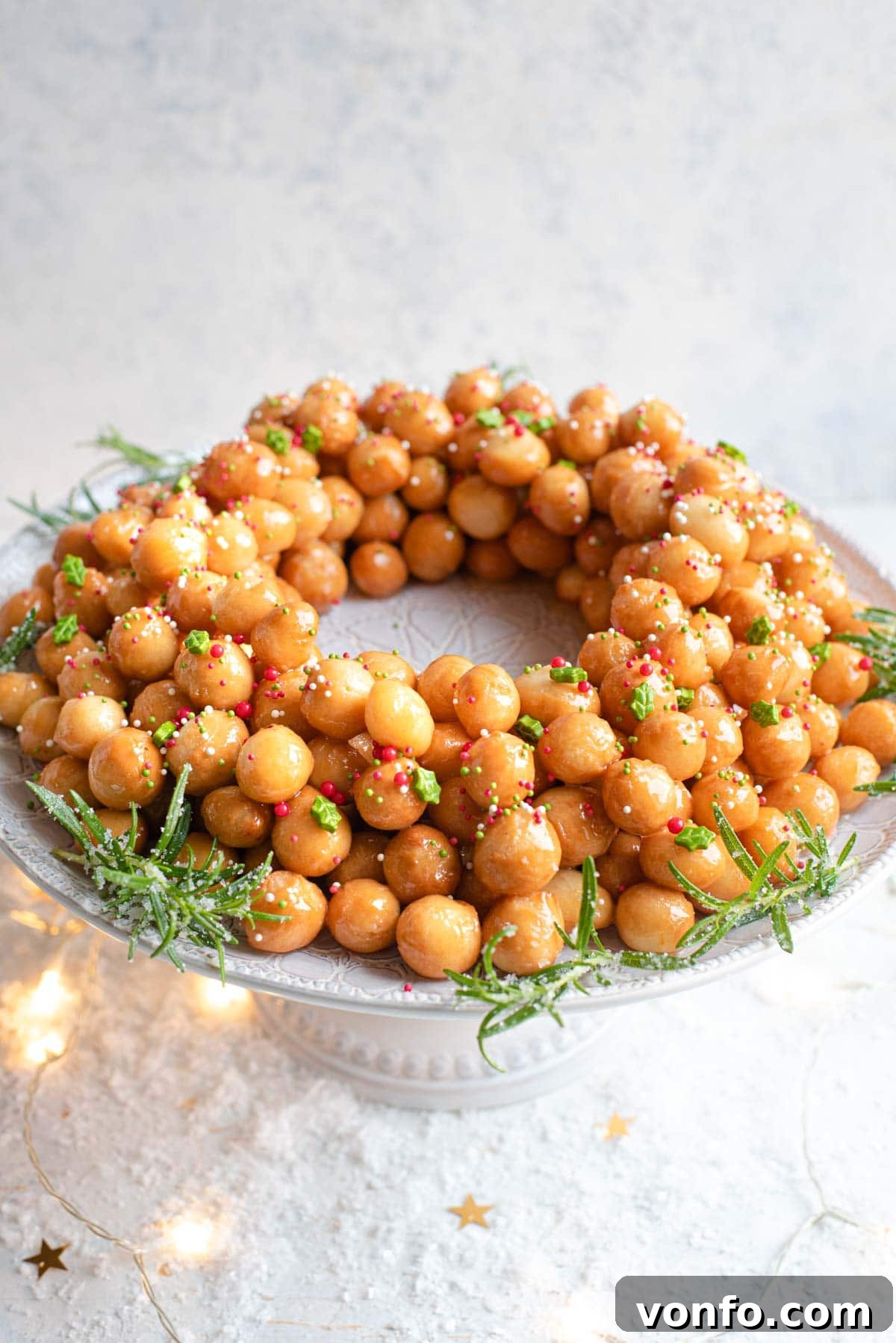
Struffoli: The Ultimate Recipe for Traditional Italian Honey Balls
Dive into the enchanting world of Italian festive desserts with Struffoli, widely known as Italian Honey Balls. These delightful, tiny spheres of fried dough are generously coated in a luscious, sticky honey syrup, often infused with fragrant citrus, and then beautifully decorated with an array of colorful, festive sprinkles. Struffoli is more than just a dessert; it’s a cherished Italian Christmas tradition, particularly from Naples, that brings families together in the kitchen, making it a fun and impressive culinary project for all ages.
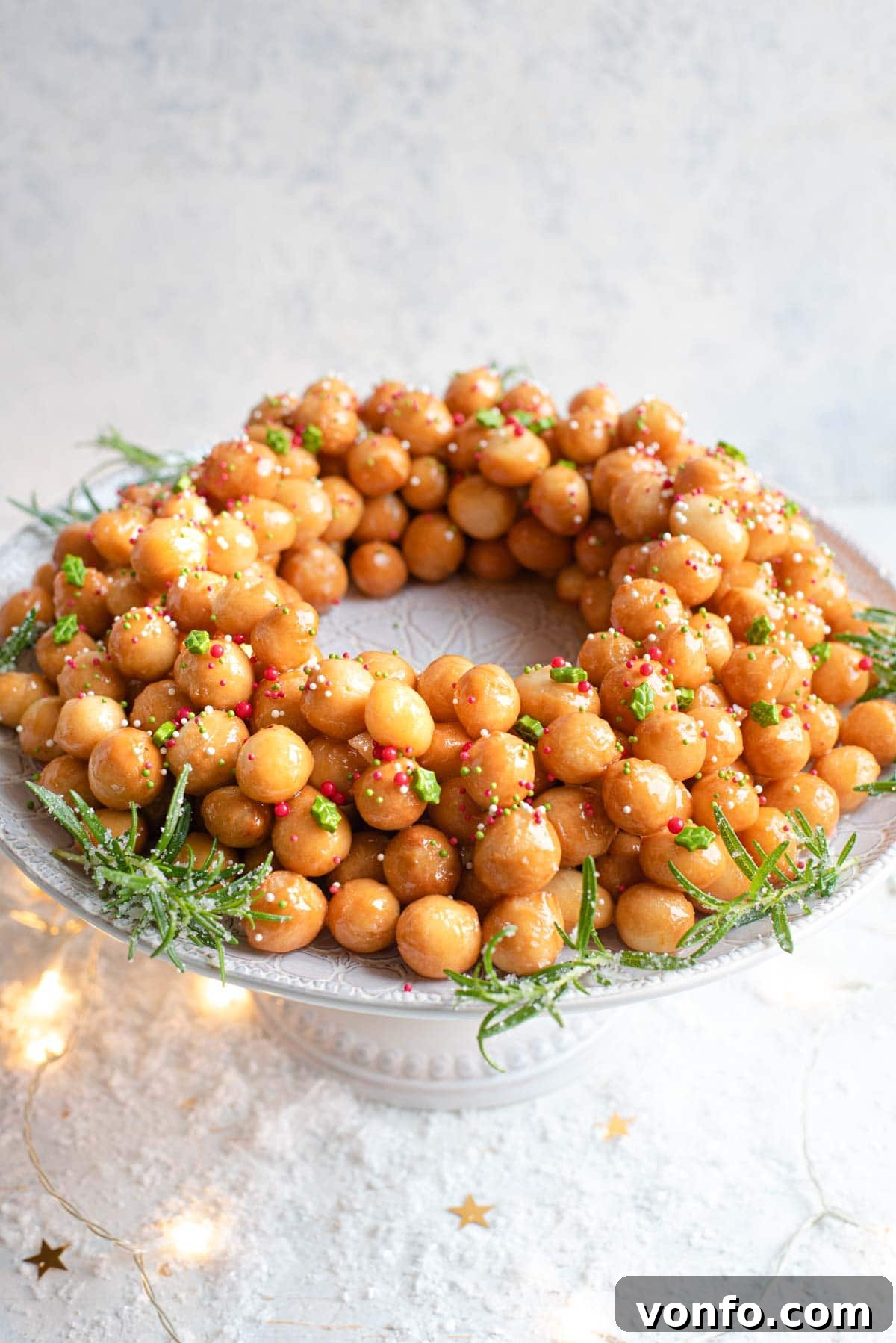
Why You’ll Adore This Struffoli Recipe
- Authentic Neapolitan Tradition: Experience a true taste of a traditional Italian Christmas, directly from the heart of Naples.
- Effortless Dough Preparation: Our recipe features a simple, no-yeast dough that’s incredibly easy to mix and shape, perfect for home bakers.
- Irresistible Texture: Each honey ball boasts a perfectly crispy exterior that gives way to a soft, tender interior, offering a delightful contrast.
- Fragrant Honey Glaze: Drenched in a warm, sticky honey syrup often enhanced with bright orange zest, creating an aromatic and unforgettable flavor.
- Family-Friendly Decoration: Get creative with colorful festive sprinkles, candied fruits, or nuts, making it a joyful activity for the entire family.
- Unique Dessert Experience: Unlike ordinary doughnuts, Struffoli offers a distinct texture and an unparalleled festive appeal.
Table of Contents
- Struffoli: A Rich History and Cultural Significance
- Ingredient Insights & Smart Substitutions
- Step-by-Step Visual Guide to Making Struffoli
- Pro Tips & Frequently Asked Questions
- Complete Struffoli Recipe Card
- More Italian Christmas Delights You Must Try
Struffoli: A Rich History and Cultural Significance
Struffoli, these wonderful deep-fried golden honey balls, unequivocally originate from Naples. During my five years residing in Tuscany, I rarely encountered them during the Christmas season; instead, local delicacies like Ricciarelli and Panforte dominated the holiday tables. This regional variation beautifully illustrates the incredible diversity and depth of Italian food culture, where culinary traditions can shift dramatically from one province to the next.
My profound love for all aspects of Italian cuisine, especially during Christmas, compelled me to master the art of making Struffoli. Their charming appearance and festive spirit make them an absolute highlight of any holiday gathering. These miniature fried dough balls are truly a feast for the eyes and the palate, instantly evoking the warmth and joy of an Italian Christmas.
While Struffoli is the most common name, particularly in Campania, you might also find these irresistible honey balls referred to by other names across Italy. In Abruzzo, they are known as Cicerchiata; in Calabria, Scalilli; and in Sicily, they take the name of Pignolata. Regardless of the regional moniker, the essence remains the same: small, sweet, sticky, and utterly delicious fried dough balls that capture the festive spirit.
Although they bear a resemblance to mini fried doughnuts, Struffoli offers a distinctly different experience. Their texture is unique – crispy and delightfully crunchy on the outside, giving way to a slightly softer, cake-like center. It’s the generous coating of sweet, aromatic honey that transforms them into an incredibly sticky and utterly delicious treat, perfect for celebrating the holidays.
Ingredient Insights & Smart Substitutions for Your Struffoli
Crafting perfect Struffoli begins with a thorough understanding of each ingredient and how it contributes to the final masterpiece. Below, you’ll find detailed notes and helpful tips for making smart substitutions without compromising flavor or texture. The photo below provides a visual overview of all the ingredients you’ll need.
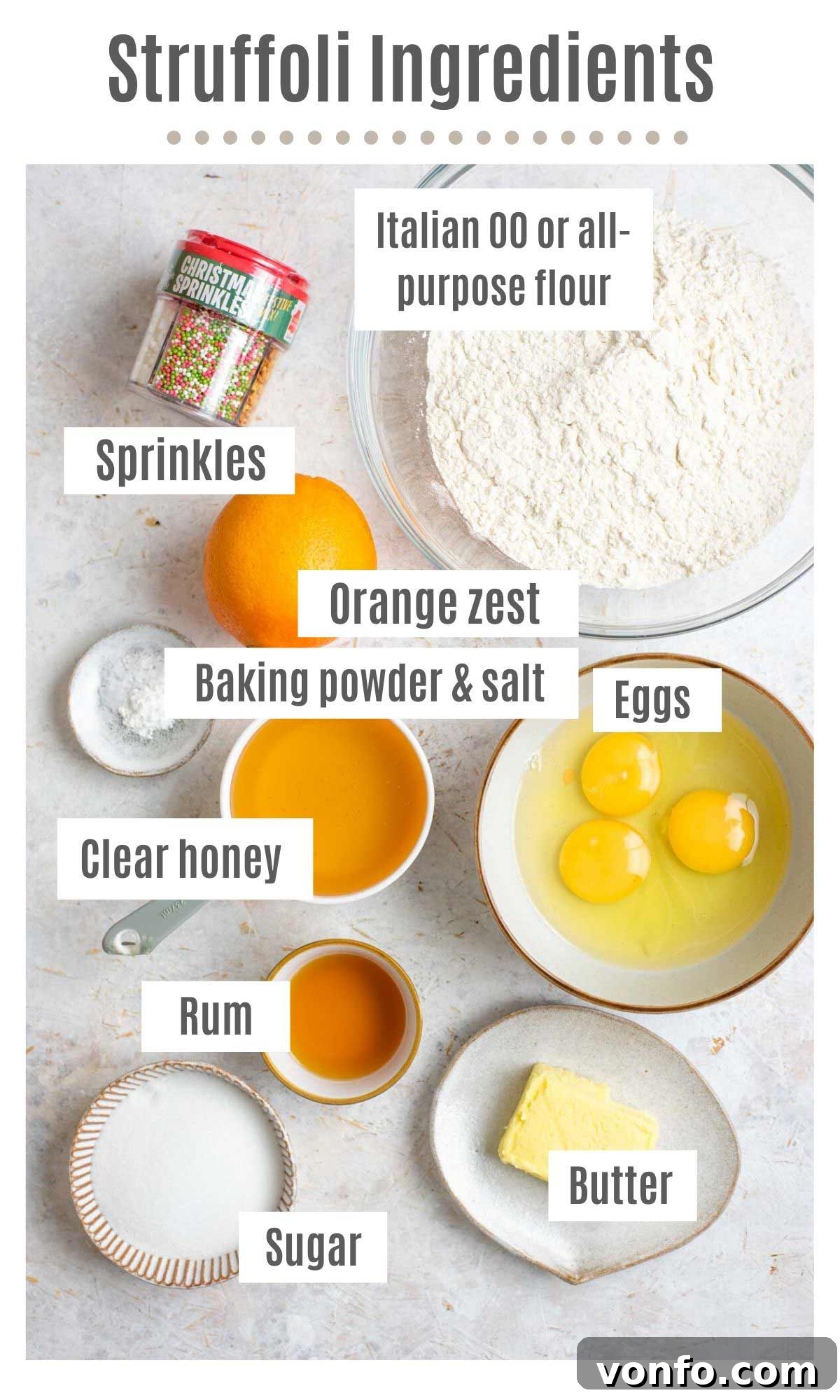
- Italian 00 Flour: This finely milled flour is traditional for many Italian pastries and pasta, resulting in a very delicate and tender dough. However, you can easily substitute it with good quality all-purpose flour. For best results, use a kitchen scale to measure flour accurately, as cup measurements can vary significantly.
- Rum: Dark rum adds a wonderful depth and aromatic complexity to the dough, enhancing its flavor profile. If rum isn’t your preference, feel free to use other Italian liqueurs like Grappa, Marsala, or Strega for a different, equally delightful aroma. For an alcohol-free version, simply substitute the rum with an equal amount of water, orange juice, or milk; the dough will still be delicious.
- Orange Zest: The zest of one orange provides a bright, citrusy counterpoint to the sweetness of the honey. It infuses the dough with a fresh, vibrant flavor that is quintessential to many Italian desserts. Lemon zest can be used as an excellent alternative if you prefer a slightly tarter note. Ensure you only zest the brightly colored outer layer, avoiding the bitter white pith.
- Honey: This is the star of the Struffoli coating. A good quality, mild-flavored honey will allow the other subtle flavors to shine. You can also experiment with infusing your honey with additional orange zest, a cinnamon stick, or a few cloves during the gentle warming process for an extra layer of aroma.
- Sprinkles & Decorations: This is where you can let your creativity run wild! Traditional Struffoli often feature colorful nonpareil sprinkles, but any festive sprinkles you love will work perfectly. You can also incorporate candied fruits, such as chopped cherries or strips of candied orange peel, and various nuts like toasted almonds, walnuts, or pistachios for added texture and flavor.
- Oil for Frying: A flavorless oil with a high smoke point is crucial for perfectly fried Struffoli. We recommend using either sunflower oil or vegetable oil. The oil needs to be deep enough (at least 2-3 inches) to fully immerse the dough balls, and maintaining a consistent temperature is paramount for a crispy, non-greasy result.
- Eggs and Melted Butter: These provide richness and structure to the dough, making it tender and pliable. Ensure eggs are at room temperature for better incorporation into the dough.
- Sugar, Baking Powder, and Salt: Sugar sweetens the dough, baking powder gives it a light lift during frying, and a pinch of salt balances the flavors, enhancing the overall taste.
Step-by-Step Visual Guide to Making Struffoli
Creating these festive Italian Honey Balls is a rewarding experience, and our detailed visual walk-through will guide you through each stage. The full written recipe with precise measurements can be found in the recipe card below.
1. Preparing the Dough
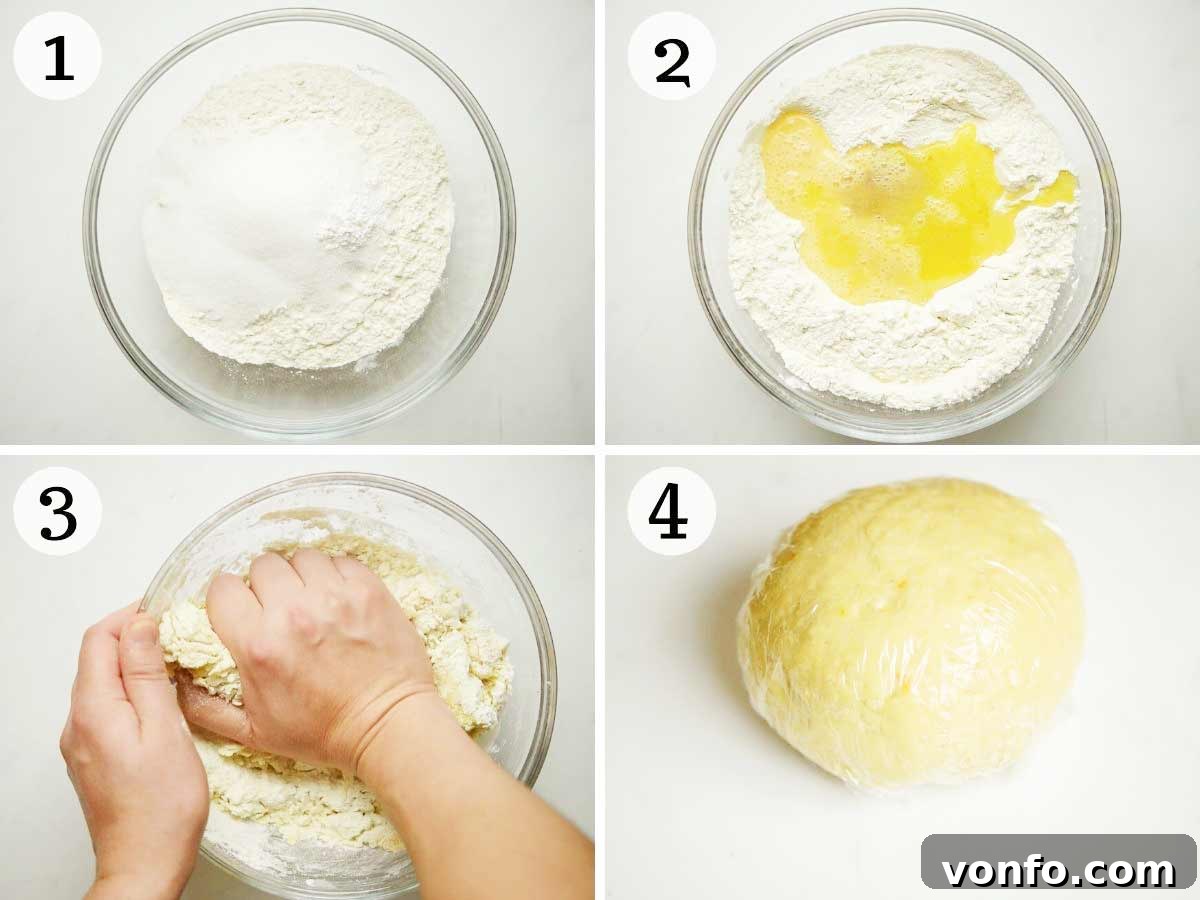
Begin by combining all your dry ingredients – the flour, sugar, baking powder, a pinch of salt, and the aromatic orange zest – in a large mixing bowl. Stir them together until they are well combined. Next, create a distinct well in the center of the dry mixture. Into this well, pour the melted butter, the lightly beaten eggs, and the dark rum (or your chosen substitute). Gently mix the ingredients together using a fork or your hands until a shaggy dough begins to form. Once it’s cohesive, turn the dough out onto a lightly floured surface and knead it for about 5-7 minutes until it transforms into a smooth, elastic ball. Wrap this dough ball tightly in plastic wrap and allow it to rest at room temperature for at least 30 minutes. This resting period is vital, as it allows the gluten to relax, making the dough much easier to roll out and ensuring a wonderfully tender texture in the final Struffoli.
2. Shaping the Struffoli Balls
Once your dough has rested sufficiently, unwrap it and cut it in half. Then, take each half and divide it into three equal pieces. Work with one piece of dough at a time: roll it into a long, thin “sausage” shape, aiming for a thickness of approximately 1 centimeter (roughly ½ inch). It’s best to avoid excessive flour on your rolling surface, as the butter in the dough should prevent sticking, and too much flour can make the dough difficult to roll evenly. With a sharp knife, cut each log into small, uniform pieces, about 1 centimeter (½ inch) in size. This technique is similar to how you would cut gnocchi, but on a much smaller scale, ensuring consistency in frying.
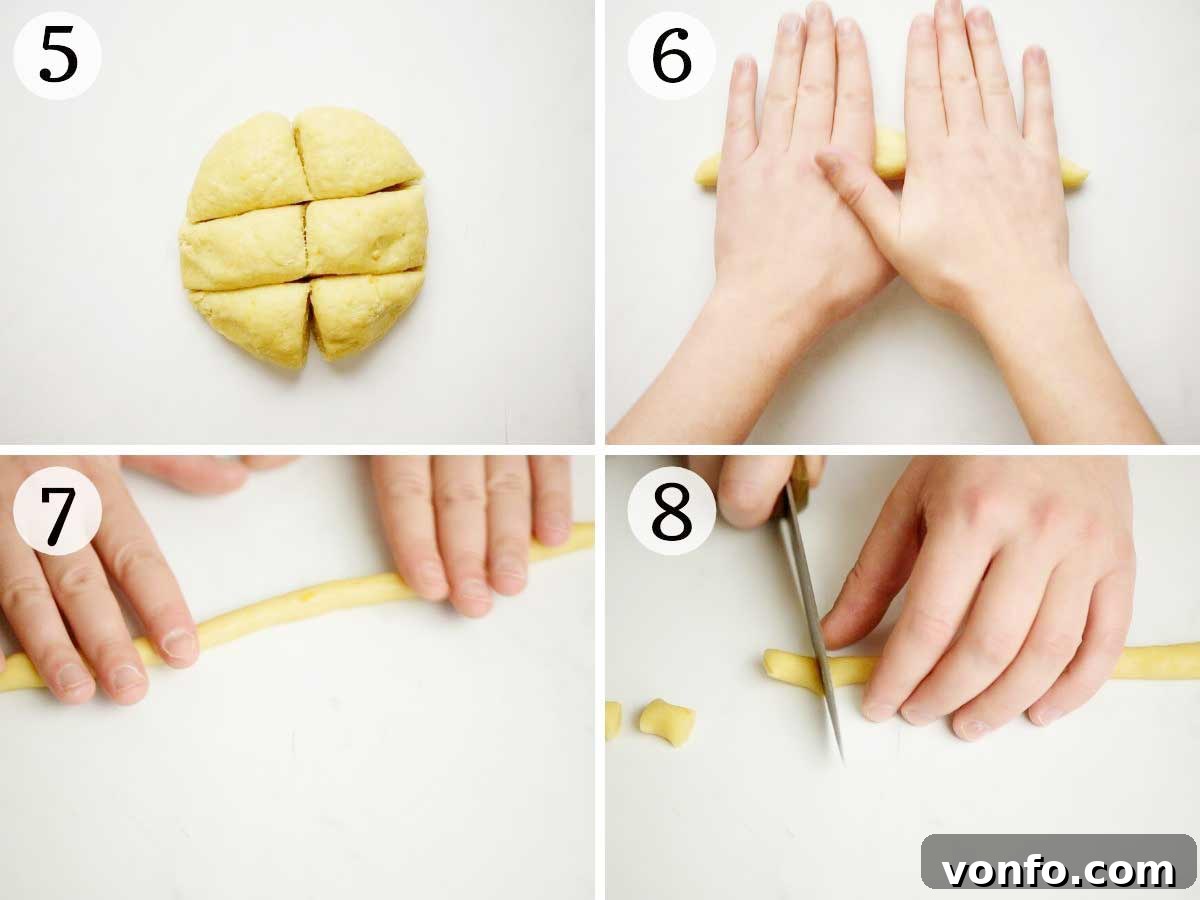
After cutting, gently roll each small piece of dough between the palms of your hands to form tiny, perfectly round balls. As you form them, place the uncooked struffoli on a board or clean surface that has been very lightly dusted with flour. Arrange them in a single layer, making sure they are not touching each other, to prevent them from sticking together before they are fried.
3. Frying the Golden Honey Balls
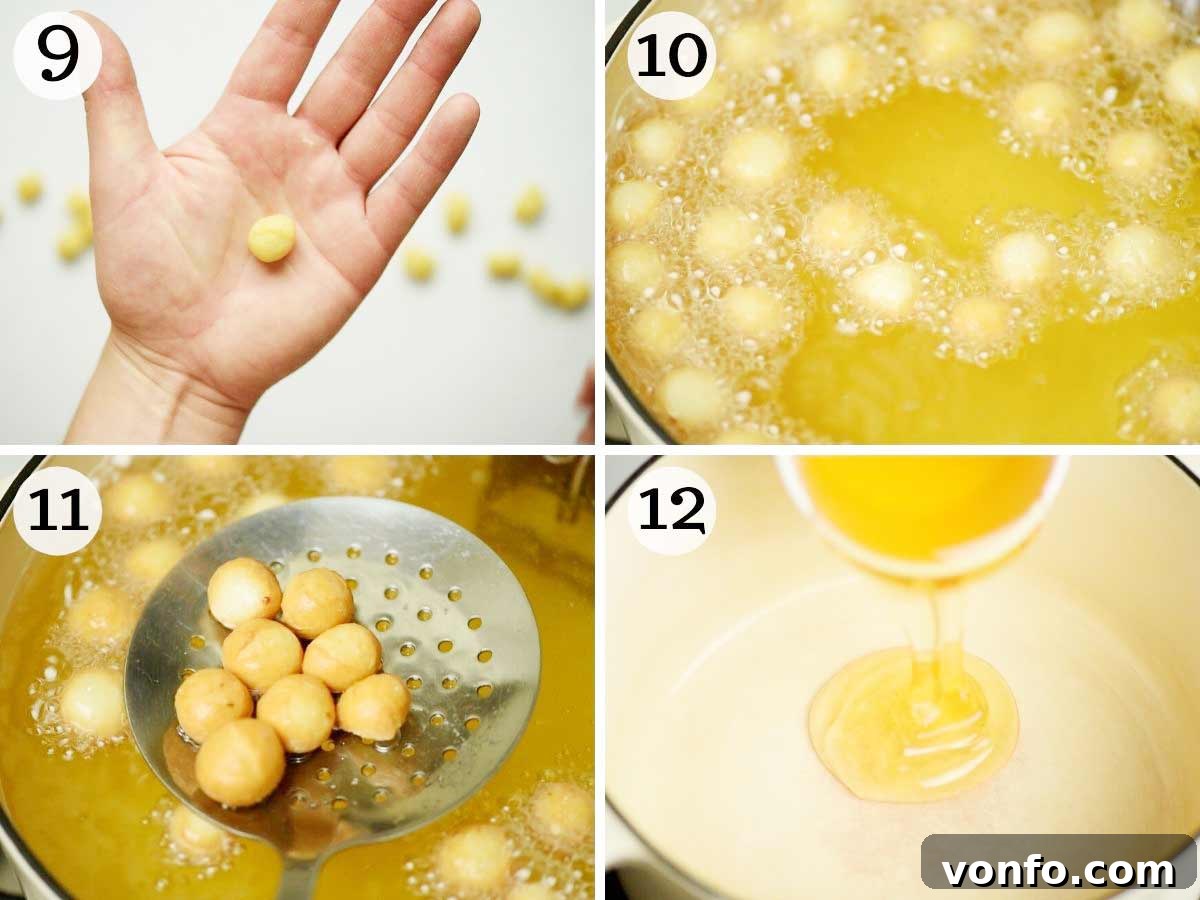
Prepare your frying station by heating a generous amount of flavorless oil (like sunflower or vegetable oil) in a large, heavy-bottomed pot. The oil should be at least 2-3 inches deep. Crucially, use a candy or deep-fry thermometer to heat the oil to a precise 375°F (190°C). This temperature is vital for achieving crispy exteriors without making the struffoli greasy or undercooked inside. Fry the struffoli in small batches to avoid overcrowding the pot, which can cause the oil temperature to drop. Each batch will fry very quickly, turning a beautiful golden brown in just 30-40 seconds. As soon as they are golden, remove the fried struffoli with a slotted spoon and transfer them to a plate lined with several layers of kitchen paper. This step is essential for draining any excess oil, ensuring your honey balls are perfectly light and crispy.
4. Coating and Festive Assembly
Once all the struffoli have been fried and allowed to cool slightly, it’s time for the magical honey coating. Pour the honey into a large pot, ensuring it’s big enough to comfortably hold all your fried struffoli. Gently warm the honey over low heat just until it becomes very liquidy and easy to stir. This process usually takes only a few seconds; avoid boiling the honey. Add the cooled struffoli to the warm, fluid honey and gently stir until every single ball is thoroughly coated. Let them soak in the delicious honey for 2-3 minutes, allowing them to absorb all that wonderful sweetness and flavor.
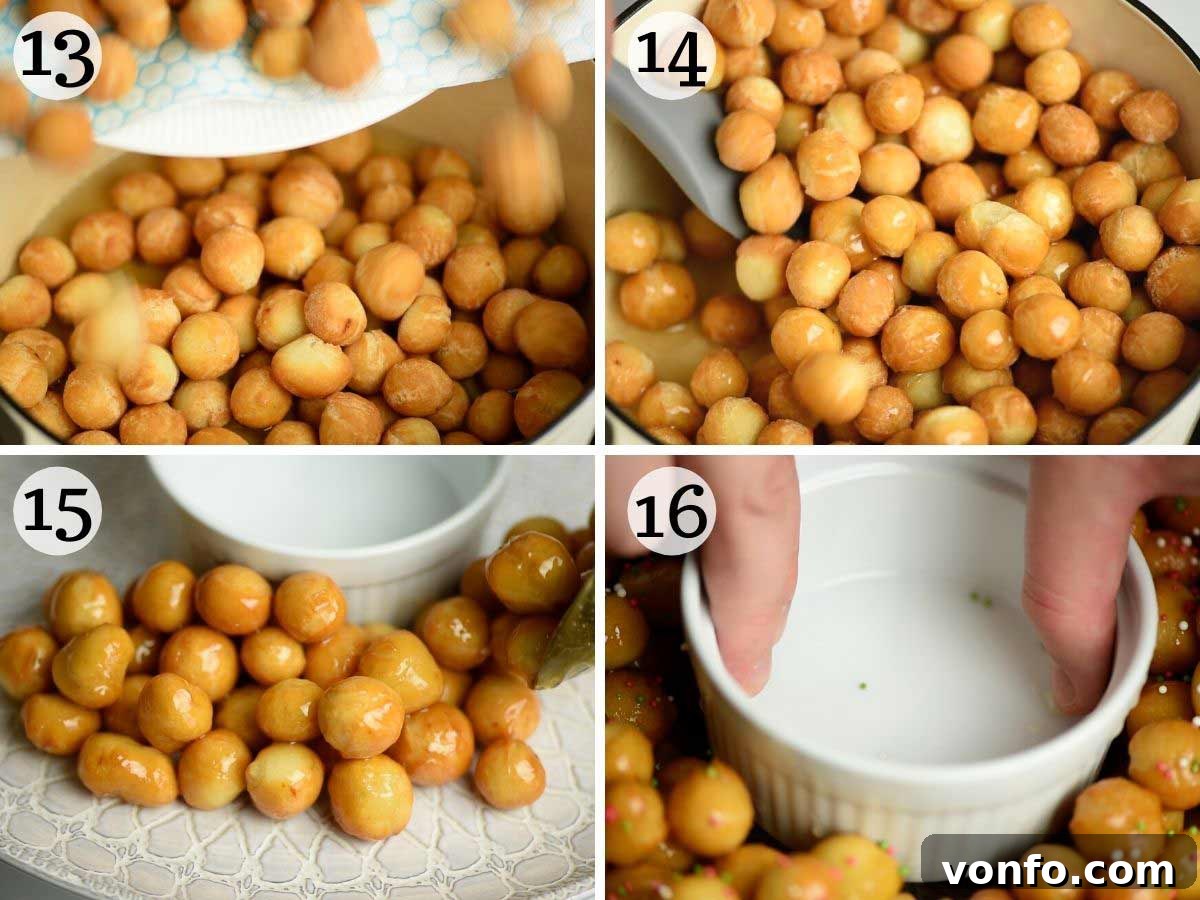
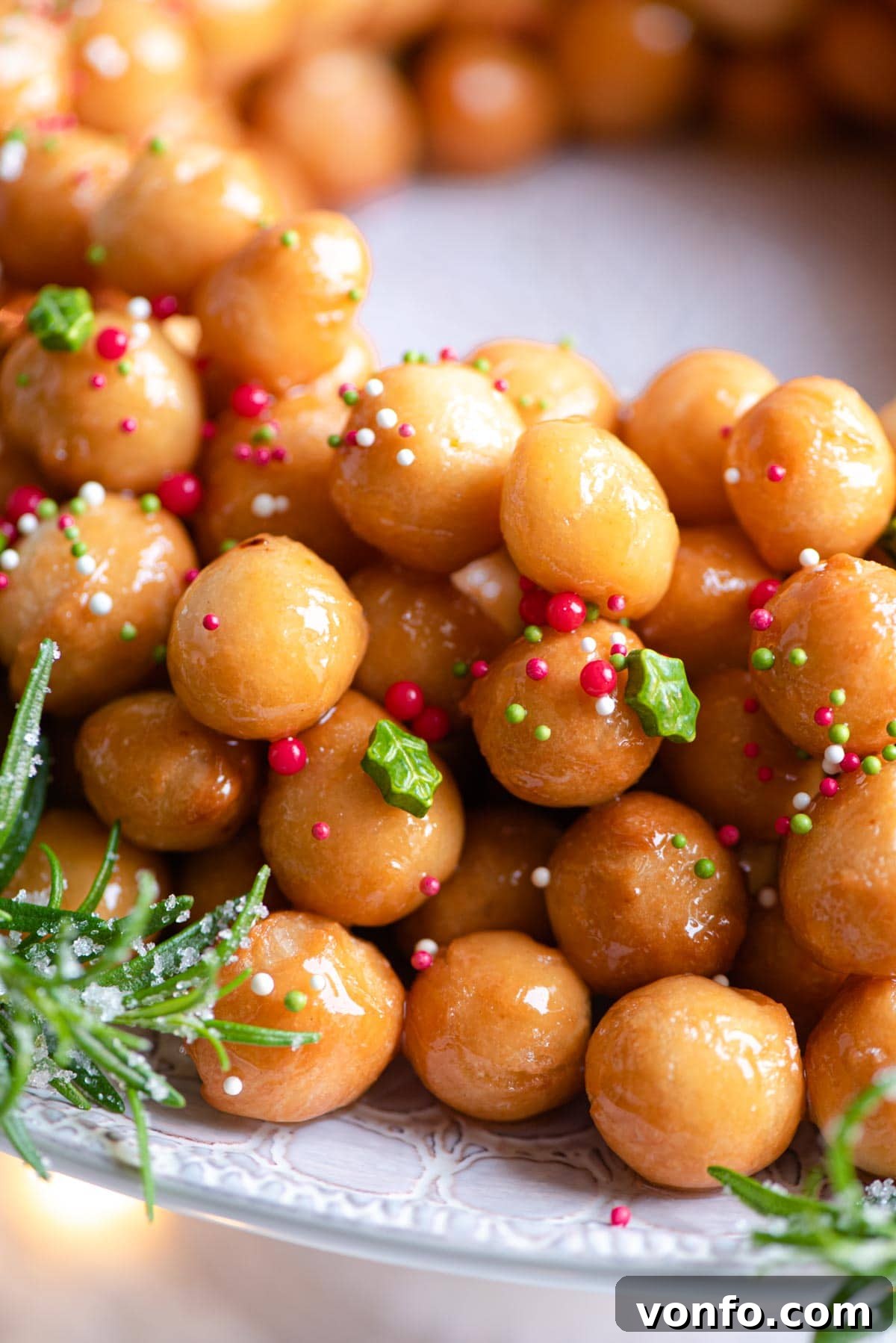
Finally, arrange your honey-coated struffoli on a beautiful serving plate in your desired festive shape. The most traditional presentation is a stunning ring or a celebratory mound. To create a classic ring, place a small ramekin or a large glass in the very center of your serving plate as a guide, and then carefully arrange the struffoli around it. After a few minutes, once the honey starts to cool and bind the balls together, you can gently remove the ramekin. Alternatively, simply pile them high into an attractive, sweet mountain on your plate. Once the honey has cooled and slightly solidified, making the balls stick firmly to each other, generously sprinkle your favorite festive decorations, such as colorful nonpareils, candied fruit, or chopped nuts. Your magnificent Struffoli are now ready to be admired and devoured!
Pro Tips & Frequently Asked Questions for Struffoli Success
Expert Tips for Making Perfect Struffoli:
- Dough Rolling Technique: When rolling the dough into logs, resist the urge to heavily flour your surface. The dough’s butter content generally prevents sticking, and excessive flour can make it less pliable and harder to roll, potentially leading to a tougher texture in the final product. A very light dusting is often sufficient.
- Uniform Shaping: While pinching off small pieces and rolling them into balls by hand is an option, it’s challenging to maintain a consistent size. For perfectly uniform struffoli that fry evenly, rolling the dough into logs and then cutting them into equal, small segments (much like making miniature gnocchi) is the most efficient and effective method.
- Critical Oil Temperature: The secret to light, crispy, and non-greasy struffoli lies in maintaining the correct oil temperature. Always use a candy or deep-fry thermometer to heat your oil to precisely 375°F (190°C). If the oil is too cool, the dough will absorb too much oil and become soggy. If it’s too hot, the exterior will brown too quickly, leaving the interior raw.
- Immediate Draining After Frying: As soon as the struffoli turn golden brown, promptly remove them from the hot oil with a slotted spoon and transfer them directly to a plate generously lined with kitchen paper. This step is crucial for absorbing any excess oil, ensuring your honey balls are delightfully crisp and not heavy or greasy.
- The Art of Honey Coating: Don’t rush the honey application. Gently warm the honey until it’s fluid and easily coats the balls. Allowing the fried struffoli to soak for a few minutes ensures they are thoroughly infused with the sweet, fragrant syrup.
- Festive Presentation: Struffoli are typically served arranged in a festive ring or an impressive mound. To achieve a perfect ring, place a small glass or ramekin in the center of your serving plate, then meticulously arrange the honey-coated balls around it. Once the honey begins to cool and bind the struffoli, you can carefully remove the central glass.
Frequently Asked Questions (FAQs):
Can I prepare Struffoli in advance?
Yes, absolutely! The fried and drained struffoli (before coating with honey) can be prepared up to 4-5 days ahead of time. Store them in an airtight container at room temperature. Alternatively, they can be frozen for up to 3 months. For the best taste and texture, always warm the honey and coat the struffoli just before serving, then add the sprinkles.
Can I freeze Struffoli?
You can certainly freeze the *fried and cooled* struffoli. To do so, lay them in a single layer on a baking sheet and place it in the freezer until they are solid. Once frozen, transfer them to an airtight freezer bag or container. They will keep well for up to 3 months. When you’re ready to enjoy them, thaw the frozen struffoli completely at room temperature before proceeding with the honey coating and decorating steps.
What other liquors can I use in the dough?
Dark rum is a popular choice for its distinctive flavor, but you can certainly experiment with other spirits. Traditional Italian options include Grappa, Marsala wine, or Strega, an aromatic herbal liqueur. Each will impart a unique character to your Struffoli. If you prefer to omit alcohol, simply replace the rum with an equal amount of water or orange juice; the dough will still develop beautifully.
How do I store leftover Struffoli after they’ve been coated?
Once your Struffoli have been coated in honey and decorated, they are best enjoyed within 2-3 days. Store them in an airtight container at room temperature. While they might lose a little of their initial crispness over time, they will remain delightfully sticky and flavorful. Avoid refrigerating them, as the cold can cause the honey to crystallize and the dough to become quite firm.
More Italian Christmas Delights You Must Try
If you’ve fallen in love with the charm of Struffoli, you’ll undoubtedly enjoy exploring more traditional Italian Christmas recipes. These treats are perfect for expanding your holiday baking repertoire and bringing even more authentic Italian flavor to your festive table:
- Chocolate Salami (Salame di Cioccolato): A no-bake, rich chocolate dessert resembling salami, studded with biscuits and nuts.
- Panettone Biscotti: A creative way to enjoy leftover panettone, transformed into crunchy biscotti.
- Pandoro Christmas Tree Cake (Italian Christmas Cake): A visually stunning and delicious Italian sweet bread, perfect for holiday celebrations.
- Amaretto Mulled Wine (Vin Brulé): A warm, spiced wine infused with the sweet almond flavor of amaretto, ideal for chilly evenings.
- Panettone Bread Pudding: A comforting and decadent dessert that gives new life to day-old panettone.
- Ricciarelli (Traditional Tuscan Almond Cookies): Soft, chewy, and intensely almond-flavored cookies, a specialty of Siena.
- Panforte (Siena’s Spiced Fruit and Nut Cake): A dense, chewy, and highly spiced Italian fruit and nut cake, often served in thin wedges.
We sincerely hope this comprehensive guide inspires you to bake a batch of these enchanting Struffoli this holiday season. They are truly a labor of love that brings immense warmth, sweetness, and a touch of Neapolitan tradition to any gathering. If you’ve tried this Struffoli recipe or any other delightful recipe from our collection, we would be absolutely thrilled to hear from you! Please don’t hesitate to rate the recipe and share your culinary adventures and feedback in the comments section below – your insights are incredibly valuable to our community. For more delicious Italian food inspiration, kitchen tips, and glimpses into our latest culinary explorations, be sure to follow us on Facebook, Instagram, and Pinterest.
Struffoli (Italian Honey Balls) – Complete Recipe
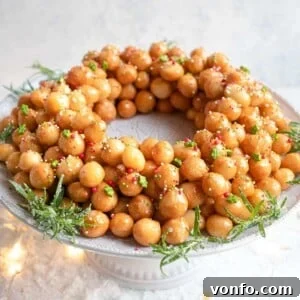
Struffoli (Italian Honey Balls)
By Emily
Struffoli, also known as Italian Honey Balls, are delightful tiny balls of fried dough generously tossed in a fragrant, sticky honey syrup and adorned with colorful festive sprinkles. This impressive Italian Christmas dessert is a joy to make and share with the entire family, perfect for creating lasting holiday memories.
Prep Time: 30 mins
Cook Time: 15 mins
Resting Time: 30 mins
Total Time: 1 hr 15 mins
Servings: 12 servings
Print Recipe
Equipment
- Candy or sugar thermometer
- Heavy-based pot for frying (at least 2-3 inches deep)
- Large mixing bowl
- Plastic wrap
- Slotted spoon
- Kitchen paper (paper towels)
- Serving platter or cake stand
- Small ramekin or glass (for shaping the ring)
Ingredients
For the Dough
- 3 cups Italian 00 or all-purpose flour (420g), spooned and leveled
- ⅓ cup sugar (65g)
- ½ teaspoon baking powder
- 1 pinch of salt
- Zest of one large orange
- 3 large eggs, lightly beaten
- 2 tablespoons dark rum (or substitute with water/orange juice for alcohol-free)
- 4 tablespoons melted unsalted butter (55g)
- Vegetable oil or sunflower oil for frying
For Coating and Decoration
- 1 cup honey (300g)
- Festive sprinkles, candied fruit, chopped nuts (e.g., almonds, pistachios), or a mix for decoration
Instructions
Part 1: Make the Dough
- In a large mixing bowl, combine the flour, sugar, baking powder, salt, and orange zest. Stir these dry ingredients together thoroughly.
- Create a well in the center of the dry mixture. Pour in the melted butter, lightly beaten eggs, and dark rum (or your chosen substitute).
- Using a fork or your hands, gradually mix the wet ingredients into the dry ingredients until a shaggy dough begins to form and all components are roughly combined.
- Transfer the dough to a clean, lightly floured surface. Knead the dough for about 5-7 minutes until it becomes smooth, elastic, and no longer sticky to the touch.
- Wrap the kneaded dough tightly in plastic wrap and let it rest at room temperature for a minimum of 30 minutes. This resting period is crucial for relaxing the gluten, which will make the dough much easier to roll out and contribute to a more tender final product.
Part 2: Shape and Fry the Struffoli
- After the dough has rested, unwrap it and divide it in half. Then, cut each half into three equal pieces.
- Working with one piece of dough at a time, roll it into a long, thin rope or “sausage” shape, aiming for an approximate thickness of 1 cm (½ inch). Try to use minimal flour on your surface if possible.
- Using a sharp knife, cut each dough rope into small, uniform pieces, roughly 1 cm (½ inch) in size. Imagine miniature gnocchi.
- Gently roll each small cut piece of dough between the palms of your hands to form tiny, perfectly round balls. Place these uncooked struffoli on a lightly floured board or surface in a single layer, ensuring they do not touch or stick together. Repeat this process for all remaining dough pieces.
- In a large, heavy-bottomed pot, heat at least 2-3 inches of vegetable or sunflower oil to a precise temperature of 375°F (190°C). Use a candy or deep-fry thermometer to monitor the temperature continuously.
- Carefully fry the struffoli in small batches, ensuring you do not overcrowd the pot. Fry them until they turn a beautiful golden brown, which typically takes only 30-40 seconds per batch.
- As soon as they are golden, promptly remove the fried struffoli with a slotted spoon and transfer them to a plate generously lined with several layers of kitchen paper (paper towels) to drain any excess oil. Allow them to cool slightly while you finish frying the remaining batches.
Part 3: Coat and Assemble
- Once all the fried struffoli have cooled sufficiently, add the honey to a large pot (one spacious enough to hold all of the struffoli). Gently warm the honey over low heat, stirring occasionally, just until it becomes very liquidy and easy to stir. This should only take a few seconds; avoid bringing it to a boil.
- Add the cooled, fried struffoli to the warm honey and gently stir. Ensure every single dough ball is thoroughly coated in the sweet syrup. Let them soak in the honey for 2-3 minutes to absorb the maximum flavor and become wonderfully sticky.
- Arrange the honey-coated struffoli on your chosen serving platter or cake stand in your desired festive shape. For a traditional ring, place a small ramekin or a large glass in the center of the plate and carefully arrange the struffoli around it. After a few minutes, once the honey starts to set and bind the balls, you can gently remove the central guide. Alternatively, simply pile them into an attractive, sweet mound.
- Once the honey has slightly cooled and set, helping the struffoli adhere together, generously sprinkle with your choice of festive sprinkles, candied fruit, or chopped nuts. Serve immediately and enjoy the delightful taste of Italian Christmas!
Notes
- Accurate Flour Measurement: For the most consistent results in baking, we highly recommend using a kitchen scale to measure your flour (420g). If you are using standard measuring cups, remember to spoon the flour into the cup lightly and then level it off with a straight edge or knife, rather than scooping directly, which can compact the flour and lead to a denser dough.
- Leftovers Storage: Struffoli, once coated in honey, are best enjoyed fresh but can be stored for approximately 2-3 days. Keep them in an airtight container at room temperature to maintain their quality. Refrigeration is generally not recommended as it can cause the honey to crystallize and the dough to become hard.
Video
Watch our step-by-step video to guide you through the entire process of making perfect Struffoli:
Nutrition Information (Approximate)
The following nutrition information is automatically calculated based on the ingredients listed and should be used as an approximation. Actual values may vary depending on specific brands, ingredient variations, and preparation methods.
- Calories: 364 kcal
- Carbohydrates: 63 g
- Protein: 8 g
- Fat: 10 g
- Saturated Fat: 5 g
- Cholesterol: 41 mg
- Sodium: 179 mg
- Potassium: 237 mg
- Fiber: 1 g
- Sugar: 29 g
- Vitamin A: 226 IU
- Vitamin C: 1 mg
- Calcium: 37 mg
- Iron: 2 mg
Helpful Information for All Our Recipes
- We exclusively use extra virgin olive oil in all our recipes unless otherwise specified, as it offers superior flavor and health benefits.
- For the best taste and most consistent results when using canned or jarred tomatoes, we highly recommend Cirio or Mutti brands.
- Unless a specific size is stated in the ingredient list, all vegetables are assumed to be medium-sized.
- Our recipes are meticulously tested and developed using a fan (convection) oven. Please note that cooking times may vary slightly if you are using a different type of oven.
- You can find more detailed information about how our nutrition values are calculated on our privacy policy page.
- Explore our essential guide to Italian Pantry Staples to stock your kitchen with key ingredients for authentic Italian cooking.
- Discover our comprehensive list of Essential Kitchen Tools for Italian Cooking to equip your culinary space.
Did you try this Struffoli recipe?
We absolutely love hearing from you! Please consider leaving a comment below and rating the recipe to share your experience with our vibrant community. Your feedback is truly invaluable!