
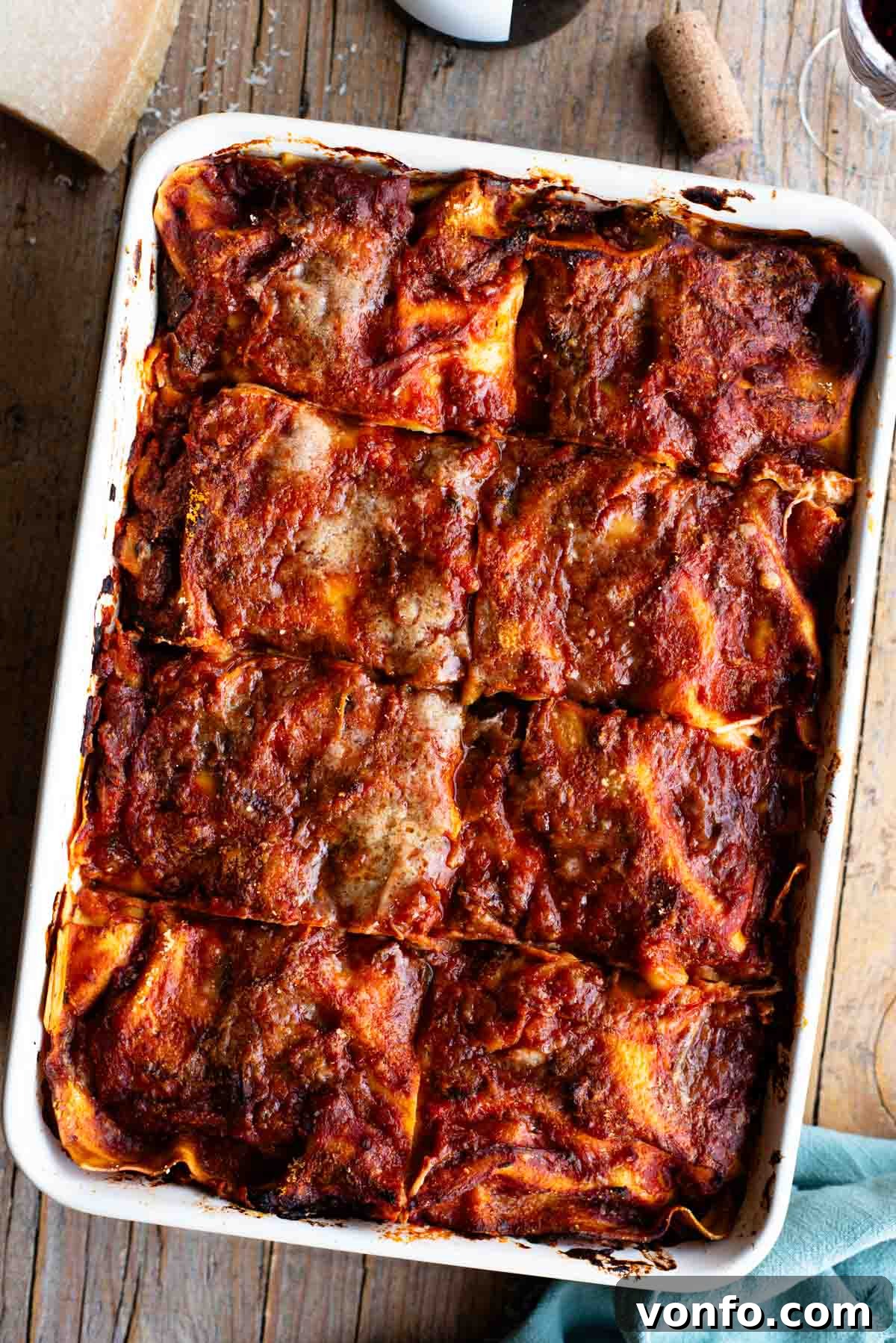
Lasagna di Carnevale, often known as Neapolitan Lasagna, is a culinary masterpiece traditionally enjoyed during the festive period of Carnevale (Carnival) in Southern Italy. This isn’t just any lasagna; it’s a profound declaration of flavor, a rich and incredibly indulgent dish brimming with a symphony of tastes and textures. Crafted with lovingly prepared layers of tender pasta, creamy ricotta, savory meatballs, and even slices of hard-boiled eggs, all enveloped in a deeply simmered, rustic meat ragu, it’s the epitome of a celebratory Italian Sunday dinner or any special occasion.
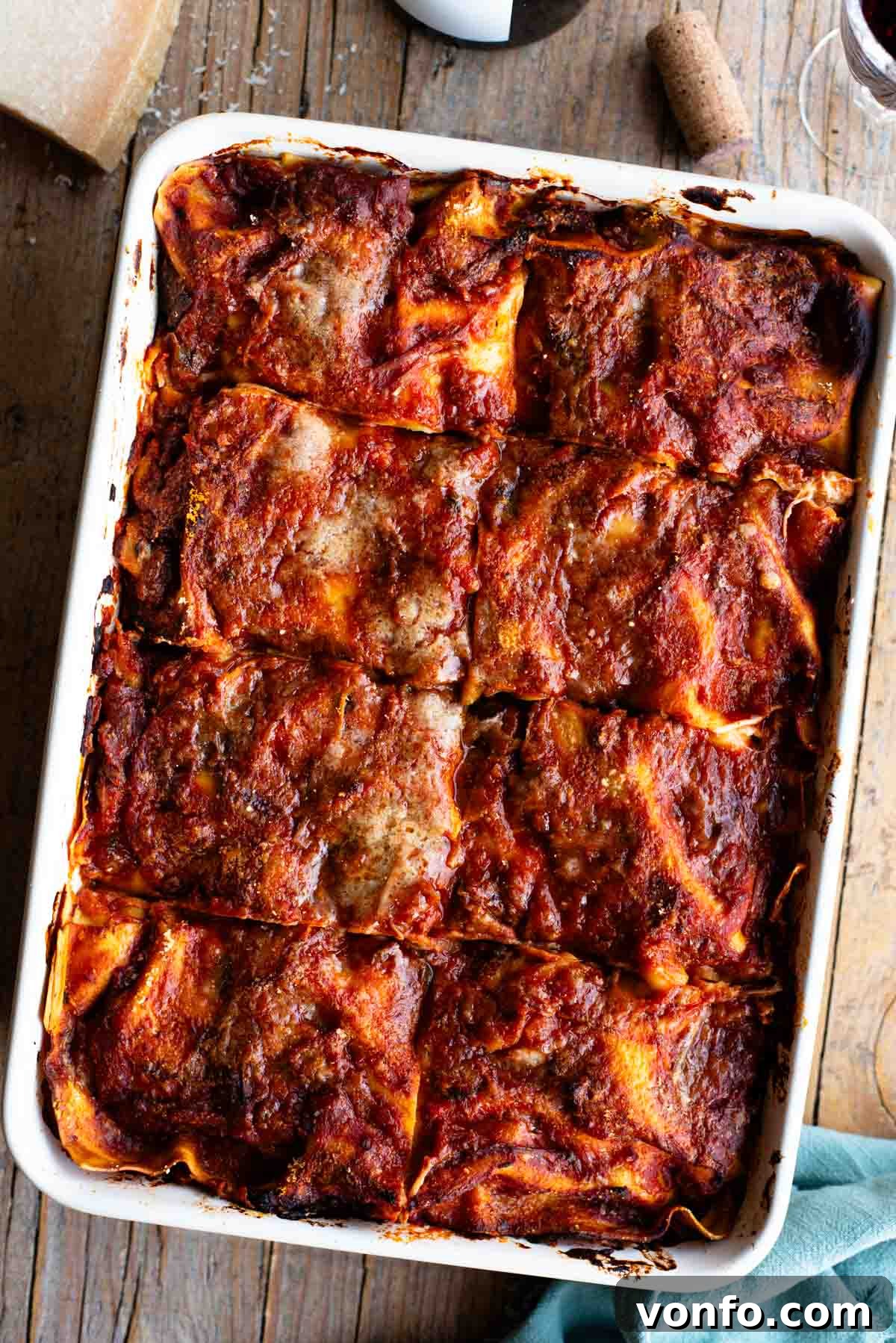
The tradition of Lasagna di Carnevale dates back centuries, embodying the spirit of feasting and indulgence that precedes the fasting period of Lent. It’s a dish designed to be shared, to bring families together around a table laden with rich, comforting food, celebrating the joy of good company and incredible flavors. While many might be familiar with other lasagna variations, the Neapolitan version holds a unique charm, distinguishing itself with a bold flavor profile and an array of surprising, delightful fillings.
The Distinct Flavors of Italian Lasagna: North vs. South
Italy’s diverse culinary landscape is beautifully showcased in its regional lasagna variations. When it comes to lasagna, the differences between the North and South are vast and fascinating, each reflecting local ingredients, traditions, and historical influences.
Northern Italian lasagna, most famously exemplified by Lasagna Bolognese, is typically prepared with an irresistible beef ragu and a creamy béchamel sauce. This is the style of lasagna that many Europeans are generally most familiar with, characterized by its smooth, rich sauce and often thinner pasta sheets.
In contrast, lasagna from the South, particularly from Naples, offers a much heartier, more rustic experience. Neapolitan Lasagna (Lasagna di Carnevale) features a robust ragu alla Napoletana, often without béchamel, opting instead for creamy ricotta cheese. What truly sets it apart are the generous additions of miniature meatballs and slices of hard-boiled eggs, creating layers of unexpected flavor and texture. This southern Italian style, with its rich meat and cheese fillings, is often the variation most familiar to American palates, though local adaptations may vary.
These distinctions highlight how geographical location, available produce, and cultural history have shaped Italy’s beloved pasta bake into numerous distinct, yet equally delicious, forms. Understanding these differences enriches the appreciation for each unique recipe.
Why Lasagna di Carnevale Will Steal Your Heart
For a long time, I believed that nothing could surpass the classic comfort of a Lasagna Bolognese. Its familiar flavors and creamy texture held a special place in my heart. However, my journey into Southern Italian cuisine led me to finally attempt this Neapolitan masterpiece, and I can truly say that it has redefined my expectations for lasagna.
To declare that we were absolutely captivated by this Lasagna di Carnevale would be an understatement. It is profoundly incredible, an explosion of flavors that makes choosing a favorite between the northern and southern styles almost impossible (and so, I happily embrace both!).
This particular lasagna, as mentioned, is steeped in tradition, especially crafted to celebrate Carnevale. It perfectly embodies the spirit of lavish feasting and pure indulgence before the solemnity of Lent begins. Every single layer of this dish is a testament to its richness, a delightful blend of savory meats, creamy cheeses, and perfectly cooked pasta that will undoubtedly leave you craving a second helping. If you’ve enjoyed our highly-rated Classic Lasagne al Forno (which boasts over 100 5-star reviews), you are guaranteed to adore this Neapolitan gem just as much, if not more!
Essential Ingredients for Authentic Lasagna di Carnevale
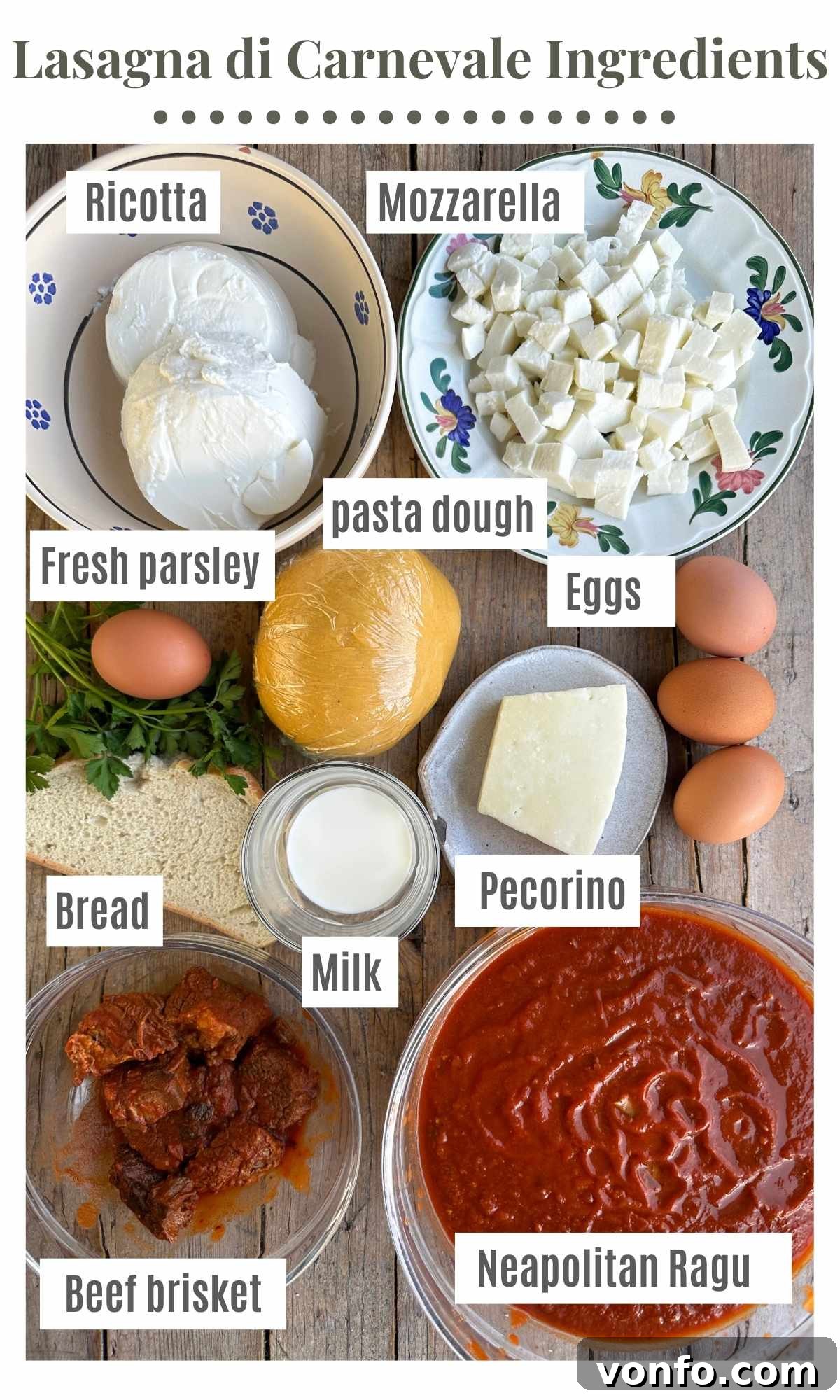
Key Ingredient Notes & Expert Substitutions
Using high-quality ingredients is paramount to achieving the authentic, deep flavors of Lasagna di Carnevale. Here are some detailed notes and potential substitutions to guide you:
- Ragu alla Napoletana: This slow-cooked, rich meat sauce is the soul of this lasagna. Its complex flavors develop over hours, providing the foundational “wow factor.” Traditionally, the sausages and ribs cooked within the ragu are often enjoyed as a separate meal, leaving the succulent beef and the deeply flavored sauce for the lasagna. Prepare this ragu a day in advance for the best flavor development and to streamline your lasagna-making process.
- Homemade Pasta: While store-bought fresh pasta sheets are a convenient option, traditional Lasagne di Carnevale often uses semolina pasta (without eggs). However, many contemporary recipes, including ours, embrace egg pasta dough for its tender texture and rich flavor. Our homemade egg pasta dough offers an unparalleled freshness that elevates the entire dish.
- Ricotta: Choose a full-fat ricotta, whether from cow’s or sheep’s milk, for the creamiest, most luscious texture. The richness of full-fat ricotta is crucial as it replaces the béchamel sauce commonly found in northern lasagnas, contributing a distinct, fresh dairy note that balances the hearty ragu.
- Beef for Meatballs: We highly recommend using the beef brisket that has been slow-cooked in the ragu. Blitzing this tender, flavor-infused beef makes for incredibly succulent and flavorful miniature meatballs. If brisket isn’t available or you prefer a quicker option, ground beef (mince) works wonderfully too. For an even richer flavor profile, consider a blend of ground beef and veal, or even a touch of pork.
- Mozzarella: Fresh mozzarella is key here. Always opt for good quality fresh mozzarella balls and remember to dab them thoroughly with kitchen paper to remove excess water. This prevents the lasagna from becoming watery during baking. Some regional variations also incorporate Caciocavallo cheese, which adds a slightly sharper, more piquant note.
- Parmigiano Reggiano or Pecorino Romano: Both offer a salty, umami kick that is essential for layering. Parmigiano Reggiano provides a nuttier, milder flavor, while Pecorino Romano delivers a sharper, saltier, sheep’s milk tang. Use whichever you prefer or have on hand, or even a combination for added complexity.
Step-by-Step Guide: Crafting Your Neapolitan Lasagna
Making Lasagna di Carnevale is a labor of love, but with some clever preparation, it becomes a truly enjoyable culinary project. This guide will walk you through each stage, from preparing your ingredients to assembling the perfect layers.
Preparation & Time-Saving Tips
To make the process more manageable and enhance the flavors, we strongly recommend preparing certain components in advance:
- Ragu alla Napoletana: Make your Ragu alla Napoletana at least one day ahead. This not only makes the entire lasagna assembly smoother and more time-efficient, but the sauce develops a much deeper, more complex flavor overnight. Remember to save all the rich beef and the sauce for this recipe; the sausages and ribs can be enjoyed as a separate, delicious dinner.
- Hard-Boiled Eggs: Hard-boil and peel your eggs the day before to save time on assembly day.
- Homemade Pasta Dough: Prepare your homemade pasta dough first thing on the day you plan to assemble and bake the lasagna. If preparing a day in advance, store it in the fridge and bring it to room temperature before rolling.
The following sections provide a visual and textual guide to making this incredible dish. For a printable version with condensed tips, please refer to the full recipe details later in this article.
Equipment You’ll Need
- 9×13 inch Baking dish
- Large mixing bowls
- Food processor (if using beef brisket for meatballs)
- Large frying pan
- Clean kitchen towel
- Kitchen paper (paper towels)
- Large pot for blanching pasta
- Pasta machine (if making homemade pasta)
- Kitchen tongs
Full Ingredient List (for 8 generous servings)
For the Ragu Sauce:
- 1 batch Ragu alla Napoletana (prepare 1 day in advance, reserving beef and sauce)
For the Meatballs:
- 1 thick slice crusty bread (crusts removed), about 50g / 2oz
- ⅓ cup (80ml) milk
- 1 large egg
- 8 oz (250g) beef brisket (from the ragu) or ground beef (see notes)
- ¼ cup (30g) Pecorino Romano or Parmigiano Reggiano, finely grated (plus extra for layers)
- Small handful fresh parsley, finely chopped
- Pinch of salt
- Sunflower oil, or other flavorless oil, for frying (approx. 1 inch in a pan)
For the Fresh Pasta (or use 450g / 1 lb fresh store-bought lasagna sheets):
- 300g (2 ¼ cups, spooned and leveled) 00 flour
- 3 large eggs
- 1 egg yolk
Other Layers:
- 2 cups (500g / 1.1 lb) full-fat Ricotta cheese
- 3 hard-boiled eggs, sliced
- 8.8 oz (250g) fresh mozzarella (2 balls), drained and torn or thinly sliced
- Extra Pecorino Romano or Parmigiano Reggiano for grating
Detailed Instructions
-
Prepare the Ragu (1 Day in Advance):
Begin by following our dedicated recipe to create the rich Ragu alla Napoletana. This slow-cooking process is vital for developing the deep, savory flavors essential for this lasagna. Once the ragu is cooked, allow it to cool completely and then refrigerate it overnight. Ensure you set aside all the tender beef from the ragu and the luscious sauce for the lasagna. The sausages and ribs, if included in your ragu, can be enjoyed as a separate, delicious meal.
-
Craft the Homemade Pasta Dough:
On a clean work surface, mound the 00 flour and create a wide well in the center. Carefully crack the 3 whole eggs and add the 1 egg yolk into the well. Using a fork, gently whisk the eggs, gradually incorporating the flour from the sides until a shaggy, rough dough forms. Switch to your hands to bring the dough together and knead it for about 10 minutes. The goal is a smooth, elastic, and pliable dough. Wrap the dough tightly in cling film and let it rest at room temperature for at least 30 minutes. This resting period is crucial for relaxing the gluten, making the dough easier to roll.
-
Make the Flavorful Meatballs:
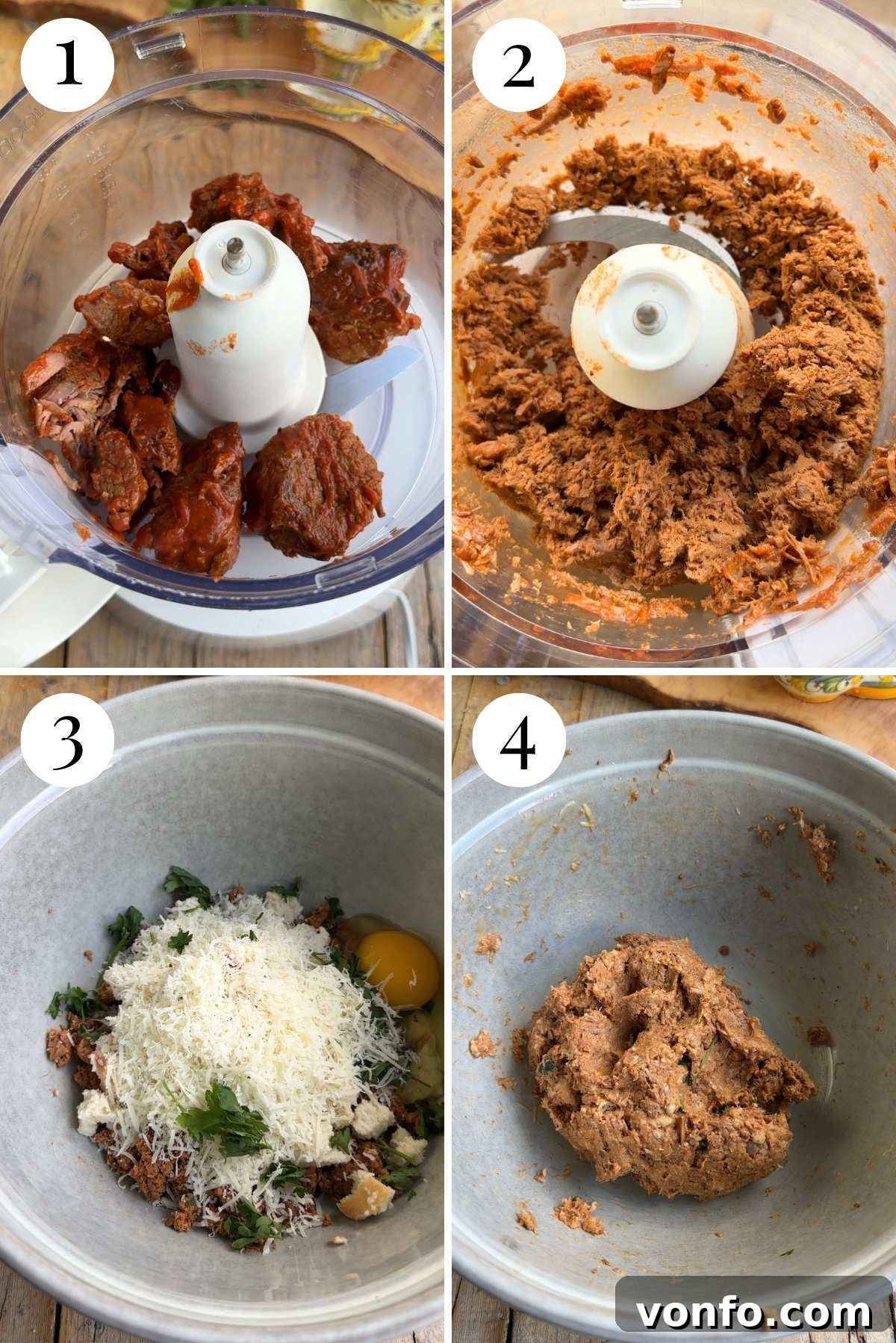
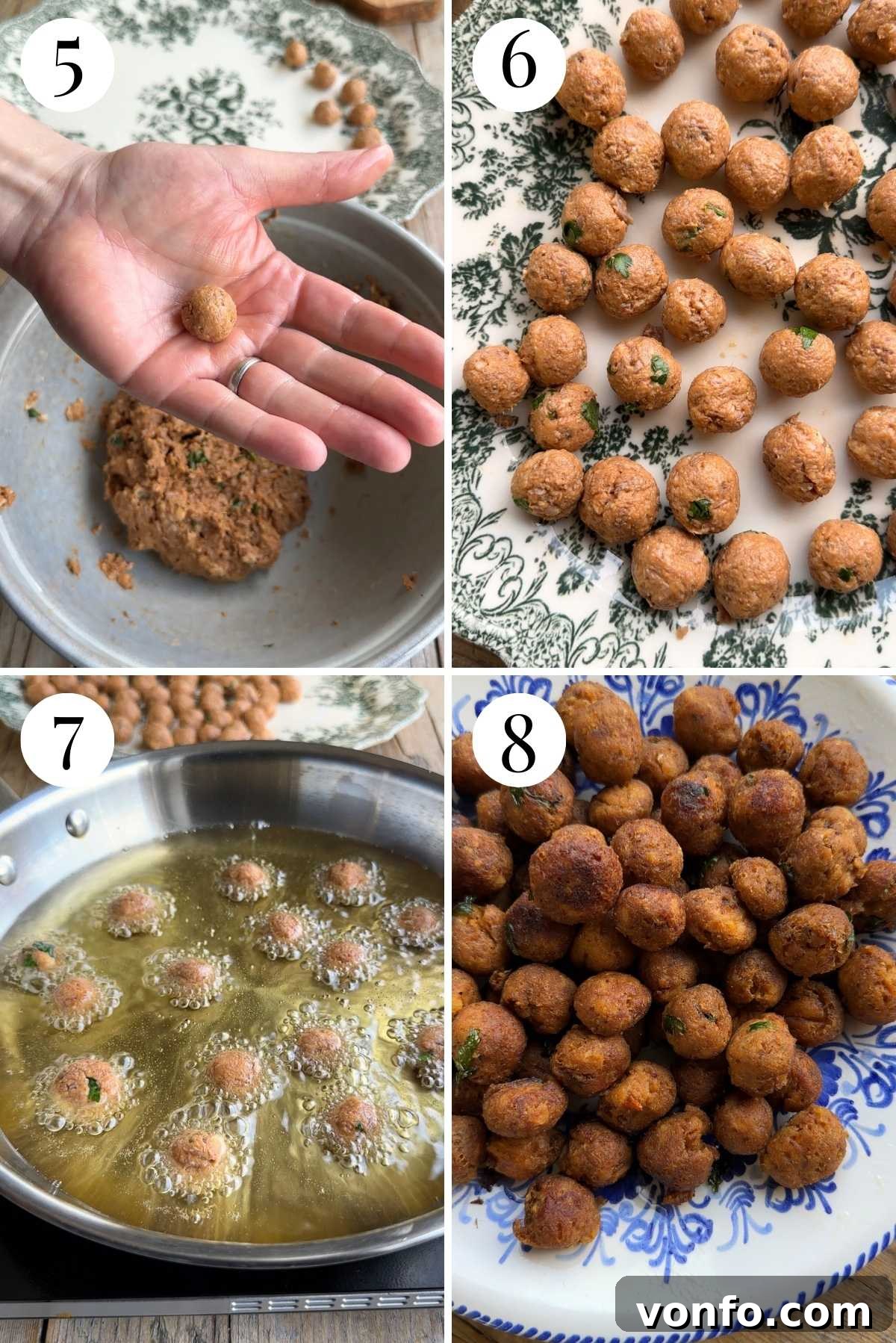
First, tear the slice of crusty bread into small pieces and let it soak in the milk in a bowl until it softens completely. Meanwhile, if using beef brisket from your ragu, pulse it in a food processor until finely minced. If you’re using ground beef, simply place it directly into a mixing bowl. To the minced beef, add the finely chopped parsley, grated Pecorino (or Parmigiano), and the remaining egg. Squeeze the excess milk from the soaked bread and crumble it into the meat mixture. Add a pinch of salt and mix everything thoroughly by hand until well combined. Roll the mixture into tiny meatballs, roughly ½ teaspoon per meatball; you should yield between 60-70 meatballs. Heat about 1 inch of sunflower or other neutral oil in a large pan over medium-high heat. Once hot, fry the meatballs in batches until they are beautifully browned and cooked through. Remove them with a slotted spoon and let them drain on kitchen paper to remove any excess oil.

Steps 1 and 2: Preparing the rich meatball mixture for the lasagna. Steps 3 and 4: Rolling and frying the delicious miniature meatballs. -
Prepare the Ricotta Mixture:
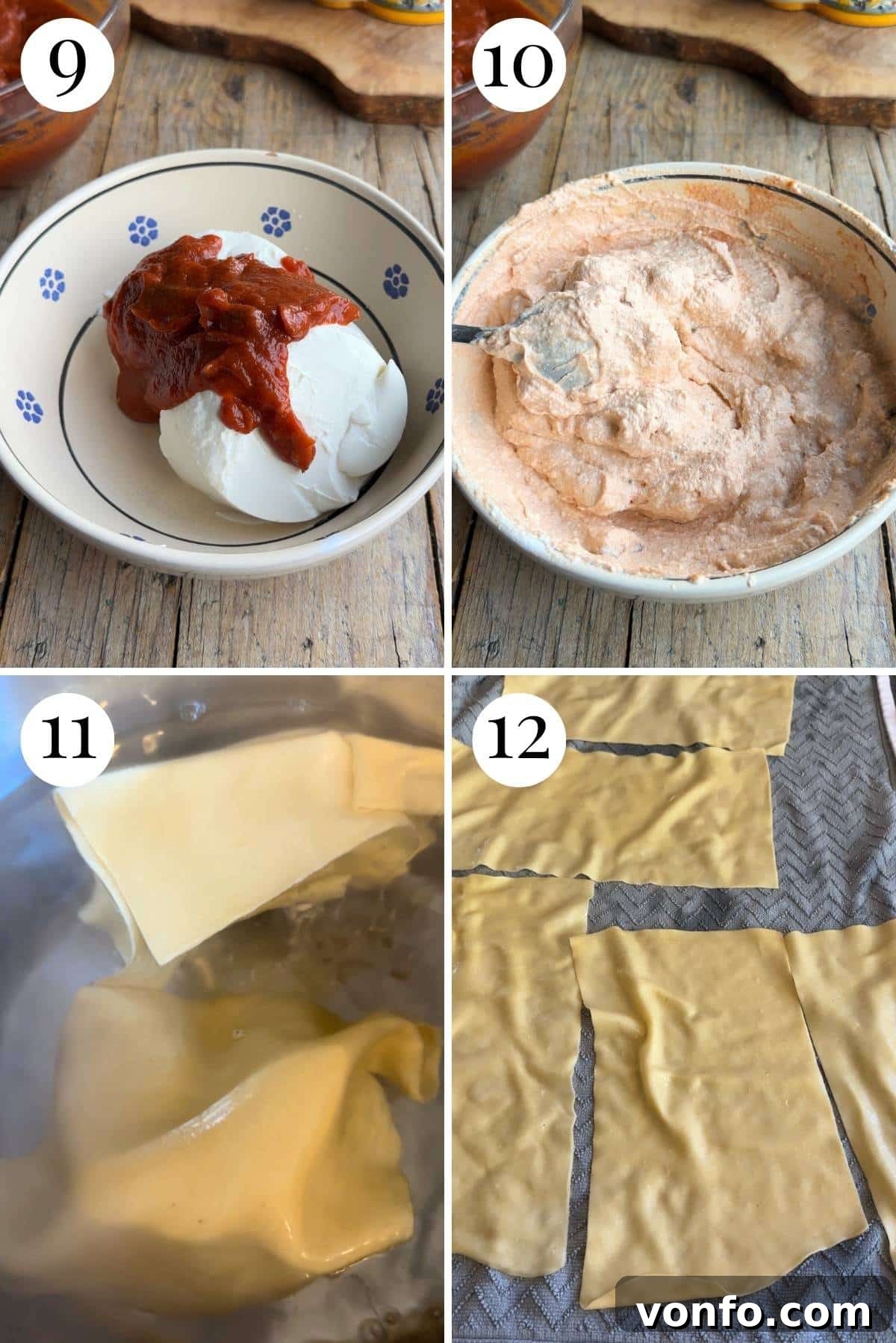
In a medium bowl, combine the ricotta cheese with about ¼ cup (60ml) of your prepared ragu sauce. Mix thoroughly until the ricotta is smooth and the sauce is fully incorporated, creating a flavorful and easily spreadable mixture. This subtle addition of sauce enhances the ricotta’s flavor and helps it blend seamlessly into the lasagna layers.
-
Roll Out the Lasagna Sheets:
Divide your pasta dough into four equal quarters. Work with one quarter at a time, keeping the remaining dough wrapped to prevent it from drying out. Lightly dust your work surface and pasta machine with 00 flour. Flatten the dough piece slightly and pass it through the widest setting of your pasta machine. Fold one end of the pasta sheet into the middle, and then the other end over it (like a letter). Press it flat and pass it through the widest setting again. Repeat this folding and rolling process one more time. Now, without folding, pass the dough through each subsequent setting, decreasing the thickness, until you reach the second-to-last setting (usually number 7). This will create beautifully thin and consistent lasagna sheets.
-
Blanching the Pasta Sheets:
Bring a large pot of heavily salted water to a rolling boil. Preheat your oven to 180°C (350°F). Cut your rolled-out lasagna sheets to fit the dimensions of your baking dish. Blanch the pasta sheets in batches in the boiling water for a very brief period, typically 10-20 seconds. They should be pliable but still firm. Using kitchen tongs, carefully remove the blanched sheets and lay them flat on a clean kitchen towel to cool slightly and absorb excess moisture. Blanching the pasta ensures it cooks evenly in the oven and prevents a raw or gummy texture.
Steps 5 and 6: Preparing the creamy ricotta mixture and blanching fresh pasta sheets. -
Assembling the Lasagna Layers:
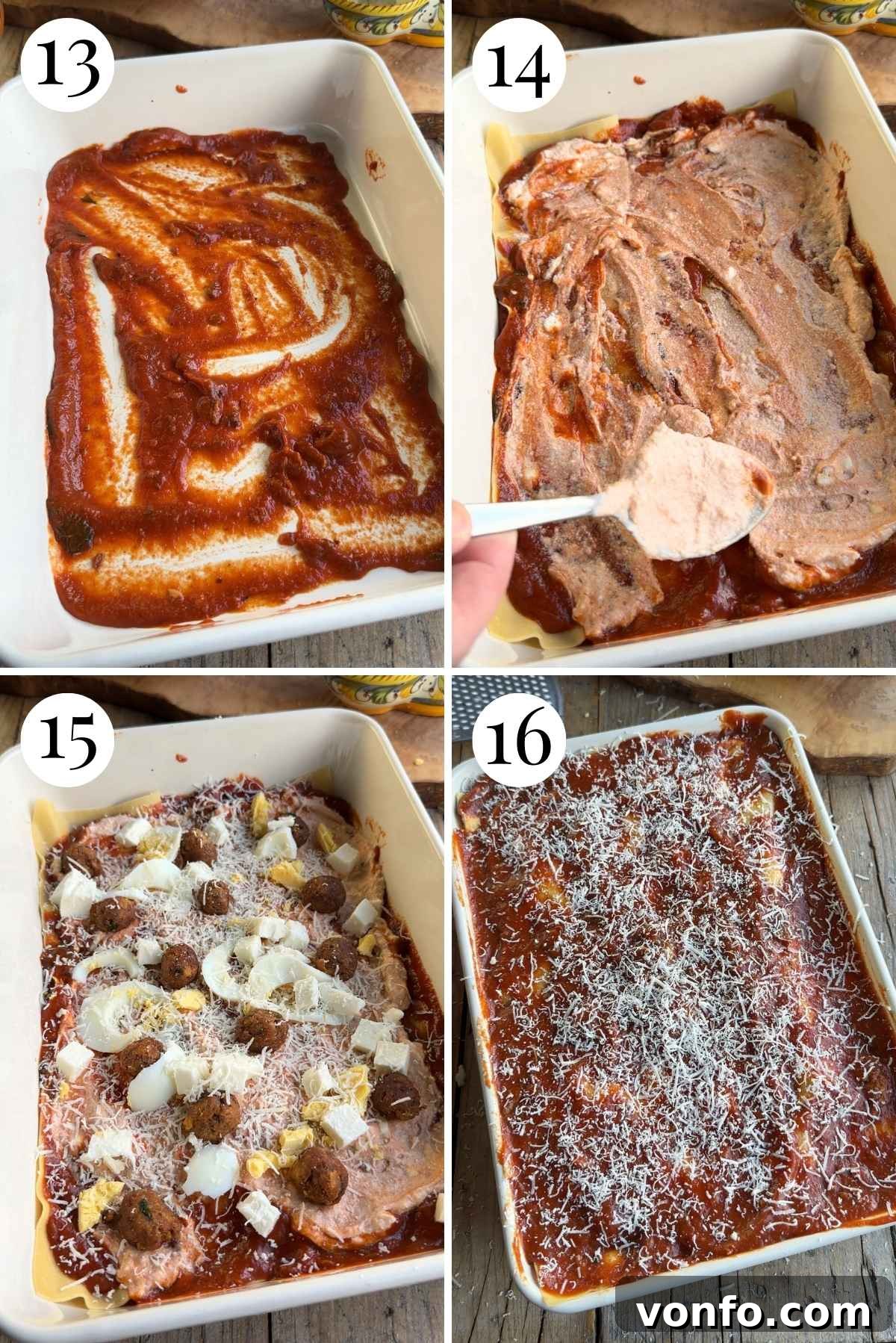
To begin assembly, spread a small spoonful of your rich ragu sauce evenly across the bottom of your 9×13 inch lasagna dish. This prevents the first pasta layer from sticking. Lay one blanched pasta sheet over the sauce, cutting any overlaps to fit perfectly. Spoon more ragu sauce over the pasta, followed by several dollops of your prepared ricotta mixture. Gently spread the ricotta to cover the pasta layer. Next, generously sprinkle about 15 miniature meatballs and a scattering of hard-boiled egg slices over the ricotta. Finish this layer with a scattering of fresh mozzarella and a grating of Pecorino or Parmigiano Reggiano.
Steps 7 and 8: Expertly layering the components for a perfect Lasagna di Carnevale. -
Repeat and Finish the Layers:
Continue to repeat the layering process: pasta, ragu, ricotta, meatballs, hard-boiled eggs, mozzarella, and grated hard cheese. You should aim for a total of 5 layers of pasta, which will create 4 rich layers of filling. For the very top layer, spread a final generous coating of ragu sauce and sprinkle with grated Pecorino or Parmigiano, but omit the mozzarella. This ensures a beautiful, slightly crispy top crust without the cheese burning.
-
Baking to Golden Perfection:
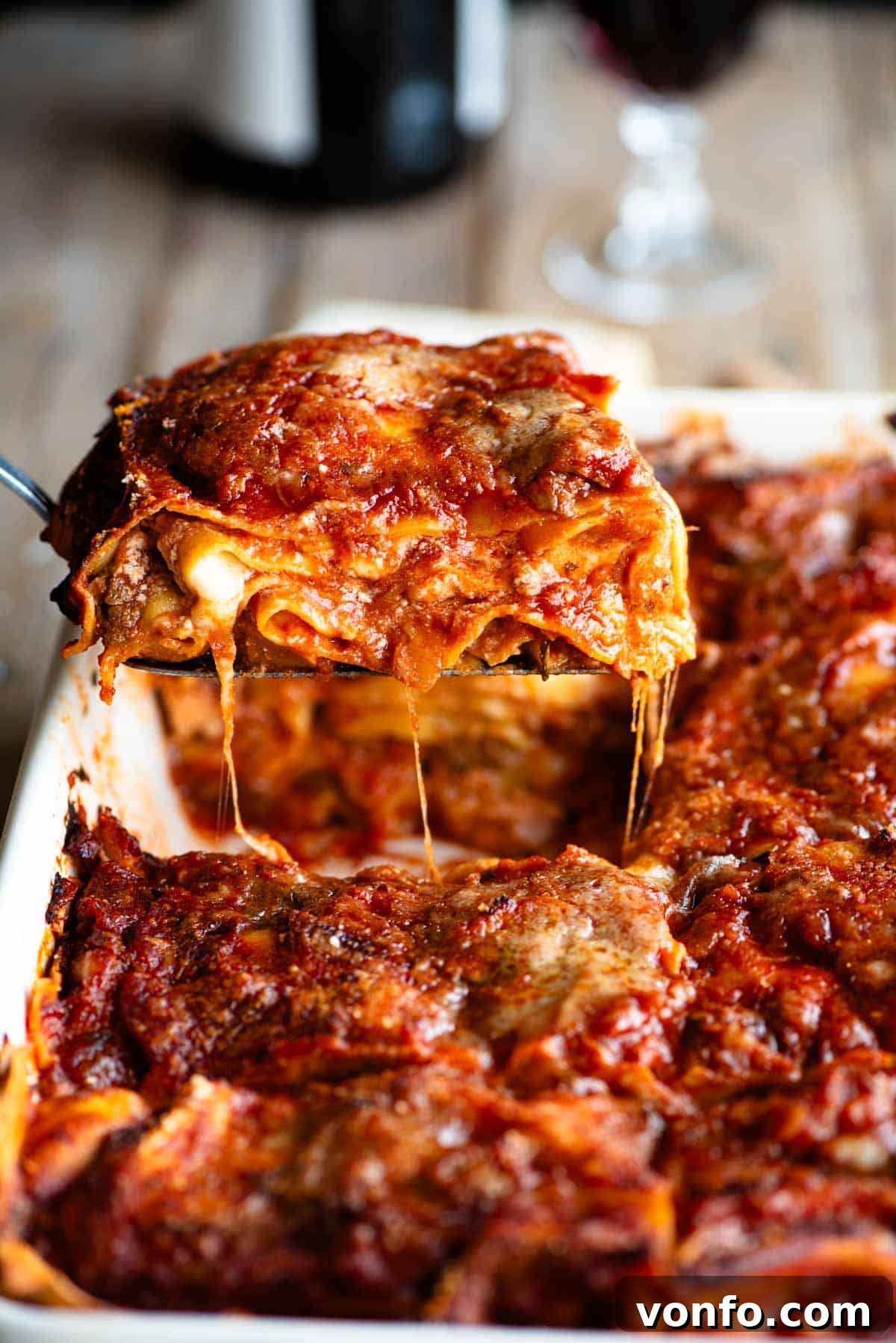
Place the assembled lasagna, uncovered, into your preheated oven (180°C / 350°F). Bake for 40-45 minutes, or until the top is golden brown and bubbly, and the edges are slightly crisp. Once baked, it is absolutely crucial to let the lasagna rest for 5-10 minutes before slicing and serving. This resting period allows the layers to settle, preventing the lasagna from falling apart and ensuring clean, beautiful slices.
Video Guide: Watch How It’s Done!
Sometimes, seeing the process in action makes all the difference. Watch our comprehensive video guide below to visualize each step and master the art of making Lasagna di Carnevale.
Expert Tips & Troubleshooting for Your Lasagna di Carnevale
Mastering this classic dish is easier with a few insider tips:
- Ragu alla Napoletana Usage: As mentioned, use the beef from the ragu for your meatballs and the rich sauce for layering. The sausages and pork ribs are delicious on their own and can be enjoyed for another dinner with some vegetable sides.
- Beef for Meatballs: If beef brisket from the ragu isn’t available, high-quality ground beef mince is a perfectly acceptable alternative. For a traditional touch, consider a mix of ground beef and veal or pork for added depth of flavor and tenderness.
- Meatball Size: The number of meatballs you get will vary based on their size. We aim for approximately ½ teaspoon of mixture per meatball, which typically yields 60-70 tiny meatballs. This size ensures they distribute evenly and cook quickly. If you have more or fewer, simply divide them as evenly as possible among your four filling layers (aim for around 15 meatballs per layer).
- Boiled Eggs: We find 3 hard-boiled eggs to be the ideal amount for this recipe. Since there are four layers of filling, this provides just under one egg per layer, allowing you to eyeball the distribution easily. If you prefer a full egg slice on each layer, simply prepare one additional egg.
- Time-Saving Shortcuts: Beyond making the ragu a day in advance, consider using fresh, good-quality store-bought lasagna sheets if you’re short on time. Even with store-bought sheets, it’s beneficial to blanch them briefly (10-20 seconds) to ensure a perfectly tender texture in the final bake.
- Prep in Advance: For ultimate convenience, you can assemble the entire lasagna one day in advance. Cover it tightly with foil and refrigerate. On the day of serving, simply pop it into the oven and bake as directed (you might need to add an extra 10-15 minutes to the baking time if baking straight from the fridge).
- Leftovers: Lasagna di Carnevale makes fantastic leftovers! Store any remaining lasagna in an airtight container in the refrigerator for up to 2 days. To reheat, place slices in the oven at 180°C (350°F) for 30-40 minutes, or until piping hot throughout. You can also microwave individual portions, though the oven will give a superior texture.
Serving Suggestions and Pairings
Lasagna di Carnevale is a hearty, complete meal on its own, but it pairs wonderfully with a few simple accompaniments. A crisp green salad with a light vinaigrette offers a refreshing contrast to the richness of the lasagna. Crusty Italian bread is perfect for soaking up any leftover ragu on your plate. For beverages, a medium-bodied red wine like an Aglianico or a Barbera would complement the rich meat flavors beautifully. For dessert, something light and fresh, like a fruit salad or a simple panna cotta, would be a delightful end to this indulgent meal.
Frequently Asked Questions (FAQ)
- Can I freeze Lasagna di Carnevale? Yes, this lasagna freezes exceptionally well. You can freeze it either baked or unbaked. For unbaked, assemble the lasagna, cover tightly with foil, and freeze for up to 3 months. Thaw overnight in the refrigerator before baking. For baked, let it cool completely, then slice into individual portions, wrap well, and freeze. Reheat from frozen in the oven until heated through.
- What if my homemade pasta sheets stick together after blanching? To prevent sticking, ensure you lay the blanched sheets on a clean kitchen towel in a single layer, not overlapping too much. You can also lightly dust them with flour. Work in small batches and assemble quickly.
- Can I use store-bought meatballs? While homemade meatballs from the ragu beef are highly recommended for flavor, good quality store-bought cooked meatballs can be used in a pinch. Just ensure they are small enough to integrate well into the layers.
- Is it possible to make this recipe vegetarian? No, due to the central role of the meat ragu and meatballs, this specific recipe is not suitable for a vegetarian diet. However, there are many delicious vegetarian lasagna recipes that use vegetable ragu and different cheese combinations.
More Authentic Italian Lasagna Recipes to Explore
Pasta
Lasagne al Forno (Italian Beef Lasagna)
Pasta
Authentic Lasagna Bolognese (Lasagne alla Bolognese)
Pasta
Italian Lamb Lasagna with Pecorino Bechamel
Mains
Eggplant Lasagna with Prosciutto and Mozzarella
Your Feedback Matters!
We absolutely love hearing from you! If you’ve tried this Lasagna di Carnevale recipe or any other recipe from our collection, please don’t forget to rate the recipe and share your experience in the comments below. Your feedback helps us and other home cooks. You can also connect with us on Facebook, Instagram, and Pinterest. Sign up for our Newsletter to receive weekly updates and delicious new recipes directly in your inbox!
Helpful Info for All Recipes
- I always use extra virgin olive oil in all of my recipes unless stated otherwise, for its superior flavor and quality.
- When using canned or jarred tomatoes of any kind, I highly recommend Cirio or Mutti brands for the best results and authentic Italian flavor.
- All vegetables are assumed to be medium-sized unless specifically stated otherwise.
- All recipes are tested and developed using a fan (convection) oven. Adjustments may be necessary for conventional ovens.
- Find out more about how nutrition is calculated.
- Check out our must-have Italian Pantry Staples for stocking your kitchen.
- You can also find all our Essential Kitchen Tools for Italian Cooking to equip your culinary adventures.
Nutrition Information (Per Serving)
Based on approximately 8 servings, the nutritional values are as follows:
- Calories: 572 kcal
- Carbohydrates: 54g
- Protein: 37g
- Fat: 25g
- Saturated Fat: 13g
- Polyunsaturated Fat: 2g
- Monounsaturated Fat: 8g
- Trans Fat: 0.01g
- Cholesterol: 264mg
- Sodium: 504mg
- Potassium: 1375mg
- Fiber: 4g
- Sugar: 12g
- Vitamin A: 1880 IU
- Vitamin C: 23mg
- Calcium: 427mg
- Iron: 7mg
Nutrition information is automatically calculated and should only be used as an approximation. Actual values may vary based on specific ingredients and preparation methods.