
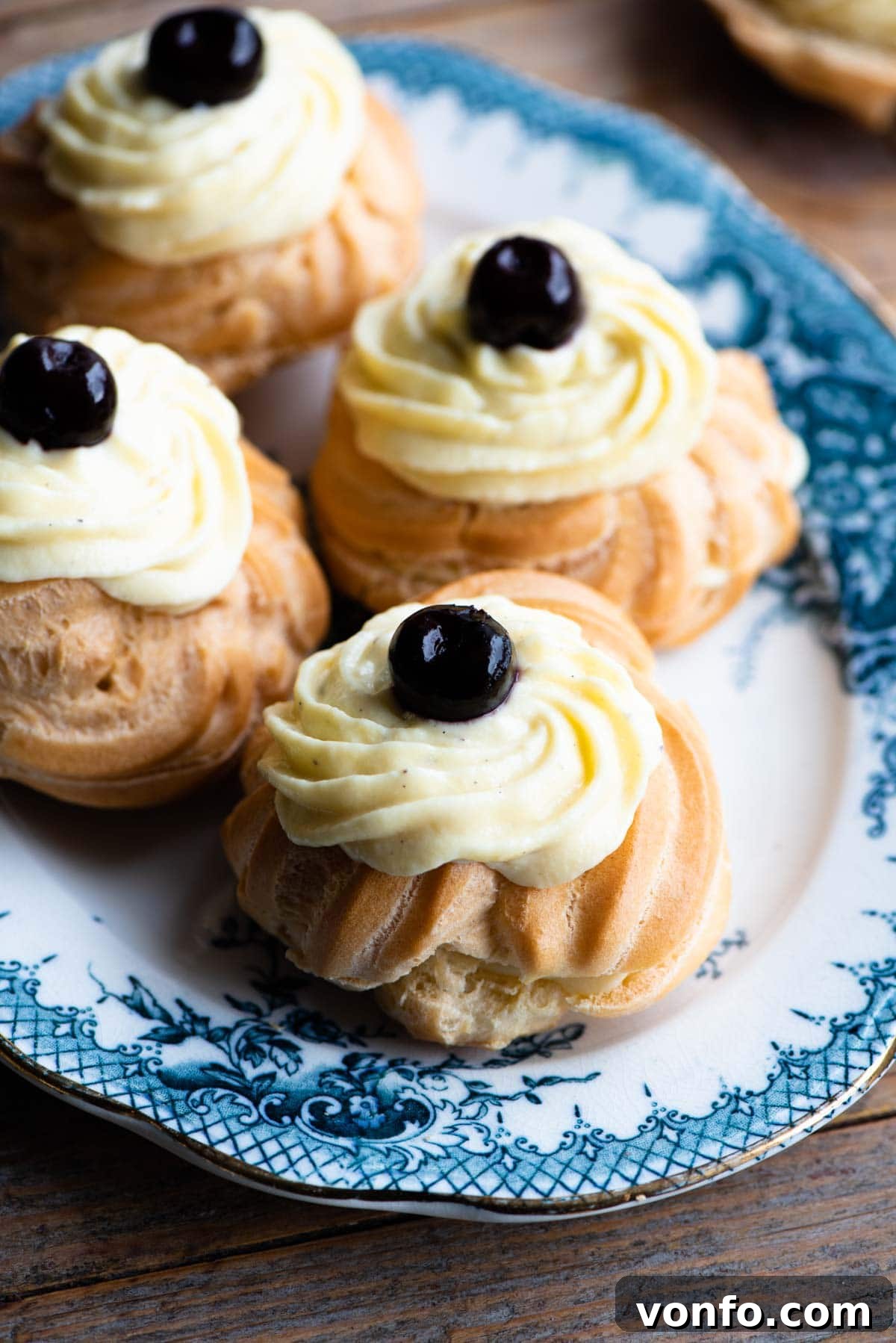
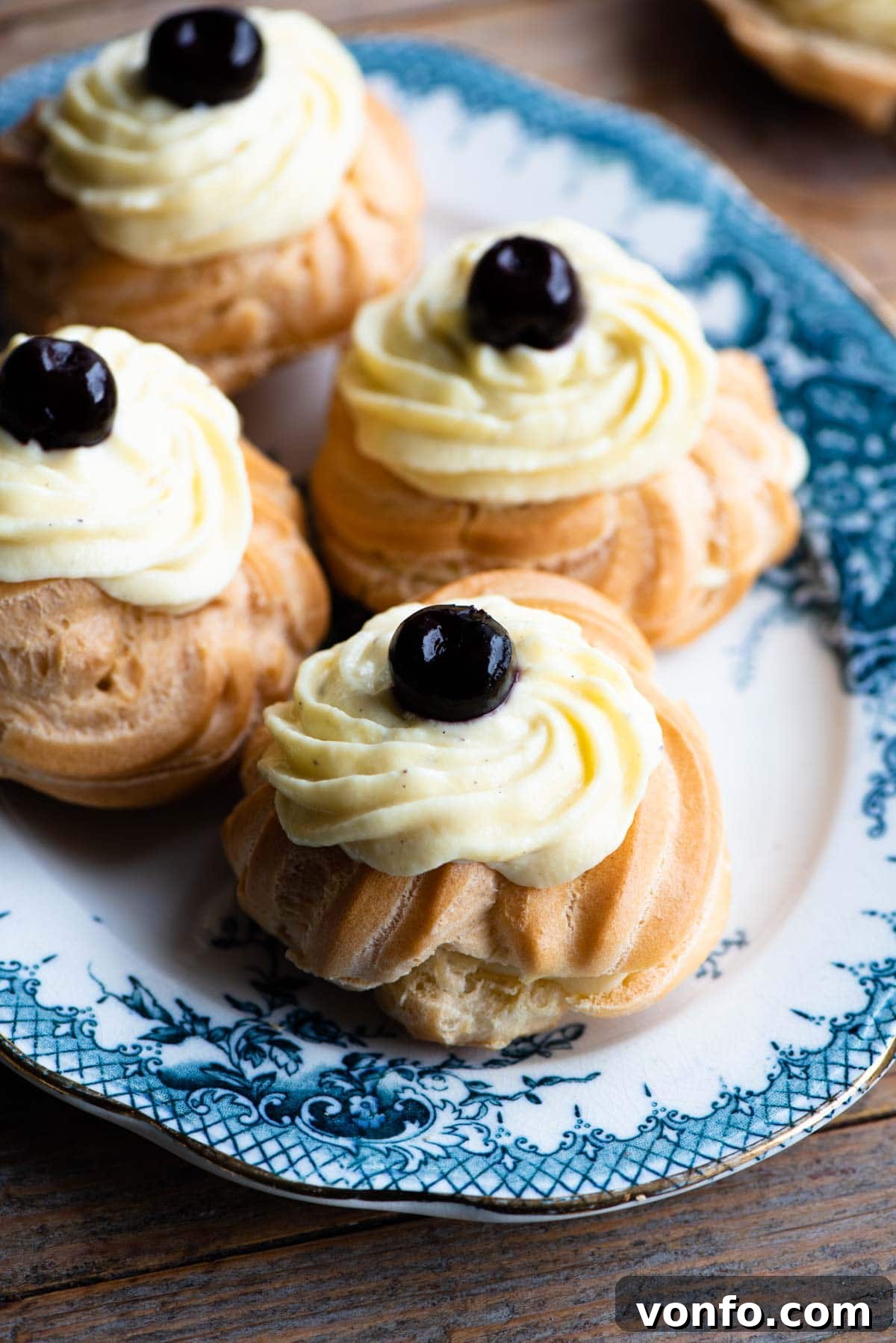
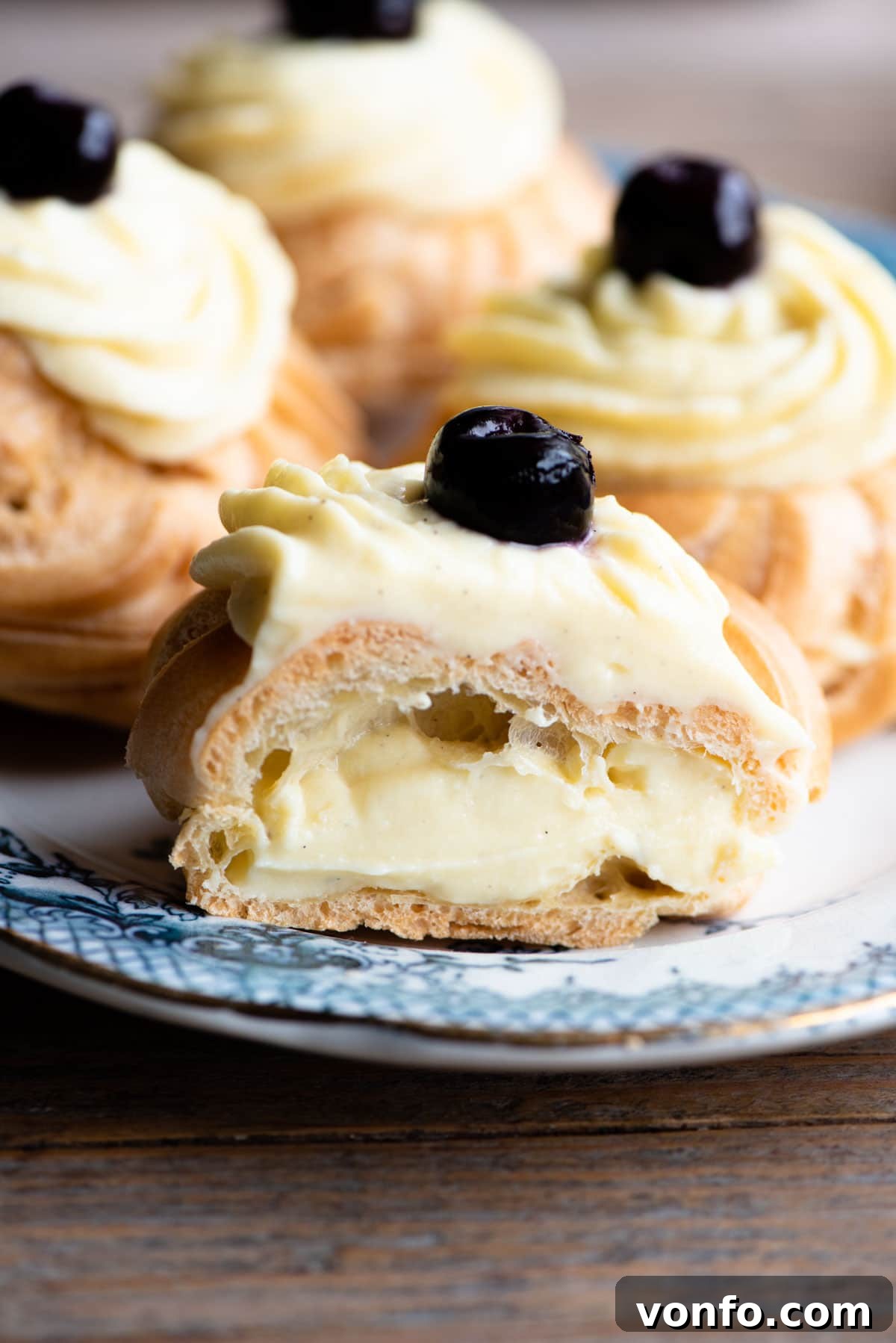
Zeppole di San Giuseppe are more than just pastries; they are a cherished emblem of Italian tradition and culinary artistry, deeply woven into the fabric of springtime celebrations. These exquisite Italian delights are traditionally prepared to honor the Feast of Saint Joseph, observed annually on March 19th. Imagine delicate choux pastry shells, light as air, generously piped and then baked to a golden perfection, creating a crisp exterior that yields to a soft, hollow interior. Each one is then sumptuously filled with a velvety, rich Crema Pasticcera (classic Italian pastry cream) and crowned with a vibrant, glistening amarena cherry. While their elegant appearance might suggest a complex undertaking, you’ll be delighted to discover that crafting these traditional treats at home is a surprisingly simple and incredibly rewarding experience. The resulting flavor is truly unparalleled, making them an unforgettable highlight of any special occasion.
Celebrating Saint Joseph’s Day and Father’s Day in Italy
March 19th holds a special significance across Italy. It’s a day of dual celebration: not only is it Saint Joseph’s Day, a deeply revered religious feast honoring the patron saint of fathers, workers, and families, but it also coincides with Father’s Day throughout the country. This unique combination makes the day particularly joyful and festive. Italian towns and cities come alive with special masses, parades, and elaborate banquets, often featuring “St. Joseph’s Tables” laden with food donated to the poor.
Amidst these vibrant festivities, bakeries become showcases of culinary delight, their windows overflowing with an irresistible array of traditional treats crafted specifically for the occasion. Among these delectable offerings, one pastry reigns supreme and is utterly impossible to miss: the magnificent Zeppole di San Giuseppe! These pastries symbolize the bounty and joy of the celebration, making their appearance just once a year and eagerly anticipated by young and old alike. Their presence is a sweet reminder of family, tradition, and the enduring joy of Italian culture.
Each Zeppola is a masterpiece of textures and flavors. They begin with the delicate, airy choux pastry, a light and crisp foundation. This is then generously piped and baked, forming a perfect vessel for the most exquisite filling imaginable: a smooth, rich, and intensely creamy Crema Pasticcera. This Italian pastry cream, with its subtle vanilla notes, provides a luxurious contrast to the pastry shell. To complete this iconic dessert, each Zeppola is adorned with a plump, glistening cherry, typically an amarena cherry, preserved in a sweet, sticky syrup. The deep ruby hue and tart-sweet flavor of the cherry cut through the richness of the cream, creating a harmonious and utterly delicious experience.
While Zeppole can be found in two traditional preparations – baked or fried – our recipe focuses on the baked version. Opting for baked Zeppole offers several distinct advantages. They are considerably lighter, making them a more accessible indulgence. The baking process also results in a less greasy, more delicate pastry, allowing the flavors of the choux and cream to truly shine. Furthermore, baked Zeppole tend to retain their freshness for a longer period, making them ideal for preparing ahead of your celebration. This method simplifies the cooking process, reducing mess and making this beloved Italian classic perfectly achievable in your home kitchen.
Prepare to embark on a delightful culinary journey! Below, you’ll find our comprehensive recipe, complete with detailed notes on essential ingredients, step-by-step photographs to guide your way, invaluable tips for success, creative variations, and even a video tutorial to bring it all to life. For the full printable recipe and an even easier cooking experience, simply scroll to the very bottom of this page or click the dedicated recipe link.
Essential Ingredients: What You Need for Authentic Zeppole
Crafting perfect Zeppole di San Giuseppe begins with understanding the role of each ingredient. Below, we’ve outlined everything you’ll need for both the choux pastry and the luscious Crema Pasticcera, alongside vital tips to ensure the best possible results. Quality ingredients are key to achieving that authentic Italian taste.
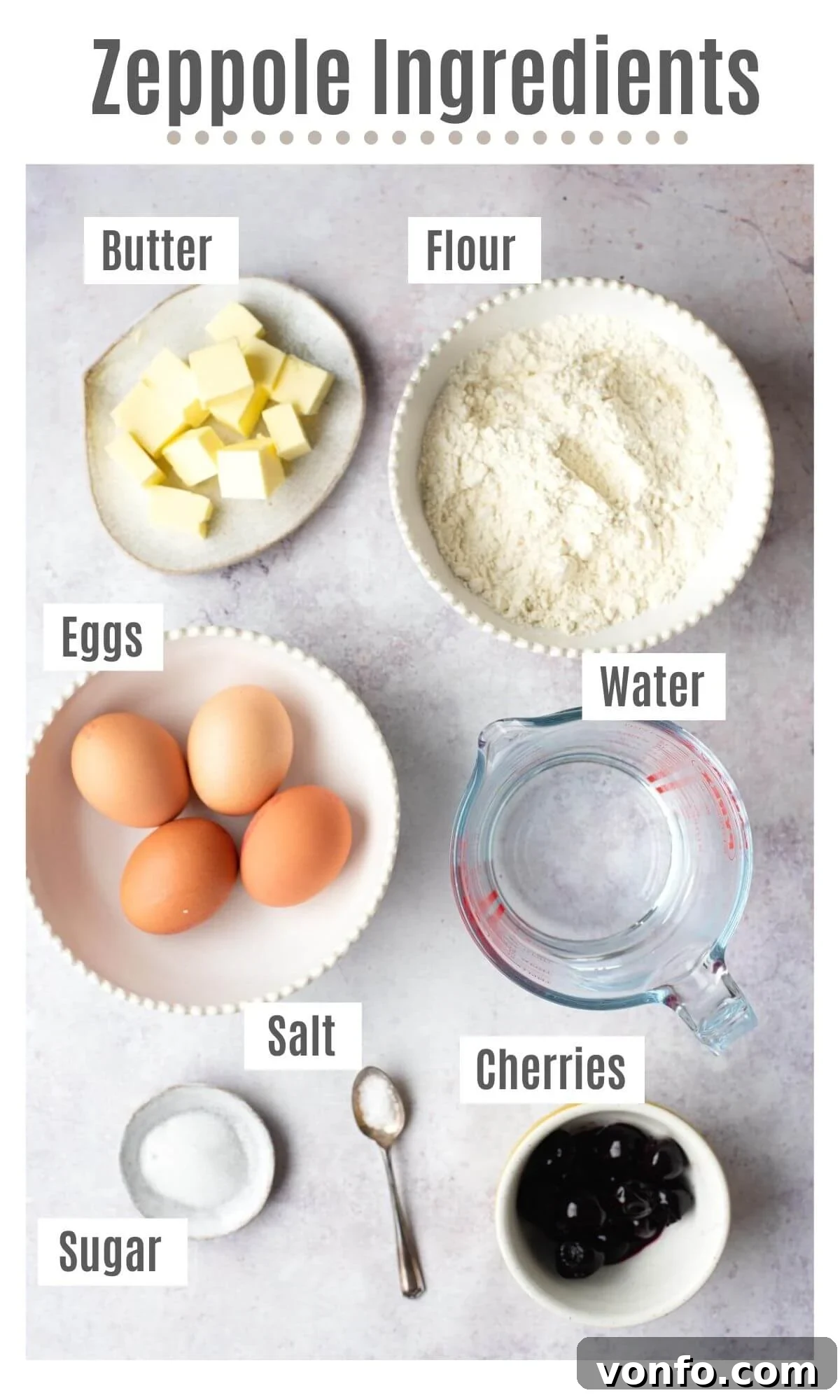
For the Choux Pastry (Pâte à Choux):
- Unsalted Butter: Always opt for unsalted butter. This allows you to control the overall saltiness of the dough, ensuring a balanced flavor profile. Room temperature butter melts more evenly.
- Flour: You have a choice here. Traditional Italian 00 flour will give you a very fine, tender crumb, but standard all-purpose flour works beautifully too. Ensure your flour is sifted to prevent lumps and create a smoother dough.
- Caster Sugar (Fine Sugar): Using fine-grain sugar helps it dissolve quickly and evenly in the liquid, contributing to the choux pastry’s delicate structure without gritty residue. Granulated sugar can be used, but caster is preferred.
- Large Eggs: Eggs are crucial for the choux pastry’s structure and rise. They should be at room temperature to incorporate more easily into the warm dough, preventing a curdled texture.
- Water: The liquid base for the choux. Use clean, filtered water for best results.
- Pinch of Salt: Essential for balancing the sweetness and enhancing the overall flavor of the pastry.
- Amarena Cherries in Syrup: The quintessential topping! Fabbri amarena cherries are highly recommended for their rich, tart-sweet flavor and iconic status in Italian desserts. Their vibrant color and luxurious syrup are integral to the Zeppole’s appeal.
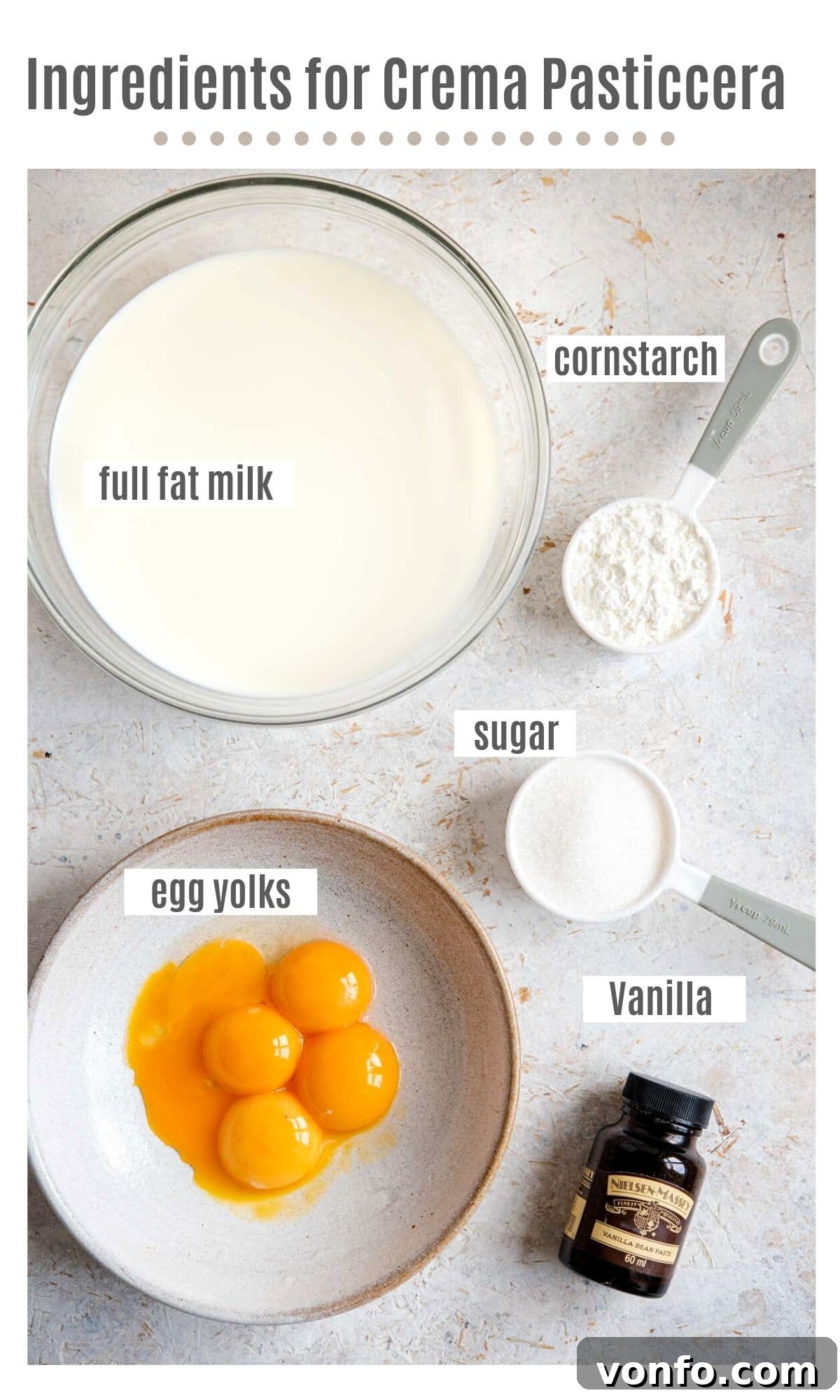
For the Crema Pasticcera (Italian Pastry Cream):
- Full-Fat Milk: This is a non-negotiable ingredient for truly luxurious and creamy pastry cream. The higher fat content contributes significantly to the richness, texture, and mouthfeel, resulting in a silkier, more stable custard. Avoid low-fat or skim milk, as they will yield a thinner, less satisfying result.
- Vanilla: For an authentic and aromatic custard, vanilla is paramount. You can choose between vanilla bean paste for visible specks and intense flavor, pure vanilla extract for convenience, or a whole vanilla bean, which provides the most profound, natural vanilla essence.
- Cornstarch (or Corn Flour in the UK): This is the key thickening agent for your pastry cream. It provides a smooth, stable consistency without imparting a floury taste, ensuring your custard holds its shape beautifully when piped.
- Large Egg Yolks: The yolks give the pastry cream its rich yellow color, smooth texture, and decadent flavor. Separate them carefully from the whites.
- Granulated Sugar: Sweetens the cream and helps stabilize the egg yolks.
- Citrus Peel (Lemon or Orange): An optional but highly recommended addition. A strip of lemon or orange peel (ensure no white pith, which can be bitter) infused in the milk adds a beautiful, subtle fragrant note that elevates the pastry cream without overpowering the vanilla.
Crafting Your Zeppole: Step-by-Step Guide
Essential Preparation Tips for Success!
- Prioritize Your Pastry Cream: Always prepare your Italian Pastry Cream (Crema Pasticcera) first. It requires ample time to cool completely and firm up in the refrigerator, which is crucial for achieving the perfect piping consistency. Detailed instructions for the pastry cream are included in the recipe card below.
- Pre-heat with Precision: For optimal results, pre-heat your oven to 190°C (375°F) well in advance. This ensures the oven reaches and maintains the correct temperature, which is vital for the choux pastry to rise properly and achieve its characteristic crispness.
- Prepare Your Baking Surface: Line a large baking tray with parchment paper. This prevents the Zeppole from sticking and makes for easy cleanup. A non-stick silicone mat can also be used.
- Gather Your Tools: Ensure you have a piping bag fitted with a star nozzle (a classic choice for Zeppole, creating beautiful ridges) ready before you start mixing the choux pastry.
Making the Perfect Choux Pastry
Step 1: The Liquid Base for Choux Pastry. Begin by combining the water and sugar in a sturdy saucepan over medium heat. Stir gently until the sugar has completely dissolved, ensuring a smooth foundation. Once dissolved, introduce the unsalted butter and a pinch of fine salt to the mixture. Continue to heat, stirring occasionally, until the butter is fully melted and the entire mixture comes to a rolling boil. As soon as it reaches a vigorous boil, reduce the heat to its lowest setting. This careful temperature control is critical for the next stage of choux pastry making (refer to photos 1-3 for visual guidance).
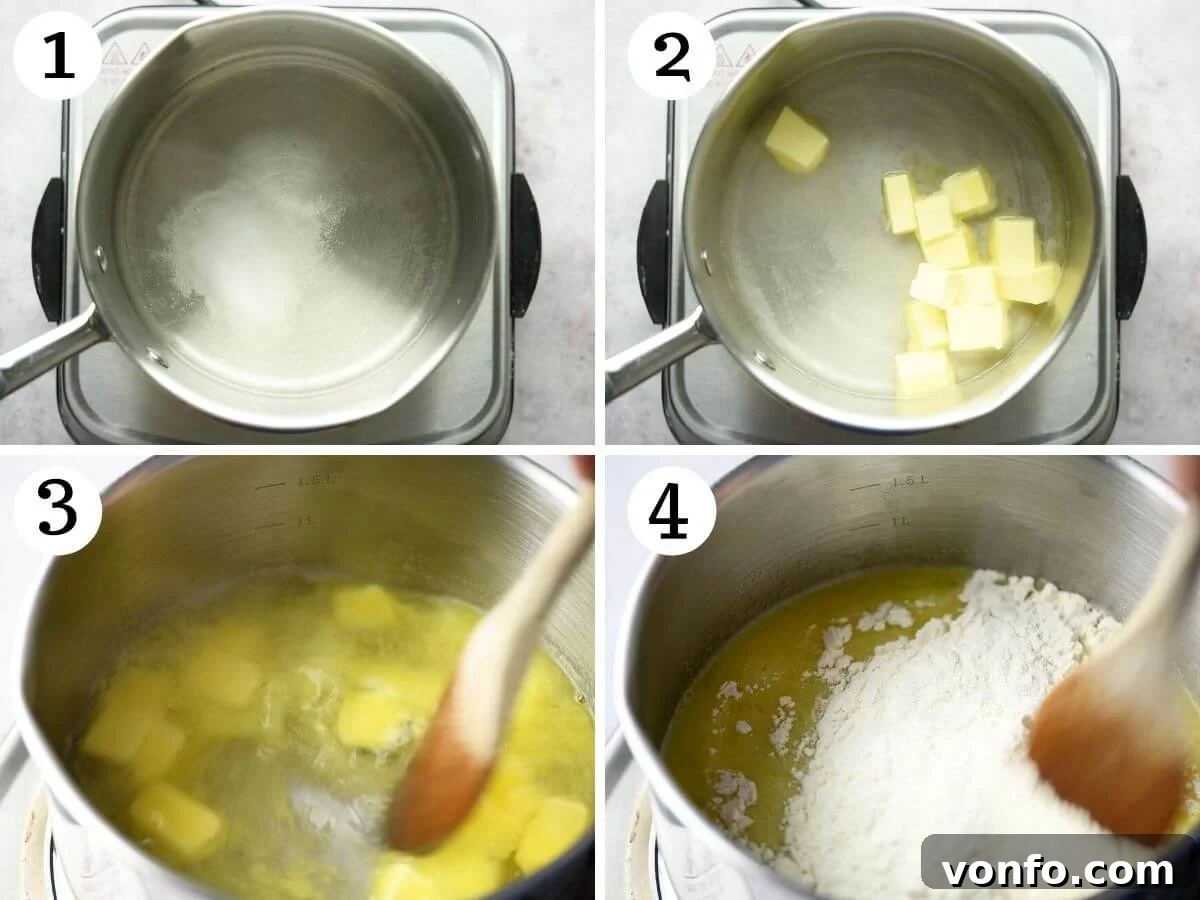
Step 2: Incorporating the Flour and Drying the Dough. With the heat still on low, swiftly add all of the sifted flour into the saucepan at once. Immediately begin to stir vigorously with a robust wooden spoon. This is a critical moment where the flour absorbs the liquid, forming a cohesive dough. Continue stirring and cooking the dough over low heat for at least 5 minutes. This “drying out” process is essential: it allows excess moisture to evaporate, creating a dough that will be firm enough to hold its shape and absorb the eggs correctly. You’ll know it’s ready when the dough forms a ball and easily pulls away from the sides and bottom of the pan, leaving a thin film on the saucepan (observe photos 4-6 for the correct consistency).
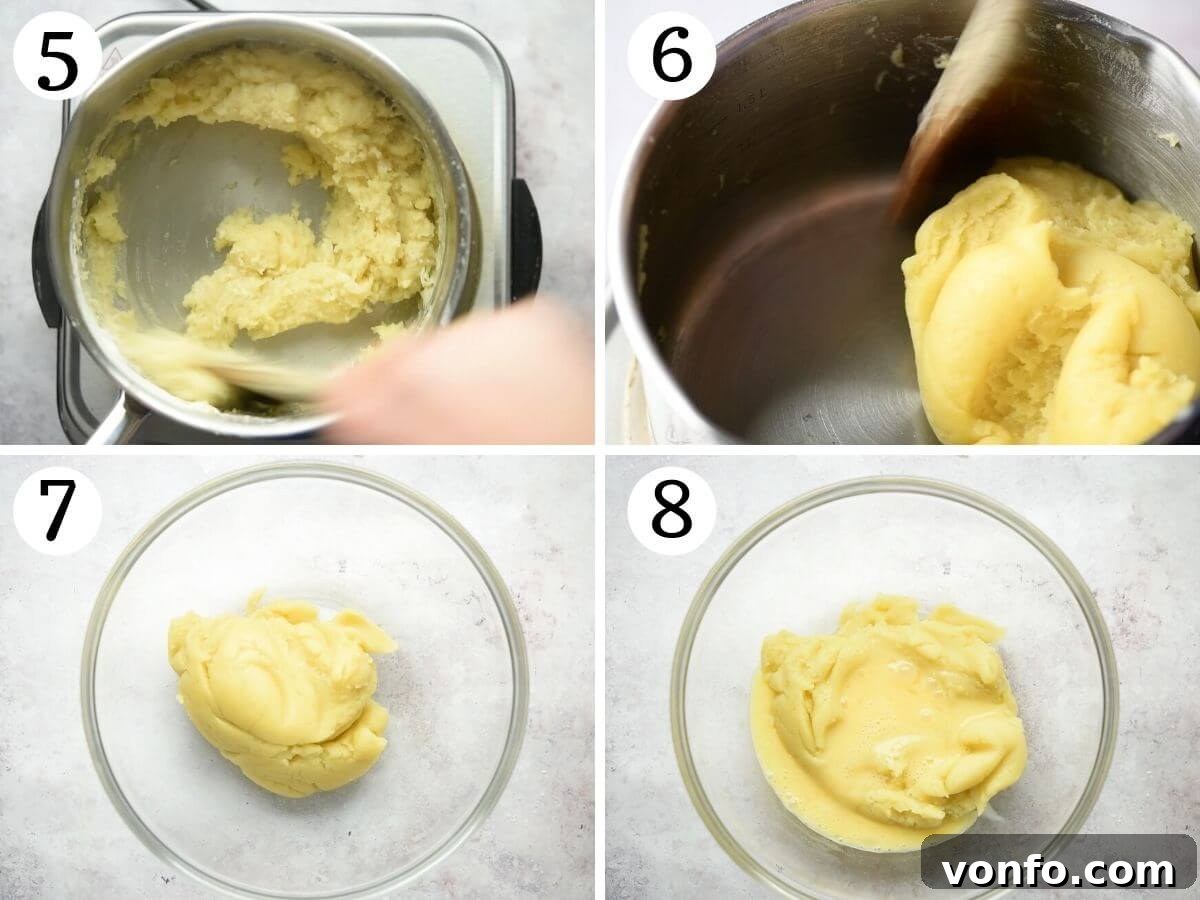
Step 3: The Egg Incorporation – Creating a Smooth, Pipeable Dough. Once the dough has been adequately dried, remove it from the heat and transfer it immediately to a clean, large mixing bowl. Allow it to cool for a few minutes until it’s warm to the touch but not hot enough to cook the eggs. Now, begin adding the large, room-temperature eggs, but critically, do so one at a time, or even a third of an egg at a time for very precise control. After each addition, stir the dough vigorously (a stand mixer with a paddle attachment works wonderfully here, or strong arm work with a wooden spoon) until the egg is completely absorbed and the mixture comes back together. The dough should gradually transform into a smooth, shiny, and sticky paste that’s thick enough to hold its shape but soft enough to be piped. It should fall from the spoon in a ‘V’ shape. This gradual addition prevents the dough from becoming too runny. (See photos 7-10 for the visual progression).
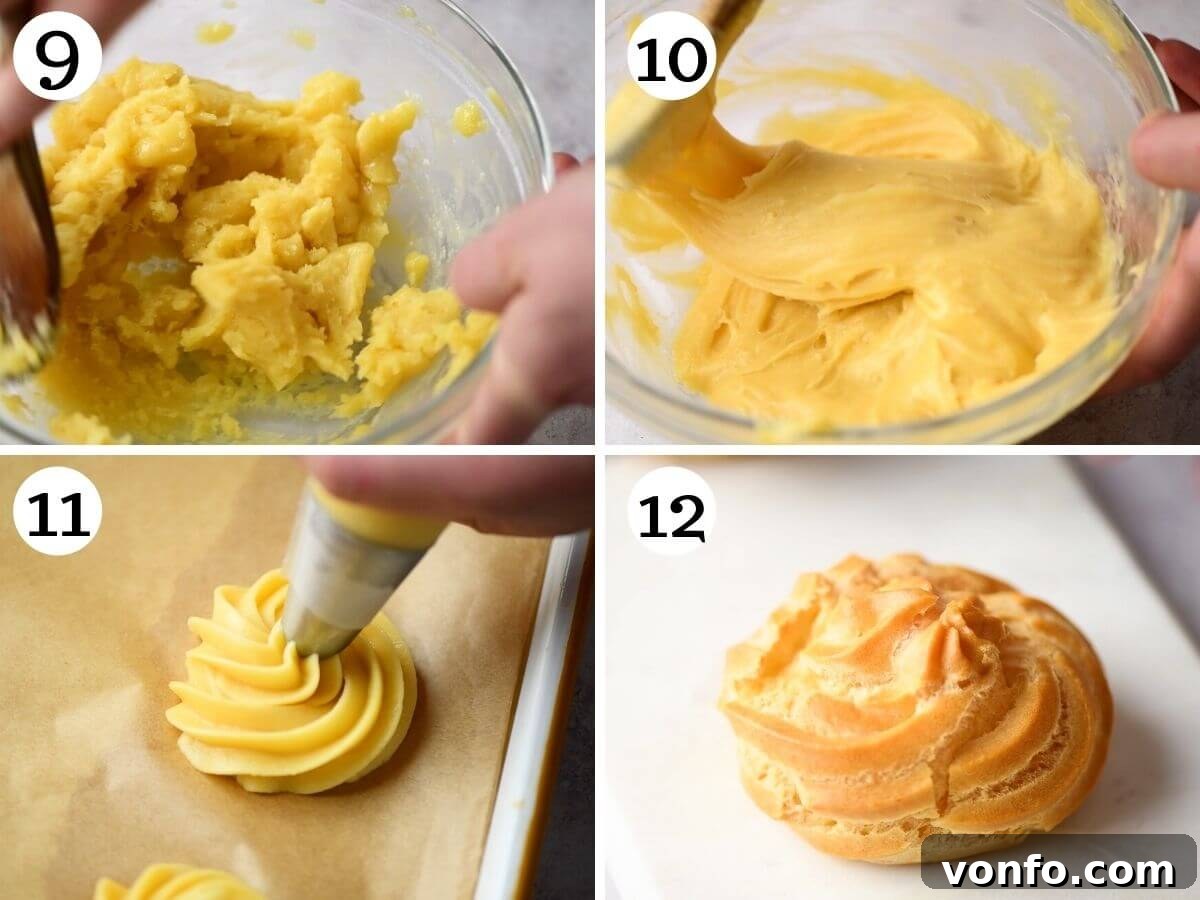
Step 4: Piping and Baking Your Zeppole. Transfer the prepared choux pastry dough into a piping bag fitted with your chosen star nozzle. On the parchment-lined baking tray, carefully pipe the Zeppole into ring shapes, approximately 3 inches (7-8 cm) in diameter. For that classic Zeppole look, pipe a base ring and then pipe another layer on top, slightly overlapping to create height and visual appeal, much like you would frost a cupcake with a swirl. Ensure you leave at least 2 inches between each Zeppola to allow for expansion during baking. Bake in your pre-heated oven at 190°C (375°F) for an initial 10 minutes. This high heat provides an excellent ‘steam burst’ that helps the pastry puff up. After 10 minutes, reduce the oven temperature to 170°C (340°F) and continue baking for another 30 minutes. Resist the urge to open the oven door during baking, especially in the first 20 minutes, as this can cause the pastries to collapse. The Zeppole should be golden brown and firm when lightly tapped. Once baked, remove them from the oven and transfer them to a wire rack to cool completely. Cooling is paramount before filling to prevent the pastry cream from melting. (Photos 11-12 illustrate the piping technique and baked result).
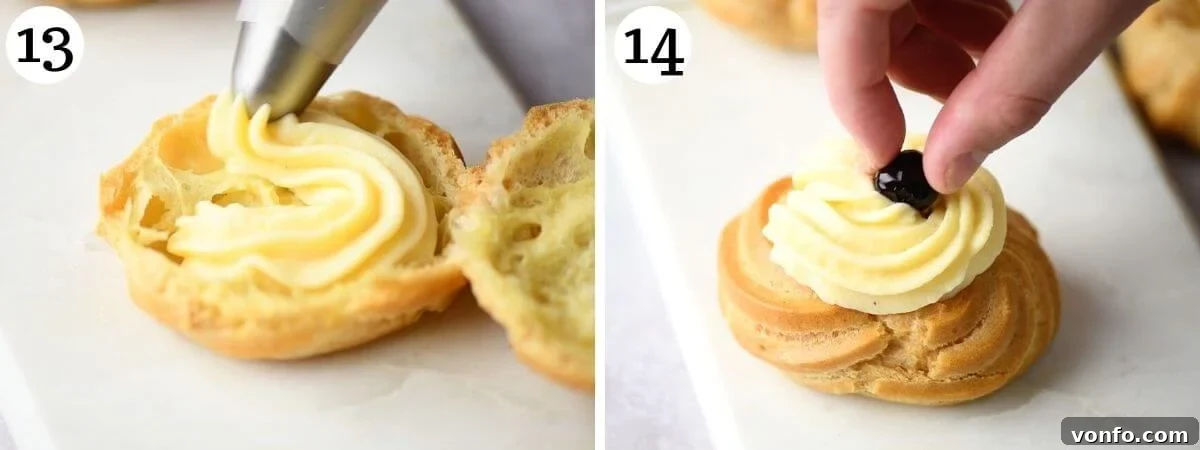
Step 5: Filling and Finishing Your Masterpiece. Once your baked choux pastry shells are completely cooled – this is crucial for a stable dessert – it’s time for the delicious filling. Carefully slice each Zeppola horizontally through the middle, creating two halves. Now, take your chilled Crema Pasticcera (which should be firm and smooth) and transfer it into another piping bag (a star nozzle is lovely here, but a plain round one works too). Pipe a generous amount of pastry cream onto the bottom half of each Zeppola. Gently place the top half back on, creating a sandwich. For an extra touch of elegance and flavor, pipe a small dollop or swirl of additional pastry cream onto the very top of each filled Zeppola. Finally, crown each one with a glossy amarena cherry, allowing a little of its rich syrup to cascade down. Dust with a light sprinkle of powdered sugar just before serving for that final, traditional flourish. (Photos 13 & 14 show the elegant filling and cherry topping).
Expert Tips for Perfect Zeppole & Troubleshooting Common Issues
- The Art of Cooking the Choux Pastry Dough: This is arguably the most vital step for successful choux. After adding the flour, it’s imperative to cook the dough vigorously while stirring for at least 5 minutes over low heat. The goal is to evaporate as much water as possible. If the dough retains too much moisture, it will be too runny once the eggs are added, making it impossible to pipe into stable shapes. A well-cooked dough will be firm, smooth, and easily pull away from the pan.
- Mastering the Piping Technique: Don’t be intimidated by piping! Think of it as if you are frosting a cupcake. Use a star nozzle for a traditional, decorative edge. Pipe a continuous ring, then pipe a second layer on top of the first, slightly overlapping it in the middle to build height and create that classic Zeppole shape. Practice on parchment paper first if you’re new to piping.
- Room Temperature Eggs: Always use room temperature eggs when incorporating them into the choux pastry. Cold eggs can shock the warm dough, making it harder for them to emulsify evenly, potentially leading to a curdled texture or a less cohesive dough.
- Cooling is Key: Ensure your choux pastry shells are completely cooled before attempting to fill them. Filling warm pastries will cause the Crema Pasticcera to melt and become watery, compromising the texture and presentation of your Zeppole.
- Preventing a Skin on Pastry Cream: After cooking, immediately transfer your pastry cream to a clean bowl and cover it with plastic wrap (cling film). Press the plastic wrap directly onto the surface of the cream to prevent a “skin” from forming as it cools. This keeps it beautifully smooth.
Troubleshooting Common Zeppole Problems
If your choux pastry dough is too runny and cannot be piped into defined shapes, the most common culprit is insufficient cooking time before the eggs were added. If enough water hasn’t evaporated during the initial cooking stage (Step 2), the mixture remains too wet. Unfortunately, you cannot simply add more flour to choux pastry to thicken it.
There are two main solutions:
Option 1 (Partial Salvage): If it’s only slightly too wet, you might try cooking another, smaller half batch of choux pastry dough (water, butter, salt, flour – *without eggs*), drying it out thoroughly, then gradually mixing small amounts of this drier dough into your runny mixture until it reaches the correct consistency.
Option 2 (Best Bet): For severely runny dough, it’s often best to start over. The precise balance of moisture and eggs is critical for choux pastry success.
To maximize freshness and quality, it’s best to store Zeppole components separately until just before serving.
Unfilled Zeppole Shells: The baked choux pastry shells, stored in an airtight container at room temperature, will remain crisp for up to 3-4 days. For longer storage, they can be frozen for up to 1 month and refreshed in a warm oven.
Filled Zeppole: Once filled with Crema Pasticcera, Zeppole should be refrigerated immediately. They will keep well in the fridge for up to 2 days. The pastry cream contains dairy and eggs, so proper refrigeration is essential. Keep them in an airtight container to prevent them from drying out or absorbing odors. Note that the pastry will soften slightly once filled, which is natural.
Crema Pasticcera: Leftover pastry cream can be stored in an airtight container in the refrigerator for up to 3 days. Ensure it’s covered directly with plastic wrap to prevent a skin from forming.
Variations and Serving Suggestions for Your Zeppole
While the classic Zeppole di San Giuseppe with vanilla pastry cream and amarena cherries is perfect, don’t hesitate to personalize your pastries! Here are some delightful variations to explore:
- Flavored Pastry Cream:
- Citrus Zest: Infuse your pastry cream with the zest of lemon, orange, or even lime for a brighter, more aromatic custard.
- Liqueur-infused: For an adult twist, add a splash of your favorite Italian liqueur such as limoncello for a zesty kick, Strega for a herbaceous note, or rum for warmth.
- Chocolate Lover’s Dream: Transform your Crema Pasticcera into a rich Chocolate Pastry Cream (Crema al Cioccolato) by melting in some high-quality dark chocolate during preparation.
- Coffee Infusion: Add a teaspoon of instant espresso powder or a few tablespoons of strong espresso to your milk for a coffee-flavored pastry cream.
- Alternative Toppings:
- Fresh Berries: In place of or alongside cherries, use fresh raspberries, strawberries, or blueberries for a burst of seasonal flavor.
- Candied Orange Peel: A traditional Italian touch that adds a delightful chewiness and citrusy aroma.
- Chopped Nuts: A sprinkle of toasted almonds, pistachios, or hazelnuts can add a lovely crunch and nutty flavor.
- Powdered Sugar: A simple dusting of powdered sugar is often all that’s needed for an elegant finish.
- Chocolate Shavings: Especially good if you’ve opted for chocolate pastry cream.
- Serving: Zeppole are best served fresh, ideally on the day they are filled. Pair them with a strong Italian coffee, espresso, or a glass of sweet wine for a truly authentic experience.
More Italian Desserts to Try
Discover More Sweet Italian Delights
Italian Desserts
Crema Fritta (Deep Fried Custard)
Italian Desserts
Italian Ricotta Doughnuts
Italian Desserts
Pasticciotti (Italian Cream Filled Pastries)
Italian Desserts
Cenci di Carnevale (Chiacchiere, Crostoli, Bugie) Italian Fried Pastries
We genuinely hope you enjoy making and sharing these authentic Zeppole di San Giuseppe. If you’ve tried this recipe or any other delightful creation from our blog, please don’t hesitate to rate the recipe and share your experiences in the comments section below – we absolutely love hearing from you! You can also FOLLOW US on FACEBOOK, INSTAGRAM, and PINTEREST for daily inspiration and culinary adventures. To stay updated with all our delicious new recipes delivered directly to your inbox, be sure to sign up for our NEWSLETTER today!
Step By Step Photos Above
Most of our recipes come with step by step photos, helpful tips and tricks to make it perfectly first time and even video!
Zeppole di San Giuseppe
By Emily
30
50
1
20
8
zeppole

Equipment
-
Piping bag and star nozzle
Ingredients
- 1 cup Italian 00 flour or all purpose flour, (140g)
- 3 oz unsalted butter, (85g)
- 1 teaspoon caster sugar
- 4 large eggs
- 1 pinch fine salt
- ¾ cup water, (170ml)
- 8 amarena cherries soaked in syrup, such as Fabbri
For the Crema Pasticcera (Pastry Cream)
- 5 large egg yolks
- ⅓ cup granulated sugar, (70g)
- ¼ cup cornstarch, (30g)
- 2.5 cups full-fat milk, (590ml)
- ½ teaspoon vanilla paste or 1 teaspoon vanilla extract
- Peel of 1 lemon or orange, optional
Instructions
To make the Crema Pasticcera (Pastry Cream)
-
In a saucepan, heat the full-fat milk, vanilla paste (or extract), and the optional citrus peel until it reaches a gentle boil. As soon as it boils, turn off the heat immediately to prevent overflowing and let it steep for 5-10 minutes if using citrus peel.
-
In a large, separate bowl, whisk together the egg yolks and sugar until they are combined and slightly pale. Then, gradually whisk in the cornstarch until the mixture is smooth and free of lumps.
-
Remove the citrus peel from the warm milk. Slowly pour about a quarter of the warm milk into the egg yolk mixture, whisking continuously. This step is called “tempering” and prevents the eggs from scrambling. Once tempered, pour the entire egg-milk mixture back into the saucepan with the remaining milk. Heat it on medium-low.
-
Stir the mixture continuously with a whisk or wooden spoon until it begins to thicken, which usually takes about 8-10 minutes. If any lumps appear, vigorously whisk them out. The pastry cream is ready when it’s thick enough to coat the back of a wooden spoon and leaves a clear trail when you run your finger across it.
-
Once thick, immediately transfer the pastry cream to a clean bowl. Cover the surface directly with plastic wrap (cling film), pressing it down so it touches the cream. This prevents a skin from forming as it cools.
-
Allow the pastry cream to cool at room temperature for a while, then transfer it to the refrigerator to chill completely for at least 2-3 hours, or ideally overnight. It needs to be very cold and firm before filling the Zeppole.
To make the Zeppole (Choux Pastry)
-
Pre-heat your oven to 190°C (375°F). Line a large baking tray with parchment paper or a silicone baking mat.
-
In a large, heavy-bottomed saucepan, combine the water and caster sugar. Heat over medium heat, stirring until the sugar has fully dissolved. Once dissolved, add the unsalted butter and a pinch of salt. Increase the heat and bring the mixture to a vigorous rolling boil.
-
Immediately reduce the heat to low. Add all of the sifted flour at once. Stir vigorously and continuously with a wooden spoon. Cook the dough, stirring constantly, for at least 5 minutes. This process dries out the dough; it will form a ball and pull away cleanly from the sides and bottom of the pan, leaving a thin film on the base.
-
Remove the saucepan from the heat. Transfer the hot dough to a large mixing bowl (or a stand mixer bowl). Let it cool for 5-10 minutes until it’s warm but not hot to the touch. Then, add the room-temperature large eggs one at a time (or a third at a time), mixing thoroughly after each addition until the egg is fully incorporated and absorbed into the dough. The finished dough should be smooth, glossy, sticky, and pipeable, holding its shape when lifted.
-
Transfer the choux pastry dough into a piping bag fitted with a large star nozzle. On the prepared baking tray, pipe the Zeppole in a continuous ring, approximately 3 inches in diameter. For a traditional look, pipe a second layer on top of the first, creating a decorative swirl. Ensure they are spaced at least 2 inches apart to allow for expansion.
-
Bake in the pre-heated oven at 190°C (375°F) for 10 minutes. Without opening the oven door, reduce the temperature to 170°C (340°F) and continue baking for another 30 minutes, or until the Zeppole are golden brown, puffed, and feel light and hollow. Remove from the oven and let them cool completely on a wire rack.
Fill the Zeppole
-
Once the Zeppole shells are completely cooled, take your chilled Crema Pasticcera and briefly whisk it to smooth it out if necessary. Transfer the custard to a piping bag (a star nozzle gives a lovely finish, but any will do). Carefully cut each Zeppola in half horizontally. Pipe a generous amount of pastry cream onto the bottom half. Place the top half back on. Then, pipe a small dollop or swirl of additional pastry cream on the very top of each Zeppola and crown each one with a glistening amarena cherry. Serve immediately or refrigerate until ready to enjoy.
Video
A video tutorial for making Zeppole di San Giuseppe is available. You can usually find it on the original recipe page or related platforms.
Notes
- Cooking the pastry: It’s crucial to cook the dough (while stirring) for at least 5 minutes to ensure enough water evaporates. If not, the dough will be too runny once the egg is added and challenging to pipe.
- Piping Technique: When piping the zeppole dough, visualize frosting a cupcake. Pipe it into a ring, then gently overlap a second layer in the middle to create volume and a classic appearance.
- Filling Options: Get creative with your pastry cream! Flavor it with citrus zest, a splash of liqueur like limoncello or Strega, or additional vanilla. For a decadent twist, consider using our Chocolate Pastry Cream (Crema al Cioccolato).
- Storage: Unfilled Zeppole shells can be stored in an airtight container at room temperature for up to 3-4 days. Once filled with pastry cream, Zeppole should be kept refrigerated and are best enjoyed within 2 days.
Helpful Info for All Recipes
- I always use extra virgin olive oil in all of my recipes unless stated otherwise.
- When I use canned or jarred tomatoes of any kind I always use Cirio or Mutti brands for the best results and flavor.
- All vegetables are medium sized unless stated otherwise.
- All recipes are tested and developed using a fan (convection) oven.
- Find out more about how nutrition is calculated.
- Check out our must-have Italian Pantry Staples.
- You can also find all our Essential Kitchen Tools for Italian Cooking.
Nutrition
Carbohydrates: 31g |
Protein: 9g |
Fat: 16g |
Saturated Fat: 9g |
Polyunsaturated Fat: 1g |
Monounsaturated Fat: 5g |
Trans Fat: 1g |
Cholesterol: 235mg |
Sodium: 140mg |
Potassium: 193mg |
Fiber: 1g |
Sugar: 14g |
Vitamin A: 671IU |
Vitamin C: 1mg |
Calcium: 125mg |
Iron: 2mg
Nutrition information is automatically calculated, so should only be used as an approximation.
Did you try this recipe?
Leave a comment below!
More Irresistible Italian Desserts to Explore
- Chocolate Budino (Budino al Cioccolato): A rich, creamy Italian chocolate pudding, decadent and satisfying.
- Torta Caprese (Flourless Italian Chocolate Cake): A naturally gluten-free and incredibly moist chocolate almond cake from the island of Capri.
- Cenci di Carnevale (Chiacchiere, Crostoli, Bugie) Italian Fried Pastries: Delicate, crisp fried pastries, often dusted with powdered sugar, a staple during Carnival season.
- Italian Ricotta Doughnuts: Light and fluffy doughnuts made with fresh ricotta, often served with honey or powdered sugar.
- Classic Tiramisu: The iconic no-bake dessert featuring coffee-soaked ladyfingers and mascarpone cream.