

Butternut Squash Risotto with Thyme: The Ultimate Autumn Comfort
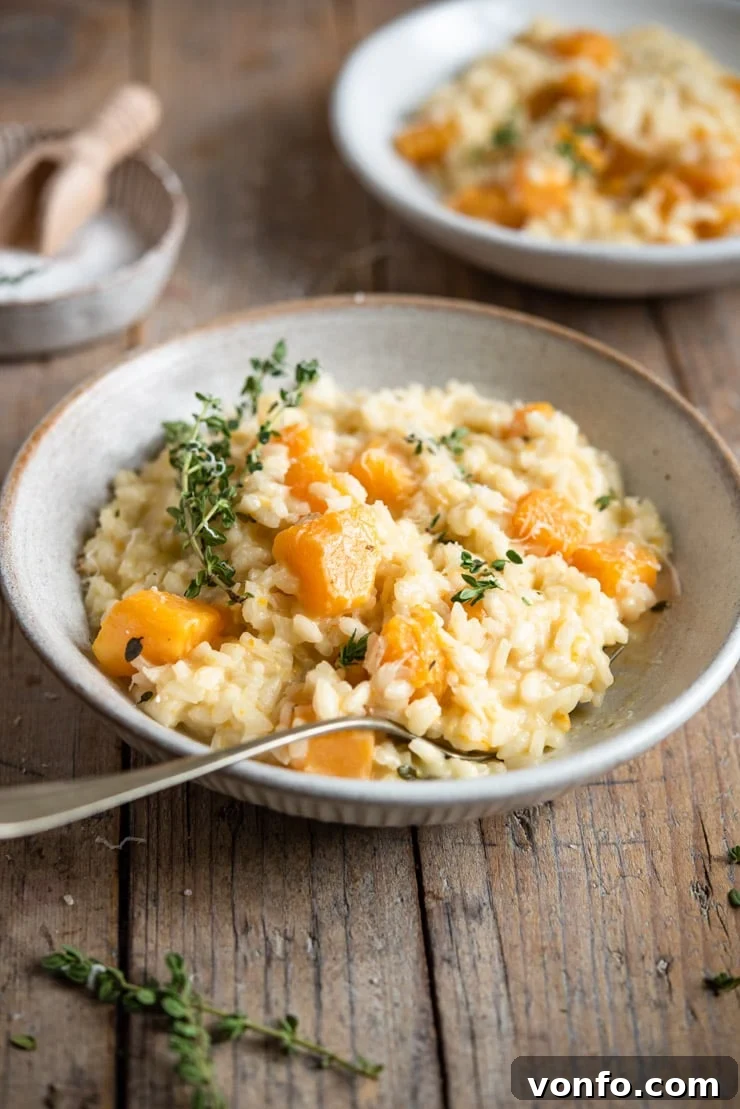
Experience the pure joy of a truly comforting and easy-to-make Butternut Squash Risotto. Infused with aromatic fresh thyme, savory garlic, and rich Parmesan cheese, this dish celebrates the best of seasonal produce, making it an ideal meal for crisp autumn and chilly winter evenings. It’s a wonderfully warming dish that brings a touch of Italian elegance to your table in just over half an hour!

There’s something uniquely satisfying about a rich, creamy bowl of risotto, especially when it’s crafted from scratch. While it requires a bit of attention and continuous stirring, the process itself is a rewarding culinary journey. Each gentle stir helps release the starch from the rice, creating that signature velvety texture that defines a perfect risotto. This isn’t a meal to simply “shove in the oven,” but rather an act of culinary love that pays off with every luxurious bite.
From a classic saffron risotto to a hearty mushroom risotto, each variation brings its own charm. Our Butternut Squash Risotto, however, stands out with its naturally sweet and earthy flavors, perfectly complemented by the fragrant herbs. It’s an excellent choice for a comforting weeknight dinner or a special cozy weekend treat. And despite its gourmet appeal, this dish is surprisingly quick to prepare, reaching your table in just 30 to 40 minutes.
The beauty of this butternut squash risotto lies in its simplicity and the use of readily available, wholesome ingredients. You’ll find everything you need at your local supermarket, making this a fuss-free cooking experience. The key to authentic risotto is using the right kind of rice: Arborio or Carnaroli rice. These short, plump grains are specifically designed to absorb liquid slowly and release their starches, contributing to the dish’s characteristic creaminess. While Arborio is widely available, Carnaroli is often considered the “king” of risotto rice for its slightly firmer texture and even higher starch content. If you can find it, it’s a fantastic choice!
Why You’ll Love This Butternut Squash Risotto
- Unbelievably Creamy: Achieved through the slow addition of stock and continuous stirring, resulting in a luscious, velvety texture.
- Rich Seasonal Flavors: The natural sweetness of butternut squash, combined with fragrant thyme and savory Parmesan, creates a harmonious and deeply satisfying taste.
- Heartwarming Comfort: Perfect for cooler months, this risotto offers a cozy warmth that’s truly soul-satisfying.
- Easier Than You Think: Don’t be intimidated! While it requires presence, the steps are straightforward and the cooking time is short.
- Nutritious & Wholesome: Packed with vegetables and good-for-you ingredients, it’s a meal you can feel good about.
- Versatile: Easy to adapt with different herbs, vegetables, or even a protein boost.
Essential Ingredients for Butternut Squash Risotto
Crafting the perfect risotto starts with quality ingredients. Here’s a closer look at what you’ll need and any helpful notes or substitutions:
- Arborio or Carnaroli Rice: As mentioned, these are non-negotiable for true risotto. Their short, fat grains are ideal for starch release, making the risotto wonderfully creamy. Arborio is more common in most supermarkets, but Carnaroli offers a slightly superior texture. Avoid long-grain rice as it won’t yield the desired creaminess.
- Butternut Squash: The star of our dish! Choose a firm, unblemished squash. You can also use other winter squash varieties like pumpkin, acorn squash, or even delicata squash (no need to peel delicata!). Preparing the squash can be the most time-consuming part, but many supermarkets offer pre-cut squash to save time.
- Chicken Stock: The foundation of flavor for your risotto. Always use a good quality stock, and ideally, one that is low sodium. This allows you to control the seasoning precisely, preventing an overly salty dish. Vegetable stock can be used for a vegetarian version. Homemade stock is always best for depth of flavor if you have it!
- Parmigiano Reggiano: This hard, aged Italian cheese adds a salty, umami depth that is crucial to risotto. Always opt for freshly grated Parmigiano Reggiano. Pre-grated cheeses often contain anti-caking agents that affect both flavor and melt. Pecorino Romano is a viable alternative if you prefer a sharper, saltier taste.
- Mascarpone: This rich, Italian cream cheese is my secret weapon for an extra luxurious, velvety finish. It adds incredible creaminess and a subtle tang. While optional, I highly recommend it for an indulgent experience. If omitting, the risotto will still be creamy from the starch and Parmesan, just slightly less rich.
- Fresh Thyme: Its earthy, slightly peppery notes pair beautifully with the sweetness of butternut squash. Fresh herbs are essential here; dried thyme simply won’t offer the same vibrant aroma or flavor. Fresh sage or even a touch of rosemary would also be excellent complementary options.
- Garlic & Shallot: These aromatics form the essential flavor base of the risotto. They should be finely chopped and sautéed until translucent and fragrant. Fresh is key – avoid dried powders for this recipe. If shallots are unavailable, a small yellow onion, finely diced, makes a perfect substitute.
- Butter: Used for sautéing and for the final “mantecatura” (the process of stirring in butter and cheese at the end). It adds richness, a glossy finish, and a depth of flavor that olive oil alone cannot achieve. Both salted and unsalted butter work, just adjust your added salt accordingly.
- Olive Oil: A good quality extra virgin olive oil is used to start the sautéing process.
- Salt & Pepper: Essential for seasoning. Taste as you go and adjust accordingly. Remember, the stock and Parmesan will contribute saltiness.
- Dry White Wine (Optional but Recommended): While not listed in the original ingredients, a splash of dry white wine (like Pinot Grigio or Sauvignon Blanc) added after the aromatics and before the rice is a traditional risotto step. It adds acidity and complexity, deglazing the pan and enhancing the overall flavor profile.
How To Make Butternut Squash Risotto – A Detailed Guide
Making risotto is a process that builds flavor and texture step by step. Follow these instructions for a perfectly creamy and delicious butternut squash risotto:
- Prepare Your Ingredients: Start by finely chopping the shallot and garlic. Peel the butternut squash, remove the seeds, and cut the flesh into small, approximately 1cm (1/2 inch) sized cubes. Aim for uniform pieces so they cook evenly. Warm your chicken stock in a separate saucepan over low heat; keeping it hot is crucial for the risotto-making process.
- Sauté Aromatics & Squash: Heat a drizzle of olive oil in a large, heavy-bottomed pan or Dutch oven over medium heat. Once hot, add the finely chopped shallot and sauté gently until it becomes translucent and softened, about 3-5 minutes.
- Cook the Squash: Add the cubed butternut squash to the pan along with the butter and a few sprigs of fresh thyme. Sauté on medium heat, stirring frequently, until the squash begins to soften and caramelize slightly, typically around 8-10 minutes. The squash should be tender but still hold its shape.
- Add Garlic: Stir in the minced garlic and continue to sauté for another minute until it becomes fragrant. Be careful not to burn the garlic. If using, now would be the time to add a splash of dry white wine and let it bubble until almost completely evaporated.
- Toast the Rice: Add the Arborio or Carnaroli rice to the pan. Stir continuously for 1-2 minutes, toasting the rice grains until their edges become translucent but the center remains opaque. This step, called “tostatura,” helps the rice retain its shape and absorb liquid more evenly.
- Begin Adding Stock: Add the first ladleful of warm chicken stock to the rice, just enough to barely cover the grains. Stir constantly until the rice has absorbed nearly all the liquid. The mixture should be thick and creamy, not soupy.
- Continue Adding Stock: Continue adding the warm stock, one ladleful at a time, allowing each addition to be almost fully absorbed before adding the next. Stir frequently and gently throughout this process. This slow, continuous stirring and gradual addition of liquid is what develops the risotto’s signature creaminess.
- Cook Until Al Dente: Keep adding stock and stirring for approximately 18-25 minutes, or until the rice is cooked al dente – meaning it’s tender but still has a slight, pleasant bite in the center. The risotto should be creamy and flowing, not dry or overly firm. You may not need all the stock, or you might need a little more; it depends on your rice and heat level.
- Mantecatura (The Finishing Touch): Once the rice is al dente, remove the pan from the heat. Stir in the mascarpone cheese (if using) and the freshly grated Parmesan cheese. Season with salt and freshly ground black pepper to taste. Stir vigorously until all ingredients are well combined and the risotto is beautifully creamy and glossy. This final step is called “mantecatura” and is essential for maximum creaminess.
- Serve Immediately: Risotto is best served piping hot and immediately after it’s finished cooking. Garnish with a little extra Parmesan and a fresh sprig of thyme. Enjoy!
Expert Risotto Making Tips for Success!
- Don’t Rush It: Many people are intimidated by risotto, but it’s truly simple. The most important tip is to cook it slowly, adding stock gradually as needed. This allows the rice to properly release its starches and absorb the liquid, building flavor and creaminess. Don’t be tempted to turn up the heat to speed things up; it will result in unevenly cooked rice and a less flavorful dish.
- Keep the Stock Warm: Always have your stock simmering gently in a separate pot. Adding cold stock will drop the temperature of the risotto, interrupting the cooking process and affecting the final texture.
- Don’t Cover It: Unlike regular rice, risotto needs to breathe and release steam. Keep the lid off while it’s cooking.
- Chop Squash Evenly: If your squash pieces are larger than 1cm (1/2 inch), they will take longer to cook. You might need to sauté them for a few extra minutes at the beginning to ensure they’re tender by the time the rice is done.
- Taste Before Serving: Always taste your risotto at the end of cooking to adjust the seasoning. Remember that the Parmesan cheese will add saltiness, so add additional salt cautiously.
- Use High-Quality Stock: The stock is a primary flavor component, so its quality truly matters. Store-bought stocks can vary greatly in sodium content, so opt for low-sodium varieties if possible. Alternatively, make your own for the best flavor.
- Homemade Stock Benefits: A wonderful way to reduce food waste and enhance flavor is to make your own stock. Throughout the week, collect vegetable peelings, offcuts, and any chicken bones in freezer bags. When you have enough, combine them in a large pot with water and herbs, then simmer for a few hours. Strain and store in freezer bags for future use.
- Don’t Wash the Rice: Unlike other rice dishes, you do not wash risotto rice. The starch on the grains is essential for achieving that signature creamy texture.
- Mantecare: The Final Stir: The “mantecatura” (the final stirring in of butter and cheese off the heat) is critical. It emulsifies the fats and starches, creating a glossy, incredibly creamy finish. Don’t skip it!
Recipe FAQs
While risotto is truly best served immediately, you can certainly prepare it in advance. Keep in mind that the rice will continue to absorb moisture as it cools and sits, so you will likely need to add more warm stock or water when reheating to loosen it and restore its creamy consistency. Reheat gently on the stovetop.
Freezing risotto is generally not recommended. The texture of the rice tends to change significantly when frozen and thawed, losing its delicious creaminess and becoming somewhat mushy. It’s best to enjoy it fresh or as leftovers within a couple of days.
Leftover risotto will keep well in an airtight container in the fridge for about 2 days. Beyond reheating it (with added liquid as mentioned above), one of the most popular and delicious ways to enjoy leftover risotto is to transform it into arancini! Simply roll the cooled risotto into balls, dip them in flour, then beaten egg, then breadcrumbs, and deep-fry until golden and crispy. They make a fantastic appetizer or snack.
Absolutely! To make it vegetarian, simply use vegetable stock instead of chicken stock. For a vegan version, use vegetable stock, replace the butter with olive oil, omit the mascarpone, and substitute the Parmesan with a good quality vegan Parmesan cheese or nutritional yeast for a cheesy flavor.
This risotto is quite hearty on its own, but it pairs beautifully with a simple side salad dressed with a light vinaigrette to cut through the richness. Crusty bread for soaking up any extra creamy sauce is also a wonderful addition.
More Delicious Seasonal Recipes to Try
If you’ve fallen in love with the comforting flavors of this Butternut Squash Risotto, here are some other delightful recipes you might enjoy from our kitchen:
Fresh Pasta
Butternut Squash Ravioli with Sage and Brown Butter Sauce
Risotto
Creamy Mushroom Risotto
Mains
Creamy Tomato Risotto
Italian Desserts
Torta Barozzi (Rich, Flourless Chocolate Cake)
We truly hope you enjoy making and savoring this delightful Butternut Squash Risotto. If you try this recipe or any other on our blog, please share your experience in the comments below – we love hearing from you! You can also connect with us on Facebook, Instagram, and Pinterest for more delicious food inspiration and behind-the-scenes glimpses.
Step By Step Photos Above
Most of our recipes come with step by step photos, helpful tips and tricks to make it perfectly first time and even video!
Butternut Squash Risotto With Thyme
By Emily
15
35
50
6 servings

Ingredients
- 4 cups (500g) Butternut Squash, peeled, deseeded and cubed
- 1 Clove Garlic, minced
- 2 Shallots, finely chopped (or 1 small yellow onion)
- 2 tbsp (50g) Butter
- 1 tbsp Olive Oil
- 12 oz (350g) Arborio Rice (or Carnaroli)
- 6 cups (1.5 litres) Chicken Stock (or vegetable stock), warm
- 3 sprigs Fresh Thyme
- 1 tbsp Mascarpone (optional, for extra creaminess)
- 1 cup (40g) Parmesan, freshly grated (plus more for serving)
- Salt and Pepper, to season
- 1/4 cup Dry White Wine (optional)
Instructions
-
Finely chop the shallot and garlic. Peel, deseed, and cut the butternut squash into approximately 1cm (1/2 inch) sized pieces. Warm your chicken stock in a separate pot and keep it at a gentle simmer.
-
In a large, high-sided pan or Dutch oven, heat the olive oil over medium heat. Add the chopped shallot and sauté until translucent and softened, about 3-5 minutes. Add the cubed butternut squash, 1 tablespoon of butter, and fresh thyme sprigs. Continue to sauté, stirring often, for 8-10 minutes until the squash is tender and slightly caramelized.
-
Stir in the minced garlic and sauté for another minute until fragrant. If using, pour in the dry white wine and let it simmer until almost completely evaporated, scraping up any browned bits from the bottom of the pan.
-
Add the Arborio rice to the pan and stir constantly for 1-2 minutes until the grains are lightly toasted and their edges become translucent. Begin adding the warm stock, one ladleful at a time, ensuring each addition is almost fully absorbed by the rice before adding the next. Stir frequently and gently. Continue this process for 18-25 minutes, or until the rice is cooked al dente – tender with a slight bite in the center – and the risotto is creamy.
-
Remove the pan from the heat. Stir in the remaining 1 tablespoon of butter, mascarpone (if using), and freshly grated Parmesan cheese. Season with salt and freshly ground black pepper to taste. Stir vigorously until all ingredients are well combined and the risotto is wonderfully creamy and glossy. Serve immediately, garnished with additional Parmesan and a fresh thyme sprig.
Notes
- Don’t Rush It: Risotto requires patience and constant, gentle stirring. This process is essential for extracting the starch from the rice, which creates its characteristic creamy texture. Don’t be tempted to crank up the heat or add all the stock at once.
- Use The Highest Quality Stock: The flavor of your stock significantly impacts the final taste of your risotto. Use a high-quality store-bought chicken or vegetable stock, preferably low-sodium, or homemade stock for the best results. Avoid highly salted stock cubes that can make your risotto overly salty.
- Use The Best Ingredients Possible: This principle applies to all cooking, but especially to recipes with fewer ingredients where each component shines. Freshly grated Parmesan, fragrant fresh herbs, and good quality rice make a noticeable difference in the final flavor and texture.
- Adjust Consistency: Risotto should be creamy and slightly flowing, not stiff or soupy. If it’s too thick, add a splash more warm stock. If it’s too thin, let it simmer gently for another minute or two, stirring, until it reaches your desired consistency.
Helpful Info for All Recipes
- I always use extra virgin olive oil in all of my recipes unless stated otherwise.
- When I use canned or jarred tomatoes of any kind, I always use Cirio or Mutti brands for the best results and flavor.
- All vegetables are medium sized unless stated otherwise.
- All recipes are tested and developed using a fan (convection) oven.
- Find out more about how nutrition is calculated.
- Check out our must-have Italian Pantry Staples.
- You can also find all our Essential Kitchen Tools for Italian Cooking.
Nutrition
Nutrition information is automatically calculated, so should only be used as an approximation.
Did you try this recipe?
Leave a comment below!