
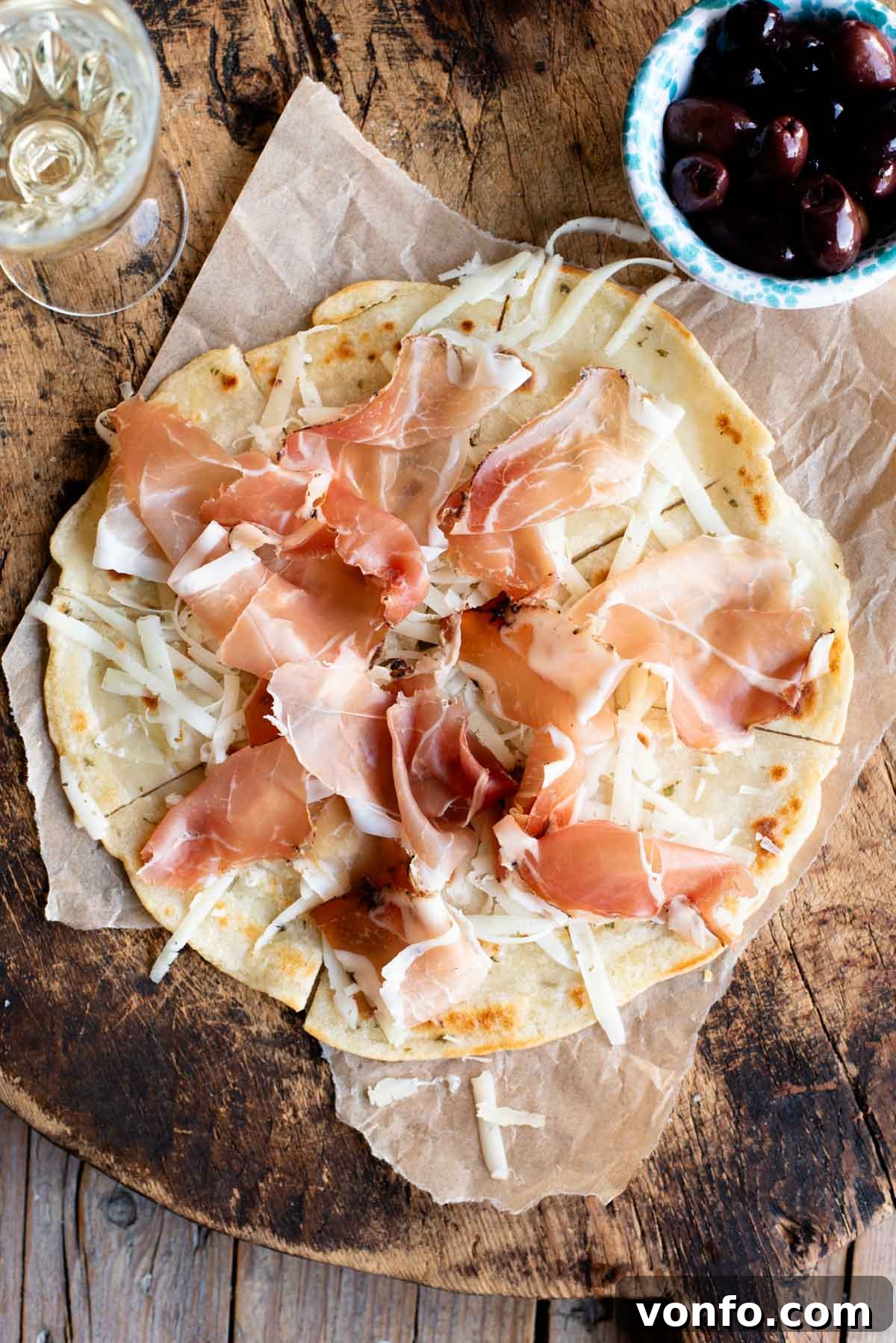
Brustengo di Gubbio is a culinary gem from the heart of Umbria, Italy. This exquisite flatbread, known for its utterly simple ingredients yet complex and delightful flavor, offers a unique textural experience: a beautifully soft interior encased in a wonderfully crispy exterior. It’s an ideal companion for a rich array of cured meats and fine Italian cheeses, elevating any casual gathering into a true Italian feast.
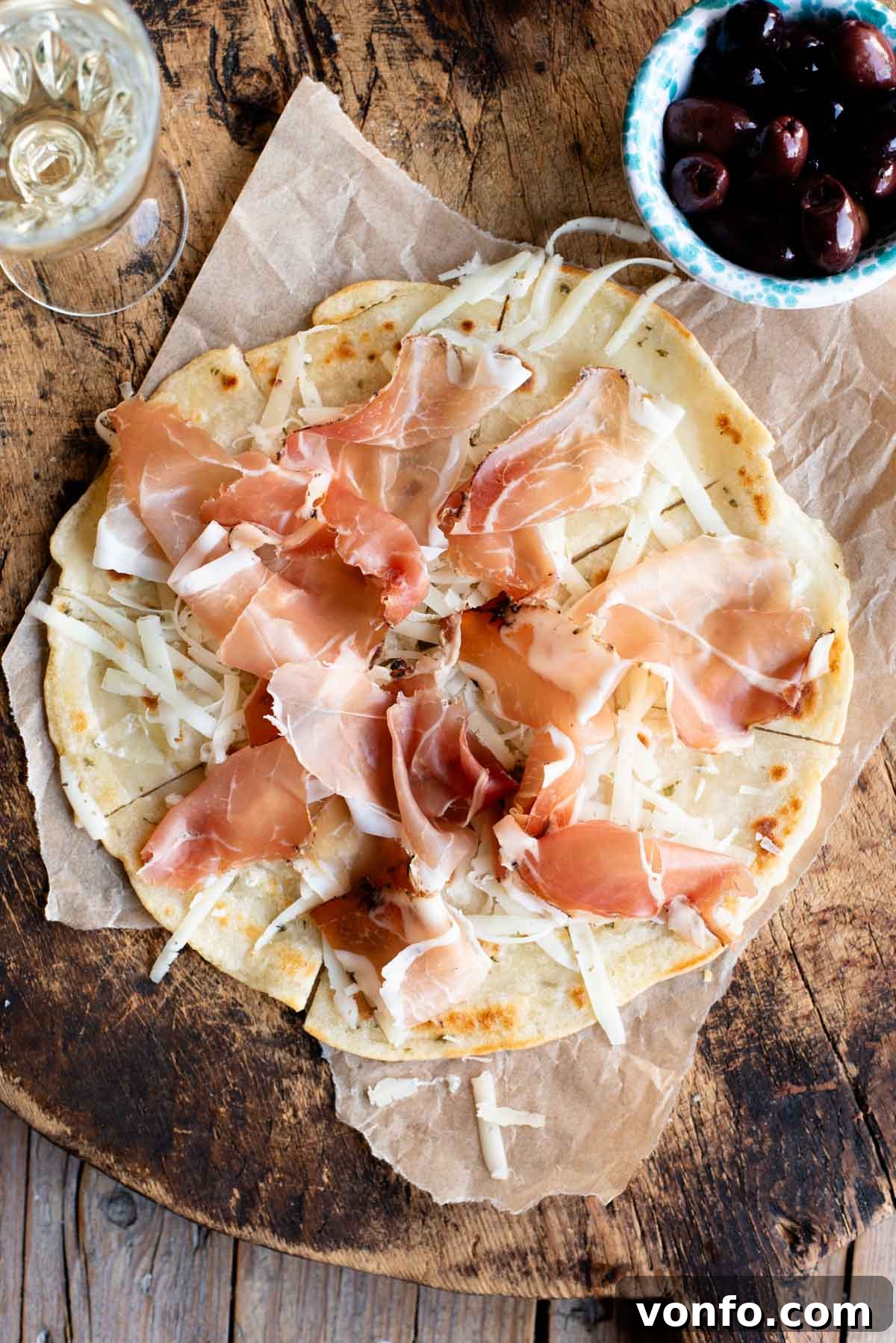
Discover Brustengo di Gubbio: The Authentic Umbrian Flatbread for Your Antipasti
There’s a special joy in assembling an exquisite antipasti board, laden with an assortment of savory meats, artisanal cheeses, flavorful dips, and an array of delightful breads. It’s a culinary ritual that brings people together, perfectly complemented by a few glasses of good wine. In my continuous quest to explore new and exciting Italian culinary traditions, Brustengo di Gubbio has recently captured my heart, proving itself to be an indispensable addition to any such spread.
Hailing from Gubbio, a picturesque medieval town nestled in the verdant region of Umbria, Brustengo offers a fascinating cross between a delicate crepe and a robust flatbread. Its distinctive texture – a tender, yielding center juxtaposed with a tantalizingly crisp crust – sets it apart. While its preparation is remarkably straightforward, requiring only the most basic pantry staples, the resulting flavor is anything but ordinary. It’s a testament to the Italian philosophy of simple ingredients yielding extraordinary results.
Traditionally, Brustengo is enjoyed sliced like a pizza, generously adorned with freshly grated Pecorino cheese and served alongside the region’s renowned Prosciutto di Norcina. However, its versatility knows no bounds. This delicious flatbread harmonizes beautifully with virtually any Italian cheese and cured meat, making it the quintessential snack or appetizer. Whether you’re hosting friends, enjoying a quiet evening, or simply seeking an authentic taste of Umbria, Brustengo is surprisingly easy to recreate in your own kitchen.
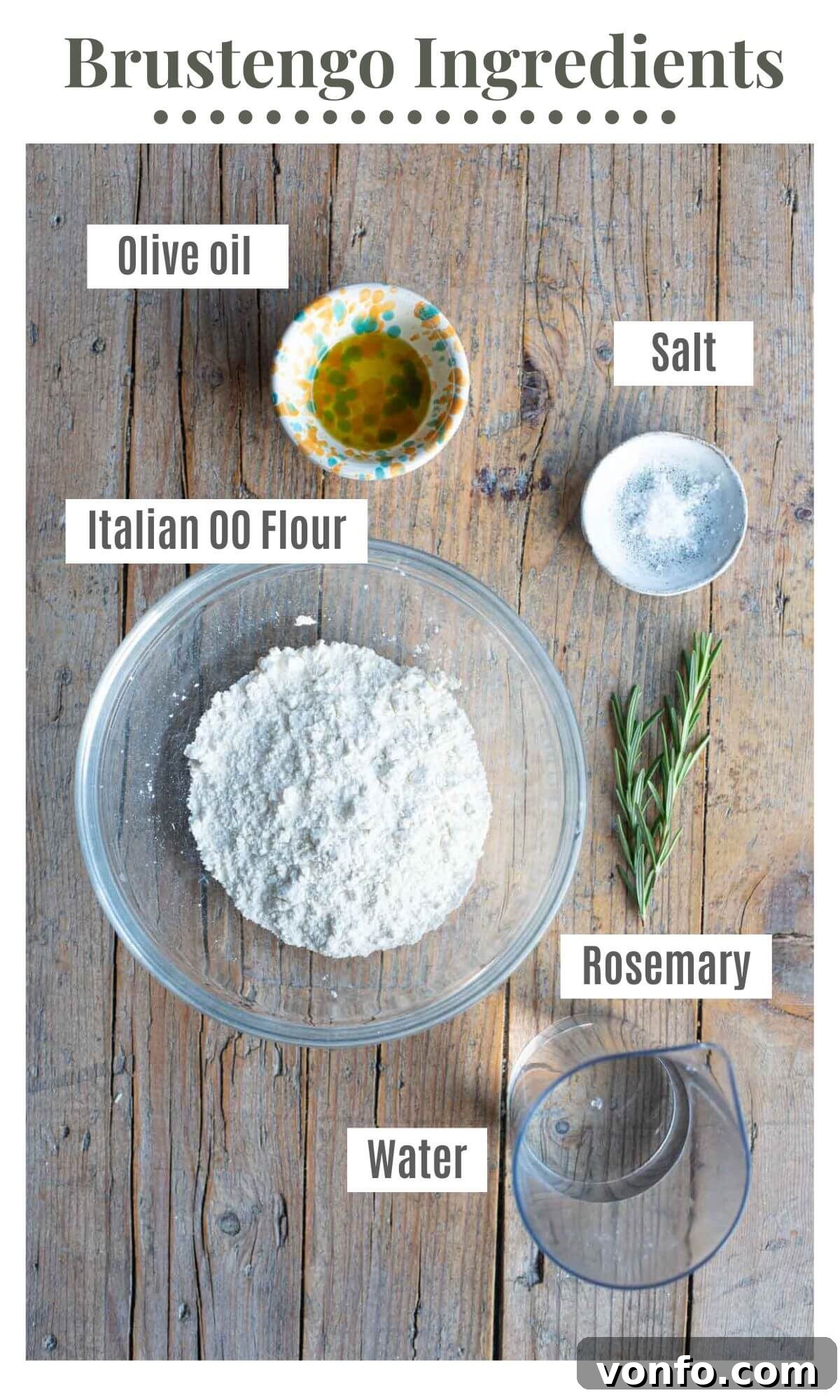
Essential Ingredients for Authentic Brustengo
Ingredient Insights and Smart Substitutions
- Flour: The authentic choice for Brustengo is Italian 00 flour, prized for its superfine texture which contributes to the flatbread’s delicate yet crisp structure. However, don’t let its absence deter you; high-quality all-purpose flour can be used as a readily available and effective substitute, still delivering a delicious result. When measuring flour, especially for baking, using a kitchen scale for metric measurements (grams) ensures the most accurate and consistent outcomes, though cup measurements are also provided for convenience.
- Water: Simple tap water, whether cold or at room temperature, is perfectly suitable. The temperature mostly impacts how quickly the batter comes together and rests, but cold water often helps prevent over-mixing of the gluten in the flour.
- Rosemary: Freshly chopped rosemary is a traditional and highly aromatic addition that infuses the flatbread with a beautiful, earthy fragrance characteristic of Umbrian cuisine. Its piney notes complement the savory toppings wonderfully. While we absolutely adore the inclusion of rosemary, Brustengo can also be prepared without it for a more neutral base, or you could experiment with other fresh herbs like finely chopped thyme for a different aromatic profile.
- Olive Oil: Essential for frying, olive oil not only prevents sticking but also contributes to the golden, crispy texture and rich flavor of the Brustengo. Extra virgin olive oil is always recommended for its superior taste and quality.
- Salt: A pinch of salt is crucial for balancing the flavors in the dough, enhancing both the subtle sweetness of the flour and the aromatic depth of the rosemary.
Crafting Your Brustengo: A Step-by-Step Guide
Making Brustengo is a remarkably simple process, perfect for beginner cooks and seasoned chefs alike. Follow these steps for a perfect batch every time:
- Combine the Dry Ingredients: In a spacious mixing bowl, thoroughly combine the flour, finely chopped fresh rosemary, and a pinch of salt. Use a whisk to ensure all components are evenly distributed. This initial step is crucial for an even flavor profile throughout your flatbreads. (Refer to **photos 1 and 2** for visual guidance on mixing dry ingredients).
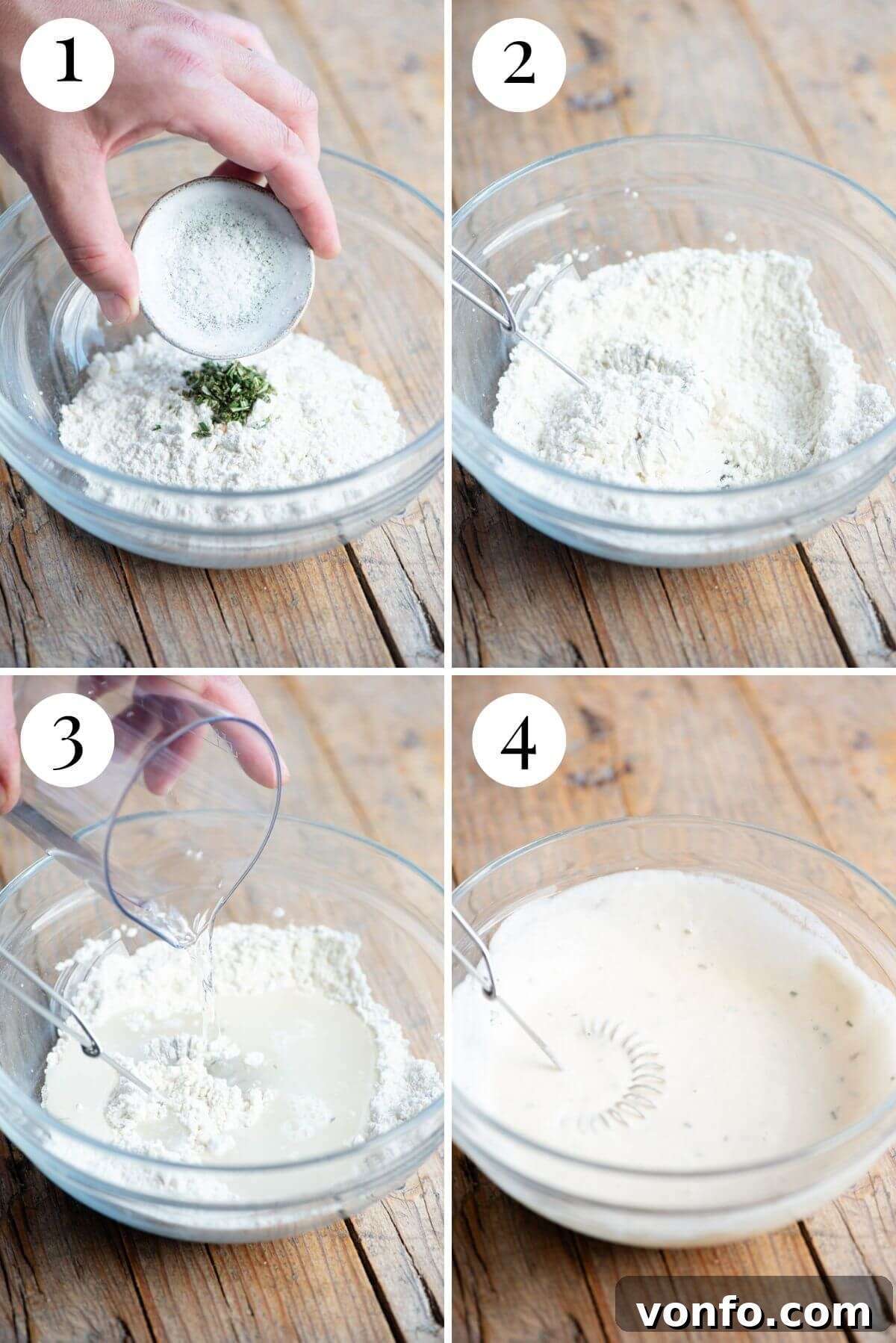
- Incorporate the Liquid: Gradually pour the measured water into the bowl containing the dry mixture. Continuously whisk the ingredients together until you achieve a completely smooth, lump-free batter. The consistency should be thin enough to spread easily but thick enough to hold its shape. (See **photos 3 and 4** for the ideal batter consistency).
- Heat the Pan and Pour the Batter: Place a medium-sized frying pan over a medium heat. Add approximately ½ tablespoon of olive oil to the pan, allowing it to heat until shimmering, but not smoking. Once hot, pour about ⅓ of the prepared batter (roughly a large ladleful) into the center of the pan. Working quickly, use the back of the ladle or the pan itself to spread the batter outwards in a gentle spiraling motion, much like you would a crepe. Aim for an even, thin layer. (Observe **photo 5** for the technique of pouring and spreading the batter).
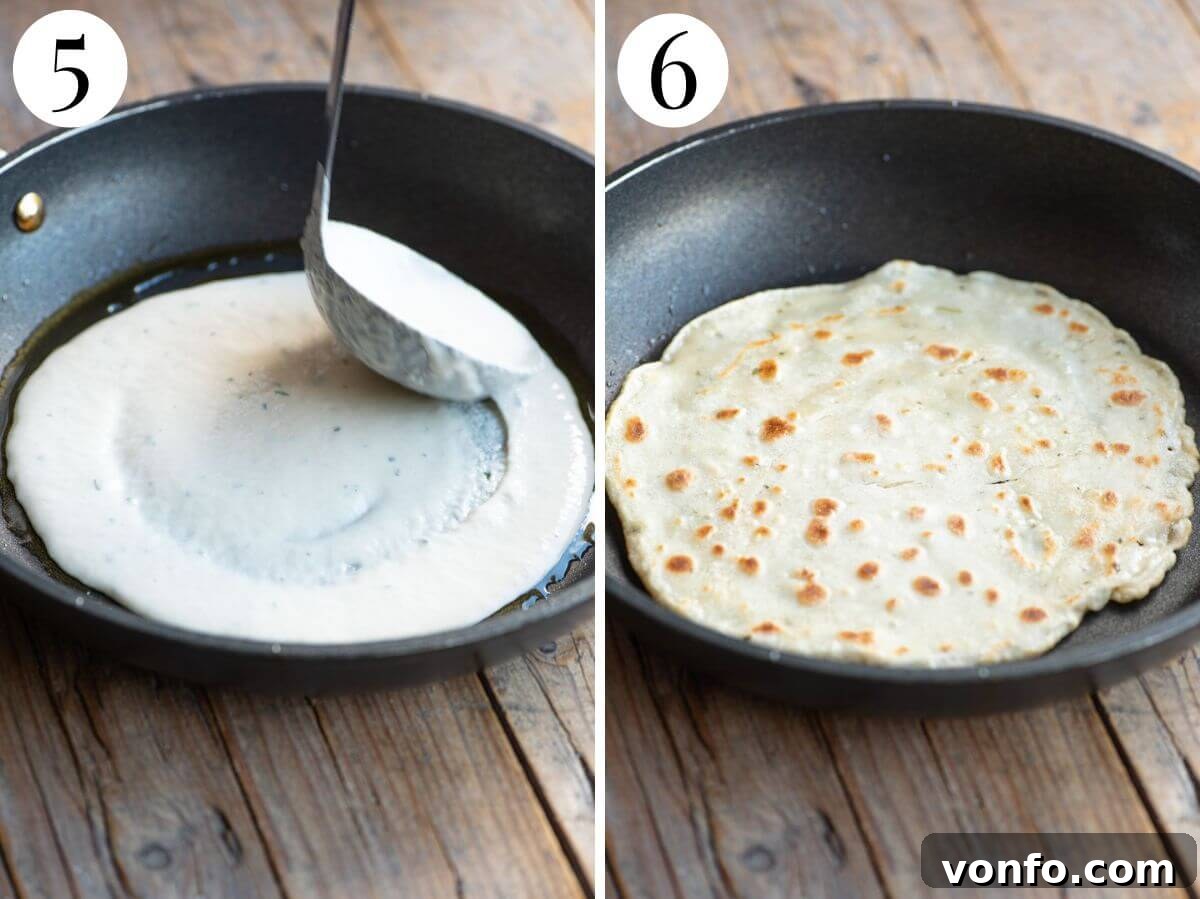
- Cook to Golden Perfection: Allow the flatbread to cook undisturbed for 2-3 minutes on the first side, or until the edges appear crispy and golden brown, and the surface begins to set. Carefully flip the flatbread and cook for another 2-3 minutes on the second side until it’s also golden and cooked through. The key is a medium heat to ensure even cooking without burning.
- Drain and Repeat: Once cooked, transfer the Brustengo to a plate lined with kitchen paper to absorb any excess oil. Repeat the frying process with the remaining batter, adding another ½ tablespoon of olive oil to the pan before cooking each subsequent flatbread. This recipe typically yields three delicious flatbreads.
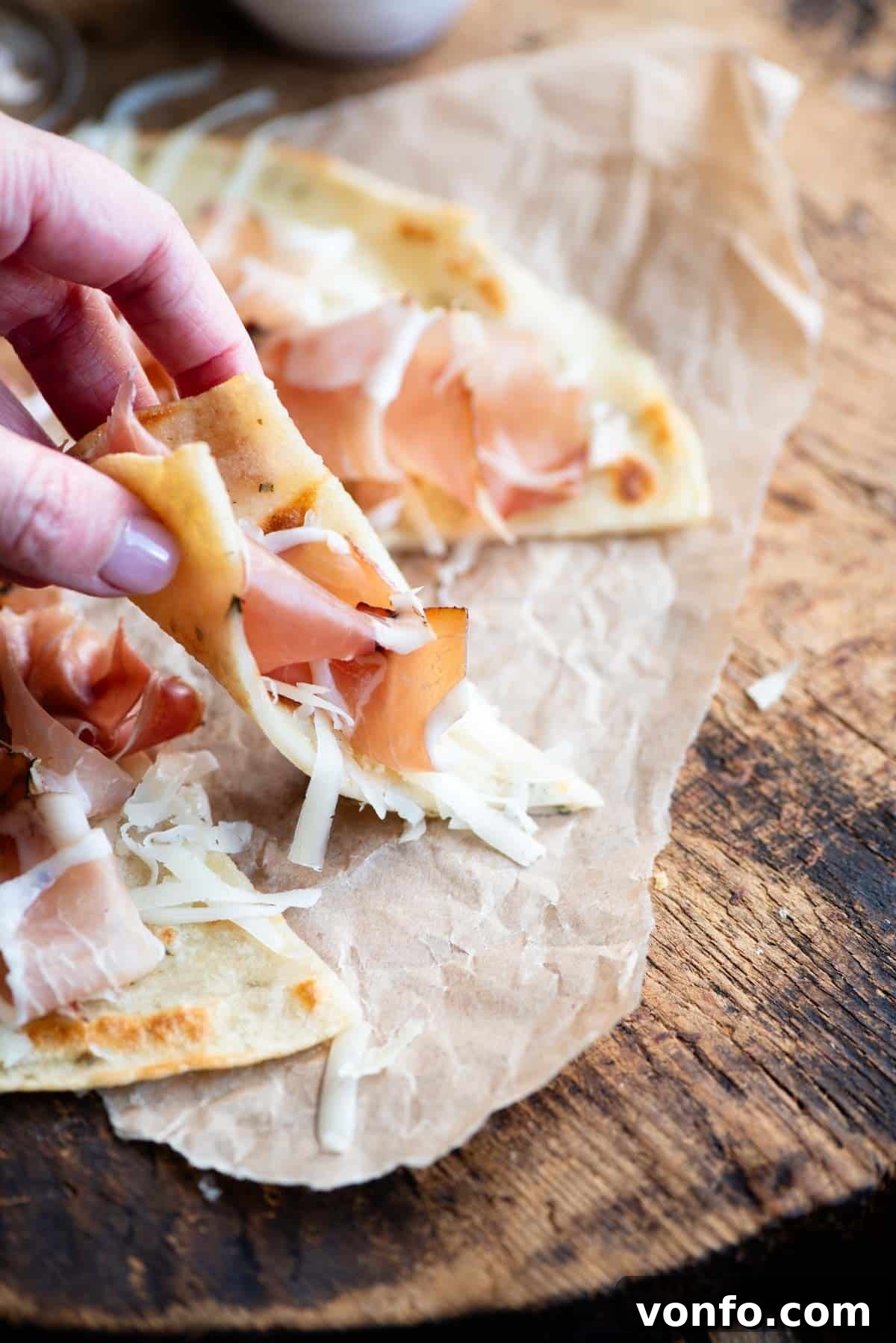
- Serve Warm and Enjoy: Cut the warm Brustengo into wedges, similar to how you would slice a pizza. Serve immediately, topped generously with freshly grated Pecorino cheese and your choice of high-quality cured meats, such as Prosciutto di Norcina or any preferred salami. The warmth of the flatbread will gently soften the cheese, creating an irresistible aroma and taste.
Elevate Your Brustengo: Expert Tips for Success
- Choosing the Right Cheese: While traditionally a soft or aged Pecorino cheese is grated over Brustengo or served in thin slices, feel free to explore. Other fantastic Italian cheeses that pair wonderfully include creamy Gorgonzola, delicate Taleggio, nutty Fontina, firm Toma, and mild Asiago. The key is to select a cheese that complements the savory profile of the flatbread and cured meats.
- Selecting Cured Meats: Prosciutto alla Norcina is the traditional choice in Umbria, offering a distinctive local flavor. However, any premium quality prosciutto, such as Prosciutto di Parma or San Daniele, or even a robust Italian salami like Finocchiona or Salame Milano, will be a superb accompaniment. Don’t hesitate to choose your favorites.
- Mastering the Frying Technique: The ideal cooking temperature is crucial. Always cook your Brustengo over a medium heat. If the heat is too high, the flatbread will burn on the outside before it’s fully cooked and crispy within. A medium heat allows for gradual caramelization and perfect texture development.
- Experimenting with Herbs: While Brustengo is delicious plain, we highly recommend incorporating fresh, finely chopped rosemary into the batter for an aromatic boost. Fresh thyme is another excellent herb that would lend a delightful, subtle flavor, adding another layer of complexity to this simple dish.
- Best Served Warm: Brustengo is at its absolute best when served fresh off the pan and still warm. The warmth enhances its crispy exterior and soft interior, and allows the aromas of the herbs and toppings to truly shine.
- Storage: While best enjoyed immediately, leftover Brustengo can be stored in an airtight container at room temperature for up to one day. Reheat gently in a dry pan to regain some crispness.
Frequently Asked Questions (FAQ)
For the ultimate experience, Brustengo is best served immediately after cooking, while it’s still warm and at its crispiest. While you can prepare the batter a few hours in advance and keep it refrigerated, we highly recommend frying the flatbreads just before serving to fully appreciate their unique texture and flavor. Reheating previously cooked Brustengo might not yield the same delicate crispness.
More Delicious Italian Light Bites to Explore
Breakfast
Pane Frattau (Sardinian Bread with Tomato and Poached Egg)
Antipasti
Italian Tuna Stuffed Cherry Peppers
Antipasti
Rustici Leccesi (Tomato and Mozzarella Pastries)
Antipasti
Cheesy Puff Pastry Potato Tart
We sincerely hope you enjoy this delightful Brustengo di Gubbio recipe. If you’ve tried this recipe or any other from our blog, please don’t hesitate to share your experience by leaving a comment and rating the recipe below – your feedback means the world to us! You can also connect with us on Facebook, Instagram, and Pinterest, or subscribe to our Newsletter for weekly updates on our latest delicious creations.
Step By Step Photos Above
Most of our recipes come with step by step photos, helpful tips and tricks to make it perfectly first time and even video!
Brustengo (Umbrian Flatbread)
By Emily
5 minutes
18 minutes
23 minutes
6
servings (3 flatbreads)
Ingredients
- 200 g (1.5 cups) Italian 00 flour, (can also use all-purpose flour)
- 300 ml (1 1/3 cups) water
- 1 sprig fresh rosemary, finely chopped (about 1 teaspoon)
- Olive oil, for frying
- Salt
Instructions
-
Add the flour to a large bowl. Add the chopped rosemary and a pinch of salt and stir to combine thoroughly.
-
Gradually add the water and whisk until you achieve a smooth, liquid batter, free of any lumps.
-
Add ½ a tablespoon of olive oil to a medium-sized pan and heat it over medium heat until hot. Pour ⅓ of the batter (a large ladleful) into the pan and quickly spread it out in a spiraling motion to form a thin, even layer.
-
Cook the flatbread for approximately 2-3 minutes on each side until it is golden brown and the edges are beautifully crispy.
-
Remove the cooked flatbread to a plate lined with kitchen paper to drain any excess oil. Repeat the process with the remaining batter, adding another ½ tablespoon of olive oil to the pan for each new flatbread.
-
Cut the warm flatbread into slices, similar to a pizza. Serve immediately with your favorite cured meats and Italian cheeses. Traditionally, grated Pecorino cheese and Prosciutto di Norcina are served with Brustengo.
Notes
- Kitchen Scale Recommendation: While we provide cup measurements for every recipe, for optimal accuracy, especially when working with flour, we highly recommend using a kitchen scale and following the metric measurements.
- Cheese Pairings: While Pecorino is traditional, feel free to experiment with other Italian cheeses like Gorgonzola, Taleggio, Fontina, Toma, or Asiago for diverse flavor profiles.
- Cured Meat Choices: Prosciutto alla Norcina is specific to Umbria, but any high-quality prosciutto or Italian salami will make an excellent pairing for your Brustengo.
- Frying Temperature Control: Maintain a medium heat during frying. Too high a heat will cause the flatbread to burn before it cooks through and develops its characteristic crispness.
- Herb Variations: Freshly chopped rosemary adds wonderful flavor. For an alternative, consider adding fresh thyme to the batter.
- Serving Temperature: Brustengo is best enjoyed warm, straight from the pan, to savor its fresh texture and flavors.
Helpful Info for All Recipes
- I always use extra virgin olive oil in all of my recipes unless stated otherwise.
- When I use canned or jarred tomatoes of any kind, I always choose Cirio or Mutti brands for the best results and flavor.
- All vegetables mentioned are medium-sized unless specifically stated otherwise.
- All recipes on this site are tested and developed using a fan (convection) oven.
- Find out more about how nutrition is calculated.
- Check out our must-have Italian Pantry Staples.
- You can also find all our Essential Kitchen Tools for Italian Cooking.
Nutrition
Calories:
142
kcal
|
Carbohydrates:
25
g
|
Protein:
3
g
|
Fat:
3
g
|
Saturated Fat:
0.4
g
|
Polyunsaturated Fat:
0.4
g
|
Monounsaturated Fat:
2
g
|
Sodium:
3
mg
|
Potassium:
37
mg
|
Fiber:
1
g
|
Sugar:
0.1
g
|
Vitamin A:
5
IU
|
Vitamin C:
0.04
mg
|
Calcium:
7
mg
|
Iron:
2
mg
Nutrition information is automatically calculated, so should only be used as an approximation.
Did you try this recipe?
Leave a comment below!