
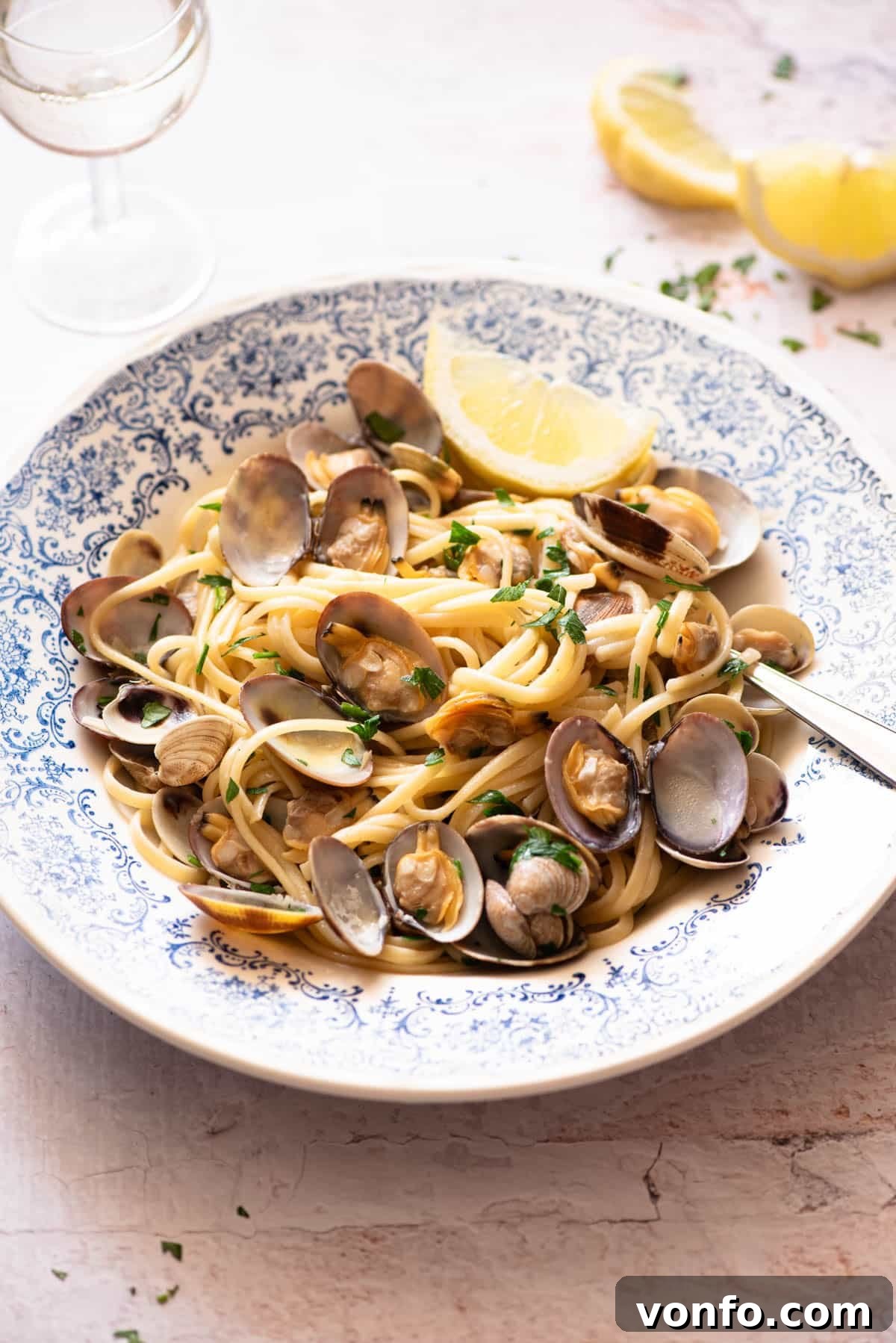
Linguine alle Vongole: A Timeless Italian Seafood Delight
Linguine alle Vongole stands as a crown jewel of Italian cuisine, a classic seafood pasta dish celebrated for its exquisite simplicity and profound flavor. This iconic recipe marries delicate linguine with succulent fresh clams, aromatic garlic, crisp white wine, and a bright finish of lemon and fresh parsley. It’s a dish that tastes complex yet is surprisingly straightforward to prepare, making it a perfect choice for both weeknight dinners and special occasions. Serve it with a perfectly chilled glass of white wine and a generous slice of crusty bread to soak up every last drop of its irresistible sauce.
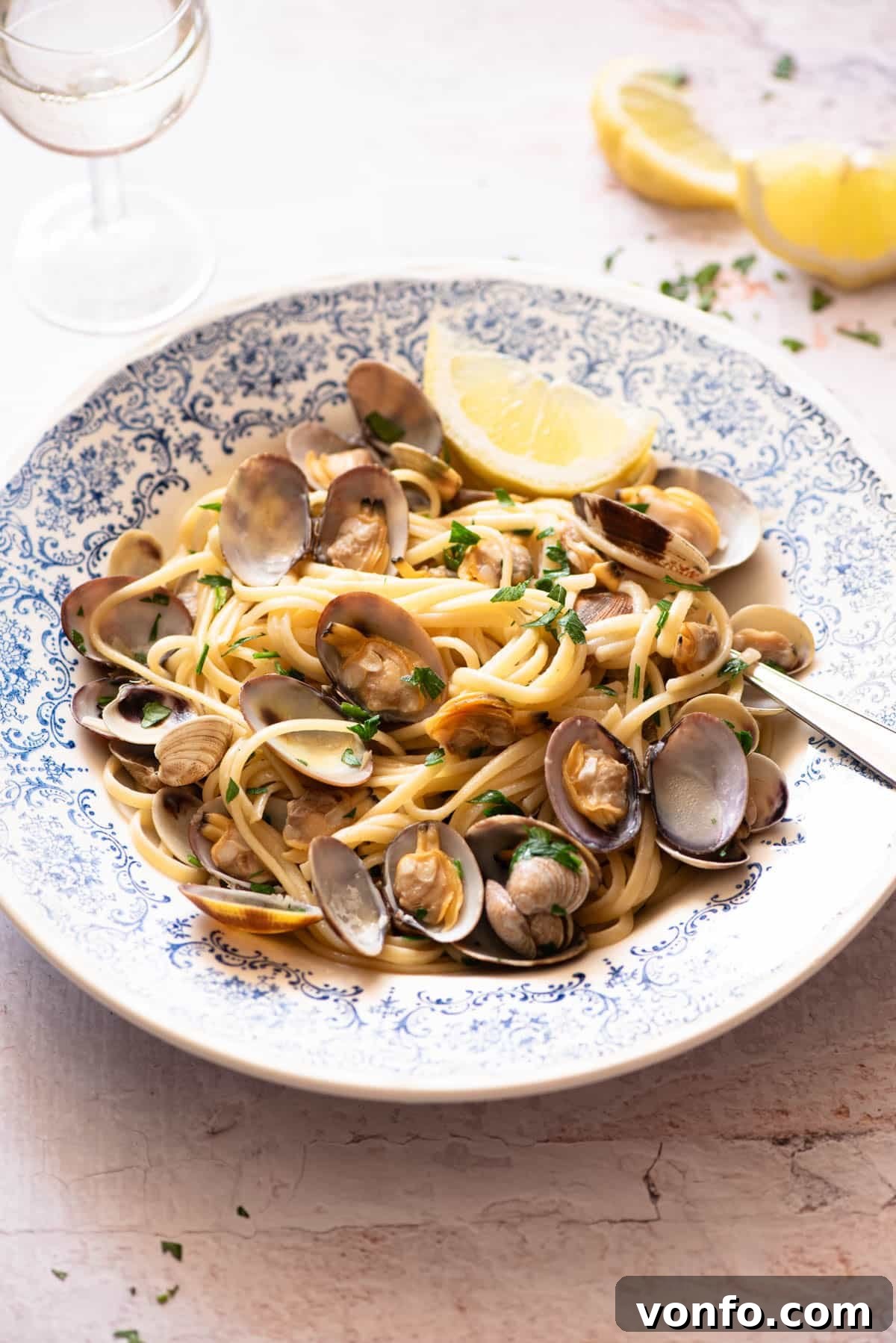
Why Linguine alle Vongole Captures Hearts
There’s a reason Linguine alle Vongole is a perpetual favorite among seafood enthusiasts and Italian food lovers alike. The harmonious blend of flavors is truly exceptional: the natural sweetness and subtle brininess of fresh clams, the pungent warmth of sautéed garlic, the bright acidity from the white wine, and the fresh, herbaceous notes of parsley and lemon zest. It’s a symphony of tastes that transports you straight to the sun-drenched coasts of Italy.
This traditional clam pasta isn’t just about incredible taste; it’s also about its effortless preparation. While it might seem like a dish reserved for upscale restaurants, our recipe proves just how simple it is to recreate this authentic Italian experience in your own kitchen. With a few key ingredients and some smart techniques, you’ll achieve perfect results every time. Follow our detailed tips below to unlock the secrets to a truly unforgettable Linguine alle Vongole.
Explore the full recipe below, including crucial notes on ingredients, step-by-step photos for visual guidance, expert tips for success, and delightful variations. For your convenience, the complete printable recipe card is located at the bottom of this page.
Essential Ingredients for Authentic Clam Pasta
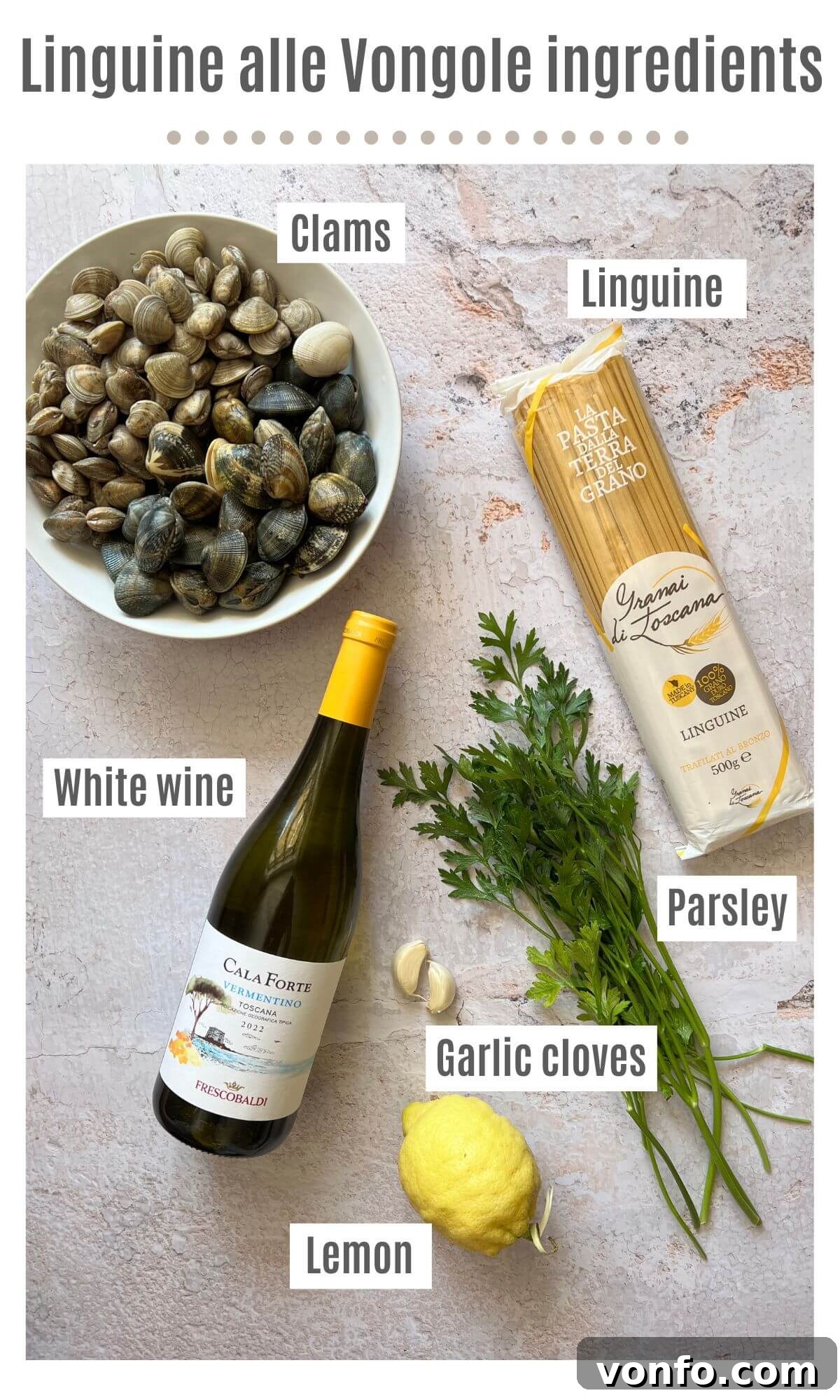
Crafting the perfect Linguine alle Vongole starts with selecting the highest quality ingredients. Below, you’ll find a visual guide to everything you need, along with important details and substitution advice to ensure your dish is nothing short of spectacular.
Ingredient Notes and Smart Substitutions
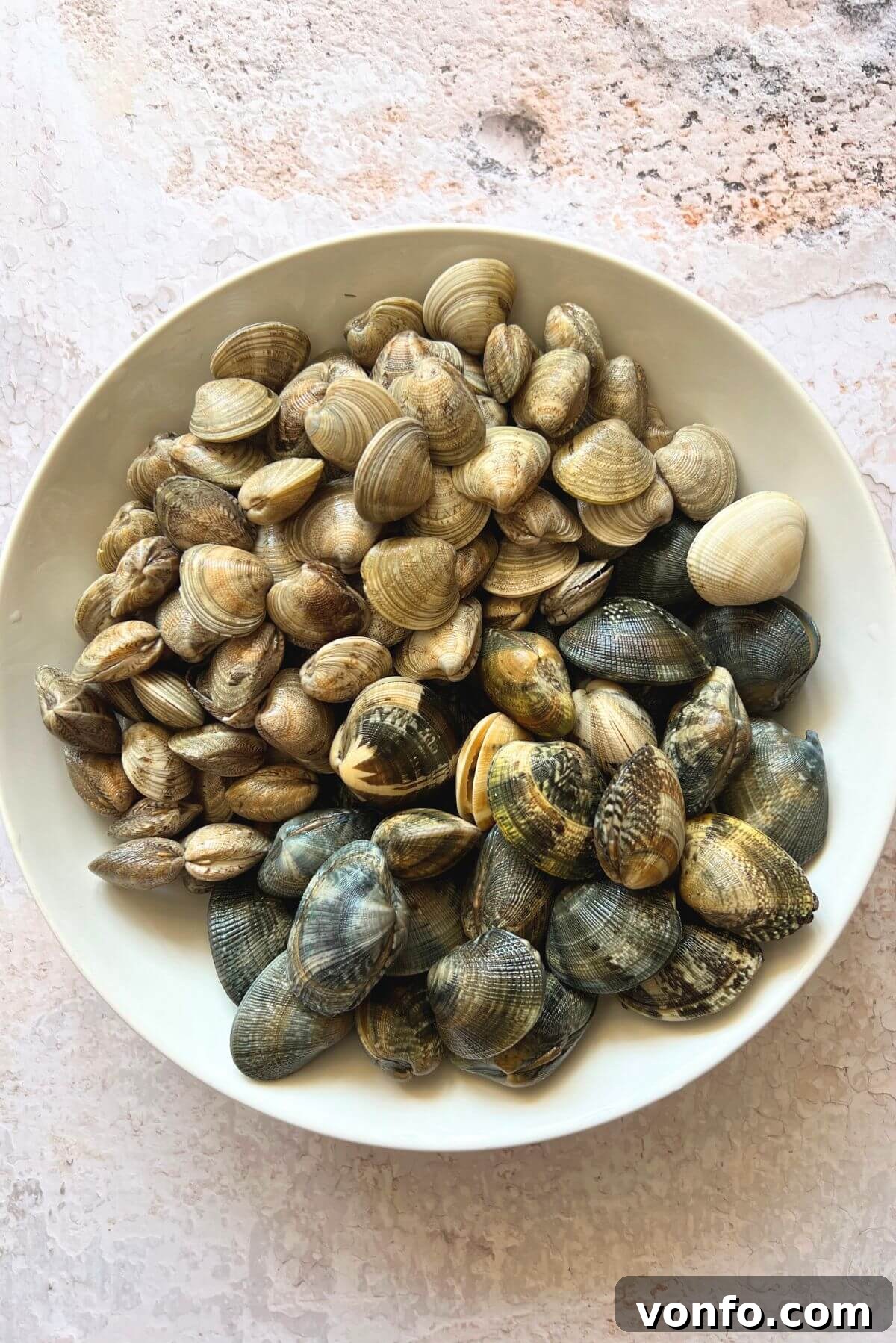
- Fresh Clams (Vongole): The heart of this dish. For the most authentic and flavorful experience, seek out Vongole Veraci, known for their larger size and exquisite taste. If Veraci are hard to find or a bit pricey, a mix with smaller, equally delicious Lupini clams works wonderfully. The absolute golden rule here is to *always* use fresh clams; canned varieties simply won’t deliver the vibrant flavor and texture this dish demands.
- Quality White Wine: Choose a dry Italian white wine that you genuinely enjoy drinking. A good rule of thumb is to cook with wine you’d be happy to pair with the meal. Vermentino is an excellent choice for its bright, mineral notes, but other fantastic options include Pecorino, Pinot Grigio, or Gavi. The wine adds a crucial layer of acidity and depth to the sauce, enhancing the brininess of the clams.
- Garlic: Fresh garlic is non-negotiable. While our recipe suggests two large cloves for a balanced flavor, feel free to adjust the quantity to your personal preference. Minced or thinly sliced garlic will infuse the olive oil beautifully, creating an aromatic base for the sauce.
- Fresh Parsley: Just like garlic, parsley must be fresh. Dried parsley lacks the vibrant color, aroma, and delicate flavor that makes this dish sing. Italian flat-leaf parsley is preferred for its robust taste.
- Pasta: Linguine, with its flat, narrow shape, is traditionally paired with Vongole as it holds the light sauce perfectly. However, feel free to experiment with other long pasta shapes such as spaghetti or even freshly made Tonnarelli (often referred to as Spaghetti alla Chitarra). The key is a pasta that can gracefully intertwine with the clams and absorb the delicious clam broth.
- Extra Virgin Olive Oil: As with most Italian cooking, a good quality extra virgin olive oil is paramount. It forms the base of your sauce, carrying the flavors of garlic and chili.
- Lemon: A squeeze of fresh lemon juice at the end provides a final burst of freshness and acidity, brightening the entire dish. Don’t skip this crucial finishing touch.
- Optional: Red Pepper Flakes (Peperoncino): For those who appreciate a subtle kick, a pinch of red pepper flakes added with the garlic can elevate the dish with a gentle warmth.
The Art of Cleaning Clams: Ensuring a Sand-Free Experience
Properly cleaning clams is a vital step to avoid any gritty surprises in your pasta. Here’s how to prepare your fresh clams:
- Initial Scrubbing (if needed): Depending on the type of clam and their origin, you might need to give them a gentle scrub with a stiff brush or a rough sponge. Clams generally require less scrubbing than mussels, but it’s always good to check for any visible dirt or debris.
- Thorough Rinsing and Inspection: Rinse the clams meticulously under cold running water. This removes any loose dirt or sand clinging to the shells. During this process, carefully inspect each clam. Discard any clams with broken or chipped shells. Crucially, discard any clams that remain open after rinsing. To test, give an open clam a sharp tap; if it doesn’t close tightly within a minute or two, it means the clam is dead and should not be consumed.
- Post-Cooking Check: Even after cooking, it’s essential to inspect your clams. Any clams that remain stubbornly closed after being cooked should also be discarded. Do not attempt to force them open, as they were likely dead or compromised before cooking.
Step-by-Step Guide to Crafting Perfect Linguine alle Vongole
Follow these detailed steps, accompanied by photos, to create an authentic and delicious Linguine alle Vongole:
1. **Prepare Your Pasta and Sauce Base:** Begin by heating a generous amount of olive oil in a large sauté pan over medium heat. Add your finely chopped garlic (and red pepper flakes, if using). Sauté gently for about one minute until fragrant, being careful not to burn the garlic. Next, add your thoroughly cleaned clams and pour in the white wine (refer to photos 1 & 2 in the image collage below).
2. **Steam the Clams to Perfection:** Immediately place a tight-fitting lid on the pan. Allow the clams to steam, giving the pan a gentle shake every minute or so. Continue cooking until all the clams have fully opened, indicating they are cooked through (see photo 3 below).
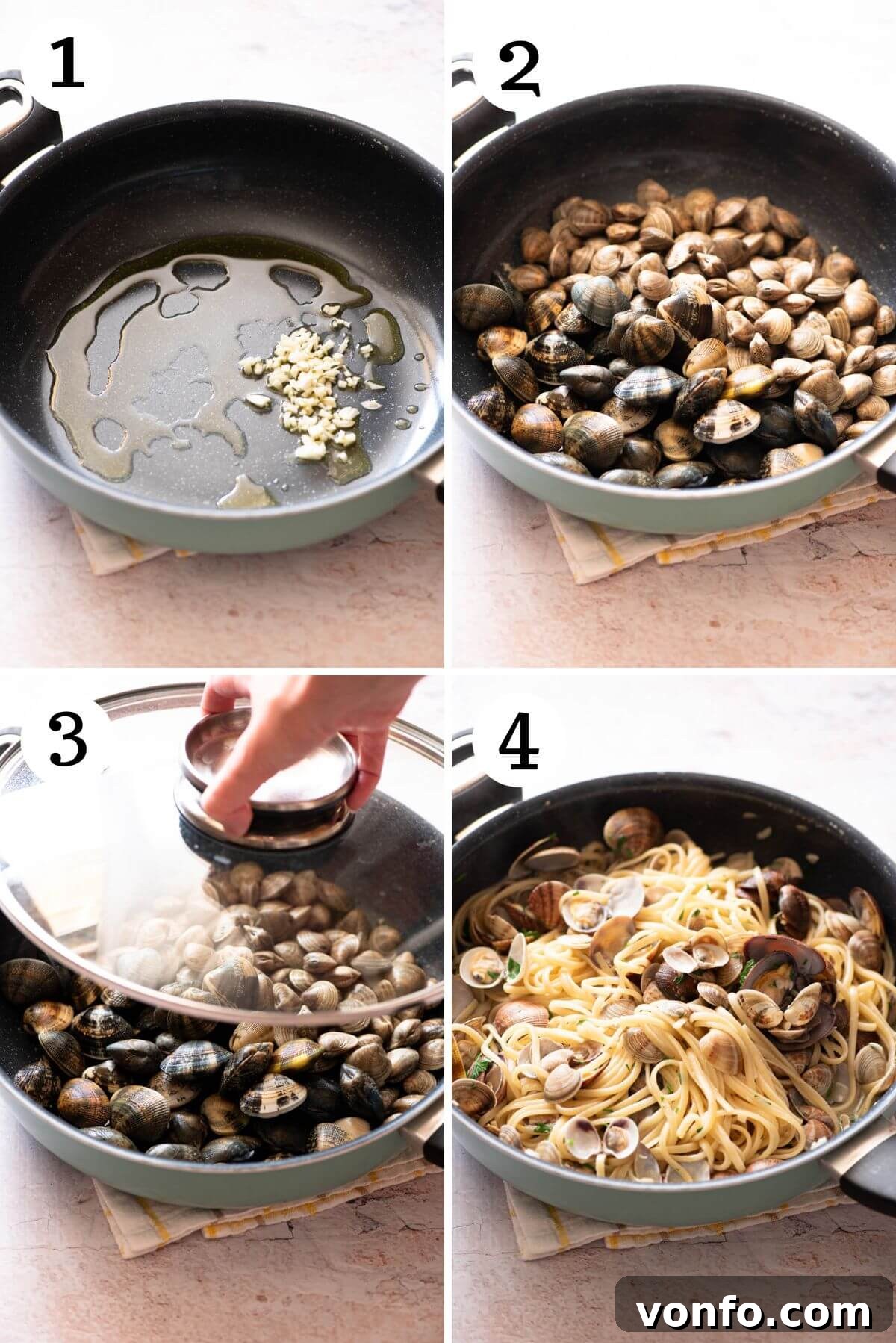
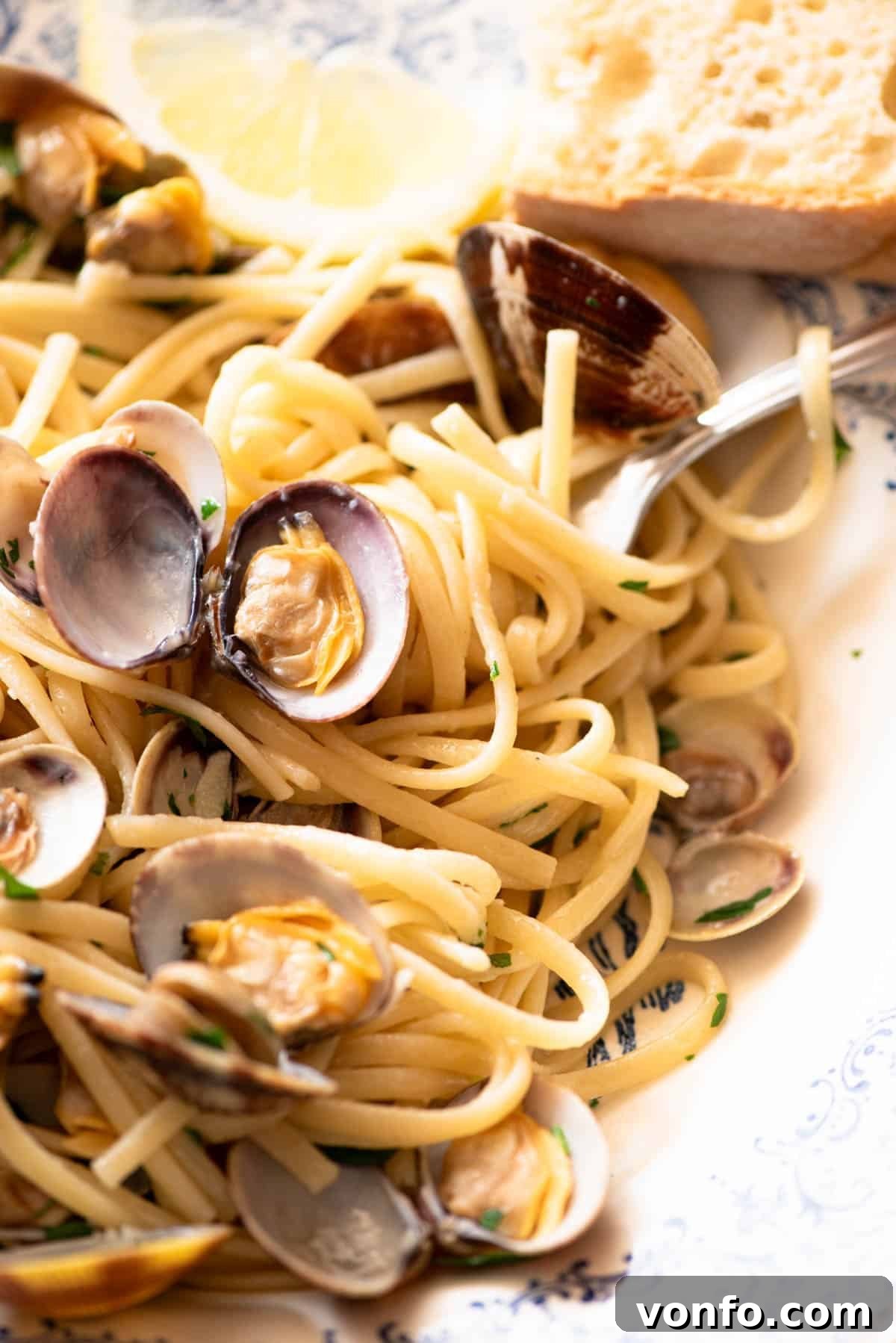
3. **Combine and Serve Immediately:** Once all the clams have opened, turn off the heat. Add your al dente linguine directly into the clam pan. Follow with a generous sprinkle of fresh chopped parsley and a squeeze of fresh lemon juice. Toss everything together vigorously for 1-2 minutes, ensuring the pasta is thoroughly coated in the delicious clam and wine juices. The pasta will absorb some of this flavorful liquid, completing the sauce. Serve your Linguine alle Vongole immediately to enjoy it at its best (as shown in photo 4).
Expert Tips for a Flawless Linguine alle Vongole
- Timing is Everything: Clams cook incredibly fast, usually in less than 10 minutes. Therefore, ensure your pasta is cooking first and is nearly ready before you start the clams. Have all your ingredients prepped – clams cleaned, garlic and parsley chopped – so you can add them to the pan swiftly. Start cooking the clams roughly 5-7 minutes before your pasta is scheduled to be al dente.
- Perfectly Al Dente Pasta: Always cook your pasta to a firm ‘al dente’ texture, typically one minute less than the package instructions. The pasta will continue to cook slightly in the hot pan as it absorbs the rich clam and wine juices. Overcooked pasta can become mushy, detracting from the dish’s delicate balance.
- The Magic of Pasta Water: Before draining your pasta, reserve about a cup of the starchy pasta cooking water. If your sauce appears too dry when tossing with the pasta, a splash or two of this reserved water can help create a beautifully emulsified, glossy sauce that clings to the linguine.
- Emulsify for Richness: Vigorously tossing the pasta with the clams and sauce off the heat helps to emulsify the olive oil, clam juices, and wine, creating a richer, more cohesive sauce that coats every strand of linguine.
- Serving Suggestions: Elevate your dining experience by serving Linguine alle Vongole with plenty of crusty Italian bread. This is essential for soaking up every last drop of the delectable garlic-white wine sauce. Pair it with the same chilled dry white wine you used in the recipe for a truly complementary and authentic Italian meal.
- Don’t Overcrowd the Pan: Give your clams enough space to open evenly. If cooking a very large batch, consider doing it in two smaller batches.
Linguine alle Vongole: Frequently Asked Questions
How long does Linguine alle Vongole last?
Linguine alle Vongole is a dish best enjoyed immediately after preparation. Leftovers tend not to keep well, as the clams can become tough and the pasta can get soggy. For the best flavor and texture, plan to savor it fresh off the stove.
What other pasta shapes can I use for clam pasta?
While linguine is the traditional choice for its ability to beautifully hold the light sauce, spaghetti is another popular and excellent alternative. You could also try bucatini for a slightly thicker, hollow noodle that catches even more sauce. We recommend sticking to long, thin pasta shapes for this recipe, as shorter pasta types typically don’t complement the delicate clam sauce as effectively.
Can I add tomatoes to my clam pasta?
Absolutely! While the classic Neapolitan version (bianco, or white) omits tomatoes, many recipes, particularly from Puglia, include cherry tomatoes for a burst of color and a touch of sweetness. If adding, toss them in with the garlic or just before the clams for a slightly different, but equally delicious, variation.
What wine pairs best with Linguine alle Vongole?
A dry, crisp white wine is ideal. Think of coastal Italian wines like Vermentino (from Sardinia or Liguria), Falanghina (from Campania), Pecorino (from Abruzzo), or a light Pinot Grigio. These wines offer a refreshing acidity that cuts through the richness of the seafood and complements the lemon and garlic flavors beautifully.
Can I use frozen clams for this recipe?
For the truest, most vibrant flavor, fresh clams are highly recommended and preferred. Frozen clams can be used in a pinch, but they often lack the delicate texture and intense briny flavor of their fresh counterparts. If using frozen, ensure they are thoroughly thawed and drained before cooking.
Discover More Italian Seafood & Pasta Delights
If you loved this Linguine alle Vongole recipe, you might enjoy exploring these other fantastic Italian seafood and pasta dishes from our collection:
Pasta
Shrimp Spaghetti with ‘Nduja and Lemon
Salads
Tuna Panzanella – Italian Bread Salad
Pasta
Shrimp Linguine with Burst Tomatoes & Parsley
Fresh Pasta
Lobster Ravioli with Vodka Cream Sauce
We hope you enjoy making this exquisite Linguine alle Vongole recipe. Your feedback is invaluable to us, so please don’t hesitate to rate the recipe and share your thoughts in the comments section below – we love hearing from you! For more delicious Italian food inspiration, be sure to follow us on social media or subscribe to our newsletter.
Step-by-Step Photos Above
Most of our recipes include detailed step-by-step photos, helpful tips, and tricks to ensure perfect results on your very first try!
Linguine alle Vongole Recipe
By Emily
Cook: 10 mins |
Total: 25 mins |
Servings: 4 servings
Linguine alle Vongole is a classic Italian seafood pasta made with fresh clams, garlic, white wine and lemon. This recipe is super simple to make yet is packed full of delicious flavour, something you’ll want to make again and again. Serve with a chilled glass of white wine and enjoy!
Equipment
- Large sauté pan with lid
Ingredients
- 14 oz (400g) linguine or spaghetti
- 2.2 lbs (1 kg) fresh Vongole (clams) – see note 1 below for clam types
- 2 large cloves garlic, finely chopped
- ½ cup (120ml) dry white wine (e.g., Vermentino, Pinot Grigio)
- 1 large bunch fresh parsley, finely chopped
- 1 squeeze fresh lemon juice
- Extra Virgin Olive oil
- Optional: Pinch of red pepper flakes
Instructions
- Bring a large pot of generously salted water to a rolling boil for the pasta.
- Meanwhile, rinse the clams thoroughly under cold running water, discarding any broken shells or clams that remain open after being tapped (see note 3 below).
- Add the pasta to the boiling water and cook according to package directions until al dente (usually 1 minute less than stated).
- While the pasta cooks, heat a good glug of olive oil in a large sauté pan over medium heat. Add the finely chopped garlic (and red pepper flakes, if using) and gently fry for about 30-60 seconds until fragrant, ensuring it doesn’t brown.
- Immediately add the cleaned clams to the pan, followed by the white wine. Cover the pan with a tight-fitting lid and give the pan a gentle shake.
- Keep the lid closed, shaking the pan occasionally, until all the clams have fully opened. This should take 5-7 minutes.
- Once the clams have opened, turn off the heat. Drain the pasta, reserving about ½ cup of the starchy pasta water. Add the cooked pasta directly into the clam pan.
- Stir in the fresh chopped parsley and a squeeze of fresh lemon juice. Toss everything together vigorously for 1-2 minutes, allowing the pasta to absorb the delicious juices. If the sauce seems too dry, add a tablespoon or two of the reserved pasta water to create a glossy emulsion.
- Serve your Linguine alle Vongole straight away, ensuring everyone gets a good mix of pasta and clams. Discard any clams that did not open after cooking (see note 4 below).
Notes
- Choosing Clams: In Italy, we often use a mix of Vongole Veraci (larger, premium) and Lupini (smaller, flavorful). Use the freshest clams available to you, ensuring they are firm and have a fresh, briny smell.
- Pre-Cleaning Clams: Depending on where you source your clams, they might need an initial scrub. While Vongole typically require less scrubbing than mussels, check for any dirt. Supermarket clams in Italy are often pre-cleaned.
- Cleaning Clams for Cooking: Always rinse clams under cold running water to remove dirt and sand. Discard any broken clams. For any open clams, tap them sharply on the counter; if they don’t close, they are dead and must be discarded for safety.
- Clams After Cooking: It is crucial to discard any clams that remain closed after cooking. These clams were likely dead before cooking and are not safe to eat.
Helpful Information for All Our Recipes
- We exclusively use extra virgin olive oil in all our recipes unless otherwise specified, for its superior flavor and health benefits.
- For the best results and authentic Italian flavor, we highly recommend using premium brands like Cirio or Mutti for all canned or jarred tomato products.
- Unless stated differently, all vegetables referenced in our recipes are assumed to be medium-sized.
- All our recipes are meticulously tested and developed using a fan (convection) oven, so cooking times may vary slightly with conventional ovens.
- Learn more about how our nutrition information is calculated.
- Discover our essential Italian Pantry Staples to stock your kitchen.
- Find out about all our Essential Kitchen Tools for Italian Cooking that every home cook needs.
Nutrition Information (Per Serving)
Calories: 466kcal |
Carbohydrates: 78g |
Protein: 19g |
Fat: 5g |
Saturated Fat: 1g |
Polyunsaturated Fat: 1g |
Monounsaturated Fat: 3g |
Trans Fat: 0.01g |
Cholesterol: 11mg |
Sodium: 37mg |
Potassium: 347mg |
Fiber: 4g |
Sugar: 3g |
Vitamin A: 1313IU |
Vitamin C: 20mg |
Calcium: 61mg |
Iron: 3mg
Nutrition information is automatically calculated and should be used as an approximation only.
Did you try this recipe?
We’d love to hear your thoughts! Leave a comment below and share your experience with our Linguine alle Vongole!