
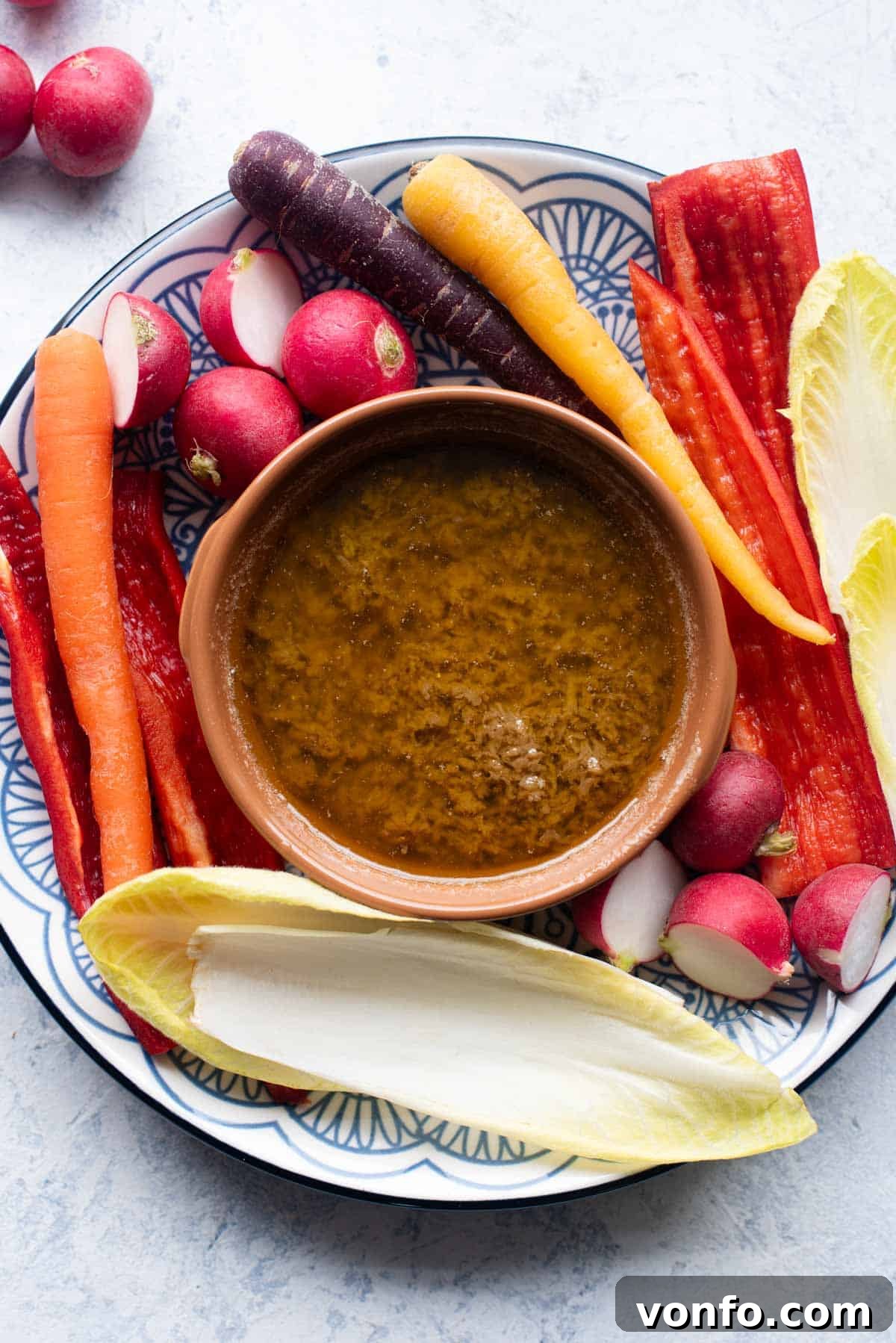
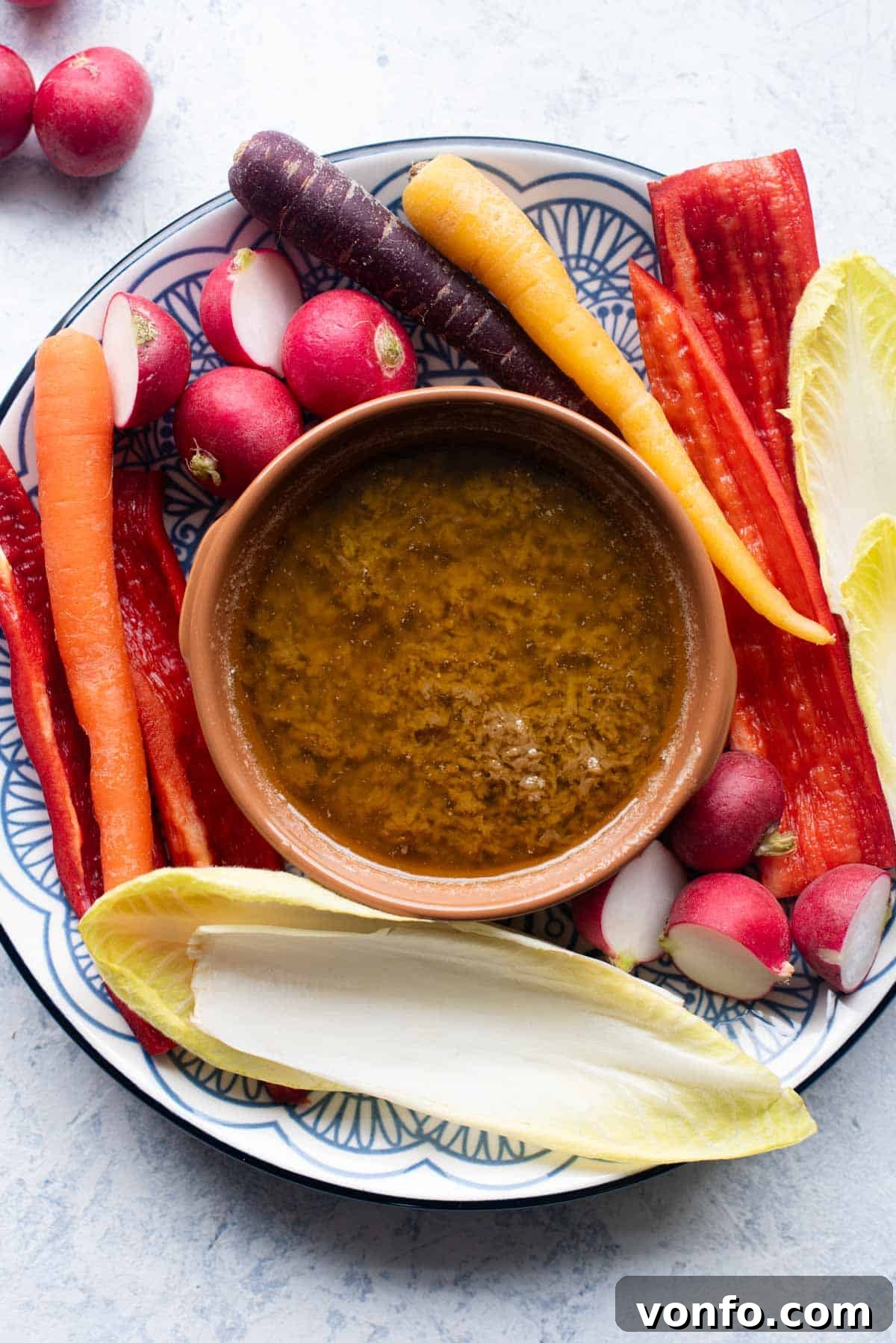
Bagna Cauda, pronounced ‘bahn-ya cow-da,’ is an irresistibly delicious and aromatic hot dip or sauce originating from the picturesque Piedmont region in northern Italy. This rustic yet elegant dish, whose name literally translates to “hot sauce” in the Piedmontese dialect, is a celebration of simple, high-quality ingredients transformed into an umami-rich masterpiece. Traditionally, Bagna Cauda is served as a communal centerpiece, inviting diners to gather around and dunk an array of fresh, seasonal vegetables and crusty bread. Once you experience its captivating blend of garlic, anchovies, butter, and olive oil, you’ll understand why it’s a beloved staple that commands attention at any gathering.
The Heart of Piedmontese Culinary Tradition
Bagna Cauda is more than just a dip; it’s an experience, deeply embedded in the culinary soul of Piedmont. It embodies the region’s philosophy of transforming humble ingredients into dishes of extraordinary flavor. Often likened to a savory fondue, it’s a dish meant for sharing, fostering connection and conversation as friends and family gather, each eagerly taking turns to dip crisp, raw vegetables and hearty slices of bread into the aromatic, bubbling sauce. This communal ritual makes it a perfect appetizer for chilly evenings or a unique centerpiece for a relaxed dinner party.
The unparalleled flavor profile of this Piedmontese delicacy is primarily attributed to a generous quantity of anchovies, fragrant garlic, rich butter, and robust extra virgin olive oil. When slowly cooked together, these ingredients undergo a magical transformation, melding into a profoundly savory, intensely garlicky, and utterly delicious “umami bomb” that coats the palate in a wonderfully satisfying way. It’s the quintessential comfort food, providing warmth and flavor that makes it a perfect antidote to colder months.
Exploring Bagna Cauda Variations: Tailoring to Your Taste
While the core ingredients remain consistent, Bagna Cauda recipes often feature intriguing variations, allowing for personalization. One of the most debated aspects is the amount of garlic. Some traditional recipes daringly call for up to a whole head of garlic per person, resulting in an exceptionally potent dip that truly “knocks your socks off.” For many, this might be too intense, and a more moderate approach, such as 6 large cloves for several servings, provides a balanced yet assertive garlic presence. Ultimately, the ideal garlic level is a matter of personal preference, so feel free to adjust according to your taste.
To temper the raw pungency of garlic, some culinary traditions suggest gently poaching the garlic cloves in milk until they become incredibly soft and creamy before adding them to the anchovy mixture. This technique effectively mellows the garlic’s intensity, creating a smoother, more subtle flavor profile while retaining its aromatic charm. Another popular variation involves adding a splash of cream alongside the butter. This addition not only further softens the garlic’s edge but also introduces an extra layer of luxurious richness to the sauce, making it even more decadent. Each variation offers a slightly different character, inviting you to experiment and find your perfect Bagna Cauda.
Dive into the complete Bagna Cauda recipe below, featuring detailed notes on ingredients, step-by-step photos for visual guidance, essential tips, and exciting variations. For a convenient printable version of the full recipe, simply scroll to the bottom of this page.
Essential Ingredients for Authentic Bagna Cauda
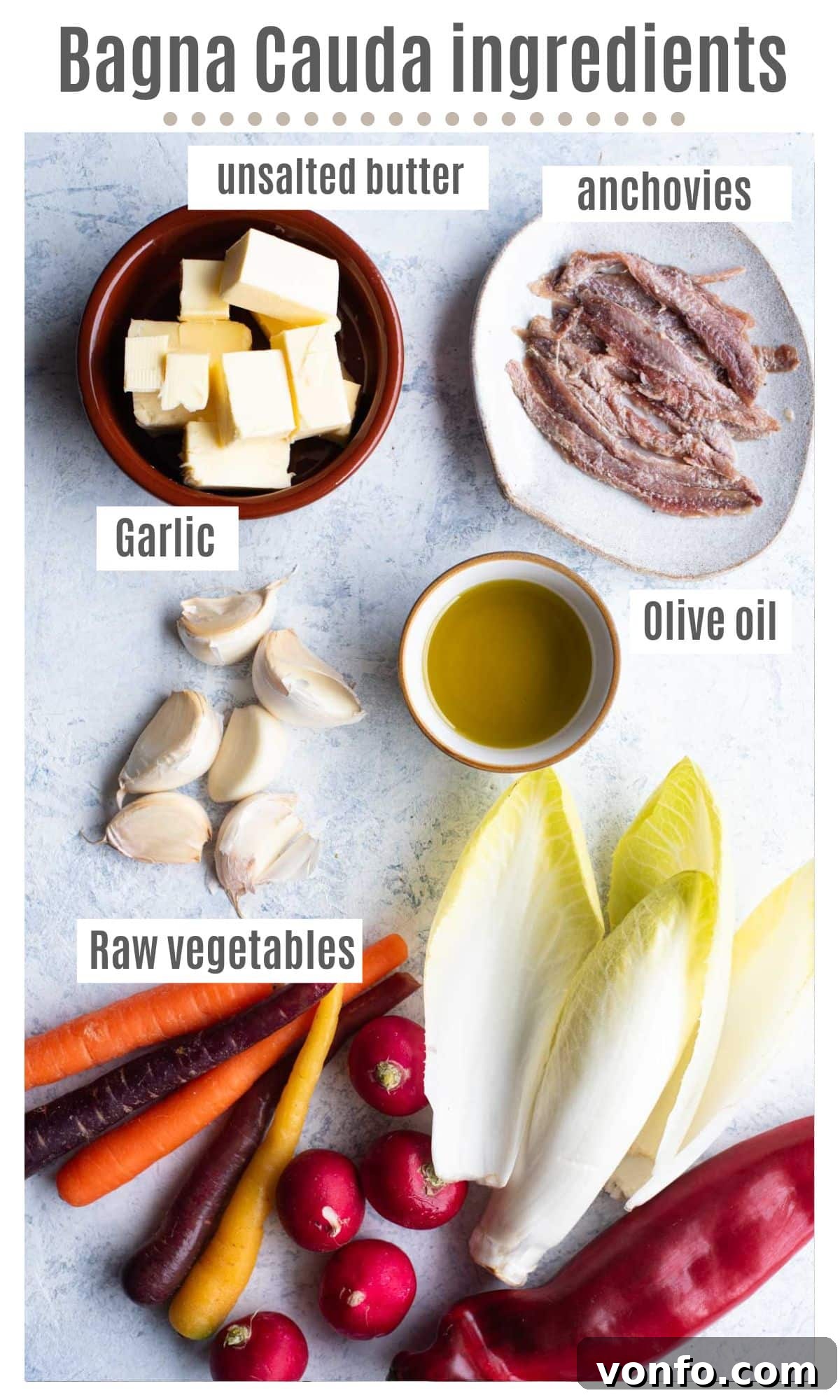
Ingredient Notes and Expert Tips
- Extra Virgin Olive Oil: This is the foundation of many Italian dishes, and Bagna Cauda is no exception. Always opt for a high-quality extra virgin olive oil. Its fruity notes and robust flavor contribute significantly to the overall taste of the dip.
- Fresh Garlic: The soul of Bagna Cauda! We recommend using 6 large cloves of fresh garlic, which typically weighs around 50g. Using fresh garlic is absolutely crucial for the best flavor; avoid pre-minced or powdered garlic as it won’t yield the same vibrant taste. Remember, the garlic is slowly cooked to mellow its intensity, so don’t be afraid of the quantity.
- Quality Anchovy Fillets: Don’t let the anchovies intimidate you; they provide the essential umami depth, not an overtly “fishy” taste. Choose good quality salted anchovy fillets packed in oil. They will dissolve beautifully into the sauce, creating a rich, savory base that is simply irreplaceable.
- Unsalted Butter: Since anchovies are inherently salty, it’s paramount to use unsalted butter. This allows you to control the overall sodium content of your Bagna Cauda, preventing it from becoming overly salty and ensuring a perfectly balanced flavor.
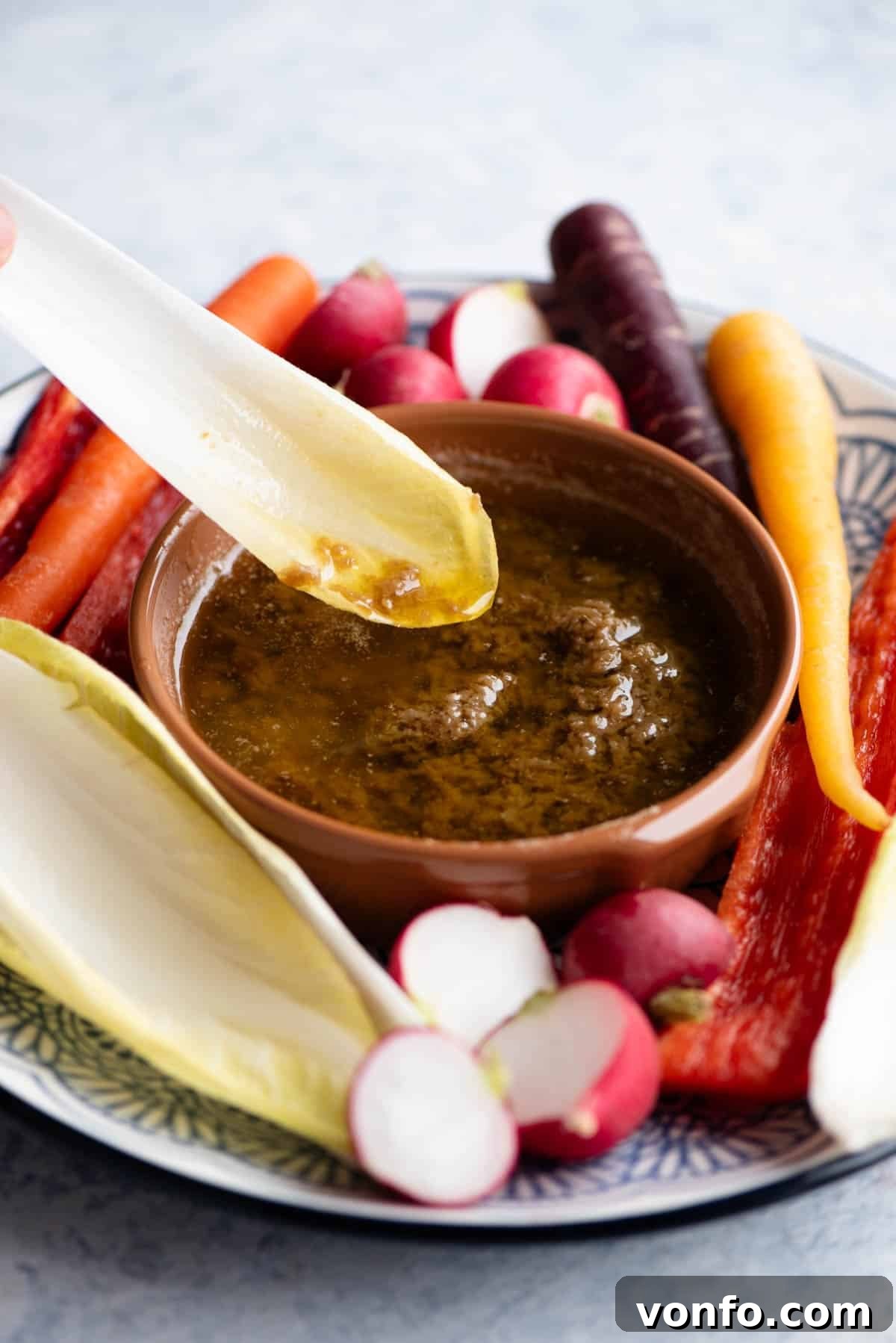
- Seasonal Raw Vegetables for Dipping: The beauty of Bagna Cauda lies in its versatility with dippers. Traditionally, it’s served with a variety of raw, crisp seasonal vegetables. Excellent choices include vibrant carrots, bitter radicchio, slightly peppery chicory, crunchy bell peppers (especially sweet red ones), earthy radishes, and refreshing celery. For more inspiration, explore additional serving suggestions below.
Crafting Your Bagna Cauda: Step-by-Step Guide
Creating Bagna Cauda is a straightforward process, but patience is key, especially during the slow cooking of the garlic and anchovies. This gentle approach ensures the flavors meld perfectly without bitterness.
Begin by selecting a heavy-bottomed pan and add a touch of your high-quality extra virgin olive oil. Into this, introduce your crushed or finely minced fresh garlic and the anchovy fillets. The magic truly begins as you gently heat these ingredients over a very low flame. The goal here is to allow the anchovies to slowly dissolve into the oil, releasing all their savory goodness, while the garlic softens and becomes wonderfully aromatic without browning or burning. This process should take long enough for the garlic to be fully cooked through, transforming into a sweet, mellow component rather than a sharp, raw flavor.
Once the anchovies have completely melted and the garlic is soft and fragrant, remove the pan from the heat. This step is important to prevent the butter from overheating and separating. Now, add the unsalted butter to the warm anchovy and garlic mixture.
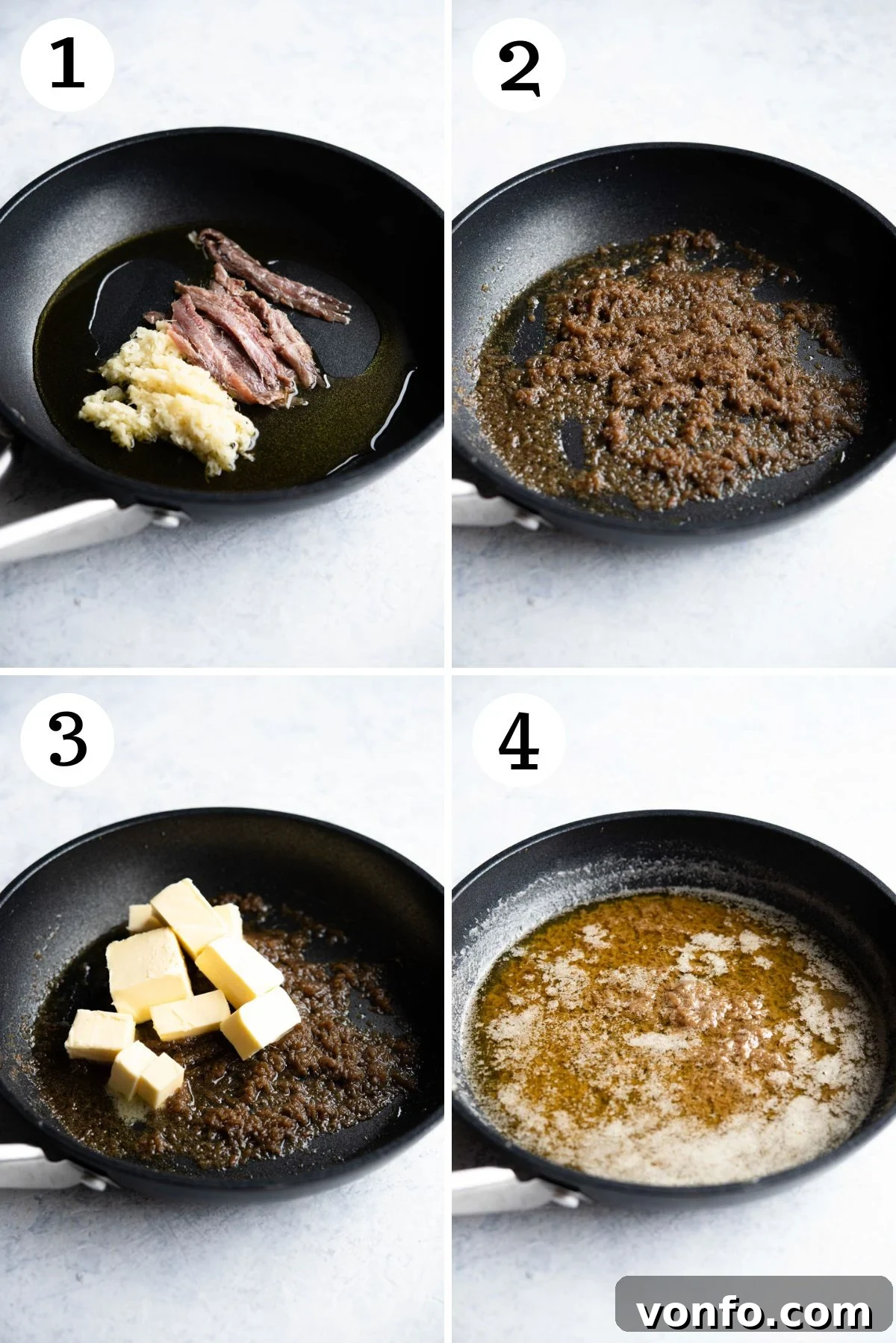
Whisk the butter into the anchovy and garlic mixture until it’s completely melted and thoroughly combined, forming a smooth, emulsified, and intensely aromatic dip. The sauce should be glossy and homogenous. Once ready, transfer your luscious Bagna Cauda into a warm serving dish. For the most authentic experience, serve this delightful dip with a fine glass of Piedmontese red wine, such as a Dolcetto d’Alba or a Barbera d’Asti, which beautifully complements its rich flavors.
Perfect Pairings: What to Serve with Bagna Cauda
The beauty of Bagna Cauda lies in its versatility as a dipping sauce. Traditionally, it’s accompanied by an assortment of fresh, seasonal vegetables, often served raw to provide a crisp contrast to the warm, rich dip. Classic choices include cardoons (a thistle-like vegetable characteristic of Piedmont), bitter radicchio, crisp chicory, crunchy radishes, aromatic fennel, sweet carrots, and vibrant bell peppers. Don’t overlook the simple pleasure of boiled or steamed potatoes, whose earthy flavor and soft texture make them an excellent canvas for the intense sauce.
My personal favorite dipper is sweet red bell peppers. Their natural sweetness beautifully balances the rich, salty, and umami-packed sauce, creating a harmonious bite. And, of course, no Bagna Cauda experience is complete without a generous supply of crusty bread. A good quality baguette or a rustic Italian loaf is perfect for soaking up every last drop of the glorious sauce. Beyond vegetables and bread, consider offering other dippers like hard-boiled eggs, grilled polenta, or even thin slices of apple for an unexpected twist. The possibilities are endless when it comes to enjoying this fantastic dip.
Recipe Tips & Frequently Asked Questions
- Always Cook on Low Heat: This is arguably the most crucial tip for perfect Bagna Cauda. Heating the garlic too quickly or at too high a temperature will cause it to burn, resulting in a bitter, unpleasant flavor that will ruin the entire dish. Patience is a virtue here; allow the garlic and anchovies to melt and soften slowly over a gentle flame.
- Keep it Warm: Bagna Cauda is meant to be enjoyed hot. In Piedmont, it’s traditionally served in a special terracotta warming pot called a fujot, which has a small compartment underneath for a tealight candle to keep the sauce gently simmering throughout the meal. If you don’t have a fujot, a fondue pot is an excellent alternative. Alternatively, you can pre-warm your serving ramekin or bowl in the oven before transferring the sauce to help it retain heat for as long as possible. A double boiler can also be used to keep it warm over low heat.
- Wine Pairing: To truly embrace the Piedmontese spirit, serve your Bagna Cauda with a regional red wine. Excellent choices include Dolcetto d’Alba, known for its soft fruit and mild tannins, or a Barbera d’Asti or Barbera d’Alba, which offer bright acidity and dark fruit notes that cut through the richness of the dip beautifully.
If you have any delicious leftovers, store the Bagna Cauda in an airtight container in the refrigerator for 1-2 days. Its robust flavors actually deepen slightly over time.
Absolutely! Bagna Cauda reheats wonderfully. Gently warm it slowly over a low heat on the stovetop, stirring frequently, until it is hot and smooth again. Be careful not to overheat the garlic.
In the local Piedmontese dialect, “Bagna” translates to ‘sauce’ and “Cauda” means ‘hot’. So, the literal translation of Bagna Cauda is ‘hot sauce’, perfectly describing this warm, inviting dip.
More Italian-Inspired Recipes You Might Enjoy
If you’ve enjoyed the authentic taste of Piedmont with this Bagna Cauda recipe, explore these other delightful Italian-inspired dishes that are perfect for sharing or savoring on your own.
Dips & Pestos
Artichoke Pesto (Quick 5 minute Recipe)
Antipasti
Grissini – Italian Breadsticks
Sides
Ricotta Chicken Croquettes
Antipasti
Italian Tuna Stuffed Cherry Peppers
If you’ve tried this Bagna Cauda recipe or any other recipe on the blog, please don’t forget to rate the recipe and share your experience in the comments section below – I love hearing from you! You can also follow me on Facebook, Instagram, and Pinterest for more delicious food inspiration and behind-the-scenes glimpses.
Step By Step Photos Above
Most of our recipes come with step by step photos, helpful tips and tricks to make it perfectly first time and even video!
Bagna Cauda (Anchovy, Garlic and Butter Dip)
★★★★★
By Emily
5 minutes
15 minutes
20 minutes
6
– 8 servings
Ingredients
- 12 anchovy fillets
- 6 large cloves garlic, crushed or minced (about 50g)
- 125 grams (1 stick plus 1 tablespoon) unsalted butter
- 2 tablespoons extra virgin olive oil
Instructions
-
First, prepare your choice of seasonal vegetables and crusty bread for dunking. You can choose whatever you prefer (see note 1 in the Notes section). Wash and chop all vegetables into bite-sized pieces suitable for dipping.
-
In a cold, heavy-bottomed pan, add the olive oil, crushed or minced garlic, and anchovy fillets. Place the pan over very low heat and cook gently for about 15 minutes, stirring occasionally, until the garlic has softened significantly and the anchovies have completely dissolved into the oil, forming a fragrant paste. It is crucial not to increase the heat, as this will burn the garlic and make the sauce bitter.
-
Remove the pan from the heat. Add the unsalted butter to the warm anchovy and garlic mixture. Stir continuously until the butter is fully melted and thoroughly incorporated, creating a smooth, emulsified sauce. Transfer the hot Bagna Cauda to a warmed serving dish (see note 2 in the Notes section for warming tips) and serve immediately with your prepared vegetables and crusty bread. Enjoy!
Notes
- Vegetables for serving: Be creative with your dippers! Choose whatever seasonal vegetables you prefer. Traditionally, they are served raw and crisp, such as cardoons, radicchio, chicory, bell peppers, fennel, carrots, celery, and radishes. Boiled or steamed potatoes or cauliflower also make excellent, comforting dippers. And always have plenty of crusty bread on hand!
- Keep it warm: For an authentic experience, Bagna Cauda is served in a terracotta dish called a fujot, which includes a space for a tealight candle underneath to keep the sauce warm and inviting. If you don’t have a fujot, a standard fondue pot works perfectly. Alternatively, you can pre-warm your serving dish in the oven before adding the sauce to maximize its warmth retention.
- Always cook on low: Re-emphasizing this critical point: cooking Bagna Cauda on a very low heat is non-negotiable. High heat will cause the garlic to burn quickly, imparting a bitter, acrid taste to your dip. Patience yields the best, most mellow, and aromatic results.
- Wine for serving: Enhance your Bagna Cauda experience by pairing it with a classic Piedmontese red wine. Excellent choices include Dolcetto d’Alba, known for its light body and fruity notes, or a more robust Barbera d’Asti or Barbera d’Alba, which offer wonderful acidity to complement the richness of the dip.
Helpful Info for All Recipes
- I always use extra virgin olive oil in all of my recipes unless stated otherwise. Its superior flavor enhances every dish.
- When I use canned or jarred tomatoes of any kind, I exclusively use Cirio or Mutti brands for the best results and authentic Italian flavor profile.
- All vegetables are assumed to be medium-sized unless specifically stated otherwise in the recipe details.
- All recipes on this blog are carefully tested and developed using a fan (convection) oven to ensure consistent results.
- Find out more about how nutrition is calculated for our recipes.
- Check out our must-have Italian Pantry Staples to stock your kitchen.
- You can also find all our Essential Kitchen Tools for Italian Cooking to make your culinary journey easier.
Nutrition
Carbohydrates: 1g |
Protein: 2g |
Fat: 22g |
Saturated Fat: 11g |
Polyunsaturated Fat: 1g |
Monounsaturated Fat: 8g |
Trans Fat: 1g |
Cholesterol: 50mg |
Sodium: 143mg |
Potassium: 48mg |
Fiber: 0.1g |
Sugar: 0.04g |
Vitamin A: 525IU |
Vitamin C: 1mg |
Calcium: 22mg |
Iron: 0.3mg
Nutrition information is automatically calculated, so should only be used as an approximation.
Did you try this recipe?
Leave a comment below!