
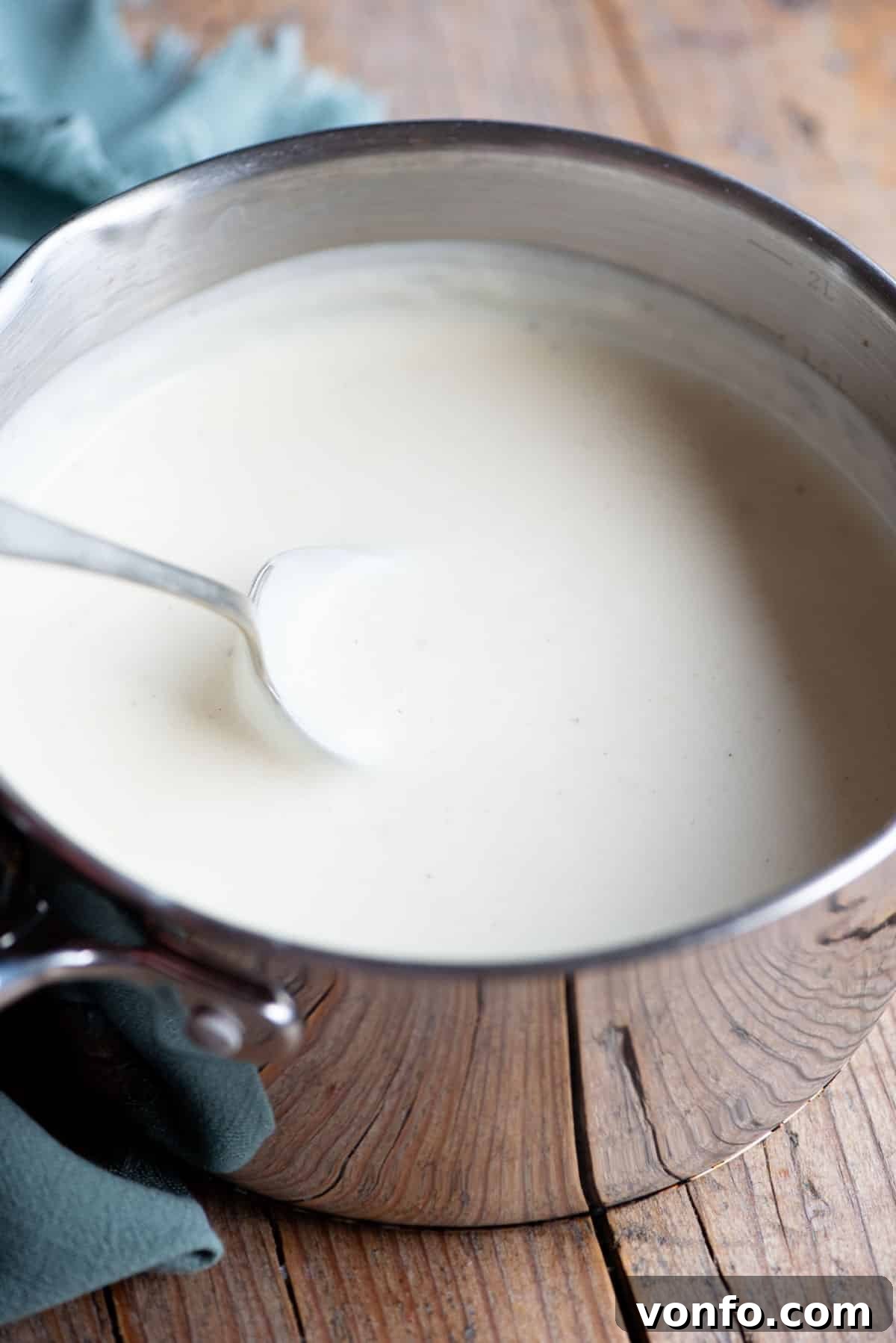
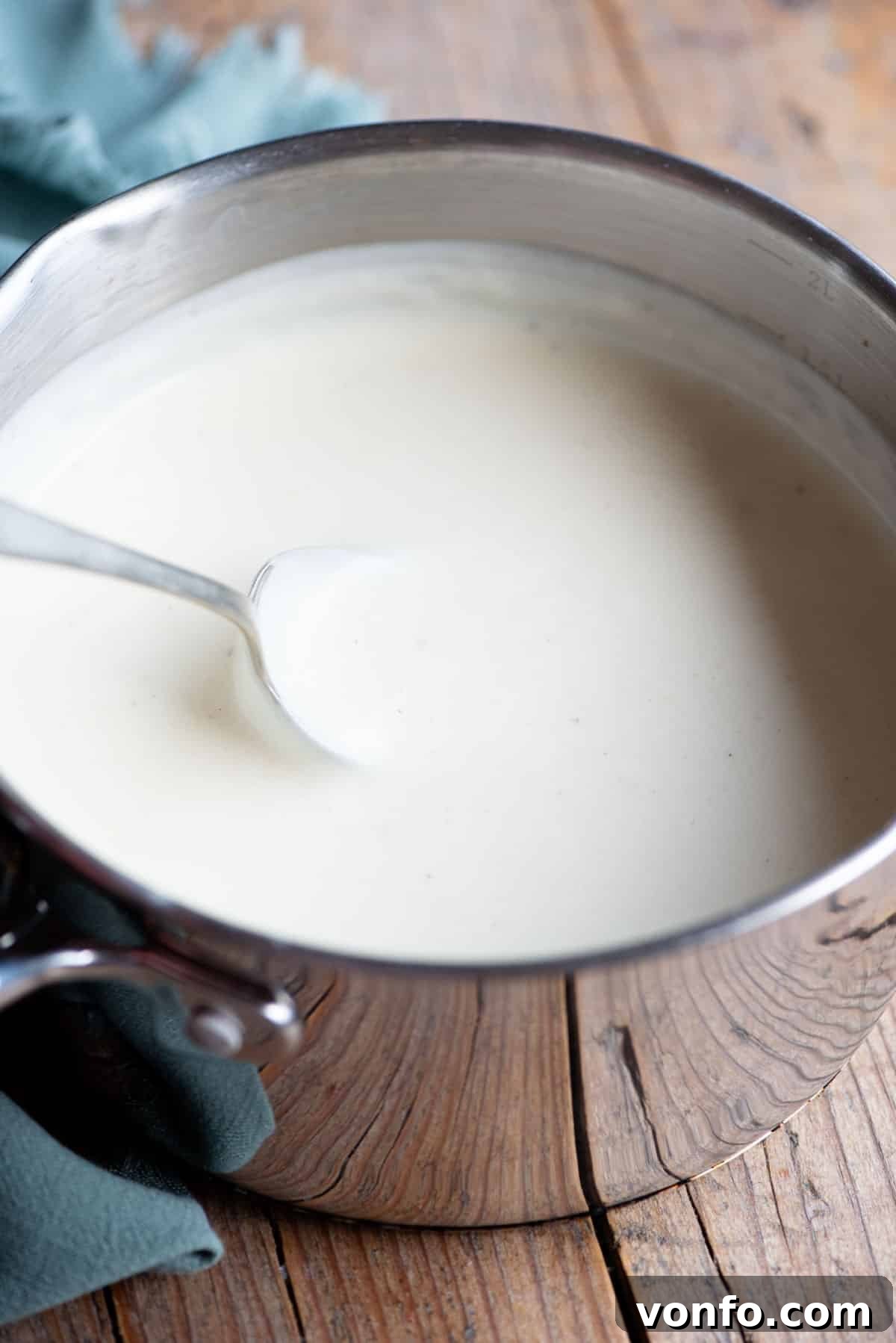
Authentic Italian Béchamel Sauce, affectionately known as Besciamella in Italy, is a fundamental creamy white sauce crafted from a simple trio of ingredients: butter, flour, and milk. This versatile and delicious classic is not only rich and satisfying but also surprisingly effortless to prepare. It serves as the cornerstone for numerous beloved Italian dishes, including the hearty Lasagna Bolognese, comforting Pasta al Forno, and a host of delectable gratins. Mastering this sauce is a true game-changer for any aspiring home cook eager to bring the luscious flavors of Italy into their kitchen.
The Foundation of Italian Comfort Food: Why Besciamella Matters
Béchamel sauce stands as one of the culinary world’s most foundational “mother sauces.” It’s often one of the first sauces aspiring chefs learn, and for good reason: its simplicity belies its incredible versatility. Deeply rooted in both classic French and traditional Italian cuisine, Besciamella is more than just a sauce; it’s a creamy canvas that binds ingredients, adds lush texture, and imparts a subtle richness to a wide array of dishes. Its velvety smoothness and delicate flavor make it indispensable for elevating everyday meals into extraordinary culinary experiences.
In Italy, Besciamella is a true kitchen staple, gracing everything from celebrated baked pasta dishes to savory vegetable gratins. It’s the secret behind the creamy layers of a traditional Lasagne al Forno, the luscious filling for Cannelloni, and the unifying element in a hearty Pasta al Forno. Beyond pasta, it transforms simple vegetables into irresistible sides, as seen in delectable creations like Fennel Gratin or a comforting baked cauliflower cheese, making it a must-have in any Italian cook’s repertoire. Its ability to add a layer of creamy indulgence makes it indispensable for many casseroles and gratins, where its richness perfectly balances other robust flavors.
A Culinary Mystery: The History of Béchamel Sauce
The precise origins of Béchamel sauce are a delightful point of contention between French and Italian culinary historians, adding a layer of intrigue to this global favorite. While widely recognized as a classic French sauce, some compelling theories suggest its roots actually lie in the sun-drenched region of Tuscany, Italy.
According to Italian lore, a precursor to Béchamel, known as Salsa Colla (literally “glue sauce”), was a common feature in Tuscan kitchens during the Renaissance. Far from sounding unappetizing, this “glue sauce” was celebrated for its binding properties, expertly holding together various ingredients in traditional dishes. The narrative continues that Caterina de’ Medici, the influential Italian noblewoman who became Queen of France in the 16th century, brought this Tuscan culinary innovation with her to the French court. There, it is believed to have been refined and subsequently renamed after Louis de Béchameil, the Marquis of Nointel and a prominent financier, solidifying its place in French gastronomy.
Regardless of whether its first whispers emerged from a humble Tuscan kitchen or a grand French royal court, the undeniable truth is that Besciamella has become an indispensable element in both cuisines. Its enduring appeal, velvety texture, and immense versatility are testaments to its culinary brilliance, making it a foundational skill I believe every home cook, particularly those with a passion for Italian or French food, should confidently master. It offers an easy pathway to creating rich, restaurant-quality dishes right in your own home.
Ready to create your own luscious Besciamella? Below you’ll find our comprehensive recipe, complete with detailed notes on ingredients, step-by-step photos, expert tips for perfection, exciting variations, and a video tutorial to guide your way. For the full printable recipe, simply scroll to the very bottom of the page or click the convenient recipe link provided.
Essential Ingredients for Perfect Besciamella
Ingredient Notes and Expert Tips for the Best Besciamella
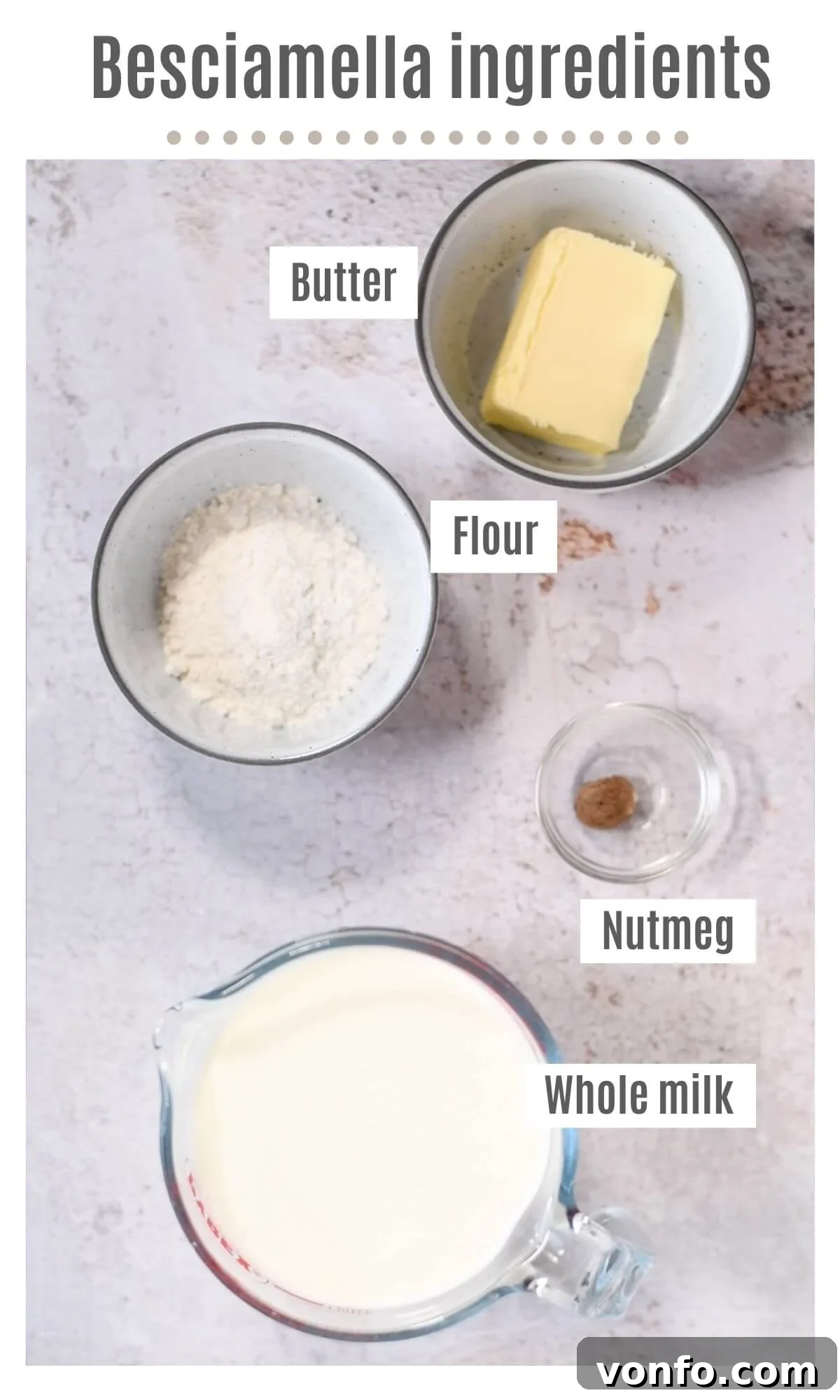
- Flour: For this classic sauce, standard all-purpose flour (often referred to as plain flour in the UK) is all you need. It creates a stable roux that efficiently thickens the milk. The protein content in all-purpose flour is ideal for achieving the desired consistency without making the sauce overly heavy or gummy.
- Butter: We highly recommend using unsalted butter. This gives you complete control over the final seasoning of your sauce. While it’s possible to use salted butter, remember to taste the sauce carefully before adding any additional salt to avoid over-seasoning. The butter’s temperature (cold or room temperature) isn’t critical, as it will quickly melt down to form the roux when heated in the saucepan.
- Milk: The key to a truly rich and creamy Besciamella lies in using whole milk (full-fat). Its higher fat content not only helps the sauce thicken more quickly by providing a richer emulsion but also contributes significantly to a luxuriously creamy texture and a fuller, richer flavor. You can opt for semi-skimmed milk (half-fat), but be aware that the sauce will likely take a little longer to reach the desired consistency and may not be quite as decadent. Skimmed milk is generally not recommended as it yields a much thinner, less flavorful sauce with a less satisfying mouthfeel.
- Nutmeg: A pinch of freshly grated nutmeg is the secret ingredient that imparts a subtle, aromatic warmth, a distinct hallmark of authentic Italian Besciamella. Its delicate hint enhances the overall flavor profile without overpowering it, adding a layer of sophisticated complexity. If fresh nutmeg isn’t available, a tiny pinch of good quality pre-ground nutmeg will suffice, but be mindful not to overdo it as its flavor is more concentrated.
- Salt and Pepper: These seasonings should be added at the very end of the cooking process, allowing you to adjust them perfectly to your taste. I personally prefer a generous amount of freshly ground black pepper for a slight warmth and visual appeal, combined with flaky sea salt for its superior flavor and texture. Avoid adding too much salt initially, as the sauce will reduce slightly, concentrating the flavors.
Step-by-Step Guide: Crafting Your Silky Smooth Besciamella
Achieving a perfectly smooth and creamy Besciamella is simpler than you might think. Follow these detailed steps for an impeccable sauce every time, using a whisk to guarantee a lump-free result!
Step 1: Prepare the Milk. Begin by gently heating the milk in a saucepan over low to medium heat until it is warm to the touch, but critically, do not let it boil. You should see small bubbles forming around the edges, but no vigorous boiling. Once warm, remove it from the heat. This pre-warming step is crucial as it helps the sauce thicken more quickly and smoothly when combined with the roux, preventing lumps and ensuring an even, velvety texture. Using cold milk will work, but it will significantly prolong the whisking time and increase the effort required to achieve smoothness.
Step 2: Create the Roux (Butter & Flour Paste). In a separate, sturdy, heavy-bottomed saucepan (this helps prevent scorching), melt the butter over medium heat. Once the butter is fully melted and slightly foamy, add all of the flour at once. Immediately use a whisk to stir the mixture vigorously. Continue whisking and cooking this butter-flour paste, known as a roux, for 1-2 minutes. This brief but essential cooking period is designed to cook out the raw flour taste, ensuring your Besciamella has a clean, buttery flavor without any powdery or starchy undertones. The roux should remain pale in color (a ‘white’ or ‘blonde’ roux), not browned, as this is a classic white sauce.
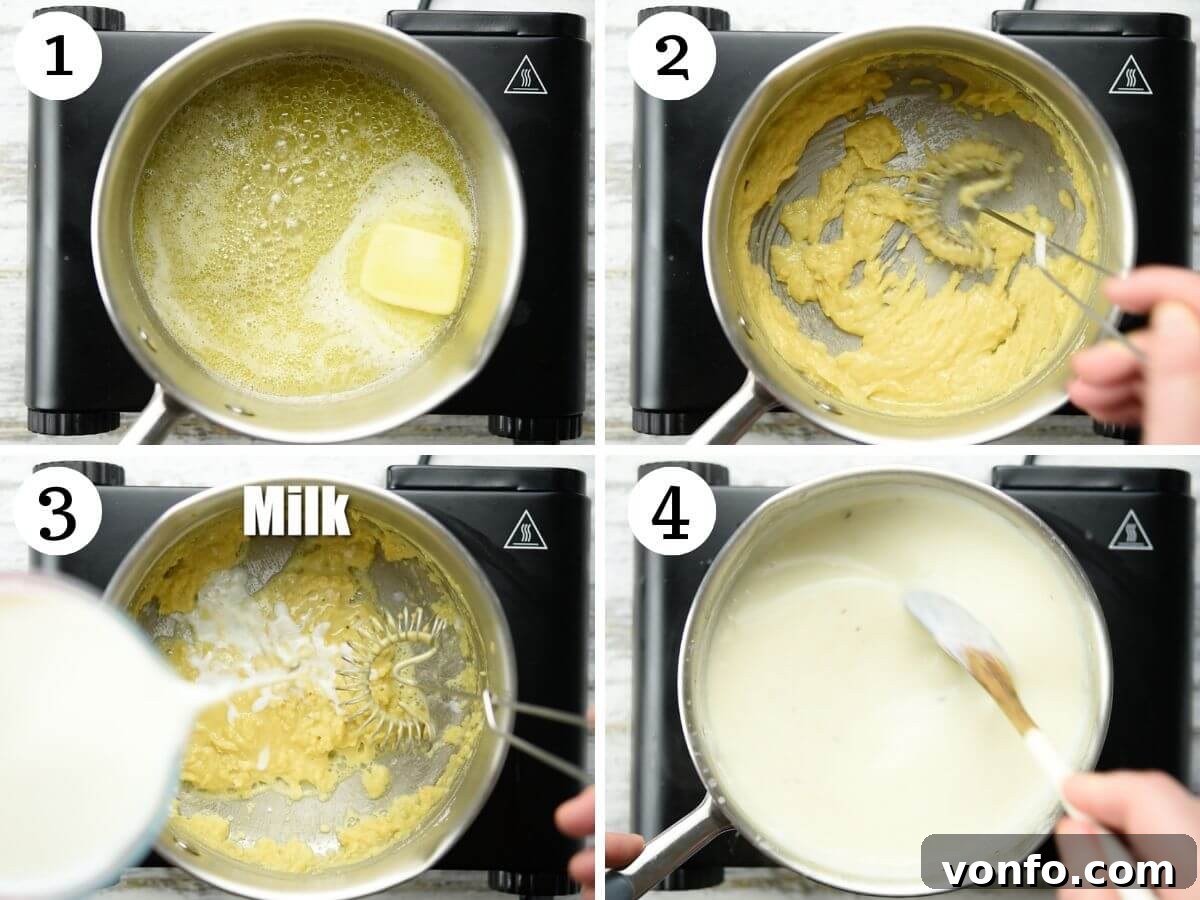
Step 3: Gradually Add Milk and Whisk Vigorously. This is the pivotal step where the magic of Besciamella truly unfolds! While constantly and vigorously whisking the hot roux in the saucepan, gradually add approximately one-third of the warm milk. Continue whisking without pause. The mixture will initially be very thick and pasty, almost clumpy, but as you whisk, it will quickly smooth out and begin to thicken into a cohesive sauce. Once this first addition is smooth, add the next third of the milk, whisking continuously until fully incorporated and lump-free. Finally, pour in the remaining milk. Keep whisking diligently until the entire sauce is uniformly thick, perfectly smooth, and free of any lumps. The consistent whisking, combined with the warmth of the milk, aids in creating a stable emulsion and preventing undesirable clumps.
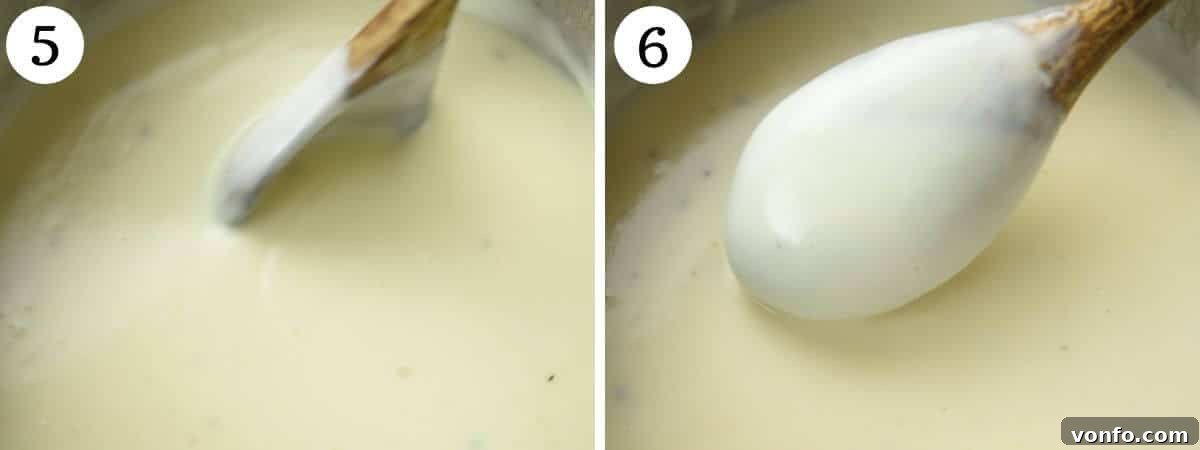
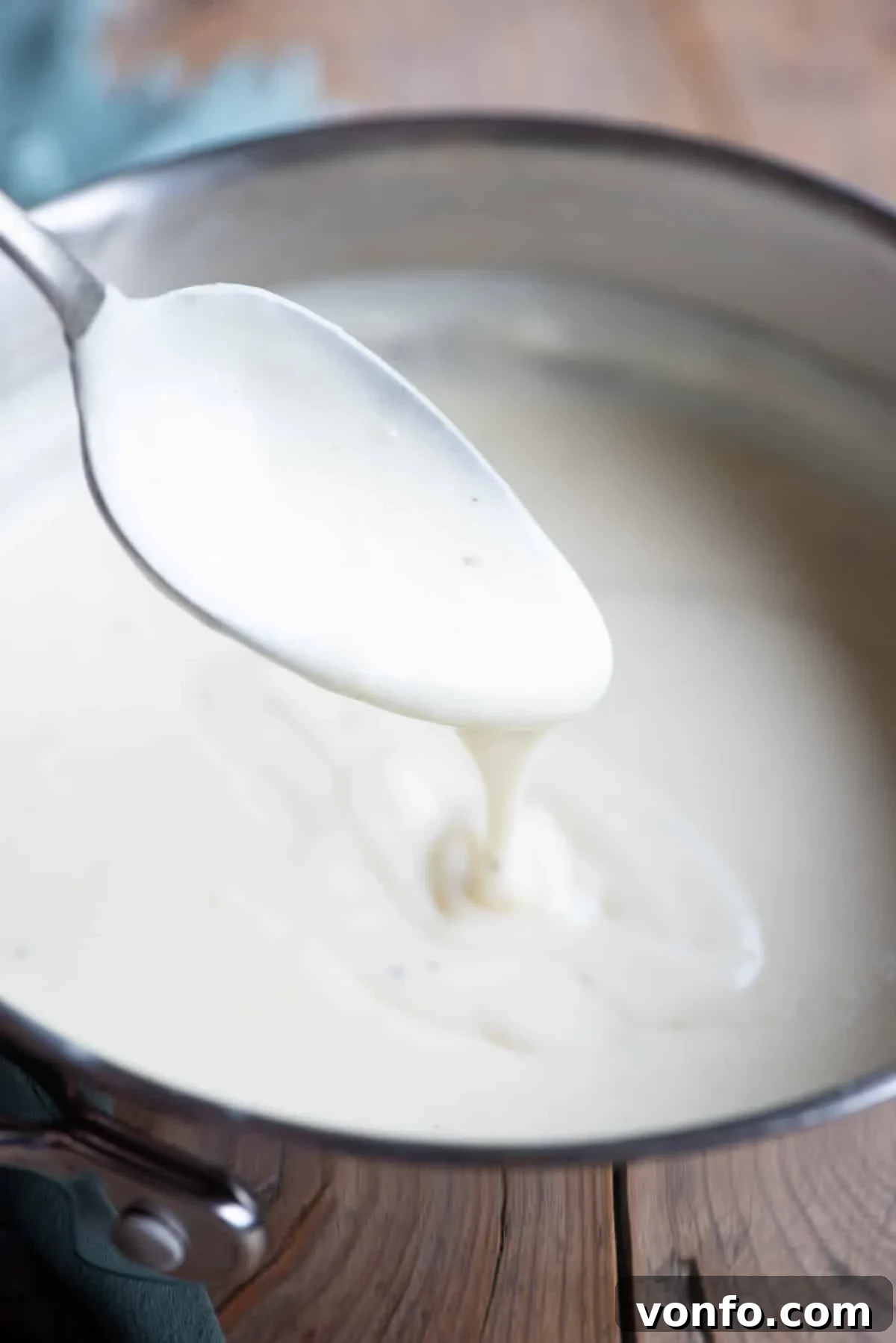
Step 4: Season and Finish to Perfection. Once your Besciamella has reached a beautiful, thick consistency that coats the back of a spoon, add your freshly grated nutmeg, salt, and freshly ground black pepper. Continue to cook the mixture for a few more minutes over low to medium heat, maintaining constant whisking or stirring. This final cooking ensures the flavors meld and the sauce achieves its wonderfully silky-smooth texture. Turn off the heat. Your homemade Besciamella sauce is now perfectly ready to be used immediately in your favorite recipes, or it can be covered and stored for later use.
Chef’s Note on Optional Additions: If you plan to add cheese to make a rich Mornay sauce, stir it into the warm Besciamella at the very end of Step 4, off the heat, until it is fully melted and smoothly incorporated. Popular choices include Parmigiano Reggiano, Gruyère, or Fontina, depending on your desired flavor profile and culinary application.
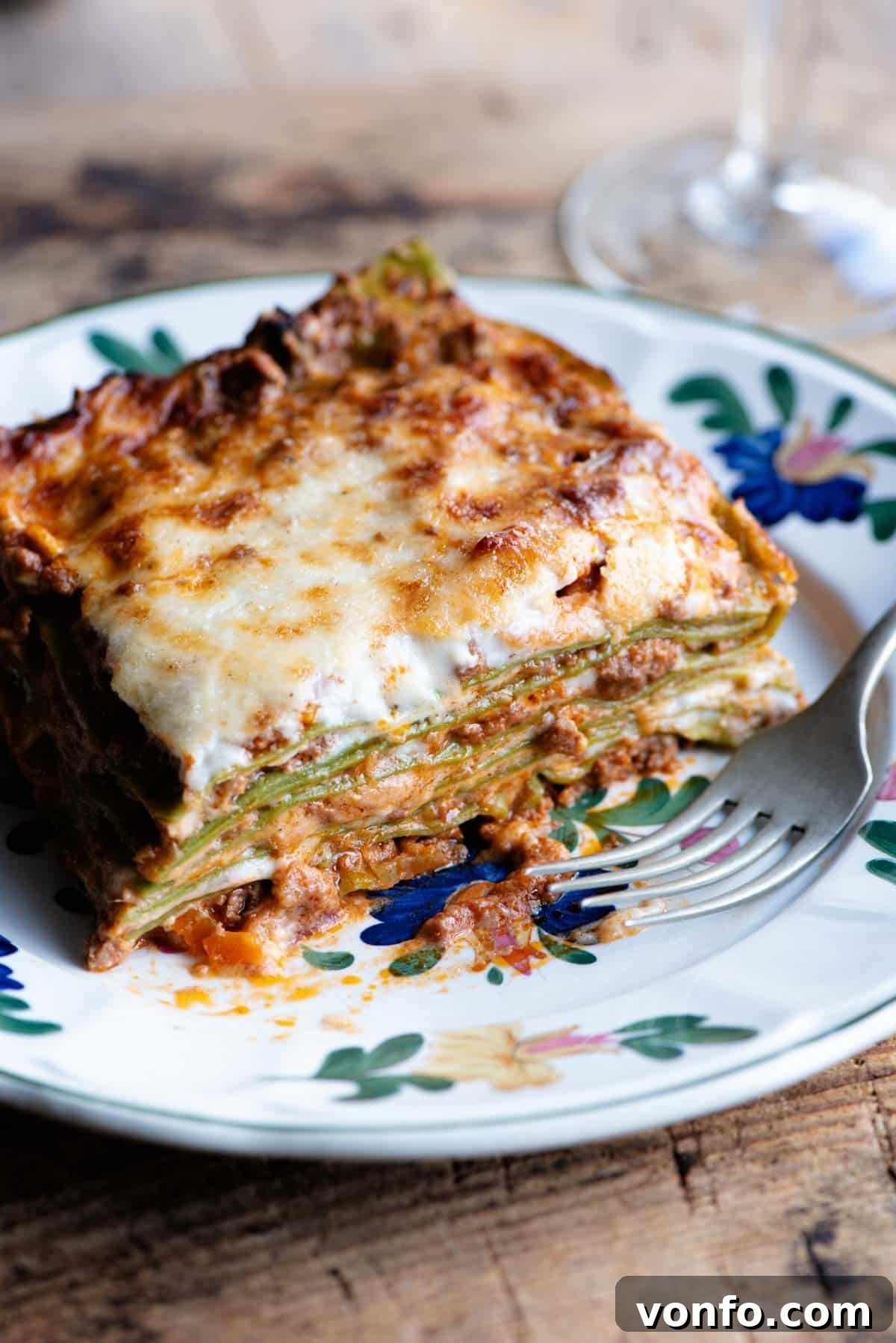
Versatile Applications: Where to Use Your Homemade Besciamella (with Recipes!)
The beauty of homemade Italian Besciamella lies in its incredible versatility. In Italy, this creamy white sauce is the cornerstone of all different kinds of baked pasta and vegetable dishes, transforming simple ingredients into soul-satisfying comfort food. It’s the unifying ingredient that brings richness, moisture, and flavor to countless beloved classics, acting as a binder, a luxurious topping, or a creamy filling.
Undoubtedly, one of its most celebrated uses is in the ultimate Italian comfort food: Lasagna al Forno. The delicate layers of pasta, rich ragu, and creamy Besciamella create an unforgettable culinary experience, a dish revered across Italy. We’re proud to offer a range of delicious lasagna recipes that rely on the magic of this sauce, ensuring deep flavor and perfect texture:
- Authentic Lasagna Bolognese: The classic meat sauce lasagna, made richer with Besciamella.
- Classic Lasagne al Forno (Italian Beef Lasagna): A hearty beef lasagna, perfected with creamy layers.
- Vegetarian Eggplant Lasagna: A delicious meat-free alternative, where Besciamella complements the sweet eggplant.
- Hearty Lentil Ragu Lasagne: A plant-based lasagna that doesn’t compromise on creaminess thanks to Besciamella.
- Sweet Butternut Squash Lasagna: A seasonal favorite, where the creamy sauce balances the sweetness of the squash.
But Besciamella’s charm extends far beyond lasagna! Explore its creamy potential in these other incredible recipes from our kitchen, showcasing its diverse applications:
- Pasta Al Forno (Baked Pasta): A delightful baked pasta dish where Besciamella coats every piece, ensuring a creamy, indulgent texture that melts in your mouth.
- Crespelle – Savoury Crepes with Peas, Ham and Fontina Cheese: Delicate Italian crepes filled with a rich Besciamella-based mixture, often combined with other savory ingredients, then baked until golden and bubbly.
- Rustici Leccesi (Tomato and Mozzarella Pastries): Flaky puff pastry pockets filled with a savory blend often featuring a touch of Besciamella for extra richness and moisture, making them irresistibly tender.
- Pesto Provolone Cannelloni Pasta: Cannelloni tubes stuffed with a delicious filling and enveloped in a luscious Besciamella sauce, often with a hint of vibrant pesto, then baked to perfection.
- Baked Cauliflower Cheese And Fennel: A comforting vegetable gratin where cauliflower and fennel are baked in a rich, cheesy Besciamella sauce until tender, bubbling, and beautifully golden.
These examples barely scratch the surface of Besciamella’s culinary potential. Once you master this fundamental sauce, you’ll discover endless opportunities to incorporate its creamy magic into your favorite dishes, transforming ordinary meals into extraordinary culinary delights. Its neutral yet rich base makes it adaptable to a myriad of flavors, from simple vegetable sides to elaborate pasta preparations.
Expert Recipe Tips and Frequently Asked Questions
- Always Use Warm Milk: While you can technically use cold milk, warming it beforehand is a game-changer. Warm milk integrates into the roux much more smoothly and quickly, significantly reducing the chances of lumps and speeding up the thickening process. This thermal shock prevention ensures a superior, silky texture.
- The Whisk is Your Best Friend: A small hand whisk is absolutely essential when adding milk to your roux. Constant, vigorous whisking is the key to creating a perfectly smooth, lump-free sauce. Don’t be shy with it! The mechanical action of the whisk breaks down any potential lumps before they can fully form.
- Preventing a Skin from Forming: As Besciamella cools, a thin skin will rapidly form on its surface due due to evaporation and protein coagulation. To prevent this, simply place a sheet of plastic wrap (cling film) directly onto the surface of the sauce, ensuring it touches every part and creates an airtight seal. This effectively blocks air exposure.
- My Sauce Isn’t Thickening – What’s Wrong?: This is a common issue and usually indicates your heat is too low. The flour in the roux needs sufficient heat to cook and fully activate its thickening properties. Turn up the heat slightly to a medium setting and continue whisking consistently. Be patient; it will eventually thicken, but don’t stop whisking!
- No Butter? No Problem!: If you’re out of butter or prefer an alternative for dietary reasons, explore our dedicated recipe for how to make béchamel sauce without butter, which offers a fantastic workaround using olive oil or other fats.
- Can I Freeze Besciamella Sauce?: Yes, you absolutely can! Once your Besciamella has cooled completely, transfer it to airtight freezer bags or containers, leaving a little headspace. Freeze it for up to 3 months. When ready to use, defrost it completely in the refrigerator. Reheat gently over low heat, whisking constantly to restore its smooth consistency. You might need to add a splash of milk or broth to loosen it if it appears too thick.
- Does Besciamella (Béchamel Sauce) Have Cheese In It?: Traditionally, a classic Béchamel or Besciamella sauce does not contain any cheese. It is a pure white sauce, appreciated for its unadulterated creamy flavor. When cheese is added, it transforms into what is known as Mornay sauce in French cuisine. In Italy, if cheese is added, Parmigiano Reggiano is the most common and preferred choice, lending a wonderful savory depth and umami flavor, particularly in baked dishes.
- A Skin Has Formed – What Should I Do?: If a skin has unfortunately formed on your cooled Besciamella, don’t despair! The best approach is to whisk it vigorously back into the sauce for a few seconds. The skin is usually thin and delicate enough to reintegrate seamlessly, becoming undetectable. Trying to remove it can be tricky due to its fragile nature. Remember to cover it directly with plastic wrap next time!
- Storage: Store leftover Besciamella in an airtight container in the refrigerator for 2-3 days. Always ensure it’s covered directly with plastic wrap, pressing the film onto the surface of the sauce, to effectively prevent skin formation and keep it fresh.
We hope you’ve enjoyed mastering this Authentic Italian Béchamel Sauce (Besciamella) recipe! If you’ve tried this or any other recipe on our blog, please don’t hesitate to rate the recipe and share your experience in the comments below – we absolutely love hearing from you! Your feedback helps our community of home cooks. You can also follow us on Facebook, Instagram, and Pinterest for more delicious food inspiration, or sign up for our Newsletter to get weekly updates straight to your inbox, ensuring you never miss a new recipe!
Classic Italian Béchamel Sauce (Besciamella) Recipe
This easy-to-follow recipe guides you through making a perfect batch of Italian Béchamel sauce, the creamy foundation for countless Italian comfort foods.
5 minutes
15 minutes
20 minutes
Approximately 1 quart (1 liter) enough for one large lasagna
Print Recipe
Ingredients
- 5 tablespoons unsalted butter (70g)
- 5 tablespoons all-purpose flour (70g)
- 4 and 1/4 cups whole milk (1 liter), warmed
- 1 pinch freshly grated nutmeg
- Salt and freshly ground black pepper, to taste
Optional Addition
- Parmigiano Reggiano or other desired cheese, to taste (for making Mornay sauce)
Instructions
- Gently warm the milk in a saucepan over low heat until it’s warm to the touch (do not boil). Remove from heat and set aside.
- In a separate, heavy-bottomed saucepan, melt the butter over medium heat. Once completely melted, add the flour all at once and whisk continuously to create a smooth paste, known as a roux. Cook the roux for 1-2 minutes, stirring constantly, to cook out the raw flour taste. Ensure it remains light in color (a white or blonde roux).
- While vigorously and constantly whisking, gradually pour in one-third of the warm milk into the roux. Whisk until the mixture is completely smooth and thick. Add the next third of the milk, continuing to whisk until smooth. Finally, pour in the remaining milk and continue whisking until the entire sauce is thick, silky-smooth, and free of any lumps.
- Season the Besciamella with a pinch of freshly grated nutmeg, salt, and freshly ground black pepper to taste. Continue to cook, whisking occasionally, for a few more minutes over low to medium heat until the sauce is wonderfully silky smooth and coats the back of a spoon. Turn off the heat. Your Besciamella is now perfectly ready to use.
- Chef’s Note: If you wish to make a cheesy Mornay sauce, stir in grated Parmigiano Reggiano or other desired cheese at this stage, off the heat, until fully melted and smoothly incorporated into the warm sauce.
Video Tutorial
A detailed video tutorial demonstrating each step of making authentic Italian Besciamella sauce will be available here soon to guide you to culinary success!
Recipe Notes and Storage
- Warm Milk Advantage: Always aim to use warm milk; it helps the sauce emulsify and thicken faster, preventing lumps and making the process smoother. Cold milk works too, but it will take more time and vigorous whisking.
- Whisking is Key: Don’t underestimate the power of a good whisk! Constant, energetic whisking is absolutely essential, especially when adding milk to the roux, to achieve a perfectly smooth, lump-free texture.
- Preventing Skin: To stop a skin from forming as the Besciamella cools, place plastic wrap directly onto the surface of the sauce, ensuring no air is trapped between the film and the sauce. This creates an effective barrier against evaporation.
- Storage & Freezing: Fresh Besciamella can be stored in an airtight container in the refrigerator for 2-3 days (always covered directly with plastic wrap). For longer storage, cool completely, then transfer to freezer-safe bags or containers. Freeze for up to 3 months. Thaw in the refrigerator overnight and gently reheat over low heat, whisking well, adding a splash of milk if needed to restore its original smooth consistency.
- Troubleshooting Thin Sauce: If your sauce isn’t thickening to the desired consistency, the most common reason is that the heat is too low. Increase the heat slightly to a medium setting and continue whisking vigorously. The flour needs sufficient heat to cook and fully activate its thickening power. Be patient and keep whisking; it will eventually thicken!
Helpful Info for All Our Recipes
- We always use extra virgin olive oil in all of our recipes unless explicitly stated otherwise, for its superior flavor and health benefits.
- For canned or jarred tomatoes, we consistently recommend high-quality brands like Cirio or Mutti for their exceptional flavor, vibrant color, and consistent results in all your Italian cooking.
- Unless specified, all vegetables referenced in our recipes are assumed to be medium-sized.
- All our recipes are thoroughly tested and developed using a fan (convection) oven for consistent and reliable results.
- Discover more about how nutrition information is calculated for our recipes, providing transparency and helpful dietary insights.
- Browse our essential Italian Pantry Staples to ensure your kitchen is stocked with all the key ingredients for authentic Italian cooking.
- Explore all our Essential Kitchen Tools for Italian Cooking for a fully equipped culinary experience that makes cooking a joy.
Nutrition Information (per serving)
Calories:
84
kcal
|
Carbohydrates:
4
g
|
Protein:
1
g
|
Fat:
7
g
|
Saturated Fat:
5
g
|
Polyunsaturated Fat:
0.3
g
|
Monounsaturated Fat:
2
g
|
Trans Fat:
0.3
g
|
Cholesterol:
19
mg
|
Sodium:
57
mg
|
Potassium:
9
mg
|
Fiber:
0.2
g
|
Sugar:
0.04
g
|
Vitamin A:
219
IU
|
Calcium:
4
mg
|
Iron:
0.3
mg
Nutrition information is automatically calculated and should be used as an approximation only. Individual results may vary based on specific ingredients and preparation methods.
Did you try this recipe?
Leave a comment below! We’d love to hear from you.