
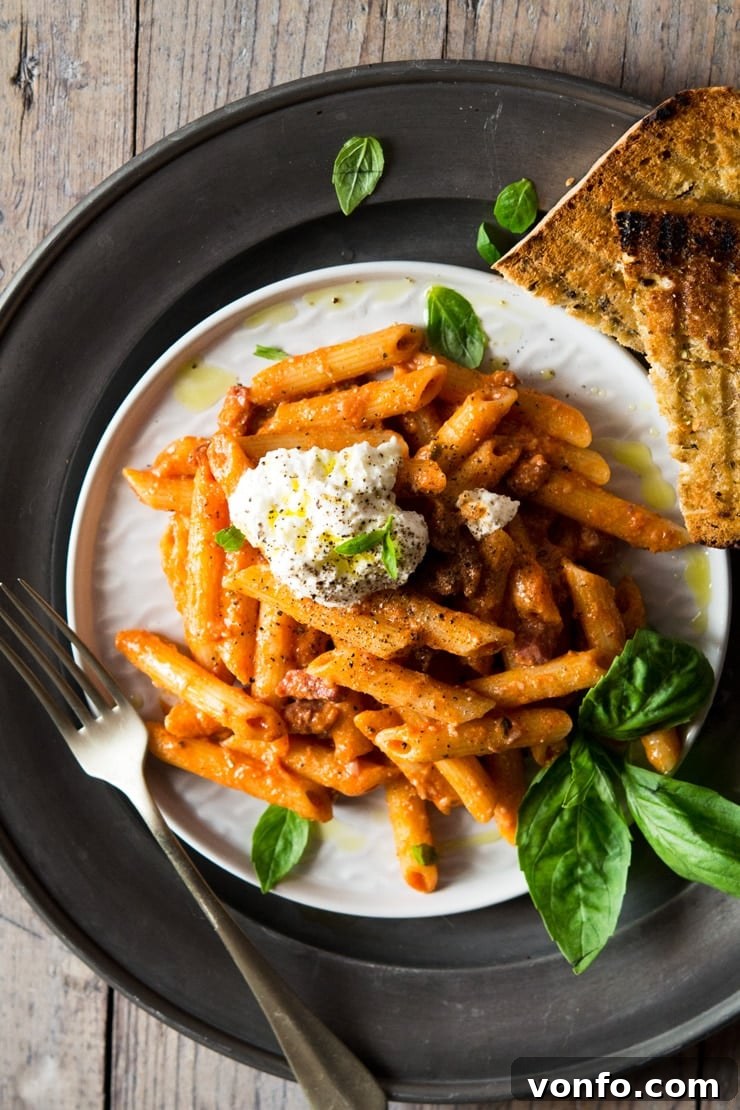

Delicious Penne Pasta with Ricotta, Pancetta & Tomato Sauce: An Easy Italian Comfort Food Recipe
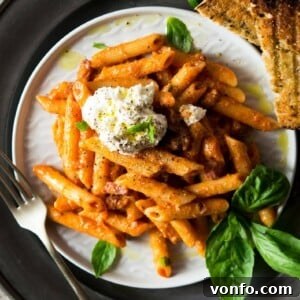
Prepare to fall in love with this irresistible Penne Pasta featuring the perfect trifecta of creamy ricotta, crispy pancetta, and a vibrant, deeply flavored tomato sauce. This dish isn’t just delicious; it’s a celebration of simple Italian ingredients coming together to create a truly comforting and satisfying meal. What makes it even better? It’s incredibly easy to prepare and can be on your dinner table in approximately 15-20 minutes, making it an ideal choice for busy weeknights or a relaxed weekend lunch. Serve this hearty pasta in generous bowls, perhaps alongside some perfectly toasted garlic bread and a fresh, crisp green salad for a complete and delightful culinary experience.
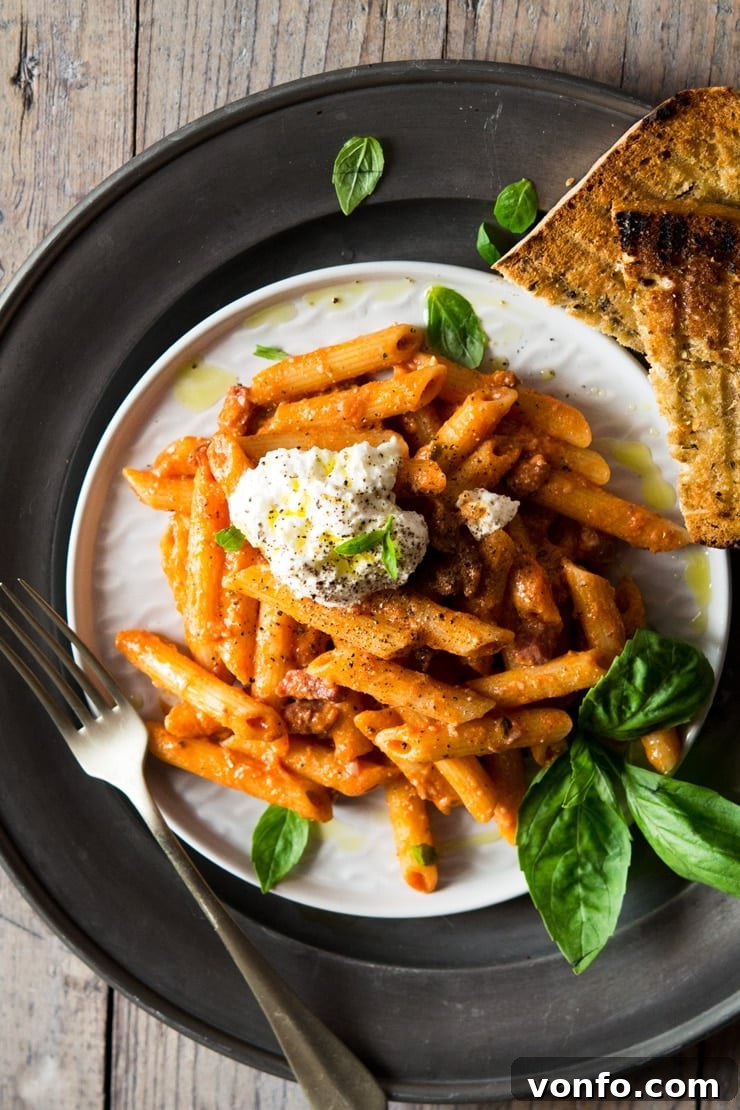
Why You’ll Adore This Penne Pasta Recipe
This Penne Pasta with Ricotta, Pancetta & Tomato Sauce stands out as a true culinary gem for several reasons. First and foremost, the inclusion of ricotta cheese transforms a simple tomato sauce into something truly luxurious. Its mild, slightly sweet, and incredibly creamy texture envelops each piece of pasta, creating a velvety mouthfeel that is utterly addictive. Unlike heavier cream-based sauces, ricotta offers a lighter, fresher creaminess that brightens the entire dish.
Secondly, the star ingredient, pancetta, brings an unparalleled depth of savory, salty, and slightly smoky flavor. When rendered until crisp, it adds a delightful textural contrast that elevates every bite. The robust notes of pancetta perfectly complement the tang of the tomato and the subtle sweetness of the ricotta.
Finally, the speed and simplicity of this recipe make it a kitchen hero. Despite its gourmet taste, it requires minimal effort and time, proving that extraordinary meals don’t always demand hours in the kitchen. It’s the ultimate comfort food – warm, satisfying, and packed with authentic Italian flavors that will leave everyone at the table asking for seconds.
The Magic of Ricotta in Pasta Sauce
I genuinely adore ricotta pasta sauces; they are simply exquisite in their creaminess and delectable taste. Ricotta, a fresh, soft Italian cheese made from the whey of sheep, cow, goat, or Italian buffalo milk, plays a pivotal role in this recipe. Its fine, grainy texture melts into the sauce, contributing a subtle richness and a delicate tang that beautifully balances the savory pancetta and the acidity of the tomatoes. It’s less dense than many other cheeses, allowing it to blend seamlessly and lighten the overall consistency of the sauce, without making it heavy or cloying. For the best results, always opt for a good quality, fresh ricotta, as its flavor and texture will truly shine through.
Reserved Pasta Water: Your Secret Weapon for Perfect Sauce
Here’s an invaluable tip that every home cook should master: always reserve at least a cup (250ml) of the starchy pasta water from every batch of pasta you cook. This seemingly simple step is a game-changer for pasta sauces. The cloudy, starchy water is rich in emulsifiers, which means it helps bind oil-based sauces with water-based ingredients, creating a silky, cohesive, and perfectly coated pasta. If your sauce ever seems a little too thick, lacking in moisture, or needs an extra boost of flavor and luxuriousness, adding a splash of this liquid gold will instantly transform it. Trust me, you’ll be amazed by how this humble ingredient elevates the texture and taste of your pasta dishes.
Understanding Your Ingredients
The success of any great Italian dish lies in the quality and understanding of its core ingredients. Let’s delve into what makes pancetta, prosciutto, penne, and passata so special in this recipe.
What is Pancetta?
Pancetta is a staple in Italian cooking, often described as the Italian equivalent of bacon. However, there are distinct differences. Pancetta is pork belly that is salt-cured, usually with various spices like black pepper, nutmeg, and sometimes garlic, but it is not smoked, unlike most American bacon. It’s typically sold in a rolled form (`pancetta arrotolata`) or flat (`pancetta stesa`). For this recipe, you’ll often find it pre-cubed or in thin slices, perfect for rendering down to release its exquisite fat and flavor. When cooked, pancetta becomes wonderfully crispy, adding a savory, slightly salty crunch that enhances pasta sauces, risottos, and vegetable dishes.
Pancetta vs. Prosciutto: A Culinary Comparison
While both pancetta and prosciutto are iconic Italian cured meats derived from pork, they differ significantly in their preparation, texture, and culinary applications. Prosciutto is a dry-cured ham, typically made from the hind leg of a pig. It undergoes a long curing process, often lasting from nine months to two years, resulting in a tender, often thinly sliced product that is usually eaten raw. Because it’s cured, it’s considered “cooked” and doesn’t require further heat treatment. Prosciutto is prized for its delicate, salty-sweet flavor and melt-in-your-mouth texture, making it perfect for antipasti platters, wrapped around melon, draped over crostini, in sandwiches, or served simply with cheese.
Pancetta, on the other hand, is cured pork belly. While also cured, it is not typically eaten raw and is usually cooked to render its fat and crisp up, much like bacon. As mentioned, it’s often available cubed or in thin slices, ideal for adding depth to cooked dishes. Its robust flavor and satisfying texture make it a fantastic addition to pasta sauces, soups, stews, and baked dishes. If you can find pancetta in thin slices or strips, it’s also excellent for wrapping around other meats like chicken breasts, beef fillets, or sausages before roasting, adding moisture and a beautiful flavor profile.
Finding the Right Pasta: Penne Perfection
Penne is a classic tubular pasta, cut at an angle to resemble quill pens (hence its name, meaning “feathers” or “quills” in Italian). Its ridged surface and hollow center make it exceptional for capturing and holding rich, creamy sauces like the one in this recipe. When cooked al dente, it offers a satisfying chew that complements the various textures of the pancetta and ricotta. While penne is the traditional choice for this dish, other sturdy, short pasta shapes like rigatoni, ziti, or cavatappi would also work wonderfully, each offering a slightly different textural experience.
The Importance of Quality Tomatoes: Passata Power
For an authentic Italian tomato sauce, the quality of your tomatoes is paramount. This recipe calls for passata, which is essentially strained tomatoes. It’s a smooth, seedless, and skinless tomato puree that provides a pure, intense tomato flavor and a silky texture to the sauce. Unlike canned crushed tomatoes, passata is usually uncooked, offering a fresh, bright taste. Brands like Cirio or Mutti are highly recommended for their consistent quality and robust flavor, ensuring your sauce has that genuine Italian essence. Using high-quality passata forms the foundational flavor of your sauce, allowing it to shine with minimal fuss.
Simple Substitutions for Every Palate
While the combination of pancetta, ricotta, and tomato is truly divine, it’s always helpful to know what substitutions you can make, whether for dietary reasons or simply because you don’t have certain ingredients on hand. For those looking for an alternative to pancetta, two excellent options are sun-dried tomatoes or capers. Both offer a wonderful burst of intense, salty, and sometimes sweet flavor that can stand in for the savory notes of pancetta.
- Sun-dried tomatoes: These intensely flavored tomatoes are packed with umami. They are sharp, salty, and sweet all at once, making them a fantastic substitute in many pasta sauces, especially cheesy dishes. Chop them finely and sauté them with garlic to release their full flavor.
- Capers: These pickled flower buds offer a briny, tangy kick that can cut through the richness of the ricotta and tomato. Add them towards the end of cooking to maintain their distinct flavor.
In fact, both sun-dried tomatoes and capers would also be a great substitute for prosciutto in recipes such as my butternut squash lasagna recipe, providing a similar salty counterpoint without the meat.
For those who can’t find penne, consider other short, ridged pasta types like rigatoni or ziti, which also hold sauce beautifully. If ricotta isn’t available, a dollop of mascarpone or even a small amount of cream cheese could provide a similar creamy texture, though the flavor profile would shift slightly.
How to Make Penne Pasta With Ricotta, Pancetta, and Tomato Sauce: A Step-by-Step Guide
Crafting this delightful pasta dish is a straightforward process, promising a gourmet experience with minimal effort. Follow these detailed steps to ensure a perfect plate every time:
- **Cook the Penne:** Begin by bringing a large pot of generously salted water to a rolling boil. Add your penne pasta and cook it until it reaches a perfect al dente stage, following the instructions on the pasta packet. This usually means it will be firm to the bite but not hard. Before draining, remember to reserve about 1 to 1.5 cups (250-375ml) of the starchy pasta water. This is crucial for achieving the ideal sauce consistency.
- **Render the Pancetta:** While the pasta cooks, heat a large, deep pan over medium heat. Add the cubed pancetta and fry it for 1-2 minutes, stirring occasionally, until it begins to brown and crisp up. The pancetta will release its fat, creating a flavorful base for your sauce. At this point, there should be enough oil in the pan from the rendered pancetta. If, however, your pan seems dry, add about ½ tablespoon of olive oil to ensure everything cooks evenly.
- **Build the Flavor Base:** Reduce the heat slightly. Add the finely chopped garlic and dried oregano to the pan with the pancetta. Sauté for about 30 seconds until fragrant, being careful not to burn the garlic. The aroma will be incredible!
- **Deglaze with Red Wine:** Pour in the red wine and increase the heat slightly. Allow the wine to reduce for about 1 minute, scraping up any delicious browned bits from the bottom of the pan. This step adds a wonderful depth and complexity to the sauce.
- **Simmer the Tomato Sauce:** Add the passata (crushed strained tomatoes) to the pan, along with 1/3 cup (125ml) of your reserved pasta water. Bring the sauce to a gentle simmer and cook for 3-4 minutes, allowing it to reduce slightly and for the flavors to meld beautifully. Turn off the heat and season generously with salt and black pepper to taste.
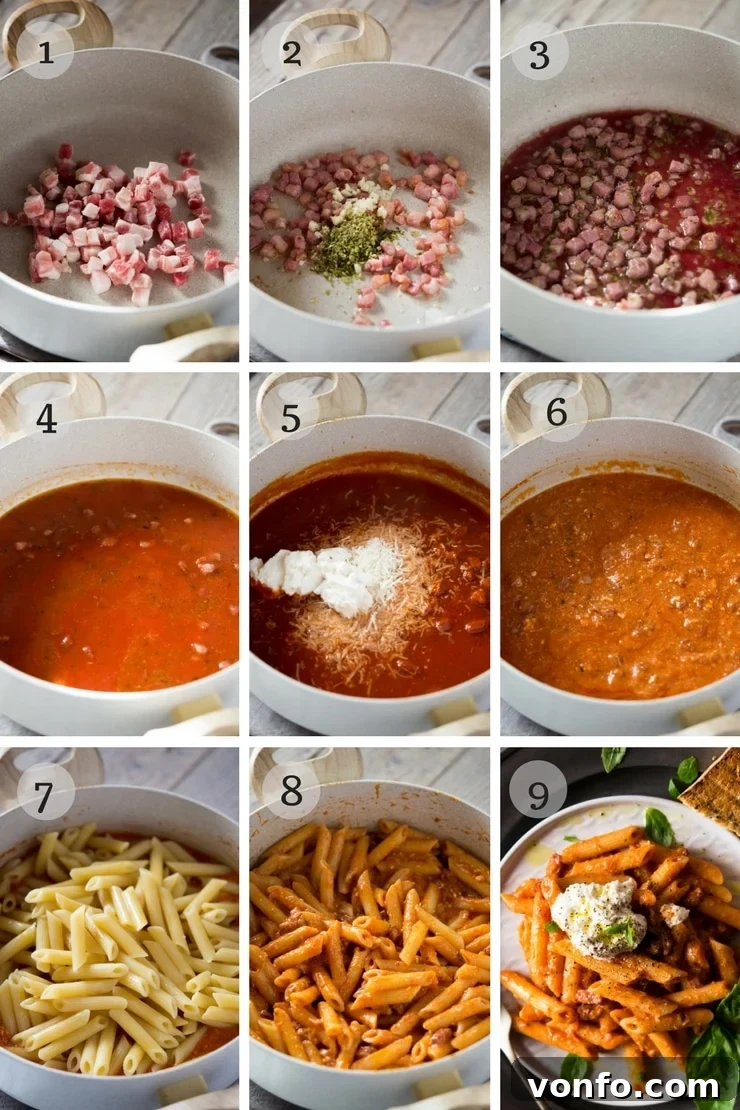
- **Incorporate Ricotta and Parmesan:** Once the heat is off, add the fresh ricotta and grated parmesan cheese to the tomato sauce. Stir vigorously until both cheeses are completely combined and the sauce takes on a creamy, luscious texture. Don’t worry if the ricotta appears slightly grainy at first; this is normal and contributes to the rustic charm of the dish.
- **Combine with Pasta:** Return the pan to very low heat. Add the drained penne pasta directly into the sauce. Toss everything together until the pasta is thoroughly coated in the rich, creamy sauce. If the sauce appears too thick for your liking, gradually add 3-4 tablespoons of the reserved pasta water, stirring continuously, until you achieve your desired consistency. This starchy water will help emulsify the sauce, making it even smoother and more flavorful.
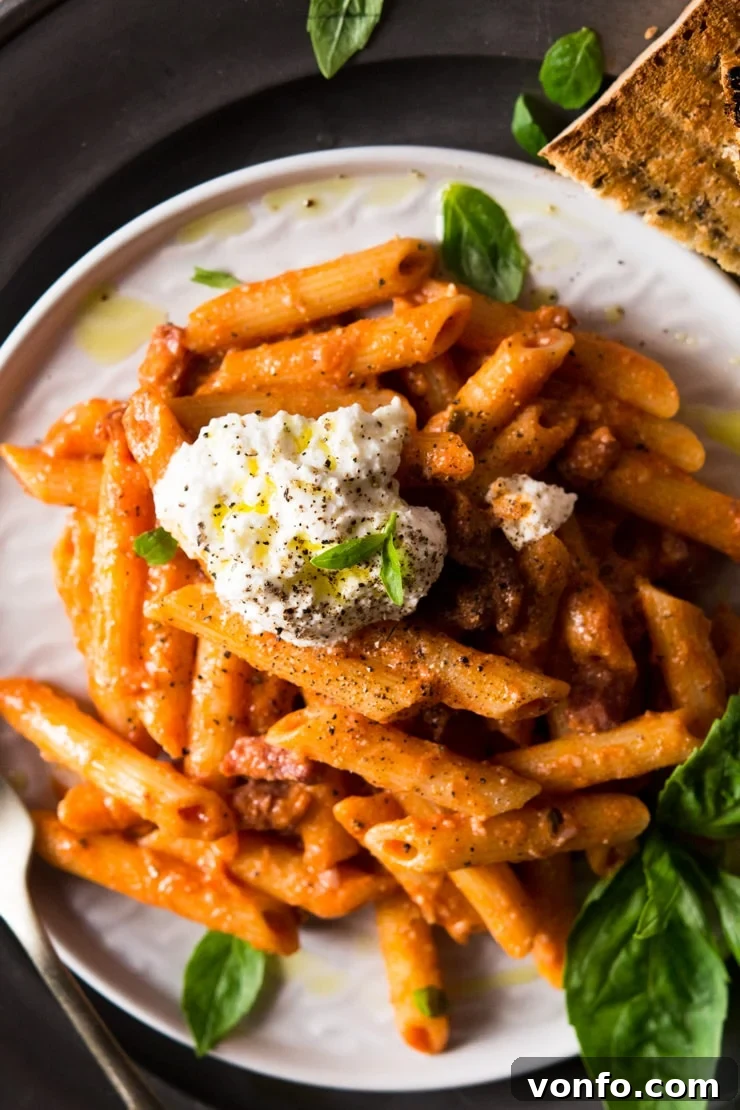
- **Serve and Garnish:** Serve immediately in warm bowls. For an extra touch of indulgence and creaminess, I absolutely love to add an additional dollop of fresh ricotta on top of each serving, a drizzle of high-quality extra virgin olive oil, and a generous crack of black pepper. A sprinkle of fresh basil or parsley also adds a lovely freshness. Enjoy!
Expert Tips for the Perfect Pasta Dish
- **Al Dente Perfection:** Always cook your pasta al dente. This means it should be firm to the bite but still have a slight chew. Overcooked pasta becomes mushy and loses its structural integrity, diminishing the overall texture of your dish. Taste a piece of pasta a minute or two before the package instructions suggest to check for doneness.
- **Achieving Crispy Pancetta:** For the best results, start frying your pancetta in a cold pan and gradually increase the heat to medium. This allows the fat to slowly render out, making the pancetta incredibly crispy without burning. Don’t rush this step!
- **Emulsifying the Sauce:** The reserved pasta water is truly magical. Its starch content helps to emulsify the sauce, creating a smooth, velvety texture that clings beautifully to the pasta. If your sauce seems too dry or thick, gradually add small amounts of this starchy water until you reach your desired consistency. It’s always better to add a little at a time than too much.
- **Seasoning Wisely:** Taste your sauce at every stage of cooking. Adjust salt and pepper as needed, especially after adding the ricotta and parmesan, as these cheeses contribute their own saltiness. A final pinch of freshly cracked black pepper at the end enhances all the flavors.
- **Garnish for Impact:** Don’t underestimate the power of a good garnish. An extra dollop of fresh ricotta, a drizzle of quality extra virgin olive oil, a sprinkle of fresh basil or parsley, and more grated Parmesan can elevate both the visual appeal and the flavor profile of your finished dish.
Serving Suggestions to Complete Your Meal
This Penne Pasta with Ricotta, Pancetta & Tomato Sauce is a hearty and satisfying meal on its own, but it pairs wonderfully with a few simple accompaniments. For a classic Italian touch, serve it with warm, crusty garlic bread to soak up every last drop of the delicious sauce. A fresh, vibrant side salad, dressed with a simple vinaigrette, provides a refreshing contrast to the richness of the pasta. You might also consider roasted asparagus or broccoli as a green vegetable side. For a beverage pairing, a light-bodied red wine like a Chianti or a Pinot Noir would complement the flavors beautifully, or a crisp white wine such as a Pinot Grigio.
Variations to Explore
This recipe is incredibly versatile and can be easily adapted to suit your preferences or what you have on hand:
- **Add Vegetables:** Enhance the nutritional value and texture by incorporating finely diced vegetables. Sautéing onions, bell peppers, zucchini, or mushrooms with the pancetta and garlic adds extra flavor and substance. Spinach or arugula can be stirred in at the very end, wilting into the warm pasta.
- **Make it Spicy:** For those who enjoy a little heat, a pinch of red pepper flakes added with the garlic will give the sauce a pleasant kick.
- **Herb Freshness:** While dried oregano is convenient, fresh herbs can elevate the dish. Stir in fresh basil, parsley, or thyme at the end for a brighter flavor.
- **Different Cheeses:** While ricotta is key for creaminess, you can experiment with other soft cheeses. A touch of creamy goat cheese or even some burrata torn over the top at serving would be divine.
- **Vegetarian Option:** To make this dish vegetarian, simply omit the pancetta. You can add extra vegetables like roasted bell peppers, eggplant, or zucchini, or even smoky paprika to mimic some of the savory depth. Sun-dried tomatoes or olives would also be great additions.
Storing and Reheating Leftovers
This pasta dish tastes best when served fresh, but leftovers can be stored and reheated. Allow any remaining pasta to cool completely, then transfer it to an airtight container. It will keep in the refrigerator for up to 3-4 days. When reheating, you might find the sauce has thickened considerably. To restore its creamy texture, gently reheat the pasta in a pan over medium-low heat, adding a splash of water, milk, or a little more reserved pasta water (if you saved extra) until it reaches your desired consistency. Avoid reheating in the microwave for too long, as it can dry out the pasta.
More Irresistible Pasta Recipes to Try:
- Sun-dried tomato pasta with roasted red pepper
- Ricotta Pasta Sauce: 2 Ways
- Mafalde pasta with butter and parmesan
- Creamy butternut squash pasta
- Bucatini with roasted red pepper cream sauce
- Spaghetti alla puttanesca
Recipe Card: Penne Pasta with Ricotta and Tomato Sauce
Step By Step Photos Above
Most of our recipes come with step by step photos, helpful tips and tricks to make it perfectly first time and even video!
Penne Pasta with Ricotta and Tomato sauce
Rated 5 out of 5 stars by 4 readers.
By Emily
Prep: 2 mins
Cook: 20 mins
Total: 22 mins
Servings: 4 people
Print Recipe
This Penne Pasta with Ricotta, Pancetta and Tomato Sauce is a current favourite of mine that I just cannot get enough of. It’s super tasty and incredibly easy to make. Delicious comfort food!
Ingredients
- 1 clove garlic, finely chopped
- 1 cup smoked pancetta, cubed (100g)
- 14.1 oz penne pasta (400g)
- 1/4 cup ricotta, good quality (50g)
- 1 1/4 cups crushed strained tomatoes, passata (250g)
- 1/3 cup reserved pasta water, plus 3-4 tbsp if needed (125ml)
- 1 tbsp oregano dried
- 1/4 cup red wine (60ml)
- 0.7 oz parmesan plus extra for seasoning (20g)
- 1 pinch salt and pepper, to season
Instructions
- Bring a large pot of salted water to the boil and cook the penne pasta according to packet instructions until al dente. Remember to reserve about 1 to 1.5 cups of the starchy pasta water before draining.
- Add the pancetta to a large pan and fry for 1-2 minutes over medium heat until it starts to brown and crisp. There should be enough oil in the pan from the pancetta at this point, but if not, add ½ tbsp olive oil.
- Add the garlic and oregano to the pan and fry for 30 seconds until fragrant. Then, add the red wine and allow it to reduce for 1 minute, scraping up any browned bits from the pan.
- Stir in the passata and 1/3 cup (125ml) of the reserved pasta water. Cook the sauce for 3-4 minutes until it has reduced slightly and the flavors have melded. Turn off the heat and season with salt and pepper to taste.
- Add the ricotta and parmesan cheese to the sauce and stir until completely combined and creamy. Place the pan back on very low heat and add roughly 3-4 tablespoons of the reserved pasta water to emulsify the sauce if it seems too thick.
- Add the drained penne pasta to the pan and toss until it is completely coated in the luscious sauce.
- Serve immediately, topped with an extra dollop of ricotta and a sprinkling of fresh pepper or basil, if desired, for an extra touch of indulgence.
Notes
- The ricotta will look slightly grainy when mixed into the sauce; this is completely normal and adds to the rustic texture. Do not worry.
- Make sure to reserve the starchy pasta water to add to the sauce; do not replace it with normal tap water, as the starch is key for emulsification and flavor.
- You can substitute pancetta for sun-dried tomatoes or capers for a delicious vegetarian option or if you prefer an alternative flavor.
Helpful Info for All Recipes
- I always use extra virgin olive oil in all of my recipes unless stated otherwise.
- When I use canned or jarred tomatoes of any kind, I always use Cirio or Mutti brands for the best results and flavor.
- All vegetables are medium-sized unless stated otherwise.
- All recipes are tested and developed using a fan (convection) oven.
- Find out more about how nutrition is calculated.
- Check out our must-have Italian Pantry Staples.
- You can also find all our Essential Kitchen Tools for Italian Cooking.
Nutrition Information
Nutrition information is automatically calculated, so should only be used as an approximation.