
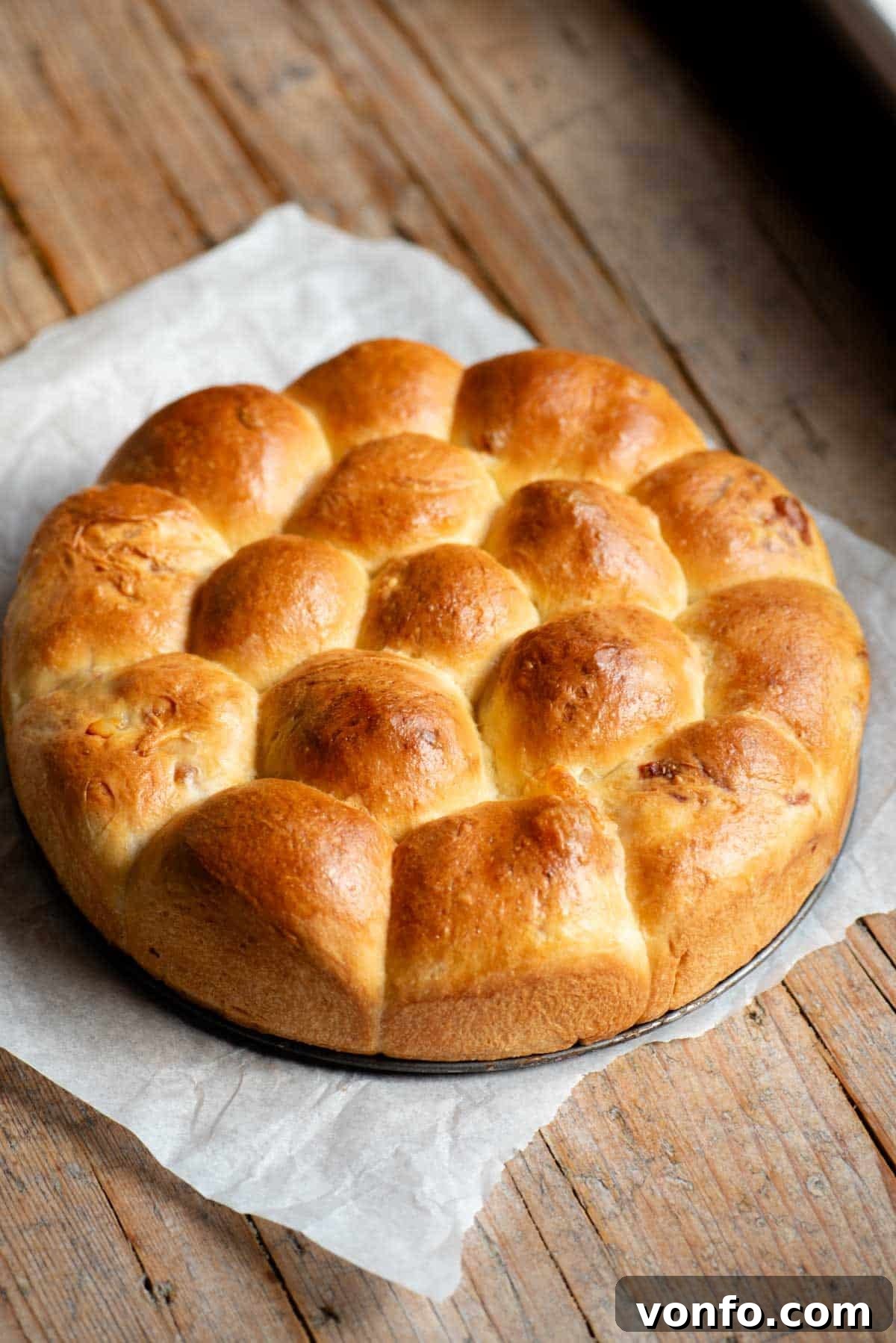
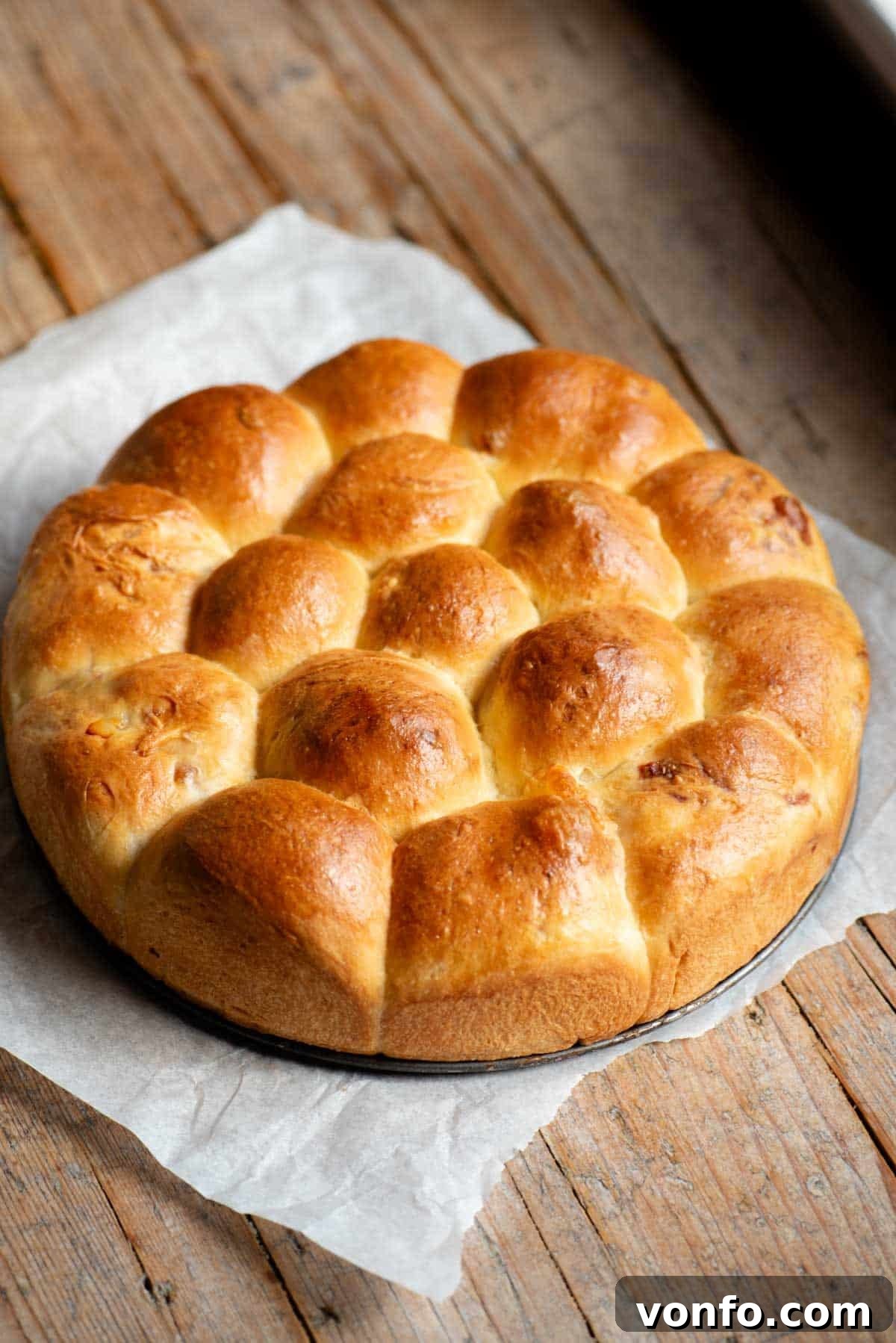
Danubio Salato is a classic Neapolitan baked good: soft, buttery brioche-like rolls filled with savory cheese and ham. This recipe uses low‑moisture mozzarella, smoked scamorza and prosciutto cotto for a rich, melty interior. The finished loaf is a pull‑apart bread ideal for sharing at gatherings, picnics or as a comforting lunch.
Recipe overview
- The recipe: a traditional Neapolitan pull‑apart brioche.
- Flavour and texture: soft, light and buttery rolls with a savoury ham and cheese filling.
- Prep and bake time: about 1 hour 15 minutes active time.
- Proofing time: roughly 6 hours total (including two proofs).
- Makes: 16 stuffed buns.
- Perfect for: sharing with a crowd, parties, picnics and aperitivo.
Danubio Salato is both fun to prepare and rewarding to serve. Its exact origin is unclear, but the Neapolitan version is well established and commonly enjoyed at celebrations and holidays. The concept—individual filled rolls baked together so they form a pull‑apart loaf—is versatile, making it easy to experiment with fillings while keeping the recipe approachable for most home bakers.
Ingredient notes
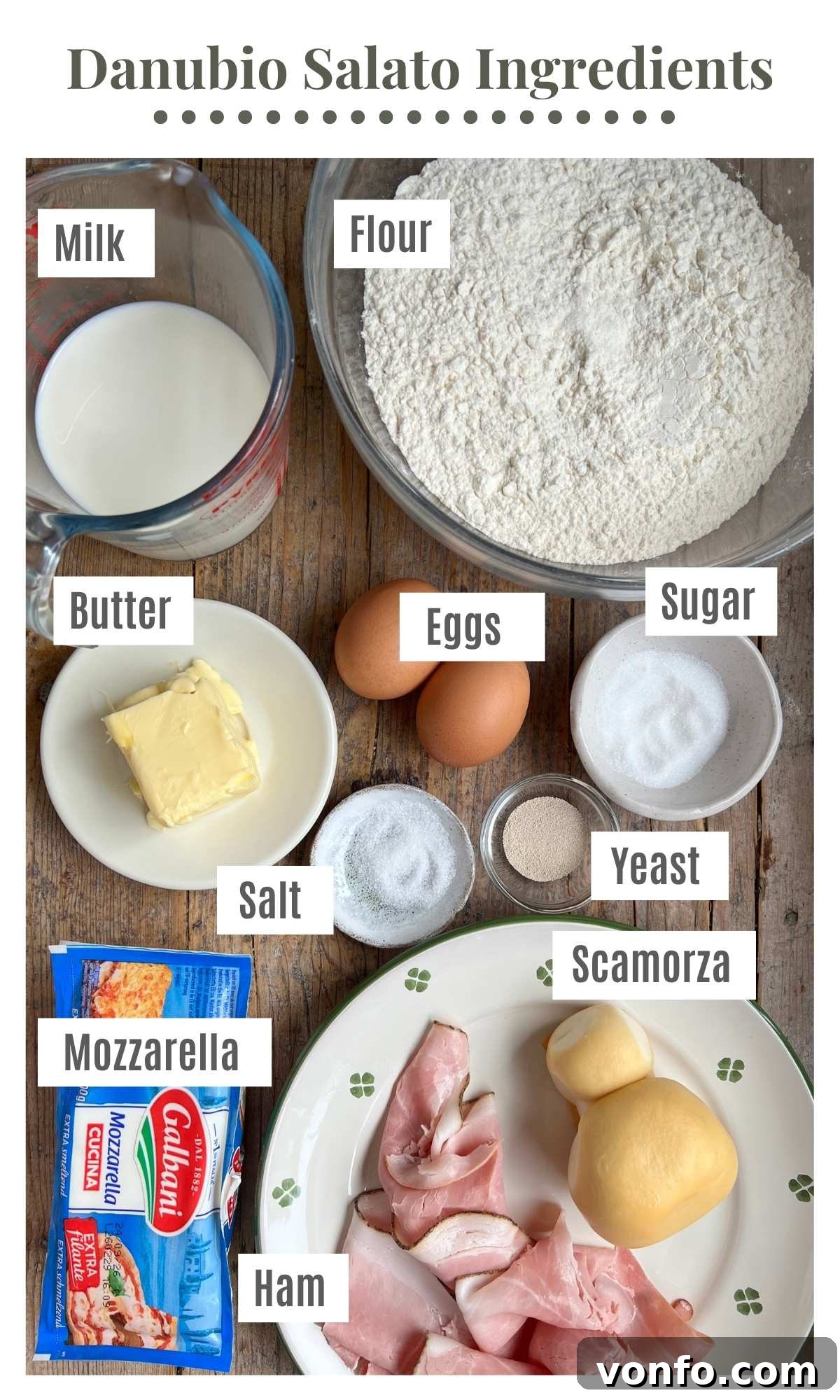
- Flour: Use strong bread flour when possible for good gluten development. Italian 00 flour or Manitoba-style bread flour also work.
- Butter: Unsalted and at room temperature so it blends into the dough smoothly.
- Eggs: Two egg yolks go into the dough; one whole egg plus a splash of milk make the egg wash for brushing before baking.
- Yeast: Fast‑action (instant) yeast can be added directly to the flour. If using active dry yeast, dissolve it in a little lukewarm milk first.
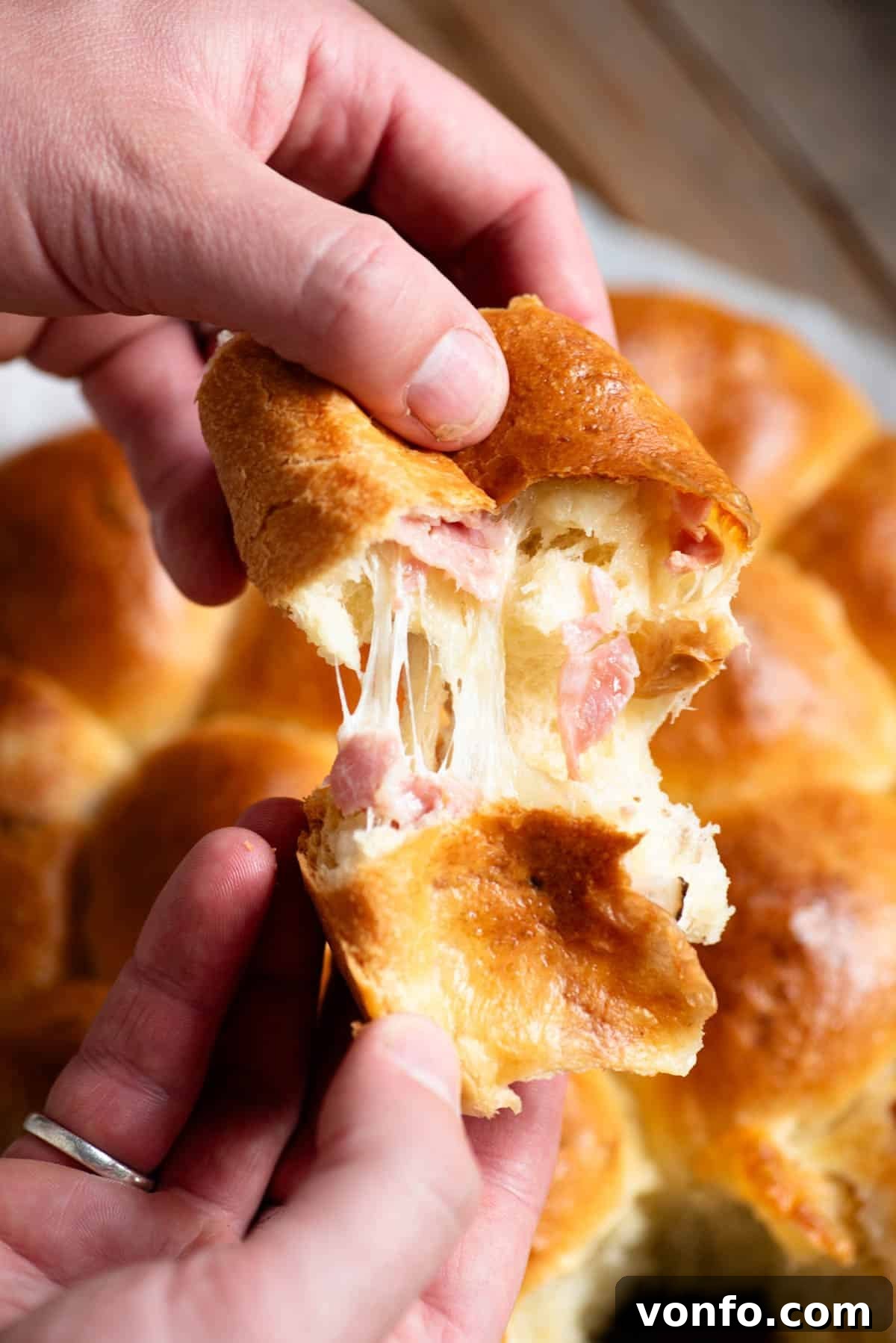
- Cheese and ham: Choose low‑moisture, melting cheeses (avoid fresh mozzarella for the filling because it releases excess water). Prosciutto cotto, ham, salami or other cured meats can be used.
Filling variations
This recipe is ideal for variations. Keep moisture in mind when choosing fillings so the dough seals and bakes well.
- Meats: ham, prosciutto cotto, salami, or small pieces of cooked sausage.
- Cheeses: low‑moisture mozzarella, fontina, provolone, smoked scamorza or taleggio—choose melting cheeses.
- Vegetables: sun‑dried tomatoes (well drained), olives, wilted and squeezed spinach, or sautéed mushrooms.
- Pesto: use sparingly; a thin smear works best to avoid making the filling difficult to seal.
- Pizza-style: some cooks add a small amount of tomato passata with cheese, but keep it minimal to prevent sogginess.
Recipe tips for making Danubio Salato
- Don’t overstuff: use a moderate amount of filling so you can seal each bun securely; overfilling can cause leaks.
- Mix fillings: stuff different buns with different fillings for variety—great for parties.
- Make ahead: assemble the filled buns, refrigerate overnight, then allow them to proof at room temperature for at least 2 hours before baking.
More Italian snacks to try
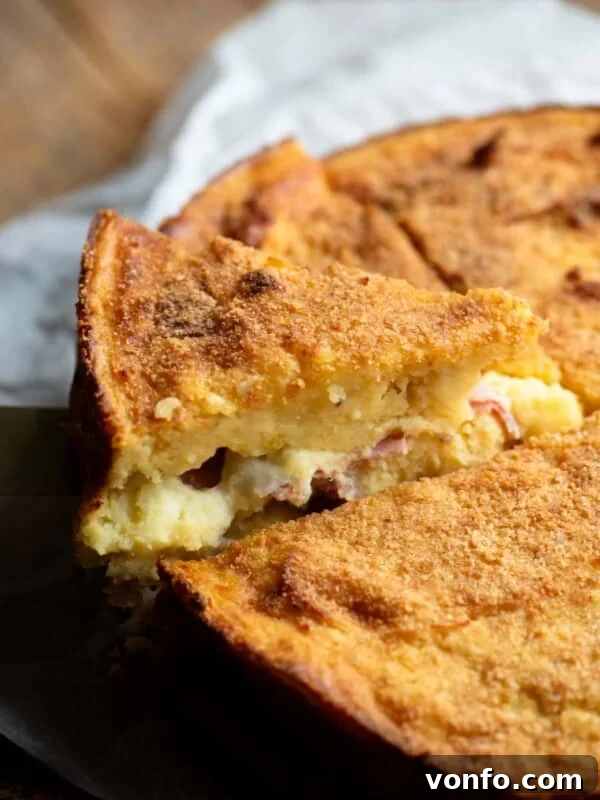
Antipasti
Gattò di Patate (Neapolitan Potato Gateau)
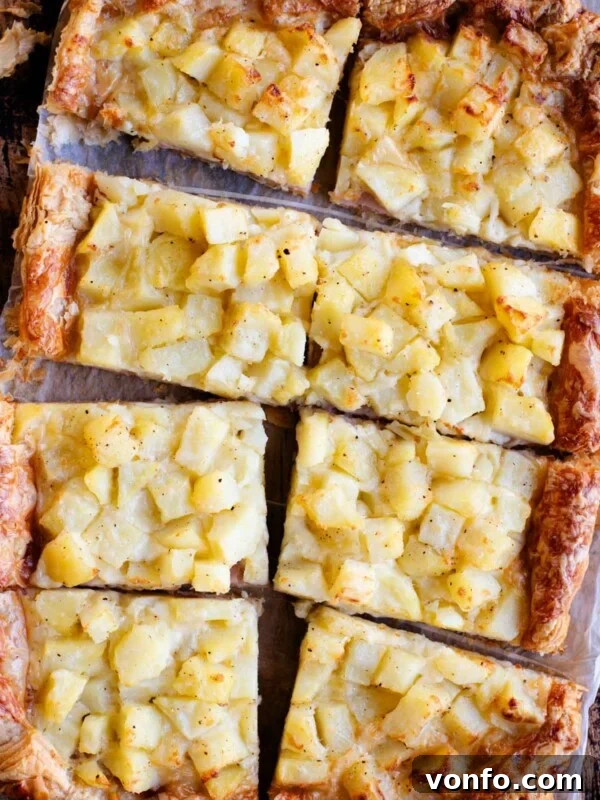
Antipasti
Cheesy Puff Pastry Potato Tart
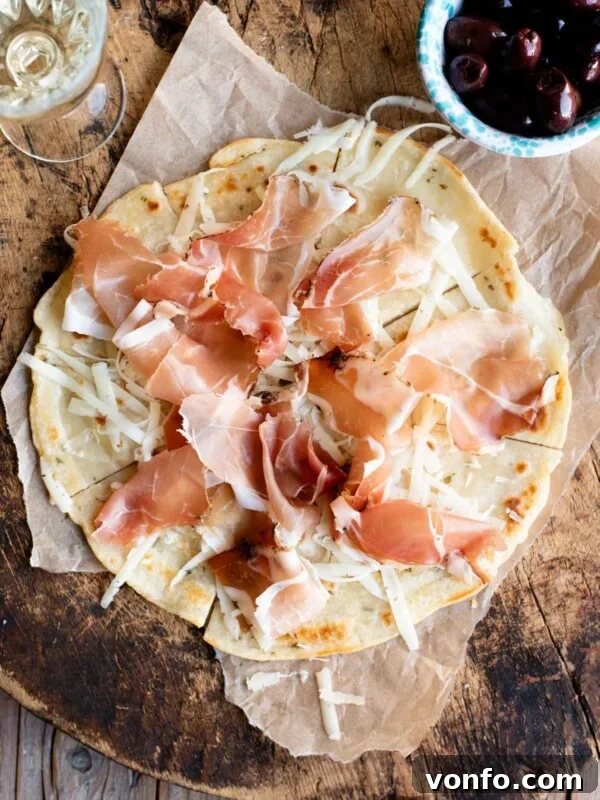
Bread & Savory Bakes
Brustengo (Umbrian Flatbread)

Antipasti
Gnocco Fritto (Italian Fried Dough)
Step By Step Photos Above
Most recipes include step‑by‑step photos and tips to help you get great results at home.
Danubio Salato (Neapolitan Stuffed Brioche Buns)
By Emily
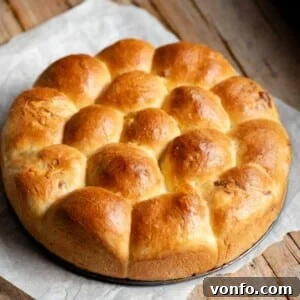
Note: Use the step photos above to follow each stage. Danubio Salato is a pull‑apart brioche stuffed with cheese and ham—fun to make and ideal for sharing.
Equipment
- Stand mixer with dough hook (or knead by hand)
- 10‑inch (25 cm) cake pan or springform
- Large mixing bowl
- Plastic wrap (cling film)
Ingredients
For the brioche dough
- 500 g strong bread flour (about 3 ½ cups + 1 tbsp)
- 1 tsp (4 g) fast‑action (instant) yeast
- 1 tbsp sugar
- 2 egg yolks, at room temperature
- 250 ml milk (1 cup + 1 tbsp), lukewarm
- 85 g unsalted butter (6 tbsp), room temperature (plus extra for greasing)
- 1 tsp fine sea salt
For the filling
- 100 g ham or salami (3.5 oz), or a mix
- 200 g cheese (7 oz) — we used a mix of low‑moisture mozzarella and smoked scamorza
Egg wash
- 1 egg
- 1 tbsp whole milk
Instructions
To make the dough
- Gently warm the milk until lukewarm (not hot).
- Place the flour in the stand mixer bowl. Add the yeast, sugar and salt—avoid placing yeast directly on salt. Stir briefly to combine.
- Add the two egg yolks and the lukewarm milk. Knead with the dough hook on medium speed until a rough dough forms, about 5 minutes.
- With the mixer running, add the butter a little at a time. After all the butter is incorporated, continue kneading on medium speed for about 10 minutes. The dough will appear wet and sticky at first but will become smooth and elastic.
- Grease a mixing bowl with butter. Shape the dough into a ball, place it in the bowl, cover with plastic wrap and proof until doubled in size, about 3 hours.
How to form and stuff the buns
- Grease the springform cake tin with butter. Cut the cheese and ham into small cubes or strips.
- Turn the dough out onto a lightly floured surface. Divide it in half and roll each half into a log about 12 inches long. Cut each log into 8 equal pieces for a total of 16 pieces.
- Work with one piece at a time: flatten it into a rough circle, add a small amount of ham and cheese, then bring the edges together and pinch to seal. Don’t overfill.
- Place the sealed ball seam‑side down, cup your hands and rotate to form a smooth round, tucking the edges underneath. Arrange each ball in the prepared cake tin.
- Cover with plastic wrap and proof until the buns are doubled in size, about 2–3 hours.
Bake
- Preheat the oven to 180°C / 350°F (fan or conventional).
- Whisk the egg with the milk and lightly brush the tops of the buns.
- Bake for 30 minutes in a fan oven, or 35–40 minutes in a conventional oven, until golden brown on top. Allow to rest at least 10 minutes before serving so the filling sets slightly.
Notes
- Oven guidance: A conventional oven set to 200°C / 400°F can brown quickly; keep it at 180°C / 350°F and extend the bake to 35–40 minutes if needed.
- Pan size: A 10‑inch pan fits all 16 buns best. A 9‑inch pan can work but may leave a few extra buns to proof and bake separately.
- Yeast: If your yeast requires activation, dissolve it in a little lukewarm milk before adding to the flour.
Helpful info for all recipes
- I typically use extra virgin olive oil unless otherwise specified.
- All vegetables listed are medium unless otherwise noted.
- Recipes are tested using a fan (convection) oven unless stated otherwise.
- Nutrition is approximate and provided as a guideline only.
Nutrition
Carbohydrates: 25 g |
Protein: 10 g |
Fat: 9 g
Nutrition information is automatically calculated and should be used as an approximation.