
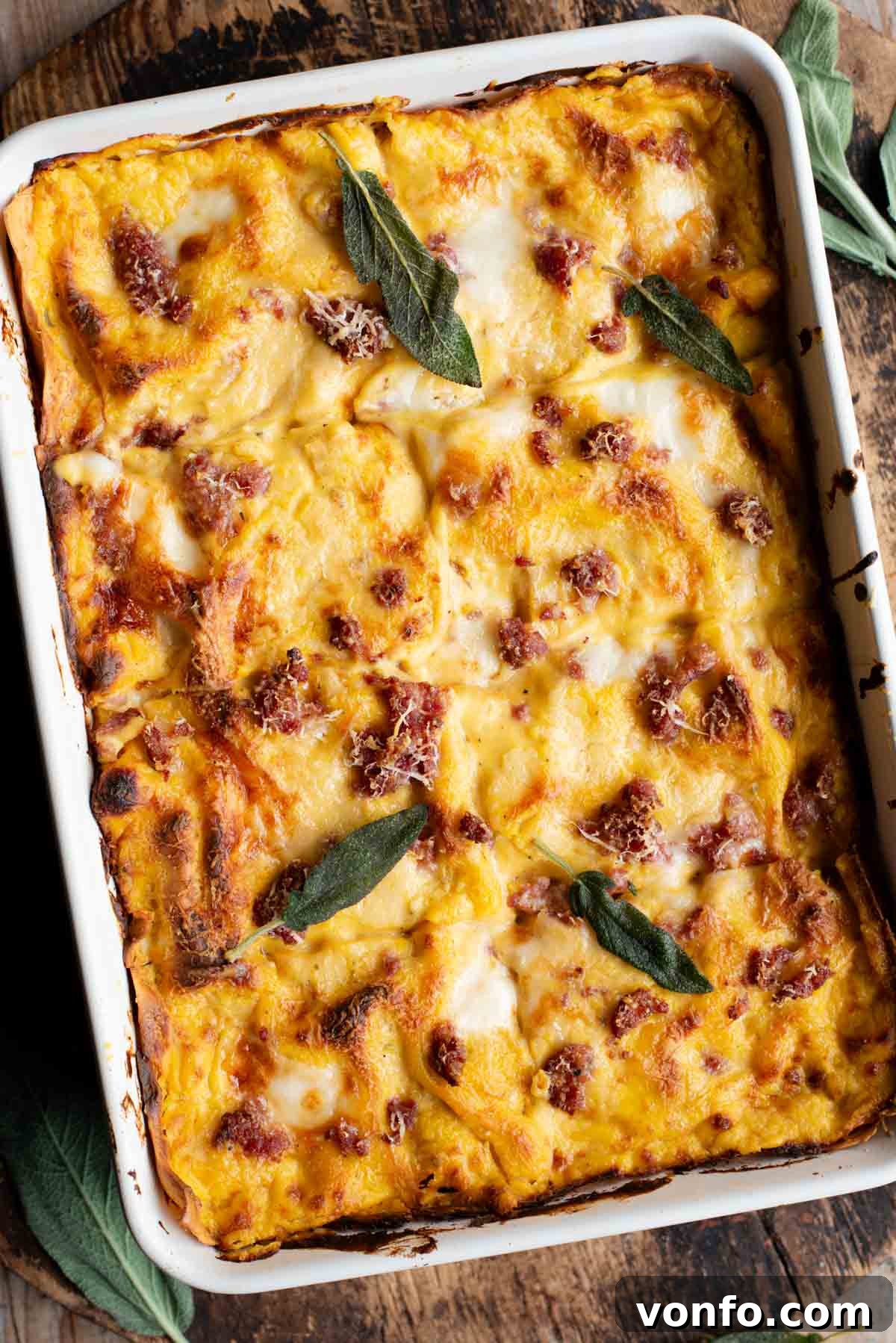
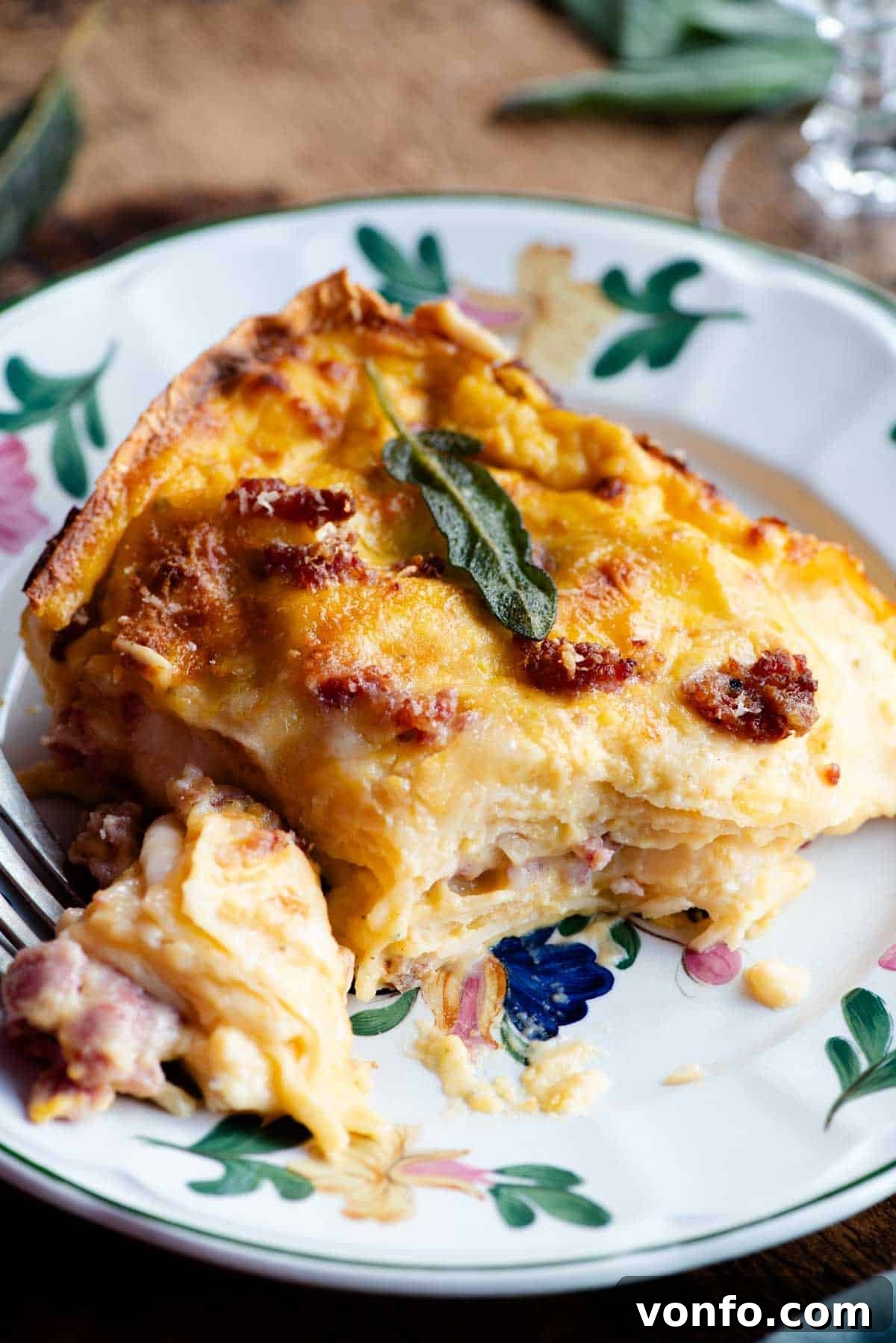
Indulge in a truly exceptional **Butternut Squash Lasagna**, a harmonious blend of sweet, savory, and utterly comforting flavors. This recipe features fresh homemade pasta (or high-quality store-bought sheets), a velvety creamy béchamel sauce infused with roasted butternut squash, and is generously layered with browned Italian sausage and delectable Taleggio cheese. It’s an “out of this world” dish, perfect for transforming a chilly evening into a cozy culinary experience that warms the soul.
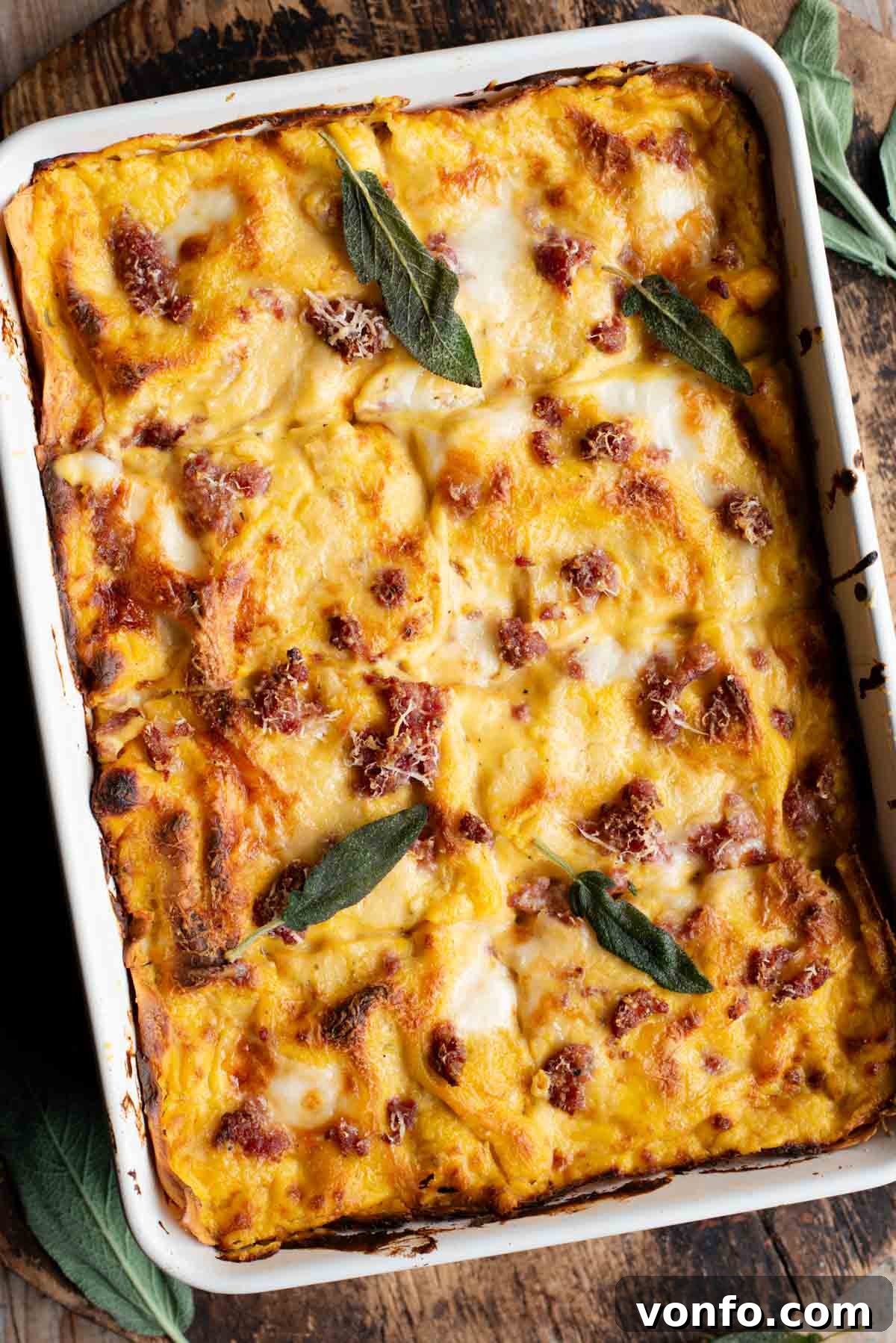
Lasagna holds a special place in the hearts of many, myself included, as the epitome of ultimate comfort food. The enduring popularity and incredible 5-star reviews of our classic lasagna al forno recipe are a testament to this universal love. This particular butternut squash rendition, however, offers a refreshing twist, capturing the essence of autumn with its rich, earthy, and subtly sweet profile, making it a perfect addition to your seasonal cooking repertoire.
This recipe masterfully combines quintessential Fall flavors, using the natural sweetness of butternut squash as a creamy base, complemented by aromatic rosemary and fragrant sage. Unlike traditional meat-heavy lasagnas that often involve long-simmering ragu, this version is considerably quicker to prepare without sacrificing any depth or deliciousness. It proves that a comforting, rich lasagna doesn’t always demand hours over a stovetop; smart flavor combinations and efficient cooking methods can yield equally impressive results.
While we highly advocate for the superior texture and flavor of homemade pasta sheets, using store-bought lasagna sheets can significantly reduce prep time, making this recipe more accessible for busy weeknights or impromptu gatherings. If opting for store-bought, always choose fresh sheets found in the refrigerator section over dried ones for a truly authentic and tender result that closely mimics homemade pasta. The difference in texture and how the fresh sheets absorb the rich sauces is truly remarkable.
Table of Contents
- Why This Butternut Squash Lasagna is a Must-Try
- Key Ingredients for an Unforgettable Lasagna
- Crafting Your Butternut Squash Lasagna: A Step-by-Step Guide
- Expert Tips for Lasagna Perfection & FAQs
- Butternut Squash Lasagna with Sausage and Taleggio Recipe
- More Incredible Lasagna Recipes to Try
Why This Butternut Squash Lasagna is a Must-Try
Forget everything you thought you knew about traditional lasagna. While a classic beef ragu lasagna is undeniably delicious, this butternut squash version offers a vibrant, lighter, yet equally satisfying experience. Here’s why it’s destined to become a staple in your recipe repertoire and delight everyone at your table:
- **Seasonal Flavors at Their Best:** Butternut squash, rosemary, and sage are the undeniable stars, perfectly capturing the warm, comforting essence of autumn and winter. The natural sweetness of the squash balances beautifully with the savory depth of the Italian sausage and the delightful tang of Taleggio cheese, creating a complex and inviting flavor profile.
- **A Quicker Path to Comfort:** One of the most appealing aspects of this lasagna is its efficiency. Without the need for a lengthy, slow-cooked meat ragu, this dish comes together significantly faster than many traditional lasagna recipes. The creamy butternut squash béchamel is a flavorful shortcut that not only saves time but also delivers a smooth, rich consistency that’s simply irresistible.
- **The Unique Magic of Taleggio Cheese:** This soft, Italian cow’s milk cheese is truly a game-changer. Its distinctive, slightly pungent aroma gives way to a surprisingly mild, fruity, and delicately tangy taste. When melted within the lasagna layers, Taleggio transforms into a luxurious, gooey dream, retaining its unique character and contributing an incredible depth that perfectly complements the other ingredients.
- **Versatile and Impressive Comfort Food:** This lasagna is substantial enough to serve as a hearty main course for a family dinner, yet elegant and impressive enough to be the star dish at any dinner party or special occasion. It’s a true crowd-pleaser that genuinely warms you from the inside out, making every bite a comforting embrace.
- **A Canvas for Customization:** While our recipe provides a meticulously tested and beloved combination of flavors, it also offers a fantastic base for your own culinary creativity. Vegetarian? Simply omit the sausage, perhaps adding some sautéed mushrooms or spinach for extra texture. Have a different cheese preference? Explore alternatives like Fontina, smoked provolone, or even a blend of mozzarella and Parmesan for a milder profile. This lasagna invites you to make it truly your own.
This Butternut Squash Lasagna isn’t just a meal; it’s an experience, inviting you to savor the rich tapestry of Italian-inspired comfort food with a seasonal, vibrant twist that will leave a lasting impression.
Key Ingredients for an Unforgettable Lasagna
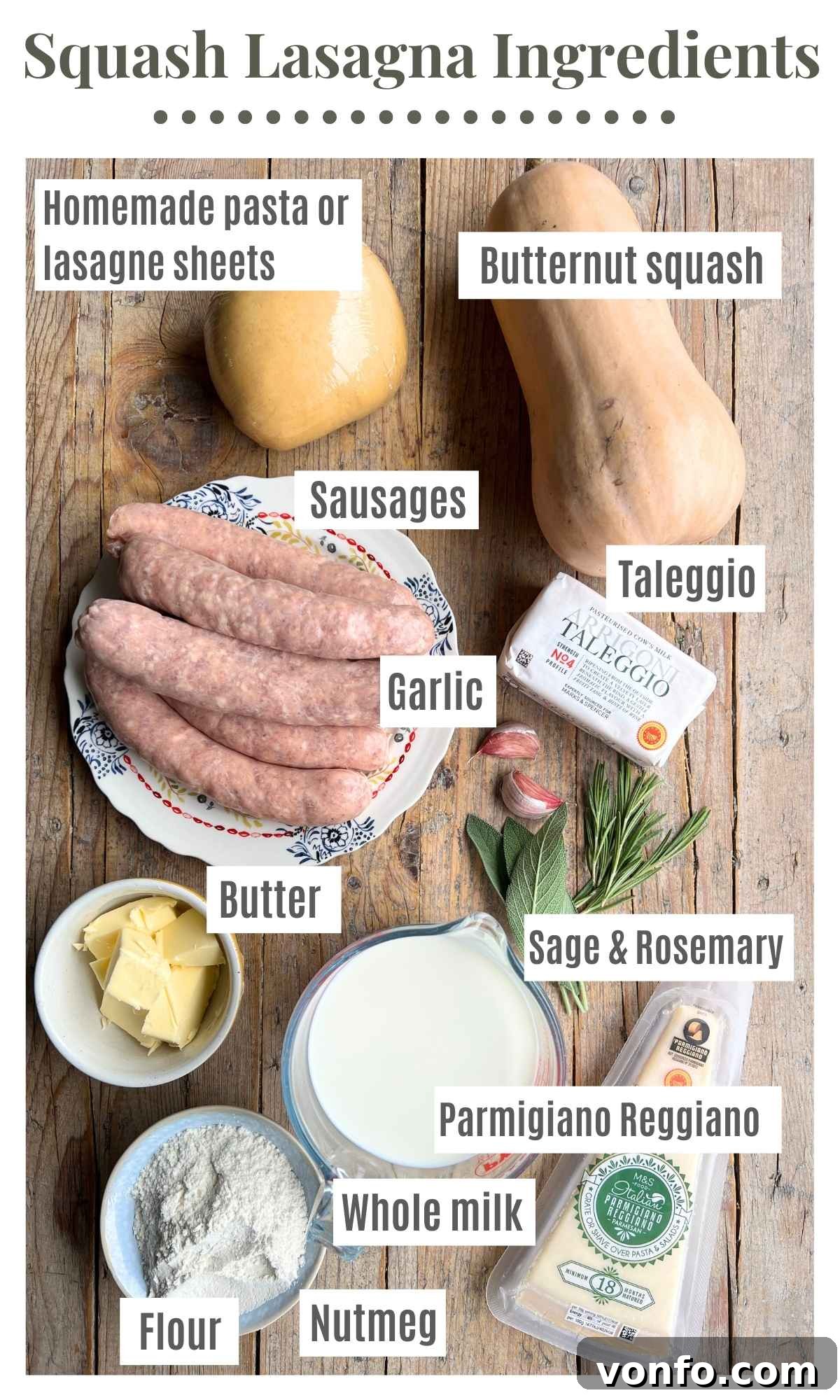
- Butternut Squash: This sweet, nutty winter squash forms the creamy, flavorful foundation of our unique béchamel sauce. When selecting, choose a squash that is firm, heavy for its size, and free from blemishes. Its natural sweetness mellows beautifully when roasted or gently sautéed, developing a rich, earthy depth that is essential to this dish. Ensure it’s cooked until completely fork-tender for a perfectly smooth puree.
- Taleggio Cheese – This soft, rind-washed Italian cow’s milk cheese is arguably one of the most important elements in this lasagna, providing an unparalleled depth of flavor. Taleggio boasts a distinctive, slightly pungent aroma that gives way to a surprisingly mild, fruity, and tangy taste. It melts wonderfully, creating a luxurious, gooey layer that retains its unique character and perfectly complements the sweetness of the squash and the savory notes of the sausage. If genuine Taleggio is unavailable, Fontina DOP is an excellent substitute, offering a similar melting quality and nuanced flavor profile. For a different but still delicious alternative, consider a mild provolone or a blend of creamy mozzarella and a sharp Parmesan.
- Italian Sausages – The choice of Italian sausage is crucial for the savory heartiness of this lasagna. Italian sausages vary significantly by region; Tuscan and Sicilian varieties are most commonly found outside Italy and typically offer a balanced, herbaceous flavor. We strongly recommend using your favorite mild Italian sausages, ensuring they are not spicy or hot, as intense heat can overpower the delicate flavors of the butternut squash and Taleggio. Remember to remove the casings before browning to achieve the ideal crumbly texture for scattering throughout the layers.
- Fresh Herbs (Garlic, Sage, and Rosemary) – For maximum aromatic impact, fresh herbs and garlic are absolutely non-negotiable. Their fragrant notes deeply infuse the butternut squash, imparting an earthy warmth and Mediterranean essence that defines this dish. Finely chopping the sage and rosemary ensures they distribute evenly and release their full fragrance during cooking. While dried herbs can be used in a pinch, the vibrant, fresh counterparts elevate the dish significantly, providing a much brighter and more authentic flavor.
- Pasta Sheets – The quality of your pasta sheets fundamentally impacts the overall texture and success of your lasagna. While I personally opt for homemade pasta almost every time due to its superior texture and ability to absorb sauces beautifully, high-quality store-bought fresh lasagna sheets (typically found in the refrigerated section of your grocery store) are an excellent and time-saving alternative. These fresh sheets offer a tender bite that closely mimics homemade pasta. We strongly advise against using dried lasagna sheets if possible, as they often result in a less tender, sometimes chewy, and less cohesive lasagna.
- Béchamel Base: The creamy béchamel sauce is the binding agent and a key source of richness. It’s a classic combination of unsalted butter (for richness), all-purpose flour (to create the roux and thicken), and whole milk (for a luxurious, smooth consistency). Freshly grated nutmeg adds a hint of warm spice that is traditional in Italian béchamel, and Parmigiano Reggiano contributes a salty, umami depth, transforming a simple white sauce into something truly special.
Crafting Your Butternut Squash Lasagna: A Step-by-Step Guide
Making homemade pasta adds an incredible, authentic dimension to this lasagna, elevating it from delicious to truly extraordinary. If you choose this rewarding path, we highly recommend preparing the dough first. This allows it sufficient time to rest while you prepare the other delicious components. Our homemade pasta recipe calls for a specific ratio of 3 eggs, 1 egg yolk, and 300g of Italian 00 flour for optimal texture and workability. For a detailed, comprehensive, and visual step-by-step guide on creating perfect pasta dough from scratch, please refer to our full homemade pasta guide here.
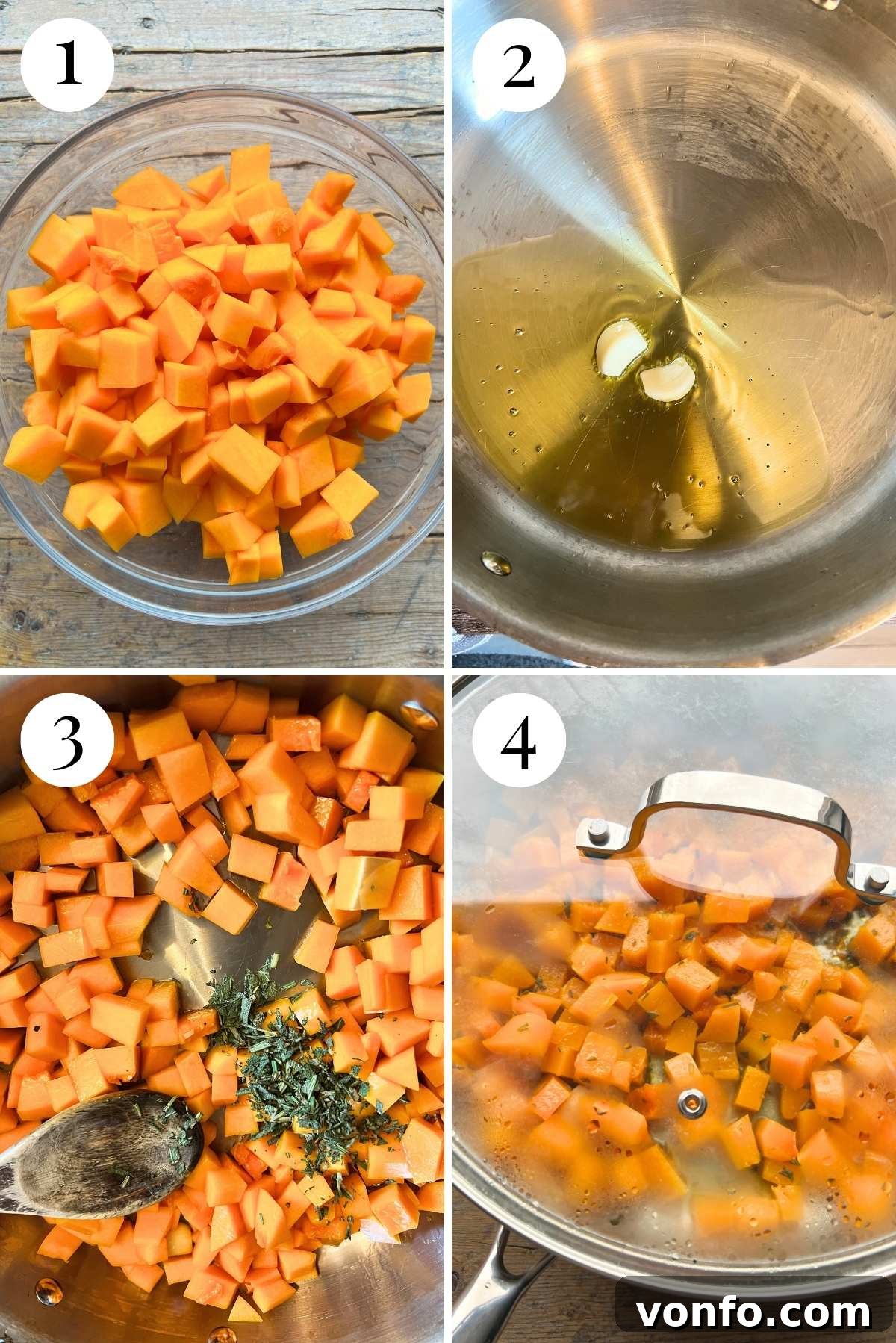
Step 1: Prepare the Butternut Squash. Begin by carefully trimming both the top and bottom ends of the butternut squash. Next, using a sharp knife or a sturdy vegetable peeler, remove the tough outer skin. Once peeled, halve the squash lengthwise and scoop out all the seeds and stringy fibrous bits from the center cavity. Finally, cut the clean squash flesh into small, uniform cubes, approximately 1-inch in size. Uniformity is key here for even cooking and easier blending later (photo 1).
Step 2: Cook the Butternut Squash with Aromatics. Heat 1-2 tablespoons of high-quality olive oil in a large, heavy-bottomed pan or Dutch oven over medium heat. Add the two whole, peeled garlic cloves and gently sauté them for a few seconds until they become fragrant and just begin to turn a light golden color – watch carefully to prevent burning. Introduce the cubed butternut squash, along with your finely chopped fresh rosemary and sage. Sauté everything for approximately 5 minutes, stirring occasionally, allowing the herbs and garlic to infuse the squash with their wonderful aromas. Pour in ⅓ cup (80ml) of water, then promptly cover the pan with a tight-fitting lid. Reduce the heat to low and allow the squash to simmer and steam for about 20 minutes, or until it is completely fork-tender. Stir occasionally halfway through cooking to ensure it doesn’t stick to the bottom of the pan. Once cooked, remove the pan from heat, take out the whole garlic cloves (they have done their job!), and set the softened squash aside (photos 2-4).
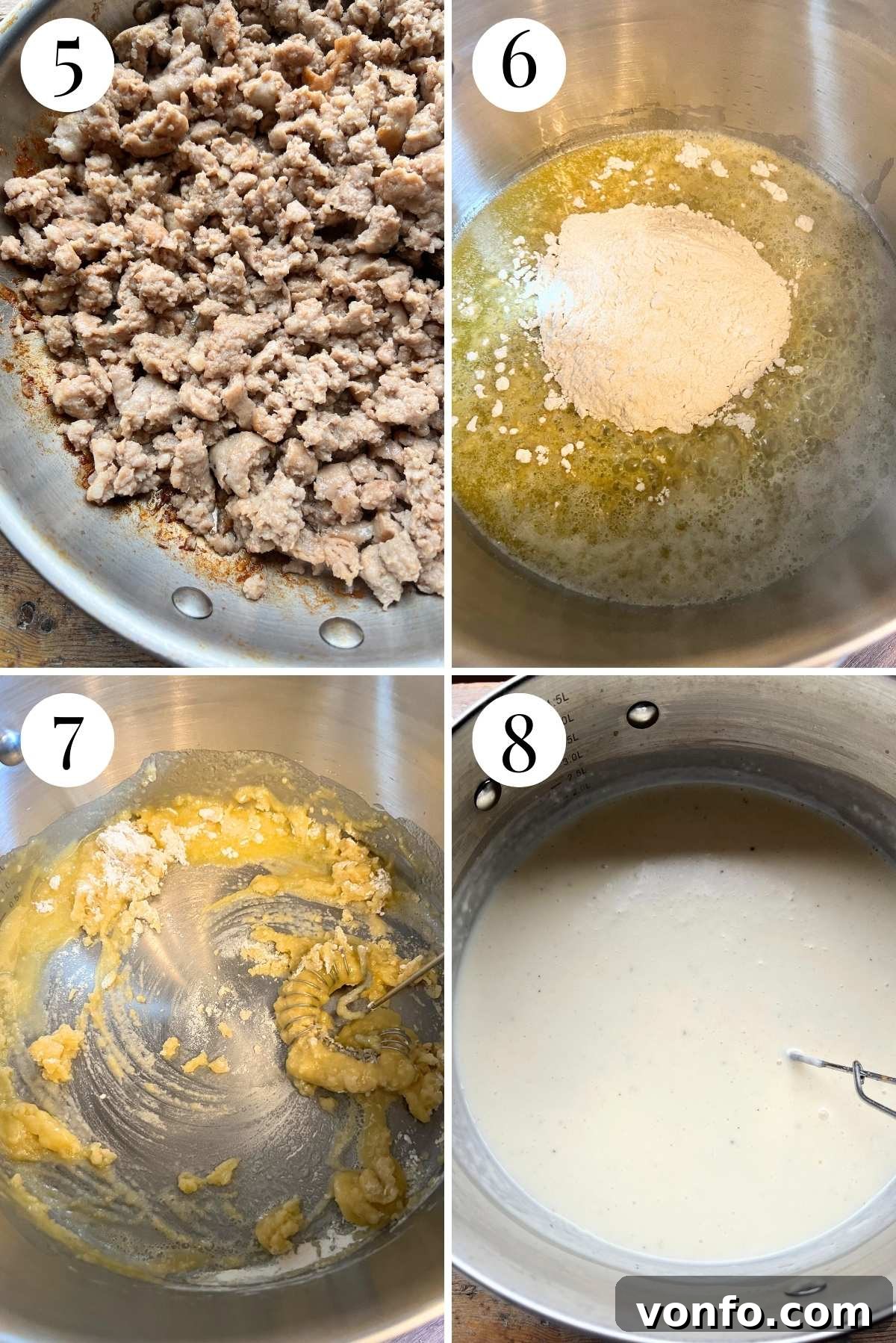
Step 3: Brown the Italian Sausage. While the butternut squash is gently simmering, turn your attention to the Italian sausage. Heat another large pan or skillet over medium-high heat. Carefully remove the skins from your Italian sausages and add the flavorful sausage meat to the hot pan. Using a wooden spoon or spatula, break the meat into medium-sized crumbles. Brown the sausage thoroughly, stirring occasionally, until it’s cooked through, beautifully golden, and lightly caramelized. This browning adds a significant depth of flavor. Once cooked, drain any excess fat to ensure your lasagna isn’t greasy, and set the browned sausage aside (photo 5).
Step 4: Craft the Velvety Béchamel Sauce. In a separate, clean saucepan (preferably a heavy-bottomed one to prevent sticking), melt the unsalted butter over medium heat. Once the butter is completely melted and slightly foamy, add the all-purpose flour. Whisk continuously and vigorously to form a thick, smooth paste known as a roux. Continue cooking the roux, whisking constantly, for 1-2 minutes to cook out any raw flour taste – it should smell slightly nutty but not browned. Gradually, pour in half of the cold whole milk, whisking vigorously the entire time to incorporate it completely and prevent any lumps from forming. Keep the heat at medium and continue stirring the béchamel until it begins to visibly thicken. Slowly add the remaining milk, continuing to whisk until the sauce reaches a beautifully smooth, rich, and noticeably thicker consistency that coats the back of a spoon. Season the béchamel generously with a good pinch of salt, freshly ground black pepper, and a dash of freshly grated nutmeg. Finally, stir in the finely grated Parmigiano Reggiano until it’s fully melted and perfectly incorporated, adding a wonderful salty, umami kick. Remove from heat and set aside (photos 6-8).
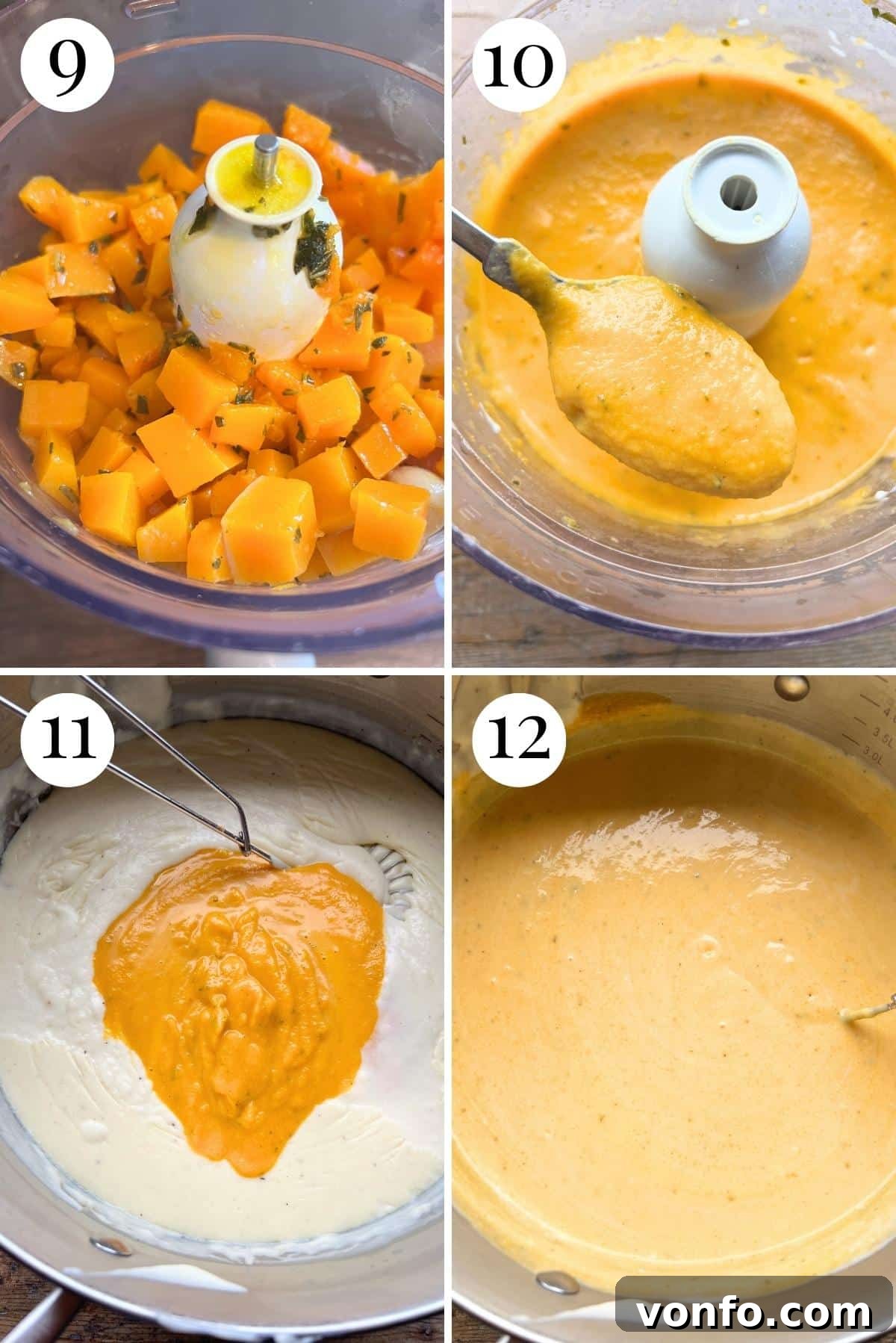
Step 5: Puree the Butternut Squash. Carefully transfer the previously cooked and softened butternut squash (along with the reserved sautéed garlic cloves, if you kept them in) to a food processor. Blitz the mixture until it forms an incredibly smooth, creamy puree. For an extra luxurious and silky texture, which truly enhances the mouthfeel of the lasagna, add a few spoonfuls of your freshly made béchamel sauce to the food processor and blitz again until it’s super smooth and evenly combined, with no visible chunks (photos 9 and 10).
Step 6: Combine Squash and Béchamel for the Signature Sauce. Add the rich, smooth butternut squash puree directly into the béchamel sauce you prepared earlier. Stir thoroughly and gently until the squash is completely integrated into the béchamel, creating a beautifully uniform, pale orange, and incredibly creamy sauce. This vibrant, flavorful sauce will be the luscious heart of your lasagna, delivering both sweetness and savory depth. Ensure it’s perfectly mixed, then set aside, ready for assembly (photos 11 and 12).
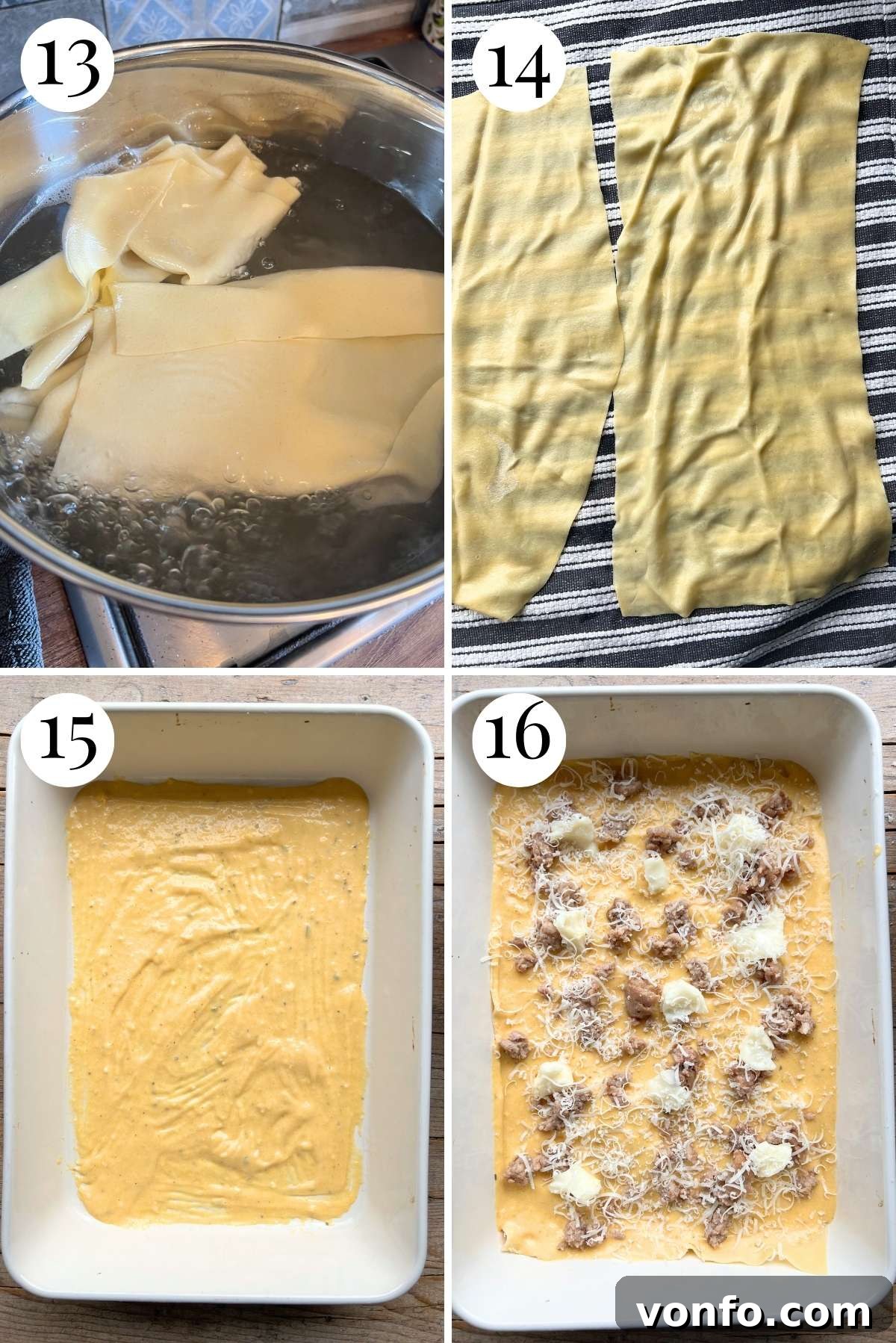
Step 7: Blanch the Pasta Sheets. Bring a large pot of generously salted water to a rolling boil. If you’re using homemade pasta, first divide your dough into quarters and roll each section out into thin, uniform lasagna sheets using your pasta machine (we typically go to setting #7 on our Marcato Atlas machine for optimal thickness). Cut the pasta to fit the dimensions of your 9×13 inch baking dish. Blanch the fresh pasta sheets in small batches for approximately 30 seconds each. This brief cooking time is vital; it gives the pasta more structure, prevents it from sticking together, and ensures it cooks evenly in the oven without becoming gummy. Carefully remove the blanched sheets using tongs and lay them flat on clean kitchen towels to drain any excess water and cool slightly. This crucial step is highly recommended for both homemade and high-quality fresh store-bought pasta sheets (photos 13 and 14).
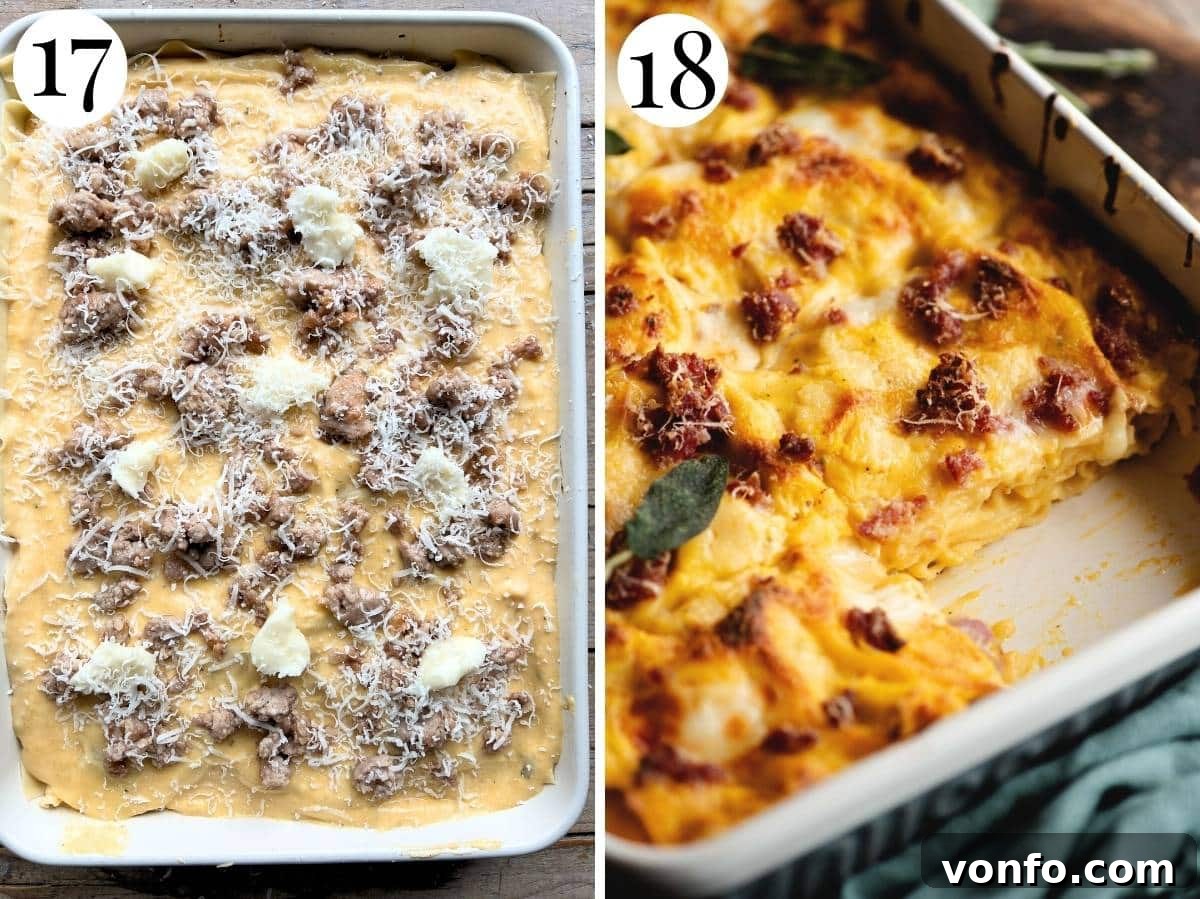
Step 8: Assemble Your Masterpiece. Now for the most satisfying part – assembling your lasagna! Spread a few generous spoonfuls of your creamy butternut squash béchamel sauce across the bottom of your 9×13 inch baking dish. This initial layer acts as a delicious buffer, preventing the first layer of pasta from sticking to the bottom. Begin your layering sequence: place a layer of blanched pasta sheets, followed by another generous spread of the butternut squash béchamel, then a sprinkle of the browned Italian sausage, dots of the rich Taleggio cheese, and finally, a light grating of Parmigiano Reggiano. Continue this precise layering process, ensuring each ingredient is evenly distributed, until all your components are used up. You should aim for about 5 distinct layers in total. The final top layer should be a beautiful arrangement of butternut squash béchamel, a scattering of sausage, more Taleggio, and a generous dusting of Parmigiano, promising a golden, bubbly, and irresistible crust (photos 15-17).
Step 9: Bake to Golden Perfection and Serve. Your beautifully assembled lasagna is now ready for its final transformation. You have the flexibility to bake it immediately or, for brilliant meal prep, refrigerate it for up to 24 hours. If baking from the refrigerator, it’s essential to allow the dish to sit at room temperature for approximately 30 minutes before placing it in the oven. This crucial step prevents thermal shock to your baking dish and promotes more even cooking throughout the lasagna. Preheat your oven to 200°C (400°F). Bake the lasagna, uncovered, for 30-40 minutes, or until the top is gorgeously golden brown, the sauce is bubbling around the edges, and the entire dish is piping hot throughout. Once baked, remove it from the oven and let it rest for a vital 5-10 minutes before slicing and serving. This resting period allows the layers to set properly, ensuring neat, beautiful cuts and preventing the lasagna from falling apart when served (photo 18).
Expert Tips for Lasagna Perfection & FAQs
- Blanch Your Pasta Sheets – A Non-Negotiable Step: Regardless of whether you’re using fresh homemade pasta or high-quality fresh store-bought sheets, blanching them in generously salted boiling water for just 30 seconds to a minute is absolutely crucial. This quick dip gives the pasta more structure, prevents the sheets from sticking together during assembly, and ensures they cook evenly in the oven without turning gummy or mushy. After blanching, lay them out on clean kitchen towels for a few minutes to drain and cool before layering.
- Strategic Assembly for Homemade Pasta: If you’re making homemade pasta, the process can be more manageable if you roll out and assemble in batches. For instance, roll out approximately 1/4 of the pasta dough at a time, blanch it, and immediately start layering that section of the lasagna. This method not only saves precious counter space but also ensures your delicate fresh pasta sheets don’t dry out or stick together before you’re ready to use them.
- Thoughtful Cheese Choices for Flavor Balance: While this specific lasagna doesn’t traditionally call for mozzarella, you are welcome to add it if you desire extra stretchiness and a milder flavor. Simply layer it along with the other cheeses. However, to truly balance the inherent sweetness and richness of the butternut squash, I highly recommend using a cheese with a strong, characterful flavor profile. Taleggio is our top recommendation for its unique tang and meltability. For a bolder choice, a touch of Gorgonzola (mild variety) can add an unexpected and delightful punch that cuts through the sweetness beautifully.
- Don’t Skimp on Seasoning: Throughout the cooking process, remember to taste your béchamel and squash puree as you go. Proper seasoning with salt and freshly ground black pepper is absolutely key to bringing out the best flavors in each component. Also, don’t forget to generously salt the water when blanching your pasta; this is the only chance to flavor the pasta itself.
- The Importance of Resting: After baking, it’s tempting to dive right into your delicious lasagna, but patience is a virtue here. Let the lasagna rest for at least 5-10 minutes (even up to 15 minutes is ideal) before slicing into portions. This crucial resting period allows the layers to settle, the sauces to firm up slightly, and the cheese to cool just enough, ensuring neat, beautiful slices rather than a messy, collapsed presentation.
Frequently Asked Questions About Butternut Squash Lasagna
Absolutely! This butternut squash lasagna is an excellent make-ahead meal. You can fully assemble the lasagna the day before you plan to bake it. Simply cover it tightly with plastic wrap or aluminum foil and store it in the refrigerator. When you’re ready to bake, remember to remove the dish from the fridge and let it sit at room temperature for approximately 30 minutes. This prevents the cold baking dish from cracking when introduced to a hot oven and promotes more even cooking throughout the layers.
Yes, this butternut squash lasagna freezes beautifully! Once assembled (but before baking), cover it tightly with a double layer of plastic wrap and then aluminum foil. It can be stored in a freezer-safe baking dish for up to 3 months. To reheat, transfer the frozen lasagna to the refrigerator to thaw completely overnight. Once thawed, remove the plastic wrap and bake according to the recipe instructions, possibly adding an extra 10-15 minutes to the baking time if it’s still very cold.
Leftover slices of this delicious lasagna will keep well in an airtight container in the refrigerator for up to 3 days. To reheat, you have a couple of options: for individual slices, you can place them in the microwave until heated through, though this can sometimes make the pasta a bit soft. For best results and a crispier top, cover the baking dish (or individual slices in an oven-safe dish) with foil and reheat in an oven preheated to 180°C (350°F) for 20-30 minutes, or until it’s piping hot throughout. Remove the foil for the last 5-10 minutes if you prefer to crisp up the top cheese layer.
More Incredible Lasagna Recipes to Try
Pasta
Lasagne al Forno (Classic Italian Beef Lasagna)
Pasta
Authentic Lasagna Bolognese (Lasagne alla Bolognese)
Fresh Pasta
Lasagna di Carnevale (Neapolitan Lasagna)
Pasta
Italian Lamb Lasagna with Pecorino Bechamel
We truly hope you enjoy making and savoring this incredible **Butternut Squash Lasagna with Italian Sausage and Taleggio**. If you’ve tried this recipe or any other on our blog, please don’t hesitate to rate it and share your experience in the comments below – we love hearing from you! Your feedback helps us grow and inspires other home cooks. You can also **connect with us** on Facebook, Instagram, and Pinterest, or sign up for our exclusive Newsletter to receive weekly delicious recipes and kitchen tips directly in your inbox. Happy cooking!
Step-by-Step Photos and Visual Guide Above
Many of our recipes include detailed step-by-step photos, helpful tips, and tricks to ensure perfect results on your first attempt, and sometimes even a video tutorial!
Butternut Squash Lasagna with Sausage and Taleggio
By Emily
1 hour
1 hour
30 minutes
2 hours
30 minutes
8 – 10 servings

Print Recipe
Equipment
- 9×13 inch Baking dish
- Hand whisk
- Food processor
- Pasta machine (if making homemade pasta)
- Large, heavy-bottomed pan with lid
- Large saucepan
Ingredients
- 1 medium Butternut squash, approximately 1kg/2lbs untrimmed, yielding about 700g/1.5lbs trimmed
- 2 garlic cloves, whole and peeled
- 4 fresh sage leaves, finely chopped
- 2 sprigs fresh rosemary, leaves finely chopped
- 1.5 lbs (700g) Italian sausages, casings removed
- 7 oz (200g) Taleggio cheese, rind removed, cut into small pieces
- ⅓ cup (80ml) water
- Olive oil, for cooking
For the Béchamel Sauce
- 80 g (6 tablespoons) unsalted butter
- 80 g all-purpose flour, approximately 1/2 cup plus 1 tablespoon
- 4 cups (1 litre) whole milk
- 1 pinch freshly grated nutmeg
- 1 cup (70g) finely grated Parmigiano Reggiano, plus extra for grating and topping
- Salt and freshly ground black pepper, to taste
For the Pasta Sheets
- 300 g Italian 00 flour, approximately 2 cups plus 2 tablespoons
- 3 large eggs plus 1 egg yolk, totaling about 175g of eggs
- Alternatively, use 450g/1 lb of high-quality fresh lasagna sheets (not dried)
Instructions
If Making Homemade Pasta (Recommended)
-
On a clean work surface, mound your 300g of 00 flour and create a wide well in the center. Carefully crack the 3 large eggs and 1 egg yolk into this well. Use a fork to gently whisk the eggs, slowly incorporating flour from the inner rim of the well. Continue this motion until a thick paste forms.
-
Once the mixture becomes too thick for a fork, scrape your hands and use them to gradually pull in the remaining flour from the outside, kneading it into a cohesive dough.
-
Knead the dough firmly with your hands for 10-15 minutes until it is smooth, elastic, and no longer sticky. Form the dough into a ball, cover it tightly with plastic wrap (cling film), and let it rest at room temperature for at least 30 minutes. This resting period is crucial for relaxing the gluten, making the dough easier to roll.
-
For a more detailed, visual, step-by-step tutorial on making perfect pasta dough from scratch, please see our comprehensive homemade pasta dough recipe.
Prepare the Squash, Sausage, and Béchamel
-
Cook the Butternut Squash: Trim the ends, peel, deseed, and chop the butternut squash into small-to-medium sized cubes. Finely chop the fresh rosemary and sage, and peel the two garlic cloves. In a large, heavy-bottomed pan, heat 1-2 tablespoons of olive oil over medium heat. Add the whole, peeled garlic cloves and sauté for a few seconds until fragrant and lightly golden. Add the cubed butternut squash, chopped herbs, and a good pinch of salt. Sauté for 5 minutes, stirring occasionally. Add ⅓ cup (80ml) of water, cover with a lid, and reduce heat to low. Cook for 20 minutes until the squash is fork-tender, stirring once halfway. Once cooked, remove garlic cloves and transfer the softened squash to a food processor; set aside.
-
Brown the Italian Sausage: In a separate large pan or skillet, heat on medium-high heat. Remove the casings from the Italian sausages and add the meat to the hot pan. Break it up with a wooden spoon into small-to-medium crumbles. Cook, stirring occasionally, until the sausage is browned and thoroughly cooked through. Drain any excess fat and set the browned sausage aside.
-
Make the Béchamel Sauce: Melt 80g (6 tablespoons) unsalted butter in a large saucepan over medium heat. Once melted, add 80g (1/2 cup + 1 tbsp) all-purpose flour and whisk constantly for 1-2 minutes to form a thick, smooth roux, cooking out the raw flour taste.
-
Gradually whisk in half of the cold whole milk until smooth and lump-free. Continue stirring over medium heat until the sauce thickens. Slowly add the remaining milk, continuing to whisk until the béchamel is smooth, rich, and noticeably thick. Season with a good pinch of salt, freshly ground black pepper, and 1 pinch of freshly grated nutmeg.
-
Stir in 1 cup (70g) finely grated Parmigiano Reggiano until it’s fully melted and incorporated. Turn off the heat and set the béchamel aside.
-
Create Squash Béchamel: Add the cooked butternut squash (from step 5) to the food processor and blitz until it forms a very smooth puree. For extra creaminess and a silky texture, add a few spoonfuls of your prepared béchamel sauce to the food processor and blend again until super smooth and uniform.
-
Transfer the smooth butternut squash puree to the remaining béchamel sauce. Whisk until completely combined and uniform in color, creating your luscious butternut squash béchamel sauce.
Prepare Pasta and Assemble the Lasagna
-
Blanch the Pasta: Bring a large pot of generously salted water to a rolling boil. If using homemade pasta, divide the dough into quarters and roll each section out into thin lasagna sheets using a pasta machine (typically to setting #7). Cut the pasta sheets to fit your 9×13 inch baking dish.
-
Blanch the fresh pasta sheets (homemade or store-bought) in batches for approximately 30 seconds each. Use tongs to quickly transfer them to clean kitchen towels to drain excess water and cool slightly. This step is essential for both types of fresh pasta.
-
Assemble the Lasagna: Spread a thin, even layer of the butternut squash béchamel sauce on the bottom of your 9×13 inch baking dish. This prevents the pasta from sticking. Place a layer of blanched pasta sheets over the sauce.
-
Evenly spread more butternut squash béchamel over the pasta. Sprinkle a portion of the browned Italian sausage, dot with small pieces of Taleggio cheese, and finish with a light grating of Parmigiano Reggiano.
-
Repeat these layers: pasta, squash béchamel, sausage, Taleggio, and Parmigiano, until all ingredients are used up. You should aim for about 5 complete layers. The very top layer should consist of sauce, a generous scattering of sausage, dots of Taleggio, and a final, ample dusting of Parmigiano for a golden, bubbly crust.
-
Bake: Preheat your oven to 200°C (400°F). Bake the assembled lasagna, uncovered, for 40-45 minutes. It should be beautifully golden brown on top, bubbling around the edges, and piping hot throughout.
-
Remove the lasagna from the oven and let it rest for at least 5-10 minutes before cutting into portions and serving. This crucial resting time allows the layers to set, ensuring neat, beautiful slices without falling apart.
Notes
- Accuracy in Pasta Making: When undertaking homemade pasta, using a kitchen scale to weigh your flour (300g Italian 00 flour) is highly recommended for precise results, as volume measurements can vary. If a scale isn’t available, spooning flour into cups and leveling with a knife is the most accurate method for measuring by volume.
- Leftovers and Storage: Any leftover butternut squash lasagna will remain delicious and safe to eat for up to 3 days when stored promptly in an airtight container in the refrigerator. To reheat, you can use the oven (covered with foil) or microwave until thoroughly hot.
- Freezing Instructions: This lasagna is freezer-friendly! To freeze, assemble the lasagna completely in a freezer-safe dish, but do not bake it. Cover the dish tightly with two layers of plastic wrap, followed by a layer of heavy-duty aluminum foil. Freeze for up to 3 months. To cook, transfer the frozen lasagna to the refrigerator to thaw completely overnight before baking according to the instructions. You may need to add an extra 10-15 minutes to the baking time if it’s still quite cold.
Helpful Info for All Our Recipes
- We consistently use extra virgin olive oil in all our recipes unless otherwise specified, for its superior flavor and health benefits.
- For canned or jarred tomatoes of any kind, we always opt for premium Italian brands like Cirio or Mutti to ensure the best possible flavor and quality in our sauces.
- Unless otherwise stated, all vegetables mentioned in our recipes are assumed to be medium-sized.
- All recipes published on our blog have been thoroughly tested and developed using a fan (convection) oven, which may require slight adjustments for conventional ovens.
- Learn more about how nutrition information is calculated on our site, providing you with approximate values for dietary planning.
- Explore our essential guide to Italian Pantry Staples to stock your kitchen with key ingredients for authentic Italian cooking.
- Discover all our recommended Essential Kitchen Tools for Italian Cooking to equip your culinary space for success.
Nutrition Information (Approximate Per Serving)
Carbohydrates: 55g |
Protein: 34g |
Fat: 39g |
Saturated Fat: 17g |
Polyunsaturated Fat: 4g |
Monounsaturated Fat: 13g |
Trans Fat: 0.2g |
Cholesterol: 249mg |
Sodium: 1042mg |
Potassium: 851mg |
Fiber: 2g |
Sugar: 8g |
Vitamin A: 10951IU |
Vitamin C: 21mg |
Calcium: 461mg |
Iron: 4mg
Nutrition information is automatically calculated from the ingredients listed and should only be used as an approximation. Actual values may vary.