
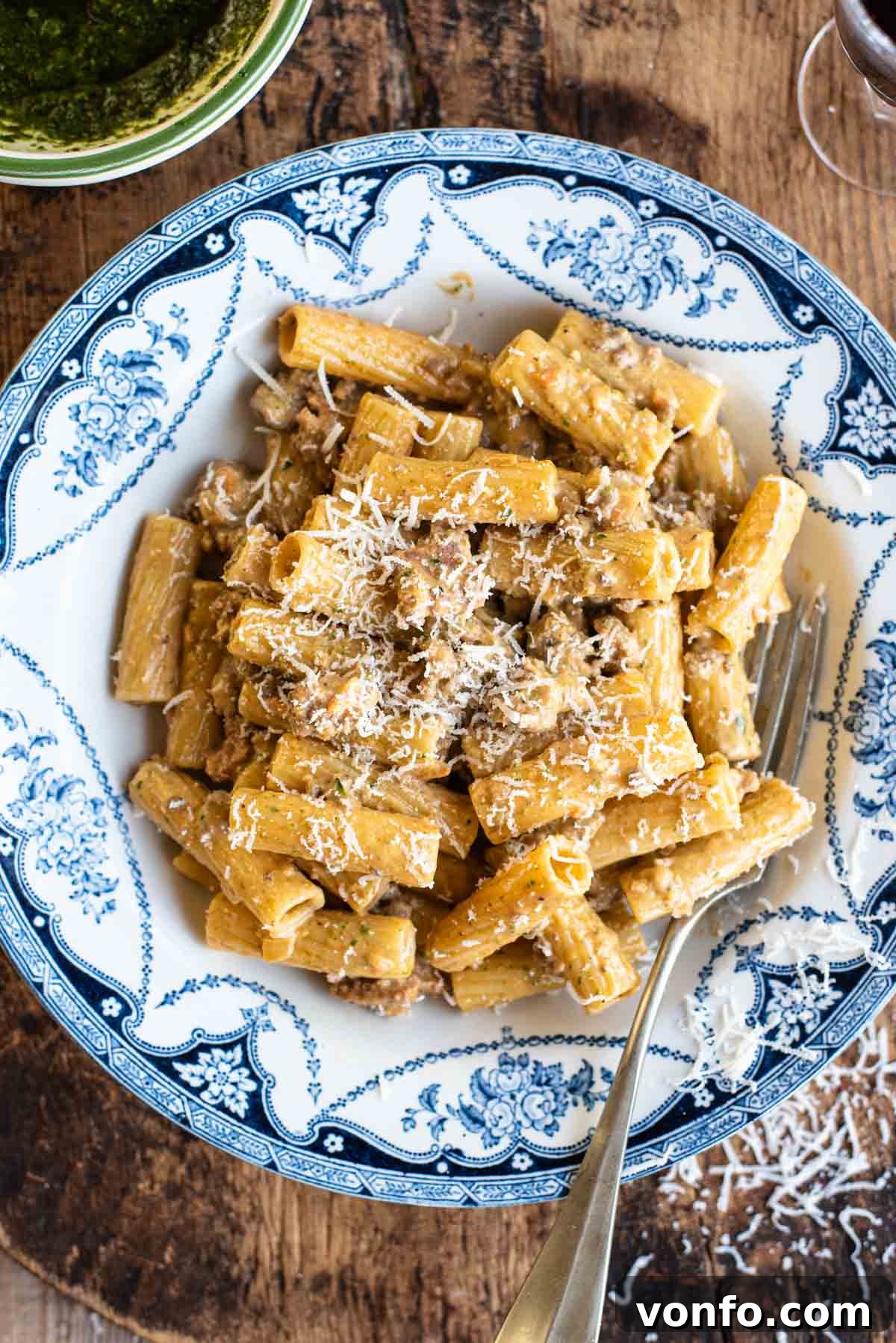
Pasta alla Montecarlo: A Rich & Creamy Italian-Inspired Meat Sauce with Pesto
Prepare to tantalize your taste buds with Pasta alla Montecarlo, a truly exceptional dish that combines the heartiness of a classic meat sauce with an unexpected, vibrant twist. This luxurious creation features tender ground beef and savory Italian sausage, slow-simmered in a rich tomato and cream sauce, and then, in a stroke of culinary genius, infused with fresh basil pesto. It’s a comforting, utterly delicious, and surprisingly sophisticated pasta recipe that promises to become a new favorite in your kitchen.
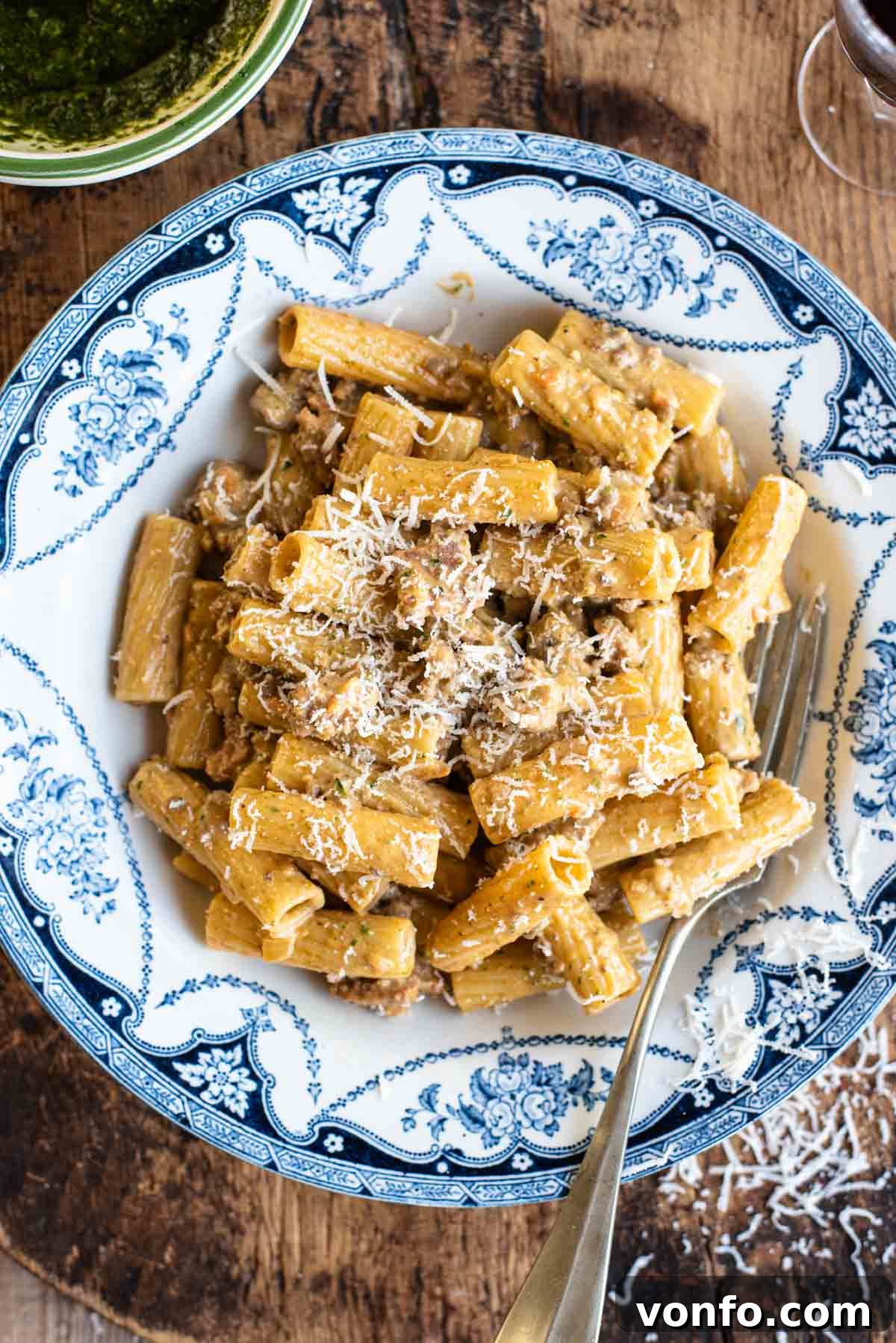
Unveiling the Enigma: Pasta alla Montecarlo’s Unique Charm
Much like its intriguing counterpart, Pasta alla Zozzona, Pasta alla Montecarlo stands out from the crowd of typical Italian pasta dishes. Many traditional Italian recipes pride themselves on simplicity, featuring just a few high-quality ingredients that shine through with clean, uncomplicated flavors. This dish, however, seems to confidently disregard those culinary ‘rules’, embracing a more complex and rich profile.
At first glance, it might appear to be a ‘throw everything you have in the fridge’ kind of meal, given its diverse ingredient list. Yet, the magic lies in how perfectly all these elements harmonize. The robust flavors of beef and sausage, the sweetness of gently sautéed vegetables, the subtle tang of tomato, the comforting embrace of cream, and the bright, herbaceous punch of pesto all come together to create a profoundly satisfying and balanced experience. It’s a testament to adventurous cooking that sometimes, breaking the rules leads to extraordinary results and a truly memorable meal.
The Origins: A Mediterranean Culinary Crossroads
The name “Monte Carlo” immediately evokes images of luxury, glamour, and the stunning coastline of Monaco. Located strategically near the French and Italian borders, and just a short drive from Italy’s Ligurian region – a place world-renowned for its exquisite basil pesto – it’s no surprise that this pasta dish carries influences from these rich culinary landscapes.
While the exact origins of Pasta alla Montecarlo remain somewhat shrouded in mystery, its flavor profile tells a compelling story of regional fusion. We see the clear Ligurian influence in the inclusion of pesto, a vibrant staple of that sun-drenched Italian Riviera. The creamy base hints at the sophisticated sauces found in French cuisine, renowned for their velvety textures and rich depth. Furthermore, the hearty meat ragu component is a hallmark of Northern Italian cooking, where slow-simmered meat sauces are a source of immense pride and tradition.
This dish captures the essence of its namesake city: a blend of opulence and refined taste, bringing together robust, comforting elements with elegant, fresh accents. It’s a truly decadent pasta, fitting for a place famous for its lavish lifestyle and appreciation for the finer things. It invites you to experience a taste of the Riviera, where Italian heartiness meets French elegance in a bowl of pure comfort. The combination might be unconventional, but the resulting depth of flavor is undeniable and utterly captivating.
Essential Ingredients for Authentic Pasta alla Montecarlo
Crafting the perfect Pasta alla Montecarlo begins with selecting quality ingredients. While the list might seem extensive, each component plays a vital role in building the layered flavors of this exquisite sauce. Here’s a closer look at what you’ll need to bring this Mediterranean masterpiece to life:
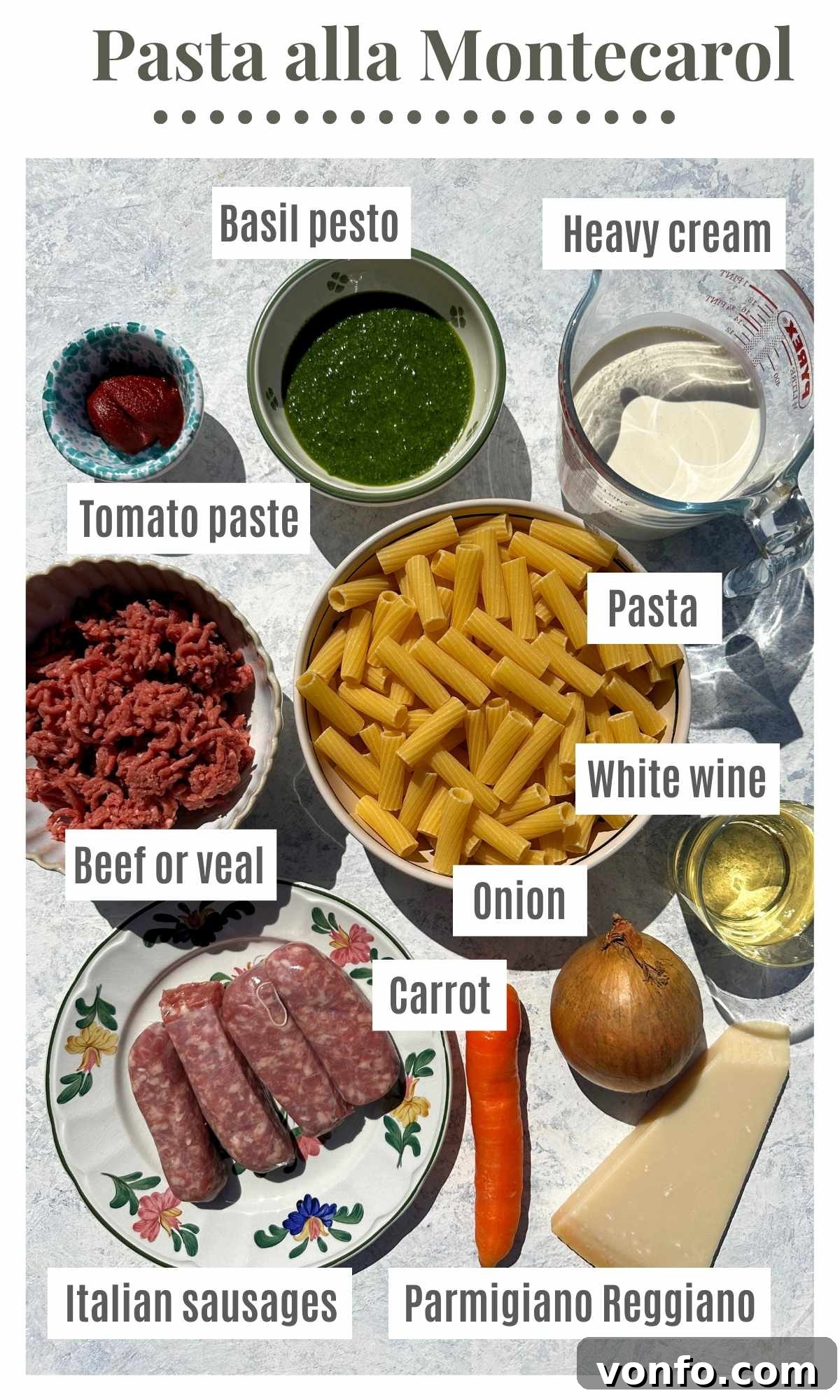
- Basil Pesto: This is arguably the star ingredient that sets Pasta alla Montecarlo apart. For an unparalleled flavor, we highly recommend making your own homemade basil pesto. The fresh, bright, herbaceous notes of homemade pesto are simply incomparable to most store-bought varieties. You’ll only need a few tablespoons for this dish, but a full batch can be stored in the fridge for other culinary adventures like sandwiches, salads, or spreading on crusty bread.
- Ground Beef: The foundation of our hearty meat sauce. We typically use ground beef for its accessibility and rich flavor. A good quality ground beef, preferably an 80/20 lean-to-fat ratio, will yield the best results for richness and texture in the sauce.
- Italian Sausages: Opt for mild Italian sausages, often seasoned with fennel and other herbs. It’s crucial to avoid spicy or hot varieties, as their strong, fiery flavors can easily overpower the delicate balance of the sauce, especially the fresh pesto. Remember to remove the casings before cooking and crumble the sausage meat directly into the pan for even browning and flavor distribution. This ensures a consistent, savory element throughout the dish.
- Ground Veal (Optional): While ground beef is our go-to for its robust flavor, this dish is also frequently made with ground veal. Veal offers a slightly milder, more delicate taste, resulting in a sauce that is still rich but perhaps a touch lighter in flavor profile. Feel free to use whichever you prefer or can easily find at your local butcher or supermarket.
- Heavy Cream (Double Cream UK): The cream adds a luscious, velvety texture and richness that defines the “creamy” aspect of this meat sauce. Use a good quality heavy cream for the best consistency and flavor. This is where the subtle French influence truly shines, lending a touch of decadence and binding all the flavors together beautifully.
- Tomato Paste: A small but mighty ingredient, tomato paste provides concentrated tomato flavor, depth, and a beautiful reddish hue to the sauce, without making it overly tomato-heavy. It acts as a crucial bridge between the savory meats and the creamy, herbaceous elements. Don’t skip this for building a rich umami base.
- Dry White Wine: Used to deglaze the pan, white wine adds complexity and a subtle acidity that brightens the sauce and cuts through the richness of the meat and cream. A dry white wine like Pinot Grigio or Sauvignon Blanc works wonderfully. Always use a wine you’d enjoy drinking, as its flavor will concentrate in the sauce.
- Aromatics (Onion & Carrot): These two vegetables form the classic Italian soffritto base when combined with a little olive oil. Finely chopped onion and carrot are gently sautéed to create a sweet, aromatic foundation for the sauce. This slow cooking allows their natural sugars to caramelize slightly, building a deep, complex flavor profile that underpins the entire dish.
- Parmigiano Reggiano: Essential for serving, a generous grating of fresh Parmigiano Reggiano adds a salty, umami kick and a wonderful finish to the dish. Its sharp, nutty flavor perfectly complements the creamy sauce and pesto, providing that quintessential Italian touch. Always use freshly grated for the best flavor and melt.
- Pasta: While most pasta shapes will beautifully cradle this rich sauce, short, sturdy pasta shapes are particularly excellent choices. Rigatoni, with its wide tubes and ridges, is an outstanding option, perfect for catching and holding every bit of the luxurious sauce. Other fantastic choices include penne, orecchiette (known for their ‘little ear’ shape that scoops up sauce), or even a robust long pasta like tagliatelle or pappardelle, which can be elegantly coated. Consider what pasta shape you enjoy most, as it will surely be delicious.
- Extra Virgin Olive Oil, Salt, and Freshly Ground Black Pepper: Standard kitchen staples for cooking the aromatics and seasoning the sauce to perfection. Always use good quality extra virgin olive oil for its flavor and a generous amount of salt for the pasta cooking water.
Crafting Your Pasta alla Montecarlo: A Step-by-Step Guide
Creating this magnificent pasta dish is a rewarding experience, combining classic techniques with a unique flavor twist. Follow these steps for a perfect Pasta alla Montecarlo every time. For visual guidance, refer to the step-by-step photos below!
Preparation is Key
- Pesto Preparation: For the freshest and most authentic taste, prepare a batch of homemade basil pesto if you haven’t already. While good quality store-bought pesto can work in a pinch, homemade truly makes a difference. Set aside 2-3 tablespoons for the recipe and store any leftovers in an airtight container in the refrigerator for other culinary uses.
- Vegetable Mince: Begin by finely chopping your carrot and onion. Consistency in size is important here, as it ensures they cook evenly and melt seamlessly into the sauce, forming a smooth, flavorful base.
- Pasta Water: Bring a large pot of water to a rolling boil. Once boiling vigorously, add a generous amount of salt – the water should taste like the sea. This well-salted water is crucial for flavoring your pasta from the inside out.
Building the Flavorful Meat Sauce
Step 4: Sauté the Aromatics. In a large, heavy-bottomed pan or Dutch oven, heat 1-2 tablespoons of high-quality extra virgin olive oil over medium heat. Add the finely chopped carrots and onions. Sauté gently for approximately 7-8 minutes, stirring occasionally, until they are beautifully softened and translucent but not browned. This slow sautéing process allows their natural sweetness to develop, creating the essential aromatic foundation of your sauce. (See Photo 1 below)
Step 5: Brown the Meats. Increase the heat to medium-high. Add the Italian sausage meat (removed from its casings and crumbled) and the ground beef (or veal) to the pan. Use a wooden spoon to break up the meat into small pieces and cook, stirring frequently, until it’s thoroughly browned on all sides. It’s important to get a good sear on the meat to develop rich, complex flavors. If excess moisture accumulates in the pan, continue cooking until it largely evaporates, ensuring the meat truly browns rather than merely steams. (See Photo 2 below)
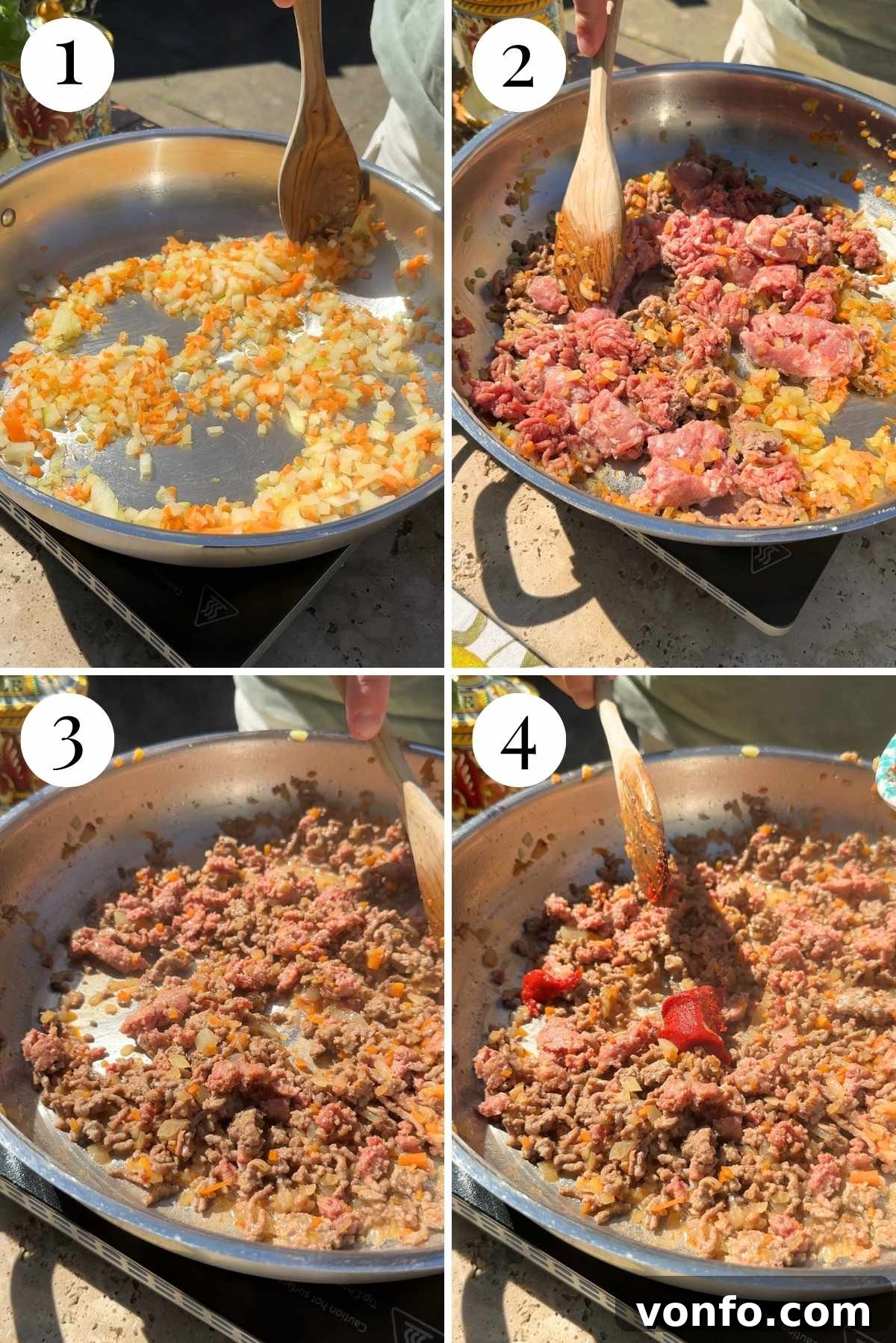
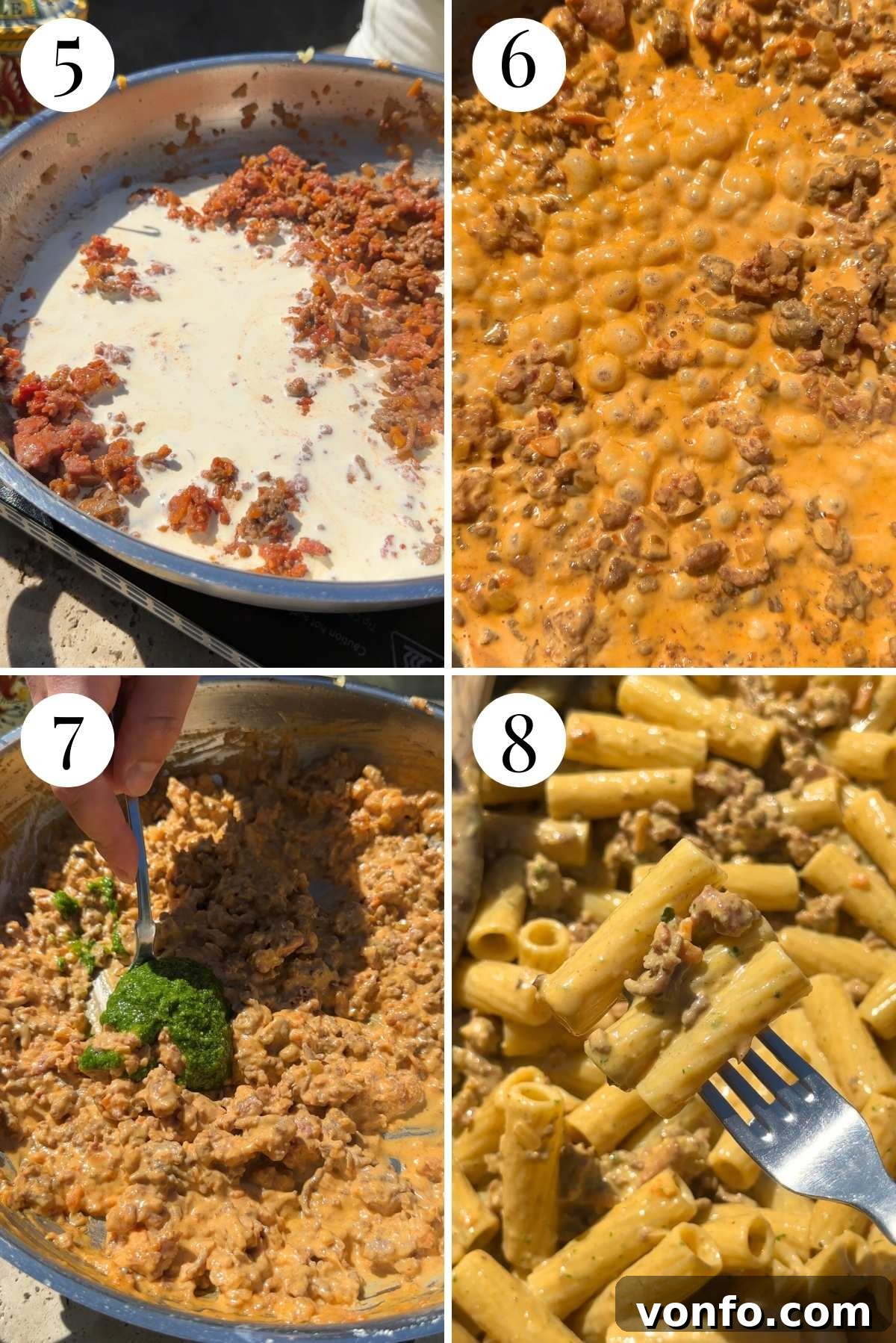
Step 6: Deglaze and Simmer. Carefully pour in the dry white wine. Immediately scrape any browned bits from the bottom of the pan with a wooden spoon. This process, known as deglazing, adds immense depth of flavor to your sauce. Allow the wine to reduce by half, or until you can no longer smell a strong alcoholic aroma – typically 3-5 minutes. Stir in the tomato paste until it is well combined and has coated the meat and vegetables. Then, add the heavy cream, along with a small pinch of salt and freshly cracked black pepper. Reduce the heat to medium-low and let the sauce gently simmer for 15-20 minutes. This crucial simmering time allows all the diverse flavors to meld beautifully and the sauce to thicken slightly, creating a harmonious blend. (See Photos 3-6 below)
Step 7: Cook Pasta and Combine. While the sauce is simmering, cook your chosen pasta in the well-salted boiling water until it is perfectly al dente, meaning it still has a slight bite to it. Drain the pasta, reserving about a cup of the starchy pasta water – this will be your secret weapon for achieving the perfect sauce consistency. Turn off the heat under your sauce. Add the cooked, al dente pasta directly to the pan with the sauce. Incorporate 2-3 tablespoons of fresh basil pesto. Toss everything vigorously using tongs or a large spoon until the pasta is thoroughly coated in the luxurious, creamy meat sauce and the vibrant pesto is evenly distributed. If the sauce appears too thick or needs a little extra silkiness, add a splash of the reserved pasta water, a tablespoon at a time, until it reaches your desired consistency. (See Photos 7 and 8 below)
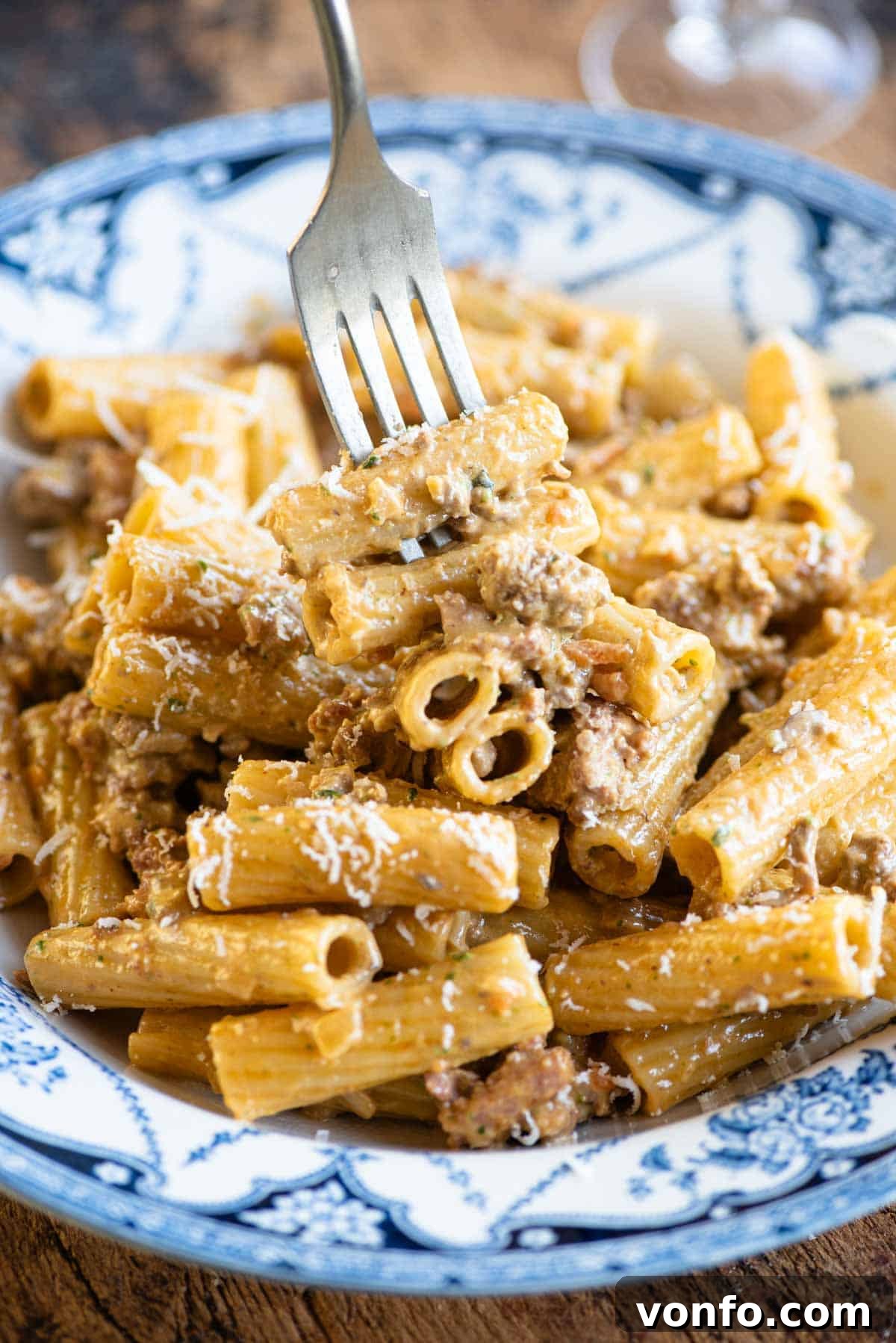
Step 8: Final Touch and Serve. Finally, add a generous grating of fresh Parmigiano Reggiano cheese and toss again to incorporate. Serve your Pasta alla Montecarlo immediately, perhaps with an extra sprinkle of Parmigiano on top and a sprig of fresh basil for garnish. Enjoy this rich, comforting, and uniquely flavorful dish!
Expert Tips for Your Pasta alla Montecarlo
- Choosing the Right Pasta Shape: While Pasta alla Montecarlo is versatile enough to pair with most pasta shapes, short, sturdy varieties are often preferred for their ability to capture and hold the rich meat and cream sauce. Rigatoni, with its wide tubes and ridges, is an excellent choice. Other fantastic options include penne, orecchiette (known for their ‘little ear’ shape that scoops up sauce), or even a robust long pasta like tagliatelle or pappardelle, which can be elegantly coated. Experiment to find your personal favorite!
- Make-Ahead Magic: The delicious meat sauce can be prepared in advance, making this an ideal dish for meal prepping or entertaining. Simply cook the sauce through Step 6, allow it to cool completely, and then store it in an airtight container in the refrigerator for up to 2-3 days. When you’re ready to serve, gently reheat the sauce on the stovetop over low heat. While it reheats, cook your pasta al dente. Combine the hot pasta with the warm sauce, adding a splash of reserved pasta water if needed to loosen the sauce to your desired consistency. Then, stir in the fresh pesto and Parmigiano Reggiano as usual.
- Don’t Skimp on Pesto: The pesto is the secret weapon here. Its freshness and distinct flavor truly elevate the dish, adding a bright, herbaceous contrast to the rich meat and cream. If using store-bought, try to find a high-quality brand that’s refrigerated, not shelf-stable, for the best taste. Better yet, make it from scratch – the difference is astounding!
- Seasoning as You Go: Always taste your sauce at various stages of cooking. Adjust salt and pepper as needed to build layers of flavor. Remember that Parmigiano Reggiano is naturally salty, so account for that when seasoning initially to avoid over-salting the final dish.
- Pasta Water is Your Friend: Always reserve some of that starchy pasta water before draining your pasta. It’s a fantastic emulsifier and can be used to loosen the sauce and help it cling better to the pasta, creating a silkier, more cohesive texture. A tablespoon or two can make all the difference.
- Serving Suggestions: This rich pasta dish is quite substantial on its own. Pair it with a simple, crisp green salad dressed with a light vinaigrette to balance the richness. A glass of dry white wine or a light-bodied red would also complement the flavors beautifully.
Explore More Must-Try Italian-Inspired Pasta Recipes
Pasta
Pasta alla Zozzona (A Roman Classic)
Pasta
Pasta alle Sette P (Seven P’s Pasta)
Pasta
Malloreddus alla Campidanese (Sardinian Sausage and Saffron Ragu)
Pasta
Orecchiette alla Positanese (Sausage, Tomato and Burrata)
Step By Step Photos Above
Most of our recipes come with step by step photos, helpful tips and tricks to make it perfectly first time and even video!
Pasta alla Montecarlo Recipe
By Emily
Print Recipe
Ingredients
- 1 Onion, finely chopped
- 1 Carrot, finely chopped
- 4 Italian Sausages (about 250g/1/2 lb), casings removed
- 1/2 lb (250g) ground beef or veal
- 1 and 1/4 cup heavy cream (300ml)
- 1 tablespoon tomato paste
- 1/2 cup (120ml) dry white wine
- 2-3 tablespoons basil pesto (preferably homemade)
- Parmigiano Reggiano, for serving
- 1 lb (450g) rigatoni pasta (or pasta of choice)
- Salt and freshly ground black pepper, to taste
- 1-2 tablespoons extra virgin olive oil
Instructions
Prep
- For the freshest taste, consider making your own basil pesto. Leftovers can be stored in the fridge for other uses.
- Finely chop the carrot and onion.
- Bring a large pot of water to a boil and salt it well for cooking the pasta.
Make the Sauce
- Heat 1-2 tablespoons of olive oil in a large pan over medium heat. Gently sauté the finely chopped carrot and onion for 7-8 minutes until soft and translucent, but not browned.
- Increase the heat to medium-high. Add the crumbled Italian sausages (casings removed) and ground beef (or veal). Sauté, breaking up the meat with a spoon, until thoroughly browned. Continue cooking until any excess moisture has evaporated.
- Pour in the white wine, scraping the bottom of the pan to loosen any browned bits. Let the wine reduce by half, or until the strong alcohol smell has dissipated.
- Stir in the tomato paste until well combined. Then, add the heavy cream, a small pinch of salt, and freshly ground pepper. Bring to a gentle simmer, then reduce the heat to medium-low and cook for 15-20 minutes, allowing the flavors to meld.
- About 10 minutes before the sauce is ready, add the pasta to the boiling salted water and cook until al dente according to package directions.
- Once the pasta is cooked and the sauce has simmered, turn off the heat under the sauce. Drain the pasta (reserving about 1/2 cup of pasta water), and add it directly to the sauce. Stir in 2-3 tablespoons of basil pesto. Toss until the pasta is fully coated in the creamy, flavorful sauce. If the sauce is too thick, add a little reserved pasta water to reach your desired consistency.
- Serve immediately with a generous grating of fresh Parmigiano Reggiano.
Video Tutorial
Notes
- Storage: Cream-based sauces are always best enjoyed fresh. However, any leftovers of Pasta alla Montecarlo can be stored in an airtight container in the refrigerator for 1-2 days. When reheating, do so gently on the stovetop over low heat, adding a splash of water or milk to loosen the sauce if it has thickened.
Helpful Information for All Recipes
- I always use extra virgin olive oil in all of my recipes unless stated otherwise.
- When I use canned or jarred tomatoes of any kind, I always use Cirio or Mutti brands for the best results and flavor.
- All vegetables are medium-sized unless stated otherwise.
- All recipes are tested and developed using a fan (convection) oven.
- Find out more about how nutrition is calculated.
- Check out our must-have Italian Pantry Staples.
- You can also find all our Essential Kitchen Tools for Italian Cooking.
Nutrition Information (Approximate Per Serving)
Calories: 620kcal | Carbohydrates: 91g | Protein: 26g | Fat: 13g | Saturated Fat: 4g | Polyunsaturated Fat: 1g | Monounsaturated Fat: 4g | Trans Fat: 1g | Cholesterol: 40mg | Sodium: 165mg | Potassium: 573mg | Fiber: 5g | Sugar: 6g | Vitamin A: 2765IU | Vitamin C: 4mg | Calcium: 60mg | Iron: 3mg
Nutrition information is automatically calculated and should only be used as an approximation.
We hope you enjoyed this journey into the delicious world of Pasta alla Montecarlo! If you’ve tried this Pasta alla Montecarlo recipe or any other recipe on our blog, please consider sharing your experience. Your feedback is invaluable, and we love hearing from you in the comments below! You can also follow us on Facebook, Instagram, and Pinterest, or sign up for our newsletter to receive more delicious recipes and cooking inspiration directly in your inbox.