Overnight No Knead Focaccia
- Makes 8 - 10 servings (1 large focaccia)
- Prep 2 hours
- Cook 20 minutes
- Total 16 hours 20 minutes
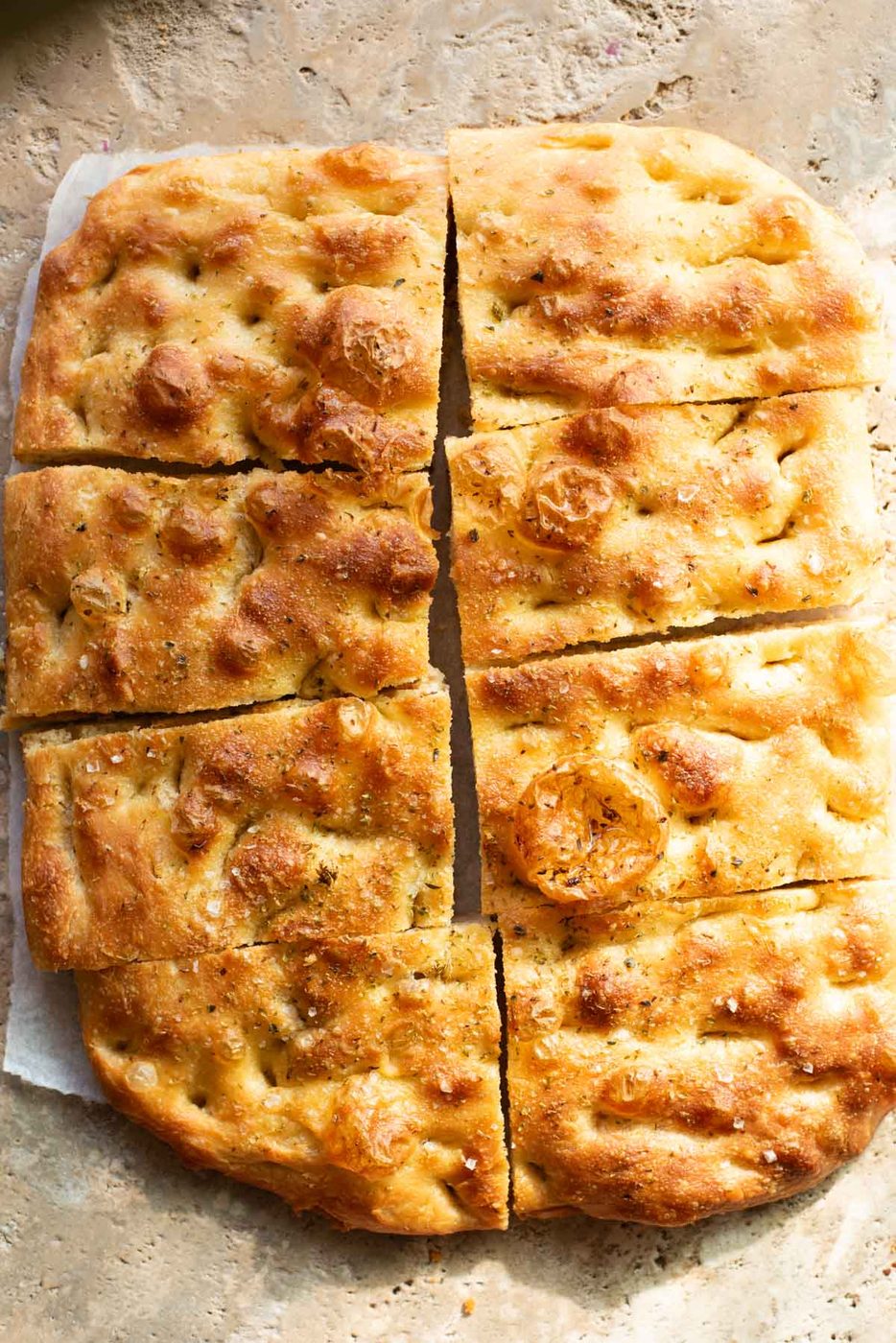
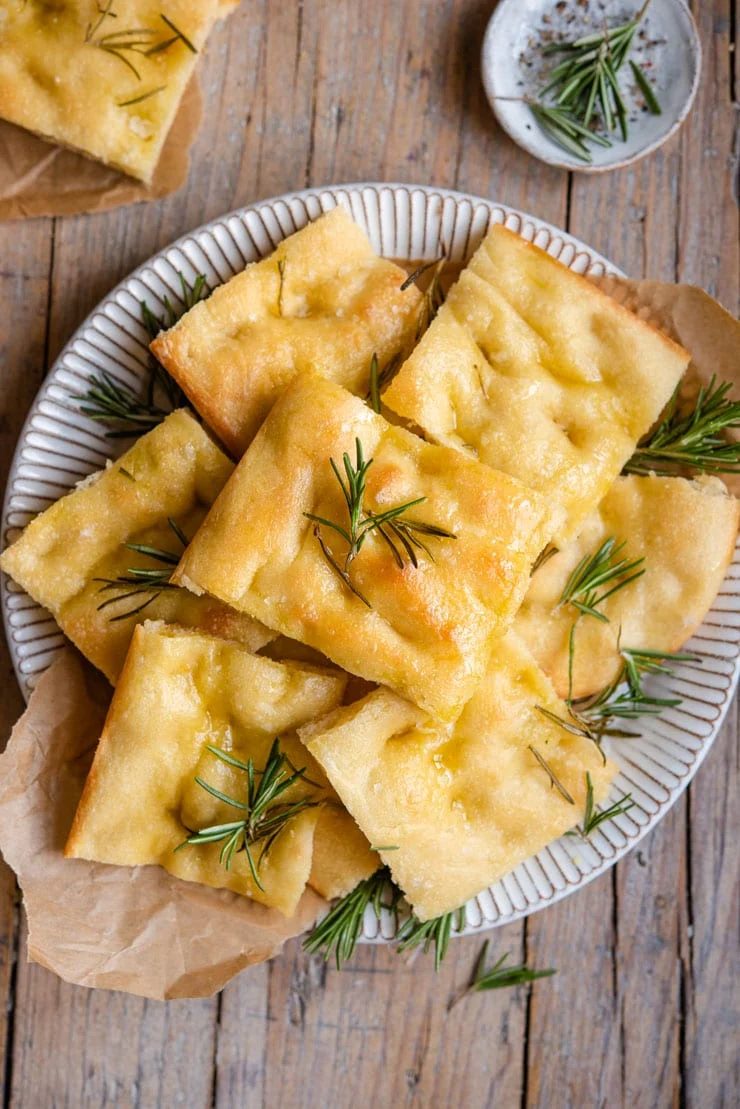
This is our absolute favourite no-knead focaccia recipe. It's so bubbly, light, and airy with the most good flavour and golden crust. Best of all, it's easy to make and can be prepped up to 48 hours in advance. Enjoy it as it is, with any toppings you like or use it to make good focaccia sandwiches!
Why this is our favourite focaccia recipe
- High hydration (80%), which makes this focaccia light, bubbly and airy with a good golden crust!
- It uses minimal yeast (easier to digest).
- No kneading involved (we use a simple folding technique).
- It's suited to prepping ahead (can be made 48 hours in advance).
Although we've been making focaccia for years, we recently changed our technique, experimenting with different hydrations, and we have learned so much.
Our other focaccia recipe on the site has a lower hydration (60%) and a lot more yeast involved because it's a same-day dough.
This recipe is our new go-to and we use it as a snack, for dipping in sauces, soups (scarpetta), making sandwiches or with various toppings – it's unbelievably good!
This recipe is quite lengthy due to it being a technical recipe, but it's not difficult. You can see the simple step-by-step photos in the recipe card, and we've also included a short video to explain the folding techniques. It's something that can sound complicated, but it's quick and easy when you can see it visually.
Our top tips (what we've learned)
Here are some of our top tips that we've learnt since diving deeper into focaccia making.The full written recipe is in the recipe card below. We've also included a handy short video to show you how to do the folding techniques (it's easy).
- Minimal yeast is best – You need a minimal amount of yeast, especially if you're using instant or fast-action yeast. Large quantities of yeast are often used when you need or want a same-day dough but it can make the bread difficult to digest. Using minimal yeast and letting the dough proof for longer will stop you from feeling so sluggish afterwards.
- Time equals flavour – A longer proof is necessary when using a small amount of yeast, but it also gives the bread a chance to develop a lot of flavour, which it can't do in a short amount of time.
- Put a timer on – there are 30-minute intervals between each fold, so put a timer on so you don't forget about it (this is important for us, otherwise we forget every time!).
- Don't be scared of wet dough – High hydration, meaning a high water to flour ratio, means the dough will be wet and sticky and can't be kneaded easily. Since this dough has an 80% hydration, we used a stretch and fold method, which is easy to do (see the photos and video tutorial).
Ingredient notes
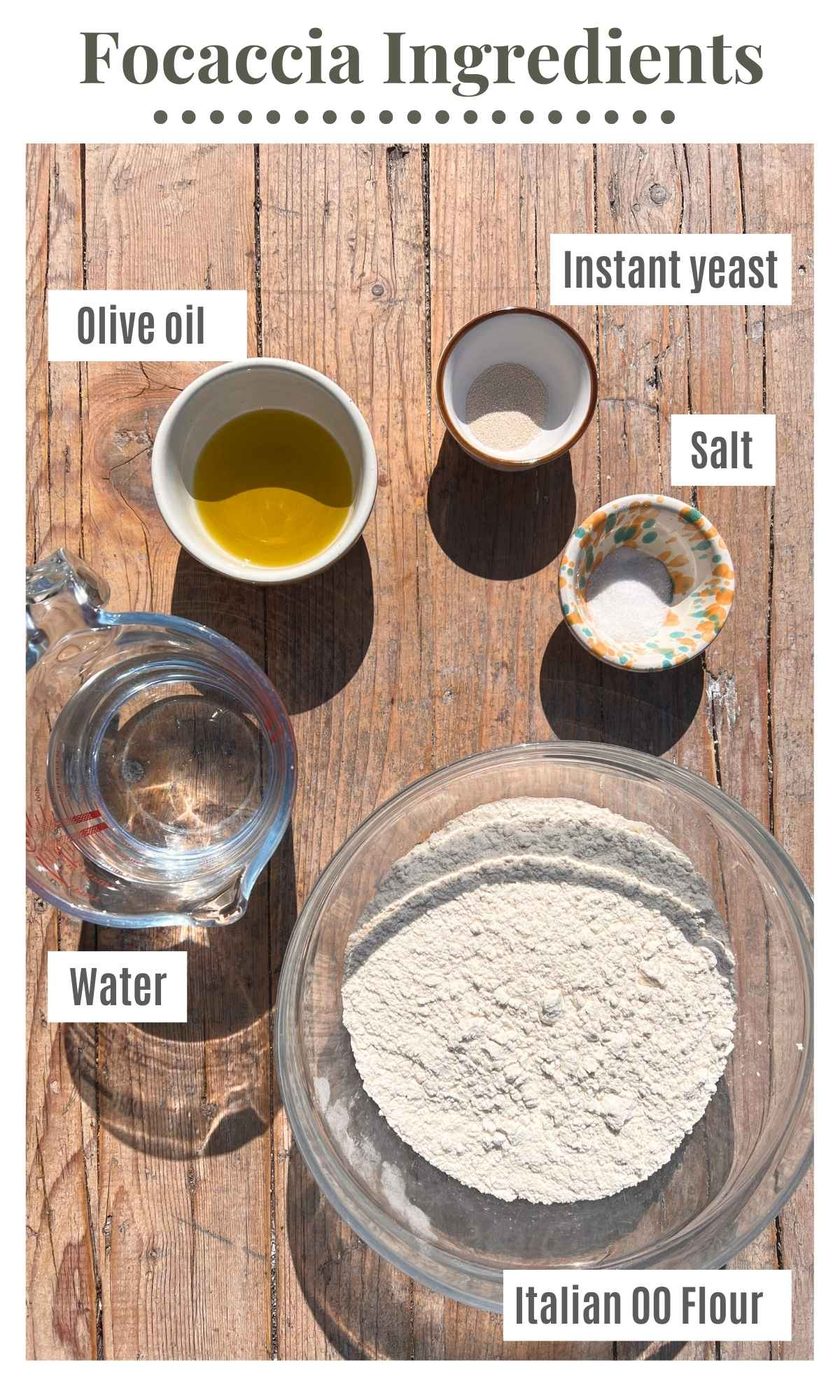
- Italian 00 flour with 12% protein – you can also use bread flour for this recipe, which will work as well.
- Instant yeast – the yeast we use can be added straight to the flour without activation, but some fast-action or instant yeasts need some water to help them along. read your packet instructions in case you need to activate your yeast first.
Example baking timeline
We thought it would be helpful to show you our usual timeline for making our no-knead focaccia.
- 10:00 am – mix up the focaccia dough
- 10:30 am – stretch and fold
- 11:00 am – coil fold 1
- 11:30 am – coil fold 2
- 12:00 pm – coil fold 3 (leave to proof until doubled in size)
- 3:00 pm – refrigerate
- 9:00 am next morning – remove from the fridge, transfer to tray, fold it and turn over. Leave to proof 2-3 hours or until doubled in size.
- 11:30 am – dimple, season and bake.
Note that the temperature of your environment will determine how long you need to leave the dough to proof. In summer, for example, your dough may be doubled in size within 1.5-2 hours.
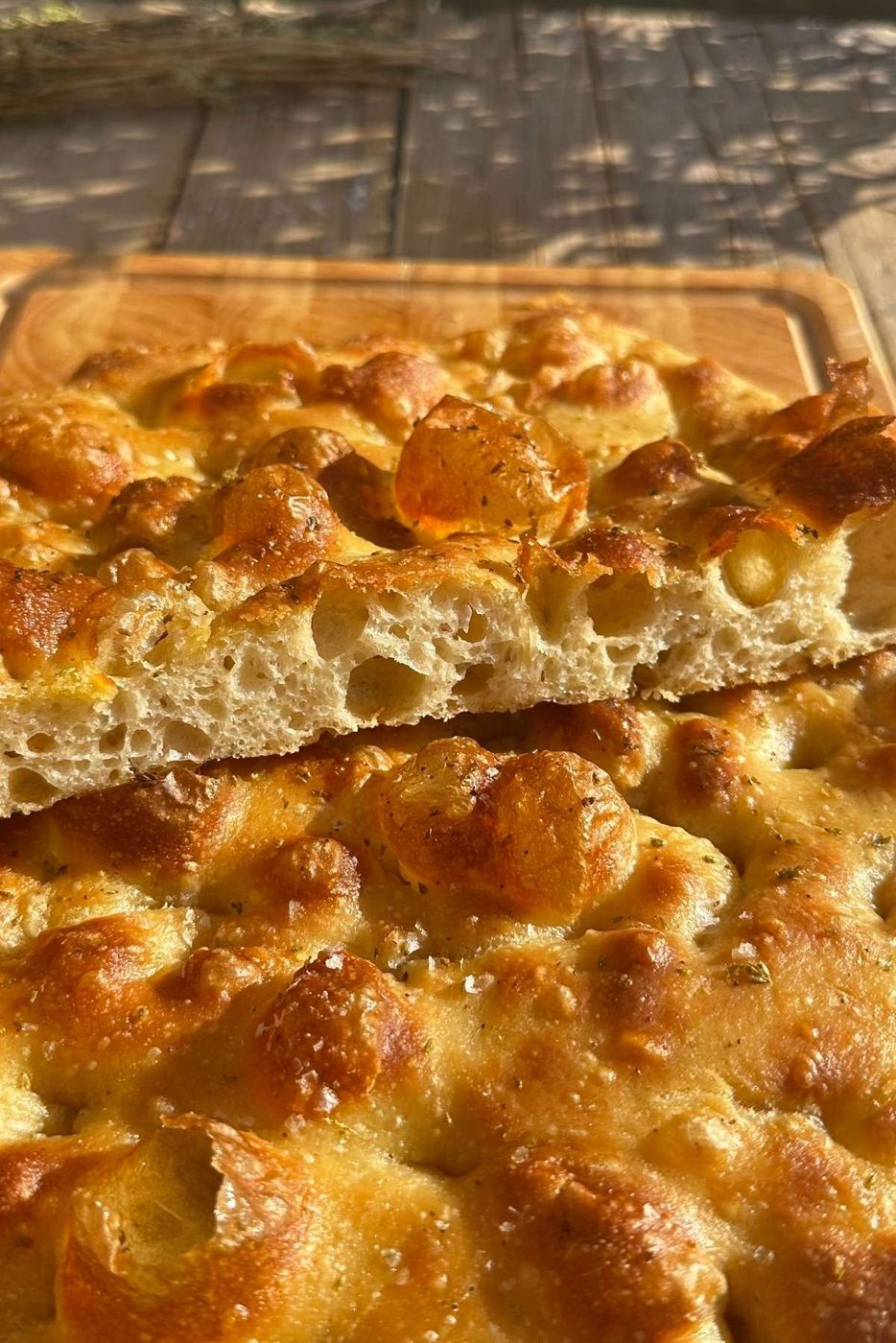
Focaccia flavour variations
The flavour variations and toppings when it comes to focaccia are endless and you can experiment with whatever you like or have at home. Here are some good combinations you can try or see our Italian Bread Category for more inspo!
- Olive focaccia – add some olives to the dough after you've done the dimpling. Choose whatever olives you like (we love Nocellara, Kalamata and Castelvetrano) and you can choose to keep them whole or slice them.
- Tomato – there are a few different ways to create a tomato focaccia. You can spread over some tomato sauce, add sun-dried tomatoes or add roasted or raw cherry tomatoes sliced on top. Our Roasted Tomato Focaccia with Pesto and Burrata is good!
- Herbs – We love sprinkling over some Italian oregano that we buy dried in bunches. Rosemary is another regular herb we use and love but you can experiment with whatever you like.
- Onions – either thinly slice raw onions (whatever kind you like) and place them on top of the focaccia. You can also add caramelised onions which are good!
- Garlic oil or butter – crush some garlic and melt it in butter or olive oil then pour it over the focaccia before baking.
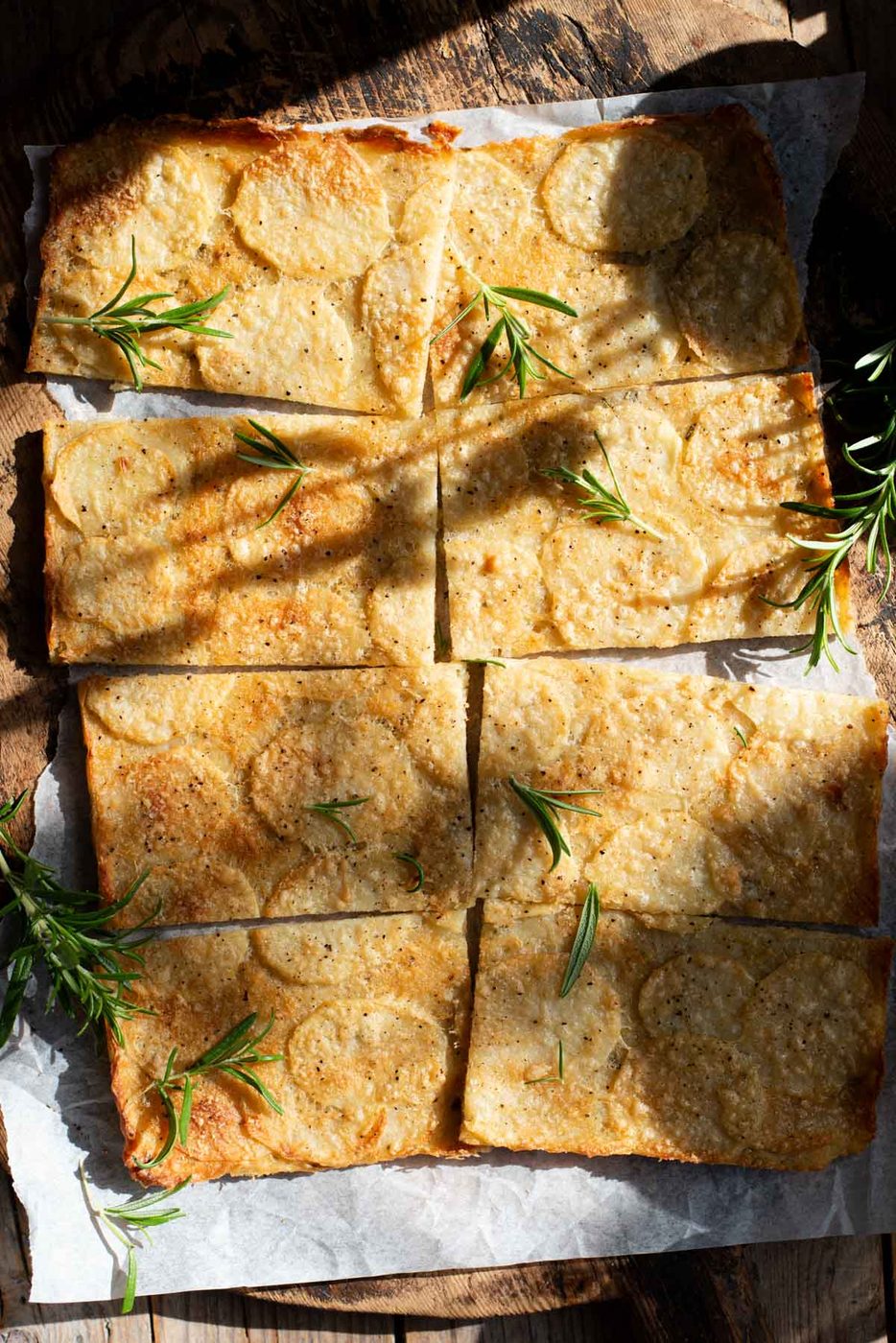
- Potato – this is a classic topping in Italy. See our cheesy potato pizza recipe and use the same topping with this dough!
Kitchen questions
Can we make this focaccia the same day?You can, but it will require more yeast (at least 4 grams or 1 teaspoon). Make the dough as early as possible, then after you have completed all the folds, leave it to rise at room temperature until doubled or even tripled in size.
How long can we keep focaccia dough in the fridge?The maximum time we'd leave it is 48 hours. This is because after 48 hours, the dough will start to over-proof and will turn out a lot flatter if you bake it.
Can we freeze focaccia dough?Yes, complete your folds, giving the dough at least 2 hours at room temperature, then freeze it in a container. Defrost the dough completely in a bowl and allow it to come to room temperature before baking.
More good Italian breads to try
Bread & Savory Bakes
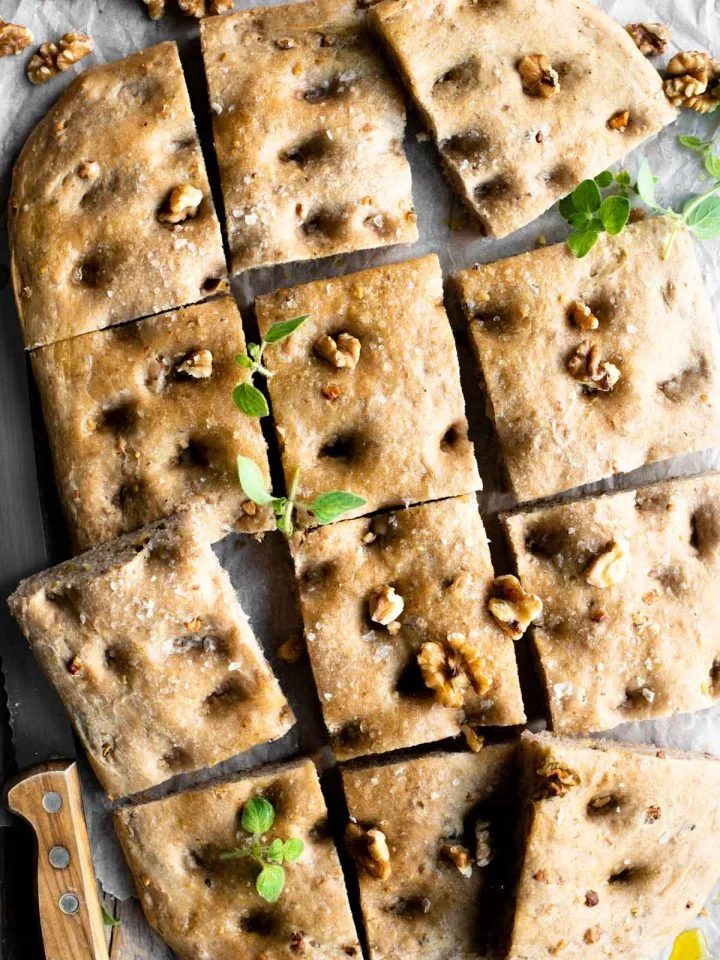
Walnut Focaccia
Bread & Savory Bakes
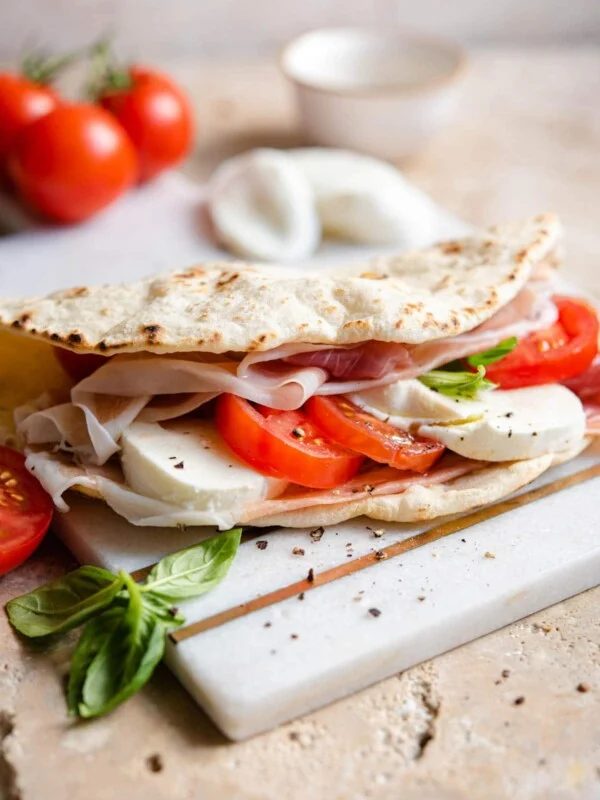
La Piadina: Italian Flatbread
Bread & Savory Bakes
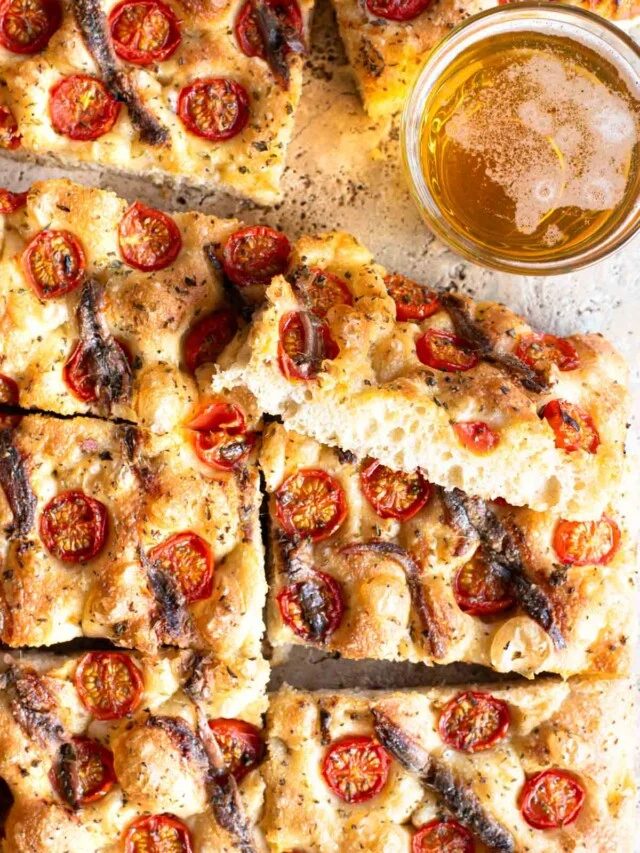
Cherry Tomato Focaccia with Anchovies and Oregano

Pizza
Focaccia Pizza
Ingredients
Makes 8 - 10 servings (1 large focaccia)
- 500 g Italian 00 flour or bread flour ((approx 3 and 3/4 cups spooned and levelled))
- 400 ml water ((1 and 2/3 cups))
- 1 g instant yeast ((¼ teaspoon) Please see notes)
- 4 tablespoons olive oil (plus more for greasing and topping)
- 7 g salt (plus sea salt flakes for topping)
Equipment
- Baking tray
- large mixing bowl
Method
Put the flour (500g) in a large mixing bowl and place the yeast (1g) and salt (7g) at opposite ends of the bowl. Please check your packet instructions to see if you yeast needs activated in water first (see notes).
Add the water (400ml) and stir in to form a rough dough. Add the olive oil (4 tablespoons), then continue to stir the dough with a spoon until there are no dry bits left. It should look very wet and sticky.
Cover the bowl with plastic wrap and leave it to rest for 30 minutes.
Next, uncover the bowl and wet your hands well with water. Using one hand, fold each edge of the dough into the middle (see photos or video for reference). This takes just a few seconds. Re-cover the bowl and let it rest for another 30 minutes.
Repeat the step above once more then leave it again for 30 minutes.
Next, wet your hands again and do a coil fold. To do this, pick the dough up from the middle and stretch it right up until to feel the edges start to come away from the bowl, release the dough then do this again up to 3-4 times until you can lift the dough right out of the bowl without tearing it.
Place the dough back in the bowl letting the ends fold in on themselves. Repeat it from the opposite edge you started with (we recommend watching the quick video below as this is a very simple technique but can sound so complicated written out). Let the dough rest for another 30 minutes then repeat this another twice with 30 minutes rest in between.
Cover the bowl and let it proof until doubled in size (about 2-4 hours). Once doubled, refrigerate the dough overnight or up to 48 hours.
The next day
Line a baking tray with baking parchment (we use a 14×11 inch tray). Add a small drizzle of olive oil under the parchment so it sticks to the tray, then drizzle more on top (about 2-3 tablespoons).
Remove the dough from the fridge and tip it onto your baking tray. Fold the two longest ends over each other, then turn the dough over so the seam is underneath. Drizzle with more oil and cover it with plastic wrap (cling film). Let the dough proof until doubled in size (around 1-3 hours, depending on room temperature)
Preheat the oven to 230C (450F). Oil your hands well, then create dimples all over the dough using your fingers.
Sprinkle over some sea salt and any herbs you like, then give it another light drizzle of olive oil. Bake in the oven for 20-25 minutes, until golden brown.
Remove from the oven, we like to drizzle more olive oil over it once baked but that's optional. You can serve the focaccia warm or at room temperature.
It's best served the same day (see notes for storing leftovers).
Kitchen notes
- Environmental temperature the proofing time in the tray (next day) will depend on how warm your environment is. For example, in summer it may take 1.5-2 hours and in winter it could take 4-5 hours to double in size.
- Baking tray you can use a smaller tray than 11x14 inch, but we don't recommend using a larger one or your focaccia will be a lot thinner.
- Measuring in cups when spooning flour into cups and levelling it off with a knife, we tend to get around 135g per cup, but this can vary greatly from person to person. We highly recommend using a scale to weigh your flour for this recipe.
- Instant yeast some types of yeast need to be activated in water first. read your packet instructions. If you do need to activate the yeast (usually 5-15 minutes before) that's fine, take the required amount of liquid from the amount needed in the dough to activate the yeast.
- Proofing time the whole process of folding the dough gives the dough 2 hours to proof (don't worry if you forget and it goes over this time - up to 4 hours is fine). We don't recommend doing any less than 2 hours, as you need to give the yeast time to grow and develop.
- Leftovers and storage the focaccia, like most breads, is at its best the same day they are made. Once cool, wrap it in foil to keep it as fresh as possible. The next day, if you're focaccia feels a little dry, wrap it in foil and put it in a pre-heated oven at 180C (350F) for about 10 minutes to soften it. It makes great sandwiches or bread for dipping, even the next day.