
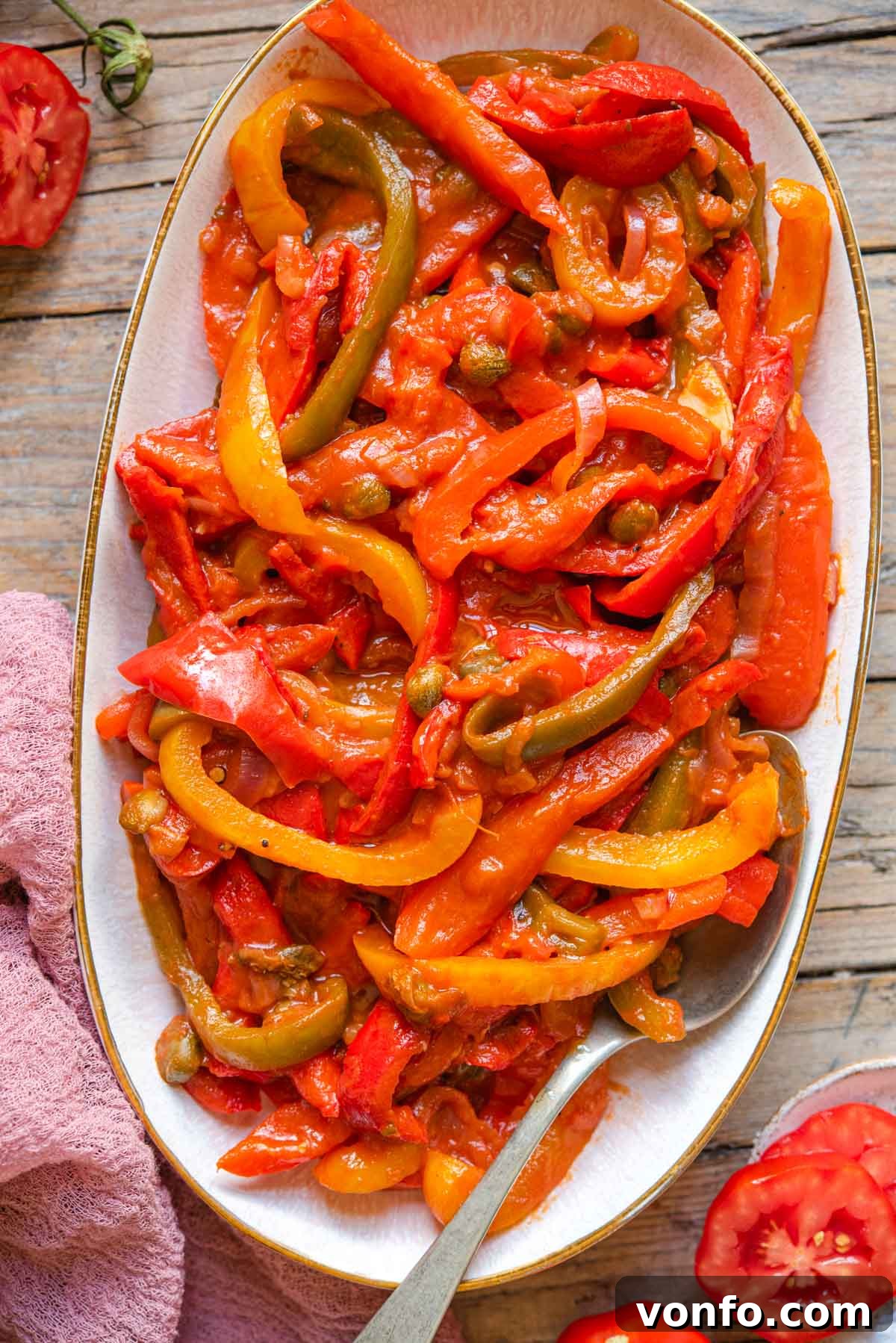
La Peperonata: A Vibrant Italian Summer Staple
Step into the heart of Italian culinary tradition with La Peperonata, a truly captivating summer dish. This incredible preparation features sweet bell peppers, gently slow-cooked in a rich, luscious tomato sauce, creating a symphony of flavors and textures. More than just a side dish, Peperonata is a versatile culinary gem that can be enjoyed hot or cold, paired with a variety of meats or fish, or served as a delightful antipasto alongside crusty, char-grilled ciabatta. Its vibrant colors and robust taste make it an instant favorite, embodying the warmth and generosity of Italian summer kitchens.
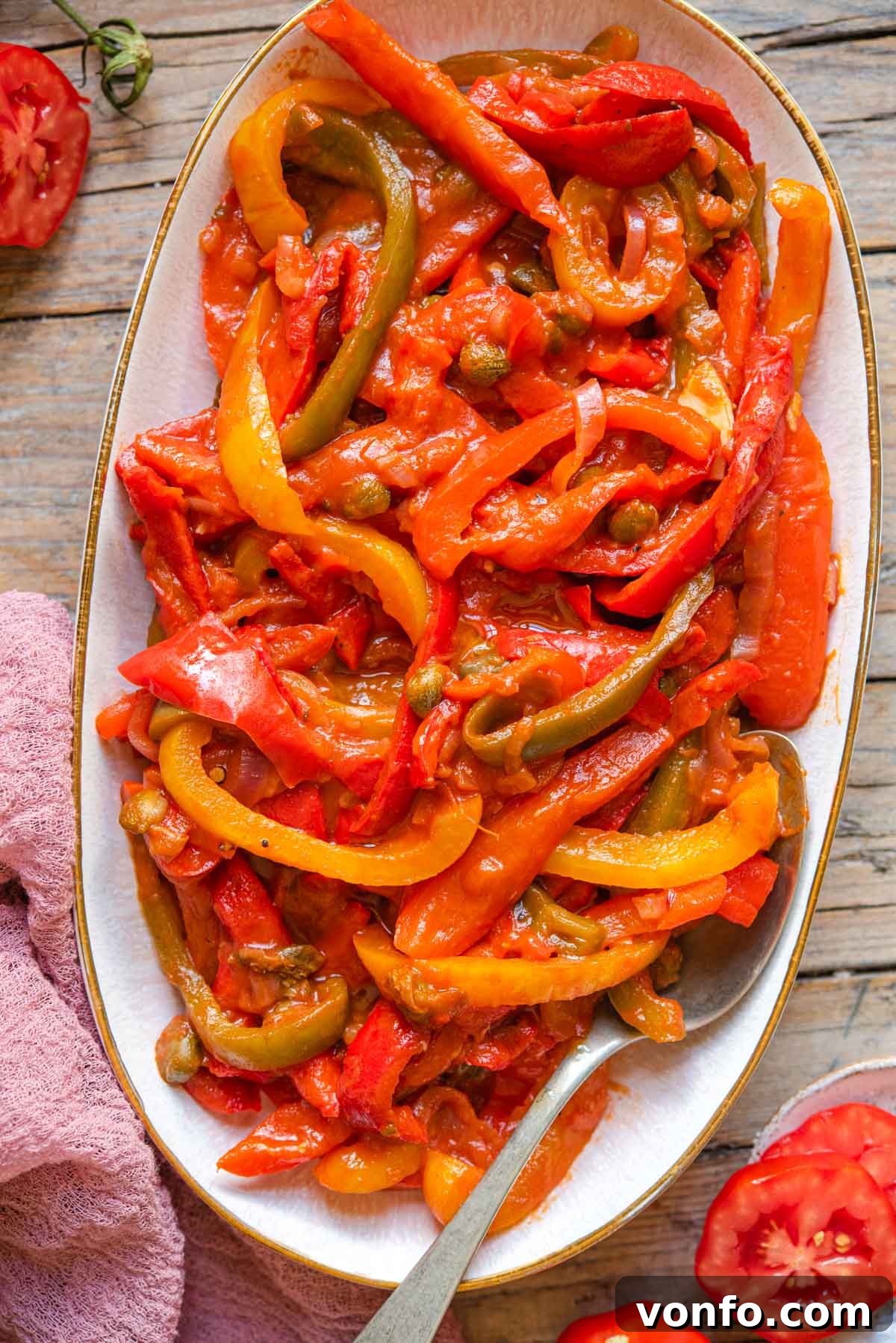
What is Peperonata? A Culinary Journey Through Italy
The name “Peperonata” itself, derived from “peperoni” (Italian for bell peppers), clearly indicates the star of this classic dish. It’s essentially a sweet and savory stew of bell peppers, a staple found in various forms across Italy, particularly in the southern regions where sunshine ripens peppers to perfection. Every Italian family and region seems to have its unique take on Peperonata, a testament to its enduring popularity and adaptability. While the core ingredients remain consistent – bell peppers, onions, garlic, and tomatoes – delightful variations abound, with some recipes incorporating capers, olives, a touch of red pepper flakes for heat, or fresh herbs like basil and parsley for an aromatic finish.
Originating from the traditional cucina povera (poor kitchen) ethos, Peperonata utilizes simple, seasonal ingredients to create something truly extraordinary. It’s a dish that celebrates the bounty of summer, transforming humble vegetables into a complex, comforting experience. The slow cooking process is key, allowing the peppers to tenderize beautifully and meld their sweet flavors with the acidity of the tomatoes, resulting in a deeply satisfying and naturally sweet stew. This effortless harmony of flavors is what makes Peperonata so beloved, serving as a versatile canvas for countless meal applications.
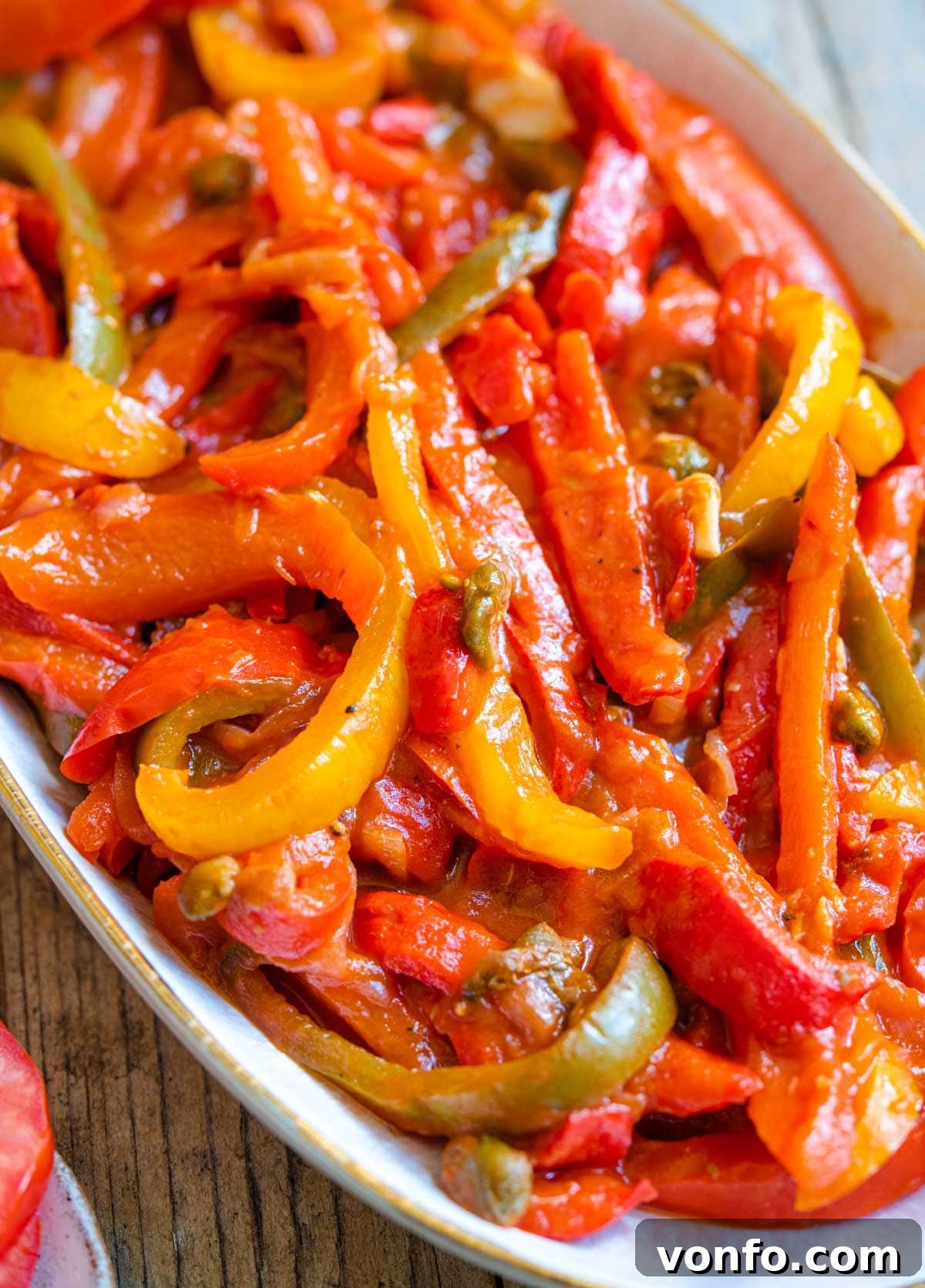
The Heart of Peperonata: Essential Ingredients for Authentic Flavor
Our rendition of Peperonata stays true to its simple roots, focusing on fresh, high-quality ingredients to deliver maximum flavor. The beauty of this recipe lies in its straightforward nature, allowing the natural sweetness of the peppers and tomatoes to truly shine. Depending on the season and your preference, you can opt for vibrant fresh tomatoes during peak summer months or rely on the consistent quality of jarred strained tomatoes (passata) for a year-round taste of Italy.
Key Ingredients:
- Bell Peppers: The undisputed star. We recommend using a variety of colors – red, yellow, and orange – not only for a visually appealing dish but also for a spectrum of sweetness. Green peppers are less sweet and can have a slightly bitter note, so use them sparingly or combine with sweeter varieties.
- Red Onion: Finely sliced, red onion provides a delicate sweetness and aromatic depth as it slowly caramelizes.
- Garlic Cloves: Whole garlic cloves infuse the oil with a gentle, mellow garlic flavor without overpowering the other ingredients.
- Strained Tomatoes (Passata): A cornerstone of Italian cooking, passata offers a smooth, rich tomato base. High-quality canned chopped or plum tomatoes are also excellent alternatives, or use fresh ripe tomatoes when in season for an unparalleled burst of freshness.
- Olive Oil: Extra virgin olive oil is indispensable. Its fruity notes and silky texture are fundamental to building the flavor foundation of Peperonata.
- Capers & White Wine Vinegar: These optional additions introduce a subtle tang and brininess that beautifully balance the sweetness of the peppers and tomatoes, adding complexity to the overall profile.
- Salt & Pepper: Essential for seasoning, bringing out the best in every ingredient.
Crafting Perfect Peperonata: A Step-by-Step Guide
Making Peperonata is a wonderfully meditative process. It involves patience and gentle cooking, allowing the ingredients to slowly meld into a harmonious and deeply flavorful dish. Follow these steps to create your own authentic Italian summer staple:
1. Sautéing the Aromatics: Building the Flavor Base
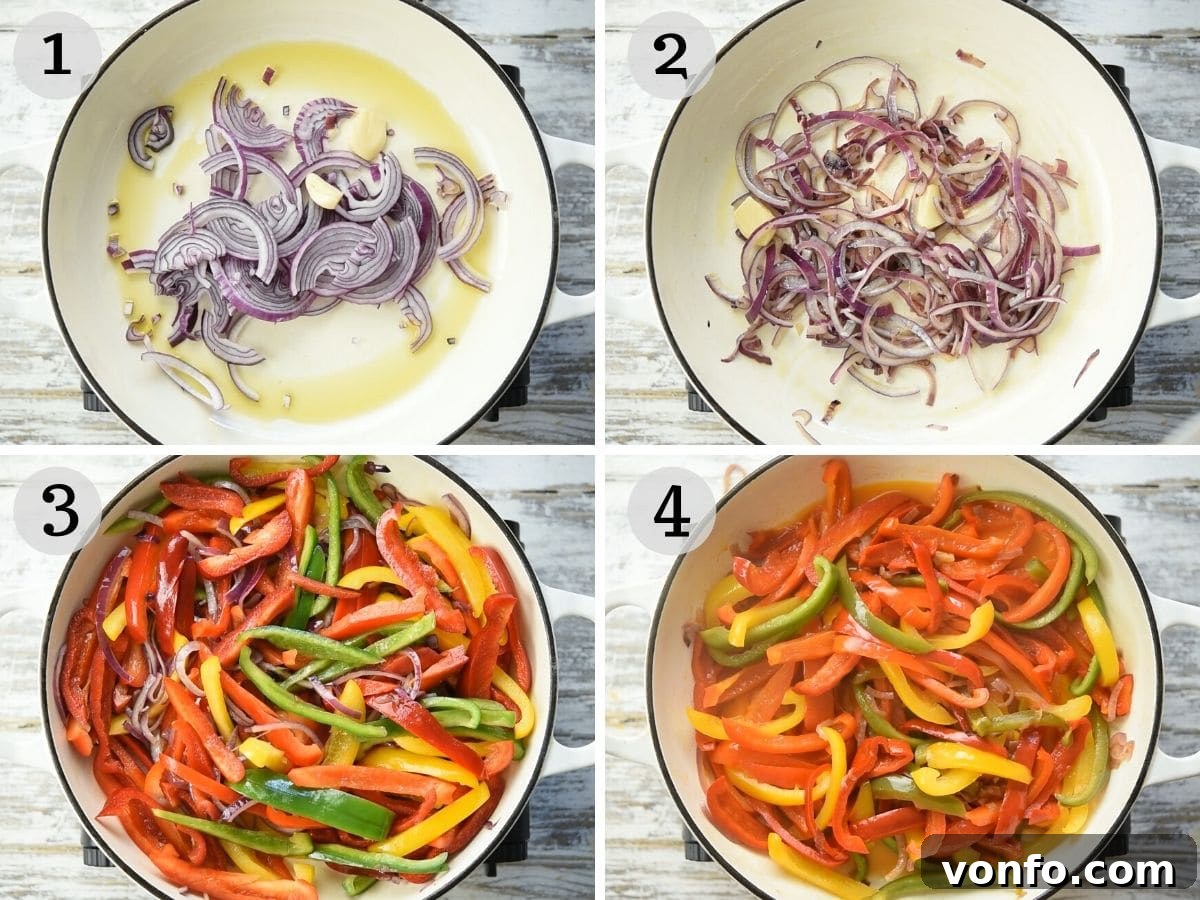
Begin by heating 1 tablespoon of quality olive oil in a spacious sauté pan or a deep skillet over medium heat. Once the oil is shimmering, add your finely sliced red onion and whole, peeled garlic cloves. Sauté gently, stirring frequently, for about 5 minutes until the onion has softened and turned translucent. This crucial step ensures a sweet, aromatic foundation for your Peperonata, avoiding any raw onion bitterness.
2. Slow-Cooking the Bell Peppers to Tenderness
Next, add the generously sliced bell peppers to the pan. Stir them well to ensure they are thoroughly coated in the fragrant olive oil. Cover the pan with a lid, reducing the heat slightly to medium-low. Allow the peppers to cook undisturbed for approximately 25 minutes. This covered cooking method is essential, as it steams the peppers, making them incredibly tender without burning. The goal is for them to be soft but still retain a slight structural integrity, not mushy.
3. Simmering in Rich Tomato Sauce
Once the peppers have reached the desired tenderness, it’s time to introduce the tomatoes. Pour in the strained tomatoes (passata), add ½ cup of water, 2 tablespoons of capers, and 1 teaspoon of white wine vinegar. Season generously with a good pinch of salt and freshly ground black pepper. Stir all the ingredients together thoroughly, ensuring everything is well combined and evenly distributed within the sauce.
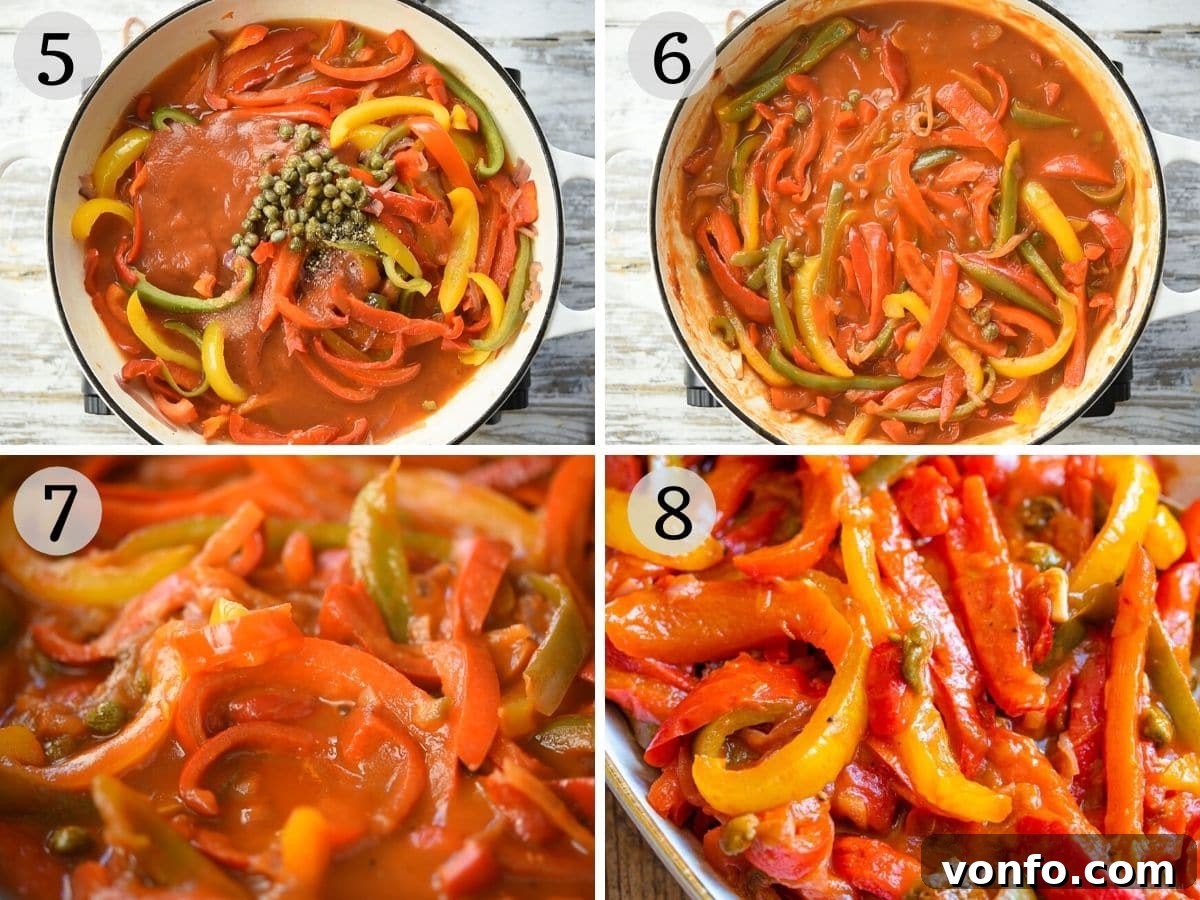
4. Reducing the Sauce and Final Touches
Increase the heat slightly to bring the sauce to a gentle simmer. Cook the Peperonata uncovered for another 15 minutes, or until the peppers are fully soft and the tomato sauce has significantly reduced and thickened. The reduction concentrates the flavors, creating a deeper, richer taste. Before serving, taste the dish and adjust seasoning with additional salt or pepper if needed. This final check ensures your Peperonata achieves the perfect balance of sweet, savory, and tangy notes.
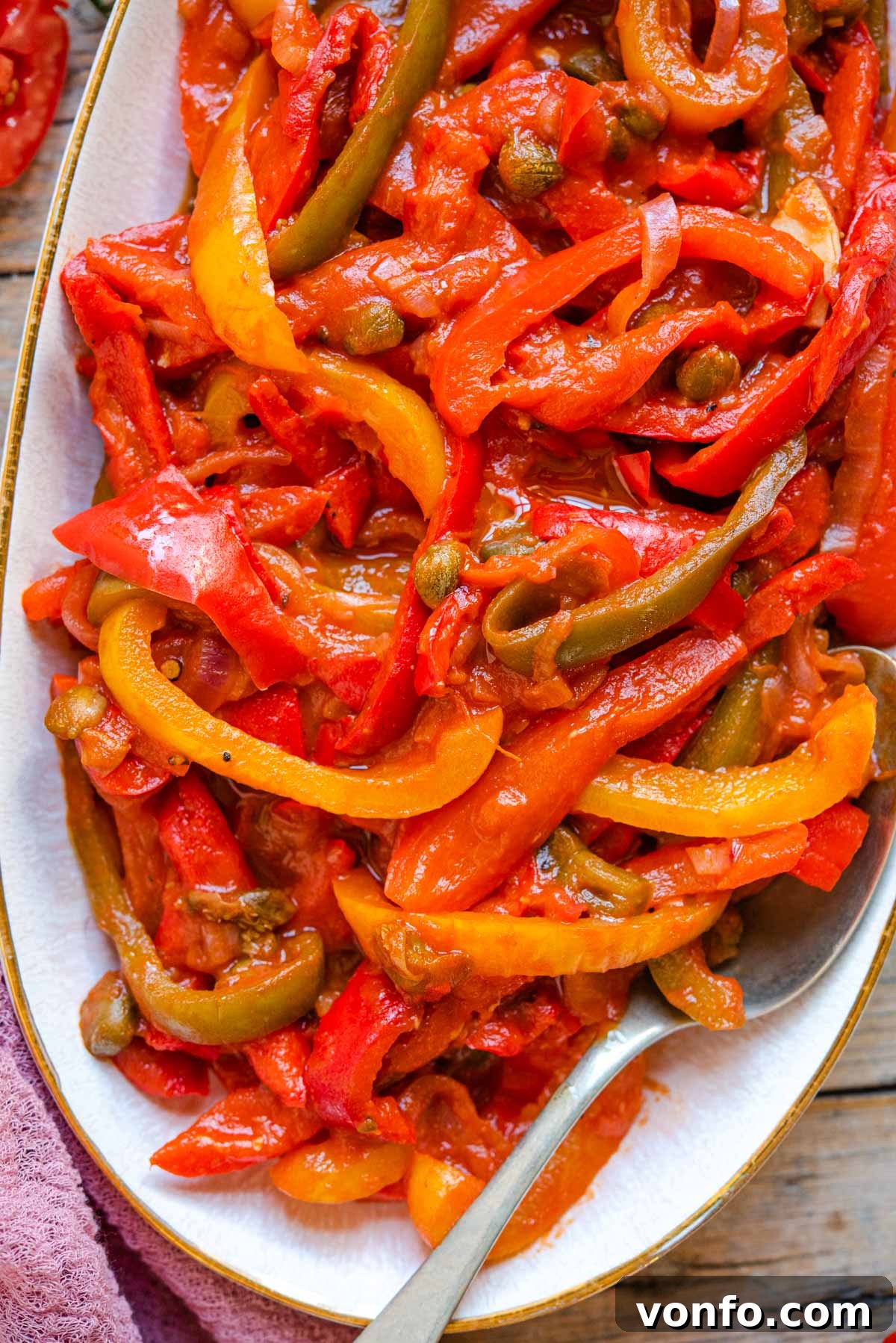
Versatile Serving Suggestions for Every Occasion
The beauty of Peperonata lies in its incredible versatility. It can effortlessly adapt to almost any meal, making it a true kitchen hero. Whether served as a vibrant side, a hearty main, or an elegant appetizer, its rich flavors are always a welcome addition.
Classic Italian Side Dish
Peperonata excels as a side dish, complementing a wide array of main courses. In summer, it’s an absolute must-have for barbecues, offering a fresh contrast to grilled meats and fish. Serve it warm alongside succulent Chicken Spiedini, crispy Breaded Chicken Cutlets, flavorful Breaded Fennel Pork Tenderloin, or a magnificent Florentine Steak. Its robust flavor stands up beautifully to bold proteins, while its vibrant acidity cuts through richness.
A Delightful Antipasto or Light Meal
Enjoy Peperonata at room temperature or chilled as a refreshing antipasto. Pile it onto slices of freshly chargrilled ciabatta bread for a simple yet sophisticated appetizer. It also pairs wonderfully with an assortment of cured meats and artisanal cheeses, creating a Mediterranean spread that’s perfect for entertaining or a relaxed lunch.
Transformed into a Hearty Pasta Sauce
For a unique and incredibly flavorful pasta sauce, Peperonata is an excellent candidate. Simply blend the cooked Peperonata using a regular blender or an immersion blender until it reaches a smooth, creamy consistency. This transformation unlocks a new dimension of flavor, creating a sauce that’s both robust and velvety. Toss it with your favorite pasta – penne, rigatoni, or even spaghetti – for a quick, comforting, and deeply satisfying meal that tastes like summer in a bowl!
Expert Tips for Your Best Peperonata Yet
Achieving the perfect Peperonata is easy with a few insider tips. These simple recommendations will help ensure your dish is flavorful, well-textured, and truly authentic:
- The Importance of Covered Cooking: When cooking the peppers, keeping the pan covered is absolutely crucial. This traps steam, allowing the peppers to soften evenly and thoroughly without scorching or drying out. If your skillet lacks a lid, a large baking sheet can serve as an effective substitute, ensuring consistent heat and moisture retention.
- Selecting Your Bell Peppers: While you can use any color of bell pepper, try to avoid using only green ones. Green bell peppers tend to be less sweet and possess a more savory, sometimes slightly bitter, flavor compared to their red, yellow, and orange counterparts. A mix of colors not only creates a more visually appealing dish but also provides a balanced sweetness and depth of flavor.
- Customize Your Flavor Profile: The beauty of Peperonata lies in its adaptability. Our recipe includes capers and white wine vinegar for a delightful tangy note. However, feel free to experiment with other additions to suit your taste. Consider adding olives (Kalamata or Gaeta are excellent choices), a pinch of red pepper flakes for a subtle kick, or a generous handful of fresh parsley or basil at the end for vibrant herbaceousness. You can also omit the capers and vinegar entirely if you prefer a simpler, sweeter profile.
- Choosing Your Tomatoes: The quality of your tomatoes significantly impacts the final flavor. High-quality jarred strained tomatoes (passata), canned chopped tomatoes, or whole canned plum tomatoes (San Marzano are highly recommended) all work beautifully. If you’re fortunate enough to have access to fresh, ripe summer tomatoes, these will provide the most exquisite flavor. You’ll need approximately 4 cups (roughly 600g) of freshly chopped tomatoes to substitute for the passata in this recipe.
- Storage and Freezing: Peperonata is an excellent dish for meal prepping. It actually tastes even better the next day as the flavors have more time to meld and deepen. It will keep well in an airtight container in the refrigerator for 3-4 days. For longer storage, Peperonata freezes exceptionally well. Portion it into suitable freezer-safe containers and freeze for up to 3 months. Thaw in the refrigerator overnight before reheating gently on the stovetop or in the microwave.
Explore More Rustic Italian Side Dishes You Might Like
If you’ve enjoyed the simple yet profound flavors of Peperonata, we encourage you to delve deeper into the world of Italian side dishes. These recipes celebrate fresh ingredients and traditional cooking methods, offering perfect accompaniments to any meal:
- Italian Green Beans In Tomato Sauce: A comforting classic showcasing tender green beans in a rich tomato base.
- Crispy Baked Polenta Fries: A delightful and crunchy alternative to traditional potato fries.
- Creamy Polenta (Italian Cornmeal): A smooth and velvety side, perfect for soaking up rich sauces.
- Sauteed Broccolini with Pesto, Pine Nuts & Chilli: A vibrant and flavorful green vegetable dish with a delightful kick.
Frequently Asked Questions About Peperonata
Here are some common questions about this delightful Italian dish:
Can Peperonata be made ahead of time?
Absolutely! Peperonata is one of those dishes that often tastes even better the next day, as the flavors have more time to meld and develop. It’s perfect for preparing in advance for gatherings or for easy weeknight meals.
Is Peperonata healthy?
Yes, Peperonata is remarkably healthy! It’s packed with nutrient-rich bell peppers, which are excellent sources of Vitamin C and antioxidants. The tomato sauce adds lycopene, and the olive oil contributes healthy fats. It’s naturally low in calories and can easily be adapted to vegetarian and vegan diets.
What kind of bell peppers should I use for Peperonata?
For the best balance of sweetness and visual appeal, we recommend using a variety of colored bell peppers such as red, yellow, and orange. These peppers are naturally sweeter and will contribute a richer flavor to your dish. While green peppers can be used, they are less sweet and might introduce a slightly bitter note, so it’s best to use them in combination with other colors.
Can I add other vegetables to Peperonata?
While classic Peperonata focuses on bell peppers, onions, and tomatoes, regional variations often include other vegetables. You can certainly experiment by adding sliced zucchini, eggplant, or even diced potatoes (though potatoes will extend the cooking time). Ensure any additional vegetables are cut to a similar size to the peppers for even cooking.
Conclusion: A Taste of Italian Summer in Every Bite
La Peperonata is more than just a dish; it’s an experience, a celebration of simple ingredients transformed by slow cooking into something truly magnificent. Its vibrant colors, sweet and savory notes, and incredible versatility make it a timeless Italian classic that deserves a place in every kitchen. Whether you’re serving it as a humble side or the star of your meal, Peperonata promises a taste of Italian summer, no matter the season. We encourage you to try this recipe and discover the magic of slow-cooked bell peppers in a luscious tomato sauce.
Share Your Culinary Creations!
If you tried this Peperonata Recipe or any other recipes on my blog, please be sure to leave me a comment below to let me know how you got on, I love hearing from you! You can also FOLLOW ME on FACEBOOK, INSTAGRAM and PINTEREST to see more delicious food and what I’m getting up to.
La Peperonata Recipe Card
Step By Step Photos Above
Most of our recipes come with step by step photos, helpful tips and tricks to make it perfectly first time and even video!
La Peperonata
By Emily

La Peperonata is an incredibly delicious Italian summer dish made with slow-cooked bell peppers in a beautiful tomato sauce. This simple side dish can be served hot or cold, with meat or fish or as an antipasto with some char-grilled ciabatta.
Ingredients
- 1 tbsp olive oil
- 6 large bell peppers different colours, sliced (around 900g-1kg)
- 1 red onion, finely sliced
- 2 garlic cloves, peeled but left whole
- 1.5 cups jarred strained tomatoes (passata), (500g)
- 1/2 cup water, (120ml)
- 2 tbsp capers
- 1 tsp white wine vinegar
- salt and pepper, to taste
Instructions
- Add 1 tbsp of olive oil to a saute pan or deep skillet on a medium heat. Once hot, add the onion and whole garlic cloves and saute, stirring often until the onion has softened (about 5 minutes).
- Add the sliced bell peppers and stir to coat in the oil. Cover the pan with a lid and cook the peppers for 25 minutes until tender but not completely soft.
- Add the strained tomatoes, water, caper, vinegar and a good pinch of salt and pepper and stir to mix everything together.
- Simmer uncovered for 15 minutes or until the peppers are soft and the sauce has reduced. Taste to see if it needs any additional salt then serve as a side or antipasto.
Notes
- Cooking the peppers covered is important so they soften without burning. If you don’t have a lid for your skillet then place a large baking sheet on top.
- You can use any coloured bell peppers you like but don’t use all green ones if you can help it because they aren’t as sweet and have a more savoury flavour.
- Instead of adding capers and vinegar you can add things like olives, red pepper flakes, fresh parsley or basil or leave them all out. How you flavour it is up to you!
- You can use strained tomatoes, canned chopped or plum tomatoes (high quality) or fresh ripe tomatoes to make this. If using fresh tomatoes you’ll need around 4 cups of freshly chopped tomatoes (roughly 600g).
- The Peperonata will keep well in the fridge for around 3-4 days or can be frozen in suitable containers.
Helpful Info for All Recipes
- I always use extra virgin olive oil in all of my recipes unless stated otherwise.
- When I use canned or jarred tomatoes of any kind I always use Cirio or Mutti brands for the best results and flavour.
- All vegetables are medium sized unless stated otherwise.
- All recipes are tested and developed using a fan (convection) oven.
- Find out more about how nutrition is calculated.
- Check out our must have Italian Pantry Staples.
- You can also find all our Essential Kitchen Tools for Italian Cooking.
Nutrition
|
Carbohydrates: 15g
|
Protein: 3g
|
Fat: 3g
|
Saturated Fat: 1g
|
Sodium: 104mg
|
Potassium: 552mg
|
Fiber: 4g
|
Sugar: 9g
|
Vitamin A: 4045IU
|
Vitamin C: 160mg
|
Calcium: 26mg
|
Iron: 2mg
Nutrition information is automatically calculated, so should only be used as an approximation.