
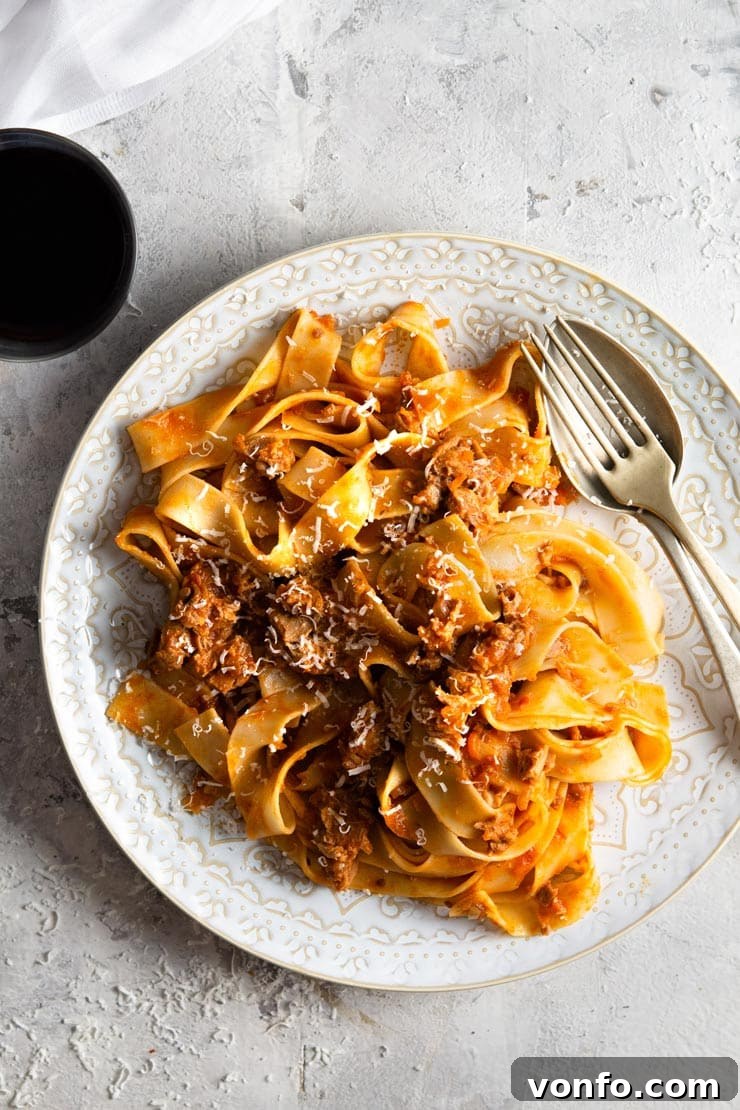
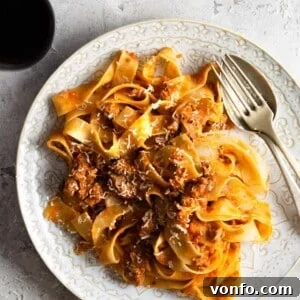
Indulge in the exquisite flavors of a rich Venetian duck ragu, featuring aromatic cinnamon, bright orange, and a splash of white wine, all lovingly tossed with silky pappardelle pasta. This beautiful Italian dish, while feeling incredibly festive and luxurious, is surprisingly straightforward to prepare. It’s the ultimate comfort food, guaranteed to impress at any gathering or simply elevate a weeknight meal.
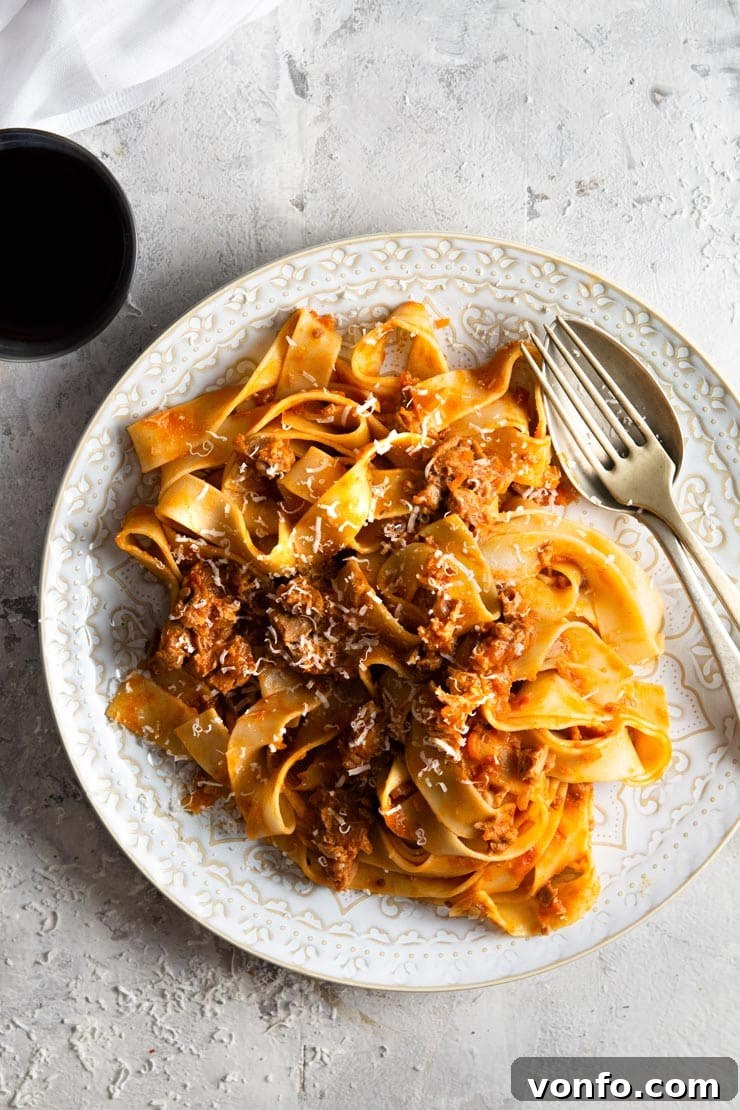
Venetian Duck Ragu with Pappardelle Pasta: A Culinary Journey to Venice
There are some dishes that transcend the everyday, transforming a simple meal into an unforgettable culinary experience. This Venetian Duck Ragu is precisely one such dish. Whenever I crave something truly special, yet effortlessly elegant, this recipe comes to mind. It embodies a luxurious and festive spirit, making it ideal for special occasions, holidays, or simply when you want to treat yourself and your loved ones to something extraordinary.
What sets Venetian cuisine apart, and this ragu in particular, is its distinctive use of warming spices like cinnamon and the vibrant zest of orange. These ingredients, often unexpected in traditional Italian fare, add a subtle depth and intriguing complexity that truly makes this dish shine. While it incorporates these aromatic elements, the ragu is far from sweet. Instead, they lend a delicate hint of something extraordinary, a unique flavour profile that’s both comforting and sophisticated, perfectly complementing the richness of the duck.
Traditionally, this exquisite duck ragu is served with broad, flat pappardelle pasta. The wide ribbons are perfect for catching every drop of the luscious, rich sauce, ensuring a harmonious bite every time. The result is a silky, deeply satisfying dish that is utterly moreish. Whether you envision curling up on the couch with a generous bowl on a chilly evening or serving it on a grand platter at a dinner party, this ragu adapts beautifully to any setting. And for an extra special treat, imagine transforming this delectable ragu into a bubbling, layered lasagne for a Sunday afternoon feast – pure bliss!
Why You’ll Love This Venetian Duck Ragu
- Uniquely Flavorful: The combination of tender duck with subtle notes of cinnamon and orange creates a flavour profile unlike any other Italian ragu you’ve tasted. It’s an authentic taste of Venetian culinary tradition.
- Luxuriously Rich: Slow-simmered to perfection, the ragu develops an incredible depth of flavour, coating the pasta beautifully. It feels incredibly gourmet, yet is made with simple, wholesome ingredients.
- Comfort Food at its Finest: There’s nothing quite like a hearty pasta dish to bring warmth and comfort. This duck ragu is the ultimate cozy meal, perfect for cooler months or any time you need a culinary hug.
- Impressive for Guests: Despite its ease of preparation, this ragu presents as an incredibly sophisticated dish. It’s ideal for dinner parties or special family meals where you want to leave a lasting impression.
- Versatile Serving Options: While pappardelle is the classic pairing, this ragu is also fantastic with other pasta shapes, creamy polenta, or as the star filling for a memorable lasagne.
What Does Duck Taste Like?
Duck offers a distinctive flavour that differentiates it from other poultry. It’s a dark meat, but unlike beef, it possesses a unique richness and a slightly gamey undertone, reminiscent of the darker cuts found on chicken or turkey, yet more robust. Its inherent flavour also carries a hint of sweetness, which pairs exceptionally well with a variety of seasonings and cooking methods. This characteristic sweetness is beautifully balanced by the aromatic cinnamon and zesty orange in this Venetian ragu, creating a complex and utterly delicious experience. Duck meat, when slow-cooked, becomes incredibly tender and succulent, absorbing the flavours of the sauce it simmers in, making it an ideal choice for a rich ragu.
The Heart of Venetian Flavors: Cinnamon and Orange
The incorporation of cinnamon and orange in this duck ragu is a hallmark of authentic Venetian cooking. While many associate Italian food primarily with garlic, basil, and oregano, the historical trade routes of Venice brought exotic spices from the East, profoundly influencing its regional cuisine. Cinnamon, with its warm, earthy, and slightly sweet notes, beautifully enhances the richness of duck without overpowering it. It adds a subtle layer of complexity, making the ragu feel incredibly comforting and intriguing.
Similarly, orange zest and juice introduce a bright, zesty counterpoint to the savory duck and tomato base. The citrus cuts through the richness, adding a refreshing lift and a delightful aroma that tantalizes the senses. The key is to use these ingredients judiciously; they are meant to be background notes that elevate the overall flavour, rather than dominating the dish. The result is a nuanced ragu that is both deeply traditional to Venice and uniquely appealing to the modern palate.
How To Make Venetian Duck Ragu – Step By Step Guide
Creating this delicious duck ragu is a labour of love that yields incredibly rewarding results. Follow these detailed steps to achieve a perfectly rich and tender sauce:
Step 1: Prepare and Sear the Duck. Begin by thoroughly seasoning the duck legs with a generous sprinkle of salt and freshly ground black pepper. Then, rub them all over with 1/2 teaspoon of ground cinnamon. In a large, heavy-bottomed pan or Dutch oven, add a little olive oil and sear the duck legs skin-side down first over a medium-low heat. Cook for 7-8 minutes on each side until the skin is beautifully browned and rendered, and the meat has a golden crust. This crucial step locks in moisture and develops deep flavour. Once seared, remove the duck legs and set them aside on a plate.
Step 2: Sauté the Soffritto and Aromatics. Using the same pan, which now holds delicious duck fat and browned bits, add an additional tablespoon of olive oil if needed. Add the finely chopped carrot, onion, and celery – the classic Italian soffritto base. Stir in the remaining 1/2 teaspoon of cinnamon and the fresh orange zest, along with a bay leaf. Sauté these vegetables slowly for about 10 minutes, stirring frequently, until they are wonderfully soft and translucent. This low and slow cooking allows their natural sugars to caramelize and build a foundational flavour for the ragu.
Step 3: Deglaze and Simmer. Return the seared duck legs to the pan with the sautéed vegetables. Pour in the white wine and bring it to a simmer, allowing the wine to reduce by half. This process deglazes the pan, lifting all the flavourful fond from the bottom. Next, add the fresh orange juice, passata (pureed tomatoes), tomato paste, and chicken stock. Stir all the ingredients well to combine. Bring the sauce to a gentle simmer, then cover the pan and cook slowly for at least 2 hours, turning the duck legs halfway through to ensure even cooking. If the sauce reduces too much during simmering, feel free to add a little more stock or water to maintain consistency. The goal is a rich, thick, and deeply flavoured sauce with exceptionally tender duck.
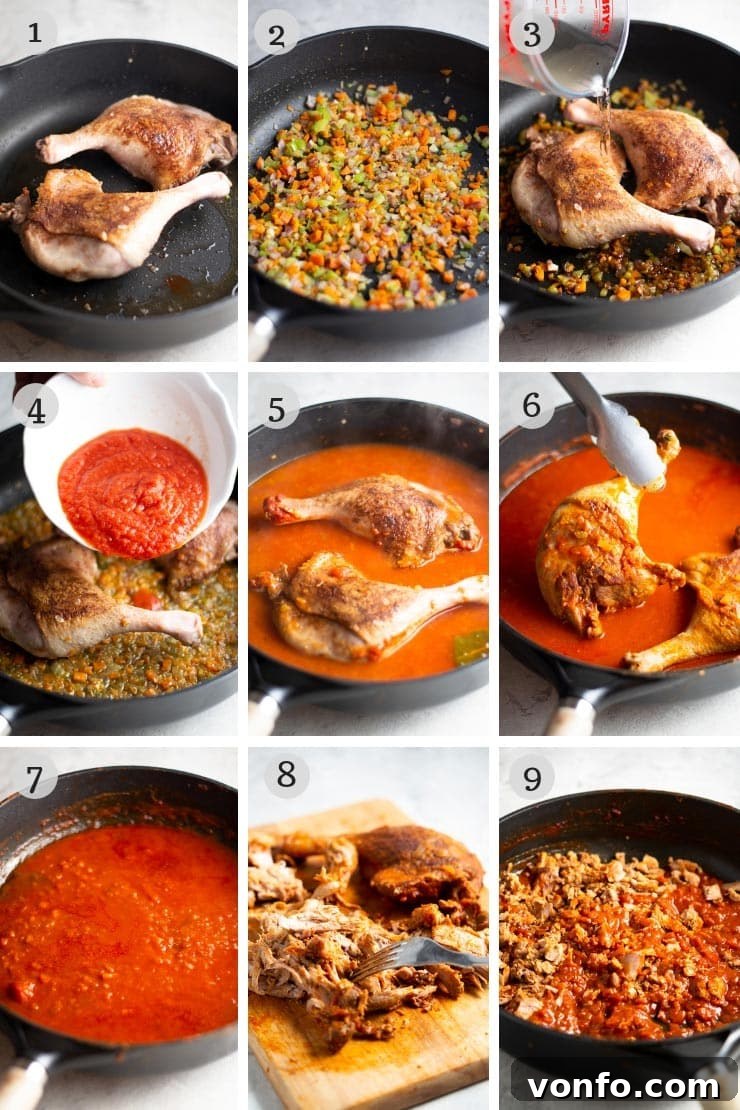
Step 4: Shred the Duck and Finish the Ragu. Once the simmering time is complete and the sauce is thick and rich, turn off the heat. Carefully remove the duck legs from the pan and place them on a chopping board. Allow them to cool for about 10 minutes – this resting period is crucial for juicy, tender meat. Once slightly cooled, use a fork to shred the succulent meat off the bones. Discard the bones and any excess skin if desired, then roughly chop the shredded duck meat. Return the chopped duck meat to the sauce and stir to combine. At this point, the ragu is ready to serve. Gently heat the ragu while your chosen pasta is cooking.
Step 5: Cook the Pasta and Serve. Bring a large pot of generously salted water to a rolling boil. Add the pappardelle pasta and cook according to the package instructions until al dente. Before draining, reserve about a cup of the starchy pasta water – this can be used to loosen the ragu if it has become too thick. Remove the cooked pasta using large tongs or a spaghetti spoon and add it directly to the duck ragu. Toss everything together until the pasta is thoroughly coated in the rich sauce. Serve immediately in warm bowls, garnished with a generous sprinkling of freshly grated Parmesan cheese. Enjoy!
What Pasta To Serve Your Ragu With
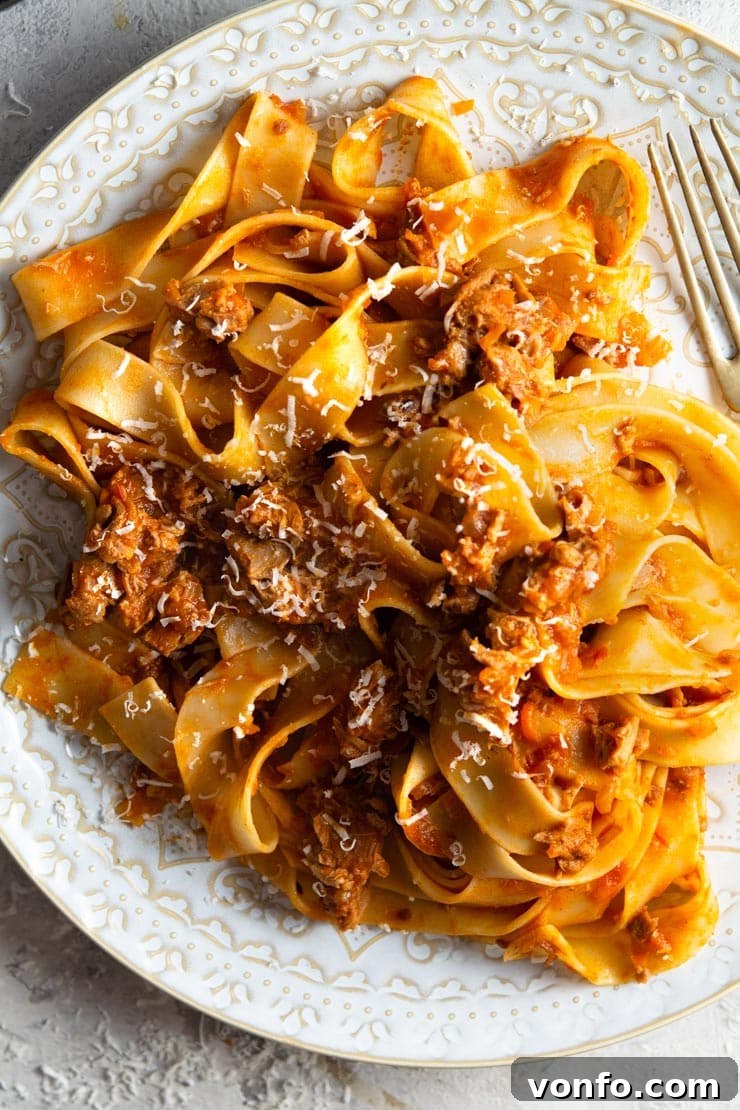
Choosing the right pasta shape is essential for a harmonious ragu experience. My absolute favourite, and highly recommended for this Venetian duck ragu, is pappardelle. Its wide, flat, and slightly ruffled ribbons are perfect for capturing every morsel of the rich, chunky sauce. However, several other pasta shapes also work beautifully:
- Tagliatelle: Similar to pappardelle but slightly narrower, tagliatelle is another excellent choice for meat sauces.
- Pici: A thick, hand-rolled pasta from Tuscany, pici has a rustic texture that stands up well to robust ragus.
- Rigatoni: The ridged tubes of rigatoni are fantastic for trapping hearty sauces within their hollows and on their textured surfaces.
You can opt for high-quality store-bought pasta for convenience, or for an even more authentic and satisfying meal, consider making your own homemade pasta dough. The fresh taste and texture of homemade pasta elevate this dish to another level. You can find excellent recipes for homemade pasta here.
Beyond pasta, this versatile duck ragu can also be served atop a bed of creamy polenta for a gluten-free option, offering a delightful contrast in textures. Alternatively, it makes an unbelievably delicious lasagne! Simply follow the assembly instructions in a classic lasagne recipe, replacing the beef ragu with this rich duck version. When preparing the béchamel sauce for the lasagne, I recommend using only a small amount of Parmesan, as other stronger cheeses might overpower the delicate nuances of the duck and Venetian spices.
Tips For Making the Best Venetian Duck Ragu
- Sear the Duck First: Don’t skip this critical step! Searing the duck legs skin-down first renders out fat and creates a beautifully browned, crispy skin. This process not only seals in the meat’s moisture, ensuring juicy duck, but also develops a crucial layer of flavour in the pan that forms the foundation of your rich sauce.
- Slow Cook the Soffritto: Patience is key when sautéing the vegetables (carrot, onion, celery). Cooking them slowly over medium-low heat for at least 10 minutes allows their natural sugars to caramelize and their flavours to deepen. Rushing this step will result in a less complex and flavorful ragu.
- Rest the Duck Before Shredding: After the long simmer, remove the duck legs from the sauce and let them rest on a chopping board for about 10 minutes. This resting period allows the juices to redistribute throughout the meat, preventing it from drying out or becoming tough when shredded.
- Don’t Underestimate Cinnamon: While optional if you truly dislike it, cinnamon is a traditional Venetian element that truly enhances the duck’s flavour profile. It adds a subtle warmth and aromatic complexity that makes this ragu unique and irresistible.
- Season Generously and Taste: Always season the duck well with salt and pepper before cooking. Furthermore, taste the ragu periodically throughout the cooking process and especially at the end. Adjust seasoning as needed, adding more salt or pepper to bring out the full depth of flavours.
- Use Quality Stock: A good quality chicken stock is paramount for a flavourful ragu. Homemade stock is always best, but if using store-bought, choose a low-sodium or high-quality brand. If chicken stock isn’t available, vegetable stock can be used as an alternative. Remember that store-bought stocks can be heavily salted, so always taste before adding extra salt to the finished ragu.
- Choose High-Quality Pasta: The quality of your pasta significantly impacts the final dish. Look for pasta brands that use good quality durum wheat and have a rough, porous texture (often indicated by “bronze-die extruded”). This texture helps the sauce cling to the pasta better. This brand is a personal favourite and widely available, or consider making homemade pasta for an unparalleled experience.
Storage and Freezing Instructions
This Venetian Duck Ragu is fantastic for meal prep or for enjoying leftovers, as the flavors often deepen overnight.
- Refrigeration: Store leftover ragu in an airtight container in the refrigerator for up to 3-4 days. It’s best to store the ragu separately from any cooked pasta, adding fresh pasta when reheating for the best texture.
- Freezing: The duck ragu freezes beautifully. Allow the sauce to cool completely, then transfer it to freezer-safe containers or heavy-duty freezer bags. It can be stored in the freezer for up to 3 months. Thaw overnight in the refrigerator before reheating gently on the stovetop.
- Reheating: Gently reheat the ragu in a saucepan over medium-low heat, stirring occasionally, until heated through. If it’s too thick, add a splash of chicken stock or reserved pasta water to achieve the desired consistency.
Frequently Asked Questions About Duck Ragu
Here are answers to some common questions about making and enjoying duck ragu:
- Can I use boneless duck meat? While bone-in duck legs add more flavour to the sauce during the long simmer, you can use boneless duck thighs or breasts. Adjust cooking time for boneless cuts as they may cook faster. You’ll still want to sear them to develop flavour.
- Can I make this ragu in a slow cooker? Yes, this recipe adapts well to a slow cooker. After searing the duck and sautéing the vegetables on the stovetop, transfer everything to your slow cooker. Cook on low for 6-8 hours or on high for 3-4 hours, until the duck is fall-off-the-bone tender.
- What kind of white wine should I use? A dry white wine like a Pinot Grigio, Sauvignon Blanc, or a dry Vermentino works wonderfully. Avoid sweet wines, as they will alter the flavour profile of the ragu.
- What if I can’t find pappardelle? If pappardelle is unavailable, tagliatelle, fettuccine, or even a robust short pasta like rigatoni or paccheri can be excellent substitutes. The key is a pasta shape that can hold up to and capture the rich sauce.
More Ragu Recipes You Might Like:
- Genovese Sauce – La Genovese Napoletana
- Easy Sausage Ragu with Ricotta Gnocchi
- Italian Beef Ragu – A Classic Recipe
- Lentil Ragu Lasagne
If you’ve tried this Venetian Duck Ragu or any other recipe, please share your thoughts in the comments below! I love hearing from you. You can also FOLLOW ME on FACEBOOK, TWITTER, INSTAGRAM and PINTEREST for more delicious food and kitchen adventures.
Step By Step Photos Above
Most of our recipes come with step by step photos, helpful tips and tricks to make it perfectly first time and even video!
Venetian Duck Ragu with Pappardelle Pasta
By Emily
Ingredients
- 2 large duck legs
- 1 carrot, finely chopped
- 1 onion, finely chopped
- 1 stick celery, finely chopped
- 1/2 orange zest
- 1/2 juice of 1 orange
- 1 tsp cinnamon
- 1 cup (150g) passata (pureed tomatoes)
- 1 heaped tbsp tomato paste
- 2/3 cup (150ml) white wine
- 5 cups (1.2 litres) chicken stock
- salt and pepper
- 1 bay leaf
- 2 tbsp olive oil
- 14 oz (400g) pappardelle pasta
- parmesan, for serving
Instructions
- Season the duck with salt and pepper then rub it all over with 1/2 tsp cinnamon. Sear it skin down first in a large pan with a little olive oil on a medium to low heat for 7-8 minutes on each side until browned, set aside on a plate.
- Add 1 tbsp of olive oil to the same pan, add the chopped carrot, onion and celery, orange zest, bay leaf and 1/2 tsp cinnamon and saute slowly for 10 minutes, stirring often until the vegetables are soft.
- Add the duck back to the pan and add the wine, reduce the wine by half then add the orange juice, pureed tomatoes (passata), tomato paste and stock stir to combine all the ingredients and simmer slowly uncovered for 2 hours turning the duck around halfway through. If the sauce reduces too much add more stock or water.
- Turn the sauce off the heat and remove the duck legs, let it cool on a chopping board for 10 minutes then shred the meat off the bone using a fork. Roughly chop it then add it back to the sauce, the ragu is ready at this point so heat the ragu up while your pasta is cooking.
- Bring a large pot of salted water to a boil and cook the pappardelle according to packet instructions. Remove the pasta with large tongs or a spaghetti spoon (if draining reserve some pasta water to add to the sauce in case it has reduced too much) and add to the ragu. Toss to coat and serve in bowls with a sprinkling of freshly grated parmesan cheese.
Video
Learn how to make Venetian Duck Ragu with our step-by-step video guide.
Notes
- Make sure to sear the meat in the pan first. This helps seal in moisture, keeping the meat juicy and also adds flavor to the sauce. You also want to crisp up the skin as best you can ready for simmering in the sauce.
- Take your time when sauteing the vegetables, this is where a lot of flavors develop so do not rush it and don’t be tempted to turn up the heat.
- Make sure to let the duck rest when you remove it from the sauce before shredding, if you cut into it too quickly the meat will toughen up.
- If you don’t like cinnamon you can omit it but it really enhances the flavor of the duck.
- Make sure to season the duck well with salt and pepper before cooking and also taste the ragu at the end to make sure it has enough seasoning, add more salt if required.
- Use good quality chicken stock (homemade if possible), if you don’t have this use vegetable. Please be aware that store-bought stocks can be heavily salted so always taste the ragu before adding salt in at the end.
- Use a high-quality pasta brand, this is one of my favourite and widely available or follow my recipe for homemade pasta.
Helpful Info for All Recipes
- I always use extra virgin olive oil in all of my recipes unless stated otherwise
- When I use canned or jarred tomatoes of any kind I always use Cirio or Mutti brands for the best results and flavour.
- All vegetables are medium sized unless stated otherwise
- All recipes are tested and developed using a fan (convection) oven
- Find out more about how nutrition is calculated.
- Check out our must have Italian Pantry Staples.
- You can also find all our Essential Kitchen Tools for Italian Cooking.
Nutrition Information (Approximate Per Serving)
Calories: 524 kcal | Carbohydrates: 83 g | Protein: 41 g | Fat: 22 g | Saturated Fat: 4 g | Cholesterol: 168 mg | Sodium: 235 mg | Potassium: 918 mg | Fiber: 5 g | Sugar: 8 g | Vitamin A: 2985 IU | Vitamin C: 16.8 mg | Calcium: 90 mg | Iron: 5.4 mg
Nutrition information is automatically calculated, so should only be used as an approximation.
Did you try this recipe?
Leave a comment below!